




Abstract
Extreme weather events disproportionately affect residents of low-income urban settlements in the global South. This paper explores the impacts of extreme heat and flooding on water and electricity services in Accra and Tamale, Ghana. Interviews with water/electricity providers and water quality analysis are combined with household interviews, focus group discussions and observations conducted in eight low-income urban settlements. The findings highlight the interconnected nature of service provision during extreme weather events, with challenges in one sector reinforcing problems in another, exacerbating difficulties with access. Although households can utilize rainwater during flooding, it is highly susceptible to faecal contamination, and electricity supplies are often disconnected. During extreme heat, demand for water and electricity outstrips supply, leading to severe shortages, especially in Tamale. Water and electricity service providers should consider their interconnected nature and adopt a joined-up approach to cope with extreme weather events, which are predicted to increase with climate change.
I. Introduction
It is estimated that extreme weather events have caused about US$ 35 trillion worth of damage globally over the past 35 years.(1) With climate change, the frequency of extreme weather events, and hence the losses incurred, are expected to increase.(2) The impacts of extreme weather events, such as heavy rainfall, floods and extreme heat, are moderated by the extent to which people and assets are exposed to and vulnerable to these hazards.(3) Hence, in low- and lower-middle income countries, the impacts are more severe due to weaker revenue capability, lower institutional capacity to upgrade infrastructure and limited capacity to manage emerging risks.(4) This situation is aggravated by rapid urbanization. Urban areas in sub-Saharan Africa (SSA) presently have a population of 472 million, and that number is expected to double by 2050.(5) Most urban population growth in SSA is absorbed by high-density, low-income urban settlements, which are home to more than half (56 percent) of urban dwellers.(6) These areas are underserviced or unserved, lack secure tenure or property rights, and are dominated by unregulated structures with limited formal physical planning.(7) Without adaptations, more severe weather events could exacerbate existing hazards and challenges faced by residents of such settlements.
Even under normal operating conditions, utility providers find it challenging to extend services to low-income urban settlements. The multiple barriers to doing so can be categorized as: (i) physical/technical barriers – for example, unplanned physical layouts and difficult terrain that require unconventional service delivery technologies; (ii) economic and financial constraints, including the high cost of investment capital; (iii) institutional barriers, such as the limited capacity of service providers to cope with the complexities of servicing low-income urban settlements; and (iv) structural/legal constraints, whereby low-income urban settlements are declared illegal and/or are not prioritized under official definitions of city boundaries, planning approaches and property rights.(8) Despite attempts to find innovative ways of addressing such challenges, poor infrastructure continues to contribute to high levels of urban poverty and vulnerability in many sub-Saharan African countries.(9) These challenges are expected to increase with the growing frequency and intensity of extreme weather events.(10)
The growing literature on climate-related impacts on service provision, particularly for low-income countries,(11) tends to emphasize the physical and technological aspects,(12) overlooking the impacts on social and institutional systems that are critical for urban service delivery.(13) Focusing on extreme weather events in Ghana, this paper aims to shape understanding of how such events impact water and electricity service provision in low-income urban settlements. As such services are intricately linked, climate-related impacts have a cascade effect on service provision.(14) A heatwave-related failure in the electrical grid, for example, can affect water treatment, public health and transportation services, and low-income urban residents can be particularly vulnerable to these disruptions in essential services. Understanding the ways in which services are impacted by extreme weather events, and will continue to be so affected,(15) should help policymakers, service providers and communities to be better prepared and to devise strategies to improve resilience to climate change.
This paper analyses the impacts of extreme heat and flooding on water and electricity services and examines the coping strategies of poor urban residents in the Ghanaian cities of Accra and Tamale. The key questions addressed are: How are extreme heat and flooding affecting poor urban residents’ access to water and electricity? What coping strategies do the urban poor adopt in response? What adaptation measures are being taken by water and electricity providers to reduce the impacts of extreme weather events? A key contribution of this paper is showing how highly interconnected the water and electricity sectors are, with challenges in one sector reinforcing problems in the other during extreme weather events.
The next section of the paper provides a brief review of the effects of extreme weather events on water and electricity services, followed in Section III by an overview of these extreme weather events in Ghana. The fourth section describes the study areas and the methods used. The impacts of extreme weather events on water provision in the study communities are then discussed in Section V, followed by the impacts on electricity provision in Section VI. The final section provides conclusions with recommendations for policy and practice.
II. Extreme Weather Events and Their Impacts on Water and Electricity Services
Although the link between anthropogenic greenhouse gas (GHG) emissions and global warming is beyond dispute, the influence of climate change on specific extreme weather events, such as heatwaves, flooding and drought, is still an area of active research.(16) Extreme weather events are by definition infrequent, and with the relatively short history of observational records, it is difficult to detect systematic changes in their occurrence. Nonetheless, event attribution studies demonstrate that GHG emissions have increased the likelihood of high seasonal temperatures(17) and have contributed to a rise in rainfall intensities in some regions.(18)
Expected effects of climate change include shifting precipitation patterns, higher average temperatures, increasing climate variability, and more frequent extreme weather events.(19) Climate change could result in many dry regions, and some wet ones, becoming drier and hotter.(20) This is expected to increase drought frequency and severity.(21) One high-resolution climate model predicts a significant lengthening of dry spells and an increase in rainfall intensity during the wet season in West Africa.(22) These effects, combined with high rates of urbanization and low investment in infrastructure development and maintenance, will intensify the risks of floods, droughts and other extreme hazards. These risks will in turn reduce urban residents’ security by reinforcing unsustainable and inequitable utilization of water and energy.(23) In SSA it is projected that climate change could lead to continued warming and disruption to rainfall patterns.(24) Poor responses and weak adaptation strategies, especially in low-/lower-middle income countries, are exacerbating the impacts of climate change.(25)
Water and hydropower resources are intrinsically linked and are affected by climate. Adequate water resources not only allow for more efficient, effective water supply systems, but also enable the production of low-carbon, renewable energy. Even though hydropower is being scaled down in high-income countries because of long-term socioeconomic and environmental concerns, it remains the leading source of renewable energy in the world, accounting for 71 per cent as of 2016.(26) Provided that potential negative socioeconomic and environmental externalities are addressed in their design, construction and operation, hydropower schemes can sustainably and significantly contribute to achievement of Sustainable Development Goal (SDG) 7 on energy.(27) Hydroelectric power generation accounts for 39.6 per cent of the total electricity supply in Ghana.(28) In turn, electricity is essential for treating and delivering water to homes and non-domestic customers. Moreover, reliable and affordable electricity is important for implementing inter-basin water transfers and large-scale desalination.(29)
Rising temperatures increase the demand for electricity, especially during peak periods, but reduce the capacity of individual components of the electricity supply system, such as power lines and transformers. Higher temperatures also reduce power plant efficiency, leading to diminished energy supply to customers.(30) Furthermore, high evaporation rates from extreme heat and droughts cause water shortages, resulting in reduced water supply capacity and electricity generation.(31) There is limited literature, however, on the impacts of extreme weather events on provision of water and electricity services in low-/lower-middle income countries, and the coping strategies devised by service providers and customers. This paper aims to contribute to filling these gaps.
III. Weather Trends and Previous Extreme Weather Events in Ghana
The climate in Ghana is heavily influenced by the movements and interaction of the West African Monsoon and the Inter-Tropical Convergence Zone (ITCZ), particularly the oscillation of the latter, which results in alternate wet and dry seasons.(32) From May to November, when the ITCZ is in a northern position and the prevailing wind is south-westerly, northern Ghana experiences its only wet season, with 150–250 millimetres per month of rain during the peak wet months from July to September, out of 900–1,300 millimetres annually. During the dry season from December to March, the Harmattan wind blows in a north-easterly direction. Northern Ghana experiences seasonal variations in temperature, ranging from an average of 25–27ºC in the wet season to 27–32ºC in the hot, dry season (February–May). In contrast, southern Ghana experiences two wet seasons, March–July and September–November, corresponding to the northward and southward passages of the ITCZ across the region.(33) The average temperature in southern Ghana ranges from 22 to 25ºC in the coolest season, and 25 to 28ºC in the warmest period.
An assessment of climate change impacts in Ghana, based on meteorological data from various stations for the period 1950–2001, found that since 1960 the country has warmed by about 1ºC, i.e. an average rate of 0.21ºC per decade,(34) with the most rapid increase (0.27ºC per decade) from April to June. The northern part of the country has experienced a more rapid rate of warming than the southern parts.(35) Long-term precipitation trends are difficult to detect in Ghana because annual rainfall is highly variable. For instance, rainfall was exceptionally high in the 1960s but decreased in the late 1970s and early 1980s, resulting in a decline in monthly rainfall of 2.3 millimetres per decade between 1960 and 2006. Since 1960, however, no evidence has been found of a trend in the amount of rainfall that falls during heavy events.(36)
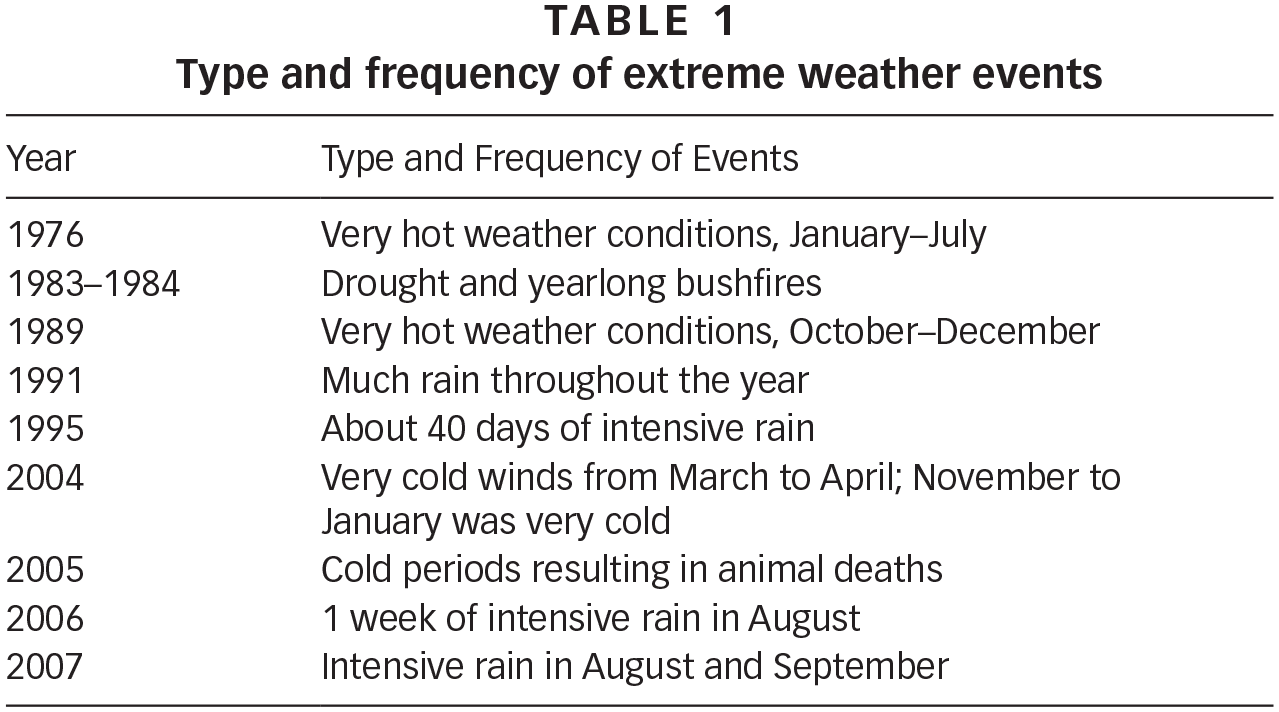
Ghana has experienced numerous extreme weather events in recent decades, but their exact timing and severity are not well documented. In a case study carried out in 2008 in rural areas of south-eastern Ghana, participants identified extreme weather events they had experienced from memory(37) (Table 1). While the events described are not representative of the whole of Ghana, they are indicative of the type and frequency of extreme weather events from one region.
Type and frequency of extreme weather events
Data on flooding are more accessible than data on extreme heat events. Floods in major Ghanaian cities are becoming more frequent and severe as the built environment expands. A content analysis of Ghanaian newspaper accounts(38) found that from 1995 to 2010, there were 11 devastating floods in Ghana, resulting in at least 201 deaths, hundreds of millions of dollars’ worth of destroyed property and infrastructure, and the displacement of hundreds of thousands of people. This confirms data extracted from the Dartmouth Flood Observatory database, which shows that from 1988 to 2010, Ghana suffered 15 major floods, leading to 244 fatalities and the displacement of at least 692,700 people.(39)
Accra and Tamale both have long histories of extreme heat and flood hazards, with numerous devastating events recorded since the 1950s.(40) For example, a major flood event in Accra on 3 June 2015 killed over 152 people, displaced over 8,000 and injured numerous others.(41) In January 2016, excessive heat in northern Ghana was linked to 140 reported cases of meningitis, claiming the lives of 32 people.(42)
IV. Methods and Study Areas
To answer the research questions presented in Section I, a case study method was adopted.(43) This used a multiple-case design with embedded units of analysis, where the cases were high-density, low-income urban settlements in the Ghanaian cities of Accra and Tamale, and the units of analysis were the infrastructure, households and microbusiness units located within these communities.
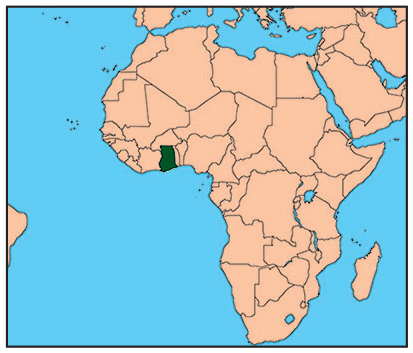
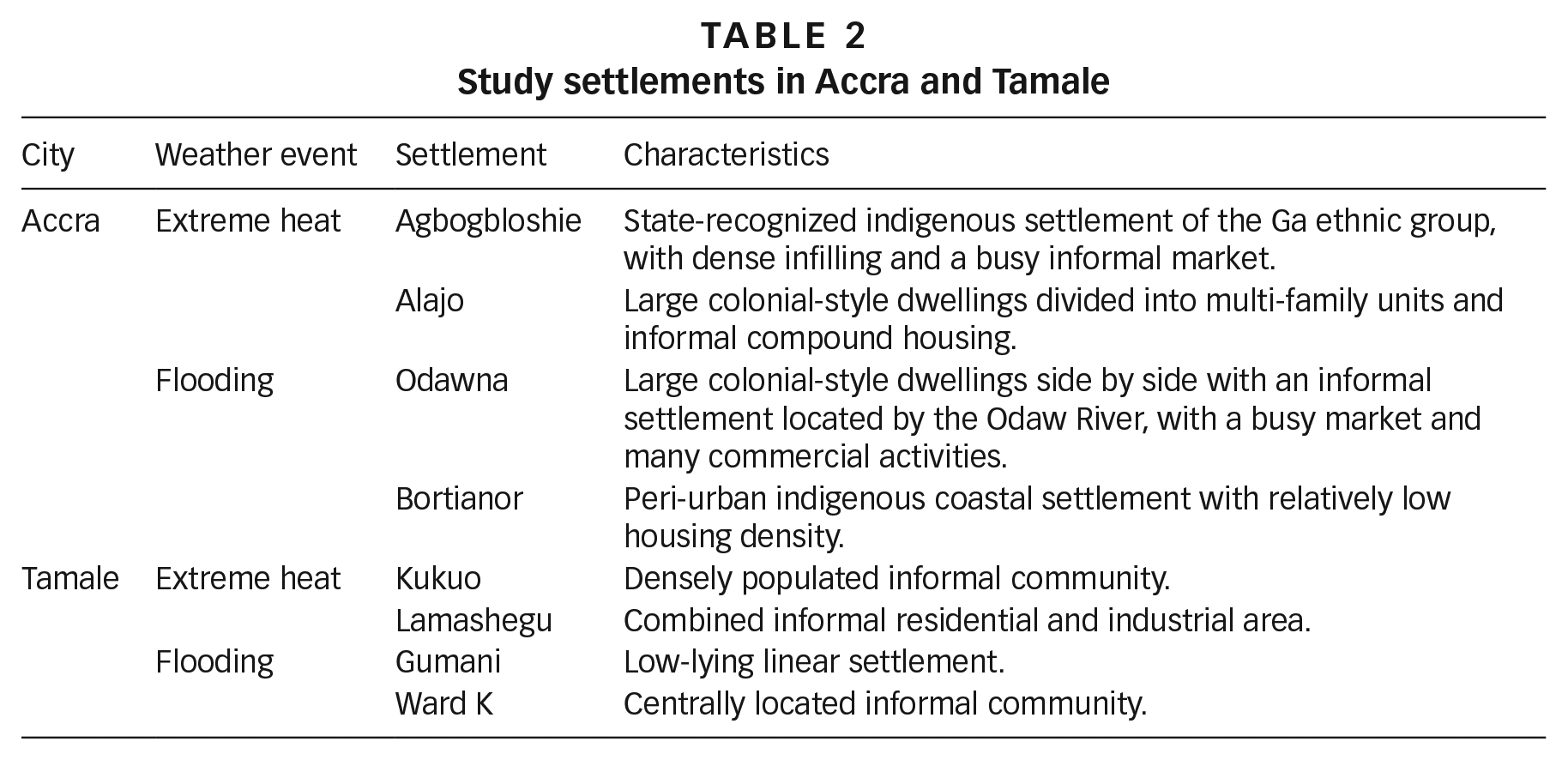
Accra is Ghana’s capital and largest city, located in the south of the country, while Tamale, a rapidly growing intermediate-sized city, is situated in northern Ghana. As extreme heat and flood events tend to have the greatest impact in poor urban settlements,(44) in each city four study communities were selected for their high population density, informality, low-income population, and vulnerability to flood and extreme heat events (Table 2). The selection process drew on the authors’ longstanding knowledge of both cities, consultation with key stakeholders and, where possible, analysis of existing climate data. The communities studied for their extreme heat stress were Agbogbloshie and Alajo in Accra, and Kukuo and Lamashegu in Tamale. The flood-prone communities selected were Odawna and Bortianor in Accra, and Gumani and Ward K in Tamale.(45) Within each settlement, community opinion leaders selected a “champion”, who became our key contact person and assisted with all stages of the research.
Study settlements in Accra and Tamale
A range of data collection approaches were used, including semi-structured interviews, focus group discussions, field observations and water quality testing, as detailed below.
a. Interviews and focus group discussions
Semi-structured interviews were held with representatives of water and electricity providers to investigate the impact on their services of flooding and extreme heat events, their current systems for disaster preparedness, the mutually reinforcing nature of the problems faced by service providers, and the benefits of being able to accurately forecast extreme weather events. Within the water and electricity sector, five interviews were held with key staff at the Electricity Company of Ghana (ECG), the Northern Electricity Distribution Company (NEDCo) and Ghana Water Company Limited (GWCL). In addition, 16 interviews were held in health facilities. The interviews lasted between 30 minutes and one hour.
In each community, household heads (both female and male) that are customers of water and electricity service providers were purposively selected with the help of community champions. The interview participants included members of traditional and local authorities, community opinion leaders, homeowners and tenants, and flood victims. We then conducted qualitative interviews with them to explore the impact of extreme weather events on their access to water and electricity services, and how these in turn affect their income-generating activities and mobility. A total of 124 such interviews were conducted, lasting between approximately 45 minutes and two hours.
In addition, three focus group discussions were held in each community, one with older men, one with older women, and a mixed-gender youth group. The age range for the older focus groups was between 36 and 65, while the youth were aged between 18 and 35. There were 7 to 11 participants in each session, and the discussions lasted between 1½ and 2 hours.
All interviews and focus group discussions were transcribed verbatim and thematically analysed and organized using NVivo 11 software. A deductive approach was used for analysis, and the transcripts were coded using the concepts of resilience(46) and vulnerability.(47)
b. Observations
Field observations were undertaken by all project members through transect walks, picture taking and video recording of flooded and heat-stressed areas, and informal interactions with affected households and businesses. These were supplemented with additional observations from the champions.
c. Water quality testing
In order to test the quality of the water that residents were using, water samples were collected from formal and informal sources mentioned by respondents within the study communities, including wells, storage tanks and dams. On 27/28 August 2018 in Tamale and on 31 August 2018 in Accra, simple bacteriological and physical water quality tests were conducted, including total and faecal coliform bacteria counts and turbidity. Total coliform bacteria can multiply in aquatic environments and are used as indicators of pathogenic microbes in water. Faecal coliforms are thermotolerant bacteria that are usually present in large numbers in the intestines of warm-blooded animals, including humans, and are passed out of the body through excretion. Their presence in a water sample shows that there has been faecal contamination of the water, potentially including pathogens that live in faeces. Turbidity, measured in nephelometric turbidity units (NTU), is a measure of the amount of suspended material in water, and hence can indicate the presence of high levels of pathogens and/or particles that interfere with the disinfection process.
V. Impacts of Extreme Weather Events on Water Services
In this section we analyse how water services are impacted by extreme weather events. First, the provision of water within the study settlements during normal weather conditions is analysed. This is followed by a discussion of water services during extreme heat events and flooding episodes, along with coping strategies adopted by communities to access water.
a. Water services during normal weather conditions
Most households interviewed in Alajo, Odawna and Bortianor (Accra) have either an in-house water connection or a yard tap, and during normal weather conditions, they draw water within their homes. In Agbogbloshie, however, many households rely on privately operated water kiosks and showers due to limited water connections in their homes. In Tamale, most interviewed households lack on-plot water connections and mainly buy water from neighbours with connections or fetch water from neighbours with wells. Women are often responsible for water collection. On-selling of water is not formally recognized by the water utility, and the indirect customers usually pay highly inflated prices.(48)
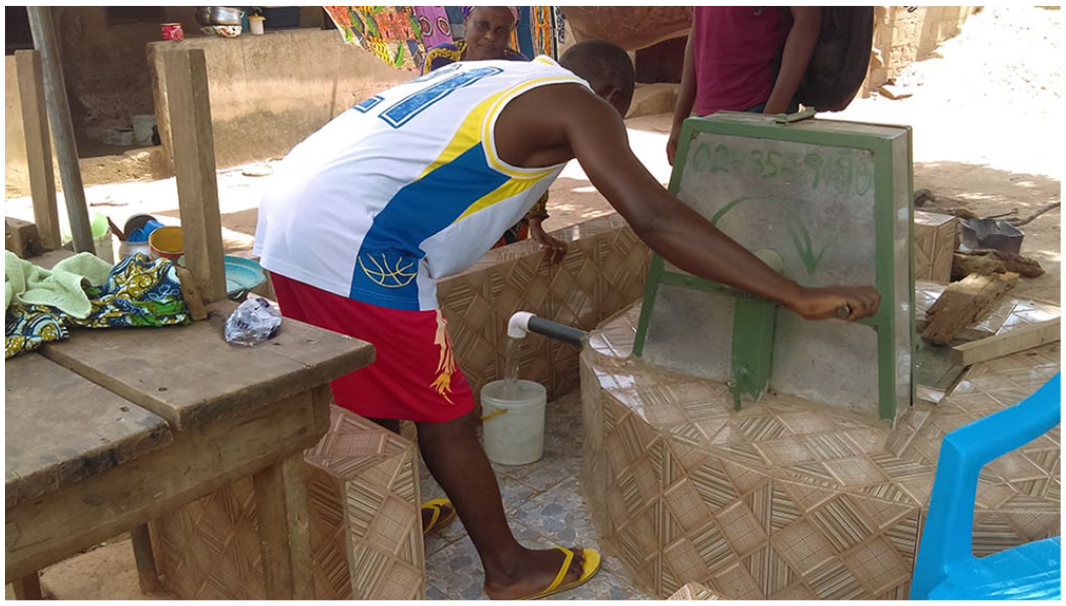
A lined tube-well privately owned by a household in Gumani, Tamale.
The pay-as-you-fetch price ranged between 40 and 60 Ghanaian pesewas (9–13 US cents)(49) per 20-litre container, 7 to 11 times the official price set by Ghana’s Public Utility Regulatory Commission (PURC) for low-income households with a house connection or private yard tap.(50) For drinking water, most households interviewed in Accra, and some in Tamale, indicated that for quality reasons they buy water in sachets, produced by about 50 registered and regulated companies, or packed by local, non-regulated individuals. Commercially produced sachet-packaged water was priced at 20 pesewas for a sachet of 500 millilitres, while the locally packed sachet water, whose quality is more dubious, was sold at about half this price, and even less by some informal vendors. The sachet-packaged water is sometimes frozen and sold as ice blocks, at 50 pesewas per block. Hence, the price of frozen water is more than twice the price of sachet-packed water, which is over 300 times the official price charged for water sold by GWCL through a household water connection. In a similar study of water access in Abuja, another informal settlement in Accra, Amankwaa(51) found that “water access is constantly produced through a labyrinth of coping strategies which invariably increase household expenditure and exacerbate the poverty penalties of the poor”.
Overall, water services in the study areas in Accra where there is a direct water connection are usually reliable, with adequate pressure. Customers are often given advance notice of the occasional service interruptions. In Bortianor, however, water services are less reliable than in the more centrally located study areas in Accra. Consequently, some households have large storage tanks as a coping strategy, while others fetch water from alternative non-piped water sources, such as streams, when piped water is not flowing. In Tamale, the situation is worse, and households suffer from an intermittent water supply. As a result, most households rely on alternative non-piped water sources, which vary depending on the hydrogeology of the area. For instance, many households in Kukuo use a valley-dammed reservoir, constructed by the community with the support of the Catholic Church. Drawers of water (especially women) unscientifically apply clarifying agents available on the open market, such as magnesium sulphate (Epsom salts), aluminium sulphate and calcium carbonate (limestone) to reduce turbidity. No chlorine is added, however, even though the water supply is faecally contaminated by community members washing their bodies and clothes within the reservoir. In Gumani and Ward K, where the groundwater table is high, some households have constructed lined shallow wells and sell water to neighbours at a nominal cost. See an example of a protected shallow well in Photo 1.
Table 3 shows results of the water quality tests. For drinking water quality, both the World Health Organization (WHO) guidelines and Ghana Water Quality Standards recommend a total and faecal coliform count of less than 1 colony-forming unit (CFU) per 100 millilitres, and a value of less than 5 NTU for turbidity.(52) All the samples were bacteriologically unsafe, except for three collected from GWCL water points in Accra. Seven other samples (two from water points in Tamale) had a zero faecal coliform count but showed a high total coliform count, indicating that they are also susceptible to faecal contamination. All water samples in Tamale, whether utility-supplied or from alternative water sources, had high total coliform counts, showing potential pathogenic contamination. These findings illustrate how intermittency compromises water quality in the water distribution system.(53)
Simple water quality tests of sampled endpoints in the study areas, August 2018
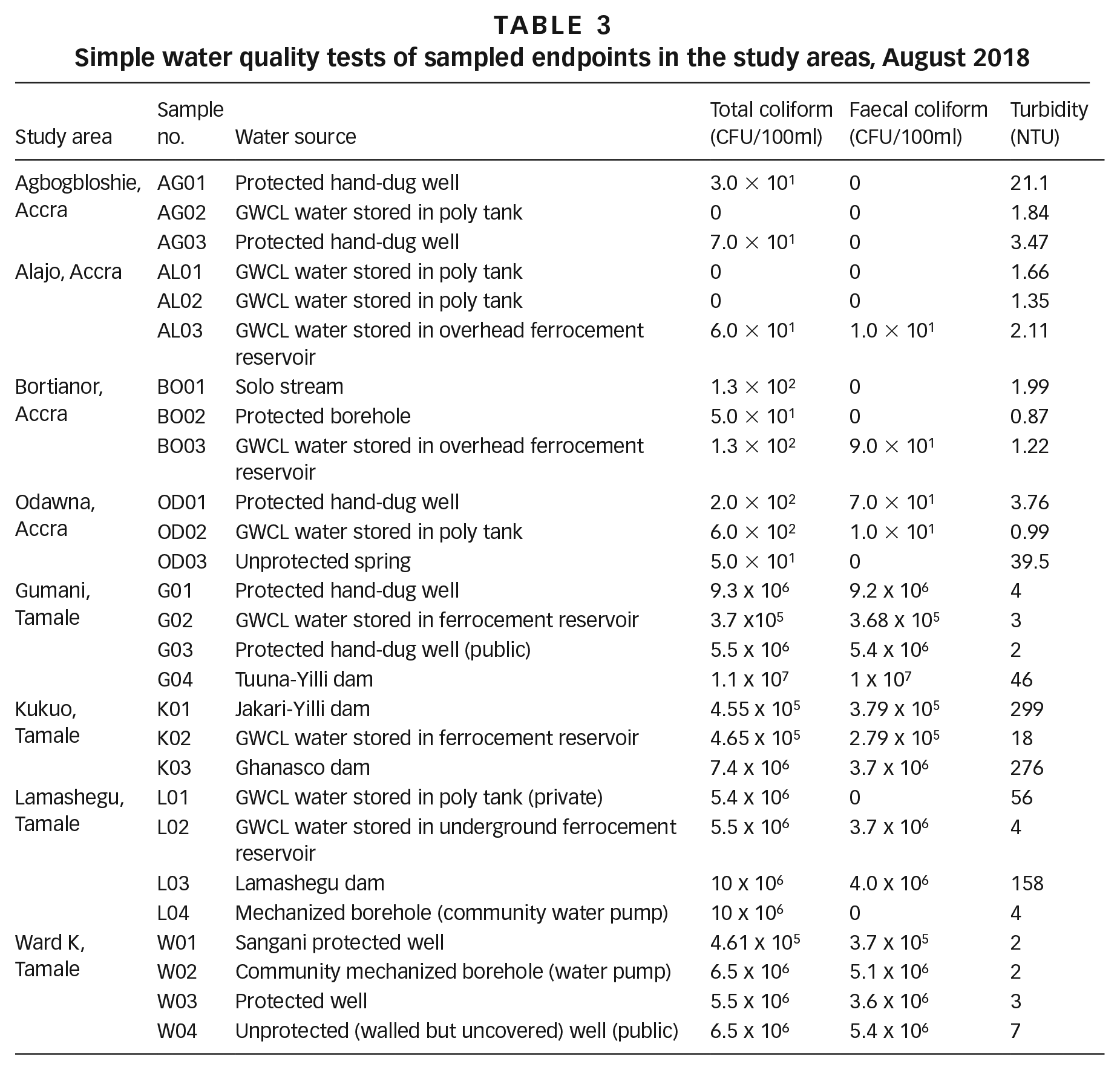
With respect to turbidity, in Accra only non-utility water supply sources had levels above those recommended. In Tamale, however, turbidity levels were higher than the recommended values in alternative sources of water, but also in reservoir tanks storing piped water. As bacteria regrow in water storage tanks, they need to be cleaned regularly – at least at six-monthly intervals.(54) Faecal coliform counts registered in some storage tanks suggested that some tanks had not been cleaned for a long time, while others had been recently cleaned or were newly installed. The valley-dammed reservoirs in Tamale have high turbidity levels, ranging between 150 and 300 NTU, and registered high levels of faecal contamination. Turbidity of reservoir surface water is increased by soil from erosion and other solid contaminants, while high levels of total and faecal coliform are caused by such unsanitary practices as open water bathing, washing of clothes in reservoirs and open defecation.
b. Coping strategies for poor water services during extreme weather conditions
During the rainy season, households harvest rainwater to supplement utility-supplied water and reduce their water bills. They also store as much water as they can, the amount varying depending on their access to storage facilities. A few households have reservoir tanks with capacity of 1–10 cubic metres; however, the majority have several small containers of between 5 and 30 litres. Although household storage tanks can contaminate water if they are not regularly cleaned, their use increases the reliability of the urban water supply as there is an alternative in case of intermittent supplies from the utility. When flooding events occur during rainy seasons, there are increased yields of alternative water sources, such as boreholes, tubewells, springs, valley-dammed reservoirs and streams, from which poor households collect “free” water. However, floodwaters can be contaminated by poor solid waste disposal practices in the densely populated settlements and can be swept into the surface water sources. This leads to water quality deterioration, especially in terms of water turbidity and bacteriological water quality.(55)
In the study areas of Accra where water services are more reliable, most consumer respondents did not notice significant changes to the water supply during extreme weather conditions, largely because of the regular networked water supply system and access to storage facilities. In areas where water services are less reliable, however, especially in Bortianor, respondents indicated that reliability fell during the hot, dry season and increased during the rainy season, when the water pressure improved. One respondent who operated a guesthouse explained:
“Water during the rainy season is more reliable and flows throughout the week but in extreme heat conditions water from taps flows about two weeks in a month. We have been told this is because of low levels of the dam.” (guesthouse owner, Bortianor, Accra)
During extreme heat situations when there are water shortages, vendors and shower operators in Agbogbloshie purchase water from tanker suppliers, which doubles the cost of water. Household members, particularly women, endeavour to reduce water consumption to ensure water is always available to the household. In communities where the piped water supply is usually reliable during normal weather conditions, households can be forced to collect water from alternative sources, including from neighbours with large storage tanks, but more often from non-piped water sources.
In Accra, such non-piped water sources include an artesian spring on a hill near Bortianor and a decentralized water supply system drawing water from boreholes in Odawna, managed by a private entrepreneur (licensed by Accra Metropolitan Assembly), who also provides 12-unit shower services. Residents complained about not being able to shower when the weather gets hot and the need is greater – they regard it as too expensive, ordinarily at 50 pesewas per shower (11 US cents). The price, as noted, increases considerably when the water must be purchased from tankers. In Bortianor, one of the health facilities interviewed was in the process of installing a poly tank to improve its water supply; collecting water from a nearby source had been difficult in extreme heat and restricted the times they could bathe patients with fever.
In Tamale, the already unreliable water services deteriorate during extreme heat, placing a greater burden on women responsible for collecting water. The utility supplies significantly less water, and rationing is implemented; some households reported they could spend two weeks or longer without water from the utility tap. Yields from many alternative water sources, such as hand-dug wells or springs, also decline or dry up completely. During dry spells, water must be carefully managed. One respondent stated:
“If anybody is wasting water, he or she will have a fight with the one who collected the water.” (household respondent, Kukuo, Tamale)
All households interviewed in Tamale indicated that they collect water from alternative water sources during periods of extreme heat. Although already poor water supplies become worse during these times, households in Tamale are more resilient than those in Accra. Their alternative water sources, such as shallow wells, boreholes and valley-dammed reservoirs, are more robust and better developed. Photo 1, as described in Box 1 presents an example of a lined tubewell water supply unit constructed in the compound of a homeowner in Gumani, Tamale. Basic water quality tests conducted here on 27 August 2018 showed a low turbidity value of 4 NTU (marginally less than the highest recommended figure of 5 NTU), and counts of 9.3 x 10⁶ and 9.2 x 10⁶ CFU/100 millilitres for total coliform and faecal coliform respectively (compared to a recommended count of less than 1).
A lined tubewell constructed by a household in Gumani, Tamale
Owing to perennial piped water supply shortages, one household head, a retired agricultural extension officer, invested in the construction of a well 16 metres deep, lined and fitted with a hand pump (Photo 1). Although the household has a piped water supply through a yard connection, the lined well is the primary water source. Water flow is continuous and reliable during normal weather but becomes less reliable during extremely hot conditions.
In Kukuo, most households draw water from the Ghanasco valley-dammed reservoir (Photos 2 and 3). Basic water quality tests, conducted on this water on 27 August 2018, showed turbidity at 299 NTU and E.coli counts of 7.4 x 10⁶ (total coliform) and 3.7 x 10⁶ (faecal coliform) CFU/100 millilitres. Surprisingly, the bacteriological quality of the surface water was marginally better than that of the shallow well in Gumani, despite the lower turbidity levels registered in Gumani. It is important to note that during periods of water scarcity, this source is used by Ghana Senior High School, a large boarding school located about 100 metres away from the dam.
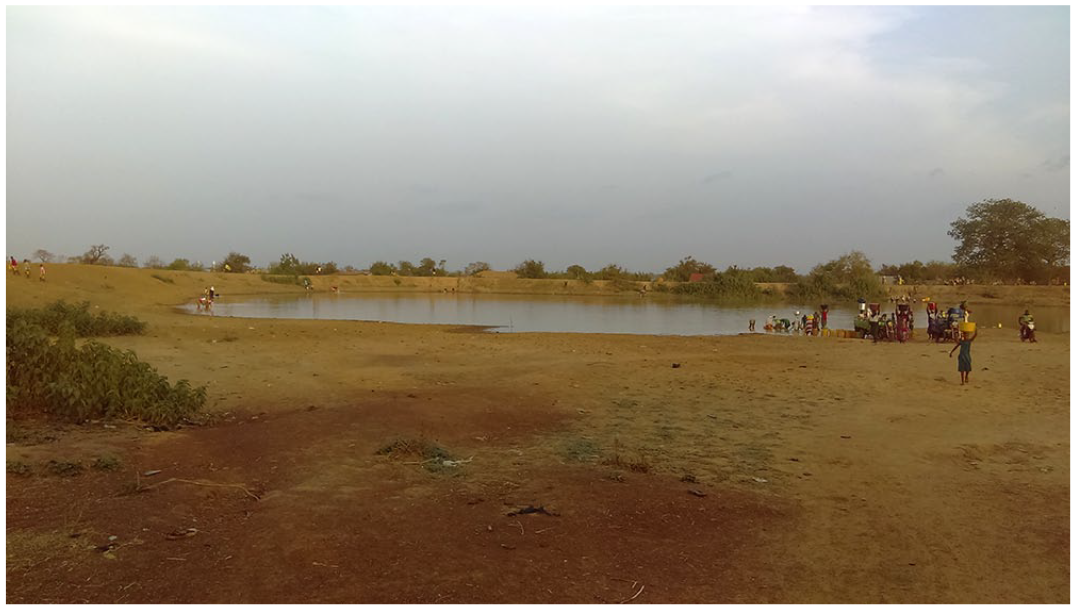
Ghanasco valley-dammed reservoir
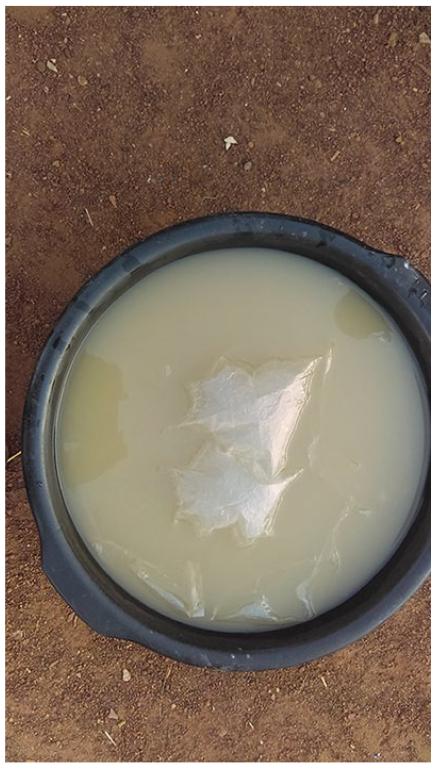
Water drawn from the valley-dammed reservoir
The water source commonly used in Ward K is a community-managed, mechanized borehole, reported to have reasonable yields throughout the year, including during periods of extreme heat. Based on the basic water quality tests on 28 August 2018, turbidity was much better than that of other alternative water sources in Tamale (a turbidity value of 2 NTU). However, the bacteriological quality was poor, around 6.5 x 10⁶ (total coliform) and 5.1 x 10⁶ (faecal coliform) CFU/100ml. These water quality results indicate that even groundwater sources can have high faecal contamination.
VI. Impacts of Extreme Weather Events on Electricity Services
In discussing electricity services, we first present the situation during normal weather conditions, then discuss reductions in service levels during extreme weather events, and how residents of Accra and Tamale cope. Although our focus is on customers, it is worth noting that whatever negatively affects the generation, transmission or distribution of power will also negatively impact the service quality for customers. Hence, here we emphasize the interconnected nature of the entire service delivery chain, by analysing the impact of extreme weather events on service delivery in terms of generation, transmission and distribution of energy.
a. Electricity services during normal weather conditions
Most customers concurred that reliability of the electricity supply has improved tremendously in recent years. This was confirmed by key informants from the Electricity Company of Ghana (ECG) and Northern Electricity Distribution Company (NEDCo), the service providers in Accra and Tamale. The informant from ECG noted that the company had implemented an infrastructure improvement programme, with 90 per cent of the infrastructure renewed in Accra by the time of the study. However, the programme had not yet been implemented in Tamale. During normal weather, the electricity supply was reportedly stable, except during planned maintenance periods, for which customers are given advance notice through print and electronic media.
The bills of most electricity customers are assessed through prepaid or postpaid meters. The service providers’ long-term objective is to have universal prepaid metered services, which some customers also prefer. For others, this form of billing has its own challenges, as exemplified by a health facility in Bortianor. Here, prepaid meters were reported to be a problem in extreme weather conditions when demand for electricity increases, meaning the loss of electricity if they run out of petty cash to recharge the meter. Even when petty cash is available, extreme weather events can still prevent the purchase of credit since the prepaid vendors are kilometres away from the health facility. It is crucial that health services be provided with a flexible billing system that ensures uninterrupted energy supply. In Tamale some households using the postpaid meters are still being charged a flat rate tariff (a method unpopular with customers), mainly because of faulty meters or a lack of meters. This may benefit some households, but it negatively affects poor households whose electrical and electronic equipment consumes less than the flat rate being charged.
In low-income communities there are many illegal connections, with households bypassing the meters, and also illegal interconnections between different households that then share the bills (Photo 4). This involves households connecting via an extension cable either to the electricity distribution supply network, or to another consumer, without the consent of the service provider. Usually, the extension cables are of poor quality and/or of low capacity; hence they compromise the safety of the users and the general public. Participants justified these illegal connections by pointing to obstacles in obtaining new connections, including prerequisites, delays and high connection charges. This finding corroborates the work of Singh et al.,(56) who examined the electricity inaccessibility among the urban poor in low-income urban settlements in other low-income countries. They found that illegal connections are prevalent mainly where service providers require that, to join the network, customers meet preconditions that are usually outside the reach of the urban poor.
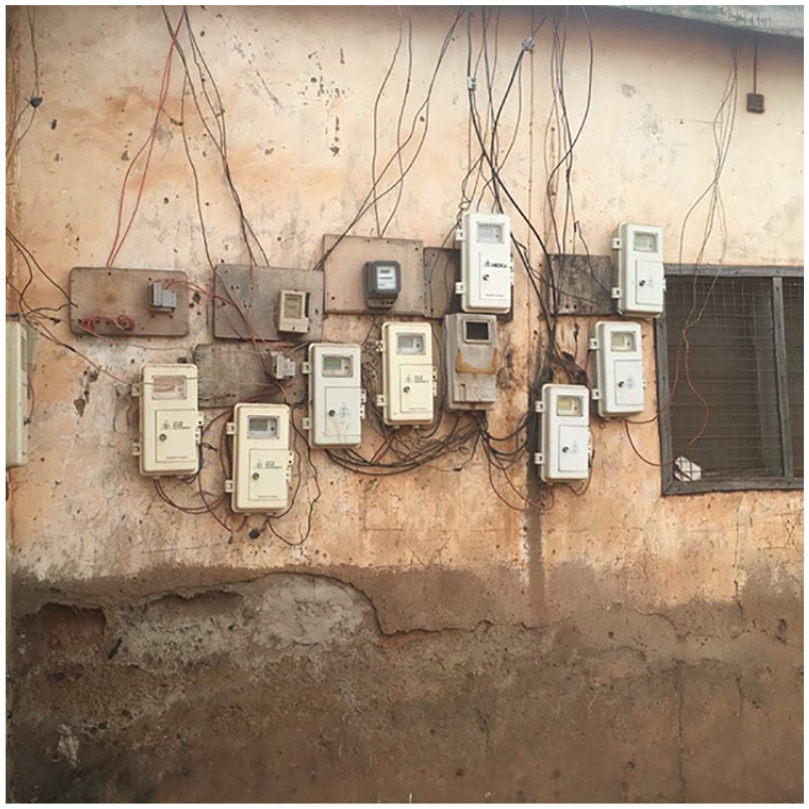
Electricity interconnections in a low-income community in Tamale
The importance of electricity in a home cannot be overemphasized. It provides for lighting and other essential facilities, charging phones, powering refrigerators, fans/air conditioners and home-based enterprises.(57) Microbusinesses in the study settlements that rely heavily on electricity include tailoring using electric sewing machines, ice-making, and water and fruit juice vending, many of them female dominated. There are also larger businesses in the two cities that are mainly male dominated, such as welding and fabrication, grinding/milling, bakery, video parlours and guesthouses, all of which require a reliable electricity supply. For health services, power is essential for running such cooling devices as fans, fridges and freezers, and appropriate air conditioners in operating theatres, as well as lighting and essential equipment for monitoring patients.
b. Strategies for coping with poor electricity services during extreme weather conditions
There was no significant difference in the quality of electricity services between the two cities during extreme weather events. The wind usually accompanying heavy rains and storms can cause electricity poles to fall and/or electrical conductors to make contact, resulting in short circuits. Consequently, electricity companies proactively disconnect the electricity supply during heavy rains and flood events to minimize explosions and electrocution. This is especially important in low-income urban settlements because of the many illegal connections and haphazardly connected electric wires (Photo 4). In cases when storms have not been predicted, the electricity company’s infrastructure protection systems are designed to switch off automatically on the first instance of short circuiting.
The Operations Departments of the electricity companies continuously carry out preventive maintenance to the protective systems, including testing the tripping mechanisms and regular tensioning of electric cables, to ensure their performance and reliability. Most customers stated that the company provides them with notice during planned maintenance but not during power shutdowns triggered by storms. The managers of Volta River Authority (VRA), the main generator and supplier of electricity, claimed that it was not a legal requirement for the company to provide notice during emergency shutdowns, but they endeavoured to inform customers of the risks associated with short circuiting of conductors during storms.
During extreme heat events, water levels in dams drop, leading to reduced electricity production. Yet the demand for electricity escalates during these periods; refrigerators are overworked to cool water and other drinks, and use of air conditioners and fans increases. As a result, conductors, transformers and other infrastructural equipment are overloaded, leading to voltage drops, automatic tripping of transformers and power instability, which can cause breakdowns on both the electricity supply side and the customer end. For instance, a respondent in Accra who ran a home-based tailoring shop had a sewing machine damaged due to power fluctuations, which cost 120 cedis (about US$ 26) to repair.
Community members cope with the absence of electricity for lighting by using rechargeable lamps, solar-charged lamps/lanterns, battery-powered torches and, in some poorer households, paraffin lanterns and candles. Households also use the solar-powered services offered by some community members – for instance, charging phones for a fee. For small businesses and wealthier families, standby generators are used for lighting and powering fridges and fans/air conditioners during the hot season. For poorer households, a common coping strategy is minimizing exposure to the hot interior of their homes, sometimes sleeping outside at night. This can expose residents to increased risks, such as theft and mosquito, scorpion and snake bites, leading to higher risk of contracting associated diseases, or even death.(58) In health facilities, mobile phones are reportedly used for lighting and sometimes for completing surgery in a power outage. Many health facilities, especially private ones, have generators that run during power outages. Most government facilities, especially in Tamale, are unable to run generators because of the cost of fuel and limited control of their budgets.
Owners of smaller electricity-based businesses without standby generators stated that they must usually wait for power to return before continuing their work. In some cases, less efficient solutions are relied on, such as the use of manually operated sewing machines by a tailor in Accra, leading to delays and frustrated customers, as well as loss of income. Another tailor in the same community stated that while waiting for the electricity to be switched back on, he usually engages in other income-generating activities, like the installation of satellite dishes. Residents of low-income urban settlements often have multiple skills and businesses,(59) though many of these require a reliable electricity supply.
VII. Conclusions and Recommendations
This paper has highlighted challenges faced by residents and service providers in low-income urban communities in Ghana in terms of access to water and electricity services during flooding and extreme heat events. Problems in one sector often cause and reinforce problems in the other. For instance, both water and electricity supply companies rely on water resources for providing their services, given that the electricity sector in Ghana generates almost 40 per cent of its total electricity from hydroelectric sources.(60)
Key informant interviews reveal that water and electricity services in most parts of Accra during normal weather conditions have improved over the past decade. However, the quality of both water and electricity services in Tamale is poor, even during normal weather conditions. In both cities, service levels for both water and electricity fall far short of the SDG targets.(61) In Ghana, poor water services are partly due to water resource management being plagued by “poor governance and missed opportunities”.(62) The situation is no different for electricity services, where the unreliable supply is largely attributed to poor energy infrastructure, unwillingness to charge high prices, power thefts and technical inefficiencies.(63)
While men and women are both affected by extreme heat and flooding events, women usually bear the greater burden. Men are usually in charge of electricity supply in terms of connection, payment, and meter maintenance, whilst women are responsible for household water collection. During periods of extreme weather, women typically have to travel long distances to collect water from alternative sources and then treat it; supervise household management practices to save water and electricity; and purchase batteries and battery-powered lamps. One difference that emerged between the two cities is that men in Tamale are more involved in securing and even paying for water for the household, sometimes cycling long distances to collect water, while their male counterparts in Accra consign such tasks to women.
Periods of extreme heat negatively affect both the water and electricity supply capacities. Even though water resources may be adequate for providing basic supplies, the water may not be pumped and distributed to customers, due to poor electricity supply. Water services in the low-income settlements of Tamale are intermittent even during normal weather conditions, and water scarcity becomes worse during extreme hot weather. Moreover, during periods of extreme heat, urban residents need more water for drinking, washing and urban gardening, and require more energy to power refrigerators for cooling water for drinking and to run fans/air conditioners. The elevated electricity demand during periods of extreme heat impairs the capacity of electricity conductors and transformers, leading to voltage spikes, drops, and/or automatic tripping/shutdown of the power systems. This in turn negatively affects the production capacity of the water supply companies and can cause breakdown of customers’ appliances.
The main negative impact of floods on water services is the deteriorating water quality of unprotected water sources, which are an alternative supply for low-income urban communities, especially in Tamale. On the positive side, these alternative water sources can reduce water bills during the rainy season. However, most of them, such as rainwater, wells, springs and dams, are highly susceptible to faecal contamination.
In relation to the electricity supply, the rainy seasons usually come with winds and gales, which may lead to electric poles falling and electricity conductors short circuiting. This is more hazardous in low-income urban settlements where illegal connections are common. Hence, the electricity company either proactively disconnects these areas in anticipation of winds/gales, and/or ensures that automatic protective equipment is robust and sensitive to such faults. Consequently, during flooding events many low-income communities, including health services, are also without electricity, which is especially problematic when the flooding occurs at night.
As extreme weather is likely to occur more frequently in the future, water and electricity companies in Ghana and elsewhere need to act now to reduce the impact of such events. Water companies, in the short term, could provide advance notice of impending shortages so that households can store water. They could also provide advice and technical support about the need for regular cleaning of storage tanks every six months to mitigate against water contamination. Simple water quality testing services could be extended as part of the companies’ corporate social responsibility. In the longer term, water companies should work towards expanding production capacity during extreme heat, for example by enhancing the capacity of the storage dams. Access to water in low-income urban settlements could be improved by expanding household water connections, improving the quality of piped water and promoting an integrated water-use planning strategy. This is especially important because water is also used for productive activities in most low-income areas.(64)
In the short term, electricity distribution companies need to develop a strategy for tracking down illegal connections and providing incentives and pro-poor mechanisms for legitimizing them. In the longer term, they should increase dialogue with residents of low-income urban areas with a view to minimizing the barriers to legal electricity access and encouraging household heads to legalize their connections, for which the electricity companies could provide technical support to make connections safer. Electricity service providers could also provide dedicated power lines for such essential facilities as water treatment/pumping plants, health centres and hospitals, so that they can maintain their services during extreme weather events. The electricity company should further consider investing in alternative and emergency power supply systems, such as solar and thermal energy, in order to minimize supply interruptions during extreme heat events. While these findings are particular to Ghana, the need for service providers to adapt in order to cope with extreme weather events, and to consider their interconnected nature, are applicable across sub-Saharan Africa more generally and in other low- and middle-income countries.
Footnotes
Acknowledgements
The Vulnerability to Extreme Weather Events in Cities (VEWEC) project team thank the Community Champions, communities and key informants from the service providers for facilitating the fieldwork. We are especially grateful to all the participants who took part in the interviews, focus group discussions and research workshops.
Funding
This project was funded by the British Academy under the Cities and Infrastructure Programme, CI170211.
