




Abstract
The process of urbanization places urban watercourses at greater risk of the kind of pollution that affects public health, ecology and the environment. In Taiwan, municipal wastewater is the largest source of pollution in rivers and canals, particularly in dense urban areas that lack adequate sewer systems. As research on Taiwan’s watercourses is dominated by landscape design and ecological engineering, watercourse sanitation is rarely examined in any depth. This paper presents findings on the impact of wastewater on two natural and two artificial waterways located in major cities in Taiwan. As a result of interviews, direct observation, photographs and a review of government documents, several issues emerge. First, due to the poor water quality, local residents prefer watercourses to be concealed, leading to underground culverts; however, water pollution is made worse, the ecological value is damaged and the amenity benefit reduced. Second, despite large investments in improving channel-side landscapes, poor water quality diminishes the success of watercourse rehabilitation. Third, because of the low completion rate of municipal sewer systems, the construction of channel-side sewage-intercepting facilities is effective against riparian wastewater in the short term. In conclusion, improving water quality may be the first step towards successful watercourse redevelopment. A combination of establishing short-term sewage-intercepting facilities and long-term municipal sewer systems is suggested to advance national environmental quality in Taiwan.
I. Introduction
Urban watercourses are made up of water bodies and neighbouring waterfronts located in cities and towns. The water bodies can be natural rivers or artificial canals, and the waterfronts are the waters’ edges in cities and towns of all sizes.(1) As part of an urban green network, healthy watercourses can make the environment more accessible, comfortable, beautiful and convenient; in particular, linear bodies of water are often prominent features in a cityscape. Nevertheless, the rapid growth of cities has brought great changes to the water environment, and many watercourses have become polluted and degraded places.(2) Water pollution has changed the physical quality of rivers and canals and caused environmental threats to urban health – even as urbanization is accompanied by the desire for better living standards.(3)
Water quality affects its suitability for agriculture, industry, drinking, recreation and other uses, and a suitable quality water supply is essential for public health. The water people drink every day originates from rivers, lakes or underground aquifers.(4) Furthermore, polluted surface waters can to some extent be treated through natural processes and human efforts. Nevertheless, it is difficult to recover polluted groundwater resources.(5) Various contaminants in waters (including microbial and chemical)(6) can have large impacts on public health, ecological systems and the environment.
Many cities have experienced water pollution because local water bodies are often used as dumping grounds for untreated or partially treated wastewater.(7) Even in cities with sewers, watercourses can be contaminated by untreated wastes. In addition, urban households in higher-density districts with inadequate provision for sanitation (for example, with only toilets connected to septic systems) may face a greater health burden, because larger populations make it more difficult to dispose of municipal wastewater (for example, domestic wastewater from sinks and washing).(8) Where many urban inhabitants lack a connection to sanitary sewer systems, a large amount of untreated or partially treated wastewater ends up in rivers, streams, canals and dykes.(9)
In Taiwan, the Environmental White Paper 2007 issued by the Taiwanese Environmental Protection Administration (EPA) indicates that insufficiently treated municipal wastewater (discharged from domestic, commercial and industrial premises) has been the largest source of pollution for watercourses in Taiwanese cities. The sanitary sewer systems have not expanded to serve growing city populations, urban sprawl and increasing industrial and commercial activities.(10) In densely built-up areas, the gap between water infrastructure and environmental management is particularly pressing.(11)
Design and engineering are the two leading subjects in Taiwan’s current watercourse-related empirical research, for example waterside landscape design(12) and ecological engineering techniques.(13) But watercourse sanitation, although recognized by the literature as being important, is rarely examined in any depth. Thus, this paper focuses on analyzing the physical characteristics and development issues associated with environmental quality in watercourses in dense urban areas, and four main watercourses running through dense urban neighbourhoods are examined. Section II outlines the present state of Taiwan’s urban watercourse environment, and Section III describes the methods of collecting and analyzing data for examining the environmental performance of the four urban watercourses. The important issues in relation to watercourse sanitation are then discussed in Section IV, and Section V presents conclusions.
II. Urban Watercourse Environment in Taiwan
Urban waters in Taiwan vary in type and function, and are shaped by natural characteristics, agriculture, Japanese colonial history and channel-side land use patterns. Generally, the watercourse system involves three typical categories: navigation canals, agricultural dykes and natural waterways.(14) Rapid urban development since the 1970s meant that many navigation canals and agricultural dykes located in cities and towns lost their original roles (i.e. shipping goods(15) and crop irrigation,(16) respectively) and became single-objective carriers of water, or disappeared altogether.(17) They are often encased in concrete for more rapid water transmission, or buried or culverted underground to create more land above them, which is usually used for roads, parking places or community parks. Many natural urban waterways (i.e. rivers and streams) have undergone concrete channelization. This method of managing urban waters is aimed at handling a growing flood risk in urban areas and an increased urban population that demands a large amount of land.(18)
Because of Taiwan’s high urban population density (2,620 persons per square kilometre at the beginning of 2008(19)), many waterside areas of natural and constructed watercourses have been encroached by urban developments, where the waters’ edges are highly engineered and the water bodies are heavily polluted.(20) Insufficiently treated domestic wastewater is the greatest cause of such pollution.(21) According to CNA News,(22) only 19.5 per cent of dwellings countrywide (i.e. 1,123,169 residences) are connected to the public sewer infrastructure. For those who are not connected, the wastewater from ordinary houses built prior to 1999 and housing developments of more than 100 residences built prior to 1994 is directly discharged into nearby channels (except human waste, which is first treated by septic systems). The wastewater from ordinary houses built after 1999 and large housing developments built after 1994 is statutorily required to be treated by on-site sanitation facilities and then is allowed to be discharged into nearby channels.(23) Nevertheless, this is far behind the need for public health-related services.
Particularly in densely developed urban areas, the issue of watercourse pollution is more significant.(24) Even where a watercourse’s channel-side landscape is greatly improved, it may not attract visitors if the water quality is unacceptable. An improvement in water quality could be the most important issue for urban watercourse restoration. The specific context of densely urbanized watercourse corridors, which contain more residents and property, poses greater environmental threats (for example, water contamination) and threats to health. This raises the importance of exploring empirically the actual environmental performance of rivers and canals in Taiwan’s dense cities.
III. A Study of Typical Dense Urban Watercourses in Taiwan
In order to ensure a representative sample of watercourse practice, a typology of Taiwan’s densely urbanized watercourses was developed, from which to select case studies and demarcate study areas (Table 1). This typology was developed based on a review of the literature on Taiwan(25) and the author’s direct observation. Watercourses were classified according to geomorphology (navigation canals, agricultural dykes, streams and rivers) and adjacent land use (recreation, transport, mixed use property, and mixed use property with minor streets), and the four watercourses selected drew on this typology: the Tainan canal, the Liugong dyke, the Mei stream and the Love River. The four selected channels are located in Taiwan’s four largest cities: the Liugong dyke is in the Taipei metropolitan area, the Love River in Kaohsiung city, the Mei stream in Taichung city, and the Tainan canal in Tainan city. In addition, each study area had to include the four categories of adjacent land use (i.e. recreation, transport, mixed use property, and mixed use property with minor streets). All are main watercourses in city regions and each encourages a diversity of channel-side human activities and urban development.
Two-fold classification system of Taiwan’s densely urbanized watercourse corridors
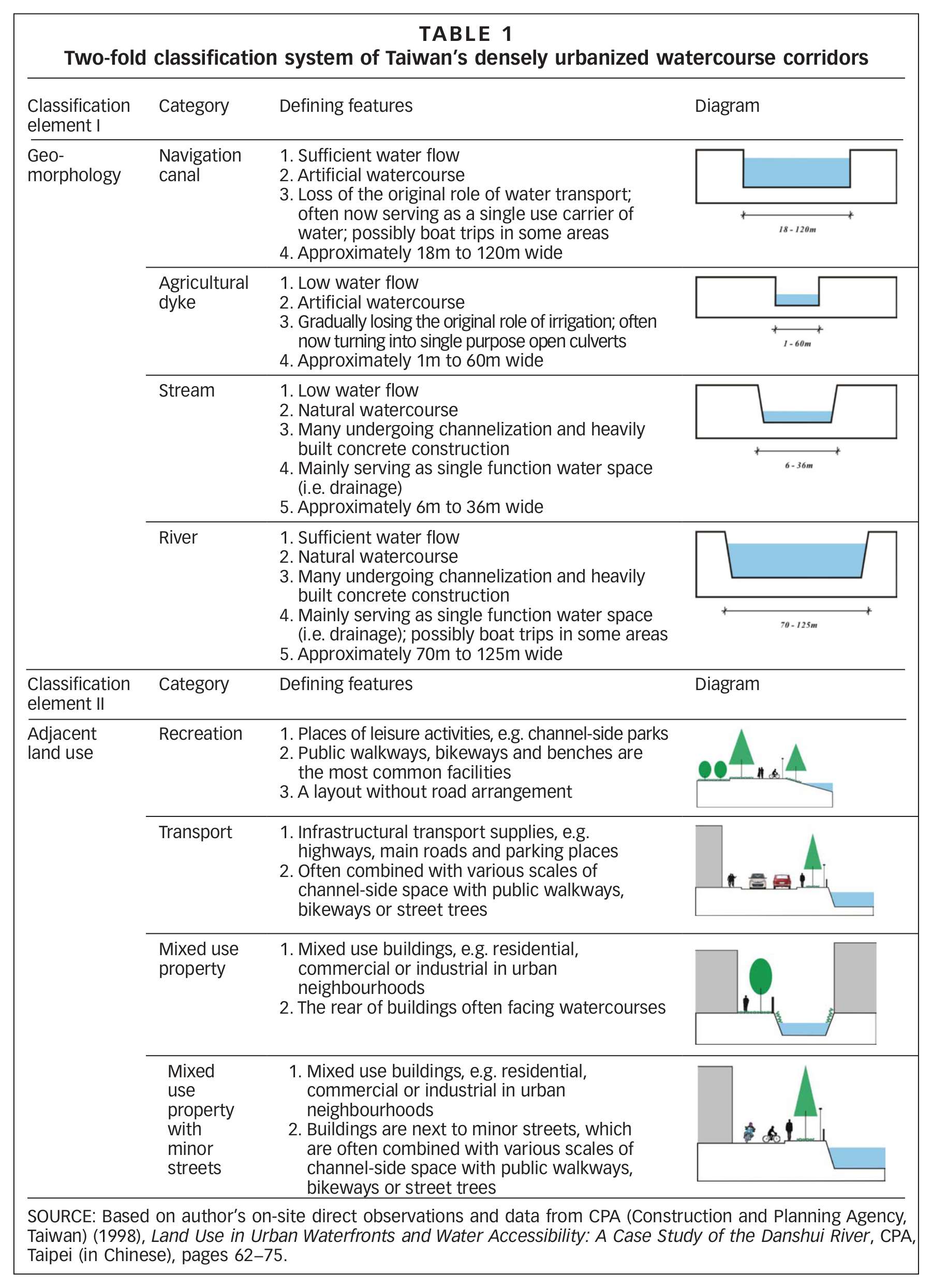
SOURCE: Based on author’s on-site direct observations and data from CPA (Construction and Planning Agency, Taiwan) (1998), Land Use in Urban Waterfronts and Water Accessibility: A Case Study of the Danshui River, CPA, Taipei (in Chinese), pages 62–75.
a. Data collection and analysis
The fieldwork was conducted between July and September 2007. The data utilized in this research came from four main sources: interviews, direct observation, photographs and government documents. Interviews were undertaken with senior designers who had relevant experience regarding the case studies, and local government officials with direct responsibility for the study areas. Each interviewee was assigned a particular identification code to ensure their anonymity and confidentiality. This included two principal designers (IH1 for the Mei stream, IH3 for the Liugong dyke), one senior designer (IH4 for the Liugong dyke) and three local government officials (IH2 for the Mei stream, IH5 for the Tainan canal and IH6 for the Love River).
Two open questions were asked in each interview: what are the issues influencing the long-term development of the watercourse in question and what are the challenges and opportunities as it moves towards becoming a multi-functional urban watercourse? The interviews were recorded for later transcription, coding and analysis. The information drawn from interviews is reported with other data in the next sub-section, and focuses on environmental performance for each case study.
Three issues in relation to environmental quality were examined during on-site direct observation:
Has water quality been improved effectively?
Has municipal sewage treatment been enhanced productively?
Have environmental clean-up and rubbish disposal been carried out regularly?
These questions were used to build the foundation for analyzing actual practice within the selected case studies, and the problems were recorded, including taking photographs. In addition, case-related news reports, articles, books and official papers were reviewed, in order to strengthen the analysis. In the results reported below, interviewees’ accounts provide qualitative data, related photographs serve as visual evidence, and relevant documents are cited to give more detailed information.
b. Environmental performance
The Tainan canal in Tainan city comprises two parts, namely the first stretch and the extension stretch (Figure 1). At present, the Tainan canal is 5,100 metres long; 4.5 metres deep on average, with the water depth ranging between 2.3 and 3.6 metres owing to tidal effects;(26) and on average, 80 metres wide in the first stretch and 45 metres wide in the extension stretch.(27) The water flows from both mouths of the canal towards the 90-degree bend, and its tidal character ensures a constant minimum water depth and a stable hydrological flow.(28) A series of water quality improvement plans have been carried out since 1999. The works (for example, cleaning up silt deposits) focus on the canal’s extension stretch, because the canal-side development is relatively dense in this area and the insufficiently treated municipal wastewater has a greater effect on the quality of the receiving water.(29) In terms of the study area (i.e. the entire Tainan canal, including the four categories of adjacent land use mentioned earlier), water pollution has been a key concern in the canal’s regeneration.
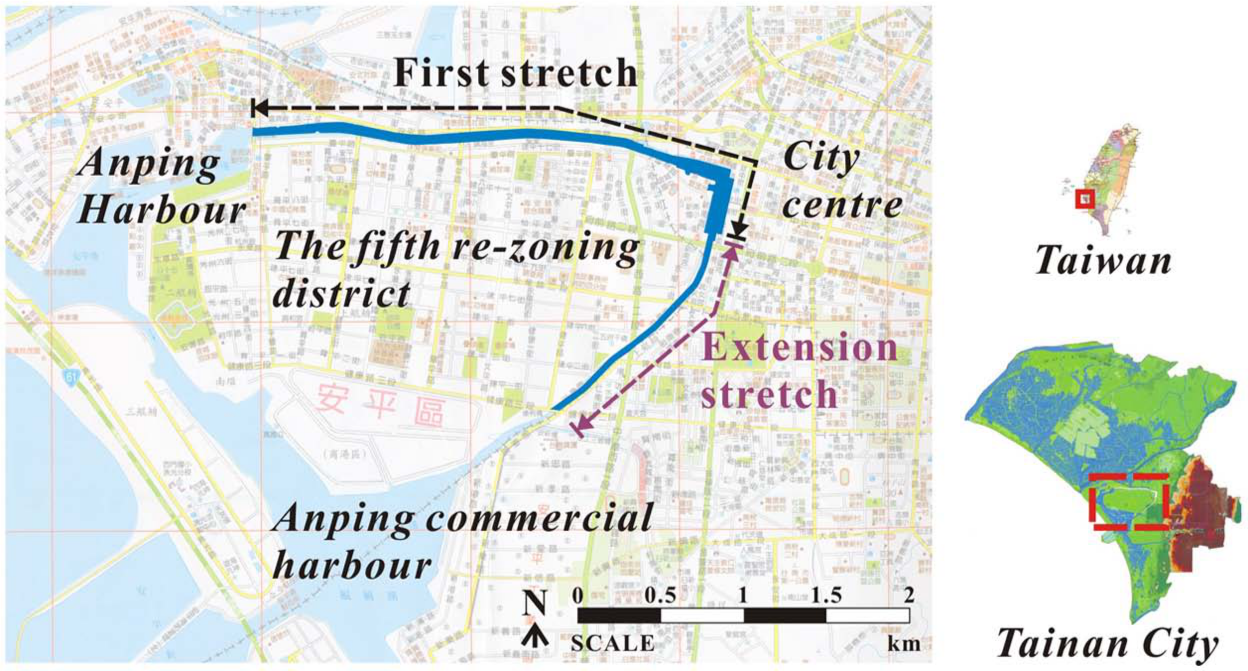
Location of the Tainan canal
Despite the implementation of recent improvement works, nearly all of the Tainan canal still experiences poor water quality, thus the outcome has not been successful.(30) This is mainly due to the fact that only 9.7 per cent of the citywide sanitary sewer system had been completed by the end of 2007.(31) Moreover, through on-site direct observation and from interviews, it was found that currently there are only five active sewage-intercepting stations, covering about half of the Tainan canal basin, to prevent insufficiently treated municipal wastewater from being discharged into the waterway. Almost half of the canal still suffers from untreated or partially treated municipal wastewater (Photo 1). Furthermore, the area that includes the 90-degree bend (Figure 1), where the canal’s self-cleaning capacity is limited, is the most polluted and thus a large quantity of toxic contaminants accumulates there.(32) During an interview, a local government official also noted this particular case of water pollution: “When flowing into this 90-degree section, water is almost stagnant … both mouths of the canal are certainly affected by the tide with a certain degree of self-cleaning capacity, but this stretch actually has very little tidal effect and therefore its self-cleaning ability is very limited.” (Interviewee IH5)
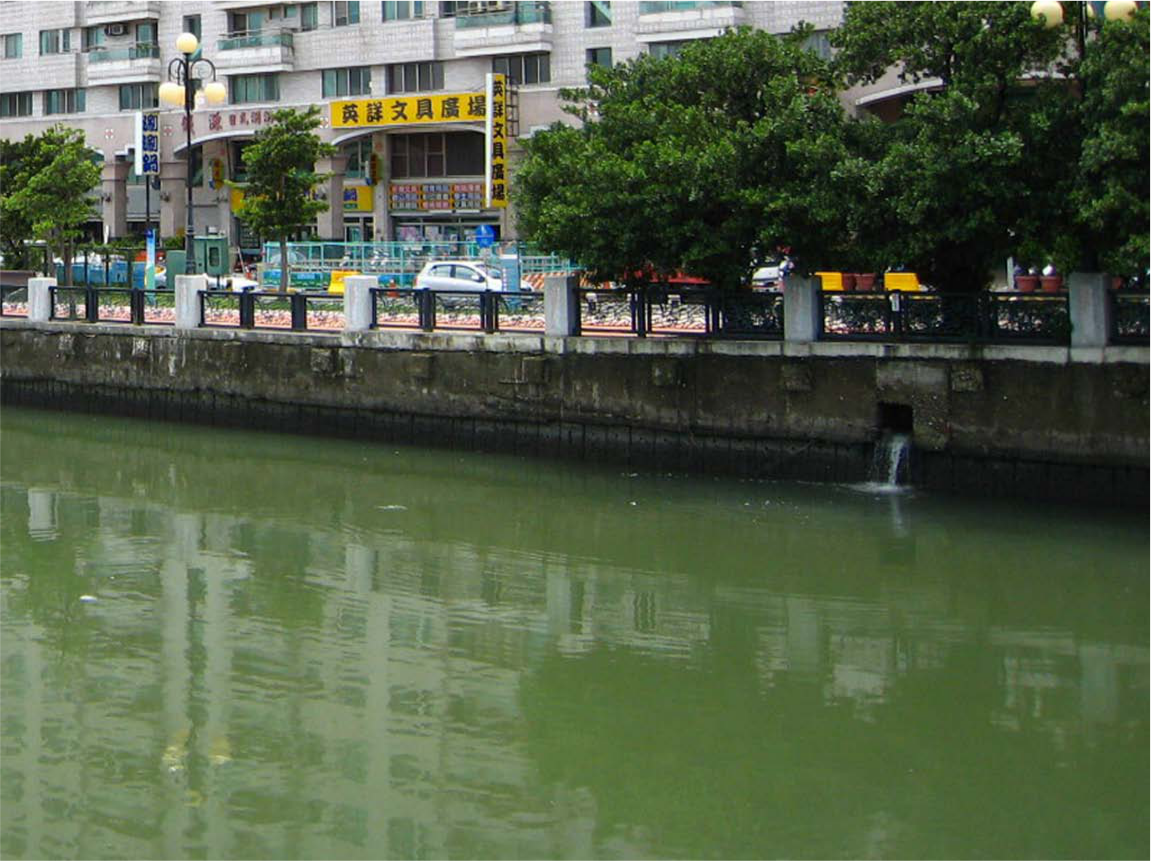
Municipal wastewater drains into the first stretch of the Tainan canal without adequate treatment
Overall, the poor water quality seems to have the greatest impact on the canal’s environmental function. For example, the canal repeatedly experiences a lot of dead fish floating on the water surface.(33) Clearly, the problem of water contamination is related to many factors, including a low completion rate of the sanitary sewer infrastructure, inadequate sewage-intercepting facilities alongside, and the limited self-cleaning capacity of the canal, especially in the stretch that includes the 90-degree bend. This influences the public health, amenity value, ecological benefits and water accessibility of the canal environment.
The Liugong dyke in the Taipei metropolitan area is the largest and best-known irrigation system in Taiwan’s history (Figure 2),(34) but it has lost its original irrigation purpose. Some canals have become open urban drainage channels, and others have been culverted underground to conceal the polluted water, or have been filled in to provide more land for recreational, transport, residential and other uses.(35)
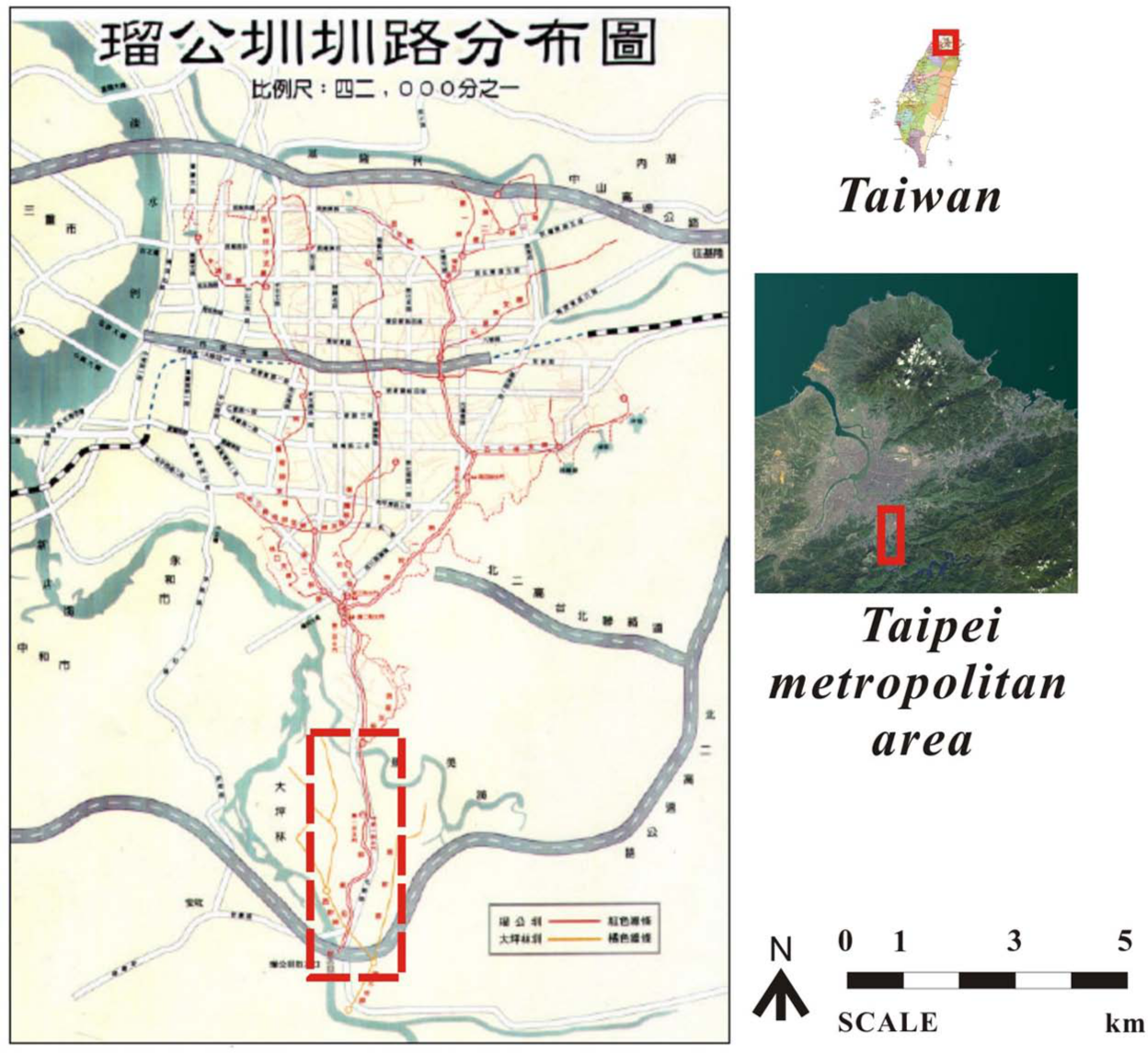
The Liugong dyke irrigation system (including small red and orange lines) and the demarcated study area (red dashed line)
The case study area is shown in Figure 2, outlined by the red dashed line. The reasons for its selection were first, that this stretch of the dyke is considered to have a greater potential for rehabilitation because more areas are still visible and not yet buried or culverted;(36) and second, the demarcated study area includes all four categories of adjacent land use. This area is non-tidal at five metres wide, three metres deep and with an average water depth of 0.2 metres on non-rainy days.(37) Extreme heavy rainfall events can cause large water level fluctuations, where the greatest water depth can be over the middle of the dyke.(38)
The stretch of dyke that was examined in this study is located within the older city districts, which comprise winding lanes and alleys. Many riparian houses (Photo 2) are built very close to the dyke and the waterway is hemmed in by adjacent buildings. The study area belongs to the Liugong Irrigation Association, while its actual management is handled by the local authority, the Sindian District Office under the Taipei county government.(39) The association provides the district office with NT$ 3.5 million (about UK£ 0.07 million) each year for clean-up and beautification works to the watercourse.(40)
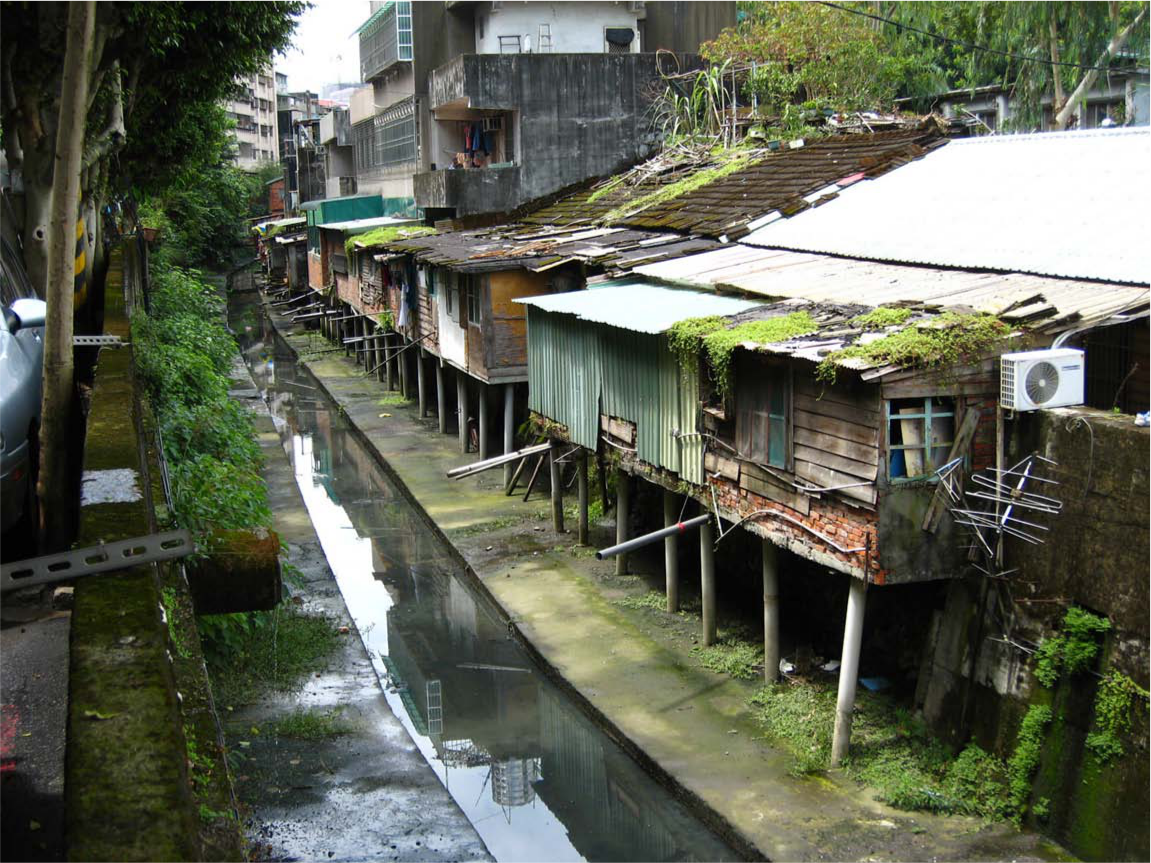
A row of vulnerable wooden houses is raised above the dyke bank and supported by timber posts; domestic wastewater drains into the Liugong dyke without sufficient treatment
Some dyke-side landscape improvement projects located within the study area have been conducted by Sindian District Office since 1997, but water quality has been critically degraded there mainly because only 3.2 per cent of the sanitary sewer systems within the administrative district where the dyke is located (Sindian) had been completed by the end of 2006,(41) and there are no related sewage-intercepting facilities in operation to stop insufficiently treated wastewater from riparian neighbourhoods from discharging into the urban dyke. In particular, as discussed earlier, in older dwellings that are not linked to public sewer infrastructure, domestic wastewater (except for human waste, which is first treated by septic systems) is directly released into the former irrigation watercourse. For example, Photo 2 shows that many drainage pipes of dyke-side houses are installed outside the buildings, and not only encroach on the water space but also contaminate the water body. Moreover, two traditional markets situated beside the dyke contribute to polluting the receiving water because a significant amount of commercial waste finds its way into the watercourse. These point sources of domestic and commercial wastewater can, without proper treatment, reduce the quality of both the local environment and the cityscape.
Environmental clean-up is also an important factor in the management of water quality, and the problem of inadequate environmental upkeep (for example, disposing of solid waste into the channel) affects many parts of the study area (Photo 3). The Liugong dyke has been managed as if it is an unimportant leftover,(42) a situation that seems to be linked to Sindian District Office lacking sufficient staff and funding for water governance.(43) However successfully the dyke-side landscape is improved, the poor in-channel environmental quality can still greatly diminish the achievement of watercourse rehabilitation.
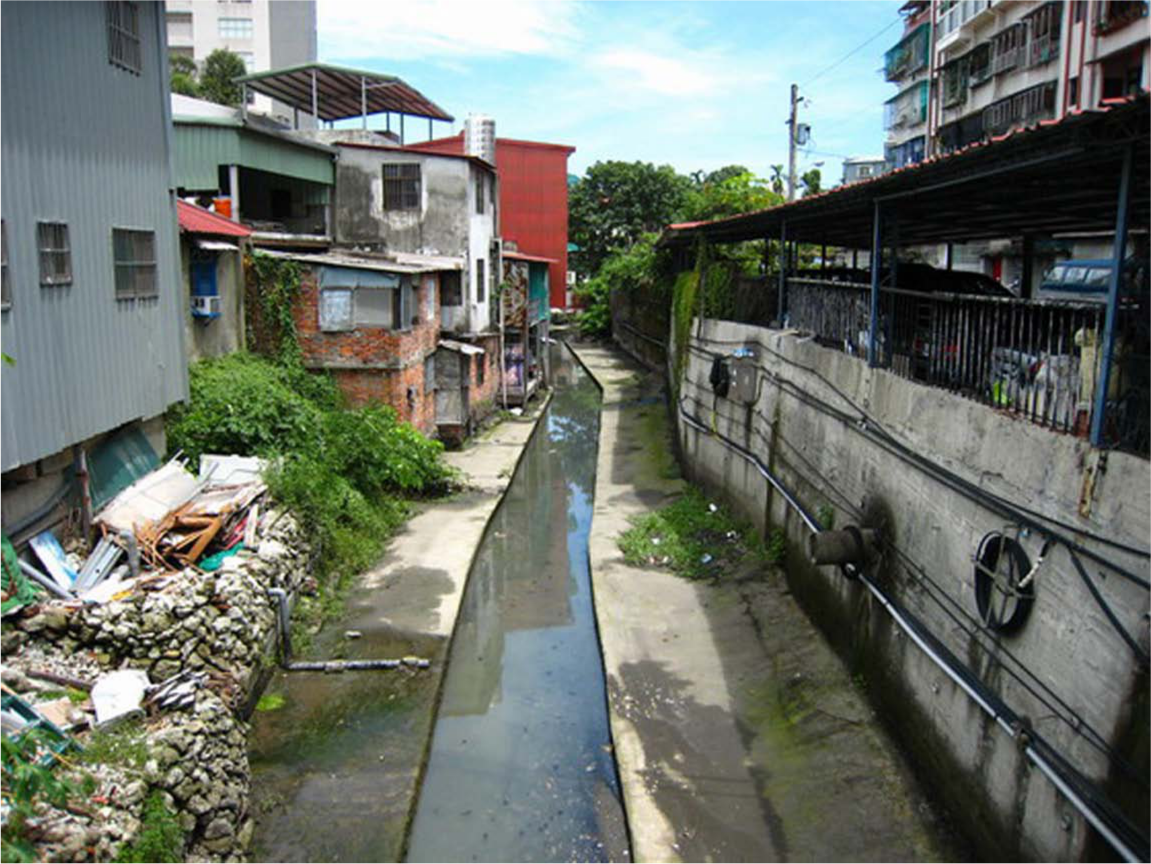
A one-time agricultural dyke, the Liugong dyke now serves as a site for abandoned domestic items and unrestricted cable line installations.
The Mei stream in Taichung city has long had a key role in the development of Taichung city, and the stream corridor is important for the city’s commercial, cultural and recreational areas (for example, green parkways) and major transport infrastructure (for example, bus routes).(44) However, owing to rapid urbanization since the 1970s, this principal natural stream has been heavily modified and engineered.(45) Due to channelization,(46) it does not follow the original path of a natural watercourse, and many parts are culverted underground to hide unsightly water contamination and to provide more land for other uses, such as parking, roads and green places.
The study area is about six kilometres long (Figure 3), and this non-tidal urban watercourse ranges from 2.8 to 3.6 metres deep and from 9.5 to 13.5 metres wide, with a water depth normally ranging between 27 and 40 centimetres.(47) During extreme rainfall events, the water level can nearly reach the adjacent ground level.(48) The study area is located in the highly populated downtown area, which includes venues for the city’s most vibrant cultural events, and includes all four categories of adjacent land use.
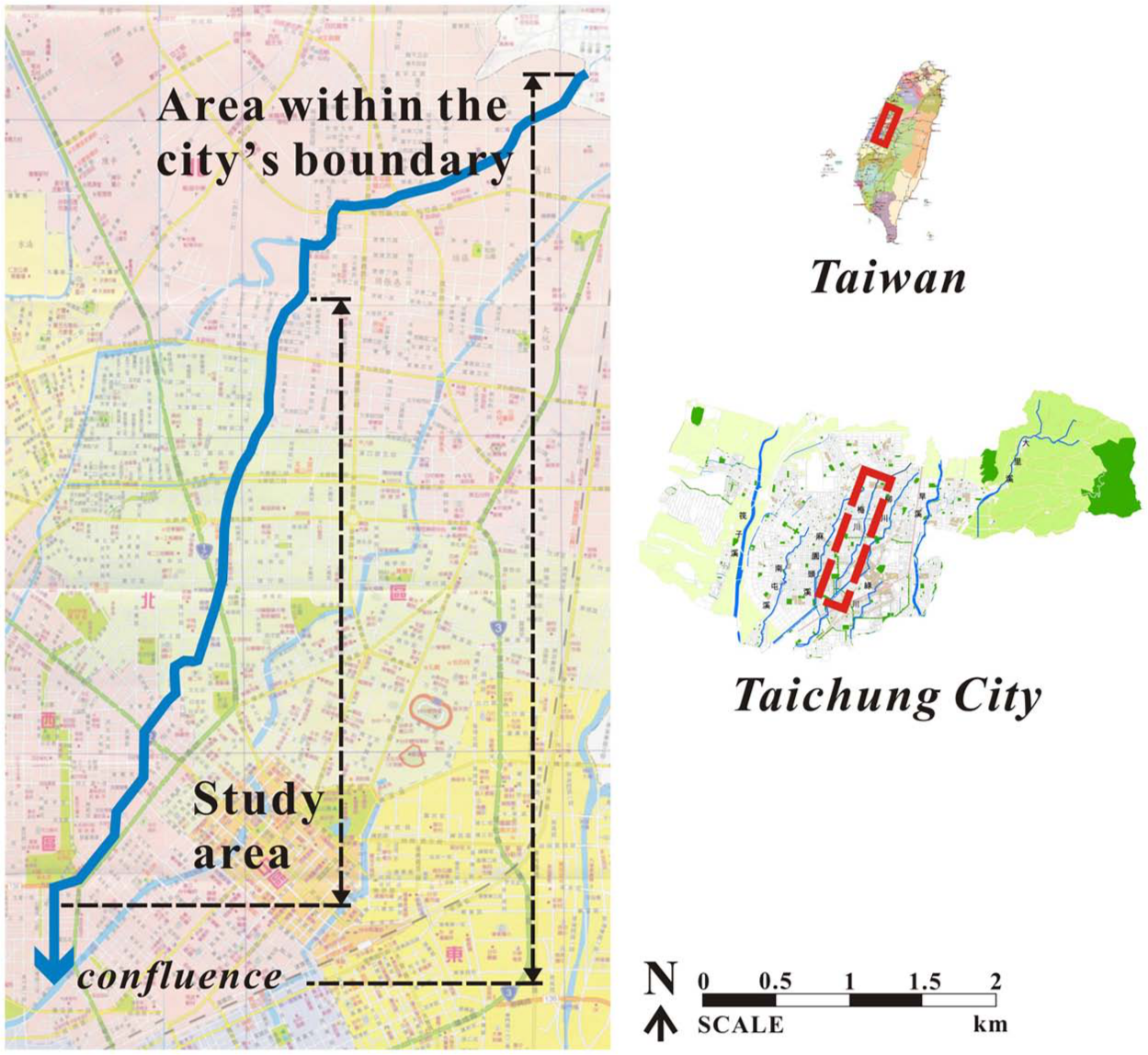
Location of the Mei stream and the demarcated study area
The Mei stream’s beautification scheme in 1979 meant many parts of it were concealed, and green parkways were largely built on top of the watercourse to provide people with recreational facilities.(49) This has not changed, as local communities want to keep the underground culverting, which conceals the polluted water. Besides the original beautification scheme, a plan entitled the Taichung City Mei Stream Green Beautification Scheme for improving a 600-metre stretch of the stream was completed in 2003.(50)
According to a local city government report, only 14.6 per cent of the citywide sanitary sewer infrastructure had been completed by the end of 2007.(51) Also, except for the 600-metre improved section mentioned above, there are no related sewage-intercepting facilities along the stream to prevent the riparian neighbourhoods’ inadequately treated wastewater from draining into the stream.(52) An observation of the water quality in the open stretches indicated that water pollution in the unimproved open sections is more serious than in the improved open section (Photo 4). A traditional night market, which is located in an unimproved area, contributes to the stream’s pollution. Although the local city government has made a large investment in establishing stream-side street trees and quality street furniture (for example, railings), the poor water quality still decreases its aesthetic value.
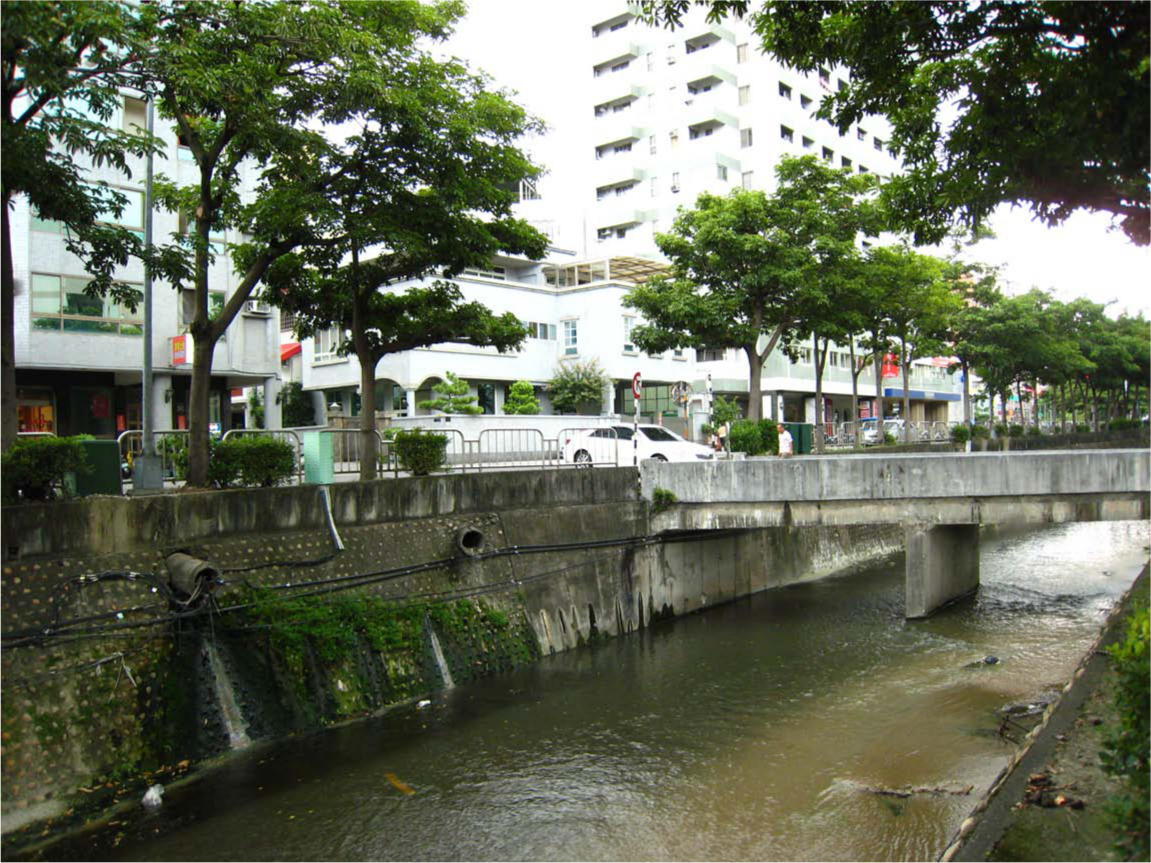
Severe water pollution in an unimproved open stretch of the Mei stream
The Love River in Kaohsiung city is a natural waterway running through the city’s central area. Within the study area (Figure 4), the river ranges from 72 to 116 metres wide and 5.35 to 5.65 metres deep.(53) As a tidal urban watercourse, through a link with the Kaohsiung Harbour, the Love River has an average water depth ranging from 3.00 to 3.72 metres within the study area.(54) As with the Tainan canal, the tidal character of the Love River brings a constant minimum water depth and a stable hydrological flow. The study area covers all four categories of adjacent land use. Four riverside landscape improvement projects were carried out between 2000 and 2003 at a total cost of NT$ 166 million (about UK£ 3.32 million).(55)
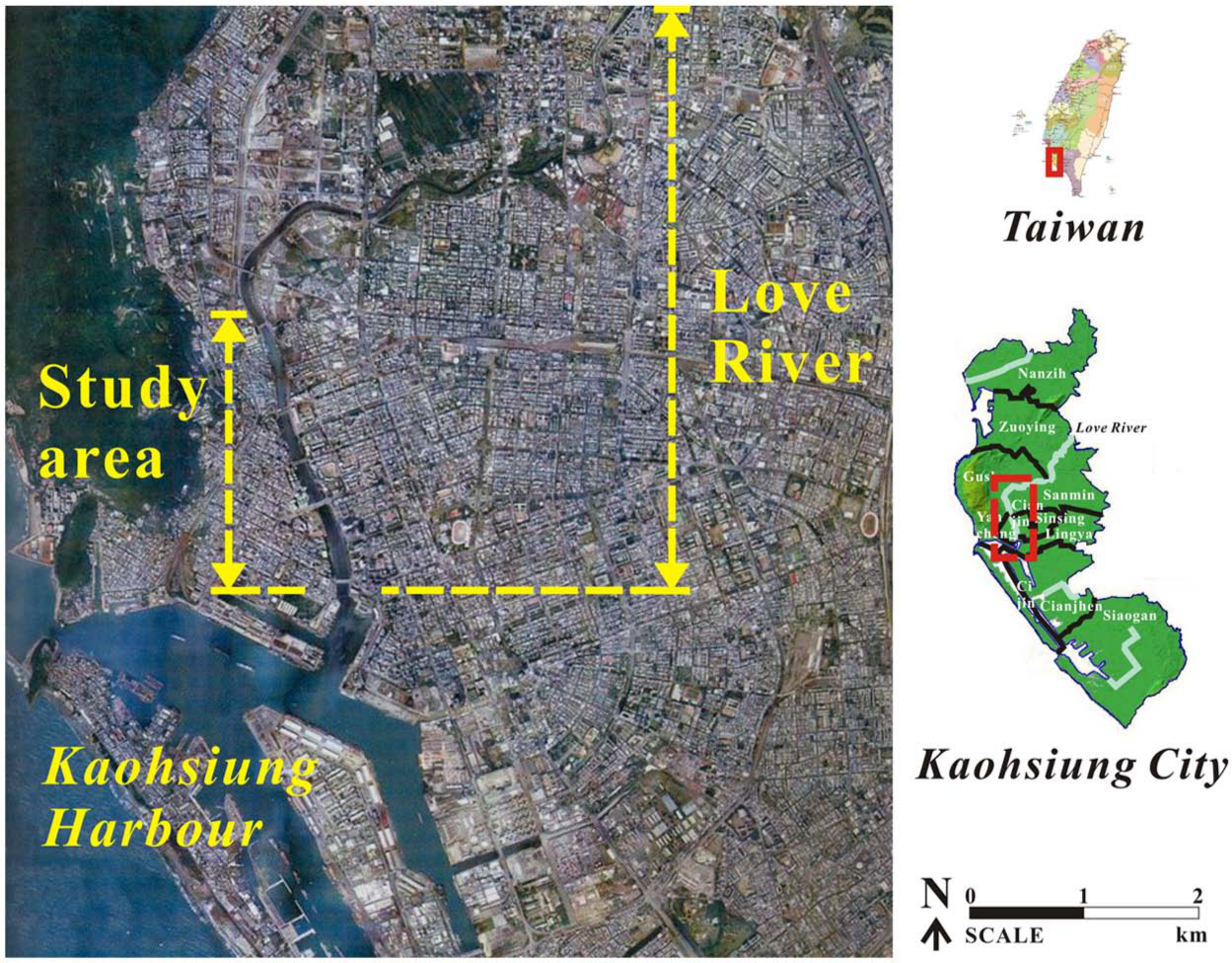
Location of the Love River and demarcated study area
There has been a great improvement in the water quality in the Love River as a result of riverside sewage-intercepting facilities and a large increase in city-related sanitary sewer systems.(56) This contrasts with the other three case studies, where the water quality is extensively contaminated by the insufficiently treated municipal wastewater. On-site direct observation and interviews established that in 2007, there were seven sewage-intercepting stations and related facilities in operation in the study area, which directly prevented the riparian neighbourhoods’ inadequately treated wastewater from discharging into the river. By 2005, the sanitary sewer infrastructure completion rate in the Love River basin was about 74 per cent.(57) The combination of these two measures has greatly reduced the problem of water pollution, and as a consequence recreational activities, such as water tours, are increasingly common. For example, travelling the Love River by “Love Boat” is now a popular activity, attracting a large number of visitors from throughout the nation.(58) This provides an example of how restoring a satisfactory water quality to a river may be the first step towards a successful water environment, with multiple benefits (for example, environmental, ecological and recreational).
In conclusion, through four case studies involving a navigation canal, an agricultural dyke, a stream and a river in major cities, the analysis shows that wastewater contamination and an insufficient clean-up of in-channel rubbish decrease the quality of receiving waters. Some areas of the case study watercourses are culverted underground, with the main intention of concealing unsightly water contamination. In addition, with the low completion rates for sanitary sewer infrastructure, both basin-wide and throughout the city, strategic placement of channel-side sewage-intercepting facilities can reduce the impacts of riparian wastewater on the watercourses.
IV. Watercourse Sanitation and Development
This paper has pointed to the severe problem of sewage contamination in Taiwanese urban watercourses, and the case studies have highlighted how the quality of the receiving waters influences the potential of urban watercourses. In Kaohsiung city, the high completion rate of basin-wide sanitary sewer systems, supported by the extensive use of sewage-intercepting facilities alongside the Love River, have greatly improved water quality. Such improvements allow the Love River to be a multi-functional urban channel, particularly in the provision of recreational water-related activities, which are rare in Taiwan. By contrast, the degree of wastewater contamination in the other three case study watercourses is severe. Here, channel-side residents are more likely to prefer to conceal the watercourse to hide unsightly pollution. For example, local residents of the Liugong dyke corridor have asked the authorities to expand the area of underground culverting to cover up the polluted water.(59) Water quality seems to be the principal factor in local people’s watercourse design preferences (i.e. concealment). This highlights both the need to improve water quality and also the inadequacy of current water management regarding the complex requirements of managing urban watercourses.
Since the 1980s, Kaohsiung city government has been carrying out a series of water quality improvement projects and has spent more than NT$ 25 billion (about UK£ 500 million), achieving a 40.2 per cent completion rate for the citywide sanitary sewer infrastructure (or 74 per cent of the basin-wide rate) by the end of 2005.(60) The sanitary sewer infrastructure completion rate in Taiwan increases by 1.43 per cent per year on average,(61) and now every one per cent requires a budget of more than NT$ 10 billion (about UK£ 200 million) on average.(62) Obviously, construction is time-consuming and demands considerable funding. More importantly, the actual benefit that local residents derive has to be based on a certain degree of completion of the infrastructure, which includes underground sewer pipes and treatment plants. Such works in Taiwan often require more than four years to complete,(63) which, coincidentally, is equivalent to the official term of local government leaders. Since gains are too small in relation to cost and time, and it is hard to show any achievement for the benefit of an election campaign, local politicians may not have any strong incentive to promote the related projects.
The central government recognized the issues discussed above, and supported local governments within the Water and Green Construction Plan with a total of approximately NT$ 72.5 billion (about UK£ 1.45 billion) to conduct related construction between 2002 and 2007.(64) This large investment increased the nationwide completion rate for sanitary infrastructure from 8.6 per cent to 17.2 per cent by the end of 2007.(65) Nevertheless, it is still at a very low level. Moreover, newspaper reports(66) reveal that connecting household sewers to the main pipe network could be a major difficulty during the construction of sanitary sewer systems. For example, the Liugong dyke runs through old urban neighbourhoods, with narrow winding streets and where the construction of illegal building extensions is commonplace. In this type of dense urban watercourse corridor, it is difficult to link household sewers to the main pipes. This may be a key cause of the low sanitary sewer system completion rate in the Liugong dyke basin, even though it is located in the Taipei metropolitan area where there is relatively more funding available for the related construction works.
The two case studies of the Tainan canal and the Love River show that the short-term strategy of building sewage-intercepting facilities alongside can prevent extensive point-source wastewater from discharging into the water bodies directly. This has mitigated the adverse impacts of the sub-standard completion rates for citywide sanitary sewer systems. The productive benefits were particularly emphasized in interviews with the government officials responsible for the related projects (IH5 and IH6). Regarding the design style for dealing with sewage-intercepting facilities in relation to watercourses, placing sewers below public walkways on both sides of the watercourse may be feasible in a constrained site. Compared to diverting the real, polluted stream flows into underground culverts, this design maintains the real, surface water flows and conveys the sewage in pipes concealed below walkways.
Such sewage-intercepting methods are, however, only a transitional management solution. Eventually, this short-term solution needs to be incorporated into the citywide sanitary infrastructure, and the completion rate for sanitary sewer systems in Taiwanese cities obviously needs to be intensified.
Thus, with regard to the urban watercourses that have been affected by wastewater pollution for a long time (for example, some areas of the Tainan canal and the entire stretch of the Liugong dyke and the Mei stream), the short-term strategy of building sewage-intercepting facilities underground on both sides of the channel, as illustrated in the re-design proposal for the Mei stream (Figure 5), is suggested as a way of coping with point-source wastewater from riparian areas. This aims to mitigate the environmental impact on receiving waters and the impact on public health prior to achieving a sufficient completion rate of the basin-wide, citywide or nationwide sanitary sewer infrastructure.
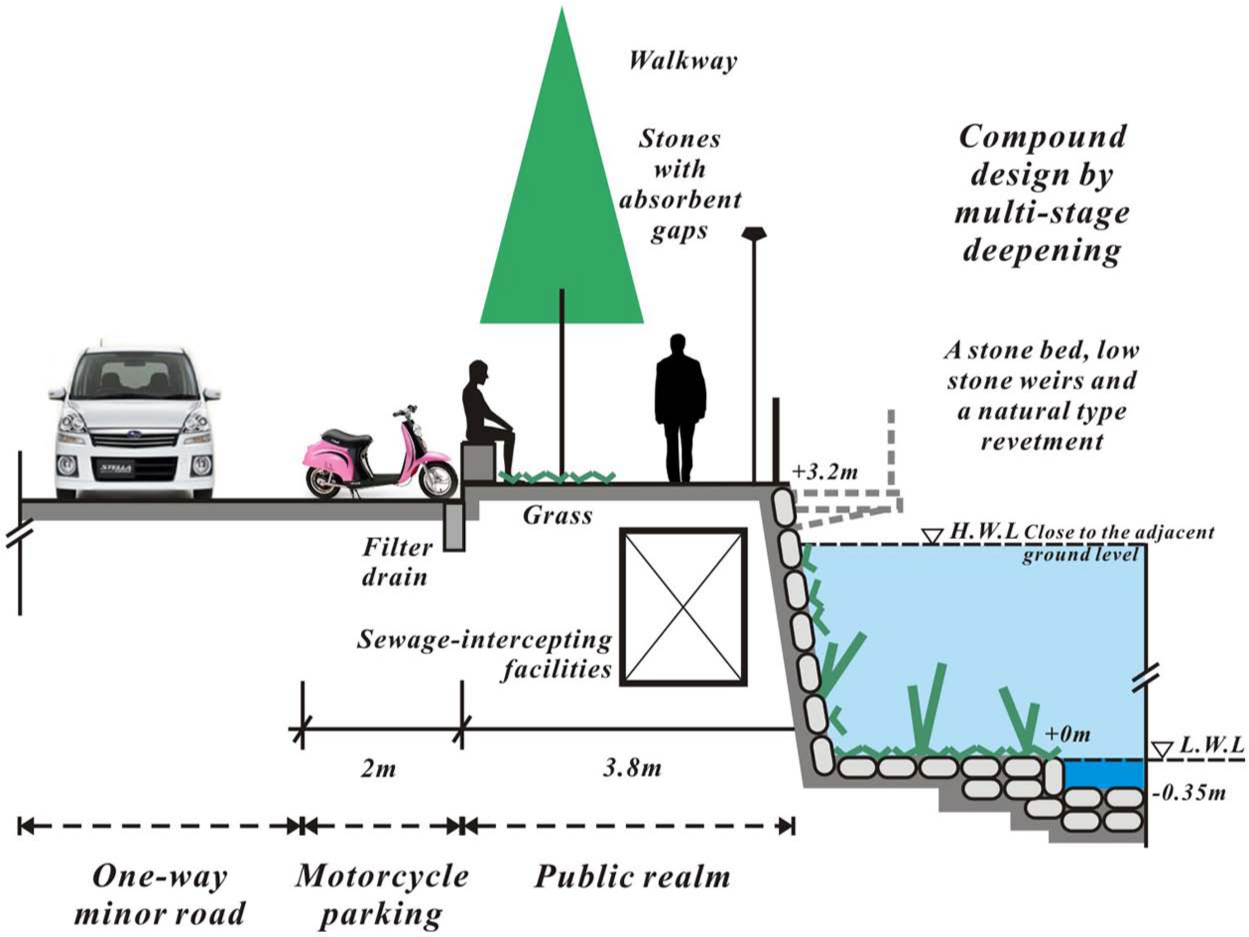
A re-design proposal for mitigating the environmental impact of riparian wastewater on water quality and public health in the Mei stream
One limitation of this study is that it did not include measures of water quality. The analysis in relation to water quality and environmental performance was mainly dependent on qualitative data (i.e. interviews, direct observation, photographs). The re-design proposal shown in Figure 5 provides an alternative viewpoint for how the Mei stream could be improved, but it needs further work (including hydrological analysis and tests).
V. Conclusions
Rapid urbanization has fundamentally changed the watercourse environment and, in the case studies discussed here, greatly increased water pollution. This has brought about environmental risks to both Nature and people. In terms of Taiwan’s urban watercourses, water contamination has been one of the major development issues, since the gap between water infrastructure and environmental management, in particular in a densely urbanized district, makes it difficult to manage municipal wastewater. Dense urban watercourse areas in Taiwan are likely to experience greater environmental issues related to water contamination, and will be more vulnerable to sub-standard public health.
As landscape design and ecological engineering dominate watercourse-related empirical research in Taiwan, the issue of watercourse sanitation needs to be discussed further. Through these four case studies (the Tainan canal in Tainan city, the Liugong dyke in the Taipei metropolitan area, the Mei stream in Taichung city and the Love River in Kaohsiung city), this paper has investigated the physical characteristics and development issues related to watercourse sanitation – and in particular the influence of wastewater contamination on dense urban watercourses. The paper also explored a short-term transitional approach to mitigate the impact of wastewater contamination on receiving waters and public health. The main findings can be summarized as follows:
Wastewater contamination and insufficient clean-up of in-channel solid waste are the key environmental factors affecting the health of dense urban watercourses.
The case studies illustrate an important social dimension – that local people want the polluted streams to be covered.
With the low completion rate of municipal sanitary sewer systems, the setting up of channel-side sewage-intercepting facilities is effective against riparian, insufficiently treated wastewater in the short term.
Water quality improvement may be the first step towards achieving multiple roles for watercourses (i.e. environmental, ecological and recreational). Besides the long-term, time-consuming development of municipal sanitary sewer infrastructure, establishing sewage-intercepting facilities along watercourses has been identified as a short-term, transitional strategy to mitigate the environmental threats to urban health caused by wastewater. It is important to note that an isolated stretch of sewage-intercepting facilities will be of limited benefit; these need to be positioned along the entire upstream stretch. With the aim of striking the appropriate balance between different societal objectives, the re-design proposal offers a different view of how the case study watercourses could be improved towards multi-functionality.
Footnotes
1.
Breen, A and D Rigby (1996), The New Waterfront: A Worldwide Urban Success Story, Thames and Hudson, London, 224 pages.
3.
Douglas, I (1999), “Physical problems of the urban environment”, in M Pacione (editor), Applied Geography: Principles and Practice, Routledge, London, pages 124–134.
4.
Dunne, T and L B Leopold (1978), Water in Environmental Planning, W H Freeman and Company, San Francisco, 818 pages.
5.
Bridgman, H, R Warner and J Dodson (1995), Urban Biophysical Environments, Oxford University Press, Melbourne, 152 pages.
6.
Gaffield, S (2004), “Water quantity and quality”, in H Frumkin, L Frank and R J Jackson (editors), Urban Sprawl and Public Health: Designing, Planning and Building for Healthy Communities, Island Press, Washington DC, pages 123–136.
7.
UN–Habitat (1996), An Urbanizing World: Global Report on Human Settlements 1996, Oxford University Press, London, 559 pages; also  , Cities in a Globalizing World: Global Report on Human Settlements 2001, Earthscan Publications Ltd, London, 344 pages.
8.
See reference 7.
9.
11.
See reference 7.
12.
Hou, J S and Y K Zhuang (2003), “Improving waterfront landscape”, Civil and Hydraulic Engineering Vol 30, No 3 (in Chinese), pages 27–38.
13.
Lin, S H and C W Tsai (2007), “Development of ecological engineering and analysis of applied cases”, Proceedings of Eco-engineering and Biodiversity Conference, National Taiwan University (in Chinese), pages 1–14.
14.
15.
Chen, H C (2000), “The regeneration and revitalization of urban waterfront: a study on land use and water accessible space of urban waterfront in Tainan”, unpublished Master’s thesis, National Cheng Kung University, Taiwan (in Chinese), 316 pages.
16.
Shen, Y C (2001), “The regeneration and revitalization of urban historical waterways: case study, Liougong irrigation waterway in National Taiwan University”, unpublished Master’s thesis, National Taiwan University, Taiwan (in Chinese), 174 pages.
17.
See reference 14.
18.
Lee, S H, J S Hou and Y J Chen (2000), “Public preferences towards landscape design of urban waterfronts”, Journal of Landscape Vol 6, No 1–2 (in Chinese), pages 55–69.
19.
DGBAS (Directorate General of Budget, Accounting and Statistics) Taiwan (2008), “National statistics”, accessed 15 January 2009 at (in Chinese).
20.
21.
Lin, H M (2000), “Taiwan’s rivers”, in S H Chinag (editor), Taiwan’s Physical Geology Vol 1, Council for Cultural Affairs, Taiwan (in Chinese), pages 129–152.
22.
CNA News (2009), “A six-year plan for sanitary sewer systems”, 4 May, accessed 5 June 2009 at (in Chinese).
23.
EPA (Environmental Protection Administration) Taiwan (2006), “Sanitary sewer systems and management of domestic wastewater”, accessed 5 June 2009 at http://www.epa.gov.tw/ch/SitePath.aspx?busin=235&path=527&list=527 (in Chinese).
24.
Lin, M L and S Wang (2002), Taiwan’s Rivers, Walkers, Taipei (in Chinese), 215 pages.
25.
See reference 14.
26.
27.
See reference 15.
28.
See reference 26.
29.
Tainan City Government (2007b), “News – Tainan canal’s water quality improvement”, accessed 3 November 2007 at http://www.tncg.gov.tw/news.asp?SUB1=H1&SUB2=03&SUB3=06&ID={0963065D-296A-4743-BAF5-409B925B8FE5} (in Chinese).
30.
Interviewee IH5; also see reference 29.
31.
Tainan City Government (2007a), “News – sanitary sewer systems construction”, accessed 17 November 2007 at (in Chinese).
32.
See reference 29.
33.
Liberty Times (2008a), “Lots of dead fish floating on the Tainan canal”, 2 April, accessed 19 March 2009 at (in Chinese).
34.
35.
Chuang, Y T (2001), “Study on investigation of development history and recycling of dyke used for agricultural irrigation within city: taking the Liugong dyke in Hsinten city as an example”, unpublished Master’s thesis, Tamkang University, Taipei (in Chinese), 90 pages.
36.
Lu, C J and C G Yo (2001), “Liugong dyke”, The Earth Vol 165 (in Chinese), pages 58–91; also see reference 34.
37.
See reference 35.
38.
Interviewee IH3; also see reference 35.
39.
Interviewee IH3.
40.
Shih Hsin University Newsweek (2009), “Liugong dyke affected by the messy Baoan Street market”, accessed 12 July 2009 at (in Chinese).
41.
Taipei County Government (2006), “News”, accessed 19 November 2007 at http://www.info.tpc.gov.tw/web/News?command=showDetail&postId=141218&groupId=8742 (in Chinese).
42.
Interviewee IH4.
43.
Interviewee IH3.
44.
45.
Tseng, B S (2003), “An exploratory study of residents’ place attachment toward Mei stream park in Taichung”, unpublished Master’s thesis, Chaoyang University of Technology, Taichung (in Chinese), 140 pages.
46.
47.
See reference 46.
48.
Interviewee IH2; also United Daily News (2001), “Rapid rise of water levels in Taichung city’s watercourses”, 18 September, accessed 20 April 2008 at (in Chinese).
49.
See reference 44.
50.
See reference 45.
51.
Taichung City Government (2007), “News – the promotion of sanitary sewer systems by the central and local government”, accessed 15 January 2008 at http://www.tccg.gov.tw/sys/msg_control?mode=viewnews&ts=47639403:295 (in Chinese).
52.
Interviewees IH1 and IH2.
53.
Lin, C R (2006), An Innovative Strategy for Managing City Space – The Three Cases of Taipei, Hsinchu and Kaohsiung, Third Nature Publishing, Taipei (in Chinese), 623 pages.
54.
Chen, Y T (2007), “Effect of currents and waves on ADCP echo intensity”, unpublished Master’s thesis, National Sun Yat-Sen University, Kaohsiung (in Chinese), 62 pages.
55.
See reference 53.
56.
Interviewee IH6.
57.
See reference 53.
58.
Hsu, C C (2006), “Living by water”, Taiwan Architect Vol 376 (in Chinese), pages 113–116.
59.
See reference 40.
60.
See reference 53.
61.
TEIC (Taiwan Environmental Information Centre) (2008), “Towards 2008: sanitary sewer systems and BOT”, accessed 31 March 2008 at (in Chinese).
62.
NPF (National Policy Foundation) Taiwan (2006), “Sanitary sewer systems and BOT”, accessed 31 March 2008 at http://www.npf.org.tw/particle-1698-2.html (in Chinese); also Liberty Times (2009), “3% of the nationwide sanitary sewer infrastructure completion rate needs NT$ 30 billion”, 7 September, accessed 17 July 2009 at (in Chinese).
63.
CPA (Construction and Planning Agency) Taiwan (2003), “Sewer information network”, accessed 15 April 2008 at (in Chinese).
64.
CEPD (Council for Economic Planning and Development) Taiwan (2008a), “Report on Challenge 2008 – national development plan”, accessed 4 February 2009 at http://www.cepd.gov.tw/m1.aspx?sNo=0010257&ex=%20&ic= (in Chinese).
65.
See reference 61.
66.
See, for example, Liberty Times (2008b), “Sanitary sewer systems in Tainan city”, 26 February, accessed 15 April 2008 at (in Chinese).