



Abstract
This paper describes the design and application of a benefit-cost model to the city of Durban’s (South Africa) climate change adaptation options. The approach addresses the inability to compile an accurate damage-cost function for economic prioritizations at the local level. It proposes that uncertainty over climate impacts and the efficacy of adaptation responses, in conjunction with the lack of economic data, high levels of economic informality and inequality make it difficult to link adaptation efforts to positive GDP impact in Durban. Instead, the research based its calculations of “benefits” on the number of people impacted and the extent of the welfare benefits imparted by the respective adaptation efforts. It also took into account the uncertainty over future events, capacity constraints, priorities of decision makers and the risk of maladaptation. The results were reported as benefit-cost ratios for 16 clusters of interventions (many of which were primarily the responsibility of one municipal department or agency) in each of four future scenarios (defined by minor or major climate change and weak or strong socio-institutional capacity). The paper presents and discusses the benefit-cost ratios and total benefits for each of the intervention clusters in each of the future scenarios. It emphasizes how these are influenced by choices of time frames. It also highlights how the most efficient interventions across all futures and time frames tend to be socio-institutional – for instance the creation of a cross-sectoral disaster management forum, sea level rise preparedness and early warning system, and creating climate change adaptation capacity within the water services unit. Ecosystem-based adaptation measures had moderate benefit-cost ratios, probably because in Durban the land that needs to be purchased for this is relatively expensive. Infrastructure-based clusters generally had the lowest benefit-cost ratios.
I. Introduction
Cities have begun responding to climate change impacts in a variety of different ways. Urban environments, especially in the global South, are places of flux, and the ongoing changes to their spatial form, infrastructure and functioning offer opportunities to increase adaptive capacity and reduce climate risk in ways, and with an urgency, that are not always available to nation states and protracted international negotiation processes. It is, however, too early to pronounce on the success or otherwise of city-scale climate change adaptation programmes.(1) On the contrary, the international advocacy for radical, rapid and transformative change(2) is supported only by anecdotes of the nascent efforts of cities that have tentatively begun to engage the challenge.
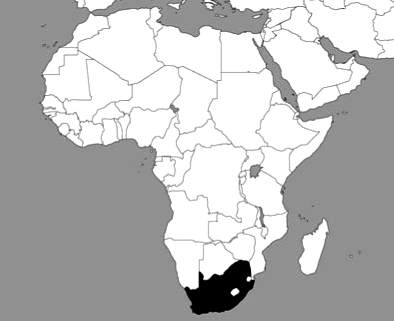
Among the pioneering cities, Durban has established a reputation as an early adaptor(3) – a status that contributed to the city being awarded the right to host the United Nations Framework Convention on Climate Change’s Conference of Parties (COP17/ CMP7) in 2011. Durban is a middle-income African city of 3.6 million people residing under highly unequal social, economic and environmental conditions. It is the anticipation that climate change could undermine development efforts and exacerbate the plight of the city’s most vulnerable residents that has given rise to a strong adaptation effort. The urban landscape in Durban is a composite of commercial buildings, formal and informal settlements and peri-urban agricultural land. Most of the city’s poorest people live on the municipality’s environmentally compromised fringes, far from economic and employment opportunities in the city centre. This disparate socioeconomic context places a premium on development and the creation of economic opportunities, and necessitates that development priorities be considered in climate change adaptation efforts.
The climate adaptation work of eThekwini Municipality (the local government responsible for planning and managing the city of Durban) is coordinated under the Municipal Climate Protection Programme (MCPP). The approach adopted by the MCPP(4) suggests that climate change adaptation in Durban needs to move beyond decisions regarding “…what [in the natural and social environment] is to be preserved and what is expendable” to a better understanding of what “…can be reformed or gained.”(5) In this way the programme sets its sights not on “functional persistence”,(6) but on transforming Durban’s development pathway.
II. Understanding the Decision-making Challenge in a Middle-income African City
In the quest to anticipate Durban’s adaptation needs, eThekwini Municipality has gone to considerable lengths to understand current and future climate change risks.(7) Unusually for a developing country city, it has also formulated responses to these risks: in 2009, a study of the options in the water, health and disaster management sectors identified 47 sector-specific municipal adaptation options, some of which are currently being implemented.(8) The implementation of these options competes for resources and political support with other development processes and projects in the municipality. It is therefore important that proposed climate change adaptation projects deliver as much benefit as possible, that this benefit relates not only to climate challenges but also to infrastructure and service delivery backlogs, inequality and the lack of economic opportunity that define the city of Durban, and that these options deliver benefit in a manner that makes efficient use of the available resources.
Confronted with the challenge of prioritizing its 47 sector-focused adaptation options, the local municipality developed an innovative benefit-cost model that moved beyond a simple focus on “…the preservation of an economic core”(9) to a more complex consideration of human and ecosystem well-being. This paper describes the process and applied approach, as well as some of the implications that have emerged for decision-making in Durban in the face of climate change uncertainty.
III. Challenges in Applying Economic Evaluation Tools to Climate Change Adaptation Decisions
For some time economists have been calculating the costs and benefits of reducing greenhouse gases.(10) There have also been various attempts to estimate the aggregate cost of adapting to climate change.(11) Global estimates are useful in highlighting the scale of the issue, in drawing attention to the economic consequences of climate change and in mobilizing political support for financing facilities. They do not, however, bring local values and priorities to bear on difficult trade-offs, and as such do not always assist local decision makers in identifying or prioritizing locally appropriate adaptation options. Furthermore, while most local decision makers are able to testify to the economic impact of climate change and the costs associated with adapting to climate change, there are profound data, capacity and conceptual difficulties in applying conventional benefit-cost instruments to local options.(12)
In 2009, researchers at the McKinsey group attempted to rank climate change adaptation options in seven countries according to benefit-cost ratios. The research received much exposure but also highlighted the awkward position occupied by the discipline of economics in relation to climate change and environmental sustainability.(13) More specifically, the McKinsey study exposed issues around the manner in which benefit-cost analyses incorporate climate and socioeconomic uncertainty, evaluate the adaptation services and goods provided by functional ecosystems, calculate the notion of benefit and attribute benefit to a particular adaptation intervention. The study also grappled with the disconnect between many climate change adaptation interventions and pre-existing sustainable development programmes. These issues are discussed in more detail below. While some of them emanate from the paucity of local data, others are more fundamental.
•
•
•
•
•
•
The limitations of traditional benefit-cost approaches in the context of climate change adaptation do not render economic analyses obsolete. Recognizing that climate change will impose costs, that climate change decisions have economic consequences, and that budgets are finite and so need to be allocated so as to ensure the best possible outcome remains critical.(23) The challenge is for the discipline of economics to adjust its analytical instruments in order to make them relevant to the defining attributes of local climate change adaptation decisions.
IV. The Application of a Benefit-cost Analysis to eThekwini Municipality’s Adaptation Options
The economic prioritization adopted by eThekwini Municipality sought to take cognisance of the difficulties and lessons drawn from past applications of economic instruments to climate change adaptation.
The first significant innovation involved defining what was to be evaluated for cost and benefit. Municipal officials and local experts clustered the 47 adaptation options into 16 work streams called Municipal Adaptation Clusters (MACs). The MACs were comprised of complementary interventions aimed at addressing a category of climate-related risk, such as sea level rise and storm surge, terrestrial flooding, food insecurity or discordant socio-institutional responses. The clustering of interventions provided a more accurate representation of the programmatic manner in which climate risk in Durban is planned and implemented, and avoided the difficulty of trying to attribute an observed benefit to a set of similar but discrete interventions. It proved easier to attribute a benefit to a cluster of similar interventions than to disaggregate and apportion benefit to discrete interventions that have very similar objectives. Crucially, most clusters remained the exclusive responsibility of a single eThekwini Municipality department, in keeping with the local experience that in-silo responsibility enables more rapid action and that in-sectoral action is a useful pre-requisite for integration across sectors.(24)
It was the MACs that were evaluated for benefit and cost. Before this was done, however, local officials evaluated each MAC in terms of a set of criteria that included the likelihood of political support, historic effectiveness of the particular approach, job creation potential, maladaptation risk, and technical complexity in relation to available skills. The multi-criteria assessment sought to reflect the intrinsic merit of each MAC and, although only a small influence on the final ranking, it was considered important to counter the inability of cost and benefit to capture many of the determinants that local decision makers consider to be important to the success and failure of adaptation efforts.
The “cost” of each MAC was estimated using conventional financial approaches. The discounted value of the cost of implementing each MAC was calculated, taking into consideration the extent of capital expenditure and operating expenditure, the start and end date of capital expenditure, whether or not operational costs were recurring, and the period over which the intervention required operating expenditure. Costs, both capital and operational, were obtained from the respective departmental budgeting sources.
The approach to calculating “benefit” was unconventional in that it did not rely on a notion of foregone income or GDP. In a protracted process, the researchers drew on the experience of local experts and Durban officials and census data to compile a composite, people-centred benefit metric for each MAC. The metric was comprised of the product of the number of people benefiting from a particular intervention, the frequency with which those people benefited and the extent of the benefit that was imparted on different sub-sets of those people benefiting. The extent of benefit was classified as “had their lives been saved”, or “significant”, “moderate” or “small” improvements in their well-being, and weighted 0.7, 0.2, 0.07 and 0.03, respectively. By multiplying the weights by the number of benefiting people and the frequency with which they benefited, a “population impact equivalent” was obtained. It is proposed that in Durban this “population impact equivalent”, when adjusted by the multi-criteria assessment mentioned above, represents a more suitable proxy for “benefit” than a GDP or financial value, for three reasons. First, it places people and their well-being at the centre of adaptation efforts and values people equally irrespective of their income. Second, it circumvents the limitations of GDP with regards to informal economic activities and environmental value. Third, while financial and GDP data at the local level are poor, census data are generally quite good and easily accessed.
Implicit in the manner in which the benefit-cost model was constructed was the recognition that there are aspects of Durban’s future that are inherently unknowable.(25) Not only was it impossible to predict the timing, nature and consequences of climate impacts in Durban (and hence the inability to construct a damage-cost function), it was also important to recognize different possible climate and socio-institutional futures, the implications of these differences for what are perceived to be benefits and costs, and the likelihood that different decision makers would make very different assumptions regarding the future when planning climate change adaptation interventions. In developing a benefit-cost model with eThekwini Municipality officials, it was deemed important to accommodate different possible futures and to make transparent the influence of subjective assumptions regarding the future on the computation of benefit and cost. To achieve this, decision makers were required to specify one of four possible future scenarios for which they were planning. The possible futures were illustrated by two intersecting axes, namely the “extent of sustainable development and socio-institutional capacity” and the “extent of climate change severity” (Figure 1). The vertical axis represents a non-ordinal collection of plausible socioeconomic, environmental, political and institutional capacities to respond to climate change. Considerations on this axis could include (but are not restricted to) the Human Development Index (HDI) and measures of institutional capacity for governance. The horizontal axis reflects degrees of climate change intensity as manifest in local impacts such as the frequency of floods or by observed changes in ambient temperature or sea level. The choice of future, for which adaptation decisions were to be made, lay with the decision maker and was subjective. However, the choice triggered different social discount rates (SDRs) that capture perceptions of future risk and different levels of efficiency with which adaptation takes place, and as such the choice of a specific future influenced the model outcome.
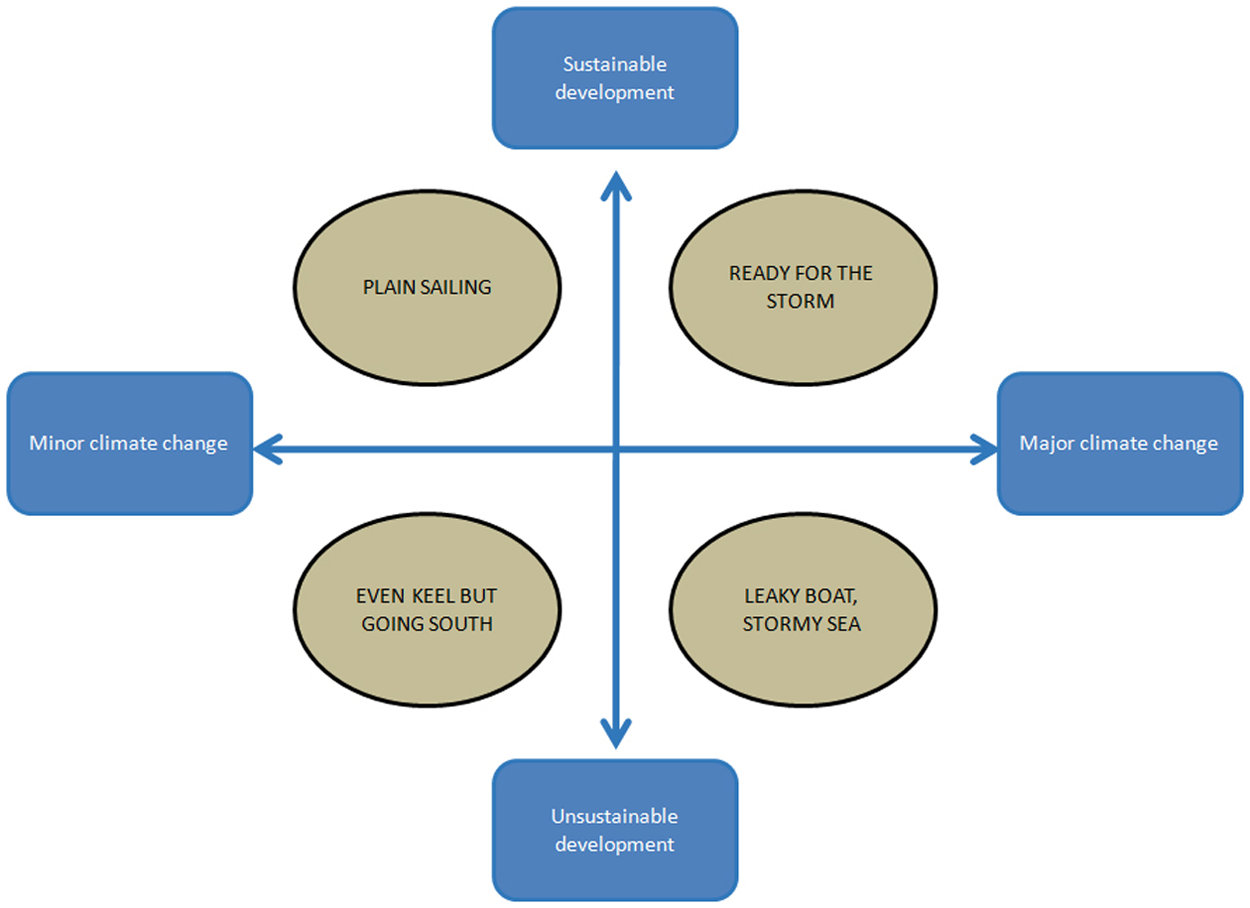
Alternative future decision-making environments in Durban
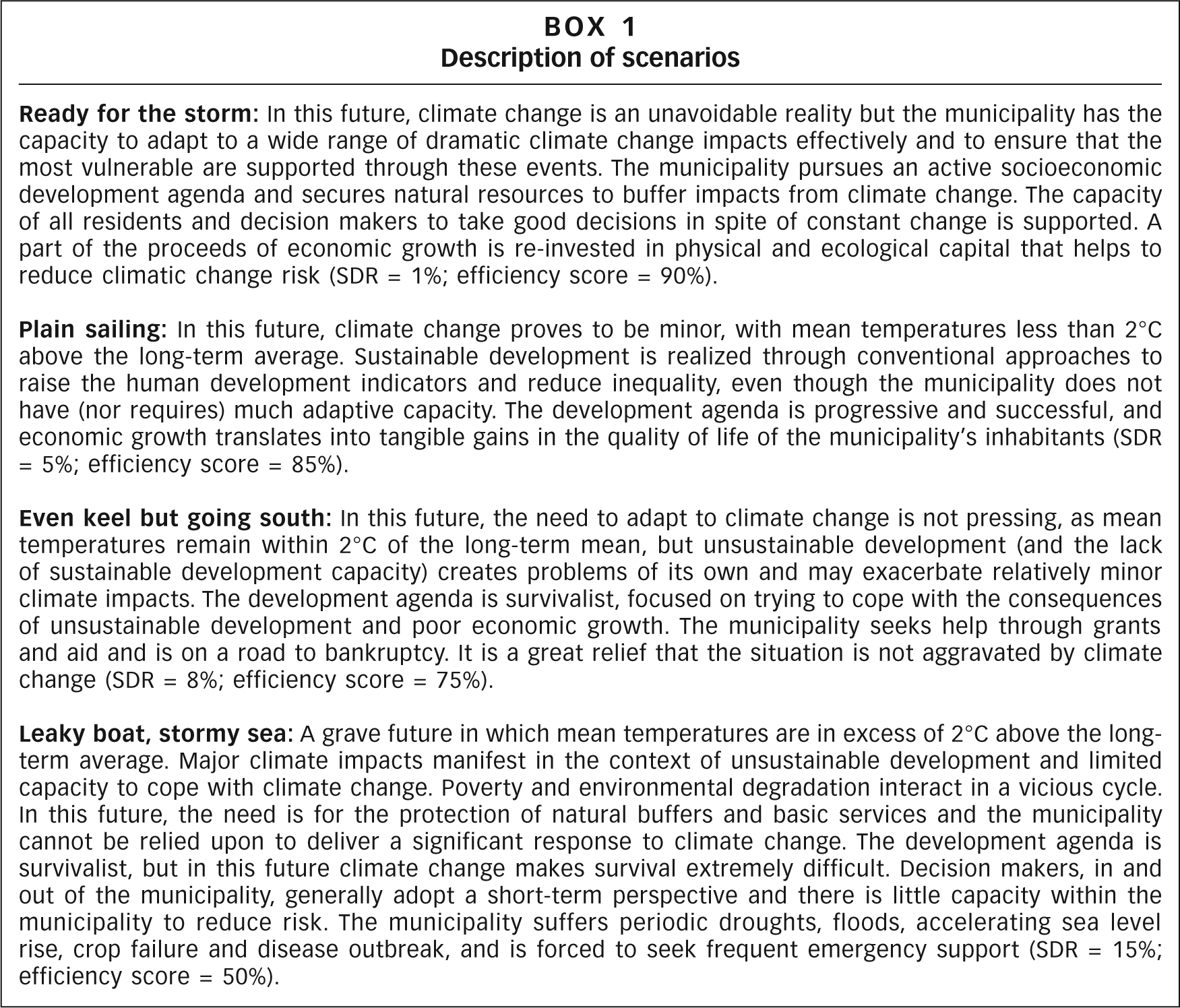
The axes mapped a suite of possible futures for which local decision makers might be preparing. All positions on the axes were considered possible and the quadrants did not constitute a normative judgement on the future of Durban. Crucially, however, the discount rate applied to costs and benefits differs in each of the four quadrants, as does the efficiency with which benefits are generated (Box 1), and as a result the choice of scenario triggers different modelling assumptions that impact on the ultimate benefit-cost ranking. The requirement for decision makers is not to work out exactly where on the axes a city such as Durban is or should be located – that is likely to remain a matter of opinion – but to recognize that different future circumstances will influence which adaptation options are most effective. Neither is it essential that all decision makers agree on the circumstantial content of each quadrant, or that the quadrants be precisely defined. Rather, the quadrants provide a means of tracing the model outcomes back to modellers’ assumptions, which makes these assumptions accountable in the midst of innate uncertainty. The axes, in this way, enable decision makers to take “…informed, if subjective decisions”,(26) to trace the origins of subjectivity and to compare the relative merits of different adaptation options in terms of a range of possible futures.
Once the decision maker had selected a future to which they were seeking to adapt, the model required them to select the duration of that future. The choice was between the short term (0–4 years), medium term (0–50 years) or long term (0–100 years).
In this way the model combined both qualitative and quantitative data. While it relied, for its qualitative elements, on the opinions of local experts and the assumptions of decision makers, it set out to make the impact of subjectivity on its findings explicit. In doing this it not only aimed to reduce the risk of model abuse in order to justify preordained decisions, but also required local officials to recognize key attributes of the decisions and the decision-making context in which they operate. Figure 2 illustrates the multiple steps required to generate a benefit-cost ratio using the model.
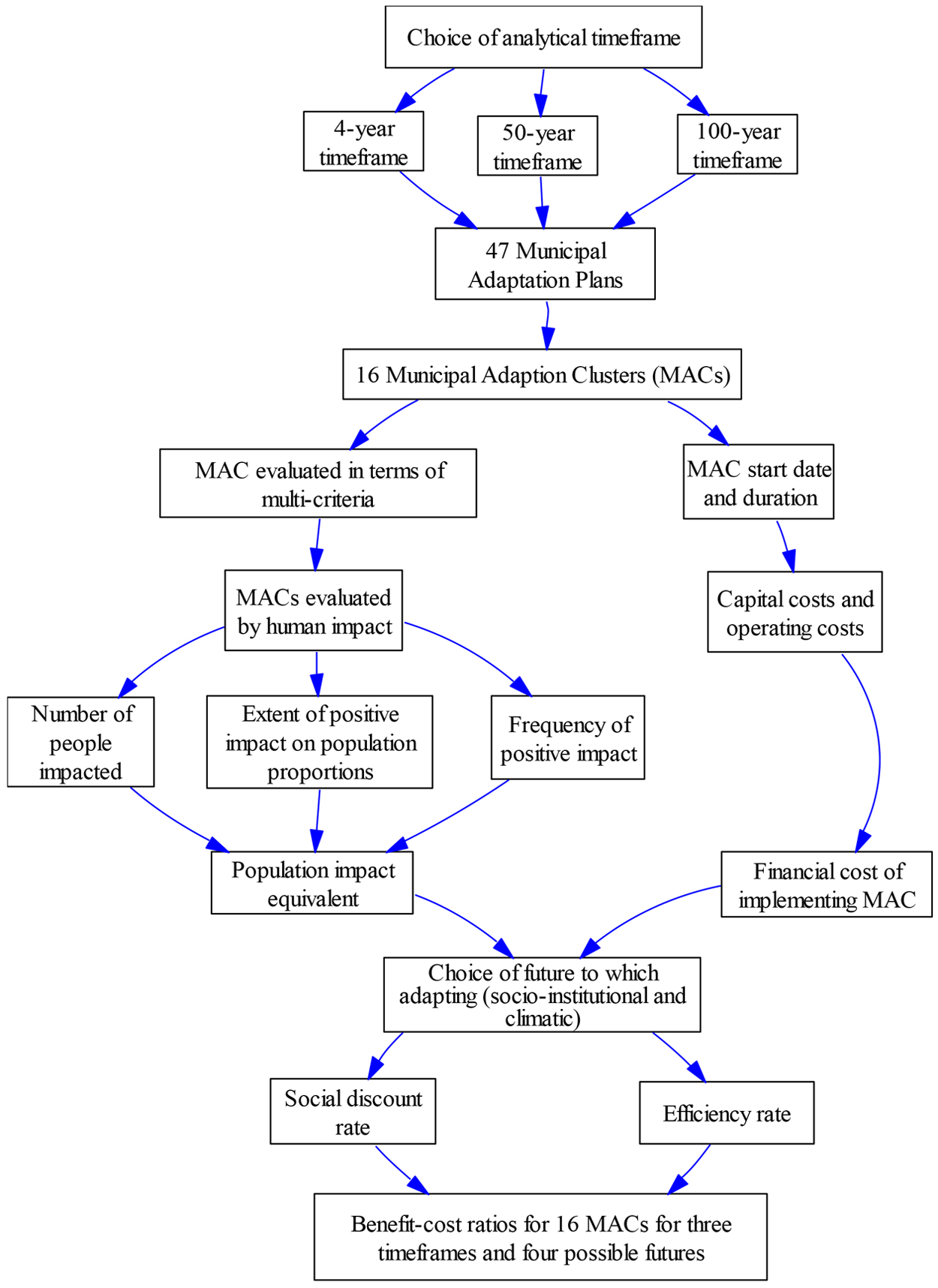
Process followed in generating Durban’s benefit-cost analysis model
V. Applying the Approach and Quantitative Results
In applying the model, each of the 16 MACs was subjected to the assumptions of the four different scenarios over three different time frames (0–4 years, 0–50 years and 0–100 years). The result was 12 different sets of possible benefit-cost ratios.
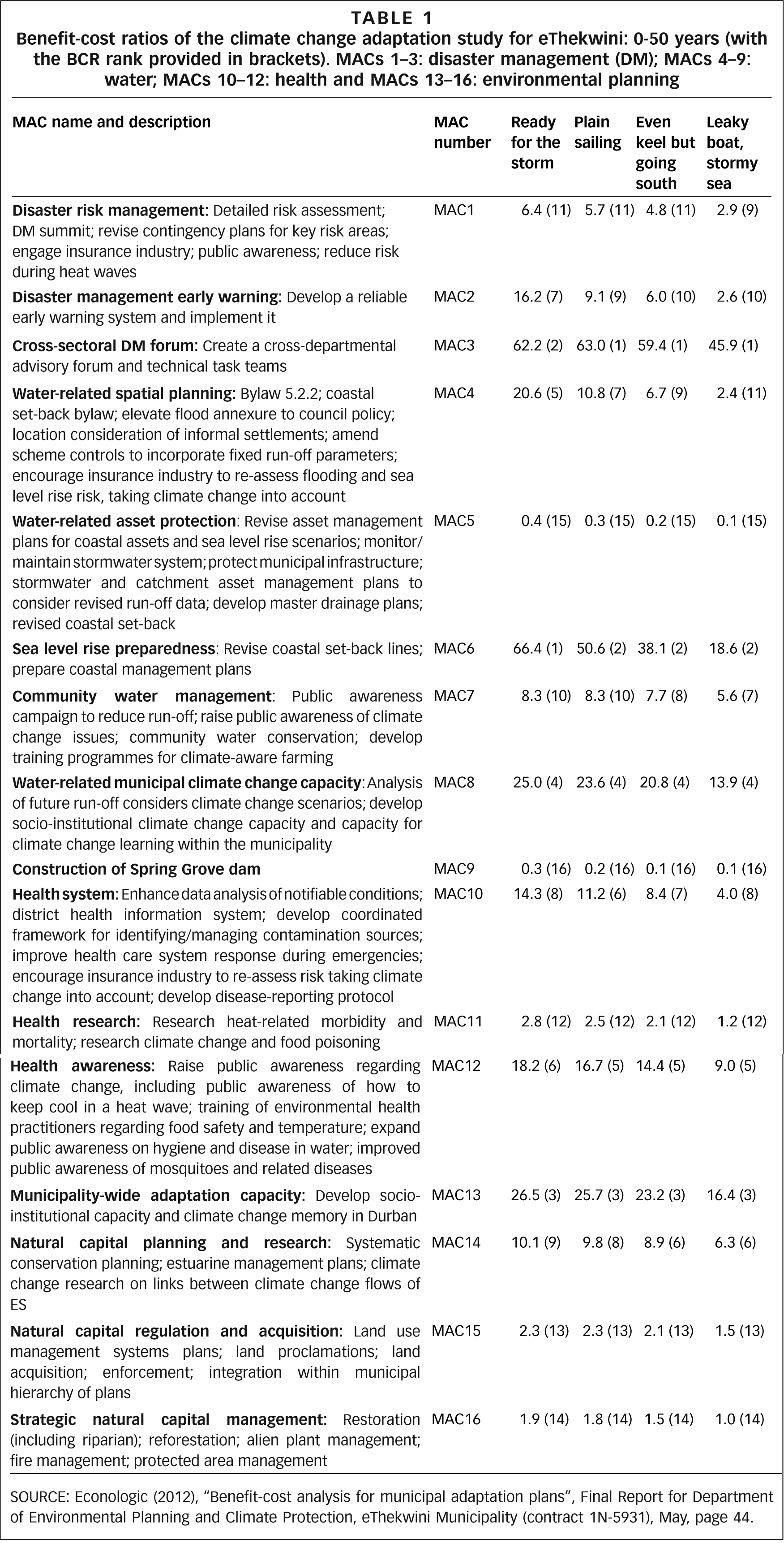
The results for the four possible futures over a 50-year time period are shown in Table 1. Figure 3 provides adaptation cost curves for the same time horizon and future scenario. The height of the bars indicates the economic efficiency of the respective MACs defined by the benefit-cost ratio. The width of the bars reflects relative benefit. If the municipality’s aim is to optimize climate change adaptation impact within a given budget, then decision makers will implement MACs in sequence from left to right in Figure 3 (refer to Table 1 for a legend and detailed description of the MACs). The economic concept of “opportunity cost” provides the rationale for this sequence: in order to optimize benefit, economically efficient decisions should allocate resources to the options that deliver greatest benefit per cost (or “bang for buck” in local parlance), so as to leave as many resources as possible for use in the next best option.
Benefit-cost ratios of the climate change adaptation study for eThekwini: 0-50 years (with the BCR rank provided in brackets). MACs 1–3: disaster management (DM); MACs 4–9: water; MACs 10–12: health and MACs 13–16: environmental planning
SOURCE: Econologic (2012), “Benefit-cost analysis for municipal adaptation plans”, Final Report for Department of Environmental Planning and Climate Protection, eThekwini Municipality (contract 1N-5931), May, page 44.
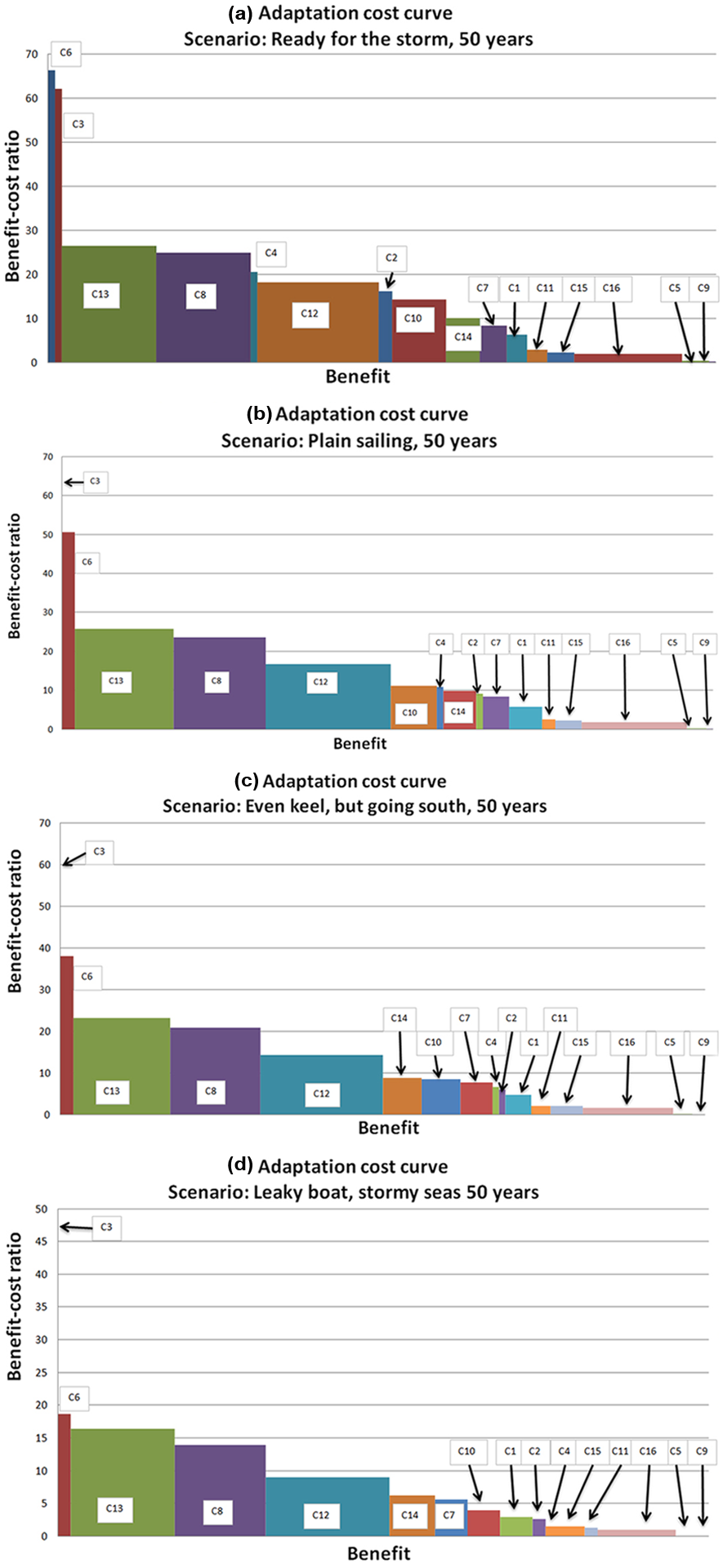
Adaptation benefit-cost curves for eThekwini Municipality’s 16 Municipal Adaptation Clusters (50 years all four futures)
The focus of this paper is on the particular approach to benefit-cost modelling, not the specific eThekwini Municipality results. It is, however, worth noting that the empirical results produced by the model accord with certain climate change adaptation theories and challenge certain others. Comparing the 16 MACs in the modelled results, four adaptation interventions emerge as economically efficient across all futures and time frames, namely: the creation of a cross-sectoral disaster management forum; sea level rise preparedness and early warning system; the creation of climate change capacity within the municipality’s water unit; and the creation of municipality-wide adaptation capacity in government, civil society and communities. Notably, the economically efficient adaptation interventions are found in a wide variety of sectors, suggesting that effective climate change adaptation is an inter-disciplinary process.
Figure 4 presents the benefit-cost ratios as a scatter diagram, in which benefits are indicated on the vertical axis and costs on the horizontal axis. In this diagram, the MACs that are most closely aligned to the vertical axis are the most economically efficient. Three apparent clusters of MACs are discernible, highlighted by three rays: most efficient, moderately efficient and least efficient. Intriguingly, the most efficient (near vertical) ray is made up almost exclusively of socio-institutional adaptation options, the middle ray of ecosystem-based MACs and the least efficient (near horizontal) ray of infrastructure-based MACs. This pattern holds true for all futures, although only one is depicted here. The diagram is of relevance to the ongoing debate in climate change adaptation literature as to the most effective broad approaches to adaptation.(27) The relative inefficiency of infrastructure options available to eThekwini Municipality is due to the high implementation cost and potential for inadvertent negative consequences associated with these MACs. Equally noteworthy in Figure 4 is the apparent contradiction of the widely held assumption that ecosystem-based adaptation offers the most cost-effective approach.(28) The moderate efficiency of eThekwini Municipality’s ecosystem-based adaptation options may be a function of the municipality’s particular approach to ecosystem-based adaptation, which involves purchasing and rehabilitating keystone habitats – estuaries, forests, grasslands and riparian zones. This approach has won eThekwini Municipality international acclaim,(29) but it is expensive in an urban setting where land has to be acquired at premium prices. The finding suggests a distinction between the economic merits of ecosystem-based adaptation in rural environments, where most case studies have been generated, and urban environments in which land acquisition and protection is expensive and ecosystems are often more degraded. Conversely, the economic efficiency of socio-institutional climate adaptation options in the study points to the ability of these types of responses to reach a large number of people at relatively low unit cost in densely populated urban settings.
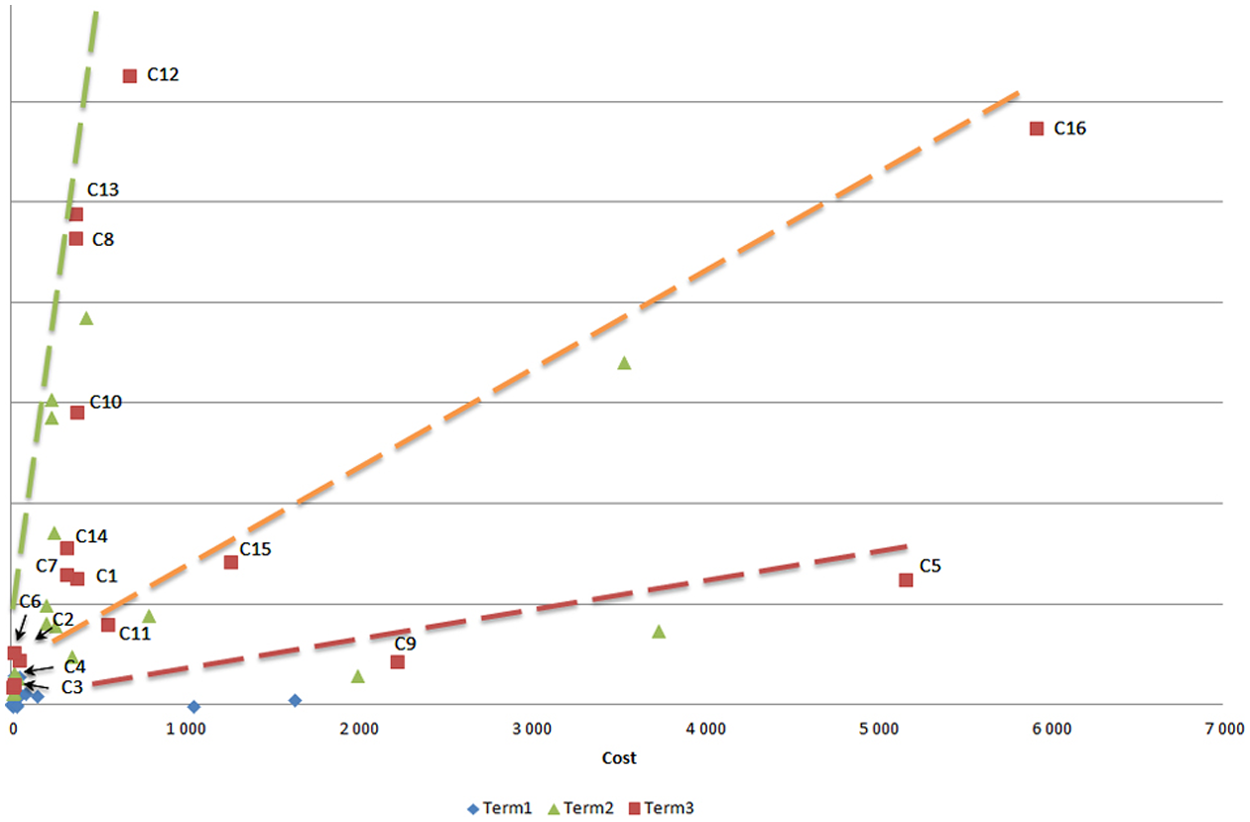
Comparative economic efficiency of MACs as categorized into socioeconomic (green line), ecosystem-based adaptation (orange) and infrastructural (red) interventions
It is also telling that many of the most cost-efficient socio-institutional MACs lie within the remit of everyday functions of municipal officials. In part this is due to the MACs themselves, which focus largely on existing municipal activities and not on the “transformational” interventions that many argue are becoming necessary.(30) The implication is that it is possible to realize some cost-effective climate change adaptation benefit through regular city responsibilities such as stormwater drain clearing, primary health care and disaster management.
It is further noteworthy that MACs evaluated under the future scenarios that assume low levels of socio-institutional capacity (“Leaky boat, stormy seas” and “Even keel but going south” in Figure 1) yield less than half the economic efficiency of those scenarios where institutional capacity is assumed to be strong. This model finding provides empirical support for an observation that it is much more difficult to realize benefits of climate change adaptation options within the context of poor governance.(31) While the eThekwini Municipality study gives no indication as to how this governance capacity is created, the implication is clear: if decision makers are able to enhance the municipality’s underlying socio-institutional capacity, such efforts will present systemic benefits for the efficiency of Durban’s adaptation effort. In practice, combinations of human skill, institutional memory, formal regulations and informal rules and memes are likely to be relevant in this context.(32)
Finally, it is noteworthy that economic efficiency changes considerably in both absolute terms and relatively between the MACs, depending on the time frame and the future adopted. The implementation of a coastal set-back line, for example, has high upfront costs, relatively low costs thereafter and long-term benefits, and as a result its economic efficiency relative to other options improves over time. This observation elucidates the importance of being explicit about decision-making assumptions, including temporal scales, before drawing inference from economic models.
VI. Conclusions
All efforts to adapt to existing and anticipated climate change impacts confront some form of economic constraint. This calls for a prioritization of options in terms of their cost-effectiveness. The use of conventional economic instruments such as benefit-cost models to make such prioritizations encounters difficulties when wealth distribution is highly skewed, data are poor, future events are deeply uncertain or the attribution of benefits to interventions is confounded by multiple influences. These are typical characteristics of climate change projections and most developing country cities, and the combination renders conventional economic analysis of climate change adaptation problematic in these cities.
This paper reports on an approach adopted by eThekwini Municipality that responded to this challenge by moving beyond reliance on a typical damage-cost function and GDP data. Instead, the approach used the impact of adaptation interventions on people and their welfare to calculate benefit. In addition, it made an express attempt to recognize different possible futures, the uncertainty that different futures introduce, and the subjectivity with which decision makers engage that uncertainty. In providing traceable links between the adoption of different possible futures and model outputs, the study steered away from what New et al. refer to as the “…blind use of a single generation of probabilistic impact information.”(33) Crucially, this approach moved from attempted confidence in the prediction of climate change impacts towards valuing confidence in the ability to respond to a wide range of possible impacts, a shift in emphasis that is deemed highly appropriate at the local level in developing country contexts.
Analytical issues remain. EThekwini Municipality, like any municipality, constitutes a socio-ecological system in which everything is interdependent. Within this system it is possible – even likely – that the benefits that arise from implementing a particular MAC will enhance (or undermine) the benefits that are possible from another MAC. The model assumes MACs are independent, and is not able to fully account for the synergic interactions between MACs or to provide insight into an appropriate sequence of implementation from anything but a budget optimization perspective. Similarly, the fact that MACs and the four possible futures are unlikely to be completely independent of each other (i.e. the implementation of a particular MAC may influence the likelihood of a future scenario occurring) introduces a measure of endogeneity to the model that reduces its analytical rigour. Finally, a suitable means of accommodating the inherent subjectivity with which decision makers engage climate change risk without exposing model outputs to the allegation that they are overly subjective or biased remains elusive. The model draws on local knowledge and seeks to make assumptions and their implications explicit, but the process of selecting and applying the criteria (such as “likelihood of political support”) in evaluating the intrinsic merit of MACs, and the process assigning the benefit to population numbers, is unlikely to satisfy everyone.
In spite of these limitations it is proposed that the approach adopted by eThekwini Municipality represents a significant improvement on previous applications of benefit-cost analysis to climate change adaptation decisions, and supports Durban’s status as an adaptation pioneer in the field of climate change. It also represents an example of a new type of economic analysis that does not rely on GDP where this is inappropriate. The need for a shift towards people-centred economic metrics in order to ensure greater policy relevance has been an increasing feature of development discourse since it was first proposed two decades ago.(34) EThekwini Municipality’s adaptation benefit-cost model provides an example of how this shift might be realized, and provides a point of departure for subsequent work involving economic instruments to climate change adaptation decisions, socio-ecological metrics and the formulation of locally appropriate adaptation pathways.