




Abstract
This paper describes how the residents of Accra’s largest informal settlement, Old Fadama, responded to a disastrous fire on 21 May 2012. Although they received no official support for reconstruction, they organized to rebuild using permanent materials, which reduced fire risks and also demonstrated to city authorities their capacities.
I. Introduction
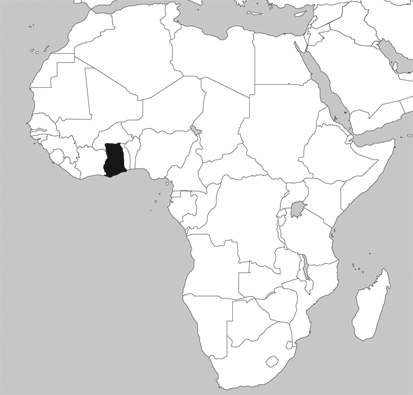
In Old Fadama, Accra’s largest informal settlement, accidental fires are common. Most are relatively small but on 21 May 2012 a fire got out of control and destroyed or damaged the homes of around 3,500 people. Although the disaster literature discusses post-disaster reconstruction in formal settlements, much less is known regarding how such reconstruction is organized in informal settlements. This paper seeks to contribute to this knowledge by showcasing the experiences of people in the Old Fadama community in managing their disaster reconstruction processes after this fire.
It is not surprising that accidental fires are common in informal settlements, given that most are high density, that they lack roads and firebreaks, and include many structures built from temporary (and flammable) building materials. A high proportion of low-income urban dwellers in sub-Saharan Africa rely on solid fuels for cooking and, where needed, heating.(1) They also lack electricity and use candles or kerosene lamps for lighting.(2) There may be no fire service to respond to accidental fires – or where there is, the lack of access roads may make it impossible for fire engines to reach the blaze.(3) There may also be limited or no water supplies close by with which to fight a fire.
However, there is little documentation of fire events in informal settlements, perhaps because of the lack of emergency response. The main exception is South Africa, where there are case studies of the impacts of fires in such communities.(4) This includes the documentation of fires in Jo Slovo settlement in Cape Town, where a fire in 2005 claimed about 3,000 shelters and left around 12,000 people homeless. A fire in February 2008 claimed 150 shelters, and another fire in March 2009 claimed 513 shelters and left 1,500 people homeless.(5) There are also detailed records of fire incidents in Cape Town, covering most informal settlements, which reported 18,504 fire incidents between January 1995 and the end of 2004, 8,554 of which were in informal settlements. Most were localized and relatively small, but cumulatively they affected more than 40,000 people.(6)

Destruction caused by the fire outbreak in Old Fadama
II. The 21 May 2012 Fire in Old Fadama
Old Fadama is an informal settlement with a population of around 80,000 inhabitants. It occupies 31 hectares of government-owned land close to one of Accra’s most important markets. Its population and its importance to the economy of Accra have become evident in a series of community-driven enumerations undertaken in 2004, 2006−2007 and 2009.(7) These enumerations were undertaken to help counter the threat of eviction, but they also helped the residents to organize and to engage with the city government.
Most houses in Old Fadama are constructed of wood, which further aggravates the situation in times of fire outbreaks. The residents of the area are considered by the city authorities to be occupying the land illegally and are therefore under constant threat of eviction. Over time, the population of the area has grown in size and density, in large part because the settlement’s central location provides quick access to income-earning opportunities – for instance at the nearby Agbogbloshie market and the bus and truck station – and there are few other central locations where cheap accommodation can be found.
The fire outbreak occurred on the morning of 21 May 2012. Witnesses suggested that an electrical failure was the cause, setting ablaze a kiosk and subsequently the wooden structures nearby and beyond. The fire placed an enormous financial and social burden on the residents of the community, and an initial assessment suggested that about 3,500 men, women and children were directly affected. Hundreds of people were injured and a much larger number lost their homes, valuable documents, furniture, money and other assets. Many lost income from work as they sought to recover whatever they could from the debris and the burnt structures. The fire was brought under control by the personnel of the Ghana National Fire Service.
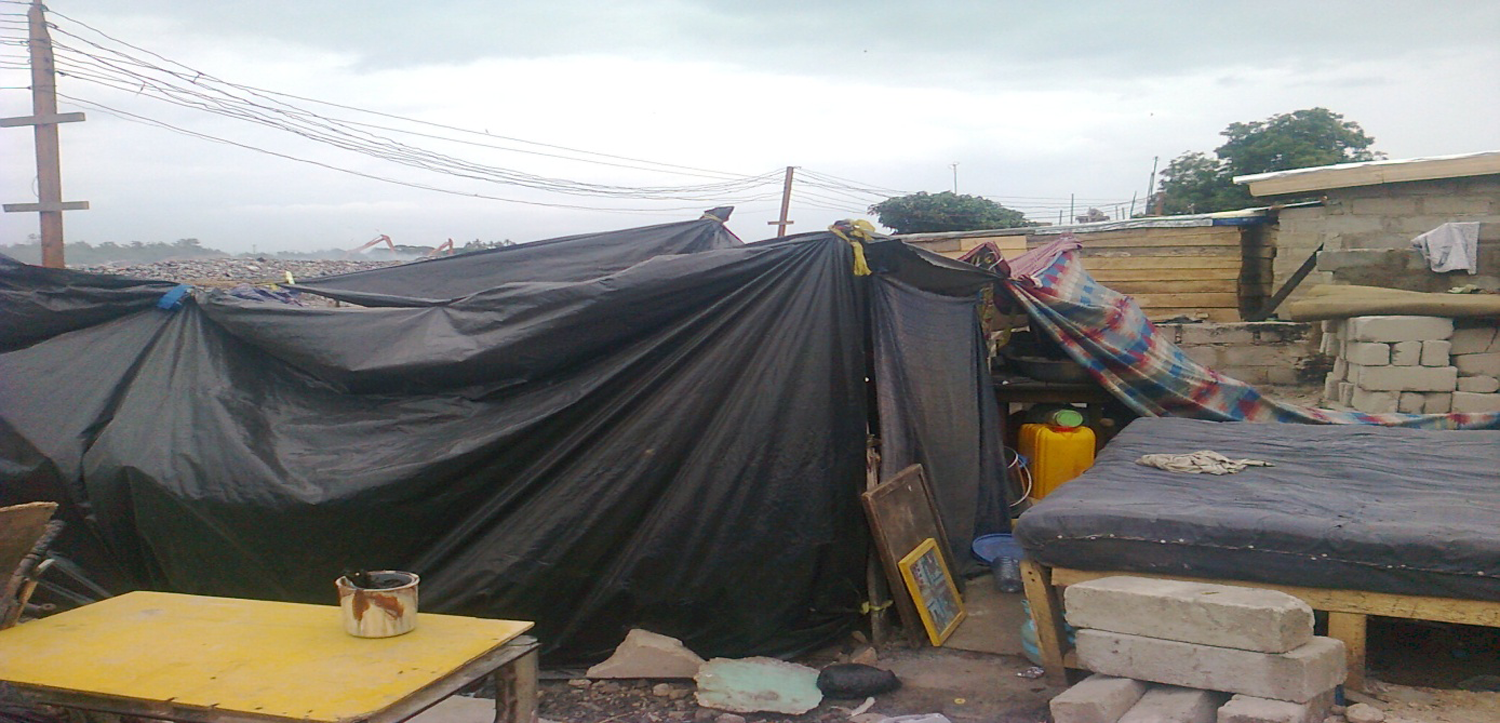
Temporary structures built by victims of the fire
III. The Reconstruction Process
In spite of the indifference of the city and national authorities to the plight of the residents in Old Fadama during and after such fire outbreaks, those who survive such events can find themselves in a unique and potentially transformative position. The immediate aftermath of the Old Fadama fire was chaotic. Families whose houses were completely destroyed relied on their friends and family members living in unaffected parts of Old Fadama to provide temporary accommodation. This points to the importance of social capital to their survival. Other families built tents and temporary structures to protect themselves from the elements, including the rains. There was no organized intervention from any of the government agencies responsible for disaster management or relief other than the immediate response provided by the fire service. At the time of writing this paper the community has yet to receive any of the relief items promised by the National Disaster Management Organization (NADMO) after the outbreak. The lack of response to the situation by the state agencies clearly indicates their reluctance to work in an informal settlement.
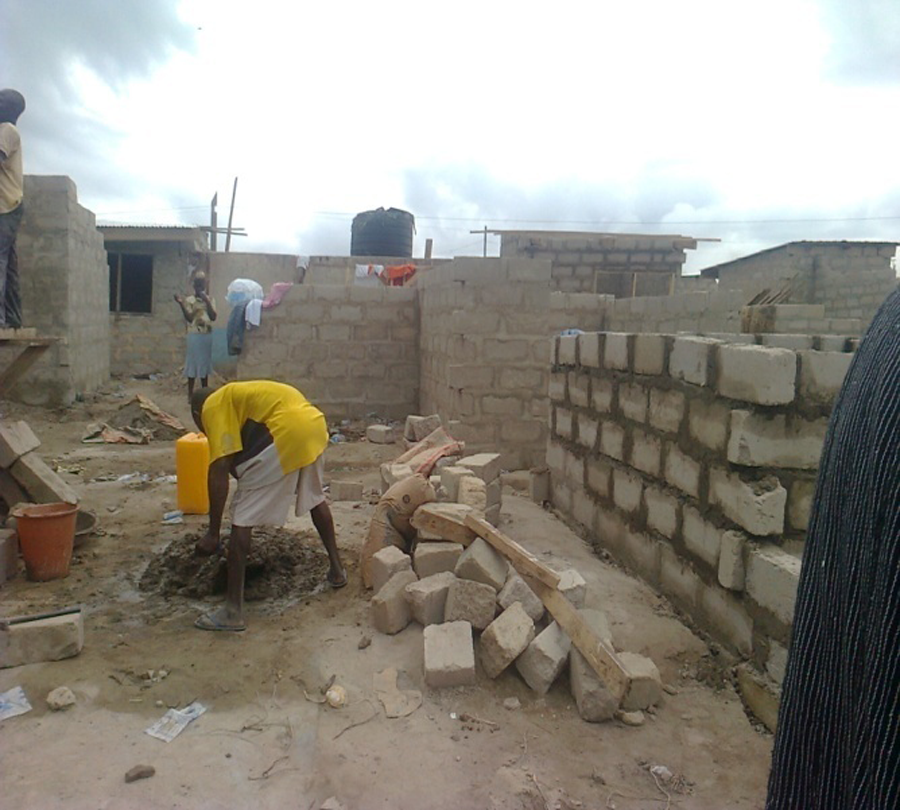
Community members’ efforts to erect concrete structures after the incident
However, community members initiated and organized their own reconstruction process. Led and supervised by leaders from the Ghana Federation of the Urban Poor and the Old Fadama Development Association (OLDFADA), who came to a consensus that fire-resistant materials needed to be used, the victims have rebuilt their houses using concrete blocks and other durable materials to minimize or prevent future fire outbreaks.
Despite the high costs of construction associated with using such materials rather than wood, individuals were encouraged to opt for loans from their families, friends and social groups to ensure their future safety. Some were supported by remittances from relatives. One federation member whose structure was destroyed in the fire received a loan from his savings group to help reconstruct his house. The homes that were built with permanent materials cost approximately US$ 830 for a six square-metre structure. Although this may not seem to be a large sum of money, the average monthly household income for those living in the community is US$ 20−50, so the cost of such a house represents between one and four years’ income. Raising the funds necessary for reconstruction was not an easy task, as most affected households had nothing to begin with. Some affected residents have not been able to complete their structures due to a lack of funds and they are still living with friends or relatives in other parts of the settlement.
Although the financial aspect of the reconstruction is important, the reconstruction was made possible primarily by the strong social ties among the residents of the community, the willingness of the community to contribute physical labour, and the leadership provided by the Ghana Federation of the Urban Poor and OLDFADA. In addition to insisting on fireproof materials, the leaders promoted new designs to ensure that electricity cables strictly adhered to safety standards, and they instituted new rules and regulations for the maintenance and development of the structures. The federation and OLDFADA also advised affected residents on the need to use fire-resistant materials and create access roads to help forestall any future fire outbreaks.
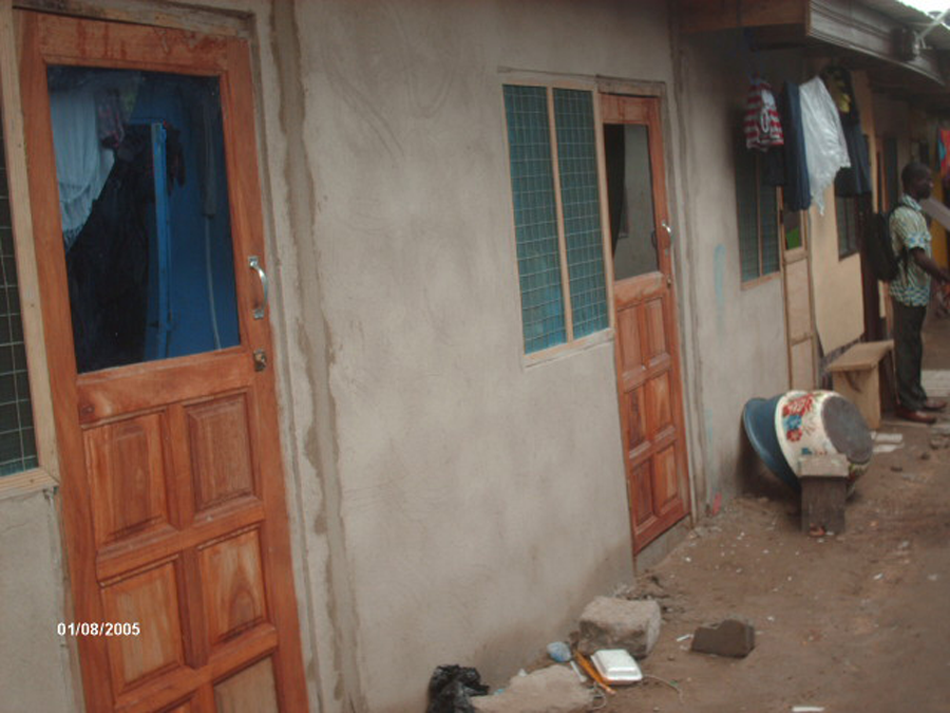
A newly constructed structure following the fire outbreak
IV. Looking Back and Reflecting
Over the years, residents of Old Fadama have experienced not only many fire incidents but also many attempts to evict them. Their response to the May 2012 fire shows their capacities in reconstruction – and in house construction. What is required of the public authorities is recognition of the leadership and of the collective spirit that exists among the inhabitants of informal settlements, and to channel this to productive use for disaster reconstruction. In theory, it is up to the city authorities and other stakeholders to work with communities to identify what is of critical importance to them, and to utilize the capacity of community members to provide what is required. But too often the residents of informal settlements find themselves ignored and mistreated by city authorities. Through their involvement, communities make up for the government’s neglected responsibilities. But more than that, they take ownership of their own development and growth. The experience of Old Fadama residents after the fire outbreak demonstrates their capacity to initiate, organize and manage their own post-disaster reconstruction process with little or no support from either central or local government authorities.
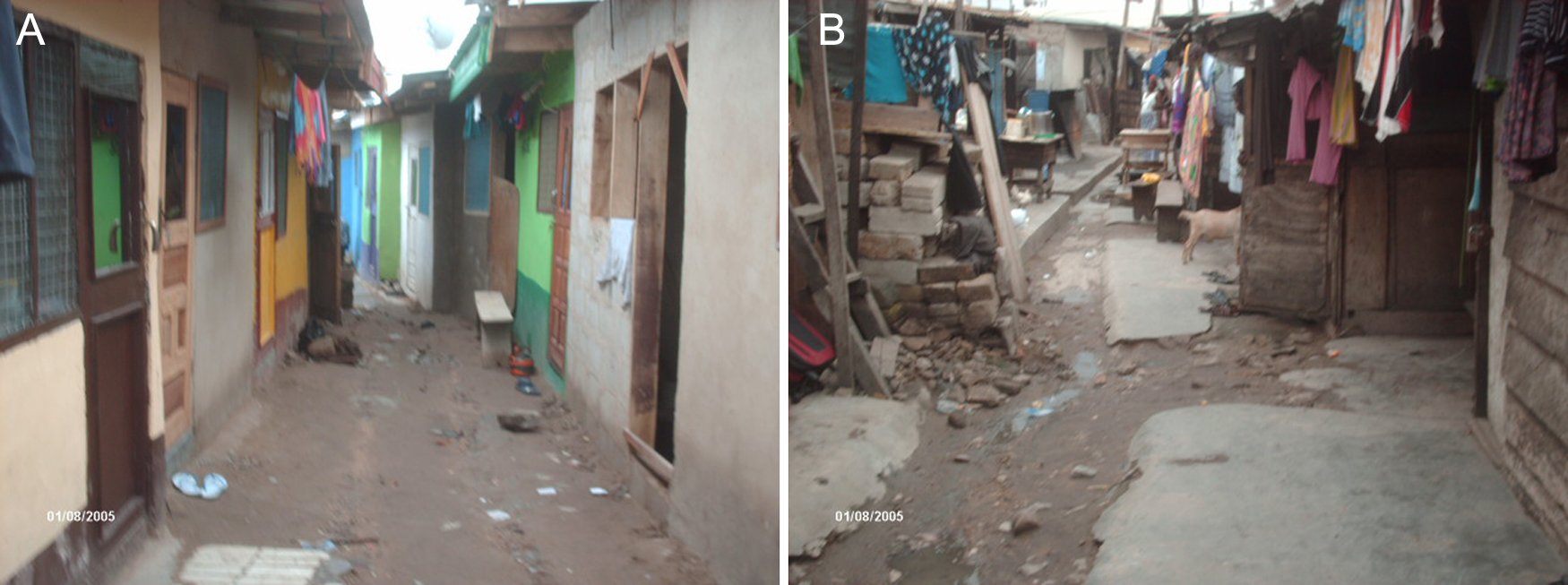
Comparing the old and newly constructed structures