




Abstract
The spread of additive manufacturing in recent years has broadened the sector of applications, namely in the construction field. This technology enables new functionalities and opportunities to be considered for the construction industry. Indeed, 3D printing processes can directly or indirectly affect the concrete material. Besides the printing processes for concrete structures, there are other indirect uses of 3D concrete printing, such as the manufacture of molds and formwork. However, its integration raises new challenges. This paper is first devoted to the state-of-the-art regarding the use of additive manufacturing in construction through a bibliographical study and an overview of various experiences in different countries. Secondly, the opportunities of such technologies for the construction sector will be discussed. Then, the issues and challenges related to the applicability and integration of concrete additive manufacturing will be highlighted. Finally, a diagnosis of the applicability and integration of concrete additive manufacturing has been made by analyzing the results of a survey of Moroccan professionals. The objective is to raise and identify key factors for successful integration.
Keywords
Introduction
The growth of additive manufacturing (AM) in recent years has led to its orientation toward the construction sector.1,2 Moreover, this manufacturing has been supported by the digital transformation trend.3,4 The advantages of this technology are the time saving, the ability to build complex components, and the ease of customization. 3 Besides, it reduces material waste, which promises a significant reduction in the environmental impact. As a result, the range of its applications has expanded to include: the construction of reliable housing for hard-to-reach areas, the reduction of slums and substandard housing expansion, as well as the reconstruction of buildings after natural disasters, such as floods, volcanic eruptions and earthquakes, and so on.5,6 3D printing processes can directly or indirectly affect the concrete material. In addition to processes for printing concrete structures, there are indirect uses of 3D concrete printing, such as mold and formwork manufacture. These techniques use additive manufacturing as a support or reinforcement for the production of prefabricated concrete components. In the case of a prefabricated reinforced concrete structure, the aim is to use the geometry of the object to make a negative mold in which the structure is then cast. In practice, the formwork is used to model the appropriate shape of the formwork. These forms are then used to give the final structure the desired shape.
Recently, several studies have treated additive manufacturing in the construction of buildings and structures.1,2,5–14 The SmarTech Publishing study estimated the market at 40 billion dollars by 2027. 15 On the other hand, the building and architecture sector alone accounts for 3.2% of the global 3D printing market, and this number is expected to grow by 2030. 16 The United Arab Emirates (UAE) would like to have 25% of buildings based on concrete printing by 2030, while Saudi Arabia plans to have one and a half million houses printed for the same horizon. 17
Our contribution in this article aims initially at providing a state of art of completed or ongoing projects concerning houses, buildings, and structures printed in 3D in some countries. Secondly, we will focus on the opportunities of this technology for the building and construction sector. Then, we will look at the issues and barriers related to the applicability and integration of concrete additive manufacturing for the construction industry. Finally, we will make a diagnosis of the integration and applicability of this technology by analyzing the results of a survey of Moroccan companies operating in this sector. The objective is to collect relevant baselines and identify key elements for successful integration. This will help to understand the strengths and weaknesses of this technology and to assess its applicability and challenges in the building and construction sector for Moroccan companies, as well as to evaluate the impact of this technology on traditional methods of manufacturing concrete products.
Literature review
Several examples of constructions are today receiving worldwide media coverage. All over the world, we hear about 3D printing (3DP) of buildings: houses, offices, bridges, large-scale structures, shelters, and pavilions. Projects are multiplying and attracting architects and builders.
Therefore, the future opportunities of 3DP construction structures are not only limited to the earth but also it can be extended to different planets. This innovation will make construction easier on another planet like Mars, the moon, and others; meanwhile, the dream of living in space will come true earlier. 18
The following state of the art overview outlines the main projects already completed or in progress concerning houses, buildings, and structures printed in 3D in selected countries.
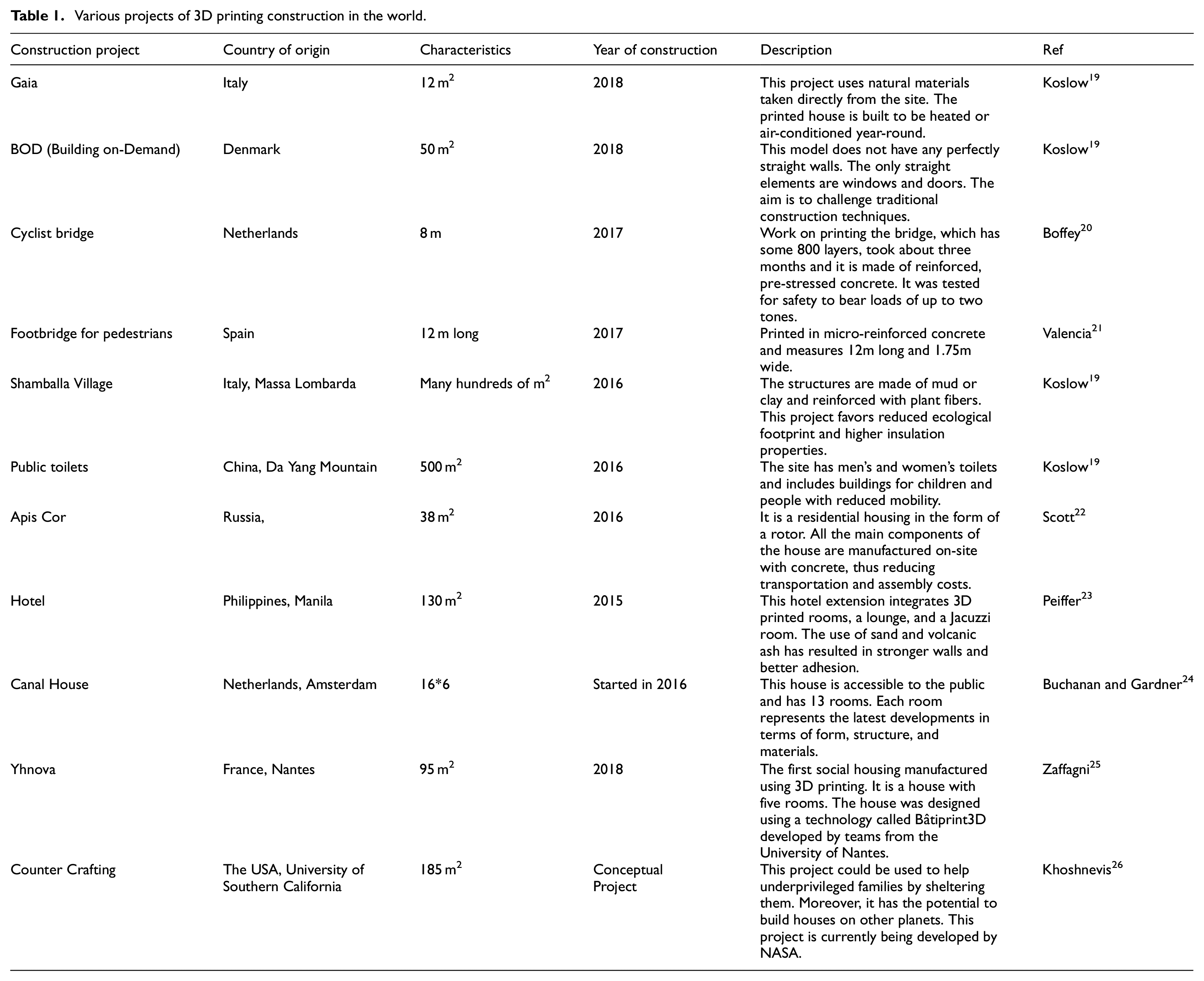
In Table 1, we list the various projects for existing houses, structures, and buildings, as well as the work in progress. It includes the country of origin, characteristics, year of construction, and a description of the project.
Various projects of 3D printing construction in the world.
Opportunities of AM for building construction
In this section, we will focus on the opportunities of AM in general for the real estate construction sector. Thus, these opportunities could be reflected as follows:
Geometric flexibility and architectural freedom
AM offers more customization possibilities and geometric flexibility.9,14,27 This geometric flexibility could also be the starting point for the introduction of new, optimally designed housing forms. Indeed, classic building products are usually rectangular (or simple shapes) and are not optimally designed. In other words, there are more materials than needed to withstand the specified structural loads. Besides, the architectural flexibility offered by this technology would lead to a fully printable manufacturing process with the incorporation of electrical wiring, plumbing, air-conditioning systems, or other building components.
Environmental friendliness
AM makes it possible to print buildings and structures with raw soil, or natural residues taken directly from the site, which is totally in line with the principles of sustainable development. Furthermore, this technology will contribute to the reduction of the ecological impact, by reducing CO2 emissions through the elimination of waste and the transport of raw materials as much as possible, as well as the reuse of components.6,7,10
Restoration of historical monuments and sites
The application of this technology in building construction could also be used for the restoration of artistic works and historical monuments that reflects the history and culture of the country.
Reducing the duration of construction sites in case of natural disasters
Due to the speed of its process, the AM will enable the reconstruction of homes, safe shelters, and bridges to help victims of natural disasters such as floods, earthquakes, and volcanic eruptions. As a result, the 3DP has potential as an emergency shelter solution.
Reducing arduousness and risk for workers
Construction by 3D printing makes the work less tedious and reduces the arduous and inefficient efforts of workers by eliminating several construction steps. This could contribute to the ergonomic revision of the various construction tasks and the optimization of the trade gestures. Besides, risk reduction is achieved through the elimination of tasks at the height and the reduction of unnecessary travel. Construction by 3DP is also much noise-reduced compared to traditional construction.
Contribution to solving the housing crisis
The integration of this new technology will allow the construction of reliable housing for areas with difficult access, the prevention of slum development, and substandard housing. Particularly, since large-scale mass production could contribute to a relatively low price. Thus the AM is proving to be a powerful tool for mass construction that can be a response to the global housing crisis.
Applicability and integration of concrete additive manufacturing in the construction sector
The applicability and integration of 3D printing evoke certain challenges. These can be classified according to technical, legal, financial, and other issues related to standardization and standards, construction material, the mechanical strength of the concrete structure, control, resistance to change, and human resources.
Technical issue
The applicability of 3D printing for building construction requires the implementation of several systems namely:
A robot to guide the layer deposition;
A receptacle for deposited material;
Software to control the robot and synchronize the extrusion speed with the feed speed;
A nozzle and an extrusion device;
An extraditable quick-setting concrete.
Besides, the maintenance of these systems and the recording of digital files and mock-ups for traceability and modifications should be considered.
Financial issue
In general, 3DP technology requires special and expensive machinery operation, which consumes more energy and cost than the conventional method. As the complexity and size of printing structure increase, the requirement of costlier machinery and arrangement along with supporting tools also increases. 28 Moreover, to operate the mechanical engines skilled and experts are needed, which consequently charges more. Integration requires investment. This initial investment is for the acquisition of printers with robotic arms, digital design software, and the energy required for the operation. The manufacturer will also have to include in its budget the training of its personnel for the mastery of new numerical tools and the control of the 3D printers.
Legal issue
It concerns the legal aspects and the juridical frameworks for the use of AM in building construction. The legal framework will also affect the intellectual and industrial property and the security of digital files. Indeed, the risk is accentuated by the use of a digital file that could be duplicated and subject to sabotage operations or attacks by computer viruses.
Reluctance and resistance to change
The integration of a new technology often generates resistance due to several paradigms, or to the uncertainty of the performance and mastery of this modern technology. This could contribute to a lack of interest and mistrust on the part of operators in the construction industry.
New skills
The implementation of AM in a building or construction company requires that the manufacturing and organizational methods be transferred. As with any technological change, AM is accompanied by both job losses and new job creation, which are not the same. As an indication, the computer tool is at the heart of this revolution and in particular modeling. Thus, manufacturers and industrialists in the sector will find themselves faced with the need to integrate new skills and new professions from the design of structures and molds to the design of software and 3D printers, maintenance, marketing, sales, and the development of building materials.
Construction material
Adapting to concrete, the main material used in the building sector, is a major challenge. Manufacturers are looking to develop new materials to lower the carbon emissions of buildings. Today, in addition to concretes specially developed for 3D printing by cement manufacturers, a major interest is being shown in low-carbon concretes, especially those made of geopolymers. It is a question to define the appropriate formulation for the concrete and the printing process (mixing and feeding the mode of the print head). As a consequence, the development of the material must be controlled in real-time. However, the performance of the materials used for this construction technology will be different from the traditional one.
Standardization and norms
The diversity of the systems used in concrete detailing: 3D printers, materials, and software, as well as the related data and the entities with which they interact, requires standardization that must be scalable and flexible. On the other hand, digital design software differs from one company to another, hence the need to consider the standardization of digital design software.
Moreover, the absence of standards in a sector where they are crucial presents an obstacle to the certification of this new mode of construction. 3D building printing is not yet recognized as a construction process by current codes and standards. As the printed structures are unconventional, strength and durability calculations are difficult to perform.
Mechanical resistance of the structure
During the printing of the structures, problems are encountered such as air entrapment between two layers, layer sagging, decohesion, and extrusion problems. This could affect the durability of the structures, so control is necessary. Especially since it is clear that today’s seismic, thermal and safety regulations constitute real challenges for the development of residential structures made entirely of concrete. In addition to the detection of defects, the controls of the geometry as well as the dimensions defined by the numerical model are envisaged. The objective is to validate the reliability of the housing or concrete product built.
Control issues
In addition to the detection of defects in the structures, the inspection of the geometry as well as the dimensions defined by the numerical model are considered. Thus, metrology and testing requirements are demanded. These needs concern the construction material, the 3D printer, the manufacturing process and the structure produced. This series of tests need to be formalized. The final objective is to validate the reliability of the housing or the concrete product manufactured.
Survey approach
This survey aims to provide an overview of the technical, financial, organizational, and human aspects of the Moroccan context. On the other hand, the analysis of the survey, carried out among the Moroccan companies operating in this sector will allow us to understand the strengths and weaknesses of this technology and to appreciate its applicability and its challenges compared to traditional construction. The questionnaire of the survey is made of four separate parts, namely:
General information about the construction company.
General Aspects of Concrete AM.
Technical contributions for the integration of AM for the construction industry.
Barriers for applicability and integration of AM in building and construction.
The questionnaire was submitted to several companies, 63 companies replied out of the total number of targeted companies estimated at more than 250.
It worth noting that a 5-point Likert scale was used to assess the contributions of concrete additive manufacturing (with 1 for “very low,” 2 for “low,” 3 for “medium,” 4 for “high,” and 5 for “very high”). Furthermore, the mean score (MS) was calculated used the following equation:29,30

Where:
MS: is the mean score for each item and i reveals the index of response category, and xi indicates the frequency of the ith response in total response given to i. If two or more items were found to have the same MS, a higher rank was assigned to the item with a lower standard deviation (SD).
Analysis of results and discussion
General information about the construction company
Company status
As shown in Figure 1, we note that more than 73% of the surveyed companies belong to the private sector, while 27% of the companies belong to the public sector. Moreover, in the category of private companies, more than 25.4% are part of a multinational group.
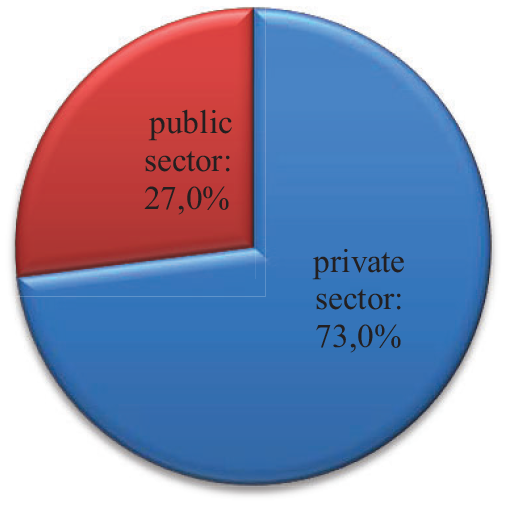
The legal status of the surveyed companies.
Company size and hierarchical status of respondents
The overall sample of companies surveyed differs in size in terms of the number of employees, with an advantage for companies with more than 100 employees (more than 52.4%). In terms of the hierarchical status of the survey respondents, we find that senior and middle managers account for more than 71.4% of the respondents (see Figure 2).
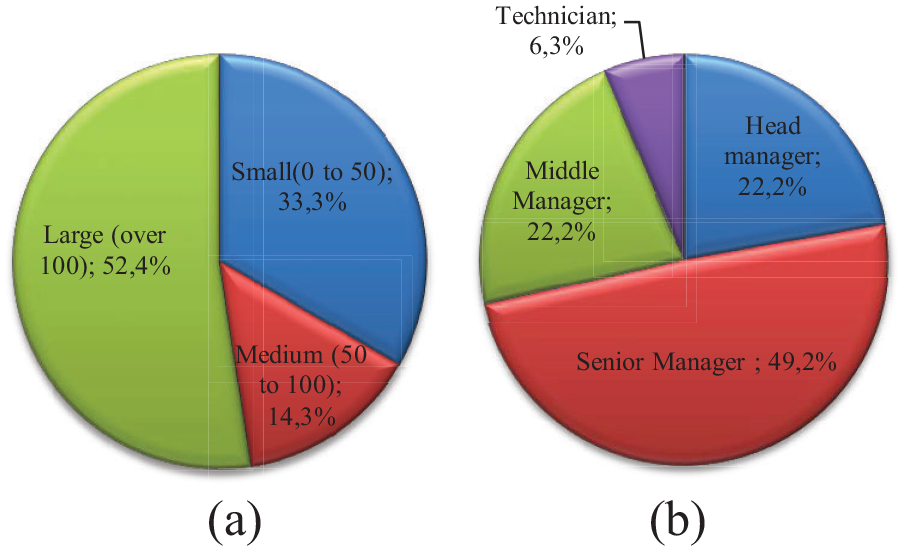
(a) Size firms and (b) hierarchical Status of the survey’s respondents.
General aspects of concrete additive manufacturing
As shown in Figure 3 and Table 2, more than 50% of respondents confirmed that they had heard of AM for construction and building construction. Meanwhile, the majority of companies (about 95.2%) do not have a department dedicated to concrete AM. This reflects the lack of a strategic vision to migrate all or part of the construction activity to AM for more than 79.3% of the companies.
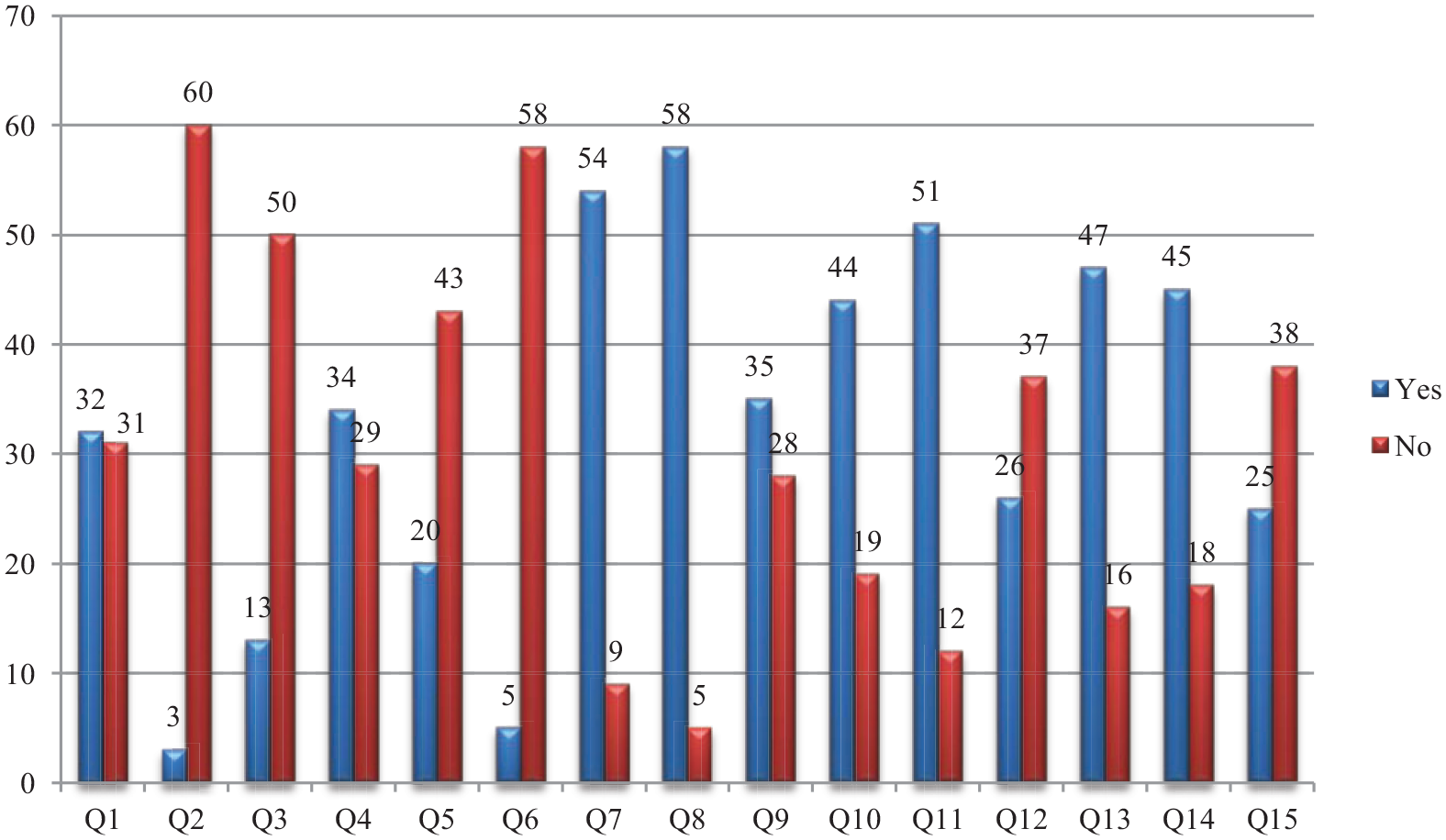
Responses’ firms concerning general aspects of concrete AM.
Questions relating to general aspects of concrete AM.
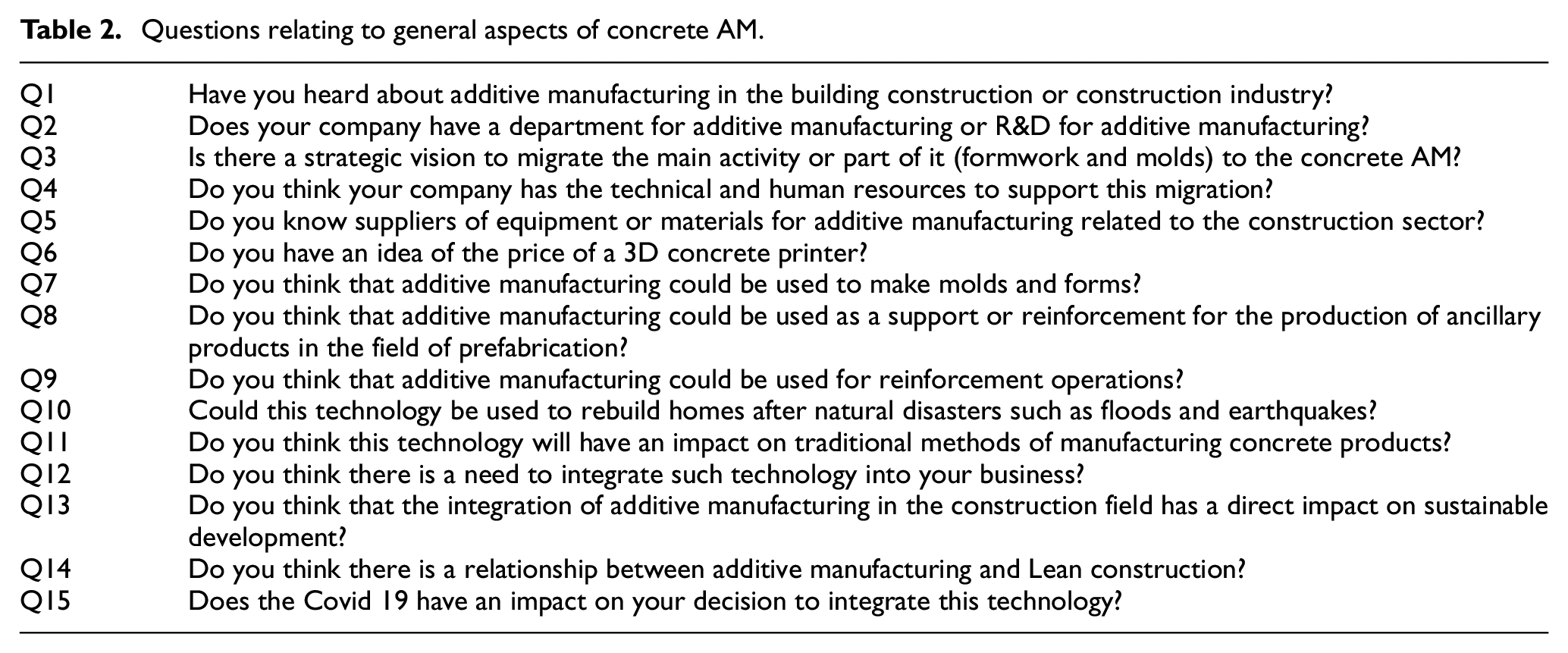
Moreover, 68.2% of the surveyed companies are not aware of the suppliers or providers of equipment and materials operating in the construction sector. This explains the fact that 92% of the companies have no idea of the price of a 3D concrete printer. According to survey’s results, the companies surveyed agreed that the concrete FA could contribute to radical changes in construction. These changes translate into direct and positive impacts on construction activity.
Besides, 85.7% of companies believe that AM could be used for the manufacture of molds and formwork, which are of major interest to the prefabrication sector. Thus, more than 92% of respondents stated that AM could be used as a support or reinforcement for the production of ancillary products for prefabrication.
Concerning the reinforcement operation, 55.5% of respondents believe that the FA could be used to carry out this operation.
As regards the relevance of the concrete FA for the construction of emergency shelters for victims of natural disasters, more than 69.8% of the companies surveyed confirm this possibility. However, 58.7% of the respondents do not consider that there is no need to integrate this modern technology into their companies. Even though 80.9% of companies agree that this technology will have an impact on traditional manufacturing methods, and 74.6% of these companies confirm that the integration of AM in the construction sector will have a direct impact on sustainable development.
Lean Construction (LC) in an innovative way of construction project management aiming at increasing value for clients while reducing waste, improving quality, avoiding workings accidents on constructions sites, as well as preventing negative impact on the environment.29–33 Regarding the relationship between FA and LC, 71.4% of respondents consider that there is a relationship between both approaches. On the other hand, with the impact of the Covid 19 pandemic, 60.3% of the companies consider that this pandemic will not have an impact on the decision-making process regarding the applicability and integration of AM (see Figure 3 and Table 2).
Contributions of concrete additive manufacturing
According to our survey, the surveyed companies believe that concrete AM contributes to technical and environmental benefits. These contributions mainly concern:
The quality of the concrete product;
Worker safety;
Architectural flexibility;
The construction of structures with complex geometry;
Duration of construction projects;
Energy performance of buildings;
The optimization of workers’ occupational gestures;
The development of numerical design and simulation tools;
The possibility of restoring historical sites and monuments;
Reducing environmental impact;
The construction of reliable housing for hard-to-reach areas;
Contribution to solving the housing crisis;
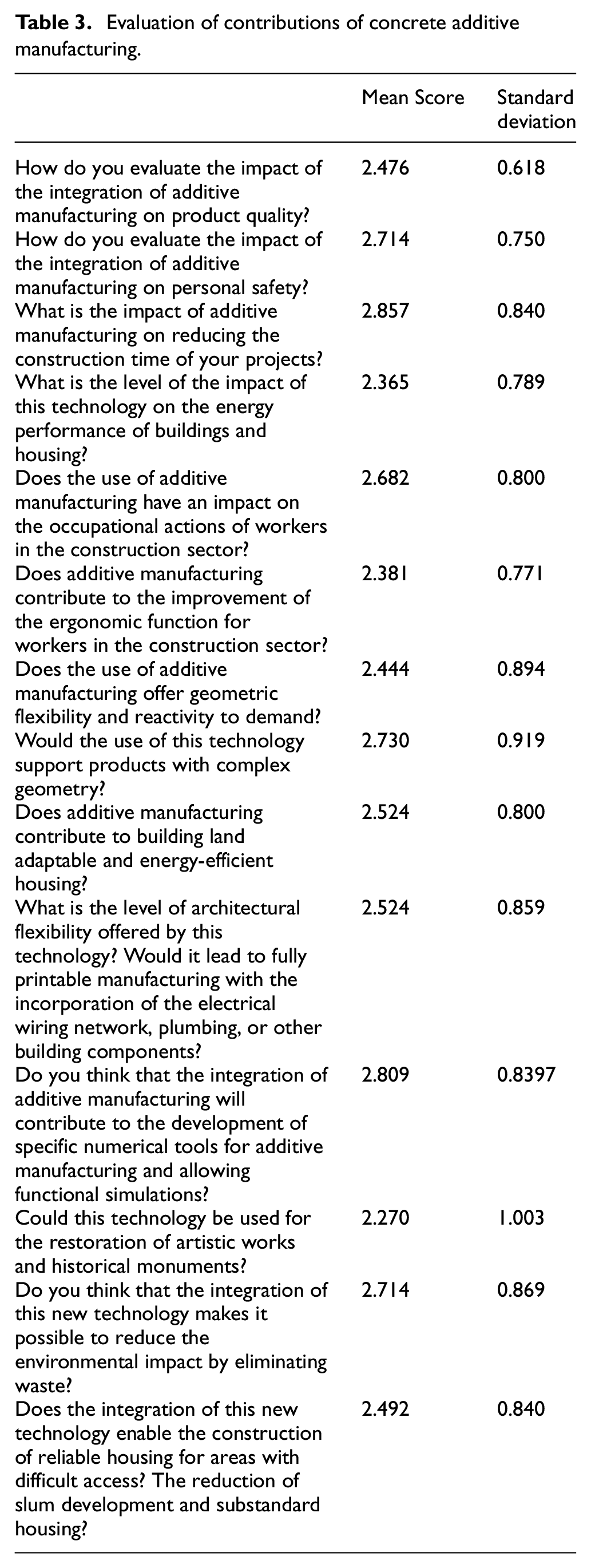
In Table 3, the survey focused on the contributions that received the highest scores from respondents such as:
The reduction in the time required to complete construction projects with a score of 2.857;
The development of numerical design and simulation tools with a score of 2.809;
The fabrication of structures with complex geometry with a score of 2.730;
Worker safety with a score of 2.714;
Reduction of the environmental impact with a score of 2.714.
Evaluation of contributions of concrete additive manufacturing.
Barriers and obstacles to the applicability and integration of additive concrete manufacturing
More than 65.1% believe that concrete additive manufacturing is an additional expense for the company (see Figure 4).
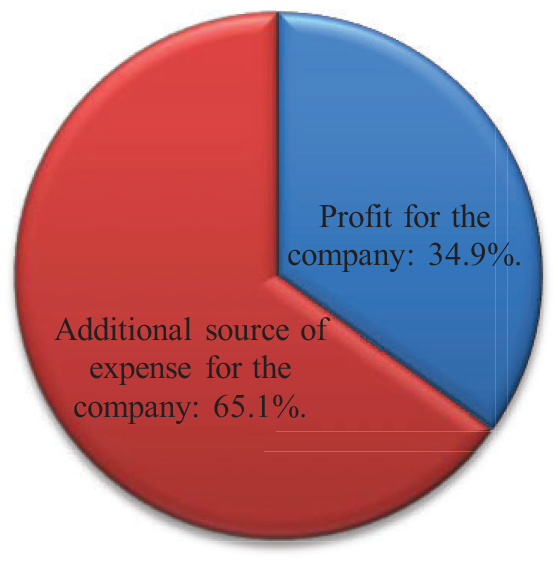
The financial aspect of AM concrete construction.
The analysis of Figure 5 and Table 4, confirms that the resistance to change and the social impact on workers in the sector is the main obstacle to the applicability and integration of additive manufacturing for the building construction sector with a considerable value of 74.6%. Secondly, we find the lacks of standards and regulations, as well as the need to implement a control system for the concrete structure. On the other hand, 55.5% believe that the competence of the staff is also a barrier.
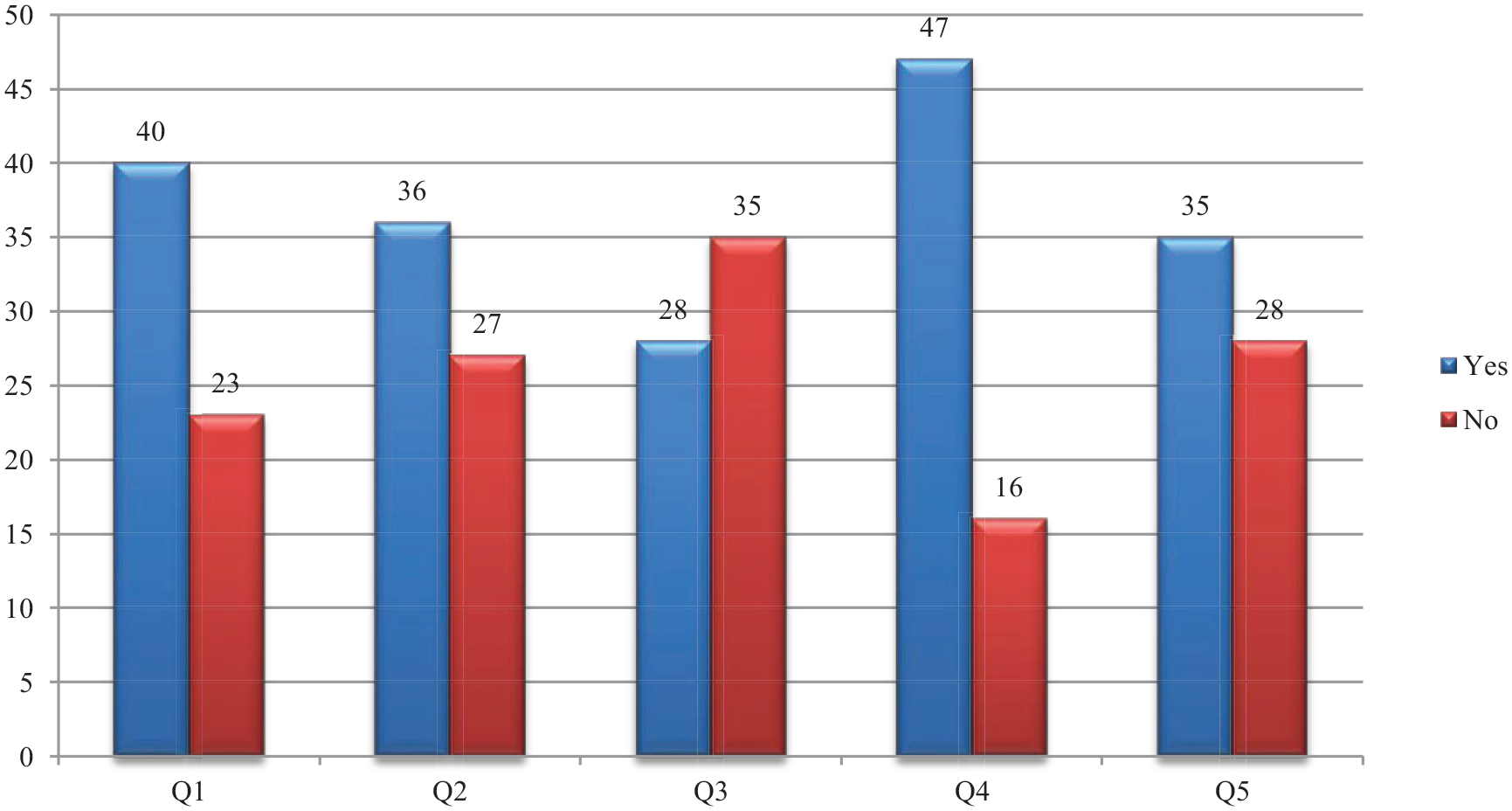
Responses ‘firms concerning hurdles of the applicability and integration of concrete AM.
Questions relating to hurdles of the applicability and integration of concrete AM.

Similarly, the absence of a strategic decision to integrate concrete additive manufacturing into the construction sector remains a major obstacle with a rate of 71.4%. As for the other barriers that require special consideration (see Figure 6):
About 63.5% for the technical issues relating to the mastery of technology and related systems;
57.1% for the financial issues;
About 54% for the absence of the government’s commitment and financial support for this type of project;
About 54% for the lack of skills related to the technology of 3D printing construction;
About 50.8% for the lack of a comprehensive approach to the successful integration of this technology;
About 49.2% for the lack of standardization and the absence of a legal framework;
About 47.6% for the mistrust expressed by industry experts regarding the uncertainty and the reliability and mechanical strength of the concrete structures built.
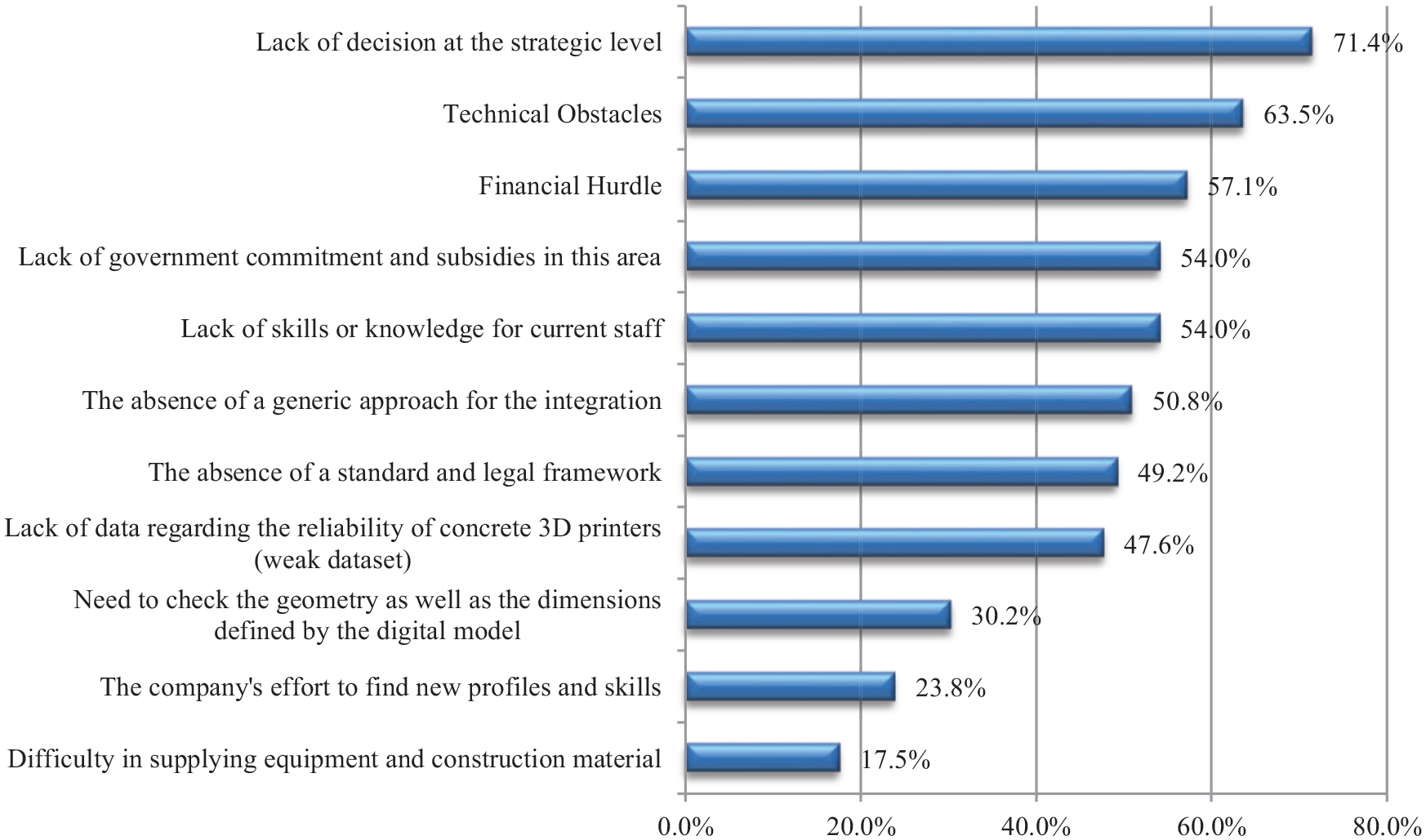
Other barriers and obstacles to the applicability and integration of concrete AM.
It is worth noting that recent studies revealed that the additive manufacturing is advantageous compared to the traditional construction since it brings an ultimate tensile strength, a lower elongation, and a higher yield strength due to its microstructure proprieties.34,35
Synthesis
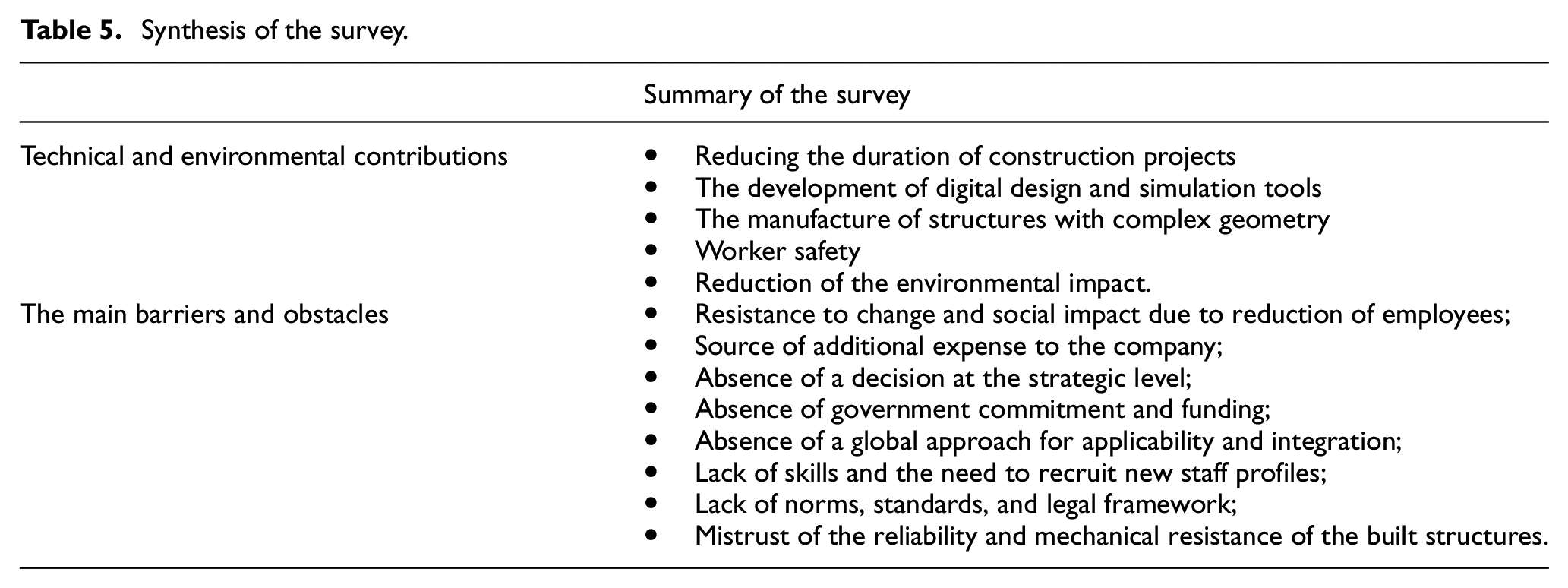
In Table 5, we summarize the results of this survey: firstly, the technical and environmental contributions of the concrete AM, and secondly, the main obstacles and barriers for the Moroccan companies regarding the applicability and integration of the concrete AM for the construction sector.
Synthesis of the survey.
Conclusion
In this paper, a state of the art of completed and ongoing projects for houses, buildings, and structures printed in 3D in selected countries is first presented. Secondly, the key opportunities of this technology for the building and construction sector are discussed. Next, the various barriers that may hinder the applicability and integration of concrete additive manufacturing in the construction sector were evaluated.
Following a brief presentation of our approach to the survey, the results of the survey were presented. This diagnosis allowed us to have some benchmarks and to identify key elements for successful integration. Also, this will enable construction managers to understand the advantages such as the technical and environmental contributions and the weaknesses of this technology and to appreciate its applicability and the challenges in the sector of construction in Morocco.
Furthermore, this survey provides a quantitative assessment of the real barriers and obstacles that may hinder applicability and integration. The need to have a global approach stands out as an important perspective. Another important perspective is the need for metrology and control for this technology. These needs will affect the material, the 3D printer, the manufacturing process and the structure produced. Thus, experimental protocols and control methodologies need to be formalized to validate the reliability of concrete structures. These technologies must evolve with new expertise and skills. It also remains to evaluate the impact of the Covid pandemic 19 on the applicability and the integration of this technology in the construction industry.
Footnotes
Declaration of conflicting interests
The author(s) declared no potential conflicts of interest with respect to the research, authorship, and/or publication of this article.
Funding
The author(s) received no financial support for the research, authorship, and/or publication of this article.
