




Abstract
For adapting the socialization, individuation and servitization in manufacturing industry, a new manufacturing paradigm called social manufacturing has received a lot of attention. Social manufacturing can be seen as a network that enterprises with socialized resources self-organized into communities that provide personalized machining and service capabilities to customers. Since a community of social manufacturing has multiple enterprises and emphasizes on the importance of service, manufacturing service order allocation must be studied from the new perspective considering objectives on service cost and quality of service. The manufacturing service order allocation can be seen as a one-to-many game model with multi-objective. In this article, a Stackelberg game model is proposed to tackle the manufacturing service order allocation problem with considering the payoffs on cost and quality of service. Since this Stackelberg game can be mapped to a multi-objective bi-level programming, a modified multi-objective hierarchical Bird Swarm Algorithm is used to find the Nash equilibrium of the game. Finally, a case from a professional printing firm is analyzed to validate the proposed methodology and model. The objective of this research is to find the Nash equilibrium on the manufacturing service order allocation and provide strategies guidance for customer and small- and medium-sized enterprises with optimal service cost and lead time. According to the game process and Nash equilibrium, some rules are revealed, and they are useful for guiding practical production.
Keywords
Introduction
Socialization, rapid response, servitization and customer participation have already become a new tendency of manufacturing industry at present. Under this context, the following three transitions are taking place: (1) booming in small- and medium-sized enterprises (SMEs). By their very nature, SMEs can rapidly and effectively complete tasks and thus have the ability to provide various products or services in a short time. Generally speaking, SMEs are formed in two ways: one is the traditional SMEs, the other one is large-scale enterprises decomposed into relatively independent SMEs. (2) Socialized manufacturing resources (SMRs). The fast development of social media and Internet technologies breaks down the geographical isolation and communication barriers among SMEs. The SMEs now can collaborate with others by sharing manufacturing resources to complete a task which cannot be done by only one SME before. 1 (3) Integrating manufacturing and service. In order to pursue stable profit and sustainable development, integrating service into manufacturing is becoming a feasible method. 2 Nowadays, increasing manufacturers attempt to provide manufacturing-related services for sustaining competitiveness and move to the upstream of the value chain. 3
For adapting these transitions, a new manufacturing mode called social manufacturing (SocialM) has been proposed. 4 It strengthens the decentralized SMEs which have similar SMRs and clusters SMEs into communities to collaborate for mass personalized product manufacturing and related product-service with aggregated resource capabilities. 5 It is obviously that SocialM goes beyond the old dogma of “one firm: one product” to “a group of SMEs (community): one product-service.” It should be pointed out that the SMEs in a community collaborate to complete the manufacturing service order, but within the community, they also have competitive relation on order allocation. Manufacturing order allocation is not a novel problem in engineering field and many models have been applied to tackle it.
However, in the context of SocialM, the manufacturing service order allocation (MSOA) should be reconsidered because of the special attributes on community organization and allocation criterions as shown in Figure 1. First, the SMEs can independently choose to join or leave a community and make strategies for a manufacturing service. This kind of self-organization means that the SMEs can select different strategies to bargain with customer because the community strengthen the discourse power for them. Beyond that, an SME’s manufacturing capabilities are uncovered to the customer and other SMEs. The bargaining processes between SMEs and customer have changed from private to open. And the evaluation criteria of MSOA for an SME include not only machining capabilities (MCs) or cost but also service capabilities (SCs) or quality of service (QoS). The abovementioned points have illustrated that these special attributes influence on the allocation mechanism of MSOA, and it should be reconsidered.
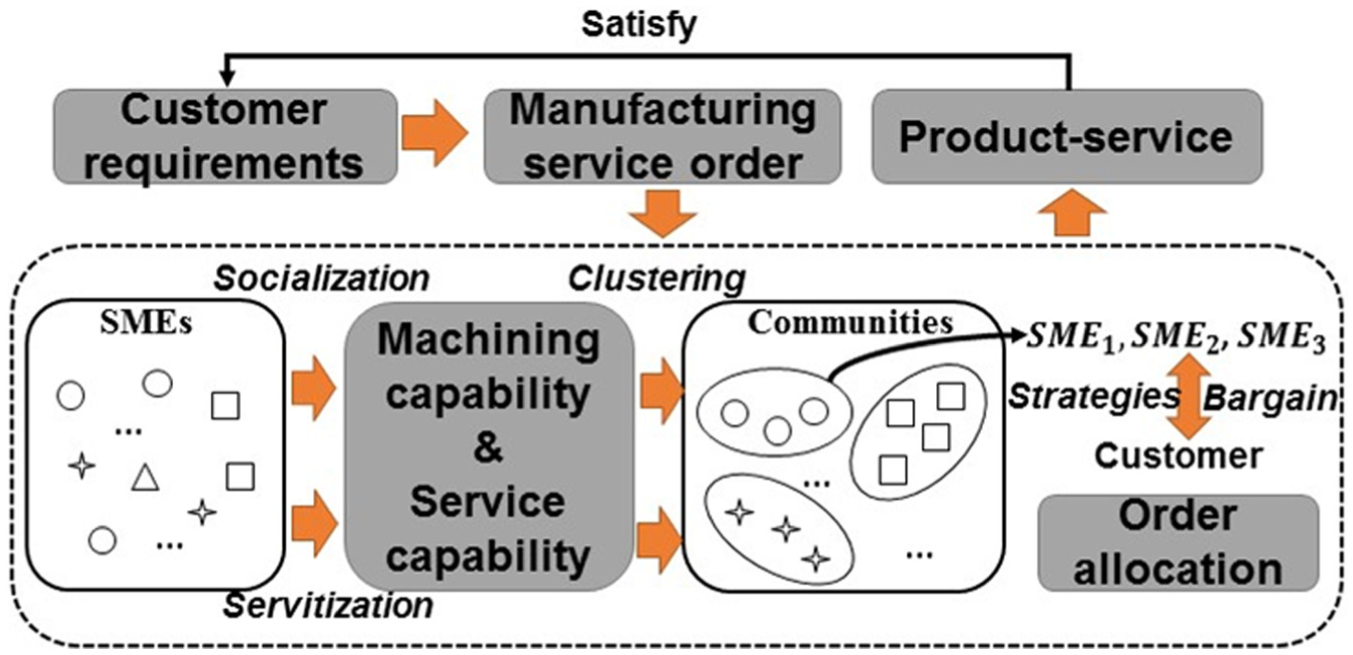
The MSOA in the context of SocialM.
About order allocation problem, scholars generally use cost to decide allocation results and production strategies. However, QoS should be considered in the context of SocialM. In this article, the game theory is applied to tackle the MSOA problem which has been used to manufacturing areas, such as manufacturing supply chain6,7 and manufacturing itself8,9 rather than MSOA. Considering the special attributes of SocialM, the evaluation criteria should include service cost and QoS simultaneously and customer and SMEs can change their strategy variables according to opposite side’s strategies for getting better payoffs in the game. If customer changes the strategy first, the SMEs will change their strategies according to customer’s move and then the customer will respond to the SMEs’ strategies. The iterations would not stop until reaching the equilibrium. This game process can be modeled as a Stackelberg non-cooperative complete information game, which the leader moves first and then the follower moves sequentially. In this game, the customer is mapped as the leader and SMEs are mapped as followers. Stackelberg game is a typical bi-level programming which is an nondeterministic polynomial (NP) hard-hard problem from the mathematics perspective. In this article, a modified multi-objective hierarchical Bird Swarm Algorithm (MOHBSA) algorithm is proposed for finding the Nash equilibrium of the Stackelberg game. Finally, an example case is analyzed to verify the proposed method to solve the MSOA within a rational computation time and a good efficacy.
The rest of this article is organized as follows: Section “Related works” reviews the related works on MSOA. In the most important section “Stackelberg game model,” a Stackelberg game model is proposed with payoff functions of leader and followers. In section “MOHBSA for Stackelberg game,” MOHBSA is applied for MSOA with optimization objectives of service cost and QoS. Section “Case study” gives an example of cone head from a professional printing firm to verify the proposed method. The discussions and the conclusions are presented in the final two sections.
Related works
The methods review on order allocation
Order allocation is an optimization problem that allocates the optimum order quantities to manufacturers. Nowadays, majority of order allocations problem contain multi-objective optimization, such as cost, defect rate, lead time and so on. Focusing on order allocation methods, scholars proposed kinds of optimization algorithms including basic algorithms and integrated algorithms. Demirtas and Ustun 10 proposed an integrated approach of analytical network process and multi-objective mixed integer linear programming with, mainly considering, cost factor. Kannan et al. 11 introduced a set of fuzzy multi-criteria decision-making methods and multi-objective programming approaches for green supply chain order allocation. Çebi and Otay 12 mainly considered quantity discounts and lead time in order allocation problem and solved the problems by a fuzzy multi-objective model. Jain et al. 13 introduced the chaotic bee colony algorithm for order allocation with different discounting policies. These order allocation methods apply to coopetition environment which has the similar features with the community of SocialM. From the above review, the scholars pay lots of attention to optimize the results of order allocation but neglect the fact that customers and manufacturers can change their production strategies at any time, and the bargain processes between them have significant influence for order allocation results.
Profits and costs are the most important goals for the SMEs and customer, they all want to reduce costs and improve profits simultaneously. Therefore, there are various methods for cost evaluation of SMEs and customer. Activity-based costing has become a popular cost-accounting system that identifies activities in production and assigns the cost of each activity which consumes human and product resources. 14 In the service field, performance-based contracting, 15 pay-for-performance 16 and pay-per-service use17,18 are proposed to achieve measurable performance outcomes for service. From the perspective of classification of cost, Benjaafar et al. 19 divide service cost into demand-dependent cost, which varies with the order allocated to the SMEs and demand-independent cost which is not affected by the amount of allocated orders. Based on these cost evaluation methods, this article proposed the plausible cost functions for the SMEs and customer.
Cost plays a significant role in the game, and majority of games between manufacturers and customers consider cost factor. In the context of SocialM, pure price game may cause some SMEs to lower service level to realize cost savings and enhancing competitiveness; therefore, the evaluation of QoS must be taken into account. The evaluation criteria of QoS are various, for example, reliability, availability, completion time, reputation and so on. According to these evaluation criteria, the game theory has been used to improve QoS with competition among manufacturers.20,21 Since SocialM emphasizes order completion and product delivery, the lead time of order is suitable to represent the QoS. Lead time is defined as the elapsed time from order start time to finish time of an SME, including preparation time, process time, logistics time and so on.
MSOA in the context of SocialM
Generally, MSOA has strong link with SMEs description that comprises tangible, intangible, quantitative and qualitative factors.22,23 The MSOA model mainly considers the factors of capability, efficiency, cost, flexibility and quality.24,25 As the foundation of MSOA, the features or attributes description of an SME are significant. Many scholars have focused on feature description from the aspect of machining and production capabilities.26–28 However, for SocialM, MSOA should consider more factors which can represent the functions and performances of a service. Four factors are proposed to describe the features of an SME from MCs and SCs aspects. MCs include machining function and machining performance, and SCs include service structure and service activity. In order to understand the details of the four factors, definitions are explained as follows:
Definition 1: machining function
Machining function is determined by the basic physical properties of an SMR, including machine type, machining type, machine features and basic parameters. These features describe SMRs from the macro perspective. Machining function embodies an SMR’s inherent physical properties which will not change in a short span of time (SMEs do not update their machining tools frequently).
Definition 2: machining performance
Machining performance has strong relationship with machining properties of an SMR. It includes the number of machine tools, machining precision, machining material and machining features of the SMR. Machining performance directly determines whether an SMR has the capabilities to complete the task or not.
Definition 3: service structure
Service structure is defined as the human resources and service time devoting for the order, and these variables are controlled by the strategies of SMEs. The cost of human has direct ratio relations with machining tools’ quantity but slower growth. Obviously, machining performance is related to service structure, and they are integrated to represent the QoS of SMEs.
Definition 4: service activity
Service activity includes the kinds of services that an SME offers. Besides machining, SMEs always provide inventory service, logistics service, staff training service and so on. For providing intact manufacturing service, these services cost must be calculated and integrated with machining cost to form total cost.
From the definitions above, machining function and service activity explain the inherent properties of an SME especially in cost and operation time. Machining performance and service structure represent the strategies of an SME that by changing the variables to get better payoffs during the game.
Decision variables and assumptions
According to the game theory, participants can change their decision variables for getting better payoffs. In the Stackelberg game, both the leader (customer) and followers (SMEs) have their decision variables, as shown in Table 1. Usually, a manufacturing service order consists of a set of jobs and a job can be divided into several specified sequence operations on specified machines. Let
One machining tool can undertake only one operation at the same time and neglect the downtime during machining process. That means for a specified machining tool, machining cost and time of an operation are deterministic.
The quantity of jobs allocated to SME n are equally distributed to the machining tools, for example,
Each job consists of a series of operations which should be processed based on the specified sequence, for example, operation
SMEs provide not only MCs but also logistics service and unfinished jobs inventory service. If all the jobs are finished, they will be transported to customer side. Therefore, the customer bears the finished jobs’ inventory cost.
The working hours per day of each SME are same, so the minute is used as the time unit to measure the service time of an SME.
Decision variables of SMEs and customer.

Stackelberg game model
Stackelberg game is a double-layer game model and has advantages to tackle the one-to-many game.8,29 Applying Stackelberg game on MSOA problem in SocialM, a kind of interaction relationship between the customer and SMEs has been investigated: the customer makes the first move and determines the decision variables of order allocation and delivery batches, and then the SMEs react to the customer in turn by determining the decision variables of price and quantity of machining tools. This process is iterated and terminated until finding an equilibrium that any participant would not benefit from a unilateral deviation of his strategy. Besides that, Stackelberg game can be modified into multi-objective game by multifold fitness functions. 30 The MSOA problem is modeled as a Stackelberg non-cooperative complete information game that the customer is the leader and SMEs are the followers in finite iterations as shown in Figure 2. Stackelberg game is closely related to bi-level programming which is a hierarchical optimization problem including upper and lower level to find good strategies for optimizing their objective function values.31,32 Adapting to the problem in this article, a multi-objective bi-level programming model is proposed to tackle the Stackelberg game.
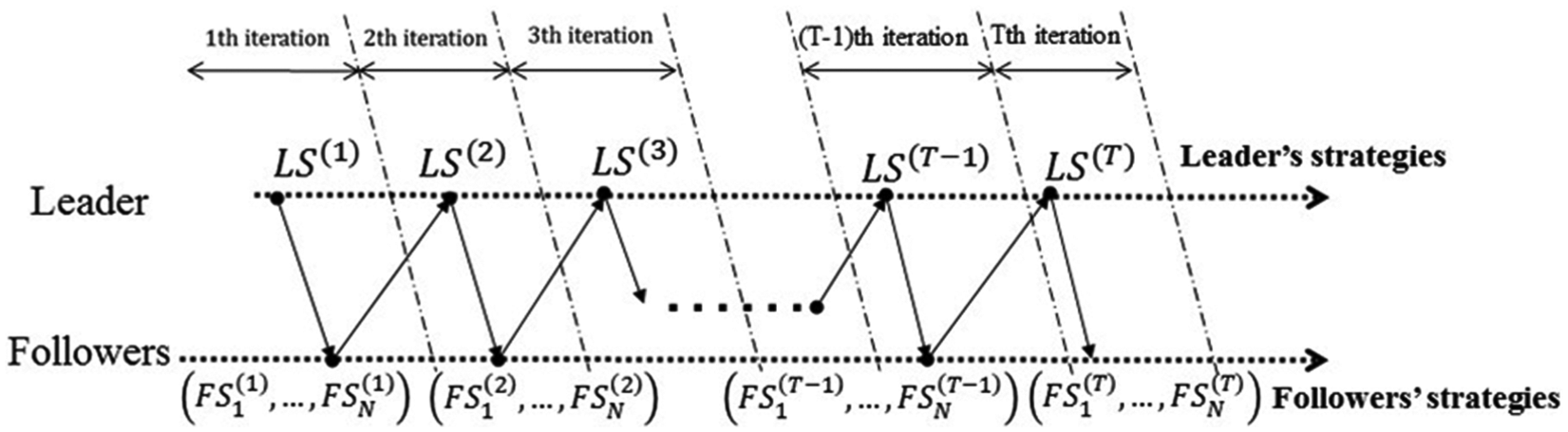
Iterations between leader and followers of Stackelberg game.
Stackelberg game and multi-objective bi-level programming
Based on the concept of Stackelberg game and MSOA in SocialM, the structure of the proposed game can be defined as
In this game, it address that the followers have multi-objective payoffs functions for cost and lead time, respectively. This kind of multi-objective bi-level programming can be formulated as follows

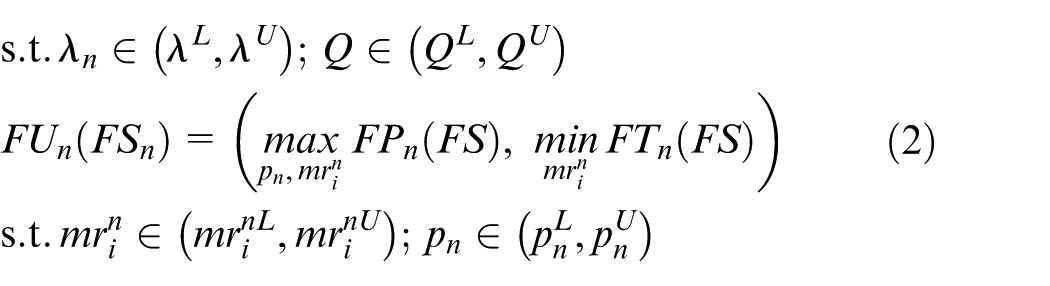
In the context of the multi-objective bi-level programming, feasible set is usually called the induced region (IR). A feasible solution
Payoffs functions of bi-level programming
The payoffs functions of customer and SMEs can be formulated as follows, Tables 1 and 2 shows the parameters of the functions.
Input parameters of the game.
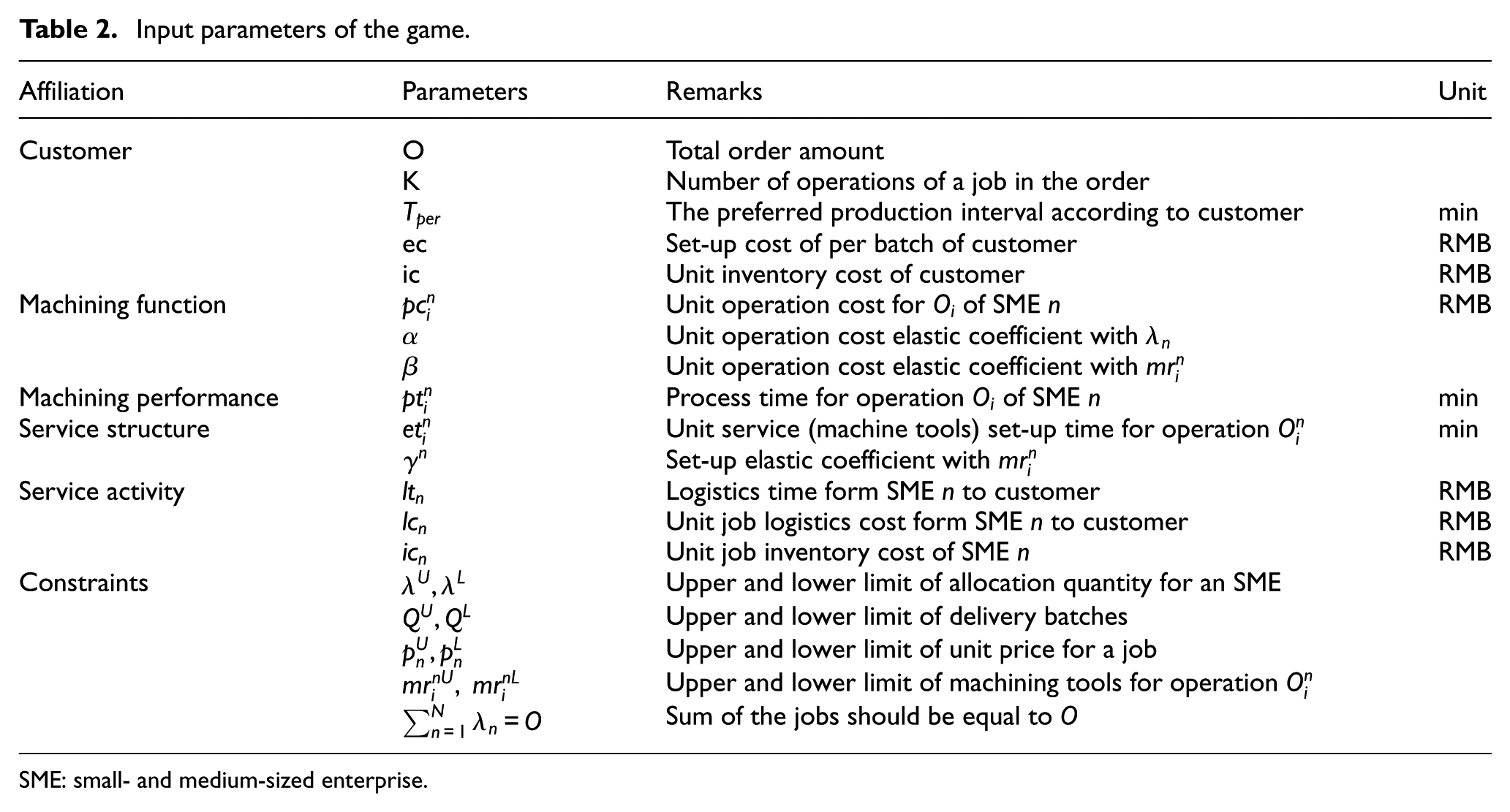
SME: small- and medium-sized enterprise.
Payoff functions of customer (upper level)

In the upper level, the customer wants to complete the order at the lowest cost which includes prices from SMEs, set-up cost for each batch, and inventory cost.
Payoff functions of SMEs (lower level)


In the lower level, the profits of an SME are equal to the price minus cost. The cost of an SME consists of demand-independent cost and demand-dependent cost, which include machining cost, logistics cost and inventory cost. Since the unit operation cost will decrease with the increase of
The lead time which represents QoS includes operation time, set-up time and logistics time. The lead-time payoffs function is equal to absolute value of preferred production interval
Some constraints considered during the MSOA have been expressed in the “Decision variables and assumptions” section and the equations, such as equations (3), (4) and (5), the notations are illustrated in Table 2. However, some connotative constraints should be expressed as follows: (1) obviously, the parameters
MOHBSA for Stackelberg game
Bi-level programming is a typical NP-hard problem, several intelligence algorithms have been proposed for solving it, such as particle swarm optimization (PSO), 34 genetic algorithm 35 and discrete differential evolution (DE) algorithm. 36 Different from the traditional bi-level programming, the lower level of proposed bi-level programming has multi-objective, and the solutions are non-dominated with each other. In this article, a MOHBSA is proposed to find the Pareto front of the multi-objective bi-level programming.
Basis of Bird Swarm Algorithm
Bird Swarm Algorithm (BSA) is based on the swarm intelligence extracted from the social behaviors and social interactions in bird swarms that is proposed by Meng et al. 37 It mimics the foraging behavior, vigilance behavior and flight behavior of birds. (1) Foraging behavior: each bird searches for food according to its previous experience and the swarms’ experience. This activity aims at searching for feasible solutions and finding dominant solutions. (2) Vigilance behavior: according to foraging behavior, birds try to move to the center of the swarm for foraging, and they would inevitably compete with each other. To avoid this phenomenon, some birds would not directly move toward the center of the swarm and keep vigilance (avoid trapping in local optimum). (3) Flight behavior: birds may fly to another site by the frequency, FQ. When arrived at a new site, some birds acting as producers would search for food patches, while others acting as scroungers to follow the producers.
Solutions of MOHBSA
BSA is applied to find the solution of single-level and single-objective problem, but the problem in this article is a multi-objective bi-level programming. Based on the idea and structure of BSA, the MOHBSA for solving multi-objective bi-level programming is proposed. MOHBSA is constructed by two sets of BSA, one is to solve the upper-level problem and the other one is to solve the lower-level problem. In the upper level, the fitness is calculated as follows

In the lower level, the fitness includes two functions to represent cost and lead time, respectively
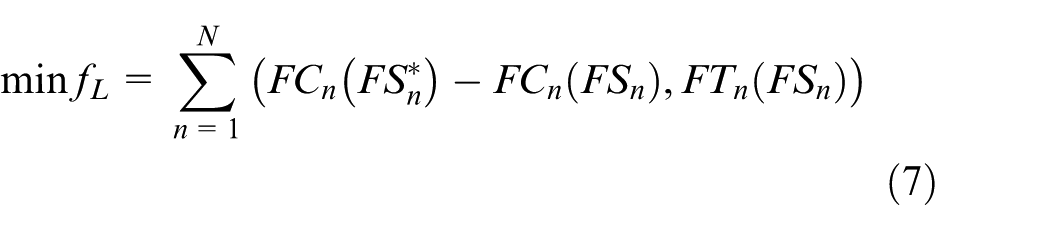
where
Since the lower level has two objectives, the non-dominated solutions filter mechanism and the global best
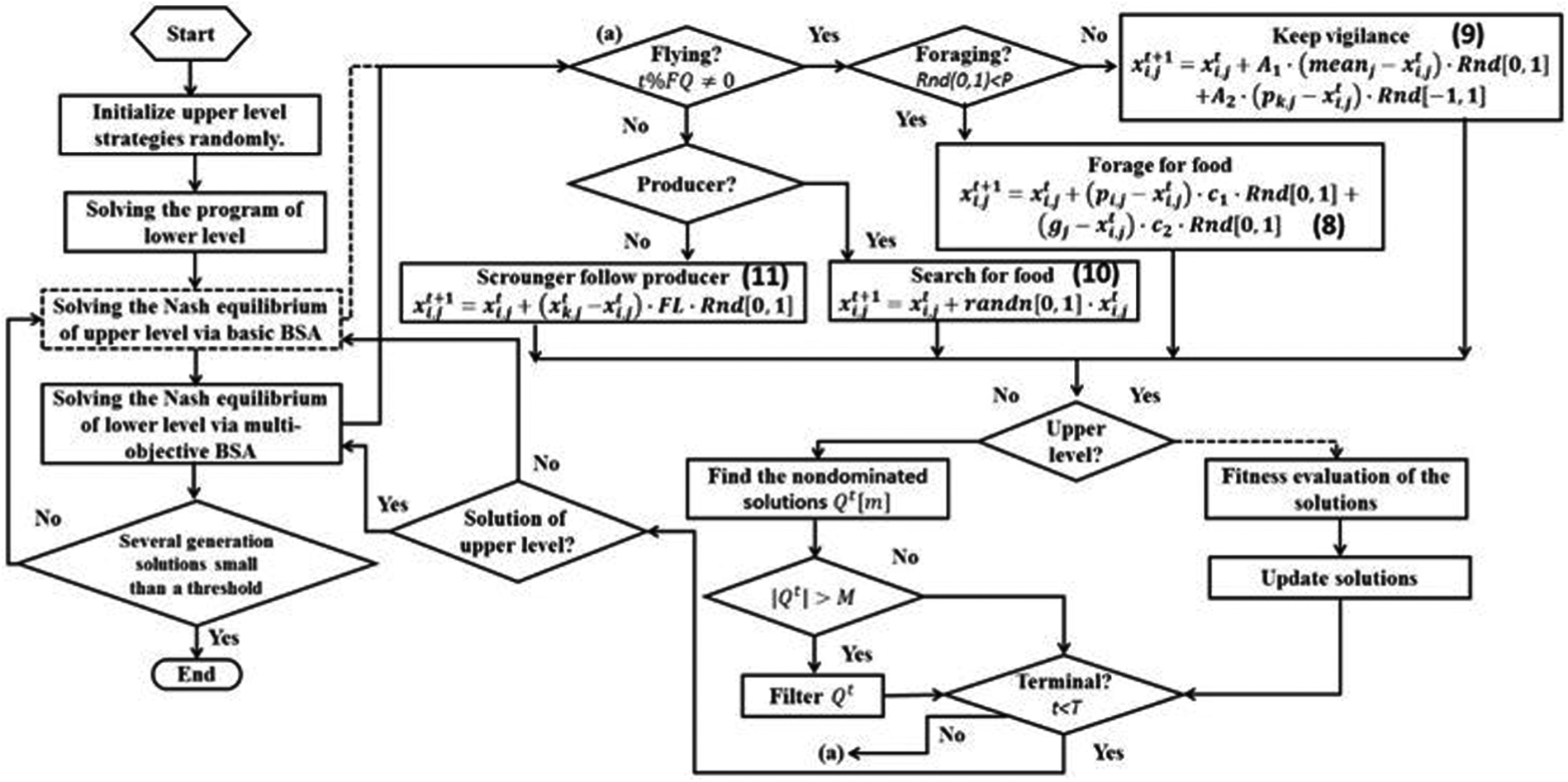
Flowchart of MOHBSA.
Parameters in MOHBSA algorithm.
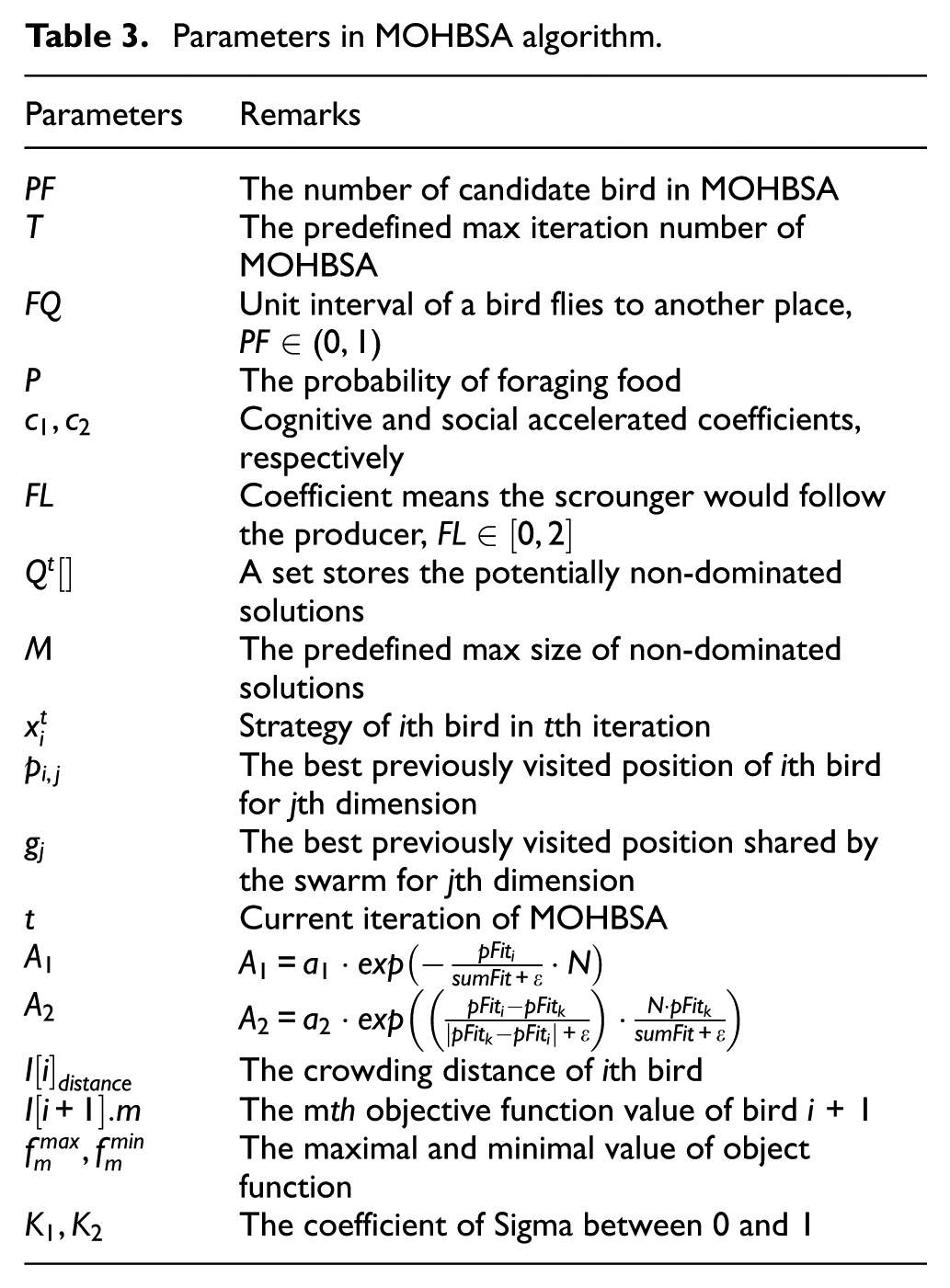
The pseudocode of MOHBSA.
Global best selection and non-dominated solutions filter
Unlike the single-objective optimization problem, multi-objective BSA needs a procedure to select the global best positions of lower level. Some lessons can be drawn from multi-objective PSO on how to select global best from non-dominated solutions. The crowding distances method is proposed to calculate distance using binary tournament, the least crowded solution with the highest distance is regarded as global best. 38 Another useful selection mechanism is called Sigma method that calculates the sigma value of each particle, and then calculates the distance between two particles to find the minimum distance particle as the global best. 39
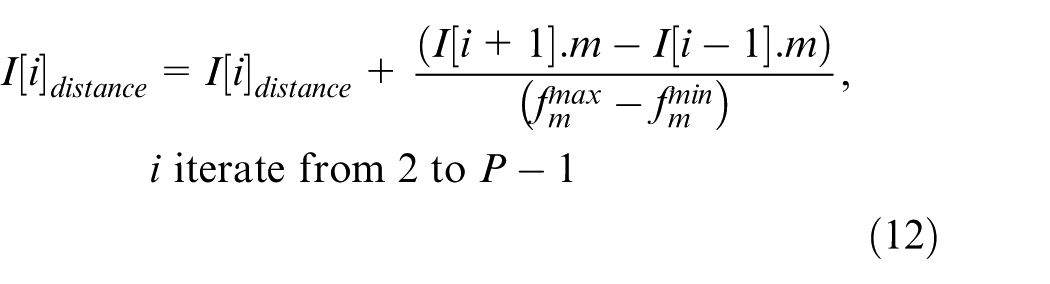
A hybrid selection mechanism is proposed by combining the crowding distances method and Sigma method. First, all non-dominated solutions are sorted in descending order according to crowding distance, and only the top 10% are selected as the candidates. Then, Sigma method is adapted to find the global best among the candidates. In order to filter
The crowding distance and

Case study
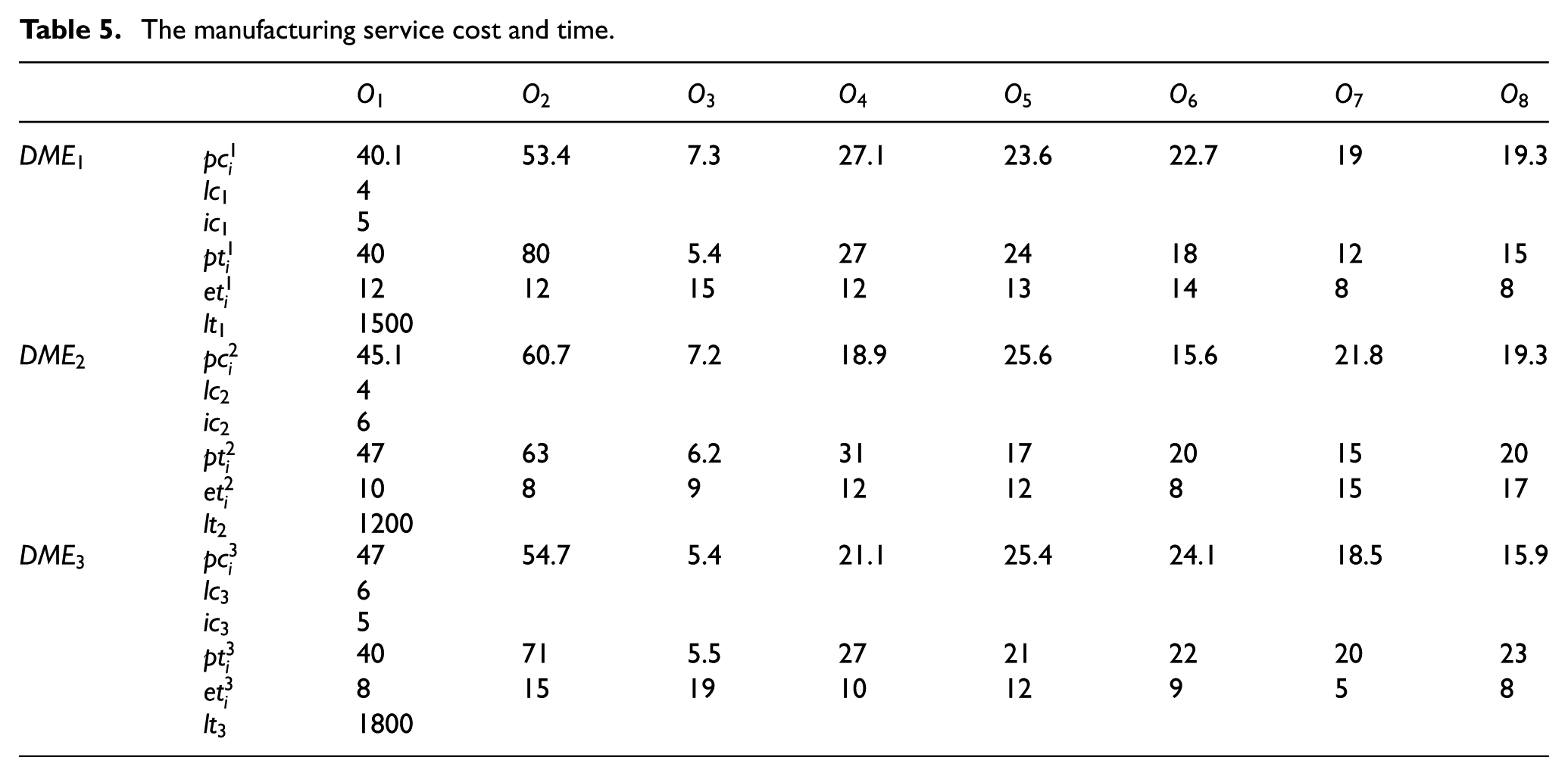
A case study is proposed based on a professional printing firm that the main business of the firm is gravure press which operates at high speed, carrying a layer of ink to a doctor blade disposed at a relatively low angle to the cylinder surface. And almost 75% of its components are outsourced, around 120 SMEs participate in the manufacture of the gravure press and form 32 communities. The cone head of the gravure press is selected as an example which has eight operations from blank to the finished product, since it is a typical part which demands high machining precision and is largely used in gravure press. The firm releases 1000 jobs and then selects the most suitable SMEs community which includes three SMEs that can satisfy the cone head manufacturing service order. The manufacturing service cost and time of each SME are illustrated in Table 5.
The manufacturing service cost and time.
In this case, the dimensions array of each bird can be coded as

The input parameters for the algorithm are shown in Table 6. The solution program was running on a server with Inter(R) Xeon(R) CPU E5-2630 at 2.30 GHz and 64 GB RAM. To ensure the algorithm is efficient enough, this article performs the game simulation 20 times, it takes a reasonable average computing time of 682 s and 74 iterations to find the Nash equilibrium solutions. By applying MOHBSA, the optimal solution or strategy of upper level and the non-dominated solutions or strategies of lower level can be acquired. According to the solutions, the cost value curve of upper level, service cost and time of lower level (Pareto optimal front) are illustrated in Figure 4(a) and (b), respectively. The detailed equilibrium solutions of MSOA are shown in Table 7.
The input parameters of MOHBSA.

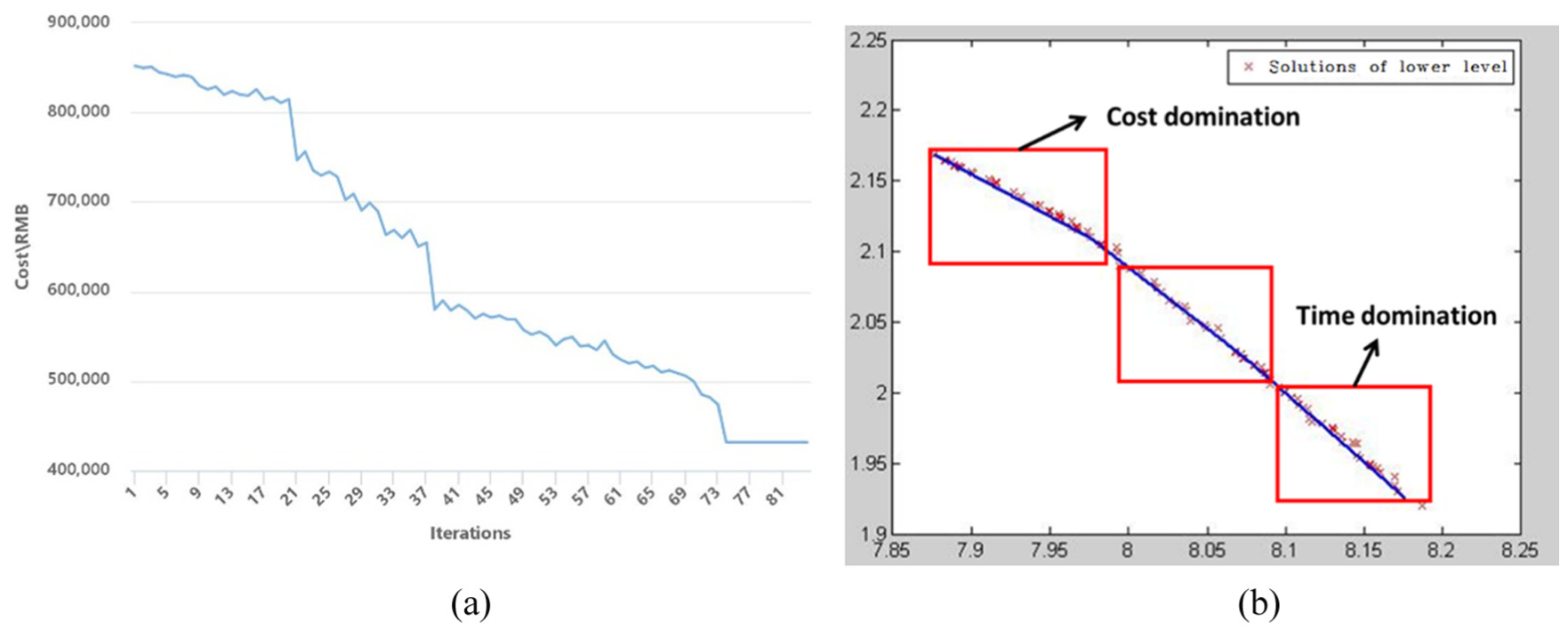
The results of upper level and lower level based on MOHBSA: (a) the cost value curve of upper level and (b) Pareto optimal front of lower level without filter mechanism.
Result on the demonstrative case.
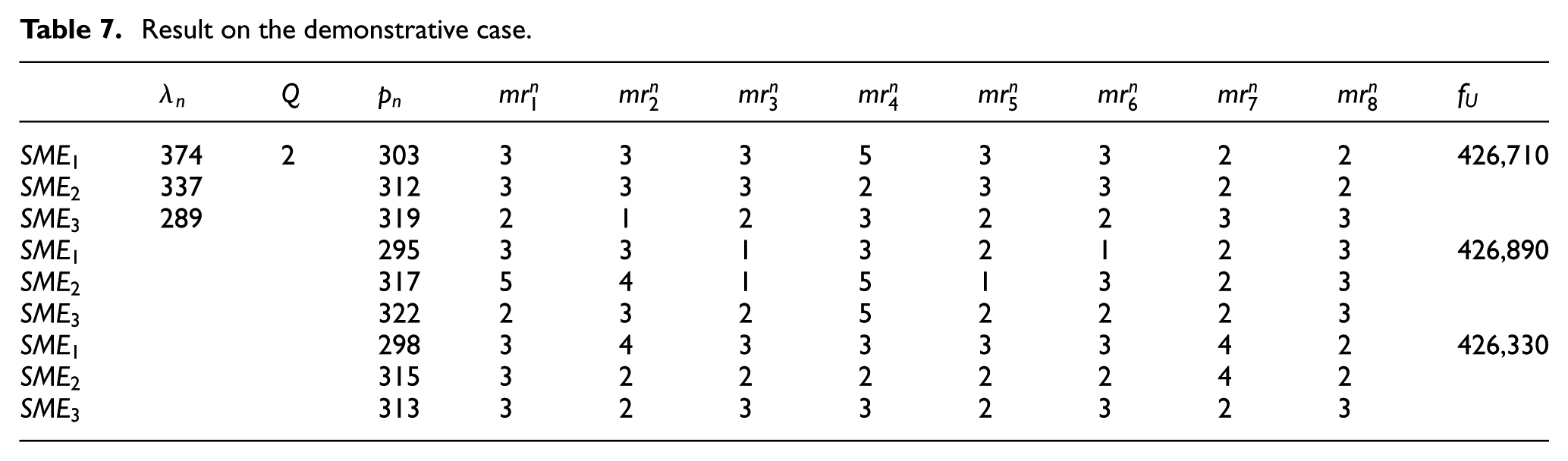
From the Figure 4, Table 7 and computational processes, the results reveal the following:
Quantity of the order allocated to an SME is inversely proportional to the unit price of the SME. With the unit price of the SME increasing, the customer changes foregone strategy by readjusting the order distribution mechanism to control the cost.
In this case, a smaller delivery batch of order (Q) is better, since the inventory cost take relatively smaller part for whole cost. However, if a manufacturing order has a longer production cycle, the value of Q will increase to limit the cost of inventory.
The average number of machine tools devoted for the order of each SME is 20. Devoting the more machine tools, the shorter lead time and lower inventory cost it will be. However, the whole cost will increase.
In Figure 4(b), the results were divided into three parts. For the upper part, the results mainly consider the cost factor, and the lower part mainly considers the time factor. By using the filter mechanism, it is obvious that all the most suitable solutions are from the middle part which comprehensively considers the time factor and cost factor.
In some extreme cases, some SMEs may get all the orders or get nothing, since the SMEs in the same community may have a larger gap on MCs and SCs. Under this circumstance, this type of SMEs will quit the current community and join in another community based on self-organization mechanism.
Discussions
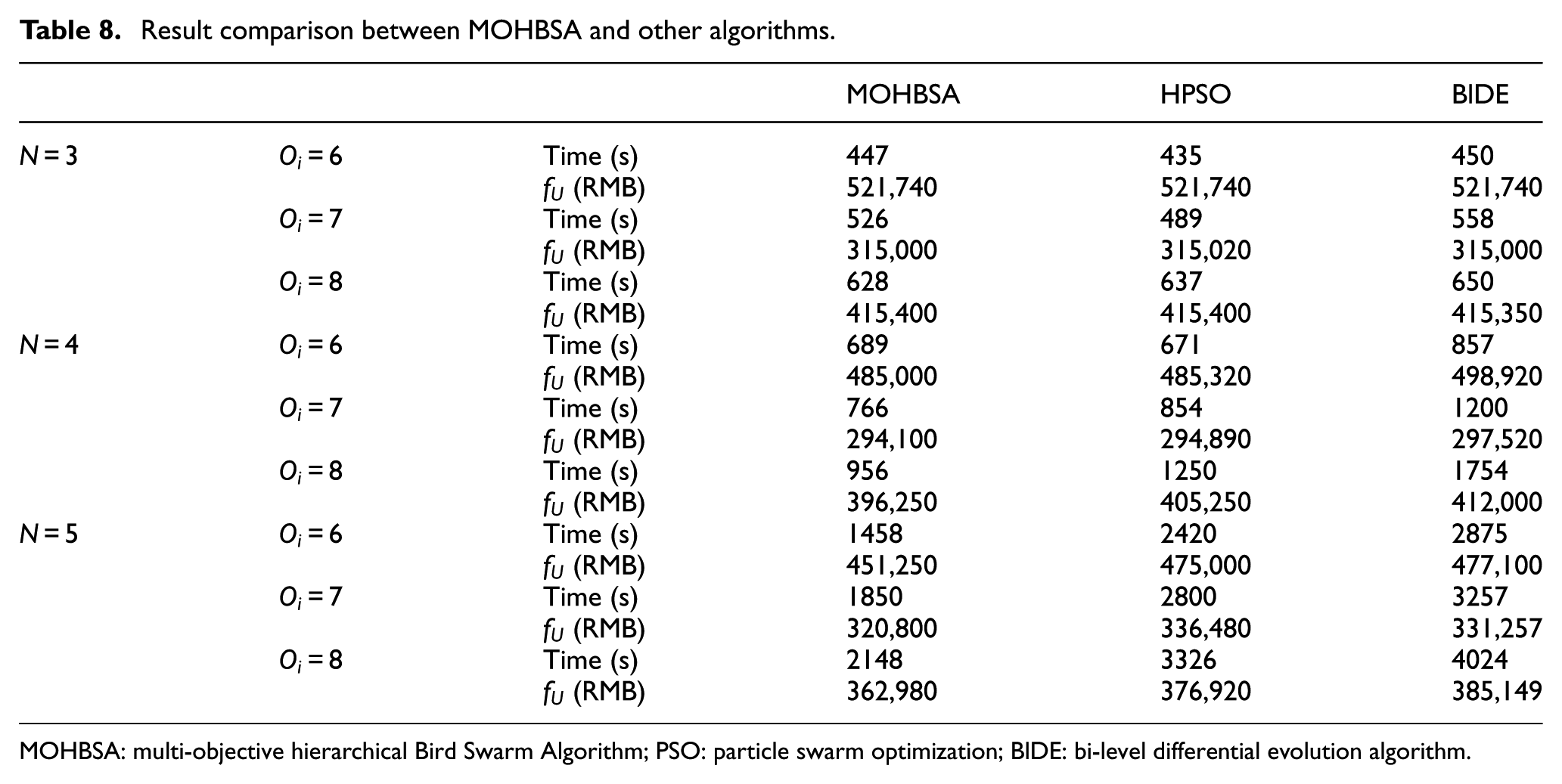
To further illustrate the reliability and effectiveness of the proposed methodology, bi-level differential evolution algorithm (BlDE) 40 and hierarchical particle swarm optimization (HPSO) 9 are selected as competitors of MOHBSA for the bi-level problem. Since the BSA has a natural relationship with DE and PSO, especially in formulae. This comparison only contains single-objective problem because single objective should have been able to explain the effectiveness and efficacy of the algorithms. According to the investigations, this article design three scenarios (N = 3, 4 and 5) which cover the most cases of MSOA of SocialM. And then select three typical parts which has 6, 7 and 8 operations, respectively. Payoffs function values of upper level and lower level act as the evaluation criteria for the comparison, and the result is shown in Table 8.
Result comparison between MOHBSA and other algorithms.
MOHBSA: multi-objective hierarchical Bird Swarm Algorithm; PSO: particle swarm optimization; BlDE: bi-level differential evolution algorithm.
Some conclusions can be drawn from Table 8 about how the different algorithms, number of SMEs and operations influence the computation time and the payoffs.
The cost and computation time of the three algorithms are very close to each other when N = 3. That means, in the case of low dimensions, MOHBSA, HPSO and BlDE have similar algorithm performance.
The computation time increases largely when the number of SMEs increases from three to five. The computation time of MOHBSA increases from 447 to 1458 s when
In majority of cases, the lowest
When the number of SMEs remains unchanged, with the increase of operations, the computation time of the three algorithms have a small increase (around 40%). The increasing quantity of operations has smaller effect on the dimensions of MOHBSA and payoffs functions of lower level than the number of SMEs.
The value of
Conclusion
Since the special attributes on one-to-many mode and multi-objective payoffs functions influence on the MSOA mechanism of SocialM, it should be reconsidered from a new perspective of the game processes with the customer and SMEs, modified a useful algorithm for finding the Nash equilibrium with multi-objective and reveal some rules for guiding practical production. In this article, a Stackelberg game model is proposed for tackling the problem of MSOA. First, MSOA problem and decision variables are illustrated based on SocialM paradigm. Then set up a Stackelberg game model with payoffs functions of upper level and lower level (customer and SMEs). Since the MSOA in this article is a multi-objective optimization problem, a modified MOHBSA is proposed for finding the Nash equilibrium of the Stackelberg game. Finally, an application case is studied to verify the proposed model. The result of the case has shown that it takes a reasonable computing time to find the sensible Nash equilibrium. Comparing with two typical hierarchical swarm intelligence algorithms, the proposed MOHBSA is suitable for MSOA. This research focuses on tackling basis and vital problem on MSOA of SocialM, in order to find the Nash equilibrium and optimal strategies for customer and SMEs. Besides that, the process of Stackelberg game and MSOA solutions reveal some rules and can be linked to the real world:
The unit price is the most important factor for MSOA, lower price can obtain more jobs. However, low price and more jobs cannot always bring the highest profits for an SME. Too much jobs will increase the inventory cost and devote a mass of machining tools. So the price strategy of an SME should control the price in a reasonable region with high profits.
Devoting a large amount of machining tools will shorten the lead time, but it hinders the SMEs to accept new orders. Devoting less machining tools will decrease the production cost, but it may not satisfy the preferred production interval of customer, and unoccupied machining tools are wasted. Therefore, the production strategy of an SME should devote less machining tools, but the lead time is similar to other SMEs in the same community.
Customer always wants to lower the price, but low price will extend lead time and some SMEs may quit the community, since the order’s profits are lower than their expectation.
Even though the model has some contributions to the practical production; however, it is still in an early stage and has some limitations. The proposed game model is established based on the assumption that SMEs work on a normal condition and neglect the time waste on mechanical failure and equipment repairing. In this game model, customer is considered as the leader to take the first step. Sometimes the leading power has shifted from customer to SMEs. This article use lead time to represent QoS, but in most cases, lead time is just one of the evaluation indicators of QoS.
These problems should be taken into account in future research.
Footnotes
Declaration of conflicting interests
The author(s) declared no potential conflicts of interest with respect to the research, authorship and/or publication of this article.
Funding
The author(s) disclosed receipt of the following financial support for the research, authorship, and/or publication of this article: This research is supported by the National Science Foundation of China under grant no. 71571142.
