




Abstract
Maintenance nowadays not only plays a crucial role in the usage phase, but is fast becoming the primary focus of the design stage—especially with general increased emphasis on product service. The modularization of maintenance has been explored rarely by previous researchers, despite its significant potential benefit. Existing modular design methods on life cycle do not sufficiently improve maintenance performance as a whole. In effort to remedy this, this article considers relevant maintenance issues at early stages of product development and presents a novel modular methodology based on the simultaneous consideration of maintenance and modularity characteristics. The proposed method first employs the design structure matrix to analyze the comprehensive correlation among components. Next, based on graph theory, initial modules with high cohesion and low coupling are generated. After that, a maintenance performance multi-objective model is established for further optimization to minimize maintenance costs, minimize differences in the maintenance cycle, and maximize system availability. To conclude, an improved strength Pareto evolutionary algorithm 2 is used for modular optimization. The complete methodology is demonstrated using a case study with a hydraulic press, where results reveal that the optimized modules can reduce maintenance cost under the premise of approximately constant modular performance.
Introduction
In recent years, alongside the increasing emphasis on users’ comfort and experience of product quality, services are no longer a peripheral consideration within a business environment, but are more often seen as core customer offerings. 1 Changes in customer demand plus fierce market competition force enterprises to offer increasingly innovative services and improve the quality of the existing services. To this effect, the importance of adopting new strategies and building servitization-driven design approaches has become widely recognized in the industry.2,3 For manufacturing enterprises, maintenance performance is regarded as a vital criterion to evaluate service quality. Exceptional maintenance performance can speed up the assembly and disassembly processes of a system 4 and reduce the post-sales maintenance cost. It is thus essential to equip designers with the skills and tools to integrate maintenance performance into the early stage of a design.
During the product design process, 5 modular design is one of the most common techniques requiring consideration. Modular design has been the focus of many fields, such as mass customization, 6 product family design, 7 and green design. 8 Designing specifically for product modularity has proven very effective to enhance responsiveness and to cut costs in the automotive industry. 9 In the existing research on modular design, proponents of design science have explored modularity from many different perspectives, including manufacturing, 10 recycling, 11 disassembly, 12 and reuse. 13
Gu and Sosale 14 presented an integrated modular design methodology for life cycle engineering. Chung et al. 15 adopted the life cycle assessment of a product to identify the most beneficial modular structure. Agard and Bassetto 16 proposed a single-level modular design formulation considering quality and cost simultaneously to meet customer requirements. Hwang and Choi 17 proffered a modular design methodology to maximize customer satisfaction. Meng et al. 18 proposed a new module identification method taking manufacturing efficiency into account in product development. Hong and Park 19 demonstrated a new modular design approach to overcome the difficulty based on physical and functional relationships. All these studies, however, failed to adequately consider increased demand for maintenance. So far, only a small number of studies have focused their efforts on maintenance-oriented modular design. Tsai et al. 4 presented a method of modularity based on maintenance policy; however, this work mainly focused on maintenance cost and did not fully consider maintenance performance factors such as availability or complexity. Furthermore, the methods they applied required manual operation and were too time-consuming for complex products. Joo 20 developed a dynamic approach for scheduling preventive maintenance for modular designed components, but the approach centered around maintenance scheduling rather than module identification. There is clearly a gap in the availability of modular design for such a crucial juncture of product design. This article expands the concept of modularity into a maintenance perspective.
To facilitate quicker and smarter decisions for module identification, a number of methods have been applied extensively to modular design, including design structure matrix (DSM), 21 group genetic algorithm, 22 and fuzzy C-means. 23 Kusiak and Huang 24 developed a methodology for determining modular products via a graphical representation and fuzzy neural network. Beek et al. 21 developed a modularization scheme based on a functional model. Cheng et al. 25 proposed a new approach for product modularization based on axiomatic design and DSM. These methods clustered components into an independent module according to their relationship, but the partition schemes obtained are not optimized and the calculation amount they require is rather large. Moon et al. 26 introduced a multi-objective particle swarm optimization approach to select the best module identification strategy. Kreng and Lee 27 used a case study to illustrate the capability of group genetic algorithms for modular design. Kamrani and Gonzalez 28 proposed a genetic algorithm solution methodology to solve modular design problem. To use these methods, the initial values for the clustering number of a product must be established before running the process.
There are considerable difficulties posed by modular design for maintenance consideration. Modules must be easily configured without sacrificing maintenance performance. Modularity and maintenance performance should be considered simultaneously in module identification. Another difficulty in modular design is in the mathematical model of maintenance performance and its solution. The module identification method must thoroughly account for maintenance.
To overcome the above limitations, this article develops a new methodology to solve the modular design problem with simultaneous consideration of maintenance and modularity performance. A module identification approach–based DSM and graph theory is first presented, which is able to obtain initial modules with excellent modularity performance. Next, the mathematic formulation of maintenance performance is proposed, which translates a maintenance-oriented module identification into a multi-objective combinatorial optimization problem. Finally, the strength Pareto evolutionary algorithm (SPEA2) and fuzzy set theory are adopted to identify the optimal modular scheme of a product. The specific focus of this research is to enhance maintenance performance while maintaining excellent modularity performance, with the aim of drawing designers’ attention to the maintenance problem that exists at the design stage.
The remainder of this article is organized as follows. Section “Initial module identification” presents an integrated module identification approach–based DSM and graph theory. Section “Optimization of initial module for maintenance performance” establishes the mathematical model for maintenance performance and states the solution method based on SPEA2 and fuzzy set theory. Section “Case study” provides a case study to verify the effectiveness of the proposed method. Finally, section “Conclusion and future work” concludes our work and describes our plans for future research.
Initial module identification
Interaction analysis of components
The strength of the coupling relationship among components can be determined quantitatively by interaction analysis of components. In order to obtain the precise relationship between various components, previous researchers categorized component relationships into three ways, from the perspectives of lifecycles, namely, functional correlation, geometrical correlation, and physical correlation. 29
Functional correlation refers to the interaction among different components when they jointly achieve a certain function. Geometrical correlation represents spatial or geometrical relationships among components as physical connections, fastening, size, verticality, parallelism, concentricity, and other factors. Physical correlation indicates the exchange or transmission of material flow, energy flow, and signal flow among components.
DSM construction
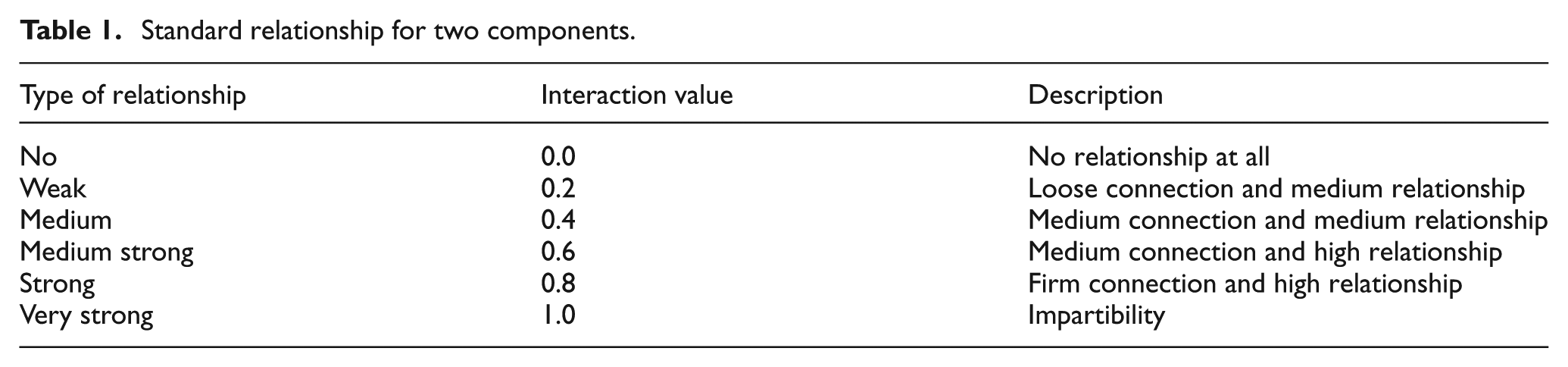
DSM was initially proposed by Steward 30 to indirectly present the parameter dependencies in complex design by means of matrix. Through relevant algorithms such as partition, tearing, banding, clustering, simulation, and eigenvalue analysis, it models and analyzes correlation between parameters and structures. To effectively consider the maintenance performance of modules within product development, the structural information must be available for module identification. Thus, component-based DSM is applied to model and describe the correlation among components of a product. Modeling analysis of a product is conducted by investigating the interaction between components. Product structure is expressed as a liaison graph, as shown in Figure 1(a), and a basic DSM documenting the relationship between components is shown in Figure 1(b). Based on the characteristics of component correlation, a numeric DSM depicts the degree of connection using values such as 0, 0.2, 0.4, 0.6, 0.8, and 1.0, demonstrated in Table 1.
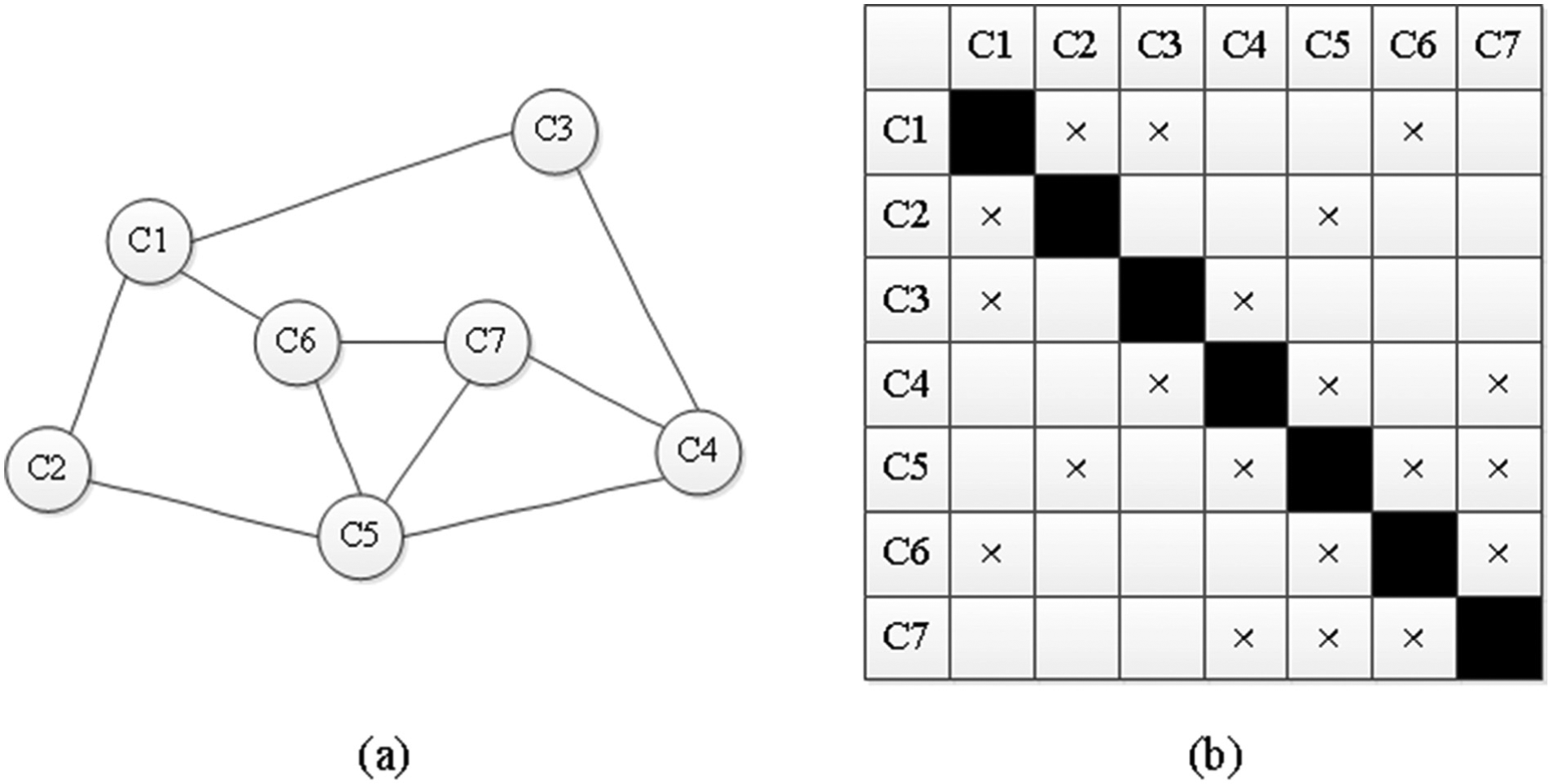
(a) A liaison graph. (b) Basic DSM.
Standard relationship for two components.
Define the comprehensive connected degree between any two components as

where
Initial module identification based on graph theory
Products can be seen as the directed graph G, which is composed of components and their relationship with each other. Thus, G’s adjacency matrix is actually a transposed matrix of DSM. Suppose a product has Q components, which can be labeled as

The procedure of initial module identification is as follows.
Step 1: tearing of weak correlation
To reduce the complexity of clustering and avoid undue influence of weak correlation on the results, designers can consider weak correlation as an independent module and then tear it (where the correlation strength of a weak correlation is temporarily reduced to 0). Choose threshold value
31

Transform DSM into a Boolean matrix
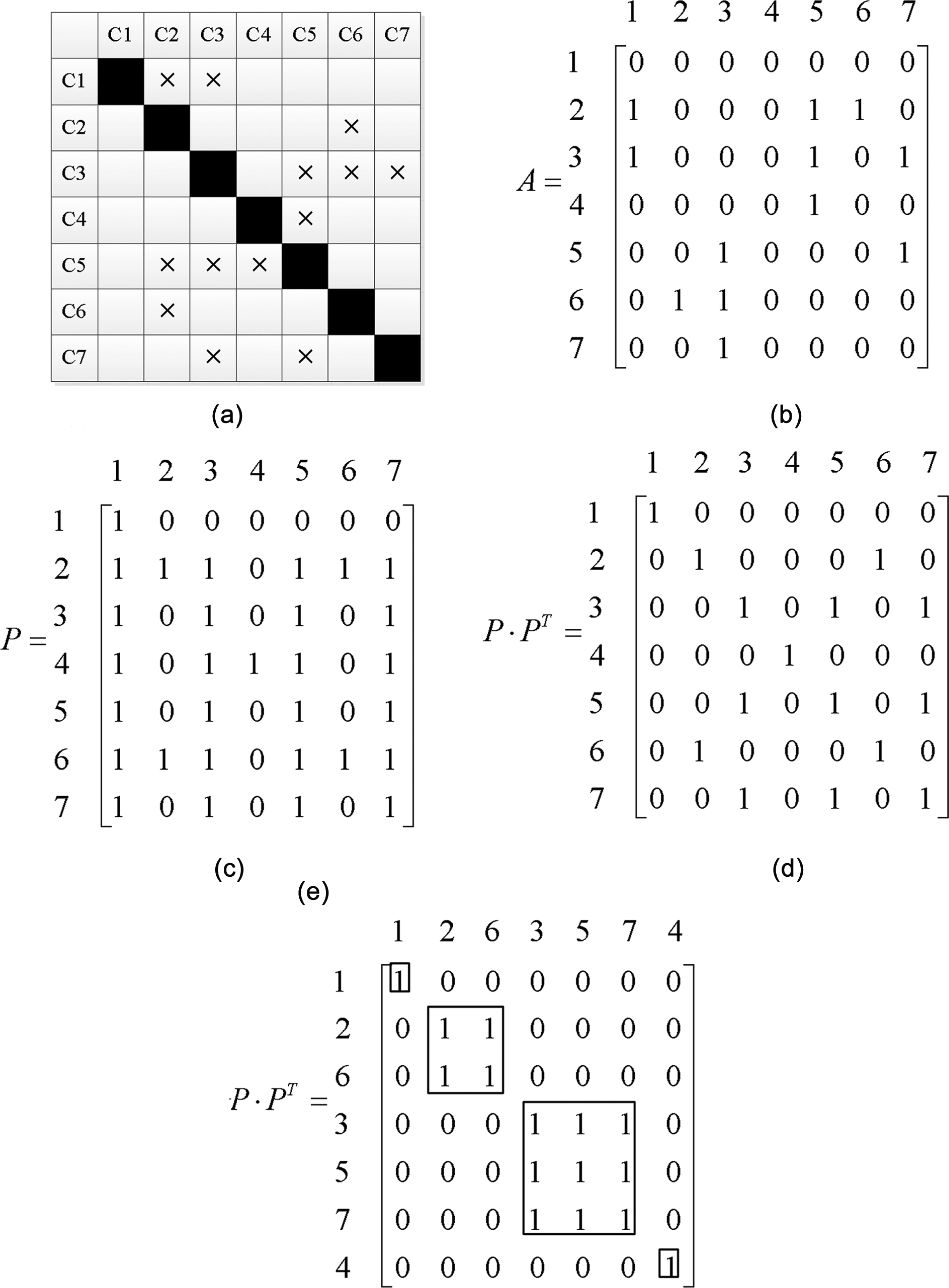
Step-by-step process of the production of the initial module: (a) DSM with seven components, (b) adjacency matrix A of DSM, (c) reachability matrix P, (d) output matrix P·PT, and (e) retrieval of clusters.
Step 2: generate a reachability matrix
Transpose matrix

where
The reachability matrix
Step 3: identification of strong connected set
Suppose
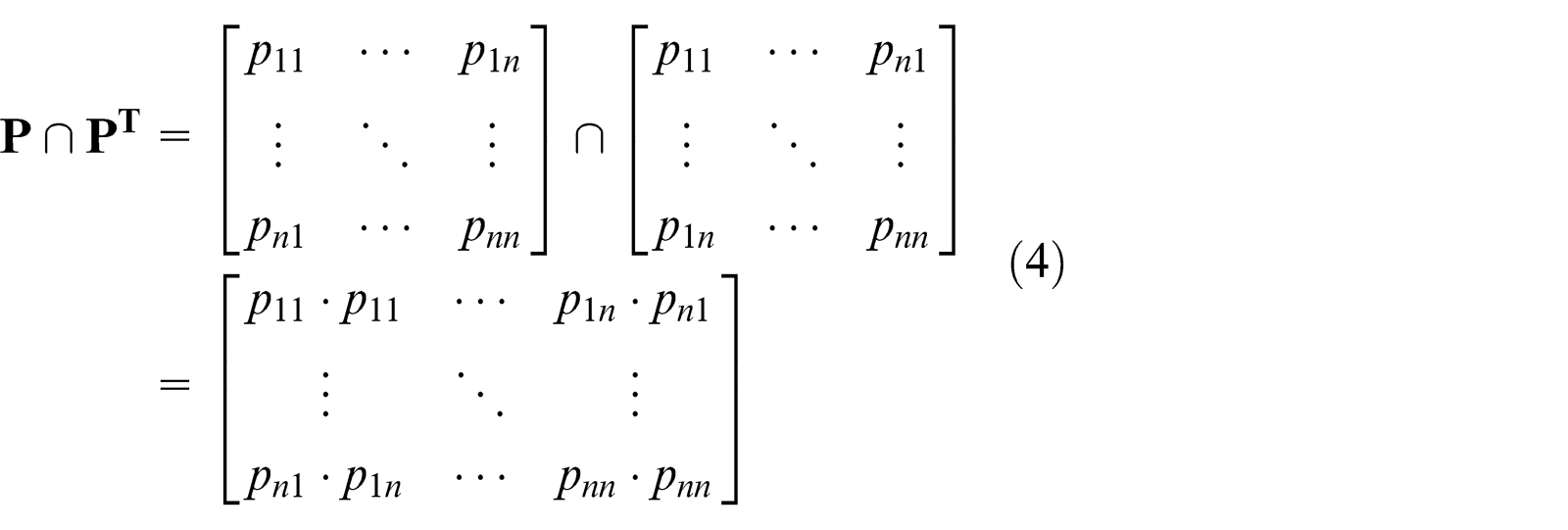
The reachability matrix
Step 4: initial module identification
Module combination is obtained based on the serial number of components in each strongly connected subset. Through this process, the initial module partition is acquired. Trace back to the element correlations in the reachability matrix and rearrange the component order to generate a clustered matrix. Figure 2(e) shows clusters in the system, which represents initial modules.
Evaluation of modular performance
MSI 32 is introduced to evaluate the modular performance of the initial module obtained by the proposed method. The focus of MSI function is to identify modules that possess a maximum number of internal dependencies and a minimum number of external dependencies, as shown in Figure 3. The value of the internal connection of the module is denoted by MSIi and the external connections by MSIe
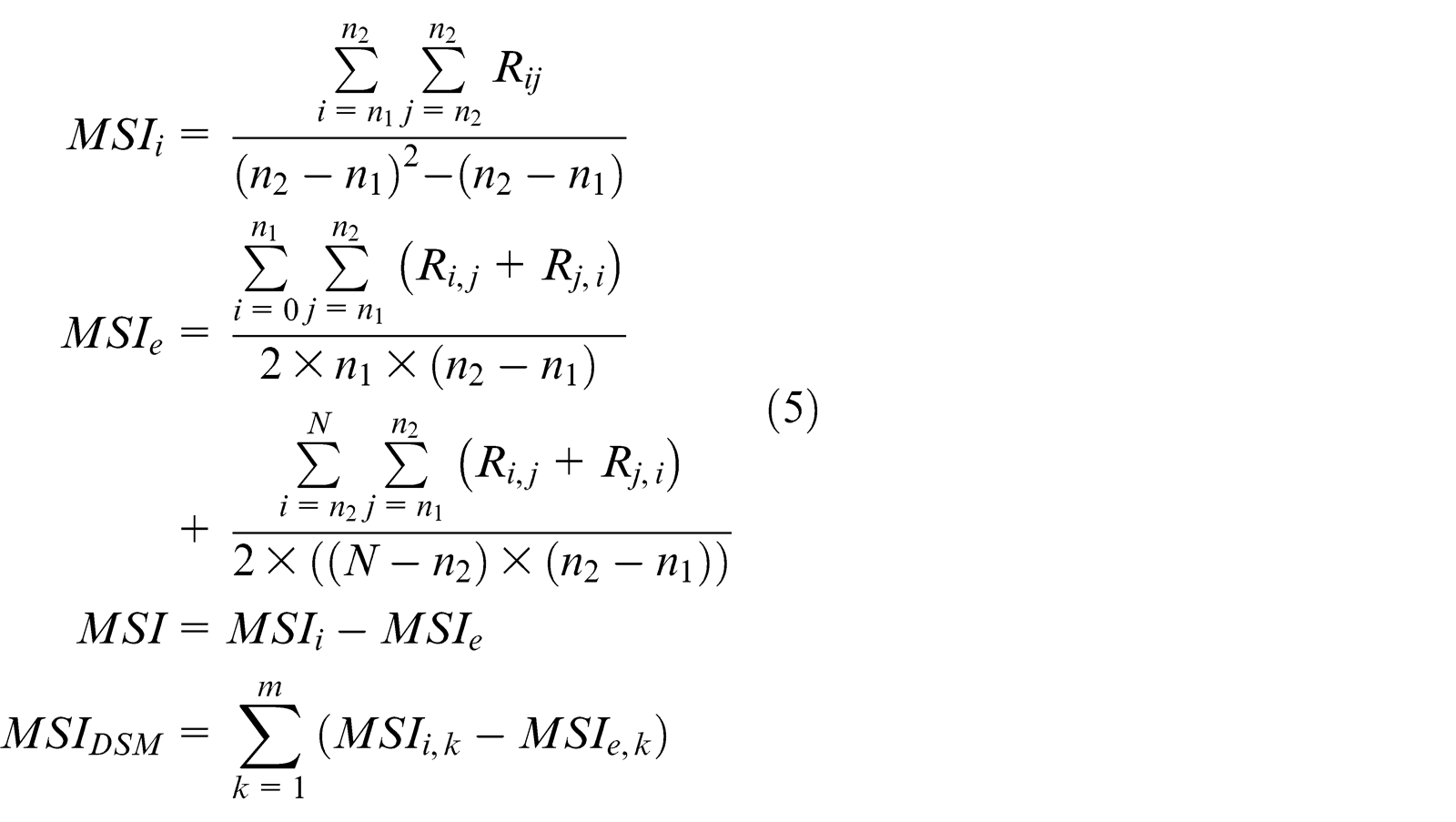
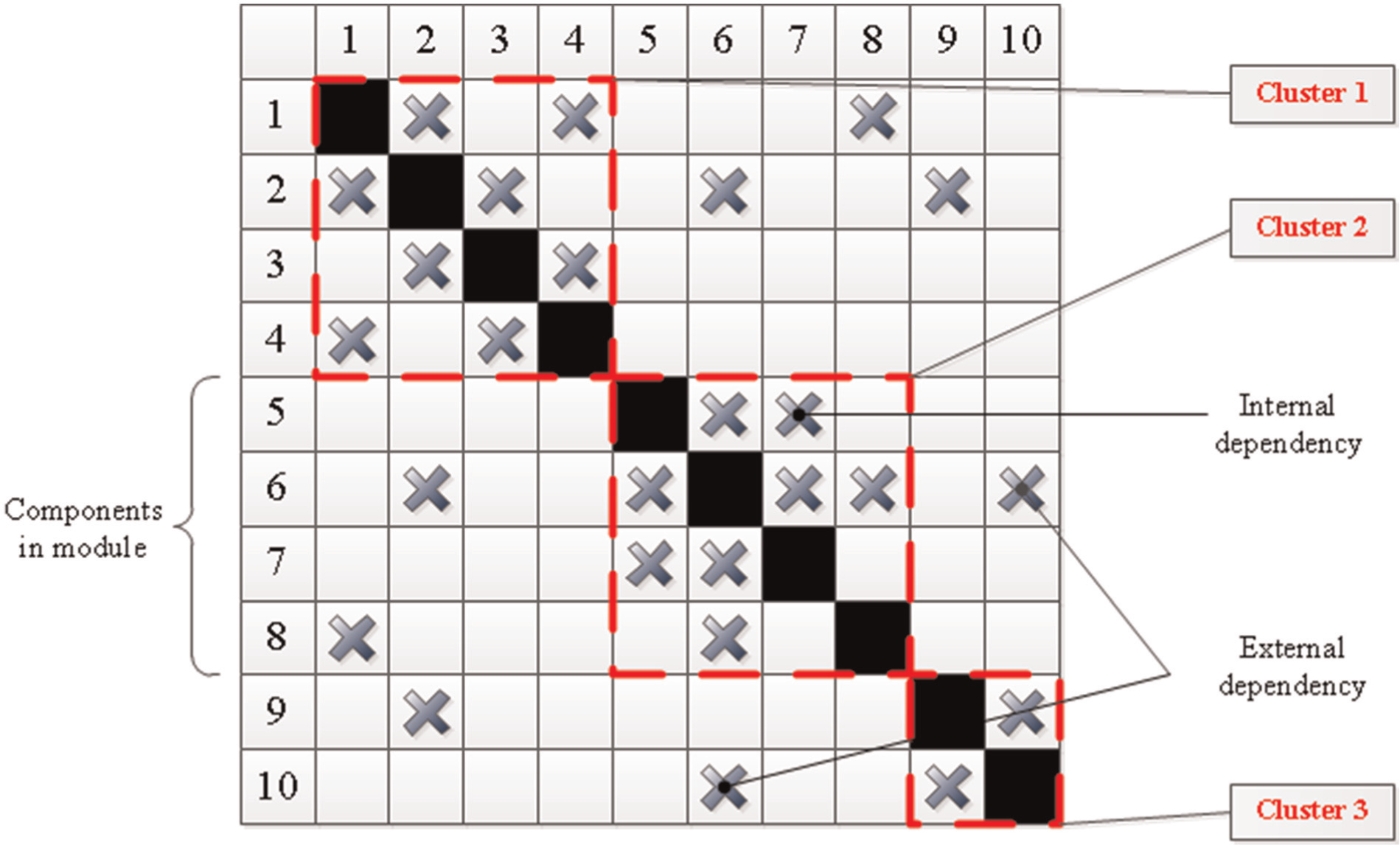
Internal and external dependencies of modules.
where n1 is the index of the first component in the module, and n2 is the index of the last component in the module. MSIDSM is the strength summation of all modules in the clustered DSM. The larger the MSIDSM, the better the possible scheme that can be acquired. Compute the modular performance of the initial module, denoted as MSIDSM-intial. This is regarded as one of the constraint indexes for the subsequent optimization model, which can ensure the quality of modular performance after optimization.
The above process analyzes the correlation among components. Its primary purpose is to create high cohesion and low coupling characteristics within the module. However, it lacks adequate consideration of maintenance property in module design. It becomes thus necessary to optimize the initial model and establish an optimized mathematical model that includes maintenance performance.
Optimization of initial module for maintenance performance
Establishment of optimized mathematical model
Maintenance performance is the immanent characteristic of a product and creates a significant impact on the quality of service. The main goal of this section is to effectively delineate maintenance performance–oriented modular design. The established mathematical model must simultaneously and successfully account for the performance of both modularity and maintenance.
The key factors that manufacturers must consider as far as maintenance performance include lower maintenance costs and complexity, and higher system availability. Hence, maintenance performance–oriented modular design can be regarded as a multi-objective optimization problem, targeted at maintenance cycle, maintenance cost, and system availability. Suppose a product has

Maintenance cycle–oriented modular design model
For an effective maintenance cycle–oriented modular design model, the components within a module should have approximately the same maintenance cycle. In other words, the smaller the difference in maintenance time intervals, the better. This helps to ensure that all components in a module can be maintained or replaced by just one maintenance process, effectively reducing the cost and complexity and improving the availability of products. According to statistical analysis theories, this article employs the difference among components’ maintenance cycles to measure their conformity. Define

where
Therefore, the modular maintenance cycle difference of an overall unit is

Maintenance cost–oriented modular design model
Total maintenance cost of complex mechanical products mainly consists of overhaul cost, replacement cost, and inspection cost. Overhaul cost refers to the repair of damaged components within their valid working life, replacement cost involves replacement of out-of-service components with all-new ones, and inspection cost is used for daily component maintenance such as inspection and detection.
The overhaul cost of the kth module can be calculated as
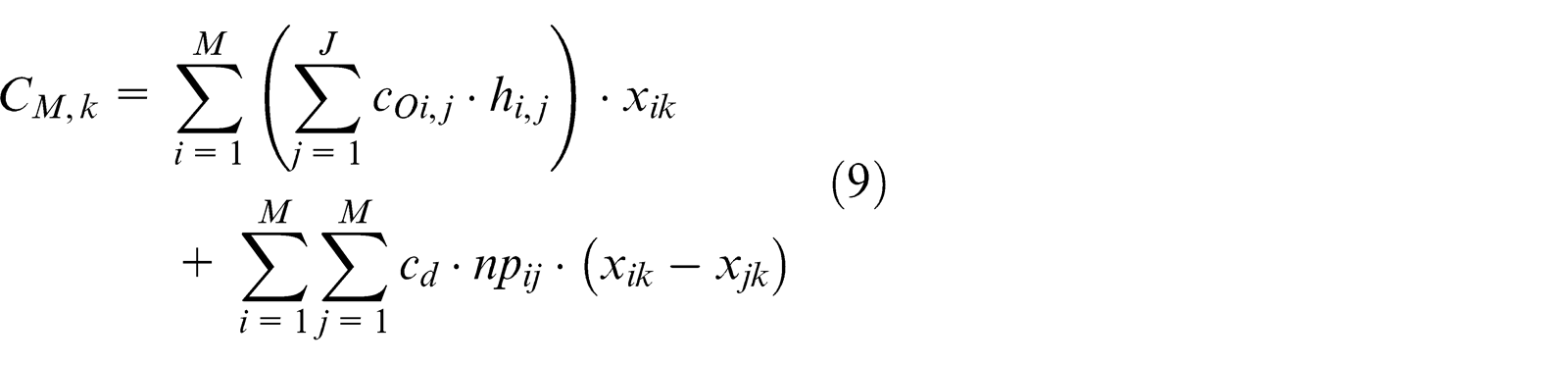
where
The replacement cost of the kth module
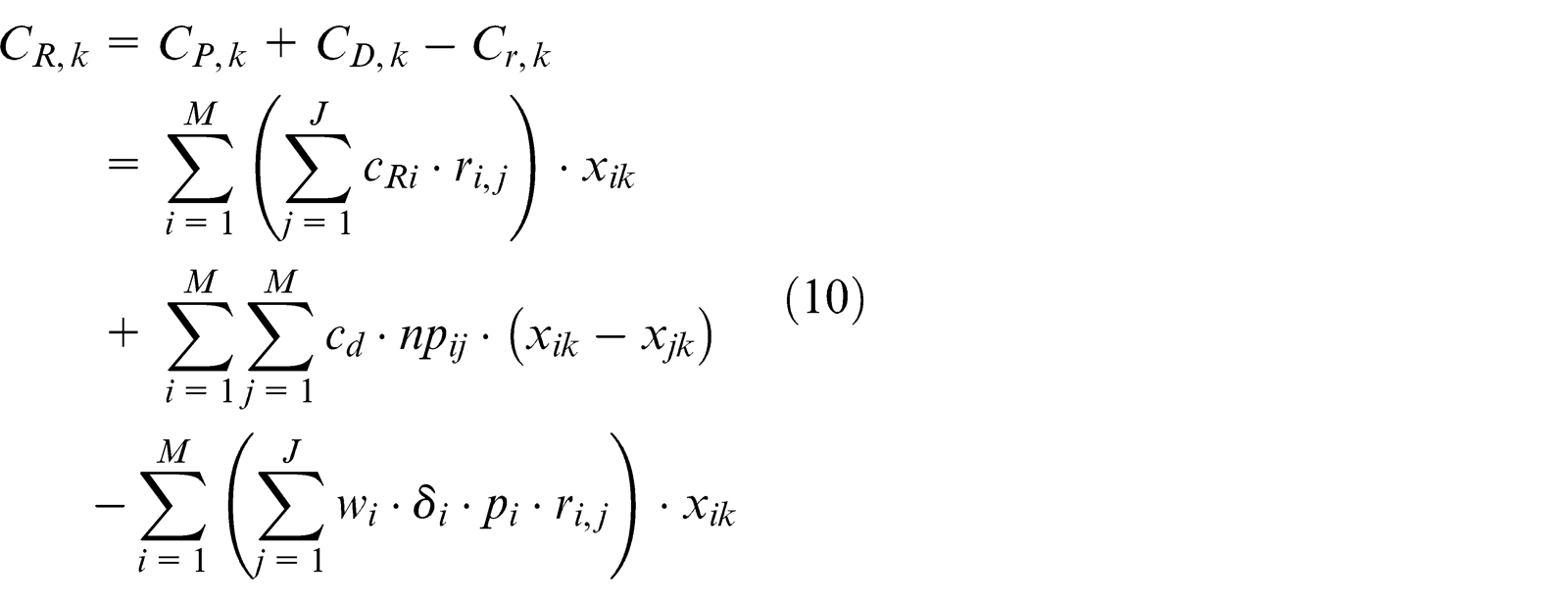
where
The inspection cost of the kth module

where
The total cost to maintain the parts on module
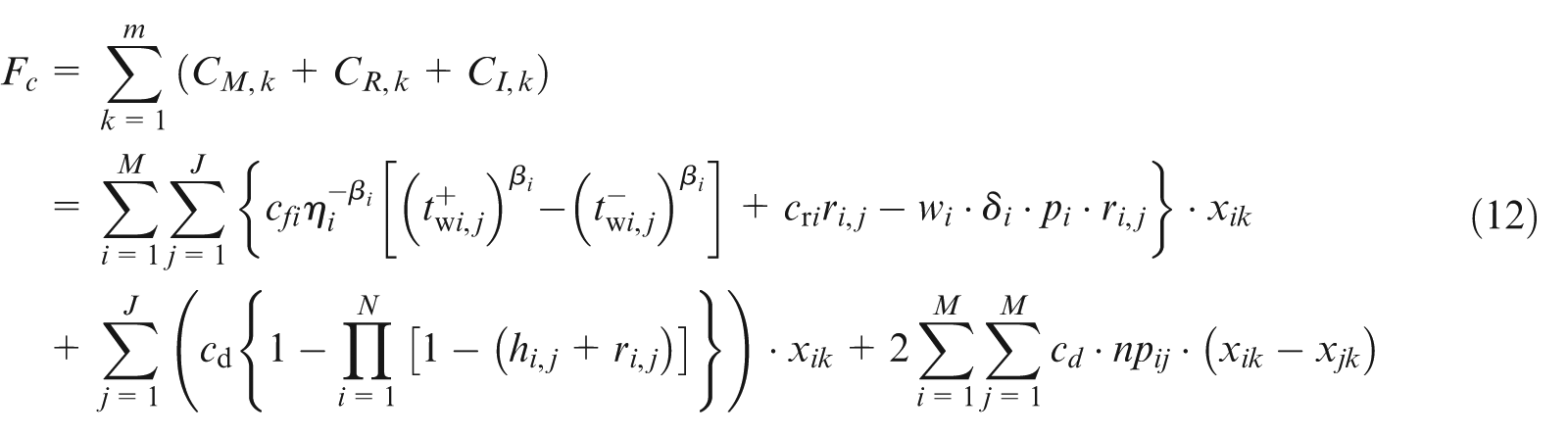
where
System availability–oriented modular design model
Normally, system availability depends on both reliability and maintainability. A concrete expression to describe the operational availability uses the mean up-time (MUT) and the mean down-time (MDT) of each cycle. 33 While pursuing cost reduction is crucial, it is also important to improve the availability of the system. Two conditions that lead to system shutdown are preventive maintenance and corrective maintenance. Due to the complexity of typical maintenance activities, this article mainly considers the serial situation of maintenance, for simplicity.
The maintenance time

where

where
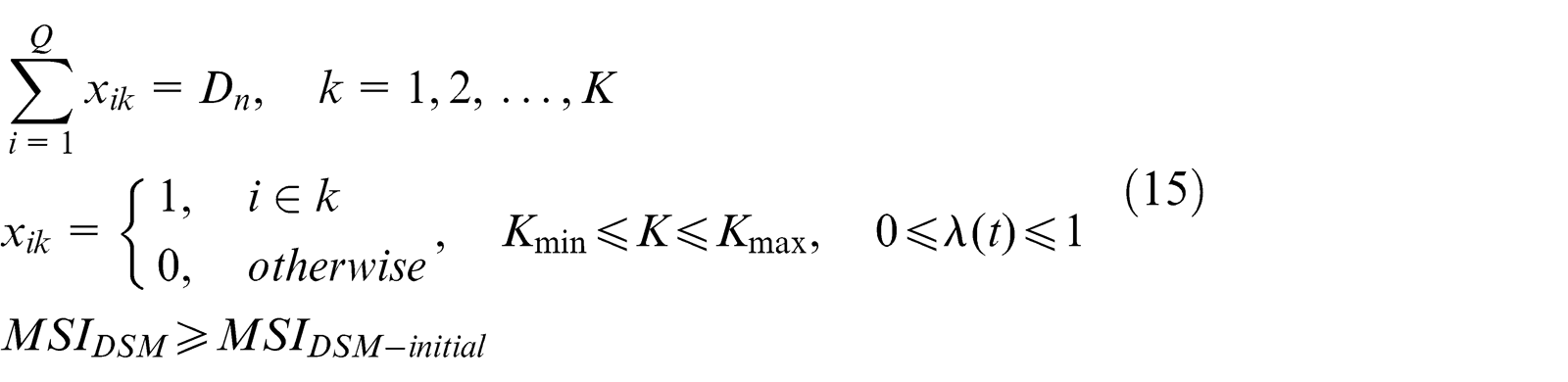
Constraint conditions
Based on simultaneous consideration of maintenance and modularity characteristics, constraint conditions can be obtained as follows
Mathematical model and optimization algorithm
The above multi-objective optimization is a typical constrained multi-objective optimization problem. Its mathematical model can be described as follows
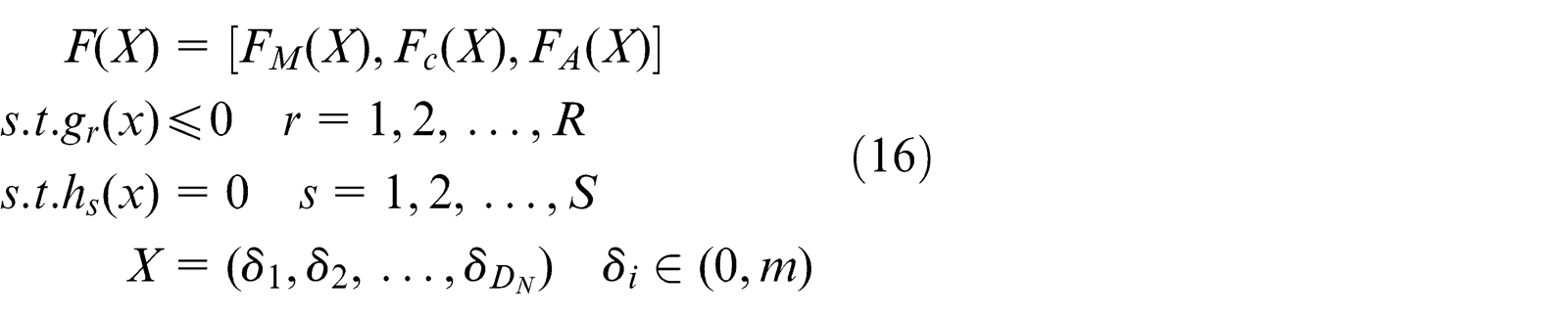
where
The above optimization model is an non-deterministic polynomial (NP) hard problem. Many techniques, such as genetic algorithms, non-linear programming, and simulated annealing, have been applied to help capture Pareto solutions for determining the optimal outputs. The objective of this research is not to compare each algorithm found within multi-objective optimization techniques, but applying them to solve a modular design optimization problem. This article selects and applies SPEA2, 34 which displays many distinct advantages including high speed of calculation, robustness, and solution diversity to solve for objective functions. The flowchart of solving optimization problems based on SPEA2 is shown in Figure 4.
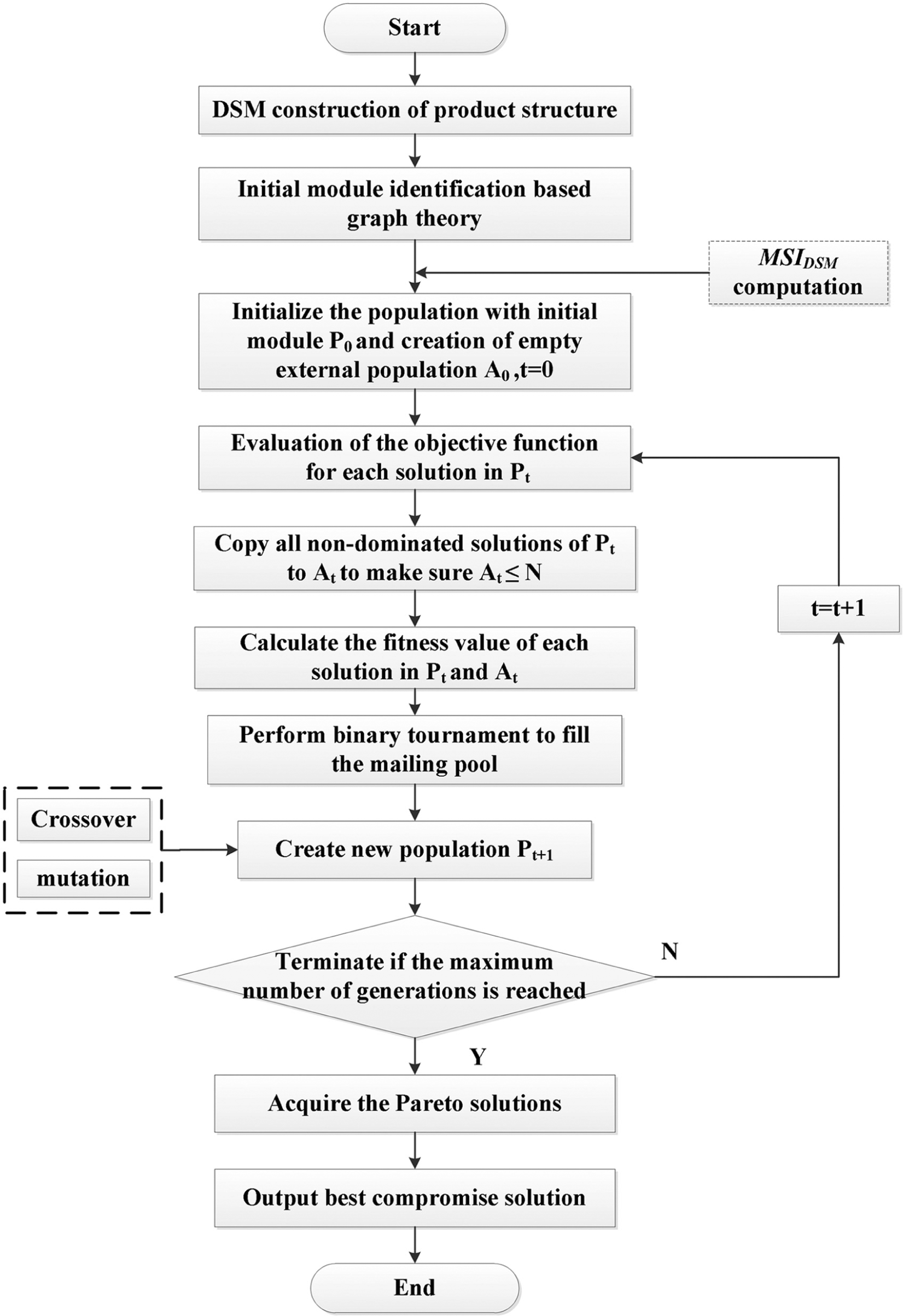
Flowchart of the SPEA2-based solution process.
Best compromise solution based on fuzzy set theory
Through SPEA2, the Pareto set of the multi-objective optimization problem is obtained in order to determine the best compromise solution. Due to the uncertainty characteristic of decision-making, this article applies fuzzy set theory
35
to extract the best compromise solution. A membership function

where

where U represents the solution number in the Pareto set, and
Case study
This case study is structured around the modular design of a hydraulic press. The hydraulic press is a kind of equipment that uses hydraulic transmission technology to process metal and non-metal materials. A prototype of a hydraulic machine with four columns is shown in Figure 5(a), and its corresponding virtual model is shown in Figure 5(b). Due to the machine’s wide application in manufacturing and production, the maintenance performance of the hydraulic press has received considerable interest from manufacturers, developers, and customers. According to its working principle, the hydraulic press can be divided into three parts: hydraulic system, control system, and mechanical system. This article chooses the mechanical system of the hydraulic press as case study for modular design to verify the effectiveness and applicability of the proposed method. The proposed clustering algorithm and the SPEA2 algorithm are programmed in a MATLAB 7.0 environment and run on a desktop computer with a dual 2.63 GHz Intel i5 processor and 8 GB RAM.
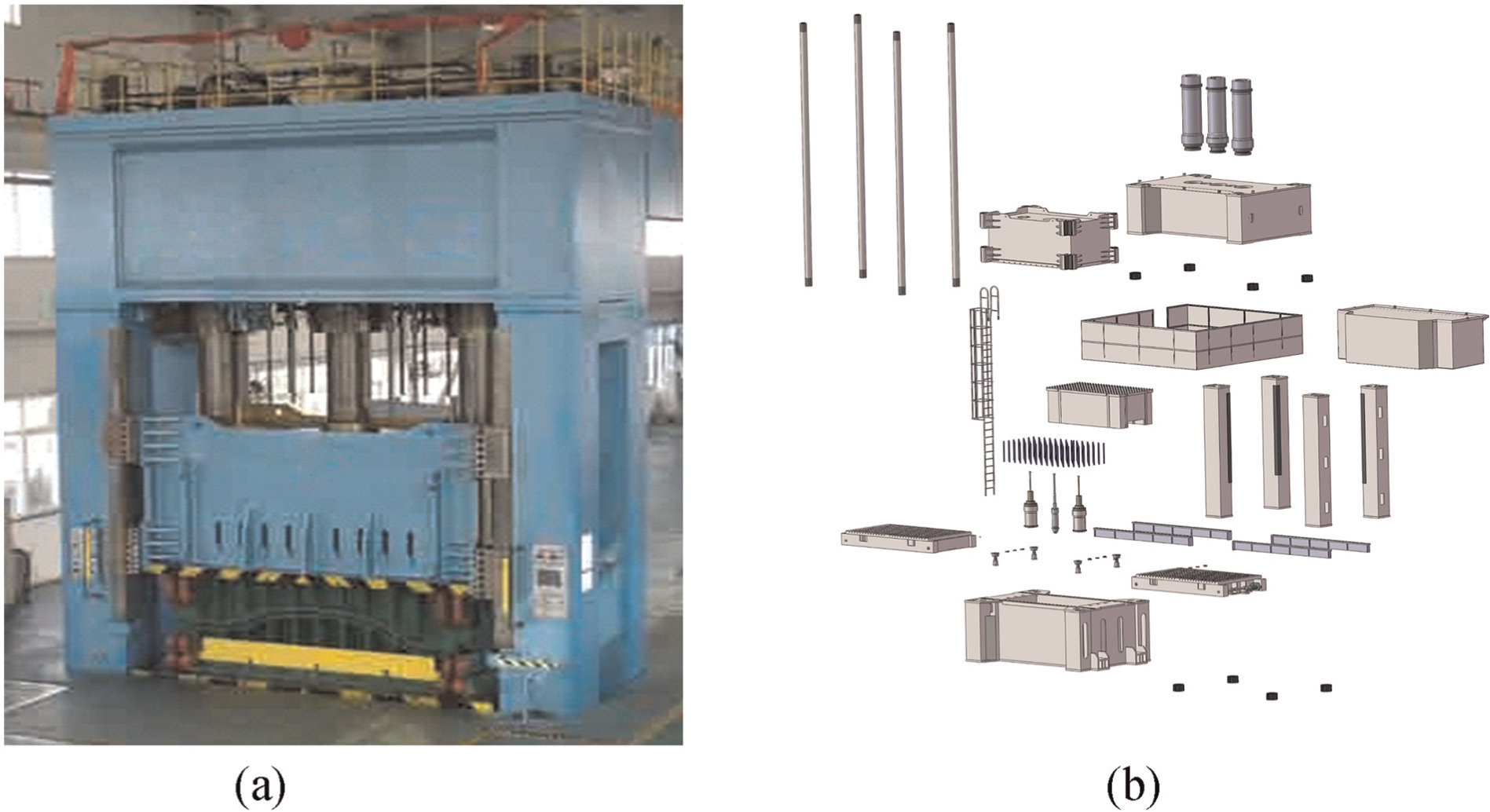
(a) One instance of hydraulic machine. (b) Its explosion modeling in Solidwoks.
DSM establishment
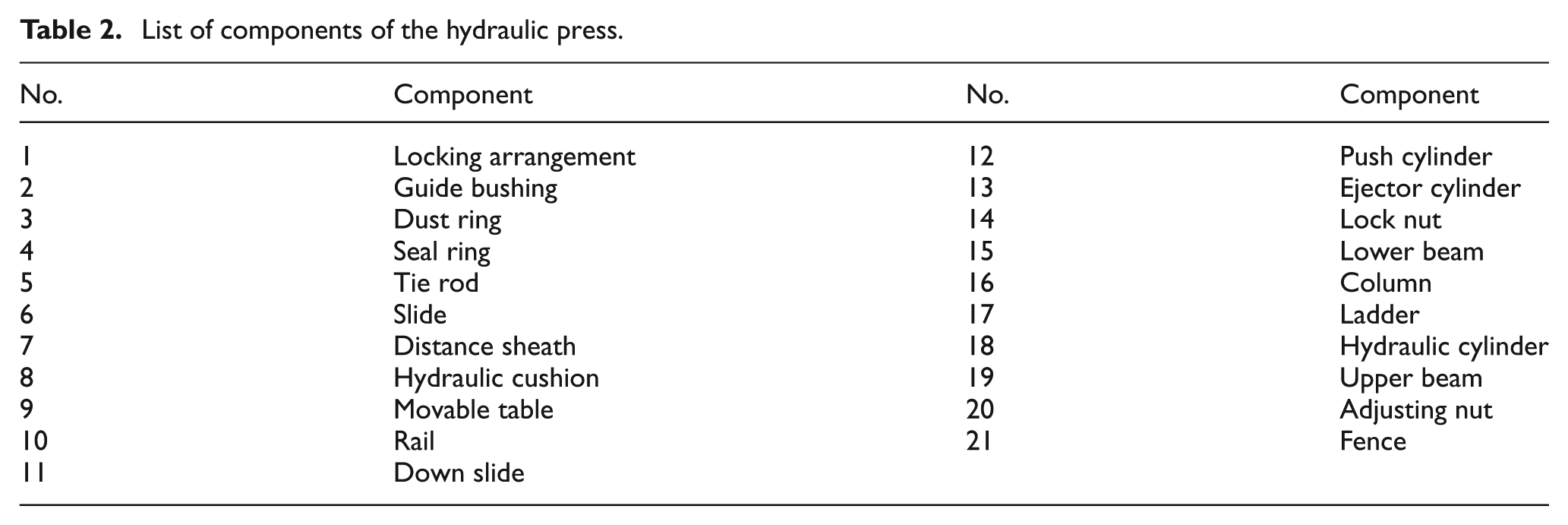
The components of the hydraulic press are listed in Table 2, and the major components are further illustrated in Figure 6. It is necessary to point out that not every component is essential enough to be included in modular design, because some parts ultimately play very small roles in design results. By decomposing components and analyzing the design bill of the material, 21 components are considered in the modular optimization process. The physical connections of the components are shown in Figure 7. The information required to describe the interaction factors is acquired from a service handbook and company-provided information, and the weights of interaction factors are determined according to designer experience and preferences. The required interaction factors and determined weights are shown in Table 3. The degree of comprehensive relationship can be obtained using equation (1), and the DSM of the hydraulic press is constructed as shown in Figure 8.
List of components of the hydraulic press.
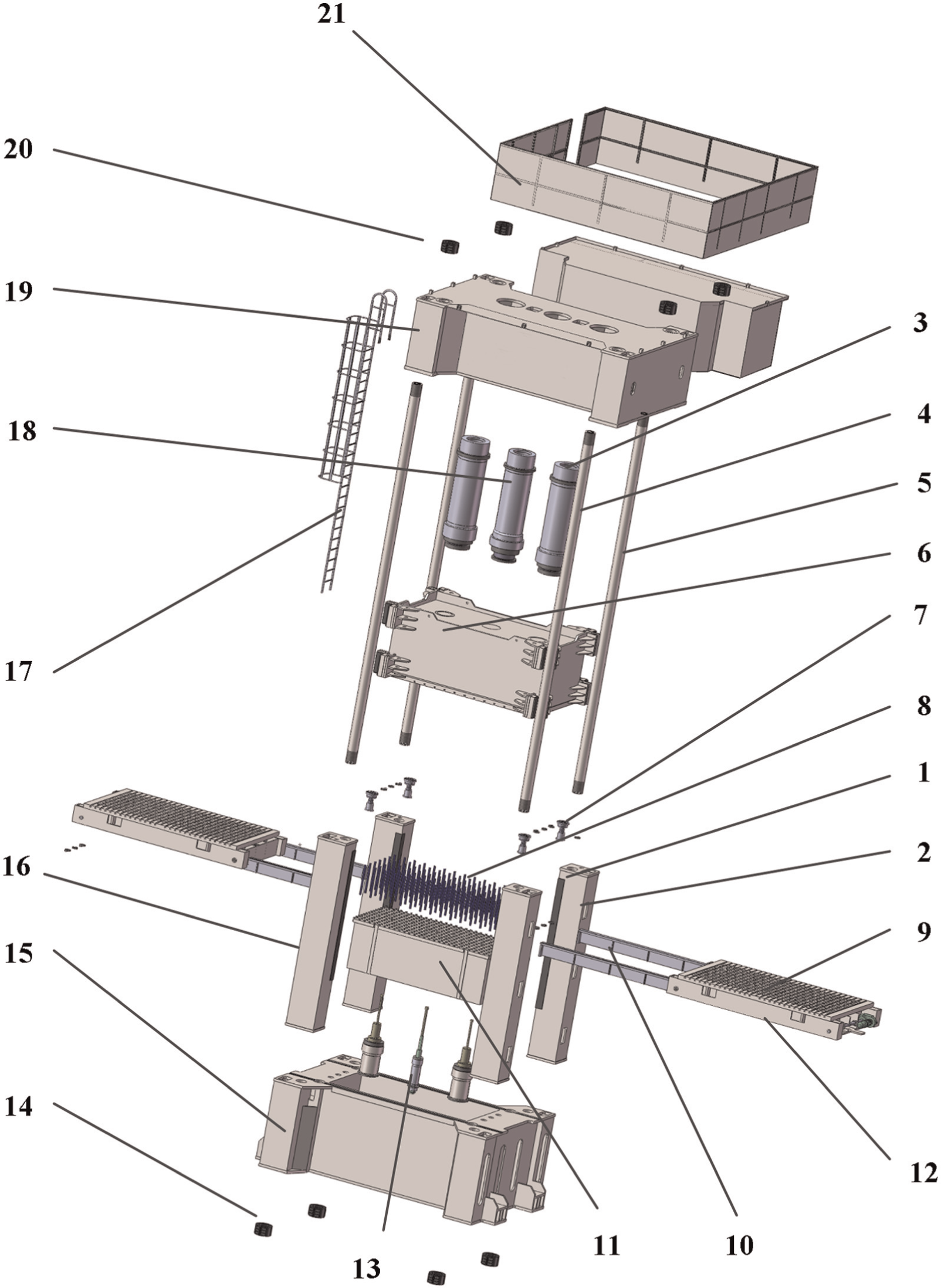
Assembly of hydraulic press model.
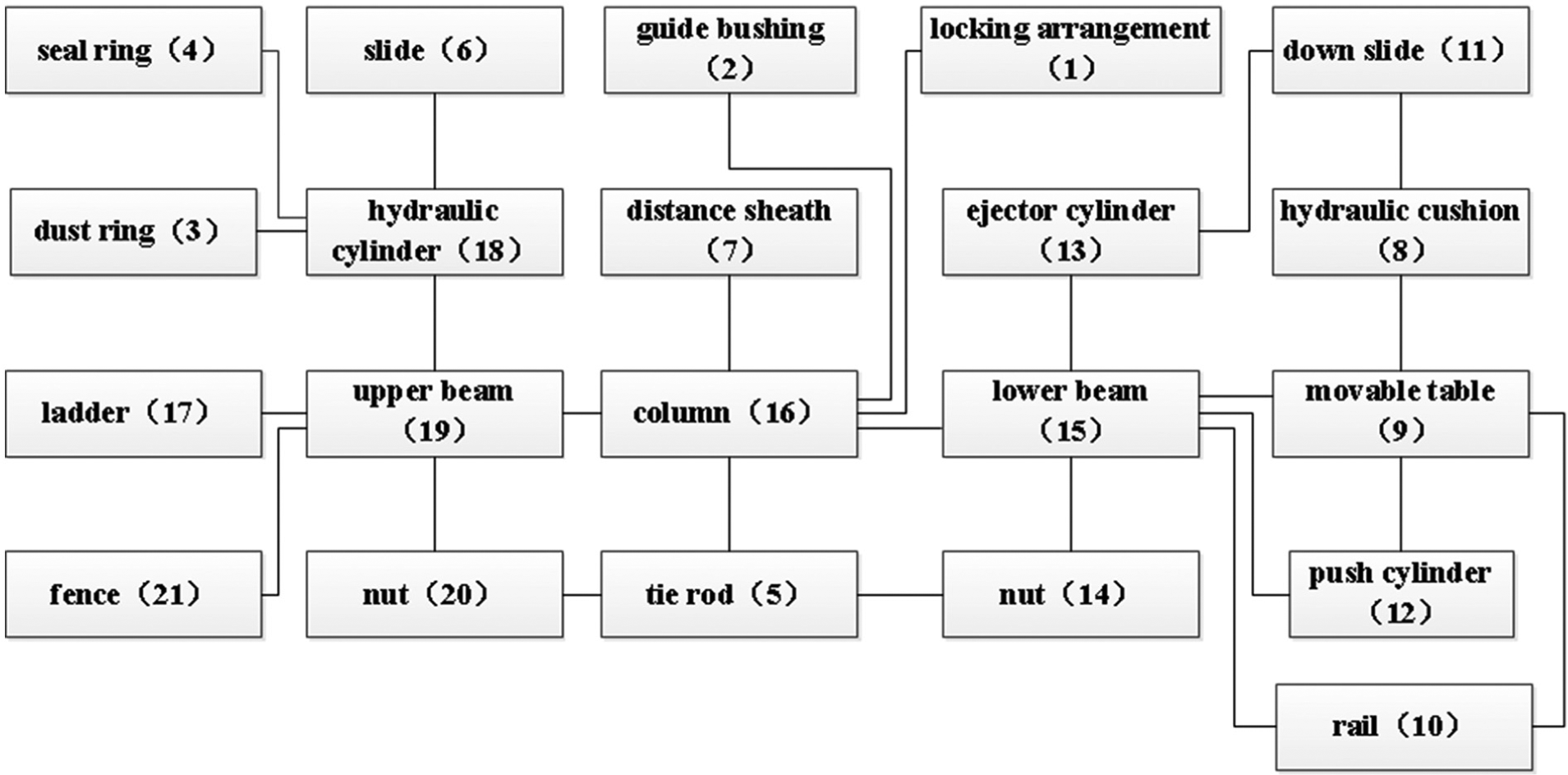
Physical connections between components.
Interaction factors and weight.

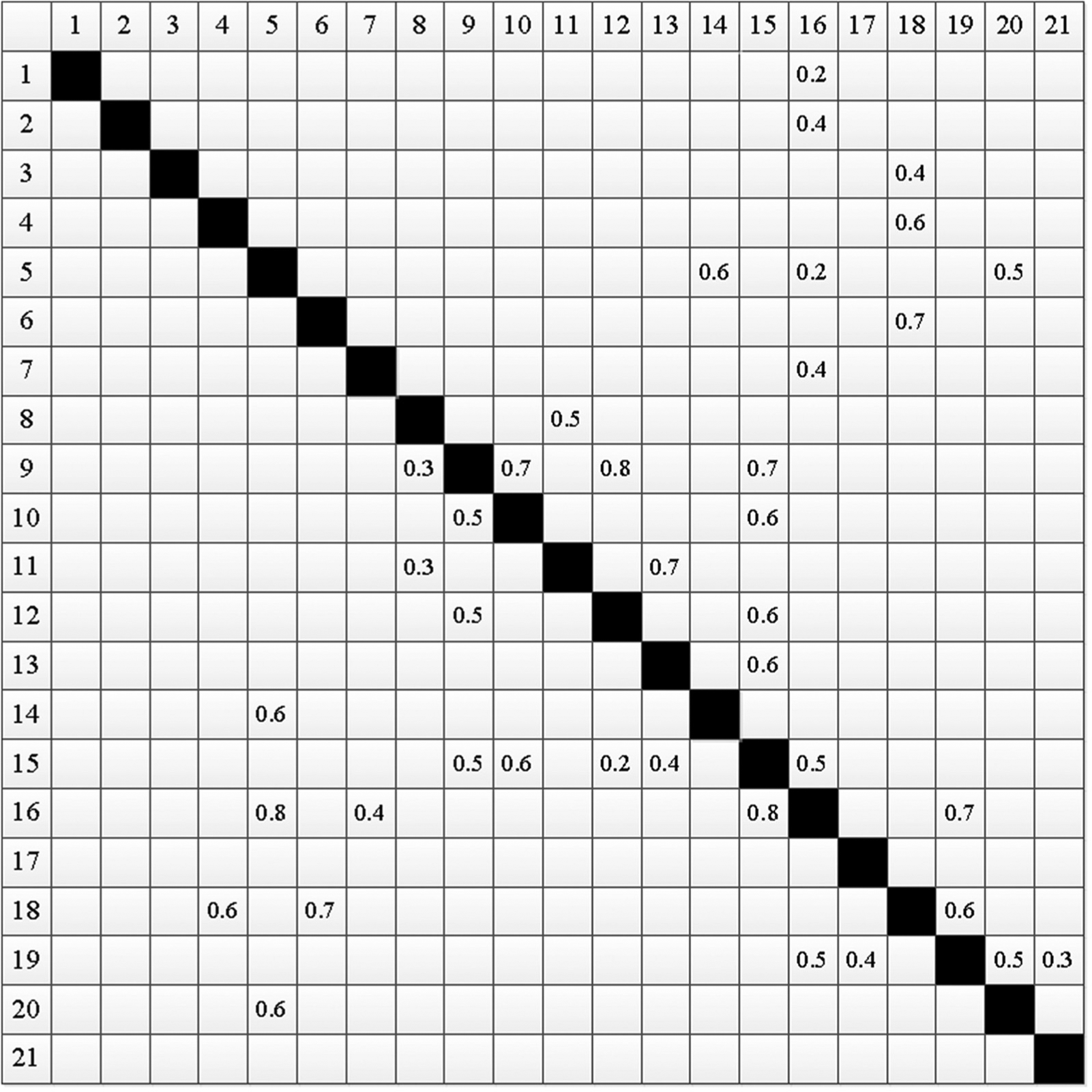
Initialized DSM for the mechanical system of the hydraulic press.
Initial module identification
A strongly connected subset can be obtained through the steps mentioned in section “Best compromise solution based on fuzzy set theory.” The initial modules of the hydraulic press can be established, as shown in Figure 9. In this case study, five modules are generated, which are demonstrated and defined below in the form of sets:
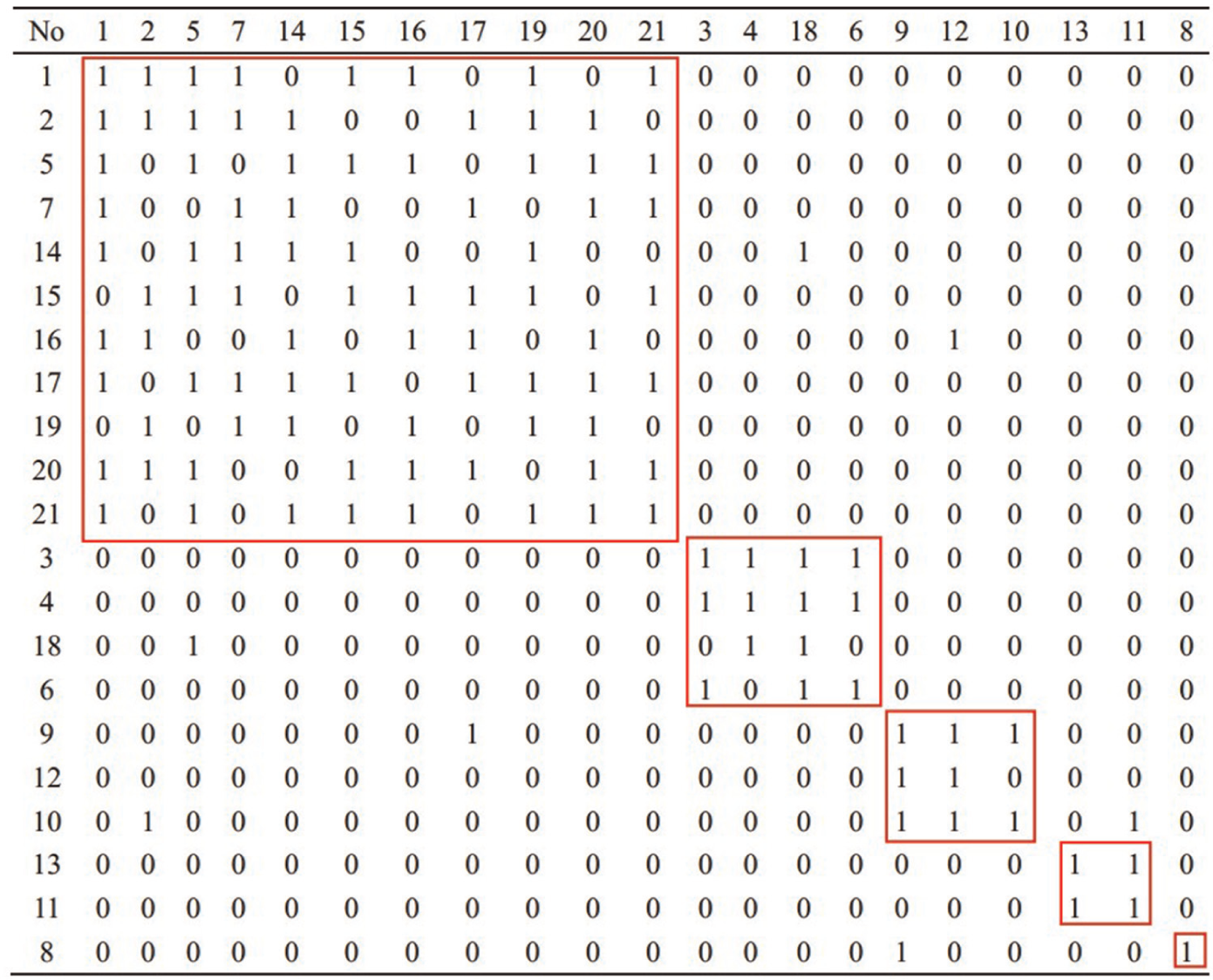
Rearranged matrix between hydraulic press components.
Module 1:
Module 2:
Module 3:
Module 4:
Module 5:
Modular optimization for maintenance performance
The initial modules are regarded as gene segments of the algorithm, according to chromosome encoding rules. The initial population is produced by random combination. The algorithm applies integer coding to express modular identification results, where each integer is the modular serial number of its corresponding component. Set generation
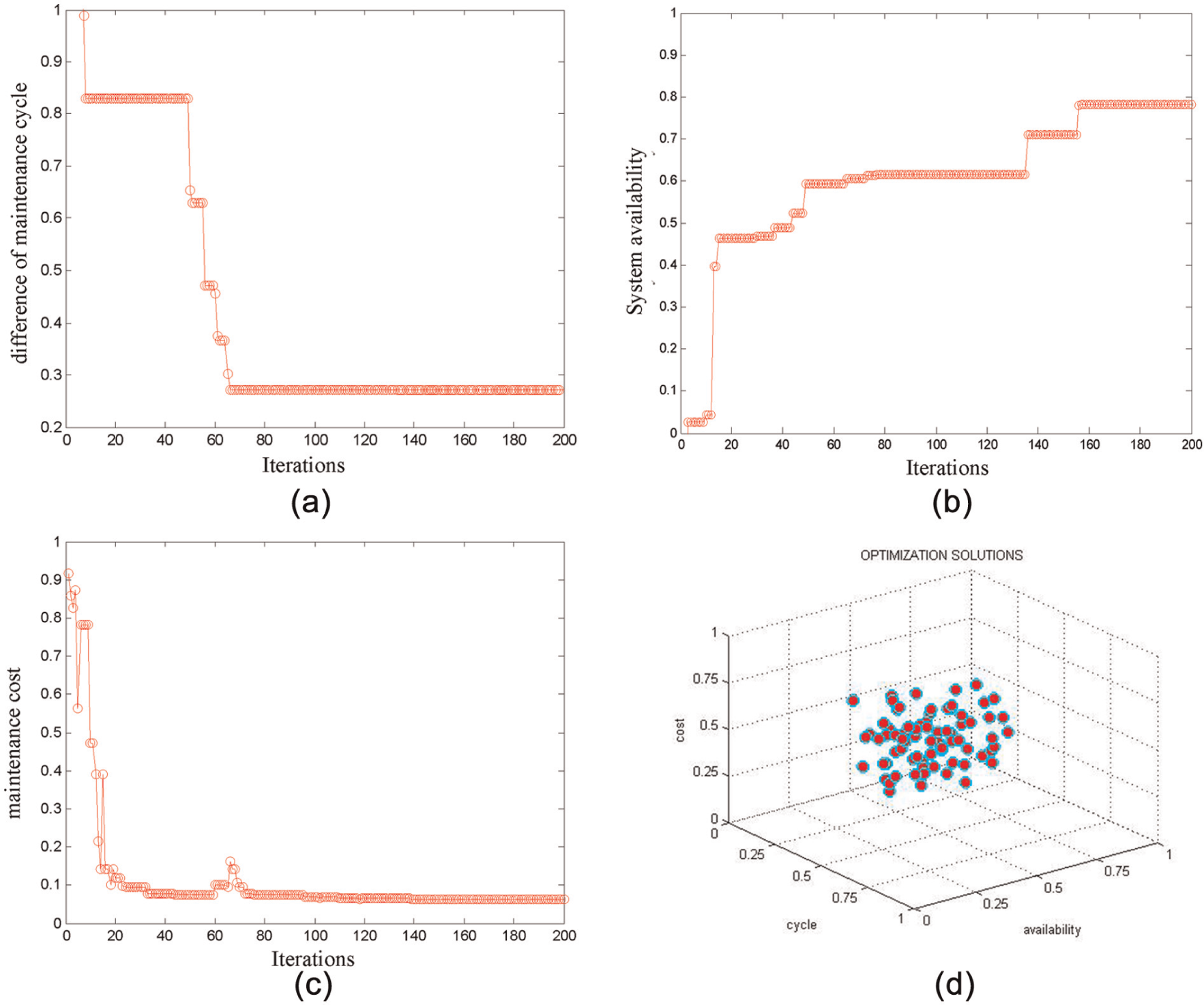
SPEA2-based optimization process with different objective functions: (a) optimization process of the difference of maintenance cycle, (b) optimization process of system availability, (c) optimization process of maintenance cost, and (d) Pareto optimal solution set.
A series of modular design schemes are presented in the form of a Pareto optimal set. The membership functions provided in equations (17) and (18) are applied to evaluate each member of the Pareto optimal set and rank the results in descending order. The best solution that has the maximum value (
Module 1:
Module 2:
Module 3:
Module 4:
Module 5:
Module 6:
Module 7:
Result analysis
By comparing and analyzing the performance of initial modules and optimized modules, as shown in Table 4, it becomes clear that the optimized modules greatly improve the maintenance performance of the hydraulic press under the premise of approximately constant modular performance. This information benefits designers, as it models a more favorable balance of modular performance and maintenance performance and saves after-sales maintenance cost for enterprises.
Analysis performance of initial module and optimized module.

There is still much to be discussed before modular design can be completely accomplished, although the optimized solution obtained by applying our approach is beneficial to designers. The following design issues should be considered carefully when comparing the optimized results with the original structure of the hydraulic press:
The size and quality of the hydraulic press are very large, which creates difficulties in casting, heat treatment, and machining. To this effect, the frame adopts a combined structure in which the upper beam, lower beam, and column are manufactured independently and combined by nut. The frame bears the dynamic and static load of the hydraulic press, so its connection should be maintained regularly.
Over a long-running process, a hydraulic system tends to have a relatively high possibility of malfunction. Oil cleaning, sealing inspection, seal replacements, and other relevant maintenance should be taken into account beginning at the modular design process.
The performance of SPEA2, a type of genetic algorithm, can be influenced by many factors. The quality of the initializing population will directly affect the convergence property and the capability of optimum search.
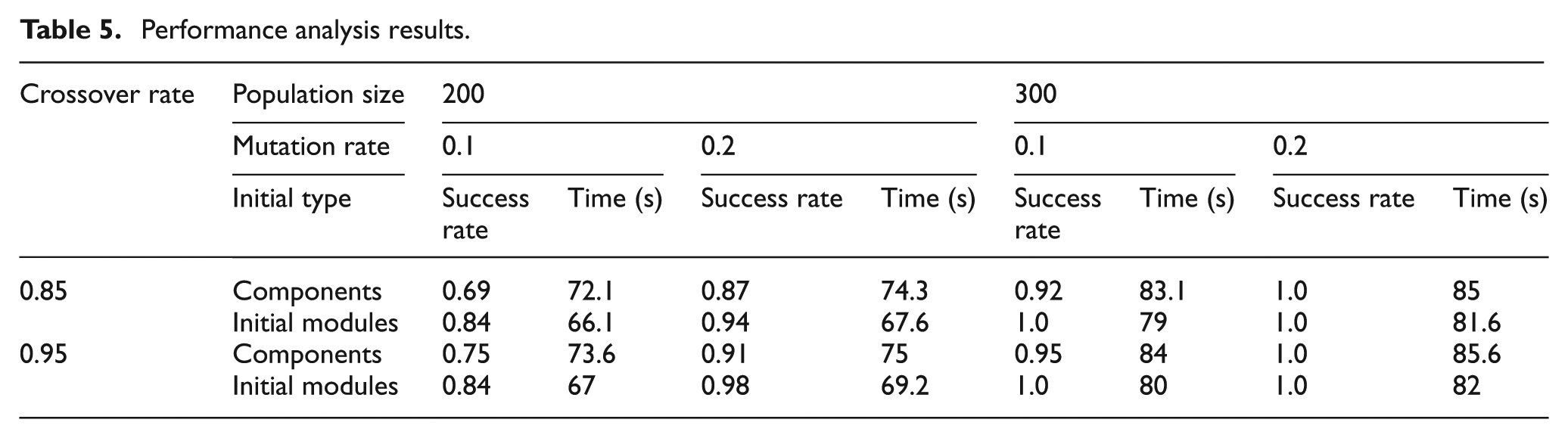
In this article, the initial modules are regarded as the gene segments within the initializing population. This can reduce the uncertainty in the population’s covering space and improve the probability of generating favorable and effective individuals, while improving SPEA2’s performance as well. Simulations are conducted for the two methods, one of which regards the initial modules as the gene segments and the other which regards components as the gene segments. These operate under identical conditions. We changed the experiment parameters, went through the process 45 times, respectively, and took an average. Notably, the algorithm regarding initial modules as its gene segments has better convergence and better optimum search performance, as shown in Table 5.
Performance analysis results.
Conclusion and future work
This article presents an innovative modular design method for maintenance performance. The proposed method can provide designers with better information regarding effective maintenance aspects at the initial phase of product design. Study results show that the proposed method not only improves product maintenance performance but also maintains relevant characteristics of modularity. The primary mechanism at work in this research includes the following two steps: in the first step, a method based on DSM and graph theory is applied to express the correlation among components and cluster them to generate initial modules. In the second step, a mathematical model based on maintenance cycle, maintenance cost, and system availability is constructed. Optimized modules are obtained by SPEA2 and fuzzy set theory. Throughout the case study of a hydraulic press’s modular design, the approach was proven to be efficient and effective.
With increasing environmental consciousness worldwide, product maintenance increasingly emphasizes green engineering and sustainability. Our future research will focus on improving green design and sustainable, eco-friendly performance of maintenance-oriented modular design.
Footnotes
Declaration of conflicting interests
The authors declare that there is no conflict of interest.
Funding
This work was supported by the National Natural Science Foundation of China (Nos 51322506 and 51175456), Zhejiang Provincial Natural Science Foundation of China (No. LR14E050003), the Fundamental Research Funds for the Central Universities, Zhejiang University K.P.Chao’s High Technology Development Foundation, and Innovation Foundation of the State Key Laboratory of Fluid Power Transmission and Control.