




Abstract
With increasing sustainable development consciousness, sustainable design plays an important role, not only in the design phase, but also in the manufacturing process. Existing design methods, including life cycle design and environmental design, have not fully considered sustainability requirements. A modular design methodology is proposed for achieving sustainable design as well as fulfilling functional requirements. Factors related to function and sustainability of a product, such as material, manufacturability, component life, and so on, are defined as modular drivers. A design structure matrix, with great advantages on analyzing the correlation between product system elements, is employed to establish a correlation matrix between components. A kernel-based fuzzy c-means algorithm is used to integrate components of a product into different modules based on their correlation distance. Meanwhile, a genetic algorithm is employed to determine the optimal clustering number on account of its efficiency in coming up with the global solutions. In addition, an assessment model for product sustainability is established considering economic, social, and environmental factors. Finally, a reduction gear is used as a case study example to show the effectiveness of the proposed sustainability-oriented modular design method.
Keywords
Introduction
There is a well-recognized need for achieving sustainable development of economy, society, and environment because of several causes: decreasing non-renewable resources, energy mass consumption in manufacturing, stricter regulations related to environment, increasing consumer consciousness for environmental issue, etc. Consequently, product design is faced with the challenge to contribute to the transition towards sustainable development. Sustainable design (SD), a design concept considering environmental, social, and economic feasibility, is the response to this challenge. 1 Furthermore, sustainable manufacturing (SM) with high added value, which involves the intersection of multiple disciplines of product, process, and system, has also been regarded as a main enabler leading to sustainable development. 2 The most important decisions regarding sustainability of a product are made during the design and pre-manufacturing stages. 3 Thus, integrating sustainability considerations early into the design process is required for product development.
For design strategies, product modularity has the advantages of simplifying the product design structure and increasing assembly efficiency. Meanwhile, determining the product design structure is one of the critical activities in the initial design stage considering upstream and downstream demands. Furthermore, modular design is an important basic technology for improving product performances, such as upgradability, reusability, and recyclability. 4 Therefore, modular design has been discussed in terms of product design for quite some time and has been studied for green life-cycle engineering, 5 life-cycle design, 6 and manufacturing. 7
In modular design literature for life cycle, Gu and Sosale4 presented a modular design method considering the design objectives of life cycle and clustering components into modules with a simulated annealing algorithm. Umeda et al. 8 proposed a determining modular structure method for achieving the requirements of life cycle and geometry viability. With the development of green design, a modular design method is proposed to support green life-cycle engineering, with cluster modules based on component liaison intensity. 6 In other research, van Beek et al. 9 developed a modularization scheme of mechatronic systems based on the function-behavior-state of a system. Smith and Duffy 10 studied the capabilities of modular design principles to support the concept of engineering design reuse. Kimura et al. 11 demonstrated reuse-oriented product modular design in inverse manufacturing. However, existing modular design methods in most disciplines, including life-cycle design and environmental design, have not fully considered sustainability requirements involving environmental, economic, and social sustainability, simultaneously. Life-cycle design and environmental design mainly consider the traditional 3R (reduce, reuse, recycle) concept, while SD moves to a more recent 6R (reduce, reuse, recover, redesign, remanufacture, recycle) concept, which allows for transforming from an open-loop, single life-cycle paradigm to a theoretically closed-loop, multiple life-cycle paradigm.
To facilitate quicker and smarter decisions for modular structure, artificial intelligence (AI) technologies have been broadly applied in modular design research. 7 The simulated annealing algorithm 4 has been employed for module formation, but it just involved design objective interactions and physical correlation between components. Later, a grouping genetic algorithm (GGA) is used to optimize modular structure with a non-linear programming model. 12 A GGA is also used for clustering the components by Tseng et al. 6 and for conducting modular optimization by Yu et al. 13 Using a GGA, initial values for the clustering number of a product need to be set up before running.
In addition to a modular structure, sustainability assessment of a modularized product is a critical issue under the background of SD. Even though the impact of modular design is remarkable, sustainability assessment is invisible. Assessing product sustainability has great effects on product design and manufacturing, but currently there are few comprehensive methods for doing that. Life cycle assessment (LCA) has been proved to be an available method for the assessment of environmental impacts.14–18 Jaafar 19 presented a simplified procedure for calculating the sustainability index with weight sum of different sub-elements. Culaba and Purvis 20 established the sustainability assessment model for the adoption of waste minimization techniques. Umeda et al. 5 proposed an assessment approach of a modular product in terms of resource efficiency. While the above methods may be useful for specific factors of a product, they do not provide the comprehensive assessment that involves various factors of a product. According to D20 Blue paper on Life cycle sustainability analysis, 21 a sustainability assessment model requires an extensive scope of analysis, such as life cycle costing (LCC) and social LCA (SLCA), compared with LCA.
To overcome the limitations of the above-mentioned methods, sustainability considerations are integrated into the design process for making the product more sustainable in this article. The structure of the article is as follows. ‘Modeling correlation matrix between components’ establishes the correlation matrix between components based on a design structure matrix (DSM). ‘Module clustering and assessment model for product sustainability establishing’ proposes the module clustering method and establishes the assessment model for product sustainability. ‘Case study’ gives a case study example of a reduction gear. Finally, ‘Conclusions’ concludes the article by mentioning the advantages of the method and points to future work.
Modeling correlation matrix between components
The target of modular design is to build divisible modules that impact every stage of a product life cycle. In past research, different methods have been proposed for generating modules for realizing different purposes, such as functional diversity, engineering design reuse, and life cycle design. However, modular design methods for key issues of life cycle design have not fully considered sustainability requirements. In this study, factors related to the function and sustainability of products, such as material, manufacturability, component life, and so on, are defined as modular drivers contributing to reduce, reuse, recover, redesign, remanufacture, and recycle, which supports SD through life cycles.
Modular drivers
The factors of modular drivers related to the function and sustainability of a product are integrated into deciding the optimal modularity in this study. The modular drivers are considered as follows.
Function
It is expected that function should remain unchanged as long as the sustainable requirements remain reasonable. The operations and transformations implemented among components lead to function realization. 4
Structure
It involves geometric position and connectivity among components. Geometric position is mainly about the relative position among components, and connectivity types mainly considers a combination of contact, tool, and accessed direction. 6
Material
It refers to the selection of materials and material compatibility between components. The selection of materials should first consider factors, such as renewable resources, environmental protection, and recyclability, on conditions that can fulfill functional requirements. Then the material compatibility between components should be taken into account. The components can be recycled through a similar process in the same module, contributing to a reduced environmental load. Material compatibility is defined as the ability to group together or cluster two or more components for recycling.
Manufacturability
It is commonly considered as manufacturing technology and process. Components with similar manufacturing technology are clustered into the same module so as to reduce production cost effectively and also increase assembly efficiency.
Component Life
It is generally considered that can fulfill the functional and physical demands during life cycle. Components with common life can be clustered into the same module contributing to reuse, upgrade and end-of-life options.
End-of-life options
Prediction of end-of-life options in the early design stage leads to an improved eco-efficient product and processes. End-of-life options mainly consider reuse, recycle, remanufacture, redesign, and disposal. Modular design can group the components with a similar end-of-life option into the same module in order to be easily reused.
Modular drivers, as stated above, can be regarded as a representative motivator, but may be complemented by specific requirements. Different combinations of modular drivers with different weights form different modules. The higher the weight is, the more important the modular driver is. Thus, the weights of the modular drivers should be assigned based on expert experience to show the levels of their importance for product module formation.
Establishing correlation matrix between components
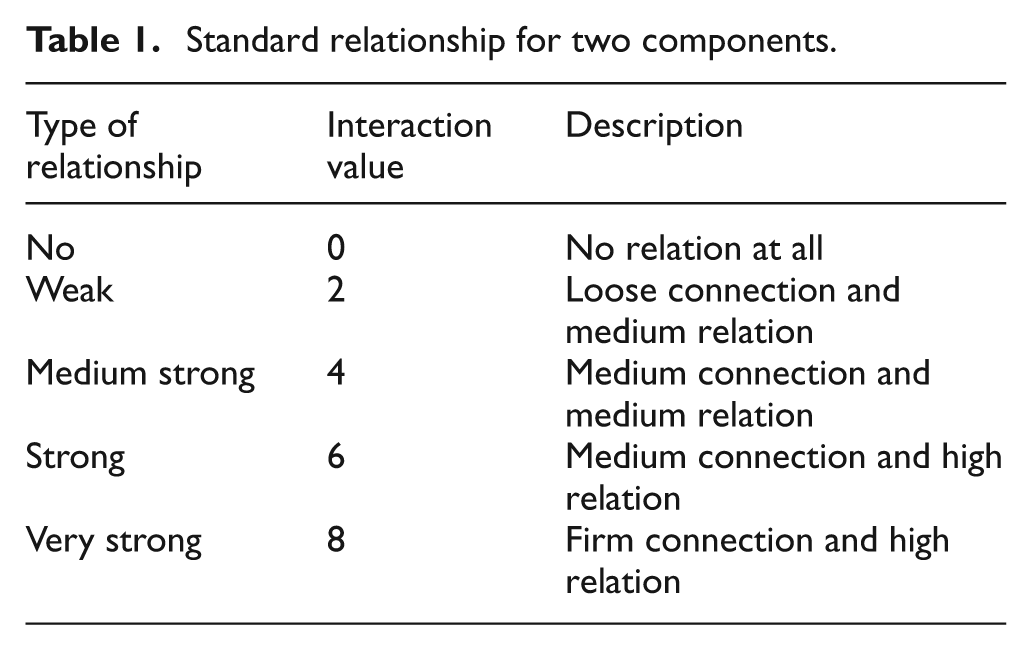
A correlation matrix between components to each modular driver should be modeled, such that product components are clustered into different modules. A DSM is an accepted method for analyzing the design of products and systems, which is not only widely employed for managing the complexity of components, but is an effective tool for modularization as well. 22 Correlation between components affected by each modular driver performs a series of paired comparisons, and the relationships’ values are assigned as in Table 1.
Standard relationship for two components.
A sample DSM documenting the relations between components is shown in Figure 1. A spaghetti graph is shown in Figure 1(a). For example, a product has six components, component one (C1) provides inputs to component four (C4), and gets inputs from C4. C6 gets inputs from C2, C3, and C5, and provides inputs to C5. A basic DSM is shown as Figure 1(b). All marks above the diagonal are feedback marks, while all marks below the diagonal are feed-forward marks. Each entry in the matrix indicates the intensity of correlations between components.
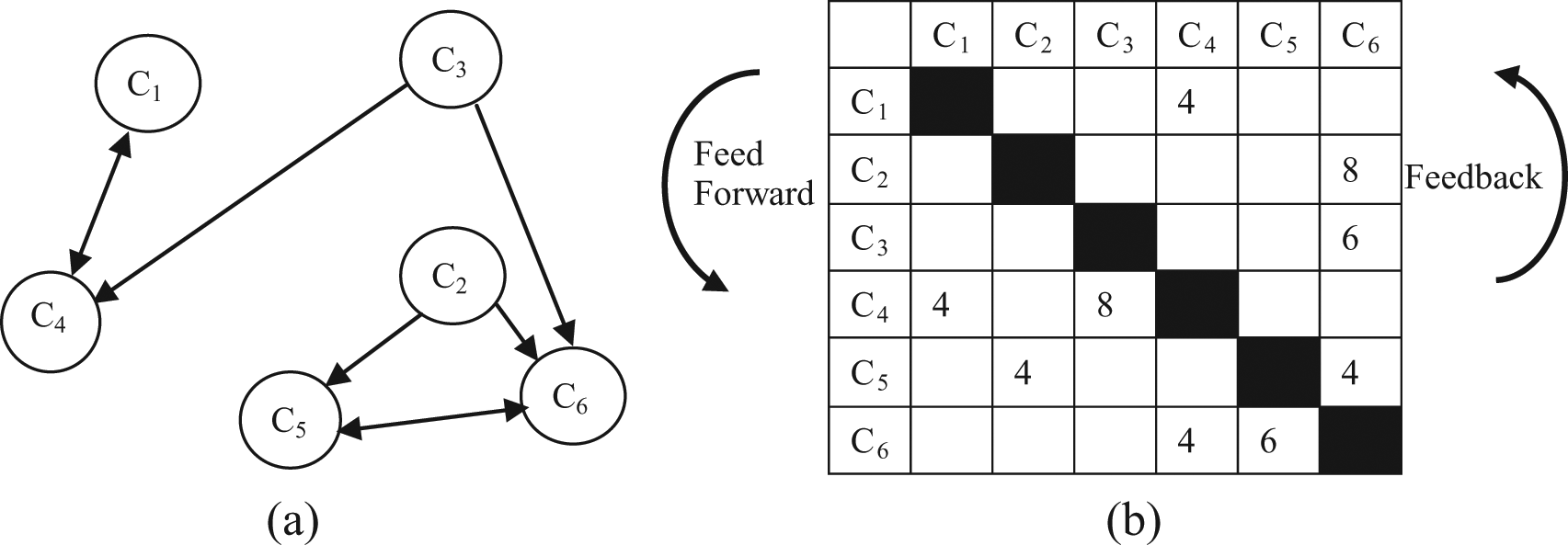
A sample DSM. (a) Spaghetti graph. (b) Basic DSM.
Based on the DSM method, a correlation matrix of all components—function-based DSM can be expressed as
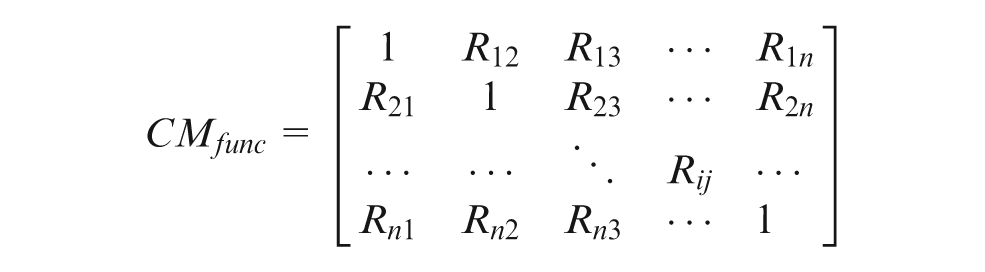
where R ij denotes the relation intensity of components i and j to the realization of the product function and its value is determined from the grade numbers 0, 2, 4, 6, and 8 according to Table 1, and n is the number of all components.
Following the same procedure outlined above, similar matrices can be obtained with respect to other models, such as geometric-based DSM (CM geom ), connectivity-based DSM (CM conn ), material-based DSM (CM mate ), manufacturability-based DSM (CM manu ), component life-based DSM (CM life ), and end-of-life options-based DSM (CM eolo ).
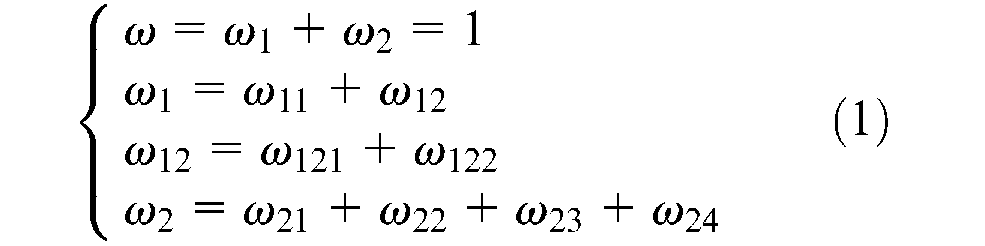
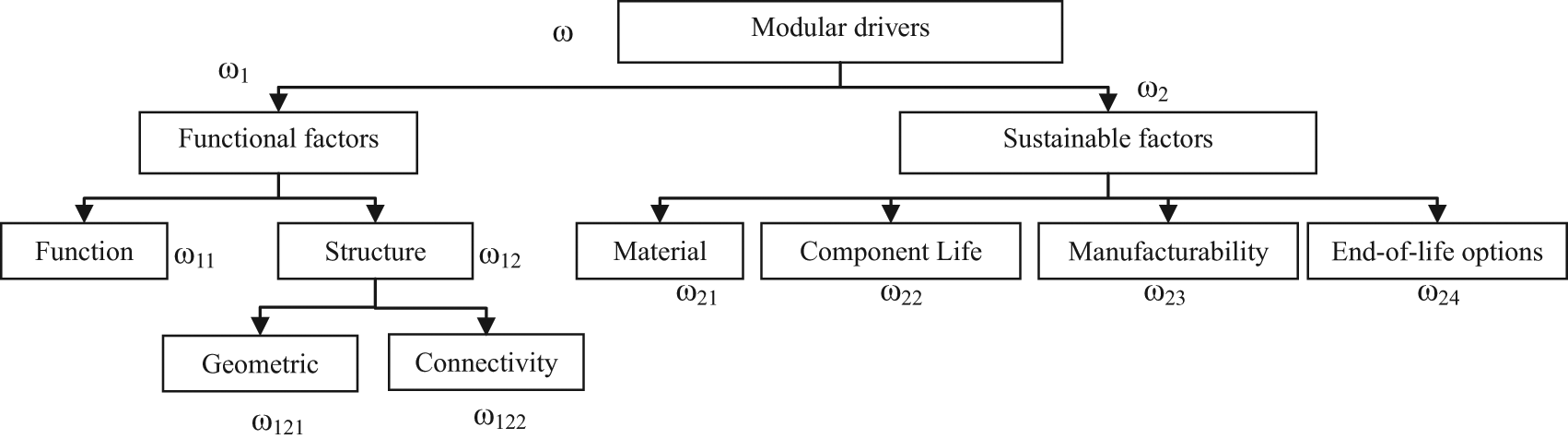
To integrate the seven matrices into one matrix, weights of modular drivers should be identified based on requirements of product and consumers. The weight hierarchy of modular drivers is presented in Figure 2. The weights value of modular drivers is constrained by
Weight hierarchy of modular drivers.
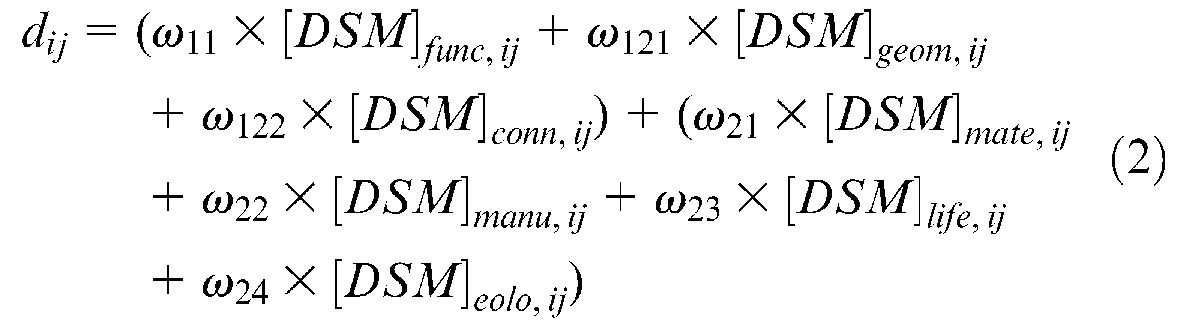
where ω1 is the weight of functional factors, ω2 is the weight of sustainability factors, ω11 is the weight of function, ω12 is the weight of structure factors, due to the structure related to geometric and connectivity, ω121 is the weight of geometric, ω122 is the weight of connectivity, ω21 is the weight of material, ω22 is the weight of component life, ω23 is the weight of manufacturability, and ω24 is the weight of end-of-life options.
After obtaining the correlation matrix of all components and identifying weights of each modular driver, the integrated relationship intensity d ij of component i and component j is obtained by
Module clustering and assessment model for product sustainability establishing
For obtaining the best modular structure, module clustering should be based on a number of criteria, including:
maximization of internal relations between components within modules;
minimization of external relations between modules;
with the most similar sustainability between the clustering components;
maximum and minimum of module numbers.
Module clustering methodology using a kernel-based fuzzy c-means (KFCM)
After obtaining the matrix between components, a KFCM clustering algorithm is employed to form different modules in which the correlation distance between components is maximal and the correlation intensity between modules is minimal.
According to Ayvaz et al. 23 and Zhang and Chen 24 the objective function is calculated by

where m represents the degree of fuzzy (m>1), c indicates the number of clustering, n is the number of all components, µ
ij
indicates the fuzzy membership of the jth component in the ith cluster.

where

where σ is the kernel width.
The condition

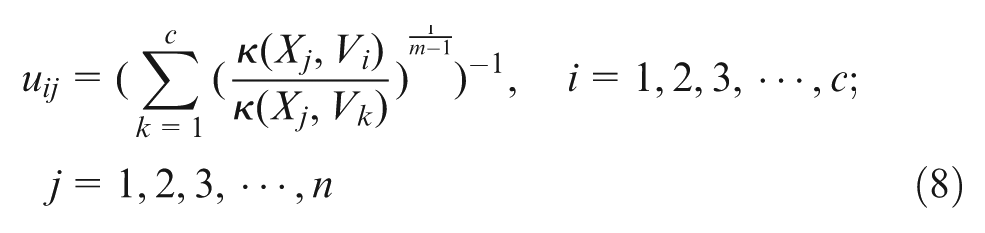
Similarly, kernel-based cluster centers are obtained by equation (7), and fuzzy membership values are calculated by equation (8) 26

Optimization clustering number using genetic algorithm (GA)
Encoding and initial population
In this article, each gene represents a cluster center. A chromosome determines k cluster centers, in which each cluster center has a D dimensional feature space. Therefore, a sequence of
After encoding, an initial population should be generated. Tseng et al. 6 pointed out that the maximum ideal number of clustering is less than or equal to the square root of the number of product component. Practically, the optimal clustering number should be near the square root of the component number while not just less than or equal to it. In this article, the length of the initial population is set as a range whose maximum number is twice the square root of component number.
Fitness function
A GA is employed to determine the optimal clustering number because of its efficiency in searching for optimum solutions. The compactness and the separation of a fuzzy c-partition should be taken into account as a reliable validation functional for the KFCM. Validity indices can discover the number of the clusters, or it may be able to determine the value of some parameters resulting in clustering change. There are a number of cluster validation indices, 27 among which the Xie and Beni index is employed in this article. In the kernel version, the Xie and Beni index is expressed as
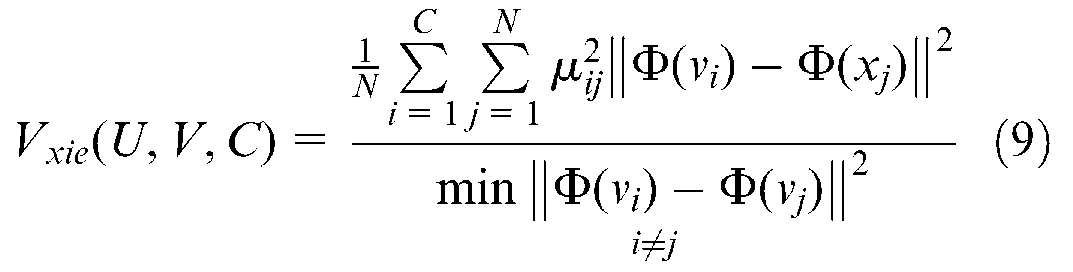
In equation (9), the numerator indicates the compactness of the modules, and the denominator indicates the distance of two individual modules. When the numerator is minimized and the denominator is maximized, the basic intention of clustering is fulfilled. The fitness is established as

Crossover and mutation
The one-point crossover is employed in this article, which breaks two selected parent chromosome into two segments at random
Validity of the proposed clustering method
The results of the clustering algorithm ought to be evaluated using a quality measure for verifying the effectiveness of the GA and KFCM (GAKFCM). The algorithms are tested on IRIS data 28 to compare the results with K-means, FCM, genetic fuzzy c-means (GAFCM), and GAKFCM. The result rate is used correctly as the quality measure here. The value of the result rate is limited correctly within the interval [0, 1], and the higher the value is, the better the clustering algorithm.
A flowchart of the proposed GAKFCM is shown in Figure 3. IRIS data has been used in several classification tests, 28 which is a proverbial data set employed to test the availability of clustering algorithms. 29 The results of module clustering using GAKFCM and other clustering algorithms for IRIS dataset are shown in Table 2.
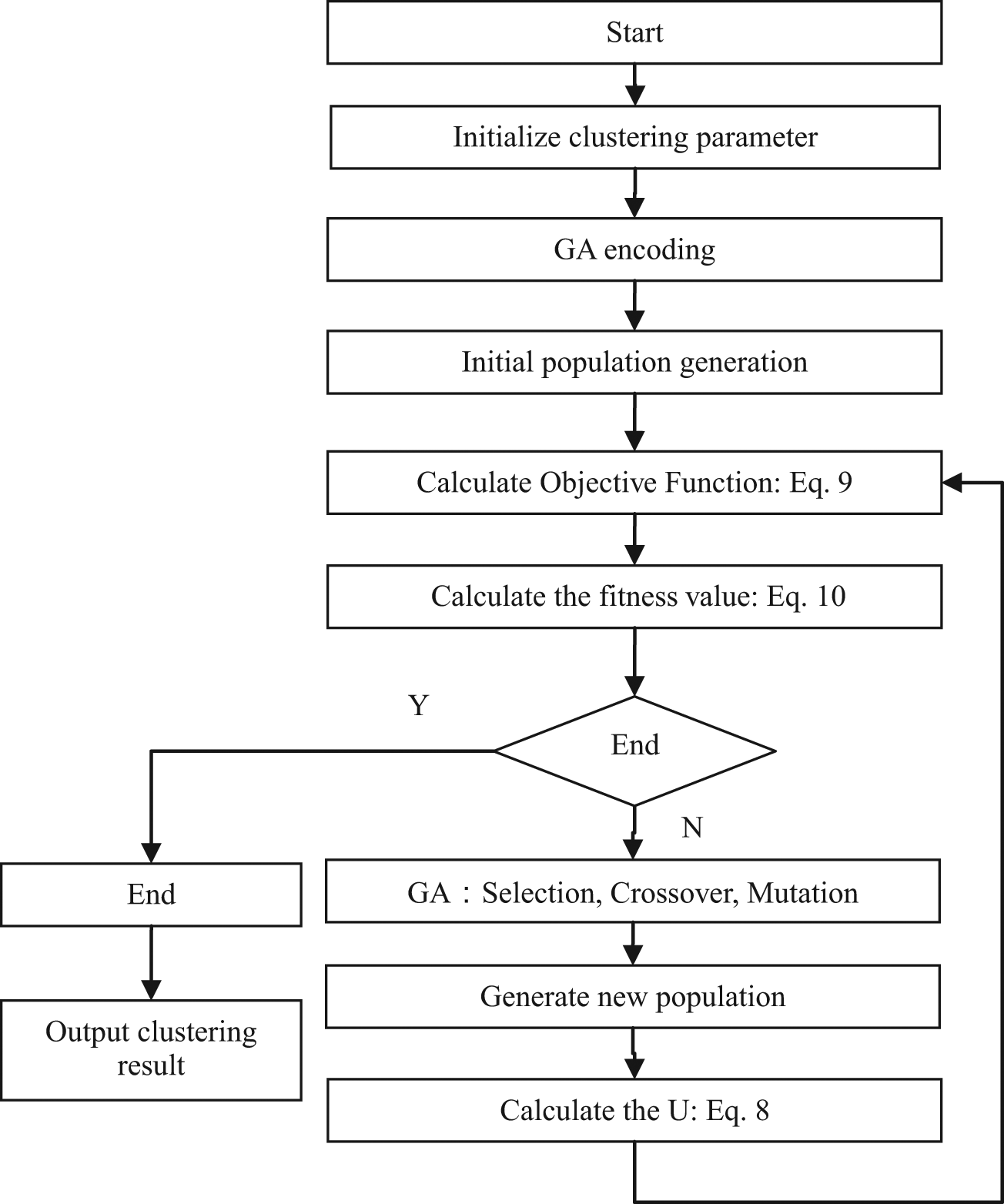
Flowchart of the proposed GAKFCM algorithm.
Results comparison of K-means, FCM, GAFCM, and GAKFCM for IRIS dataset.
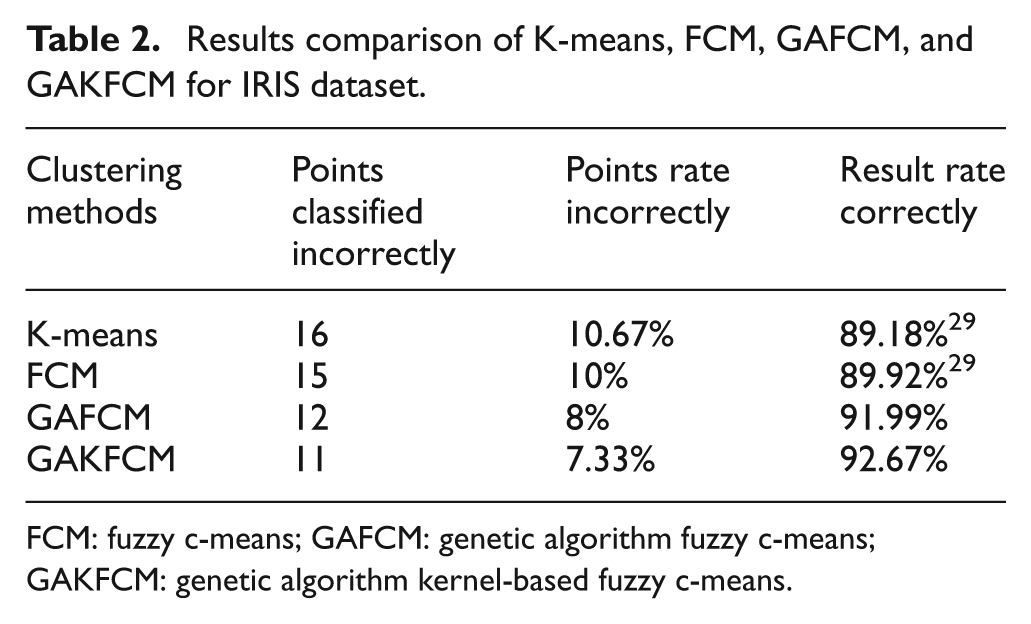
FCM: fuzzy c-means; GAFCM: genetic algorithm fuzzy c-means; GAKFCM: genetic algorithm kernel-based fuzzy c-means.
From the simulation results of the K-means, FCM, GAFCM and GAKFCM clustering methods, it can be concluded that GAKFCM is an effective method. The convergence profile of the objective function with iteration using GAKFCM is shown in Figure 4.
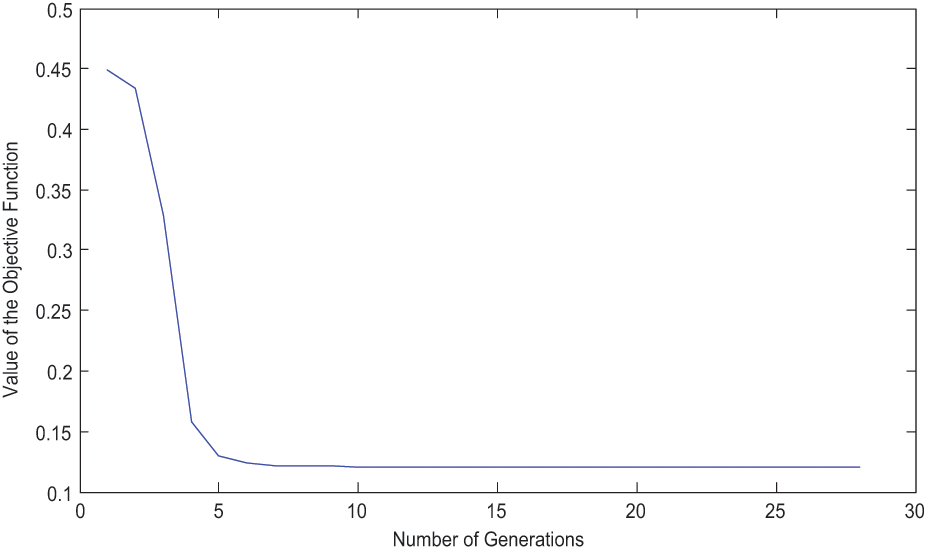
Convergence profile of clustering result using GAKFCM.
Assessment model for product sustainability
Various approaches are currently available to evaluate different attributes of the product. A product sustainability assessment requires considering economic, social, and environmental factors simultaneously, according to D20 Blue Paper on Life cycle sustainability analysis. 21 To properly evaluate product sustainability, all of these factors are taken into account.
Defining product sustainability criteria based on life cycle stage
Since the United Nations Conference in 1992, the objective of sustainable development is to fulfill environmental, economic, and social requirements. 30 Many efforts have been made to reduce the environmental impacts, such as life cycle analysis integrating energy and resource depletion during the decision-making process. 31 The sustainability criteria focus on three main sustainability aspects that constitute the three-dimensional multi-criteria sustainability assessment involving the environmental, social, and economic dimensions based on ISO 14040 and 14044 principles. This article provides a comprehensive evaluation system during the product life cycle stage according to sustainability criteria being further divided into some sub-criteria, as shown in Figure 5. Reuse refers to the effective reuse of the product or its components after its first life cycle, thus reducing the usage of new raw materials used to produce such products and components. Recycle includes processing used materials that would otherwise be considered waste, sorting and processing recyclables into raw materials to prevent waste of potentially useful materials, reduce the consumption of fresh raw materials, and reduce energy usage. The purpose of the redesign is to simplify future post-use processes through the application of techniques to make the product more sustainable, while remanufacture involves the processing of used products through the application of techniques for recovering to their original state without loss of functionality.
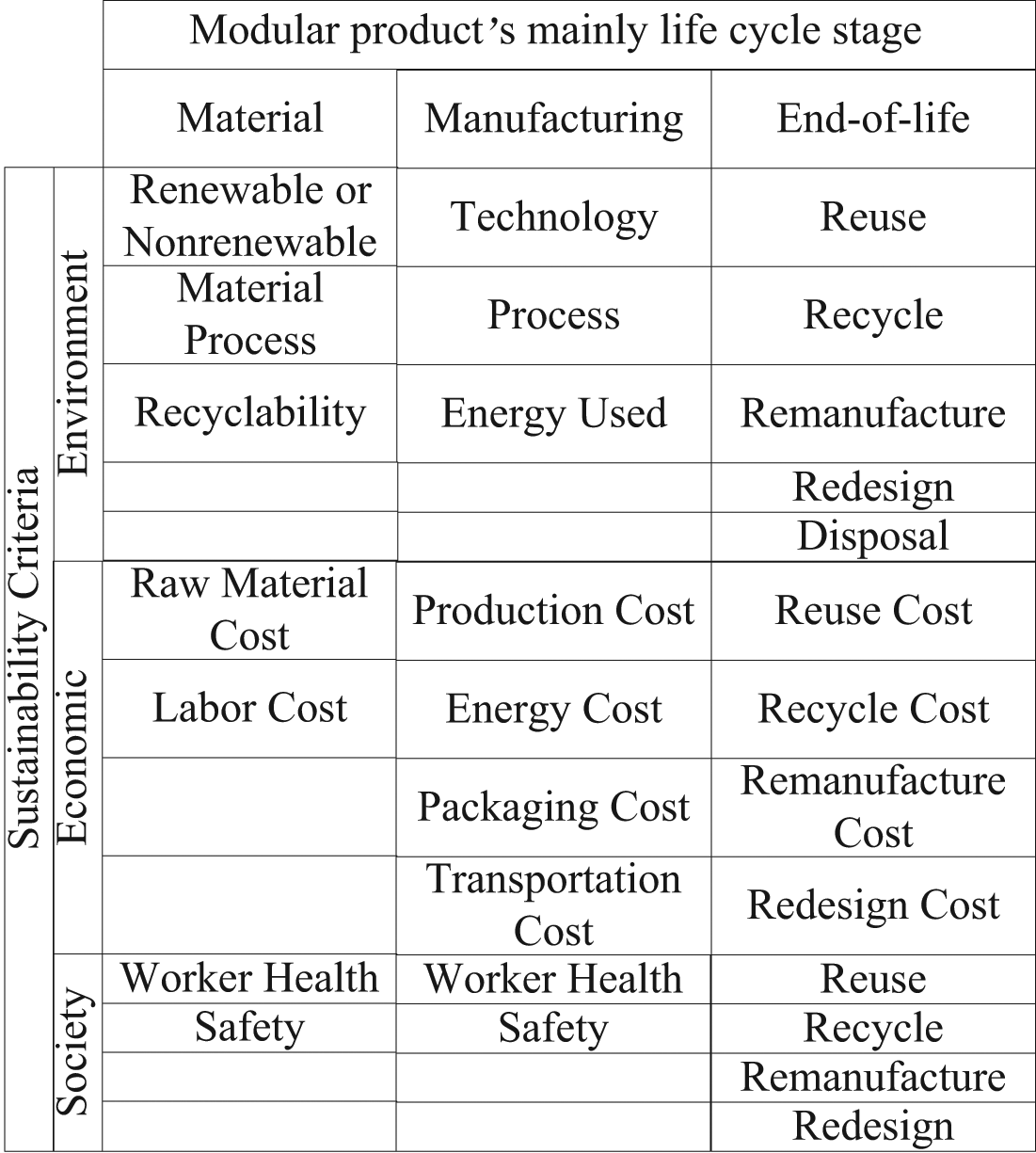
Sustainability criteria.
The sustainability assessment for the modularized product has certain flexibility so that new or changed criteria can be easily integrated. Similarly, criteria can also be removed if not necessary for a certain objective.
Assigning relative weights of sustainability criteria using an analytic hierarchy process (AHP)
An AHP method is employed to conduct complicated decision issues, which consists of a final objective, some decision criteria, possible sub-criteria, and some alternatives. The related data are obtained with paired comparison that describe the importance of weights of criteria. 32 Each sub-criterion is assigned with different weight by using pair-wise comparison matrices. Consequently, the grading of alternatives is assigned and the effects of different criteria are estimated.
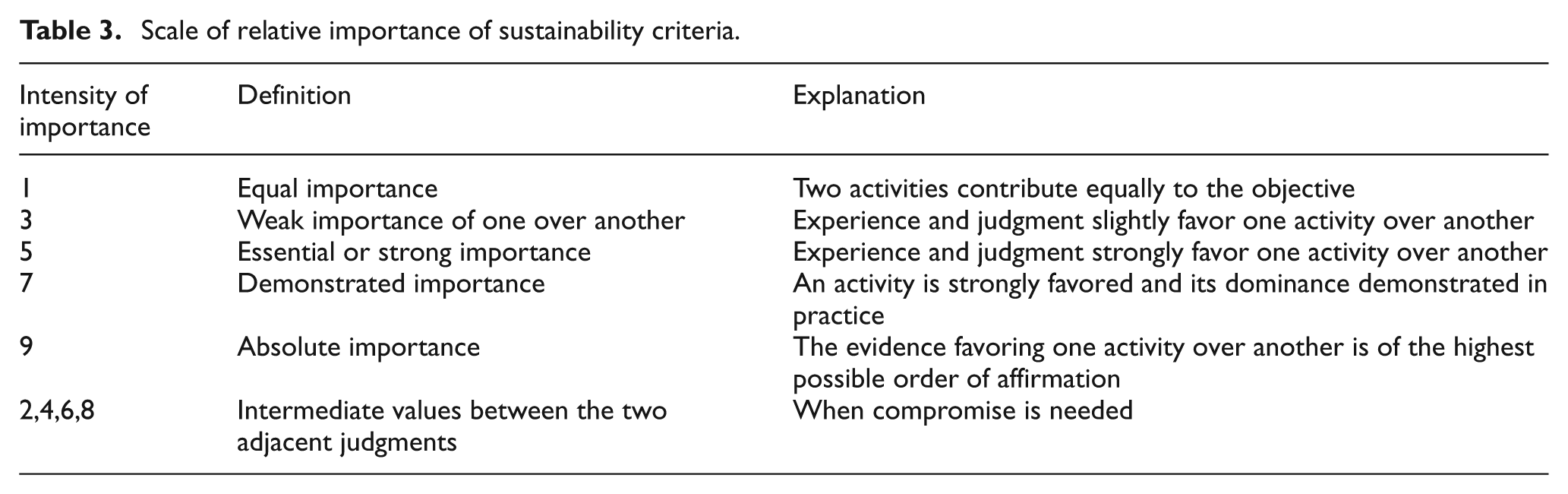
Relative importance assessment of each sub-criterion is provided based on a nine-point intensity scale. 32 It needs to be noted that the scoring scheme, ranging from 1 to 9, is a specific form of this article as shown in Table 3, and other scoring systems can also be used. A judgment matrix of pairwise comparisons is calculated according to Triantaphyllou et al. 33
Scale of relative importance of sustainability criteria.
Calculating product sustainability index
The overall sustainability index (SI) is obtained by calculating a weighted average of overall score from the environmental, social, and economic factors. The influencing factors’ scores are recorded by the designers in each entity of matrix and evaluate the SI in each matrix. For instance, the scores of the environment factor of the material can be calculated as
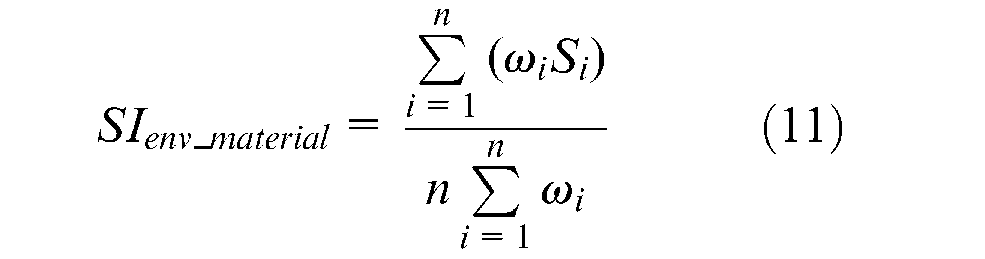
where S i is the impact factor based on a ranking of 0–10 for the environmental elements of material, ω i is the weight of every factor of the material stage, and n is the number of impact factors.
The values for social (SI soc_material ) and economic (SI eco_material ) elements of the material can be calculated in the similar procedure. The SI values for other life cycle stages, such as material, can be obtained by calculating the average of the SIs of sustainability factors in the vertical column for the specific life cycle phases. By the similar procedure, the values for environmental (SI en v ), social (SIsoc), and economic (SI ec o ) sustainability factors across mainly three life cycle phases can be obtained by calculating the average of the SIs of horizontal row life cycle phases for that specific sustainability element. A sustainability evaluation framework for modularized product is shown in Figure 6. The overall sustainability index (SI total ) for a modularized product during its main life cycle stages can then be calculated by

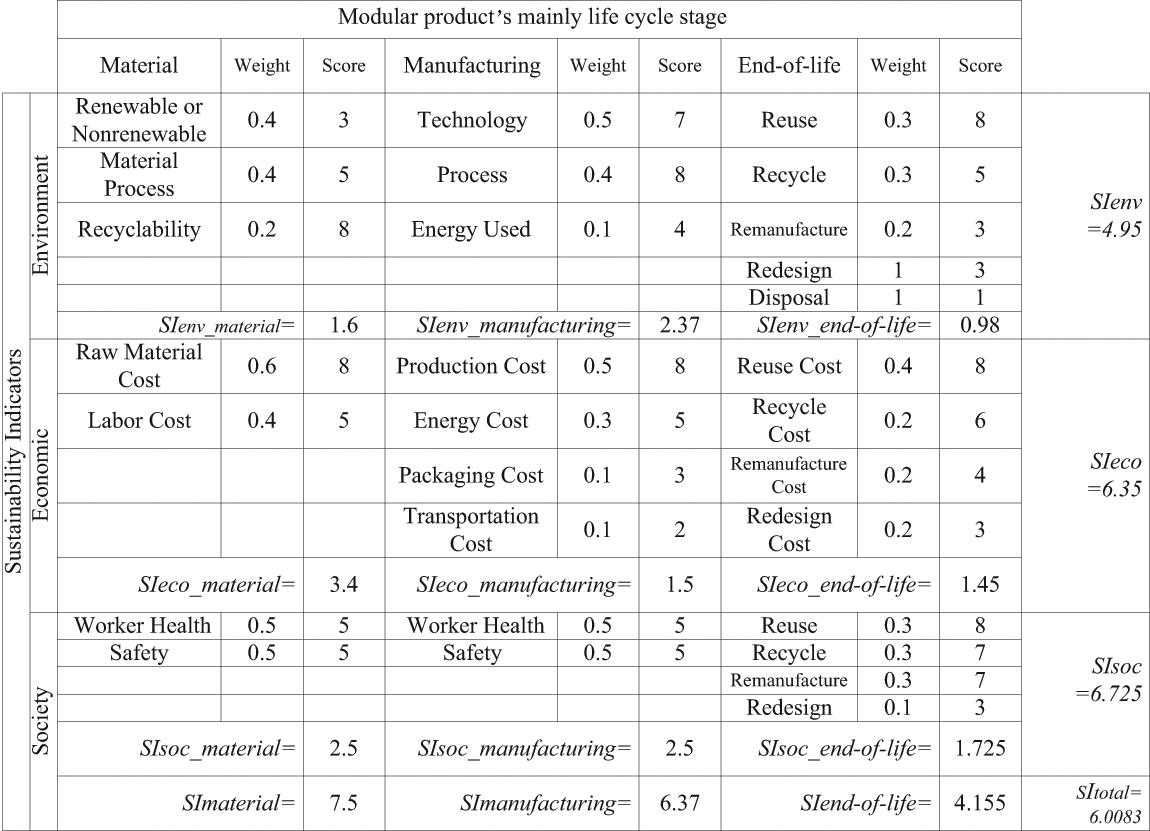
A sustainability evaluation framework for modularized product.
Case study
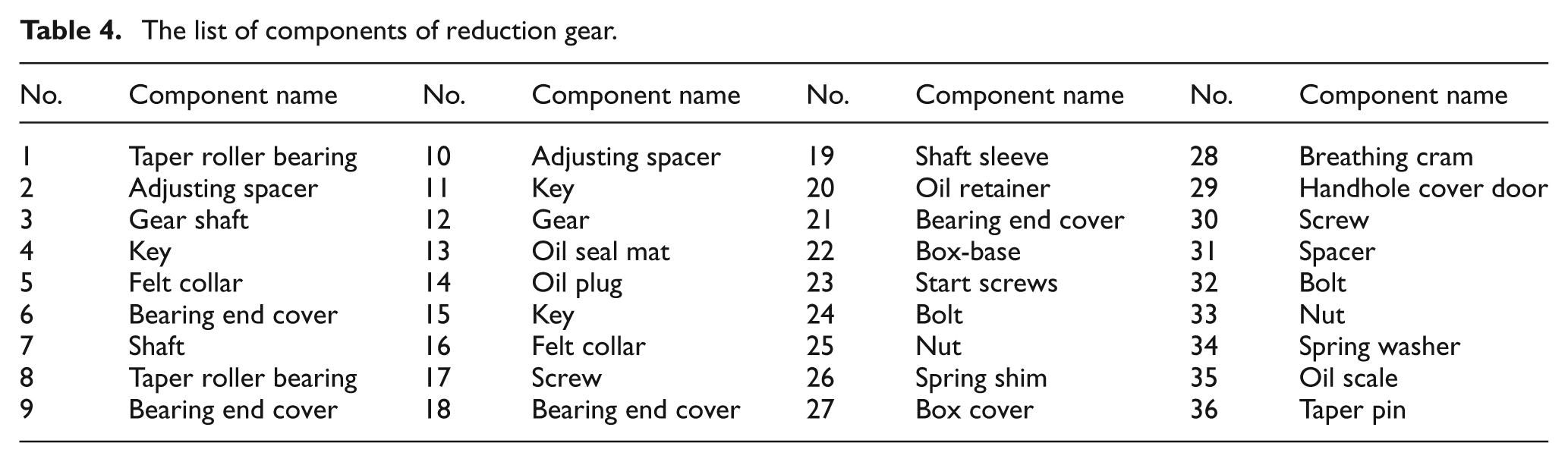
A reduction gear is used as a case study example to show the effectiveness of the proposed sustainability-oriented modular design method. The list of components of the reduction gear is shown in Table 4. Major components of reduction gear are shown in Figure 7.
The list of components of reduction gear.
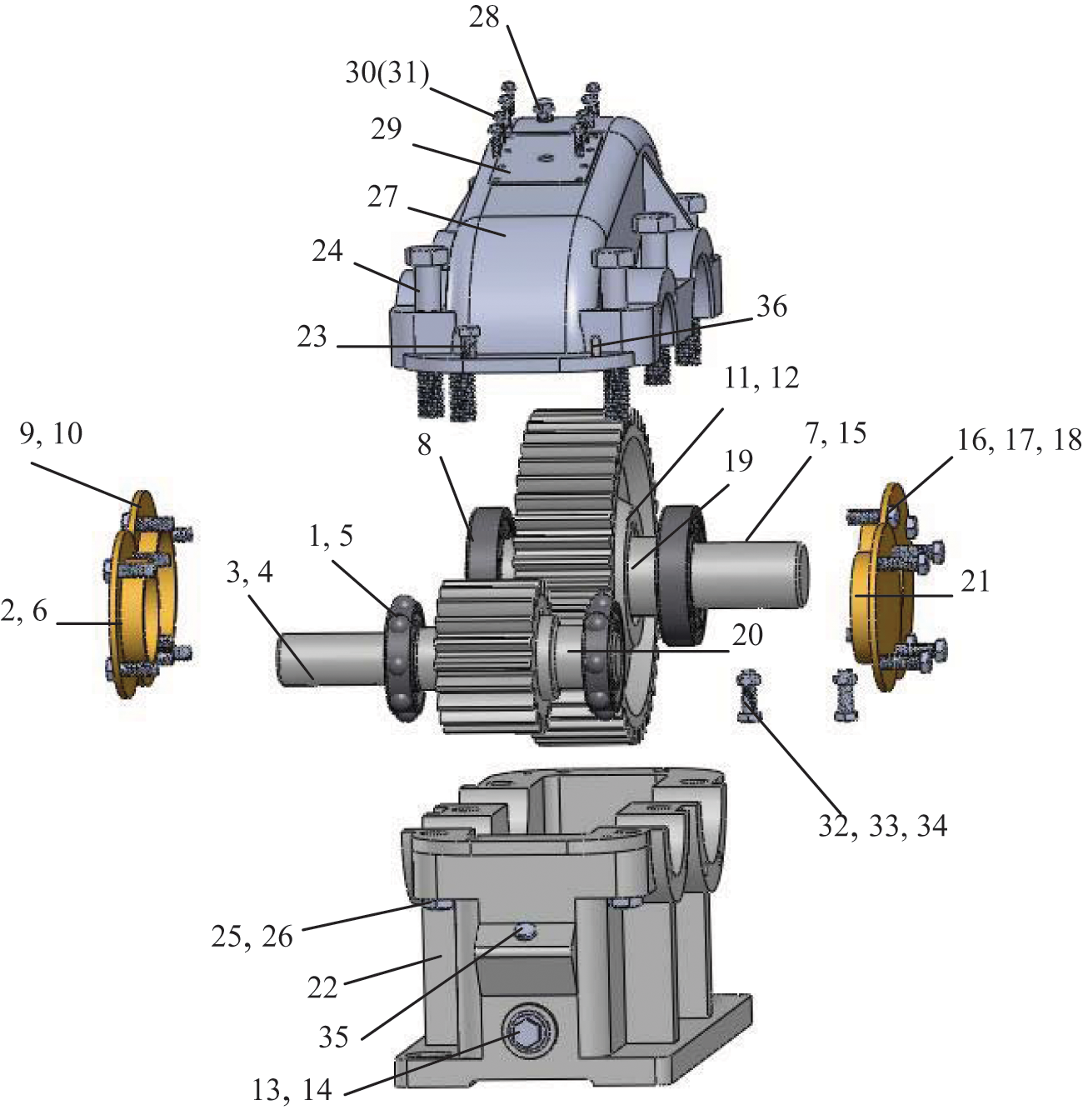
Major components of reduction gear.
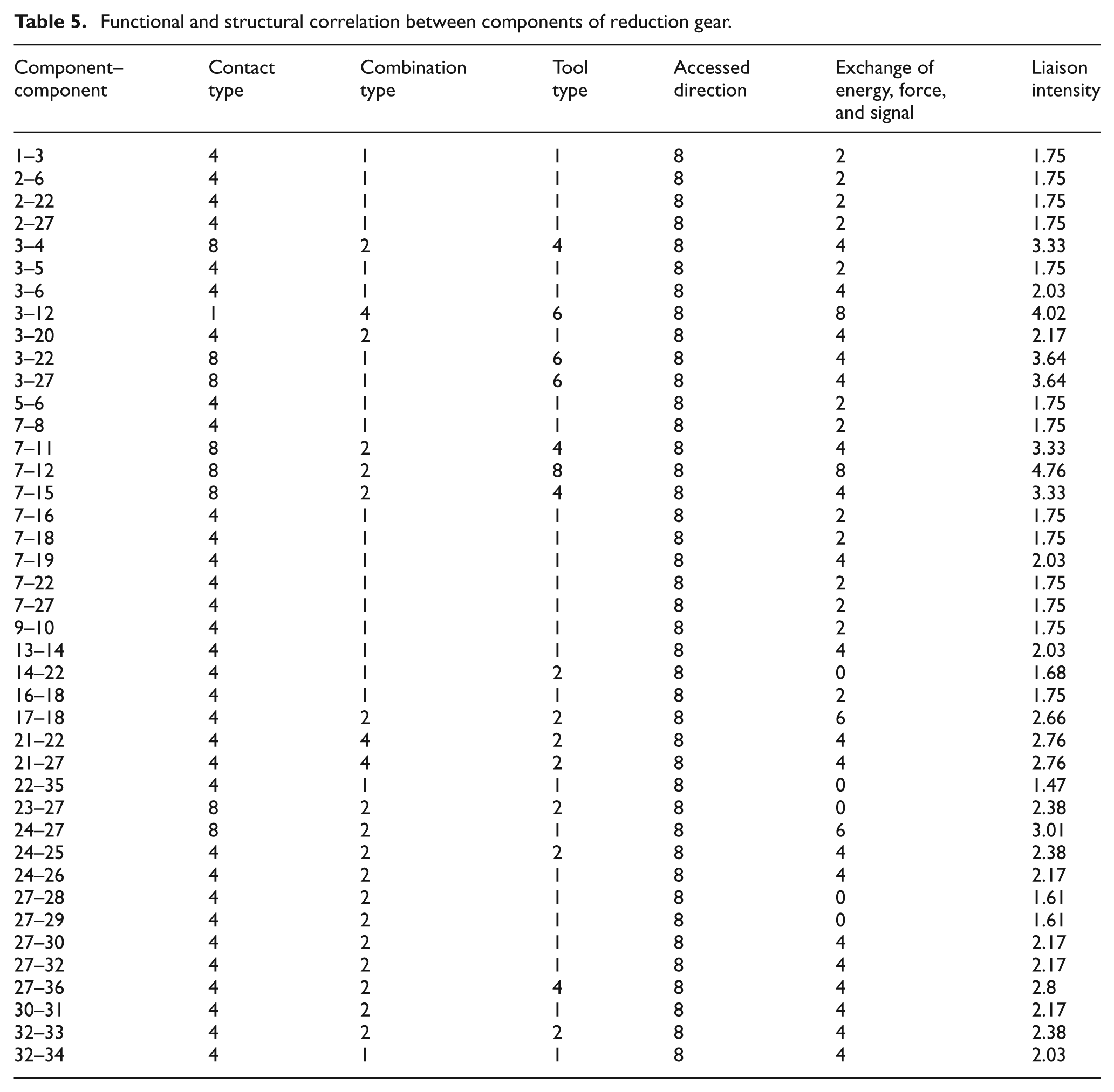
First, functional relationships between components are identified, including the exchange of material, energy, signal, and force. Original modules are clustered based on functional interaction, and the functional decomposition modules are shown in Figure 8. Then, the spatial and geometrical relationships between components including attachment and relative positioning, and sustainability factors’ relationships between components including material, manufacturability, component life, and end-of-life options, are identified. Functional and structural correlation between components of reduction gear is shown in Table 5. Meanwhile, the weights of module drivers are assigned based on their relative importance. Finally, optimized clustering is generated using KFCM and GA based on the Matlab toolbox.
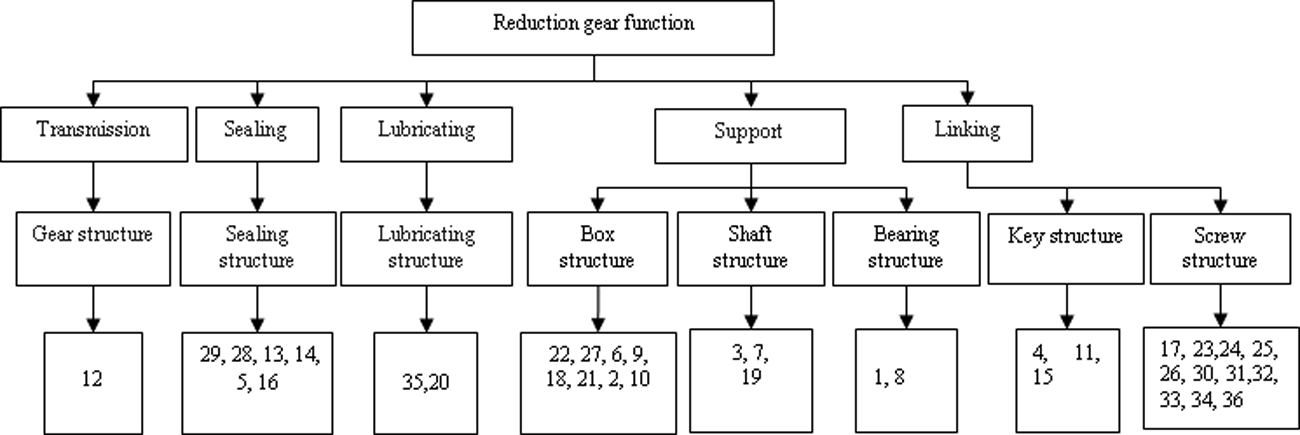
Functional decomposition modules of reduction gear.
Functional and structural correlation between components of reduction gear.
The convergence profiles of clustering resulting in different clustering numbers are shown in Figure 9. From Figure 9, we can conclude that the objective function decreases with the increase of the clustering number. Therefore, the Xie–Bin validity function is employed to obtain the optimal clustering number. The optimization process of a clustering number is shown in Figure 10.
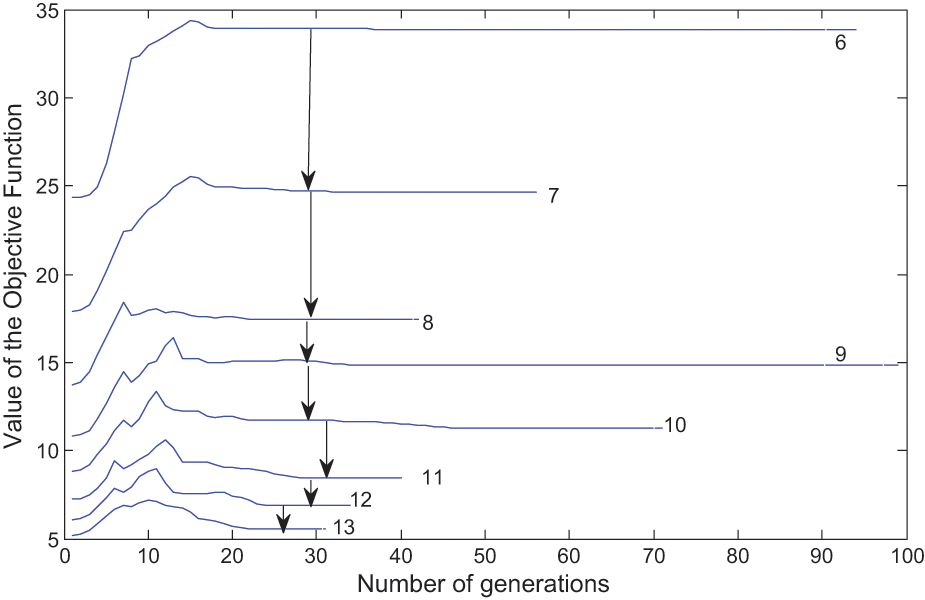
Convergence profile of clustering results in different clustering numbers.
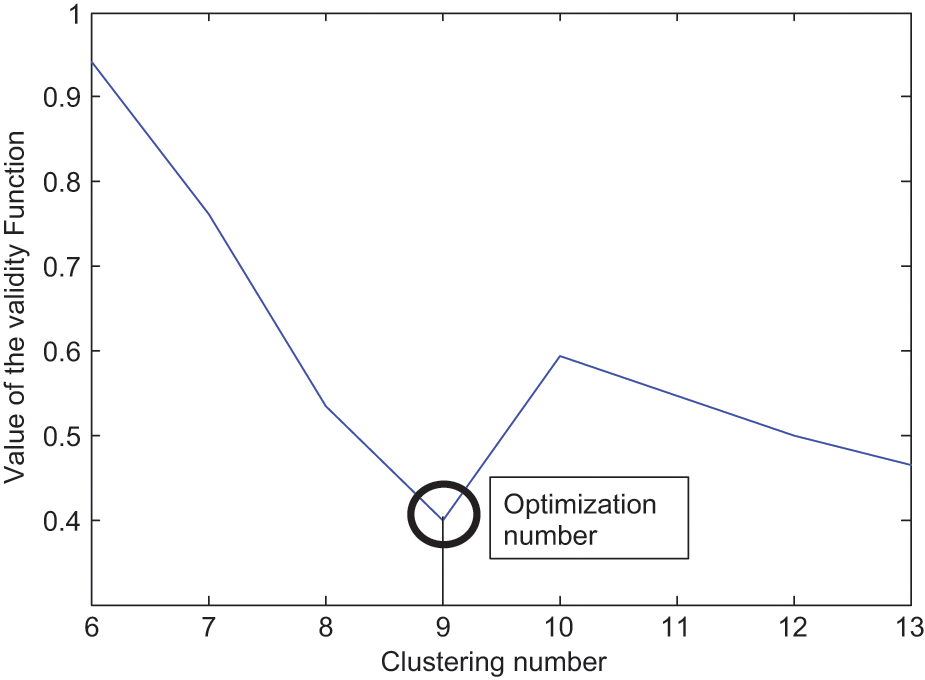
The optimization process of a clustering number.
Figure 10 illustrates that the validity function of Xie–Bin is least when the clustering number is nine. The convergence profile of a clustering result of a reduction gear by nine modules running ten times is shown in Figure 11 to test the robustness of the clustering result. Figure 11 illustrates that the convergence profile of the objective function by nine modules has the same tendency.
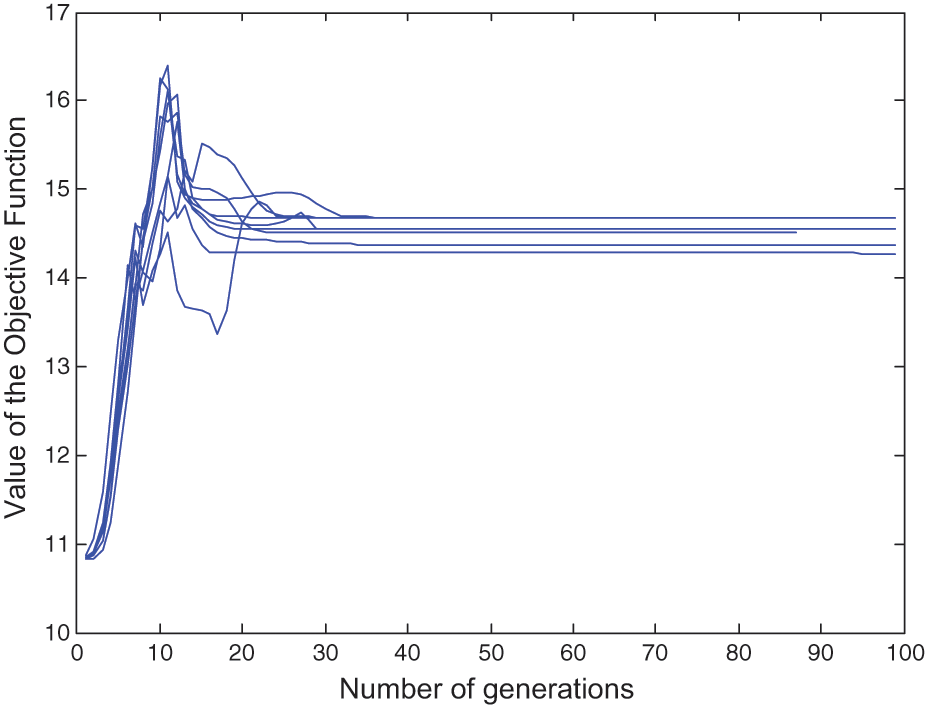
Convergence profile of a clustering result of a reduction gear by nine modules.
Compared with functional modules, new modules are clustered based on modular drivers related to function and sustainability. Clustering results of functional modules and new modules are compared as shown in Table 6.
Clustering results of functional modules and new modules.
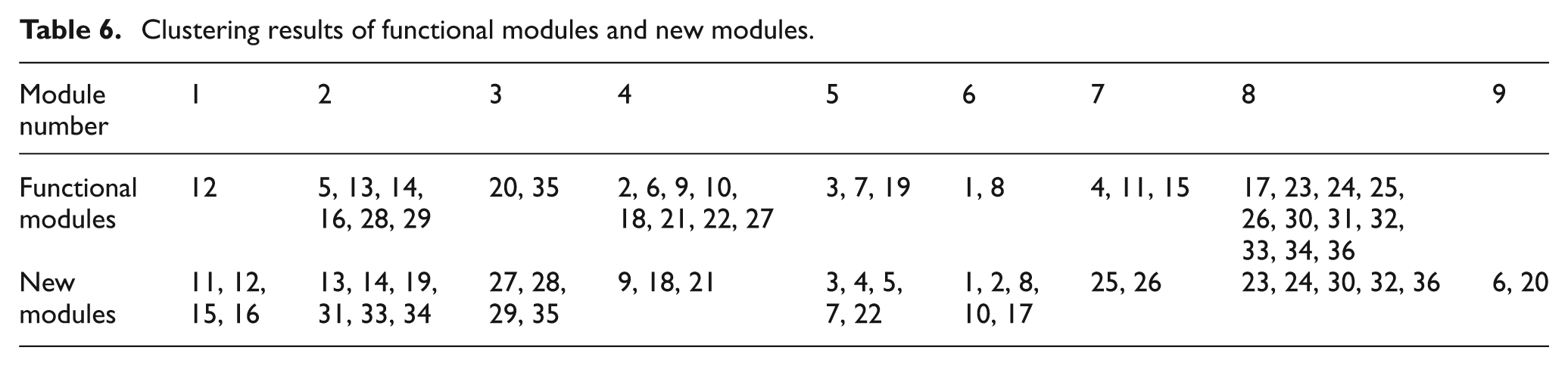
In new modules, components 11, 12, 15, and 16 are in the same module, as they have similar material, end-of-life options, and component life features. Components 13 and 31 have the same material, and components 14, 19, 33, and 34 have the same manufacturability, which are clustered into the same module to support recycling after the first life cycle. Similarly, components 9, 18, and 21 have similar sustainability features, such as material, component life, and manufacturing. Therefore, they are clustered into the same module in order to be recycled easily. Components 1, 2, 8, 10, and 17 are clustered together, as they have similar material, manufacturability, and component life features contributing to be reused and remanufactured. Even though components 27, 28, 29, and 35 perform different functions, they are still clustered in the same module because these components have strong support for box structure. Components 3, 4, 5, 7, and 22 are clustered together in the same module as they have the maximum similar material, component life, and end-of-life options features. Components 25 and 26 are redistributed to make shaft easier and quicker to replace and the box structure easier in order to be reused after the first life-cycle. Components 23, 24, 30, 32, and 36 are clustered together in the same module as they have a similar function. Components 6 and 20 can be redesigned to reduce the usage of new material, thus they are clustered into one design module.
In addition to the structure discussions above, the sustainability assessment for the product is also discussed to assist design engineers in decision making during the design process. Table 7 shows the sustainability assessment result of the product in the case study.
Sustainability assessment result of the modular design.
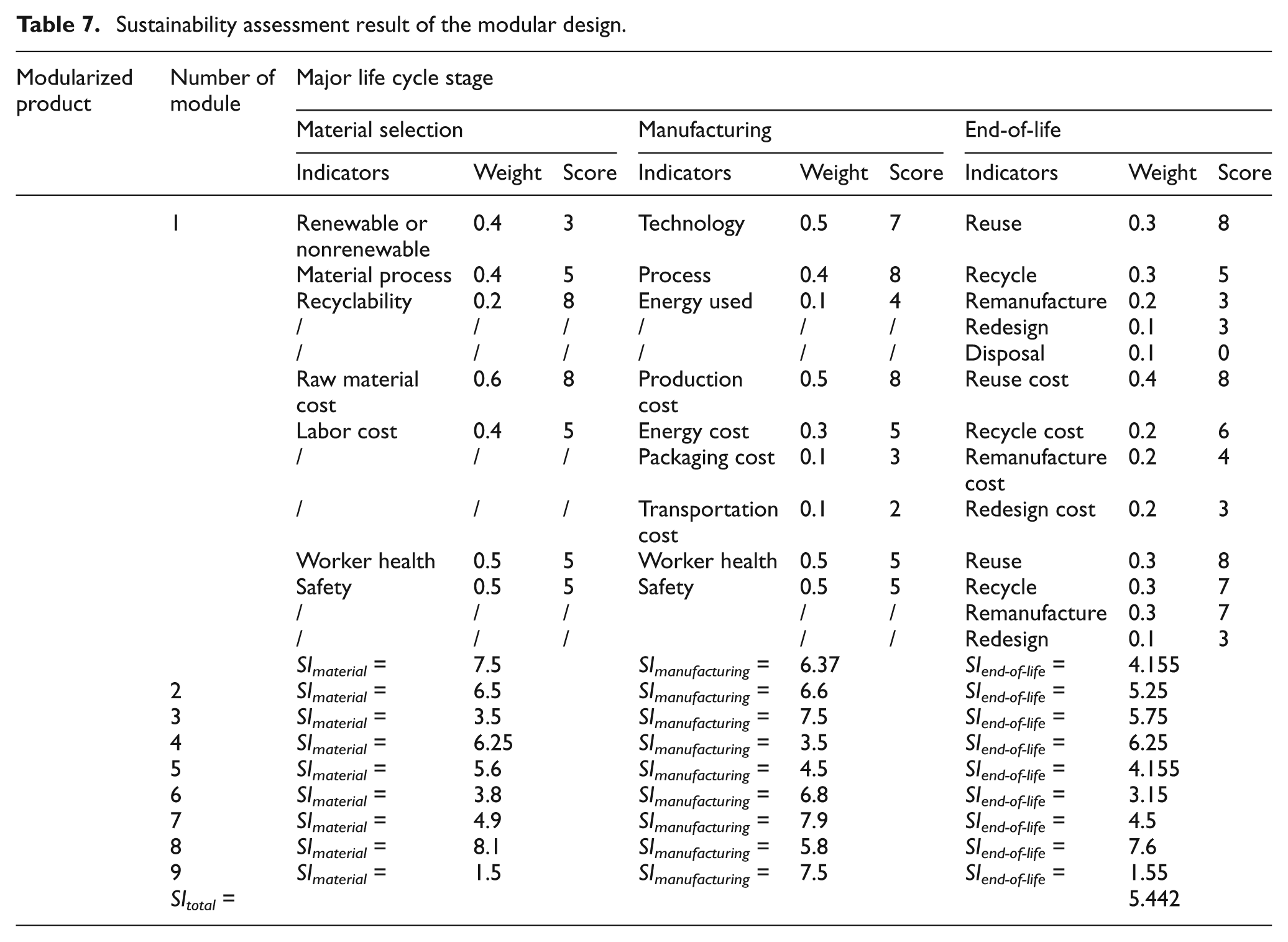
The overall sustainability index is obtained by calculating a weighted average of overall scores from the environmental, social, and economic factors. The three factor assessment scores are assigned with equal weights of one-third each when calculating the weighted average. The SI result of the modular design shows that the product sustainability assessment can be calculated by a quantification form.
Conclusions
The modular design method for sustainability is effective and feasible to make products more sustainable, as well as to achieve function and sustainability requirements. This method not only considers upstream demand, but also takes into account the downstream demand from the whole life cycle contributing to SD and SM. Furthermore, the module clustering method using the KFCM algorithm and GA has higher accuracy to integrate components of the product into design modules and determine the optimal clustering number. Meanwhile, reusing the used components, subassembly, or whole product after the first life cycle is an effective and feasible method in terms of achieving sustainability requirements. In addition, sustainability criteria are introduced to evaluate the modularized product based on the product life cycle. Particularly, the SI is formalized based on different life cycle options. The SI quantificationally represents the sustainability performance of the modularized product from the environmental, social, and economic aspects, which has not holistically been assessed in current methods. Thus, designers can obtain an assessment result of product sustainability based on the proposed assessment model, and then revise their design strategies for making their products more sustainable in the initial stage.
Future work will involve the extension of modular drivers and other components’ attributes (such as endurance, shape, and profile, etc.). Meanwhile, future research will focus on obtaining the relation of components automatically based on the three-dimension virtual model.
Footnotes
Funding
This research is funded by the National Natural Science Foundation of China (#70971030).