




Abstract
In production market, the decision-making patterns of firms producing a homogeneous kind of products are different. Some are under the control of a dominant firm called centralized pattern. In this case, there is only one decision maker who takes charge of all the firms and attempts to maximize the total utility of the system. Another is decentralized pattern, in which firms plan by themselves. In reality, there always exists a third pattern, where the centralized pattern and decentralized pattern firms are in the same market. This article deals with the last case and studies the effects of decentralized pattern firms’ decisions on centralized pattern firms in the same market, which is described as a Stackelberg game. It is supposed that centralized pattern firms are the leaders who affect the whole market by adjusting the production of each firm. Decentralized pattern firms are the followers who determine their productions in a manner of competitive equilibrium against the given centralized firm’s strategy. This game in this article is formulated as a bilevel programming model. Solution algorithm based on the sensitivity analysis is adopted to solve the model, and a numerical example is given to illustrate the model and algorithm.
Introduction
A supply chain is the sequence of organizations—their facilities, functions, and activities are involved in producing and delivering a product or service. In general, it is composed of independent partners with individual behaviors. For this reason, each firm is interested in minimizing its cost independently. Both in practice and in the literature, considerable attention is paid to the importance of the coordination among entities in supply chains. 1 In an effective supply chain, each member’s decision behavior, such as the production decision, has important effects on the entire system. This article aims to research the production decisions in different market equilibrium behaviors.
Production planning has been studied for a longtime in the supply chain management together with other programmed decision makings. Wang 2 studied the production and pricing decisions of multiple firms/suppliers who produced and sold a set of complementary products to a market. Yano and Gilbert 3 provided a comprehensive review that covered a much broader range of production–pricing decision problems. Zhu and Majozi 4 developed a decomposition scheme for the planning and scheduling of a network containing multiple production facilities. Singhvi et al. 5 developed an aggregate production planning model, which made use of pinch analysis. Chandra and Fisher 6 investigated the value of coordinating production and distribution planning. Some researches have solved the production–distribution problem with optimization methods. Christian and Josef 7 suggested a mixed-integer linear programming model for production and distribution planning throughout a supply chain in chemical industry. Chen and Lee 8 proposed a multiproduct, multistage, and multiperiod scheduling model to deal with multiple incommensurable goals for a multiechelon supply chain network with uncertain market demands and product prices. Gavirneni 9 modeled the cooperation in a typical production–distribution setting that contained one capacitated supplier producing and distributing a single product to many identical retailers. Lee and Kim 10 proposed a hybrid approach that combined analytic and simulation methods for production–distribution planning in the supply chain. Leung et al. 11 addressed the multisite production planning problem for a multinational lingerie company in Hong Kong with uncertain data. Noori et al. 12 studied the multiproduct, multiperiod problem based on hybrid solutions consisting of both analytical models and simulation analysis. Doh and Lee 13 focused on production planning in remanufacturing systems over a given planning horizon with discrete time periods.
To model and analyze the decision making effectively in a such multiperson situation where the outcome depends on the choice made by every party, game theory is a natural choice. There is a series of articles dealing with either competition or cooperation in supply chains by game methods. Dong et al. 14 established the foundations for decentralized and competitive supply chain network problems in the case of random demands within an equilibrium framework. Zhang 15 presented a general framework for the formulation of supply chain interactions. Hasan et al. 16 studied the collaborative production–distribution planning in the supply chain through a fuzzy goal programming approach. Nagurney 17 developed a multimarket supply chain network design model in an oligopolistic setting. There are reviews on contracting and coordination in supply chains18,19 and noncooperative and cooperative game theory and its applications in the supply chain management.20,21 From the supplier and retailer Nash game perspectives, Cai et al. 22 evaluated the impact of price discount contracts and pricing schemes on the dual-channel supply chain competition. Bylka 1 discussed noncooperative strategies for production and shipments lot sizing in the vendor–buyer system. Nagarajan and Sosic 23 surveyed some applications of cooperative game theory to supply chain management. Special emphases are placed on two important aspects of cooperative games: profit allocation and stability. There are also articles considering the coordination between the functional departments of a firm and competition among firms. For example, Boyacil and Gallego 24 examined a problem that simultaneously considered coordination and competition. Leng and Parlar 25 considered a multiple supplier, single-firm assembly supply chain where the suppliers produced components of a short life cycle product assembled by the firm. Also, some studies focus on equilibrium behaviors with cooperation and competition. Ryu et al. 26 proposed a bilevel programming model under uncertainty to describe the plant-wide planning/distribution network problem. De Kok and Muratore 27 used a bilevel model to optimize the supply chain in which the social planner, as the leader, is to minimize the total cost and the separated entities, as the followers, to maximize the profits. Yang et al. 28 developed a bilevel programming approach to model the supply chain response time. Yang et al. 29 studied the Stackelberg game and multiple equilibrium behaviors on traffic networks.
In the manufacturing market, there are usually multiple firms in different positions producing homogeneous products. Some are under the control of a same company, the decision-making strategy of which is called centralized pattern (CP). However, there still exists another decentralized pattern (DP), in which firms plan and program by themselves. In the case of decentralized strategy, each firm aims to maximize its profit by planning its production quantity; in other words, firms are fully competitive. While for CP, there is only one decision maker (or player) who takes charge of all firms being in different positions of the market and attempts to maximize the total utility of the system. In this case, firms are fully cooperative.
Those traditional methods mainly focus on DP and CP production decision. However, the previous studies ignore an important case that both competition and cooperation among firms exist in the same market. In this case, how to determine the production planning for every firm is an interesting problem. In addition, in each market, there exist dominant firms, such as the enterprise groups, who have a significant impact on the market. There are also some fringe firms who can only adapt to the market. It is necessary to coordinate the decisions between the fringe member and the dominant member to make a win–win proposition for both. However, how and to what extent the dominant firms affect smaller ones is another essential subject in the supply chain coordination.
Therefore, the aim of this article is to address this market problem with the contributions as given in the following. To begin with, a detailed description of the third case in the real production market is given, and a variational inequality model to describe the market equilibrium is proposed. Besides, a Stackelberg game method is built to portray the interaction of DP and CP production decisions and the effects of dominant firms on the market. Finally, this Stackelberg game with a bilevel mathematical programming model is formulated. In our model, centralized firms are controlled by a leader, and decentralized firms are followers. Decentralized firms determine their production in a manner of competitive equilibrium given the centralized firm’s production strategy. In contrast, centralized firms know how decentralized firms will react and then adjust production plan to maximize the total system utility.
The reminder of the article is organized as follows: The market equilibrium model for the production planning in the centralized and DPs is given in section “Production planning in centralized and DPs.” Section “Bilevel programming model for production planning” presents the Stackelberg game with a bilevel mathematical programming model and solution algorithm based on the sensitivity analysis for the model. Section “Numerical example” provides a numerical example. Finally, in section “Conclusions and prospects,” the results are summarized, and the directions for future research are pointed out.
Production planning in centralized and DPs
Production planning model
It is assumed that there are
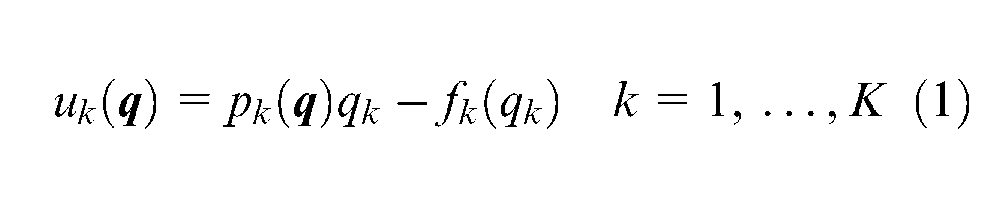
The feasible set
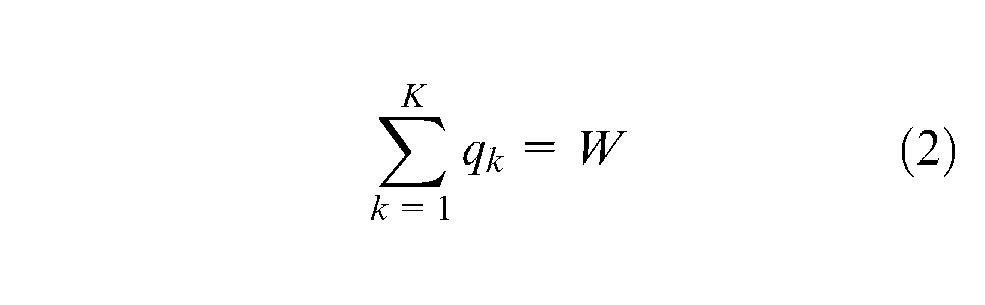
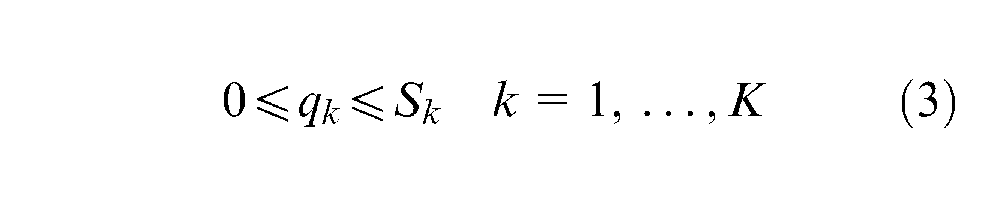
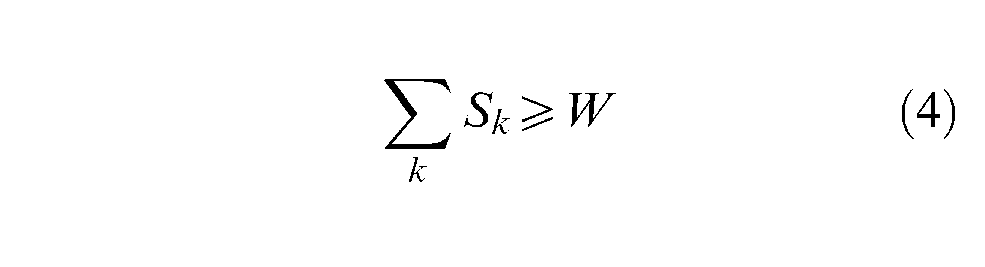
where
Production planning in CP
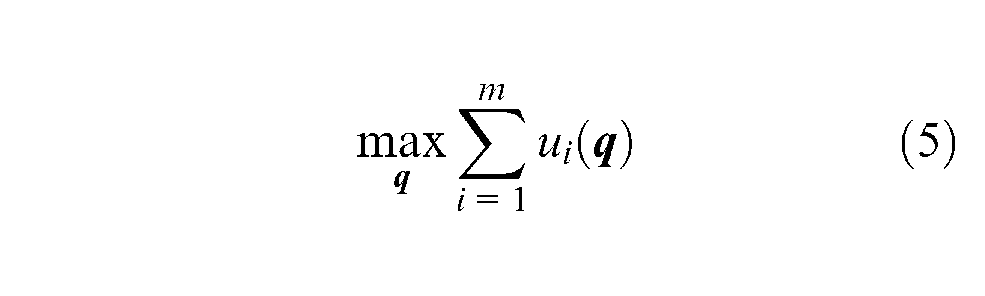
This article first considers the centralized market. Assumed that there is a player, also the decision maker, operating the entire market and controlling each firm (assumed the total amount of firms is
with feasible set
Variational inequality theory provides us with a tool to formulate a variety of equilibrium problems from economics, finance, optimization, and game theory. In the case, where a certain symmetry condition holds, the variational inequality problem can be reformulated as an optimization problem. In this article, variational inequalities are used to express the decision equilibrium state of different DP firms with the free competition. Accordingly, the equivalent variational inequality of equation (5) is given as
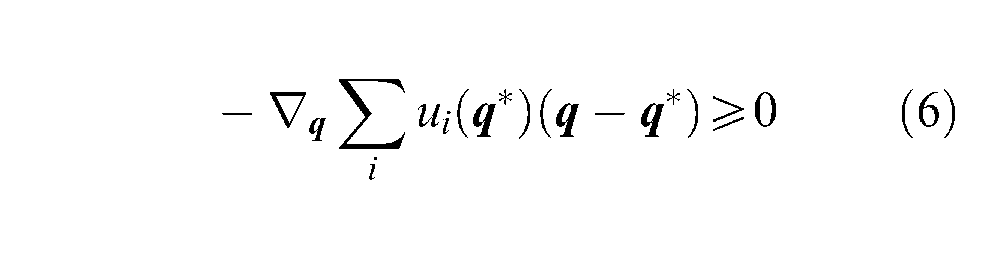
where
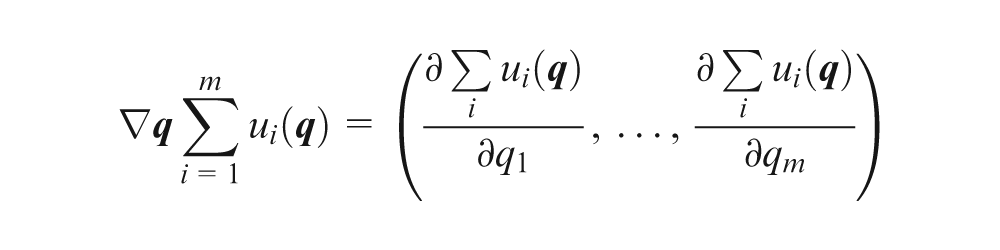
subjects to the same constrains as equation (5).
Obviously,
Production planning in DP
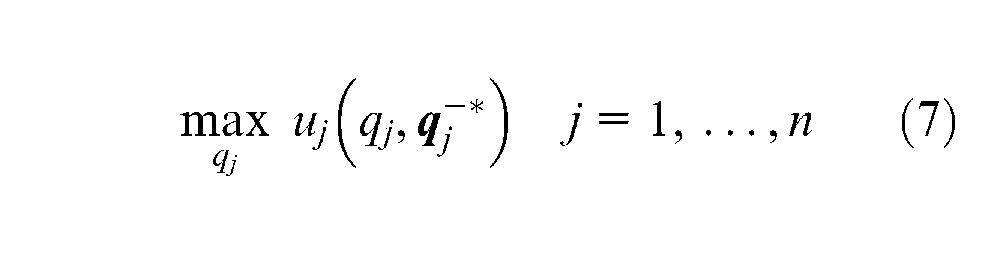
Unlike the CP, all the firms in the market are completely competitive in the DP. Everyone is only interested in making his own production plan to maximize his profits. Assumed that there are
where
For each firm
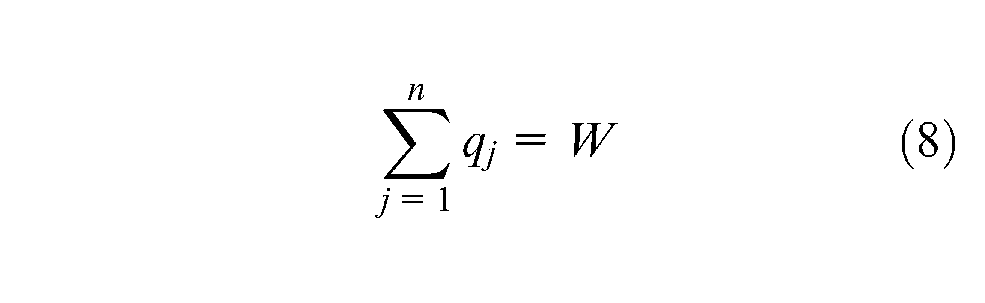
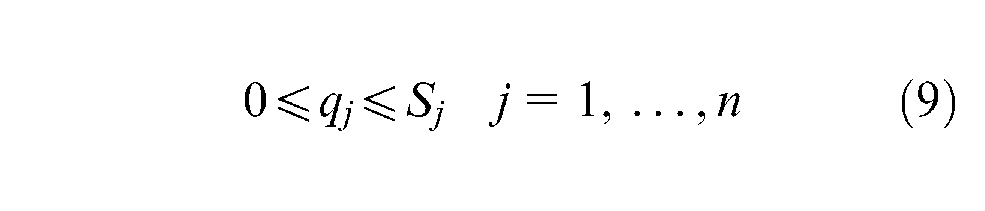
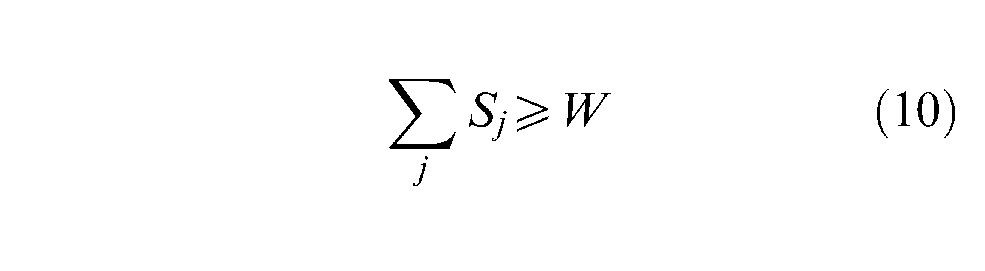
The objective function is to maximize the profit of each firm. The meanings of equations (8)–(10) are similar with that of equations (2)–(4).
Defining
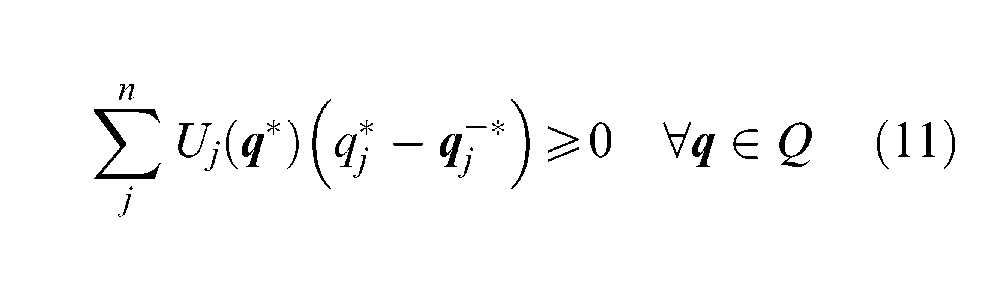
subject to equations (8)–(10). And
Bilevel programming model for production planning
Stackelberg game among firms
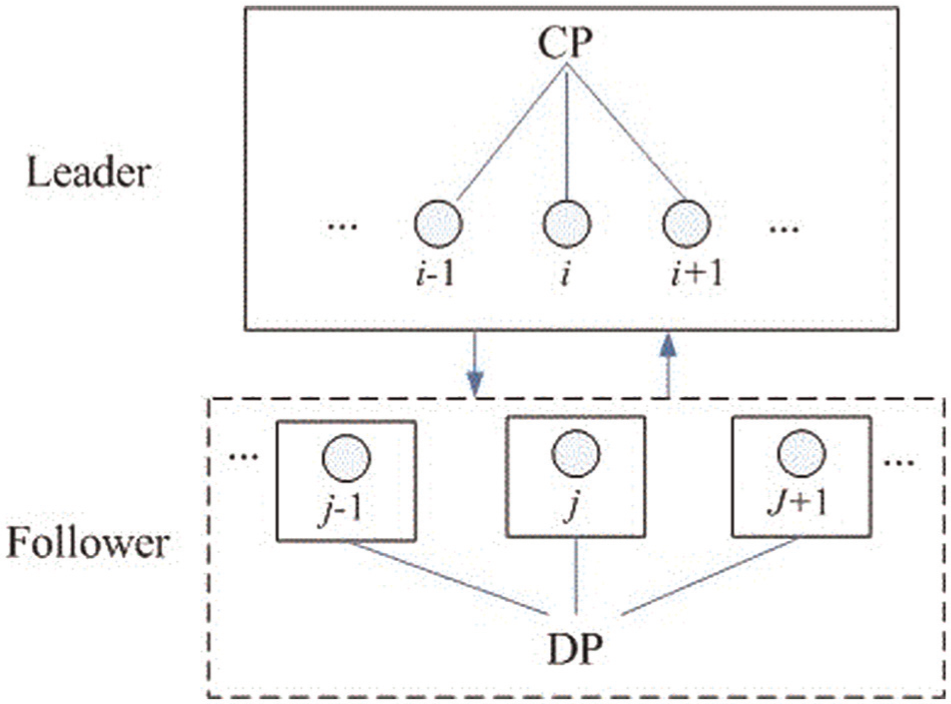
In the market, there always exist both DP and CP firms. CP firms can be regarded as being controlled by a dominant member or a big enterprise group while DP firms as small separated ones. CP firms have a significant impact on the industry and usually controlled by the government who may wish to optimize system performance by, for example, determining the minimum protective prices or the ceiling prices. The government has the ability to learn the manner of reaction of the other players by observing the industry development. Hence, CP firms could know enough knowledge of the reaction of the others, whereas the DP firms are not. In order to understand how and to what extent CP firms affect DP ones, the above-mentioned problem can be described as a Stackelberg or a leader–follower game where CP firms are acted as the leader and DP firms are acted as the followers. Figure 1 is depicted to state this problem.
Leader–follower relationship.
Now suppose that CP firms can get to know the response of DP firms to his/her decision. Based on the reaction, CP firms adjust their production plan and find the best measure to optimize the system performance.
Define
Assumed that the upper level objective function of CP firm is
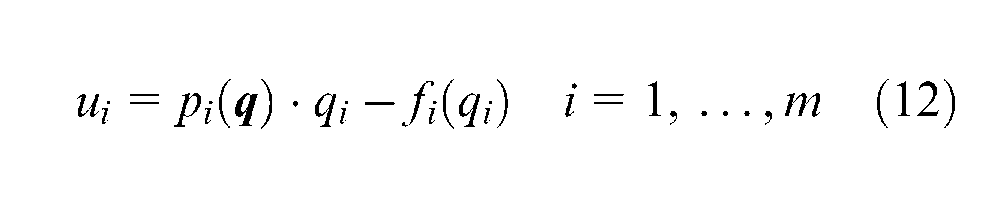
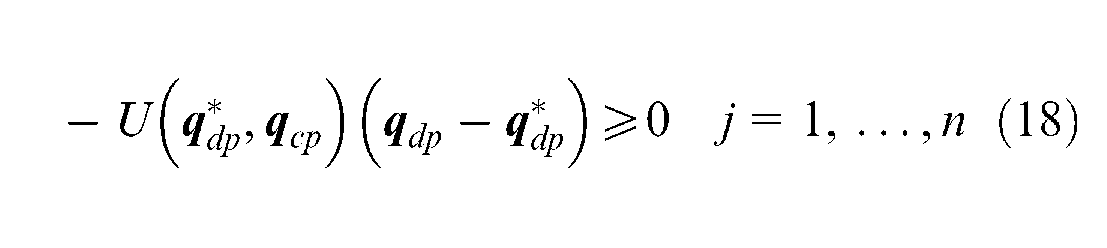
The lower level objective function of DP firm is
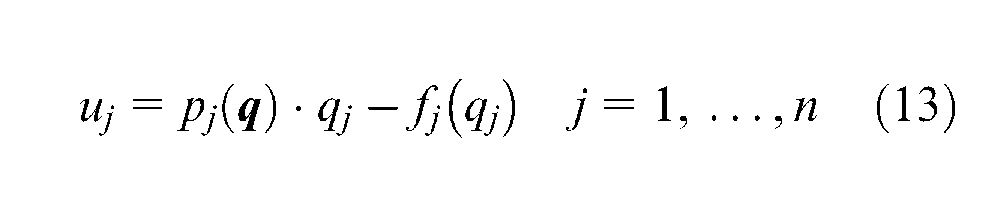
Given that the market demand is fixed, this leader–follower network game can be described in the following.
The upper level with
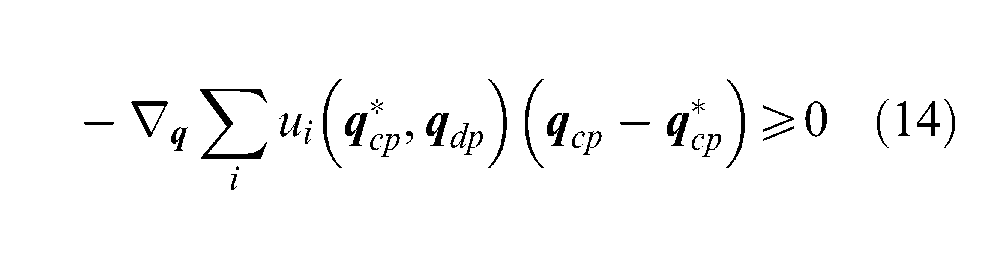
subject to
where
subject to
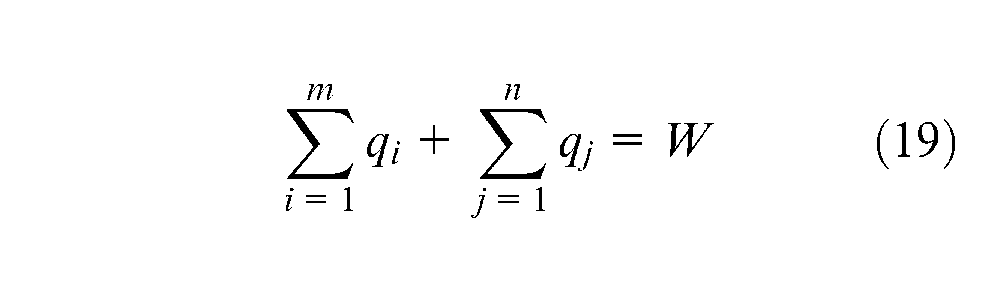
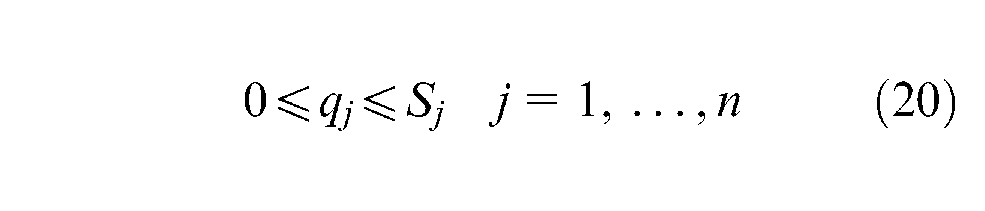
where
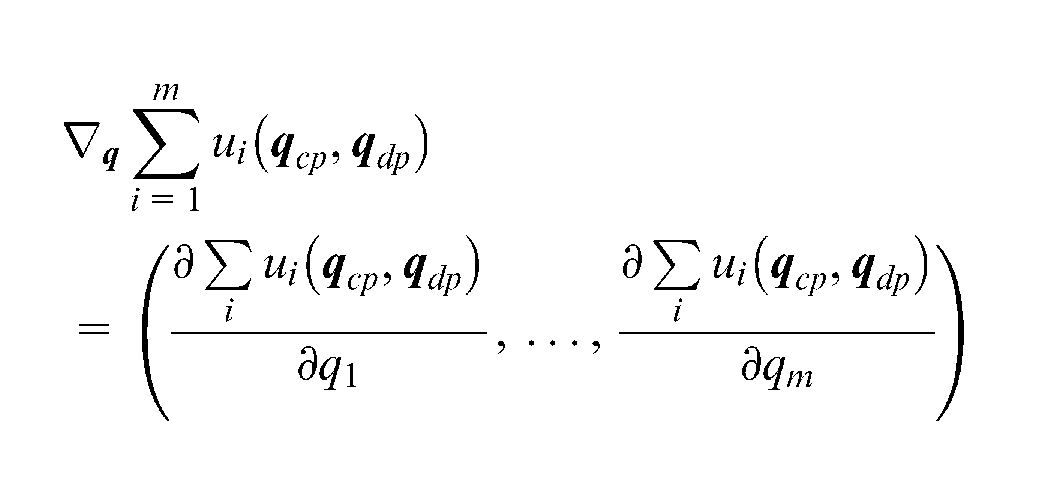

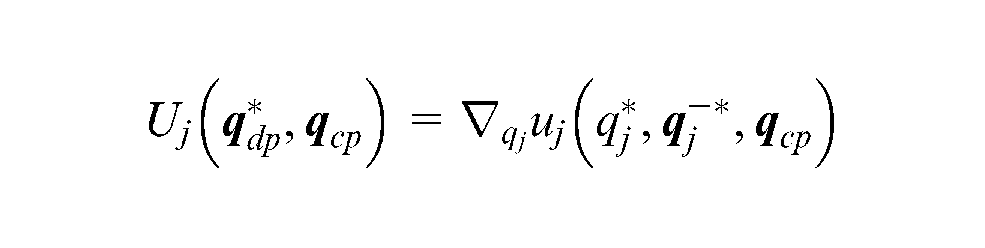
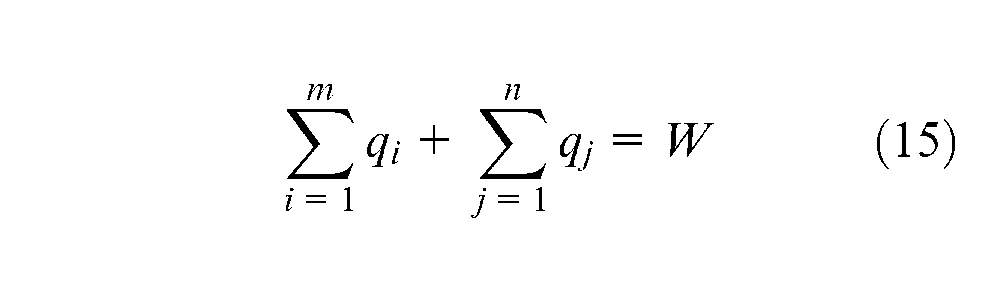
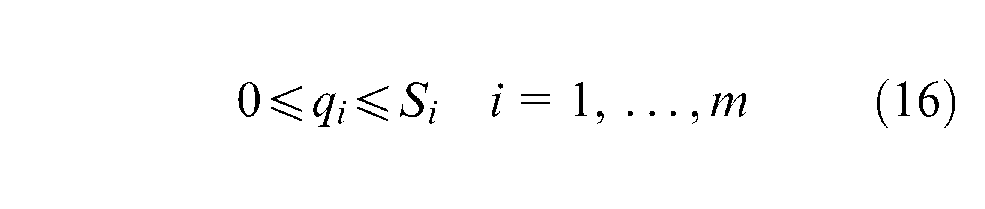
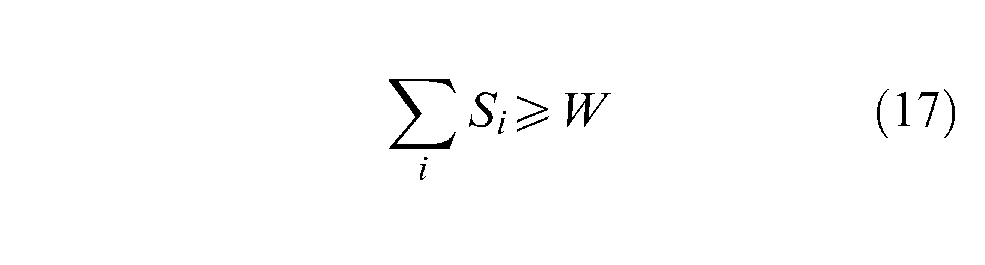
The upper level variational inequality problem aims to maximize the total profits of
In the constraints,
For a given upper level variable, there is a follower’s response, which means that the lower level decision variables are the functions of upper level variables. This function
Solution algorithm based on sensitivity analysis
It is difficult to solve the bilevel programming models for several reasons. First, the bilevel programming problem is a non-deterministic polynomial (NP)-hard problem, Ben-Ayed et al. 30 pointed out that even a very simple bilevel problem is still a NP-hard problem. The nonconvexity is another reason that results in the complex of the solution algorithm; even though both the upper and lower level problems are convex, the whole bilevel problem is still possible to be a nonconvex one. The nonconvexity nature indicates that even if we can find the solution of the bilevel problem, it is usually not global optimum but local optimum. Although solution algorithms for the bilevel model have been developed, such as the sensitivity analysis-based algorithm (SAB), 31 the SAB method needs large computation of the inverse of matrix, and it is not suitable to solve the large network. Therefore, a difference-based method is used to solve the model in this article.
The difficulty in solving the bilevel programming problem lies in how to describe the forms of the response function, that is, the changes in equilibrium production quantities of CP firms caused by the disturbances of DP firms’ decisions. It is difficult to evaluate the changes in the equilibrium production directly because of the implicit, nonlinear functional form of equilibrium production quantities.
32
A good idea is to use the linear function to approximate the nonlinear function of equilibrium production quantities at iteration
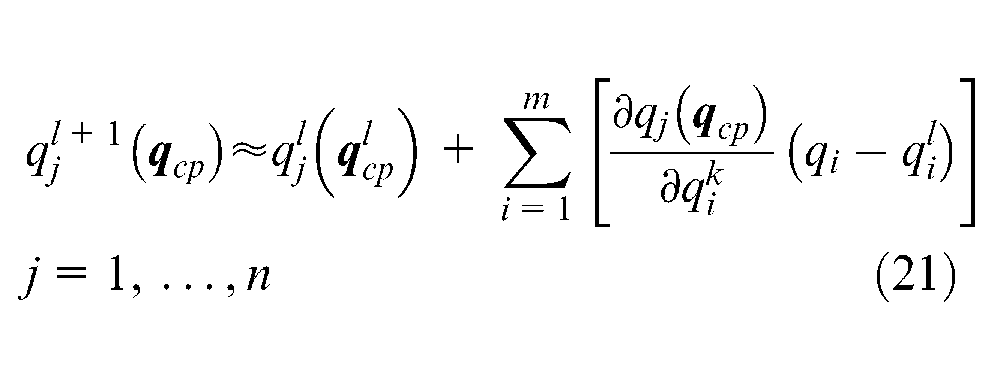
Although some common methods, such as sensitivity analysis–based method, can be used to obtain the response functions under certain strong assumptions approximately, its computational expense usually becomes unendurable or even impossible as the problem’s scale increases. Here, the difference
When equation (14) is put into the objective function of the upper level problem, the upper level problem can be changed into a nonlinear optimization problem, which can be solved by known methods, such as outer approximation algorithm, penalty function algorithm, and so on. Then, according to the optimal production strategy of DP solved in upper level problem, the lower level problem can be solved again and new equilibrium production quantities of CP are obtained. Then, a new optimal production strategy of DP can be obtained by repeating the above-mentioned basic idea. After some iteration, the optimal solutions for bilevel programming model can be obtained. The solution algorithm can be stated as follows:
Step 1. Initialization. Determine an initial production value
Step 2. Solve the lower level problem. Solve the lower level problem based on given
Step 3. Derivative calculation. Calculate
Step 4. Solve the upper level programming. Put equation (21) into the objective function of the upper level problem and then obtain a new production quantity
Step 5. Convergence. If
Numerical example
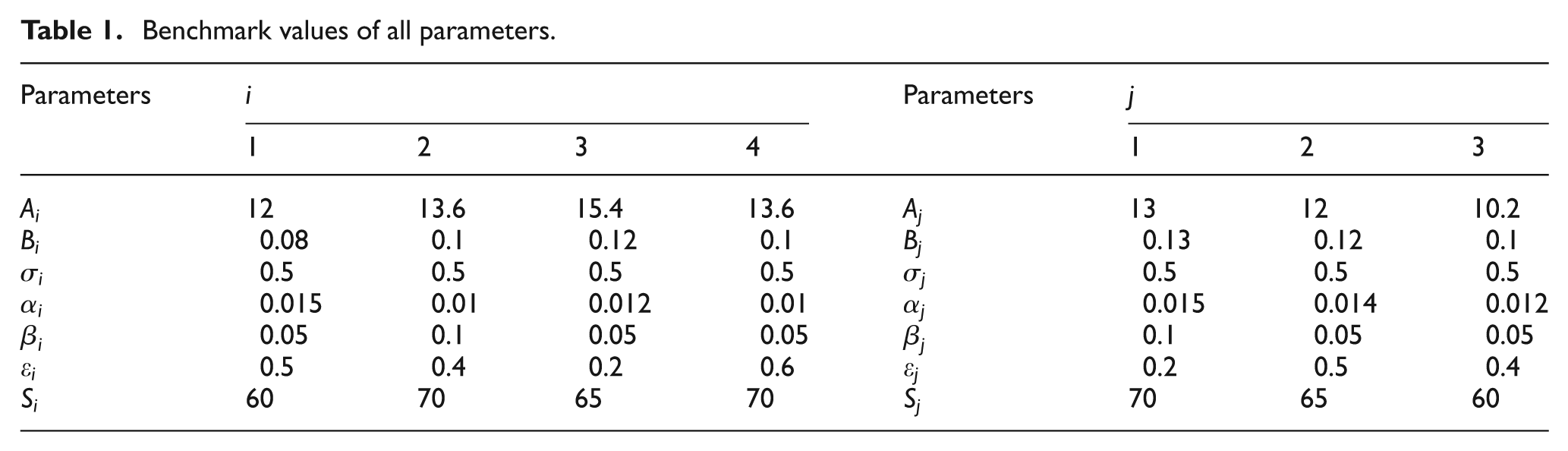
Parameters for the model
In this section, a simple numerical example is presented to illustrate the applications of the model and algorithm proposed in this article. The numerical example is indeed very weak, and the coefficients are also artificial, which should be identified from the observation of actual behaviors of customer samples. However, it is reasonable when the example is used to show the algorithm process and feasibility.
The price function is given in the following equation
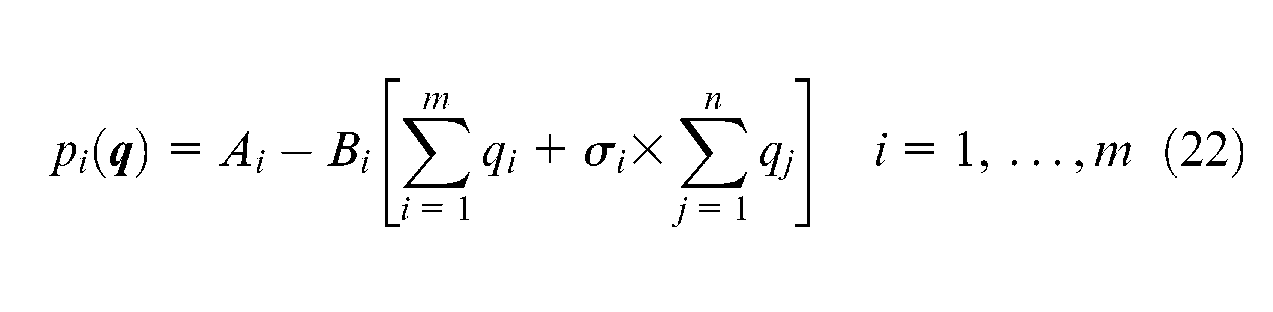
which means that the price of a product is the inverse function of the production.
The production function is given in equation (23) adopted as that in the study by Nagurney 33
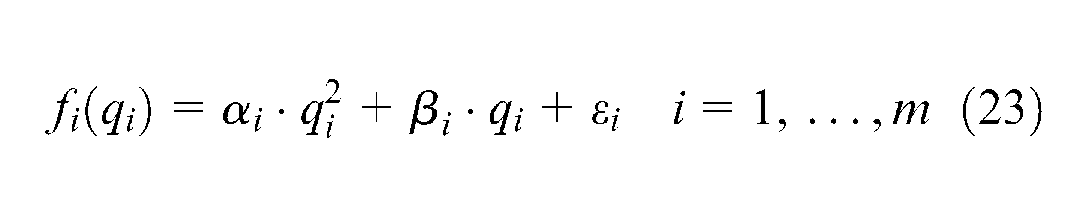
which means that the cost of producing the product is a nonlinear function of the production
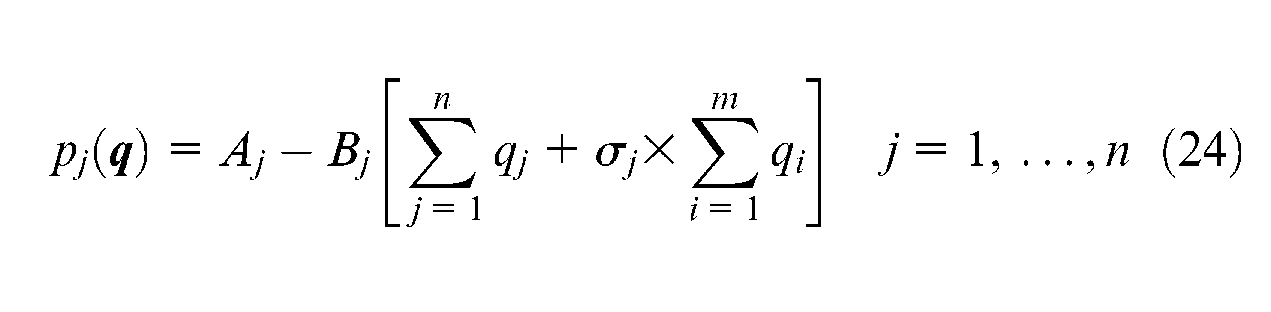
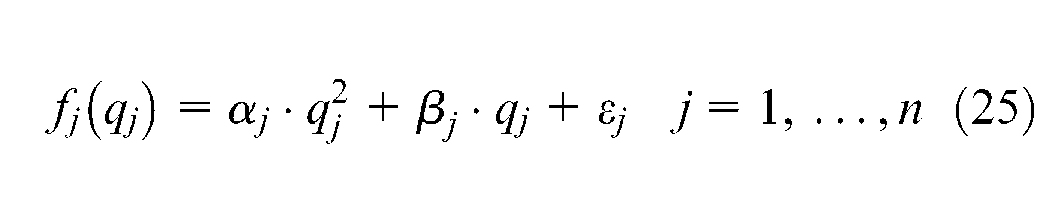
where
Considering that the market demand has a fluctuation as follows
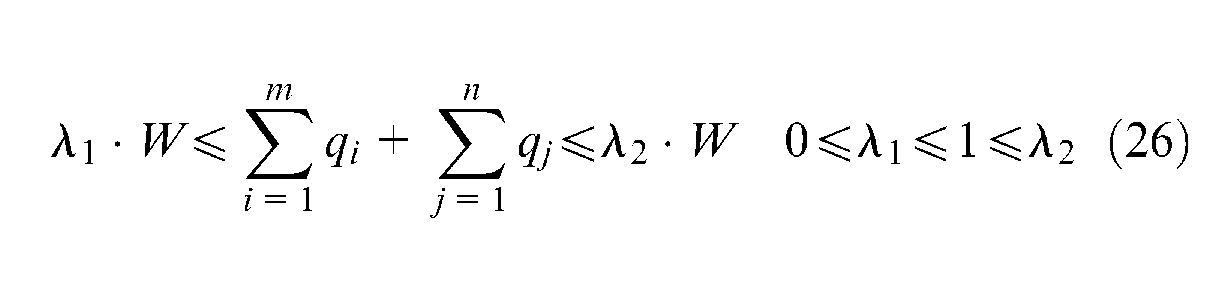
where
Benchmark values of all parameters.
Convergence analysis of algorithm
In order to analyze the performance of the solution method, the convergence of the algorithm is presented in Figure 2. The results indicate that the algorithm can converge to a steady state within eight steps. Based on the algorithm in section “Solution algorithm based on sensitivity analysis,” the first iteration step is given as follows:
Step 1. Initialization. Determine an initial production value
Step 2. Solve the lower level problem. Solve the lower level problem based on given
Step3.Derivative calculation. Calculate
Step4.The convergence is not satisfied, go to step 2. After eight iterations, the optimization solution is obtained.
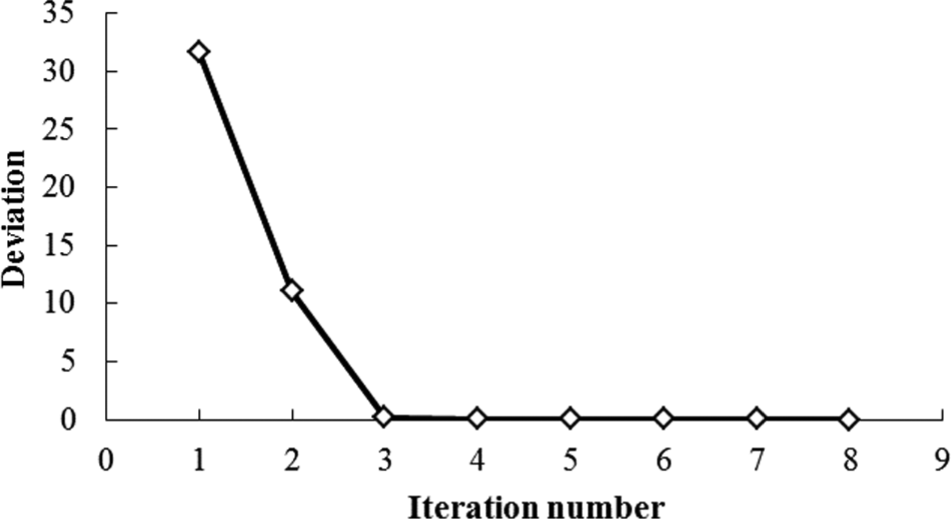
Convergence of the algorithm.
Statistical analysis with the variation of CP firm parameters
In the upper level, all firms act as cooperative partners and aim to maximize the total system profits. However, in the lower level, all firms are competitive and aim to maximize their own profits. The upper level decision is authoritative and affects other decisions. Therefore, the production decision effects of CP firms on the profits of both CP and DP firms are analyzed in this section.
Based on the standard values of parameters in Table 1, the following four parameters in the upper level are chosen
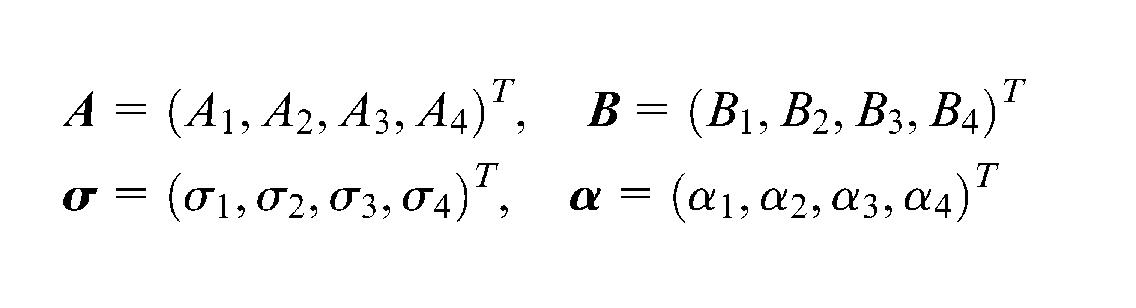
Next, how the upper and lower level profits change with each vector parameter increasing or declining by 5% of the benchmark value is analyzed. The left and right sides of the vertical axis in Figures 3 and 4 are the objective function value (OFV) or the profits of upper and lower levels.
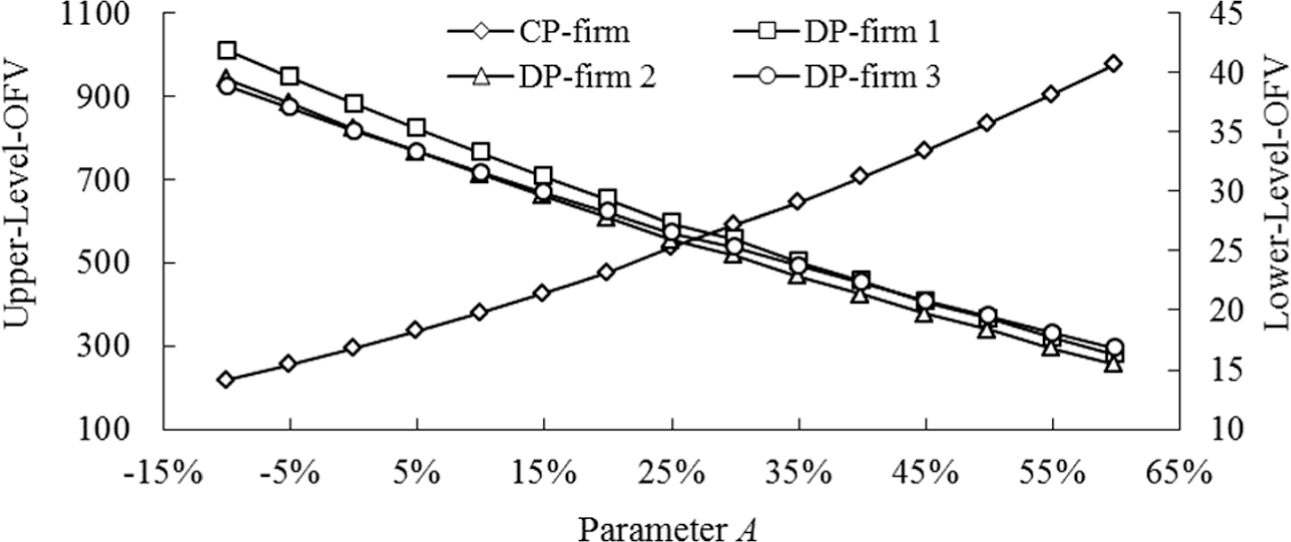
Profit variation of upper and lower levels with parameter
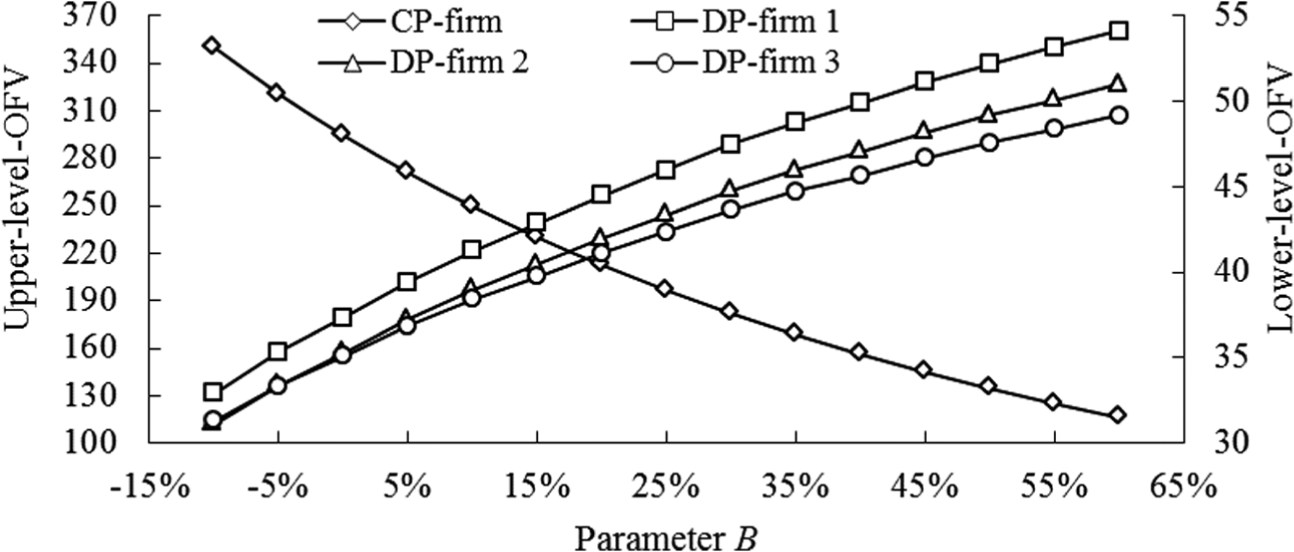
Profit variation of upper and lower levels with parameter
Generally, parameter
Parameter
Figures 5 and 6 depict how utilities of both levels change at different levels of the marginal price parameter
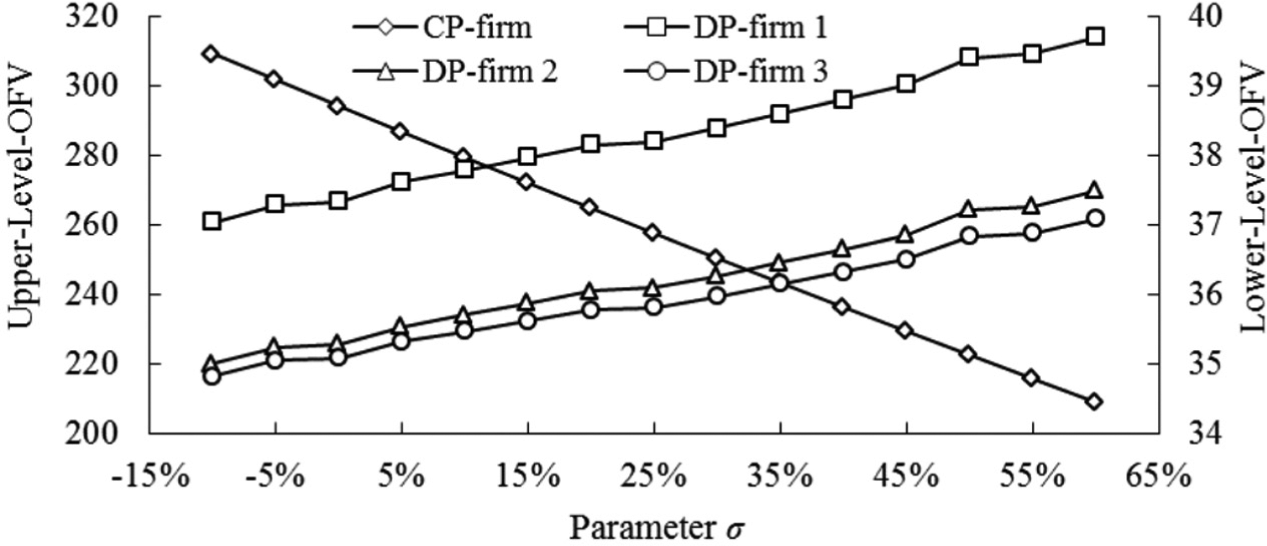
Profit variation of upper and lower levels with parameter
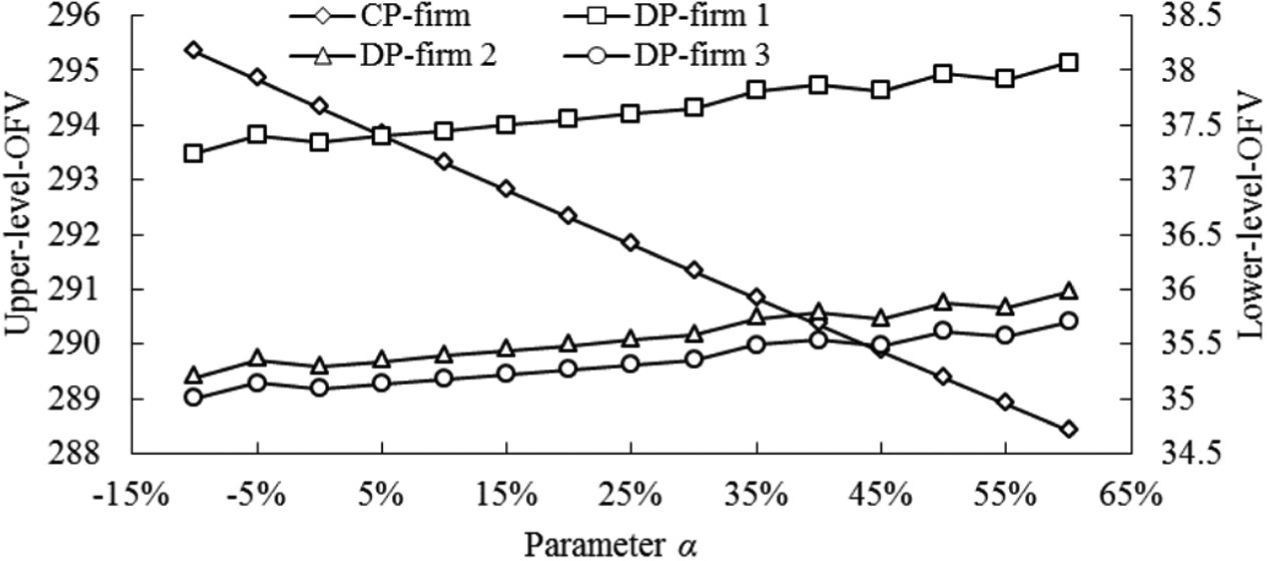
Profit variation of upper and lower levels with parameter
Conclusions and prospects
How to determine the optimal production decision in the competitive market is an important problem confronted for all firms. In this article, a class of case in the real production market where both DP and CP exist with competition and cooperation is analyzed. A leader–follower production decision model is developed to describe the CPs and DPs and to determine the optimal production strategy. The effects of dominant firms in the CP on that of in the decentralized one are considered. In order to solve this complex model of the production firm network, a sensitivity analysis algorithm is proposed. It is concluded that the centralized production decision has great effects on decentralized firms and the whole industry. The increase of the market share of CP firms will increase the total industry profits. And the increase of the marginal price of CP or DP firms will decrease the profits.
There are several directions for future research. First, this article only considers the single production decision. A multidepartment decision problem with multiple equilibrium behaviors will be very interesting. In addition, it is assumed that the production decision is given in ideal conditions, and the cases with the demand disruptions or emergent events are challenging. At last, the cost functions and parameters should be analyzed further based on the real data.
Footnotes
Appendix 1
Declaration of conflicting interests
The authors declare that there is no conflict of interest.
Funding
This study was partly supported by Fundamental Research Funds for the Central University (2012JBZ005), Beijing Nova Program (2009A15) and the Program for New Century Excellent Talents in University (NECT-09-0208).