




Abstract
Increasing global competition has forced many manufacturing enterprises (outsourcers) to focus on their core competences and outsource low value-added parts machining activities to suppliers to increase product quality and productivity as well as cut cost. While outsourcers or suppliers coordinate their decisions with partners for parts machining outsourcing, the present problem is how to timely achieve the most beneficial portfolio with the goal of gaining mutual benefit in a game structure. Based on the investigation conducted in Weinan National High-New Technology Zone of China, this article identifies several typical outsourcer–supplier Stackelberg game models for the order coordination of parts machining outsourcing and investigates one scenario of them in detail. Then, to solve the established bi-level programming model corresponding to the Stackelberg game, a solution procedure based on modified imperialist competitive algorithm is proposed. Finally, a case from a printing machinery enterprise is analyzed to validate the proposed model. This research is expected to improve the quality and effectiveness of coordination decision-making in parts machining outsourcing.
Keywords
Introduction
Under a social manufacturing paradigm, 1 the high variety of competitive global environment has forced manufacturers to focus on outsourcing and integrate their distributed partners into a productive service community, in which each member concentrates on their core manufacturing capabilities. As Deavers 2 stated, several factors are at work and simultaneously that are likely to increase outsourcing: rapid technological change, increased risk and the search for flexibility, greater emphasis on core corporate competencies, and globalization. Manufacturing outsourcing is widespread on a large number of cases from telecommunications to aircraft manufacturing. 3 Bettis et al. 4 conducted an empirical research on firms in North America, Europe, and Asia and found that properly understood and managed as an overall part of strategy, outsourcing can aid firms’ competitiveness. Actually, besides third party logistics, 5 equipment maintenance, 6 and other industry production service, 7 as one major class of manufacturing outsourcing activities, parts machining outsourcing (PMO) has been regarded as a common approach of collaborative production in both large and small manufacturers from a variety of industries, for instance, laser drilling outsourcing 8 and casting finishing outsourcing. 9 According to a survey of plants in the 21 three-digit manufacturing industries in the US metal working sector, 10 approximately five out of eight plants reported that they regularly outsourced machining work. There is a significant phenomenon that machining process would be outsourced if the machining workshop cannot handle it or considering to decreasing the special cost of running it under the context of service-oriented machining as soon as accepting a manufacturing task. 7 Indeed, according to the investigation conducted in Weinan National High-New Technology Zone of China, about 7 out of 10 manufacturers have focused on outsourcing some of their parts machining. In this article, for the sake of simplicity, the nomenclature outsourcer–supplier is used to represent the machining service provider and demander in PMO, which is synonymous with the term outsourcer–outsourcee used in some literature.
PMO is a kind of outsourcing that outsourcer purchases manufacturing/machining services (i.e. deep-hole drilling, milling, and non-traditional machining) rather than finished parts or products from outside suppliers/partners. That is to say, the parts formerly finished inside the outsourcer individually are now achieved by the collaborative production of outsourcer and supplier. Under this circumstance, outsourcing decision making, 11 a process of deciding how to coordinate order including quantity, price, production interval, and delivery batches between supplier(s) and outsourcer(s), is becoming recognized as an important component of supply chain strategy. Coordination between two different business entities is an important way to gain competitive advantage as it lowers supply chain cost. 12 A good coordination between outsourcer and supplier is of great significance because the failure of strategy may result in delivery delay and poor-quality, thus leads to bad customer service. It is therefore too important for outsourcers and suppliers to coordinate with each other. An investigation 13 was conducted on two levels, vehicle manufacturers and suppliers, and the results suggested that the employment of proper coordination mechanism can reinforce the existing infrastructure of the firm to achieve the policy objective. It should be pointed out that outsourcing decision discussed here is a channel coordination problem between supplier and outsourcer rather than between the superior (i.e. the supply chain manager) and the subordinate (i.e. the order allocation planner) that inside the outsourcer. 14
Actually, many scholars have considered channel coordination model from different aspects in the supply chain including pricing, 15 production, 16 inventory management, 17 logistics, and advertising. 18 Various coordination mechanisms have been proposed to improve supply chain profits or performances, such as quantity discount, credit option, buy back/return policies, quantity flexibility, and commitment of purchase quantity. 12 For instance, Kim 19 discussed how the manufacturer shall determine the in-house processing level of semi-finished goods and the quantities outsourced to two contract manufacturers with different capabilities and prices. Hsieh and Wu 20 developed three coordination models with capacity allocation, ordering, and pricing decisions in a supply chain with demand and supply uncertainties. The literature survey reveals that mathematical programming models including linear programming, 21 mixed integer programming, 22 and goal and multi-objective programming 23 are commonly used modeling techniques. A significant shortcoming of all these models is that they regard only one business entity’s individual profit and management problem without considering any interaction among different business entities, a situation of which the outcome depends on the choice made by every entity.
To model these interactions, other scholars have studied the coordination problem with game theory. Yugang et al. 24 discussed order intervals and pricing decisions in one manufacturer–multiple retailers relationship, which is modeled as a Stackelberg game. Esmaeili et al. 15 modeled non-cooperative and cooperative games for the seller–buyer coordination to optimize advertising and inventory decisions while the demand is a non-linear function of selling price and marketing. Sadigh et al. 25 investigated two non-cooperative games in a multi-product manufacturer–retailer supply chain and formulated models using bi-level optimization approach to find the equilibrium wholesale and retail prices, advertising expenditures, and production policies. Sun et al. 26 proposed a leader–follower production decision model to describe the centralized patterns and decentralized patterns of firms producing a homogeneous kind of products and to determine the optimal production strategy. It can be drawn from the literature that, at present, most existing works are focused on the coordination problem in the purchase or sale phase of the supply chain rather than inside the manufacturing sector, especially in machining outsourcing. The outsourcer–supplier interaction in the PMO coordination is more complicated than these kinds of seller–buyer models, because machining outsourcing is a process of collaborative production by both outsourcer and supplier to finish complex parts or products.
Therefore, to help practitioners with order coordination in PMO, this article identifies six game models to describe the existing different order coordination decision-making scenarios in PMO. One typical coordination model (one supplier as leader and multiple outsourcers as followers) from the six scenarios is further investigated in this article as an extension of our former study. 27 Supposing the supplier and outsourcers have been determined, an optimal solution for PMO order coordination is desired to make both supplier and outsourcers achieve their own satisfied profit in a non-linear cost and non-cooperative game structure. First, Stackelberg game is applied to model this barging interaction between multiple outsourcers and one supplier. Second, the game model is formulated through a bi-level programming, which is a non-deterministic polynomial-time (NP)-hard problem from the mathematic perspective. Then, an evolutionary global search algorithm is introduced to solve the programming problem. Finally, the PMO order is coordinated among the supplier and multiple outsourcers based on the consideration of cost and production plan constraints. This article also validates the proposed model with realistic data collected from a leading printing machinery enterprise. A series of test examples and sensitivity analysis have shown the practical viability of this approach to allow the decision makers to identify the optimal solution within a reasonable computation time.
Problem description
The PMO relationships could be described as follows: the outsourcer(s) outsources a type of parts (usually in a semi-finished form) machining task at different order quantity, price, production interval, and delivery batches to supplier(s) who then performs the task at a certain devoted production capability level. According to the investigation conducted from various areas of organization impacted by the decision such as management layer, sales department, quality assurance department, and assembly line of manufacturing enterprise in Weinan National High-New Technology Zone of China, three distinctive characteristics in the coordination process of PMO between outsourcer(s) and supplier(s) are concluded as follows:
The outsourcer–supplier game is a typical Stackelberg game. In terms of the bargaining power, the outsourcer dominates the supplier in a conventional way, whereas sometimes power has shifted from the outsourcer to the supplier.
Five decision factors including pricing strategy, order quantity, delivery batch, production capability, and production interval are the frequent arguments that greatly affect the outsourcing decision. Here, it must be pointed out that the production capability of a supplier refers to the equipment number devoted for the PMO, and it quantified how much the supplier manufactures at a certain time.
In terms of the player number in the outsourcer–supplier Stackelberg game, there are two basic forms: one-follower and multi-followers, which could be further divided into two situations, namely, cooperate and non-cooperate among followers in the lower level of Stackelberg game.
In general, six scenarios of outsourcer–supplier Stackelberg game model could be divided as shown in Table 1. Scenarios 1–2–3 belong to the outsourcer-Stackelberg game, in which the outsourcer holds the leading power in the bargain process. Scenarios 4–5–6 belong to the supplier Stackelberg game, in which the supplier holds the leading power. Scenarios 2 and 5 can be transformed to Scenarios 1 and 4, respectively, by a joint profit function of the followers, which cooperate with each other in the lower level. Scenarios 1 and 4 can be treated as a special case of Scenarios 3 and 6, respectively, when the number of followers decreases to one. Because of the non-cooperative situation in the lower level, Scenarios 3 and 6 are most complicated both from the perspective of the game modeling and computation of equilibrium solution and thus need intensive studies. Scenario 3 was first studied in our former research. 27 The game model of Scenario 3 takes outsourcer as the leader. However, sometimes the leading power has shifted from outsourcer to supplier.28,29 The bargaining powers of suppliers grow larger, which is in accordance with the result of our empirical investigation in the Weinan National High-New Technology Zone of China. The increasing existence of strong suppliers consequently makes the scenario of supplier Stackelberg game occur more often than expected. Thus, the Scenario 6 in Table 1 is further investigated in this article: multiple outsourcers outsource the same type of parts machining task at different order quantity, price, and production interval to a single supplier who then performs the tasks at a certain devoted production capability level and deliveries back at different batch numbers.
Six typical scenarios of outsourcer–supplier Stackelberg games.
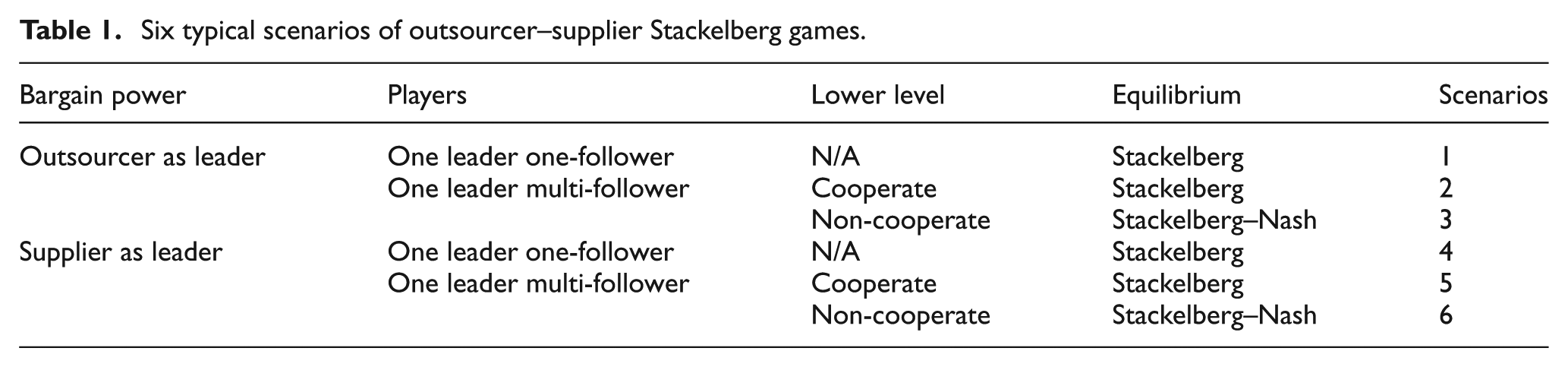
This problem is modeled as a Stackelberg game where the supplier is the leader and outsourcers are followers and formulated through a bi-level programming approach. Due to the NP-hard nature of the bi-level model, a solution procedure based on a hierarchical imperialist competitive algorithm (HICA) is proposed to search the Stackelberg–Nash equilibrium solution.30–32
Assumptions
First, domains of decision variables and parameters such as the logistics and inventory cost per unit are deterministic. Second, the supplier determines the batch size. This is appropriate when setup, inventory and internal storage costs are high for the supplier relative to the outsourcers. Third, a just-in-time (JIT) production mode is considered, outsourcers deliver the finished and outsourced parts every end or start of production interval, and advance or delay in delivery is not allowed once they are confirmed. Finally, supplier bears the inventory cost if the makespan is earlier than the required delivery time, and the cost for supplier is in direct proportion to the time delta between the makespan and the required delivery time.
Cost function and pricing strategy
In reality, tool quantities, staff productivity, and materials determine the production capacity of supplier to handle the allocated order from the outsourcer.
33
That is to say, a supplier’s surplus or reserved capacity is often negotiable. Thus, the average machining cost per unit

On the other hand, increasing competition and market globalization motivate independent firms in different levels of supply chain to coordinate their decisions with the goal of gaining mutual benefit.
25
Thus, a unified pricing strategy is crucial for the justice among the suppliers and outsourcers in the PMO. Under this circumstance, the unit order price

The non-linear cost and price function are fairly common in many models.34,35 Moreover, it is quite practical in our application.
Notations and constraint
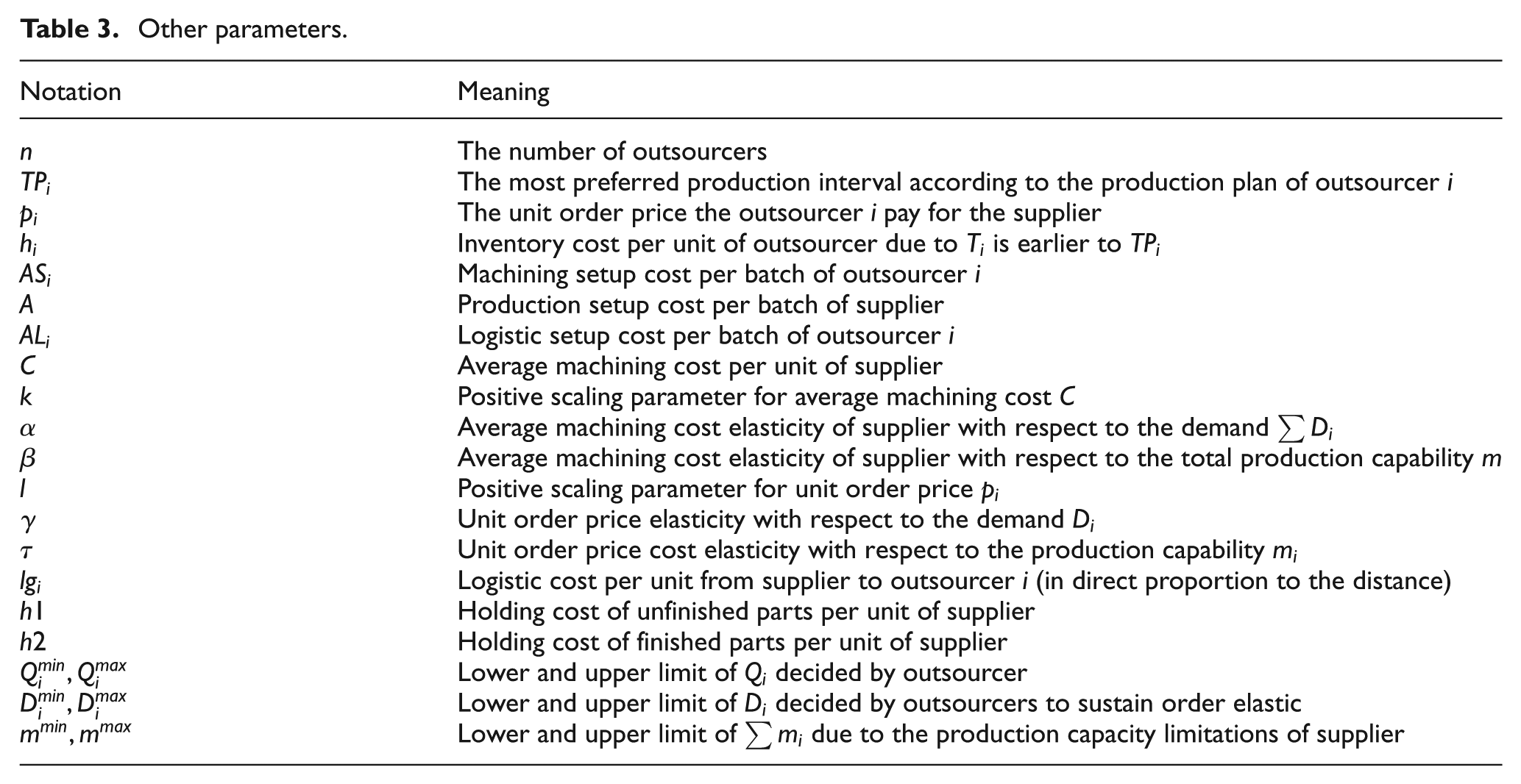
See Tables 2 and 3 for decision variables and other parameters.
Decision variables.

Other parameters.
Stackelberg game model
Interactive coordination mechanism
Figure 1 represents a common form of the supplier–outsourcer interaction process. It is applicable for all the outsourcing coordination scenarios in Table 1. Apparently, PMO is not a simple seller–buyer relationship. In the interaction of the Scenario 6 in Table 1, there is a circulation of negotiation that supplier makes the first move by controlling the common order pricing strategy, delivery batch number, and devoted production capability for each outsourcer, and then outsourcers react through optimizing their own order quantities and production intervals. In other words, the supplier determines unit price, delivery batch number, and devoted production capability for each outsourcer to maximize its profit. Outsourcers in turn determine the optimal production interval and order quantity to minimize their unit order costs.
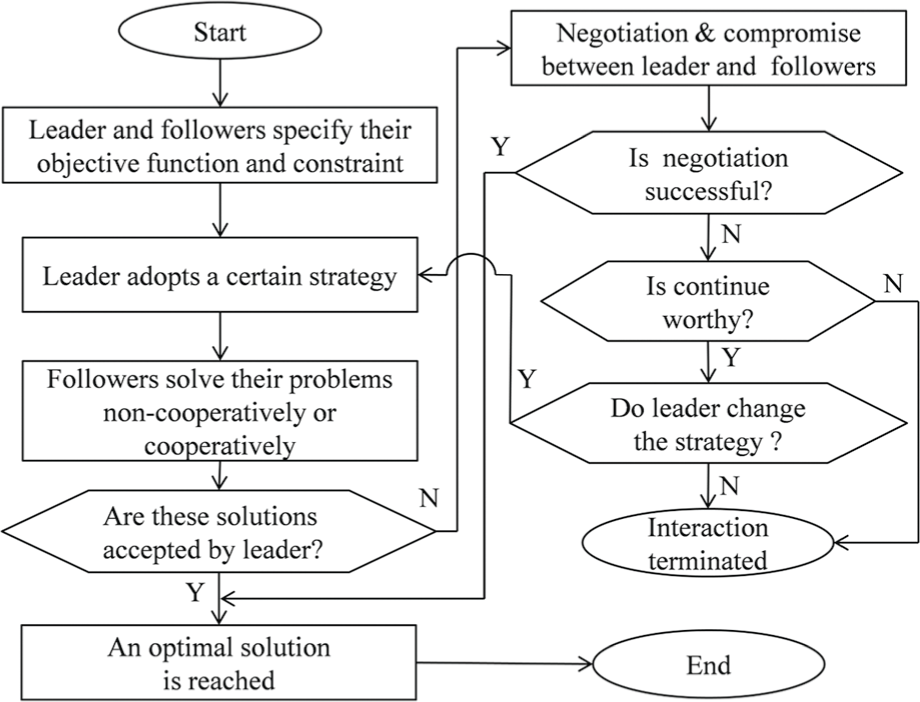
The flowchart of the supplier–outsourcer interaction.
Bi-level programming formulation
Bi-level programming is closely associated with Stackelberg game, which is characterized by two levels of optimization problems where the constraint region of the upper level problem is implicitly determined by the lower level optimization problem. 36 The supplier–outsourcers Stackelberg non-cooperative game model of the Scenario 6 in Table 1 can be formulated as a bi-level programming:
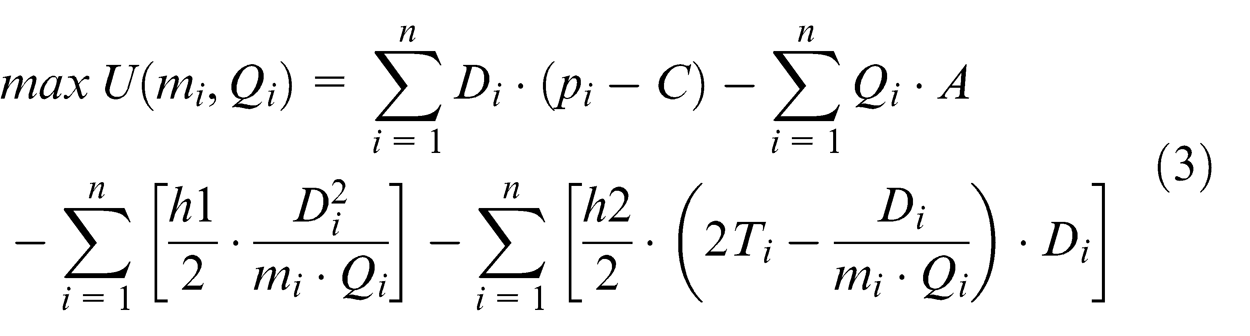
Upper level problem. The supplier’s profit can be calculated as the revenue minus the machining cost, setup cost, and holding cost of both unfinished and finished parts, given as follows
subject to
Lower level problem. The outsourcers’ objective is to minimize the unit order cost that results from the outsourcing price charged by supplier plus the logistic cost, setup cost, and holding cost, given as follows
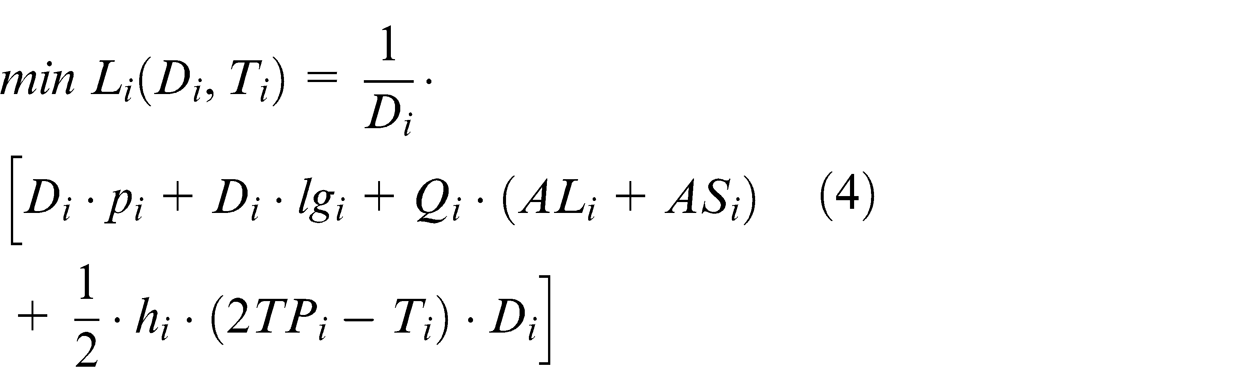
subject to
The optimal solution of this structure is called the Stackelberg–Nash Equilibrium, which has been discussed by Sherali et al. 30 and Baoding. 31
HICA-based solution
Due to the computational difficulties such as non-convexity and NP-hardness for solving the practical bi-level programming problems, it is not easy to verify the conditions on the convergence of solution algorithm, and thus, we usually employ the iterative 37 or computational intelligence methods such as genetic algorithm (GA) and particle swarm optimization.31,38,39 They exploit a population of potential solutions to probe the search space synchronously. Each member of the population adapts its position toward the most promising regions of the function’s landscape by its fitness value. Iteratively, the optimal (Stackelberg–Nash equilibrium) or near-optimal solution of the bi-level programming can be obtained. It should be noted that the resulting solutions based on the heuristics are sometimes near optimal but often optimal.40,41
In order to obtain the global optimal or near-optimal solution of the proposed bi-level programming model, several elaborated solution procedures to tackle the NP-hard nature based on a heuristic process and some innovative computations are proposed. The procedure initializes with a guess of the optimal upper level decision values and moves this initial solution via a heuristic process to achieve a new solution. By solving the lower level problem, the optimal (Nash equilibrium) or near-optimal reaction is obtained and returned to the upper level for each iteration. This procedure continues until an optimal (Stackelberg–Nash equilibrium) or near-optimal solution is obtained for the bi-level problem. In this section, an HICA is developed based on the basic imperialist competitive algorithm (ICA) 42 by using some additional procedures and mechanisms to reach the high-quality solutions.
ICA is a novel intelligent global search algorithm inspired by imperialistic competition. It has shown good viability in both convergence and global optima achievement in many applications.43,44 ICA starts with a randomly initial population of individuals, each called a country. Some of the most powerful countries are selected as imperialists and the rest form colonies, which are then divided among imperialists based on imperialists’ power. Imperialists with their colonies form empires, among which competition begins and colonies move toward their relevant imperialists. In the competition, weak empires collapse and powerful ones take possession of more colonies. Finally, the most powerful empire will take the possession of other empires and wins the competition. Some basic steps that called in HICA shown in Figure 2 will be discussed in the following.
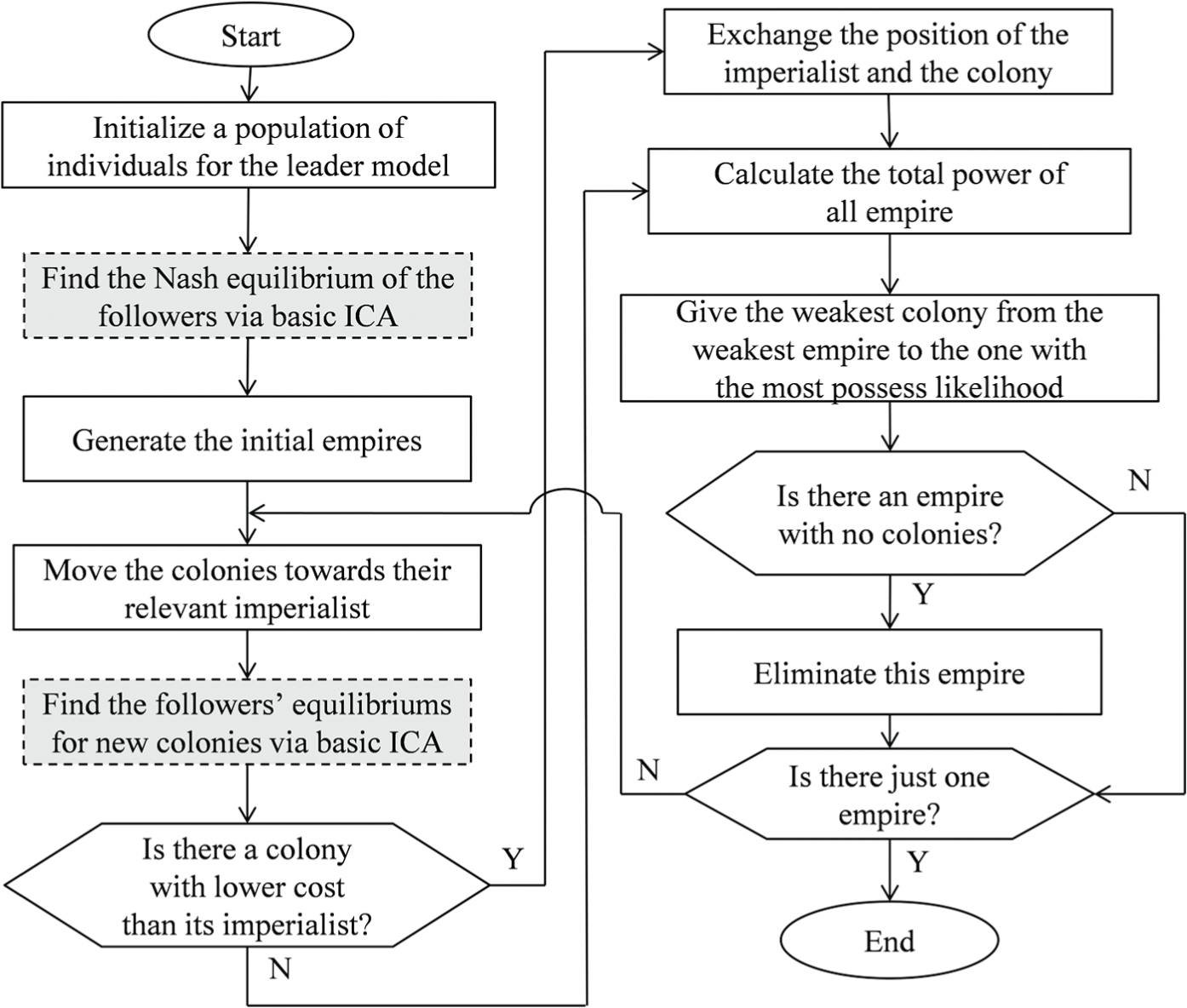
The flowchart of HICA.
Solution representation
Each individual is considered as a
Objective function evaluation
The cost of a country is evaluated by the function

In the lower level, all the followers are of equal status and they must reveal their strategies simultaneously. For all followers, a so-called Nash equilibrium solution is defined as any follower cannot improve his own objective by altering his strategy unilaterally. The problem of computing the Nash equilibrium remains a challenging task up-to-date.38,45,46 John Nash 47 proved that every game has a Nash equilibrium in 1951. However, an exact algorithm that computes a single Nash equilibrium is unsatisfactory for many applications. Even if the resulting equilibrium is perfect, or satisfies some other criterion posed in the literature on refinements of Nash equilibrium, we cannot eliminate the possibility that other, more salient equilibrium exists. 45 The problem of computing a Nash equilibrium can be formulated as a global optimization problem, which allows us to consider computational intelligence methods.38,45 Thus, to achieve this equilibrium point, the cost value for each individual can be calculated as follows

where
Creation of initial empires
After calculating the objectives of all individuals, the

where

The number of colonies belongs to the jth imperialist are directly proportionate to its power

Assimilation
The imperialists improve their colonies by moving all colonies toward them. Each colony moves by

This step plays a crucial role in both convergence rate of the algorithm and the probability of falling into local optima. Usually, to explore different points around the imperialist, a random amount of deviation
Here, to further improve the performance of the algorithm for solving Stackelberg games, an adaptive controller (AC) shown in Figure 3 is adopted to adapt the movement deflection angle
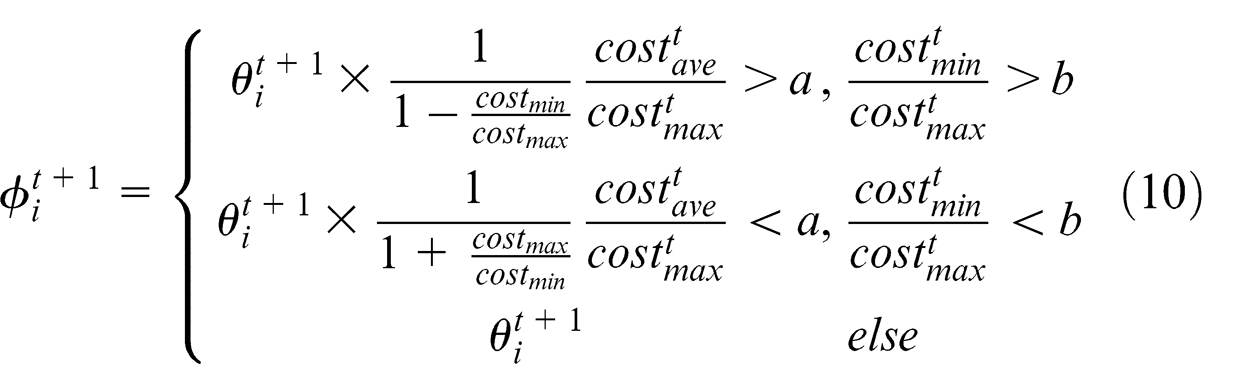
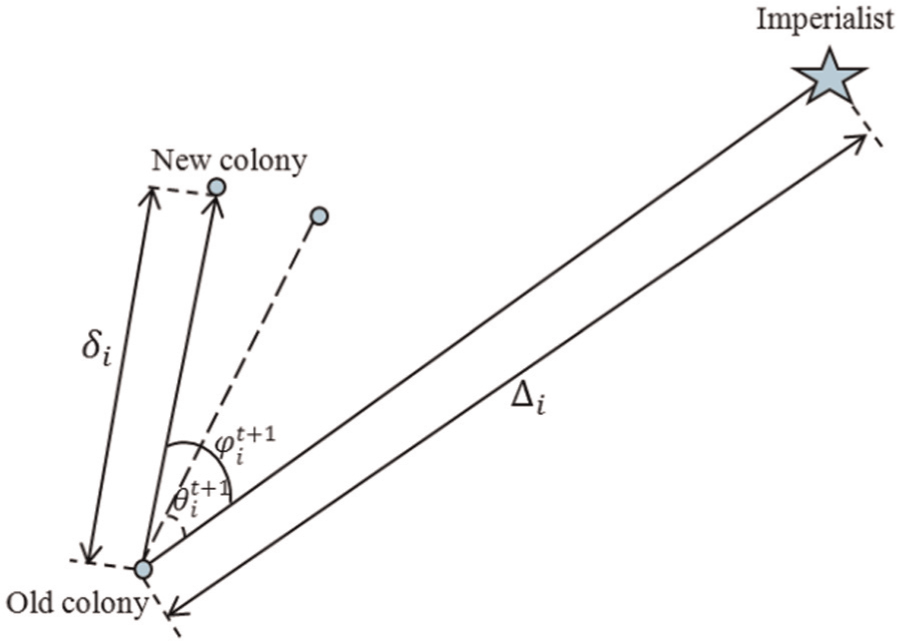
Illustration of moving colonies toward their related imperialist by an adaptive controller.
where
Exchanging the positions of the imperialist and one colony
While moving toward the imperialist, one colony might reach to a position with lower cost than the imperialist. Under this circumstance, the colony and the imperialist exchange their positions, and the algorithm continues with the new imperialist.
Total power of an empire
The ultimate power of an empire is sum of both the power of its imperialist and its colonies and can be modeled as follows

where
Imperialistic competition
All empires attempt to take the colonies of other empires under their governing. This imperialist competition results in an increase in the power of more powerful empires and a decrease in the power of weaker ones. To model this fact, one of the weakest colonies of the weakest empire is selected and other empires compete to get the colony in each iteration. To start this competition, first, the probability of possessing all the colonies by each empire is calculated considering the total cost of empire

where

Let a vector
Based on the above discussion, Figure 2 represents the flowchart of the HICA adopted to solve the Stackelberg game. The other basic calculation and steps are the same with original basic ICA and not discussed detailed here for the concise reason.
A demonstrative case
A PMO case between supplier Weinan Precision Machinery Co., Ltd (WPM) and its outsourcers in Weinan National High-New Technology Zone of China has been chosen to illustrate how the model works. WPM is a small-scale enterprise in Printer Machinery industry but has an outstanding manufacturing performance and quality on specific gear boxes machining. Many printer manufacturers in Weinan prefer to outsource the box machining to WPM due to its technology-specialization and cost-effectiveness advantages. Thus, here, the supplier WPM is taking the leading bargain power and its outsourcers are the followers of the PMO coordination. According to the outsourcing records of last year provided by WPM, three common outsourcers (i.e.
Supposing that all the three outsourcers selected by WPM agree to coordinate the order for gaining mutual benefit, both WPM and the three selected outsourcers have to input their outsourcing parameters such as cost data and production plan to form their strategy, constraint, and goal for the game simulation, which is given in Table 4.
Values of input parameter of selected outsourcers and supplier.

The solution procedure was coded with MATLAB 7.0, which was installed on a computer with two Intel(R) Xeon(R) CPU E5-2620 2.00 GHz and 32 GB RAM. Finally, the implementer starts the game-simulation algorithm, and after a reasonable computation time of 834 s, the best compromise solution shown in Table 5 is obtained in iteration 87. To make sure the algorithm is efficient enough, we perform the game-simulation 10 times. It takes an average of 831 s and 86 iterations to find the equilibrium solution. The results reveal the following:
Concerning that
According to a series of similar experiments, the total production capability
According to the game model, supplier could implicitly determine the production interval
Considering the outsourcer’s logistic and setup cost, the smaller delivery batches
Theoretically, the equilibrium solution is a comprehensive result of multiple impacts, which would result in the considerable computation time. However, the algorithm has a fast convergence performance in many cases because one or two factors predominate over other factors.
Results on the demonstrative case.

Discussion
Comparison
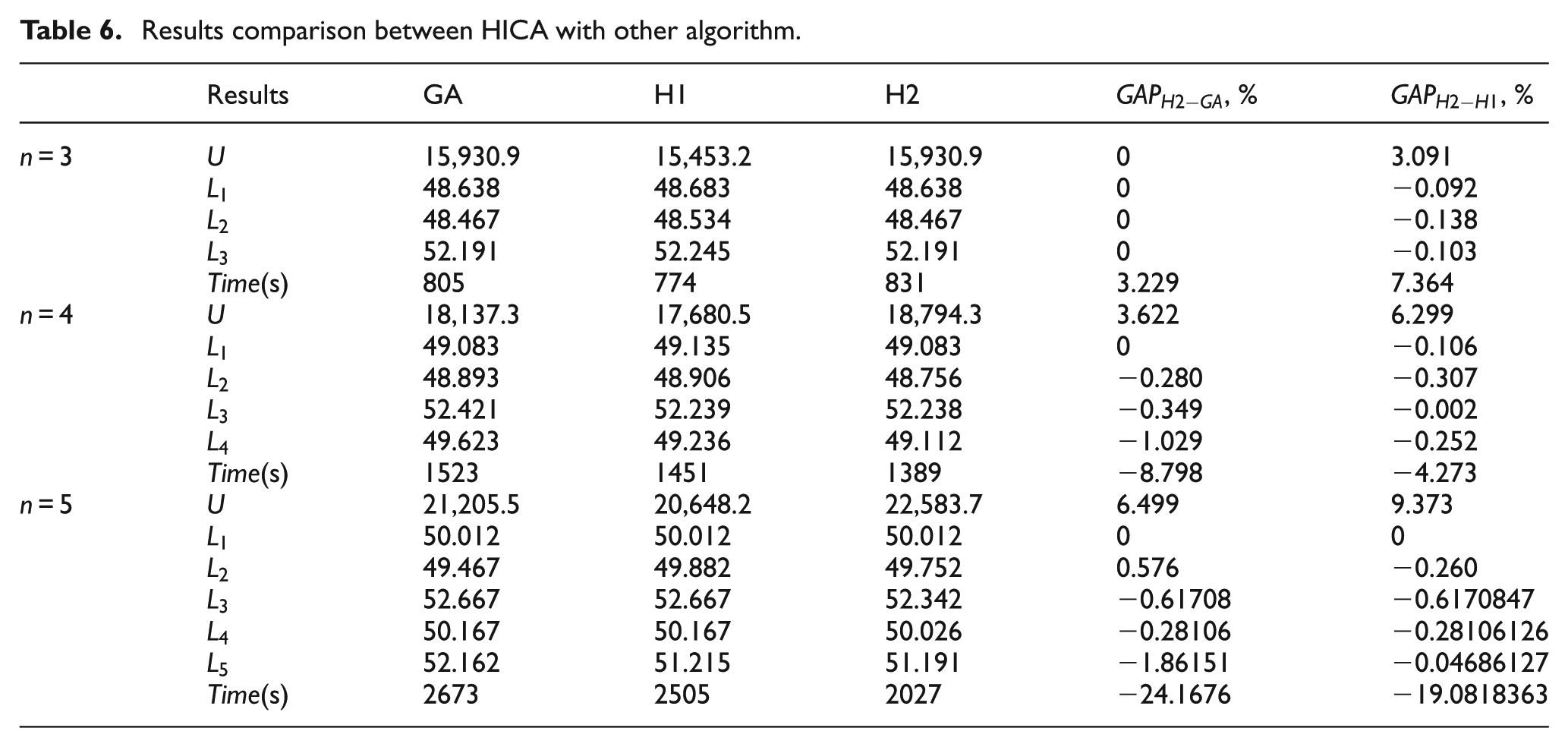
In this section, a series of numerical experiments are conducted to illustrate the effectiveness and efficiency of the proposed methodology. Typical method GA
31
for solving bi-level programming is applied to solve the demonstrative case. Through simulations of three algorithms including HICA-without-AC (H1), HICA-with-AC (H2) and GA, this study designs three scenarios to confirm the effectiveness and efficiency of the proposed algorithm. According to the investigation, the supplier usually accepts a type of PMO task from 3 to 5 outsourcers. Thus, the scenarios are
Both the profit of supplier
As shown in Figure 4, although the unit cost of outsourcers increases with the increase in the number of outsourcers, the increment of
With the increase in the number of outsourcers, the relative order cost structure among first three outsourcers remains roughly unchanged. That is because the relative competitiveness among the outsourcers remains the same.
In terms of the computation time for finding the equilibrium solutions, the H2 exceeds both H1 and GA algorithm. Moreover, the convergence rate of H2 is more excellent with the increase in the number of outsourcers. Although the convergence rate is slower when the number of outsourcers is 3, HICA with the AC can find a better solution.
The more the outsourcers, the longer the solution presentation in the algorithm. The solution space grows exponentially as the solution presentation becomes longer, and consequently, the complexity of the solving process results in a great increment in computation time.
Results comparison between HICA with other algorithm.
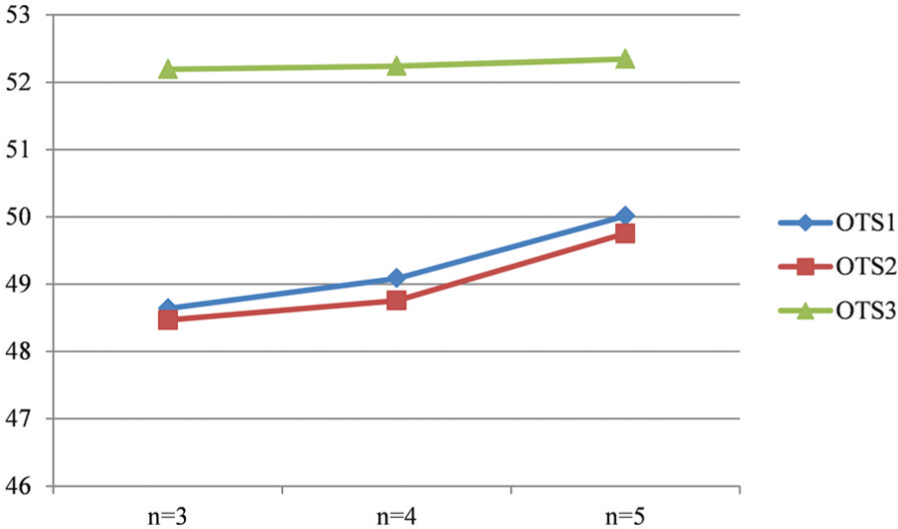
The unit order costs of outsourcers under three scenarios.
Sensitivity analysis
In this section, the effects of pricing parameters
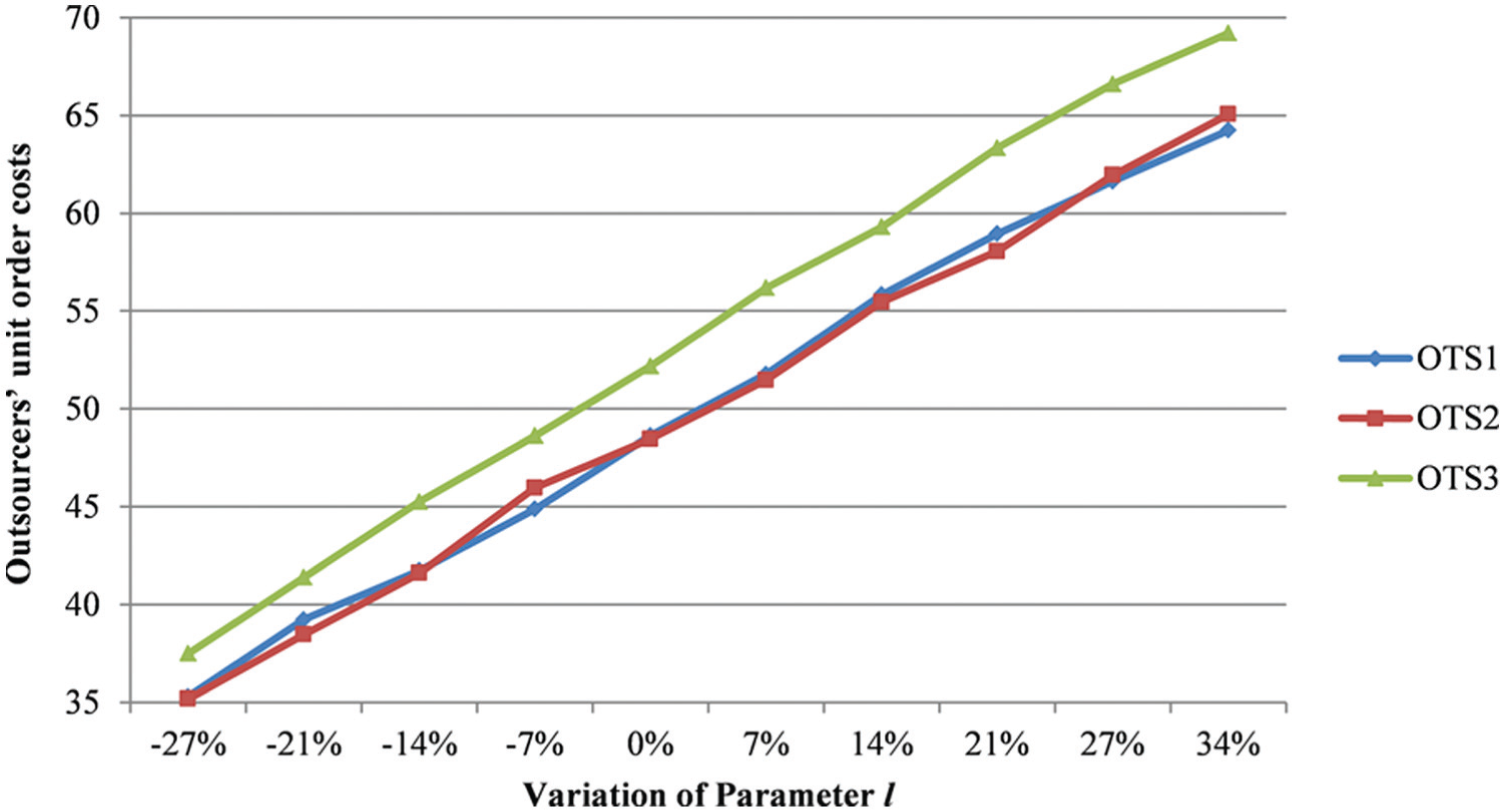
Outsourcers’ unit order costs variation with parameter
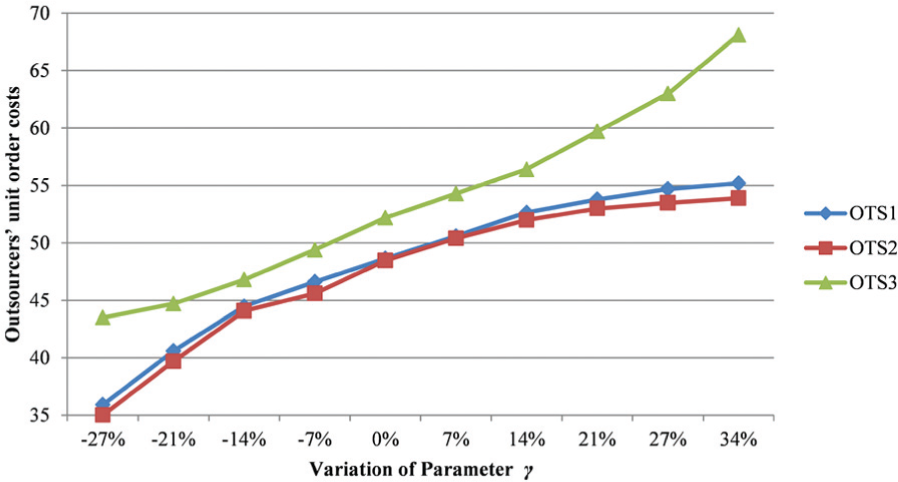
Outsourcers’ unit order costs variation with parameter
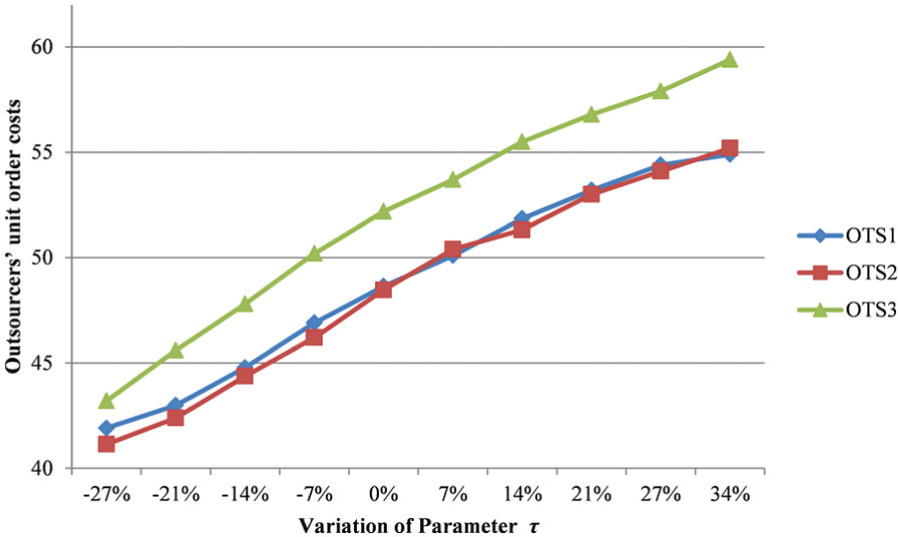
Outsourcers’ unit order costs variation with parameter
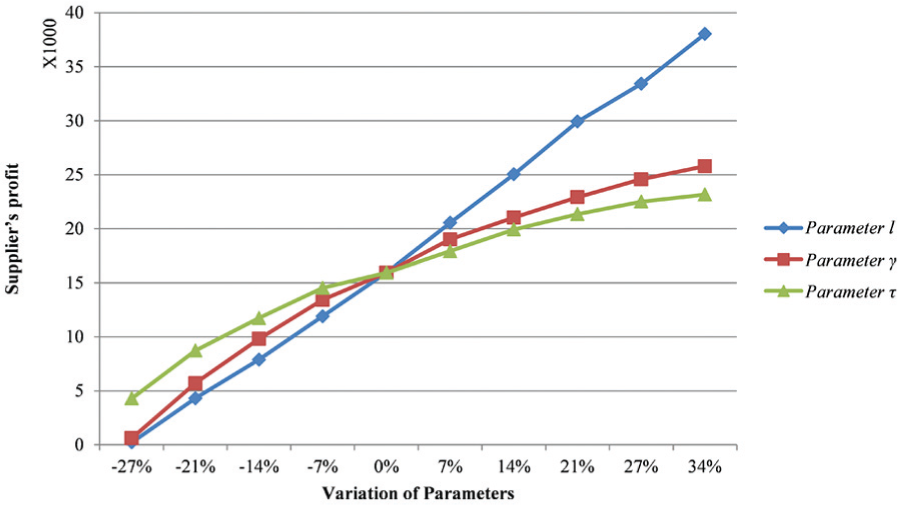
The effects of three pricing parameters on supplier’s profit.
As defined earlier, parameter
Parameter
Parameter
Finally, the effects of three parameters
Conclusion
This article proposes a PMO coordination decision support model. To make it more sensible in a competitive and non-cooperative market environment, the coordination process is modeled as Stackelberg game. A typical PMO relationship is taken as example to illustrate the proposed solution procedures. The result of the application case has shown the practical viability of this methodology to allow the suppliers and outsourcers to timely coordinate their order. Because the PMO decision-making problem has received little concern, the problem analysis and formulation can be used as a benchmark to compare with different models in future. Furthermore, the proposed model provides a comprehensive coordination decision support approach, which can be extended to deal with other outsourcing problems.
The proposed model is relatively flexible. The supplier can also apply this model to simulate different outsourcing strategies to negotiate with the outsourcers based on the forecast of different order and thus achieve the most beneficial portfolio among outsourcers. The proposed model also helped both supplier and outsourcer to find the most appropriate production strategy to improve cooperation efficiency. Also a reduction in decision-making time is achieved enabling them with a faster reaction to the rapidly changing customer request. However, the model is in an early stage of implementation and has limitations for applications:
The proposed game model is established based on the assumption that the players are all entirely rational and just barging for maximizing their profits or minimizing their costs. However, the players in reality sometimes are bounded rational.
Some parameters in the algorithm are set by experience, which results in a limitation of the proposed model in satisfying the changeable outsourcing condition.
Six kinds of scenarios outsourcer–supplier Stackelberg games in Table 1 are summarized from our empirical investigation. As each of them is a complex situation that needs intensive study, the authors have studied them one by one. Besides the previous study 27 and this study, the rest four scenarios need further study, and which coordination decision is more effective should be analyzed especially.
Outsourcing relationship is vulnerable to various types of disruptions caused by uncertain economic cycles, consumer demands, and natural and man-made disasters. Thus, risk and management issues are important in the PMO decision.
These problems should be taken into consideration in future research.
Footnotes
Declaration of conflicting interests
The author(s) declared no potential conflicts of interest with respect to the research, authorship, and/or publication of this article.
Funding
The author(s) disclosed receipt of the following financial support for the research, authorship, and/or publication of this article: The research work presented in this article is under the support of NSFC with Grant No. 51275396.