



Abstract
One of the greatest challenges for public health campaigns is communicating health risks due to the existence of psychological distance. Using COVID-19 as a context, this study designed and tested virtual reality (VR) campaigns based on construal level theory. It assessed the immediate and after-effects of VR on COVID-19 preventive intentions/behaviors and risk perceptions. A total of 120 participants were randomly assigned to see one of four messages: a VR message emphasizing self-interest, a VR message emphasizing other-interest, a print message emphasizing self-interest, or a print message emphasizing other-interest. Preventive intentions/behaviors were assessed at three different times: before, immediately after, and one week after the experimental treatment. Immediately following message exposure, participants exposed to the VR messages perceived a higher level of self-risk than those exposed to print messages. Disgust and fear mediated these effects. One week following message exposure, unvaccinated participants exposed to the VR messages had a higher intention to get vaccinated than those exposed to print messages. Recommendations on how to effectively utilize VR in health interventions are provided.
Introduction
The COVID-19 pandemic highlighted the critical role of behavioral interventions (Baker et al., 2020). These interventions include wearing masks, avoiding crowded places, and hygiene practices, among others, which are critical in controlling the spread of COVID-19 and other infectious diseases. On one hand, at the beginning of the pandemic, preventive and curative treatments in the biomedical field were limited (Eaton & Kalichman, 2020). Thus, the medical and public health community had to be highly dependent on interventions that promote preventive measures to limit disease transmission to reduce the burden of COVID-19 (Hartley & Perencevich, 2020). On the other hand, after the development of the COVID-19 vaccine, public health interventions are heavily relied on to promote the vaccine and address concerns related to its safety and efficacy (Gozzi et al., 2021). For this pandemic, the next, and other health emergencies, recognition of the value of behavioral interventions, investing in preparedness as well as designing and distributing effective programs are necessary (Madad & Spencer, 2021).
For most behavioral interventions, one of the greatest challenges is communicating the health risk due to the existence of psychological distance. For instance, a temporal distance exists between present behaviors and future consequences. It is difficult to communicate the necessity of performing healthy behaviors now to avoid adverse health consequences in the future (Ahn, 2015). Additionally, a social distance lies between the individual and the risk presented in many interventions. It is challenging to make the audience feel that the risk is closely related to self-interest (Fox & Bailenson, 2009). According to the construal level theory, by changing psychological distance, messages can shape the construal level and ultimately influence risk perceptions and behaviors (Trope & Liberman, 2010).
Virtual reality (VR), which immerses users in artificially created environments by providing simulated sensory information, holds enormous potential for promoting behavior change by altering psychological distance since it allows users to “feel” the risk as if they are in the real world and “experience” the negative future consequences of undesired behavior (Ahn et al., 2013). In the health domain, VR has mainly been used to train clinicians and medical students (Fox & Bailenson, 2009). Several VR interventions have demonstrated the promise of VR for health behavior change such as increasing intention to get the flu shot (Nowak et al., 2020) and physical activity (Fox & Bailenson, 2009) as well as decreasing vaping interest (Xu et al., 2023) and soft-drink consumption (Ahn, 2015). Using COVID-19 as a context, this study designs and tests VR campaigns based on the construal level theory. The main research question is whether VR can promote desired intention and behavior change immediately and one week after message exposure. Besides, this study aims to explore the underlying mechanisms that drive changes in intention and behavior.
Construal Level Theory and VR
Construal level theory was first introduced to explain “how people mentally perceive psychologically distant realities” (Lee, 2019, p. 320). High construal is when psychologically distant realities are constructed abstractly while low construal is when psychologically proximal realities are perceived concretely (Trope & Liberman, 2010). As demonstrated in a meta-analysis, the direct effect of psychological distance on construal level (Hedges’ g = .48) and decision making (Hedges’ g = .53) is robust (Soderberg et al., 2015). Recent research has discovered the theory’s potential to reveal the effects of different message elements and the interaction of various elements on intention or behavior change (Lee, 2019).
Psychological distance includes four dimensions: temporal (the time between the present moment and the occurrence of the consequence in the future), hypothetical (the extent to which the subject differs from the reality people directly encounter), spatial (the physical distance between the individual and the subject), and social (the extent to which the event impacts the self) (Cahalane et al., 2022; Trope et al., 2007). These four dimensions can shape the construal level of messages and ultimately influence risk perceptions and behaviors (Trope & Liberman, 2010). Since psychological distance is self-centered and focuses on “me, here, and now” (Trope & Liberman, 2010), low construal or low psychological distance is critical in decisions related to specific situations (Cahalane et al., 2022) and tends to generate higher levels of perceived risk and a higher likelihood of desired behavior change (Ahn, 2015; Spence et al., 2012).
Through the lens of the construal level theory, VR induces a lower level of construal and psychological distance than traditional media (i.e., print) because it generates a stronger feeling of presence even without real-world stimulation and interaction (Nowak et al., 2020). Presence happens when users immerse into the virtual world and reduces temporal, hypothetical, and spatial distances (Kang, 2020; Orth et al., 2019). For instance, VR reduces temporal distance by making people “experience” the negative consequence of unhealthy behavior that will occur a long time from “now” (Ahn, 2015). VR decreases hypothetical distance by visualizing and exaggerating a risk (Xu et al., 2023) or providing a feeling of body transfer to make people experience others’ feelings (Ahn et al., 2016). VR also reduces spatial distance by making physically distant subjects look closer (Cahalane et al., 2022).
Due to its effectiveness in lowering psychological distance, VR has been found to successfully foster ideal behavior change. For example, by analyzing 27 consumer studies, a systematic review demonstrates that VR is more effective in altering consumer behavior toward a desired direction than traditional media (Taufik et al., 2021). In the health domain, a study indicates that compared to e-pamphlets, VR results in a heightened sense of presence, leading to an increase in participants’ awareness of the risk of spreading influenza and their intention to get vaccinated. This raised awareness also positively impacts beliefs about the efficacy of the flu vaccine in protecting others (Nowak et al., 2020). Another study finds that VR generates less vaping interest than print advertisements (Xu et al., 2023). Based on prior research, in the context of COVID-19, we may predict that VR messages will be more likely to increase risk perceptions and promote healthy behavior change than print messages (H1).
Besides temporal, hypothetical, and spatial distances that VR tends to decrease, perceived social distance between an event and the self also determines the level of construal and potentially affects risk perception and decision making. People tend to treat the self as the reference point and evaluate self-influences first. Thus, messages that are perceived to be less socially distant and more closely related to self-interest lead to concrete thinking (Trope & Liberman, 2010). For example, individuals describe their own behaviors concretely while describing others’ behaviors abstractly (Fiedler et al., 1995). Information associated with self-interest increases the speed of information processing faster than information associated with an unfamiliar other (Rogers et al., 1977). Moreover, perceived social distance also impacts the attribution of behavior. Specifically, people emphasize concrete situational factors when viewing their own behaviors, that is, they focus on specific details pertinent to their circumstances and needs to justify their actions. In contrast, when viewing others’ behaviors, people often focus on general behaviors without considering others’ reasoning (Pronin & Ross, 2006; Trope & Liberman, 2010).
In the context of COVID-19, when people think about the coronavirus spreading from themselves to others because they do not wear masks (other-interest), they may emphasize more on situational factors than their own behaviors. For example, they may argue that they are not in a crowded place so they think it is okay not to wear masks. However, when people think about the virus spreading from others to themselves (self-interest) because others do not wear masks, they may concentrate on the behavior, mask-wearing. This implies that health messages that directly target self-interest may have a greater potential to increase risk perceptions and promote desired behaviors (H2).
Recent research considers the complexity of various message components working as a whole and explores interactions among various message components. Specifically, studies evaluate a combination of two construal frames in one message (Lee, 2019). These studies find that when integrating two low construal features in a message, risks are more likely to trigger attitude and behavior changes. For instance, a study demonstrated that heart disease messages with two low construal features (a proximal temporal frame and a loss frame) will increase perceived risk levels of heart disease (Chandran & Menon, 2004). Another study revealed that intentions to receive the HPV vaccine were higher when people were exposed to a proximal frame paired with a second low construal component (narratives) (Kim & Nan, 2019). Based on prior work, we pair VR (low construal) with the second low construal feature, a reduced social distance frame (self-interest), to potentially reach the maximum effects. In other words, we predict that VR messages presenting a risk’s impacts on the self may be the most effective in promoting desired behaviors (H3).
Emotions as Potential Mediators
Another method to reduce psychological distance is to elicit strong emotions. If people have intense feelings about a risk, they typically perceive the risk as psychologically near (Van Boven et al., 2010). When people are exposed to risk messages, they often adopt a “self-immersed perspective” by imagining harmful outcomes that could occur to them (Ayduk & Kross, 2008). The sense of immersion and presence in a situation also provokes powerful emotional reactions (Felnhofer et al., 2015).
By generating a strong feeling of presence (Nowak et al., 2020), VR effectively evokes specific emotions, such as fear, anger, disgust, sadness (Dozio et al., 2021), and anxiety (Riva et al., 2007). These emotions closely resemble the emotions that users would experience in real-life situations (Chirico & Gaggioli, 2019). Moreover, earlier research has provided evidence that VR is more effective in arousing intense emotions than less immersive forms of media, such as tablets (Olmos-Raya et al., 2018) and computers (Lavoie et al., 2021; Susindar et al., 2019). Thus, several VR interventions have been designed to alter risk perceptions and behaviors by targeting users’ emotions. For instance, Susindar et al. use VR to increase fear which ultimately increases risk-averse behavior (2019). Xu et al. incorporate VR to decrease vaping interest by arousing anger and disgust toward e-cigarette users (2023). Kandaurova and Lee apply VR to increase guilt which ultimately results in a greater inclination to engage in volunteering activities toward a social cause (Kandaurova & Lee(Mark), 2019).
Although prior studies demonstrate the persuasiveness of emotions aroused by VR messages, they have not examined how emotions interact with construal levels. Only a few studies have explored the roles some emotions play in influencing the construal level. For instance, a couple of studies reveal that basic emotions, such as fear, anger, disgust, sadness, and anxiety, which are born with and serve survival and reproductive goals, are more effective when an issue is perceived to be temporally closer (Agerström et al., 2012; Karsh & Eyal, 2015) than self-conscious emotions (i.e., guilt and shame) which develop later in life when self-awareness is developed (Izard, 1969) and fulfill social goals (Keltner & Buswell, 1997). Taken together, prior work suggests that some specific emotions may work better with VR (low construal) and increase its persuasiveness. To find out if specific emotions function differently in influencing the effects of construal levels and develop construal level theory, we explore whether different discrete emotions potentially mediate the impacts of construal levels on persuasion outcomes (RQ).
Methods
Participants, Design, and Procedure
This study was approved by the IRB. To test the above hypotheses and research question, we employed a randomized control study with repeated measure design to compare different interventions’ effects over time. We used a 2 (Medium: VR vs. print) × 2 (Interests: self vs. other) design. Participants were randomly assigned to one of four message conditions: a VR message emphasizing self-interest (VR-Self), a VR message emphasizing other-interest (VR-Other), a print message emphasizing self-interest (Print-Self), and a print message emphasizing other-interest (Print-Other). A total of 128 participants were recruited from a large public university in the southwestern United States. They received a $5 Amazon gift card for participation. After removing those who failed the manipulation check, the final analysis included 120 participants. Preventive intentions and behaviors were assessed at three different times: before, immediately after, and one week after the experimental treatment. Recruitment took place between February 2 and April 9 of 2021.
Individuals who self-reported that they recently tested negative for COVID-19 in a pre-screening survey were invited to participate in the lab experiment. Before seeing the experimental message, participants filled out a survey measuring their baseline risk perceptions, vaccine intention, and preventive behaviors (Time 1). Following random assignment to a message condition, participants viewed the message and then immediately answered questions regarding their risk perceptions, preventative intentions, emotions about the message, and demographics (Time 2). Participants also answered a manipulation check question about whether the message asked them to protect themselves or others. Those who failed to answer the question correctly were removed from the final analysis. To assess the actual behavior change, one week following the experiment (Time 3), all participants responded to a follow-up online survey measuring their risk perceptions, vaccine intention, preventive behaviors, and emotions about the message.
Stimuli
Participants assigned to print conditions saw a message developed from the CDC’s “Masks Protect You & Me” print advertisement (CDC, 2021). This print advertisement features different people wearing masks. At the bottom of the advertisement, there is a phrase that says “Masks protect you and me. Wear masks, avoid crowds, stay 6 feet apart, and wash your hands.” This study utilized the same CDC advertisement for the print stimuli but slightly changed the sentence. The Print-Self message, which tested the impacts of tangible messages encouraging behavior change for self-interest, stated “protect yourself from COVID-19, wear masks, avoid crowds, stay 6 feet apart, and wash your hands.” To test the impacts of the same type of message reframed to encourage consideration of others’ interest, the Print-Other message stated, “protect others from COVID-19, wear masks, avoid crowds, stay 6 feet apart, and wash your hands,”
Participants who were assigned to VR conditions wore an all-in-one VR headset and watched a three-dimensional VR video filmed with a 360° camera. Both the VR-Self message and the VR-Other message featured a college-age male (VR character) inviting the participant to a party (See Figures 1A and 1B). Both videos lasted less than one minute. The VR-Self video visualized and exaggerated virus spread from the VR character to the participant while he was talking, coughing, and sneezing. At the end of the video, the sentence, “protect yourself from COVID-19, wear masks, avoid crowds, stay 6 feet apart, and wash your hands,” appeared. The VR-Other video visualized and exaggerated virus spread from the participant to the VR character when the participant was responding to the VR character’s questions. The sentence, “protect others from COVID-19, wear masks, avoid crowds, stay 6 feet apart, and wash your hands,” appeared at the end of the video. (A) VR-Self. (B) VR-Other.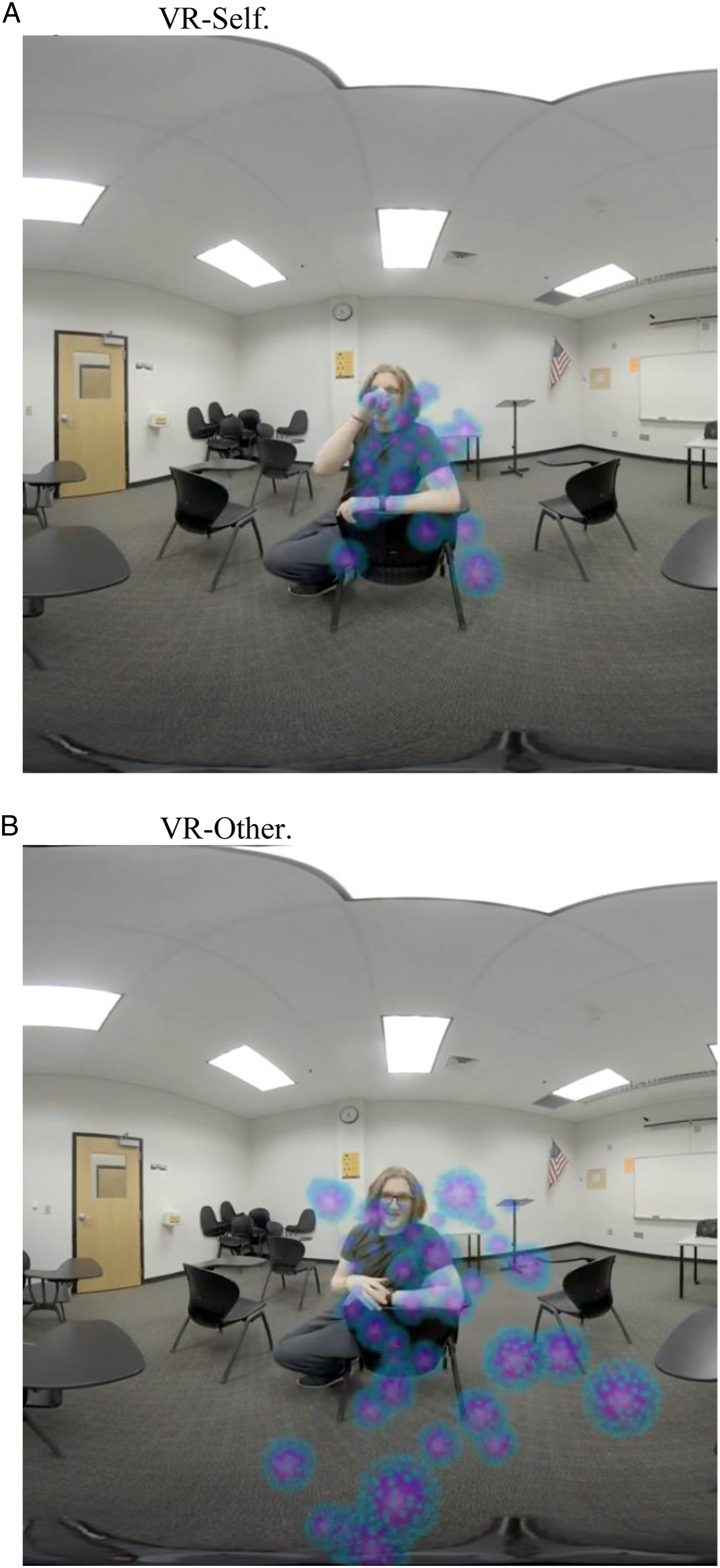
Measures
All the following variables were measured using a 5-point interval scale ranging from 1 (extremely unlikely/never/none at all) to 5 (extremely likely/always/a great deal).
Emotions
Drawing on previous research that has pinpointed the emotions evoked by VR messages that have the potential to facilitate desired results (Dozio et al., 2021; Kandaurova & Lee(Mark), 2019; Riva et al., 2007; Xu et al., 2023), self-reported levels of fear, anger, anxiety, disgust, sadness, shame, and guilt about the message were measured at Time 2 and Time 3.
Analysis
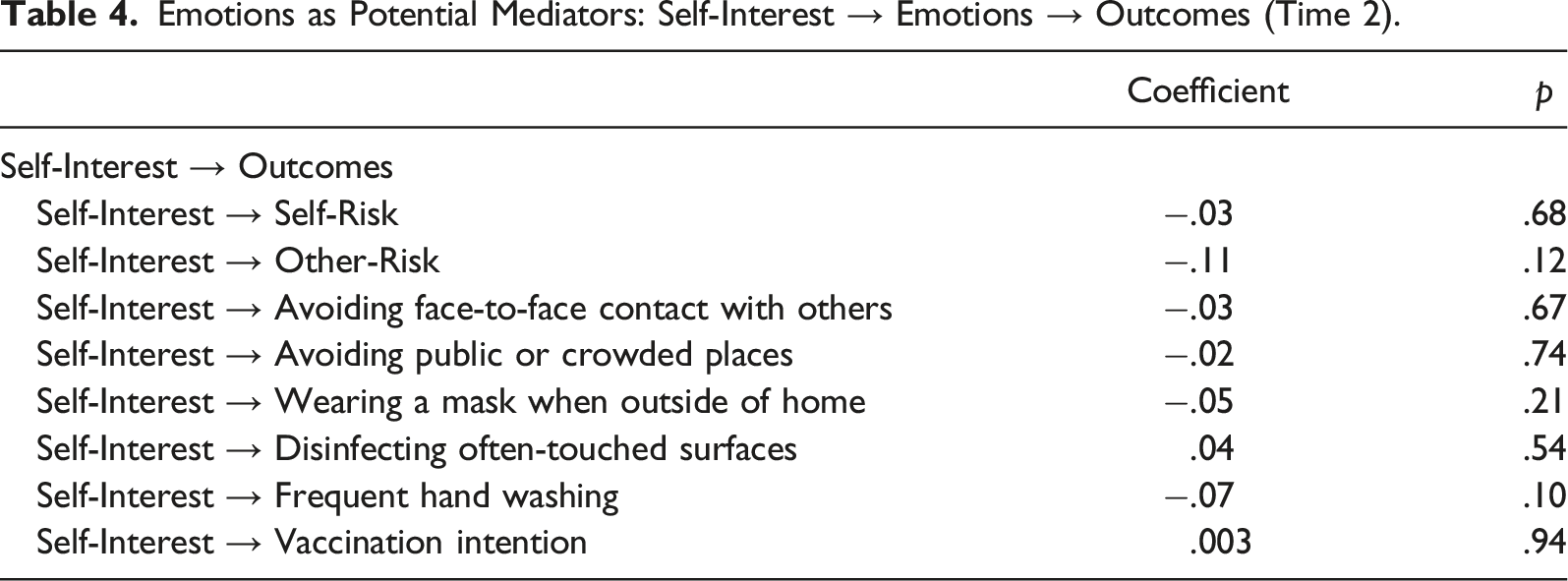
All analyses are performed using R (version 3.6.2). First, ANOVA was used to compare demographic variables among four conditions. Age (p = .5), sex (p = .24), race and ethnicity (p = .13), as well as political views (p = .63), were not significantly different across all conditions. We also found that except for one participant who spent less than one hour on VR in a typical week, others spent an average of zero hours. Thus, prior experience with VR was not controlled in this study. Next, as vaccine intention, preventive intentions or behaviors, and perceived self- and other-risk were left-skewed, they were reverse-coded and log-transformed to ensure normal distribution as well as to perform ANCOVA and path analysis. Finally, ANCOVA, ANOVA, and path analysis were performed to examine the effectiveness of medium and interests.
Results
Means and Standard Deviations for All Measures.
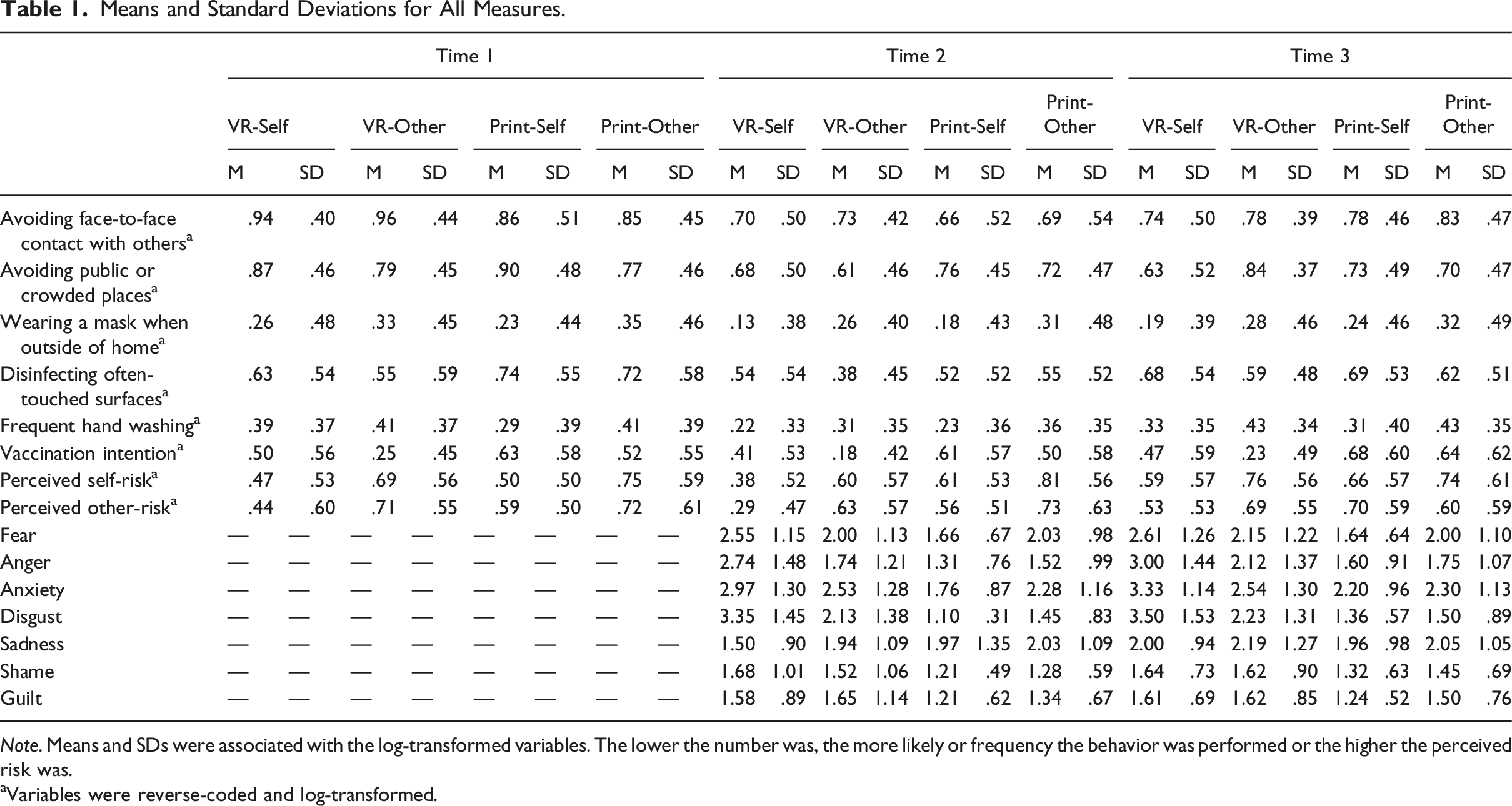
Note. Means and SDs were associated with the log-transformed variables. The lower the number was, the more likely or frequency the behavior was performed or the higher the perceived risk was.
aVariables were reverse-coded and log-transformed.
Time 2
Messages Predicting Preventive Intentions and Risk Perceptions
ANCOVA Results (Time 2).
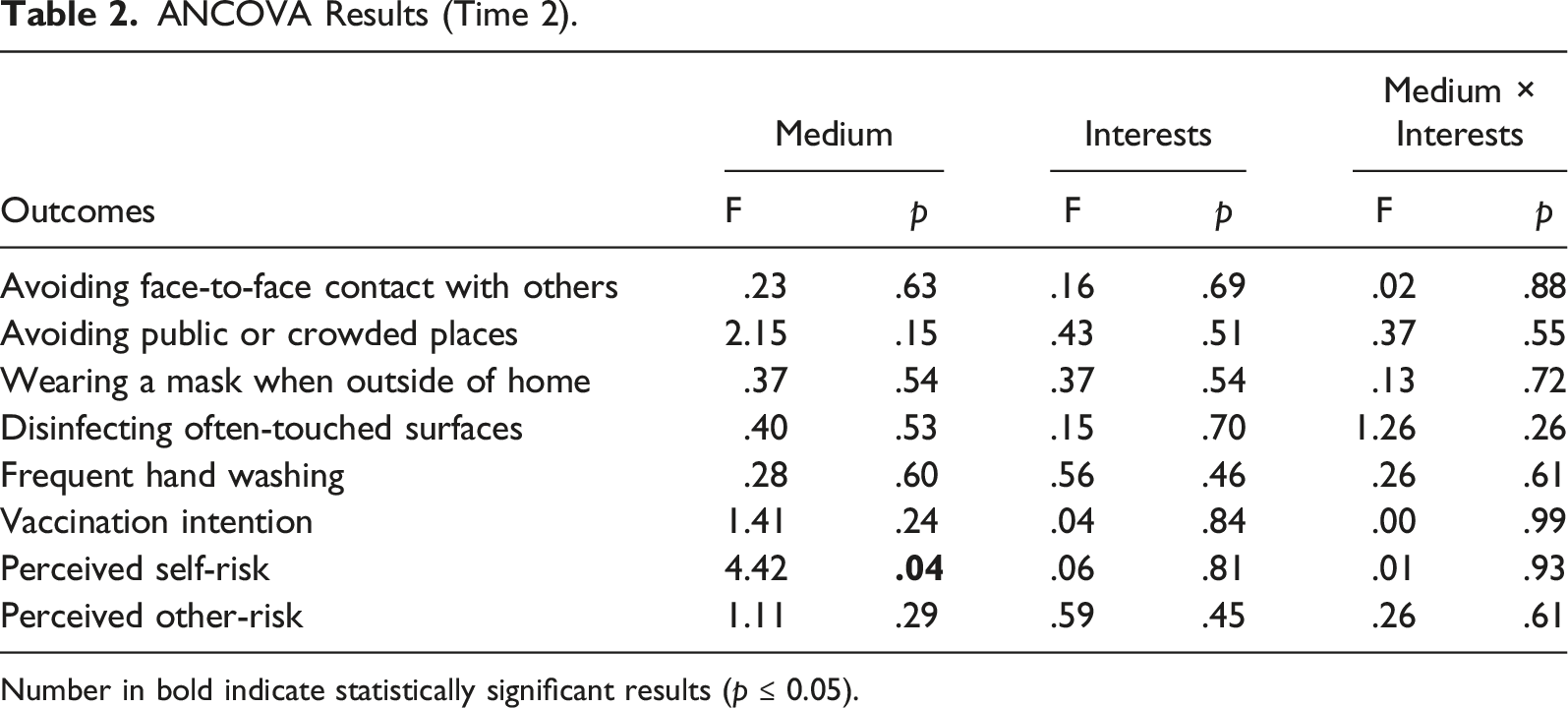
Number in bold indicate statistically significant results (p ≤ 0.05).
Emotions as Potential Mediators: VR → Emotions → Outcomes
Emotions as Potential Mediators: VR → Emotions → Outcomes (Time 2).
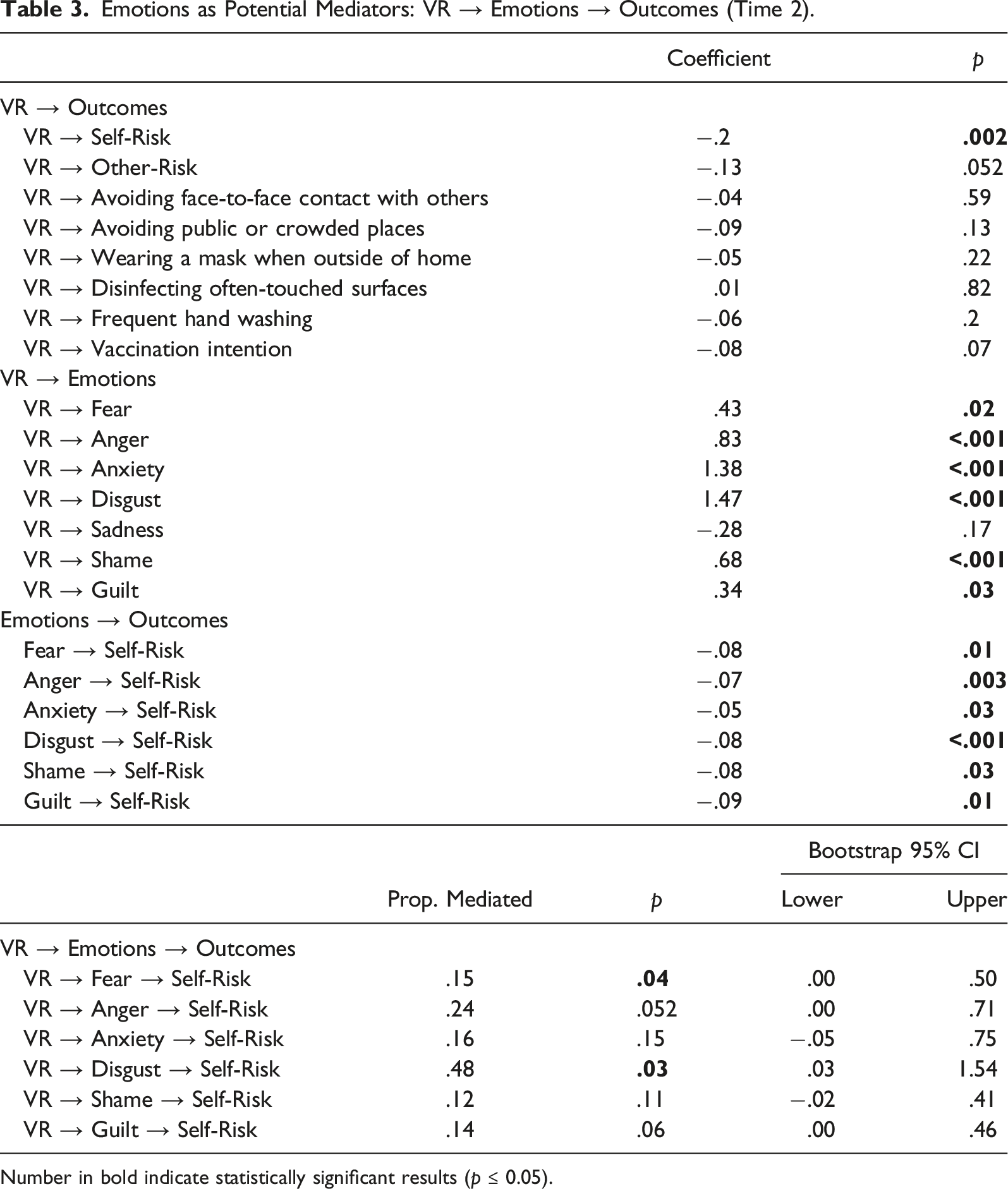
Number in bold indicate statistically significant results (p ≤ 0.05).
Emotions as Potential Mediators: Self-Interest → Emotions → Outcomes
Emotions as Potential Mediators: Self-Interest → Emotions → Outcomes (Time 2).
Time 3
Messages Predicting Preventive Behaviors and Risk Perceptions
ANCOVA Results (Time 3).
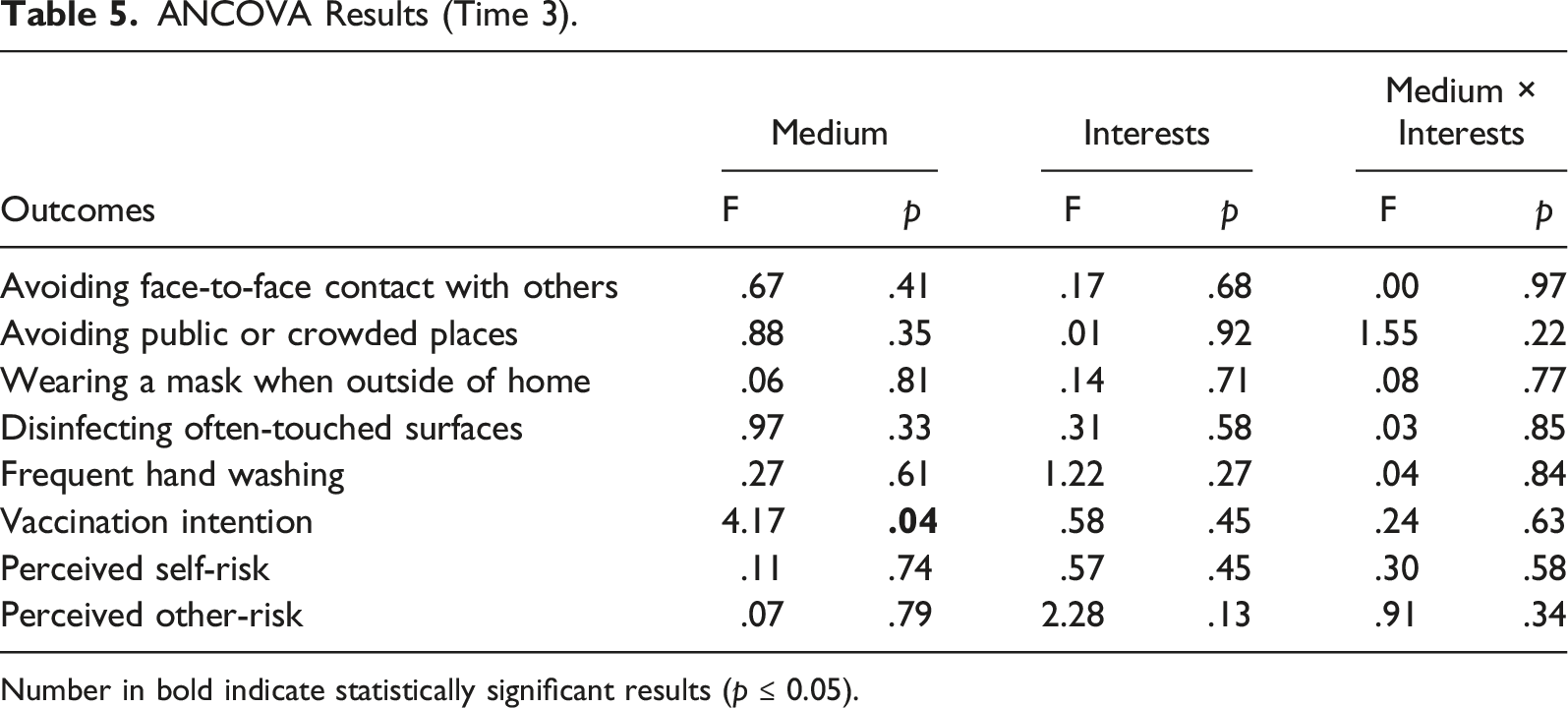
Number in bold indicate statistically significant results (p ≤ 0.05).
Emotions as Potential Mediators: VR → Emotions → Outcomes
Emotions as Potential Mediators: VR → Emotions → Outcomes (Time 3).
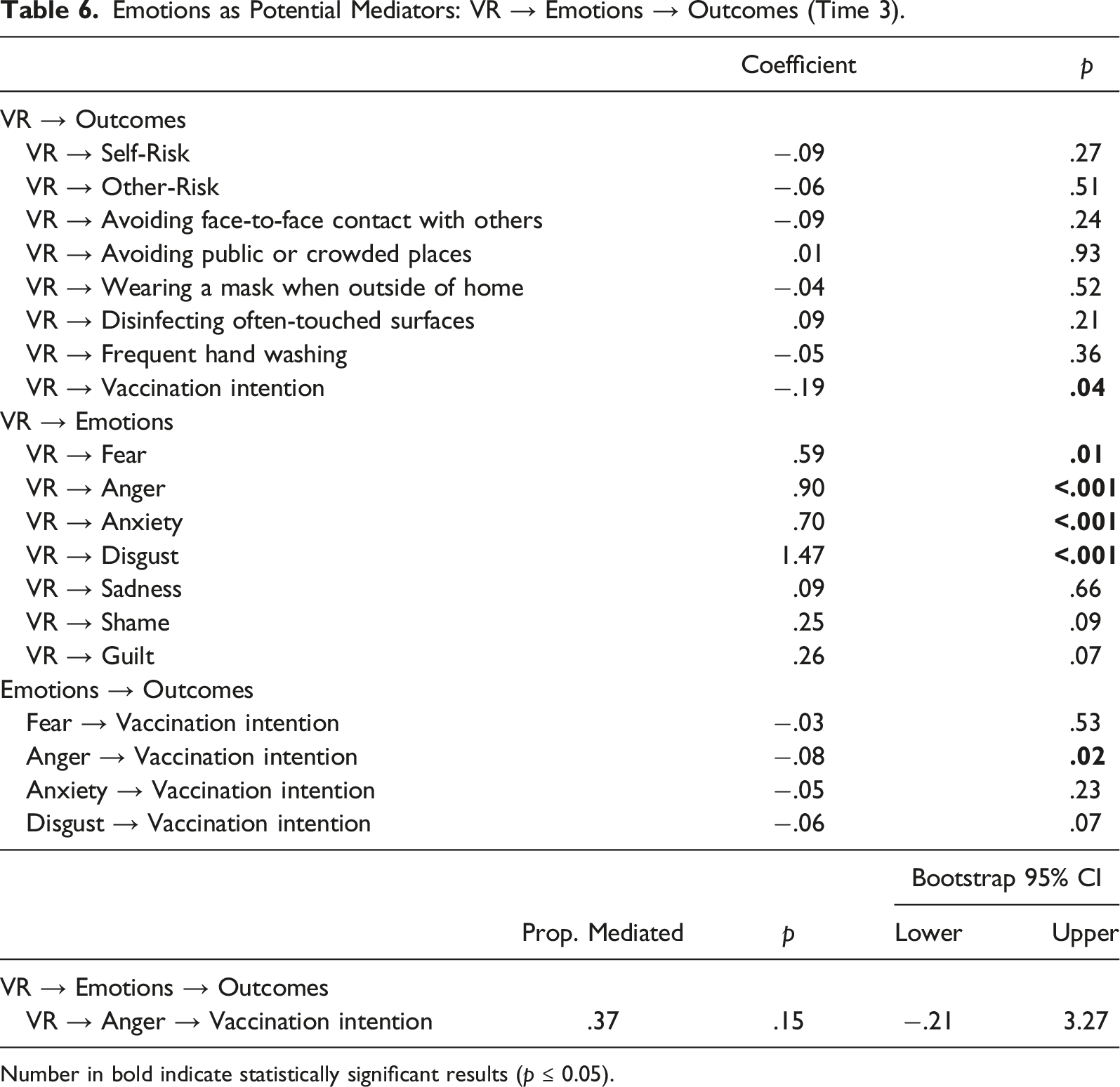
Number in bold indicate statistically significant results (p ≤ 0.05).
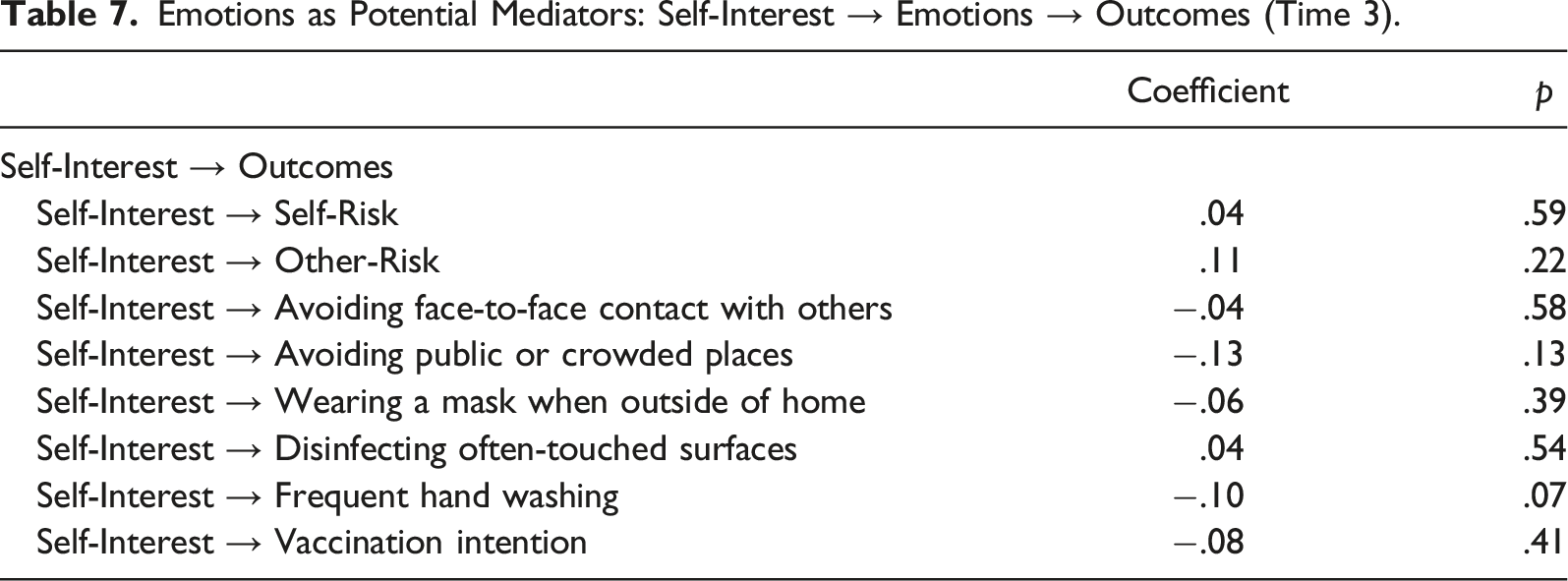
Emotions as Potential Mediators: Self-Interest → Emotions → Outcomes
Emotions as Potential Mediators: Self-Interest → Emotions → Outcomes (Time 3).
Discussion
This study reveals the immediate effects of VR on the perceived self-risk of contracting COVID-19 and the after-effects of VR on vaccine intention. It provides preliminary evidence for incorporating VR into health interventions. It also demonstrates the effectiveness of reducing perceived distance and evoking certain emotions in promoting healthy behaviors, which offers practical implications in health message design. Theoretically, this study extends the construal level theory by examining both immediate and after-perception and behavior changes as well as the underlying mechanisms driving these changes. Findings show the mediating effects of disgust and fear on construal levels and persuasion outcomes. These outcomes demonstrate the significance of how various message factors can be manipulated together to impact individuals’ emotions regarding health threats. The simultaneous manipulation of message medium and catered interests can also evoke risk perception and intention changes. These findings can be used to guide future health message development as communicators seek to understand public audiences’ priorities and utilize new technology to convey desired health behaviors.
Construal Level
Results demonstrated that participants exposed to the VR messages perceived a higher level of self-risk than those exposed to print messages immediately following message exposure. In line with the construal level theory (Trope & Liberman, 2010) and the findings of previous studies, VR in this study might reduce temporal distance by making users “experience” the risk and “contract” the coronavirus at the moment (Ahn, 2015). It might also decrease hypothetical distance by visualizing and exaggerating the virus (Xu et al., 2023). Additionally, it might reduce spatial distance by making the virus look closer (Cahalane et al., 2022). Moreover, VR included detailed information that featured specific characters and storylines, which might lead to concrete thinking about the risk (Ahn, 2015; Kreuter et al., 2007). In contrast, the risk described in print messages was generic and not vivid, which made it difficult for the audience to generate concrete thoughts and believe the risk was relevant. Thus, print messages failed to increase perceived self-risk as much as VR messages immediately following message exposure.
Prior research mainly explores the immediate effects of the construal level (e.g., Cahalane et al., 2022; Han et al., 2016; Kim & Nan, 2019; Spence et al., 2012). Our study extends the construal level theory by examining how the effects of construal level change over time. Specifically, we found that one week following message exposure, unvaccinated individuals exposed to the VR messages reported a higher intention to get vaccinated than those exposed to print messages. Interestingly, we also found that immediately following message exposure, VR produced a higher level of self-risk but did not generate a higher vaccine intention than print messages. However, one week later, VR resulted in a higher vaccine intention but VR and print messages were not different in the ability to arouse more perceived self-risk. Taken together, these findings demonstrate the after-effects of construal level and VR. It is possible that immediately after message exposure, participants focused on their virtual experience of “contracting” the coronavirus and perceived a higher level of self-risk. When recalling the messages after one week, participants shifted their attention to the solution to reduce the risk, which was vaccination. Therefore, participants increased their vaccine intention but not their perceived self-risk. By exploring the after-effects of VR, a few studies suggest that VR’s effects may last long (Ahn, 2015) and VR’s advantage over less immersive media may increase over time (Xu et al., 2023). Our findings combined with prior work indicate a need to examine the long-term effects of VR and the change of psychological distance for future research.
It is important to note that the partial η2 suggested that the effect sizes of VR’s immediate- and after-effects were small. Due to the pandemic, the data was collected in a University where all participants were required to wear masks. Besides, all participants were repeatedly exposed to COVID-19 prevention messages before and during this study. Plus, more than 80% of participants were left- and center-lean regarding their political views, which might have more positive attitudes toward preventive behaviors (Barrios & Hochberg, 2021). Thus, VR’s effects on preventive behaviors might be limited. Despite the limitation, our results still demonstrate the potential of VR in reducing construal levels and promoting healthy behaviors. Future research is recommended to test VR campaigns regarding other health issues.
In addition, we found that messages targeting self-interest and messages targeting other-interest did not differ in their abilities to increase risk perceptions and promote desired intentions and behaviors. These findings seemed to be inconsistent with the construal level theory, which states that messages that are more closely associated with self-interest lead to concrete thinking and desired behaviors (Fiedler et al., 1995; Liberman et al., 2007; Rogers et al., 1977). A possible explanation is that participants were already exposed to many COVID-19 education messages and realized that people could not solely protect themselves without protecting others; and performing certain behaviors to protect others could also protect themselves from COVID-19 and vice versa (Jordan et al., 2021). Thus, self-interest and other-interest are closely interrelated in this situation, which may not lead to different levels of construal. Similarly, a study indicated that emphasizing the benefits to society is more effective than the self-oriented frame for vaccine intentions because the society frame implies “benefits to a larger number of people (which could theoretically include both loved ones and unknown others, as well as the self)” (Kelly & Hornik, 2016, p. 5). Taken together, these findings extend the notion of social distance by implying that although people tend to evaluate self-influences first (Trope & Liberman, 2010), messages highlighting both self-interest and social benefits may also lead to concrete thinking and ideal outcomes. Future research can design a VR intervention that targets positive impacts on the society and compare it with self-interest frame.
Disgust and Fear as Mediators
Findings revealed that disgust and fear mediated the VR messages’ immediate effect on perceived self-risk. Immediately after message exposure, disgust and fear aroused by the VR messages contributed to more than 60% of the VR messages’ effects on perceived self-risk. Between these two mediators, disgust was stronger, contributing to roughly half of the VR messages’ effects on perceived self-risk. Prior research has revealed the impacts of disgust on risk perception. For example, many countries require standardized cigarette packaging that displays pictorial health warnings (i.e., graphic images of smokers’ mouth/teeth and lungs) that aim to reduce people’s interest in purchasing cigarettes by arousing disgust. Australia was the first to introduce this legislation in late 2012; data gathered from 2011 to 2017 showed that there are significant decreases in adolescent and teenagers’ positive associations with smoking, the notion that some cigarettes are “better” for overall health than others, and reduced positive brand character ratings (White et al., 2019). Experiments that have also tested the impact of this type of cigarette packaging in other countries have found that people have greater intention to quit smoking when presented with such images (Mays et al., 2015) and youth are less interested in starting smoking (Hammond et al., 2014). According to the discrete-emotions model, discrete emotions vary in their functions and provide different guidance for dealing with the situation. Each discrete emotion has an action tendency that is related to its unique function. Disgust is elicited when an indigestible object is too close. Its action tendency is to escape from the object of disgust (Lazarus, 1991). In this study, 3D-animated coronavirus in VR messages might be the indigestible object that was “close” to the viewers, which might lead to a high level of disgust. However, as viewers could not escape from 3D-animated coronavirus in the virtual environment, the feeling of disgust might lead to a high level of perceived self-risk.
Compared to disgust, fear is more widely used in health campaigns and is consistently found to lead to high levels of perceived risk (Witte & Allen, 2000). This may be due to the fact that fear signals danger in the environment (Dillard & Peck, 2001) and thus may lead people to feel more vulnerable. In this study, VR technology visualized the danger in the environment (coronavirus), which might lead to a high level of fear and perceived self-risk.
Interestingly, disgust and fear only mediated VR’s immediate effect. No discrete emotions tested in this study mediated VR’s after-effect on vaccine intention. It is possible that rational thoughts instead of emotional responses elicited by VR contributed to VR’s after-effect on vaccine intention. Taken together, these findings extend the construal level theory by revealing that certain discrete emotions may serve as mediators for the relationship between construal level and persuasive outcomes. To our knowledge, limited prior research has examined the relationship between various discrete emotions and construal levels. Our study reveals the potential for VR messages to reduce perceived distances by inducing disgust and fear. It also suggests that due to distinctive characteristics, discrete emotions’ roles in construal levels and decision making need to be investigated separately. Future studies can test the roles that discrete emotions play in affecting the construal level again. They can also explore if discrete emotions have after-effects on the construal level.
Finally, besides the limitation of data collection, several other limitations should be noted before generalizing the results. First, as all participants had at least some college education, the results may not be generalized to populations of different ages and socioeconomic status. Second, this study mainly used single-item measures, which might not cover the full range of a construct. Although according to some researchers, when measures are concrete and unambiguous, single-item measures are recommended (Bergkvist & Rossiter, 2007; Rossiter, 2002), and future research can benefit from employing multi-item measures. Third, this study compared VR to print messages. Future studies are advised to compare VR to video messages. Fourth, the CDC’s print advertisement served as a control condition in the current study. However, VR videos seemed to include a storyline, whereas the print message did not, which might impact responses. Subsequent studies may conduct a comparison of comparable content messages between VR and print formats. Finally, the VR character was a college-age white male. Future studies can explore if characters from different demographics can lead to different persuasion outcomes.
Footnotes
Acknowledgments
We would like to thank Hao Guo for her assistance in data analysis, the Advanced Media Lab at Northern Arizona University for producing VR videos, Chris Johnson for creating the animation, and Lyndsey Fowks for recruiting participants. We deeply appreciate the insightful comments from the editors and the reviewers.
Declaration of Conflicting Interests
The author(s) declared no potential conflicts of interest with respect to the research, authorship, and/or publication of this article.
Funding
The author(s) disclosed receipt of the following financial support for the research, authorship, and/or publication of this article: This study received funding from Arizona’s Technology and Research Initiative Fund (2627006).
