




Abstract
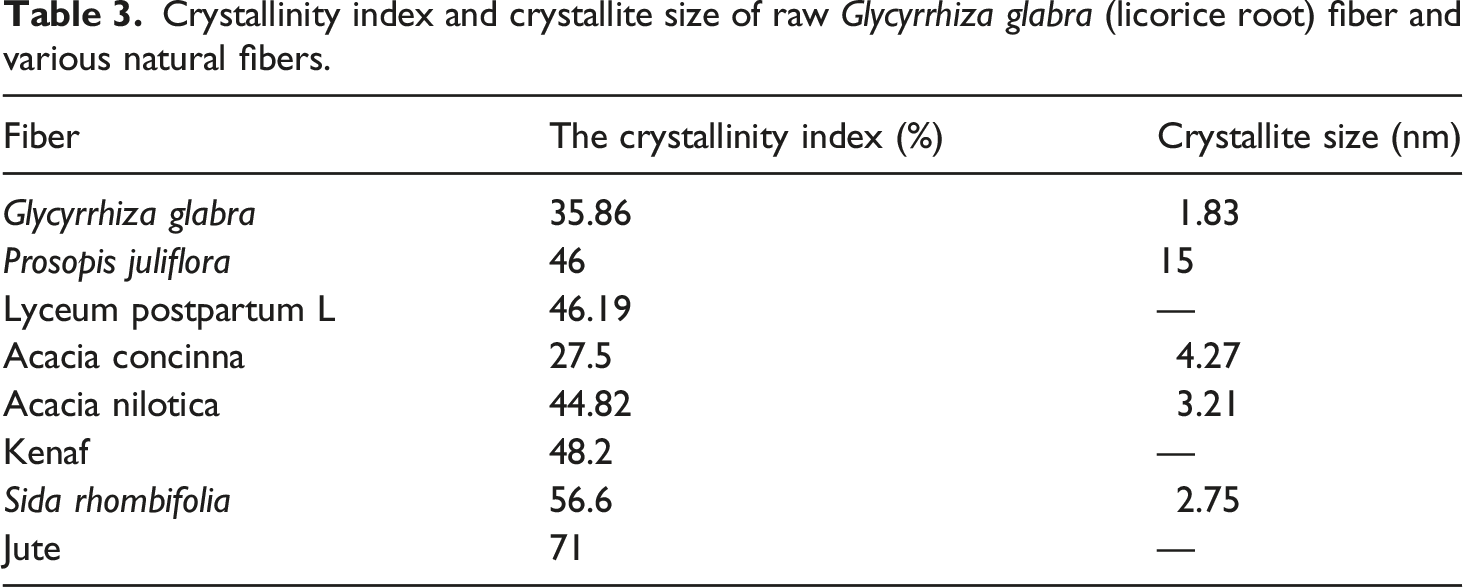
This study is devoted to characterization of the Glycyrrhiza glabra (licorice root) fibers (GGFs) that have different uses in industrial areas, globally. For this purpose, several properties of GGFs were investigated to determine their suitability for natural fiber-reinforced composite production. Such properties include; physical, chemical, thermal, morphological, X-ray diffraction (XRD), and Fourier transform infrared (FTIR) spectroscopy, as well. As a result of these analyses, it was found that the GGFs are composed of cellulose (40.46%), hemicellulose (15.94%), lignin (12%), waxes (1.3%), moisture (9.93%), and others. The density of GGFs was measured as 1.43 g/cm3. Additionally, the existence of cellulose with a 35.86% crystal index, was also verified by the XRD characterization results of these fibers. The thermogravimetric analysis (TGA) results showed that GGFs are thermally stable within the polymerization process temperature of 354.09°C. As a result, it was determined that GGFs have characteristics with significant potential as cellulose-based reinforcement fiber for industrial applications.
Keywords
Introduction
Natural fibers are widely being utilized in the industry because of global warming, decreasing oil resources, and the climate change. 1 Jute, hemp, and flax as natural fibers are already taking place for structural applications while they have excellent properties besides being biodegradable, lightweight, renewable, and low-cost.2–5 The extraction of plant-based natural fibers can be made from different parts of plants, and classified accordingly as seed (cotton), leaf (abaca, agave, henequen, sisal, etc.), stem (flax, hemp, jute, kenaf, ramie, etc.), and fruit (coconut, cotton, kapok, etc.) fibers. Natural fibers contain cellulose, lignin, hemicellulose, pectin, and waxes in their structures. The most abundant fiber type in nature, in terms of resources is cellulose, and it is the primary essential part of plant-based fibers.2,6 Natural fiber production is a long process from plant growth to fiber extraction. Fibers are extracted from the plants mostly by rotting in water to remove the outer parts of the plant containing pectin, hemicellulose, lignin, and waxes.7–9 The physiological and chemical properties of natural fibers, and their compositions/structures vary due to several factors including unpredictable weather during plant growth.2,10 Plant-based fibers that are commonly used need to provide required qualifications. Thus, new forms of fibers have been studied.11,12 GGF is a newly noticed fiber, and a waste product whose worldwide presence spreads from Eastern Europe to Russia also as a medicinal material. The Glycyrrhiza glabra (licorice root) plant belongs in the Fabaceae family. The GGFs used in this study were obtained from the plant roots taken from the growth areas in Şanlıurfa province located in the Southeast region of Turkey. It is called as “meyan” by the relevant local people in Turkey. In this research, the physical, chemical, and thermal properties of GGFs were investigated by using XRD, FTIR spectroscopy, and TGA. The results from GGF characterization are compared with the ones from commonly used plant-based fibers as reinforcement in composite production to investigate their compatibility.
Materials and methods
The extraction of GGFs
GG is a plant that has been used for a long time since it exhibits various medicinal properties. GG has a cylindrical rod shape with a range of 0.5–2.5 cm in diameter, and 15–50 cm in length. The GG plants used in this study were collected from the southeast part of Turkey near the city of Şanlıurfa with aged woody roots. Next, the outer parts of the plants were peeled of, and then dried by isolating them from the sun for two weeks. The GG plant, wet cylindrical GGFs, and the dried and separated GGFs are shown in Figures 1(a)–(c), respectively. (a) GG plant, (b) wet cylindrical GGFs, and (c) dried and separated GGFs. GGFs: Glycyrrhiza glabra (licorice root) fibers.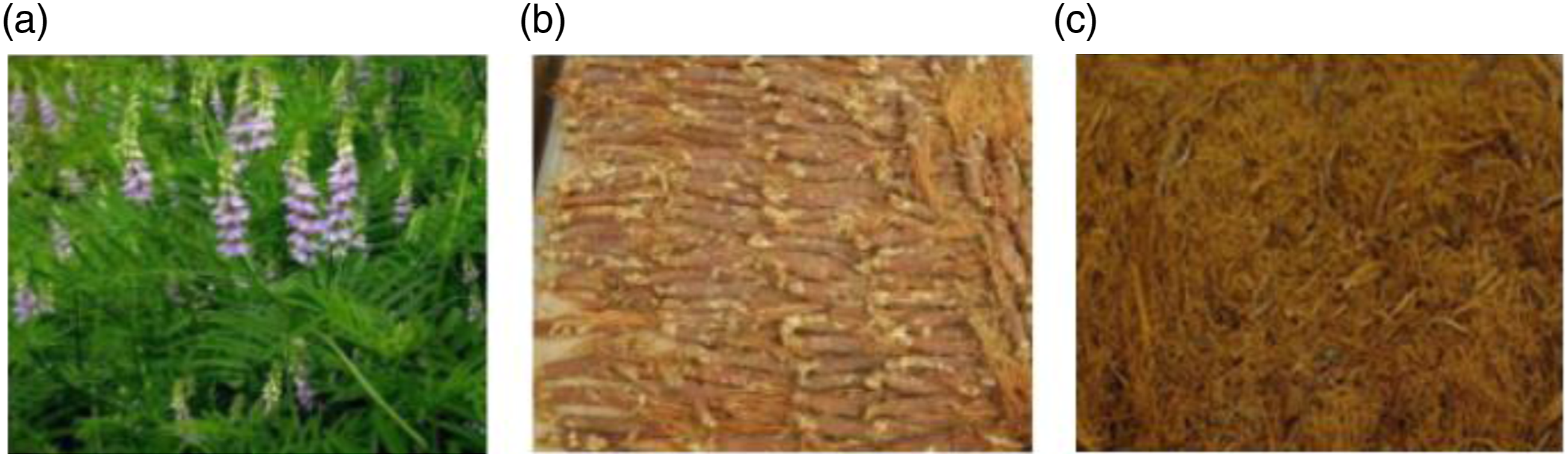
Chemical analysis
These analyses aim to determine the density, and fiber diameter, as well as the rates of cellulose, lignin, wax, and moisture in GGFs. The Conrad method 13 was used to measure the amount of cellulose, while the Klason method 14 was used to measure the amount of lignin. The fibers' density were determined by using Mettler Toledo xsz05 15 device, and their moisture content was calculated by using Sartorius MA45.16,17
Density determination
The density of GGFs were determined according to ASTM D8171-18 standard based on Archimedes Law, and calculated by the following equation.
18

In the equation given above,
Determination of morphological properties
Scanning Electron Microscope (SEM - ZEISS/EVO LS10) was employed to obtain high-resolution images to analyze GGFs’ morphological properties such as surface roughness, cell wall structure, surface porosity, and diameter.
Categorization of chemical functional groups
Using a Perkin Elmer Spectrum 400, FTIR test was performed to identify the functional groups, and the related fiber components present in GGFs. The samples were grounded, and spread out over KBr pellets. With a resolution of 2 cm−1, signal-to-noise ratio of 32 scan/min., and IR spectra range of 4000 cm−1 to 400 cm−1, the relevant were collected.
Evaluation of crystallinity index and crystallite size of GGFs
The implementation of X-radiation (X-ray) techniques in the qualitative and quantitative studies of materials are now approaching a century. Given the scatter, emission, and absorption characteristics of X-rays, the broad definition of X-ray techniques encompasses a variety of systems; however, the phase identification of GGFs was carried out using XRD analysis, and was documented on a PANalytical XPert Pro MPD system.
At a scan rate of 5°/min., a monochromatic intensity of Cu K radiation in the 10°–80° range was produced by an X-ray tube. The generator was running at a 40 kV, 30 mA voltage. The crystallinity index (CI) of GGFs was calculated by using equation (2).
19

Thus, in the XRD spectrum, I002 represents the intensity of the crystalline peak, while Iam represents the amorphous peak intensity. By using equation (3), the crystallite size (CS) of the GGFs was calculated.
20

In equation (3), k is the Scherrer’s constant (0.89) and β is the peak’s full width in radians at 22°, which is the half-maximum value.
TGA analysis
Both thermogravimetric (TG) and differential thermogravimetric (DTG) analyses were performed to determine the specimens’ thermal stability. Here, TG analyses provide the estimate of the chemical structure of samples. Tests were applied by Seiko SII TG/DTA 7200. Powdered samples (6 mg) were put on a ceramic crucible in a furnace (20 mL/min N2 flow rate) under controlled circumstances. The temperature change rate parameter has a range of 10°C/min to 600°C/min.17,21 Global weight loss is the parameter to observe thermal degradation. The setup included a furnace in which the GGFs were placed on an Al crucible supported by a precise scale.
Tensile properties measurement of GGFs
Tensile tests of GGFs were performed in accordance with ASTM D3822-07 standard by using INSTRON universal testing machine (5500R) with the loading rate of 0.1 mm/min, and the gauge length of 10 mm.
Results and discussion
Determination of morphological properties
SEM images of GGFs with 1000, 100, and 250 magnifications are shown in Figures 2(a)–(c), respectively. Scanning electron microscope images of obtained Glycyrrhiza glabra (licorice root) fibers.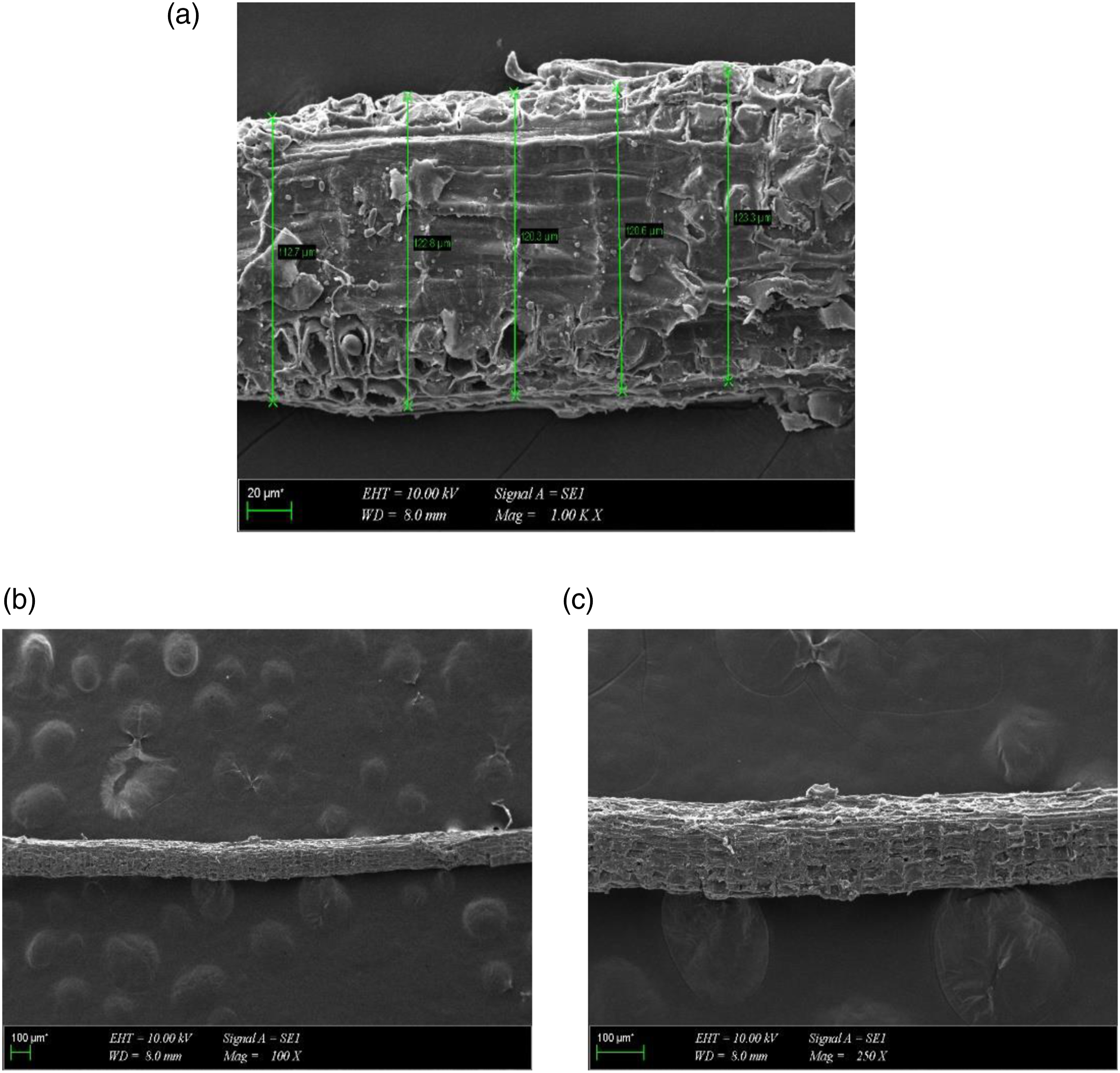
The fiber diameter of GGFs is not uniform along the fiber length axis, as can be seen in relevant SEM images. Here, the GGF’s outer layer seems to be packed with a coarse rectangular tissue with certain abnormalities, as can be seen in the longitudinal surface view of the fiber at ×1000 magnification. Additionally, it has been noted that the surface structure of GGF is rough. According to a paper, a surface that is uneven and rough might promote the resin penetration into fibers, 22 along with the matrix and fiber adhesion in a composite. Thus, these fibers can be employed as reinforcement in the formation of composite materials, according to SEM pictures.
From Figure 2, it is clear that the diameter range of the GGF is ∼ 88–123 μm, and the average fiber diameter is determined as 119.94 ± 38.99 μm according to the diameter measurements taken from several places along the fibers.
Chemical analysis
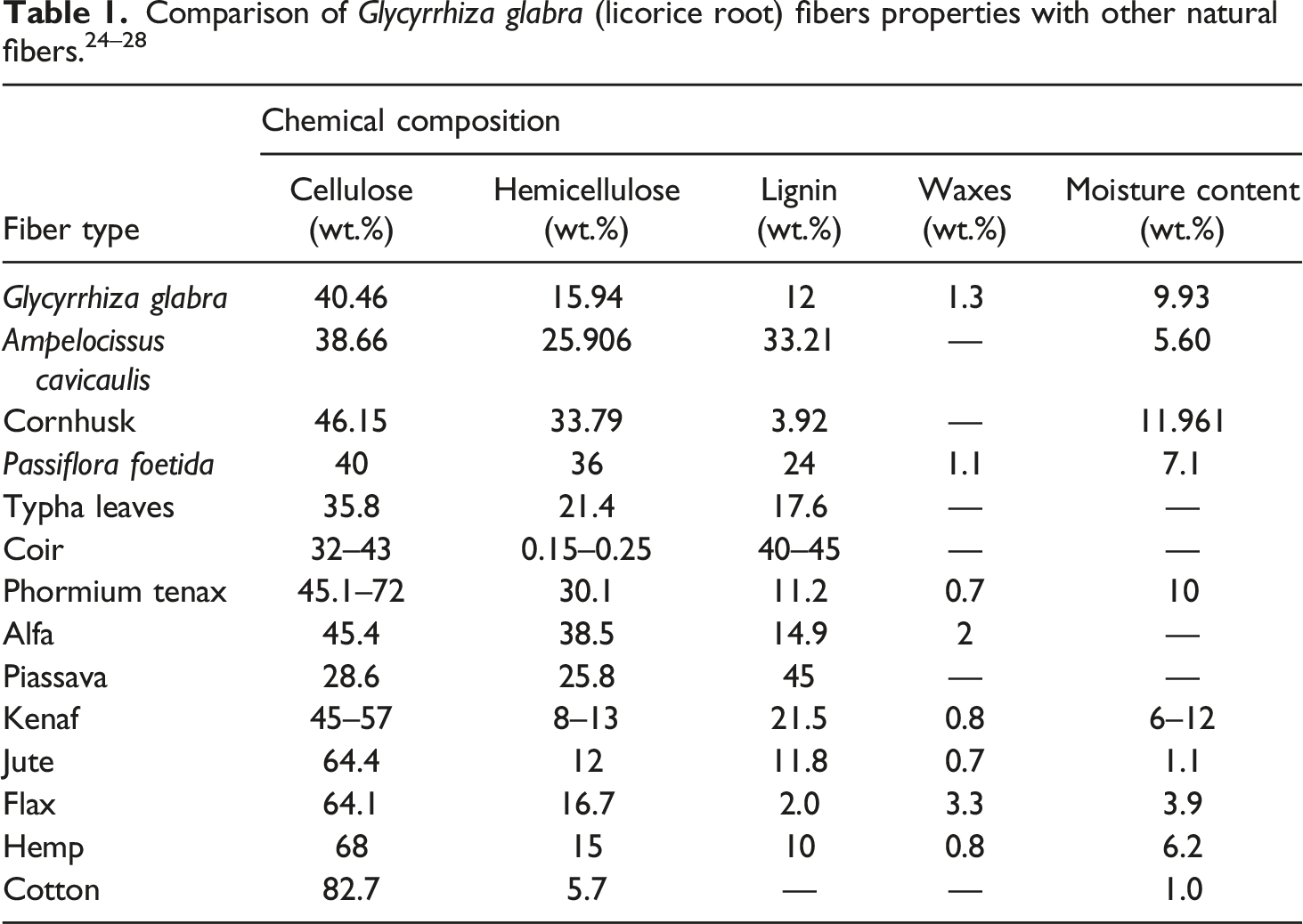
The cellulose amount in GGFs was found as 40.46 wt.% and this was high when compared with other natural fibers such as Ampelocissus cavicaulis (38.66 wt.%), Passiflora foetida (40 wt. %), and Piassava (28.6 wt. %).24–26 The cellulose molecules have hydroxyl groups making hydrogen bonds to form highly crystalline structures, so they have good strength and make the fiber insoluble in most solvents. 27 The hemicellulose content in GGFs was found as 15.94 wt.%, which is quite high compared to that of other natural fibers such as coir (0.15–0.25 wt.%), kenaf (8–13 wt.%), jute (12 wt.%), and cotton (5.7 wt.%).25–29 Hemicelluloses are polysaccharides, they have short branching chains that make hemicelluloses hydrophilic and sensitive to biodegradation, and they are not highly thermal resistant. Because of their amorphous form, hemicelluloses provide lower strength and resistance to chemical impacts. 30
In this study, the raw GGFs were chemically treated to improve their hydrophilicity and increase their adhesion to the polymer matrices in composite production by reducing the amorphous contents like pectin and hemicellulose. 20 The amount of lignin in GGFs (12 wt.%) was found moderate. This amount is higher than corn husk (3.92 wt.%), Phormium Tenax (11.2 wt.%), jute (11.8 wt.%), flax (2 wt.%), but lower than coir (40–45 wt.%) and Ampelocissus cavicaulis (33.21 wt.%).25–29 Lignin is found on the fiber surface, and it is a polyphenolic compound that shows resistance to enzymes and chemical attacks. 31 The stiffness and thermal stability of fiber are proportional to its lignin amount which increases the resistance of the GGFs to biological attacks. 32 Lignin has an opportunity to be combined with biopolymers such as starch, cellulose, and poly-hydroxybutyrate to produce biomaterials with high mechanical features. 33 The wax content of GGFs was obtained slightly high (1.3 wt.%) but less than alfa (2 wt.%) 155 and flax (3.3 wt.%). The increase in the high wax ratio in cellulosic-based fibers reduces the fiber-matrix surface compatibility in the composite. The ratios of other contents such as holocellulose, alpha-cellulose, and moisture, were 56.40%, 36.50%, 9.93%, and 9.93% by weight, respectively.16,24,28
It was found that GGFs had a rich cellulose (40.46%) and holocellulose (56.40%) content by weight when compared to most of the cellulosic reinforcement fibers. GGFs’ hemicellulose content was measured as 15.94% by weight which is an acceptable limit for reinforcement in polymer composites. The existence of 12% lignin by weight in GGFs, which was determined in our experiments, improves the fiber-polymer bonding when employed as reinforcement in polymer matrix composites. The moisture content of the GGFs was found as 9.93% by weight. As a result, when the chemical analyzes of Glycyrrhiza glabra fiber are examined in terms of both holocellulose ratio and other components, it was seen that GGFs have a suitable characteristic as a reinforcement material for composite production. The density of GGFs was found to be between 1.43 g/cm3 and this value was lower than other widely used natural reinforcement fibers used in lightweight composite applications such as hemp (1.47 g/cm3), flax (1.5 g/cm3).16,24,28,29 The GGFs provide lower density, and this is desired property for producing lightweight composites. 34
Categorization of chemical functional groups
More detailed information on the nature of the GGF residue was also presented with the FTIR-ATR measurements. Fourier transform mid-infrared spectroscopic analysis is also a fast and non-destructive technique for the qualitative detection of biomass components in the FTIR region.
The FTIR spectrum of the GGFs was presented in Figure 3 for the wavenumber range from 450 cm−1 to 4000 cm−1. Sharp peaks at 741.31 cm−1, 1023.80 cm−1, and 1440.2 cm−1 indicated strong bonding between alkyl halides and organic functional groups (C-Cl and C-F).
39
Fourier transform infrared spectrum of Glycyrrhiza glabra (licorice root) fibers.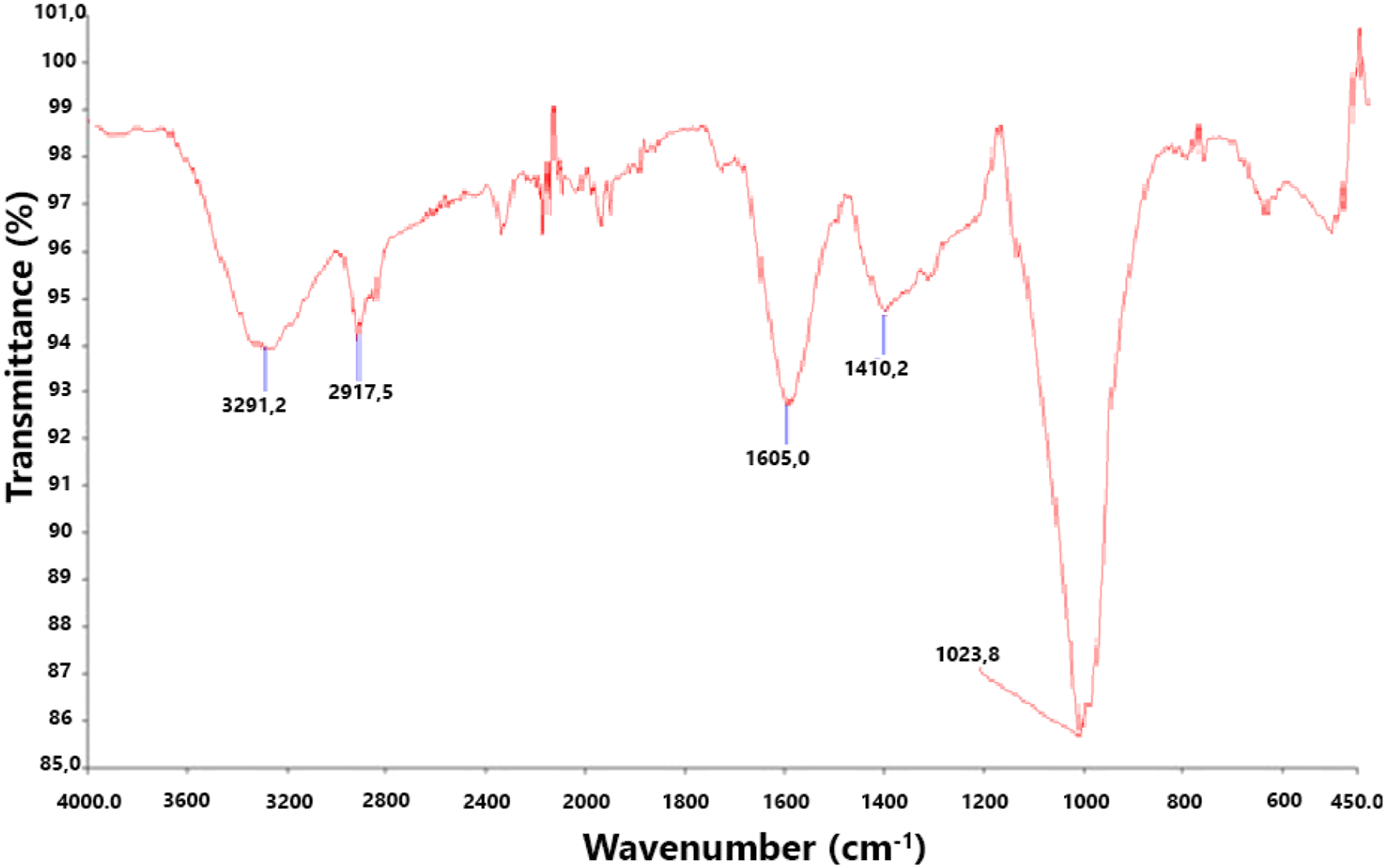
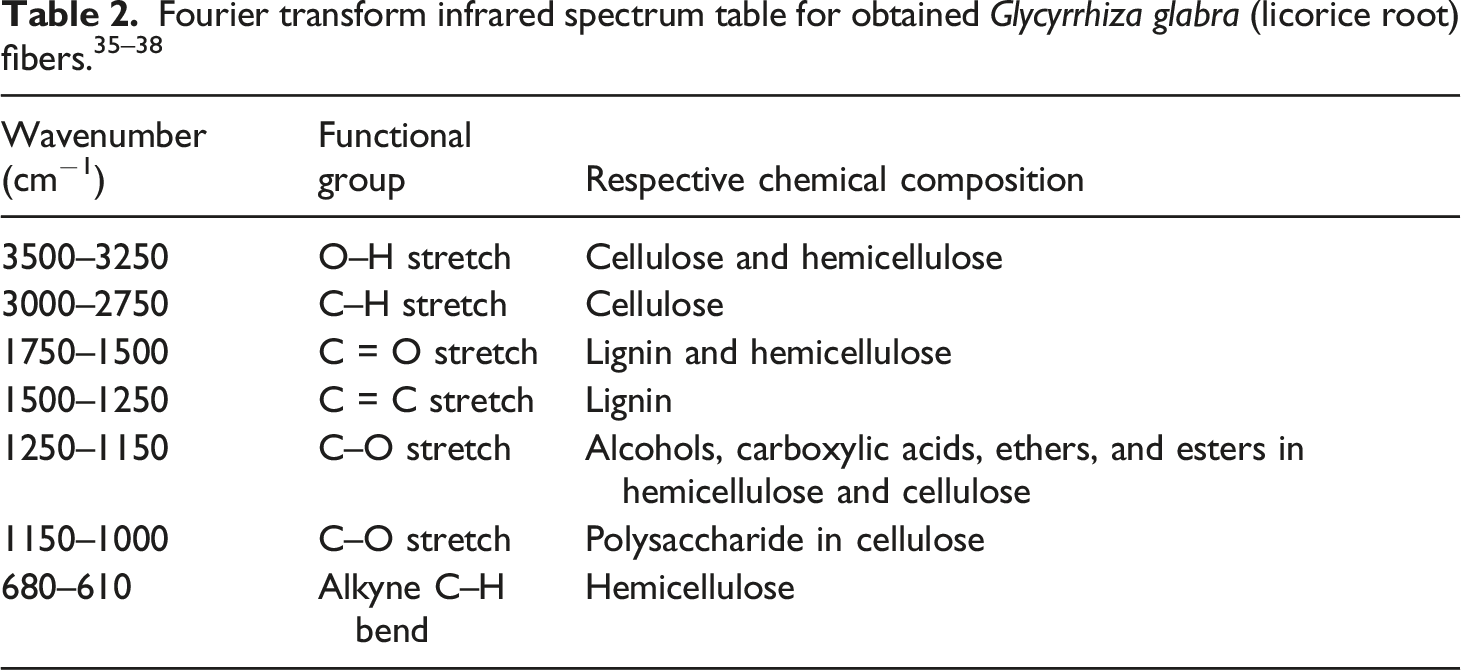
The presence of a broad absorption band within 3500–3250 cm−1 with a peak at 3291 cm−1 was mainly due to the H-bonded OH stretching vibration of α cellulose and hemicelluloses. The peak at 3000–2750 cm−1 was assigned a C−H stretch of alkanes in the cellulosic structure of GGF. The peak at 2917.5 cm−1 indicated C−H symmetric and asymmetric stretching of α cellulose. The peak at 1605 cm−1 was attributed to the existence of the C = O stretch of carbonyl groups in the hemicellulose and lignin structure. The low intensity of the band at 1410.2 cm−1 was related to the C = C stretch of alkenes in lignin. The strong peak at 1023.8 cm−1 was attributed to the symmetric C-OH stretching vibration of lignin. The peak at 741.31 cm−1 corresponded to the non-symmetric out-of-phase bending of the glucose bonds in the cellulose confirming the presence of β glycosidic linkages between the monosaccharides in cellulose. The bands near 600–680 cm−1 indicated an alkyne bend in hemicellulose structure.40–43
Evaluation of crystallinity index and crystallite size of GGFs
Effects of X-image diffraction for GGFs were depicted in Figure 4, and two main peaks were precisely represented in the diffractogram. In the plane of cellulose to cellulose, the density of the minimum peak at 17.22° was obtained as 1940, while the density of the maximum peak at 21.64° was obtained as 3025. X-ray diffraction spectrum of Glycyrrhiza glabra (licorice root) fibers.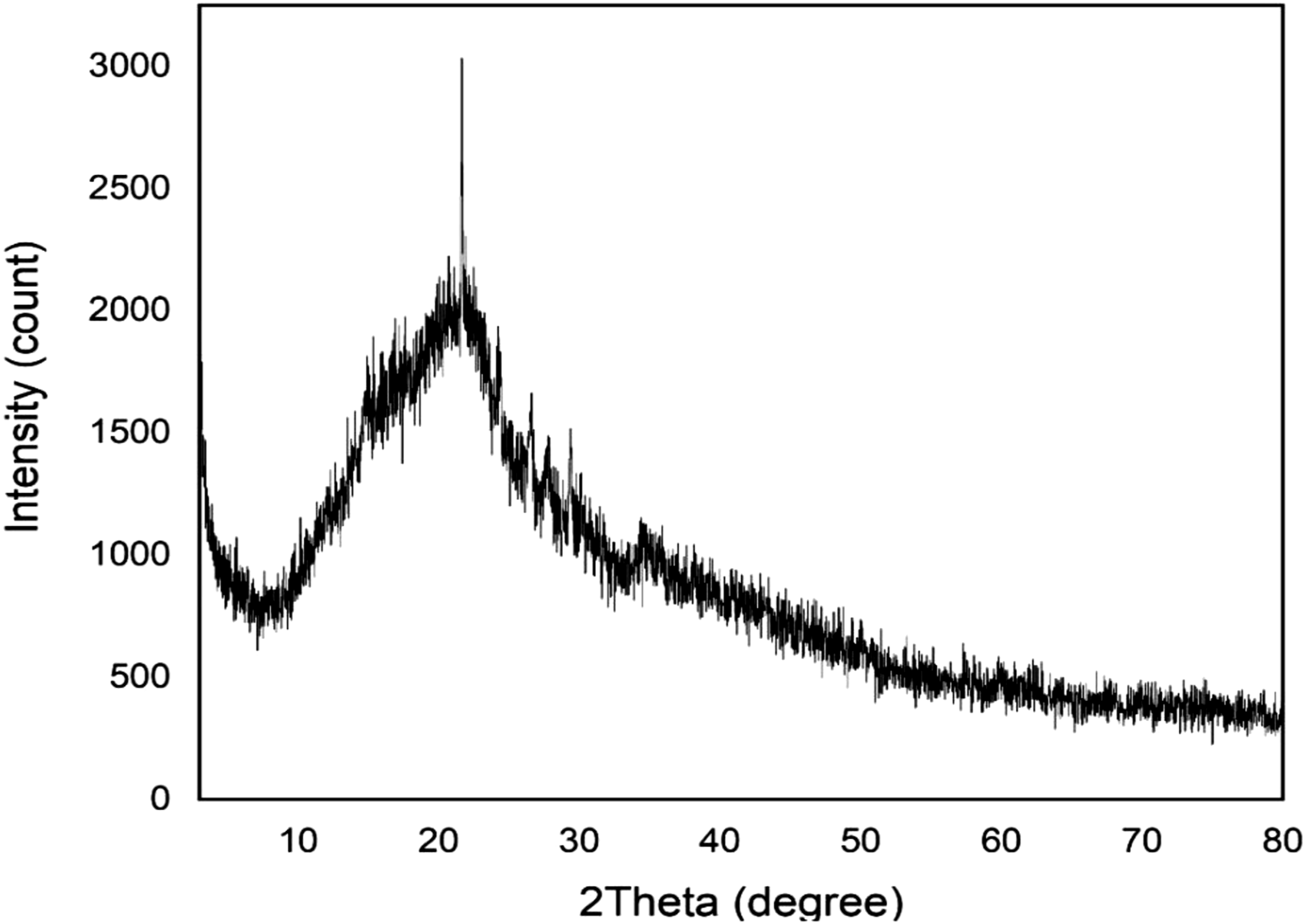
Crystallinity index and crystallite size of raw Glycyrrhiza glabra (licorice root) fiber and various natural fibers.
TGA analysis
Thermogravimetric measurements were performed to learn more about the content of cellulose, hemicellulose, and lignin, which were the three main components of biomass. The TG and DTG analyses were performed on the material in the air and led to a clear demonstration of four different stages with their respective amounts as shown in Figure 5. Results of the thermogravimetric and differential thermogravimetric analysis obtained from Glycyrrhiza glabra (licorice root) fibers.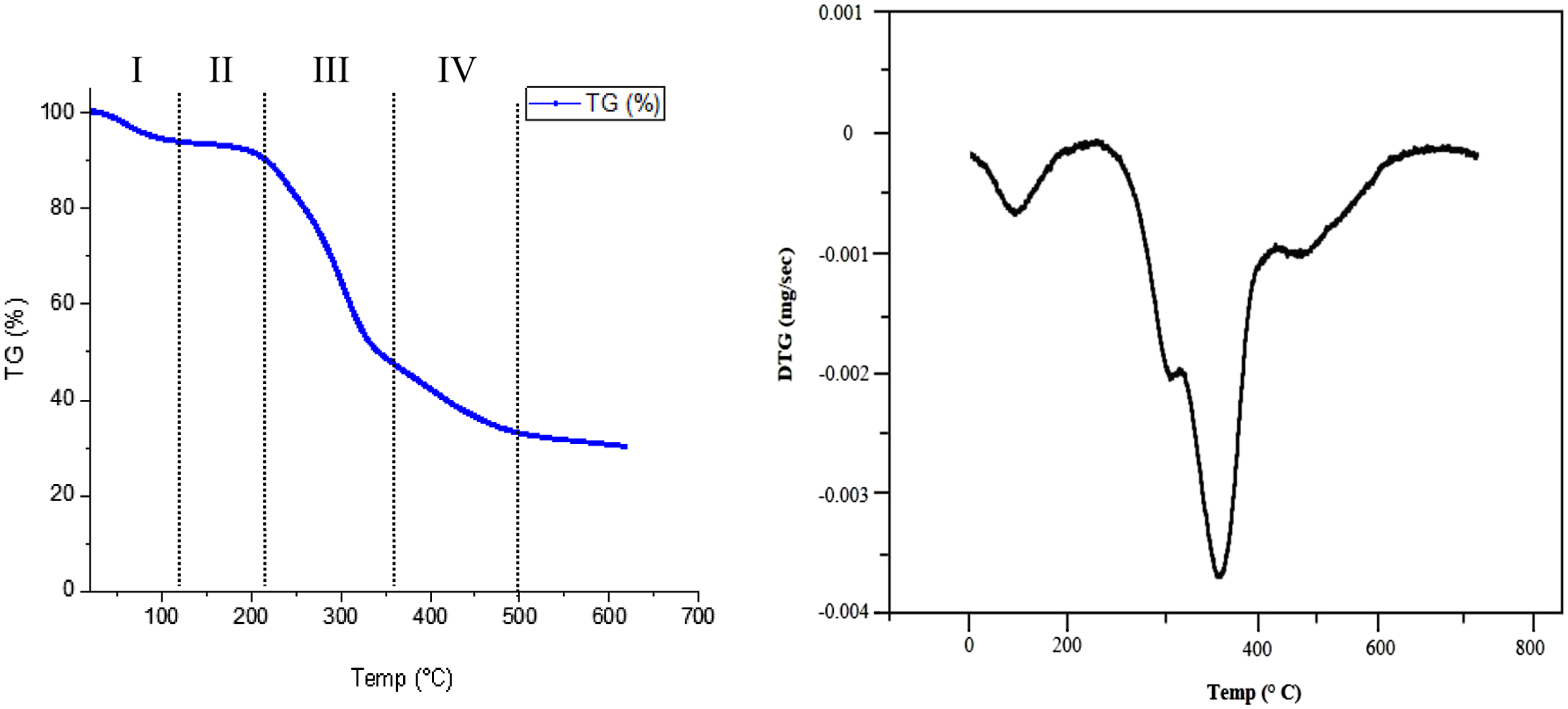
It was seen that the three components began to decay in order. Although it is common for different degradation events to occur simultaneously, Stage I (6.63%) was the dehydration process caused by the water and ethanol content of the residue bulk and then ended at 120°C. Stage II (9.47%) between 120°C and 220°C (T-start = 216.9°C). This was caused by the hemicellulose content. Hemicellulose has a linear polymer structure with short side chains, so it is easier to decompose than the other contents of lignocellulosic biomass. Most of the degradation that occurred in Stage III (41.30%) was mainly related to cellulose.
Cellulose contains semicrystalline arrangements of interrelated chains and degrades between 200°C to 370°C (T-start = 363.0°C). There is a strong interaction between the different components, so this helps the cellulose degradation temperature to increase. Lignin decomposition mostly occurred in Stage IV (17.44%). Lignin is a phenolic polymer and surrounds the polysaccharides of cell walls since it has a complex structure. Thus, it contributes to producing tough and durable composite materials. These four stages did not cover the entire temperature range; therefore, approximately 30% of the material was not attributed to any degradation stage. In Figure 5, TG tests of GG residues in N2 atmosphere is given. Here, a 6% loss was measured below 120°C, which could indicate the negligible presence of moisture or possibly ethanol residues. Contrarily, the onset of material degradation appeared to peak at around 60°C, 240°C, and 354°C which were normally applicable to lignocellulosic structures. This was indicated by the inflection point of the DTG analysis curve which is given in Figure 5. It could also be suggested that the behavior of GG waste was essentially closer to that of its main component hemicellulose was observed within the remaining mineral mass of around 30% at 600°C.18,46–50
Mechanical properties of GGFs
Cellulosic fibers’ mechanical characteristics generally vary depending on the type of plant used, the region where it grew, and the position of the fiber inside the stem. Furthermore, the mechanical properties of cellulosic fibers are influenced by moisture absorption, diameter, fiber density, and the testing conditions (gauge length). Cellulosic fibers differ due to variations in their chemical structure that result from a variety of circumstances. Due to their nature and variations in diameter based on their bundle fiber structure, lignocellulosic fibers exhibit large standard deviation values for their mechanical properties. Previous research has demonstrated that the plant population influenced the shape and mechanical characteristics of cellulosic fiber.51,52 The stress-strain curves were drawn by using the average value of the sample (with 30 replicates) as can be seen in Figure 6. Stress-strain values obtained from Glycyrrhiza glabra (licorice root) fibers.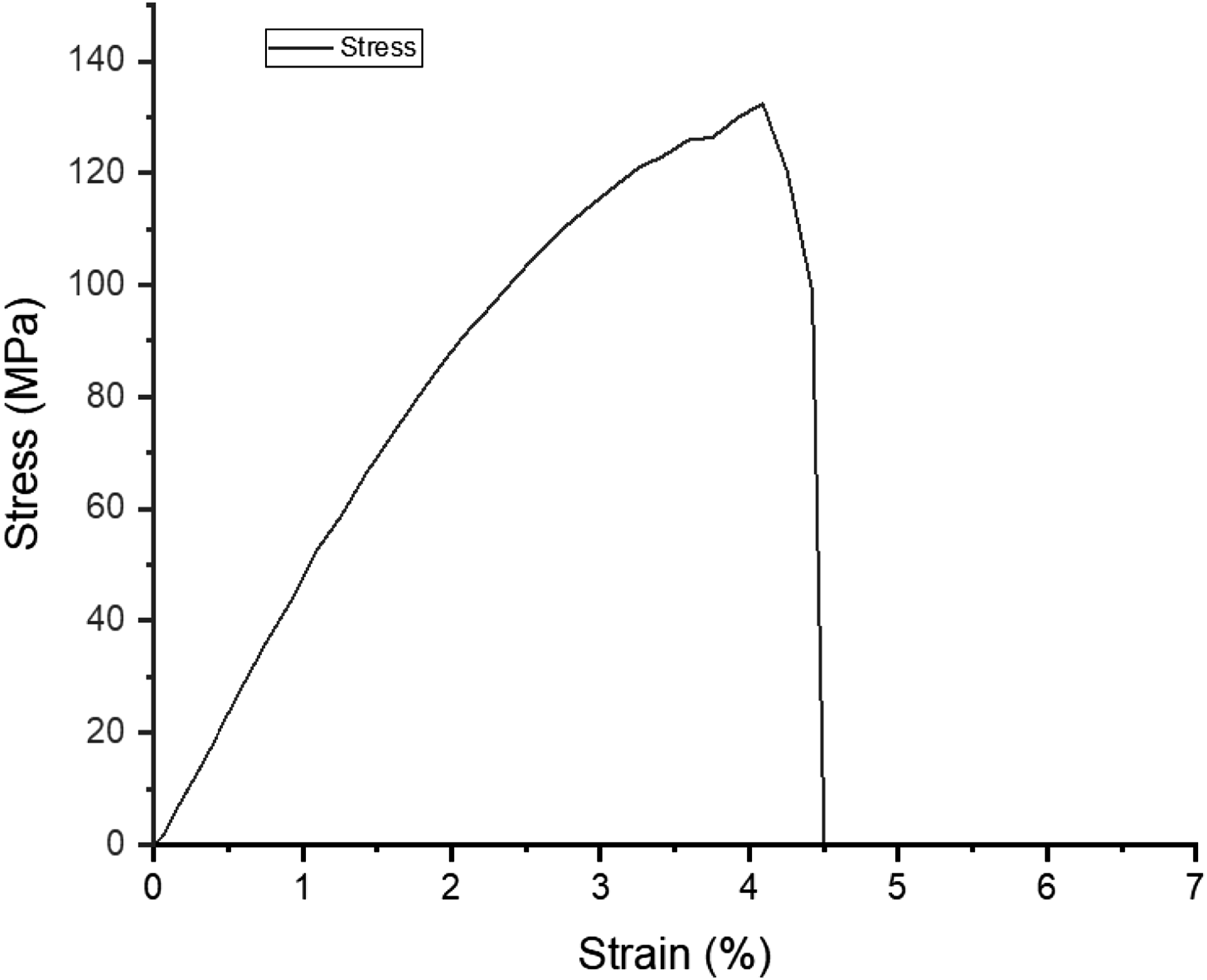
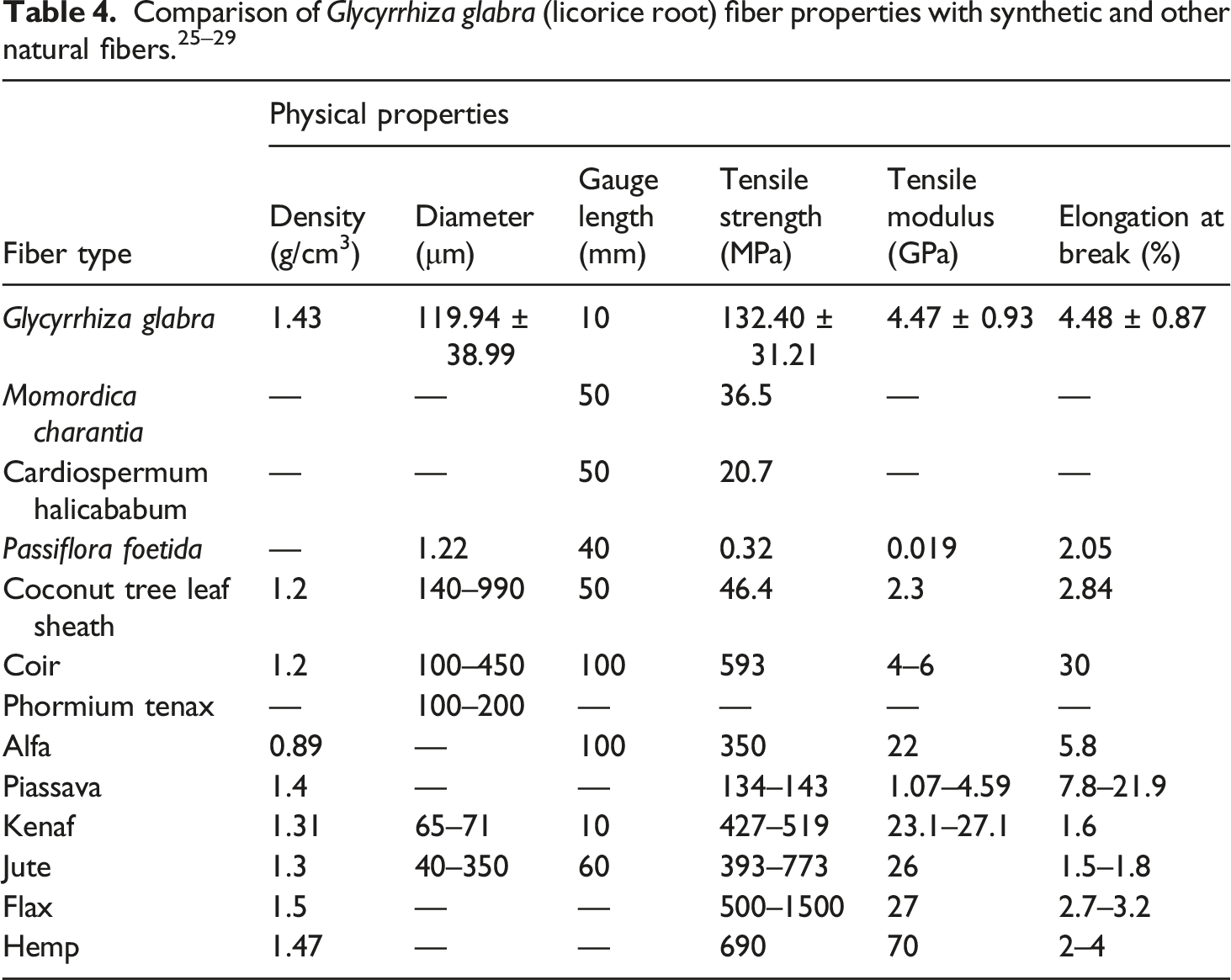
As can be seen in Table 4, GGF has approximate values to other cellulosic fibers regarding these properties. All of these parameters were believed to have an impact on the mechanical characteristics of GGFs. 27 The highest tensile resistance that the fiber could withstand before failing was used to determine the tensile strength of GGF. The GGFs were discovered to have a tensile strength of 132.40 ± 31.21 MPa, and a failure strain of 4.47 ± 0.93%, while they seem to have a tensile resistance that was comparatively stronger than the Momordica charantia (36.5 MPa), Cardiospermum halicababum (20.7 MPa) fibers, and Coconut tree leaf sheath (46.4 MPa).25–29 The elongation at break, determined using the tensile stress-strain curves of fiber samples, was found to be 4.48 ± 0.87%. The linear slope of the stress-strain curve was used to calculate the tensile modulus of GGF, and a value of 4.47 ± 0.93 GPa as the result was measured. There are several natural fibers with tensile modulus, including Coir (4–6 GPa), Piassava (1.07–4.59 GPa), and Passiflora foetida (0.019 GPa).
According to the research, environmental factors during plant growth have an impact on the chemical make-up and structural makeup of fibers derived from such plants. Additionally, test variables might alter the mechanical characteristics of fibers. 33
Conclusions
The elemental composition, surface appearance, molecular interactions, crystallization behaviors, thermal decomposition, and mechanical behaviors of GGFs were examined in this study. Comparing GGFs to other cellulosic reinforcing fibers, the results show noteworthy characteristics. GGFs’ cellulose-based structure gives them exceptional elongation and thermal stability characteristics. Although it has a lower cellulose density and tensile strength, chemical pretreatments can boost its performance for usage in a variety of applications. Other cellulosic reinforcing fibers were discovered to be compatible with the fibers’ crystalline index. Fibers’ thermal stability up to 354.09°C, which was comparable to that of other lignocellulosic fibers, was determined by thermogravimetric analysis. Due to these qualities, GGFs have a good potential as a source of cellulosic fiber for various sectors. In addition, the GG plant can be grown abundantly in riverbeds and industrial chains can be formed to extract its root to use in the production of polymer composites for various industrial applications. Thus, society and the environment can benefit from low-cost GGFs without using the limited resources of the world.
Footnotes
Declaration of conflicting interests
The author(s) declared no potential conflicts of interest with respect to the research, authorship, and/or publication of this article.
Funding
The author(s) received no financial support for the research, authorship, and/or publication of this article.
Correction (September 2023):
This article has been updated with minor textual correction since its original publication.
