



Abstract
This study mainly aims both to prepare well-shaped crosslinked 3,3,4,4,5,5,6,6,7,7,8,8,8 tridecafluorooctyl-4-(acrloyloxy) benzoate (ABCF13) polymer microspheres and to investigate the influences of the prepared microspheres addition on the crystallinity, thermal, mechanical and morphological features of high density polyethylene (HDPE). The suspension polymerization method was used for the production of well-defined microspheres and, the content of the microspheres varied from 1.0% to 10.0% in the composites. The characterization of crosslinked poly(ABCF13) microsphere-loaded HDPE composites were performed via powder X-ray diffraction, differential scanning calorimeter, universal mechanical (tensile and impact) testers and scanning electron microscope (SEM) techniques. According to the experimental findings,
Keywords
Introduction
High density polyethylene (HDPE) is one of the crucial and versatile thermoplastic having lots of the favorable features such as substantially flexible, transparent, weather-proof, good toughness, easy to produce with the lots of methods, excellent processability, low cost, good résistance against to chemicals, satisfied mechanical performance etc.1-3 Moreover, HDPE is hardest member of PE family due to its linearity with a little entanglements. 4 Thanks to these superior characteristics, HDPE has a remarkable demand by several industrial sectors to produce many various materials such as daily bottles, boxes, fuel tanks of cars, packaging container, toys, carrier bag, disposable suits, wire coating, cable insulation, pipes etc. 5 Correspondingly, the global production value of HDPE is recorded as roundly 30 million tons per year. Depending on that, it is projected that the compound annual growth rate (CAGR) will reach to over 4% with the revenues of about $88 billion by the year 2024. 6 Therefore, it is necessary to produce novel HDPE-based composite materials with advanced properties by reducing or getting rid of the drawbacks of HDPE. With this aspect, lots of studies were done to improve structural, mechanical, thermal, rheological properties of HDPE by using different secondary components in the form of particle or fibers.7–13 As seen from these studies, the chemical character, particle size and shape, compatibility with the matrix, content level, dispersion and distribution of the filler has a critical and deciding role in the performance of the final composites.
The fluoropolymers known as fully or semi-fluorinated polymers have attracted more attention recently since the existence of the fluorine atoms instead of hydrogen atoms in the molecular structure of the polymer imparts the some peculiar features to the polymers. Namely, the substituting of fluorine provides to improving in the thermal stability by reducing flammability, decreasing of the surface energy and friction coefficient as well as increasing the electrical and optical features. 14 However, the compatibility level between the components, which is the main factor affecting directly the properties (especially mechanical) of the matrix,15,16 becomes relatively lower in the composites including the fluoropolymers when compared to the others. In order to get rid of such adhesion problem, the polymer filler obtained from the fluoroalkyl acrylates (FAs) can be used in the composites. Namely, FAs polymers are the branched polymers with more side chains bearing the rigid perfluorinated segment with helix structure bonded to the backbone of the main chains. This ensures the such polymers shows both polar and polar characters, which gains them dual intermolecular interaction ability in the composite matrix. Thus, the fiber-matrix interfacial adhesion is improved and better mechanical performance is obtained.17,18 In accordance with that, in our previous study, we prepared the semifluorinated acrylic compound-grafted HDPE copolymers and, it was found that there existed considerable interaction between the groups of the components without showing any phase separation in the matrix, which results in the improved HDPE.
On the other hand, it is well-known that the microspheres are also valuable fillers for the composite materials since they have lower density, provide dimensional stability with smooth surface, augment the impact strength, enhance the thermal insulation and reduce the cost.19–21 Especially, the polymer-based microspheres make possible to fabricate rigid, endurable, functional, less susceptible to breakage and lightest filler particles for the composites. 22 Such microspheres with different morphological properties can be produced by means of the suspension, dispersion, emulsion, spray drying, solvent extraction, precipitation as well as inverse-suspension methods.23,24 Additionally, using the microspheres as filler in thermoplastic and thermoset composites creates positive effect during both extrusion and injection molding processes due thanks to its ball-bearing behavior by creating sliding effect. This enables to improve fundamental properties of the composite compounds.25–27 As regarding for that, Patankar and Kranov studied the modification of thermal and mechanical features of HDPE with the usage of hollow glass microspheres (HGM). 28 They reported that HGM-filled HDPE composites including certain amount of the compatibilizer depicted better mechanical performance and lower thermal conductivity when compared to neat HDPE. In another foregone study, the structural, mechanical, thermal and morphological properties of HGM-filled wood/HDPE composites were investigated. 29 The obtained results from this study depicted that the existence of HGM considerably decreased the density of the final composites, whereas enhancing the mechanical strength and specific flexural modulus (by about 35%) as well as increasing thermal property. Moreover, they revealed that the addition of HGM into HDPE-based matrix created positive impact on the processing and flow characteristics of the samples accompanied by providing the dimensional stability. In another work, Deepthi et al. attempted to develop lightweight composites by using silanated fly ash cenospheres as a filler. 30 They found that the presence of the surface treated flay ash cenospheres in the matrix increased tensile strength, which caused by the formation of the good interfacial adhesion between HDPE and surface treated cenospheres. Moreover, it was found that the degree of crystallinity of HDPE phase reduced with the addition of the cenospheres due to fact that the close packing of HDPE chains was inhibited due to the formation of strong molecular interaction between the components. In addition to that, the improved PE-based composites loaded with the fluoropolymer-based microparticle like PTFE were also encountered in the literature.31,32
As mentioned above, it is apparent in the composite materials that the interfacial adhesion between the components and the characteristics of the filler are the major factors determining the final performance of the composites. By considering that, the novel fillers should be prepared to control such effects in the composites. However, the best of our knowledge, there exists no work focusing on both the preparation of the crosslinked polymeric microspheres including fluorine and the usage of them as a filler in HDPE. Thus, the additional studies should be done to better understanding of the behavior of the rigid microsphere-filled thermoplastics. In this aspect, we aimed both to prepare the crosslinked semifluorinated acrylate polymer microspheres and investigate possible effect of these microspheres addition on the crystallinity, thermal, mechanical and morphological features of HDPE. Moreover, by considering rigidity,ball bearing behavior and adhesion level of the produced microspheres the relation between the measurements were discussed meticulously.
Experimental
Materials
In order to synthesize the monomer, 3,3,4,4,5,5,6,6,7,7,8,8,8-tridecafluorooctyl-4-(acrloyloxy) benzoate (ABCF13), the main chemicals; p-hydroxybenzoic acid (HBA, Merck), acryloyl chloride (AC, Merck), thionyl chloride (Merck) and 3,3,4,4,5,5,6,6,7,7,8,8,8-dodecafluoro-1-octanol (F13, Alfa Aesar, 97%) were utilized directly as purchased from the companies without any purification. The synthesis of ABCF13 were performed according to the procedure as described our previous study 14 and, all the obtained data showed well correlation with the data in this previous study. Moreover, for the preparation of the crosslinked microspheres, ethylene glycol dimethacrylate (EGDMA) (Merck A.G.) as the crosslinking agent and potassium persulfate (KPS, Sigma Aldrich) as the initiator were used as received from the companies. The main matrix, high density polyethylene (HDPE) in the granular form with the code of S0464 was supplied from Turkish Petrochemical Industry (PETKIM). In order to obtain powder form of HDPE, the granules were refluxed for 3–4 days in xylene solvent at the boiling temperature (138–139°C). Then, the dissolved HDPE was precipitated with the addition of ethanol, and collected by filtering, then dried in vacuum at 50°C for 1 day. After that, obtained HDPE was grinded by cooling in liquid nitrogen, then sieved effectively to remove substantially large pieces. The produced HDPE in fine powder form was used for the preparation of the microbeads-filled composite materials.
Preparation of crosslinked poly(ABCF13) microspheres
Crosslinked poly(ABCF13) microspheres were prepared via suspension polymerization method. 33 First, 0.2 g of ABCF13 in melted form and 1.0% of crosslinking agent (EGDMA) with respect to the weight of the monomer was mixed to obtain the dispersed phase and, 150 ml of pure water at 70°C was prepared as the continuous liquid phase in two necked cylindrical reaction vessel. The prepared dispersed phase was slowly dripped into this water phase. Then, this suspension reaction medium was placed in an oil bath for temperature control, and equipped with a nitrogen gas supply and flat blade turbine type stirrer. The suspension medium was stirred with the rate of 500 rpm at 70°C until the drop equilibrium was established. After the addition of the initiator KPS, 1.3% with respect to weight of the monomer, the stirring of the suspension mixture was continued for a day to accomplish the polymerization reaction in the drops. After that, the obtained product, crosslinked microspheres, was collected by filtration, washed successively with pure water, and then dried in vacuum oven at 40°C for 12 hours. The average yield of the reaction was determined gravimetrically and was found to be 93.0%.
Preparation of crosslinked poly(ABCF13)-filled HDPE composites
The powder form of HDPE initially dried again under the vacuum at 50°C for 1 h. Then, the blends of HDPE with crosslinked poly(ABCF13) microspheres at different compositions (1, 3, 5, 7 and 10 wt% of the mixture) were prepared by directly mixing of the components. Before molding process, in order to achieve good homogeneity in the blends, powder HDPE and the prepared microspheres were mixed by grinding for 1 h. in a mortar with a pestle. Then, the composite samples containing crosslinked poly(ABCF13) microspheres and HDPE were obtained in the dogbone shape with the standard dimensions at 220°C by using Xplore IM 12 micro-injection molder with the 50°C barrel temperature. Minimum three samples were produced for each percentage and all the data were gives as the average value in this study.
Instruments
In order to figure out the phase behavior of the prepared composites, the thermal analyses were carried out by Shimadzu TA-60 WS Differential Scanning Calorimeter under nitrogen atmosphere with a heating rate of 10 °C/min and, the amount of samples for differential scanning calorimeter (DSC) analyses changed between 5-15 mg. Investigation of crystal structures of the samples were done with Rigaku Multiflex powder X-ray diffractometer system with CuKα target giving a monochromatic beam (λ = 1.54°) in the range 2θ = 10–60°. The measurements were also conducted at 5°/min scan speed with 0.02° step increment at the room temperature in air atmosphere. The intensities of the products having same weights were estimated from X-ray diffraction (XRD) patterns. Moreover, the XRD patterns enabled us to determine the lattice constants (a, b and c) and grain size parameters as a result of the broadening of XRD pattern. The tensile tests of the produced dogbone-in-shaped crosslinked poly(ABCF13)-HDPE composites test samples (the gauge length of 50.0 mm, the thickness of 7.6 mm and the width of 13.00 mm), were carried out at room temperature using LLYOD LR30 K (West Sussex, UK) universal mechanical test machine according to the ASTM D-638 standard. During tests, the load cell was 5 kN and the crosshead speed was 5 cm min−1. The stress strain curves obtained from the software of the instrument gave directly the tensile strengths and moduli. The impact strengths of the samples with the thickness of 3 mm and the width 7 cm were conducted by Coesfeld Material Test Pendulum Impact Tester at room temperature by Izod method. The morphologies of both the fabricated microspheres and tensile fractured surfaces of the crossliked poly(ABCF13)-filled HDPE composites were examined with Quanta FEG 250-FEI scanning electron microscopes (FEI Corporate, Hillsboro, USA) worked at 10 kV with the 1 nm resolution power. Before SEM analysis, all the samples placed on the carbon conductive adhesive tape were sputter-coated with gold due to their insulating character of the specimens.
Results and discussion
Characterization of crosslinked poly(ABCF13) microspheres
Prior to the discussion, it must be stated here that the preparation conditions of well-defined crosslinked poly(ABCF13) microspheres were determined depending on the level of the crosslinking agent (EGDMA), the monomer (ABCF13), the initiator (KPS) and stirring rates. As a result of lots of experiments carried out, and then by doing SEM examination of all the obtained products, the optimum parameters depending on this parameters were determined as the follows; 1. 0.2 g of ABCF13 monomer as dispersed phase, 2. 1% of crosslinking agent (EGDMA) with respect to weight monomer, 3. 1.3% of water soluble initiator (KPS) with respect to weight of monomer, 4. 150 mL of pure water as the continuous phase, 5. 70 °C reaction temperature, 6. 500 rpm agitation rate, 7. 24 hours reaction time.
After optimization of the production parameters, well-shaped microspheres with smooth surfaces and good roundness were obtained successfully. The microscopic features of these crosslinked poly(ABCF13) microspheres were examined and, the taken SEM images belonging to the produced microbeads were depicted in Figure 1 with the indication of size of them. It was apparent from the figure that crosslinked poly(ABCF13) microspheres had perfectly spherical shape with good roundness and, the surfaces of the microbeads were substantially smooth without any formation of dented, sunked or collapsed morphologies. Furthermore, The size of the fabricated microspheres ranged approximately from 10 µm to 100 µm as seen from the figure. The clear SEM images of the crosslinked poly(ABCF13) microspheres.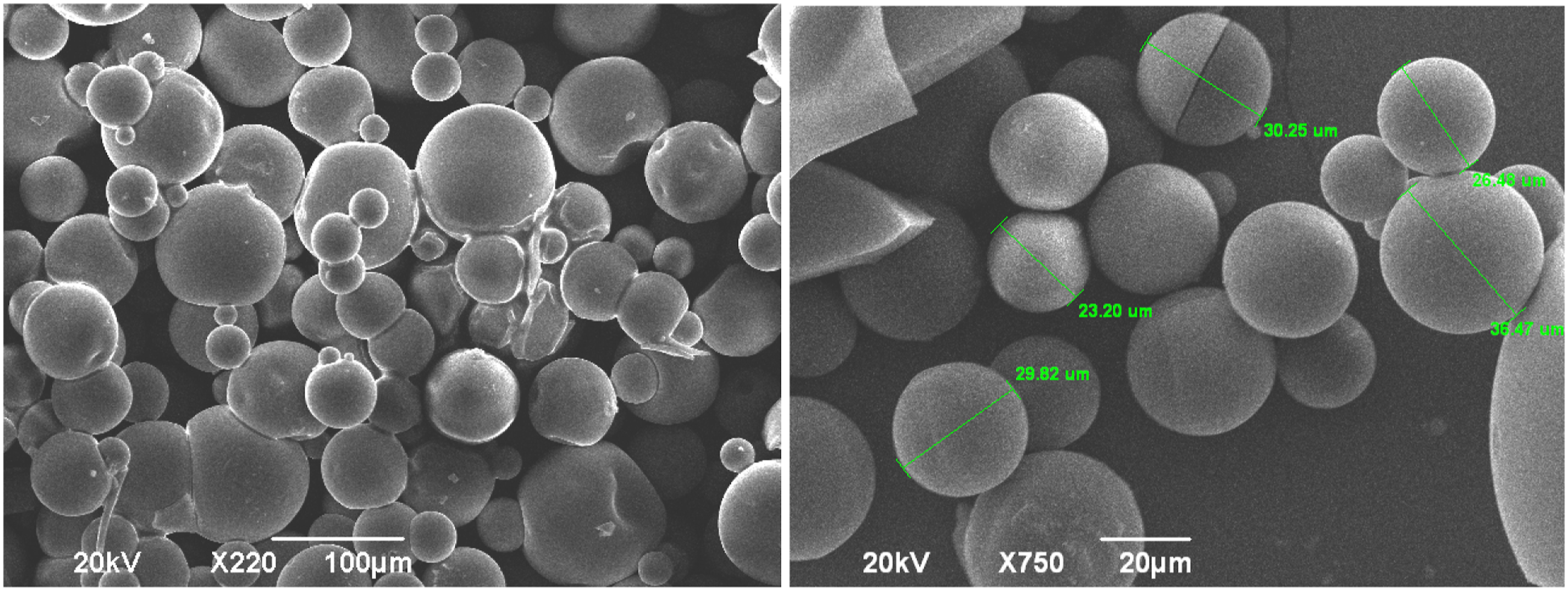
XRD analysis of the composites
In this section of the paper, the influence of the addition of crosslinked poly(ABCF13) microspheres on the crystallographic characteristics of HDPE matrix was investigated via the X-ray diffraction method. The unit cell parameters and grain sizes in the crystalline domains of the composites were determined by means of the least square method with Miller indices (h k l; 110, 200 and 211) and d values.
34
The measured X-ray diffraction patterns of both neat HDPE and the produced composites in the range of 10°–60° were presented in Figure 2. The patterns displayed only the reflections from crystalline domains of HDPE matrix since the crosslinked poly(ABCF13) microspheres were in the amorphous character. The patterns also revealed that the orthorhombic arrangement of HDPE had been maintained in the crystalline domains. On the other hand, the orthorhombic unit cell parameters of the crystals, that is, the unit cell dimensions, were found to be markedly influenced by the increasing microsphere content in the matrix. This was also evidently supported by the shifts of the reflections to the right and left in the patterns besides the broadenings and sharpening. Because a shift in the pattern is directly related to changing of the distances of crystallographic lattice planes.
35
The changes in the unit cell dimensions thus the shifts in the reflections were attributed to the formation of the lattice distortions, generation of microstructural disorders and omnipresent defects in the crystal structures of the crystalline domains of HDPE matrix due to the processing with the microspheres. Accordingly, Moly, in the studies of LLDPE/EVA blends, announced the shifts of the diffraction peaks towards a lower angle to be caused from the increasing in the crystallographic unit cells.
36
Similarly, the diffraction peak of the composite sample containing 5% poly(ABCF13) microsphere shifted significantly to lower angle in the pattern, comparing to unprocessed HDPE. Correspondingly, the findings obtained from XRD calculations showed that the maximum crystal unit cell dimensions were recorded in this product. The XRD patterns of HDPE and the composites containing crosslinked poly(ABCF13) microspheres at varying content.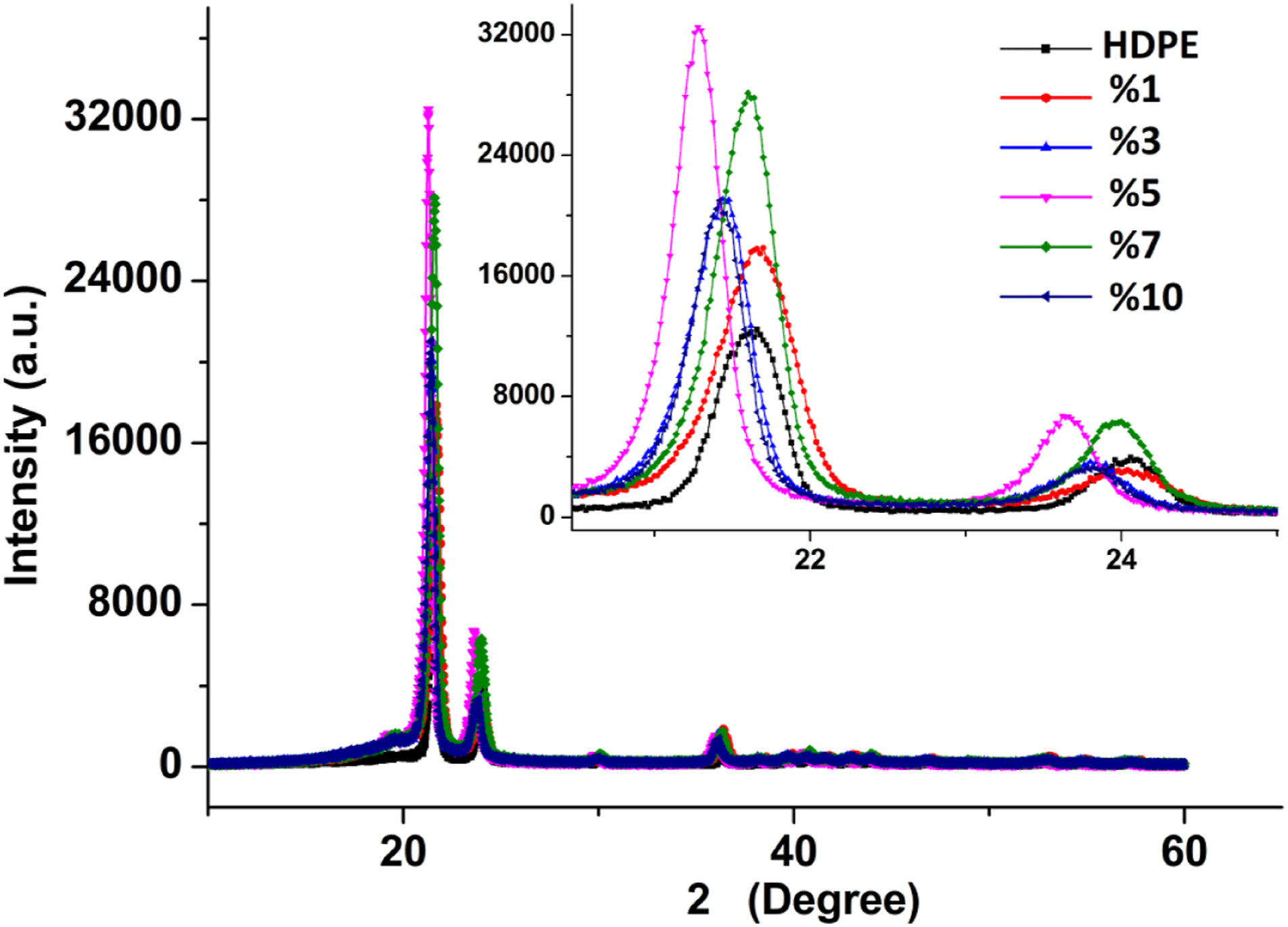
On the other hand, the effect of the poly(ABCF13) microsphere content in the composites on the orthorhombic unit cell dimensions (a, b, c) and unit cell basal areas (axb) were investigated via the calculations made by using 110, 200 and 211 reflection planes. The dependence of the cell parameters (a, b, c) and unit cell basal area (axb) on the percentage of the microsphere was drawn in Figure 3. The results revealed that the unit cell dimensions of the orthorhombic system were highly dependent on the microsphere content in the composites. The lateral dimensions, the The dependence of orthorhombic unit cell parameters a) a, b) b, c) c and d) unit cell basal area on poly(ABCF13) microsphere content in the composites.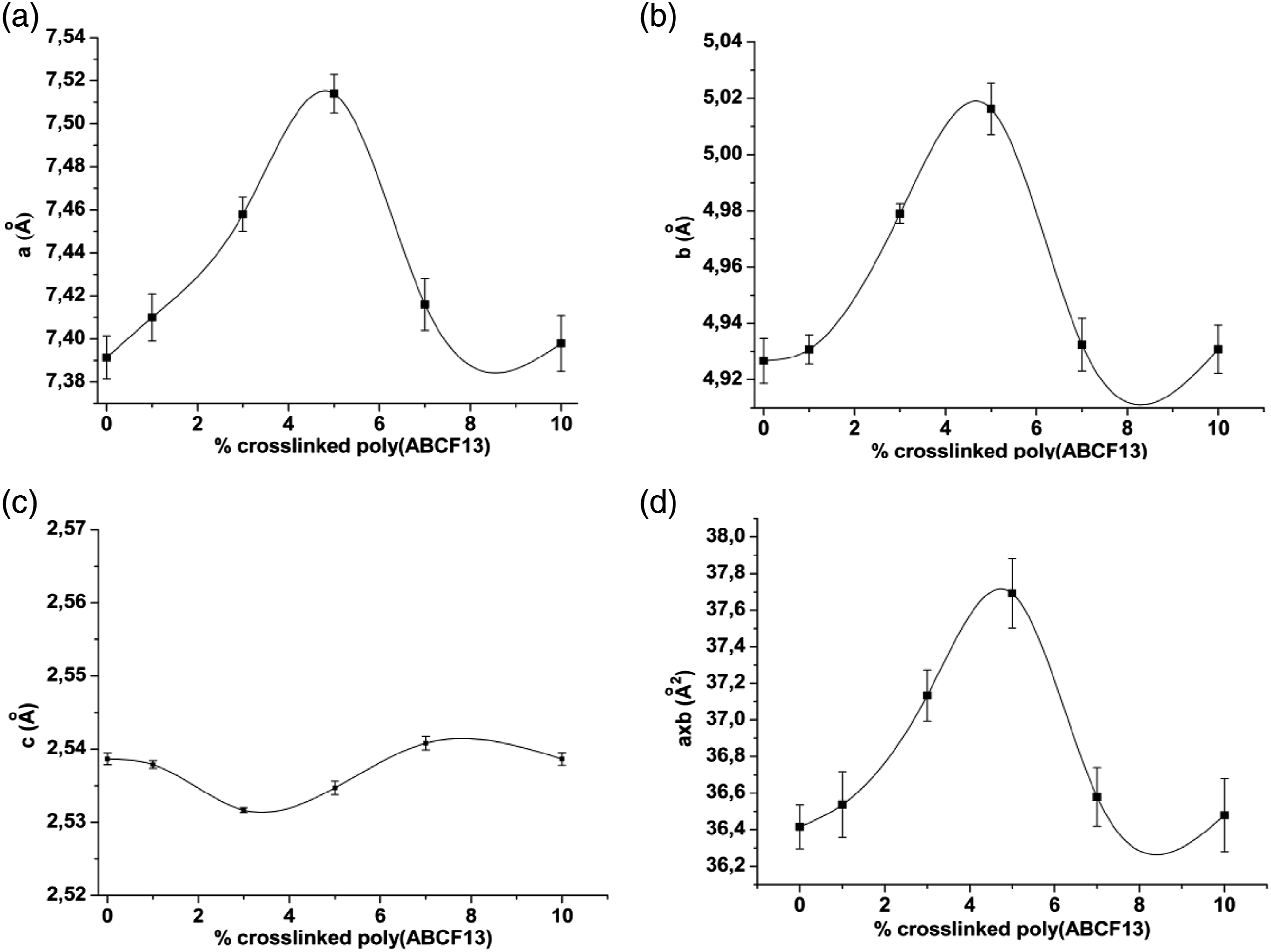
In addition to the unit cell parameters, the relationship between crystal size in the HDPE crystalline domains and crosslinked poly(ABCF13) microspheres content was also investigated. A similar behavior as recorded in the unit cell dimensions The variation of the crystal size (grain size) in the composites with the poly(ABCF13) microsphere content.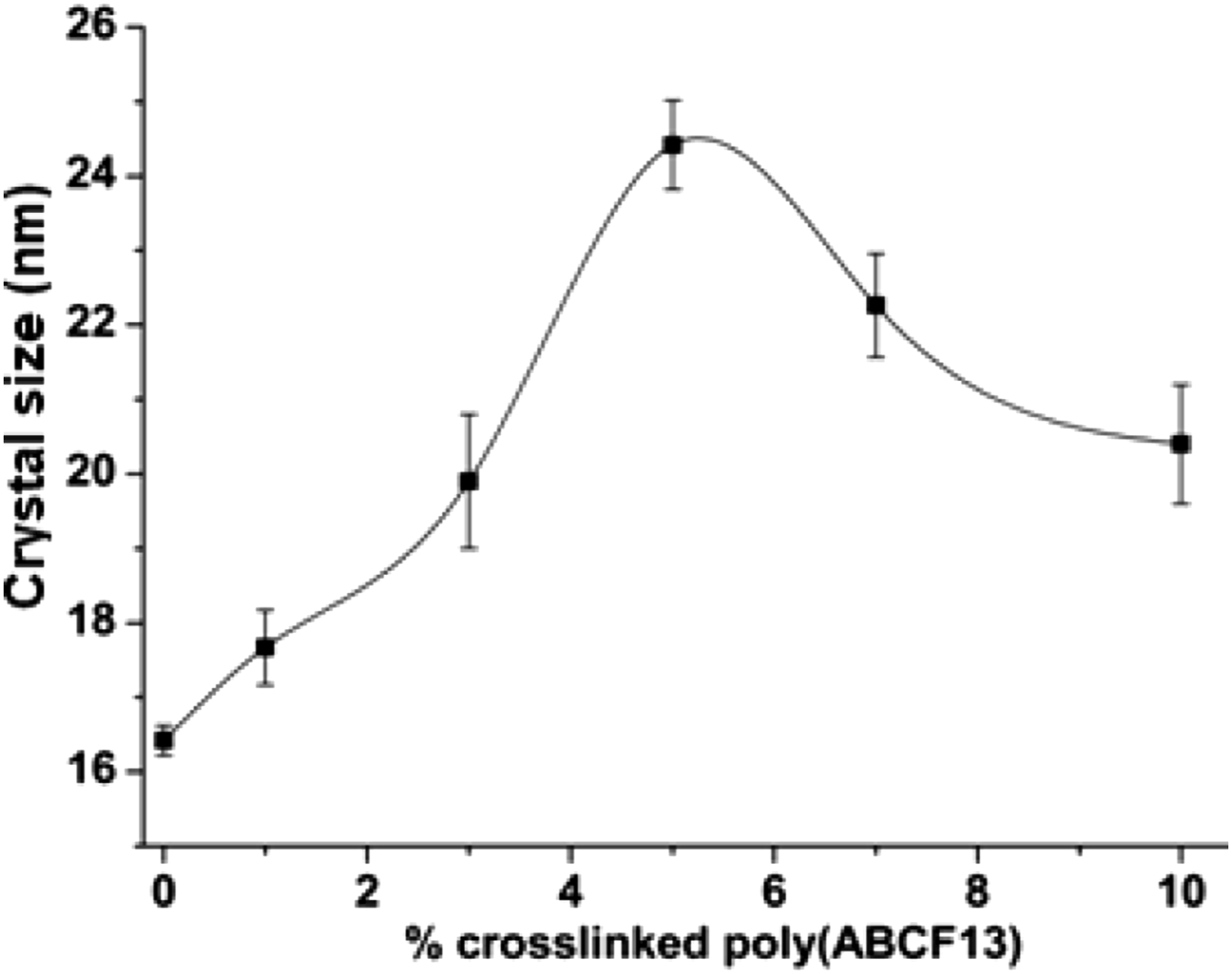
Thermal analysis of the composites
The effect of the crosslinked poly(ABCF13) microspheres existing in HDPE matrix on the melting temperature of the material was studied in the temperature range of 25–400°C by the means of DSC analyses. The thermograms of the composites processed were presented in Figure 5, and the obtained results regarding to the thermal behavior of the composites were tabulated in Table 1. Prior to the serious discussions, it must to be stated here that, in our previous study, the exothermic peak, which was observed at approximately 220°C and determined as the some reorganization in the poly(ABCF13) homopolymer units,
14
was not observed in the DSC thermograms of the composite samples containing crosslinked poly(ABCF13) microspheres. This could be seen as an experimental indication that the cross-linked poly(ABCF13) polymers with amorphous characters were produced. The another result was that the melting temperatures of the composites gradually decreased in consistence with the increase of the microsphere content, and reduced to 129.0°C at the composites with 10% microsphere. Although the falls could be regarded as not so great, the maximum decrease, about 1°C, which was achieved with the first addition of microsphere, 1%. The decrease then slowed down with further additions of the microsphere. The melting point then might be stated to stay at a plateau value of about 129°C, without a significant change as seen from the table. It seemed that the introduction of the crosslinked poly(ABCF13) microspheres with HDPE influenced the nucleation of the crystals during the formation of HDPE crystalline domains in the matrix. The decreases in the crystallinity, determined by the DSC analyses and the changes in the orthorhombic unit cell dimensions, determined by XRD studies evidently supported the effect of the processing on the crystallization behavior of HDPE.
37
The decreases in the melting temperature thus might be attributed to the formation of lattice distortions, generation of microstructural disorders and the defects in the crystal structures of the crystalline domains of HDPE matrix due to the microspheres. DSC thermograms of HDPE composites including varying percentage of crosslinked poly(ABCF13) microspheres. The variation of the melting point (Tm), enthalpy of fusion (ΔHm) and percent crystallinity (Xc, %) of the products with percentage of poly(ABCF13) microsphere.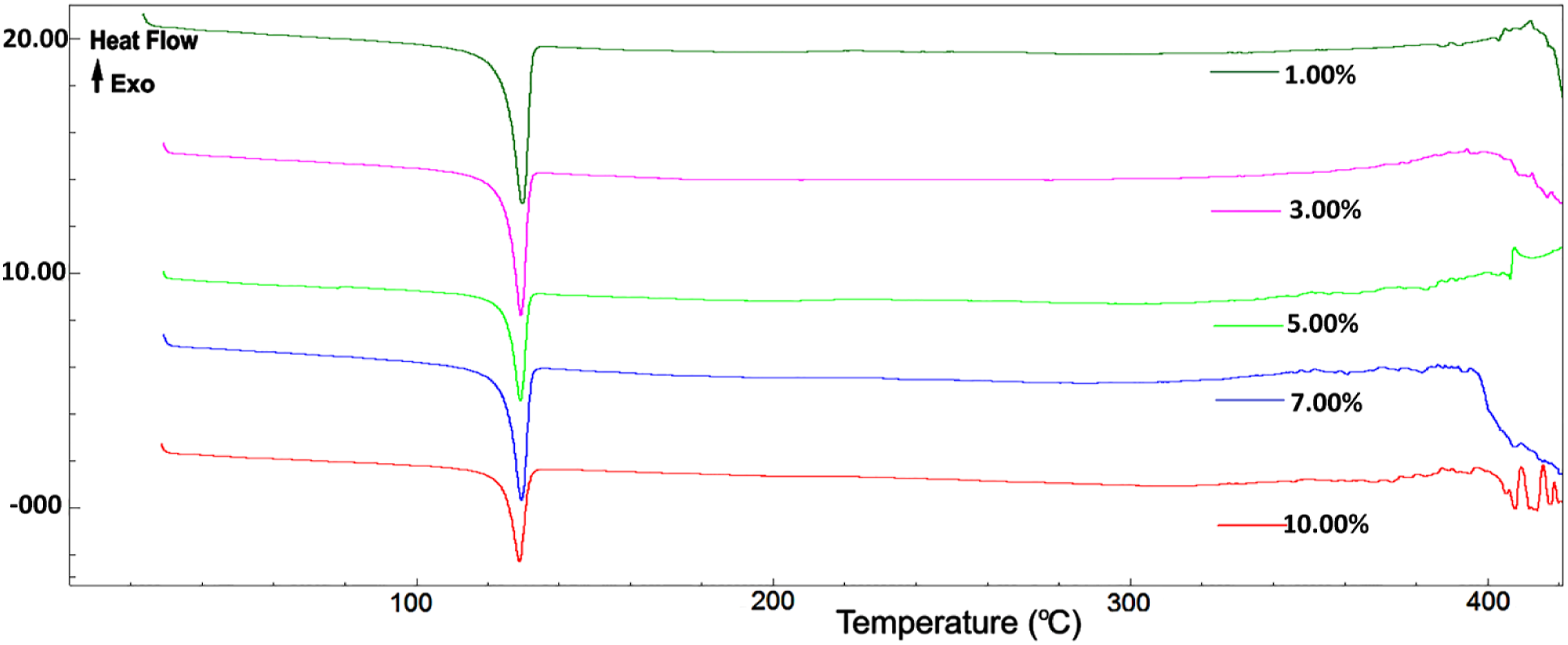
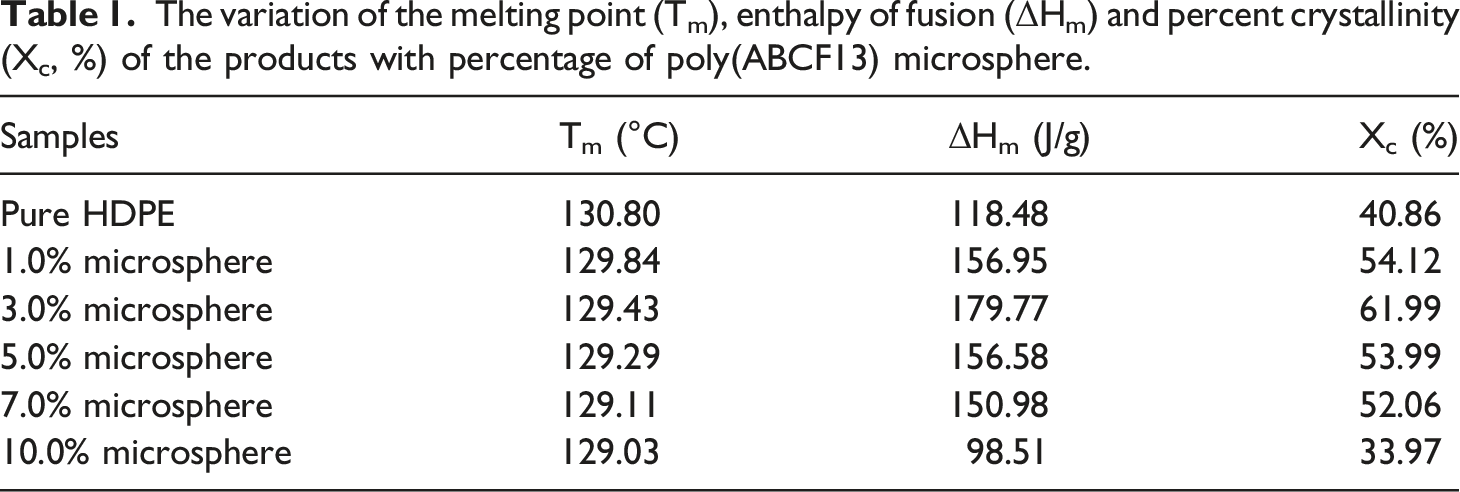
The crystallinities belonging to HDPE phase were determined directly by using DSC thermograms. In more detail, by using the heat of fusion values of HDPE crystalline domains in the samples, percent crystallinities (Xc %) in HDPE matrices were calculated via the following equation:
Mechanical properties of the composites
In this part, the mechanical properties of the composite samples were studied so as to figure out the effect of the poly(ABCF13) microsphere addition on the mechanical behavior of HDPE based composites. For the tensile and impact tests, the samples in dogbone shapes were prepared at 220°C by using micro injection molding machine with 8 bar injecting pressure. Although the molding temperature 220°C was considerably higher than the melting point HDPE, 131°C, it was highly compelling to process the blends at that temperature because of the difficulties in the flow of the melts at lower temperatures. The difficulties encountered during molding at lower temperatures probably caused from the limitations and restrictions in the slip and flow of HDPE chains over each other due to crosslinked poly(ABCF13) microspheres that have stiff and rigid natures. On the other hand, the significant improvements in ultimate tensile strength, Young’s Modulus and impact strength were recorded with the initial addition of the microspheres into the blends. Almost all the samples exhibited ductile behavior. Gradual loss in percent elongation and fractures at neck formation were observed, however, with the increase of the content. At higher percentages of the microsphere studied, the brittle nature started to be seen in the behavior.
The tensile tests of all the specimens were carried out at room temperature with 5 kN cell load and 5 cm/min deformation speed. The nominal stress-strain curves of the composite samples with varying percentage of crosslinked poly(ABCF13) microspheres were depicted in Figure 6. While great extension of cold drawing was observed in the pure HDPE, the failures were recorded at strain softening region almost in all the composite samples. The elongations during the strain softening were highly dependent on the microsphere content, and gradually decreased with the percentage. The maximum and minimum elongations, 60% and 18%, were achieved with the composite samples involving 1.0% and 10.0% microspheres, respectively. These results revealed that the products gradually gained brittle nature with the content in the matrix. This may be attributed to that the rigid and stiff character of crosslinked poly(ABCF13) microspheres dispersed in the matrix probably restricted the mobility of HDPE chains and, hinder the chains from slipping over each other, which results in reduction in the percent elongations of the samples.
43
Furthermore, the formed interfacial adhesion between the microspheres and HDPE matrix (as seen in Figure 8(d) and (e)) resulted in the increase of molecular level frictions, which might prevent the easy sliding of the HDPE chains, and thus led to the shorter elongations.
44
Accordingly, the composites with 7.0% and 10.0% microspheres failed at about the yield point without showing extensive elongation since crosslinked poly(ABCF13) rigid microspheres did not undergo the elongation. On the other hand, the increases of the microsphere content in the matrix brought about the significant improvements in the yield stress of the products. Stress-strain curves of neat HDPE and the composites including 1.0, 3.0, 5.0, 7.0 and 10.0% of crosslinked poly(ABCF13) microspheres.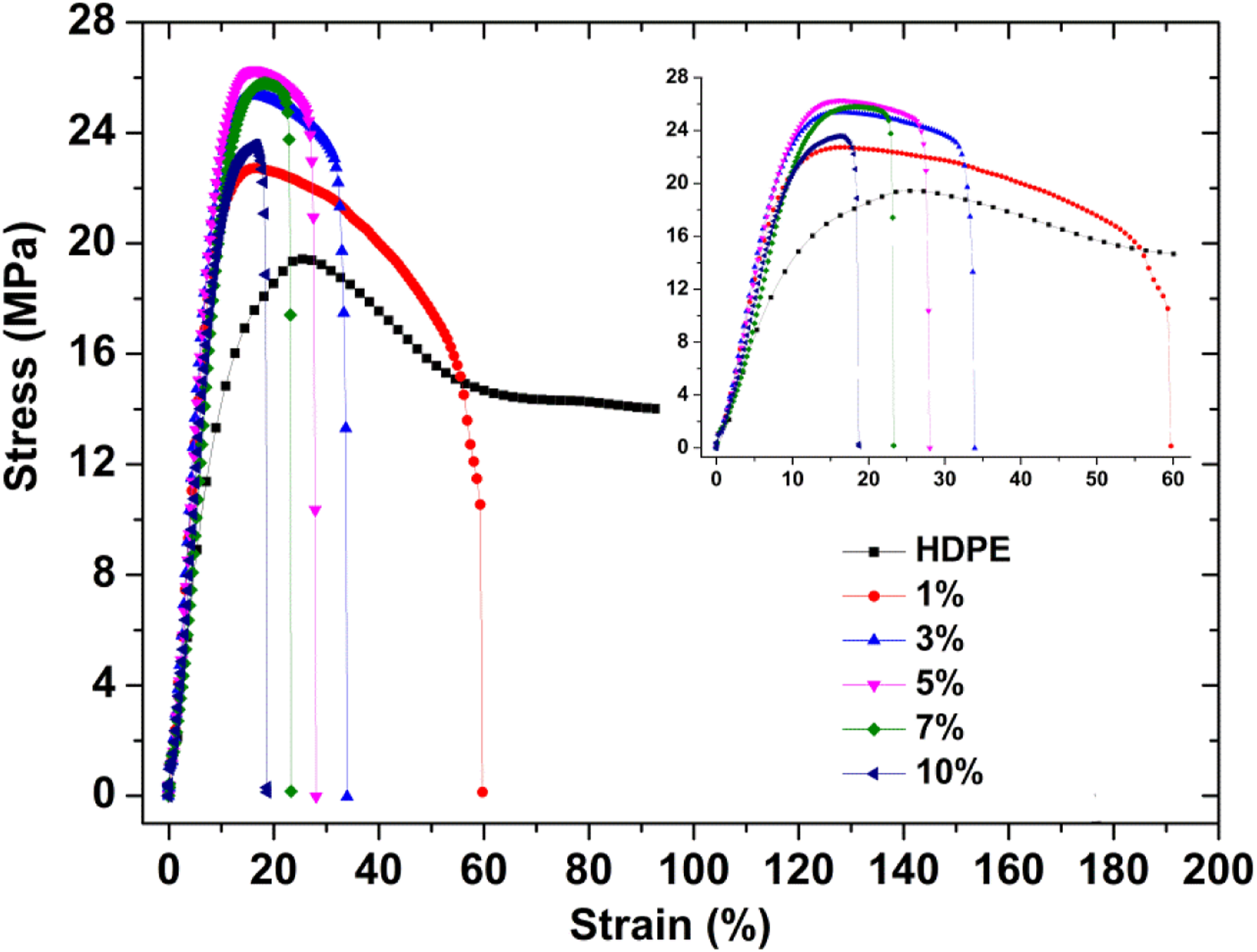
The variations of the tensile and impact properties of the composite samples with microsphere content were drawn in Figure 7. The results showed that mechanical characteristics of the products were significantly affected by fraction of the microsphere in the matrix. Both the ultimate tensile strength and elastic modulus of the products increased initially with the increase of the concentration of the microsphere, and reached the maxima, 25.66 MPa and 499.30 MPa at 5.0% content (29.3% and 42.0% improvement, respectively, with respect to virgin HDPE). The composites then had a decrease trend in the mechanical properties as the percentage of the microsphere was increased further. Kotani announced that the microspheres by acting as miniature balls imparted remarkable dimensional stability into the matrix by improving flatness and stress distribution.
45
Accordingly, the initial improvements were attributed to that the crosslinked microspheres presumably led to the dimensional orientations and alignments of the HDPE chains by acting as ball bearing during the processing. The orientations and alignments thus probably resulted in the greater load capacity, that is, in the greater tensile strength.
46
In addition, the same developments probably also gave rise to resistance of the HDPE chains to flow in the draw direction thus resulted in the initial advances in the modulus. Moreover, the crystals with larger sizes might have additionally contributed to the advances in the tensile properties by behaving as cross-link centers between the chains in the amorphous domains. Because, the enhancement in the level of the crystalline domain made the HDPE chains relatively more regulated, which means increment in the mechanical performance of the composite samples. The similarity between the variation of crystal size and the tensile properties with the content evidently support this function of the crystals. After the maxima, the gradual decreases in both tensile properties could be explained by negative affects arisen from the restrictions in the mobility of HDPE chains and thus decreases in conformational freedom due to the increase of microsphere content. The losses in elongations with the increase of the content evidently support this effect. But it is noteworthy that all the tensile values of the products were still higher than that of pure HDPE, in spite of the decreases, Figure 7(a) and (b). The minimum values of tensile strength and Young’s modulus were recorded as 22.58 MPa and 391.0 MPa, respectively (12.1% and 11.4% larger compared to neat HDPE) at the product containing 10.0% microsphere among the products. The variation of a) ultimate tensile strength, b) Young’s modulus and c) absorbed energy in the impact test with poly(ABCF13) microsphere content in the blends.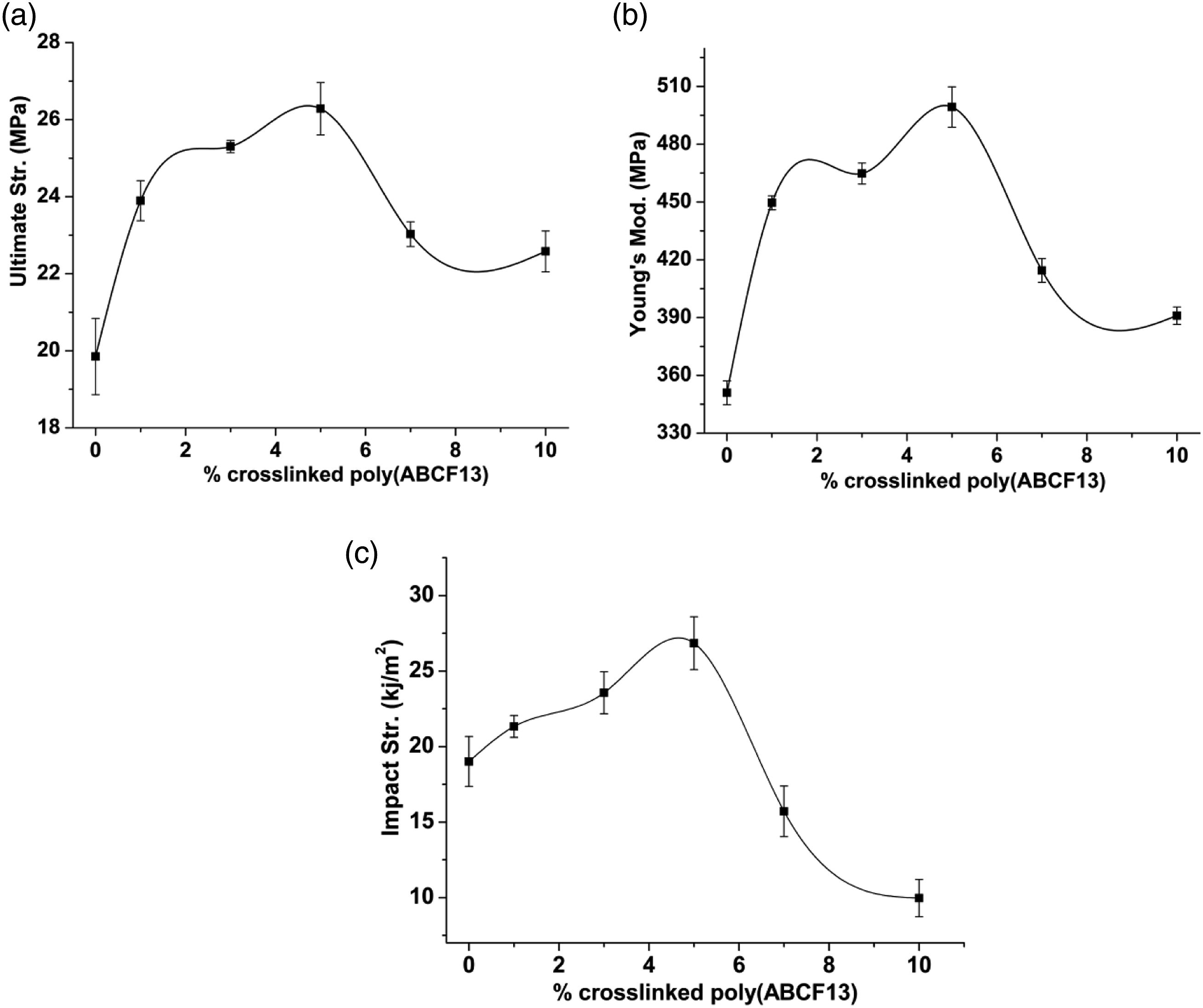
In order to unfold the dependence of the impact strength of the composite samples on the microsphere content, Izod impact tests were carried out at room temperature. The variation with the percentage was drawn in the Figure 7(c). As all the samples exhibited the ductile behavior in the tensile tests, breaking of any sample was not observed in the course of the impact tests. Thus the results were recorded as the absorbed energy by the specimens during the tests. The absorbed energy increased initially with the content and after reaching the maximum value, 26.84 kj/m2 (41% advance with respect to neat HDPE) at 5.0% microsphere, exhibited a decreasing trend. The initial advances in the absorbed energy were attributed to increase of the conformational freedom and chain mobility arising from the probable enlargements in the free volumes. That is, the initial additions of the microsphere probably gave rise to enlargements in the free volumes. Thus, the increased conformational freedom and chain mobility resulted in the increases in the absorbed energies loaded during the tests. After the maximum, the decreasing trend was explained by the losses in the conformational freedom and chain mobility due to probable contractions in the free volumes. The higher contents of the microsphere than 5.0% probably led to the reductions in the free hole size or in its fraction thus in the restrictions in chain mobility, which resulted in the decrease in the absorbed energy. The minimum value was recorded as 9.97 kJ/m2 (48% smaller than that virgin HDPE had) with the product including 10.0% microsphere. Moreover, due to partial interface adhesions between the components, the crosslinked poly(ABCF13) microspheres may act as a blocking or pinning centers in the matrix at high contents. Thus, the mobility of HDPE chains was probably restricted and therefore the amount of the energy absorbed by the microsphere-filled HDPE decreased. In other words, the products absorbed relatively lower energy since the energy loaded in a small time scale in the test was not effectively delocalized in the matrix.
Morphological properties of the composites
The morphological characteristics of the microsphere-loaded HDPE, the fractured surfaces obtained from the tensile tests were investigated meticulously by SEM analysis. Since there was not any impact fractured samples, (the samples were not broken during the impact tests), merely the tensile fractured samples were analyzed. The taken SEM images were depicted in Figure 8. In all the composites, the microspheres were perceived as a homogeneous phase at low content, but separate phase distinguishably at high contents. In other words, poly(ABCF13) microspheres have a chemically different nature with polar groups from HDPE, leading to the phase separation at high content. However, this effect appears to be compensated for at low contents. On the other hand, fibrillar extensions broken in ductile were observed almost at all contents in the blends, but the extension shortened as the content of the microsphere increased in the matrix as seen from the figure. The extensions were long and bulky at relatively lower contents as shown in Figure 8(a), (b), (c) and (d). Shorter and thinner fibrillar structures denoting the decrease in ductile property were detected at relatively higher contents, Figure 8(e) and (f). This behavior probably was caused from the decreases in the orientations and alignments of HDPE chains in the matrix presumably due to the restrictions and limitations in the mobility and conformational freedom of the chains. Furthermore, at higher percentages of the microspheres, the brittle nature started to appear in the products and, as depending on that, the holes, openings, cracks and cavities in the matrix were observed in the tensile fractographs. These changes in the morphology were found as visible evidences for why the energy absorbed in the impact tests and the tensile strengths have a decreasing trend after the maxima, and the minima were observed with the blend 10.0% microsphere. The similar results were also recorded in our previous studies regarding thermoplastics.34,47,48 SEM micrographs of a) neat HDPE and the composite samples containing b) 1.0%, c) 3.0%, d) 5.0%, e) 7.0% and f) 10.0% crosslinked poly(ABCF13) microspheres, Tensile Test.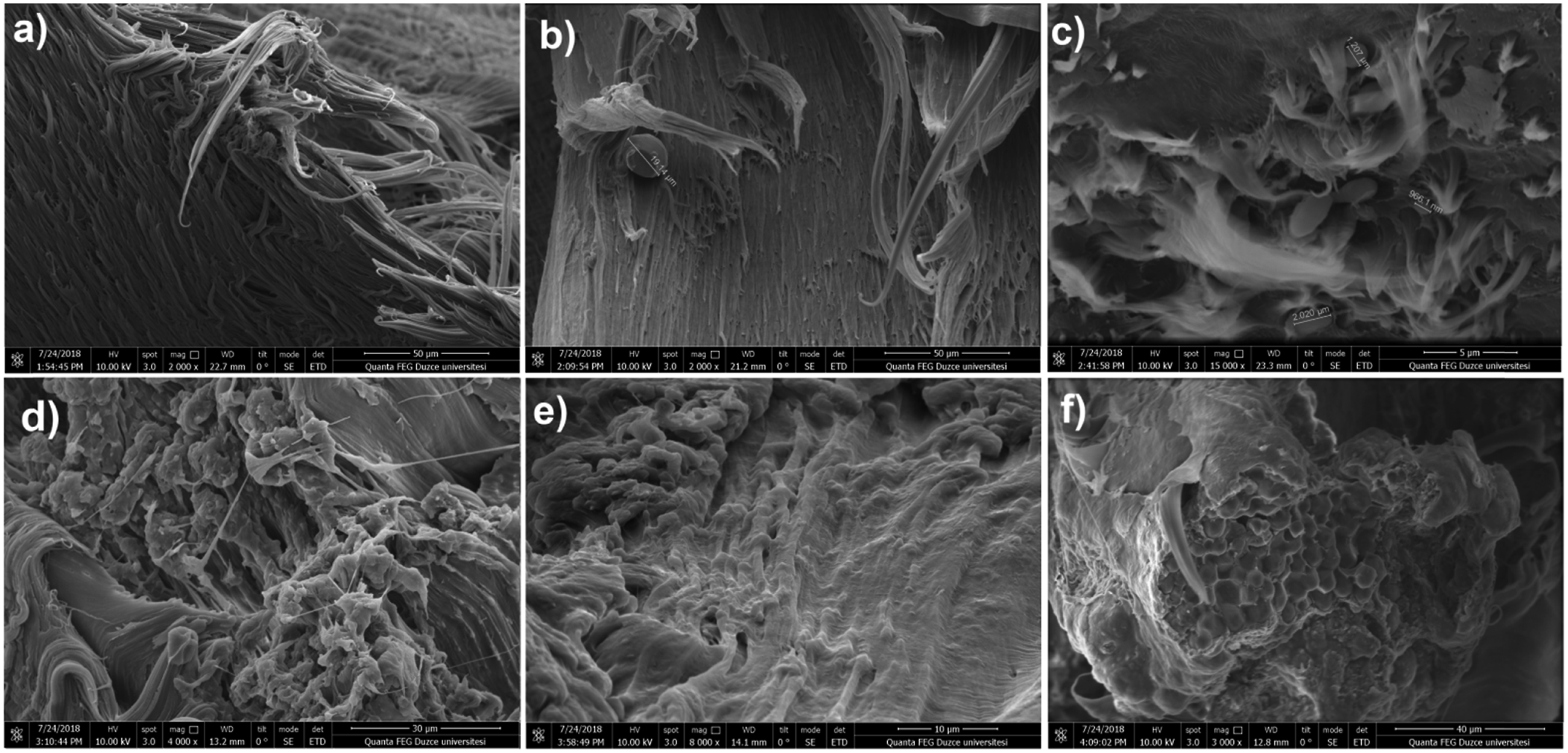
Conclusions
In this paper, we studied both preparation of the crosslinked semifluorinated acrylate polymer microspheres having good roundness and the effect of these microsphere addition with varying percentages on the fundamental characteristic properties of HDPE. The microstructural, thermal, mechanical and morphological features of the microsphere-filled HDPE composites were extensively investigated by the powder XRD, DSC, universal mechanical testers and SEM. The experimental findings showed that. 1. The synthesis conditions to prepare the crosslinked poly(ABCF13) microspheres were determined. 2. There existed slight reduction in the melting points of the composites at all contents due to the increment in orderly arrangements of PE chains, which results that PE chains started to melt easier. 3. a and b unit cell parameters showed low expansion at the sample including 5.0% of crosslinked poly(ABCF13) microspheres due to the fact that the crosslinked poly(ABCF13) particles could partially penetrate into nearest and folded neighbor chains of PE in crystal regions or may be expelled out and rejected from lamellar stacks in spherulite domain. At high content, these parameters showed decreasing trends since the lamellae of the PE was surrounded by the amorphous crosslinked poly(ABCF13) microspheres. 4. The crytal sizes of PE showed the impressive increment due to effective primary nucleation and growth on the surface of the dispersed particles possessing the three-dimensional spherical shapes. 5. Considerable improvements were recorded in the mechanical performance of the composite samples. The maximum value in tensile strength and modulus was recorded with 5.0% microsphere content. The ball bearing behavior of the microspheres in matrix probably led to remarkable dimensional stability by improving flatness and stress distribution, which resulted in the increment in directional micro-orientations and ideal alignments of the HDPE chains. However, as the microsphere content increased, the dramatic decrements was also observed in percentage strain and yield stress and, the brittle nature became more dominant in the specimens. 6. All the composites containing varying percent poly(ABCF13) depicted homogeneous structure. The extensions decreased with the increasing of the microsphere content although there existed fibrillar formations in all samples. While ductile behavior was observed with the formation of long-bulky extensions at low contents, brittleness started to prevail at high contents with some short and thin fibrils.
Footnotes
Acknowledgements
This research was supported by BAIBU research fund grant no. BAP-2016.03.03.1075. The authors sincerely thank to Prof. Dr. T. Tinçer for providing his laboratory for the mechanical tests and Prof. Dr. A. Varilci for XRD measurements. Moreover, authors are especially grateful to Innovative Food Technologies Development Application and Research Center (YENİGIDAM) for the DSC measurements.
Declaration of conflicting interests
The author(s) declared no potential conflicts of interest with respect to the research, authorship, and/or publication of this article.
Funding
The author(s) disclosed receipt of the following financial support for the research, authorship, and/or publication of this article: This work was supported by the Bolu Abant Izzet Baysal University (BAP-2016.03.03.1075).
