



Abstract
The use of natural fibers as fillers in polymer matrix composites is an alternative for reusing the fruit wastes that originated from the food industry. This work aimed to evaluate the effect of grape skin fiber (GSF) on the rheological and mechanical properties of polypropylene/GSF (PP/GSF) composites. The composites were prepared by extrusion followed by injection molding and characterized by rheological, morphological, and mechanical properties. Rheological measurement results showed an increase in viscosity at low frequencies. The relaxation time of the PP/GSF composites increased by about 415% with the increase in the GSF content from 1 to 3 phr. Capillary rheometry results indicated that the processability of PP was not compromised with the addition of GSF. Morphology analysis by scanning electron microscopy (SEM) indicated a good interaction between the PP matrix and GSF and a good dispersion/distribution of the fibers in the PP matrix. The impact strength decreased by about 14 and 17% with the addition of 1 and 3 phr, respectively, of GSF to PP whereas the elastic modulus remained almost unchanged.
Introduction
Polymer/filler composites, which consist of a mixture of different materials to obtain a new material with improved properties and specific characteristics, emerged as an alternative to the synthesis of new polymers. Among the fillers used in polymeric composites, clays, carbon fiber, glass fiber, carbon black, carbon nanotubes, graphene, and silver nanoparticles stand out.
The use of natural fibers as fillers has also been increasing. Among these fibers are sisal, jute, bamboo, coconut husk, and pineapple leaf and sugarcane bagasse, hemp, and kenaf.1–7 Natural fibers are low-cost and can improve the properties of polymers, expanding their applications.
Polymer matrix composites containing natural fibers from fruit wastes as fillers have attracted great interest from researchers around the world. These wastes are common by-products of the food industry. Among these fibers, are those from grapes, bananas, oranges, and coconut.2,8–13 Fruit processing wastes are generally a combination of peel, seeds, and pulp.
Polypropylene (PP) is a low density resin that offers a good balance of thermal and chemical properties. However, as with many polymers, it has some limitations for certain applications that require thermal stability during processing and good mechanical properties. These properties can be improved by blending it with natural fillers obtained from the fruit wastes discarded by the food industry. There are just a few works in the literature that used the fruit wastes as fillers in polymer matrix composites.
Kumar and Nagaraj 14 evaluated the mechanical behavior of epoxy/orange peel composites. The amounts of orange peel used were 5, 10, 20, and 30% (by weight). The authors observed that the composite containing 20% of orange peel was the one with the greatest tensile strength and that the hardness increased with the increase in the orange peel content. The authors also observed that there was a good adhesion between the orange peel and the epoxy matrix. Similar results have been reported by other authors 15 who studied the same composite. Anoopisan et al. 16 studying the epoxy/orange peel composites, and using different levels of orange peel powder observed a reduction in the density of the epoxy/orange peel composite with an increase in the orange peel content.
Lai et al. 17 evaluated the mechanical and electrical properties of polypropylene (PP)/coconut shell fiber (CSF) composites. The fibers were superficially treated to improve the interaction with PP. The authors observed that the dielectric constant was affected by the surface treatment of the fibers. The mechanical properties of the composites with treated fibers were superior to those of composites with untreated fibers.
Rigolin et al. 12 studied the influence of the PLA-g-MA compatibilizer on the properties of the PLA/CSF composite. The authors observed that the acidity of the compatibilizer led to a reduction in the molar mass of PLA, in addition to deteriorating the mechanical properties. The authors also observed that there was a good adhesion between the CSF and the PLA matrix.
Reul et al. 18 studied the effect of babaçu epicarp and mesocarp content (10 and 20%wt) on the rheological, thermal, and morphological properties of polycaprolactone (PCL)/babaçu composites. The authors reported an increase in the melt viscosity of PCL with the addition of babaçu to PCL and with the increase in the babaçu content from 10 to 20wt%. By differential scanning calorimetry (DSC) the authors observed that the addition of babaçu to PCL shifted the crystallization peak to a higher temperature. Optical microscopy (OM) analysis showed filler particle agglomerations at higher filler content.
Schäfer et al. 19 studied the crystallization behavior of PCL/babaçu composites. By DSC the authors observed that the melt crystallization of PCL, at different cooling rates, was not significantly changed with the addition of babaçu.
Lemos et al. 20 investigated the effect of different natural fibers, including coconut and babaçu, on the properties of PP/natural fiber composites. The authors observed that the composites containing coconut shell and babaçu fiber were the ones that showed the best impact resistance.
Spiridon et al. 8 investigated the effect of the accelerating weathering on poly (lactic acid) (PLA)/grape seeds composites. The authors observed a decrease in the mechanical properties of PLA due to the accelerating weathering and that the presence of a high amount of grape seed promoted a stabilizing effect.
Gowman et al. 21 evaluated the thermal and mechanical properties of the bio-polybutylene succinate (PBS)/grape skin fiber (GSF) composite. As a compatibilizer, PBS grafted with maleic anhydride (PBS-g-MA) was used. The authors observed that the grape shell fiber showed good thermal stability. For the composites, there was an improvement in thermal stability with the addition of the PBS-g-MA compatibilizer. In the composites containing compatibilizer, an increase in tensile and impact strength was observed with an increase in the grape skin content of up to 50% (by weight).
Reinaldo et al. 22 evaluated the effect of grape and acerola residues on antioxidant and mechanical properties of cassava starch biocomposites. The authors reported that the properties strongly depended on the composition and the origin of the residues.
There is a lack in the literature of works on PP/GSF composites where the rheological properties at low shear rates (linear viscoelasticity) and at high shear rates, which are compatible with the extrusion and injection molding machines, are evaluated.
This work aims to investigate the effect of ground GSF on the rheological and mechanical properties of PP/GSF composites.
Experimental
Materials
Polypropylene (PP) H103, MFI = 40g/10 min was provided by Braskem. Ground grape skin fiber (GSF), with an average particles size of 70 µm, A Botika, used as received, was provided by A Salutar Produtos Naturais.
Methods
PP/GSF composites containing 1 and 3 parts per hundred of resin (phr) of GSF were prepared in two steps: (1) a concentrate containing 1:1 of PP/GSF was prepared in a ThermoScientific Haake Polylab QC Rheomix 600 internal mixer, with rotors speed of 60 rpm and temperature of 200ºC during 5 minutes. (2) The concentrate was diluted into PP in a Coperion Werner&Pfleider twin-screw extruder at a screw speed of 250 rpm and a temperature of 200ºC. Figure 1 shows the scheme of the methodology used to prepare the PP/GSF composites containing 1 and 3 phr of GSF.
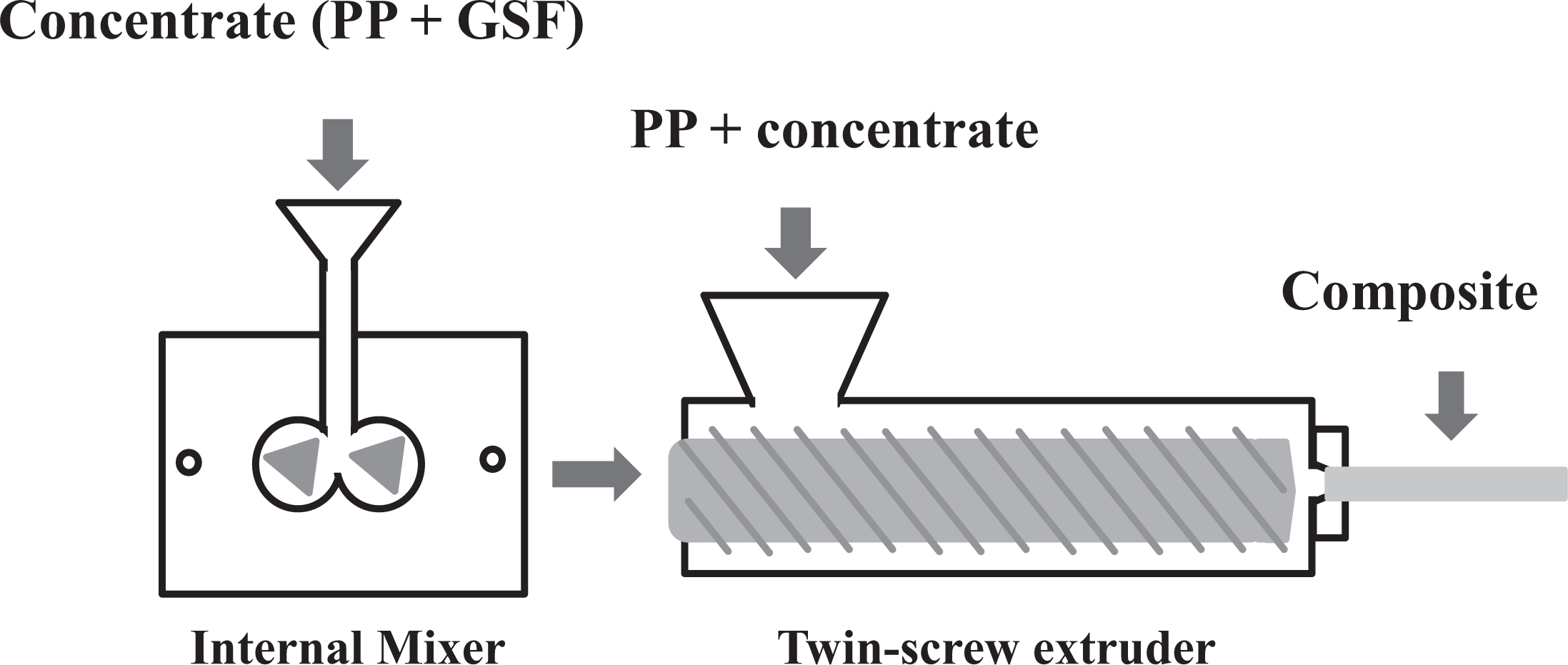
Scheme of the methodology used to prepare PP/GSF composites.
Samples preparation
The PP/GSF composite samples containing 1 and 3 phr of GSF (Figure 2) were prepared by injection molding in an Arburg Allrounder 270C Golden Edition injection molding machine at a temperature of 200ºC.
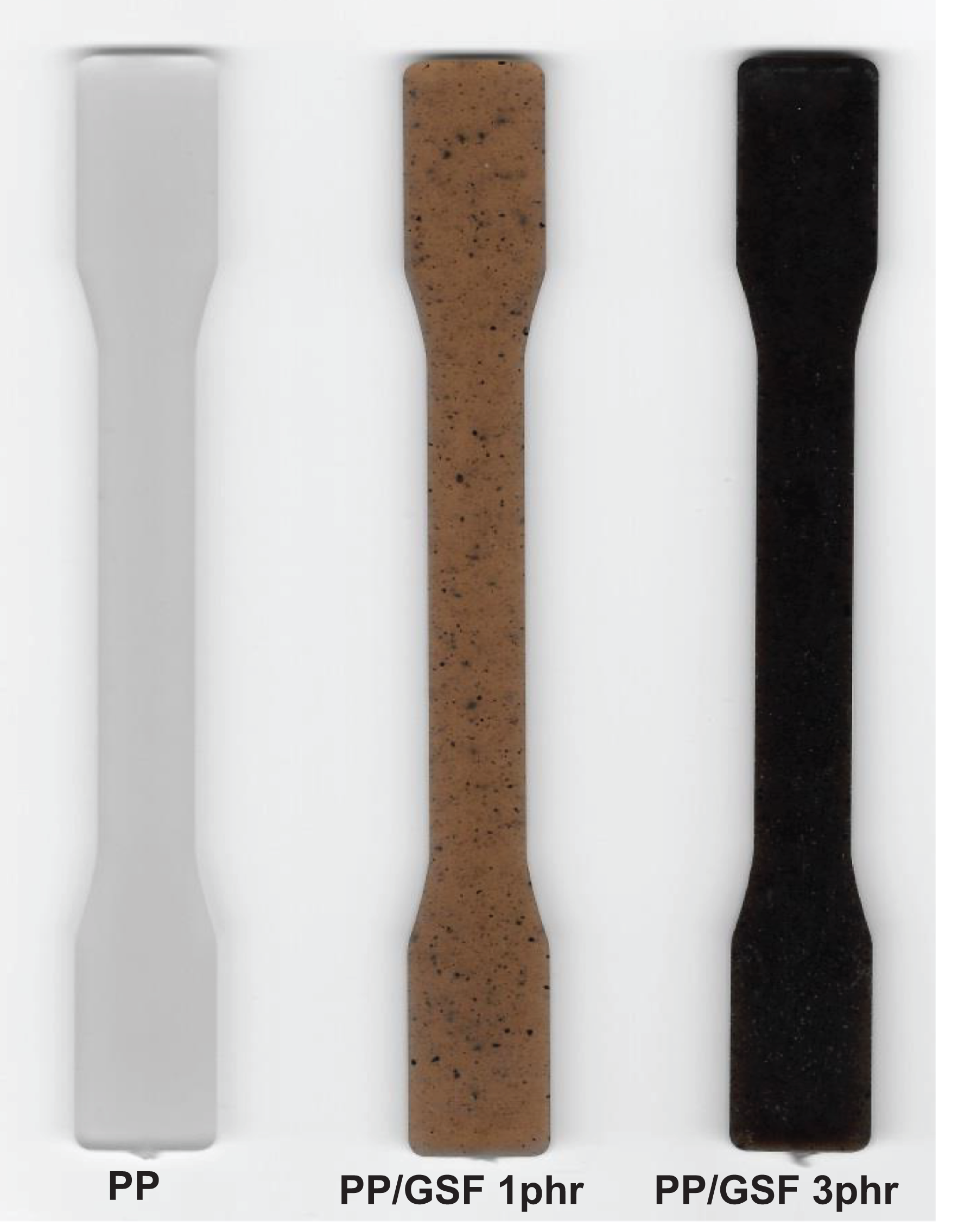
Images of the PP/GSF injection molded samples.
Rheological measurements under dynamic-oscillatory shear flow
Rheological measurements were performed in an Anton Paar Physica MCR 301 parallel plate rheometer, equipped with parallel plate geometry of 25 mm diameter, the gap between plates of 1 mm, the temperature of 200ºC, and strain of 1% (under the linear viscoelastic region).
Capillary rheometry
To evaluate the processability of the PP/GSF composites, rheological measurements at high shear rates were performed in a CEAST (Instron) SR20 Capillary Rheometer at a temperature of 200ºC, capillary die (L/D = 30) with a diameter (D) of 1 mm, and a length (L) of 30 mm, with the shear rate ranging from 100 to 3000 s−1.
Mechanical properties tests
Tensile tests were carried out according to ASTM-D 638 in a SHIMADZU AG-IS 100 kN Universal Testing Machine operating at a crosshead speed of 50 mm/min. Impact strength tests were performed according to ASTM-D 256, using a CEAST Resil 5.5 impact tester. The results reported are an average of six samples.
Scanning electron microscopy (SEM)
The morphology of the PP/GSF composites was analyzed by scanning electron microscopy (SEM) in a SHIMADZU SS X550 Super Scan Scanning Electron Microscope.
Results and discussion
Rheological properties
Figure 3 shows the plots of complex viscosity (η*) as a function of the angular frequency (ω). PP shows a decrease in the viscosity at frequencies below 1 rad/s, which may be related to the degradation of the PP matrix since the rheological analysis was conducted under the oxygen atmosphere and, the lowest is the frequency the longer is the time of the experiment. At higher frequencies, PP shows a shear-thinning behavior. The PP/GSF composite containing 1 phr of GSF shows a Newtonian plateau at frequencies below 1 rad/s and a shear-thinning behavior at higher frequencies. It is worth noting that the decrease in the viscosity at frequencies below 1 rad/s is not observed, indicating that the presence of only 1 phr of GSF leads to the stabilization of the PP matrix. An increase in the viscosity of PP is also observed with the addition of 1 phr of GSF. For the composite containing 3 phr of GSF, a change in the slope of the plot is observed at low frequencies, where the viscosity of the PP/GSF 3 phr composite becomes higher than that of PP and PP/GSF 1 phr composite, which is an indication that GSF particles/agglomerates are well distributed in the PP matrix. This composite shows a shear-thinning behavior over the entire frequency range.
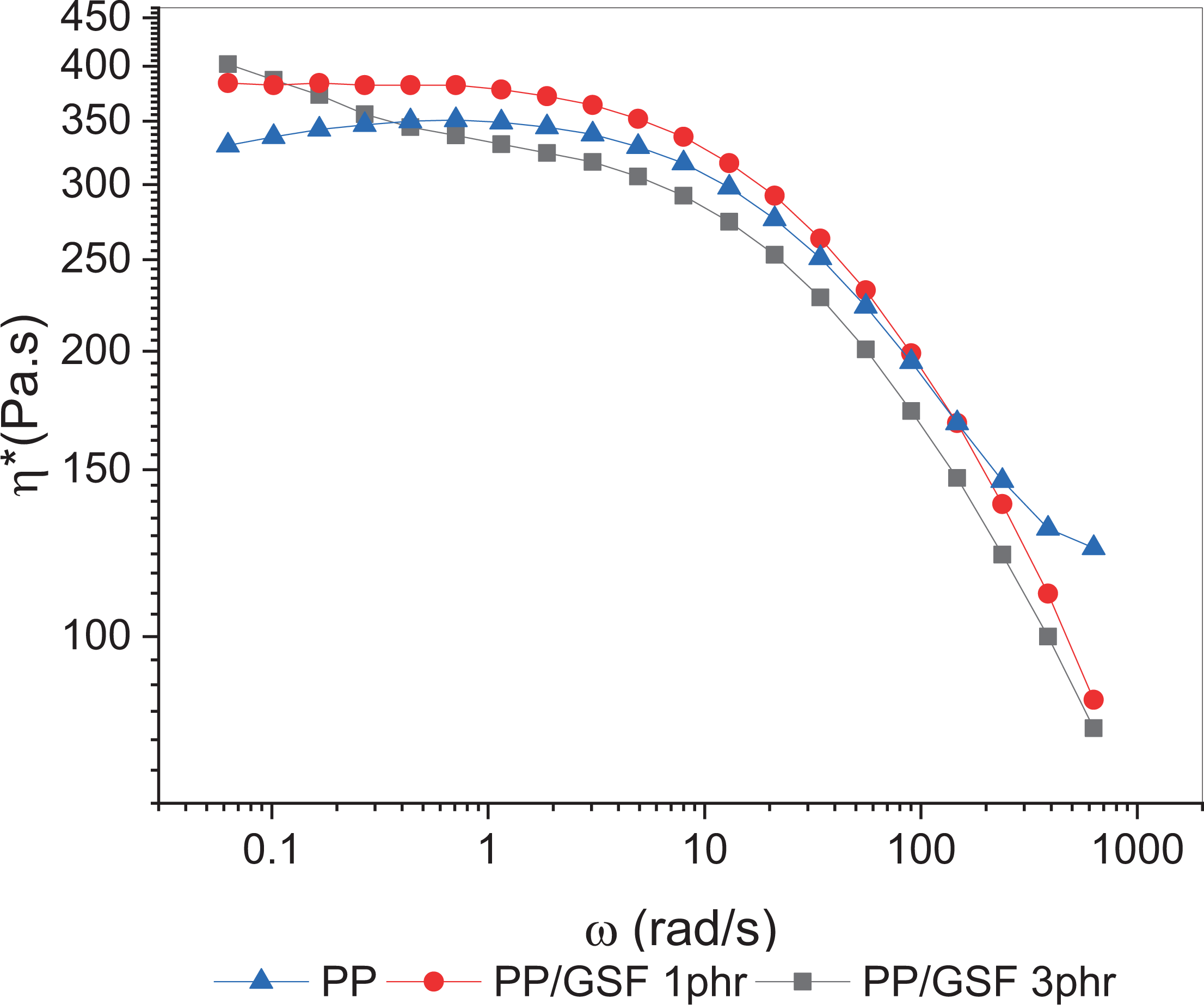
Plots of complex viscosity (η*) as a function of the angular frequency (ω) of PP, and PP/GSF composites containing 1 and 3 phr of GSF.
Figure 4 shows the plots of storage modulus (G′) as a function of ω. PP presents a liquid-like behavior (G′ α ω 2 ). With the addition of 1 and 3 phr of GSF, there is a change in the slope of the G′ at low frequencies indicating that the behavior is changing from liquid-like to solid-like (G′ α ω0). The PP/GSF composite containing 3 phr of GSF shows a predominantly solid-like behavior, indicating that the GSF particles/agglomerates are restricting the mobility of PP chains and that these GSF particles/agglomerates are well distributed in the PP matrix.
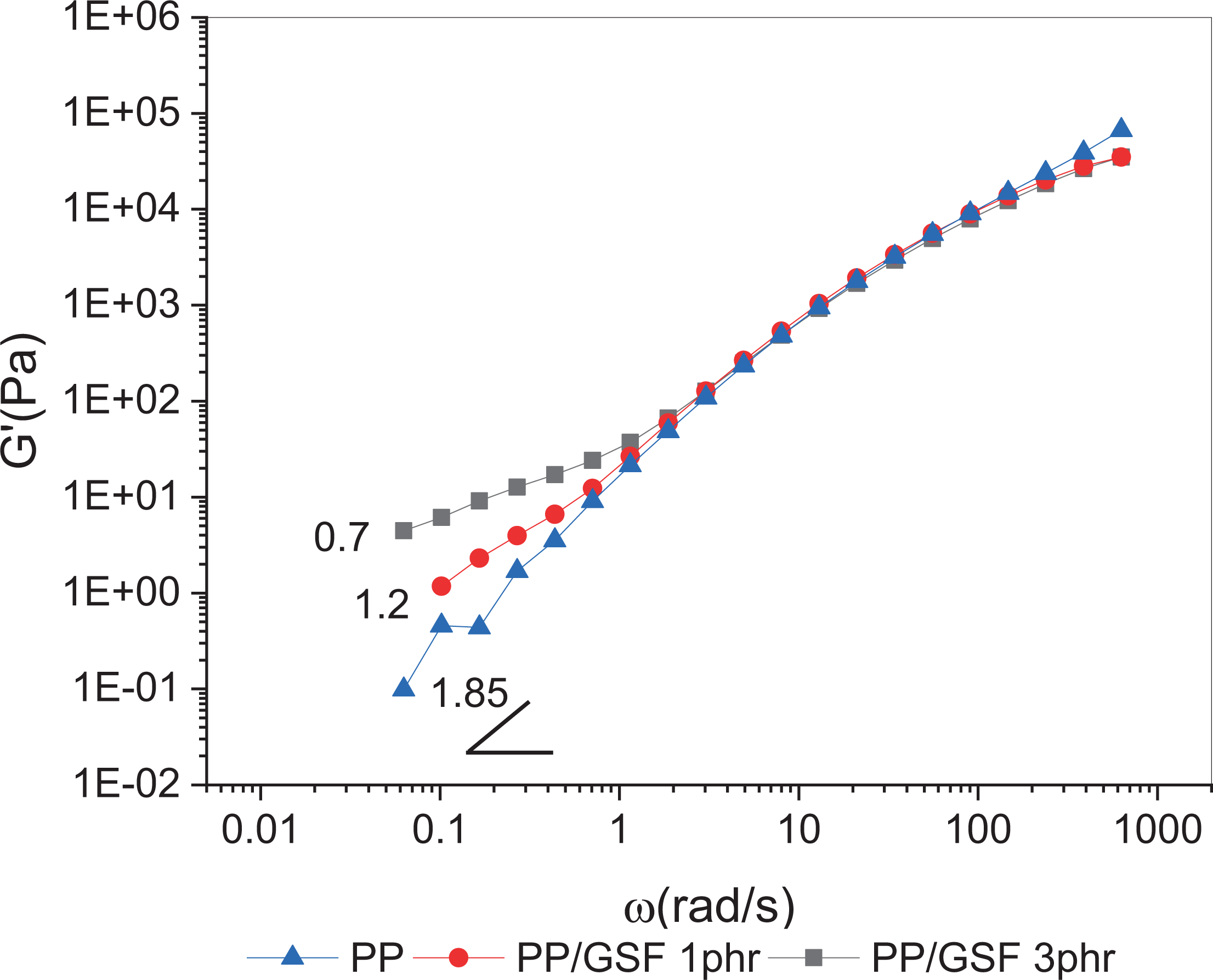
Plots of storage modulus (G′) as a function of the angular frequency (ω) of PP, and PP/GSF composites containing 1 and 3 phr of GSF.
Using the data of η* and G′ at low frequencies, it is possible to estimate the relaxation time (λ) of the PP matrix using equation (1).23,24

The values of G′ and η* were taken at ω of 0.102 rad s−1. The values of λ obtained for PP, PP/GSF 1 phr, and PP/GSF 3 phr are summarized in Table 1. The addition of GSF to PP leads to an increase of λ being more pronounced for the composite containing 3 phr of GSF. The increase in λ may be related to the good interaction between the PP matrix and GSF, restricting the mobility of the PP chains. A similar result was observed when, in another work, 24 organically modified vermiculite clay (OVT) was added to the polyethylene (PE) matrix. The relaxation time of PE increased with the increase in the OVT clay content and this increase was ascribed to the hindering of PE chains mobility due to the presence of OVT clay.
Values of the relaxation time (λ) for PP and PP/GSF composites containing 1 and 3 phr of GSF.
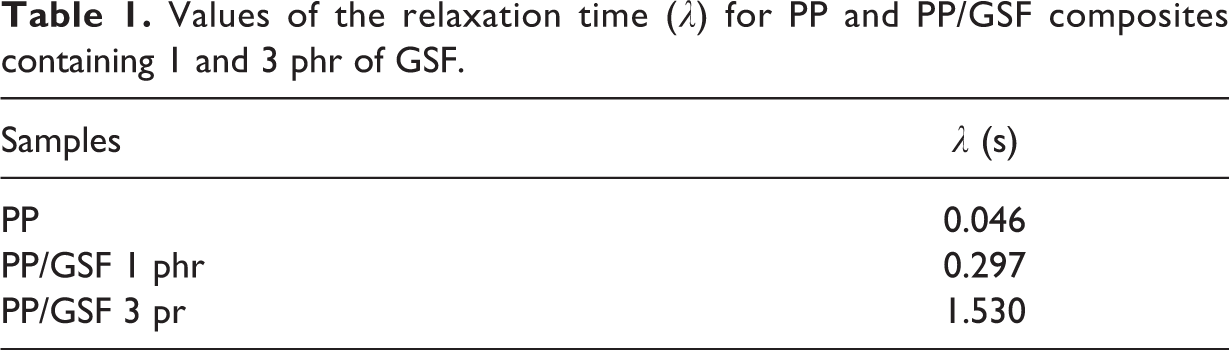
Figure 5 shows the van Gurp-Palmen plots of phase angle (δ) as a function of complex modulus (G*). According to the literature, for single-phase systems, the value of δ at the lowest G* is approximately 90º.25,26 For polymer/filler composites the decrease in the values of δ at lower values of G* indicates a transition from liquid-like behavior to solid-like. PP shows a value of δ of 90ºC, which is already expected since the PP used in this work is a homopolymer.
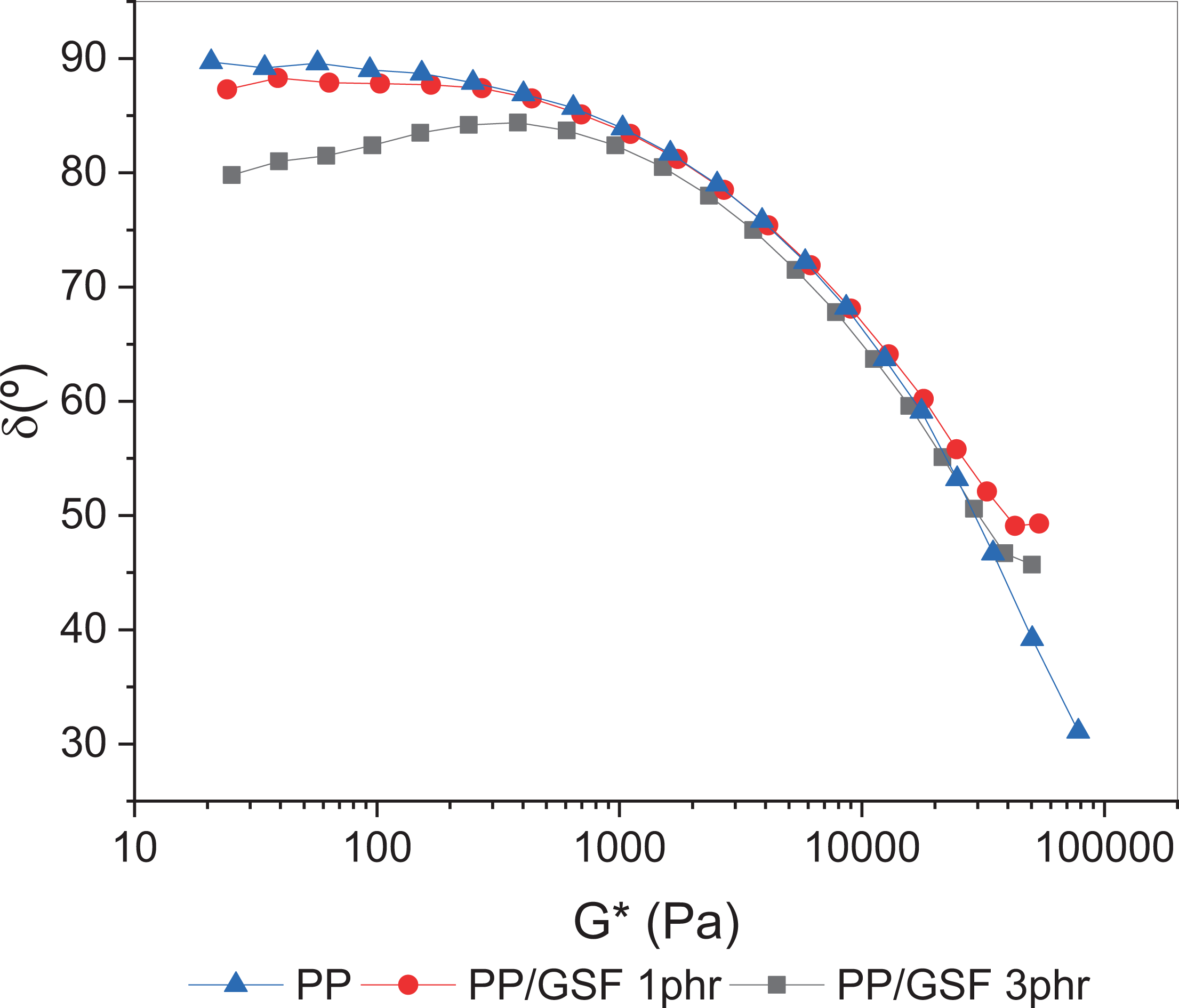
Van Gurp-Palmen plots of phase angle (δ) as a function of complex modulus (G*) of PP, and PP/GSF composites containing 1 and 3 phr of GSF.
The addition of GSF to PP leads to a decrease in the values of G* being more pronounced for the PP/GSF composite containing 3 phr of GSF. The van Gurp-Palmen plot indicates that the PP/GSF 3 phr composite behavior is predominantly solid-like and that the GSF is well distributed inside the PP matrix.
The processability of the PP/GSF composite containing 1 and 3 phr of GSF was evaluated by the rheological measurements at high shear rates (capillary rheometry), which are compatible with the shear rates observed in the extrusion and injection molding process. Figure 6(a) shows the flow curves (shear stress (τ) as a function of the shear rate) for PP and PP/GSF composites containing 1 and 3 phr of GSF. No significant difference is observed in the flow curves of PP/GSF composites containing 1 and 3 phr of GSF in comparison to that of neat PP. This is an indication that the shear rate necessary for the processing of the PP/GSF composites will be similar to that necessary for neat PP and that the energy consumption will be almost the same. It can be observed that the flow curves of PP and PP/GSF composites deviate from linearity, presenting a shear thinning behavior. The plots of shear stress against the shear rate were fitted using the Ostwald-deWaele power-law model 27 presented in equation (2).
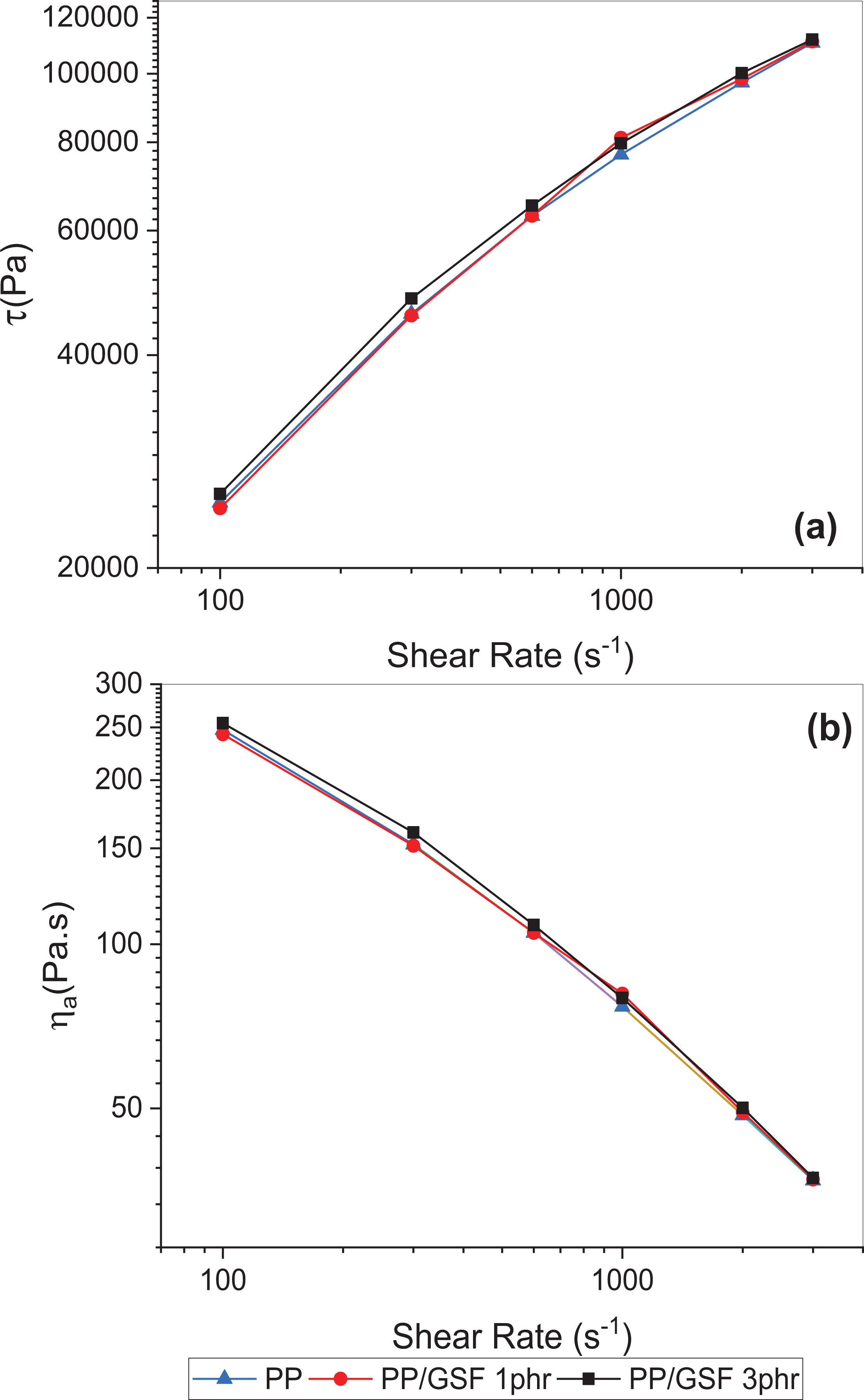
Rheological properties at high shear rates for PP and PP/GSF composites: (a) shear stress vs shear rate and (b) apparent viscosity vs shear rate.

where τ is the shear stress, K is the consistency index,
Table 2 summarizes the parameters obtained by the fitting of the plots using the power-law model. It can be observed that the consistency index (K), which is an indication of the fluid resistance against the flow, 28 decreases with the addition of GSF to PP and with the increase in GSF content from 1 to 3 phr. The value of n is related to the deviation from the Newtonian fluids. 27 If n = 1 the fluid presents a Newtonian behavior. If n < 1 the fluid presents a shear-thinning behavior. PP and the composites show a shear-thinning behavior over the entire shear rate range. There is almost no difference between the values of the n of PP and the composites, indicating that the addition of GSF to PP does not change the shear-thinning behavior.
Parameters obtained by Ostwald-de Waele power-law model fitting.
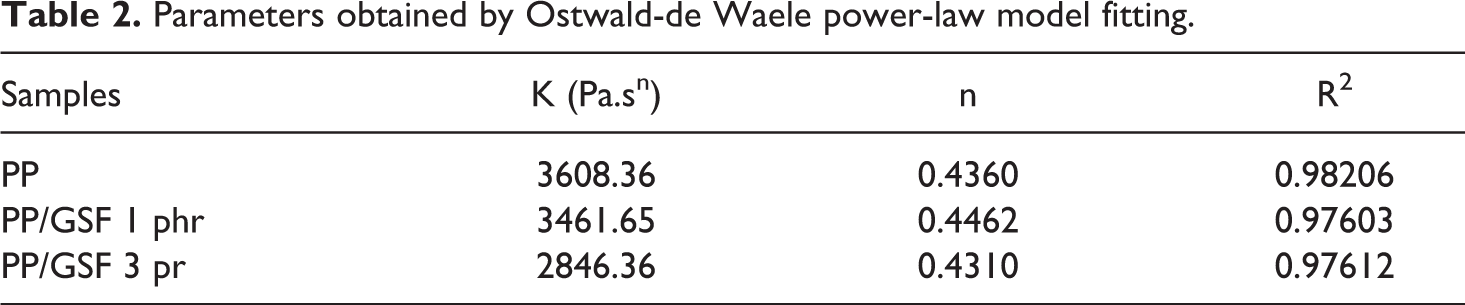
Figure 6(b) shows the plots of apparent viscosity as a function of the shear rate. At low shear rates, there is a slight increase in the viscosity with the addition of GSF to PP, and with the increase in the GSF content from 1 to 3 phr. At high shear rates, PP and the PP/GSF composites show similar viscosities values. This may be ascribed to the orientation of the GSF in the direction of the flow and due to the viscous dissipation. This is also an indication that the energy consumption during the processing of PP and the PP/GSF composites will be almost the same since shear rates above 300 s−1 are used in extruders and injection molding machines.
Scanning electron microscopy (SEM)
Figure 7 depicts the morphology of the PP/GSF composites analyzed by SEM. The GSF particles are indicated by an arrow in the SEM micrographs with a magnification of ×2000 (Figure 7(e) and (f)). Figure 7(a), (c), and (e) shows the SEM micrographs of the PP/GSF 1 phr composite at different magnifications. There is good interaction between the GSF and the PP matrix, since no voids or debonding of the GSF particles are observed, and the GSF particles are well distributed inside the PP matrix. Figure 7(b), (d), and (f) shows the SEM micrographs of the PP/GSF 3 phr composite. With the increase in the GSF content from 1 to 3 phr, an increase in the GSF particle size is observed, which may be related to the formation of GSF agglomerates. It can also be observed that these agglomerates are well distributed in the PP matrix.
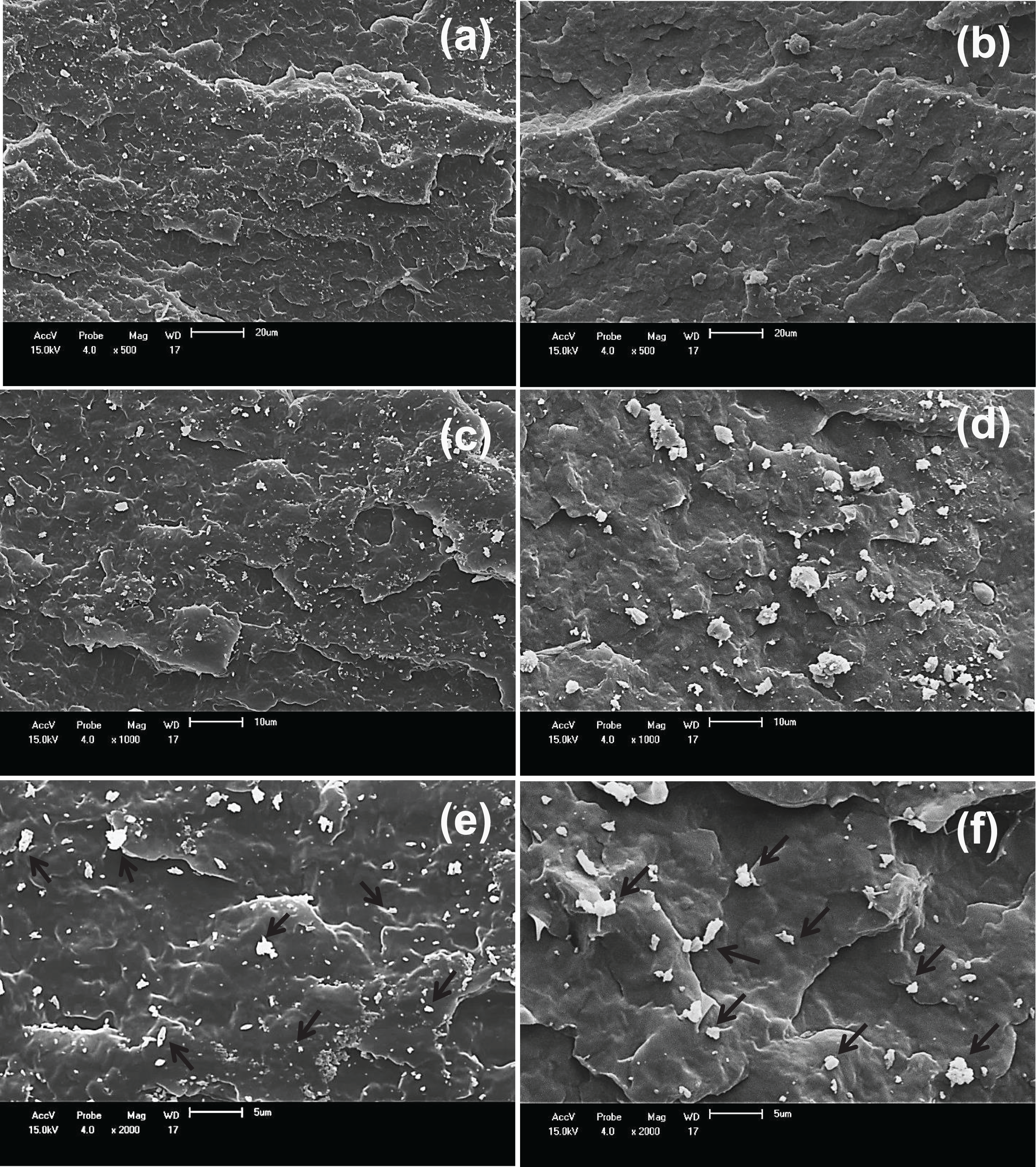
SEM micrographs of PP/GSF composites with magnifications of ×500, ×1000, and ×2000: (a, c, and e) PP/GSF 1 phr and (b, d, and f) PP/GSF 3 phr.
Mechanical properties
Table 3 summarizes the results of the mechanical properties of PP and PP/GSF composites. The addition of 1 phr of GSF to PP does not affect the elastic modulus (E) and tensile strength (TS). This may be ascribed to the good interaction and distribution of the GSF particles/agglomerates in the PP matrix. Further increase in the GSF content to 3 phr leads to a slight decrease in E and TS, which may be ascribed to the formation of GSF agglomerates. The impact strength (IS) of PP decreased with the addition of GSF. This decrease may be attributed to the fact that the GSF particles/agglomerates act as stress concentrators, and the GSF particle size is not sufficient to improve the IS. The IS is not affected by the increase in the GSF content from 1 to 3 phr.
Mechanical properties of PP/GSF composites.
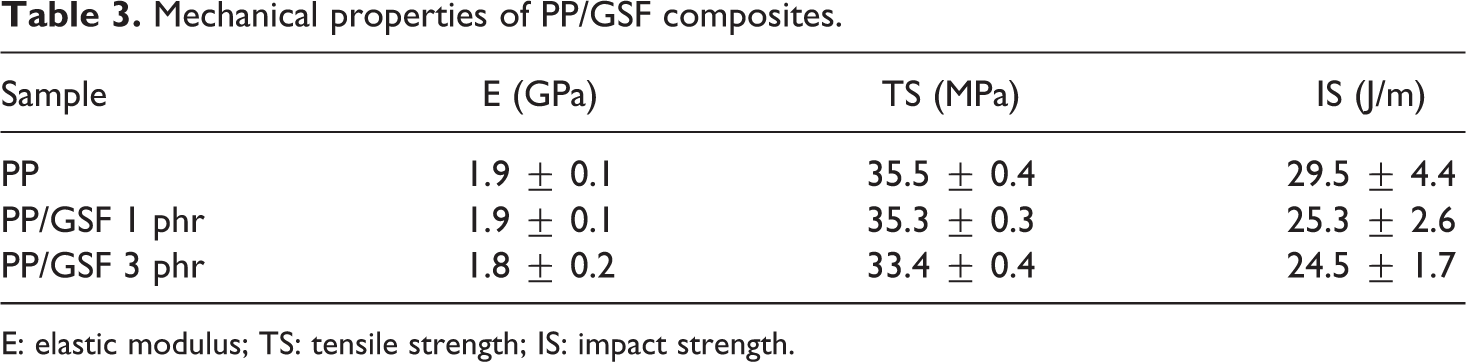
E: elastic modulus; TS: tensile strength; IS: impact strength.
Conclusions
This work aimed to investigate the effect of the grape skin fiber (GSF) on the rheological and mechanical properties of polypropylene (PP)/GSF composites. Rheological measurements showed that the addition of GSF to PP increased the complex viscosity at low frequencies. The PP/GSF composite containing 3 phr of GSF also showed the highest relaxation time, which may be ascribed to the restriction of PP chains in the presence of a larger amount of GSF. By capillary rheometry, no differences in the shear stress and the viscosities of PP ad PP/GSF composites are observed at high shear rates indicating that the processability of PP was not compromised by the addition of GSF. Morphology analysis by SEM indicated a good interaction between the GSF and the PP matrix and that the GSF was well dispersed/distributed. A slight decrease in the impact strength was observed with the addition of GSF to PP whereas the elastic modulus remained almost unaffected.
Footnotes
Acknowledgments
The authors thank CAPES and CNPq for their financial support.
Funding
The author(s) disclosed receipt of the following financial support for the research, authorship, and/or publication of this article: Conselho Nacional de Desenvolvimento Científico e Tecnológico - CNPq (grant numbers 426191/20161 and 442128/20142).
