



Abstract
In this work, blends of polyamide 1212 (PA1212) and thermoplastic polyurethane (TPU) elastomer of different group distribution ratios were prepared by melt blending. The effects of different TPU additional ratios on static and dynamic mechanical properties, crystallization, and wear resistance were investigated. Scanning electron microscopy images show that the phase morphology of the blended alloy changes from an island structure to a co-continuous phase structure and then to a sea-island structure. Mechanical tests show that as the proportion of TPU in the blend increases, the flexural modulus increases, and the tensile strength and notched impact strength decrease first and then increase. Dynamic mechanical analysis shows an increase in the storage modulus (G′) and a broadening of the loss factor peak. In addition, with the increase of TPU content, the crystallinity of PA1212 in the system decreased slightly first, and the crystallinity of PA1212 increased remarkably after the TPU content was further increased to 80 wt%.
Keywords
Introduction
Polyamide (PA, commonly known as nylon) can be prepared from diamines and dibasic acids and can also be synthesized using ω-amino acids or cyclic lactams. Depending on the difference in the number of carbon atoms in the diamine and the dibasic acid or amino acid, it can be classified into a plurality of PAs. PA is a widely used engineering plastic because of its good mechanical properties, heat resistance, wear resistance, chemical resistance and self-lubricating properties, low friction coefficient, certain flame-retardant and ease processing.1,2 Polyamide 1212 (PA1212) as one of the PAs is an important PA engineering plastic that has been commercialized in China since the beginning of the 21st century. It has a lower melting point and good toughness than PA63,4 and PA12.5,6 However, it has some inherent drawbacks just like the flexural properties of PA1212 are low.7,8
Thermoplastic polyurethane (TPU) is a block copolymer composed of alternating sequences of hard and soft segments or domains obtained by reacting a diisocyanate with a short-chain diol and a diisocyanate with a long-chain diol, which is an important class of plastics because of the variable combination of good processability and flexibility that has demonstrated interesting properties of wear resistance.9–11 TPU has good wear resistance and aging resistance and has excellent mechanical properties, such as low-temperature flexibility and high elasticity. 12 It is also resistant to oils, water, and microbial attack.13,14 The application of TPU includes sporting goods, electronics, automotive, biomedical, foams industries, and so on. 15 TPU is also unstable and can be redistributed according to thermal effects, since the decisive role of TPU is that hydrogen bonds act. 16 Thus, TPU can be processed in the same methods as conventional thermoplastics, such as injection molding and extrusion or compression molding.17,18
Since the melting point of PA1212 (about 185°C) is similar to the processing temperature of TPU and is favorable for the processing temperature of TPU, PA1212 with the added mass fraction of up to 20% has entered the TPU, and the influence of the thermal and mechanical properties of the blend is investigated. There is a possibility of TPU degradation at melt processing temperatures. PA1212 forms submicron dispersion domains in the TPU matrix, indicating good compatibility between TPU and PA1212. 19 However, studies on increasing the rigidity of PA1212 and changing the wear resistance of materials by adding ether-based TPU elastomer to PA1212 have not been reported. By blending the TPU with the PA, an intermolecular hydrogen bond can be formed between the ester/ether group or the urethane group of the TPU and the amide group of the PA.20,21
In this work, PA1212/TPU blends were prepared by varying the ratio of PA1212 to TPU. The effects of different TPU additions on the morphology, static, and dynamic mechanical properties, crystallization, and wear resistance of the blends were investigated.
Experiment
Materials
PA 1212 (PA1212, C-01) was purchased from Shandong Dongchen New Technology Co., Ltd (China), with intrinsic viscosity (ηr) of 1.96 measured in 96% H2SO4 at 25°C. The polyurethane elastomer is Estane®58277 (Noveon, Lubrizol Advanced Materials, Ohio, USA), a polyester-based TPU, with the soft segments (56 wt%) based on poly(butylene adipate glycol) and the hard segments based on 1,4-butanediol and 4,40-diphenylmethane diisocyanate. The average molecular weights determined by gel permeation chromatography (Waters 1515 pump/2414 detector/THF eluent, Chinese Academy of Sciences, Heifei, China) were Mw = 43,500 and Mn = 25,200.
Material preparation
PA1212 was dried in an oven at 100°C for 8 h before extruding. TPU was dried in an oven at 80°C for 24 h before extruding. PA1212/TPU were extruded with different ratios on the two-screw extruder (TSE–40A, L/D = 40, D = 40 mm, Coperion Keya Machinery, Co., Ltd, China) at 170–200°C, and screw speed is 200 r min−1. Then, the samples are injection molded by an injection molding machine (CJ80MZ-NCII, Chende Plastics Machinery Co., Ltd, China) at 190–220°C, the mold temperature is 40°C, and the holding time is 12 s.
The spline was frozen with liquid nitrogen and immediately taken out and broken. The TPU phase in the blend was etched with N,N-dimethylamide for 24 h at room temperature of 23 ± 2°C. The PA phase in the blend was etched with formic acid at 60 ± 2°C for 4 h.
Characterization
Measurement of mechanical properties
The tensile strength was measured by the material testing machine typed WDW-10C (Shanghai Hualong Test Instrument Co., Ltd, China) with the tensile speed of 50 mm min−1 following the GB/T 1040.1-2006 (the Chinese standard equivalent to ISO 527-4). The bending strength was measured by the same machine, with a crosshead speed of 2 mm min−1. And the notched impact strength was measured by using an XJ-6 pendulum impact tester according to ISO179-1:98. All mechanical tests were performed at room temperature of 23 ± 2°C.
Scanning electronic microscopy
The scanning electron microscopy (SEM) images of fracture surface were obtained by a Quanta FEG230 scanning electron microscope. SEM graphs of the composites were recorded after gold coating surface treating, with the accelerating voltage of 10 kV.
Dynamic mechanical analysis
The composites samples were tested on a dynamic mechanical analyzer (Q800, TA Instruments Co., Ltd Delaware, USA) using a dual cantilever setup. The dynamic mechanical properties were analyzed at a heating rate of 2°C min−1 over a temperature range from −100°C to 100°C. The samples were performed with an imposed frequency of 10 Hz and an oscillation amplitude of 15 µm in the bending mode.
Differential scanning calorimetry
The crystallization of samples was carried out by differential scanning calorimetry (DSC) apparatus (Q-10 instruments, TA Instruments Co., Ltd). Each sample of approximately 10 mg was loaded and sealed in an aluminum sample pan. The samples were first heated to 230°C for 5 min to eliminate the thermal history, cooled to 40°C, and then reheated to 230°C in a high purity nitrogen atmosphere at the heating/cooling rate of 10°C min−1.
Volume loss
In the experiment, the upper shaft remained stationary, the lower shaft was rotated at 200 r min−1 to cause sliding friction between the steel ring and the sample, and the grinding was performed for 2 h with a load of 198 N. The test was carried out at the room temperature of 23 ± 2°C.
Results and discussion
Morphology
The morphology of brittle fractures at low temperatures was analyzed by SEM. Figure 1 shows the SEM images of PA1212/TPU with different TPU ratios. In Figure 1, it can be observed that many TPU particles are dispersed in the PA1212 matrix and exhibited the sea-island structure when the TPU ratio is 10:30 wt%. When we observe the phase in the blend, there is a local junction at the interface, where the boundary between the two phases is blurred. When the TPU ratio is less than or equal to 30 wt%, the dispersion size of TPU in the PA1212 matrix increases as the TPU ratio increases. This is caused by the accumulation of TPU. It can be clearly observed that PA1212 and TPU exhibit a co-continuous phase structure when the TPU ratio is 40:60 wt%. By continuously increasing the ratio of TPU, it is observed that many PA1212 particles disperse in the TPU matrix and form the sea-island structure when the TPU ratio is 70:90 wt%. There is no doubt that the presence of hydrogen bonds between PA1212 and TPU is responsible for the improved interfacial adhesion. Therefore, the compatibility is well between TPU and PA1212, which leads to the fine dispersion of PA1212 in TPU and the preferable adhesion of both phases.
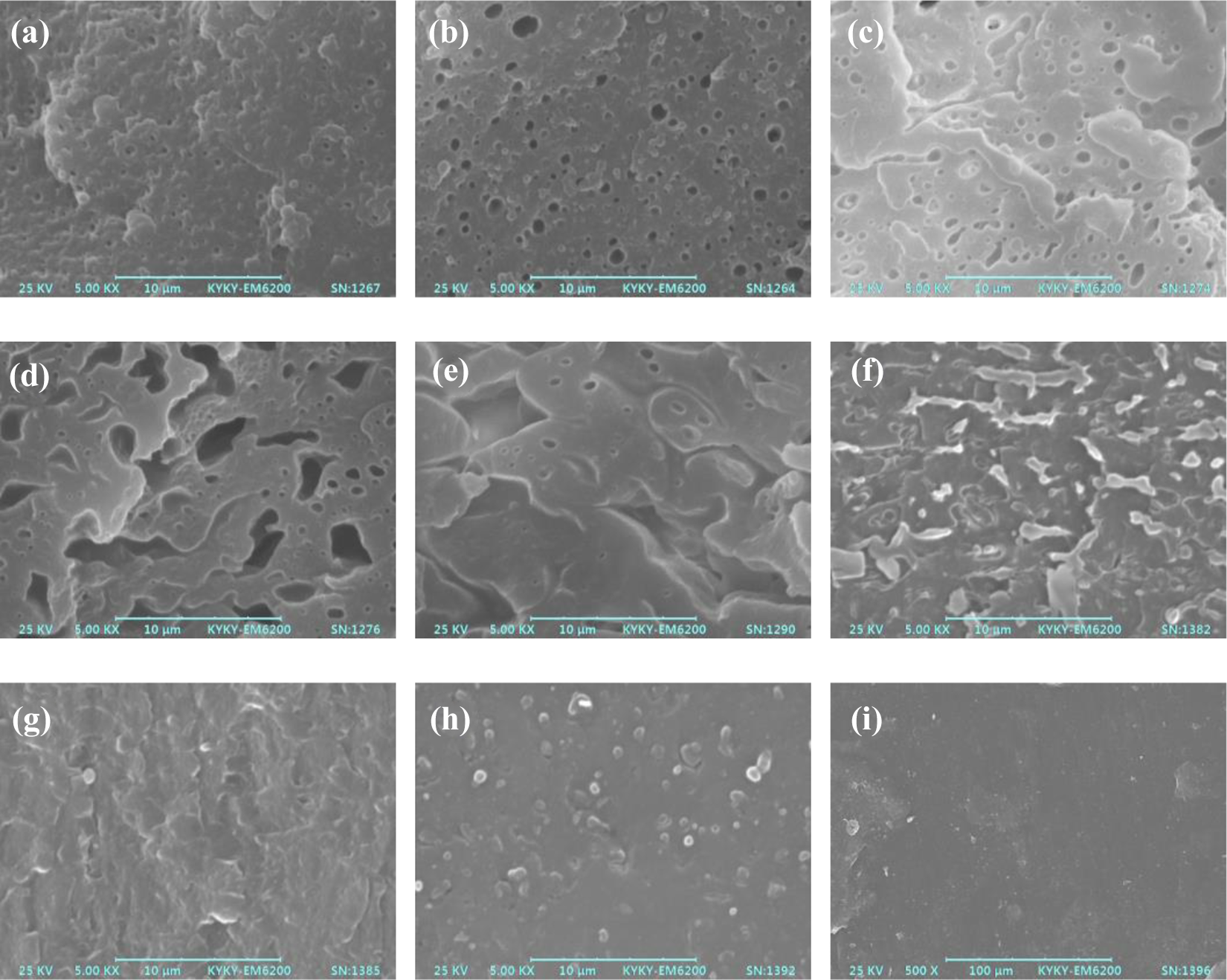
SEM of PA1212/TPU blends at different ratios: (a) 90/10, (b) 80/20, (c) 70/30, (d) 60/40, (e) 50/50, (f) 40/60, (g) 30/70, (h) 20/80, and (i) 10/90.
Mechanical properties
The tensile testing is commonly used to evaluate the mechanical properties of blended materials. Figure 2(a) shows the tensile strength of PA1212/TPU blends with different TPU ratios. When the TPU is added to the PA1212 at a mass fraction of 10–30 wt%, the tensile strength of the PA1212/TPU blend material is from 52.45 MPa to 40.18 MPa. By continuously increasing the ratio of TPU in the blend, the tensile strength of the blended material decreases sharply. When the added mass fraction of TPU is 50–70 wt%, the tensile strength of the blended material decreases to about 20 MPa. By continuously increasing the added mass fraction of the TPU, the tensile strength of the blended material is slowly increased. It is well-known that the mechanical properties of TPU depend on the degree of hydrogen bonds between the chains. The addition of PA1212 incompatible with TPU will disrupt the TPU chain hydrogen bonds by acting as particle barrier between TPU macromolecular chains, as the weak intermolecular interaction between two polymers will reduce the mechanical strength of the blends. 21 The bond between the ester group forming a strong hydrogen bond interaction TPU and the amide group of PA1212 can alter the behavior of microphase separation within the TPU macromolecule, thereby increasing the tensile strength of the TPU/PA1212 blend. With the increase of PA1212 content in TPU, the particle barrier may destroy the interchain hydrogen bonds of TPU or hydrogen bond formed between TPU and PA1212. The similar results were reported in other TPU-based hybrid systems.22,23
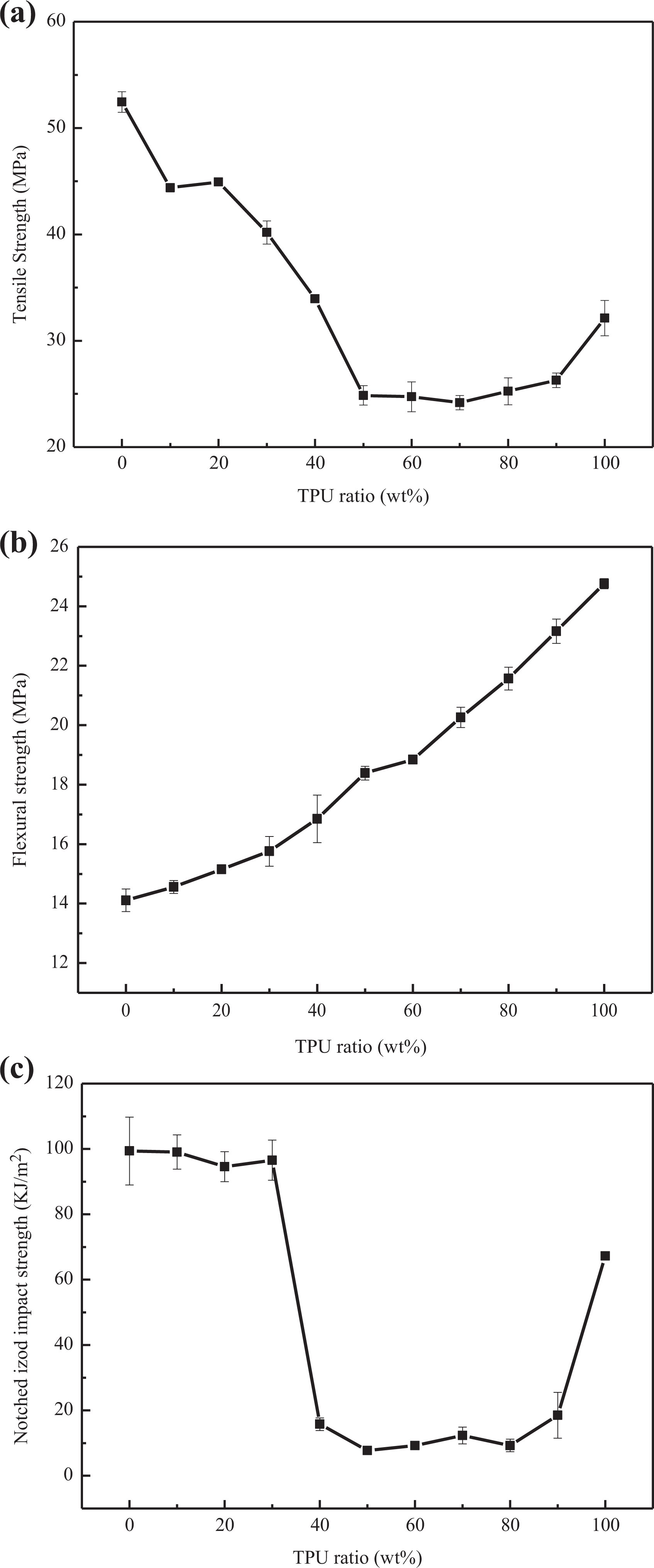
(a) Tensile strength of PA1212/TPU blends, (b) flexural strength of PA1212/TPU blend, and (c) notched Izod impact strength of PA1212/TPU blends.
Flexural strength is commonly used to test the stiffness of a hybrid material under bending loads. Flexural strength of PA1212/TPU blends with different TPU ratios is shown in Figure 2(b). When the TPU was added to the PA1212 at a mass fraction of 0–100 wt%, the bending degree of PA1212/TPU blend was gradually increased from 14.11 MPa to 24.76 MPa. This shows that a higher PA1212 content in the polymer blends results in a low deflection load. The presence of PA1212 may damage the hydrogen bond of TPU, resulting in lower mechanical properties. The similar results have been reported in TPU/natural rubber composites and TPU/PP blends.24,25
Notched impact strength of PA1212/TPU blends with different TPU ratios is shown in Figure 2(c). When the TPU additive fraction does not exceed 30 wt%, the notch impact strength of the blend material decreases very weakly. As the TPU additive content increases, the notched impact strength of material decreased significantly.
Dynamic mechanical properties
To evaluate the compatibility between the PA1212 and TPU, the dynamic mechanical properties were used to analyze the elasticity and viscoelastic properties of composites from the perspective stress or strain response. The curves of storage modulus (G′) and tan δ in the temperature ranged from −100°C to 100°C with different TPU ratios are shown in Figure 3(a) and (b). The PA1212 molecular chains are frozen and exhibit a high G′ value of rigidity at temperature below −10°C. As the TPU-added mass fraction increases, the temperature decreases gradually. The TPU molecular chains are frozen and show rigidity with high G′ values in the temperature lower than −30°C. With the temperature increases, respectively, the G′ values decrease obviously. In addition, with the increase of TPU ratio, G′ value decreases significantly. Generally, partial miscible compound system constituted by two polymers has two glass transition temperatures (Tg). In the temperature ranged from −100°C to 100°C, all the curves of tan δ of blends show two different peaks, which are attributed to the glass transition of TPU and PA1212, respectively. As the TPU ratio increases, the peak temperature of the blends moves toward high temperature and the peak width becomes wider. This indicates that the increase of TPU addition makes the incompatibility of two phases in the blends more and more obvious.
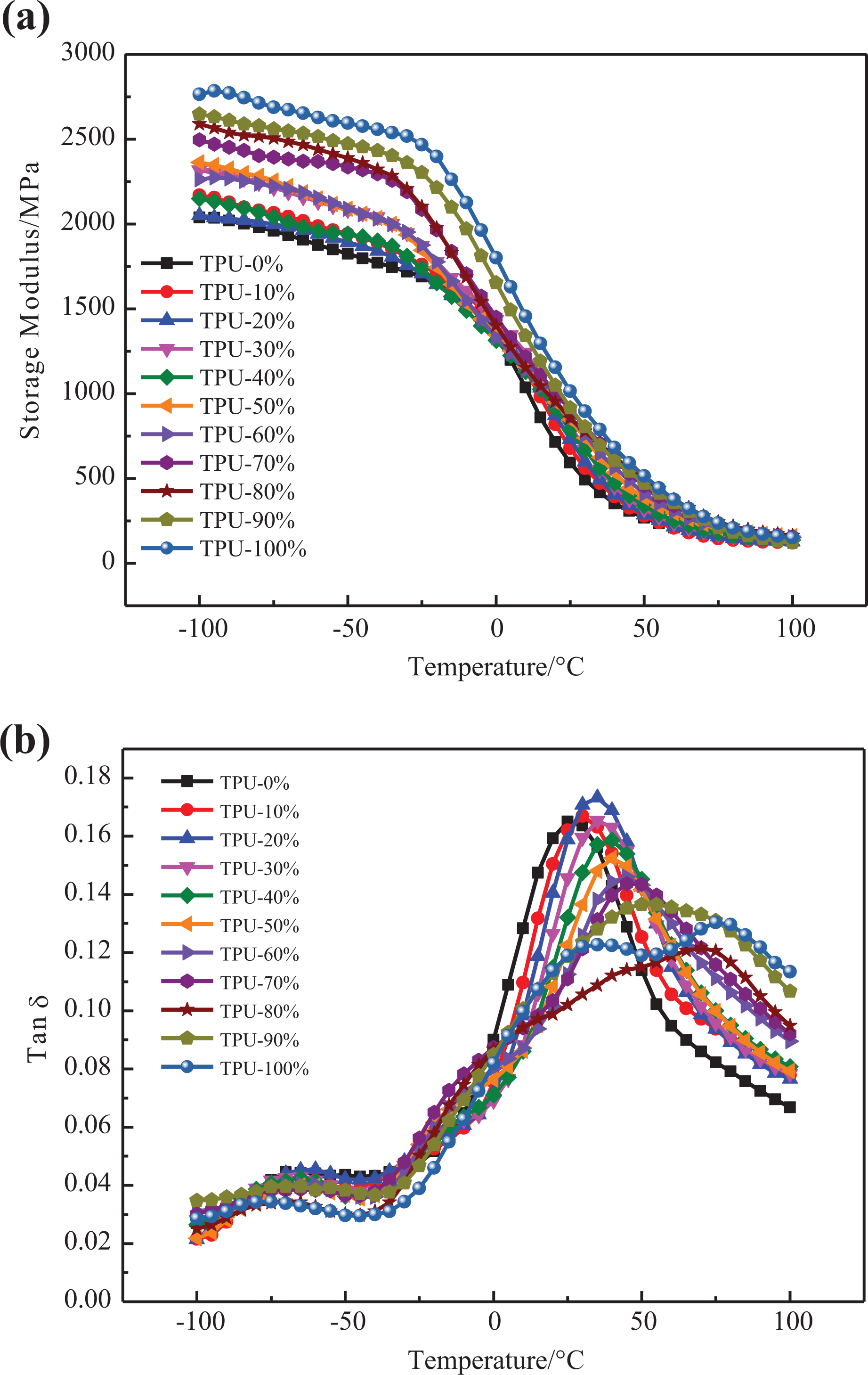
(a) Storage modulus of PA1212/TPU blends and (b) tan δ of PA1212/TPU blend.
Crystallization
The crystallization properties were analyzed by DSC in this work. Figure 4 shows the crystallization and melting curves of blends with different TPU ratios. The detailed data including crystallization temperature (Tc), melting temperature (Tm), heat enthalpy of crystallization, and melting (ΔHc and ΔHm) are also presented in Table 1. As the TPU ratio increases, the enthalpy crystallization curves shift to a lower temperature and the peak values of these curves become lower. The heat enthalpy of crystallization and melting also decreases with the increase of TPU ratio. When the TPU ratio is 40:60 wt%, the crystallization peak becomes wider, especially when the TPU ratio is 50:60 wt%, the crystallization curve shows double peaks, which indirectly indicates that the two-phase characterization of the blend is poor at this time. When the TPU ratio exceeded 30 wt%, the melting curve of the blend material showed double peaks. With the increase of TPU ratio, the melting peak moves toward high temperature.
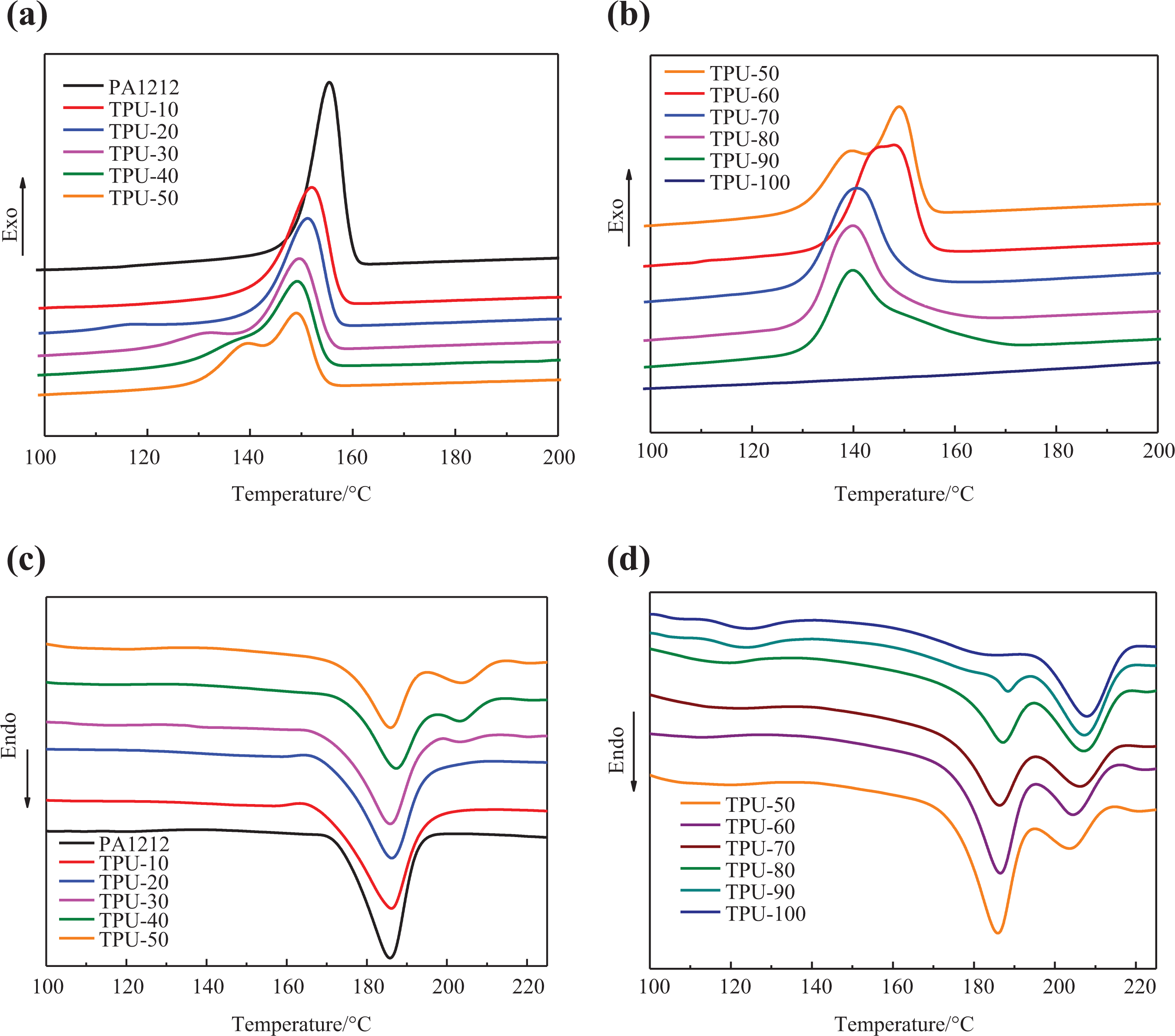
DSC curves of PA1212/TPU blends: (a) and (b) the cooling run and (c) and (d) the heating run.
Melting and crystalline behavior of PA1212/TPU blends.
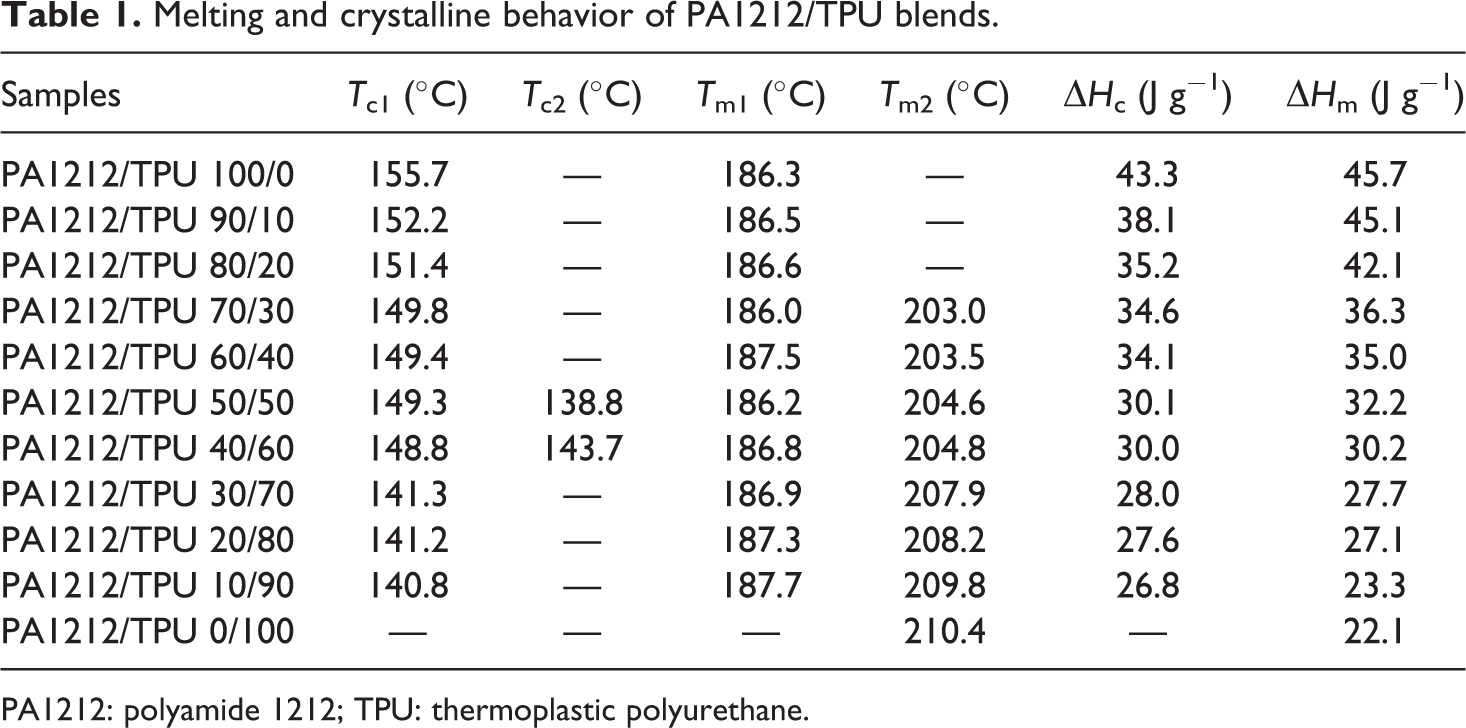
PA1212: polyamide 1212; TPU: thermoplastic polyurethane.
Wear resistance properties
The wear resistance properties are analyzed by volume loss in this work. Figure 5 displays the volume loss of blends of PA1212/TPU with different TPU ratios. It can be clearly observed that the volume loss of blends basically shows a trend of increasing first and then decreasing with the increase of TPU ratio in the blends. When the TPU ratio is 10:30 wt%, with the increase of TPU ratio, the volume loss of blends increased weakly, especially with the low TPU ratio ≤20 wt%. This indicates that the addition of a small amount of TPU has little effect on the wear resistance of the blends. When the TPU ratio is 40:60 wt%, with the increase of TPU ratio, the volume loss of blends increased sharply. The main reason for the weak wear resistance of the blend is that PA1212 and TPU form a co-continuous phase structure. 26 When the TPU ratio is 70:90 wt%, with the increase of TPU ratio, the volume loss of blends reduces.
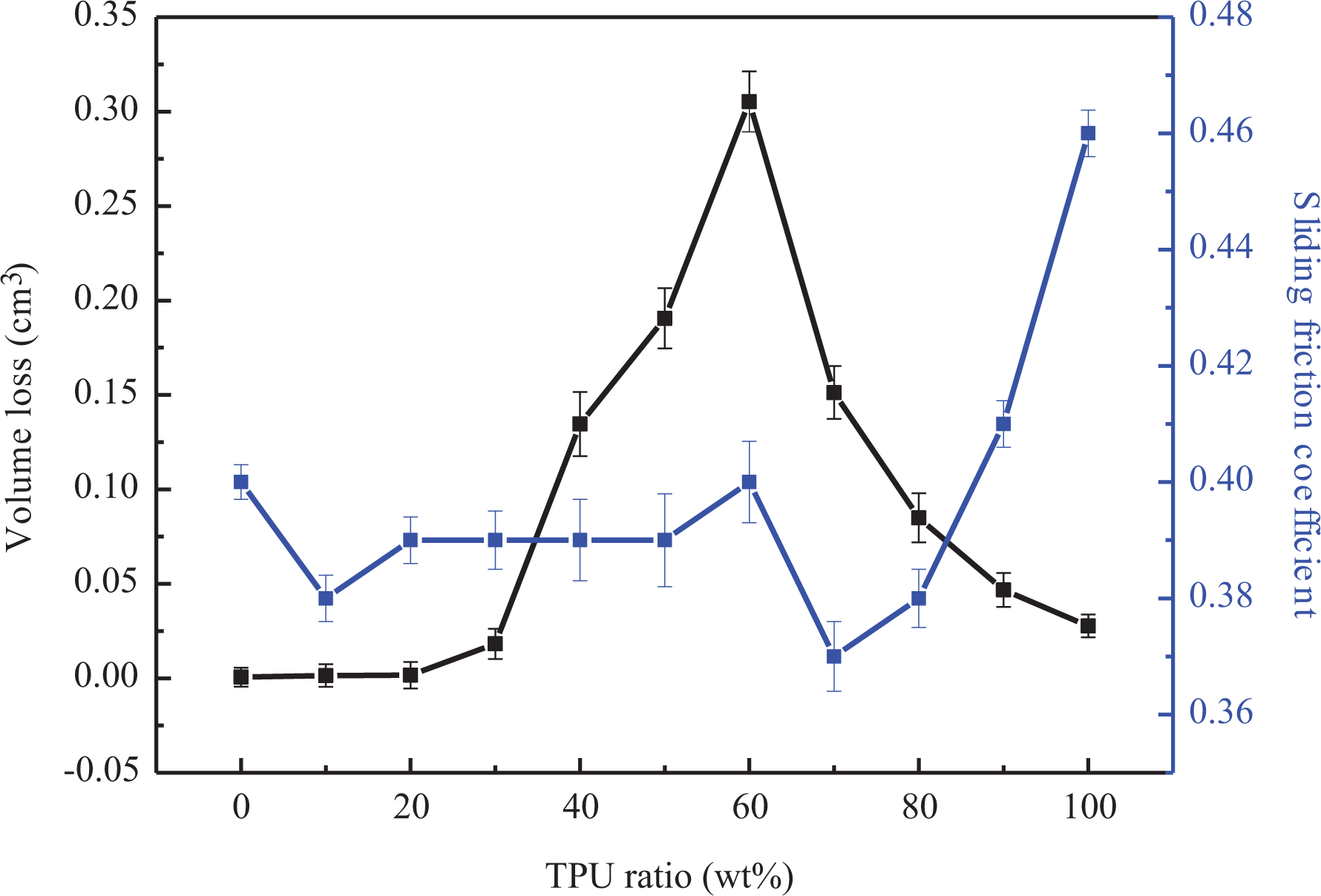
Volume loss and sliding friction coefficient of PA1212/TPU blend.
Conclusion
The effects of TPU ratio on the mechanical properties, crystallinity, and wear resistance properties of blends of PA1212/TPU are investigated in this work. SEM images of fracture morphology also display that the phase structure of the blend changes from a sea-island structure to a co-continuous phase structure, then transforms into an island structure as the content of TPU increases. The static mechanical properties data indicate that the tensile strength and notched impact strength of the composite are related to the phase morphology of the blend. In addition, with the increase of TPU ratio, flexural modulus of PA1212/TPU blend increases, the storage modulus increases, and the loss factor peak becomes wider. It is indicated from DSC curves that with the increase of TPU ratio, crystallization temperature of PA in the blend decreases, and the melting enthalpy and crystallization enthalpy decrease. It is indicated from volume loss of blends that the phase structure and the particle size of the dispersed phase have an effect on the wear resistance of the blend.
Footnotes
Funding
The author(s) disclosed receipt of the following financial support for the research, authorship, and/or publication of this article: This work was financially supported by Science and Technology Foundation of Guizhou Province (2019/5635, 2018/1087) and Industrial technology support project of Guizhou Province.
