



Abstract
A series of the long glass fiber–reinforced thermoplastic polyurethane elastomers and acrylonitrile–butadiene–styrene (LGF/TPU/ABS) composites with different content of LGFs were prepared using self-designed impregnation device. Dynamic mechanical properties of the LGF/TPU/ABS composites have been investigated using dynamic mechanical thermal analysis. The results indicated that the content of LGFs and scanning frequency have some effect on the dynamic mechanical properties and glass transition of LGF/TPU/ABS composites. In the meantime, the Arrhenius relationship has been used to calculate the activation energy of α-transition of the LGF/TPU/ABS composites. The thermogravimetric analysis thermograms of the LGF/TPU/ABS composites were found to decrease in two steps. The good dispersion of the LGFs in the matrix resins is obtained from scanning electron micrographs. In addition, effects of the LGF contents on mechanical properties of LGF/TPU/ABS composites were investigated.
Keywords
Introduction
The ever-growing use of glass fiber–reinforced thermoplastics in various industrial applications has led to a demand of always higher mechanical performances for injection-molded parts. However, the residual glass fiber length after processing is limited when short glass fibers reinforced thermoplastic pellets. In order to overcome this limitation, long glass fiber–reinforced thermoplastic (LGFT) composites have been developed so as to answer these new market requirements through a higher fiber aspect ratio (length–diameter ratio) theoretically leading to higher mechanical properties. 1 –5 The final length of glass fibers in the LGFT composites is also much greater than the final length of the composites, which have been conventionally manufactured by the twin-screw extrusion process. The main matrix resins of LGFT composites are polypropylene (PP) and polyamides (PA) 6 –12 Ward 7 et al. reported the influence of microstructure on the mechanical property performance of long fiber–reinforced thermoplastic composites. It is the object of this article to summarize the influence that orientation, fiber–matrix adhesion, and fiber length has on the mechanical properties of moldings containing 50% glass-reinforced nylon 6/6, 40% carbon-reinforced nylon 6/6, and 40% aramid-reinforced nylon 6/6 composites. The effect that fiber loading has on the mechanical properties will also be discussed. Hassan 10 et al. explored the tensile, impact, and fiber length properties of injection-molded short and LGF-reinforced PA66 composites. Yang 11 et al. investigated effects of three kinds of compatibilizers on mechanical properties of LGF-reinforced PA66 composites. Fu 12 et al. also reported that compatibilizers affected mechanical properties of LGFs-reinforced PP, and the fibers length, orientation, dispersion, and adhesion between fiber and matrix. The results showed that the average fiber length increases when the compatibilizers are add into the composites. In order to increase the applied range of the LGFT composites, acrylonitrile–butadiene–styrene (ABS) and thermoplastic polyurethane (TPU) elastomers were selected as the matrix of the LGFT composites. ABS has been widely used as structural materials because of their good properties of heat resistance, chemical resistance, abrasion resistance, impact resistance, rigidity, and so on. However, the impact strength of ABS with high rigidity is unsatisfied. It may be blended with TPU to improve the mechanical properties of engineering plastics.
In this article, the LGF/TPU/ABS composites were prepared in self-designed device, and the mechanical properties, morphology, thermal, and dynamic mechanical properties of LGF/TPU/ABS composites were studied by dynamic mechanical thermal analyzer (DMA), Thermogravimetric analyzer (TGA), scanning electron microscopy (SEM), and a universal testing machine.
Materials and experimental procedures
Materials
TPU (grade 2103-80AE, melt index 40 g/10 min) were supplied by Lubrizol Advanced Materials, Inc. (Cleveland, Ohio, USA). ABS was acquired from Shanghai Gaoqiao petrochemical company, China. The glass fibers (grade 988), treated with silane-coupling agent in this study, were produced by Ju Shi Limit, China, and the diameter of glass fiber was 10 µm. The antioxidant (grade Finox 245) was obtained from Dongguan Kaiyue Chemical Technology Co. Ltd, China.
Preparation of the LGF/TPU/ABS composites
TPU, ABS, and antioxidant were blended in a twin-screw extruder (Type TSE-40A/400-44-22, length/diameter = 40, D = 40 mm, Coperion Keya Machinery Co. Ltd, Nanjing, China). The temperatures from hopper to die at six different zones were 190, 195, 215, 215, 225, and 225°C, respectively; the screw speed was 200 rev/min and the impregnation temperature was 250°C. The resultant composites were dried in a vacuum oven at 90°C for 8 h and were then injection molded (Type CJ80M3 V, Chen De Plastics Machinery Co. Ltd, Guangdong, China) at 240°C into various specimens for testing and characterization. Preparation process schematic of the LGF/TPU/ABS composites is shown in Figure 1. The melt-impregnation process of the LGF/TPU/ABS composites is displayed in Figure 2.
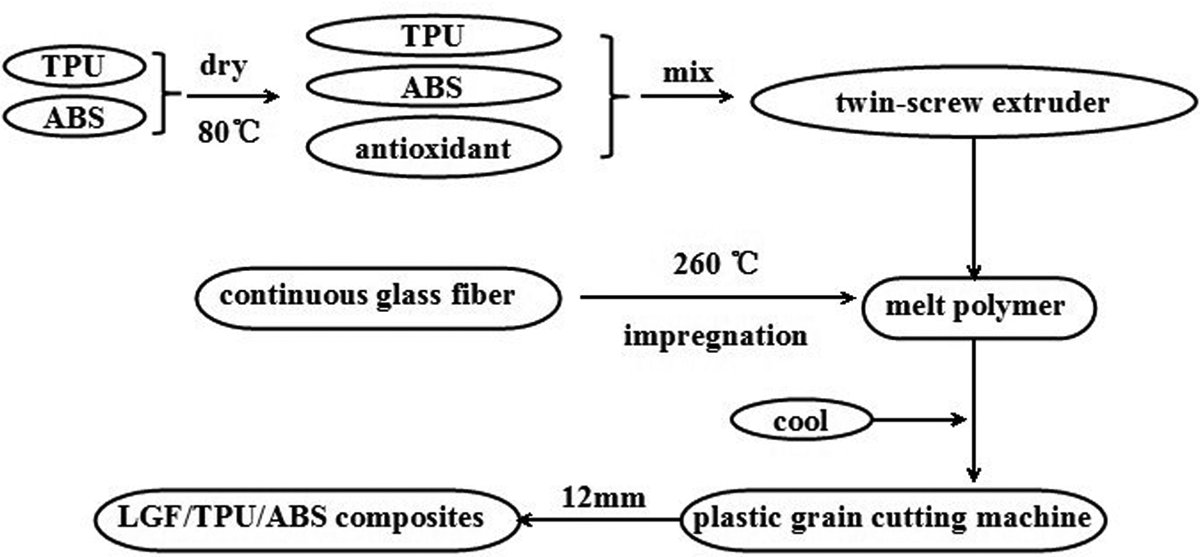
The schematic of the preparation process of LGF/TPU/ABS composites.
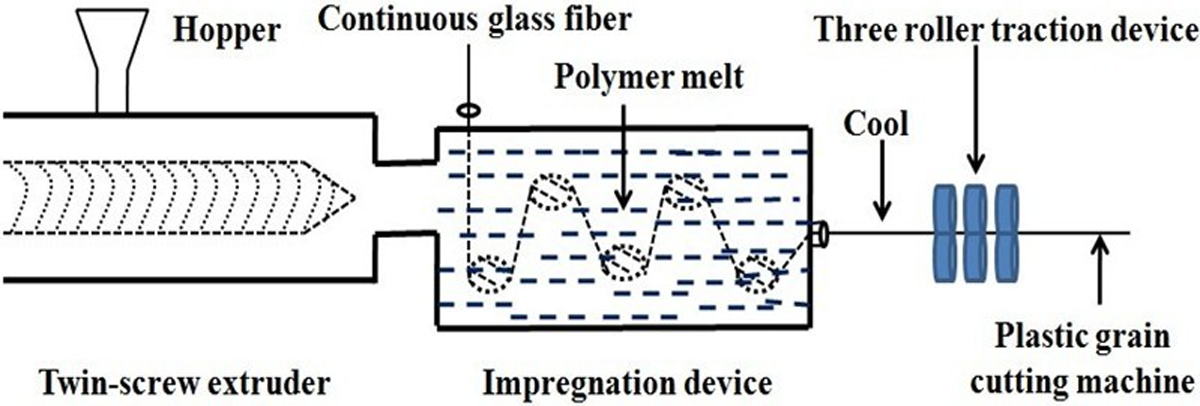
The melt-impregnation process of the LGF/TPU/ABS composites.
Mechanical properties testing
The tensile and flexural properties tests were performed with a universal testing machine (WDW-10C, Shanghai Hualong Test Instruments Co. Ltd), according to ASTMD-638 and ASTMD-790 standards. The dog-bone-shaped specimens were prepared by injection molding using an injection molding machine (CJ80M3 V, Chen De Plastics Machinery Co. Ltd); crosshead speed was set at 50 mm/min for tensile tests and 2 mm/min for flexural tests. For each specimen, the data reported are the average of five to seven specimens.
Notched Izod impact tests were performed on a ZBC-4 Impact Pendulum (Shenzhen SANS Co. China) at 23°C, according to the ASTM D-256 standard. The notches (depth 2.5 mm and radius 0.25 mm) were machined after injection molding. Experimental values were calculated from five specimens for the impact tests. The average deviations based on five specimens were of the order of ± 5%.
DMA testing
The DMA was performed on a TA Q800 DMA (TA Instruments, New Castle, Delaware, USA). The measurements were carried out at 1, 3, 5, 10, and 20 Hz under a heating rate of 2 K/min. The temperature range was from −50 to 150°C. The low-temperature measurements were performed in a stream of dry air cooled with liquid nitrogen atmosphere, and the high-temperature measurements were carried out in a stream of dry nitrogen atmosphere.
TGA
The thermal properties of the composites were studied on TGA (TA, Q-50 Instruments) under 60 ml/min of compressed air and 40 ml/min flow of high-purity grade nitrogen atmosphere. About 8 mg each of the sample were loaded in a ceramic sample pan and heated from room temperature to 850°C at a heating rate of 20°C/min.
Scanning electron microscopy
Specimens were fractured under liquid nitrogen condition for observing interface behavior and dispersivity of the glass fibers in the composites. The fracture surface of the sample was sputter-coated with a gold layer before examination, and the morphology micrographs of the composites were obtained at magnifications of 1000× using a KYKY-2800 SEM (KYKY Technology Development Ltd, China), with the accelerating voltage of 25 kV.
Results and discussion
Dynamic mechanical relaxation studies of LGF/TPU/ABS composites
DMA testing is one of the most sensitive measuring techniques for thermal analysis. The temperature dependence of the modulus and mechanical loss factor tan δ both offer significant information on the end-use performance of the composites tested and can be easily applied to predict control process behavior. 13
Figure 3 shows the variation in the storage modulus with temperature for LGF (10 wt % and 50 wt %)/TPU/ABS composites at several different scanning frequencies. It is evident that, over the temperature range of −50 to 75°C, LGF/TPU/ABS composites exhibit a high storage modulus. It can be the characteristic of LGF/TPU/ABS composites and result from the fact that the chain conformations are frozen into an amorphous rigid network. The LGF-reinforced composites are favorable to the enhancement of the composites’ modulus. In the range of 75–120°C, the temperature close to the glass transition temperature (Tg), a marked drop in storage modulus occurs. This results from the movement of small parts of macromolecule chains in the free volume. The reason is that the viscoelasticity properties of polymers are the function of temperature, time, and frequency. Under the constant stress, chains of molecules within the polymer have to be rearranged for decreasing the stress. The modulus of the LGF-reinforced composites decreases with time. So the modulus at frequency of 20 Hz (short time) is higher than that at frequency of 1 Hz (long time). Finally, over the range of 120–150°C, the glassy transforms to a rubbery state via a glass–rubber relaxation that involves a long-range motion of the chain segments. The storage modulus in the rubbery plateau is relatively low. Here, the translatory motions that occur in the glass–rubber relaxation are prevented by chain entanglements under high temperature. 14
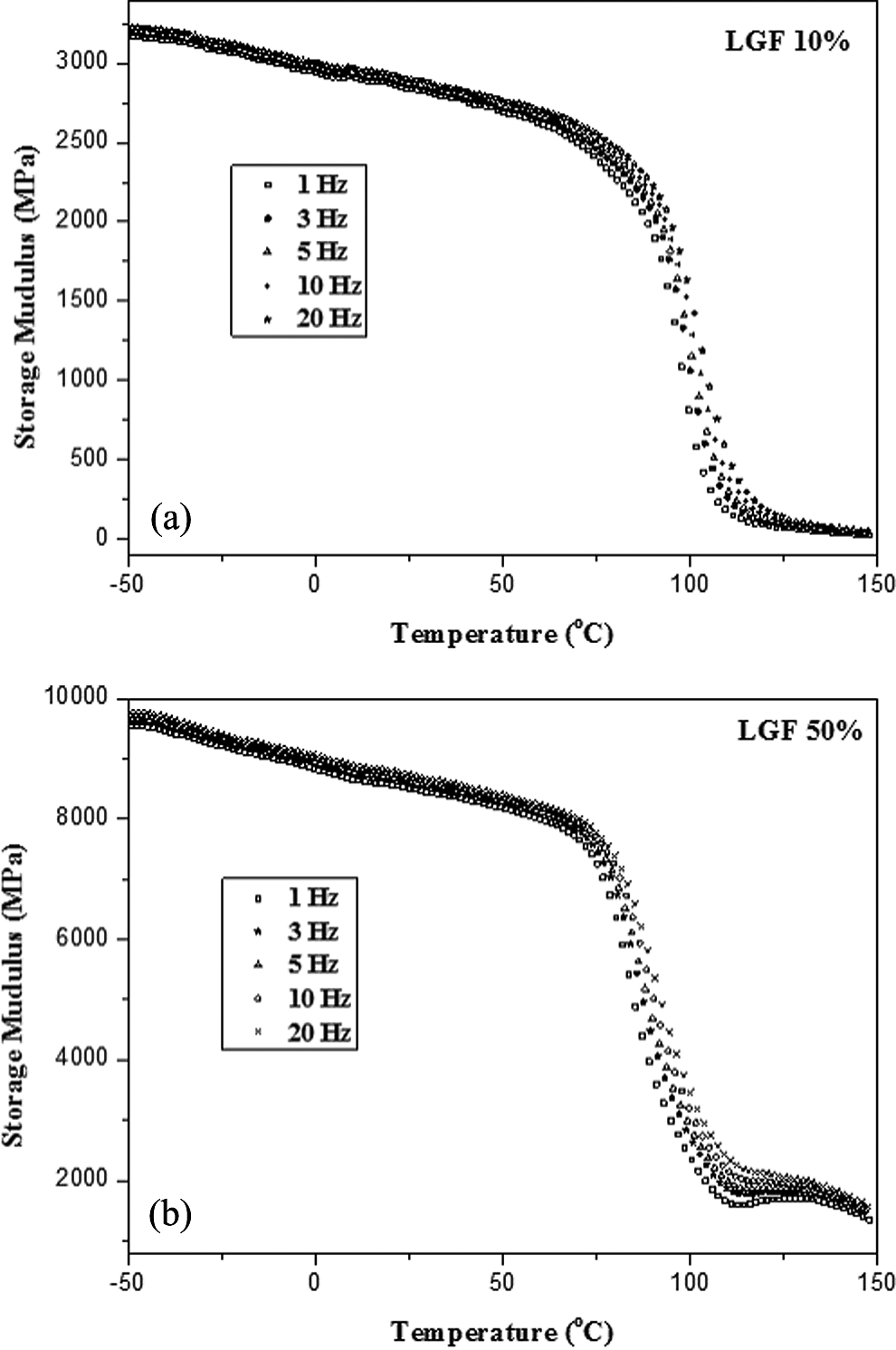
Effects of frequencies on storage modulus of LGF/TPU/ABS composites. Heating rate is 2°C/min.
From measurements of the storage and loss modulus, the loss tangent (
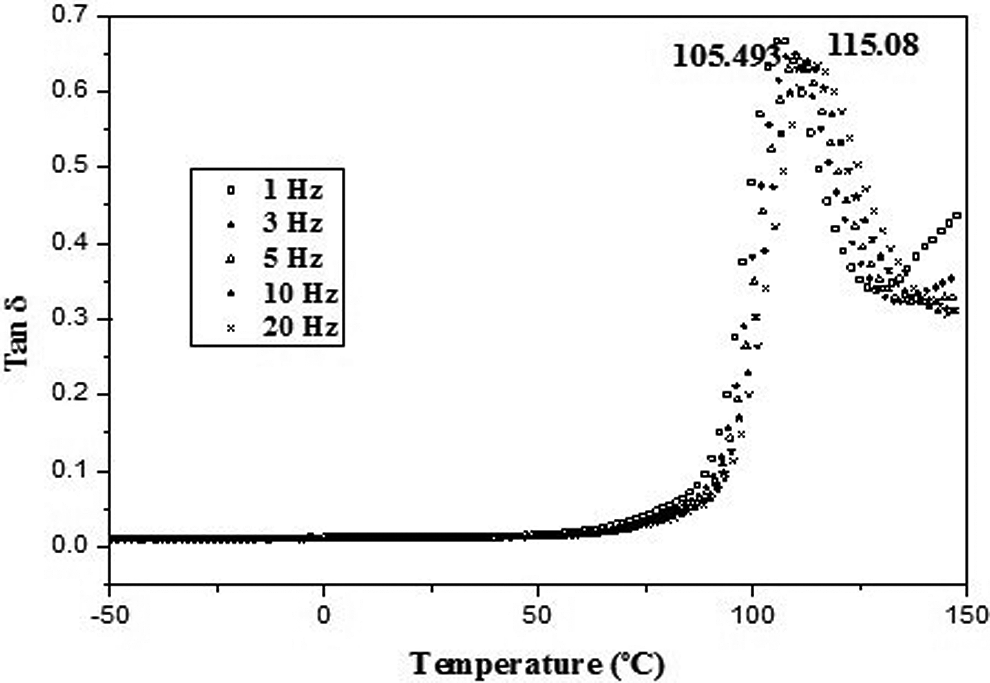
Effects of frequencies on tan δ of LGF (10%)/TPU/ABS composites. Heating rate is 2°C/min.
In view of damping, when the chain movement is frozen below 75°C, molecular motions become more restricted, hence neither the relative movement available nor the breakaway of friction between the chain damping is very small. When the movement of the chains is free in the range 120–150°C, the damping is also very small because the interaction and the friction between the chains are small. However, in the transition from frozen to free movement, although the chains possess a little ability to move, the damping has a higher value in overcoming the friction between the chains. 19
Effect of LGF/TPU/ABS composites on the relaxation time
In Figure 5, the storage modulus of TPU/ABS blend reinforced with LGFs is observed to systematically increase with increasing LGFs mass fraction. The behavior implies the reinforcing effect of the LGFs on the TPU/ABS matrix. The Tgs or α-relaxation of the LGF/TPU/ABS composites can be roughly estimated from the drastic decrease in the storage modulus (about one order of magnitude in this case) at the temperature above 75°C. As a consequence, the presence of the LGFs in the composites resulted in the more rigid polymer hybrids as seen from a higher storage modulus at room temperature. 20
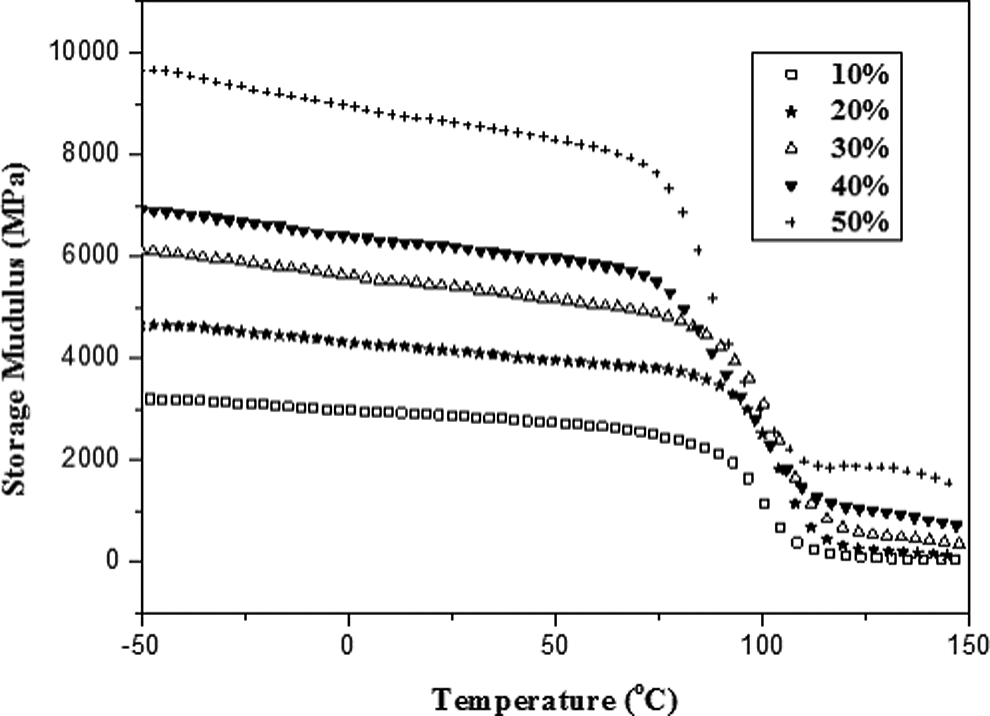
Effects of glass fiber content on storage modulus of the LGF/TPU/ABS composites. Scanning frequency is 5 Hz.
The effect of LGF contents on α-relaxation time in the glass transition region was investigated by measuring at defined frequency response of the LGF/TPU/ABS composites. The temperature dependence of tan δ determined from the DMA curves of the as-prepared LGF/TPU/ABS composites is shown in Figure 6. As indicated in the figure, the trend in Tg from the loss tangent was in agreement with those determined from loss modulus. Owing to increasing on the content of glass fibers, the content of matrix resins of the composites reduced, and the tan δ peak of the composites decreased.
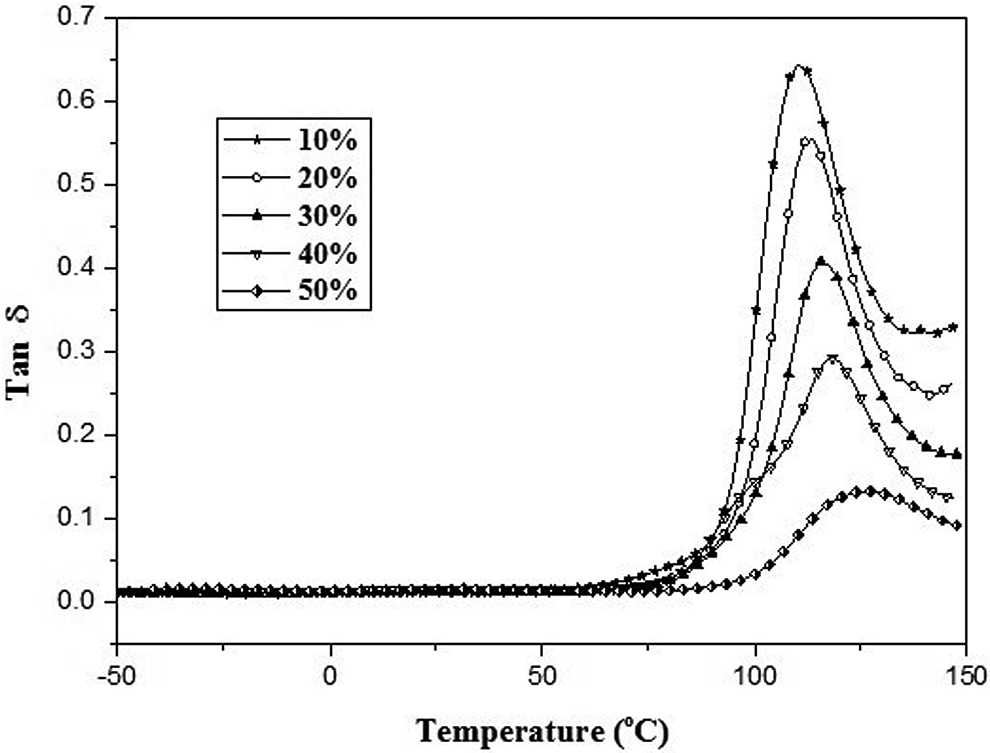
Effects of glass fibers content on the tan δ of the LGF/TPU/ABS composites. Scanning frequency is 5 Hz.
Calculation of the activation energy
The apparent activation energy for glass transition (ΔEa) can be used to characterize the relationship between the shift in Tg and frequency. It is noted that while Tg represents the relationship between the mobility of polymer chains and temperature, ΔEa represents a relationship between mobility and time scale and could be considered as representing the energy barrier of glass transition relaxation. In order to analyze the effect of frequency on the dynamic mechanical properties of the hybrid composites, DMA tests were performed over a temperature range of −50 to 150°C and at 5 different frequencies (1, 3, 5, 10, and 20 Hz). The temperature dependence of tan δ for the LGF/TPU/ABS composites represents the five frequencies studied. From Figures 3 and 4, it can be deduced that the effect of the frequency on peak magnitude shows a clear tendency, the relaxation peak temperature is increased by about 10°C when the frequency is increased from 1 to 20 Hz. It has been suggested that it is possible to interrelate the temperature at which a relaxation process is observed with the frequency of excitation ( f ) by the Arrhenius equation (especially over a limited frequency range), which predicts change in relaxation time as the glass transition is approached from above Tg due to the decrease in free volume. 21,22
The Arrhenius equation has the following form:

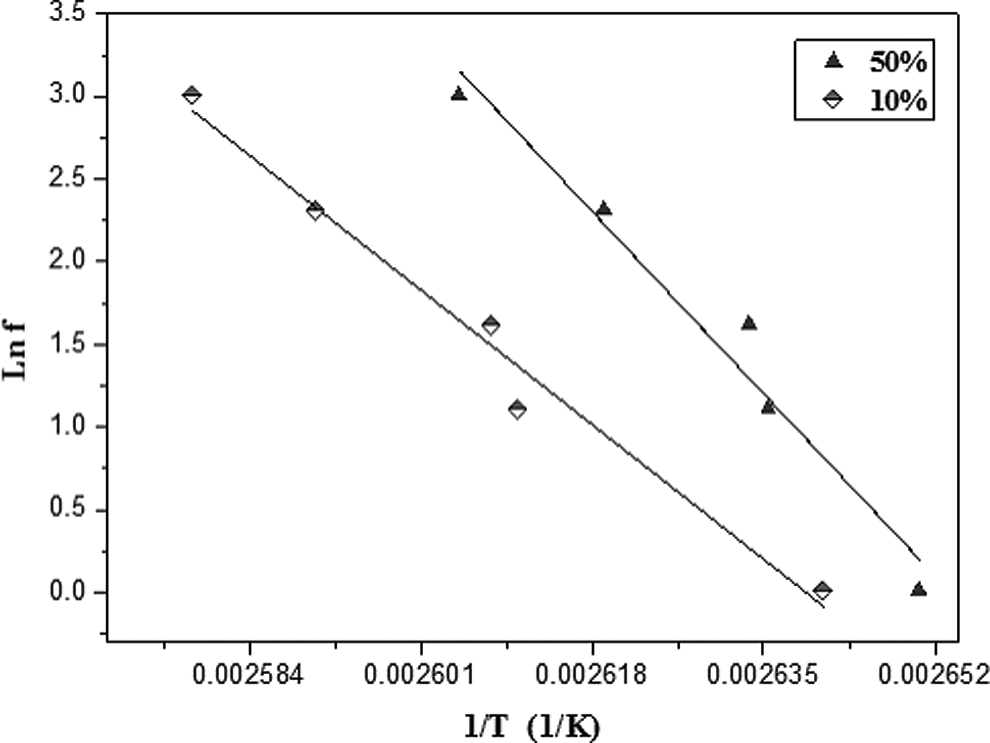
Arrhenius plots of relaxation times versus 1/T and the respective linear fits of LGF/TPU/ABS composites.
According to the equation, a plot of ln f versus 1/T, should give a straight line with a slope that is proportional to the apparent ΔEa (energy barrier to motion) associated with the α-relaxation process of the LGF/TPU/ABS composites. Calculated ΔEas according to Equation (1) were found to be 398.3 and 538.9 KJ/mol for the LGF/TPU/ABS composites (10 and 50 wt%), respectively. The high ΔEa of the LGF/TPU/ABS composites could be explained by comparatively larger fraction in composites, because the presence of LGF enhance the barrier for the movement of TPU/ABS matrix.
TGA
The TGA thermograms of the LGF/TPU/ABS composites are presented in Figure 8, which were found to decrease in two steps. The first step was thermal decomposition of TPU of the LGF/TPU/ABS composites. Nevertheless, the second step was thermal decomposition of ABS of the LGF/TPU/ABS composites. Derivative thermogravimetry (DTG) curves of pure ABS and TPU obtained are shown in Figure 9. In the meantime, DTG curves of LGF/TPU/ABS composites are shown in Figure 10. It can be seen from Figure 8 that pure TPU exhibits two separate peaks, while pure ABS presents only one peak in the DTG curve. Figure 10 shows DTG curves of LGF/TPU/ABS composites, which appear as two peaks, the first peak is the thermal decomposition of TPU of the LGF/TPU/ABS composites. However, the second peak is the thermal decomposition of the combined action of TPU and ABS of the LGF/TPU/ABS composites. 23
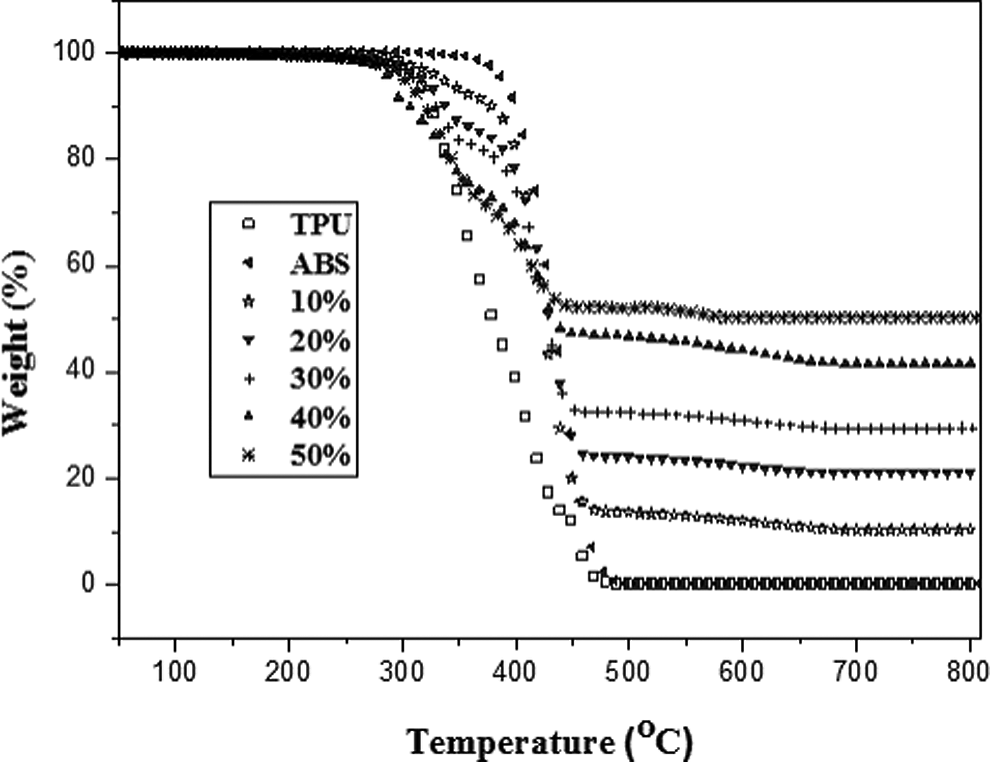
TGA thermograms of LGF/TPU/ABS composites at various long glass fiber contents. TGA: thermogravimetric analysis; LGF: long glass fiber; TPU: thermoplastic polyurethane; ABS: acrylonitrile–butadiene–styrene.
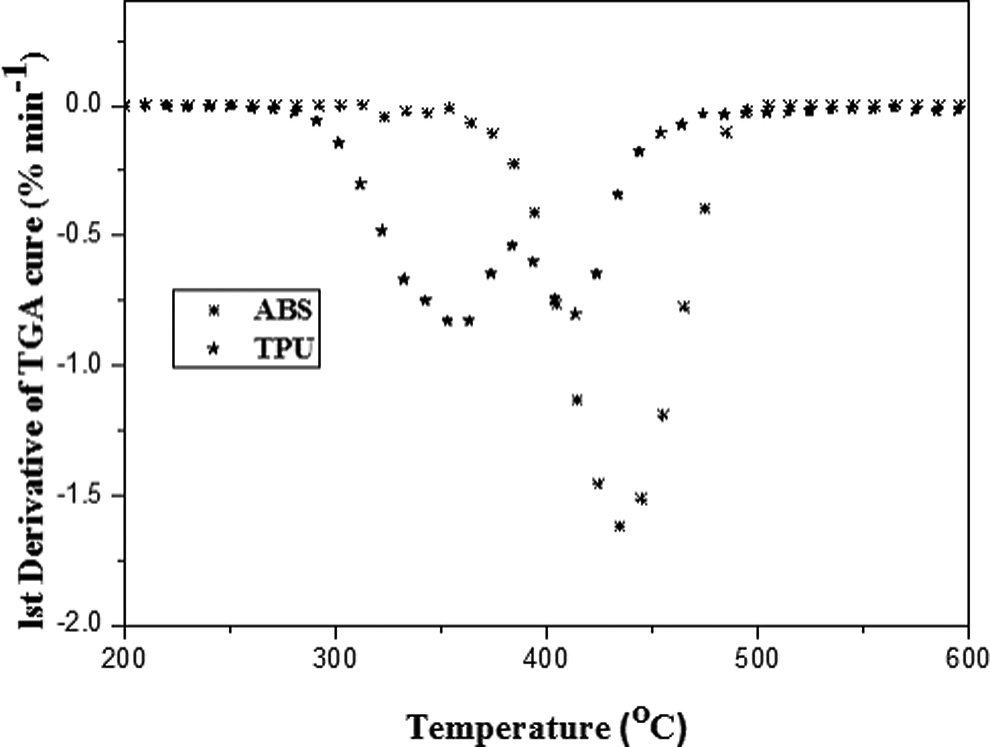
DTG curves of pure ABS and TPU.
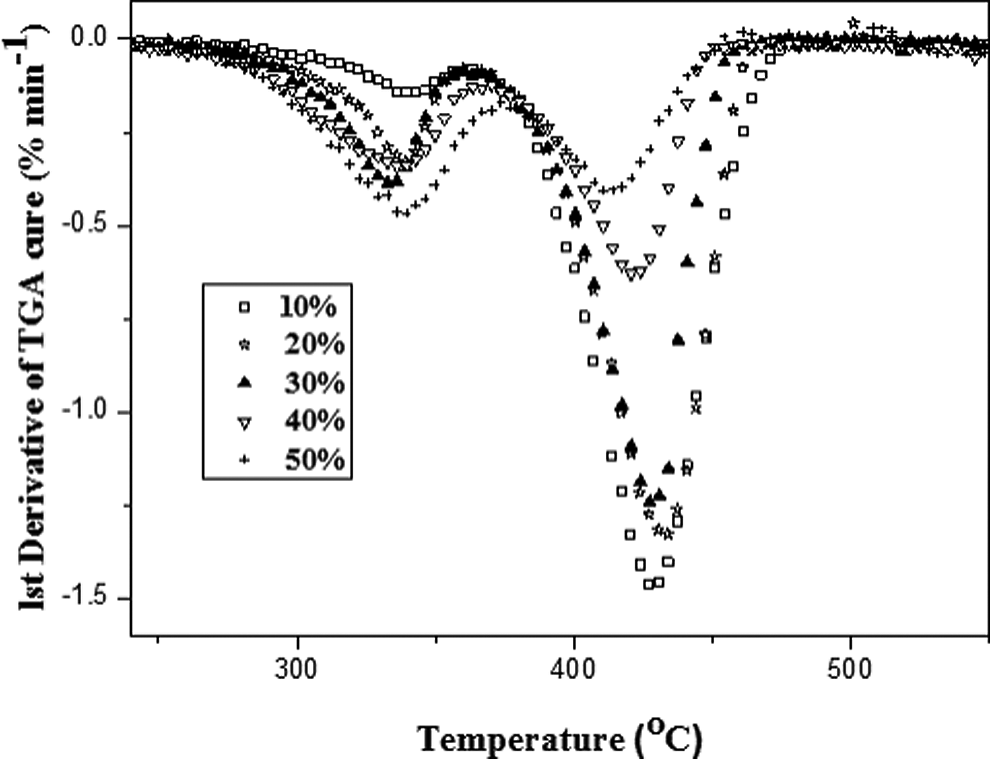
DTG curves of LGF/TPU/ABS composites.
Morphology analysis
The SEM micrographs of the fracture surface of LGF/TPU/ABS composites are shown in Figure 11. Figure 11 reveals the relatively good dispersion of the LGFs in the matrix resins. The outstanding dispersion is one key feature to yield a good composite property. Therefore, it can predict that LGF/TPU/ABS composites possess the excellent mechanical properties.
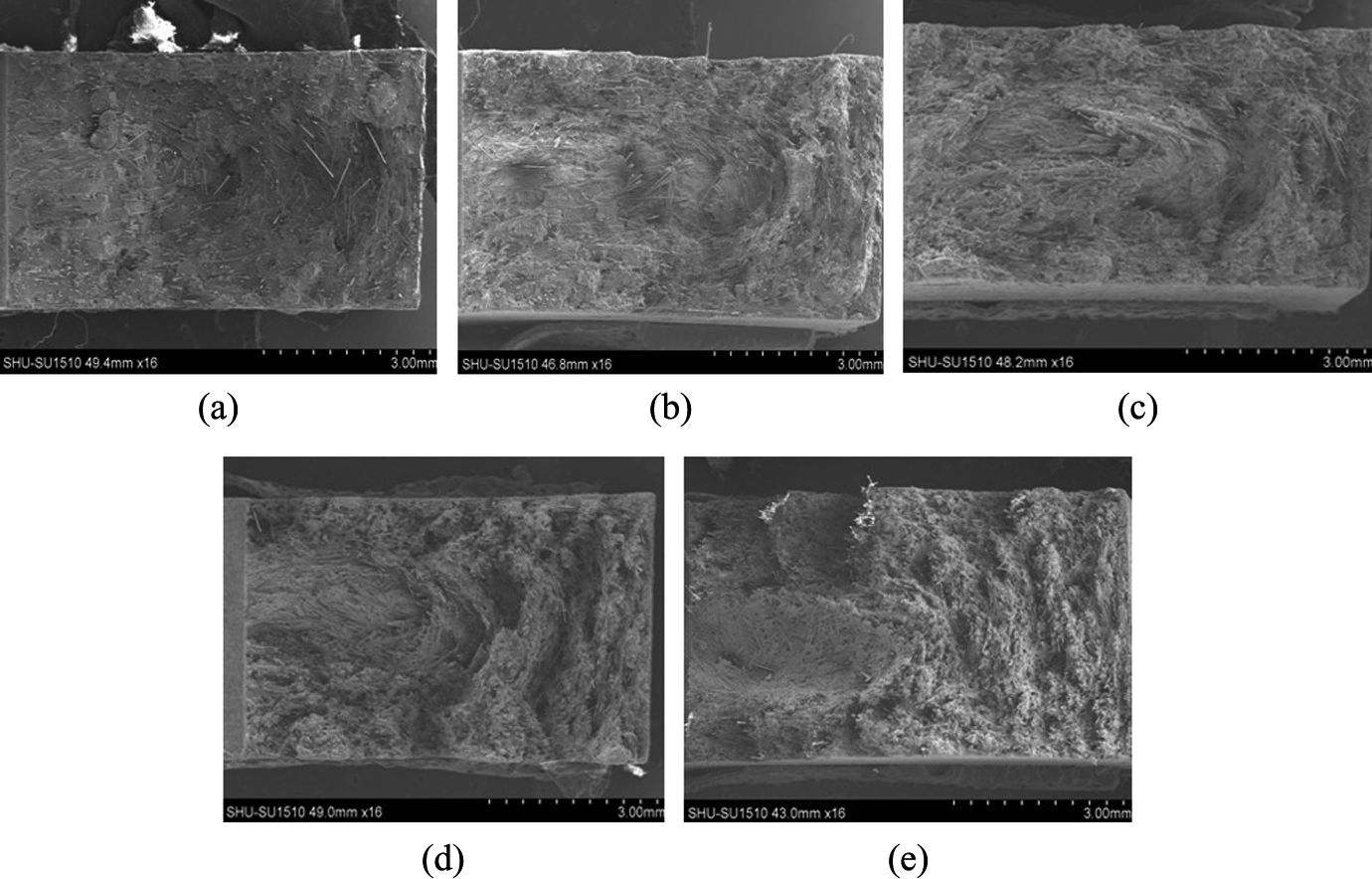
SEM micrographs of the fracture surface of the LGF/TPU/ABS composites (a) 10%, (b) 20%, (c) 30%, (d) 40%, and (e) 50%.
Mechanical properties
Effects of LGF contents on the mechanical properties of LGF/TPU/ABS composites are shown in Figure 12. The tensile strength, notched Izod impact strength, flexural strength, and modulus of LGF/TPU/ABS composites gradually become large with increasing content of LGFs. Due to the reinforcement of composites by LGFs, the composites have outstanding mechanical properties. SEM micrographs prove that the glass fibers show very good dispersion in the LGF/TPU/ABS composites, and ABS was toughened by TPU, LGF/TPU/ABS composites; therefore, have excellent notched Izod impact strength. Another point to note, the tensile strength, the notched Izod impact strength, flexural strength, and flexural modulus of LGF (50 wt %)/TPU/ABS composites are 200%, about 300%, more than 200%, and about 350%, by comparison with that of LGF (10 wt %)/TPU/ABS composites, respectively.
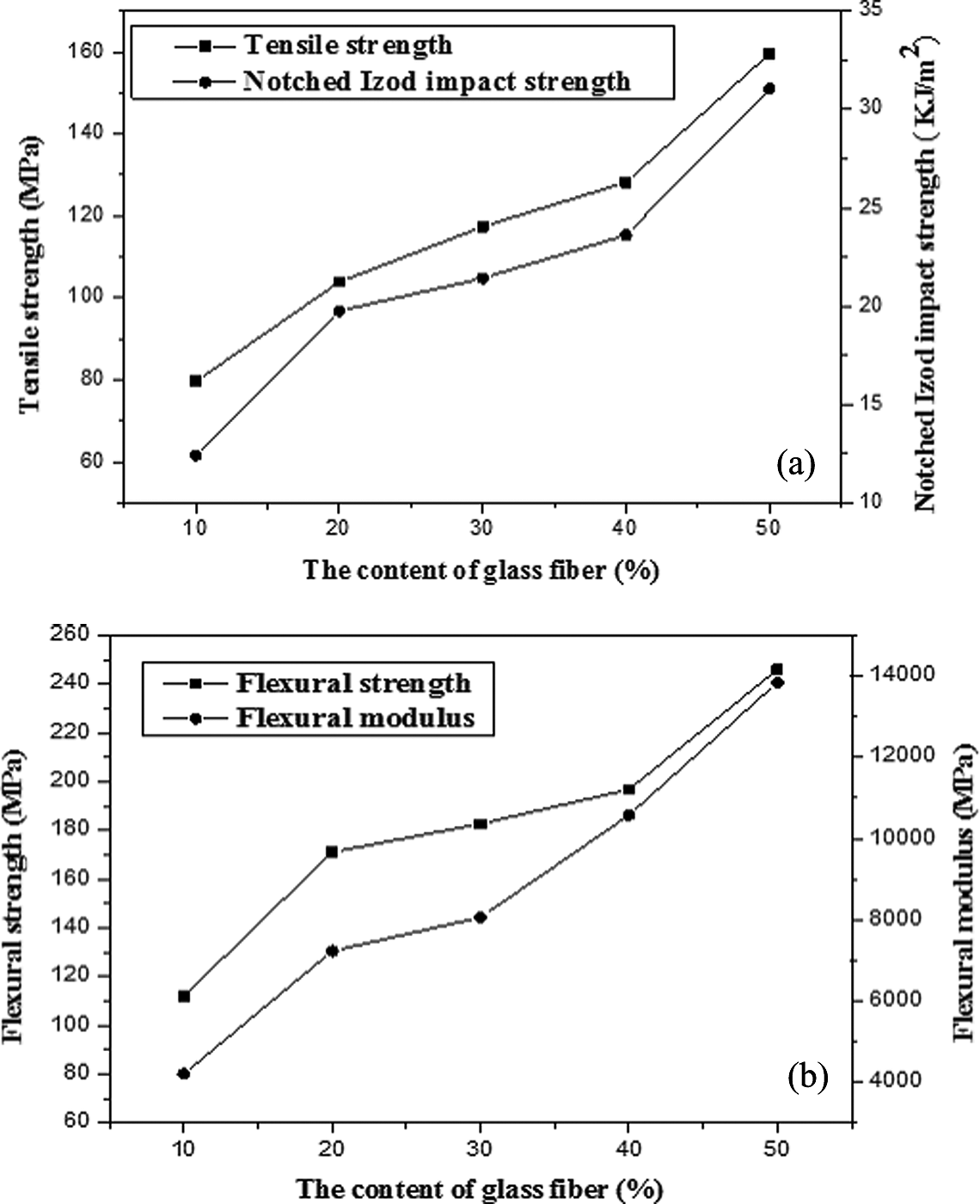
Effect of the content of LGFs on the mechanical properties of LGF/TPU/ABS composites.
Conclusions
Performances of LGF/TPU/ABS composites were expressed by DMA, TGA, and mechanical properties. The following conclusions can be drawn.
DMA was found to be a very useful technique for interpreting some of the thermomechanical behavior of LGF/TPU/ABS composites based on their viscoelasticity. Tg of LGF/TPU/ABS composites at 1 and 20 Hz based on tan δ peak are around 109.07 and 116.25°C, respectively. The storage modulus of the LGF/TPU/ABS composites increases with increase in the content of LGFs. Furthermore, Ea at the α-relaxation according to an Arrhenius equation is calculated to be 398.3 and 538.9 KJ/mol for the LGF/TPU/ABS composites (10 and 50 wt%), respectively. The TGA thermograms of the LGF/TPU/ABS composites were found to decrease in two steps. At the same time, DTG curves of LGF/TPU/ABS composites displays two peaks. The mechanical properties of LGF/TPU/ABS composites gradually increase with increase in the content of LGFs.
Footnotes
Declaration of Conflicting Interests
The author(s) declared no potential conflicts of interest with respect to the research, authorship, and/or publication of this article.
Funding
The author(s) disclosed receipt of the following financial support for the research, authorship, and/or publication of this article: Contract grant sponsor: The national 863 plan, contract grant numbers 2012AA03A601; QiankeheJzi contract grant numbers [2013]2122; Qiankeheqianzi, contract grant numbers (2010)5005; QiankeheGYzi, contract grant numbers (2011)3004.