




Abstract
The main aim of this study was to evaluate the thermal degradation and flame retardancy of straw flour (SF)-polypropylene (PP) composites and wood flour (WF)-PP composites. Biomass silica exists in SF, despite only 18 wt% loading of ammonium polyphosphate (APP); the APP in combination with biomass silica can effectively improve the flame retardancy on total heat release, heat release rate (HRR), mass loss rate, time to ignition (TTI), and limited oxygen index; it can obtain UL-94 V-0 rating, reduce the average and peak HRR by 44% and 41%, respectively, and increase the TTI by 8%. It attributes to the interaction effect between biomass silica in SF and APP, which more effectively enhances the thermal stability of the SF/PP/APP composites at high temperature and increases the char residue. The silica could form an intercalated network in char structure and then boost the physical integrity. The enhanced physical integrity and thermal stability lead to an effectively synergetic effect on flame retardancy of SF/PP/APP composites.
Introduction
Wood–plastic composites (WPCs) have been widely utilized as interior automotive panel, garbage pails, crates, and garden equipment for they are eco-friendly, biodegradable, and renewable. 1 Besides, WPCs possess the advantages of good dimensional stability during lifetime, that is, lower water uptake and durability against fungi and insects compared with wood. 2,3
Agricultural and forestry biomass resources have attracted great attention to reinforce polymer in recent years because of their environmentally friendly, renewable, high specific strength, sustainability, and ecoefficiency, 4 such as wheat cereal, paddy and flax straw, corn straw, sunflower and pepper stalks, kiwi pruning, peanut hulls, corn piths, bagasse fiber, and grass clippings. 5 –13 There are some disadvantages to using natural fibers, such as lower durability and restricted processing temperatures, which often limit the type of polymer available for the matrix. Among various polymer matrices, polypropylene (PP) has been widely used to produce natural fiber-reinforced polymer composites because of its low density, high water resistance, low cost, chemical resistance, and easy processing. 14
Nature fiber also has poor fire resistance, which is a major drawback in certain applications, so reducing material flammability is a key requirement. In order to improve the flame retardancy of WPCs, the application of halogenated flame retardants is gradually becoming restricted. 15,16 Halogen-free flame retardants become increasing popular. The intumescent flame retardants (IFRs) comprising ammonium polyphosphate (APP), pentaerythritol, and melamine are suitable fire retardants for WPCs. APP is usually used for phosphorous (P) flame retardants, which leads to higher cost and poor compatibility in the composites. 3,17 –21
Many of the fire retardancy strategies are adapted to improve the fire retardancy of polymer and natural fiber composites. García et al. reported that APP or aluminium hydroxide loading can improve flame-retardant effect in WPC. 22 Besides, Naumann et al. researched that the expandable graphite was better than APP and nitrogen-containing flame retardant in WPC. 23 Ayrilmis et al. concluded that the flame retardancy of phosphate and boron compounds has a good flame-retardant effect on WPC. 24 Furthermore, Zhang et al. reported that silica and APP had a synergetic effect for wood fiber/PP composites. 25 Pan et al. concluded that the addition of APP and nano-silicon dioxide enhanced the flame retardancy of wood fiber/polyethylene composites. 26
Most of IFRs are P-nitrogen containing compounds or complexes, which are believed as promising candidates for replacing halogen containing ones due to their environmental advantages. However, IFRs have some drawbacks including lower thermal stability, lower flame-retardant efficiency, and lower water resistance, compared with bromine-containing flame retardants. These problems seriously restrict the applications of IFRs in polymeric materials. In order to solve the abovementioned problems, a lot of synergistic additives have been investigated to enhance the flame retardancy of IFR systems, such as zeolite, montmorillonite, and other synergistic agents. After investigation, it was found out there are some inorganic oxides in some natural fibers which can replace some of synergistic agent. For example, there was some biomass silica in rice straw flour (SF). 27
In this study, two nature fibers, namely, SF and wood flour (WF) were chosen to investigate the flammability and thermal degradation of IFR straw or wood-PP composites system. Therefore, this study will examine the interaction of APP with SF or WF. Thermogravimetry analysis (TGA), cone calorimeter test, limited oxygen index (LOI), vertical burning test (UL-94), X-ray photoelectron spectroscopy (XPS), and scanning electron microscopy (SEM) are used to evaluate the effect of APP in SF/PP and WF/PP composites.
Experimental section
Materials
PP (homopolymer; melt flow rate: 4.0 g/10 min) used in this study was produced by Daqing Huake Co., Ltd, China. WF (80 mesh, poplar) and straw (80 mesh, rice straw) were obtained from Siping City Mulinsen Cork Products Co., Ltd, China. APP (crystalline form II; n > 1000, average particle size 10 μm) was offered by Shandong Shian Chemical Industry Co., Ltd, China.
Composite preparation
The WF or SF and APP were dried in an oven at 105°C for 24 h to constant weight before processing, and were then stored in a sealed bag. The PP, maleic anhydride grafted polypropylene (MA-g-PP), and antioxidant 1010 were mixed with WF or SF in a high-speed mixer for 8 min. The composites were prepared using the torque rheometer (RM-220A, produced by Harbin Harp Electrical Technology Co., Ltd. China) cavity under 180°C at 50 r min−1 for 10 min, and then were pressed on a molding machine at a pressure of 15 MPa and 180°C for 5 min to form sheets for testing. The ratio of MA-g-PP and antioxidant 1010 is 9% and 1%, respectively. Designation and composition of composites are listed in Table 1.
Compositions of composites with and without fire-retardant agents (by weight).
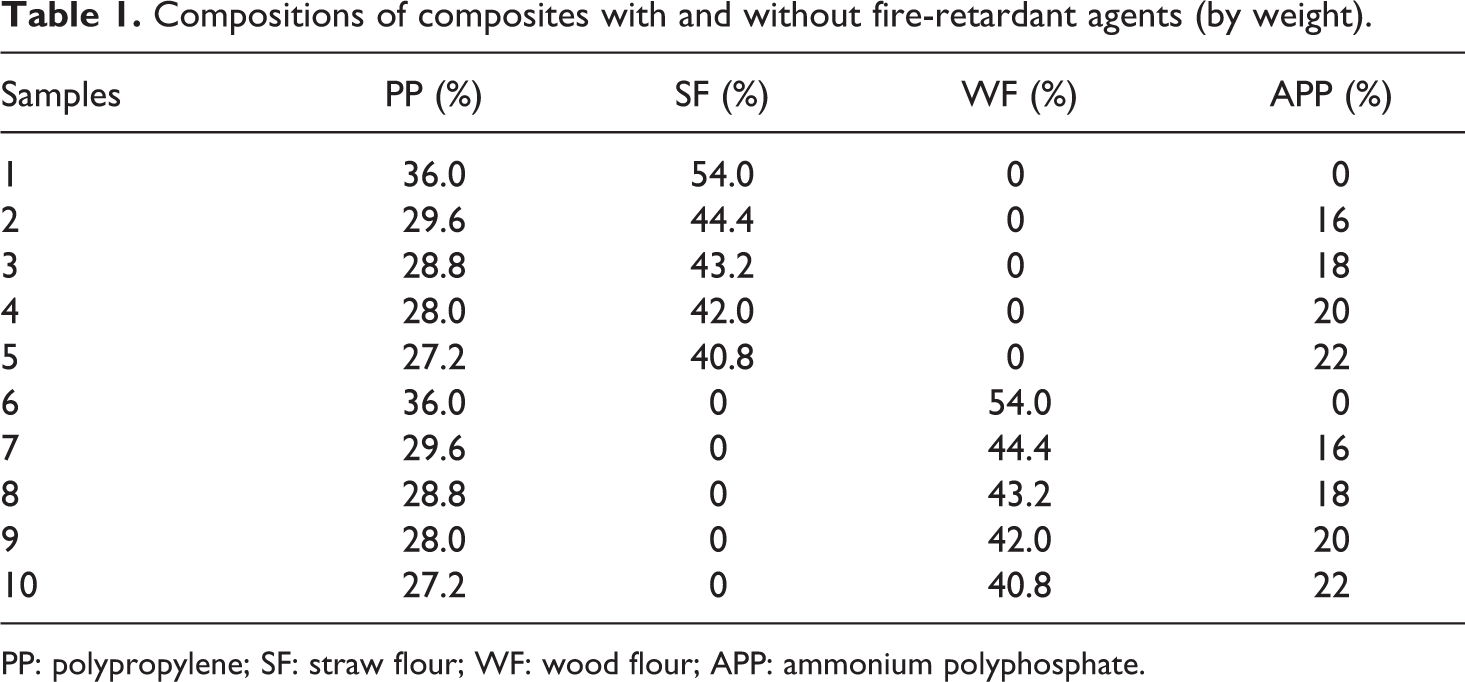
PP: polypropylene; SF: straw flour; WF: wood flour; APP: ammonium polyphosphate.
Flame retardancy tests
The LOI values of all samples (130 × 6.5 × 3.0 mm3 in size) were tested on oxygen (O2) index instrument (JF-3) according to ISO4589. UL-94 (Underwriters Laboratories, Illinois, USA) vertical burning ratings of samples were measured with sample dimensions of 125 × 12.5 × 3.2 mm3 on a CZF-2 instrument which was produced by Jiangning Analysis Instrument Factory, China. UL-94 test results are classified by burning ratings V-0, V-1, or V-2.
Mechanical properties test
The tensile strength and flexural strength were performed using a TA-20 computer controlled universal testing machine (produced by Shenzhen Reger Instrument, China). The Izod impact strength was carried on a XJC-25D impact testing machine (produced by Chengde Precision Testing Machine, China). Ten specimens were tested to obtain the average value for each treatment. Tensile strength tests were examined according to ASTM D638 with a crosshead speed of 5 mm·min−1. Flexural strength tests were performed according to ASTM D790 with a crosshead speed of 2 mm·min−1 and a support span length of 64 mm. Izod impact strength tests were conducted according to ASTM D256. All the tests were repeated five times and the average values were adopted.
TGA tests
TGA was carried out using a Perkin Elmer Pyris 1 Thermal Analyzer (Perkin Elmer, USA) with a heating rate of 10°C·min−1 from 50°C to 800°C under a nitrogen atmosphere; 3–5 mg of samples were used for a TGA test. All data were obtained from the TG and derivative thermogravimetry (DTG) curves.
Cone calorimetry
All CONE data were taken from a cone calorimeter (manufactured by Fire Testing Technology) at an external heat flux of 50 kW·m−2 according to ISO 5660-1 standard. The boards were fabricated using a hot press and samples with dimensions 100 × 100 × 4.0 mm3. The samples were then wrapped in aluminum (Al) foil and placed in a horizontal orientation above a conical radiant electric heater located 25 mm above the samples; all samples were done in duplicate.
Scanning electron microscopy
SEM was used to observe the morphology of the char residue obtained from cone calorimeter tests samples using an FEI QuanTa200SEM (FEI, Holand), with an accelerating voltage of 15 kV. The surface of the samples was sputter-coated with gold layer before the examination, and simultaneously obtained energy-dispersive spectrometry.
X-ray photoelectron spectroscopy
XPS analysis was carried out in an ultra-high vacuum system equipped with a Kα hemispherical electron analyzer (Thermofisher Scientific Company, Massachusetts, USA), using a monochromated Al Kα source, at a base pressure of 1.0 × 10⁻⁸ mbar. Carbon (C), O2, silicon (Si), and P were analyzed.
Results and discussion
Flame retardancy
The flammability properties of samples 1–10 were analyzed by UL-94 vertical burning and LOI tests; UL-94 and LOI values are summarized in Table 2. The flame retardants had a positive effect on LOI. For samples 3 and 9, the LOI increased from 23.0% to 27.8% and 23.8% to 27.5%, respectively. Both of them can reach UL-94V-0 rating. Compared with WF/PP/APP composites, the SF/PP/APP composites are more effective to enhance LOI value, showing an excellent synergy between APP and biomass silica in SF. For PP/APP system, the LOI value only reached 21.2%, and UL-94 is no rating, therefore, APP could not play a flame-retarding role well alone, which were reported in the literature. 28
Mechanical properties, LOI value, and UL-94 results of composites.
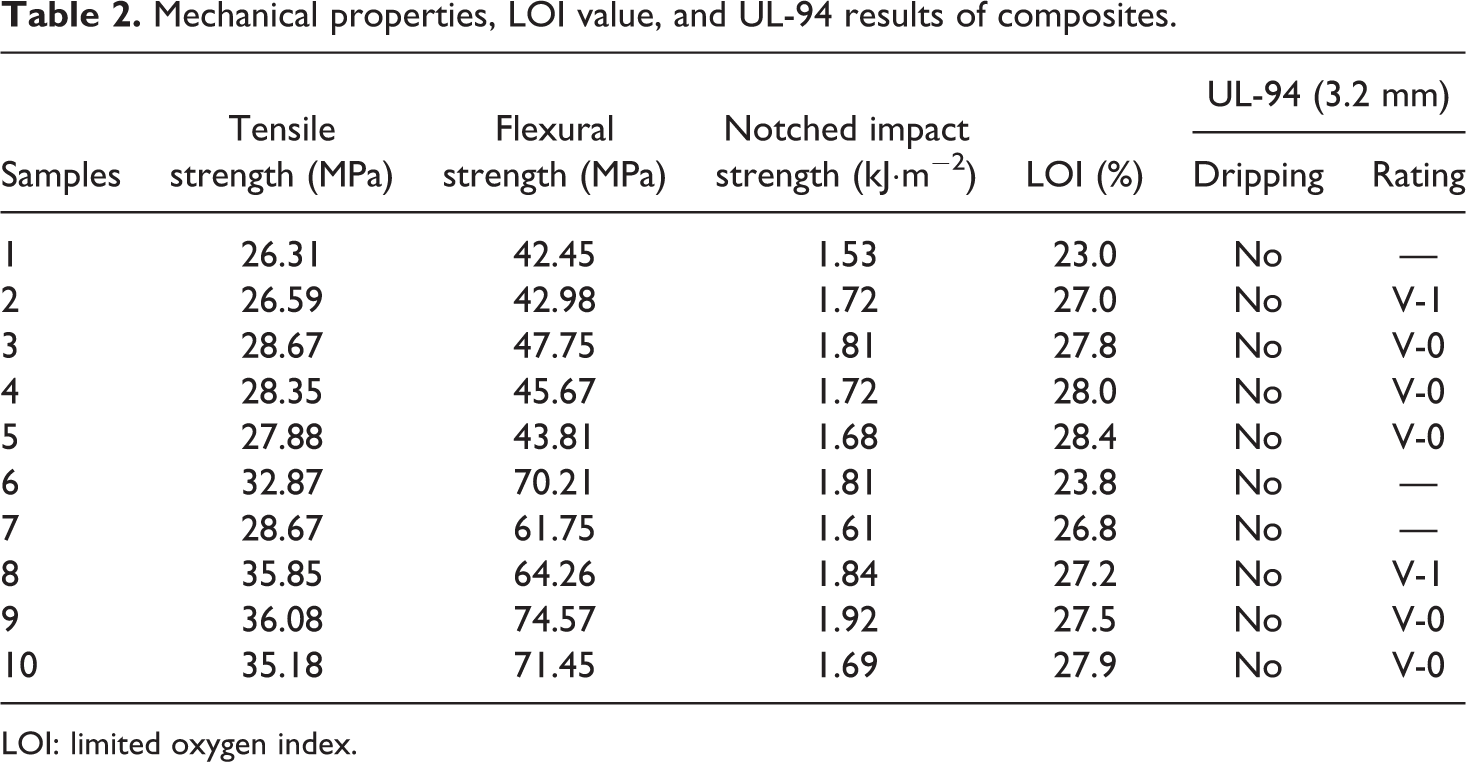
LOI: limited oxygen index.
Mechanical properties
The influences of APP on the mechanical properties of composites are shown in Table 2, which components were based on Table 1. Compared with the results of samples 1–5, APP could properly enhance tensile strength, flexural strength, and Izod impact strength of SF/PP composites. Compared with sample 1, the mechanical properties of sample 3 were increased obviously. Tensile strength represented an increase of 8.9%, flexural strength exhibited an increase of 12.5%, and Izod impact showed an improvement of 18.3%. Compared with samples 6–10, sample 9 showed better mechanical properties than sample 6. With the content of APP increased, the mechanical properties of WF/PP composites reduced first and then increased, but sample 9 was still higher than that of sample 6. Meanwhile, the WF is more effective in enhancing mechanical properties of the composites. Tensile strength represented an increase of 9.7%, flexural strength exhibited an increase of 6.2%, and Izod impact showed an improvement of 15.5%. However, for only PP/APP system, APP had negative effect on the mechanical properties of PP. 28
Combined mechanical properties with the results of vertical burning and LOI tests, despite only 18 wt% loading of APP. LOI value of sample 3 reaches 27.8% and can pass UL-94V-0 rating, so samples 1, 3, 6, and 9 were selected to analyze the synergistic effect by the following investigation.
Thermogravimetric analysis
Figure 1 illustrates the TG and DTG curves of samples 1, 3, 6, and 9. Table 3 summarizes the data from the TG tests including the 1% weight loss temperature of thermal degradation (T 1wt%), the first peak temperature (T peak 1), the second peak temperature (T peak 2), and the char residues at 600°C, 700°C, and 800°C.
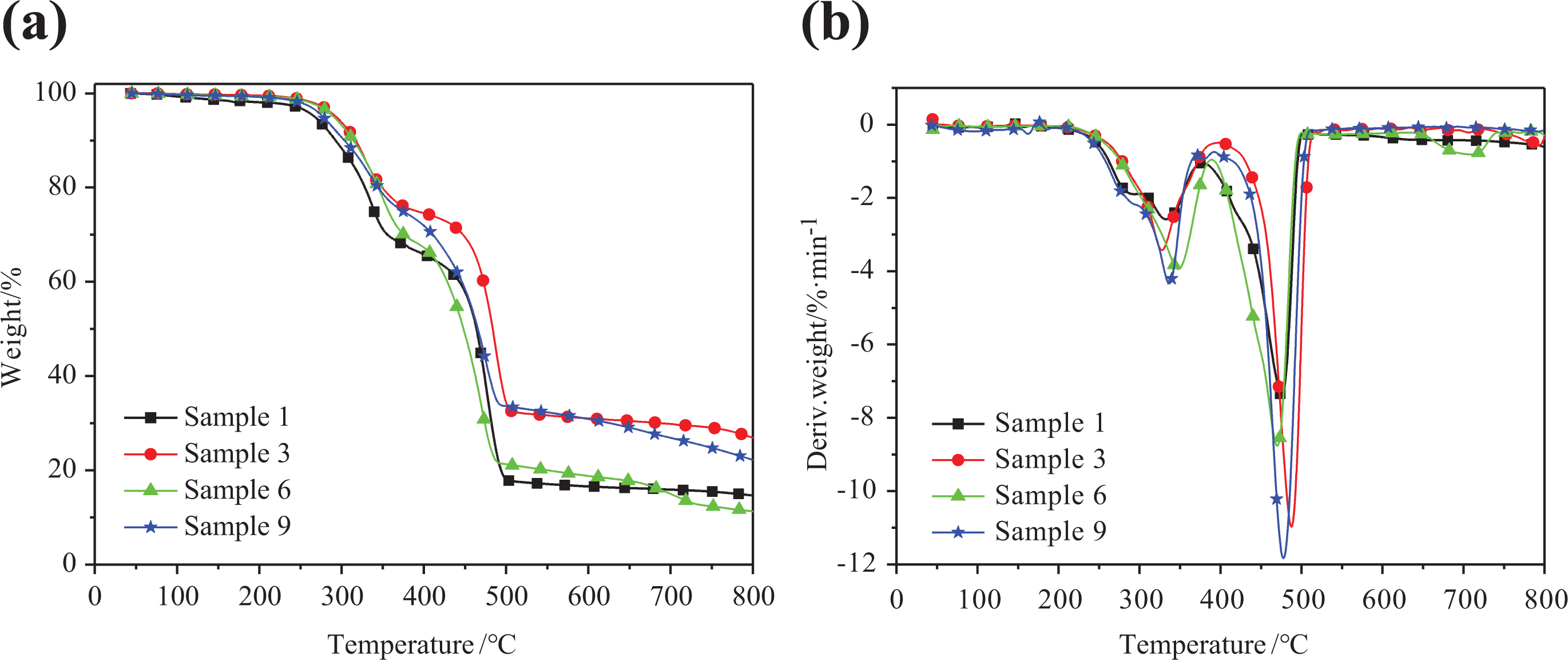
TG and DTG curves of samples 1, 3, 6, and 9.
TGA data obtained for the SF/PP and WF/PP composites.
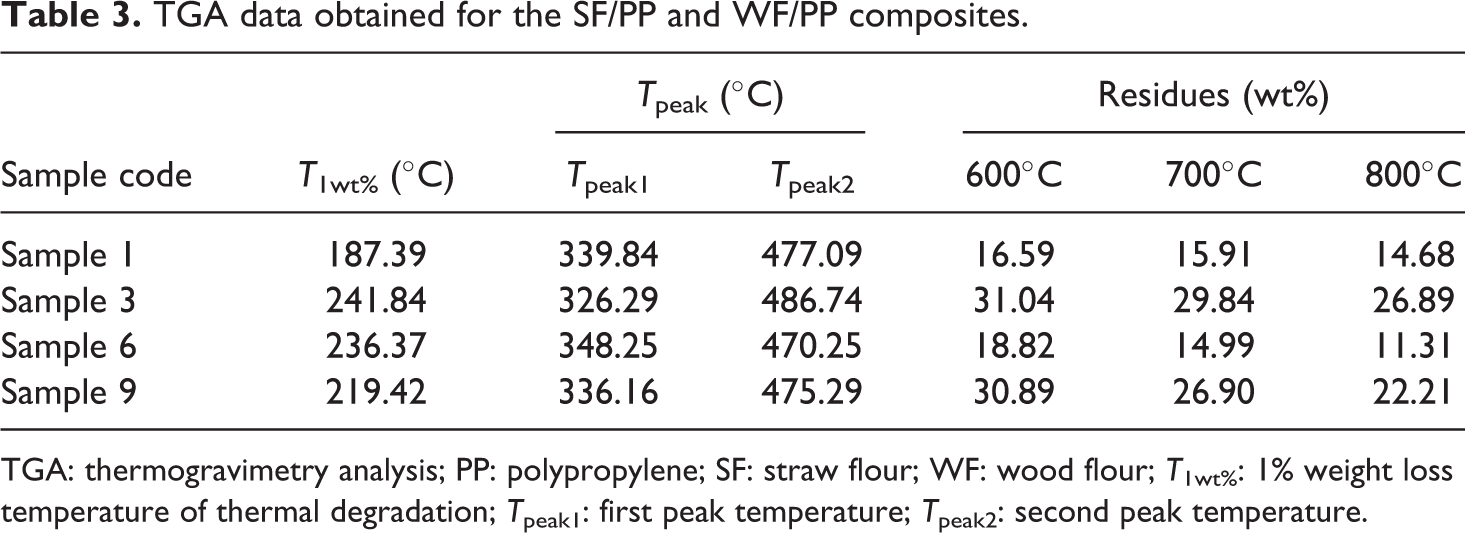
TGA: thermogravimetry analysis; PP: polypropylene; SF: straw flour; WF: wood flour; T 1wt%: 1% weight loss temperature of thermal degradation; T peak1: first peak temperature; T peak2: second peak temperature.
According to the data of Table 3, the addition of APP made T 1wt% of WF/PP composites system occur earlier. APP made T 1wt% of SF/PP composites system occur later. For SF/PP composites system, sample 3 increased T 1wt% from 187.39°C to 241.84°C and also promoted T peak 1 from 339.84°C to 326.29°C and T peak 2 from 477.09°C to 486.74°C in comparison with sample 1. The residue char weight of SF/PP composites at 800°C increased from 14.68% to 26.89%. For WF/PP composites system, sample 9 decreased T 1wt% from 236.37°C to 219.42°C and also promoted T peak 1 from 348.25°C to 336.16°C and T peak 2 from 470.25°C to 475.29°C in comparison with sample 6. The residue char weight of WF/PP composites at 800°C increased from 11.31% to 22.21%. It means APP made the thermal degradation of WF occur earlier because of the poor thermal stability of flame retardant. However, the APP in sample 3 made the thermal degradation of SF occur later. This result is attributed to a limiting transfer of heat into the interior of the composites due to the formation of char residues on the surface of the composites, because biomass silica in straw and silica particles contain a great of hydroxyl groups, which can interact with pyro/polyphosphoric acid, leading to the formation of the silicon pyrophosphate at a relatively low temperatures. 26 Therefore, the thermal degradation of SF has been delayed. From DTG curves, the first sharp decomposition peak shows thermal degradation of SF or WF. For sample 9, due to the addition of the APP reduced the amount of WF in composites, WF was better wrapped. APP degraded firstly and delayed T peak 1. For sample 3, APP made the thermal degradation of SF occur earlier because of that the interaction between biomass silica and APP promotes degradation of APP earlier, which can lead to the production of pyro/polyphosphoric acid and phosphoric acid. Moreover, the produced phosphoric acid can catalyze the dehydration of SF and lead to the release of ammonia (NH3) and water (H2O), which acted as an inert gas source, diluting the O2 and fuel gases present at the point of combustion. 26
The second peak indicates that the thermal degradation of PP and APP made the thermal degradation of PP occur later. As the decomposition temperature of APP is lower than that of PP, APP works effectively during the decomposition of PP by decomposing before PP. The APP decomposition produced phosphoric acid, HPO., and PO. radicals, which can trap the free radicals produced from SF or WF, and APP eliminates the influence of SF or WF on stability of PP. Furthermore, phosphoric acid promotes dehydration of SF or WF (polyhydroxy compounds) into char layer and stabilizes the char residues. 3,16 This result limits the transfer of heat of the composites due to the formation of char residues on the surface of the composites.
The char residues of sample 3 exhibited more thermal stability at 800°C compared with that of sample 9. The interactions between biomass silica, APP, and SF could promote the thermal degradation to occur earlier and improve the stability of char residues. The presence of silica can further form an intercalated network in char structure and enhance the physical integrity of char structure. Thus, the char layer with more thermal stability and physical integrity results in a synergistic effect on the flame retardancy of SF/PP/APP composites.
Cone calorimeter study
The results from cone are shown in Figure 2; the average heat release rate (HRR), the peak HRR (pk-HRR), total heat release (THR), time to ignition (TTI), and mass loss are summarized in Table 4.
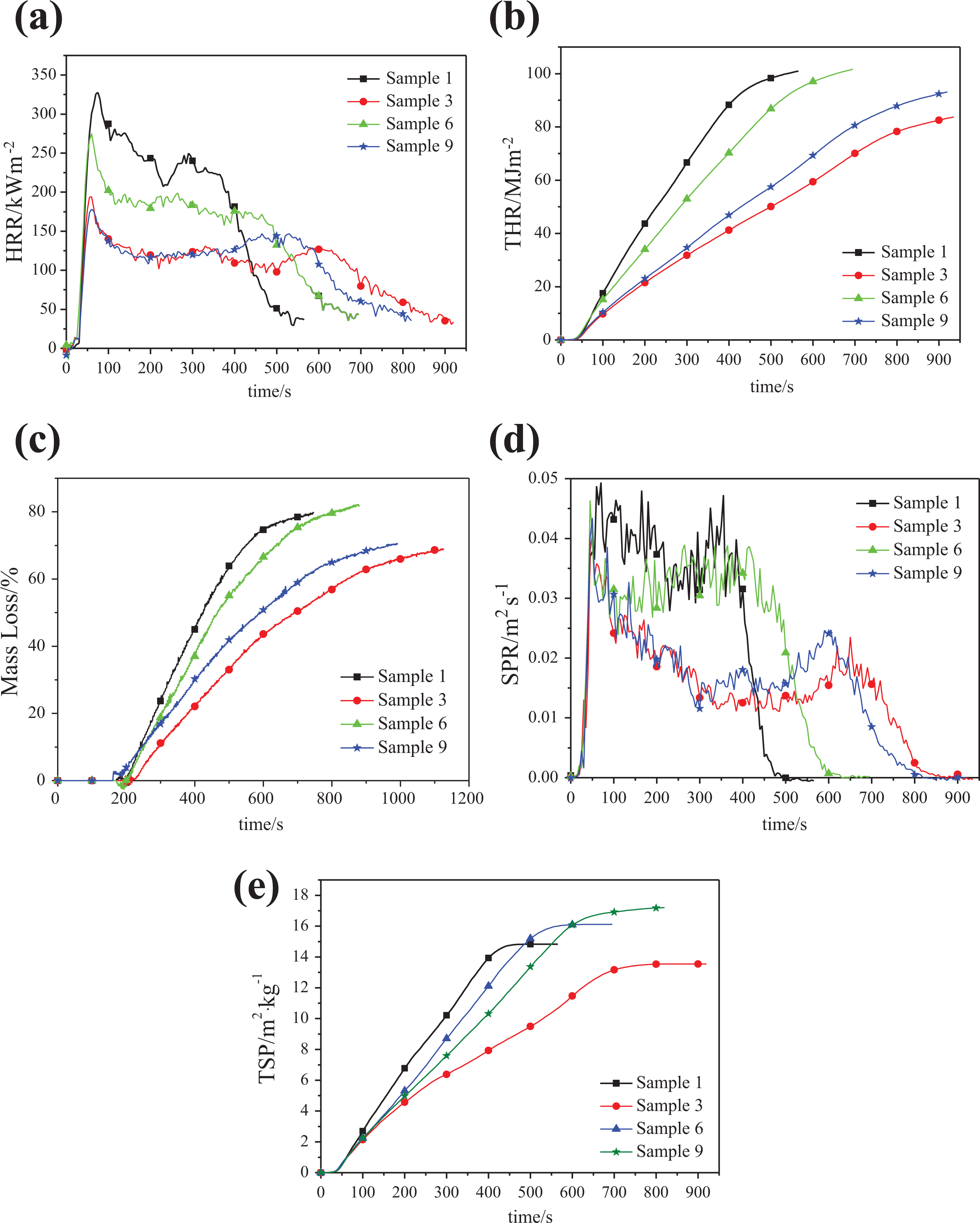
HRR (a), THR (b), mass loss (c), SPR (d), and TSP (e) curves of samples 1, 3, 6, and 9.
Cone calorimeter test data of SF/PP and WF/PP composites.
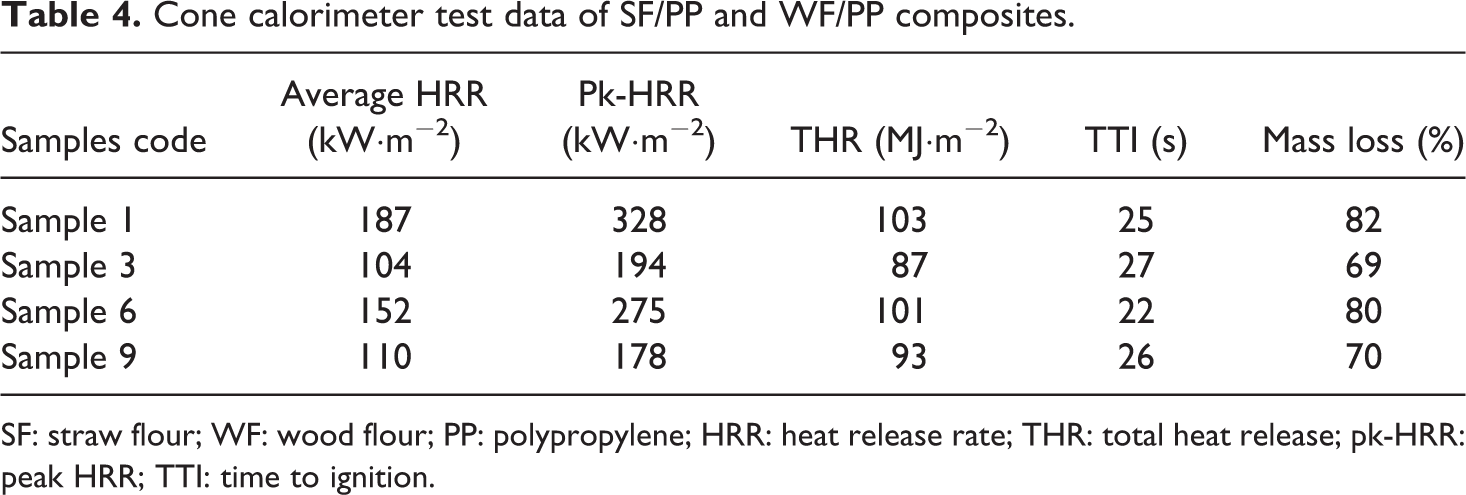
SF: straw flour; WF: wood flour; PP: polypropylene; HRR: heat release rate; THR: total heat release; pk-HRR: peak HRR; TTI: time to ignition.
Figure 2(a) presents HRR cures for samples 1, 3, 6, and 9. For sample 3, the average and pk-HRR decreased most from 187 and 328 kW·m−2 to 104 and 194 kW·m−2, respectively, which is approximately 44% and 41% lower than that of sample 1. In contrast, for sample 9, the average and pk-HRR decreased by 28% and 35%, respectively. Moreover, the TTI of sample 3 (27 s) was prolonged in comparison with samples 1 (25 s), 6 (22 s), and 9 (26 s). Meanwhile, sample 3 obviously prolonged the heat release process (>900 s). It is very clear that significant flame retardancy was obtained with flame-retardant loading on composites.
Figure 2(b) exhibits the THR for samples 1, 3, 6, and 9. The slope of THR curves can be assumed as representative of fire spread. The lower the THR value is, the safer the material is. It is very clear that the flame spread of samples 1 and 6 have decreased, and that of sample 3 is comparatively the lowest. The values are listed in Table 4. The flame-retardant system significantly lowered THR compared to samples 1 and 6, corresponding to 15% and 8% for samples 3 and 9, respectively. The synergistic effect of biomass silica with APP enhanced the flame retardancy by promoting char formation and reducing the THR during burning process.
Figure 2(c) shows the mass loss (%) of composites. The mass loss of samples 1 and 6 decreased by 15.8% and 12.5%, respectively, the lower mass loss value indicated that the SF/PP/APP remarkably suppresses the mass loss compared with WF/PP/APP composites, and the whole combustion time increased to 1130 s. It was implied that reaction of APP and silica generated a char layer on the surface of the composite, which protected the underlying material from the action of the heat flux or flame and of O2 toward the composites, which led to an increase of char residues and a decrease in HRR and THR. 29
Similar to the HRR curves, the SPR curves in Figure 2(d) imply that APP could significantly reduce the values of the SPR compared with samples 1 and 6, and sample 3 was obviously lowest. All of these phenomena show an improved effect on reducing smoke. It was attributed to the competition between the char-forming fire-retardant action and evolution of combustible gases. When the composites were heated, APP decomposed and then produced incombustible material such as H2O and NH3 to dilute O2, retarding combustion, and char made more effective inhibition combustible gases produced. Hence, it took a longer time for sample 3 to reach the flame out and release less smoke.
The total smoke production (TSP) curve in Figure 2(e) shows that the addition of APP increases the TSP of sample 1 and decreases the TSP of sample 6, respectively. The APP which was added into sample 6 leads to the incomplete combustion. Besides, unstable char layer causes to release lots of smoke. However, the APP reacts with silica and forms a stable char layer which reduces the amount of smoke in sample 3. The results of HRR, THR, mass loss (%), SPR, and TSP are remarkably reduced when the APP is added, and the SF/PP/APP can more effectively promote char layer formation of the composites and increases the strength of the char layer, showing synergistic effect of APP/silica produces a better flame retardancy effect for SF/PP composites than WF/PP composites.
Morphology of char residues
Figure 3 shows the morphology of char residues after cone calorimeter tests, from which it could be known that Figure 3(a) and (c) shows a broken surface with many large cracks on the char surface; however, Figure 3(b) and (d) gives a complete and continuous char layer, Figure 3(a1) to (d1) shows SEM images of char residues after cone calorimeter tests, and Figure 3(a1) and (c1) presents a C framework of discontinuous and loose; relatively, the morphologies of Figure 3(b1) and (d1) are complete and compact, but Figure 3(d1) has more holes compared with Figure 3(b1).
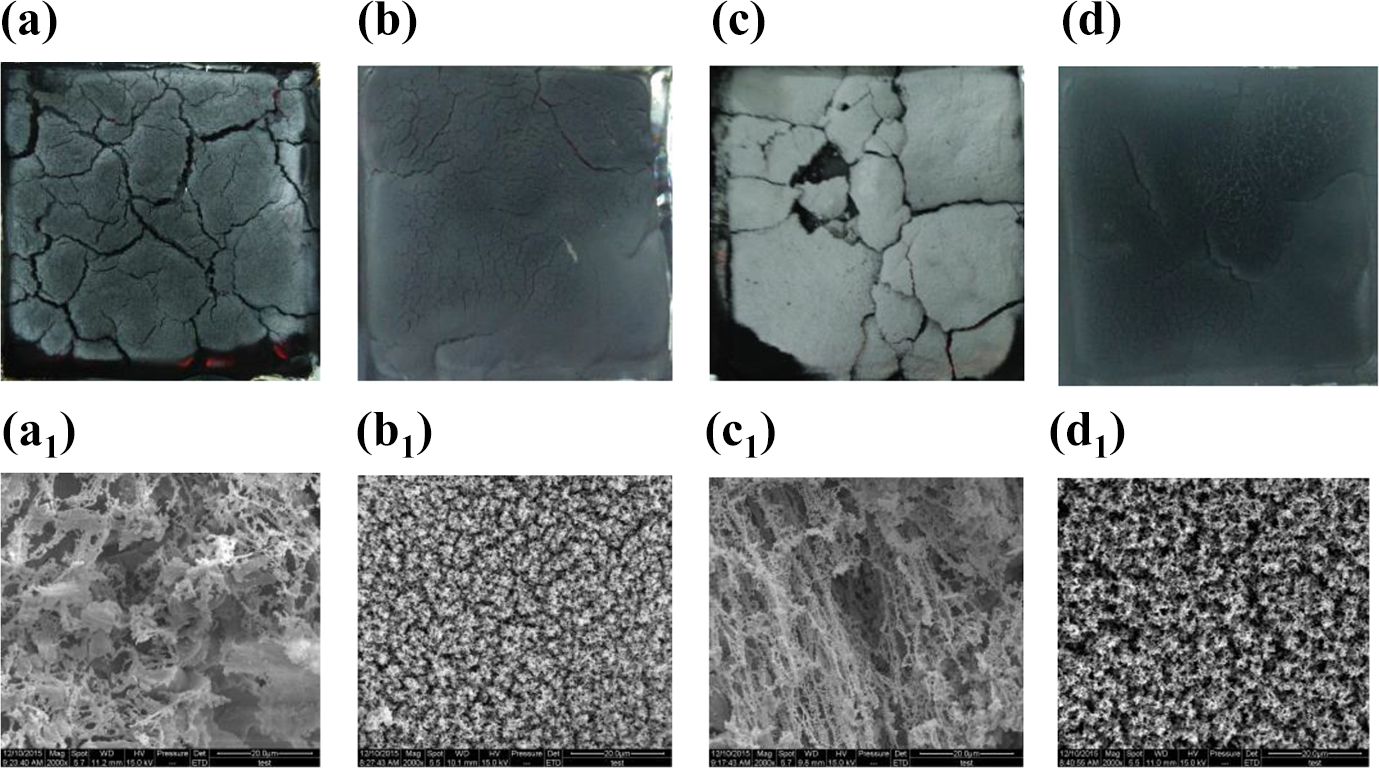
Photograph (a to d) and SEM images (a1 to d1) of char residues after cone calorimeter tests of (a and a1) sample 1, (b and b1) Sample 3, (c and c1) Sample 6, and (d and d1) Sample 9.
It can be seen that for sample 3, the char layer is much more compact and stable than that of sample 9, and the formation of this carbonaceous layer could act as an insulating barrier; may effectively stop the transfer of O2, heat, and flammable volatiles; and keep the matrix from further burning, showing good flame retardancy. 29 Thus, the flame retardancy is improved with the interactions of APP and biomass silica. The silica is uniformly concentrated in char surface (Figure 3(b1)), and this cross-linked network limits the heat transfer into material, providing flame retardancy and indicating that biomass silica of SF can improve the flame retardancy of the SF/PP/APP composites. This result was agreed well with the results of LOI, UL-94, and cone calorimeter tests.
Chemical components of char residues
The analysis of components in SF, WF, and char layer with energy dispersive spectrometer (EDS) is shown in Table 5. XPS is an effective measurement method to study the surface chemical structure of samples. Figure 4 illustrates XPS survey spectra of the combusted residues from cone calorimeter test; according to XPS survey spectra and analysis, the peaks at 133, 191, 103, 154, 284, and 532 eV can be assigned to P2p, P2 s, Si2p, Si2 s, C1 s, and O1 s of the char residues, respectively. Table 6 shows the relative content of chemical component in SF, WF, and residual char. The result is similar with that of EDS. According to Table 6, it can be seen that SF included Si element compared with WF. When adding APP, the atomic percentage of the C clearly increased, which means APP is beneficial for the char-forming ability for samples 3 and 9 compared with samples 1 and 6, while the Si and the O2 decreased. This result implied that the char layer reduces the chance of substance of being oxidized. The P of sample 3 char layer is more than that of sample 9, because the biomass silica can interact with the APP and lead to more residual P. It can be seen that for sample 3, the Si existed in char layer slows down the heat and mass transfer between the gas and the condensed phases. At the same time, the amount of phosphoric species are larger; probably the presence of biomass silica in the SF and APP could form Si–O–P groups and the Si element do not transfer onto the surface of the composite, 29,30 which can produce incombustible material to prohibit the O2 into char layer and improve the flame retardancy of SF/PP composites.
Results of EDS.
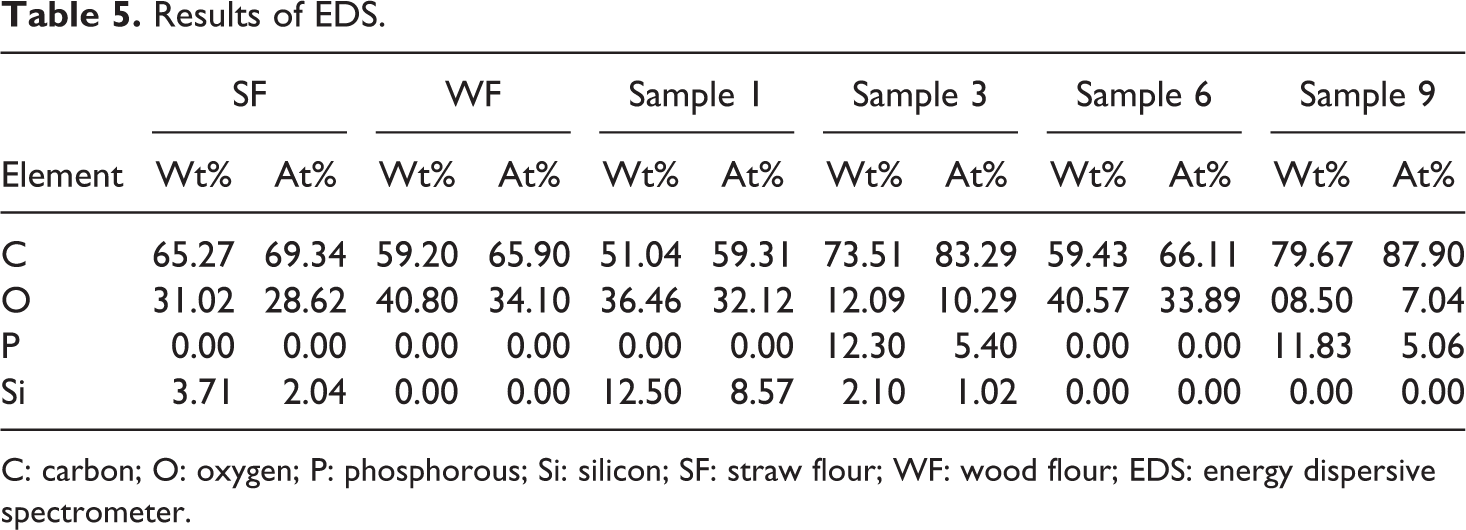
C: carbon; O: oxygen; P: phosphorous; Si: silicon; SF: straw flour; WF: wood flour; EDS: energy dispersive spectrometer.
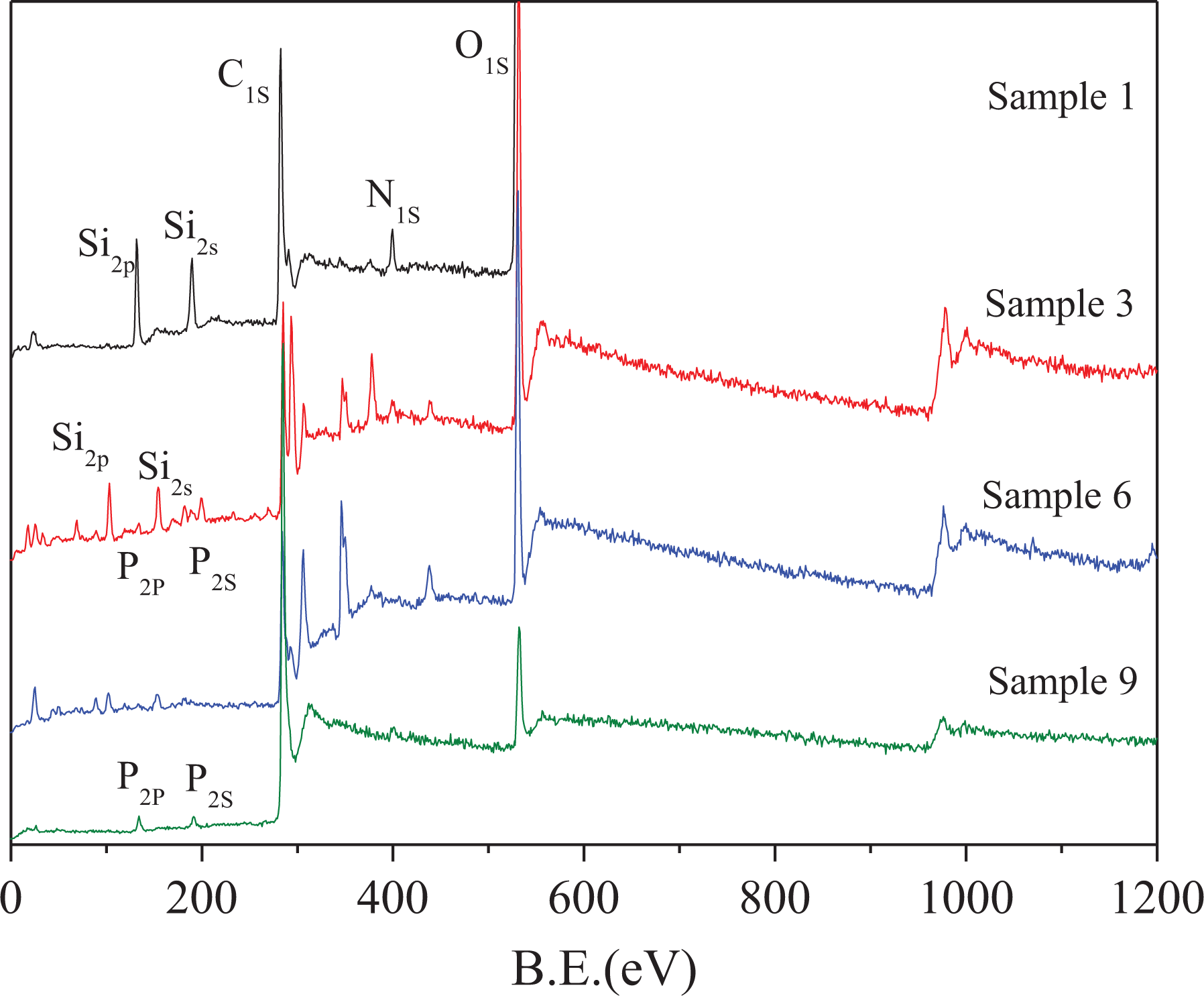
XPS spectra of char residues after cone calorimeter tests of samples 1, 3, 6, and 9.
Results of XPS.
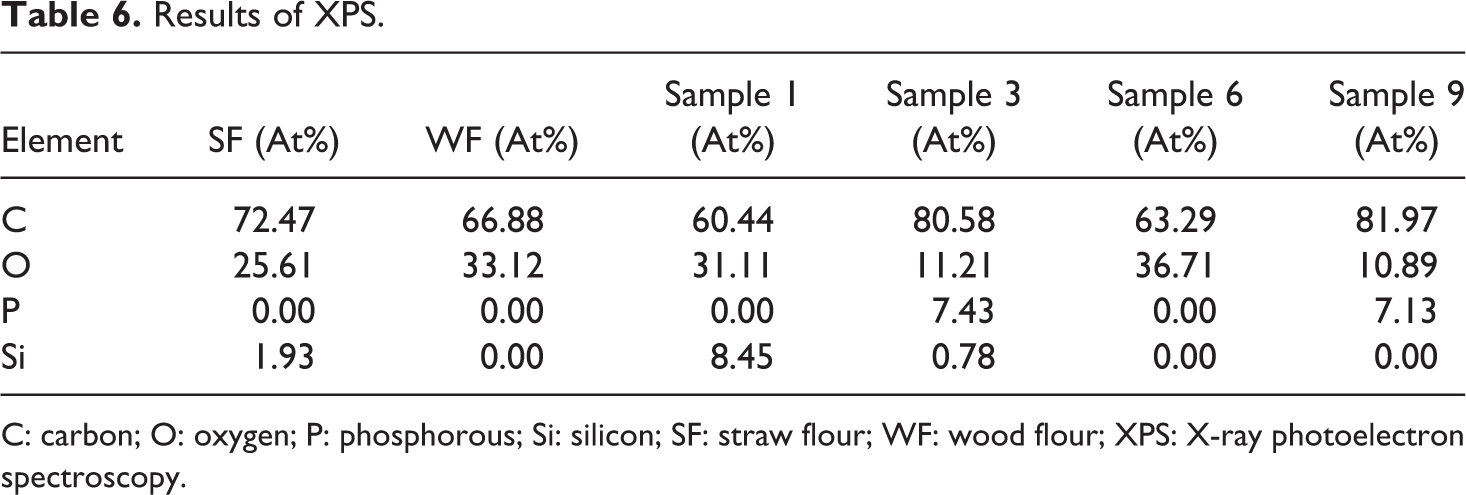
C: carbon; O: oxygen; P: phosphorous; Si: silicon; SF: straw flour; WF: wood flour; XPS: X-ray photoelectron spectroscopy.
Conclusions
The combination of SF with APP exhibited an evident synergistic effect for SF/PP/APP composites; the average and peak HRR, THR, TTI, and mass loss rate were decreased significantly; and the specimens could pass UL-94 V-0 flammability rating and LOI value is 27.8% when the flame-retardant loading is 18 wt%. In SF/PP/APP composites, APP could interact with silica particles, resulting in the formation of the silicon pyrophosphate. APP could also catalyze esterification and dehydration of SF. The interactions between silica, APP, and SF promote the thermal degradation of SF/PP/APP composites occur later and make the char residues more stable. Furthermore, the existed silica could form an intercalated network in char structure, which hinders the heat and O2 transfer from the flame zone to the underlying materials and restrains the diffusion of the volatile small molecules into the combustion zone. Thus, the superior thermal stability and physical integrity of the char layer resulted in a synergistic effect on the flame retardancy of SF/PP/APP composites.
Footnotes
Funding
The author(s) disclosed receipt of the following financial support for the research, authorship, and/or publication of this article: This work was financially supported by National Natural Science Foundation of China [31570572 and 31670560], Guangzhou Science and Technology Project [201905010005], and the Project of Key Disciplines of Forestry Engineering of Bureau of Guangzhou Municipality.
