




Abstract
In the present work, mesoporous titania (MT)-embedded polyacrylonitrile (PAN) nanofibrous membranes have been developed and studied for their efficiency in particulate matter (PM) filtration. Using Box–Behnken method, 15 nanofibrous composite membranes were obtained through electrospinning by choosing three different process variables, such as MT (weight ratio), areal density (g m−2), and spinning time (h). The characterization of resulted nanofibrous composite membranes revealed that the homogenous distribution of MT (2.9 nm) within the PAN delivers high porosity as well as air permeability. Further, filtration efficiency (FE) was also analyzed for PM from 0.3 µm to 3 µm. PM filtration studies suggested that the nanofibrous composite membrane developed from 15% MT, spin time of 2 h, and areal density of 80 g m−2 possesses overall efficiency of 96.4%, without pressure drop for the composite. The results suggest that the role of MT was found to be significant in achieving successful filtration of PM. In addition to successful FE, the desirability value of the developed composite was also calculated statistically and the optimized composite membrane was identified.
Introduction
Particulate matter (PM) in air is mostly generated from fuel burning, coal combustion, industrial smokes of organic matter (e.g. organic carbon and elemental carbon) soil dust, and inorganic aerosols (e.g. silicates, sulfates, and nitrates). 1 –5 PM suspended in the air is capable to pass into the human bronchi and lungs during the respiration process, which is even capable of causing heart disease, stroke, lung disease, and even cancer on continuous exposure. 6 –9 Because of the small size, complex mixture, and evolution processes, the removal of PM remains as a great challenge till today. So far, porous membrane filter and thick fibrous air filters are available with less permeability, but these types of filter membranes have limited efficiency in removing PM because of drop in air pressure. Hence, it could be highly desirable to embed porous structure nanoarchitectures assembly with fibrous membrane filters.
Recently, polymers such as polyvinylpyrrolidone, polyacrylonitrile (PAN), polylactic acid (PLA), and polyimide have been receiving great attention as filter media and are found to be capable of removing PM. 10 –14 Among them, PAN found to possess good mechanical property along with excellent thermal, chemical, and ultraviolet stability. Further, because of its larger dipole moment, PAN fibrous membranes have been received great attention particularly for the filtration application. 15 –17 Meanwhile, electrospun nanofibrous PAN possesses wide range of diameters and lengths with controlled pore size and high surface area. 18,19 The electrospun approach is also found to be effective in the incorporation of inorganic nanoparticles with PAN, which shows higher efficiency to capture particulate pollutants from the atmosphere. 20 –23
PAN fibers are considered as a promising material for the preparation of high-performance air filters. Recently, Al-Attabi et al. investigated the effect of PAN fibrous alignment and their aerosol removal efficiency. 24 PAN fiber membranes with antistatic properties and high flux value are also reported. 10,25 Apart from all the advantages, certain foremost essential factors such as (i) ordered and defined structure of fibers with enhanced surface area and (ii) functionalization of filter membranes are important to improve the filtration efficiency (FE). Generally, polymer properties are tailored through embedding inorganic nanoparticles with polymeric nanofiber during preparation. 3,26,27 In this context, Riyadh Al-Attabi and coworkers reported silica- and molybdenum-doped PAN nanofibrous membranes separately with high surface area and textured surface in order to enhance the capturing properties. 28,29 The former silica-doped PAN nanocomposite fibers possess the nonslip zones across the surface of the fibers, which forms larger stagnation zones for particle capture. In combination with this strategy, engineering the pore design of nanofibers offered lower pressure drop across the membranes and thereby separation efficiency is maintained. 28 Later, molybdenum-based PAN fibrous membrane developed for aerosol air remediation. 29 In addition to enhance the air filtration performance up to 300 nm aerosols, the photocatalytic property of the PAN material was also increased in the presence of molybdenum. The enhanced separation properties were attributed to surface nanotexturation of the fibers, which in turn forms more permeable and lightweight membranes with higher particle capturing capacities.
Titania (TiO2) that has been known as white pigment finds a wide range of applications, which include energy harvesting, environmental pollutant removal, coating, and health-care cosmetics applications. 21,30 –36 Recently, the role of TiO2 in air filtration has been explored to remove PM present in air. Wan et al. developed polysulfone/TiO2 fibrous membranes initially and following Wang et al. reported PLA/TiO2 composite fibrous membranes for air filtration application. 30,37 Recently, Xu et al. reported the hierarchically structured TiO2/PAN nanofibrous membranes formed through spray coating of TiO2. 21 These reports continuously explore the importance of TiO2 toward air filtration. However, the reports are found to have few limitations, such as using commercial TiO2 and coating externally.
Further, nanoparticles prepared with specific nanostructured are found to deliver incredible function with superior properties such as photocatalytic, sensing, and electronic applications. 31 –33 Similarly, it is strongly anticipated that high efficiency in filtering PM could be achieved with the incorporation of mesoporous titania (MT) with small particle size, high surface area, and large porosity. Grover et al. suggested that the MT possess better surface charges compared to bulk material. 36 Bottom-up nanoarchitecture assembly delivers extreme surface charge density and zeta potential promoting the interaction and adsorption nature of the nanoparticles. 34,35 Until now, the air filtration reports have been focused only on the utilization of conventional TiO2.
Hence, with this view, the present strategy aims to develop MT-embedded PAN nanofibrous membrane with enhanced surface area, porosity, and surface charges for better FE. Further, the developed membrane is studied for their morphology and FE to ascertain the role of nanostructured MT in promoting the FE of PAN.
Experiment
Materials
All the reagents used in the present work are analytical grade, which is listed in the supporting information.
Preparation and characterization of PAN composite membrane
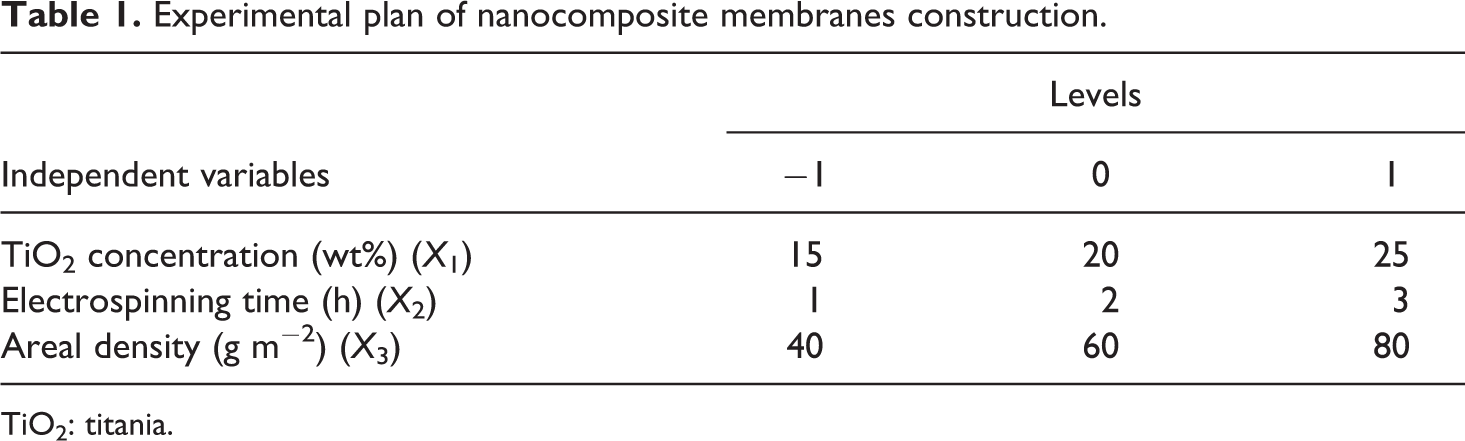
The preparation of MT is carried out in accordance with the reported literature and has been given in supporting information. 38 Using Box–Behnken method, the process variables such as MT (15, 20, and 25 wt%), areal density (40, 60, and 80 g m−2), and spinning time (1, 2, and 3 h) have been varied and accordingly 15 nanofibrous composite membranes were obtained through electrospinning. The MT samples were dispersed separately for 6 h by ultrasonication with PAN solutions, prepared earlier by dissolving 8% PAN in dimethylformamide solvent. The resulted homogeneous blend of MT/PAN was subsequently loading in electrospinning syringe fitted over a microcontroller pump. A flow rate of 1 mL h−1 and 18 kV of power was applied between the needle tip and the aluminum foil collector, placed at a distance of 15 cm from the former. The deposition of multilayer polymeric nanofibrous membrane was characterized and analyzed for filtration properties further.
Design of experiments
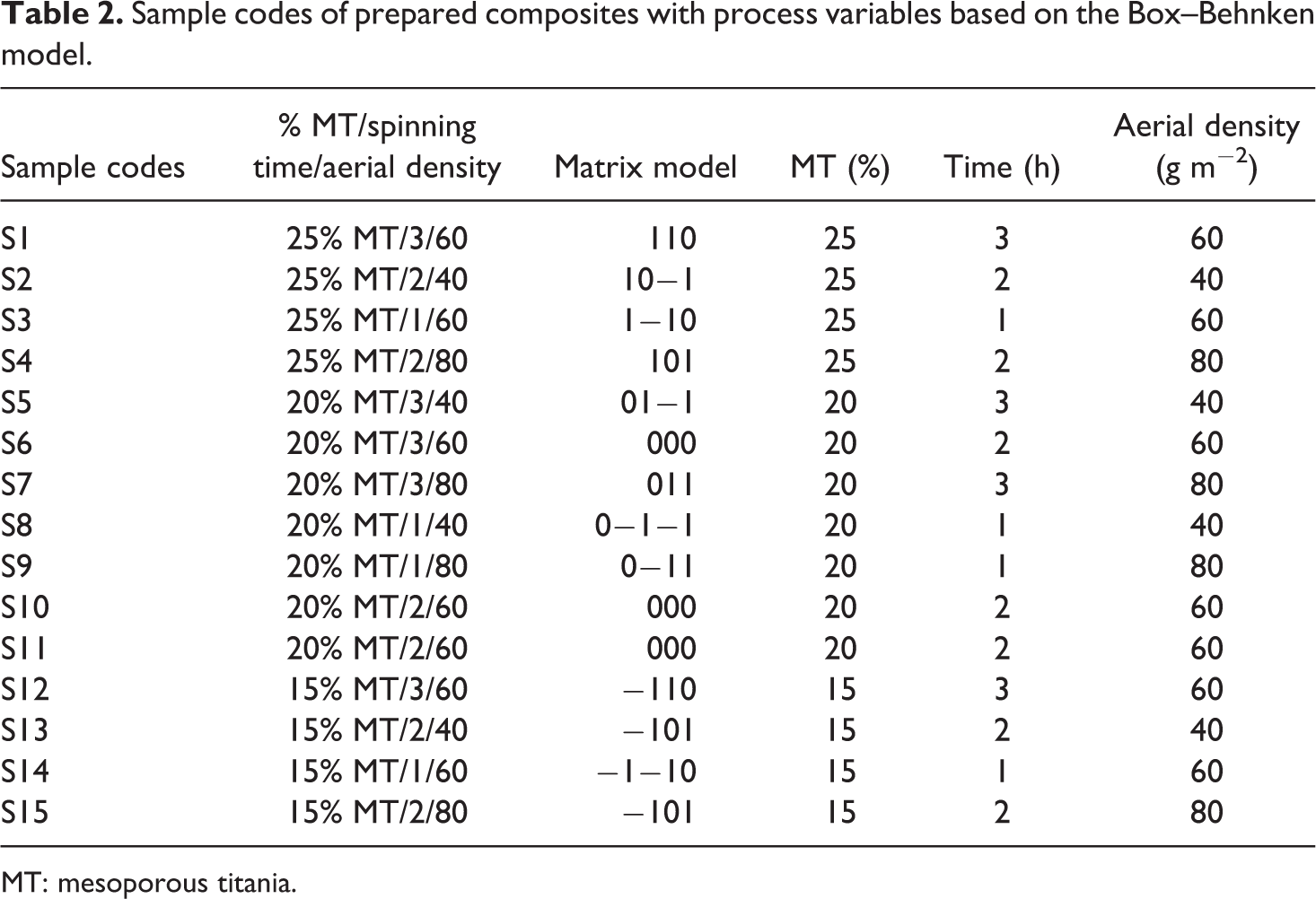
The experimental plan has been designed based on the Box–Behnken method as tabulated in Table 1 with certain process variables, such as concentration of MT (wt%) in the polymer solution, electrospinning time (h), and areal density of nonwoven web (g m−2). Accordingly, 15 combinations are derived and are presented in Table 2. The Box–Behnken method offers the advantage of minimizing the number of experiments and also helps to predict the optimized process variables needed to produce a filer media. 39
Experimental plan of nanocomposite membranes construction.
TiO2: titania.
Sample codes of prepared composites with process variables based on the Box–Behnken model.
MT: mesoporous titania.
Table 2 details about the samples prepared using the Box–Behnken method using process variables, such as the concentration of MT (wt%) in 8% PAN, electrospinning time (h), and areal density of nonwoven web (g m−2) as process variables. The detailed analyses including particulate filtration are provided in the supporting information. In addition, statistical analysis was carried out to analyze the compound desirability, which is also given in supplementary material.
Results and discussion
Figure 1 illustrates the textural properties of both raw and calcined MT. From Figure 1, it was found that both raw and calcined MT delivers type IV hysteresis loop. 40 According to the International Union of Pure and Applied Chemistry (IUPAC), the type IV isotherms are characteristic of mesoporous materials (pores between 2 nm and 50 nm). The main difference after calcination is presented in the inset of Figure 1, in which the hysteresis loop is almost parallel at low pressure and becomes perpendicular to the relative axis at high pressure for both absorption and desorption. This behavior and shape are habitually related with porous materials consisting of uniform particle holding the narrow pore size distribution. 40 –42 Inset of Figure 1 delivers the pore size distribution of calcined MT. It is observed that the TiO2 particles deliver a narrow pore size distribution, which lies in between mesoporous region (2–50 nm).
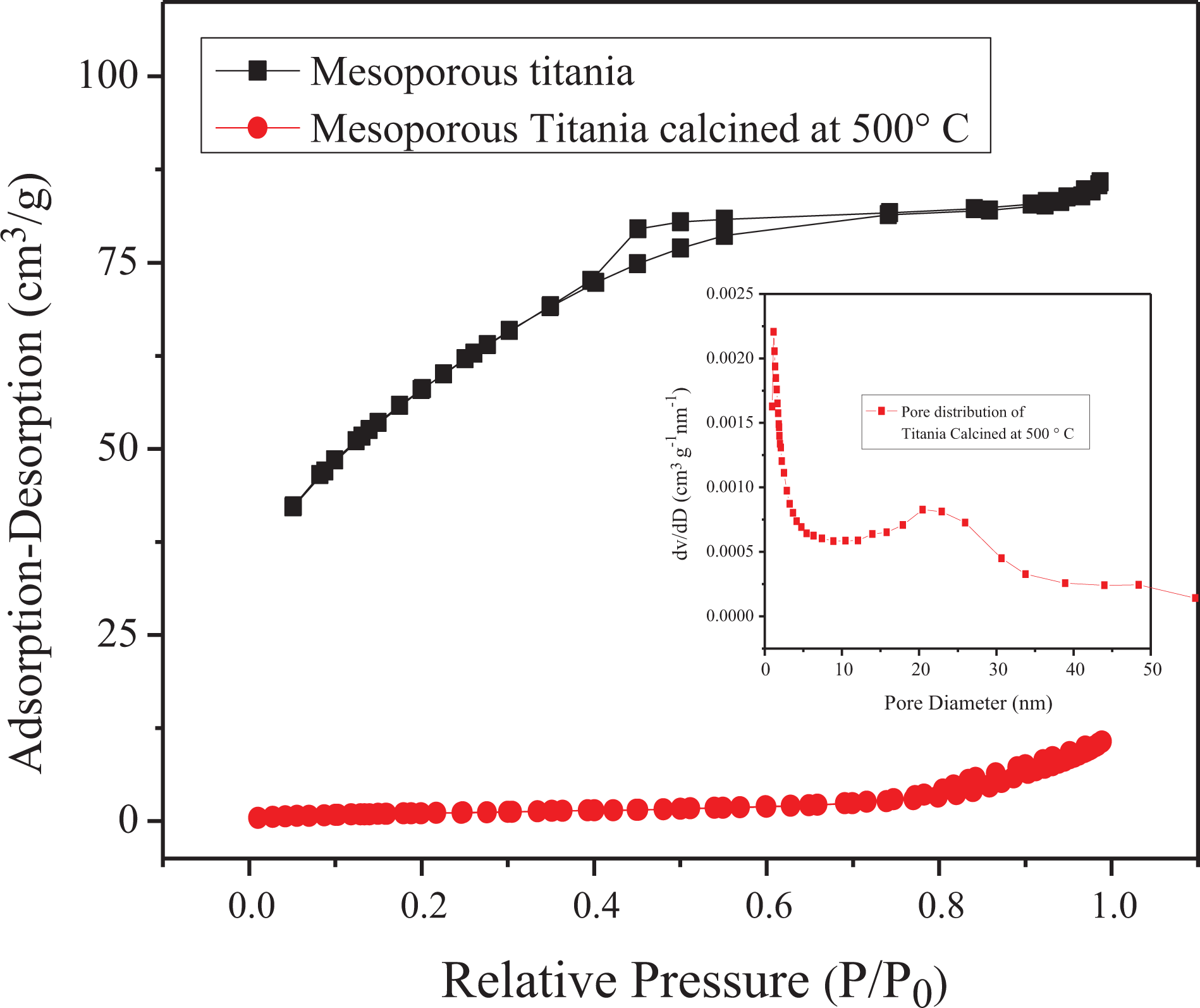
N2 adsorption–desorption isotherms and BJH plot for pore size distribution (inset) of MT.
Figure 2(a) and (b) shows scanning electron microscopiv (SEM) images of both raw and calcined MT. It is evident from Figure 2(b) that the surface of MT is free from cracks, which also delivers trimodal sponge structure as reported. 43,44 However, to examine the morphology, the high-resolution transmission electron microscope image was analyzed and is shown in Figure 2(c) and (d). It is found that the MT delivers rough spheroid randomly interconnected particles, whose size ranges around 20–30 nm. 45 It is expected that the incorporation of the obtained MT with PAN solution could favor electrostatic attraction of PM during filtration.
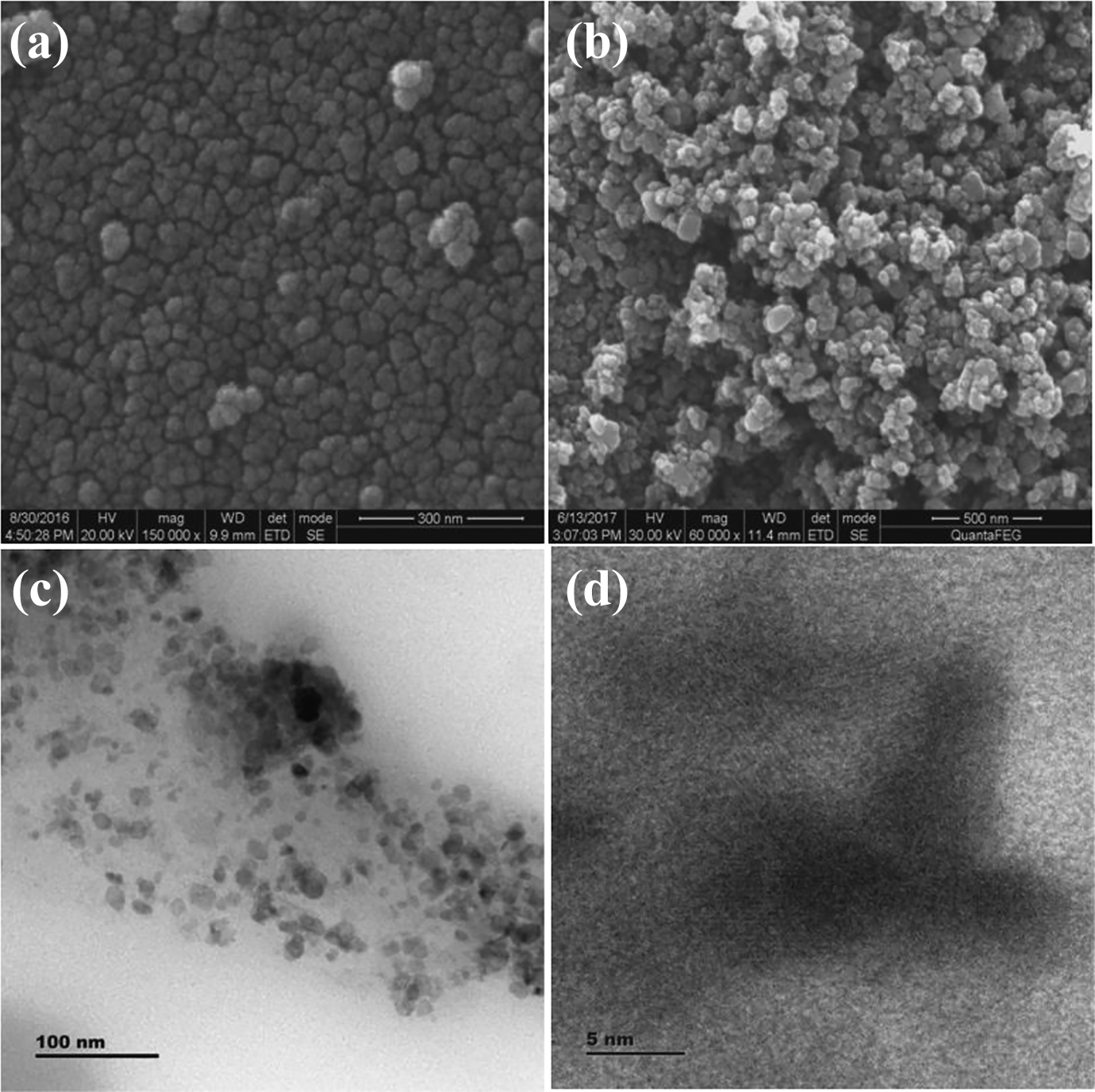
SEM images of (a) raw MT and (b) calcined MT and (c) and (d) TEM images of calcined MT at different magnifications.
The cross-sectional SEM images of electrospun deposited on the spun-bonded polypropylene nonwoven substrate suggest that the former acts as a supporting layer for nanofibrous web (Figure 3(a) and (b)). Further, the SEM images of the pristine PAN and the nanofibrous composite membranes spun with 15, 20, and 25 weight ratios of MT are also shown in Figure 4(a) to (d) along with their corresponding fibrous size distribution histogram is shown in Figure 4(e) to (h), respectively. The pristine PAN fibers (Figure 4(a)) show the smooth and thin array, whereas the morphologies of MT/PAN composite fibers became rough and thick (Figure 4(c) to (d)). This phenomenon became intense with an increase in the concentration of MT, which is due to interpenetration of embedded MT into the PAN fibers. The intercalation of MT into the PAN fiber is achieved because of the blending the MT in PAN solution before electrospinning. The distributions of MT lead to the formation of the membrane with enlarged fibers and rough surfaces. Compared with the earlier reports, the present approach, that is, incorporation of MT with fibrous membrane achieved through nucleation at the molecular level and thereby affords homogenous dispersion of MT. 46
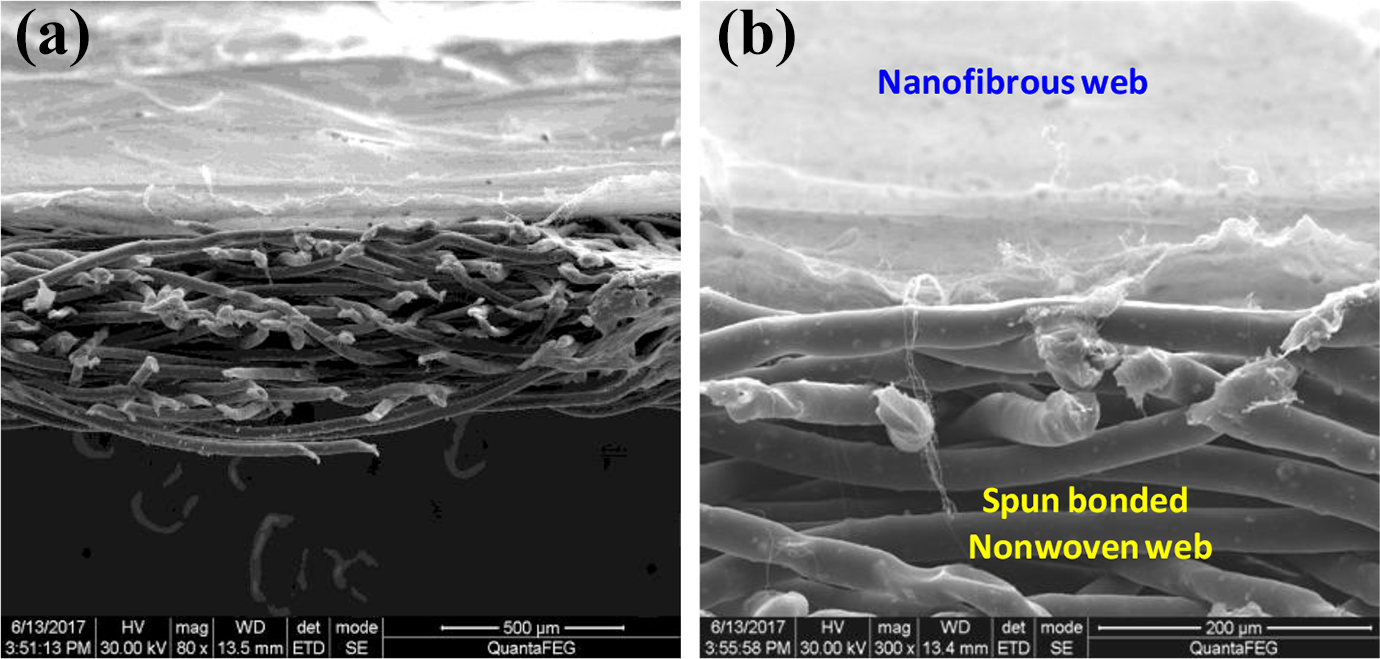
Cross-sectional view of MT/PAN fibrous deposited on the Web (a) at 500 µm and (b) 200 µm.
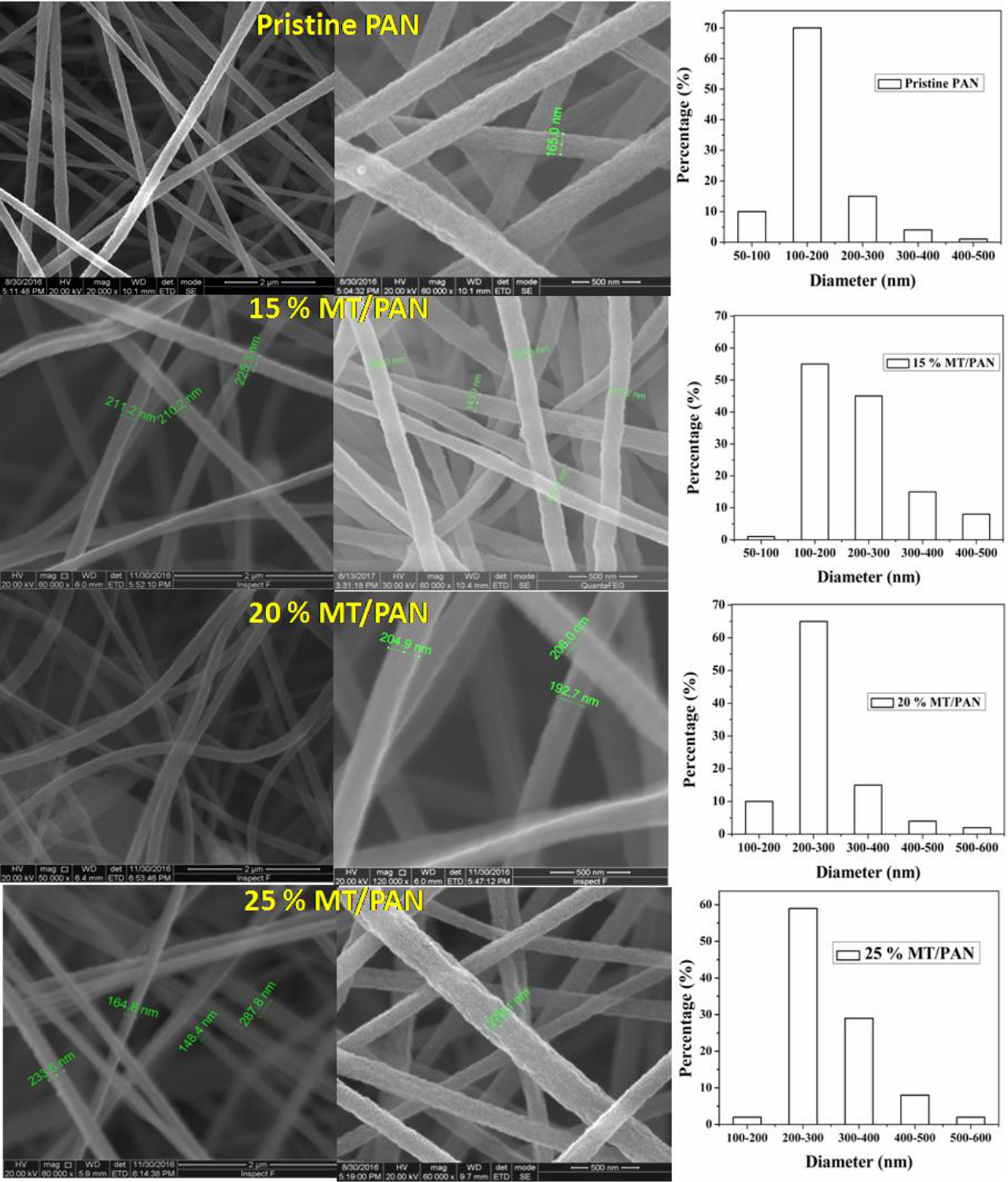
SEM images of pristine PAN and MT/PAN composites at 2 µm (left side), at 500 µm (middle), and corresponding average fibrous size distribution (right side).
Fourier transform infrared spectra of the pristine PAN and MT/PAN composites are shown in Figure 5. The PAN and composite membranes exhibit a peak at 2247 cm−1, which is attributed to the vibration of nitrile (–CN–) group of the PAN. Further, the broad peak at 1040 cm−1 is ascribed due to the stretching vibration of C–N group. Further, the peaks at 1444 cm−1 and 2928 cm−1 are due to the inplane bending and stretching of C–CN, respectively. 47,48 The peaks from 550 cm−1 to 850 cm−1 correspond to the stretching of Ti–O–Ti. 48
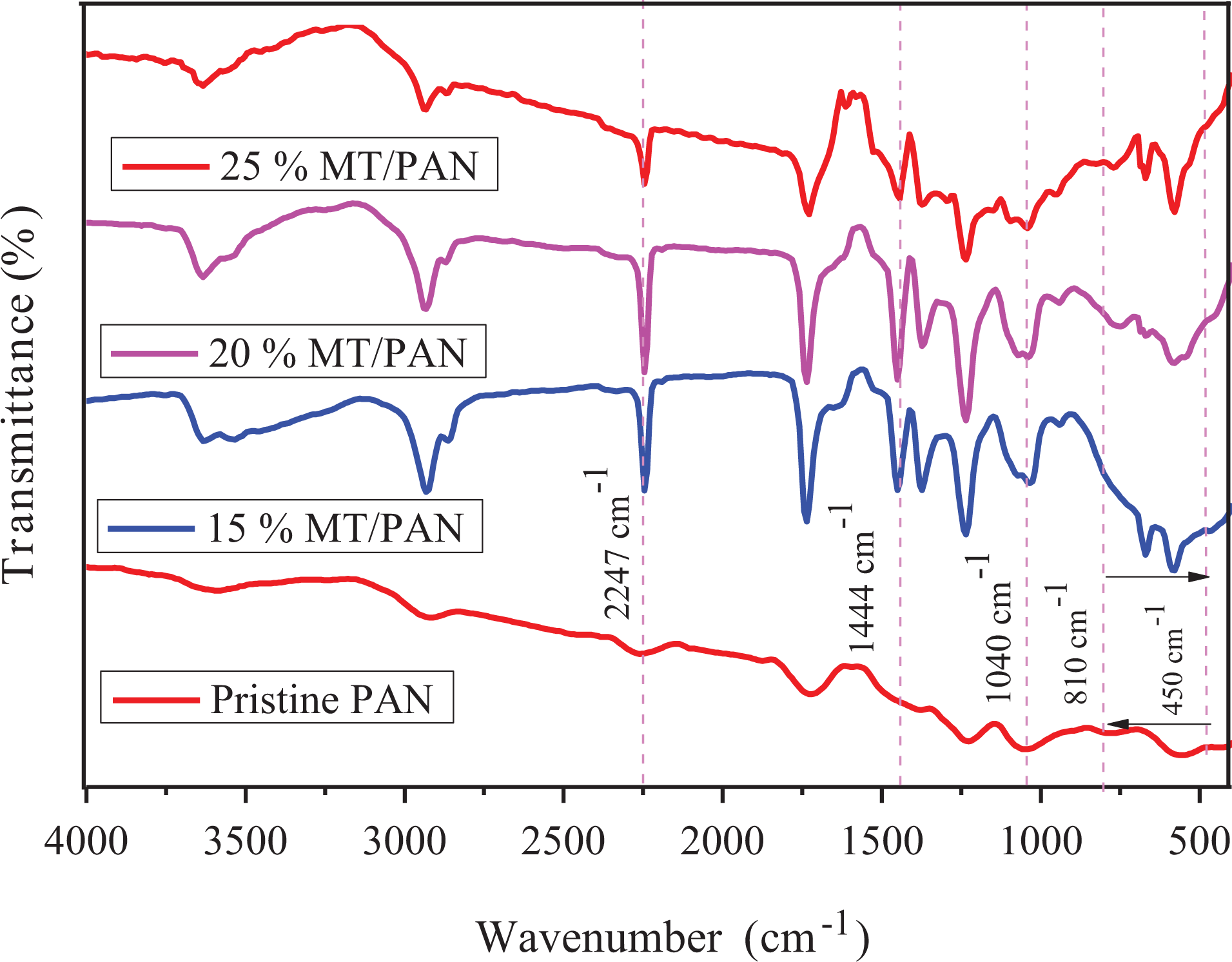
FTIR spectra of pristine PAN and MT/PAN composites.
The 15 nanofibrous composite membranes prepared with the combination of different process variables have been studied for PM filtration. In general, it is essential to study the porosity of the resulted membrane before analyzing FE. Since, the PM filtration significantly influences the porous structure of fibers composite membrane. 20 Hence, it is highly desirable to study the porous structure of the composite membrane. The pore sizes of the composites obtained from mercury porosity meter are found to be in wide range starting from 0.3 µm to 1.0 µm (Table 3). Interestingly, the pore diameter increased with increase in MT ratio, which suggests that the incorporation of MT provides ordered porous structure in the PAN fibrous network. This phenomenal behavior is due to increase in the charge density between the fibers during the electrospinning process. 39,49 Further, it is noteworthy that the incorporation of MT along with PAN solution results in the formation of homogenously distributed porous network as similar to TiO2-sprayed PAN composites. 21
Pore diameter, air permeability, FE, composite desirability, and ranking of the samples prepared by the Box–Behnken method.
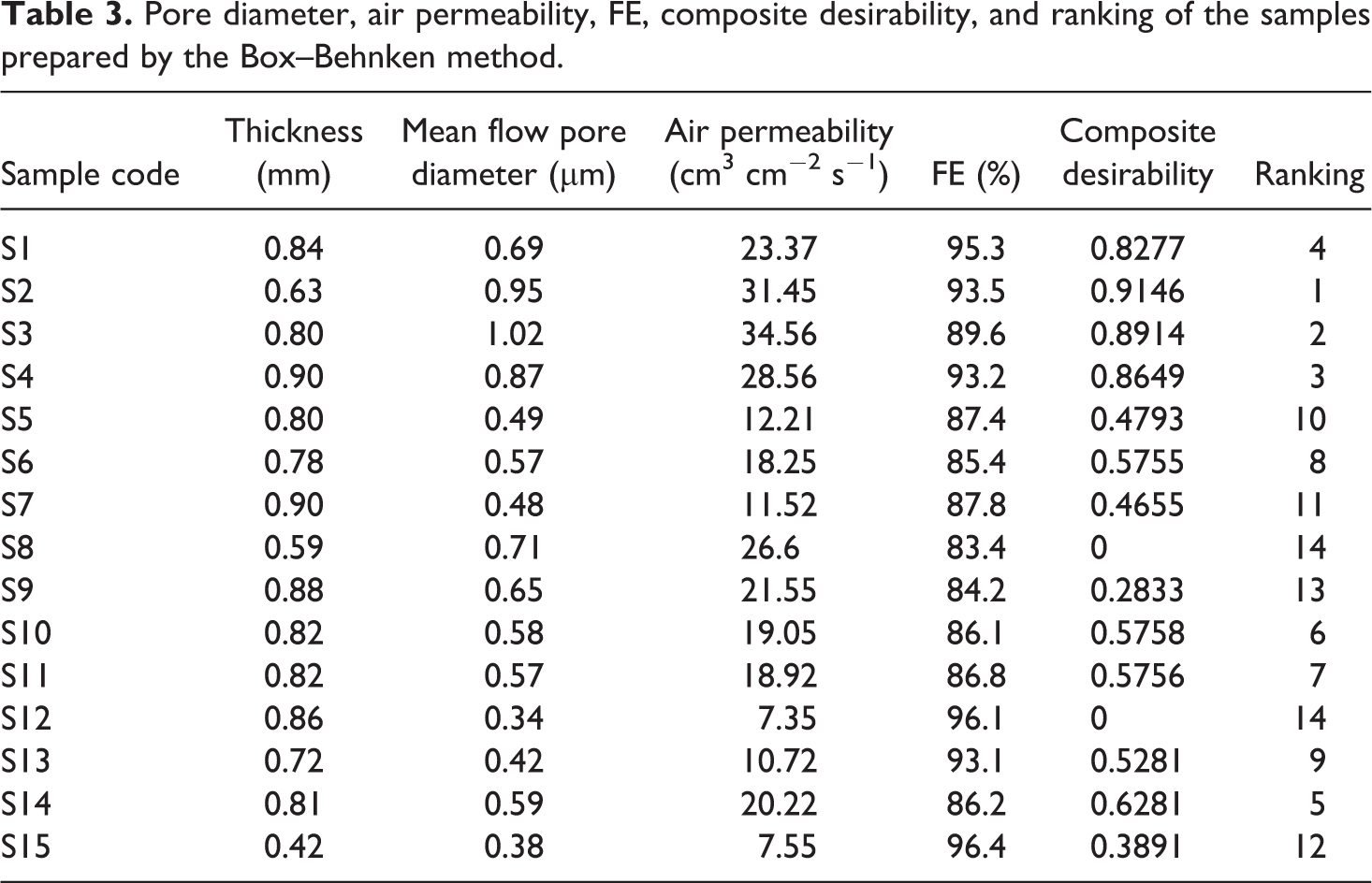
Figure 6 illustrates the FE for different aerosol sizes ranging from 0.3 µm to 3 µm at a constant face velocity of 5 cm s−1. According to the filtration theory, the particles of less micron sizes can be captured by diffusion mechanism, and it shows very less FE when compared with other particle sizes. 50 The FE increases with increase in the concentration of MT which infers that the fiber diameter and pore size play a major role in filtration. Further, it is ascertained that the aerosol particle forms electrostatic assembly with the resulted composite fiber. Therefore, the aerosol particles can also be attracted by the charged sites in the fibrous medium.
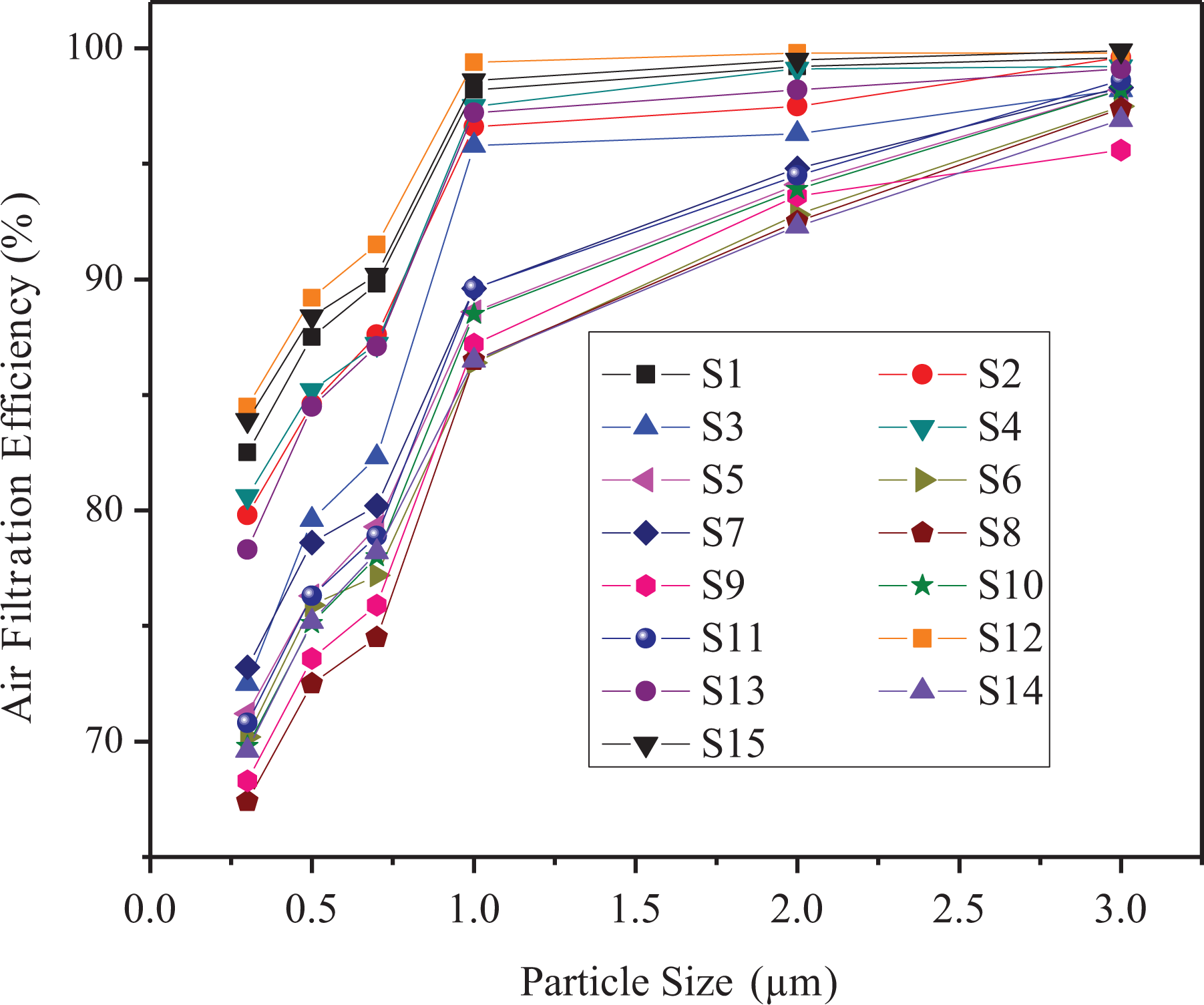
FE of the nanofibrous composites membrane with respect to particle sizes of PM.
Figure 7 illustrates the overall FE and air permeabilities of the developed nanofibrous composite membranes. The overall FE value and permeability values are tabulated in Table 3. The composite membrane (S15) with 15 wt% of MT delivered a maximum of 96.4% as FE without pressure drop. Further, its air permeability value was found to be 7.55 cm3 cm−2 s−1. Following the S15, sample S12 with 15 wt% MT and sample S1 with 25 wt% MT deliver 96.1% and 95.3% FE, respectively, and their corresponding air permeabilities are also found to be 7.35 cm3 cm−2 s−1 and 23.37 cm3 cm−2 s−1, respectively. Interestingly, it is worthy to note that the S15 with least concentration of MT (15 wt%) having low air permeability as 7.55 cm3 cm−2 s−1 affords equivalently higher results than S12 (15 wt%) and S1 (25 wt%). This phenomenon is attributed to the presence of porous MT within PAN fiber and enables proficiency to remove the PM without pressure drop. Earlier, Wang et al. reported that the formation of slip effect on the PAN fibers due to the formation of hierarchical nanostructure enhances airflow around the periphery of fibers. 11,30 As discussed in the SEM morphology of the composite membrane, the enlarged and exposed rough frontal surfaces of the fiber facing toward the inlet enforce the pressure gradient, which successfully permits the penetration of air and simultaneously prevents sodium chloride aerosols. The ranking of composite arrived based on the compound desirability value using Matlab is also given in Table 3.
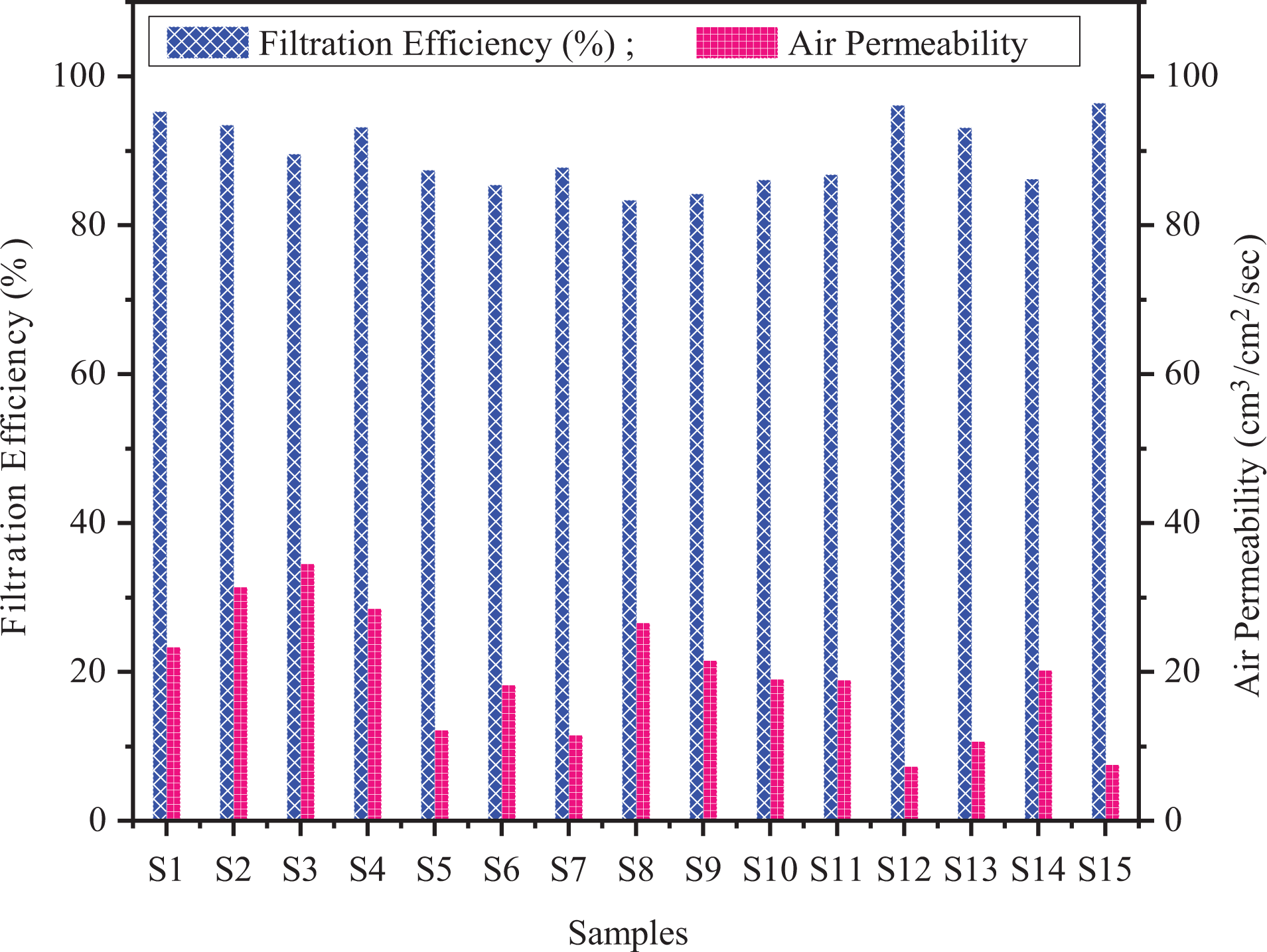
FE and air permeability of the nanofibrous composites membrane.
Conclusion
Removal of PM is highly desirable in such a way that the protection can be given against several habitable diseases, such as heart disease, strokes, lung disease, and even cancer. With this aim, MT was prepared, embedded with PAN, and studied for their role in filtrating PM. Further, the characteristics of the prepared composite membranes were also studied using various analytical tools. Evidently from spectral and SEM analyses, the formation and change in the morphology of the fibrous network are clearly demonstrated. The importance of surface charges of MT for particulate filtration was also studied. The resulted PAN composite fibrous membrane was found to show zero pressure drop at 5 cm s−1 face velocity, which ultimately resulted as 96.4% FE. Thus, the developed MT/PAN composites are found to be most suitable for filtering PM, which are highly desirable in the modern world.
Supplemental material
Supplementary_Materials - Mesoporous titania-embedded polyacrylonitrile composite nanofibrous membrane for particulate matter filtration
Supplementary_Materials for Mesoporous titania-embedded polyacrylonitrile composite nanofibrous membrane for particulate matter filtration by P Reena, N Gobi, P Chitralekha, D Thenmuhil and V Kamaraj in Journal of Thermoplastic Composite Materials
Footnotes
Acknowledgements
The authors would like to record their deep gratefulness to Mr V Felix Swamidoss, Department of Mechanical Engineering, Anna University, Chennai, Tamil Nadu, for his valuable support.
Funding
The author(s) received no financial support for the research, authorship, and/or publication of this article.

Supplemental material
Supplemental material for this article is available online.
References
Supplementary Material
Please find the following supplemental material available below.
For Open Access articles published under a Creative Commons License, all supplemental material carries the same license as the article it is associated with.
For non-Open Access articles published, all supplemental material carries a non-exclusive license, and permission requests for re-use of supplemental material or any part of supplemental material shall be sent directly to the copyright owner as specified in the copyright notice associated with the article.
