




Abstract
The purpose of this study was to examine the effects of silane coupling agent modifications on the mechanical performance of the basalt fiber (BF)-reinforced acrylonitrile–butadiene–styrene (ABS) composites. Three different silane coupling agents were used. The mechanical properties of the composites were determined by the tensile, flexural, impact tests, and dynamic mechanical analysis (DMA). According to the test results, the tensile strength increased with the use of (3-aminopropyl) triethoxysilane (AP) and 3-(trimethoxysilyl) propylmethacrylate (MA), while the use of (3-glycidyloxypropyl) trimethoxysilane (GP) reduced the tensile strength. All the silane modifications improved the flexural strength and modulus and the highest improvement was achieved with the use of AP. No remarkable difference was observed in impact properties with the use of silane coupling agents. The addition of BF significantly improved the elastic modulus of the ABS regardless of the modification type, while the further improvements were achieved through the use of AP and MA. In brief, AP showed the highest performance among the studied silane coupling agents due to the covalent bond formation between the amino group of AP and the nitrile group of styrene–acrylonitrile (SAN) matrix.
Keywords
Introduction
Acrylonitrile–butadiene–styrene (ABS) is one of the most commonly used engineering thermoplastic terpolymers. It provides many beneficial features such as good mechanical properties, easy processability, good toughness, surface appearance, dimensional stability, chemical resistance, and abrasion resistance to its users. Owing to these practical properties, ABS offers a comprehensive range of use possibilities in electrical and automotive industries. 1 – 3 ABS terpolymer consists of two phases. These are polybutadiene-based elastomeric phase and the styrene–acrylonitrile (SAN) copolymer-based thermoplastic phase grafted onto elastomeric phase. Hence, different phase polarities are observed in ABS due to its complex structure. 4,5 In the literature, various short inorganic fibers including basalt fiber (BF) 6,7 and glass fiber 1,2,8 –18 are used in ABS matrix to improve the mechanical properties.
Volcanic-based BF is one of the most widely used inorganic high-performance fiber in various industries. It has gained importance especially in civil applications, agriculture, defense industry, and aeronautic applications due to its exclusive characteristics including extreme alkaline resistance, high fire performance, heat and sound insulation, eco-friendly, and high tenacity. Considering these added value features, BF can be the best alternative of E-glass fiber in many applications. 19 –21 On the other hand, BF has some disadvantages with respect toglass fiber, such as higher cost and lower resistance to strong acids. 19,22
It is well known that silane coupling agents are widely used in inorganic fiber-reinforced polymer composites. 23 Glass and basalt fibers have hydroxyl groups on their surface. Hence, to use silane coupling agent offers good option to create bridge between the polymer matrix and inorganic fiber. The previous studies revealed that good improvements in the mechanical properties of inorganic fiber-reinforced thermoplastic polymer composites were obtained using silane coupling agents. 8 –11,24 –33 In the literature, various silane coupling agents were used in glass fiber-reinforced ABS composites. 8 –11 Ozkoc et al. investigated interfacial adhesion properties of different silane-modified short glass fiber-reinforced ABS/PA6 blends at the constant fiber ratio. It was found that γ-aminopropyltriethoxysilane (AP) gave the best results for the interfacial adhesion properties of the composites. 8 In another study of them, the effects of fiber ratio and process conditions on the mechanical properties of AP-modified short glass fiber-reinforced ABS and ABS/PA6 composites were examined. The results showed that the improvement in interfacial adhesion led to the increase in the tensile strength and modulus, flexural modulus, and impact strength of the composites. As the amount of glass fiber increased, the tensile strength, tensile modulus, and flexural modulus increase, whereas the strain-at-break and the impact strength drastically decreased. The process conditions also had a significant effect on the mechanical properties. 9 Shokoohi and Azar investigated the effect of silane coupling agents on the processability, mechanical, and physical properties of glass fiber-reinforced ABS composites. Three different silane coupling agents, namely AP (3-glycidyloxypropyl) trimethoxysilane (GP) and trichlorovinylesilane, were used. It was concluded that all the silane coupling agents improved the tensile properties while the trichlorovinyl silane gave the best results. 10 They also performed another study on the effects of process conditions, silane coupling agent type, and fiber amount on the mechanical, morphological, rheological, and physical properties of the glass fiber-reinforced ABS composites using the same silane coupling agents. It was found that all used silane coupling agents improved the tensile strength and modulus while the best properties were achieved with tricholorovinyl silane modification at the glass fiber concentration of 30 wt%, at 190°C and 80 r min−1. 11
Only two studies that examined the mechanical properties of ABS/BF composites were found in the literature. Abdelhaleem et al. analyzed the mechanical properties of pristine BF embedded in ABS composites with three different fiber ratios. The results revealed that the tensile strength increased to about 40% with the addition of 15 wt% BF with respect to the neat ABS. Young’s modulus of the composites gradually improved, while the unnotched impact strength of the composites decreased with increasing the amount of fiber. 6 Abdellah et al. investigated the mechanical and wear behavior of ABS composites containing short BF with different fiber loading (5–20 wt%). The results showed that the tensile strength enhanced up to the BF loading of 5 wt%, then it decreased as the BF concentration increased. The reduction in the impact strength was observed at the all BF loading ratios. 7
To the best of our knowledge, this is the first study that investigates the effect of three different silane coupling agents on the mechanical and thermomechanical properties of ABS composites containing BF. The properties of the composites are examined using tensile, flexural, impact tests, and dynamic mechanical analysis (DMA). Scanning electron microscope (SEM) is used to analyze the tensile and impact fractured surfaces of the composites.
Experimental
Materials
ABS natural terpolymer (grade HI121 H) with the density of 1.04 g cm− 3 and MFI 23 g/10 min was supplied from LG Chem (Istanbul, Turkey). Chopped BF, having 6 mm length and 13–20 μm diameter, was purchased from Tila Kompozit (Istanbul, Turkey). It has the density, tensile strength, and modulus of 2.8 g cm−3, 2825 MPa, and 89 GPa, respectively. (3-Aminopropyl) triethoxysilane (AP) (0.946 g cm−3 and 221.37 g mol−1), (3-glycidyloxypropyl) trimethoxysilane (GP) (1.07 g cm−3 and 236.34 g mol−1), and 3-(trimethoxysilyl) propylmethacrylate (MA) (1.045 g cm−3 and 248.35 g mol−1) were supplied from Sigma-Aldrich (Istanbul, Turkey). The chemical structures of these silane coupling agents are given in our previous study. 34
Silane treatment of basalt fiber
Prior to the silane treatment process, the coated sizing on the fiber surface applied by the producer was properly removed by heating the BF in a furnace at 500°C for an hour. The general procedure applied for BF in the literature was used. 25 , 26 , 31 The silane treatment of BF was made as follows: 5 wt % three different silanes were injected in ethanol/water (1:1 by weight) mixture. The pH of AP, GP, and MA containing solutions are 11.1, 8.7, and 9.3, respectively. Then the 100 g desized chopped BFs were immersed into these solutions. Finally, the mixtures were heated to 85°C and mixed continuously for 5 h. After the silane treatment process, the silane-treated BFs were washed with ethanol. Thereby, unreacted silane coupling agent was removed from the BF surface. AP-BF, GP-BF, and MA-BF codes were used for the silane-modified BF samples. Here, the first two letters stand for abbreviating the silane coupling agents used and the BF represents basalt fiber. The characterization of the silane-modified fiber samples was made by attenuated total reflectance-fourier transform infrared spectroscopy (ATR-FTIR) analysis. The results are given in our previous study. 34 These findings clearly proved the presence of the silane coupling agents on the BF surface.
Production of the composites
ABS, neat, and three different silane-modified BFs were mixed in laboratory type co-rotating twin screw extruder (L/D: 40; Φ: 16 mm; (GULNAR MAKINA, Istanbul, Turkey) with a temperature profile of 50-190-200-210-210-210°C at 100 r min−1. The prepared composites contain the constant amount of neat and modified BF (20 wt%). The samples for mechanical tests were molded by laboratory scale injection-molding machine (DSM Xplore 12 ml Micro-injection Molder, the Netherlands) at a barrel temperature of 235°C and the mold temperature of 32°C.
Characterization methods
The tensile and flexural tests were performed on a universal testing machine (Shimadzu AG-X) equipped with 50 kN load cell, according to ASTM D 638 and ASTM D-790 standards at room temperature. The dog-bone shaped samples (7.4 × 2.1 × 80 mm3) were used and the crosshead speed was 5 mm min−1 for the tensile tests. The specimens having the nominal dimensions of 13 × 125 × 3.2 mm3 were used. The span length and cross-head speed were 55 mm and 1 mm min−1, respectively. Charpy Impact tests were carried out on unnotched samples with the dimensions of 3.2 × 6.5 × 130 mm3 using Coesfeld-Material impact tester at room temperature according to ASTM D256. For each specimen, all mechanical test results were reported with an average value of five samples with standard deviations. DMA was performed on Perkin Elmer DMA 8000. The measurements were conducted in dual cantilever bending mode at a frequency of 1 Hz. The temperature range was from −50 to 140°C and the applied heating rate was 10°C min−1. The tensile and impact fracture surfaces of the composites were inspected by SEM (LEO 440 computer controlled digital) with an accelerating voltage of 20 kV. The samples were sputter-coated with Au/Pd alloy prior to the inspection.
Results and discussion
Morphological analysis
The dispersion of the BF within the ABS matrix, the extent of interfacial adhesion between the BF and ABS terpolymer, and the fracture mechanism of the composites are inspected with SEM analyses on the tensile and impact fracture surfaces of the composites. Thus, preliminary information is acquired about the tensile and impact properties of the BF-reinforced ABS composites. The tensile fracture surfaces of the composites with the magnification of 45× are displayed in Figure 1. In the SEM photographs of the specimens, the deformation of the matrix is intensely restricted owing to the presence of BF, leading the ABS matrix fails in a brittle manner. A characteristic patchwork pattern is observed on the fracture surfaces of all composites. That kind of deformation in the thermoplastic matrix deals with the micro failure behavior of the short fiber-reinforced composites. 35
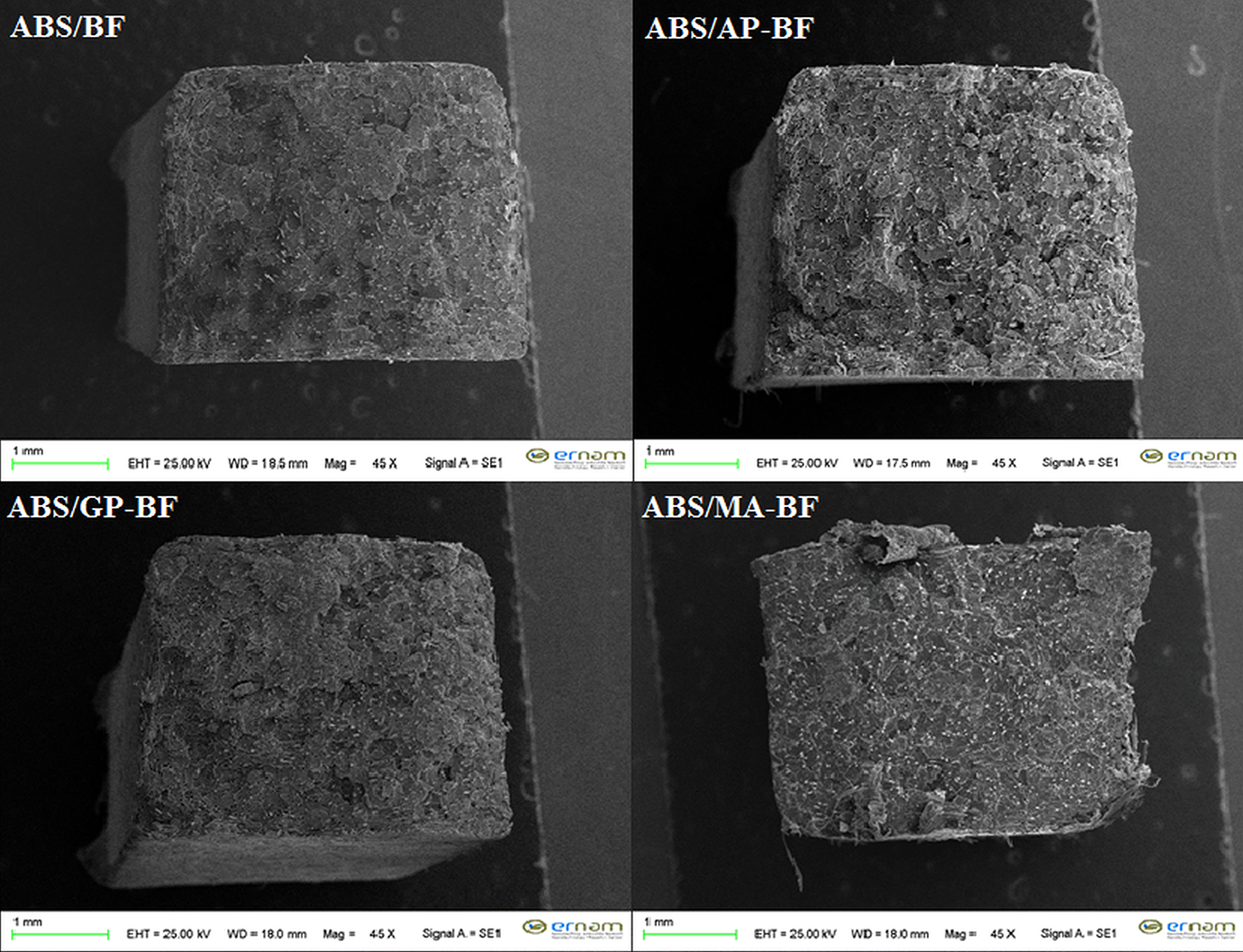
Tensile fracture surfaces of the composites with a magnification of ×45.
Figure 2 shows the larger SEM images of the tensile fractured surfaces in the magnifications of 250× (left side) and 1000× (right side). As shown in Figure 2, the long pullout BFs, marked with blue arrows, with a clean surface and fiber debonding seen as black holes (shown with red arrows) owing to the easy separation of fiber from the matrix is seen with the use of unmodified BF. It is known from the literature that the adhesion between ABS and glass fiber, having the similar characteristic with BF, is poor. 10,36 –39 Fiber debonding increases with the use of GP-BF. The gap between BF and matrix material (shown with white arrow) is easily seen in higher magnification SEM image. These morphological observations clearly show the poor interfacial adhesion between BF, GP-BF, and ABS.
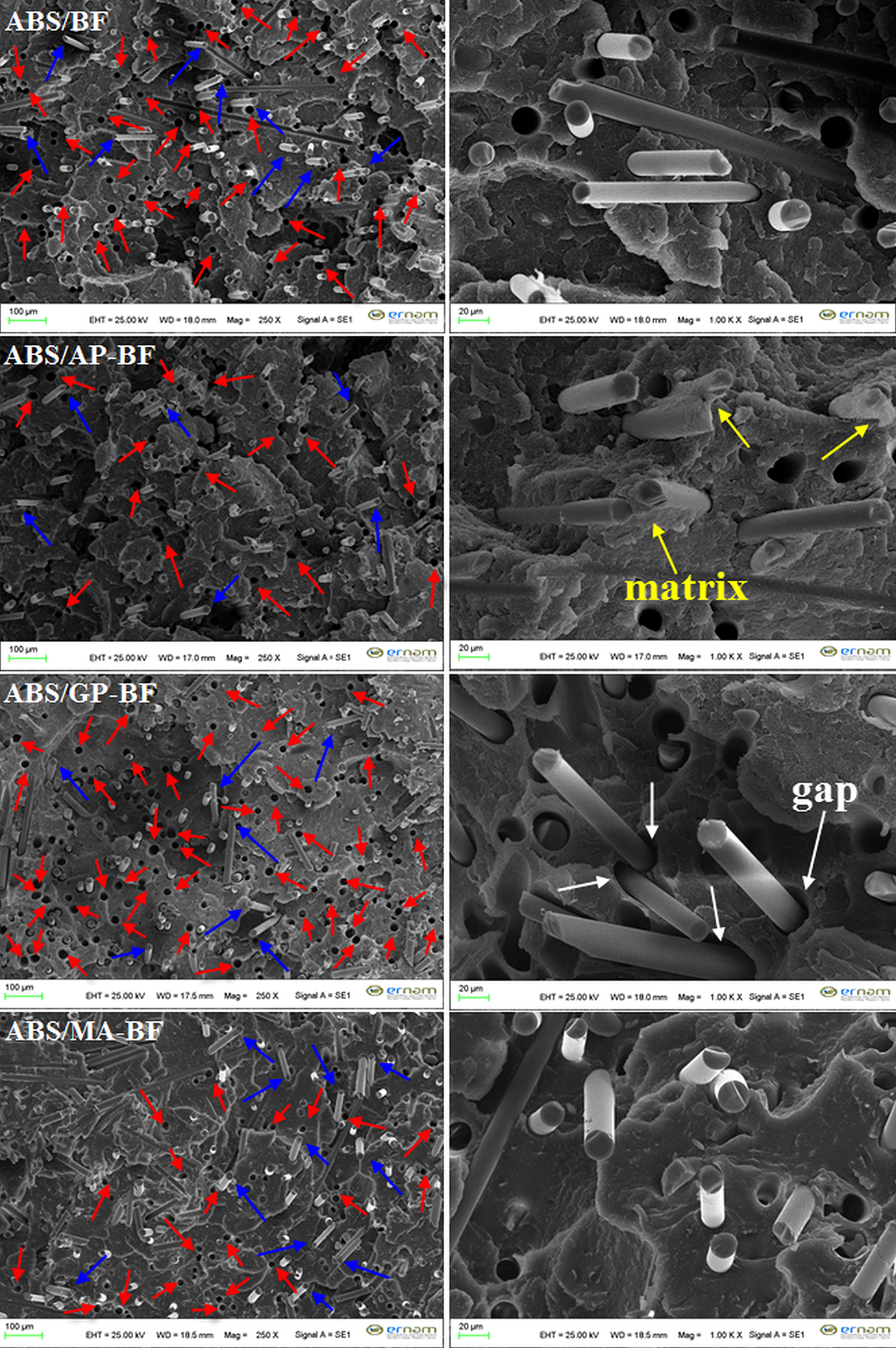
SEM images of the tensile fractured surfaces at magnifications of ×250 (left side) and ×1000 (right side). SEM: scanning electron micrograph.
The pullout fibers adhered with the matrix material (shown with yellow arrow) with a shorter length and the less number of black holes are observed with the use of AP. In MA-BF containing composite, less fiber debonding and long pullout fibers with a clean surface is observed. These findings support the interfacial adhesion increase with the use of AP and MA. Considering the morphological analysis on the tensile fractured surfaces of the specimens, the use of AP and MA silane coupling agents improve the interfacial adhesion between BF and ABS while the GP reduces the interfacial adhesion.
Figure 3 shows the impact fracture surfaces of the composites at the magnification of 250×. The matrix material undergoes the brittle failure in all composites. The fracture mechanisms of pullout, debonding, and fiber breakdown are observed for all composites. No meaningful morphological difference is observed in the fracture surfaces of BF, GP-BF, and MA-BF containing composites. Less fiber debonding and shorter fiber pullout are observed with the use of AP silane coupling agent. Considering the SEM observations on impact fractured surface of the specimens, the use of AP gives the stronger interfacial adhesion between BF and ABS.
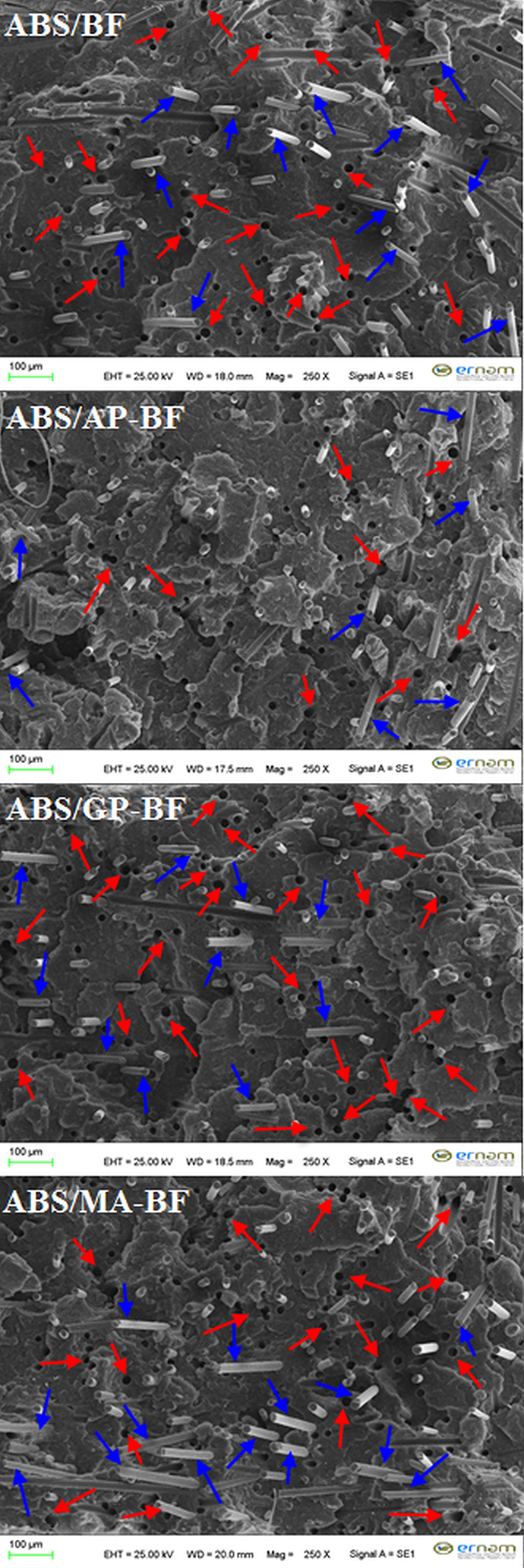
Impact fracture surfaces of the composites at a magnification of ×250.
Tensile test
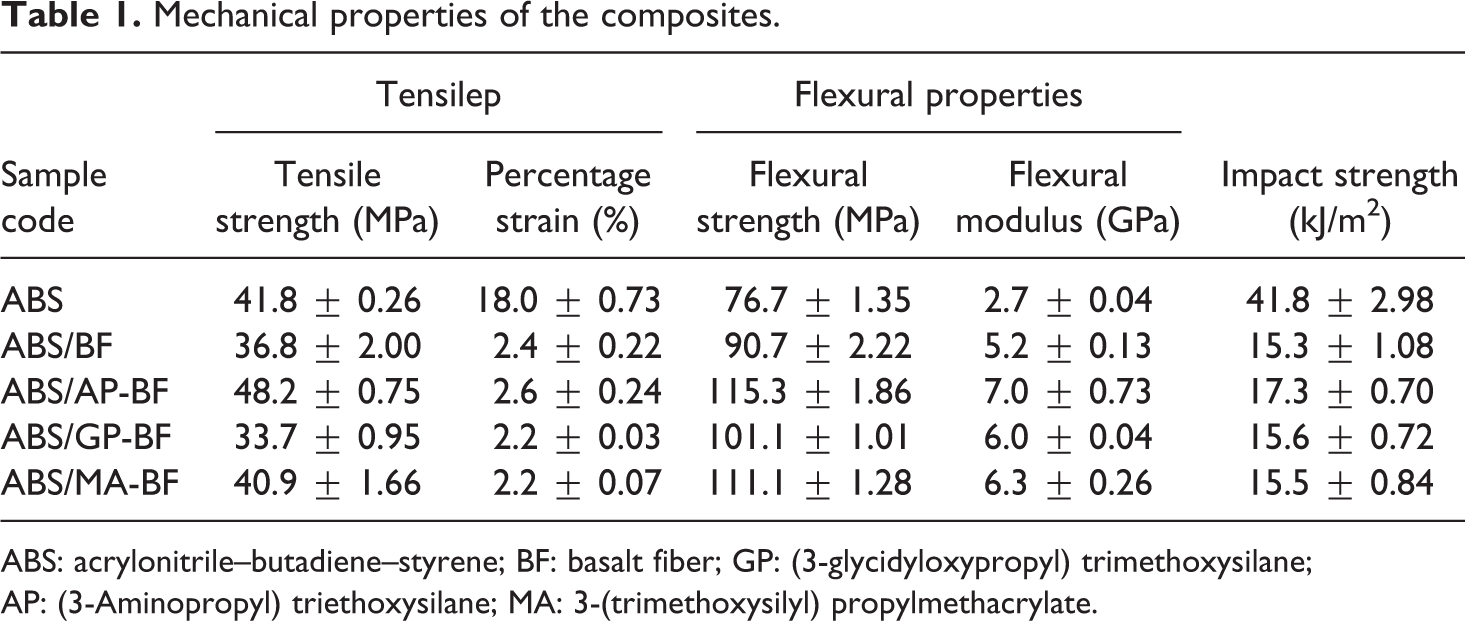
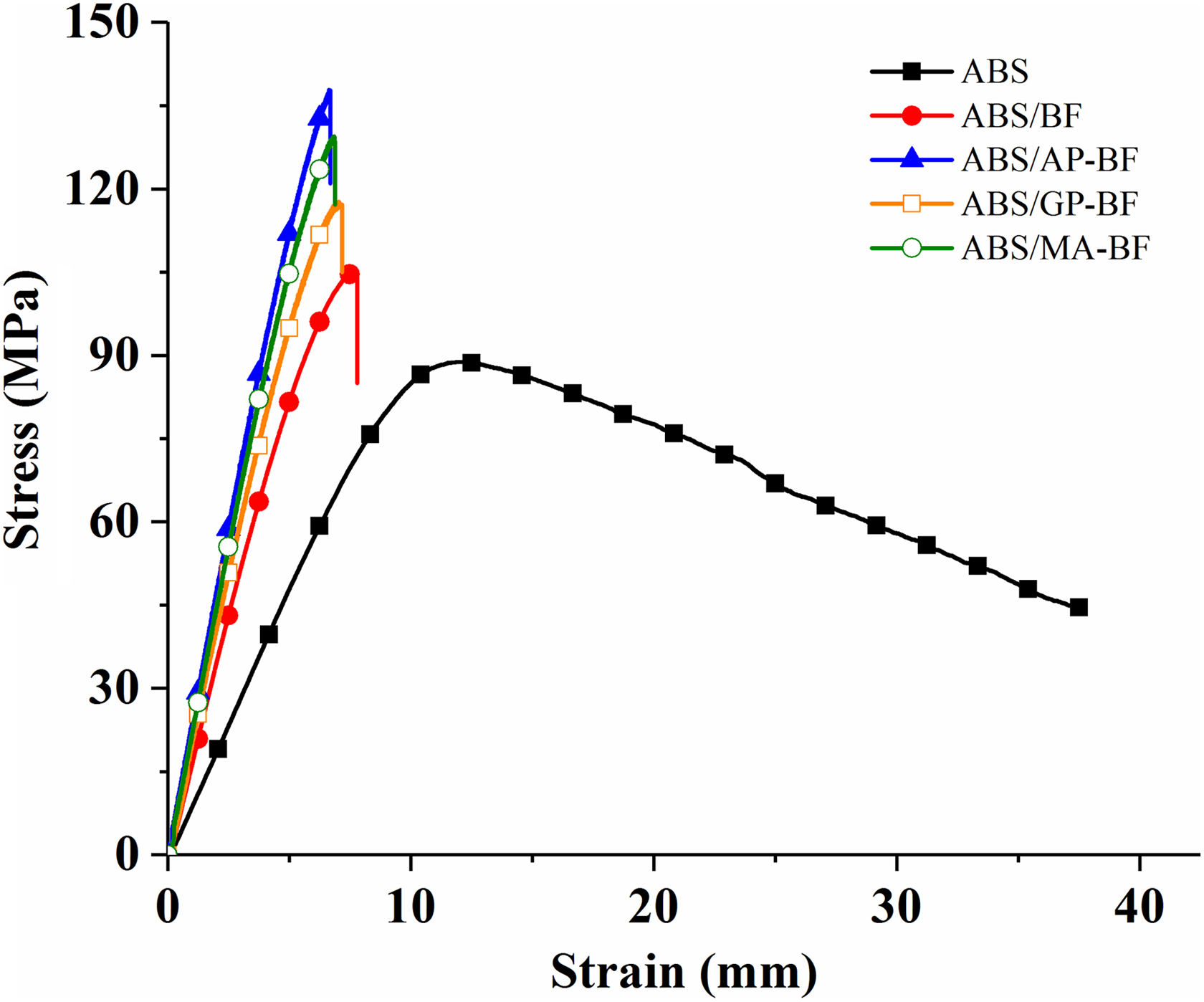
Figure 4 shows the stress–strain curves of the composites and the relevant tensile test data are listed in Table 1. As shown in Figure 4, the neat ABS ruptures in ductile manner. The ductile nature of ABS terpolymer shifts to brittle with the incorporation of the BF. All the BF containing composites show linear elastic behavior up to breakage and fail in brittle manner. The reason for brittle failure is the catastrophic crack propagation. The addition of the BF regardless of modification type makes the ABS stiffer and increases the slope of the stress–strain curve (Young’s modulus). Considering the effect of modifications on Young’s modulus of the composites, no remarkable difference is observed among the composites since the measurements are performed at relatively low deformations. On account of this, Young’s modulus is not significantly affected by the strength of the interfacial adhesion. 40 The addition of BF sharply reduces the percentage strain at break values due to the catastrophic crack propagation. No remarkable effect of silane modification is observed on percentage strain at break values. The incorporation of BF in ABS induces that leads to the composites strain at a lower percentage.
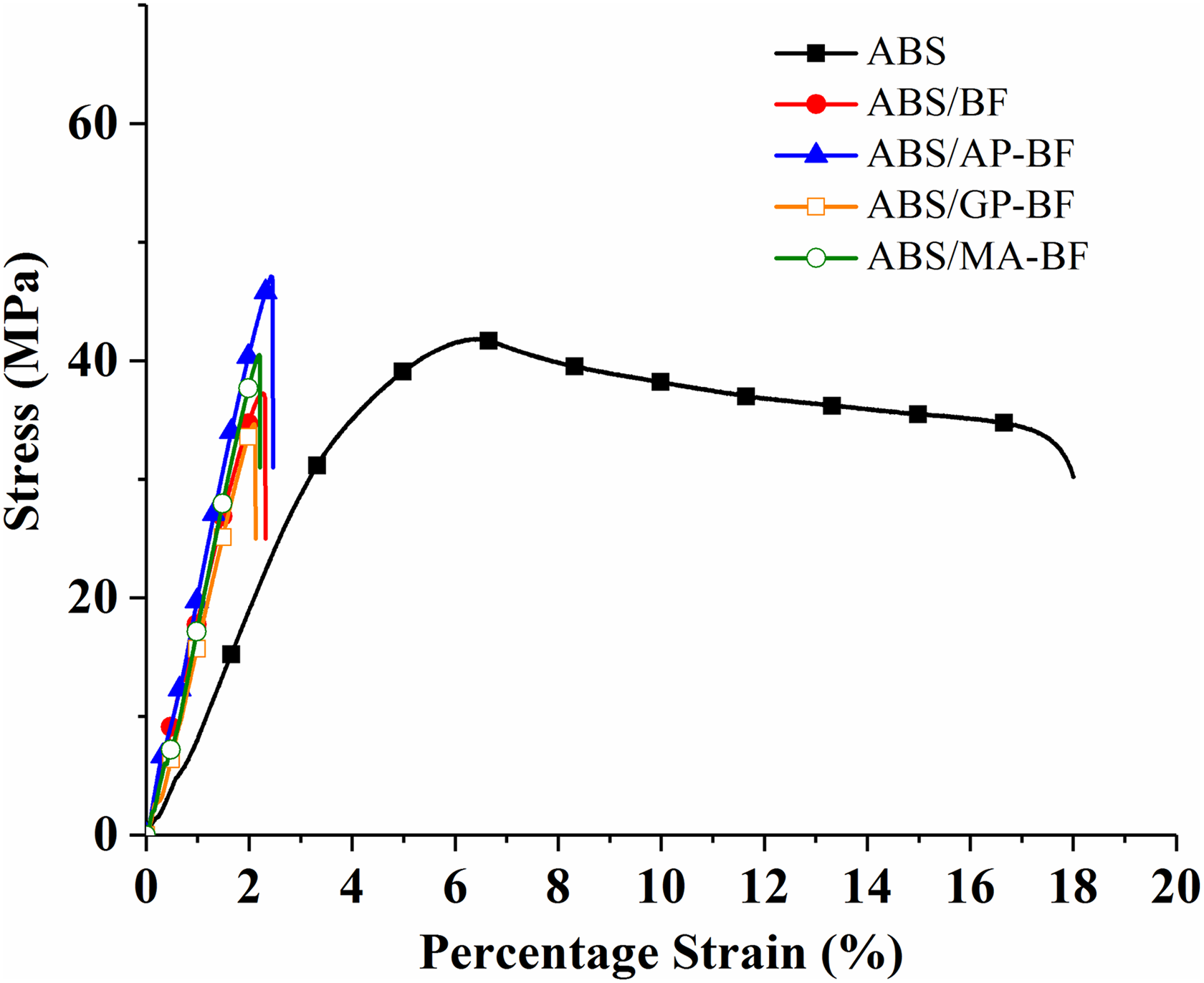
Stress–strain curves of the composites.
Mechanical properties of the composites.
ABS: acrylonitrile–butadiene–styrene; BF: basalt fiber; GP: (3-glycidyloxypropyl) trimethoxysilane; AP: (3-Aminopropyl) triethoxysilane; MA: 3-(trimethoxysilyl) propylmethacrylate.
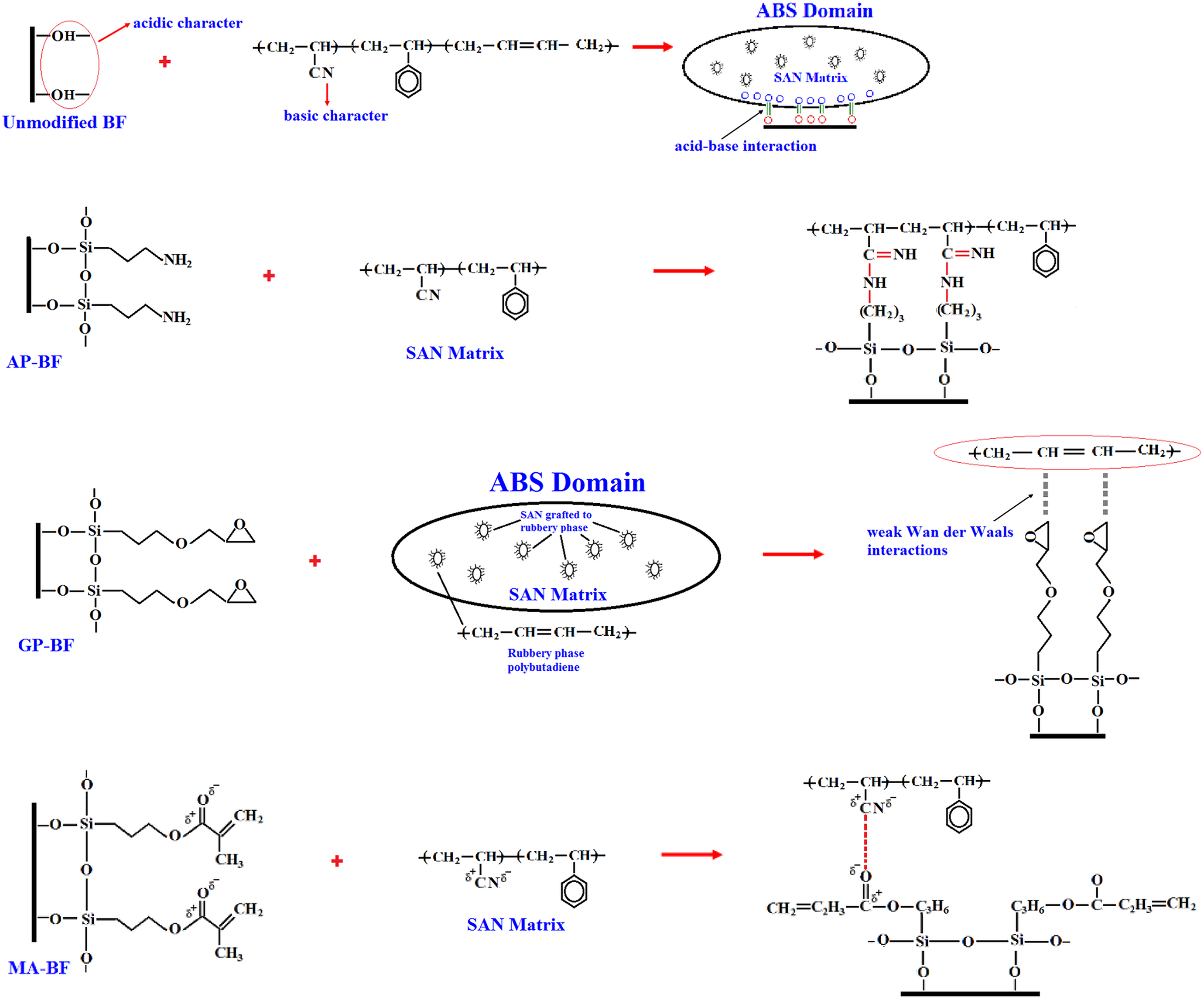
Silane coupling agents are used to improve the interfacial adhesion between the fiber and the matrix. Depending on their type, they have the ability to build a bridge between the fiber and matrix via different mechanisms, such as covalent bonding, secondary bond interactions, intermolecular entanglement, acid–base interaction, and hydrophobicity. Thus, the improvement in mechanical properties is expected with the use of silane coupling agent through improving interfacial adhesion. 23 The schematic representations of the proposed interactions among pristine and modified BFs and ABS matrix material are shown in Figure 5.
Schematic representation of the probable interactions between ABS terpolymer and the silane coupling agents. ABS: acrylonitrile–butadiene–styrene.
The addition of pristine BF reduces tensile strength at about 12%. The pristine BF surface is quite polar with acidic character due to the presence of hydroxyl groups. Accordingly, it is thought that BF interacts with weak basic character nitrile group of the polar SAN matrix via acid–base interactions. Due to the weak acid–base interaction between BF and ABS matrix, the interfacial adhesion between the fiber and matrix is poor and causes the load transfer from matrix to fiber being low.
The AP-BF- and MA-BF-reinforced composites show the better tensile properties than the unmodified BF containing one, as considered. The tensile strength increases at about 30% and 11% compared to pure BF containing composite with the addition of AP-BF and MA-BF, respectively. As revealed in morphological analysis, the AP and MA silane modifications have a positive effect on the interfacial adhesion between BF and ABS matrix. Considering both silane coupling agents, different mechanisms are effective in improvement in interfacial adhesion. It is thought that the improvement in tensile strength with the use of AP-BF stems from covalent bond formation. The AP has an amine structure that can react with the cyano group of SAN matrix. 41 The use of MA silane coupling agent improves the tensile strength via the dipole–dipole interaction. The MA has the carbonyl group taht can have the dipole–dipole interaction with the cyano group of SAN matrix. 41,42 Covalent bond formation and dipole–dipole interaction cause higher interfacial strength than the weak acid–base interaction. Thus, the tensile strength increases with the use of AP and MA silane coupling agents.
The GP-BF-reinforced composite shows the lower tensile strength than the unmodified BF containing one. The tensile strength reduces at about 8% compared to pure BF containing composite owing to the interaction between GP-BF and the apolar butadiene phase. It is thought that the polarity of BF reduces with GP modification and the modified BF tends to interact with the apolar butadiene phase because the epoxy group of GP silane coupling agent has no ability to make bonding with SAN matrix. Thus, the weak Van der Waals interactions between GP-BF and butadiene phase causes reduction in tensile strength.
Flexural properties
Figure 6 shows the load–deflection curves of the neat ABS and the composites. The relevant flexural test data are listed in Table 1. As shown in Figure 6, the neat ABS fails in shear mode while all BF containing composites fail mainly in flexural mode considering the shape of the load–deflection curves. 43,44 As listed in Table 1, the addition of BF increases the flexural strength and modulus of the ABS at about 18% and 92%, respectively. The use of silane coupling agent further improves the flexural properties. The flexural strength increases at about 27, 22, and 11% with the AP, MA, and GP silane modifications, respectively. In parallel with tensile test results, AP and MA silane modifications show the higher performance in the flexural test. Nonetheless, the flexural test results do not show the same trend with the tensile test results. The addition of neat BF and GP-BF also increases the flexural strength with respect to neat ABS. During the flexural test, the material is forced to bend and is subjected to compression, tension, and shear forces. 45,46 In the compression side of a flexural specimen, BF is forced to buckling regardless of the fiber–matrix quality. 47,48 Accordingly, the fiber and matrix adhesion does not predominantly affect the flexural strength, unlike tensile strength.
Load–deflection curves of the neat ABS and the composites. ABS: acrylonitrile–butadiene–styrene.
Impact test
The impact test is performed on unnotched samples using the pendulum hammer of 1 J. The relevant impact test results are given in Table 1. The neat ABS has the highest impact strength as expected. The impact strength of ABS reduces drastically with the incorporation of the BF regardless of the treatments on the fiber surface. This is attributed to the stress concentration centers at fiber ends, leading the crack initiation easily.
Many factors are highly effective on the impact resistance of fiber-reinforced polymer composites, including inherent characteristics of the fiber and matrix, their ratios, and the interface properties. 49 –51 The studied composites contain the same amount of fiber and matrix material. Accordingly, only the type of silane coupling agents used for the modification on BF surface makes difference through affecting the interfacial properties. Neat BF, MA-BF, and GP-BF containing composites have almost same impact strength. As seen from SEM images of these composites, no meaningful difference is observed, as well. The long pullout fibers and debonded fibers seen as black holes are observed. It is concluded that the energy is mainly dissipated as matrix fracture, fiber pullout, and debonding. However, most of the fibers are not debonded and just embedded into the matrix material in AP-BF containing composites. With improving the interfacial adhesion between fibers and matrix, the fibers tend to break rather than pull out. It is thought that the breakage of fiber absorbs more energy than its pull out. Thus, the AP-BF containing composite shows slightly higher impact strength. Consequently, the effect of silane modification on impact strength stays negligible.
Dynamic mechanical analysis
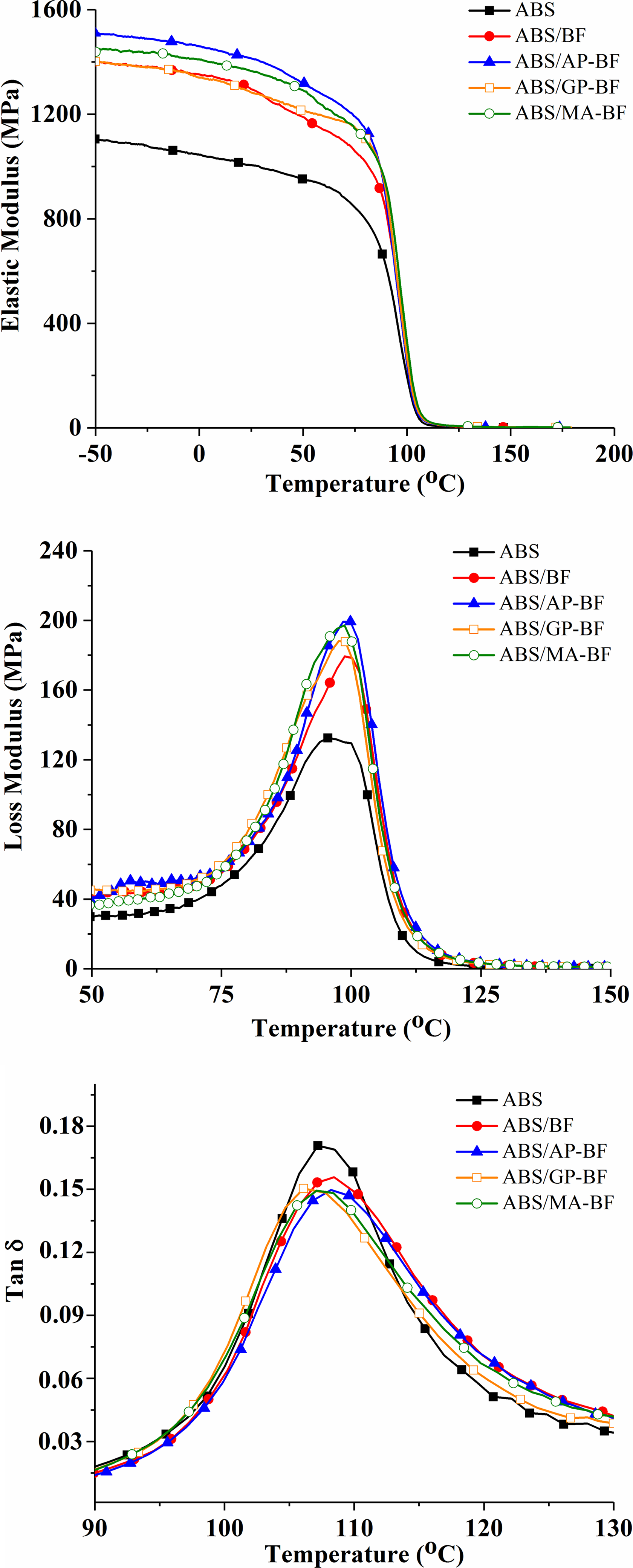
Viscoelastic behavior of the neat ABS and the composites is investigated via DMA analyses. Figure 7 shows the elastic modulus, loss modulus, and tan δ versus temperature plots of the composites. Elastic modulus is mainly the indication of the load-bearing capacity of the material. As shown in Figure 7, all the specimens show gradual decrease in elastic modulus with increasing temperature. This is ascribed to the thermal transition occurred in ABS terpolymer. The elastic modulus of the neat ABS drops sharply at about 85°C, which is attributed to α relaxation in the glass transition region. 3 The greater elastic modulus is obtained with the addition of BFs up to T g. Just above T g, both neat ABS and the composites have no load-bearing capacity. Below the T g, the effect of modifications on elastic modulus is observed. AP and MA silane modifications cause slight improvement. The AP-BF containing composite shows the highest elastic modulus among the others owing to the stronger interfacial adhesion between AP-BF and ABS matrix, as mentioned earlier sections in details.
Elastic modulus, loss modulus, and tan δ versus temperature plots of the composites.
The loss modulus is defined as the ability to dissipate the energy in molecular rearrangement or the form of heat during the deformation. 52 As seen from loss modulus versus temperature graph, the neat ABS shows relaxation peak at about 95°C. This is mainly due to fact that polymer chain motions at T g. The T g of the BF containing composites is 4°C higher than that of the neat ABS, which is due to the fiber–matrix interactions, which restrict polymer chain mobility. 46,52,53 Higher loss modulus is achieved with the addition of neat BF regardless of the type with respect to the neat ABS at T g owing to the energy consumption at the filler–matrix interface. However, the loss modulus of silane-modified BF containing composites is very close to pristine BF containing one.
Damping factor tan δ is an indicator for the compatibility and interfacial adhesion between the fiber andmatrix. 49 The tan δ of a thermoplastic polymer takes the maximum value when the polymer reaches to its T g. 46,54 The height of tan δ peak indicates the bonding quality between reinforcing and matrix phases. The stronger interfacial adhesion is observed with the lower tan δ values. As seen from the tan δ versus temperature graph, the neat ABS terpolymer shows the highest tan δ peak among the specimens at about 107°C. This is attributed to the T g. of SAN in ABS terpolymer. 2,55 The height of the tan δ peak decreases with the addition of BF. This is ascribed to the reduction in molecular chain movements of ABS at interface region leading by the BF. However, no meaningful difference is observed in tan δ height with the use of the modified BFs.
Conclusions
This study investigates the effects of three different silane coupling agents on the mechanical performance of the ABS composites containing chopped BF. The tensile, flexural, impact, thermomechanical, and morphological properties of the composites are examined. The following conclusions can be drawn according to the results obtained. The use of AP and MA improves the interfacial adhesion between BF and ABS via different mechanisms. Considering the SEM observations, the modification with AP leads to the better interfacial adhesion between BF and ABS. According to tensile test results, 30% and 11% improvements in tensile strength are achieved with the use of AP and MA silane coupling agents, respectively. The flexural strength and elastic modulus increase whereas no remarkable difference in impact strength is observed with the use of silane coupling agents. According to DMA results, the addition of BF greatly increases the elastic modulus of the neat ABS regardless of the modification type. The highest results are achieved through the use of AP and MA silane coupling agents. It is concluded that the effectiveness of the silane coupling agents can be ranked as follows: AP > MA > GP, according to the tensile strength, elastic modulus, and flexural strength.
