




Abstract
The uncertain climatic changes-related issues in the recent times has led an apprehension for all automotive makers to develop innovative composite materials to reduce vehicle’s fuel consumption. Hence, this review article has given special attention toward the factors that motivated several automakers to undergo research on biocomposites as it plays an important role for biodegradability and sustainability across the globe. In particular, cellulose nanofibers-reinforced composites are the main research focus in the current scenario which can be applied for different automotive applications with numerous advantages and abundant accessibility. Polypropylene (PP) is the emerging polymer in the automotive industry, and many researchers are now mainly focusing their research on PP-based composites which can serve as a boon for different environmental problems faced by the current scenario as depicted by Figure 1. It also reported the recent advancement on the development of innovative composite materials by different automakers with regard to finding suitable actions for reduction of fuel consumption to the recommended confines.
Advantages of natural fibre reinforced composite for light weight automotive vehicles.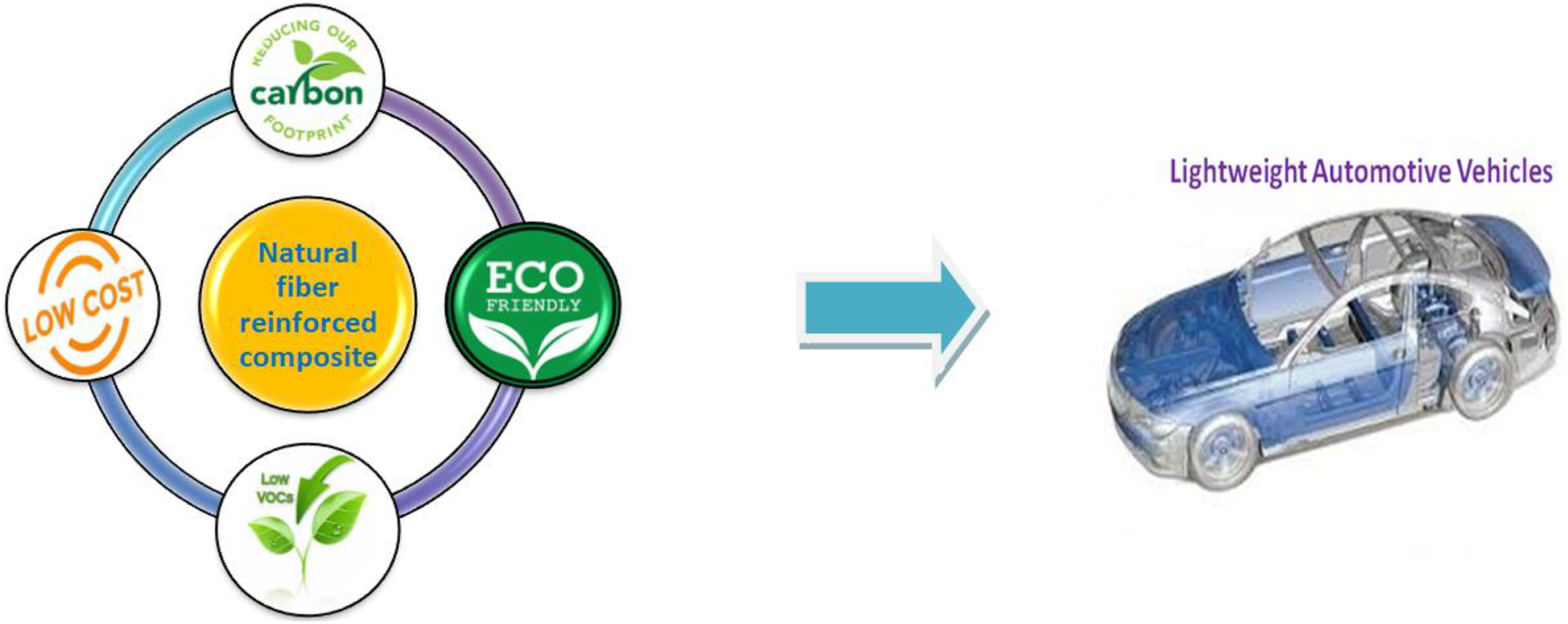
Introduction
Polymers have become the backbone in the day-to-day applications such as food, medical products, sports, automobiles, and mountaineering, due to its alluring and long life properties. Tailoring new efficient products to maintaining the sustainable environment is the major challenge to the researchers of this era. 1 In this 21st century, the main concern is associated with the greenhouse gas (GHG) emissions emitted by the road transport automotive vehicles leading the automotive designers to assert the environmental demands along with the social needs of better comfort and safety standards. 2,3 Mostly, these carbon dioxide emissions are mainly accumulated by the use of fossil fuels for automobiles. The drastic natural disasters associated with the recent climatic change need to be focused as soon as possible with controlling the GHG emissions in air. The concept of “sustainability” has fostered the idea of “going green” among a broad spectrum of consumers and industries. Research in the area of green technology has been geared up by many researchers to overcome the GHG emissions by producing lightweight and fuel-efficient automotive vehicles. 4 Biocomposites can be considered as the most prominent key alternative to maintaining the daily demand along with the environmental safety. 5
Biocomposites give us attractive properties such as low cost and low weight along with a reduction in air pollution. 3 Natural fiber composites have gained their importance in the applications of research and industries for their exceptional advantages over the synthetic fibers. 6 Nowadays many automobile companies are focusing on the production of automobile parts with green technology which reduces their cost of production along with increased fuel efficiency. 7 In spite of captivating properties, natural fibers have low strength and low durability that can be overcome by hybridizing small amount of synthetic fiber. India has almost taken its step to becoming a global leader in road transport sector by submitting Nationally Determined Contribution under Paris Agreement, which states that petrol- or diesel-driven vehicle won’t be sold till 2030 in India. A report generated by Coal India in 2018 stated that increased research on lightweight vehicles and use of solar energy can reduce carbon emissions efficiently and quickly. 8
Balakrishnan et al. 9 studied various natural fiber composites that have gained immense popularity for lightweight parts to be produced in aircraft such as door panels and rudders. The principal factors for using these natural fiber-reinforced composites are its improved performance, cost-effectiveness, and weight reduction. Pradeep et al. 10 studied that the automobile makers are interrogating several ways to produce lightweight parts for automobile applications so as to meet the necessary demand produced by Corporate Average Fuel Economy (CAFE) 2025 targets that illustrated the fuel efficiency can be increased by 6–8% per 10% of vehicle’s weight reduction.
Glass fibers are a promising material for the automotive industry which is now replaced by biofibers and other hybrid composites. Nowadays, carbon fibers are replacing glass fibers for automobile applications as they have high modulus and stiffness which helps in the reduction of vehicle’s weight by 30%. Thereby, hybridizing the composite using natural and synthetic fibers can help in the reduction of CO2 emissions and vehicle’s weight prior to making a healthy environment. 11,12 Biodegradable composites are preferred to avoid the accumulation of municipal solid waste and environmental hazards such as greenhouse effect and global warming issues, which leads to increase in CO2 emissions. 13 Recently, nanotechnology has grabbed a lot of attention in fabricating automobile components with using cellulose nanofibers (CNF)-based composites. Cellulose is the most readily available and abundant renewable resource which is responsible for maintaining the structure of plant cell walls. 14,15 Unlike starch, it is a straight chain polymer consisting of glucose units that are linked with β(1,4) glycosidic bonds, and all the neighboring units can twist in 180° with respect to each other in spiral motion. Cellulose is hydrophilic in nature, water insoluble, and mostly biodegradable. It is disintegrated into small glucose units after being treated with the acid hydrolysis method which can be made useful for various applications. 16 –19 Normally, CNC can be abbreviated as cellulose nanocrystals, nanofibers, nanoparticles or microcrystals that possess high surface area and a large number of hydroxyl groups helping in achieving a greater polarity. A lot of research works has been of great interest recently on CNC to act as a reinforcing agent in composite fabrication because of its biodegradability, cost-effectiveness, low density, and remarkable environmental sustainability. 20 –22
Polypropylene (PP) has been extensively replacing engineering plastics due to its economic viability, weight reduction, excellent mechanical performance, and ease of processing and recyclability as depicted in Figure 2. It is available in various grades and has the ability to withstand different temperature and humidity conditions which make it applicable to a wide range of application in automobile parts. PP constitutes greater than 40% of the total plastics in automobiles by reinforcing it with natural and synthetic fibers. PP reinforced with natural fibers and synthetic fibers can sum up the advantages of both the fiber properties that can serve as a boon to the automobile industries. 24 P is the lightest among other plastics having a density of 0.905 g/cm2, making it extremely useful when reinforced with fiber composite to produce lightweight parts for automobile applications such as bumpers, indoor/outdoor carpets, cable insulation, door panels, so as to meet the obligatory command created by CAFE 2025 targets which illustrated the fuel efficiency can be increased by 6–8% per 10% of the vehicle’s weight reduction. The increased fuel efficiency will result in a decrease of CO2 emissions, hence creating a healthy environment with reduced CO2 footprint and vehicle’s weight prior to the requirement of sustainability. 25,26
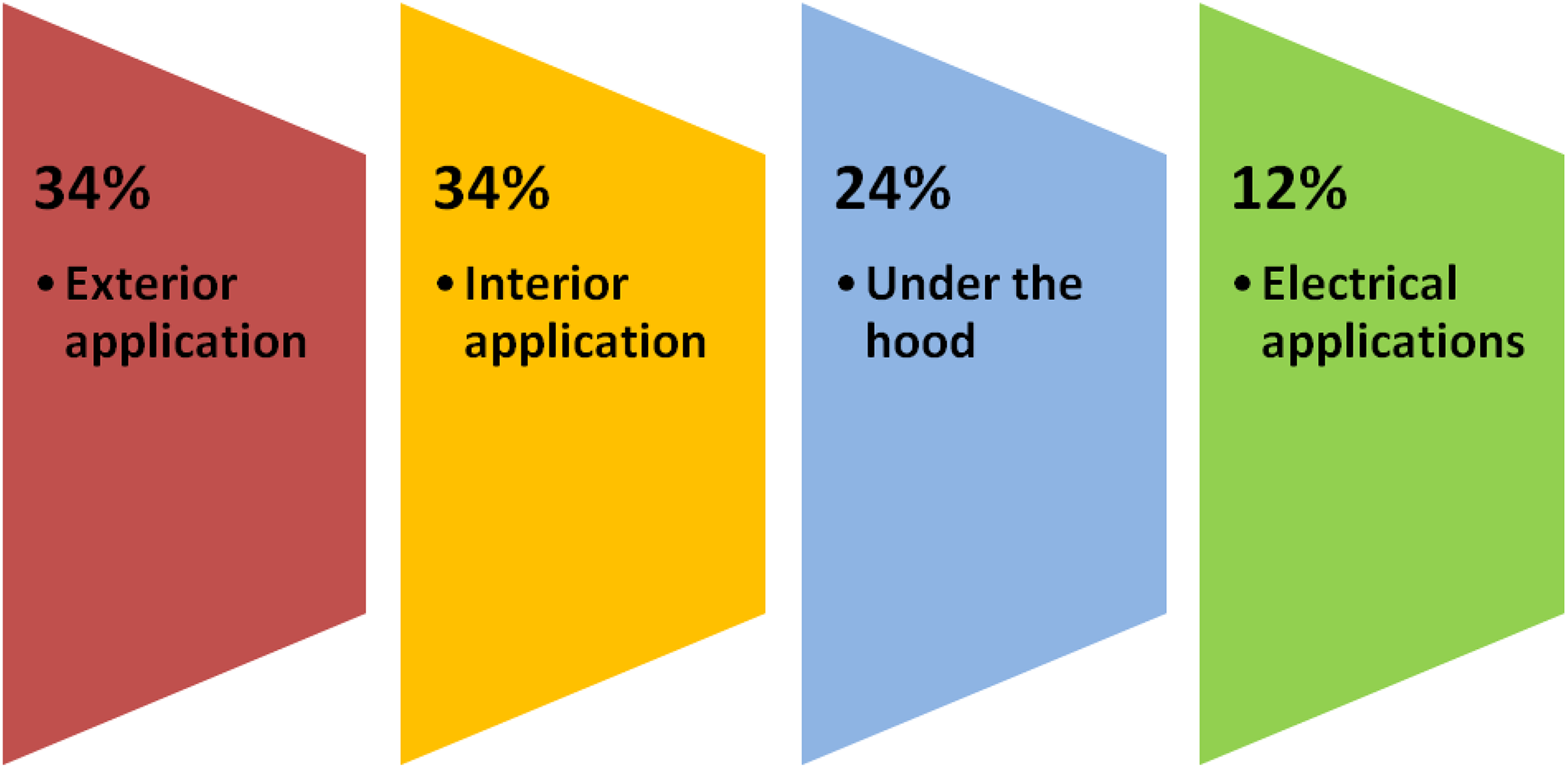
Utilization of PP in automotives. 23
Need of biocomposites for automobile applications
The growing demand for automobiles in the current market has led to an apprehension for the governments to formulate different rules and regulations for maintaining and ensuring an environmentally aware society. This makes automakers to target eco-friendly products that will have low negative impacts on the environment. However, many challenges have been faced up by the current modern industries to meet up with the rules and regulations from the government for the environmental sustainability which leads to the launch of novel biocomposites in the field of automotive industries. 27,28 European Union legislation made a compulsory reduction in emission of CO2 targets for new cars which states a reduction by 18% and 40%, respectively, in 2015 and 2021 targets as compared with the 2007 fleet average of 158.7 g of CO2 per kilometer. The fleet average to be achieved by 2021 for all new cars is 95 g of CO2 per kilometer. 29 Entire life cycle assessment of the product as described in Figure 3 should be studied, starting from the procurement of raw material to the post-consumer use that gives an idea about the harmful impacts of the product on the environmental sustainability. 30,31
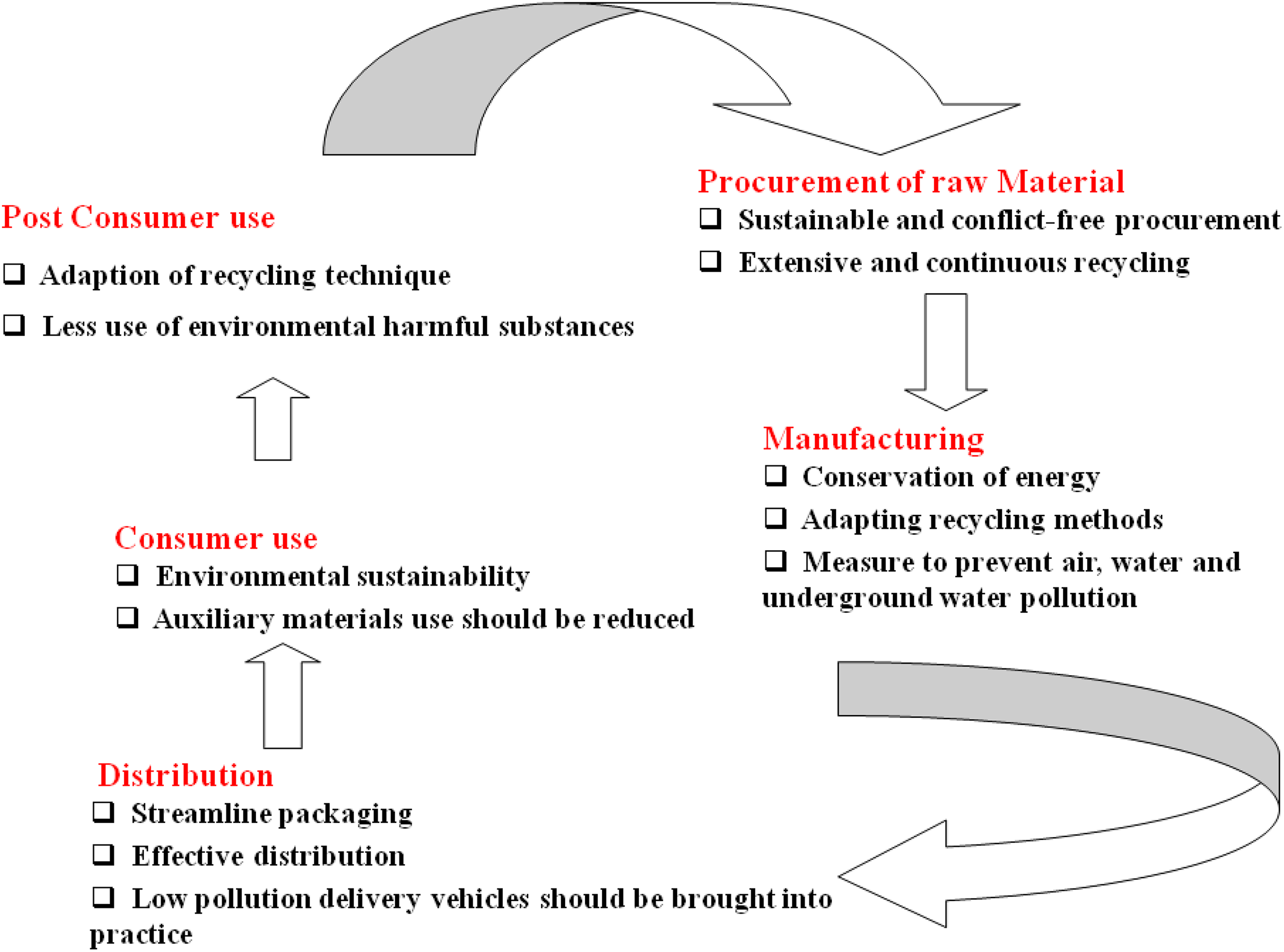
Life cycle assessment of an automotive product.
Boland et al.
32
studied the life cycle assessment (LC
As observed from the above literature, there is a need to find renewable alternatives in the automotive industry to reduce CO2 footprints. PLA is a biodegradable polymer matrix derived from sugarcane, the biomass of disposing of paper, sweet potatoes, food leftover, straws and so on. PLA polymer matrix reinforced with natural fibers composites are used by different automakers in automobile interiors that can be a promising product in terms of environmental sustainability and reduction of CO2 emissions. 3,33,34 In automotive industries, glass fiber reinforcement remains the major source but natural fiber-reinforced composites provide a promising solution for the greenhouse effect and global warming subjected to foster environmental sustainability. 1 The energy utilization for processing and fabrication of glass fiber-reinforced composites are very expensive as compared to natural fiber-reinforced composites which is about 23,500 British Thermal Units (BTUs) to produce one pound of glass fibers, whereas it takes only 6500 BTUs for the production of one pound of kenaf fibers. 35 Synthetic fibers such as glass and carbon fibers, not only release CO2 gases in the air but also release NO2, SO2 gases which possess possible hazards to the environment. 36,37 The cost factor is a relevant issue in automotive vehicle manufacturing with an analysis of its entire life cycle–raw material procurement, production and operating cost, and disposal costs. Therefore, development of low-cost production methods are seeking a lot of attention in the automotive industries and the recent topic of research which can open up several manifold applications. Natural fibers like flax, hemp, and wood have by now established automobile applications such as interior panels and door panels. Different automakers have started working on natural fiber-reinforced composites and a fierce competition is being now developed in the current market for the new invention of automobile parts by using natural fibers at the lowest provided cost which can attract different consumers. 5,38 Researchers are now mainly focusing on the consumer’s demand that can be fulfilled using natural fibers or hybridizing it with a little amount of synthetic fibers to extract optimum properties prior to environmental sustainability. 39,40 The demand for a better biodegradability and reduced weight automobile parts has led a path for natural fiber-reinforced composites as a doorway to increase the automotive fuel efficiency and reducing GHG emissions as elaborated in Figure 4, which can be a gain for the upcoming future generation. 41,42
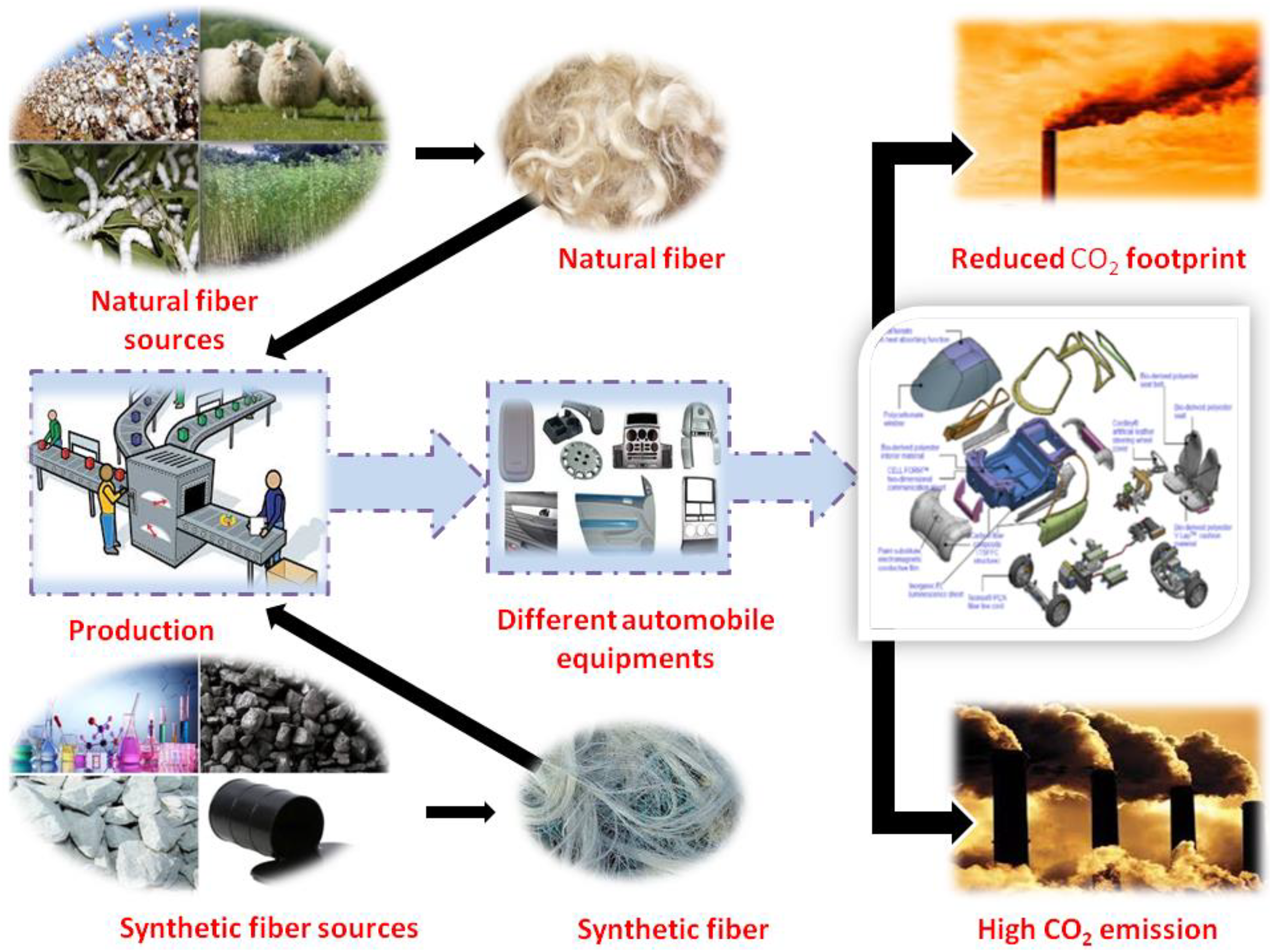
Need for biocomposite to reduce the CO2 footprint.
Natural fiber polymer composite
The natural fiber polymer composites (NFPC) such as sisal, jute, hemp, flax, kenaf, and are most trending for automotive applications in the current market demand to meet the growing environmental regulations and policies by the government in terms of sustainability and ecological awareness. 41,43 NFPC are normally used as reinforcing fillers in polymer matrices to form composites which can be subjected to different manufacturing processes to produce automotive applications. 44 They can serve as remarkable alternatives for synthetic fibers to reduce the environmental waste and pollution-related problems. 45,46 Nowadays, to achieve the utmost environmental advantages, NFPC are used to its optimum level in various automotive applications replacing glass and carbon fiber-reinforced composites. NFPC exhibits attractive properties such as low density and weight, eco-friendly behavior, reduced CO2 footprints, non-abrasive nature, alluring insulation properties, and reduced wear and tear to the machinery. 47 The properties and performance of the composite not only depend upon the individual constituents but also get affected by the interfacial adhesion between the fiber and the matrix that enlarge the potential of giving rise to different stimulating new materials with completely new properties 30,48,49
Different types of natural fibers
There are different types of natural fibers that can be used for different automobile applications based on the needs and characteristics required for the intended part. Mainly, the natural fibers are categorized as bast fibers, leaf fibers, seed fibers, and grass fibers. Bast fibers include jute, flax, hemp, ramie, and kenaf fibers, while leaf fibers include abaca, sisal, and pineapple fibers. Coir, cotton, and kapok comes under seed fibers, while grass and reed fibers include wheat, corn, and rice.
Kenaf fibers
It is a kind of natural fiber that behaves as reinforcement in composites and helps in the production of different automobile parts after being reinforced with the desired polymer matrix. The yield and composition of kenaf plant are also affected by several factors such as a cultivator, planting date, photosensitivity, plant populations, and length of the growing seasons. They are composed by the combination of different single filaments which normally ranges from 2–6 mm in diameter. Kenaf fibers have alluring properties such as low density, nonabrasive nature, higher mechanical properties, and biodegradable that can serve as a boon to the automobile industries after being reinforced with polymer matrix. 50,51
Flax fibers
It is one of the oldest fibers that is cultivated in temperate regions. This type of fibers has gained maximum interest and use in automobile industries because of its various advantages such as low density, high toughness, strength, and stiffness. Its biodegradability and higher specific tensile properties make it a commendable substitute for glass fibers. It is used by different automotive makers such as Mercedes Benz, Ford for body panels, door panels, trim and rear shelf. 52,53
Hemp fibers
It is a type of bast fiber and comes under cannabis family. It is widely used because of its high mechanical strength and Young’s modulus of about 55–70. 3 The composition carries a mixture of cellulose within 50–75%, hemicelluloses within 10–20%, lignin within 3–5%, and wax less than 1%. It is used for spare wheel well by automakers like Mercedes Benz. 54,55
Bamboo fibers
Bamboo fibers are commonly referred to as Bambusa Shreb which is a continually recurring plant. Its height goes up to 40 mm and attains its maximum size in 6–8 months. It is found worldwide with a large number of species and grows at a very rapid speed which makes bamboo a fast-growing grass. The fibers are extracted from the starchy pulp of bamboo plants. It is used by different automakers like Toyota for luggage compartments, floor mats, speakers, and so on. 13,56,57
Jute fibers
Jute is extracted from the stem of corchorus plant which has a wide range of species. It is one of the most easily found fabric material and possesses good mechanical and thermal properties. Other characteristics that make it suitable to be used in different automobile applications are higher aspect ratio, more strength to weight ratio, and good insulation behavior. 58
Sisal fibers
It belongs to the Agave family which are normally hard in nature. Sisal fibers are one of the most widely used fibers as it can be easily cultivated and has high tensile characteristics, high resistance to acid, alkali, salt water, and corrosion. Automakers like BMW uses it for the manufacturing of interior door panel, underbody panels, and so on. 59 –62
Ramie fibers
It falls under Urticaceae family having a low density as compared to other synthetic fibers. Its use is limited to a textile fiber because of its production areas and it requires a costlier pretreatment as compared to other bast fibers. 63
Pineapple leaf fibers
It has high cellulose contents which are available quite largely, thus making it cheaper in cost. Pineapple fibers are obtained as a by-product of pineapple cultivation and are of keen interest by different automakers to form NFPC for different automobile applications. 44,64,65
Coir fibers
They are extracted from the coconut fruit and are highly durable in nature due to its high lignin component. It is one of the highly used fibers due to its several advantages that included high hardness, good resistance, and nontoxic nature. The cultivation of these fibers is widely done in tropical regions, due to the proximity of the sea, such as India and Srilanka. Mostly, it is used by automakers like Mercedes Benz for front and backrest, Fiat for interior and exterior trims, and so on. 66
Polymer matrix in NFPC
NFPC is made either using thermoplastic or using thermoset polymers reinforcing it with natural fibers. Depending upon the polymer matrix used, it can be categorized as partially or completely biodegradable as elaborated in Figure 5. When synthetic thermoplastics are used in NFPC such as polyethylene, PP, polyamides, along with natural fiber, the formation of the partially biodegradable composites takes place which is about the percentage of natural fibers used in it. 67 The fabrications of these composites are primarily controlled by upper limit processing temperature prior to the degradation of the natural fibers which can lead to discoloration, weak interfacial adhesion, and damage to the cellulose composition. 68 They can normally withstand a processing temperature of 170°C during prolonged processing conditions and around 210–220°C for short time processing duration. The properties of the composite normally depend upon the synergistic effect of the fibers within the matrix which leads to proper stress transfer from the fibers to the matrix. This can be bought into effectiveness by adding suitable coupling agents which can combine different polymers and fibers to form composites. 48 There are different types of coupling agents that act as modifiers for the matrix, fibers to increase the poor wettability and weak interfacial bonding between the fiber and the matrix interface. Maleic anhydride grafted polypropylene (MA-g-PP) is the commonly used compatibilizer for PP matrix to improve the interfacial adhesion between the fiber and the PP matrix. It helps to overcome the drawbacks associated with natural fibers while reinforcing with a thermoplastic matrix such as poor wettability and weak interfacial bonding of hydrophilic natural fibers with hydrophobic thermoplastics. There are many thermoset matrices such as epoxy, polyester, and vinyl ester, which are reinforced with natural fibers to be used in automobile applications. Normally, epoxy can be applied to high-performance applications and can be blended with natural fibers to minimize the environmental hazards. In crash applications, where the intended part is placed in between bumpers and side rails are designed to absorb maximum dynamic energy by minimizing the damage to passengers during an accident are made by epoxy-reinforced composites. 69 Earlier, they are made up of aluminum or steel which are now replaced by NFPC for weight reduction and reduced CO2 footprint without compromising passenger’s safety needs. Recently, several types of research are done by automakers on thermoset-reinforced natural fiber composites, where high-performance characteristics and durability are required in automobile applications. However, epoxy resins have disadvantages of high cost and long curing time which limits its use in automobile industries. To cope up with this disadvantage, vinyl ester is used by auto industry which is normally formed by epoxy and unsaturated carboxylic acid which can be cured rapidly. They possess excellent mechanical performance and thermal degradation with ease of processing. These characteristics make it be used by different automakers in the recent manufacturing of automobile parts. 70 Furthermore, the most used plastic in the automobile industry is PP due to its excellent properties such as low density, low cost, durability, and recyclability. PP is the most desired thermoplastic matrix in the automotive industries and several types of research are going on PP for its use in different required parts of automobiles.
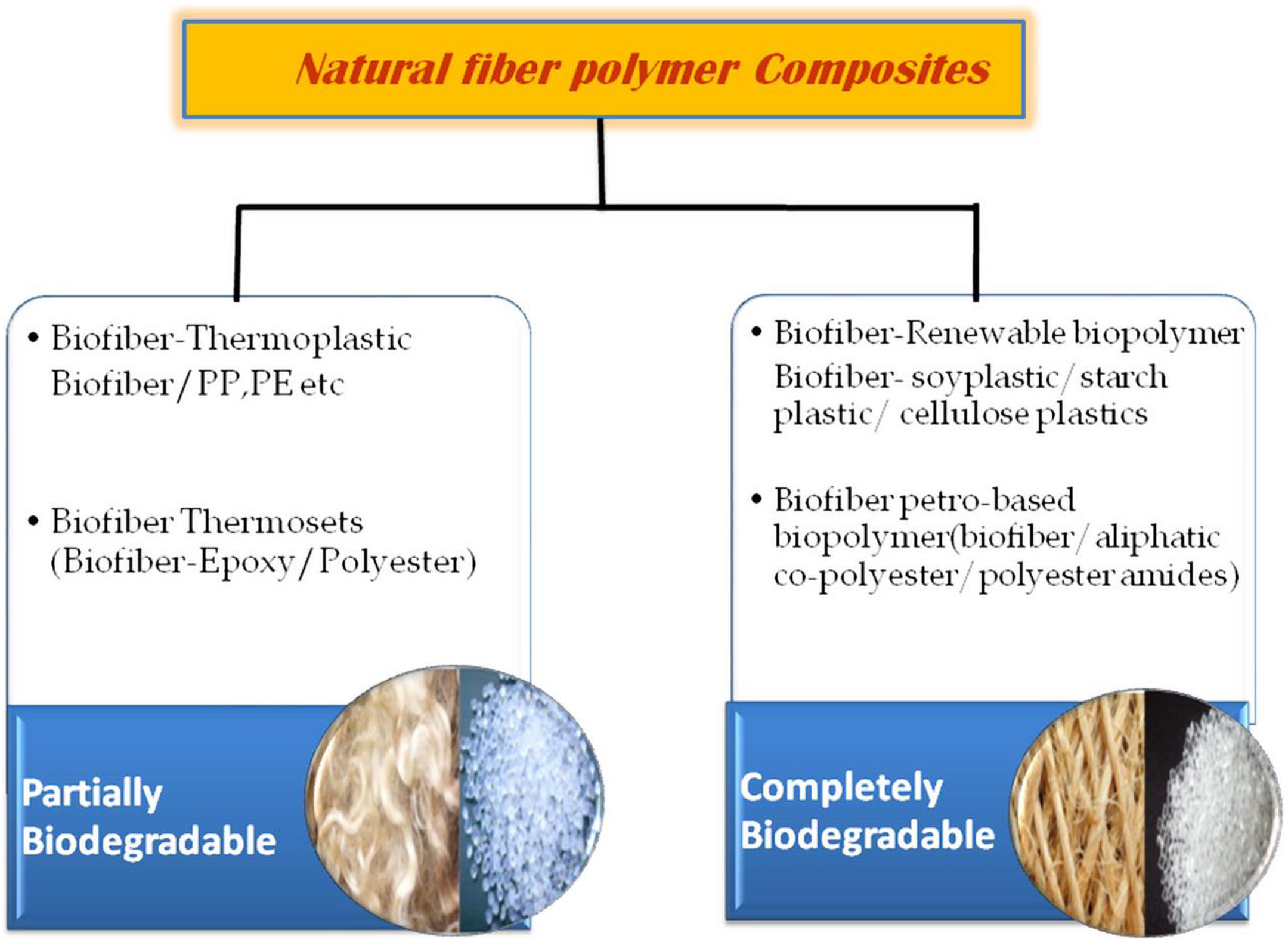
Natural fiber polymer composites from thermoplastic and thermoset polymer matrix.
Biocomposites—It’s scientific basis and opted methodology
Methodology to furnish a biocomposite are dealt subsequently:
Making of bio-based polymers by the dispersion of natural fibers
Hydrophilic nature of natural fiber makes them incompatible with polymer matrix leading to ineffective stress transfer and improper mixing of polymer matrix and fiber, thus resulting in failure of composites. Therefore, it is necessary for some surface treatment modifications of natural fiber, namely, physical or chemical, or addition of some compatibilizer which will help in polymer–fiber interaction. 71
Standard processing parameters are formulated for the production of bio-based composite and its scaling up
Standard processing parameters are optimized for the polymer composite products upon taking several trials and studying their flow properties by various rheological models so that the desired product can be obtained with optimum necessary properties required for any application. 72 Numerous mechanical and thermal properties test will be carried out of these bio-based composites to make sure the result of the fiber reinforcement within the polymer matrix. Flammability studies were also carried out, as it is the most important property while the polymer composite is used in automobile applications. As most of the automobile parts will be subjecting to different outdoor environmental factors, it is necessary to subject it to environmental aging test before commercialization. Biocomposites are mainly formulated nowadays to minimize the environmental hazards faced by synthetic plastics for which biodegradation test should be examined efficiently. 73,74
Validation of composite by nondestructive testing
Composite materials are usually used in automobile applications with key-safety testing using different vibro-acoustic and ultrasonic methods combined with traditional light and electron microscopy, spectroscopy, and mechanical testing. The purpose is to study the theoretical and experimental behavioral of the composite and to set up a relationship between acoustic parameters microstructure and physicomechanical properties. This relationship will facilitate to approximate the composite’s mechanical performance. The above-mentioned properties will be evaluated during deterioration and aging processes as well as in the as-produced material. The nondestructive testing (NDT) methods for composite evaluation are necessary as most of the composites are used in significant safety applications, such as aircraft cons. It is due to this fact that composite tools are mostly used in critical safety applications, for example, in aircraft key constructions, automobile critical applications, and so on. In addition, the technique preferred should minimize the expenses incurred in the process and physical principles are used by NDT to evaluate faults or destructive defects. 75 –80
PP-based composites—A breakthrough in the automobile industry
PP is the most remarkable breakthrough in terms of volume and value for the present automobile industry. Figure 6 indicates that PP possesses an excellent economic viability in terms of cost, recyclability, and ease of processing. 81,82 PP serves in different multipurpose engineering and commodity applications due to its high mechanical and thermal stability. Therefore, PP is the emerging polymer in the automotive industry, and many researchers are now mainly focusing their research on PP-based composites which can serve as a boon for different environmental problems faced by the current scenario. 83 –85
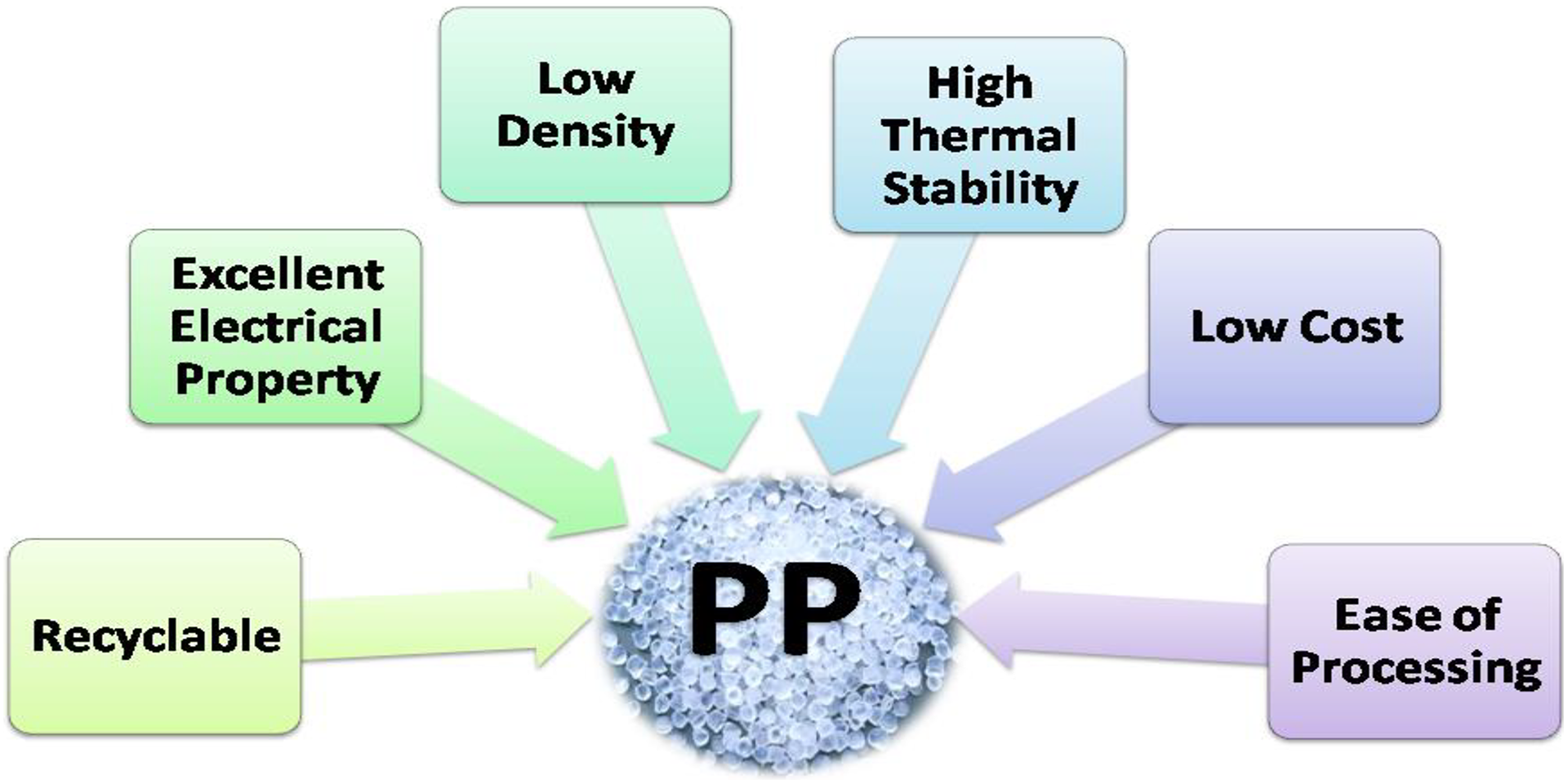
Properties of PP making it suitable for automobile applications.
Oqla et al. 86 studied various natural fibers that can be reinforced with PP to serve as a commencement for different interior automobile applications. It made a decision-making model to examine the most efficient natural fiber-reinforced PP composite for interior automobile application by evaluating several criteria’s simultaneously. Natural fibers such as jute, coir, flax, sisal, date palm, and kenaf were examined with PP matrix among which treated flax-reinforced PP composite was found to be the best suitable for automobile applications in terms of tensile and impact strength. The contributions of each criteria’s were studied, which concluded that impact strength is the most important factor to be evaluated for any natural fiber-reinforced PP composite while implementing it to automobile applications. Moreover, flexural strength and modulus also play an important contribution in finding the overall performance of PP-based composite than the water absorption and tensile modulus properties.
Jansz et al. 23 illustrated that PP has been employed in a wide number of automotive applications. PP along with thermoplastic polyolefins (TPOs) showed an extensive wider range of properties which has determined different breakthrough in technological aspects. It provided the needful solutions faced by automobile industry today for both interior and exterior applications by offering cost-effectiveness, novel designing concepts with improved safety, and comfort for passengers, and so on. In case of bumpers, PP-reinforced composites report for around 90% use in Europe. Bumpers are the most essential part of the vehicle as it needed a balance between flexibility and rigidity to meet any accident and safety measures.
For every case, bumpers are currently a significant design aspect for the car, frequently included with the body design and provided additional requirements like headlamps and grills. Rocker panels require higher impact with low thermal expansion which can be achieved by reinforcing PP with high mineral fillers and undergoing some elastomeric modifications. Cowl vent grill is the challenging exterior application which is made by PP mineral-filled copolymer blended with TPO helping to separate the upper edge of the bonnet from the windscreen.
Arbelaiz et al. 87 studied the mechanical properties of PP reinforced with short flax fibers modified with MA-g-PP. Addition of MA-g-PP act as a compatibilizer and improve the interfacial adhesion between the flax fiber and PP. The use of MA-g-PP resulted in the increase of the mechanical properties of the composite which can be suitable for different automobile application. However, without the use of MA-g-PP, the strength was observed to decrease with the increase of the flax fiber content in the composite because of the poor stress transfer from the fiber to the matrix. Furthermore, PP reinforced with short flax fibers along with MA-g-PP showed an opposite trend resulting in an increase in mechanical properties. So, MA-g-PP acts as a compatibilizer between the hydrophilic fiber and hydrophobic matrix for improved interface adhesion and improved properties.
PP has excellent mechanical properties and moldability for which it accounts for more than 40% as compared to other plastic materials used in automotive industries. Quite a few grades of PP with varied performance characteristics have been brought into industrial approach by compounding it with other fillers and fibers as per the demand and requirements of the anticipated parts. Around 2007, PP used for automobiles was found to be 3.75 million tons which is about 8% of the world’s total consumption of PP (45.5 million tons). Recently, PP grabbed a lot of attention in automotive applications to reduce environmental hazards in terms of recyclability, innovative design capabilities, and moldability. Therefore, to meet the demand, PP compounds have been formulated for improved mechanical and impact performance, high stiffness and rigidity, and crystallization. This can be done by melt blending technique of PP with different fillers, elastomers, additives which can add to the desired abovementioned properties to meet up the rising and competitive demand in the automobile market. This improvement leads PP to be a remarkable replacement for all other engineering plastics in the automobiles which provides cost-effectiveness and weight reduction in the intended parts to the automobile makers. Twin-screw extruders are the commonly used technique to formulate PP-based compounds serving fillers and additives to be well dispersed within the PP matrix preventing the degradation of the pellets during the manufacturing process. 54 Even though various plastic materials were made in to use for automotive application from the late 1940s, developments in plastic compounds were made more flexible when more advanced process was introduced. Early targets were metal, rubber, wood, and glass components; they all contributed heavily to the weight of the vehicle. Replacing these parts with a lighter material such as PP provided an immediate weight saving without loss in performances and a demand growth in an industrial market for the automobile applications as depicted in Figure 7. In terms of eco-friendly nature, PP is as well favorable for the environment as it produces nearly no waste, and the automotive parts made up of PP can be subjected to recycling multiple times. 88 –90 The main limitation of PP is poor stiffness of neat resin which can be increased by incorporating high stiffness natural fibers for its use in different end-use applications. 83,91 –93 PP-reinforced natural fiber composites possess excellent mechanical performance with increased thermal stability and are partially biodegradable as compared to neat PP; thereby providing a promising way out for the reduction in global warming and greenhouse effect to foster environmental sustainability. 94 –96
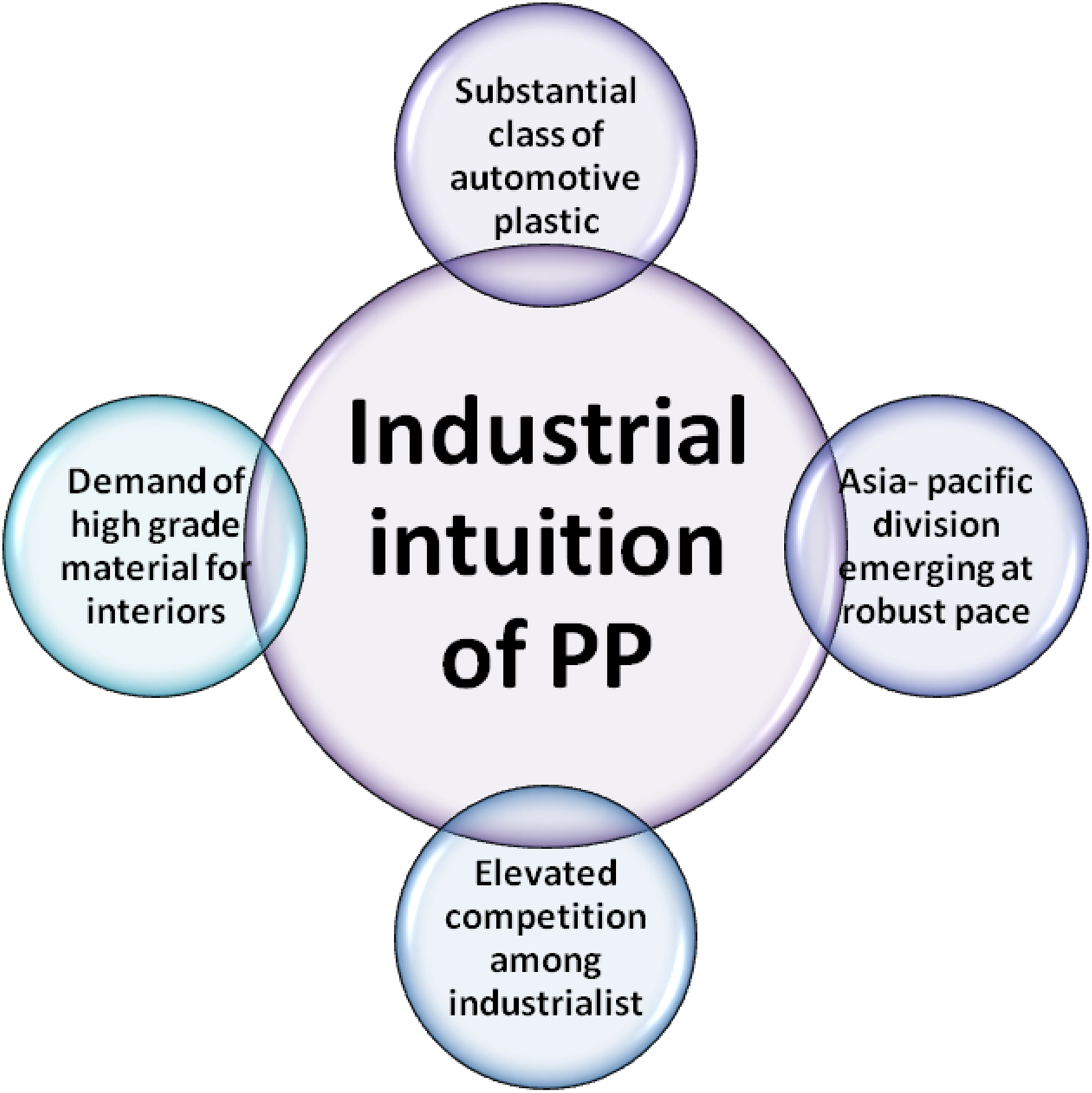
Industrial intuition of PP.
Nurul Fazita et al. 97 made a comparative study between PP-based bamboo fabric and PLA-based bamboo fabric composites and concluded that the former one has lower water absorption rate as compared to PLA-based bamboo fabric composites. This behavior was concluded due to the weak interfacial adhesion between PLA matrix and bamboo fabric as compared to PP-based bamboo fabric composites. Both bamboo fabric and PLA matrix are hydrophilic in nature, which absorb water more readily as compared to hydrophobic PP that result in fiber swelling leading to the generation of cracks in the composite. However, in the case of PP-based bamboo fabric composite, no cracks and fiber debonding were observed. Kargarzadeh et al. 98 explained that incorporation of CNF in PP helps to overcome the disadvantages of neat PP like low heat tolerance, hydrophobicity, less impact strength, by increasing its thermal stability and mechanical properties. An elevated viscosity, crystallinity, and modulus were seen in the case of the nanocomposites due to the enhanced dispersion and wetting of hydrophilic CNF within the hydrophobic PP matrix by the addition of compatibilizer.
Ghasemzadeh-Barvarz et al. 99 studied the mechanical properties, water absorption, and ultraviolet (UV) aging properties of PP/flax composites and PP/flax/glass fiber hybrid composites. They observed that the incorporation of flax fibers within the PP matrix protect the composites against UV aging, thus by overcoming the poor UV aging disadvantage of neat PP. Further they explained this behavior by the screening effects of natural fibers; moreover, lignin present in natural fibers possesses strong UV absorbing characteristics thus providing protection against UV degradation. 100,101
New technique: Lightweight automotive parts from carbon fiber hybrid-reinforced polymer composites
Natural fibers such as jute, sisal, and pineapple are the excellent substitution of synthetic fibers in fiber-reinforced composites due to its appealing properties such as recyclability, low cost, and density and biodegradability. 102 Despite having these attractive properties, natural fibers possess less durability, low strength, and hydrophilic nature. 103 Therefore, hybridizing it with a little number of synthetic fibers can counterbalance the disadvantages of both the fibers and the hybrid composite can be utilized with its optimum properties. 10,104
Pervaiz et al. 2 illustrated that carbon fiber is two times stronger and 30% lighter in weight as compared to glass which is being used for automotive applications. The cost of carbon fiber makes it a limiting factor to be used for automobile applications and is used only for high-end applications such as luxury and sports cars. However, hybridizing it with a little amount of natural fibers can extract the advantages of the latter one and can minimize the production cost. They have also focused on the use of recycled carbon fiber which can minimize carbon fiber cost and the harmful hazards to the environment, thus by minimizing the production cost. The hybrid formulation in which the carbon fiber is combined with other natural reinforcing fibers is done to enhance the performance in automobile applications prior to the reduction of cost and enhancement of strength due to the incorporation of carbon fibers. These hybrid materials are used in the manufacture of complex parts for automotive applications and also suitable for the fast curing process via compression molding.
Khanam et al. 105 studied the mechanical and chemical properties of the sisal fiber and carbon fiber-reinforced unsaturated polyester hybrid composites and observed an increase in the flexural properties of the hybrid composite with the increase of the carbon content. Furthermore, modification of both fiber surfaces by alkali treatment enhanced the tensile and flexural properties. Meng et al. 106 described the effective method to reduce energy consumption using lightweight vehicle for the purpose of the transport sector and provided a detailed study of recycled carbon fiber which can be implemented for various automobile applications. The global demand of carbon fiber-reinforced composite is increased day by day and expected to show an increment of 17.5% in 2021 as compared to 2015 shown in Figure 8. The carbon fiber-reinforced polymer composites’ waste are increasing day by day, 6000–8000 commercial aircrafts are predicted to end their life by 2030 which can contribute to different automotive applications through recycling techniques. Virgin carbon fiber is of high cost, which limits its use in automotive industries, although recycled carbon fiber can be cost-effective but its discontinuous form with random orientation can create difficulties in terms of handling and processing that has restricted the penetration of it in the commercial market up to now. This literature made a study upon techno-economic models for cost–benefit analysis of a theoretical viable scale-fluidized bed recycling plant and recycled carbon fiber manufacturing technologies to identify the market technologies so far.
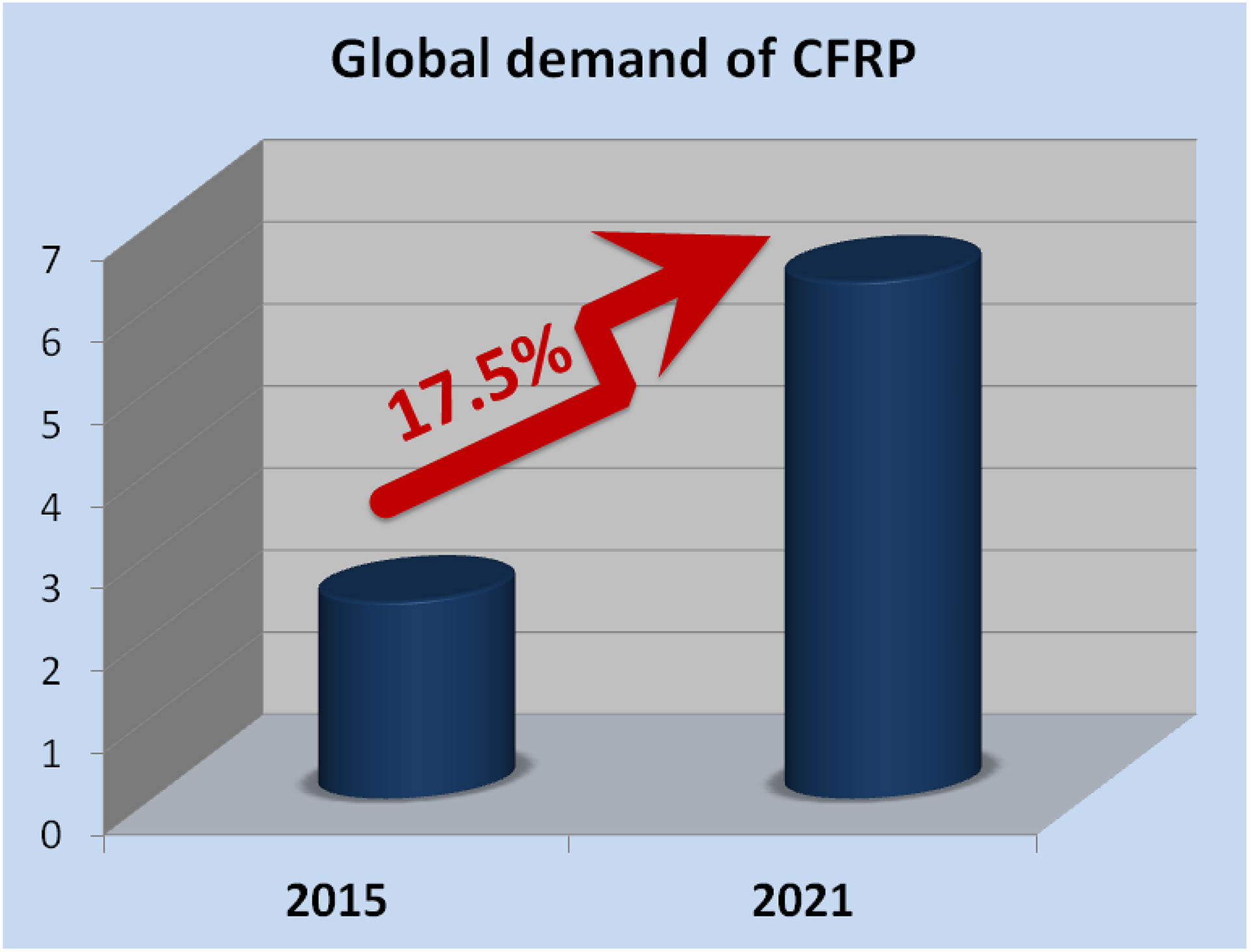
Trend and forecast of global demand for carbon fiber-reinforced composite. 106
The use of natural fibers such as banana, jute, and sisal exhibits a lot of technical issues that have to be surmounted, so as to have control over the properties of natural fiber-reinforced hybrid composites. 107,108 The properties of a hybrid composite mostly depend upon the individual fiber’s length, fiber content, orientation, the arrangement of both the fibers, the degree of the assortment of fibers and fiber/matrix interfacial bonding. 109,110 Development of new synthetic materials and the surface modification of biofibers is necessary for the design of automotive components that show a wide range of properties for several highend-use applications. 78 The synergistic effect of the hybridization between the bio-based/synthetic fiber and polymer matrix helps in developing newer materials tuned to demonstrate preferred properties for a definite purpose. 107,111 A detailed study of methodologies for the production of thermoplastic biofiber hybrid composites will be required for understanding the factors influencing the dispersion characteristics of the fibers in different polymer matrices. Surface modification of the fibers can be done by various procedures such as using plasma treatment, mercerization treatment, and silane treatment to develop an effective interfacial bonding between the fibers and the polymer matrix. This practice can bring solutions for the formulation of various technological aspects for bridging the gap between research and industrialization for commercial operation. 64,105,112
CNF as a remarkable revamping of the automobile industry
Nanotechnology has found an increasing pace in the automobile industry to meet the consumer needs and regulatory governing demands. 113 Cellulose is mainly extracted from plant fibers as shown in Figure 9, whereas animals and bacteria are secondary sources of cellulose fibers. During the last few years, thermoplastic-reinforced nanocellulose fibers are effectively used in automobile applications. 114,115 These fibers serve as a remarkable substitute for synthetic fibers such as glass and carbon fibers. Nanocellulose possesses various superior properties such as low cost, tensile strength similar to aluminum, design flexibility, and low weight, which makes it suitable for different automotive applications. 116,117
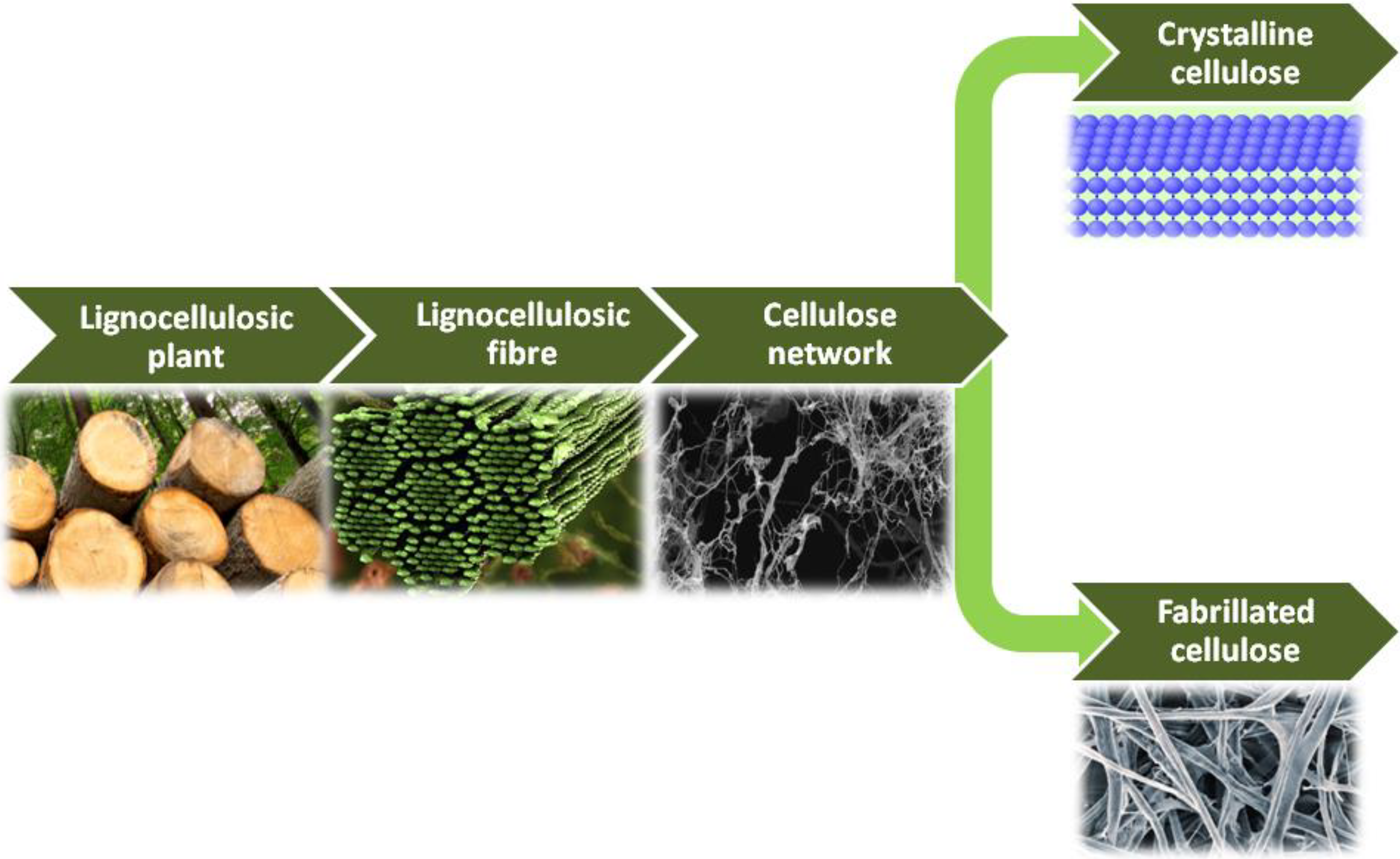
Model for cellulose microfiber from lignocellulosic plant.
Pervaiz et al. 2 studied the use of microfiber technology (MF technology), which enables to produce various lightweight parts for automobile applications when these bio-microfibers are dispersed within the polymer matrix. However, they exhibit low impact properties which restrict it to be used in different end-use applications. To overcome this disadvantage, MF technology is combined with direct long-fiber thermoplastic matrix so that it can serve as a boon for automotive application. They studied the cellulose microfiber with carbon fiber-reinforced composite which resulted in 15–30% weight reduction, thereby making it suitable for different end-use applications.
Alper et al. 118 studied that according to the CAFE, the fuel consumption can be minimized by 6–8% with 10% of the reduction in vehicle’s weight. It studied the use of different automakers using CNF for different manufacturing of automobile parts in place of synthetic fibers. Weyerhaeuser found concept called THRIVETM, where cellulose fibers are reinforced with thermoplastic composites such as PP which helps in the reduction of energy usage during production and minimize wear and tear to the processing equipment. These composites meet the demand of the required properties needed by automobile makers such as excellent corrosion and temperature resistance, high strength to weight ratio, and durability, while manufacturing different automotive parts.
This review article focused on the innovations, challenges, and opportunities faced by micro/nanocellulose fiber-reinforced thermoplastic PP/polyethylene (PE)-based composites. Microcrystalline cellulose is found to be thermally stable up to 300°C which makes it suitable to be reinforced with engineering thermoplastics like nylon 6 and polyethylene terepthalate (PET). However, very little literature is found on this because of the high-cost engineering thermoplastics composites as compared to commodity composites for which there is a lagging of studies upon crystallization and rheological behavior of the former composites. Daimler, Fiat, General Motors, BMW, Toyota, and Volkswagen used cellulose fibers-reinforced composites for various applications such as underbody panels, dashboard components, door trim panels, seat cushions, real panel shelves, and headliners, as shown in Figure 10. 119
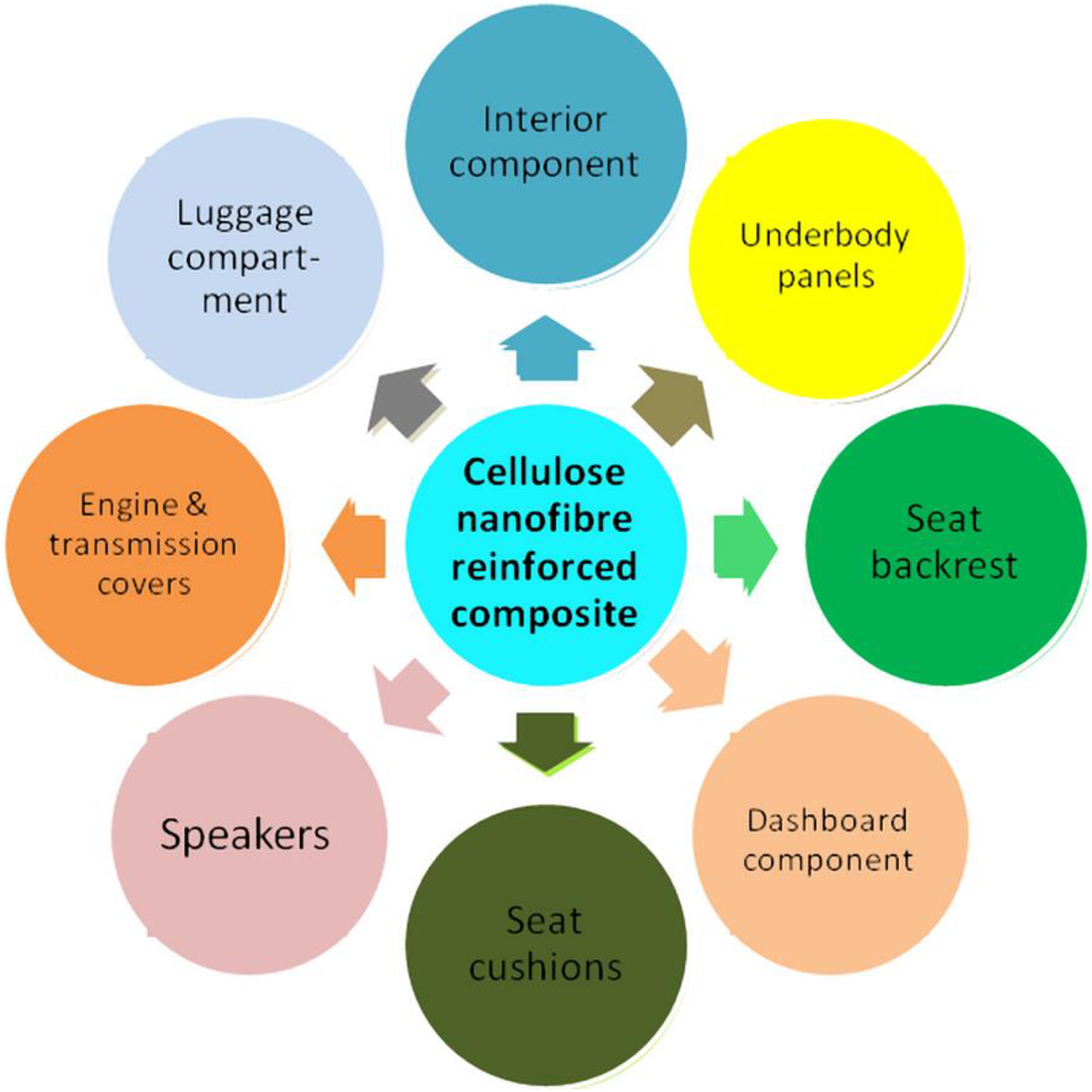
Cellulose nanofibers-reinforced composite in an automobile application.
Different methods for the synthesis of nanocellulose
Acid hydrolysis
CNF are formed by various natural fibers through a series of chemical treatments. Acid hydrolysis method of releasing CNF makes use of strong mineral acids (5–8 M) under controlled time, cellulose:acid ratio, temperature. There are different mineral acids that are used for this method, such as hydrochloric acid (HCl), sulfuric acid (H2SO4), hydrobromic acid (HBr), and nitric acid (H2NO3), of which sulfuric acid is extensively used for CNF preparation. 120,121
Hydrolysis method eradicates the local interfibrillar structure of cellulose as well as the disorderly arranged amorphous regions, thus giving rise to rod-like fibrillar crystalline nanofibers. As reported in Figure 11, the cellulose fibers are mercerized using NaOH, KOH (0.5 M), to dissolve the lignin and hemicelluloses intact with it, for around 18–20 h to produce the thin fibrillar structure. 122 Thereafter, the obtained residue was subjected to bleaching action using different bleaching agents like H2O2, NaClO2, and so on, under controlled temperature and time. Furthermore, the obtained residues are subjected to mineral acids to produce CNF fibers giving rise to the rod-like fibrillar structure. 123,124 CNF obtained after strong acid treatment is neutralized with several successive washing and centrifugations to bring down the PH level to 7 and to eliminate free acid from the dispersion. This hydrolysis process yields two shorter chain fragments while preserving the basic backbone structure. 65,125
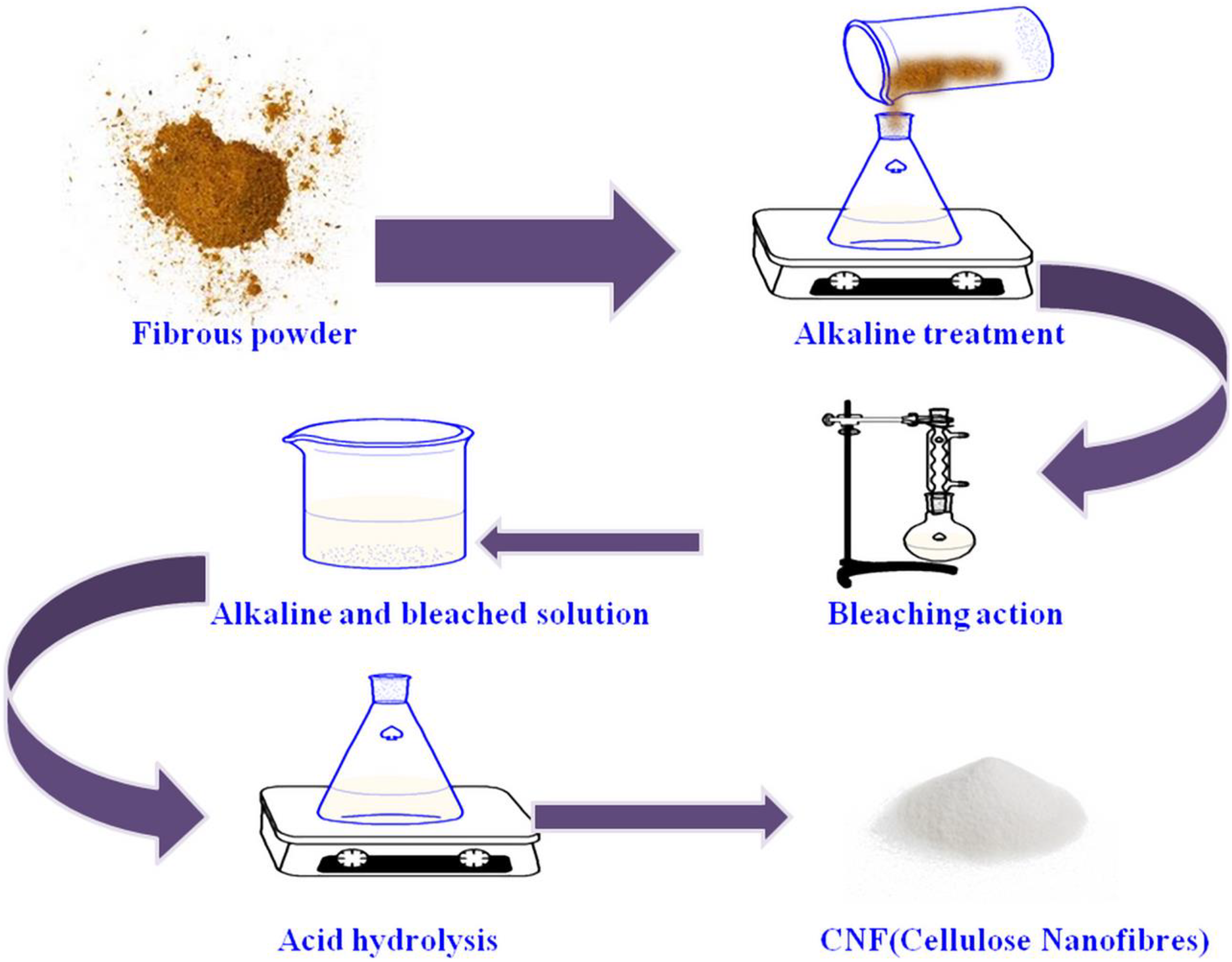
Acid hydrolysis for CNF preparation.
TEMPO oxidation
2,2,6,6-Tetramethylpiperidin-1-yl-oxyl (TEMPO) is a stable nitroxyl radical which is a prominent reagent for selective oxidation of cellulose to minimize the energy consumption needed for mechanical agitation and disintegration. The energy consumption in HPH is considerably reduced by a factor of around 100 after the pretreatment of cellulose using TEMPO reagent. The C6 primary hydroxyl surface chains of oxidized cellulose get converted to a carbonyl group which induces anionic charges on the surface of cellulose microfibrils (CMF), which allows separation of CMF under even mild mechanical agitation. TEMPO possess a red–orange color with a melting point of 35–38°C. It converts the carbohydrate’s hydroxyl group into carboxyl groups in the presence of an oxidizing agent like sodium hypochlorite and halogen salts such as sodium bromide or sodium chloride. 126 It is a procedure of producing nanocellulose with an average diameter of 1–10 nm by oxidizing it with an alkali metal iodide, an alkali metal chloride, an alkali metal bromide, an alkali metal fluoride along with TEMPO. 127 Conversely, two side reactions take place while cellulose is oxidized using TEMPO oxidation method, one of which can be categorized as strong depolymerization of the cellulose. The second side reaction while TEMPO oxidation of cellulose is the formation of aldehydes group at normally pH > 7, which leads to discoloration subsequent to drying and reduction of thermal stability. 128 The pretreatment of TEMPO should be carried out to stop the side reactions under a little acidic environment (e.g. pH 6.0–6.5) and at a temperature range of 50–70°C. It can be observed that after the pretreatment of TEMPO radical under the abovementioned optimized conditions, it prevents the formation of aldehyde groups and depolymerization reaction. It is noticed that after TEMPO oxidation, the amorphous domains of the oxidized cellulose gets dispersed in the solution due to the increased amount of carboxyl group, while the crystalline content remains intact which can be separated from the solution as the final product. This process is followed by mechanical treatments such as milling, sonicating, and homogenizing. 129 TEMPO oxidation method deprives the use of harsh acids which results in less yield, reduced fibril length, and the use of acid can also corrode the production equipment. After the acid hydrolysis treatment, a lot of acidic waste is generated which can be harmful to the environment and can have an adverse effect on various factors. 130 However, the TEMPO oxidation method uses an acid-free environment for the preparation of CMF which also gives a gateway for cost-effectiveness. 114,115,131
Enzymatic process
Enzymatic treatment is the energy efficient way to obtain nanocellulose using bleaching method which enables cellulose free from lignin and hemicelluloses, respectively. A thorough analysis has been reported in several kinds of literature regarding the utilization of enzymes and their advantages over chemicals. 132 The attack on cellulosic fibers with a range of strategies for the segregation of pretreated cellulose has some advantages as well as some disadvantages. The efficient treatment avoids the use of costly chemicals, results in improvement of fiber reactivity, and avoid development of byproducts by additional enzymatic catalysis. 133 This method is eco-friendly in nature and maintains cellulose fractions which can be digestible by hydrolytic enzymes. 134,135 Currently, the use of enzymes for the preparation of nanocellulose has offered novel potential to attain almost pure cellulose and high yield. Furthermore, it provides saccharification with more efficiency, low energy utilization, and sustainability toward nature. Laccase is the mainly utilized enzyme followed by manganese peroxidase (MnP) and lignin peroxidase (LiP), however, two or three ligninolytic enzymes mixture has been employed for the delignification process. Ligninolytic enzymes are deactivated before the process of saccharification to avoid cellulosic inhibition. The frequently used enzymes for the decomposition of cellulose are xylanase and mannanase; furthermore, the use of an alkali metal hydroxide along with a zinc salt have been revealed to be very efficient for expanding the fibers. Laccases are phenoloxidases that possess a little redox potential helping in achieving direct oxidation of phenolic lignin units only. LiP and MnP act via lipid peroxidation reactions which attack phenolic or non-phenolic lignin units. Other enzymes that are involved for enzymatic treatment are mycelium and oxidases associated with dehydrogenases that decrease lignin-derivative compounds. The enzymes such as xyloglucan, xylan, and mannan are the main reagents for the degradation of hemicelluloses. Therefore, the utilization of enzymes above chemicals is a suitable method to free pretreated cellulose from lignin and hemicelluloses, respectively. 136,137
Recent advancement
ECOSHELL concept
European Green Vehicle’s Initiative (EGVI) had purposed ECOSHELL concept to develop lightweight vehicles (weight reduction) from bio-resins and bio-fibers to reduce the environmental hazards in terms of decomposition and recyclability. The reduction in vehicle’s weight results in an increase in fuel efficiency leading to the reduction in CO2 emissions. 138 Inventing the vehicle’s body parts using vegetable fibers will lead to a drastic change in the environmental impacts as well as will provide many solutions related to cost, vehicle weight, CO2 emission, and so on. Mainly, superlight vehicles present in the market are very much expensive and possess a low safety measure which restricts the use of these vehicles to gain popularity. ECOSHELL aimed to overcome these two drawbacks (cost and safety) by providing an efficient way to produce lightweight parts for automobile applications. 139 Figures 12 and 13 described the aim and methodology of ECOSHELL concept through which it does the life cycle assessment of the automotive vehicles to reduce the vehicle weight along with giving priority to cost and safety factors.
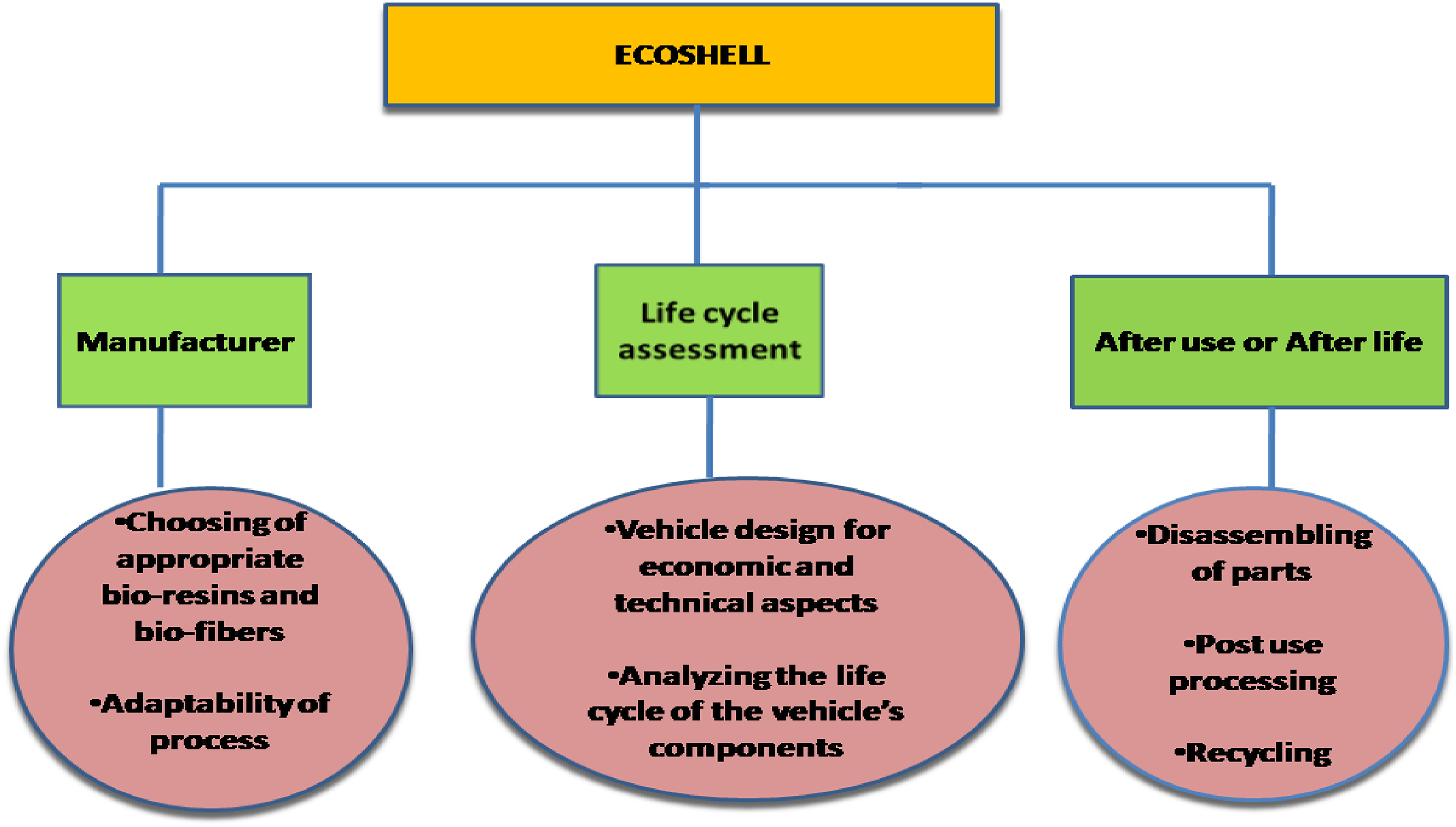
Methodology of ECOSHELL concept.
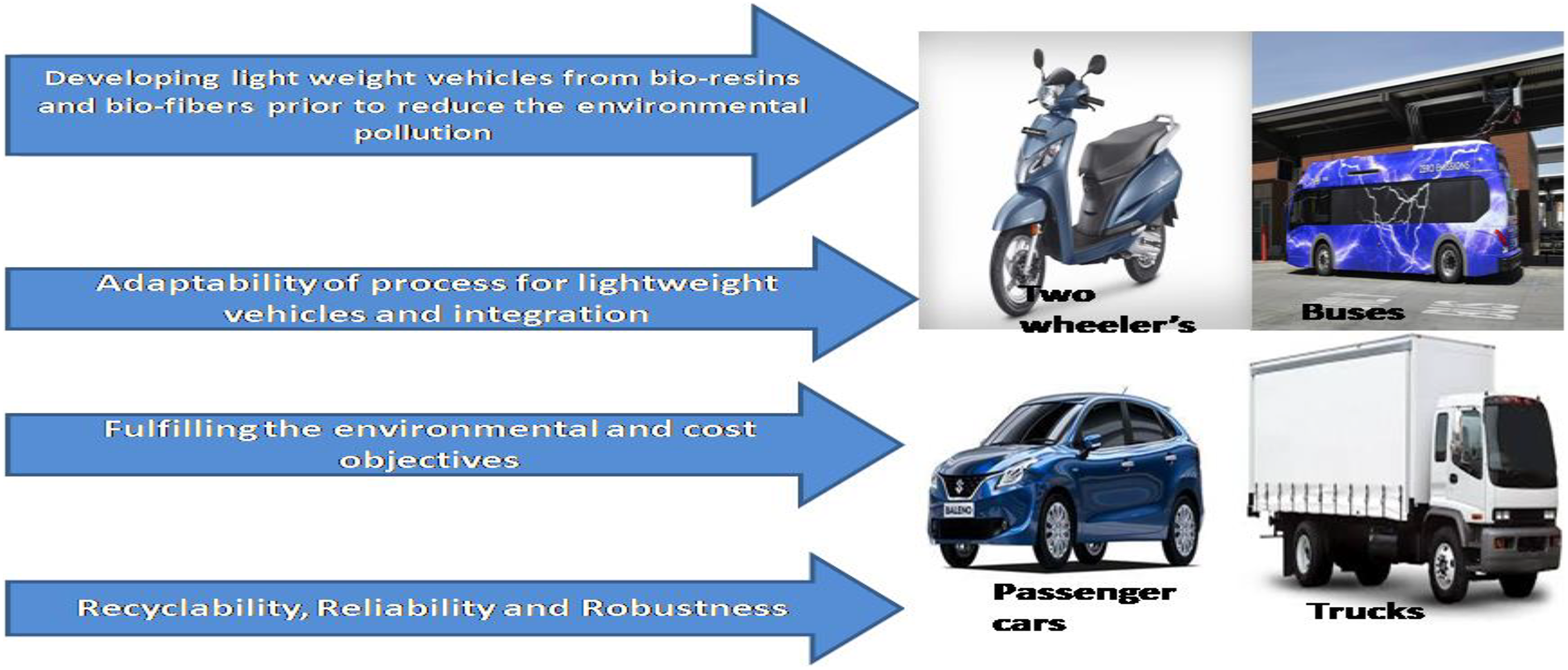
Aim and objectives of ECOSHELL concept.
Development by different automakers
There seems to be a significant alteration for the types of materials in use for its manufacturing of these modern automobile applications. The current automobile sectors have been extensively moved toward the deployment of lightweight materials. This changeover can be recognized to increase the need for reducing vehicle’s weight to increase fuel efficiency and to meet the government’s legislation requirement.
According to CAFE 2025 regulations, different automobile makers are pursuing the deployment of light weighting in cars, as a 10% in weight reduction can bring about 6–8% increase in fuel economy. The factors that affect lightweight property of automotive are design optimization, material substitution, and part consolidation. Material substitution particularly helps in reducing weight, easy processability and corrosion resistance of automotive sectors. The thermoplastic polymers and elastomers such as PE, PP, and polyamide (PA) have been used in the instrumental panel, seat, belts, gasket, sealing adhesive, and tires. Carbon-filled reinforced plastics and glass fiber-filled reinforced plastics are increasingly used in different parts such as A and B pillar, body-in-white (BIW), crash box, and leaf spring. Various parts of the automobiles are being made by natural fiber-reinforced composite nowadays by automakers to reduce the vehicle weight and CO2 footprint as shown in Figure 14.
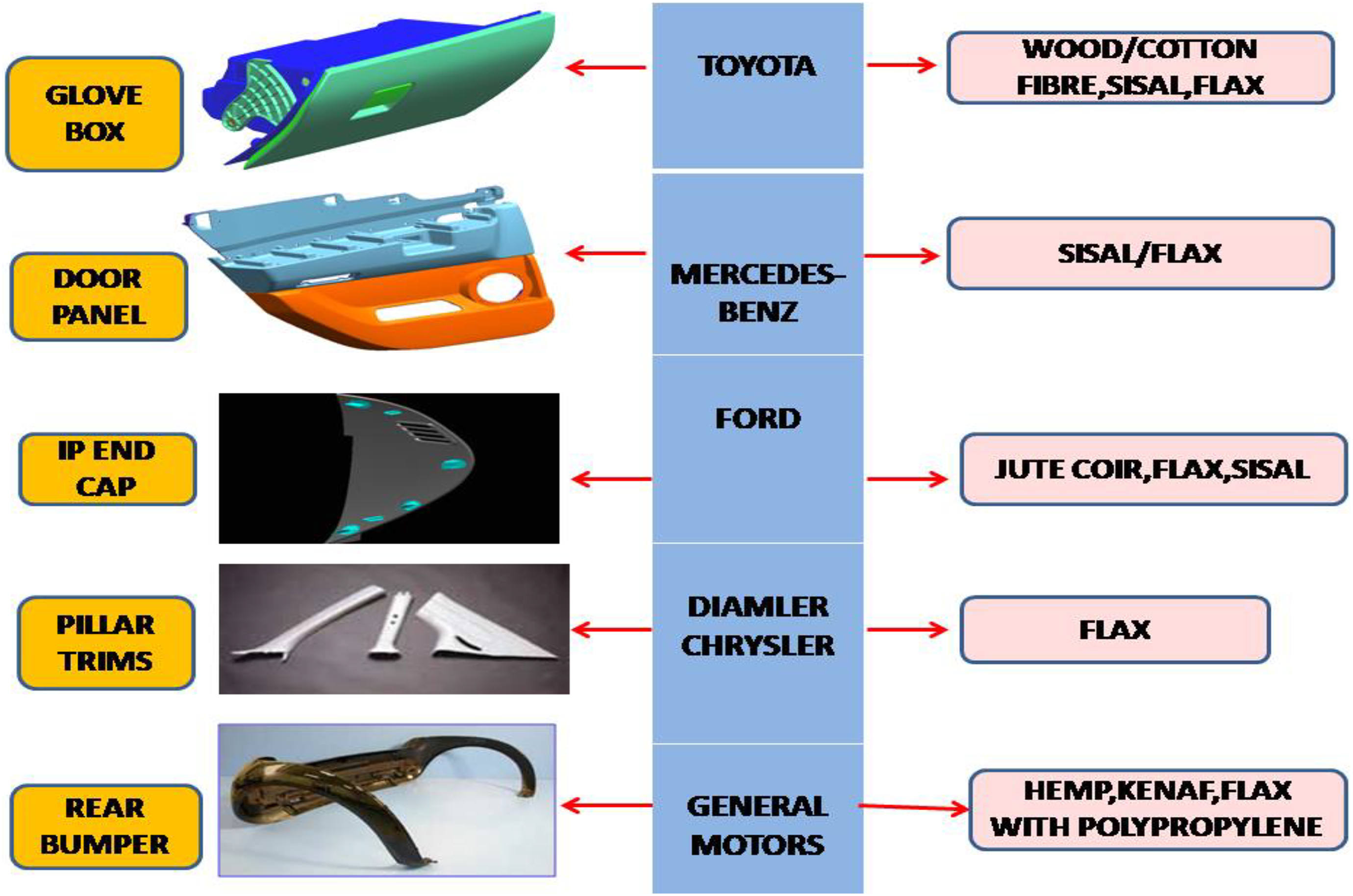
Advancement by different automakers using natural fibers.
The plastics and its substitutes can be used in different automobile parts which can be classified mainly into three classes: external parts, internal parts, and beneath the hood.
External parts
A various exterior component such as bumper, wheels, mirror housing, lenses, body structure as BIW, generally, exterior parts should possess high impact strength, good surface finish, and good dimensional stability so as to increase fuel efficiency, environmental sustainability, and recyclability. 3
Bumpers
Bumpers are mounted on the rear and front end of the car which protects it as a shield to prevent or reduce the injury to the car during a collision. Bumper protects the car parts which are crucial for safety reasons such as headlight and taillights, and some of the expensive parts such as the hood, fender, exhaust, and cooling system. Nowadays various inventions have been made in the automotive sector, traditional plastics have been replaced by natural biocomposites such as sisal, hemp, kenaf, flax with PP, in some of the Original Equipment Manufacturers (OEMs) such as Mercedes-Benzes, Ford, and General Motors. 140
Body-in-white. All together BIW is described as a set of parts that bear static and dynamic loads and also import torsion stiffness to the vehicle. It is comprised of a number of stamped steel parts which are welded together to form BIW. Nowadays steel is replaced by innovative composite material in the formation of BIW, as composite has greater benefits than steel in terms of designing of more complex parts, reduction in overall weight, and manufacturing cost. Ford motors will be working on the invention of BIW using polymer composite in its Composite Intensive Vehicle project, whereas glass fiber-reinforced polymer composite has been used in its original BIW design. 141
Internal parts
Interior components in a vehicle are comprised of the instrumental panel, door panel, center console, and seats, which shares plastics of almost 38% of the whole vehicle. Interior components are liable to comfort, aesthetic odor, durability, and ergonomic layout requirement in the cabin.
Instrumental panel
The instrumental panel plays a vital role in modern automobiles, contributing to the structure of the vehicle providing an appealing look. It consists of various minute parts such as speedometer, infotainment system (provides passage for different switch basel for climate control), odometer, tachometer, and provision for airbag as well.
Faurecia is a global supplier for the design and development of various OEMs such as General Motors, PSA, Volvo, Ford, Renault, and Nissan, which consists of 15–20% of the vehicle weight. In today’s time, biocomposites such as jute coir, flax, and sisal have been taken into consideration unlikely the use of a regular plastics to reduce weight with greater strength and ultimately increase fuel economy. 142
Door panels
It serves as a boundary sandwiched between the interior of the car and inner working of the door. Door panels are mounted with switch basel, speakers, safety airbags, and other mechanisms regarding safety and comfort. In this modern era, Mercedes Benz has innovated composite materials using jute-reinforced plastics for the interior door panels, the door is made with flax/sisal-reinforced epoxy matrix giving them a reduction in weight of 20%. 143
Seats and associated parts
Seats play an important part in automotive cars, which consist of various associated parts such as the headrest, seat back, seat base, seat track. Johnson control interiors which are also associated with automotive seating through research and innovations have applied the use of fibers and polyols in the door panels and seat. Ford motors along with Lear Corporations have been preparing to develop soy-based seat foams and bio-based cushion. 144
Air conditioner
Primarily, polymer and its composites have significant applications in automotive industries due to its lightweight, good mechanical properties, flexibility, high efficiency compressing ability, and excellent heat exchanger capacity. Hence, presently various high-performance polymers such as PP, PC, PE, and Teflon are used for manufacturing polymer compact air conditioning units. PP possesses properties such as nonstaining, nontoxic, and excellent corrosion resistance, thus making it suitable for considerable application in mechanical vapor compression for air conditioning in automobile units. 145 Similarly, the fuel used for operating heating, ventilation, and air conditioning (HVAC) causes emissions of CO2 leading to GHG. According to EU 2006/40/EG legislations, the CO2 emissions average level lies at 137 g/km, acceptable for automotive vehicles while maintaining fuel grade and emission control measures. The minimization of the GHGs can be regulated using low permeation components and joints in the air conditioner lines which consist of several components such as the condenser, compressor, and evaporator. By incorporating polymer air-conditioning conveyance lines, the fuel consumption per annum by the automotive vehicle reduces on an average by 2–3%, thereby ensuring long life, lower permeation, low vulnerability to aging related to environmental impacts, vehicle vibrations, and so on. 146,147
Beneath the hood
This session involves the components which are situated beneath the hood of the vehicle such as the cooling system, engine, and fuel system. Replacement of metals with composite has been greatly preferred as less fuel consumption.
Inlet manifold
Inlet manifolds are the parts that carry air intake in one cylinder for combustion and are connected to the engine block, where mixer of air intake/fuel intake in each cylinder with same time and temperature. The material used for intake manifolds should possess high strength and stiffness and high chemical resistance. Traditionally aluminum, magnesium, and cast iron/steel are used in the production of inlet manifolds, but nowadays composites have been used due to its reduction in weight, low thermal conductivity, higher surface finish, and noise reduction. 10
BMW had already started using plastics’ composite for its six-cylinder engine in 1990s, General Motors has also moved a step ahead using plastics’ composite for the manufacture of the intake manifold. PA6 and PA66 plastics-reinforced fiber with 35% glass fiber are currently used for weight reduction, reduction in CO2, and NO x emission, higher chemical conductivity, and better corrosion resistance. 148
Fuel storage tanks
Fuel storage tanks are the essential part of the vehicle where fuels are stored to run the vehicle, and the average capacity of the fuel tanks is usually around 50 l. The fuel tanks should have a better leak proof and enough ventilation to prevent evaporations of the fuel. To prevent a severe accident due to fuel leakage, Federal Motor Vehicle Safety Standard (FMVSS 301) replaced Sheet steel by polymer composites to enhance properties such as high corrosion resistance, greater design flexibility, better safety, and lower cost. 149
Current scenario for the market and commercial sustainability
Bio-based composites are recyclable, nonabrasive in nature, versatile, easily available in many forms, biodegradable, and compostable. Recently, biofibers have gained a lot of demand due to their economical production by requiring less number of equipment which results in a higher stiffness and specific strength as compared to synthetic fibers. Bio-fibers are cost-effective due to their nonabrasive nature of mixing and molding equipment, which can contribute to significant cost reductions. Various inventions has been done in composites for automobile applications as shown in Figure 15 from 1960s till date based on natural fiber and synthetic fiber-reinforced composites, although a lot of research is going on to reduce the CO2 footprints by considering the comfort and safety factor needed by passenger.
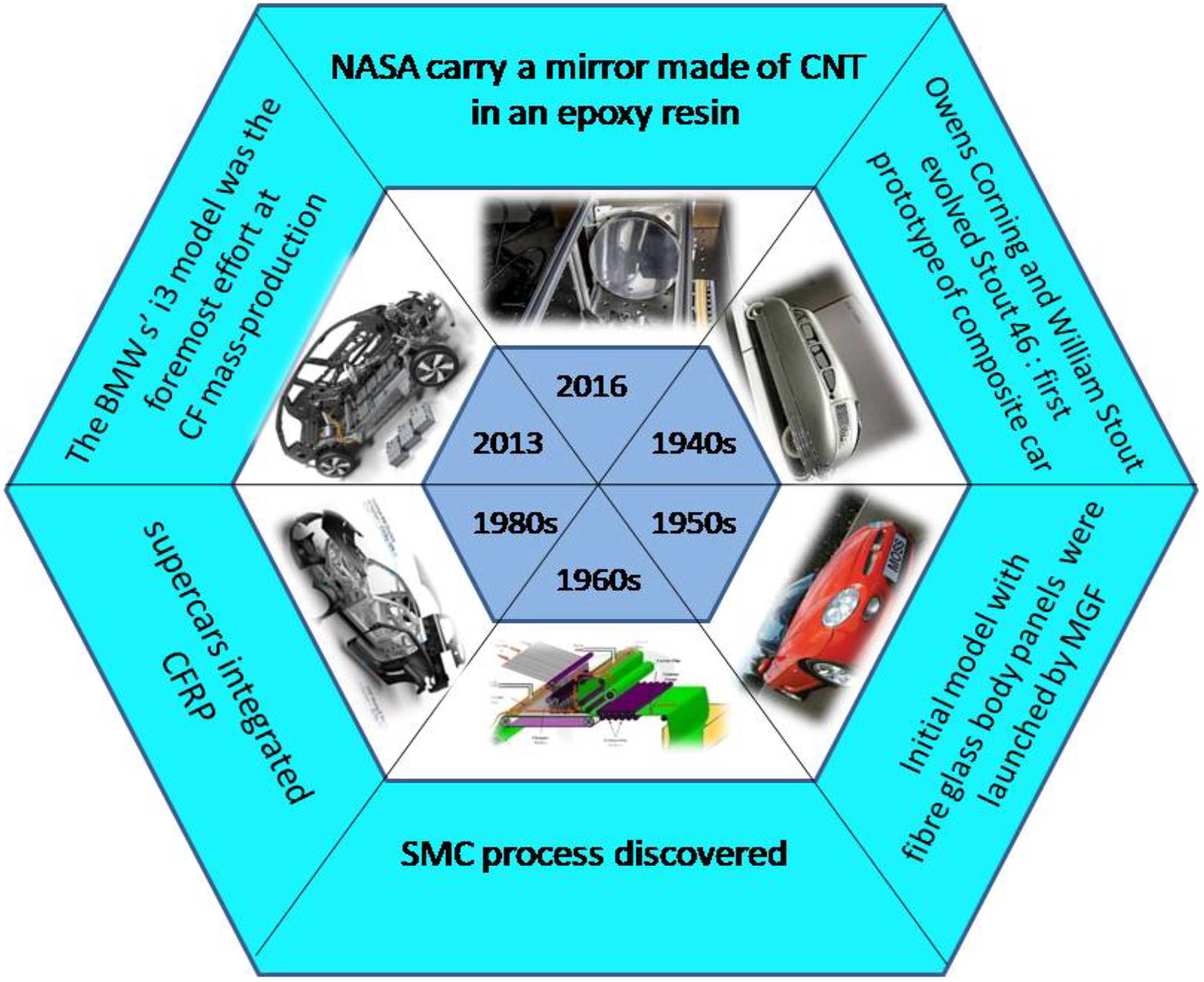
Important innovations in automotive applications.
Based on technology, varied works have been carried out globally, but all these developmental works lack to produce an ultimate commercial output. Various industrial-based research has also been carried out to recognize the consumption of natural fiber-reinforced polymer composites in different automobile applications. Natural fiber-reinforced polymeric composites (NFPCs) currently has prolonged significantly in the shopper merchandise as an emerging industry in automobile sectors throughout the last few years. An approximated trend and forecast evaluations over 5 years (2010–2016) for NFPCs are anticipated to grow at a rate of 10% worldwide as depicted in Figure 16. 151
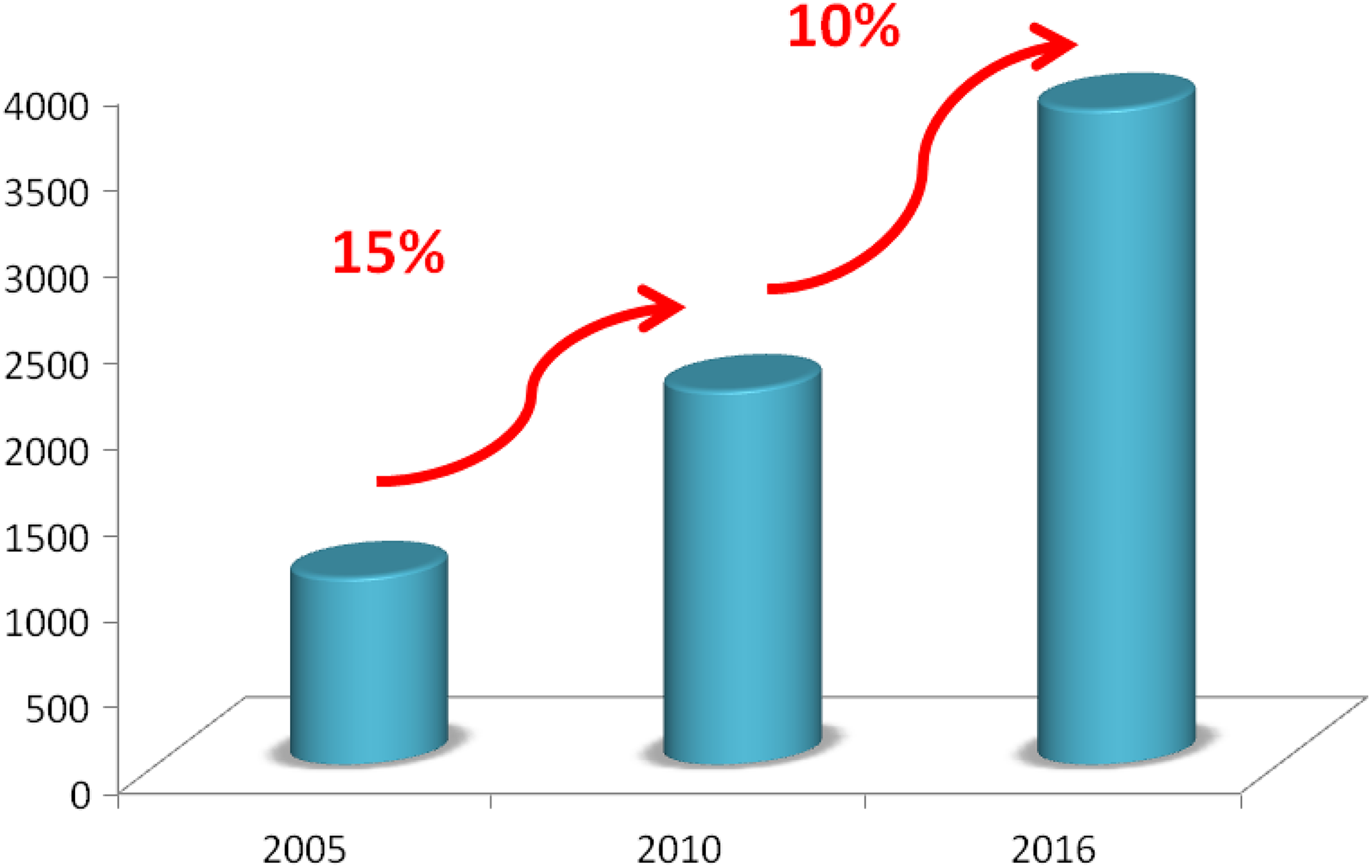
Natural fiber composites trend from 2005–2016 (USD in millilon). 150
NFPCs have experienced a fast growth in the preceding 5 years and are generally divided into two categories: wood fibers and non-wood fibers. Automobile industry accounts mostly for non-wood fibers, whereas the building and construction sector uses wood fibers. Europe is the leading region for automobile applications, while India is still behind due to the deficiency of enhanced processing and manufacturing technology with optimized evaluations for high-end product applications.
Ford motors invented a carbon fiber-reinforced plastic hood composite on the Focus wagon as depicted in Figure 17. Carbon fiber is lightweight in comparison with steel but possesses five times more strength which makes Ford inventors develop a prototype hood which weighs half about steel component hood. The prototype passes each and every safety requirements needed for a vehicle which includes protection during front crashes and dent resistance. In spite of having such advantages, carbon fiber-reinforced composite parts consume more time to be painted and therefore the project is finding a more rapid way to complete the parts without neglecting the quality standards. This gives a gateway for natural fiber-reinforced composite over carbon fiber-reinforced composite in automobile applications whose trend and forecast are been depicted in Figure 18. 152

Innovation by Ford motors using carbon fiber-reinforced composite.
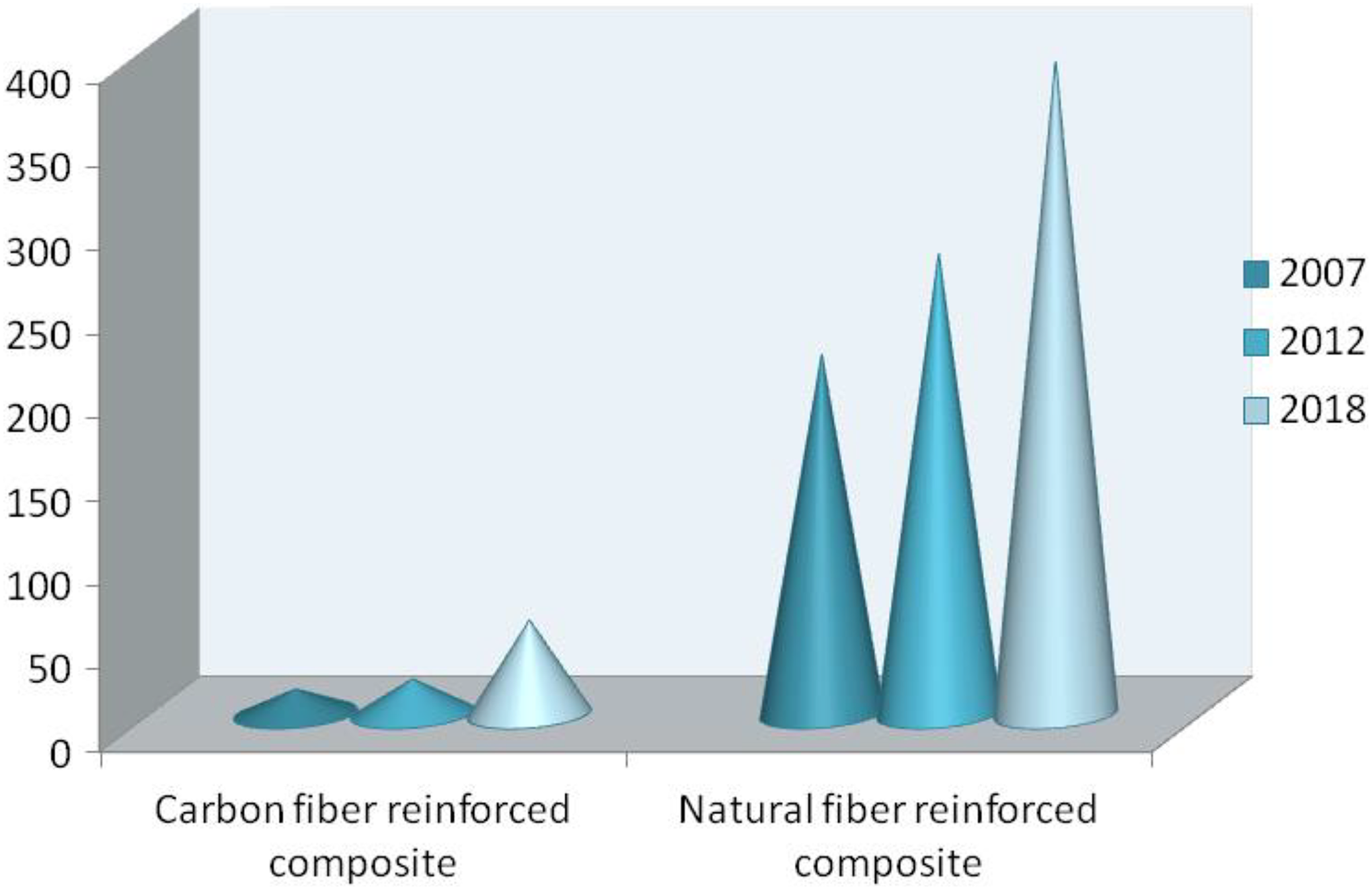
Trend and forecast of natural fiber polymer composite in the automobile industry (Million pounds).
The industry has come across several automobile manufacturers associated with composite suppliers from around 2009. To meet up the demand of elevated volume necessities, presently hindered by higher raw material costs, elongated production cycles, and short of automation, Tier 1 suppliers and OEMs have taken several strategies to permit vertical incorporation of the value chain. This is bought into effectiveness by joint ventures, acquisitions, and partnerships for industrializing production to meet emissions rules and regulations. 153
Several projects in European Research Framework and new Horizon 2020 programs are ongoing which includes major advances in the fields of lightweight automotive vehicles using fiber-reinforced composite materials (ENLIGHT, TECABS) for developing different parts. Methodology for mass production of components (HIVOCOMP), an attempt to lower the cost of carbon fiber and pioneer materials (CARBOPREC, NEWSPEC, FIBRALSPEC) are being fabricated to get advanced technology for automotive applications. However, these initiatives continue autonomous and uncoordinated, decreasing the potential to generate an impact at an EU-wide level. The effective procedures to link all initiatives can provide faster and greater breakthroughs in technological aspects. 154
A lot of work has been done in India on the fiber-reinforced composites which can be implemented in several sectors for cost-effectiveness and weight reduction. The demand of essential need for rising indigenous competence in composite technology, Department of Science & Technology (DST), and Defense Research & Development Organization (DRDO) jointly launched the Advanced Composites Mission in 1993 with an obvious directive of developing innovative composite materials and utilizing it in different applications. The Advanced Composites Mission has undertaken 21 projects which focused on the development of Indian fiber-reinforced Composite industry. This mission carried out various applications in the field of composites such as automobiles, building, and construction. 155 Western Europe, Japan, and the United States exhibit the main share of the composite world’s market. The per capita consumption of fiber-reinforced composites in China and United States stands at 1.5 kg and 5.6 kg, respectively, which is much higher than India’s usage of around 35 g. The lack of mass production and automation techniques in India influences the price of the composite materials which tends to limit its applications. Standard process and quality control, design flexibility, good technical support/backup from the suppliers are the main reasons for limiting the composites acceptance scope in India. Europe laid down End of Life Vehicle Directive which states around 85% of a vehicle has to be recycled at its end life which restricts other countries such as India for the composites’ utilization scope due to the absence of such directives and legislation.
Conclusion
Polymer composites have gained an important attention in the past recent years for the automotive manufacturing. Their several advantages such as weight reduction to cost-effectiveness have led a path for different automakers to undergo numerous research in this field. Natural fiber-reinforced composites are the best alternatives to the synthetic fiber-reinforced composites due to their appealing properties such as low cost and density, weight reduction, design flexibility, and eco-friendly behavior. Although having these appealing properties, they possess less durability, low modulus and are hydrophilic in nature. Therefore, hybridizing it with little amounts of synthetic fibers can bring out the advantage of the latter by providing the properties deficient in the natural counterpart. Finally, this review represented a brief outlook on the trend and forecast of innovative composite materials in the field of automobile applications. The claim for improved end-life disposal and lightweight automobile components provided a gateway for the reduction on the automotive fuel consumption and accordingly minimizing the GHG emissions will prolong to urge an escalating research on the viability of natural fiber-based reinforced composites in automobile applications.
