



Abstract
In this work, a series of the thermoplastic elastomer (TPE) composites filled with micro CaCO3 and hollow glass microspheres (HGM) via alloying process were investigated. The plastic phase of TPE composite referred to polypropylene (PP) and the rubber phase was chosen by styrene butadiene styrene (SBS). SEM observation conformed that the inorganic particles were mainly dispersed in continuous PP phase and SBS phase remained in an isolated structure. The sound insulation property was measured by a four-microphone impedance tube. Compared to pure polymer sample, both CaCO3 and HGM-filled TPE composites exhibited greatly enhanced soundproof efficiency, which increased the sound transmission loss value from original 29 dB to 45 dB. The soundproof mechanism was investigated in detail. The damping of acoustic energy was contributed by the extended difference between the stiffness and acoustic impedance between plastic phase and rubber phase. The dispersion and property of inorganic fillers were considered as key factors to increase the dissipation of sound wave. Meanwhile, the mechanical properties of TPE composites were enhanced due to the addition of inorganic fillers.
Keywords
Introduction
The noise pollution has been one of the most important environment troubles during the development of the modern society. With the increase of civilian automobile quantity, the residents on both sides of the road are troubled by noise pollution. 1,2 On considering the importance of reducing noise pollution practically, researchers and engineers have paid more attention to develop various soundproof and damping materials 3 –5 such as gypsum board on concrete material, 6 metal, 7,8 fibers, 9,10 rubbers, 11,12 and recently developed porous materials 13 –15 and polymer composites. 4,16 Compared to the solid or fiber materials, polymer composites and porous materials have gained more interest because of their characteristics like mass production, lightweight, and easy to design and shape. The basic damping principle is to transform vibration energy into heat, particularly enhancing within the high and low modulus regions of the glass transition range for unconstrained and constrained composites damping, respectively. 17
Recently, numerous studies have been carried out to develop such soundproof composites, namely, wood-waste tired rubber composite, 18 inorganic particles/polymer composites and nanocomposites, including polypropylene (PP)/CaCO3, 19,20 resin/hollow glass bead, 20,21 poly(vinyl chloride)/mica, 22 rubber/carbon nanotube 23 polyvinylpyrrolidone/graphene oxide, 24 poly(vinyl acetate) mesoporous carbon, 25 and so on. The stiffness enhancement was more important to influence the sound insulation property rather than the density change of polymer composites. 26 Generally, a large addition of inorganic fillers to the polymer composites is needed to obtain high soundproof effect; for another, although the concentration of nanofillers in polymer nanocomposites were much less than conventional fillers, 27,28 it is difficult to fabricate polymer nanocomposites with the homogeneous dispersion of nanofillers through melt processing. 29 Instead of the waste and toxic solution-blending method, structure designing is another solution to improve the soundproof property of polymer composites. The bilayer or multilayer plate insulation structure can efficaciously attenuate acoustic energy by employing viscoelastic polymers 30 or polymer foams 31,32 as an interlayer of sandwich structure to increase sound transmission loss (STL) due to their high damping properties. In order to obtain the constrained multilayer structure, multilayer coextrusion technique was developed, and the obtained structure achieved much progress in the sound insulation field. 31 –33 However, the high cost of special die design, complex process, and extra charges for the sandwich structures restricted their wide application in practical. Therefore, it is still necessary to achieve more feasible polymer composites for reducing noise pollution.
Thermoplastic elastomers (TPEs) are widely used as damping materials because the viscoelastic polymer phases isolated from stiff polymer matrix can attenuate energy and dissipate to heat. 34 However, there are few reports on the use of TPEs in acoustic sound insulation applications. 35 Herein, we investigate the sound insulation properties of PP/styrene butadiene styrene (SBS)-TPE filled with micro CaCO3 and hollow glass microspheres (HGM), respectively, forming various hybrid composites for the soundproof applications. The STL of the as-prepared composites was systematically investigated to identify the effects of sound frequency on the soundproof performance of the designed phase-separated structure. Meanwhile, the mechanical properties of each composite system were also discussed.
Experimental
Materials and sample preparation
PP of grade T30s was obtained from Daqing Petrochemical Co., Ltd, Daqing, China. SBS of grade 3501F was purchased from LCY Chemical Co., Ltd. Micro CaCO3 (density 2.70 g cm−3) of grade SP1250 was obtained from Yuantai Chemical Co., Ltd, Shanghai, China. HGM (density 0.42 g cm−3) of grade K20 was obtained from Zhengxu Chemical Co., Ltd.
Prior to the melt extrusion, CaCO3 and HGM particles were pretreated with tetrabutyl titanate in ethanol and dried in vacuum overnight. The TPE samples were prepared in the HAAKE™ Rheomix OS Lab Mixer at 180°C (white oil was used for the lubrication). The detailed specification of all samples is summarized in Table 1.
The detailed specification of TPE-based composites.
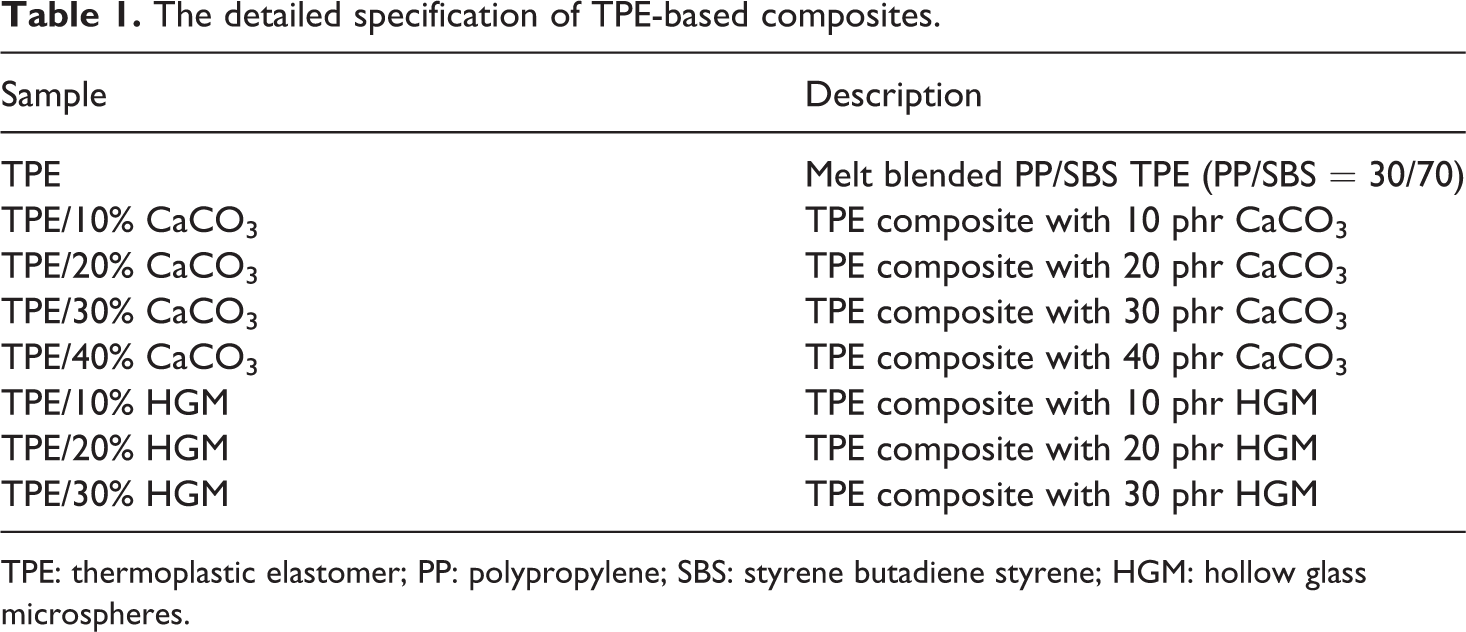
TPE: thermoplastic elastomer; PP: polypropylene; SBS: styrene butadiene styrene; HGM: hollow glass microspheres.
Morphology characterization
The dispersion of inorganic particles in the polymer matrix was characterized using a scanning electron microscopy (SEM type S-4700; JEOL, Japan). The fractured surface of TPE composites was obtained by immersing samples in liquid nitrogen and by spraying gold before SEM examination. In order to verify the exact dispersion of inorganic fillers, the fractured surface of TPE composites was etched by hydrochloric acid (10 wt%) to remove CaCO3 particles or hydrofluoric acid (1 wt%) to remove HGM particles.
Sound insulation property
Sound absorption property is tested using a four-microphone small standing wave tube (Type: 4206-T; Bruel and Kjaer, Nærum, Denmark ) as shown in Figure 1. The effective sound wave was measured in the range from 500 Hz to 6000 Hz at 25°C. The thickness of all samples was 5 mm.
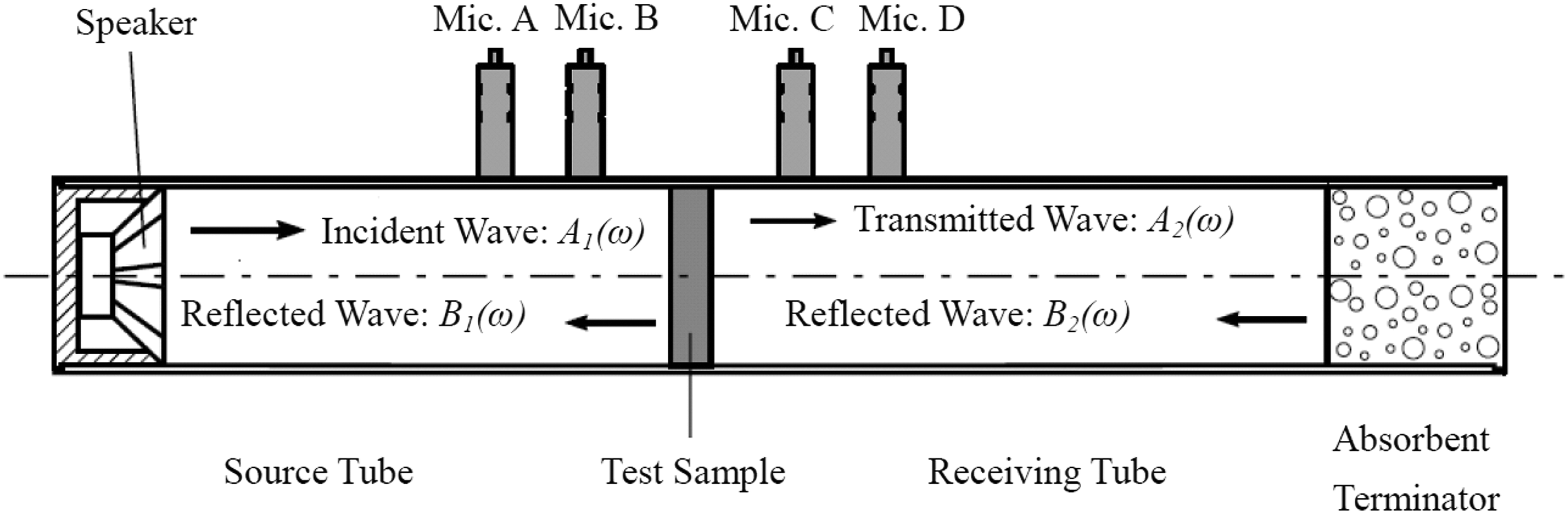
Cutaway diagram of the transmission loss tube.
The STL, representing the soundproof efficiency, is defined as the logarithmic ratio of the incident acoustic power to transmitted acoustic power. Detailed theory is summarized in the Online Supplemental Material. The stiffness (S) and surface density (


where S, E, h, µ, and ρ are stiffness, modulus, thickness, Poisson ratio, surface density, and density of the sample, respectively.
The acoustic impedance (Z) of the material is the product of sound speed (C) and the density (ρ) of the material, while the longitudinal wave speed (C′) in solid can be calculated according to equation (3): 36


where E, µ, and ρ are elastic modulus, Poisson ratio, and density, respectively.
Dynamic and static mechanical properties
Dynamic mechanical properties were analyzed using a dynamic thermal mechanical analyzer (DMA type TA Q-800 TA Instruments, New Castle, Delaware, USA). The sample size is cut to small plate with a scale of 30 × 10 × 2 mm. The mode is single cantilever. The temperature ranges from −100°C to 20°C. The heating rate and frequency are set to 3°C min−1 and 1 Hz, respectively.
Tensile specimens were obtained from hot-press to dumbbell-shaped samples. The tensile testing used an Instron 5996 tension machine (Instron Corporation, Norwood, Massachusetts, USA) at 23°C, according to ASTMD 638, at the displacement rate of 50 mm min−1. At least five specimens for each sample were tested and the average value was calculated. Impact specimens were obtained from hot-press to notched impact samples. The impact testing used a Ceast 9050 impact testing machine (Instron Corporation) at 23°C, according to GB 1843-2008. At least five specimens for each sample were tested and the average value was calculated.
Density test
The weight (m) of samples was measured by the electronic scales (FA1104N, China). The initial water volume (V0) and the volume (V) after the samples needled into the water were measured using the measuring cylinder. The density (ρ) is the ratio of quantity to the volume, which is V − V0. At least five specimens for each sample were tested and the average value was calculated.

Results and discussion
Sound propagation through the interface of different materials can cause phase shift, reflection of the sound wave, and thus reduction of the transmitted sound wave intensity. 37 The higher the difference in impedance of the adjacent component toward sound propagation, the stronger the reflection and absorption at the interface and viscoelastic phase. Therefore, a multi-phase composite with large differences in density or modulus between the adjacent components is critical to enhance soundproof efficiency. Incorporating highly filled composites can be greatly effective to achieve high sound insulation property. 20,38 To date, the sound wave speeds propagated in PP and SBS are 1144 m s−1 and 298 m s−1 (Table 2), respectively, indicating a great energy dissipation caused by the sound wave transmission through the interface of different materials.
Mechanical and acoustic parameters of PP, SBS, and different TPE composites.
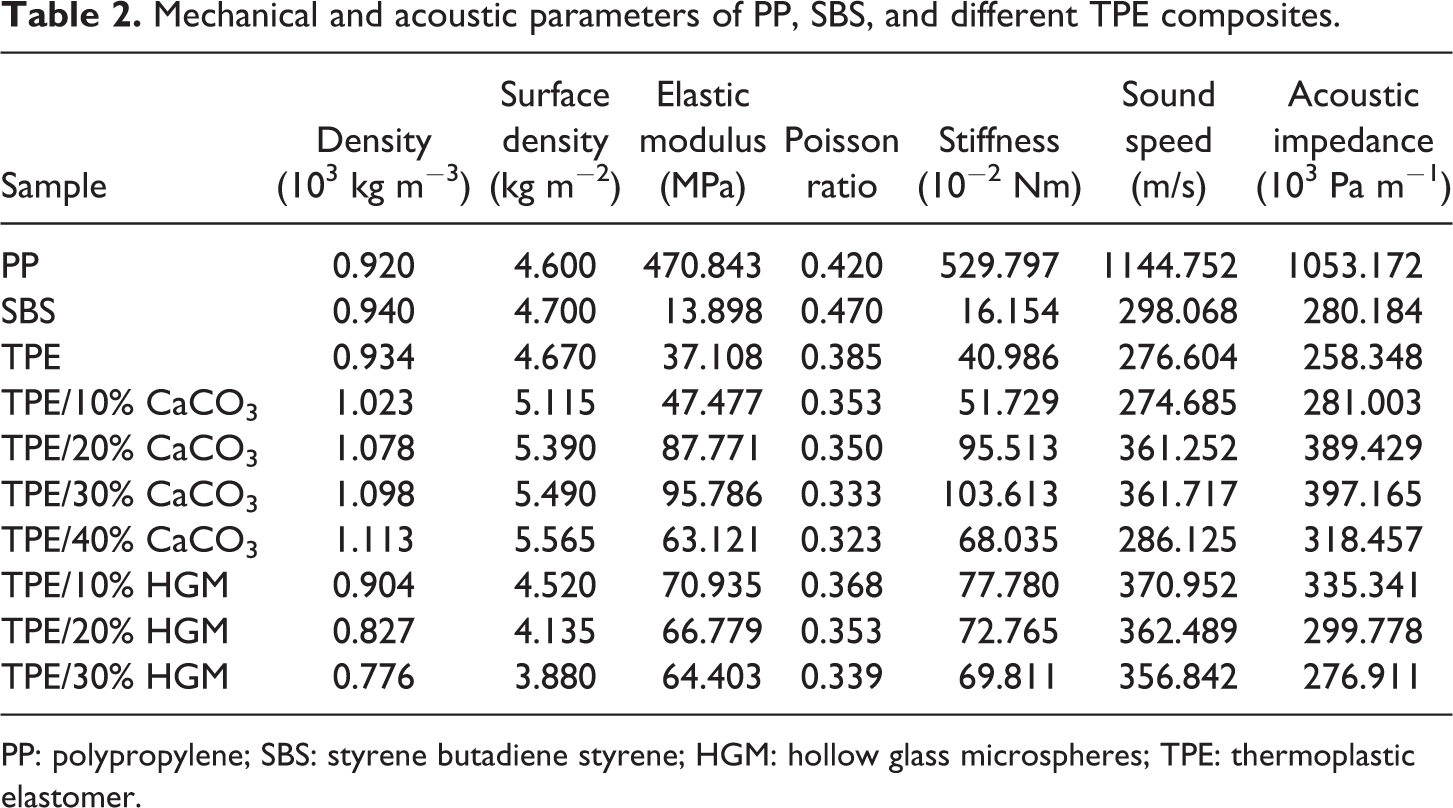
PP: polypropylene; SBS: styrene butadiene styrene; HGM: hollow glass microspheres; TPE: thermoplastic elastomer.
In order to investigate the distribution of inorganic fillers in TPE composites, SEM was used to observe the morphology of various composites. Figure 2 shows typical morphology of CaCO3, HGM particles, and fractured surface of TPE matrix, respectively. The CaCO3 and HGM particles exhibited good distributions at an average of 5 and 26 μm (Figure 2(a) and (b)), respectively. As shown in Figure 2(c), the insular phases of large SBS aggregates (approximately 50 μm) were separated in continuous PP phase. It was observed that the dispersions of modified CaCO3 and HGM particles were slightly different in composites. After the acid etching of the fractured surfaces of various composites, it was clear that CaCO3 particles were mainly dispersed in PP phase using the extrusion method (Figure 2(d) to (g)). It was observed that the aggregates of fillers were slightly increased (from 5 μm to 10 μm) at higher CaCO3 concentration, proving good compatibility between fillers and polymers. In a comparison, HGM particles showed high concentration at the interface of PP and SBS phases (Figure 2(h) to (j)). It was noted that SBS phase size of TPE/HGM composites was smaller than that of TPE/CaCO3 composites.
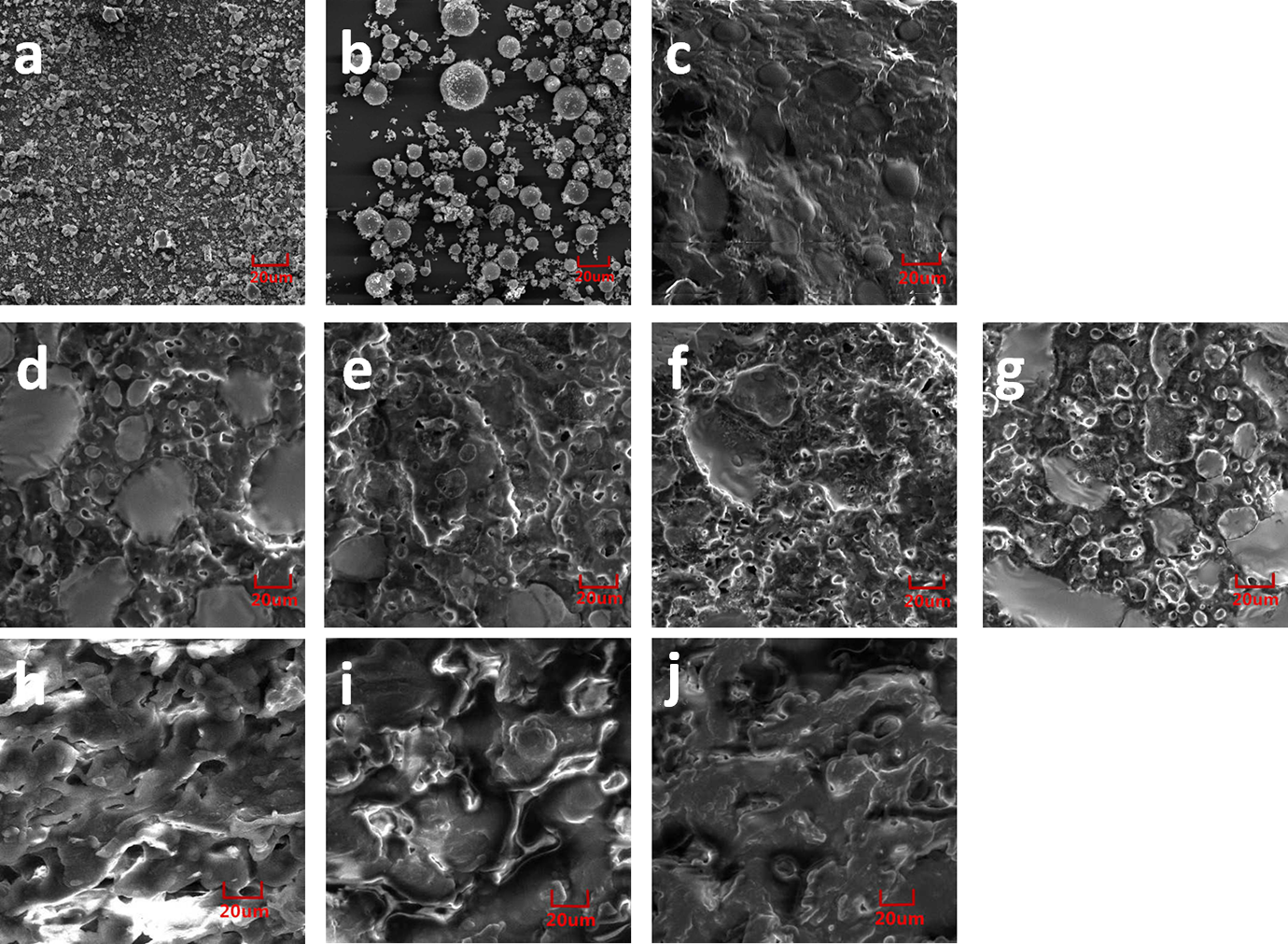
The morphology of inorganic particles and various TPE composites observed by SEM (the magnification ratio was 1000 times). (a) micro CaCO3, (b) HGM, (c) pure TPE, (d) TPE/10% CaCO3, (e) TPE/20% CaCO3, (f) TPE/30%CaCO3, (g) TPE/40%CaCO3, (h) TPE/10%HGM, (i) TPE/20% HGM, (j) TPE/30% HGM. TPE: thermoplastic elastomer; SEM: scanning electron microscopy; HGM: hollow glass microspheres.
Generally, the sound wave was reflected by the interface and absorbed by the rubber materials. The soundproof efficiency of multiphase materials can also be influenced by constituent properties and acoustic parameters, 31,32 corresponding to the frequency of sound wave. In this study, the sound wave frequency was selected in the range from 500 Hz to 6000 Hz to investigate the STL properties of samples. With the addition of micro CaCO3 and HGM fillers, TPE composites showed greatly enhanced STL values (Figure 3). For TPE/CaCO3 composite samples, the STL value decreased by increasing the frequency to the resonance frequency and obtained a minimum value; then it increased steadily at the higher frequency region. The curve of STL versus frequency moved to high frequency direction due to the addition of micro CaCO3. Figure 3(b) compares the dependence of STL value of TPE/HGM composite and showed similar soundproof efficiency by increasing the frequency while the resonance frequency of the high filler content samples shifted to the high frequency.
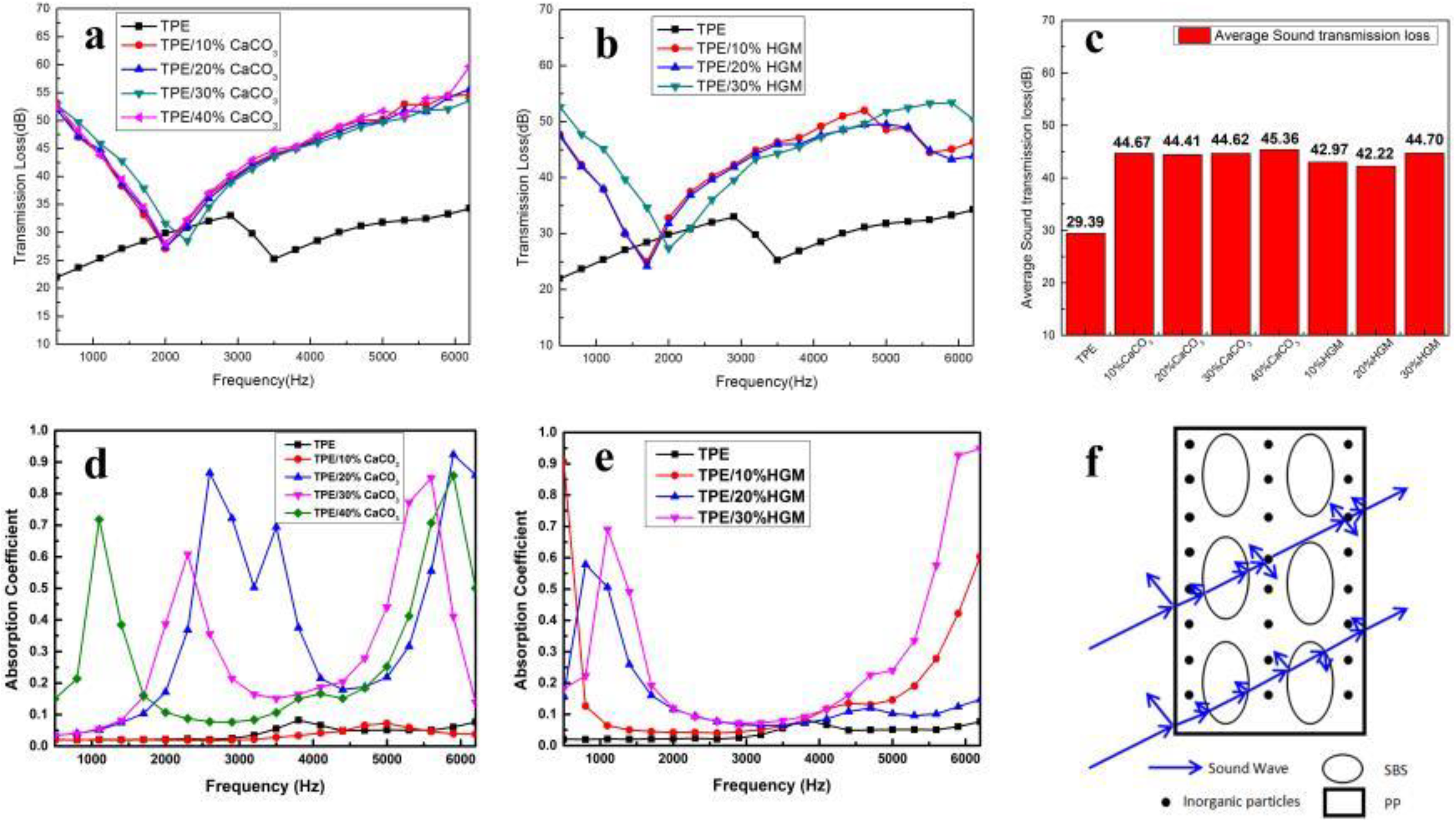
Sound insulation properties of TPE composites with various inorganic fillers. (a) TPE/CaCO3 composites, (b) TPE/HGM composites, (c) the average STL value of different TPE composites, (d) the possible mechanism of the dissipation and damping of sound wave propagating in TPE composites. TPE: thermoplastic elastomer; HGM: hollow glass microspheres; STL: sound transmission loss.
In comparison, the controlled samples (PP, SBS, and pure TPE) showed approach trend of the STL values corresponding to the increment of the frequency. The STL value of controlled sample was much lower than that of the composite and increased slowly to the resonance frequency (Online Supplemental Figure S1). A different STL at high frequency region was that SBS sample showed higher STL value than PP and pure TPE. The sound insulation property complies the law of mass for a single-phase homogenous material. For a multiphase material, the sound insulation property will depend on the property of each component, as well as the density and the proportion. It is suggested that the sound wave can easily transmit through the continuous PP phase and insulated SBS phase instead of the dissipation due to their very close densities. As shown in Figure 3(c), both CaCO3-filled and HGM-filled TPE composites exhibited distinctive advance of the soundproof efficiency in both magnitude and frequency, especially at the low frequency region.
Furthermore, the acoustic absorption coefficients of various composites are measured and depicted in Figure 3(e) and (f). Theoretically, the excellent absorption coefficient of given sound frequency is determined by the dissipative energy of the incident sound wave and the reflection in the material. It is interesting that CaCO3-filled TPE composites exhibited excellent absorption coefficient (>0.9) in range of tested sound frequency (500–6000 Hz). The good dispersion of CaCO3 microscale particles created numerous reflections on the sound propagation routine and enhanced the stiffness of the composites. On the other hand, HGM-filled TPE composites showed better absorption coefficient in the range of lower (<2000 Hz) and higher frequency (>5000 Hz) rather than medium frequency (2000–5000 Hz). This result is partially caused by the larger size and uneven dispersion of HGM particles in TPE matrix.
In order to investigate the factors that influenced the sound insulation property of TPE-based composites, the potential parameters are calculated and listed in Table 2. According to single plates model, the stiffness (S) and surface density (
In general, the sound wave propagated through a multiphase material will cause dissipation effects, including, reflecting, scattering, refracting, diffracting, and damping. 42 For a solid polymer/inorganic particle composite, longer dissipation times of the sound wave will take place on the propagation route due to the disparity of the polymer and filler density, resulting in the longer propagation route and energy consumption of the sound wave. 43 At the high frequency region, the STL value of TPE-based composites was much larger than that of the pure TPE sample. The acoustic impedance (Z) of a material, which has positive correlation with its longitudinal wave speed and density, can be adjusted by adding fillers. 33 As the inclusion of inorganic fillers with in PP phase, the mismatch of acoustic impedances between PP phase and SBS phase led to more dissipation of sound energy at the interface and enhanced the sound insulation property as a whole. With increasing the filler content, more interfaces and larger elastic moduli were generated to efficaciously dissipate the sound energy (Figure 3(d)). For TPE/HGM composites, the gas embodied in the HGM granules will enhance the elastic modulus and stiffness, while the air cavity can avail damping the sound wave and reducing the vibration, 20,44 making a significant sound absorption effect at the low frequency (Figure 3(b)). This is the reason why the STL value of the TPE/HGM composite is close to that of the TPE/CaCO3 composite at the same frequency region, even though the acoustic impedance of the TPE/HGM composite is lower than that of the TPE/CaCO3 composite.
Compared to metals and inorganic materials, polymer composites generally show a higher damping capacity owing to the viscoelasticity of the polymeric matrix. As for stiffness and strength, in acoustics and structural dynamics, also damping are usually characterized through the complex modulus. 17 The material stiffness is given by a complex number, with the real part (storage modulus) referring to the elastic behavior and the imaginary part (loss modulus) referring to the dissipative behavior. Therefore, DMA test was employed to distinguish the difference in the sound dissipation effect of the TPE-based composites. Figure 4 shows the storage modulus and loss modulus as a function of the temperature. The storage modulus of TPE-based composites is higher than that of TPE sample in the whole range of the testing temperature (Figure 4(a) and (d)), implying that the stiffness is enhanced by the addition of inorganic fillers. Respecting to the loss modulus (Figure 4(b) and (e)), both CaCO3 and HGM fillers showed great improvement on that of the polymer matrix. As the loss modulus can contribute to the energy dissipation, the higher loss modulus of the TPE-based composites is more feasible to dissipate the acoustic energy during the sound propagation in the composites. 33,45 –47 The loss factor of TPE-based composites can be divided into two parts (Figure 4(c) and (f)): the notable peak at −78°C responding to SBS phase and a broad peak around −20°C denoting the PP phase (Online Supplemental Figure S2). It is noted that the signal peak of PP phase was obviously shifted to a higher temperature direction with the increasing inorganic filler content, while the signal peak of SBS phase remained at the same temperature. That is consistent that the inorganic fillers mainly dispersed in PP phase. The motion of the PP macromolecular chain was restrained by inorganic particles, increasing the modulus and viscoelasticity obviously.
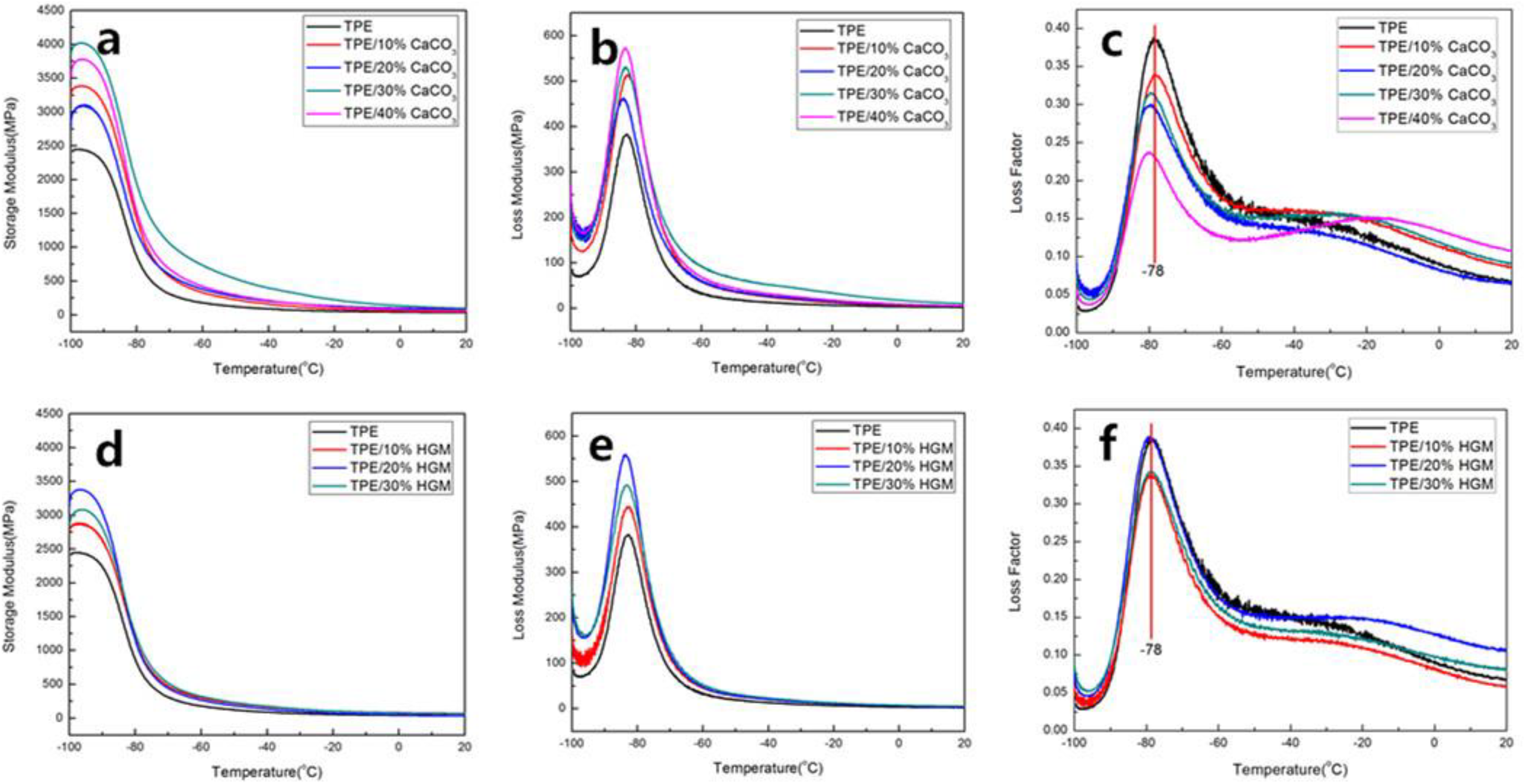
(a) Storage modulus (E′) of TPE/CaCO3 composites, (b) loss modulus (E″) of TPE/CaCO3 composites, (c) loss factor (δ) of TPE/CaCO3 composites, (d) storage modulus (E′) of TPE/HGM composites, (e) loss modulus (E″) of TPE/HGM composites, (f) loss factor (δ) of TPE/HGM composites. TPE: thermoplastic elastomer; HGM: hollow glass microspheres.
Figure 5 displays the mechanical property of TPE composites. As shown in Figure 5(a), the pure TPE showed the lowest tensile strength and elongation at break. TPE/CaCO3 composite approached a 123% improvement of the tensile strength and a 215% improvement of the elongation at break with a 20 wt% filler content. It is suggested that filled micro CaCO3 in PP phase can improve the mechanical property of the TPE material. As the CaCO3 content was larger than 20 wt%, the filler particles were apt to aggregate. Then the tensile strength and elongation at break were slightly decreased. The impact strength of TPE/CaCO3 composites is depicted in Figure 5(b) and approached a 129% improvement with a 30 wt% filler content when compared with that of pure TPE. In case of TPE/HGM composites, as shown in Figure 5(c) and (d), the samples filled with 30 wt% HGM particles caused a 29% reduction of the tensile strength and a 191% improvement of the elongation at break with filler content. It is due to that the HMG particles preferred to aggregate at the interface of PP and SBS (shown in Figure 2(h) to (j)) inducing excess defects. Besides, the impact strength of TPE/HGM composites was lower than that of pure TPE samples. These results reveal that TPE composites can achieve excellent sound insulation property and certain mechanical properties. Considering the low cost and feasibility of the manufacturing process, TPE-based composites are prominent for certain soundproof designs and applications.
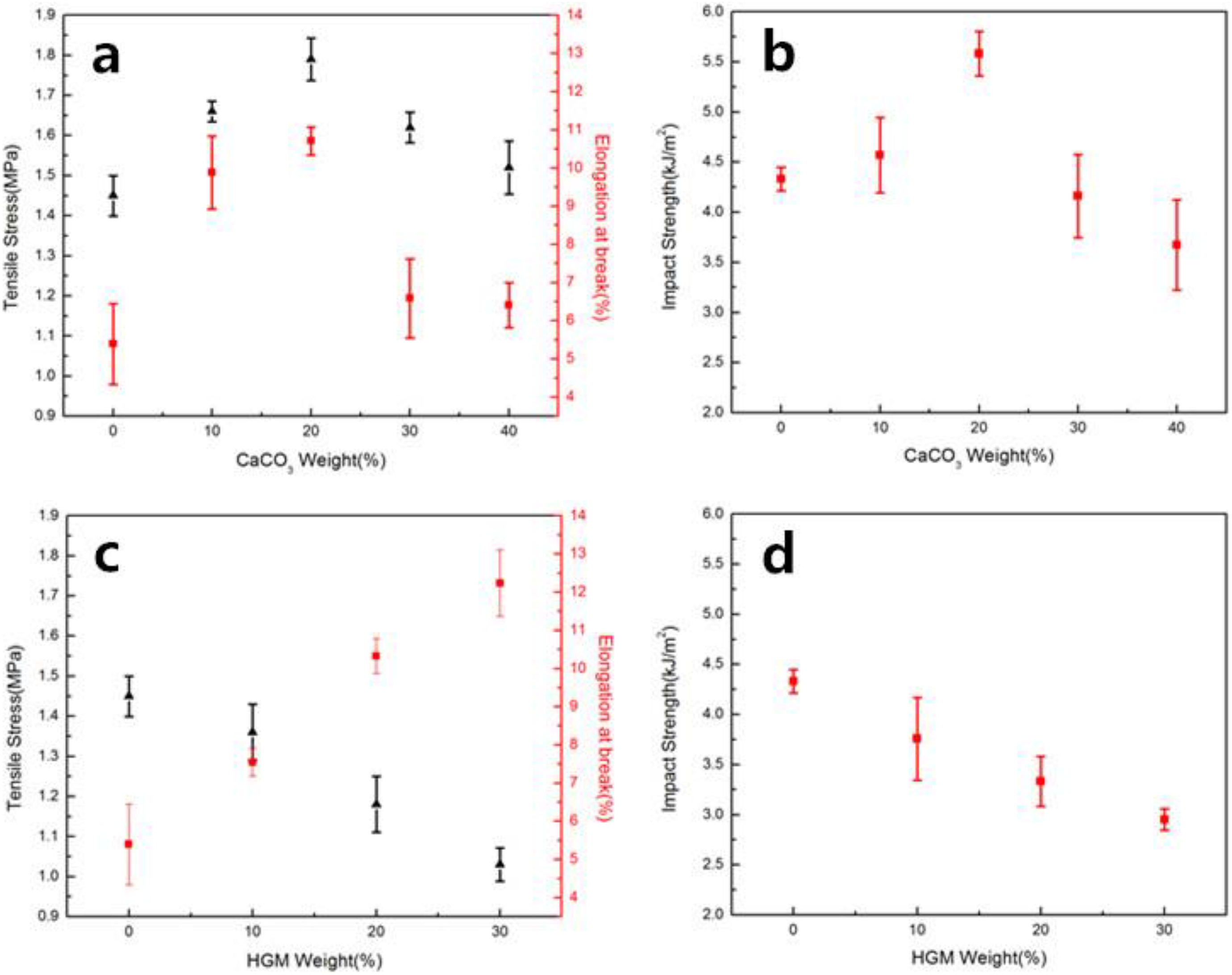
(a) Tensile strength and elongation at break of TPE/CaCO3 composites, (b) impact strength of TPE/CaCO3 composites, (c) tensile strength and elongation at break of TPE/HGM composites, (d) impact strength of TPE/HGM composites. TPE: thermoplastic elastomer; HGM: hollow glass microspheres.
Conclusions
The sound insulation property of TPE material, especially at the low frequency range, was significantly improved by compounding either micro CaCO3 or HGM particles. It was found that the inorganic fillers were mainly dispersed in continuous PP phase instead of isolated SBS phase and that morphology and loss factor of as-prepared TPE composites confirmed the heterogeneous distribution of inorganic fillers. As a result, the stiffness and acoustic impedance mismatch between PP phase and SBS phase were greatly increased. Thus the sound wave propagated a much longer path and dissipated more energy in the TPE composites. Furthermore, the mechanical properties of TPE composites can be improved by the addition of micro CaCO3 filler. Compared to the pure TPE material, although the strength of TPE/HGM composites was slightly decreased, the density was much lower, returning higher soundproof efficiency at the same frequency. This work presented an alternative route to produce soundproof materials using convenient and low-cost raw materials and processes.
Supplemental material
Supplemental Material, Revised_Supplementary_Information_20180210 - Enhanced sound insulation and mechanical properties based on inorganic fillers/thermoplastic elastomer composites
Supplemental Material, Revised_Supplementary_Information_20180210 for Enhanced sound insulation and mechanical properties based on inorganic fillers/thermoplastic elastomer composites by Wei Fang, Yanpei Fei, Huanqin Lu, Jiangming Jin, Mingqiang Zhong, Ping Fan, Jintao Yang, Zhengdong Fei, Feng Chen and Tairong Kuang in Journal of Thermoplastic Composite Materials
Footnotes
Funding
The author(s) disclosed receipt of the following financial support for the research, authorship, and/ or publication of this article: This material is based upon work funded by Natural Science Foundation of Zhejiang Province (No. LY17E030006 and No. LYLY18E030009). T. Kuang would like to acknowledge the support of National Postdoctoral Program for Innovation Talents (No. BX201700079), and China Postdoctoral Science Foundation Funded Project (NO.2017M620371).

Supplemental material
Supplementary material for this article is available online.
References
Supplementary Material
Please find the following supplemental material available below.
For Open Access articles published under a Creative Commons License, all supplemental material carries the same license as the article it is associated with.
For non-Open Access articles published, all supplemental material carries a non-exclusive license, and permission requests for re-use of supplemental material or any part of supplemental material shall be sent directly to the copyright owner as specified in the copyright notice associated with the article.
