




Abstract
Carbon nanotubes (CNTs) were introduced into carbon fiber (CF) by chemical vapor deposition and then were incorporated in the polyimide (PI) composites. The effects of CNTs on mechanical properties of CF/PI composites were investigated. Results showed that the mechanical properties of the composites prepared from CNT filled one are found to be much better compared to those of untreated ones. Tensile strengths of the composites of both raw and treated CF/PI composites showed a decreasing trend with increasing filler content. However, the values for the treated CF/PI composites at all mixing ratios are found to be higher than that of neat PI. The surface morphologies of the fractured surfaces of the composites were recorded using scanning electron microscopy to gain information about the fiber–matrix interfacial adhesion in the composites.
Introduction
Polymer matrix composite (PMC) materials have been employed in recent years for primary load-bearing aerospace applications. Carbon fiber (CF)-reinforced PMCs have become indispensible for manufacturing commuter aircraft structural components. This has subsequently prompted the development of two-dimensional and three-dimensional braided fabric reinforced PMC materials. 1,2 Some of the performance advantages identified with braided fabric reinforced composites include better overall through-the-thickness strength properties such as superior impact damage resistance and delamination resistance, balanced in-plane performance, improved fatigue performance, and lower notch sensitivity. In addition, producing complex-shaped parts can be easier to manufacture and generally have a significantly lower manufacturing cost due to the conformability of braided fabrics coupled with the use of an out-of-autoclave manufacturing technique such as resin transfer molding (RTM), 3 polyimide (PI) exhibits poor interfacial adhesion with CFs because of low surface energy and a chemically inert surface. In addition, in its melted phase, PI is very viscous and has difficulty in impregnating dry fiber structures, such as fabrics. Interfacial debonding occurs at places where the interfacial bonding strength between the CF and PI matrix is the weakest. Therefore, various approaches have been investigated to increase the interfacial adhesion between the CFs and PI. 4,5
Carbon nanotubes (CNTs), with unique rolled graphitic layers and fascinating mechanical properties, can be used as secondary reinforcement of fiber/matrix composites to obtain better properties. In the last decades, the use of CNTs as nanofiller in polymer composites has been examined for many applications. CNTs with exceptional mechanical properties as well as high ratio of surface to volume have shown remarkable reinforcement effects in composites. 6 Very low portion of CNT in these nanocomposites has often caused a significant improvement in mechanical properties, while the polymer attributes of low density and simplicity in processing were maintained. However, full exploitation of CNT reinforcement has not been entirely successful in nanocomposites because of the restrictions related to the homogeneous dispersion of aggregated nanotubes. The reinforcement efficiency of CNT in a matrix depends on content fraction of fillers, dispersion morphology, types of bonding with the surrounding polymer, aspect ratio as well as waviness of nanotubes. 7,8 An appropriate level of CNT dispersion is often achieved through severe ultrasonication or shear mixing in three rolls process. Otherwise aggregation of CNT creates defect sites, which decline the mechanical properties of nanocomposite.
The area of hybrid fiber reinforced polymeric composites has received considerable interest by the engineering community because of its unique structure and mechanical properties. CF as high strength reinforcement has been incorporated widely in advanced composite. However, inert surface of CFs has led to weak adhesion of fiber/matrix. Therefore, various types of surface treatment were suggested to improve its adhesion. Growing CNT on CF has demonstrated high potential to produce a modified fiber/matrix interphase. Mechanical anchoring of CNT forest grown on CF to the matrix and their molecular interaction are the factors that improve the adhesion of fiber and polymer. 9 –11
CF-reinforced polymeric composites have a wide range of unexplored potential applications in various technological areas such as aerospace, automobile, electronic, and process industries due to their outstanding properties, such as high specific strength and stiffness, lower weight, and flexible tailoring. 12 Recently, CF-reinforced polymer composites incorporating CNTs have attracted significant interest due to their extensive applications that conventional CF-reinforced composites cannot offer.
In addition, few of these studies attempt to characterize the development of microscopic damage caused by fatigue loading. It is consequently imperative to gain a better understanding of the mechanical behavior and microscopic damage development of braided composite materials before suitable prediction tools can be developed and ultimately used by designers.
Experimental
Materials and specimens
Commercially available polyacrylonitrile-based CFs T300 manufactured by Nanyi (China) were used in this study. The average diameter of these CFs was approximately 6 μm, with aspect ratio 12, and typical tensile modulus and strength were about 250 GPa and 3.9 GPa, respectively. Prior to use, the CFs were cleaned in a Soxhlet extractor with acetone for 24 h to remove the size on the fiber surface. CF was purchased from the Great Lakes Company (Kalamazoo, MI). All chemicals were used without any purification.
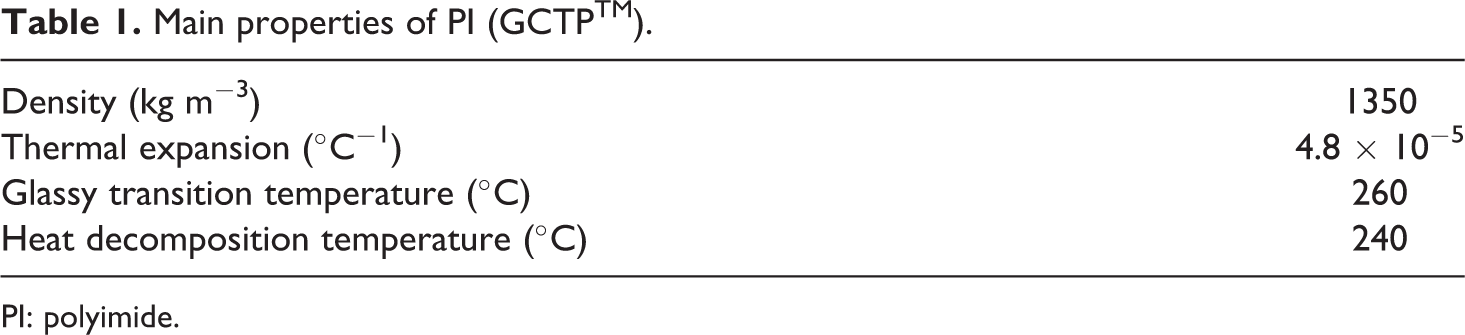
GCTPTM thermoplastic PI powder with specified properties given in Table 1 provided by Nanjing University of Technologywas used as the matrix.
Main properties of PI (GCTPTM).
PI: polyimide.
Growth of CNT on CF was performed according to the method described subsequently. Briefly, the process included acid treatment of CF in nitric acid to create functional groups on the fiber surface. After washing, the fibers were immersed in iron nitrate–ethanol solution, followed by ultrasonication for 1 h. The obtained CF was calcinated to remove nitrate components and make the desired catalyst coating on the surface of CF. CNT growing was performed through the chemical vapor deposition (CVD) process at 700 °C during 45 min, while benzene was served as hydrocarbon source.
The fibers are discontinuous and distributed at random. The composite laminates were cured in an autoclave at 370 °C for 1 h. The pressure was applied above 200 °C at 2.0 MPa. The fraction of CNT in each composite studied in this article is 2–5 wt%. At last, the sintered blocks were cut into the shape that fits for the mechanical tests.
Mechanical test
The CNT/PI composite plates were cut into narrow-waisted dumbbell-shaped specimens in accordance with the Chinese standard GB/T9341–2000. The tensile test was carried out on a universal testing machine (CMT5254 Shenzhensans Testing Machine Co, Ltd, China) at a constant temperature (20°C) and the extension rate was set as 5 mm/min. For each sample, several dumbbell-shaped specimens were taken and averaged to determine the mechanical properties of the blends.
Specimens of size measuring up the GB/T16420–1996 standard were prepared from the molded board for impact tests. Impact tests were conducted in an impact machine (type ZBC–4B, Shenzhen Sans company, China) at room temperature. The bottom surface of impacted specimens was ground and polished. The fracture was in a brittle mode at the midpoint of the specimen. The maximum in the test was used to calculate the impact strength.
Results and discussion
Tensile properties
The breaking strength and the elongation rate versus CF fraction are plotted in Figure 1. It is observed that the breaking strength of the composite paper increases with the addition of CFs, reaching the maximum of 75 MPa at 20 wt%. With further increase of CF fraction, the breaking strength declines. In the CF/PI composite system, the PI-PI, PI-CF, and CF-CF interfiber forces are the three mainly influencing factors deciding the breaking strength of the composite. The PI-PI interfiber force includes hydrogen bonds on the CF surface, frictional force, and entanglement between CFs. The increase of CF fraction decreases the chance of PI-PI interaction because of the decrease of PI content. PI-CF interfiber force is mainly contributed by the entanglement between cellulose and CFs, known as the “anchor effect.” With the addition of CFs, the PI-CF anchor effect first increases with the increase of CF fraction and then declines with the constant decline of PI content. The CF-CF interaction is much weaker compared to PI-PI and PI-CF forces due to the rigidity and surface inertness of CF nature. As the CF fraction increases, the chance of CF-CF interaction also increases, reducing the breaking strength of the composite papers. The mechanical performance is a complex integration of the three types of interfiber interactions discussed above. As a result, the experimental result reveals a nonlinear relationship between breaking strength and CF fraction. The cellulose fiber fraction decrease also leads to the decline of fiber network flexibility. As expected, the breaking elongation declines with the addition of CFs.
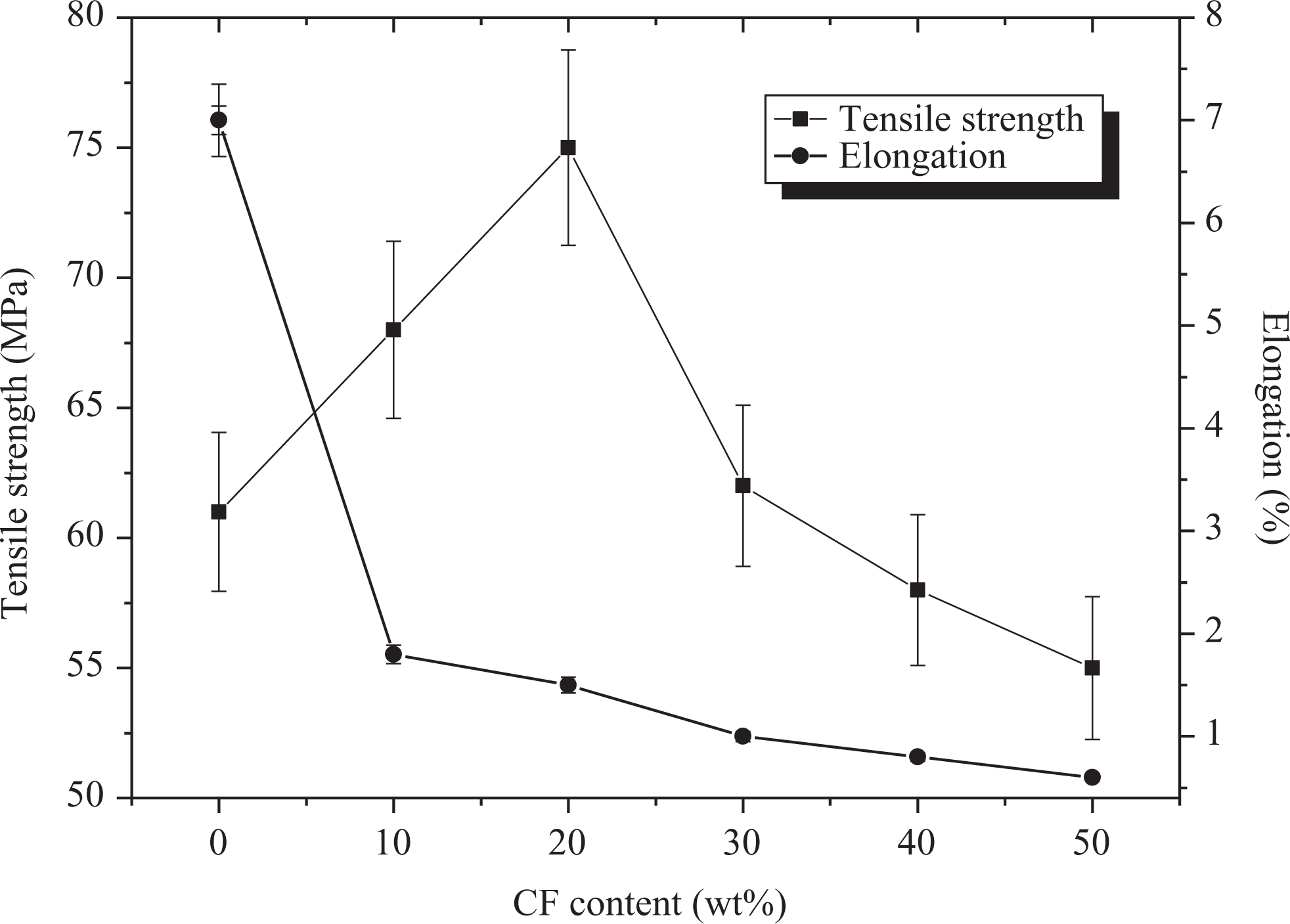
The breaking strength and the elongation rate versus carbon fiber fraction.
The incorporation of 2 wt% CNT to the PI matrix did not show notable enhancement of improving the tensile strength. In contrast, incorporation of 20 wt% CF increased ultimate tensile strength moderately with improvements higher than CNT-PI. However, the fracture strain declined significantly in the case of CF-PI, while CNT reinforcement did not change it noticeably. Incorporation of 20 wt% CF with CNT-PI led to the fabrication of multiscale composites, which show a remarkable increase of strength compared to the baseline PI. The maximum improvements of tensile strength result were achieved for 3%CNT–20%CF composite with enhancement of 38.8% in strength. Additional portions of CNT to 4 and 5 wt% lowered tensile properties gradually, which can be related to the dispersion morphology of CNT in the PI matrix. By increasing the CNT content, the probability of creating CNT aggregation is intensified, which results in strength deterioration (Figure 2).
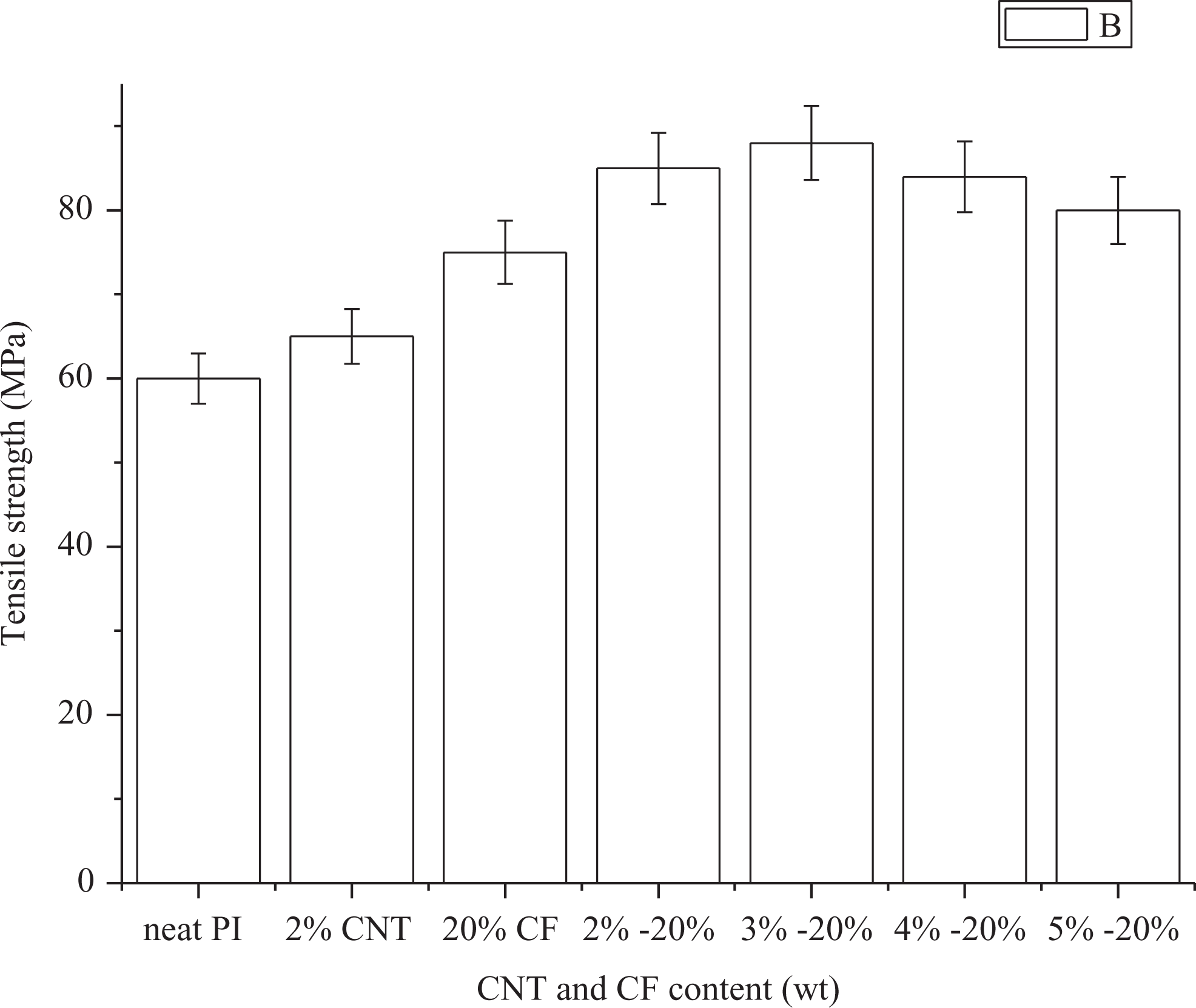
The effect of carbon nanotube and carbon fiber content on the tensile properties of the polyimide composite.
The acquired results from tensile tests demonstrate synergic effects of CNT and CF on the tensile properties of PI. Low content of CNT fillers does not influence the composite stiffness marginally. However, its combination with CF in this research provided a raise in stiffness, which can be interpreted by high stiffness of microfillers. Mixing the CNT into the PI matrix can improve the stress transfer to the CFs and consequently promote the reinforcement efficiency of fibers.
On the other hand, the tips of CF appear as stress concentration points and act as failure initiation regions, which consequently decrease the ductility of PI. The combination of the CNT and CF led to improvement in ductility since CNT fillers possess the capability to hinder crack initiation and propagation. While nanofillers are dispersed in the matrix, progress of cracks involves breaking/pulling out of CNT fillers or deflection in the crack path, which leads to higher fracture energy and fracture strain.
Impact properties
The role of CF and CNT contents on impact behavior of PI composites is displayed in Figure 3. The impact strength of 2%CNT-PI reached 31.67 kJ m−2, whereas the PI filled by 20%CF was strengthened in impact resistance up to 35 kJ m−2 equivalent to 38% improvement. The composite with multiscale reinforcements of 2%CNT–20%CF showed a slightly better enhancement than 20%CF-PI composite. Incorporation of additional CNT up to 5 wt% fraction did not change the results noticeably, indicating that the microfibers play the main role in the composite capacity to absorb impact energy. Unlike the CNT, increasing the CF content of 2%CNT-PI to 3 wt% led to the maximum impact strength of this study, with 56% improvement for 2%CNT–20%CF-PI.
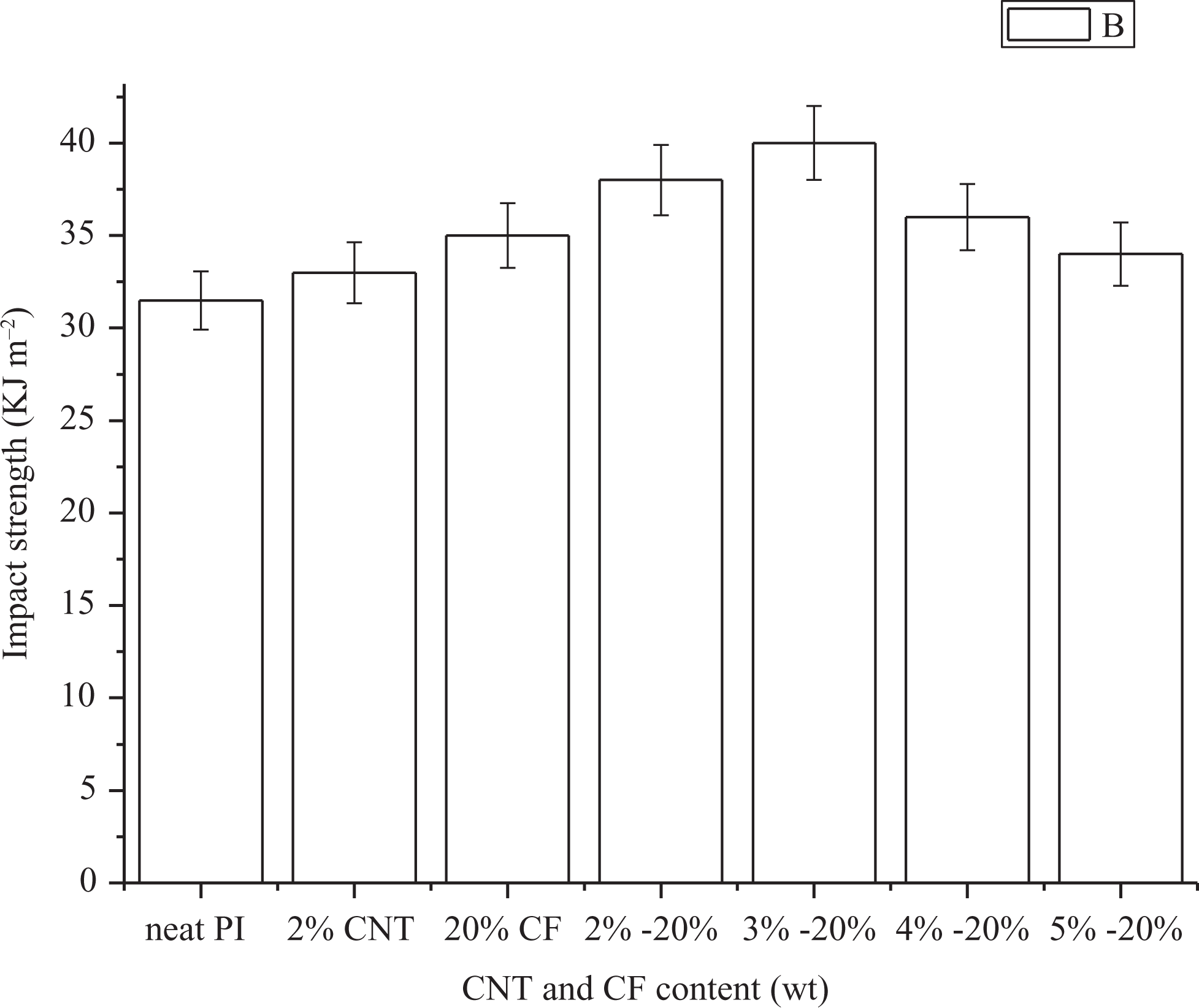
Izod impact strength of the neat polyimide and the composite with different content of carbon nanotube and carbon fiber.
Figure 3 shows that CNT fillers affected the impact strength of multiscale composites slightly. Contribution of low content of nanotubes usually has not changed the impact strength of PI composite. However, the nanocomposites with CNT contents higher than 0.5 wt% demonstrated considerable changes in impact property.
Compared to the tensile test with low loading rate, impact test applied a high strain rate to the multiscale composites. In high strain rate, stress transfer between CNT and PI is not as effective as tensile tests. It can be deduced that effective bonding of CNT and PI as well as an appropriate portion of fillers are important factors to improve the impact strength of composites.
Reinforcing mechanism of CF and CNTs is investigated by scanning electron microscopy (SEM) observations (Figure 4) on fracture surfaces in the composites. On the interface of composites (Figure 4(a)), the rough fracture surface with clear sliding steps and some CF pullout from the matrix with long length can be observed. Many homocentric annular cracks in the matrix are distinct. The annular matrix cracks provide main channels for the growth of destructive cracks, resulting in delaminating of composite. After mechanical testing, the crack in the interface is also observed, which indicates a much weak interfacial bonding, leading to debonding of CFs. Both of them conduce to the low strength of composites. However, CF/CNT/PI composites exhibit a brittle fracture with a flat fracture surface, short pullout of CF, and no obvious fracture steps, as shown in Figure 4(b); the fiber–matrix interface shows no distinct crack and there is no obvious annular crack in matrix. Besides, many wrapped CFs can be also observed in the interface and the matrix. Obviously, introduction of CNTs greatly increases the interfacial bonding and decreases the probability of annular cracks occurring in the matrix. Meanwhile, the wrapped CFs also lead to destructive cracks to spread along multiple paths. They are in favor of the improvement of the compressive performance. Additionally, pullout of CNT in the interface and the matrix, as energy absorbing mechanisms, can further improve the tensile performance. As for the change in fracture behavior, it results from the powerful mechanical interlocking between interface and inside the matrix, which is due to a disorder network structure of CNTs.
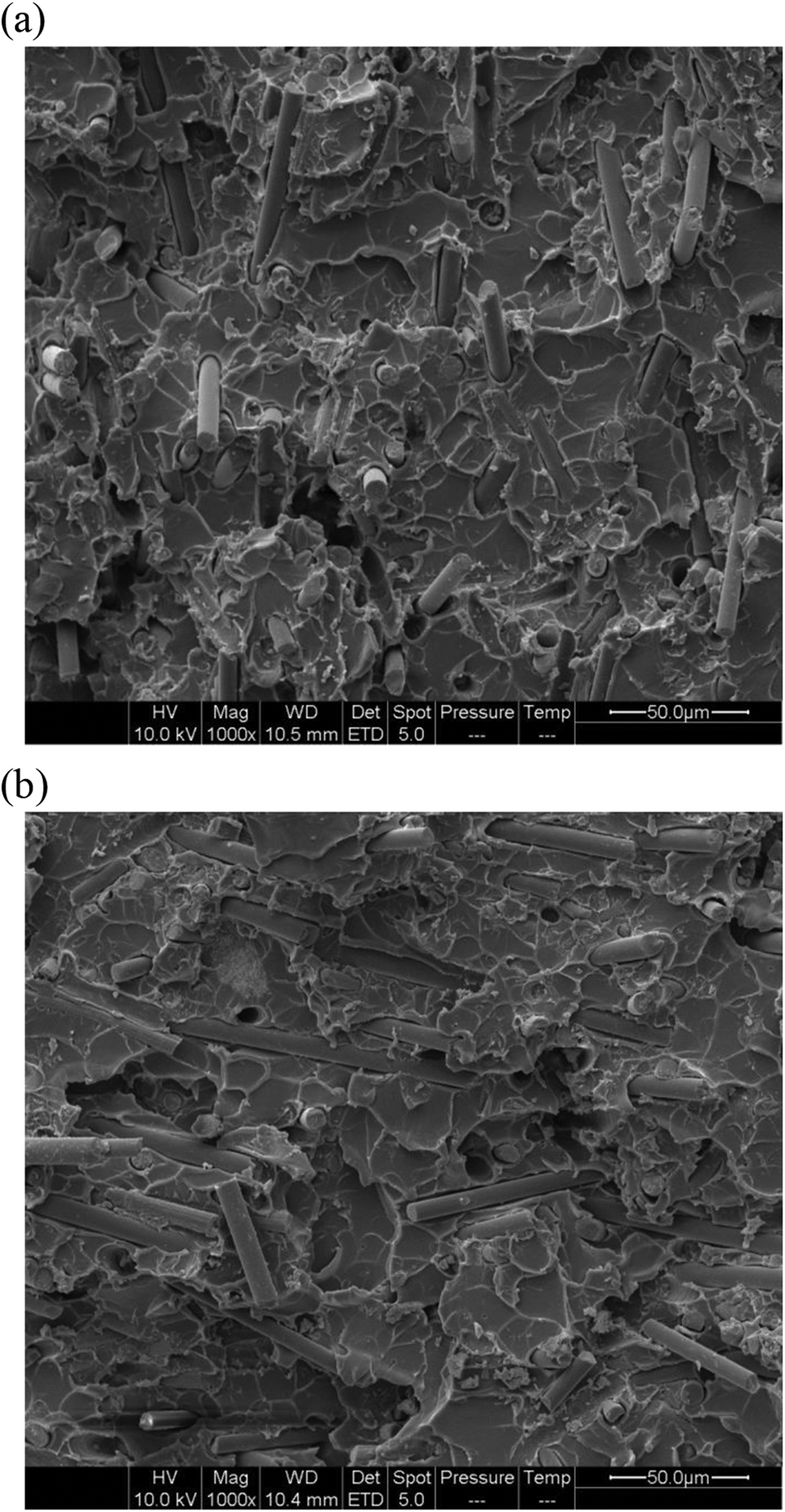
Scanning electron microscopy of fracture morphology.
The elemental surface composition of the three different CF types, that is, unoxidized, oxidized, and sized, was determined by X-ray photoelectron spectroscopy (XPS) and the results are presented in Table 2. The atomic concentrations are expressed relative to the total concentration of carbon (atomic ratios). Only carbon, oxygen, nitrogen, and silicon were detected on the CF surfaces (Table 2). Compared with the unoxidized fiber, the surface of the oxidized fiber had higher concentrations of oxygen and nitrogen, most likely due to the oxidation process.
Elemental surface composition of unoxidized and oxidized carbon fibers.
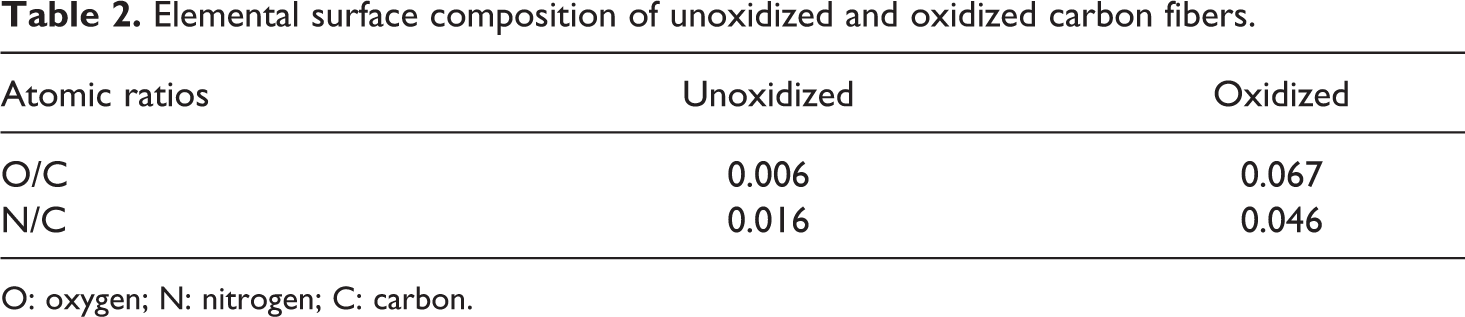
O: oxygen; N: nitrogen; C: carbon.
The C 1s high resolution spectra of the unsized fibres showed the characteristics of a partially graphitic structure –C–C–, represented by a sharp peak around 284.5 eV binding energy (BE) and a broad high BE tail (Figure 5). In comparison with an unoxidized fiber, the spectrum of an oxidized fiber displayed some broadening of the main peak (284.5 eV) as well as higher intensity in the BE range 282–290 eV (Figure 5). Combined with the elemental composition presented in Table 1 (presence of oxygen and nitrogen), the latter indicates the presence of a range of oxygen-/nitrogen-based functional groups. This is most likely due to oxidative degradation of the graphitic structure at the surface of the fibers. It is not possible to identify and quantify specific functional groups in this instance based only on XPS data. However, it can be assumed that C–O, C=O, and O–C=O-based species are present (with or without additional nitrogen), which would give rise to chemical shifts of approximately 1.5 eV, 3 eV, and 4–4.5 eV, respectively, in agreement with an observed increase in intensity in the case of the oxidized fiber.
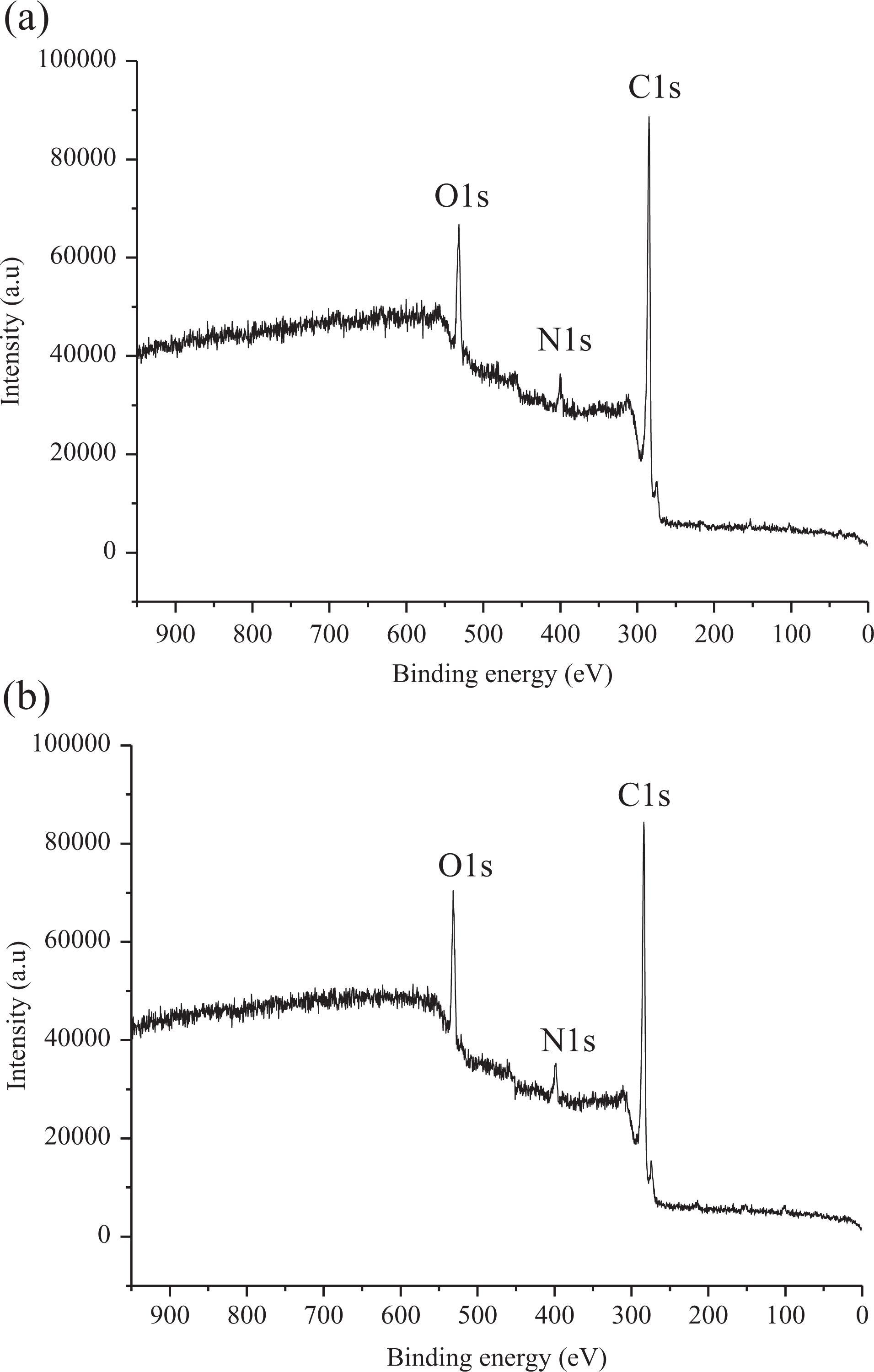
X-ray photoelectron spectroscopy of carbon fiber showing (a) unoxidized and (b) oxidized surfaces.
Conclusions
It was demonstrated that the CVD method was able to grow CNT on the surface of CF when appropriate CNT growth condition are used. CNT-coated CF was shown to be significant with elevated tensile properties of CNT-CF/PI hybrid composite. The procedure was conducted using the tensile test on the fabricated samples of randomly oriented short fiber-reinforced composites. In contrast with the neat CF/PI composite, CNT-CF/PI composite has shown enhanced tensile strength increased to approximately 30%. The justification of supreme tensile properties of hybrid composite was explained to be dependent on fiber–matrix adhesion incorporated by interfacial CNT.
Footnotes
Funding
This research received no specific grant from any funding agency in the public, commercial, or not-for-profit sectors.