



Abstract
Mechanical strength of phenylenebenzobisoxazole (PBO) fibers and cross-linked polyethylene (XLPE) matrix composites were studied with particular interest on the effects of oxygen cold plasma-treated fibers. PBO fibers were treated in a radio frequency plasma reactor using oxygen for different treatment times to increase the interface adhesion. Tensile tests on PBO fibers showed that plasma treatment caused an increase in average tensile strength compared with untreated fibers. Fracture analysis confirmed the increase in interfacial adhesion due to oxygen plasma treatment.
Introduction
As an organic fiber, PBO can exhibit high tensile strength and modulus with a low density, which results in exceptionally high specific mechanical properties. 1,2 Therefore, PBO fiber is a good candidate as the reinforcement for polymer composites. Mechanical properties of composites primarily depend on the fiber and the matrix properties, the fiber/matrix interface also plays a critical role in controlling the overall properties of the composites, such as off-axis strength, fracture toughness, and environmental stabilities. 3 –5 However, the interfacial adhesion between PBO fiber and most polymer matrix is poor due to the surface of PBO fiber being chemically inert and smooth produced by its high crystallinity and the lack of polar functional groups in the polymer repeat unit. 6,7 Therefore, the surface modification of PBO fiber is of great importance in a field of composite application. Surface modification is accomplished through different type of treatment, such as plasma modification, corona and thermal treatment, and chemical coupling method. The ultimate goal of these treatments is to change the surface chemistry and microstructure of the material and thus modulate a number of properties such as roughness, surface free energy, reactivity, and so on. 8
Cross-linked polyethylene (XLPE) is a high-temperature thermosetting polymer for elevated temperature applications because conventional epoxy systems may not be sufficiently stable. Typically XLPE contains excellent thermal stability and high modulus. 9 XLPE also has the advantages of providing better processing flexibility, since it can be used as either a liquid-base resin or prepreg material. However, the main disadvantage of pure XLPE resin is its relatively brittle property. Microfailure mechanisms of a brittle XLPE matrix composite are basically different from the conventional polymer matrix composite. 10,11 Characteristic properties of a brittle XLPE matrix are usually low tensile strength and strain to failure, whereas compressive strength is very high.
A single fiber fragmentation test has been used as a well-known method to investigate interfacial adhesion strength. In the fragmentation test, the failure elongation of the matrix should be several times larger than the failure elongation of the fiber to result in a saturated fragmentation state.
In this study, we attempt to improve the interfacial adhesion of the PBO fiber surfaces by oxygen plasma surface modification, and the oxygen plasma surface modification mechanisms are discussed in this article.
Experimental
Materials
The high-modulus PBO fiber used in this study was received from Toyobo Co. Ltd (Japan) with trade name ZylonTM. The raw XLPE materials were taken from newly produced cable samples with tag RXLN.
Cold plasma treatment
PBO fibers were treated in an internal parallel-plate cold plasma reactor, using oxygen gas. The excitation frequency was 13.56 MHz; the power of the electrical field was 50 W, the pressure was set to 40 Pa, and the treatment times were 5, 10, 20, and 30 s.
Specimen preparation
Appropriate quantities of XLPE were placed in a three-necked flask with a mechanical stirrer and thermometer. The mixture was heated to 130–135°C and maintained within that temperature range with stirring until a clear and brown liquid was obtained. The liquid was maintained at that temperature for additional 0.5 h to obtain a transparent liquid; XLPE resin was dissolved in acetone (the weight ratio of the resin vs. acetone was 1:1), followed by thoroughly stirring to form a transparent resin solution, namely glue. The PBO fiber was immersed in the glue and then hung up for at least 24 h at room temperature to remove acetone; the resultant fabric was a prepreg. The prepreg was put into a metallic mold for molding. The mold was cured by a cycle of 150°C/2 h + 180°C/2 h + 200°/2 h under a pressure of 0.7 MPa, the mold was heated from one temperature to another with a heating rate of 2° min−1. After that, the sample was postcured at 240°C for 4 h in an air oven.
Mechanical properties
The tensile measurements were carried out using universal tensile testing machine (JJ Lloyd, London, UK, capacity 1–20 kN), according to ASTM D638 and ASTM D790 standards, respectively. The tensile tests were performed at a crosshead speed of 20 mm min−1 (quasi-static) and 2.4 mm min−1, respectively. Five samples were tested for each composition of the composites. Izod impact test were carried out using an Avery Denison impact tester (Glendale, California, USA; ASTM D256–92 standard). A 2.75-J energy hammer was used, and the striking velocity was 3.46 m s−1. For Izod impact test specimens, the notch was cut using a motorized notch-cutting machine.
AFM analysis
The surfaces of PBO fibers were investigated using atomic force microscope (AFM) in tapping mode operation. The AFM observations were carried out with a PicoScanTM 2500 (Molecular Imaging, Ann Arbor, Michigan) apparatus. The measurement was performed using a silicon (Si) cantilever with the standard Si probe (spring constant 42 N m−1, resonance frequency 300 kHz, tip curvature radius <10 nm). The checked surface area was of 120 × 120 μm 2 for all inspected fibers.
Results and discussion
Single-fiber tensile strength
As illustrated in Figure 1, single-fiber tensile tests showed an increase in the average tensile strength for treatment times equal to 5 and 20 s, 621 and 678 MPa, respectively, in comparison with the untreated fibers, 567 MPa. For 30 s, the average tensile strength was 650 MPa. For cold plasma-treated PBO fibers, the highest average tensile strength was obtained for treatment time of 20 s.
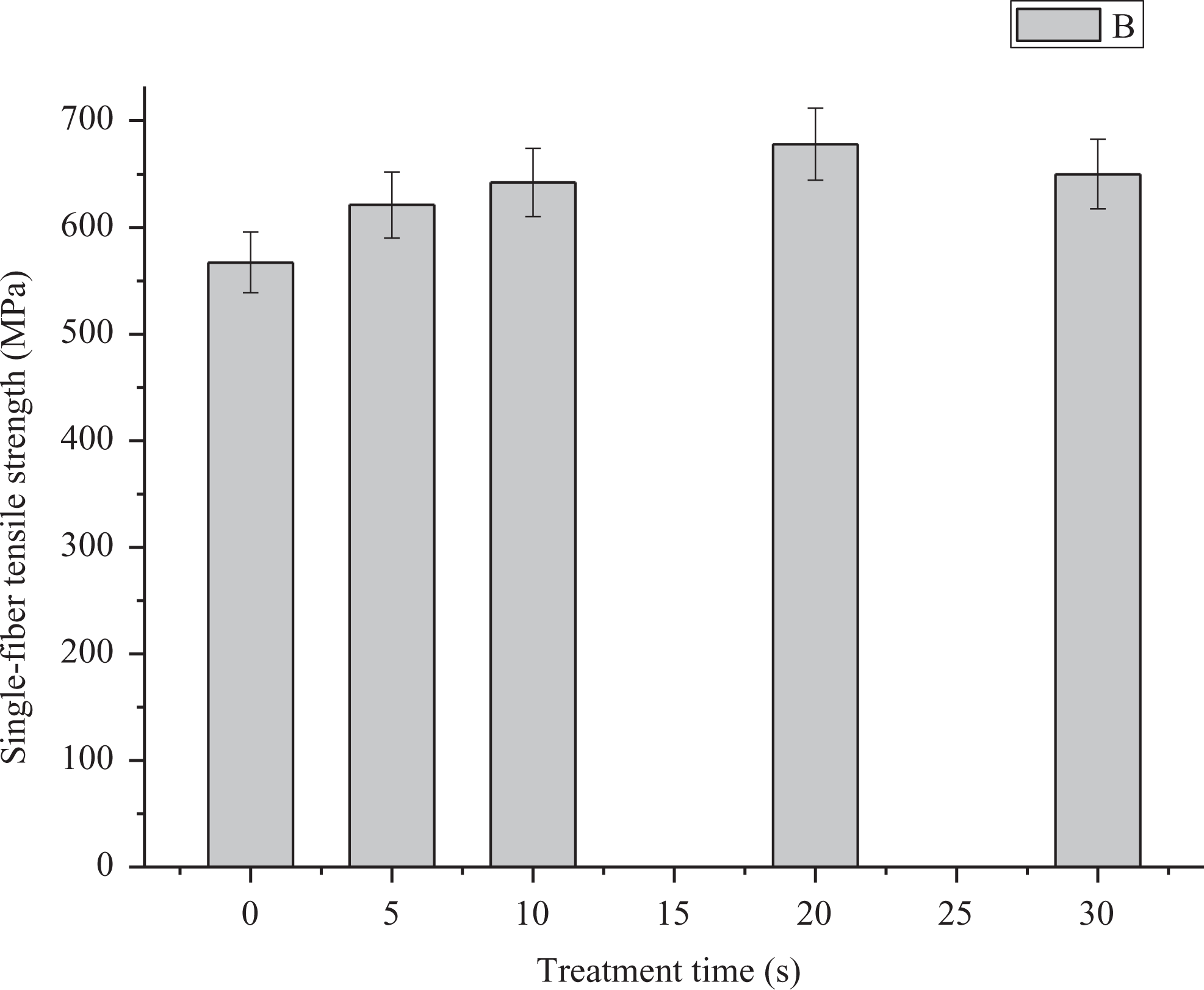
Single-fiber tensile strength of PBO/XLPE composite. PBO: phenylenebenzobisoxazole; XLPE: cross-linked polyethylene.
Effect of the oxygen–plasma treatment on the morphologies of PBO fiber
The morphologies of PBO and treated PBO using different parameters were observed using scanning electron microscopy (SEM), and the corresponding images are shown in Figure 2. Compared with the smooth surface of PBO, the surface of each treated fiber has increased microetching and roughness. In the case of the surface of plasma-treated one, there are some small globular-like microstructures and obvious grooves. However, the surfaces of fibers after treatment for longer time become rather smooth, which is attributed to the different treatment mechanisms as stated above. Briefly, with suitable treatment power and time, the main mechanism of plasma treatment increases the roughness and introduces active groups; however, with too long treatment time, the etching effect is so strong that the surface of the fiber is removed, and then subsurface becomes the new surface; as a result, a rather smooth surface can be observed again.
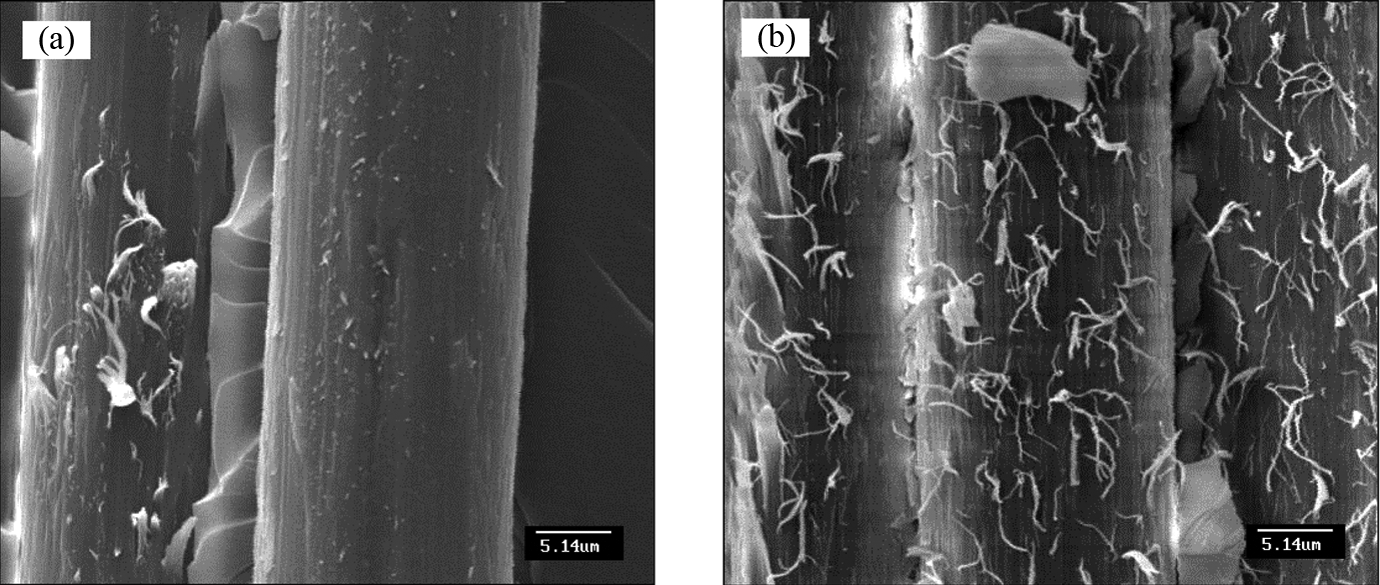
SEM morphology of PBO fiber. SEM: scanning electron microscopic; PBO: phenylenebenzobisoxazole.
Figure 2 illustrates the action of plasma treatment with oxygen on the fiber surface for different times. It can be visually verified that the difference on surface roughness in Figure 2(a), associated with 5 s of treatment time, presents a slightly rough surface. In Figure 2(b), treatment time of 20 s shows degradations on fiber surface induced by the plasma effect.
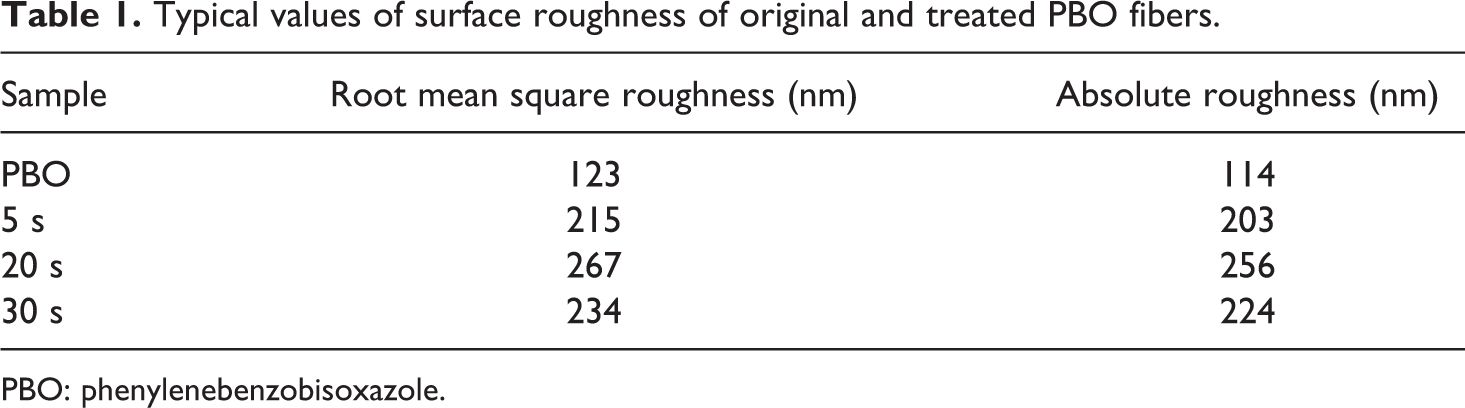
The comparative observation of the three-dimensional AFM images (Figure 3) for original and treated fibers also confirms the above statement. Table 1 summarizes typical values of calculated surface roughness including the root mean square roughness and absolute roughness of each sample based on AFM results; it can be seen that plasma treatment remarkably increases the surface roughness of PBO fiber, while the surface roughness is also dependent on the treating time under a given plasma-treating power. Specifically, the fiber after treated for 20 s at 50 W has significantly larger roughness than other fibers. These results are in good consistence with the SEM pictures shown in Figure 2. The increased surface roughness of treated PBO fiber is attractive for reinforcing polymers, because the rougher surfaces bring stronger mechanical anchoring between the fibers and the matrix and thus lead to improved composites properties.
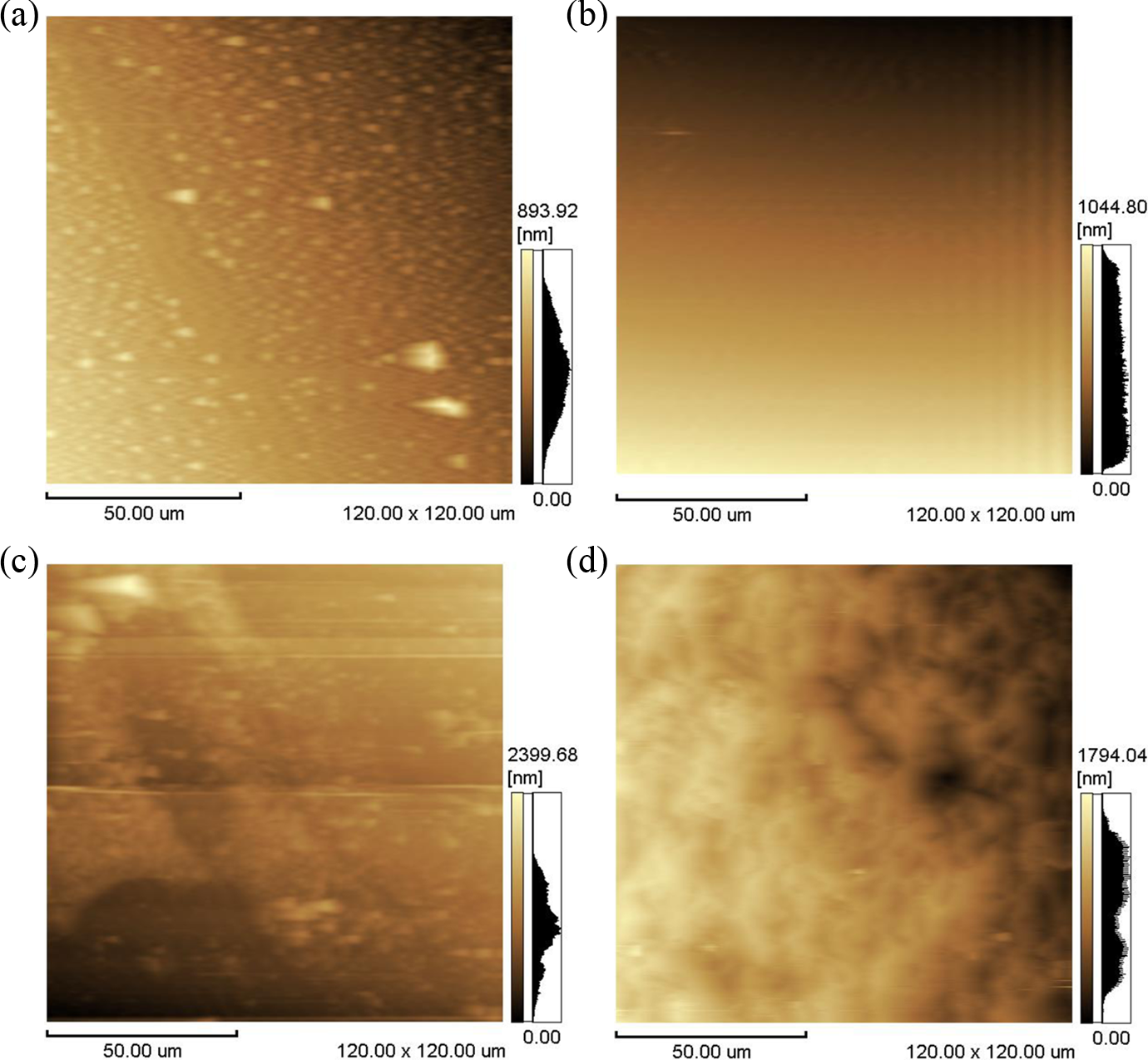
AFM images of PBO fiber. AFM: atomic force microscopic; PBO: phenylenebenzobisoxazole.
Typical values of surface roughness of original and treated PBO fibers.
PBO: phenylenebenzobisoxazole.
Mechanical properties of PBO/XLPE composite
The cold plasma treatment of the PBO fiber affects the tensile properties of PBO fiber/XLPE composites. The tensile strengths of the plasma treatment on PBO/XLPE composites are represented in Figure 4. The tensile strengths of PBO/XLPE composites decrease as the plasma treatment time increases.
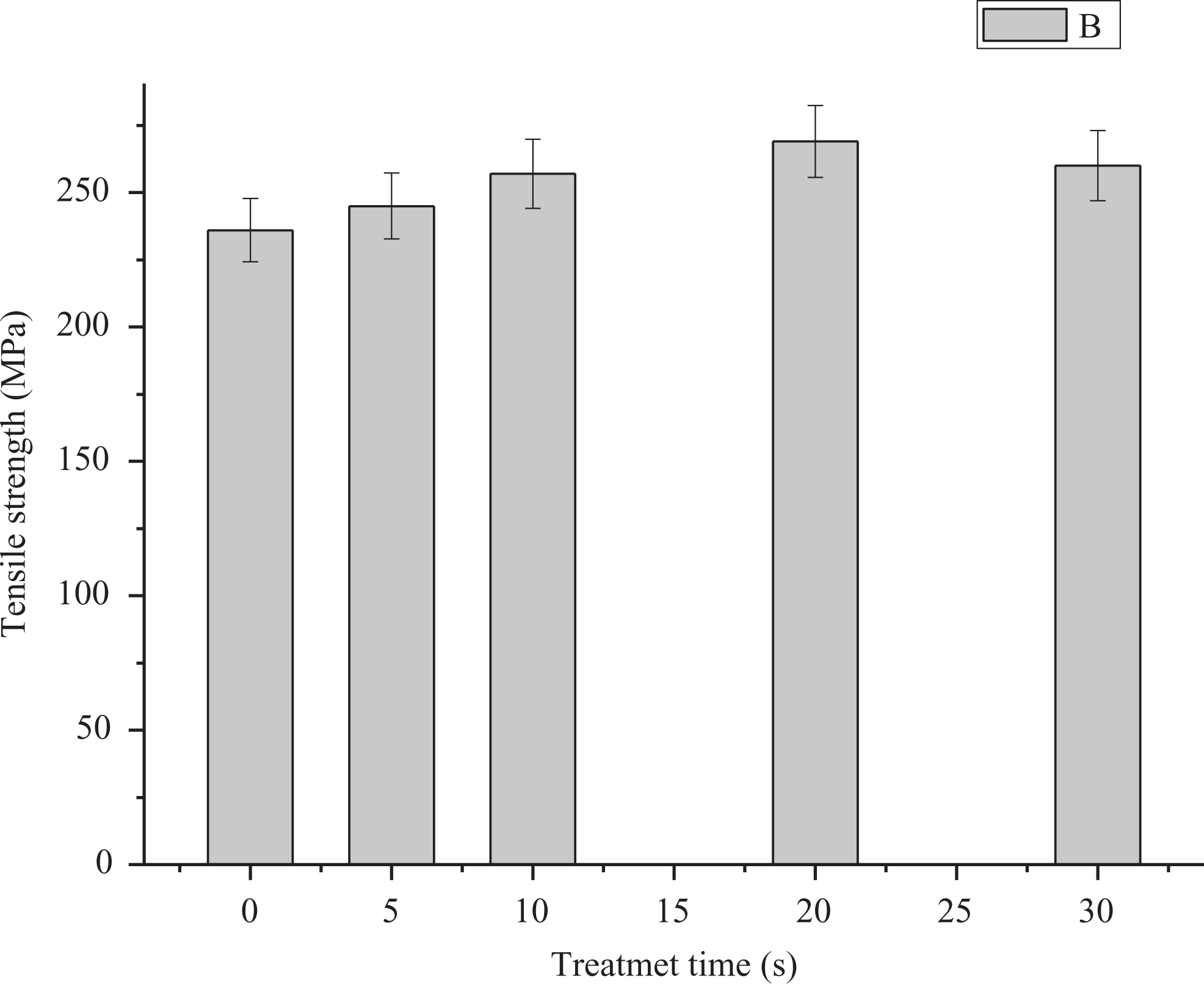
The tensile strength of PBO/XLPE composite. PBO: phenylenebenzobisoxazole; XLPE: cross-linked polyethylene.
However, the extent of decrease is small in comparison with the interlaminar shear strength (ILSS) of PBO/XLPE composites. This small decrease of tensile strength is due to the fact that the contribution of interfacial region becomes small in tensile properties in comparison with ILSS. The stress transfer by the viscous XLPE layer at interface between the PBO fiber and the XLPE resin also contributes to the improved tensile strength of the PBO/XLPE composite. Among the fillers selected in this study, the inclusion of 20 s treated causes maximum increase in strength of the composite. It could be due to good chemical reaction at the interface between the filler particles and the matrix resulting in better load transfer.
Figure 5 shows the surface micrograph of the tensile-fractured surface of PBO/XLPE composite. They induce some cavitations in XLPE because of which a fibrillar structure appears. The incompatibility of PBO and XLPE matrix could be observed through XLPE fibril structure and the PBO fibers pulled out from the XLPE matrix. Further, the micrograph showed brittle fracture of the PBO/XLPE composite. Also, irregular shaped, large PBO fibers dispersed in the XLPE matrix can be seen. These fibers easily detach from the XLPE matrix due to poor interfacial adhesion.
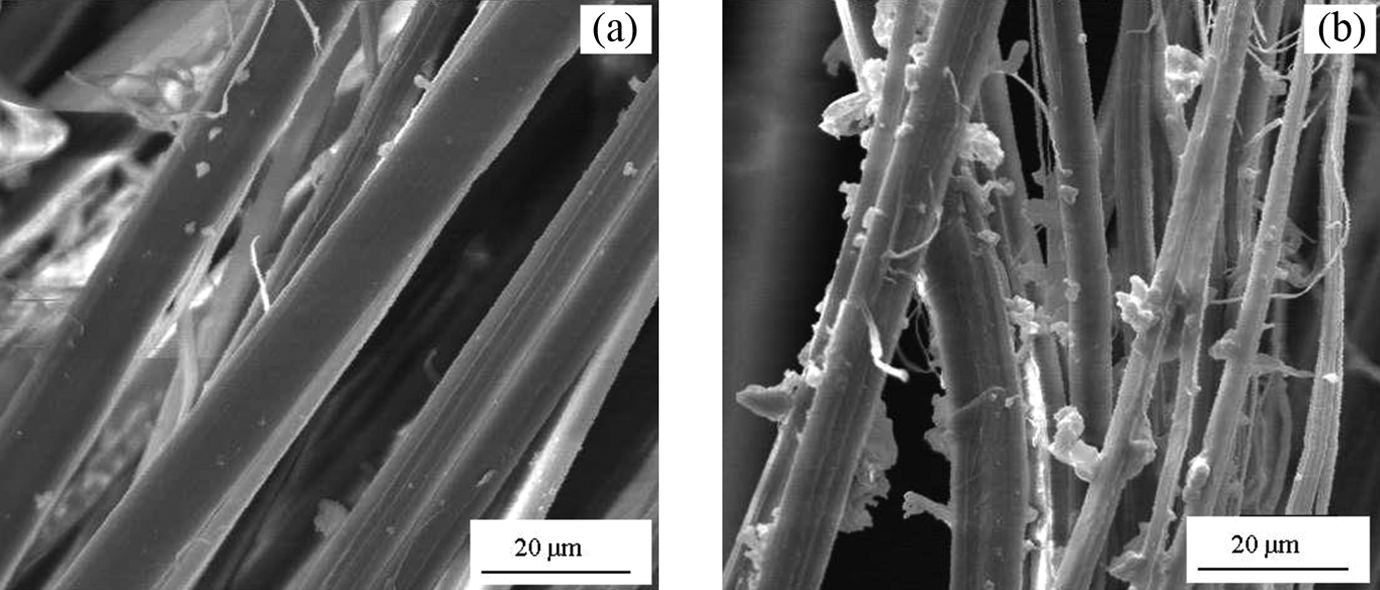
SEM morphology of tensile-fractured surface of PBO/XLPE composite. SEM: scanning electron microscopic; PBO: phenylenebenzobisoxazole; XLPE: cross-linked polyethylene.
Figure 6 shows the impact strength of PBO/XLPE composite with and without plasma treatment. The impact properties of PBO/XLPE composites are improved after plasma treatment. That is, the PBO/XLPE composites with plasma treatment affect the impact damage conditions compared with composites without plasma treatment. During impact damage in PBO/XLPE composites with low velocity impact, the damage zone acts as a soft region within a stiff laminate and magnifies the stress locally because of matrix cracking, fiber debonding, delamination, and fiber fracture. These failures on impact loading are hindered by the presence of coherent interphases in the composites. Interphases interrupt the formation of crack growth paths in the fibers and matrix, resulting in an increased fracture toughness of the composites.
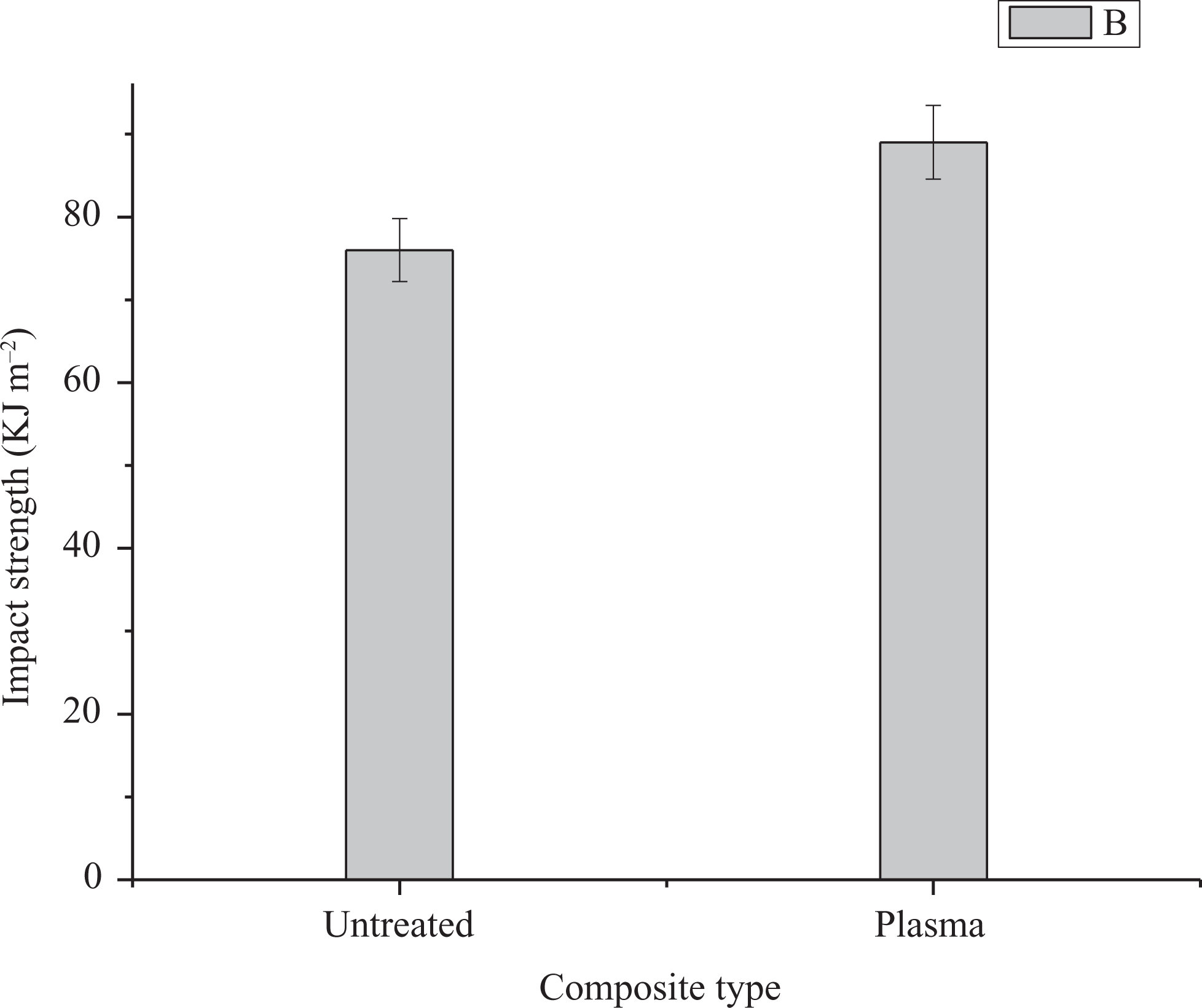
The impact strength of PBO/XLPE composite. PBO: phenylenebenzobisoxazole; XLPE: cross-linked polyethylene.
Effect of the oxygen–plasma treatment on the chemistry of PBO fiber
In order to investigate the chemical compositions of PBO fibers before and after oxygen–plasma treatment, FTIR spectra of PBO and plasma treated were recorded, and corresponding curves are shown in Figure 7. The appearance of three peaks, attributed to the absorption bands of para-aromatic ring (818 cm−1), N–H (3410 cm−1), and C=O (1645 cm−1) groups, respectively, represents the ontology structure of PBO fibers. The spectrum of PBO when compared with the treated fiber has a weakened peak at 3410 cm−1 and a stronger peak at 1645 cm−1, indicating that PBO has been oxidized and etched after the oxygen–plasma treatment, and thus some oxygenic groups were introduced onto the surfaces of the modified PBO fibers.
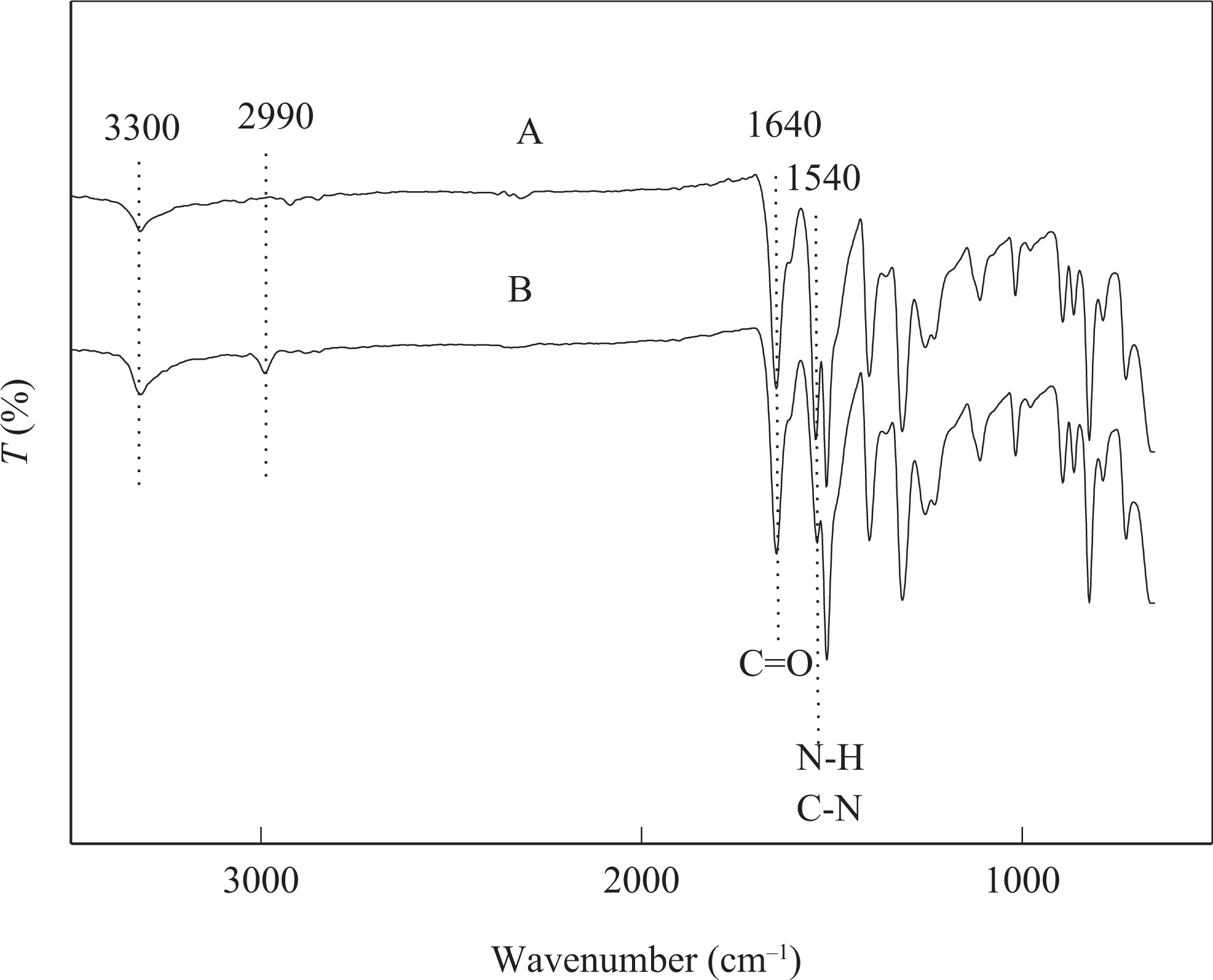
FTIR spectra of PBO fiber. FTIR: Fourier transform infrared; PBO: phenylenebenzobisoxazole.
Based on above analyses, it is believed that the oxygen–plasma treatment with suitable power and time can not only increase the surface roughness of PBO fibers but also introduce oxygen containing active groups on the surfaces.
Conclusions
The oxygen–plasma treatment of the PBO fiber improves the interfacial adhesion of XLPE composites through the mechanical interlocking. The tensile strength and the impact property of the PBO/XLPE composites are increased by the oxygen–plasma treatment. The control of oxygen–plasma treatment time can give the PBO/XLPE composites with high impact property and strong interfacial adhesion at the same time.
Footnotes
Declaration of Conflicting Interests
The author(s) declared no potential conflicts of interest with respect to the research, authorship, and/or publication of this article.
Funding
The author(s) disclosed receipt of the following financial support for the research, authorship, and/or publication of this article: This work was sponsored by the National Natural Science Foundation of China (No. 31300783, No. 51202144, No. 71201099), Doctoral Fund of the Ministry of Education Jointly Funded Project (No. 20123121120004), the Shanghai Top Academic Discipline Project—Management Science & Engineering, the Natural Science Foundation of Shanghai (No. 08XD1401900, No. 13ZR1419200), NSFTJ (No.11JCZDJC16900), 973 Program (No.2011CB711000), the Shanghai Municipal Education Commission Project (No.13YZ080), the Ministry of Transport Research Projects (No.2012-329-810-180), the Shanghai Maritime University Research Project (No. 20130474), and the High-tech Research and Development Program of China (No. 2013A2041106).