



Abstract
The surface treatment of poly(p-phenylene benzobisoxazole) (PBO) fiber is to improve the interfacial adhesion of the PBO fiber-reinforced high-density polyethylene (HDPE) composite. The surface characteristics of untreated and treated PBO fiber were characterized by Fourier transform infrared spectroscopy and X-ray photoelectron spectroscopy. The interfacial shear strength between HDPE and PBO fiber was analyzed by measuring three-point bending properties of the composite. TPB exhibited different results due to the PBO fiber surface treatment. The results showed that the treatment of PBO fiber improved the interfacial adhesion as compared to the untreated one. The effects of PBO fiber content on tribological properties of the HDPE composites were investigated. The worn surface morphologies of HDPE composites were examined by scanning electron microscopy and the wear mechanisms were discussed. Results show that all treated PBO/HDPE have superior tribological characteristics to unfilled ones.
Introduction
Composite materials are created by combining two or more components to achieve desired properties which could not be obtained with the separate components. Poly(p-phenylene benzobisoxazole) (PBO)-based composites using thermoplastics as a continuous phase can result in better water resistance and dimensional stability compared to composites with low polymer content. 1,2 PBO-based composites with a continuous thermoplastic phase also give the opportunity to process the composite using conventional thermoplastic processing equipment. 3 Cross-linking of the polymer matrix might be one way of reducing the creep during long-term loading. Several techniques have been developed to obtain cross-linked polyethylene:peroxide cross-linking, irradiation techniques, and silane cross-linking.
High-density polyethylene (HDPE) has been widely used as an insulation material in power cables because of its excellent mechanical properties and dielectric properties. 4 Due to the exceptionally high specific strength and modulus, excellent thermal and oxidative stability, chemical resistance and long-term retention properties at elevated temperatures, PBO fibers provide great potential applications as reinforcements for advanced composites in aeronautical and astronautical applications, protective garments, personnel ballistic armors, and many military applications. 5 –7 However, employing PBO fibers as reinforcements have been limited by poor fiber–matrix interfacial adhesion because of the relatively smooth and chemically inactive fiber surfaces which prevent efficient physical and chemical bonding in the interface. 8 –12 Therefore, surface modification of PBO fibers is of great importance in the field of composites application. In the past decades, many works have been performed to improve the interfacial adhesion between PBO fibers and polymer matrix. To increase the surface free energy and to reduce the contact angle of PBO fibers, various surface modification techniques have been proposed.
In this study, silane treatment modification was used to improve the interfacial adhesion. The objective of this work is to study the friction and wear properties of the HDPE composites filled with differently surface-treated PBO fibers. The effectiveness of this reaction was characterized by scanning electron microscopy (SEM).
Experimental
Materials
HDPE (100BW) was purchased from ExxonMobil (Saudi Arabia), which has a melt flow index of 2.0 g/10 min and a density of 0.9225 g cm−3 (Table 1).
Properties of PBO fibers.
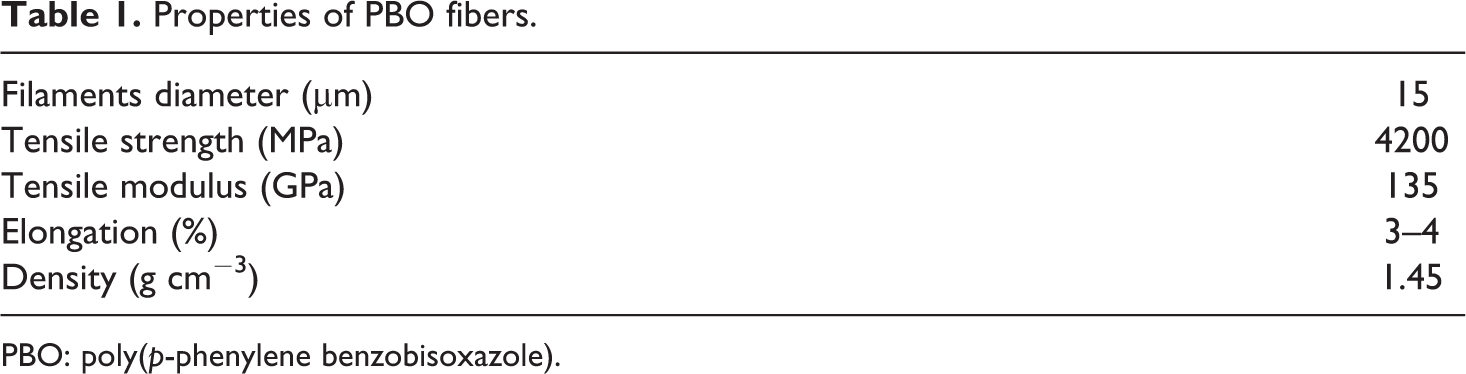
PBO: poly(p-phenylene benzobisoxazole).
Surface modification of PBO fiber
To obtain improved interaction between PBO fiber and HDPE matrix, PBO fiber was treated with hydrogen peroxide solution under ultrasonic condition for 15 min and dried at 60°C for 48 h. PBO fiber was then mixed at room temperature with the solution of benzoic acid in a small quantity of ethanol. After the solvent was evaporated, PBO fiber was dried in an air circulating oven at 105°C for 24 h. The treated PBO was added to the rolls, heated at different temperatures (140, 150, or 160°C) and ground simultaneously for 4 min. The surface of fiber contacted and reacted with benzoic acid in situ during grinding.
Infrared spectra of the chemically treated PBO fibers and untreated fibers were measured with Fourier transform infrared (FTIR) spectrometer (model: EQUINOX55).
Specimen preparation
Prior to preparation, HDPE was dried in a vacuum oven at about 80°C for 24 h. The HDPE and PBO fibers were prepared in an XSS-300 torque rheometer (Kechuang Machinery, Shanghai, China) at a temperature of 115°C and a rotor speed of 60 r min−1 for 10 min. The cross-linked and blended specimens were obtained using compression molding for 15 min under a pressure of about 10 MPa at 175°C.
TPB tests
Three-point bending (TPB) test was performed using five samples of each type of composite. The specimens were cut to the desired shape and then polished, using 400 grit silicon carbide paper, to a size of 40 × 10 × 4 mm3. A testing machine (model 5582; Instron Co. Ltd, Norwood, Massachusetts, USA) was used to apply a load over a 30 mm span. Measurements were performed with a crosshead speed of 1.0 mm min−1 at room temperature, according to JIS K 7171 standard.
For a more accurate determination of the material parameters and consideration of the possible scatter in the experimental data, the measurements were made at five magnitudes of a constant load for five specimens. The obtained quantities were then averaged.
Friction and wear tests
Friction and wear tests were carried out using a ball-on-block reciprocating UMT-2MT tribometer at room temperature with a relative humidity of 30–45%. The specimens were polished using a fine grade silicon carbide emery paper and cleaned ultrasonically with acetone and dried before testing. The reciprocating friction stroke was 5 mm, and tests were conducted at a normal spring-driven load. Five tests were conducted under each test condition, and the average values of measured friction coefficient and wear volume were used for further analysis.
Results and discussion
IR spectral analysis of PBO fibers
The FTIR transmittance spectra of PBO fiber before and after chemical treatments are shown in Figure 1. The spectrum with and without chemical treatment has three peaks at 3300 cm−1 (–OH group), 1640 cm−1 (–C=O group), and 1540 cm−1 (–NH group). Silane-treated fiber has the epoxy peak at 2990 cm−1, yet untreated fiber does not have this peak. Therefore, we confirm that the surface properties of PBO pulp are enhanced, which will result in increasing the interfacial adhesion between PBO fiber and matrix resin.
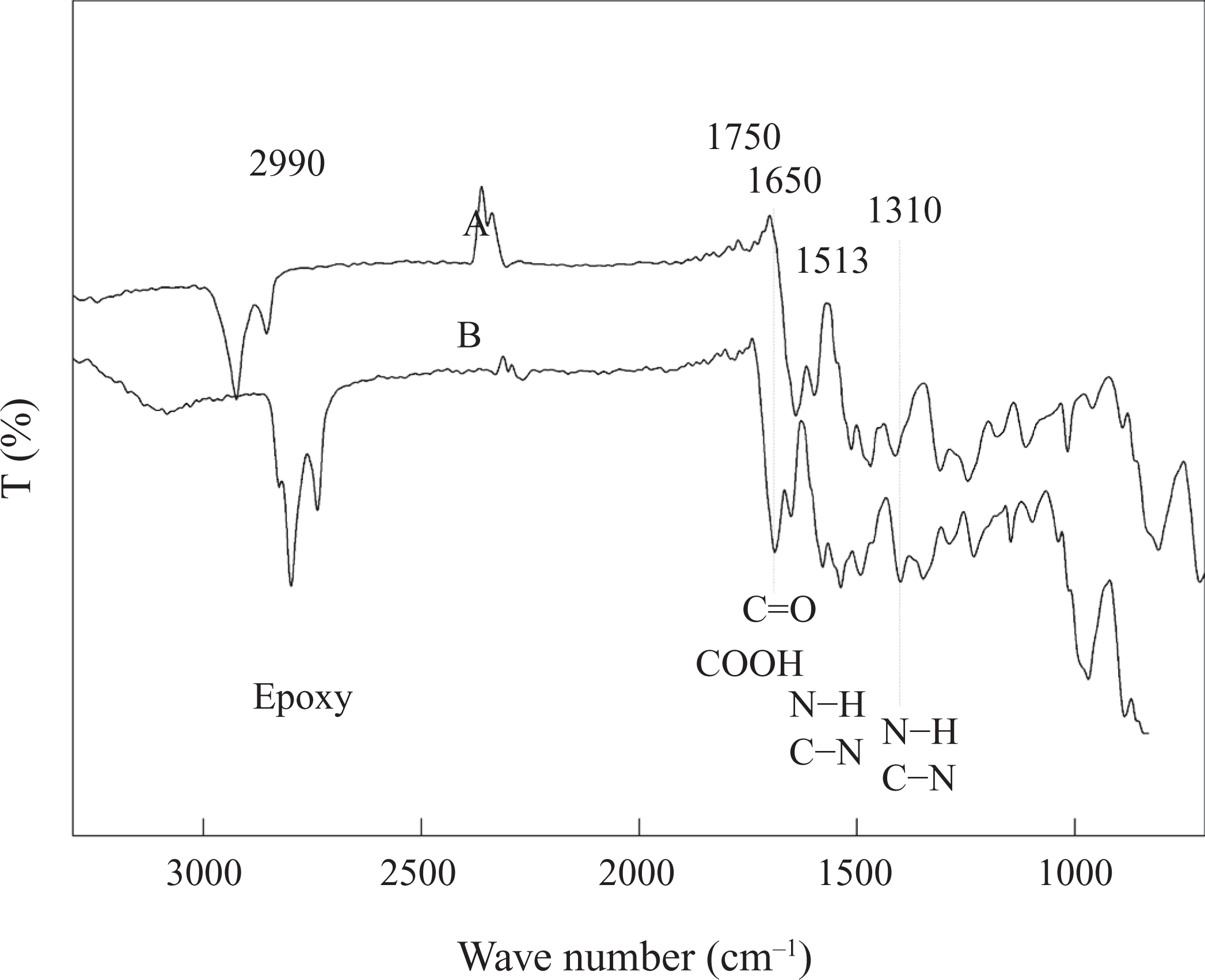
FTIR transmittance spectra of PBO fibers (a) original and (b) silane treatment. FTIR: Fourier transform infrared; PBO: poly(p-phenylene benzobisoxazole).
It is proved that better interfacial adhesion can be obtained through surface modification. The reasons attribute that the silane treatment was used as a method to bind organic functional groups on PBO fiber surfaces, which increase the interlock between the fiber and matrix, leading to the increase of the interfacial shear strength (IFSS) of composites, which can effectively transfer the stress from matrix to the fiber, so the fiber can bring more reinforcement. Therefore, the IFSS of the composite reinforced by silane-treated PBO fibers are considerably improved.
TPB properties
It is seen in Figure 2 that silane surface treatments can improve the flexural strength of PBO/HDPE composite. Obviously the flexural strength of silane-treated PBO/HDPE composite is superior to the untreated, and the flexural strengths of silane-treated PBO/HDPE composite are improved compared with the untreated ones. The enhancements in flexural strength of PBO/HDPE were due to effective load transfer through strong interfacial bonding between PBO fiber and HDPE matrix, where the interphase acted as a successful compatibilizer, which could help more strain energy absorption before fracture, as shown by increased HDPE crystallinity in the treated fiber-reinforced HDPE composites. The reasons attribute that the silane treatment can bind organic functional groups on PBO fiber surfaces, which increase the interlocking between the fiber and matrix, leading to the increase of the IFSS of composites, which can effectively transfer the stress from matrix to the fiber, so the fiber can bring more reinforcement.
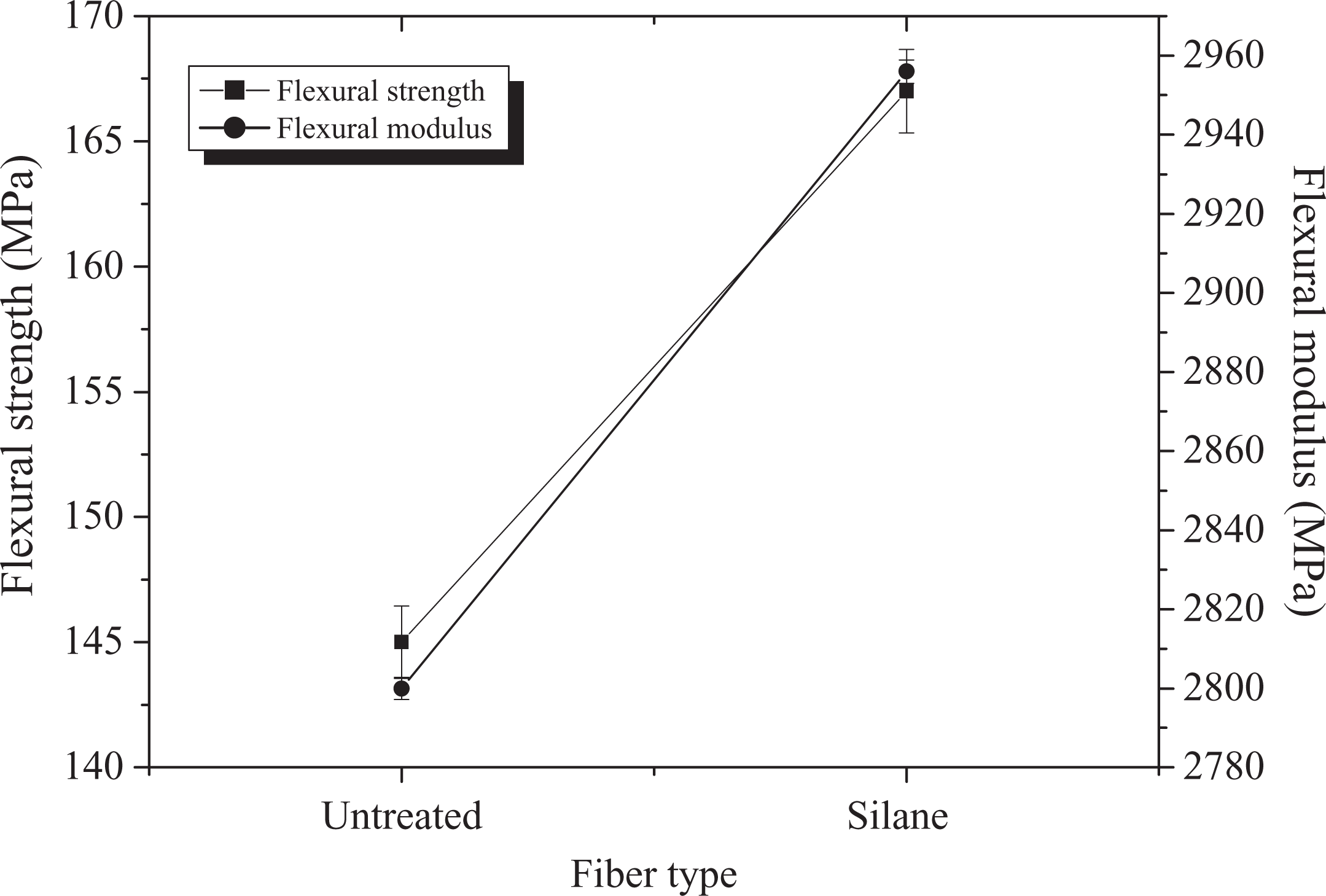
TPB properties of PBO/HDPE composite. PBO: poly(p-phenylene benzobisoxazole); HDPE: high-density polyethylene.
Fracture surface
As can be seen in the fracture surface of PBO/HDPE composite (see Figure 3), PBO fibers are tightly connected with the HDPE matrix. It can also be seen that some fibers were broken and/or torn. The fibrillation of fiber was another feature, which was most probably caused by regions of the fiber, well bonded to the matrix, being ‘torn’ from underlying layers of the fibers. All these observations supported strong bonding in the PBO/HDPE composites.
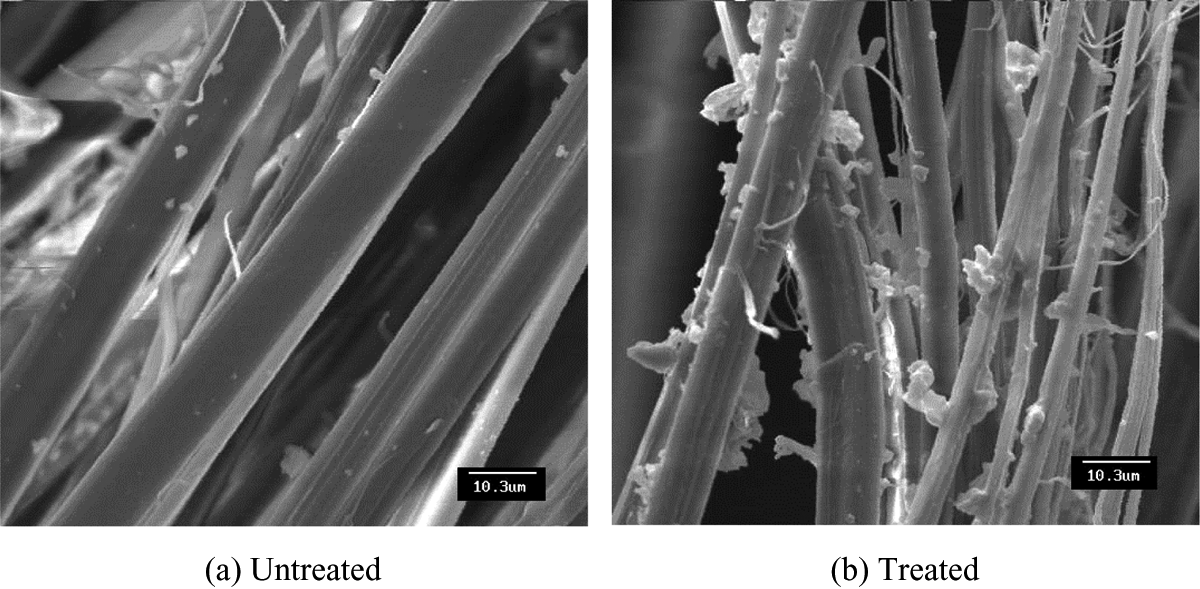
The bending fracture surface of composite: (a) untreated and (b) treated.
For the fracture surface of the PBO/HDPE composite, no residual HDPE was found on the PBO fiber, indicating that less chemical bond existed between the matrix and filler. Therefore, the voids form at the fiber–matrix interface, first in the direction of the applied stress. This void then grows and merges as shear stresses deform the rest of the matrix, leading to the eventual failure of the composites. Hence, stress transfer does not take place between PBO and HDPE. On the other hand, for the silanated PBO/HDPE composite, as shown in Figure 3(a), the surface treatment facilitates direct contact between the PBO and the HDPE matrix to a higher degree than the contact in the untreated composite. It can also be observed that the composites broke due to shear yield and tearing. The differences between the failure surfaces of differently treated composites are attributed to the different chemical natures of the coupling agent and the different adhesion mechanisms.
The untreated PBO fiber was pulled out of the HDPE matrix with smooth and clean surfaces because of the poor interfacial adhesion. However, the treated PBO fiber was pulled out of the HDPE matrix with little rough surfaces because the interfacial adhesion was better. There were many empty spaces due to the formation of aggregates of fibers. But these empty spaces disappeared mostly in the treated PBO/HDPE composites. It is evident that the treated PBO is more compatible with HDPE rather than untreated PBO, which can be explained that the hydrophilic carboxyl groups of benzoic acid react with the hydroxyl groups of natural fiber in the surface, and the hydrophobic group has relatively high compatibility with the polymer matrix.
The untreated fibers with the presence of impurities, responsible for poor fiber–matrix interface adhesion. Due to this, the compatibility between the fiber and matrix is reduced and hence lower the mechanical properties when compared with the treated fiber composite. The phenomenon of the breaking down of the untreated fiber bundle into smaller ones by dissolution of the hemicellulose is called fibrillation. The fibrillation is reported to increase the effective surface area available for contact with the matrix, and hence the interfacial was improved.
The agglomeration of fibers occurs in the untreated composite due to poor wettability and interface adhesion. Due to these reasons the tensile properties of the untreated composite are lower than those of the treated composite. This causes an increment in the TPB properties of the treated fiber composite.
XPS analysis
Table 2 shows the surface elemental compositions of the untreated and treated PBO fibers. The blank PBO fiber contained small amounts of O and N atoms relative to a very high concentration of C atoms. After treatment, the concentration of the C atoms was decreased from 75.4% to 68.1%, while the concentration of the O atoms was increased from 18.7% to 25.9%. The concentration of the N atoms was decreased, which could be attributed to the coupling agent that has no N atom.
Relative elemental concentration of the PBO fiber surface before and after treatment.
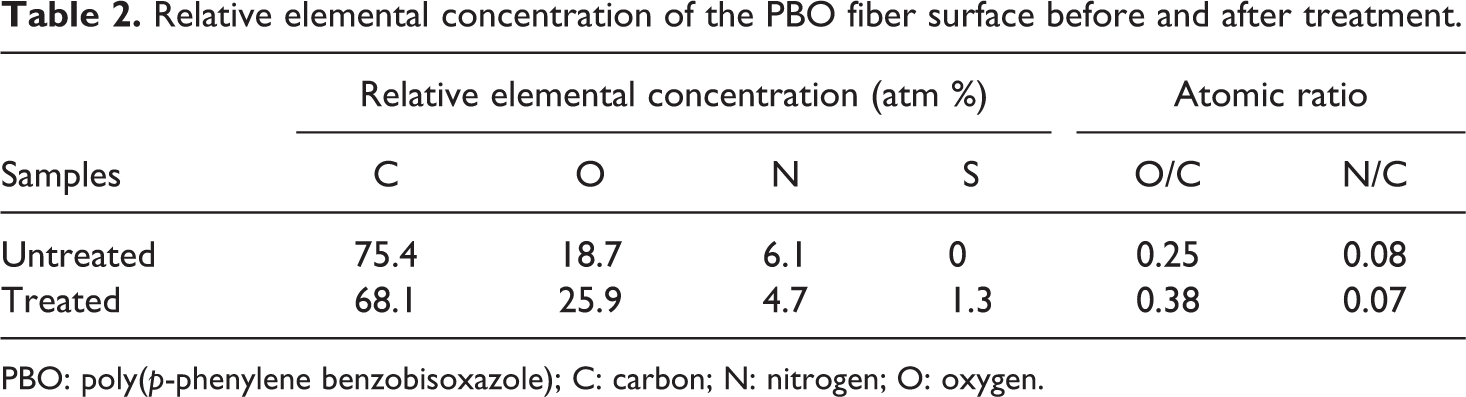
PBO: poly(p-phenylene benzobisoxazole); C: carbon; N: nitrogen; O: oxygen.
The effects of coupling agent concentration on the concentration of correlative functional groups of PBO fiber surfaces are shown in Table 3. It was found that the C–C concentration increased while the O=C–O concentrations degraded notably as the coupling agent concentration enhanced from 1 to 7. But the –C–C–, –C–O–, –C=O, and –C=N– concentrations experienced some disordered changes in this process. It suggests that the concentration of polar groups (O=C–O) produced by coupling agent treatment declined with enhancement of coupling agent treatment concentration.
Effects of coupling agent concentration on the concentration of correlative functional groups of PBO fiber surface.
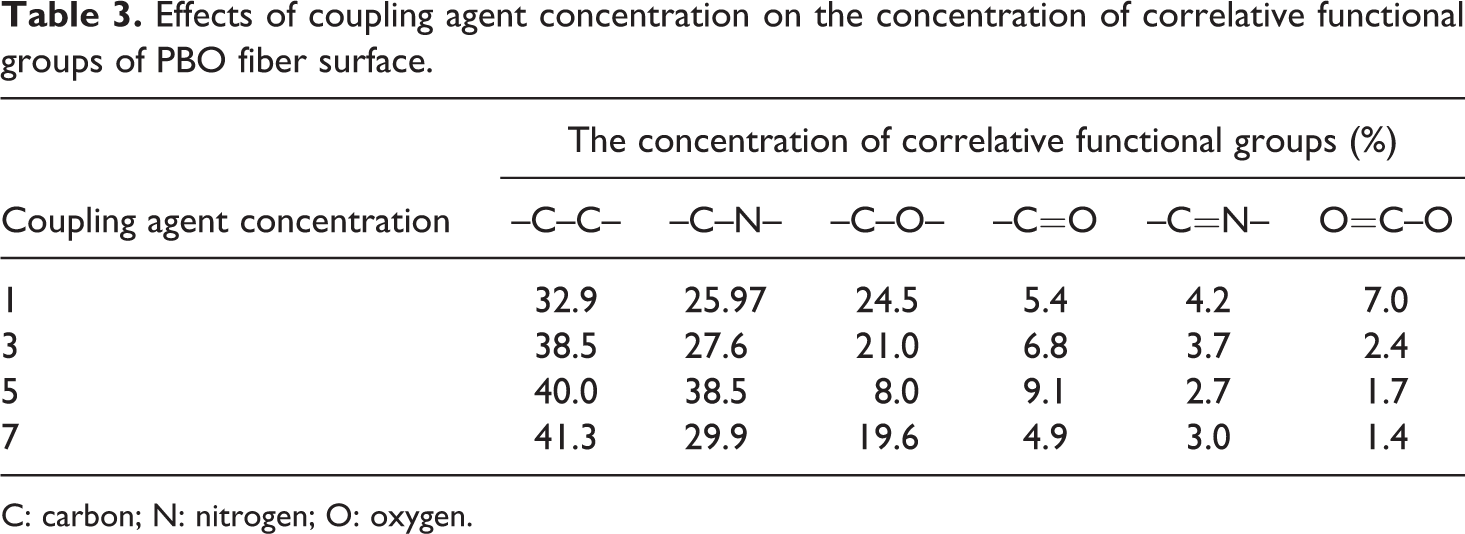
C: carbon; N: nitrogen; O: oxygen.
Friction and wear properties
Figure 4 presents the variation of friction coefficient and specific wear rate for PBO/HDPE composite under dry and water-lubricated conditions. Compared with dry sliding, the friction coefficient and specific wear rate are rather lower than those lubricated with distilled water. This was attributed to the cooling and boundary lubricating ability of water, which considerably decreased the friction-induced heat and hence hindered the plastic deformation and breakage of the matrix by the thermal effect. At the same time, the direct contact between block and stainless steel ring was separated by water, and thus adherence wear considerably decreased. The specific wear rate showed the same trend as dry sliding. The minimum value was also obtained at 15 vol% filler content. For both treated and untreated PBO/HDPE composite, the fiber content dominated the friction and wear rate. The effective reinforcing effect of PBO means the fiber bears the load and no agglomeration of fiber in matrix.
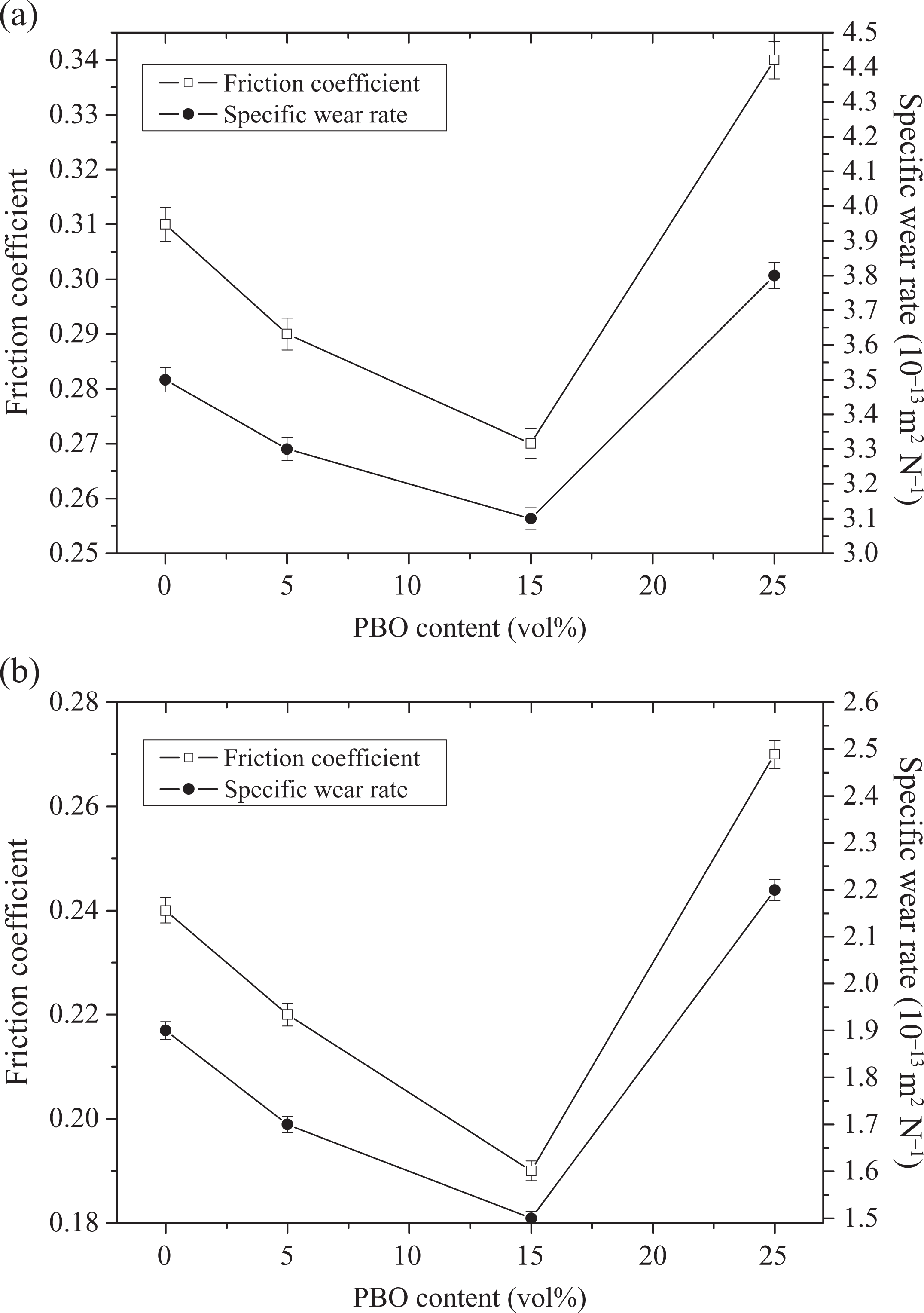
Friction and wear of PBO/HDPE composites with and without treatment as a function of Kevlar pulp content: (a) untreated and (b) treated. PBO: poly(p-phenylene benzobisoxazole); HDPE: high-density polyethylene.
Figure 5 shows the SEM micrographs of the worn surfaces of PBO/HDPE composites with and without treatment. It can be seen that the worn surface of untreated PBO/HDPE was characterized by plastic deformation and adherence (Figure 5(a)). However for the treated one, the worn surface was smooth and only exhibited fine scratches (Figure 5(b)). The worn surfaces of PBO/HDPE composite with and without treatment have no plastic deformation and adherence. The worn surface of the composite was characterized by furrows. The applied load was mainly borne by PBO fiber, and the wear resistance of the materials has been greatly improved by incorporating PBO. For treated composite, the worn surface of composite was even smoother. The combination of relatively low melting temperature and low thermal conductivity of HDPE ensures that frictional contact temperature can reach the melting temperature of the polymer (melting wear), and consequently both, friction and wear coefficients, are markedly altered. The polymer matrix combines the fiber well and the composite exhibited slightly abrasive wear. Since treated PBO/HDPE composites show excellent wear resistance and low friction coefficient, it can be used as the potential replacements of the metallic materials for improved corrosion resistance to the aqueous medium and for decreased weight.
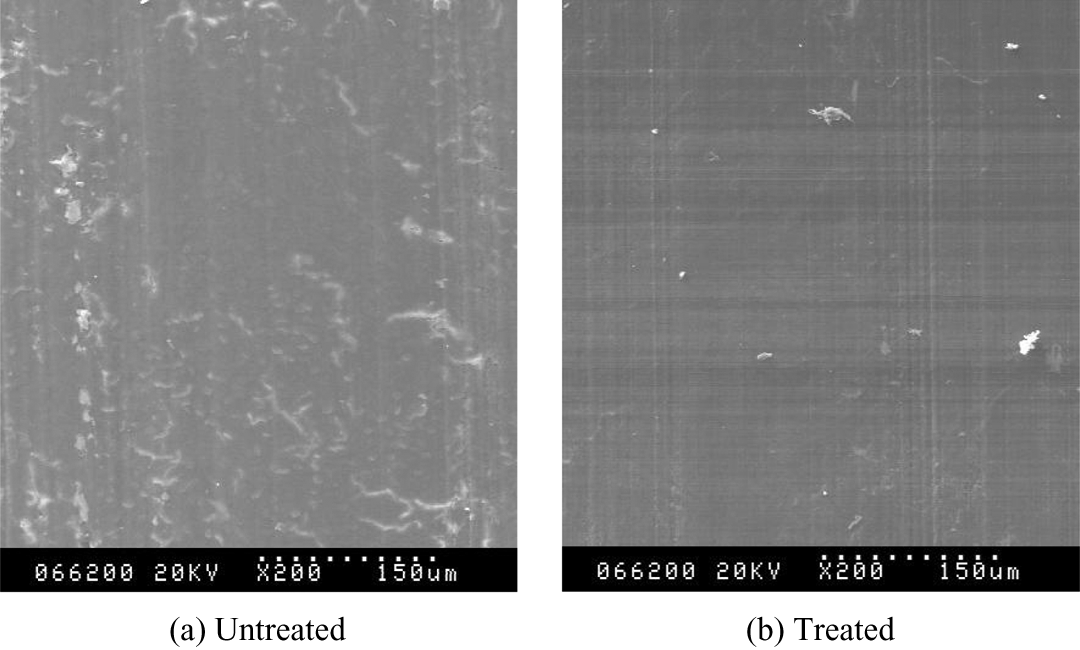
SEM photographs of the worn surfaces (reciprocating sliding frequency: 8 Hz; load: 12 N). (a) Untreated and (b) treated. SEM: scanning electron microscopic.
The worn surface of the counterpart varies greatly due to the sliding conditions. As shown in Figure 6(b), the contact surface of treated PBO/HDPE is a layer of consistent thin film and the surface of untreated PBO/HDPE is easy to be peeled off (Figure 6(a)). So the friction and wear properties are affected as shown in Figure 5.
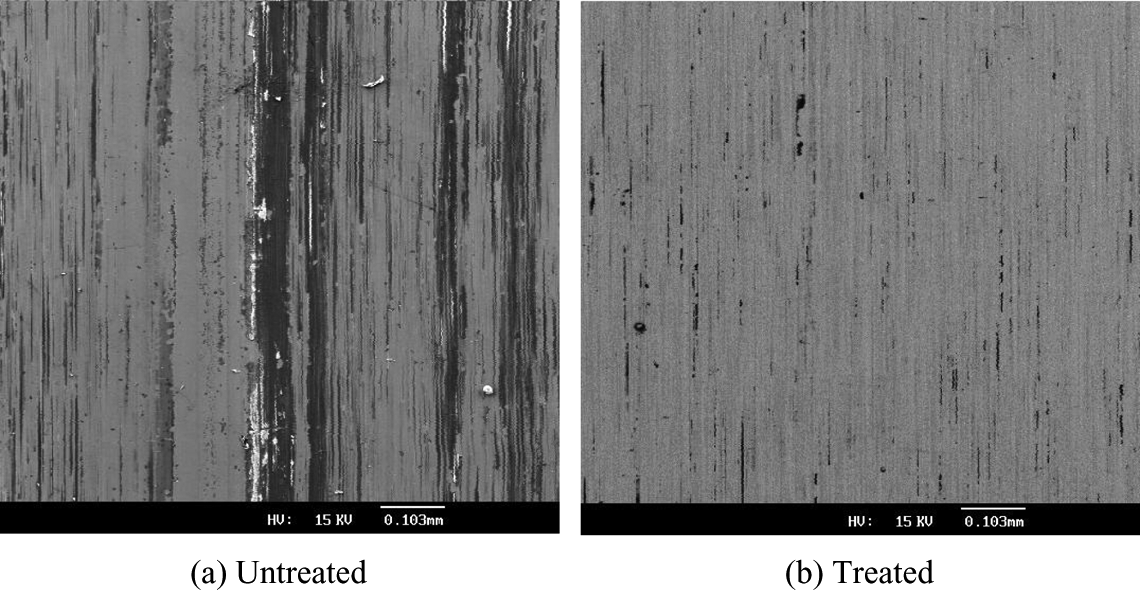
SEM photographs of the worn surfaces of counterpart (reciprocating sliding frequency: 8 Hz; load: 12 N). (a) Untreated and (b) treated. SEM: scanning electron microscopic.
Conclusions
In this study, we analyzed surface-treated PBO fiber on the IFSS between HDPE and PBO fibers. The surface treatment binds organic functional groups on PBO fiber surfaces, which increases the interlocking between the fiber and matrix, leading to the increase of the interfacial adhesion of composites. The existence of the fiber shows good interface adhesion between the fiber and the matrix. This causes an increment in the TPB properties of the treated fiber composite.
Footnotes
Declaration of Conflicting Interests
The author(s) declared no potential conflicts of interest with respect to the research, authorship, and/or publication of this article.
Funding
The author(s) received no financial support for the research, authorship, and/or publication of this article.