




Abstract
The current study examined the effect of rare earth (RE) solution surface modification of poly-p-phenylenebenzobisoxazole (PBO) fibers on the tensile property of PBO fiber-reinforced thermoplastic polyimide (PBO/PI) composites. Experimental results revealed that RE surface treatment could effectively improve the interfacial adhesion between PBO fibers and PI matrix. Compared with the untreated and coupling agent-treated PBO/PI composite, the RE-treated composite had better interfacial adhesion. For RE-treated PBO/PI composites, the tensile strength and tensile modulus varied with RE concentrations, and the optimum value was obtained at 0.6 wt% of RE concentration. The fracture surface morphologies of the samples were investigated by scanning electron microscopy (SEM) to analyze the effect of various surface treatments. X-ray photoelectron spectroscopy (XPS) study of PBO fibers surface showed that the ratio of oxygen/carbon on the surface of PBO fibers was obviously increased after RE treatment, which indicated the content of polar groups on the surface of PBO fibers increased compared with the others. The increase in the amount of polar groups strengthened the interfacial adhesion between PBO fibers and PI matrix and accordingly enhanced the tensile properties.
Introduction
Poly-p-phenylenebenzobisoxazole (PBO) fibers has attracted considerable attention because of its excellent mechanical property, high flame resistance, high thermal stability, and good resistance to creep, chemicals, and abrasion among all commercial synthetic polymer fibers, which attribute to their inherent chain stiffness and a high degree of molecular orientation. 1–3 Owing to the outstanding performances, it has many promising applications in the fields of aerospace, military industry, and general industry. Especially, PBO fiber as reinforcement fiber has great potential applications in advanced composites. 4–8
Among the matrix resins, polyimide (PI) attracts extensive concern because of their high mechanical strength, high wear resistance, good thermal stability, high stability under vacuum, good antiradiation, and good solvent resistance. 9,10 As a kind of high-performance PI composites, PBO/PI composites can be used in high-temperature applications, aerospace vehicles, military facilities, and so on because of their excellent properties, including thermo-oxidative stability, chemical resistance, and a low dielectric constant.
Generally, it has been recognized that the performance of these composites relies largely on the interfacial adhesion property of the matrix reinforcement that determines the way stress is transferred from polymer to fiber. However, the characteristics of PBO fiber, that is chemically inert, smooth surface and few oxygen-containing functional groups, limit the applications in the domain of PBO fiber-reinforced PI matrix composites. Therefore, the modification of PBO fiber surface is of great importance in this domain, as the mechanical properties of the composite are influenced by the quality of the fiber/matrix interface. 11–13
Much research has been conducted to enhance the adhesion between PBO fibers and polymer matrix. The majority of such efforts were concentrated on surface modification methods of PBO fibers, such as plasma treatment, 14 copolymerizing and blending, 15 chemical grafting, 16 solvent surface microfibrillation 17 and so on.
Rare earth (RE) surface modification method has an extensive application prospect because of its extraordinary properties, such as no pollution to environment, low cost, high efficiency, simple process, and no damage to fibers. 18,19 In the present research, the surface modification of RE and coupling agents were applied to PBO fibers to improve the interfacial adhesion, and their effects on the tensile property of PI composites had been evaluated.
Experimental
Materials
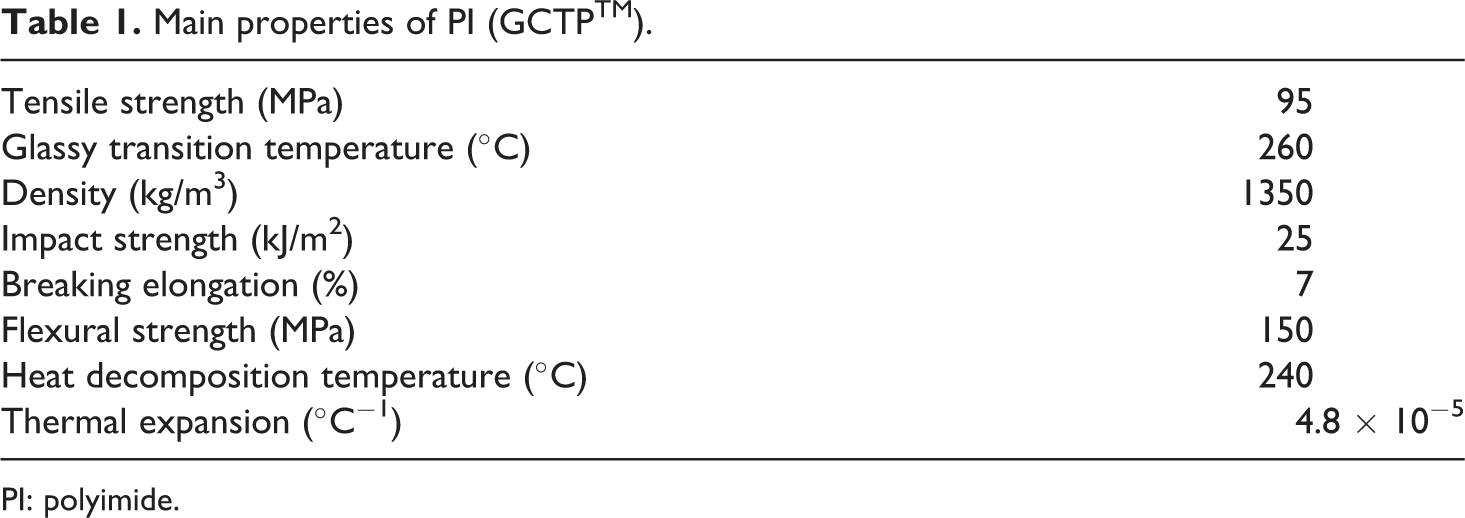
GCTPTM TPI (thermoplastic polyimide) powder obtained from ChangZhoushi GuangCheng Novel Plastics Co., Ltd is used as the matrix resin. Its main physical and mechanical properties are listed in Table 1. The reinforcements used in the present study are PBO(Zylon AS) fibers (in chopped form) produced by Toyobo Co. Ltd, with the following specified properties: tensile strength, 5800 MPa; tensile modulus, 180 GPa; density, 1.54 g/cm3; diameter, 12.8 μm; and length, 3 mm.
Main properties of PI (GCTPTM).
PI: polyimide.
Lanthanum (III) chloride (LaCl3), purchased from Shanghai Yuelong New Materials Co., Ltd is used as the main component of the RE solution applied in surface modification. 3-Aminopropyltriethoxysilane (APTES), molecular formula is NH2(CH2)3Si(OC2·H5)3, purchased from Aldrich Chemical Company, Inc., is used as the main component of the coupling agents solution applied in surface modification.
PBO fiber modification
Before surface treatment, PBO fibers were circumfluent extracted by acetone and ethanol for 12 h in sequence, then dried in a vacuum oven at 120°C for 5 h. Two types of surface treatments were applied in this research: RE modification and coupling agent modification. For RE modification treatment, the La content in alcoholic solution was 0.1, 0.2, 0.4, 0.6, and 0.8 wt%. Equivalent PBO fibers were immersed in the RE/alcoholic solution at 20°C for 1 h and dried in a vacuum oven at 120°C for 5 h, respectively. For the coupling agent modification treatment, PBO fibers were immersed in the APTES/alcoholic solution at 20°C for 1 h and dried in a vacuum oven at 120°C for 4 h. The untreated fibers were used for blank experiments.
Preparation process
Composite plates were shaped by press molding method. PBO fibers and PI resin were mixed with a certain volume ratio in pure water using magnetic stirrer for 90 min. The moisture content was removed by heating and drying processes, the blend was mixed homogeneously in a mechanical blender, and then the blend was introduced into a mould. The molding conditions were as follows: molding temperature was 350°C, molding pressure was 11 MPa, holding time was 115 min, and heat treatment temperature was 170°C. The resulting plates were cooled with the stove in air. The preparation process of PBO/PI composites is shown in Figure 1.
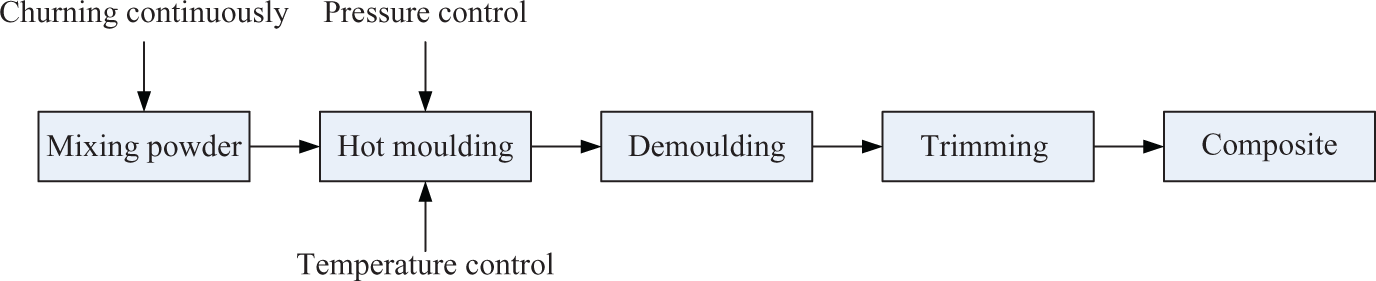
Flowchart of the preparation process of PBO/PI composites.
Testing procedure
The PBO/PI composite plates were cut into narrow-waisted dumbbell-shaped specimens in accordance with the Chinese standard GB/T1040.1—2006. The tensile tests were carried out on a computer-controlled universal testing machine (made in China) at 20°C. The speed of crosshead was 5 mm/min. The results of this study were the average value of the five specimens reinforced in the same kind of modified fibers (RE modified, coupling agent modified, and the untreated). All fracture surfaces were gold coated for 40 sec using a Desk II Sputter-Coater (Denton Vacuum, NJ, USA) to reduce the incidence of surface charging in scanning electronic microscopy (SEM).
The three-point tests were carried out according to the Chinese standard GB/T9341—2000. Tests were performed at a crosshead speed of 1 mm/min. The values included were the average of at least five measurements.
Surface chemical composition of PBO fibers before and after treatments was analyzed by a PHI-5702 (Physical Electronics (PHI), Inc., USA) X-ray photoelectron spectroscopy (XPS). During the XPS analysis, a 250-W Al Ka (Aluminum K Alpha) line (hν = 148,616 eV) was used, the pass energy was 29.350 eV, and the binding energy of C1s (284.6 eV) was used as a reference.
Results and discussions
In order to determine the optimal volume ratio content of fibers in the composite, the tensile tests with various PBO fibers contents (10, 15, 20, and 25 vol%) were performed. The tensile properties of untreated PBO/PI composites with various PBO fibers content are shown in Figure 2.
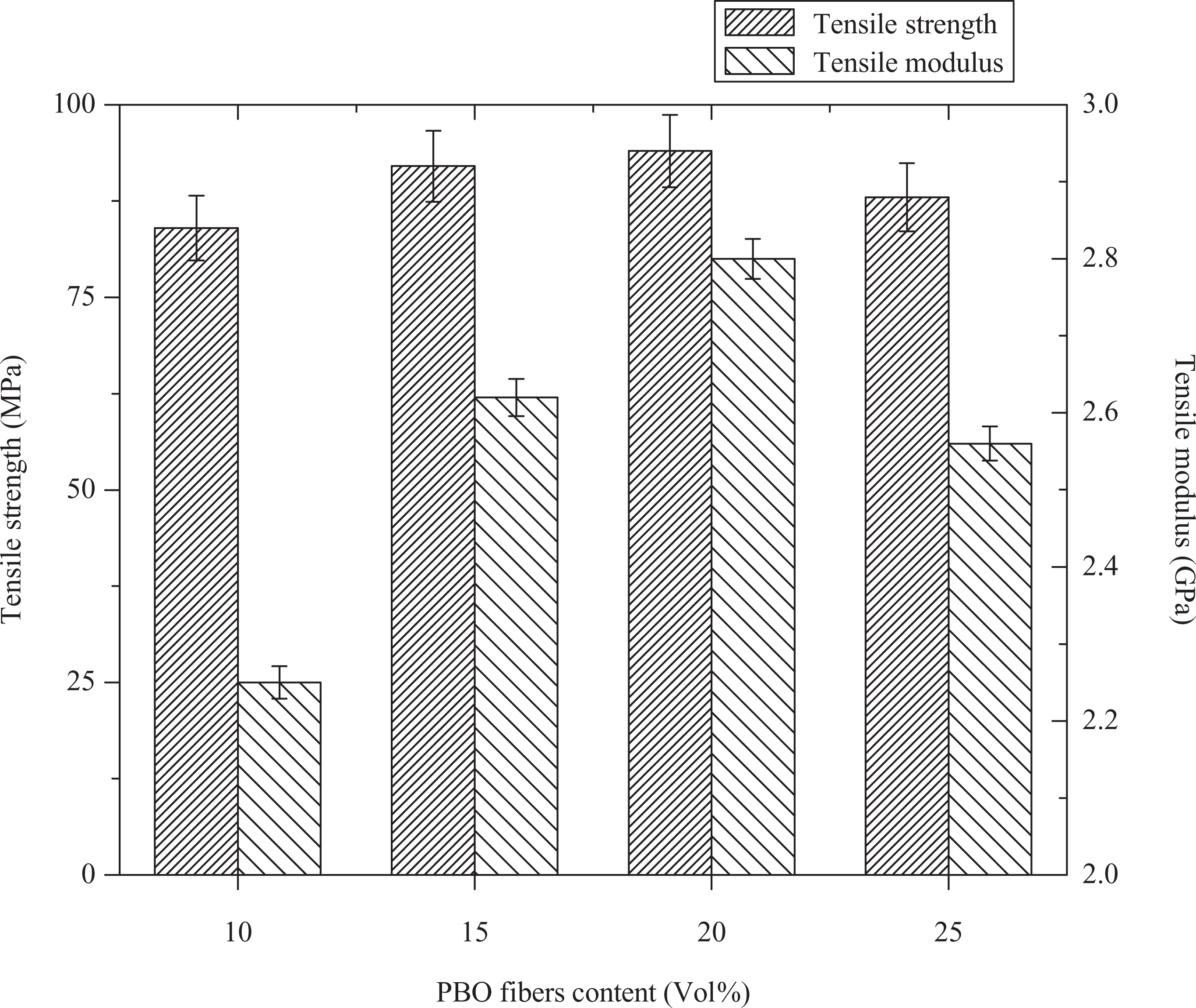
The effect of volume ratio content of poly-p-phenylenebenzobisoxazole (PBO) fibers on the tensile properties.
There is an increase in the values of tensile strength and tensile modulus when PBO fiber content is less than 20 vol%. Above 20 vol% fiber content, the tensile properties decrease with the increase in fiber content. Excessive fibers may lead to the macroscopic inhomogeneity of the composite, which induces stress concentration in the composite. The 20 vol% fiber content is chosen to investigate the influence of surface-treated methods on the tensile properties of the PBO/PI composites.
Figure 3 represents the effect of tensile strength and tensile modulus of RE-treated PBO/PI composite as a function of La concentration. The result indicates that the tensile strength and tensile modulus increase with the increase in La concentration wherein the optimal La concentration is less than 0.6 wt%. The maximum values of tensile strength and modulus are obtained at 0.6 wt% La concentration, reaching the value of 129 MPa and 3.4 GPa, respectively. Above 0.6 wt% La concentration, the tensile properties decrease gradually with increase in La concentration.
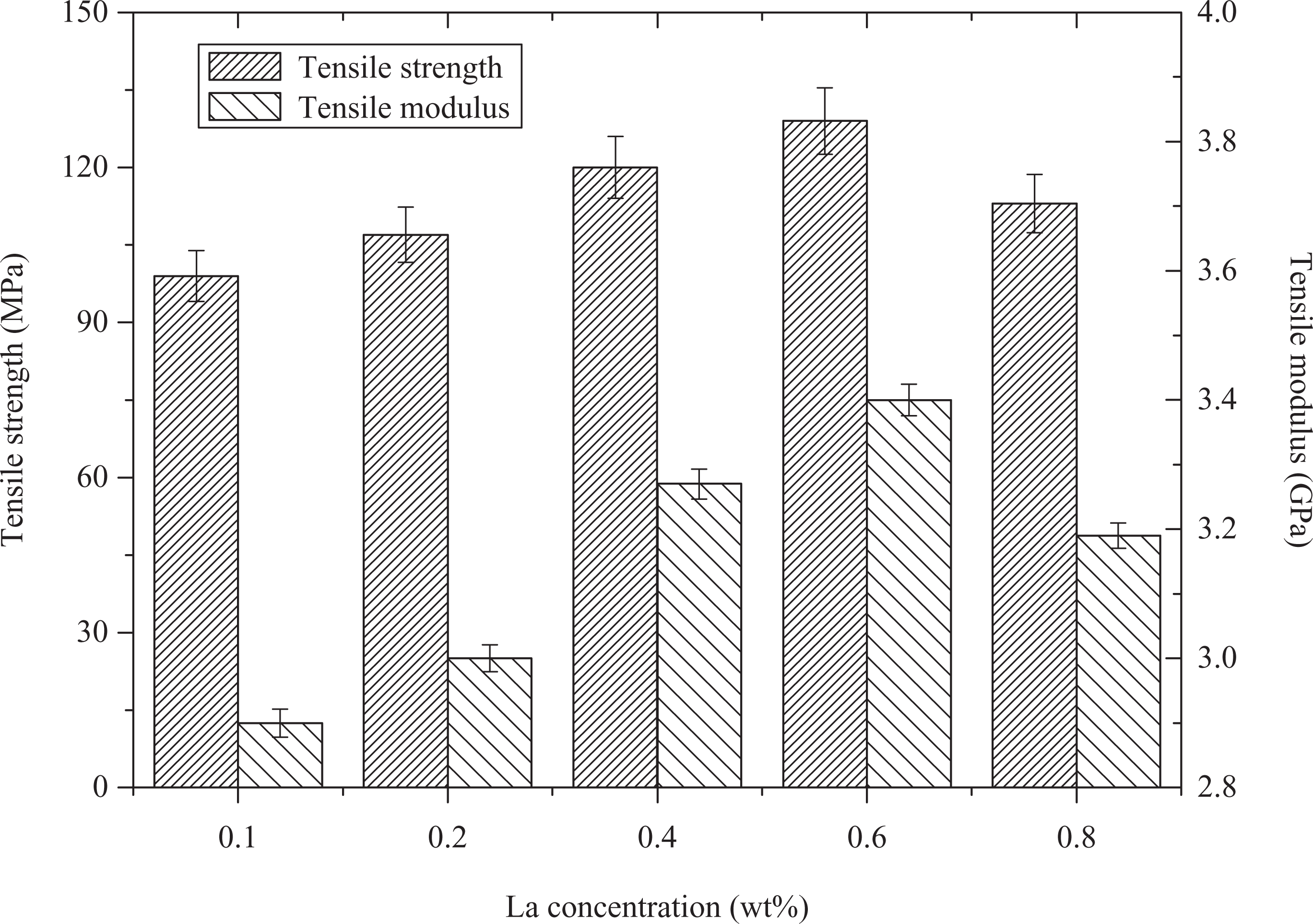
The effect of lanthanum (La) concentration on the tensile properties.
La element has great effective nuclear charge and strong ability to attract electrons of other atoms around it because its electrons on the 4f electronic shell cannot close down the atomic nucleus completely. The carboxyl group on one end of the PBO fiber molecule of PBO fiber is capable to reaction with La atoms. Through this kind of chemical bonding, La atoms are absorbed onto the PBO fibers through this kind of chemical bonding, andthen the coordinationg chemical reactions with the reactive functional groups (such as carboxyl [–COOH] and amino [–NH2] groups) which are in the RE solution continue to occur owing to their large coordination number. As a result, the concentration of reactive functional groups on the surface of fibers is increased through thesome effect similar to the role of chemical grafting, improving the compatibility between PBO fibers and PI matrix. When PBO fibers are compounded with PI matrix, La atoms which do not completely coordinate in the chemical reactions continue to react with thesome functional groups of polymers (such as sulfonic group [–SO2–] and carbonyl [C=O] on the PI). As mentioned above, the bonding between PBO fibers and PI matrix is formed through RE surface treatment. The energy of 4f electronic shell of La atom is equivalent to its 6s electronic shell, so the electron is liable to move between these two shells, which in turn enablesmake some flexibility in the coordinating bonding between the La atoms and PBO fibers as well as between the La atoms and PI matrix. Flexible interfacial structure between PBO fibers and PI matrix can consume more energy before the failure of PBO/PI composite, which stops further development of the crack in the interface. RE surface treatment can also strengthen the interfacial flexibility between PBO fibers and PI matrix. As a result, the interfacial adhesion of PBO/PI composite is improved through RE surface treatment. However, excess La elements may result in the formation of La salt crystals on PBO fiber surface, which prevent the formation of chemical bonding between PBO fibers and PI matrix, consequently, results in a decrease ofin the tensile properties of PBO/PI composites occurs.
Principles of optimal La concentration can be explained by the schematic diagram of interface structure of RE-treated PBO/PI composites as shown in Figure 4. When the La concentration is low, the interpenetrating web formed by La and PI is thin and hence does not have a significant strengthening effect. Though the PI matrix can permeate the web easily, there is no effective adhesion in the interface of PBO/PI because of scarce La monomolecular layer in the surface of PBO fibers which results in small quantity of effective chemical bonds. When the La concentration is high, the interpenetrating web is thick, which prevents PI matrix from permeating. The precipitated La salt crystals are introduced into the interface layer as impurities, forming internal defects and affecting the entire tensile strength. When the La concentration is appropriate, the thickness of interpenetrating web is moderate, which not only has a significant strengthening effect but also lets PI matrix permeate the mixed layer. The La monomolecular layer covers the surface of PBO fibers completely, improving the interfacial adhesion between PBO fibers and the PI matrix effectively.
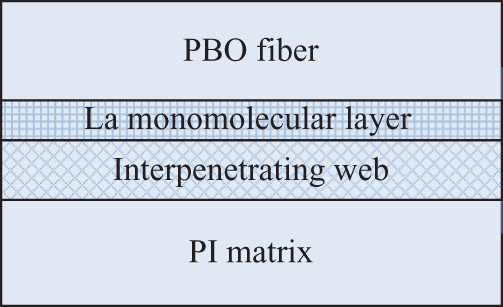
The schematic diagram of the interface between poly-p-phenylenebenzobisoxazole (PBO) fibers and polyimide (PI) matrix.
Figure 5 is the SEM images of the fracture surface, illustrating the effect of La concentration on interfacial characteristics. Figure 5(a) shows that the surfaces of PBO fibers are smooth with slight deformation. Holes found on the fracture surface indicate that the interfacial adhesion between PBO fibers and PI matrix is poor. The interfacial adhesion is improved as shown in Figure 5(b). It can be seen that the gaps between PBO fibers and PI matrix are small. With the increase in La concentration (Figure 5c), the PBO fibers become a little thinner at the ends due to deformation. The interfacial adhesion between the PBO fibers and PI matrix becomes much stronger, as shown in Figure 5(d). Especially the end of the PBO fibers becomes much thinner, which means the tensile load is effectively transmitted from the PI matrix to PBO fibers due to the powerful interfacial adhesion, and PBO fibers can successfully carry the load. With continuing increase in La concentration, the deformation of PBO fibers decreases and the gaps between PBO fibers and PI matrix increase, as shown in Figure 5(e).
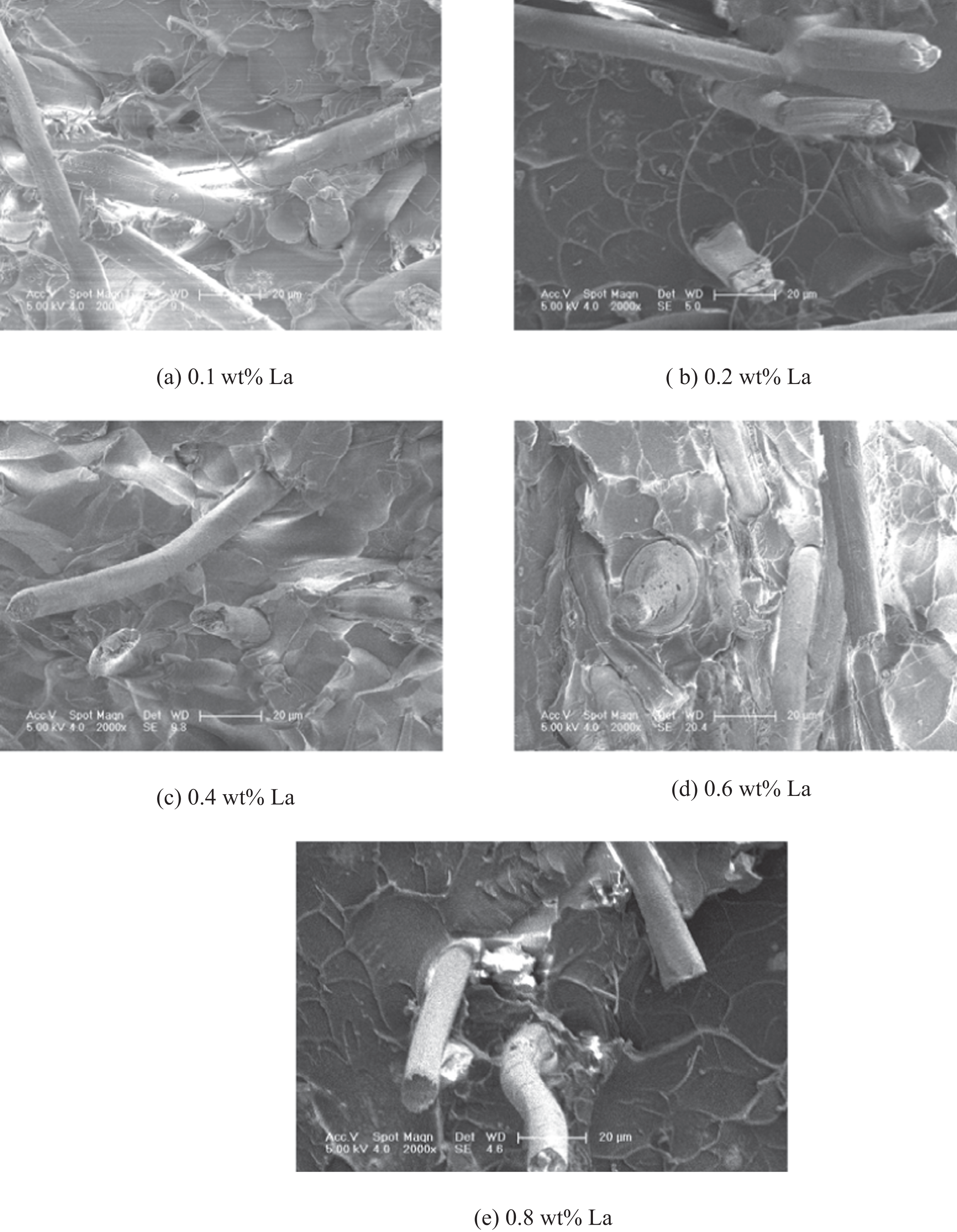
The scanning electronic microscopic (SEM) images of the fracture surfaces treated by different lanthanum (La) concentrations.
According to the tensile experimental results described above, the optimal concentration of La was fixed at 0.6 wt%. A series of parallel tests performed to analyze the tensile properties of composites reinforced with different types of fibers were carried out in the same conditions. As seen in Figure 6, the tensile properties of composite reinforced with untreated fibers are inferior to the modified fibers. Furthermore, RE-treated PBO fibers achieve better results than the coupling agent fibers. The tensile strength of RE- and coupling agent-treated PBO/PI composites improved to about 37.2% and 20.2%, respectively, compared with the untreated ones. The results indicate that RE treatment is superior to coupling agent treatment in improving the interfacial adhesion between PBO fibers and PI matrix.
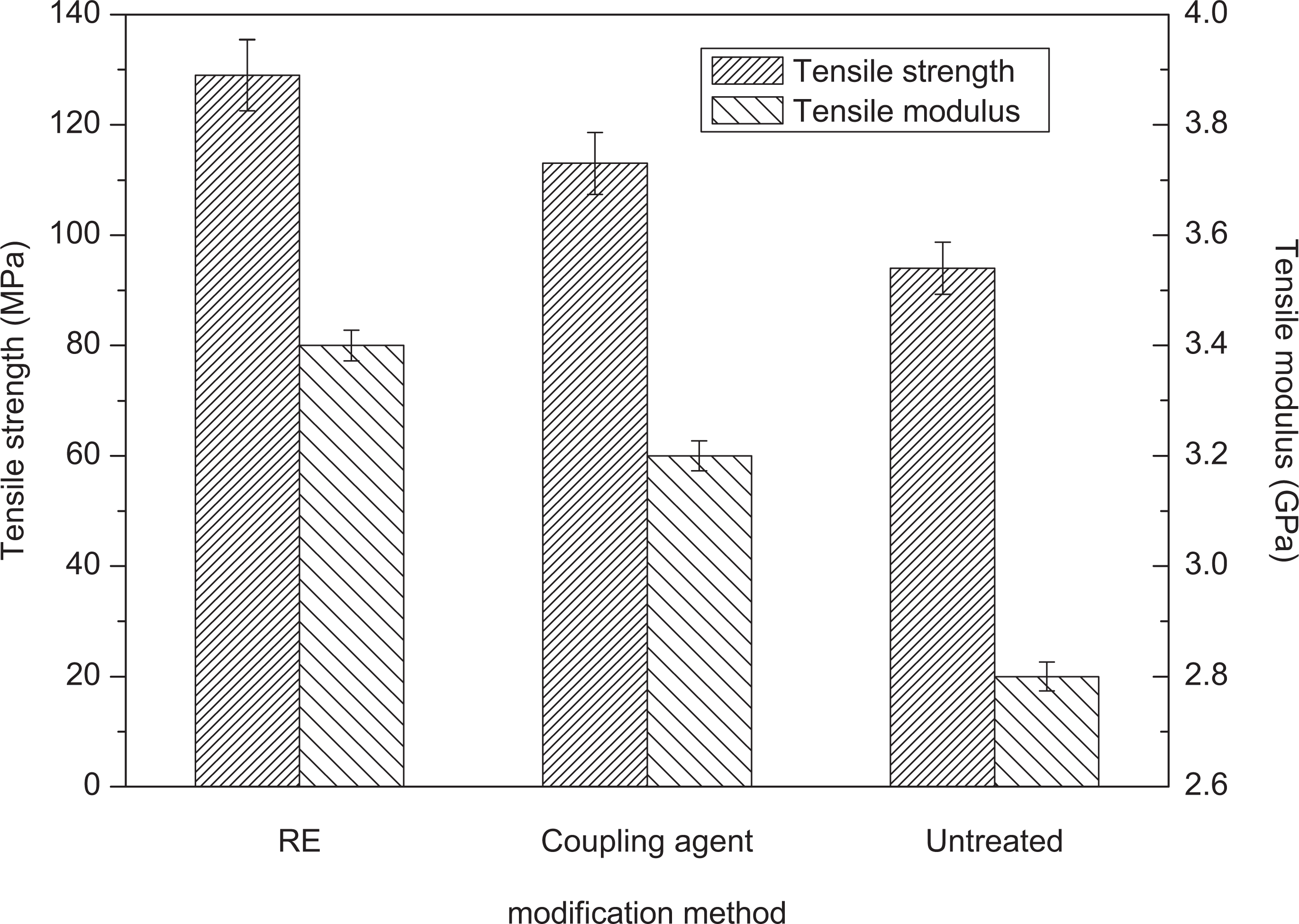
The influence of modification methods on the tensile properties.
The X group in RSiX3, simplified molecular formula of coupling agent, can generate a hydroxyl ion by hydrolysis. Hydroxyl ion is capable of dehydration–condensation reactioing with carboxyl ion which is in the molecule of PBO fiber molecule. The R group in RSiX3 is an amino withwhich has an affinity for amino in the PI matrix. The coupling agent used in this experiment has good compatibility with PI matrix. But as a matter of fact, not every molecule of coupling agent can generate a hydroxyl ion by hydrolysis which react with the PBO fiber. The polysilanes formed in the surface of PBO fiber are not entirely a monomolecular layer but a multimolecular layer, accompanied by physical adsorption and sediment. These may affect the affinity of coupling agent with PBO fiber.
SEM images of fracture surfaces of the untreated, coupling agent treatment, and RE-treated composites are shown in Figure 7. There are several holes in the fracture surface of PI composites reinforced with untreated PBO fibers. The PBO fibers can be extracted easily without any deformation due to the poor adhesion between PBO fibers and PI matrix, as shown in Figure 7(a). The interfacial adhesion is improved by treatment with coupling agent. It is seen in Figure 7(b) that there are some small gaps between PBO fibers and PI matrix. PBO fibers generated a certain degree of deformation during the process of extraction. The fracture shown in Figure 7(c) is PI composite reinforced with RE-treated PBO fibers, as mentioned above. It is obvious that RE treatment is superior to coupling agent treatment in promoting interfacial adhesion between PBO fibers and PI matrix. The results described above are consistent with the tensile experimental data.
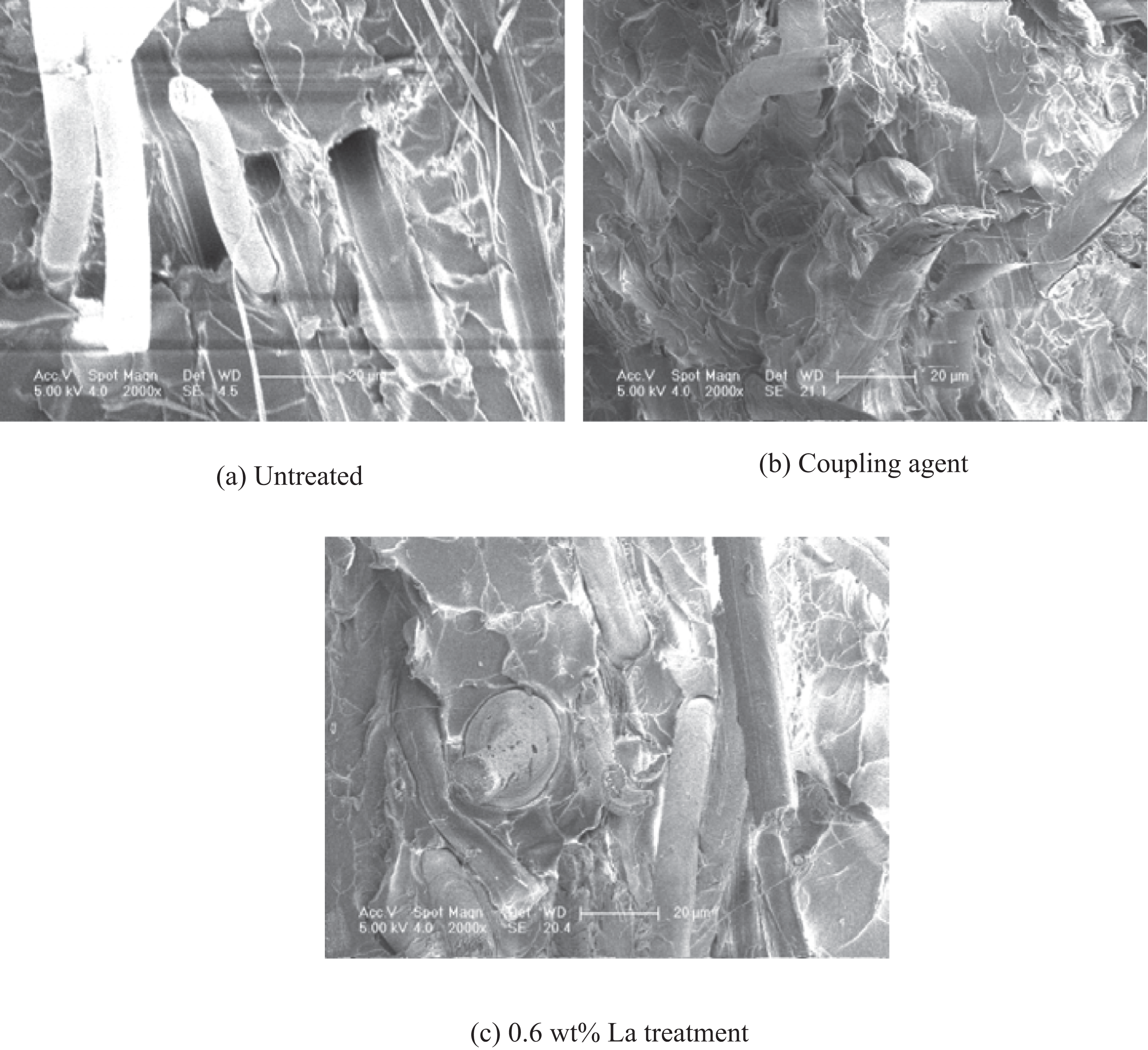
The scanning electronic microscopic (SEM) images of the fracture surfaces treated with different methods.
Generally, the flexural strength can provide a measure of adhesion between the filler material and the polymer. 20 Figure 8 represents the flexural properties of three kinds of PI composites. It is seen from Figure 8 that both surface treatments can improve the flexural strength of PBO/PI composite, and the flexural strength of RE-treated PBO/PI composite is improved by about 23.5% compared with that of the untreated composite, while 11.7% improvement is obtained by coupling agent. These observations indicate that the filler-to-matrix bond of RE-treated PBO/PI composite is stronger than that of coupling agent-treated composite, which could absorb more strain energy before fracture.
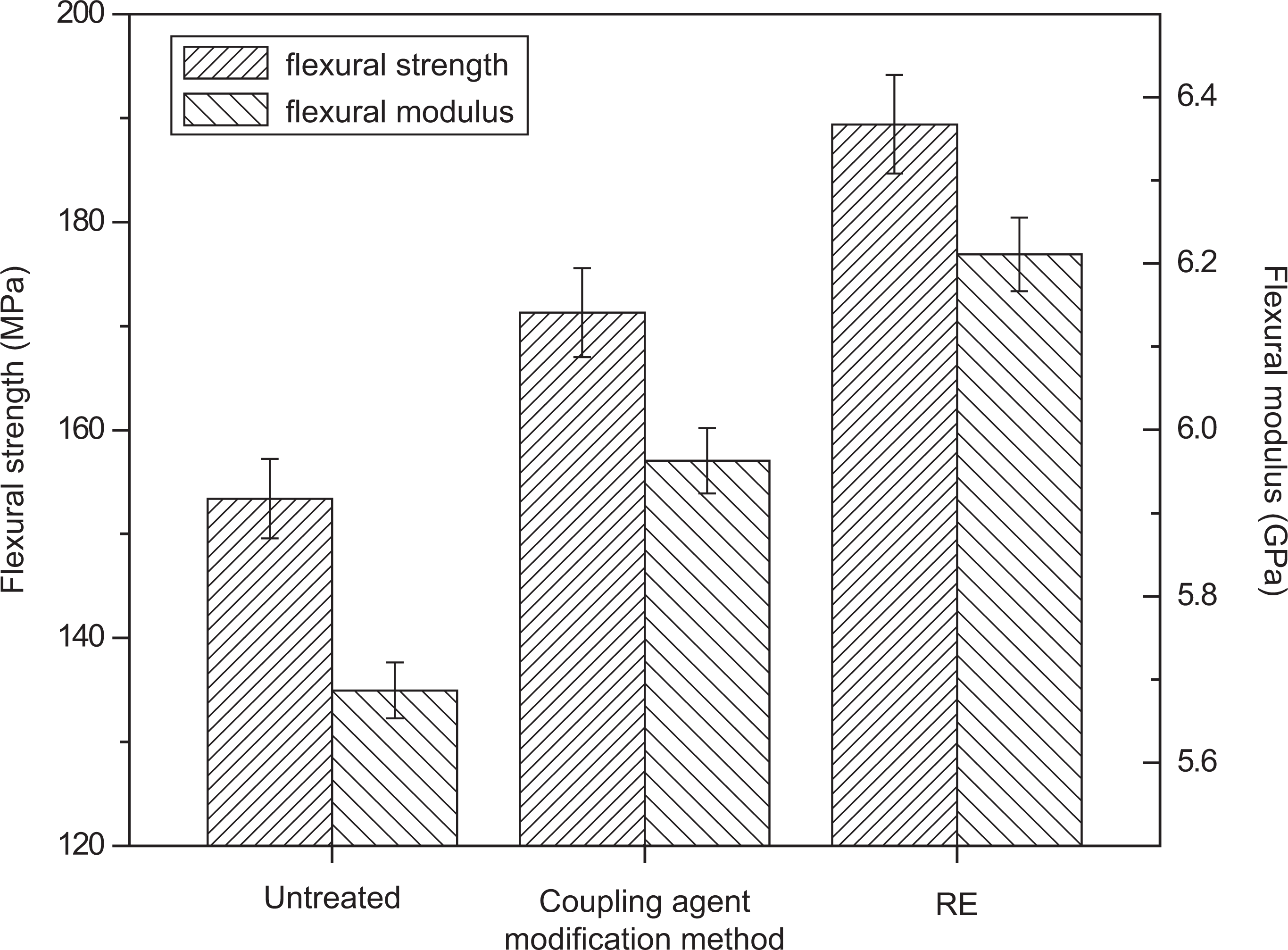
The influence of modification methods on the flexural properties.
Surface oxygen-to-carbon (O/C) ratios obtained from XPS on the surface of untreated, coupling agent-, and RE-treated PBO fibers are shown in Table 2. After RE treatment, the RE concentration on the fibers is 2.13% relative to carbon elementary and oxygen elementary, which indicates that La element is chemically absorbed onto the PBO fibers surface. Carbon concentration decreases and polar oxygen concentration increases with the surface modification of PBO fibers. The untreated fiber displays the smallest O/C ratio (18.26%), while RE-treated fiber shows the highest O/C ratio (45.47%). This may result from both coupling agent and RE treatments which introduce the polar groups onto the fibers surface and more polar groups are introduced onto the surface by RE-treated method. Figure 9 represents XPS spectra of the C1s region of untreated PBO fiber. Figure 10 shows that there is a small acromion at the binging energy of 288.9 eV on the XPS spectra of the C1s region of coupling agent-treated PBO fiber, which indicates that a small quantity of carboxyl groups are introduced onto the PBO fiber surface after treatment with coupling agent. On the C1s spectra of RE-treated PBO fiber (Figure 11), the acromion of carboxyl groups is much higher and more obvious than that of coupling agent-treated PBO fiber because of a large increase in the number of carboxyl groups after RE treatment. This result is consistent with the data in Table 2, where O/C ratio increases by RE treatment.
Surface elementary composition of PBO fibers.
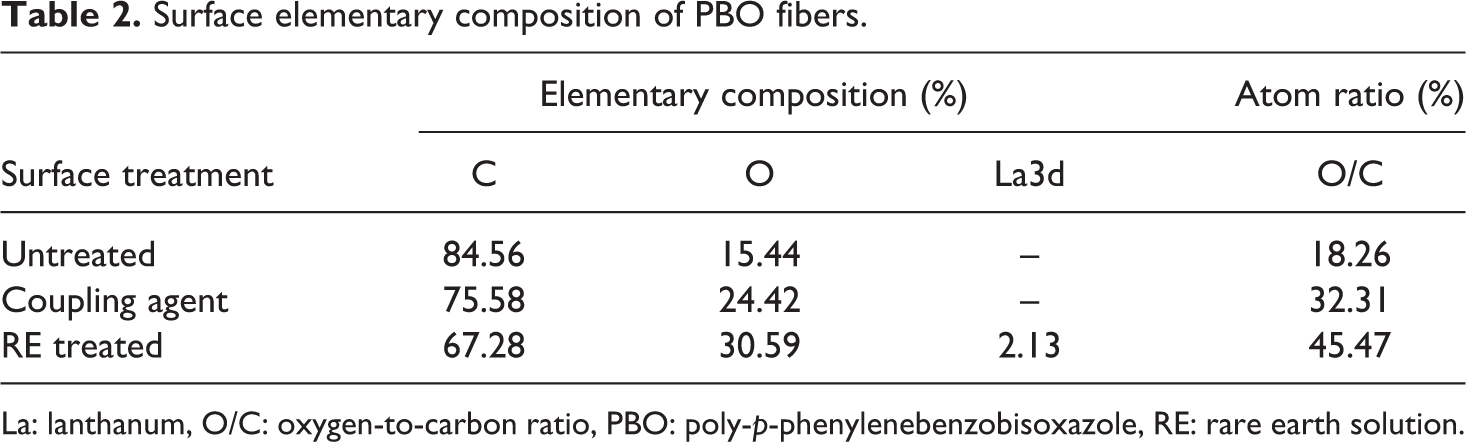
La: lanthanum, O/C: oxygen-to-carbon ratio, PBO: poly-p-phenylenebenzobisoxazole, RE: rare earth solution.
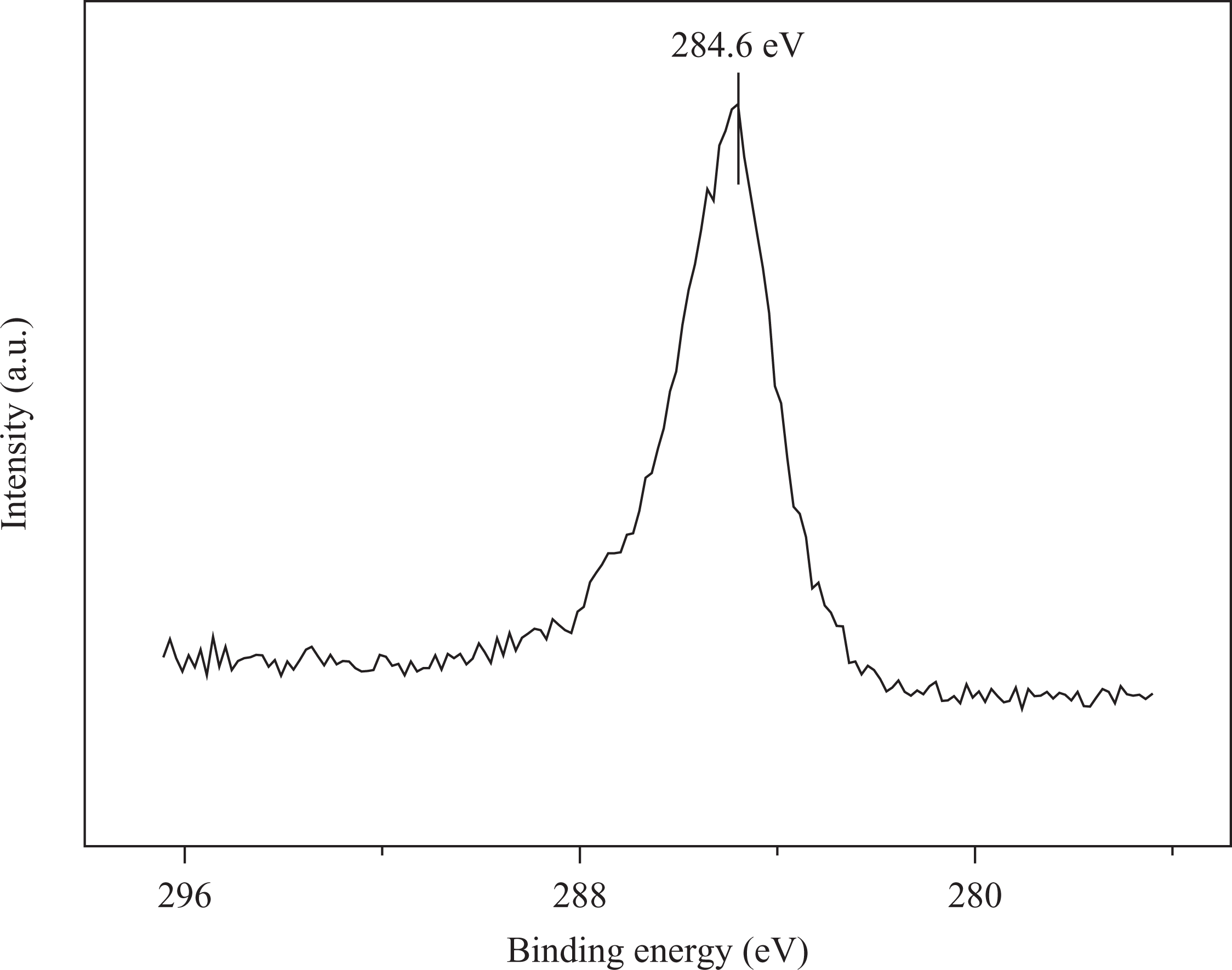
X-ray photoelectron spectroscopy (XPS) C1s peak of untreated poly-p-phenylenebenzobisoxazole (PBO) fibers.
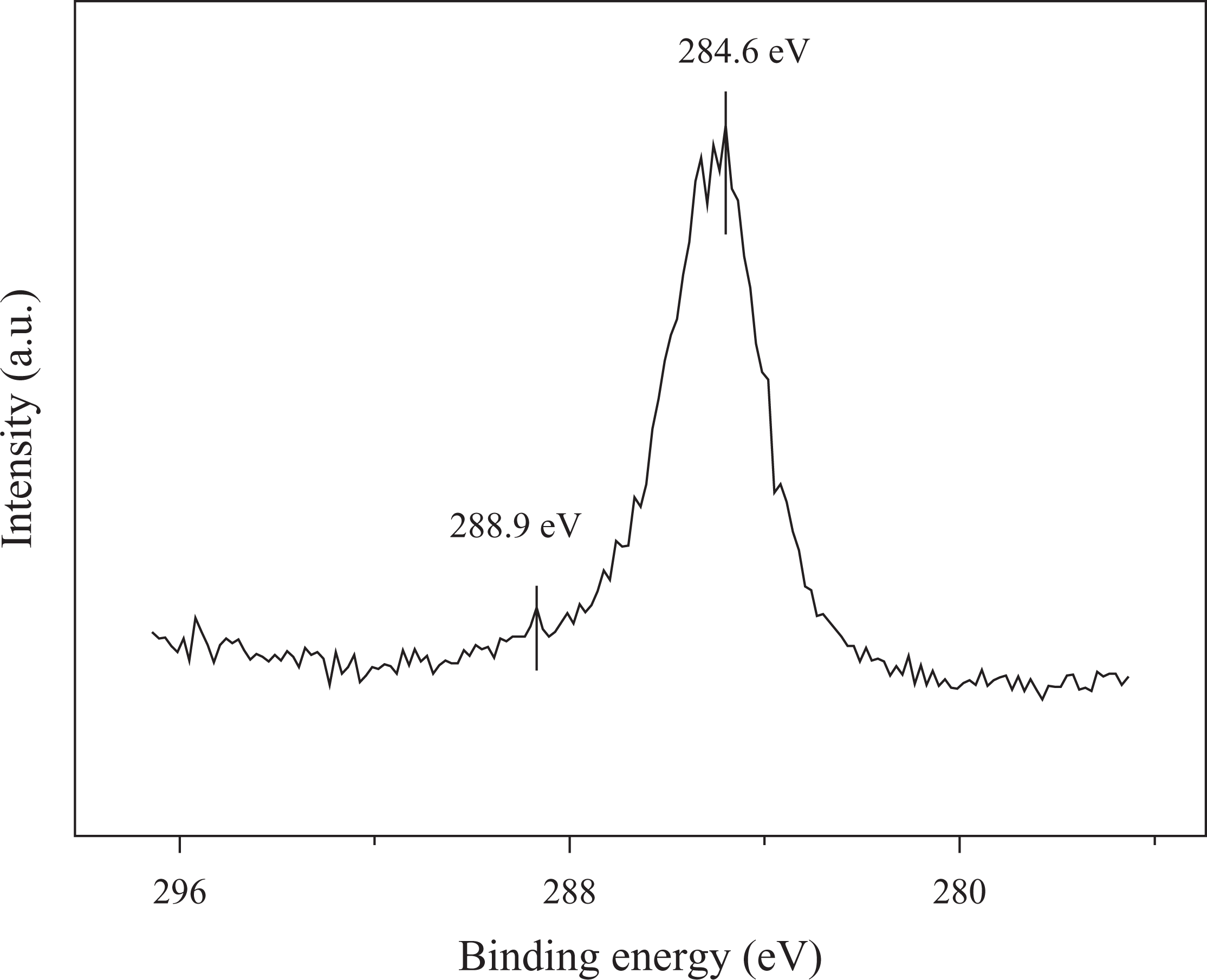
X-ray photoelectron spectroscopy (XPS) C1s peak of coupling agent-treated poly-p-phenylenebenzobisoxazole (PBO) fibers.
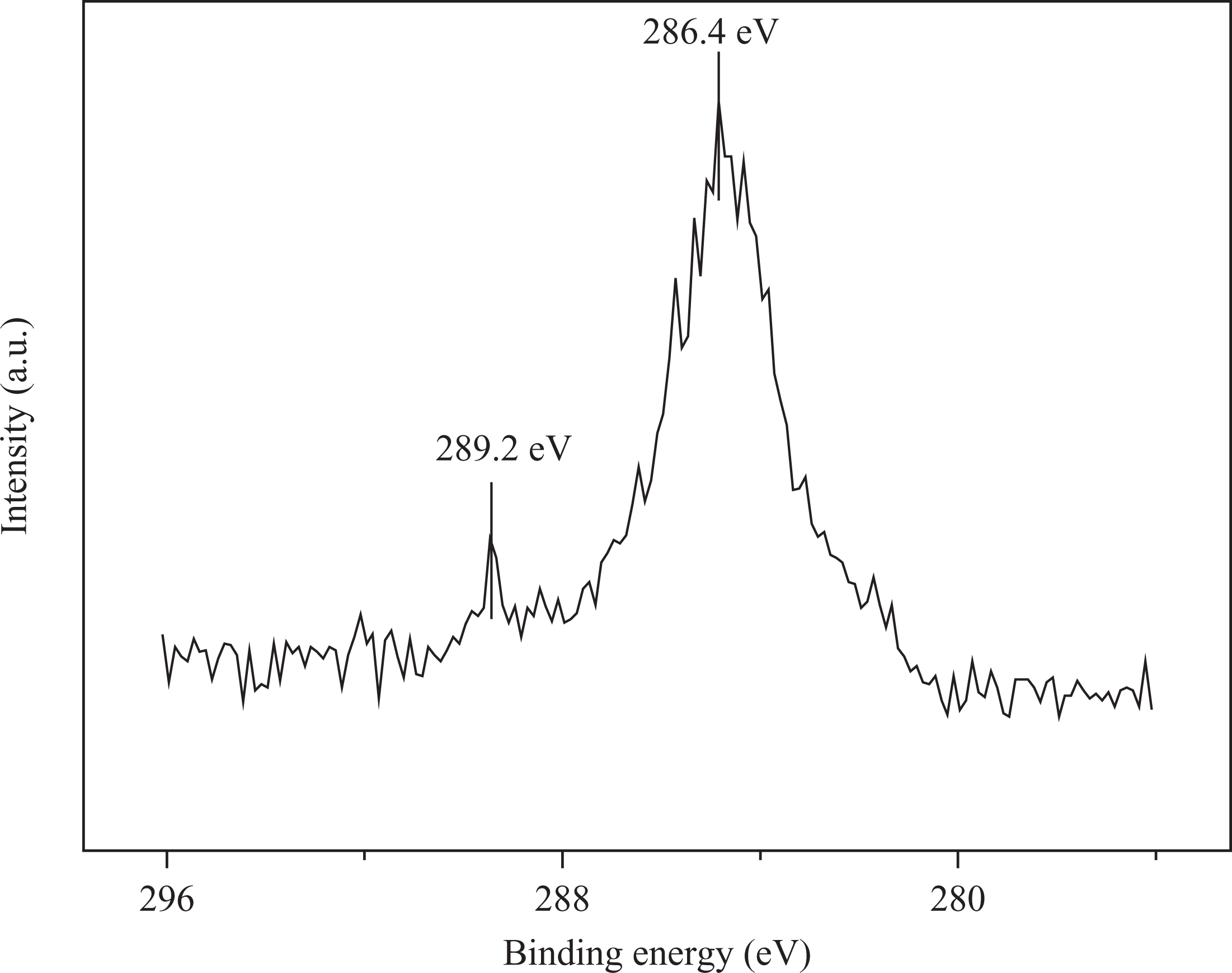
X-ray photoelectron spectroscopy (XPS) C1s peak of RE-treated poly-p-phenylenebenzobisoxazole (PBO) fibers.
From the results of XPS, it can be stated that RE treatment increases the number of carboxyl groups on PBO fiber surface, which is the most decisive contribution to improve the adhesion between PBO fibers and PI matrix, and hence the tensile properties of PBO/PI composite are improved.
Conclusions
In this study, we investigate the effect of coupling agent treatment and RE treatment on the tensile properties of PI composite reinforced by PBO fibers. The surface modifiers change the chemical properties of fiber surface, which enables the chemical reaction between PBO fibers and PI matrix. The results indicate that the O/C ratio of surface-treated PBO fiber is larger than that of untreated, and RE-treated PBO fiber shows the highest O/C ratio, and hence the RE treatment is superior to the coupling agent treatment in promoting interfacial adhesion between PBO fibers and PI matrix. The La concentration parameter in solution plays a very important role in improving the tensile properties of PBO/PI composites. The optimal concentration of La is fixed at 0.6 wt%.
Footnotes
Acknowledgments
The authors would like to thank the help of the Instrumental Analysis Center, Shanghai Jiaotong University.
Funding
This research received no specific grant from any funding agency in the public, commercial, or not-for-profit sectors.