




Abstract
In this study, within the scope of experiments, two kinds of biaxial weft-knitted (BWK) fabrics with aramid (AR) and polyamide 66 (PA66) stitch fibers were used as reinforcement systems to fabricate thermoplastic composites with PA66 resin yarn. Then final composite became BWK with AR stitch yarn and cross-ply. The mechanical properties of composites were investigated by conducting tensile and three-point bending tests on specimens. In all specimens, PA66 was commingled with AR yarn. AR was used as reinforcement. In preliminary studies, AR unidirectional composites with AR/PA66 commingled fibers and with various twisting angles were produced and appropriate twisting angle was found by conducting tensile and three-point bending impact tests on specimens. Because of the higher volume fraction of the cross-ply composites, tensile and three-point bending properties of the cross-ply composite structures had higher than the BWK composites with the AR stitch yarn.
Keywords
Introduction
In recent years, the potential benefits of cost-effective manufacturing of knitting with advanced fibers, such as glass fiber (GF) and aramid (AR), to produce near net shape preforms has received increasing interest. 1
In order to improve the mechanical properties, such as strength and stiffness, of weft-knitted fabric, straight yarns both in weft and in warp directions can be integrated. These types of reinforcements are called biaxial weft-knitted (BWK) structures. BWK fabrics include weft and warp yarn layers, which are held together by a stitching yarn system. Reinforcing yarns, such as GF or AR fiber, can be used within all yarn systems. The strength and stiffness of the composite can be improved by reinforcing yarns. 2 The tensile properties of the BWK thermoset composites were reported by Demircan et al. 3
Thermoplastic composites are being used in various industries such as automotive and wind turbines. The most important advantages of thermoplastics are their potential for rapid, low cost, and mass production of reinforced composites. On the other hand, thermoplastic composites have very high viscosity (usually 500–5000 Pa s), which makes the processing of thermoplastic matrix composites difficult. Therefore, some techniques, such as commingled yarn, were developed in order to improve the process ability of thermoplastic composites. The matrix fiber will be mixed with reinforcing fiber in commingled yarn technique, and this technique was proven to be a cost-effective method of processing of thermoplastic composites. 4,5 Therefore, the commingled yarn technique was chosen in order to fabricate the BWK preforms. Some research has been carried out to find the consolidation quality of GF/polypropylene (PP) commingled yarn-based composites. 6,7 Torun et al. 8 studied the effect of twisting on mechanical properties of GF/PP commingled hybrid yarns and unidirectional (UD) composites. They found that twisting did not significantly affect the modulus of elasticity of UD composites, however, the tensile strength of UD composites was reduced by further processing even without twisting. Rajwin et al. 9 studied the effect of yarn twist on mechanical properties of GF-reinforced composite rods. They found that the tensile, flexural, and interfacial shear properties of the composites increase up to 0.25 TPI, 1 TPI, and 0.75 TPI, with the increase in twist level in yarns, followed by decrease in the properties of the composites.
Knitted fabric-reinforced thermoplastic composites were studied by some researchers. 10 –12 But some researchers studied knitted fabric-reinforced thermoplastic composites with commingled fibers. 13 –18 The tensile properties of knitted fabric-reinforced composites made from GF/PP commingled yarn with different loop densities were investigated by Zaixia et al. 4 They found that the tensile strength of the composites increases followed by slight decrease as the loop density of preform increases. High-performance thermoplastic composite from flat-knitted multilayer textile preform using hybrid yarn is investigated by Abounaim et al. 15 They found that the mechanical properties of two-dimensional composites were greatly affected by different arrangements of reinforcement yarns, and the integration of reinforcement yarns as biaxial inlays (warp and weft yarns) is found to be the best solution for knitting to have the highest mechanical properties compared to the tuck stitch shaped and UD-arranged reinforcements. Tensile, three-point bending, and impact properties of textile-inserted PP/PP-knitted composites using injection-compression molding were reported by Khondker et al. 19 The tensile properties of weft-knitted composites for energy absorption were studied by Xue et al. 20 They described correlation between fabric structure (e.g. loop height and width, number of wale or course per unit length, etc.), matrix damage, and materials properties. The effect of architecture on the mechanical properties of knitted composites was reported by Anwar et al. 21 They investigated tensile and compression properties of three milano ribs and one rib weft-knitted glass fabric reinforcement. Moreover, there are only a few contributions about the mechanical properties of BWK composite. 22 –24 Demircan et al. 25,26 reported bending and impact properties of BWK thermoset and thermoplastic composites.
In the literature, contributions about the mechanical properties of knitted composites were reported, which are explained above. However, there are only a few contributions about the mechanical properties of the BWK and cross-ply thermoplastic composites. The purpose of this research is to characterize the mechanical properties of the BWK and cross-ply textile composites. Additionally, in the literature, there was no research about the effect of twisting on the impact properties of AR UD composites. In preliminary studies, AR UD composites with AR/polyamide 66 (PA66) commingled fibers and with various twisting angles were produced, and appropriate twisting angle was found by conducting tensile and three-point bending impact tests on specimens.
Within this study, we investigated tensile and three-point bending properties of the BWK and cross-ply thermoplastic composites. Our study showed that twisting can improve the knit ability of commingled fibers. The obtained results of this study can be used to design new textile preforms during development of different composite materials.
Materials and methods
Selection of intermediate fiber of UD composites
AR, 1670 dtex, reinforcement yarn (Kevlar-29, Dupont-Toray Co. Ltd, Tokyo, Japan) commingled with nylon resin yarn (PA66, 44 dtex × 31 = 1364 dtex, Asahi Kasei Ltd, Osaka, Japan). The commingled yarn was prepared using commingled yarn machine (Kajinere Ltd, Ishikawa, Japan). The commingled yarn machine had three main parts such as creel, commingled unit, and winding unit. Bobbins of resin and reinforcement (AR) yarns were put on the creel. At first, resin and reinforcement yarns were sent to the commingled unit using servo motor on the machine. After that, both resin and reinforcement yarns were mixed in the commingled unit. Finally, the intermediate material was completed using the winding unit on the machine.
The background of this research is shown in Figure 1(a) to (d). Figure 1(a) shows the photograph of commingled fibers (AR/PA66). The photograph of the feeding of the commingled warp yarns to the knitting machine is shown in Figure 1(b). During the feeding of the commingled warp yarns, the AR and PA66 fibers were separated from each other, which are shown in Figure 1(b). Figure 1(c) shows the photograph of the front side of the machine with the commingled warp yarns. The separated and distensioned commingled yarns could be seen in the photograph. Because of the separation and distension of the fibers, the commingled yarns couldn’t be knit on the knitting machine. In order to overcome this problem, the commingled fibers were brought together by twisting, and we called them as compact commingled fibers. Figure 1(d) shows the photograph of the BWK fabric with the commingled warp and weft yarns. The compact commingled fibers could be knittable on the knitting machine, which is shown in Figure 1(d). Table 1 shows the processing conditions of intermediate fiber.
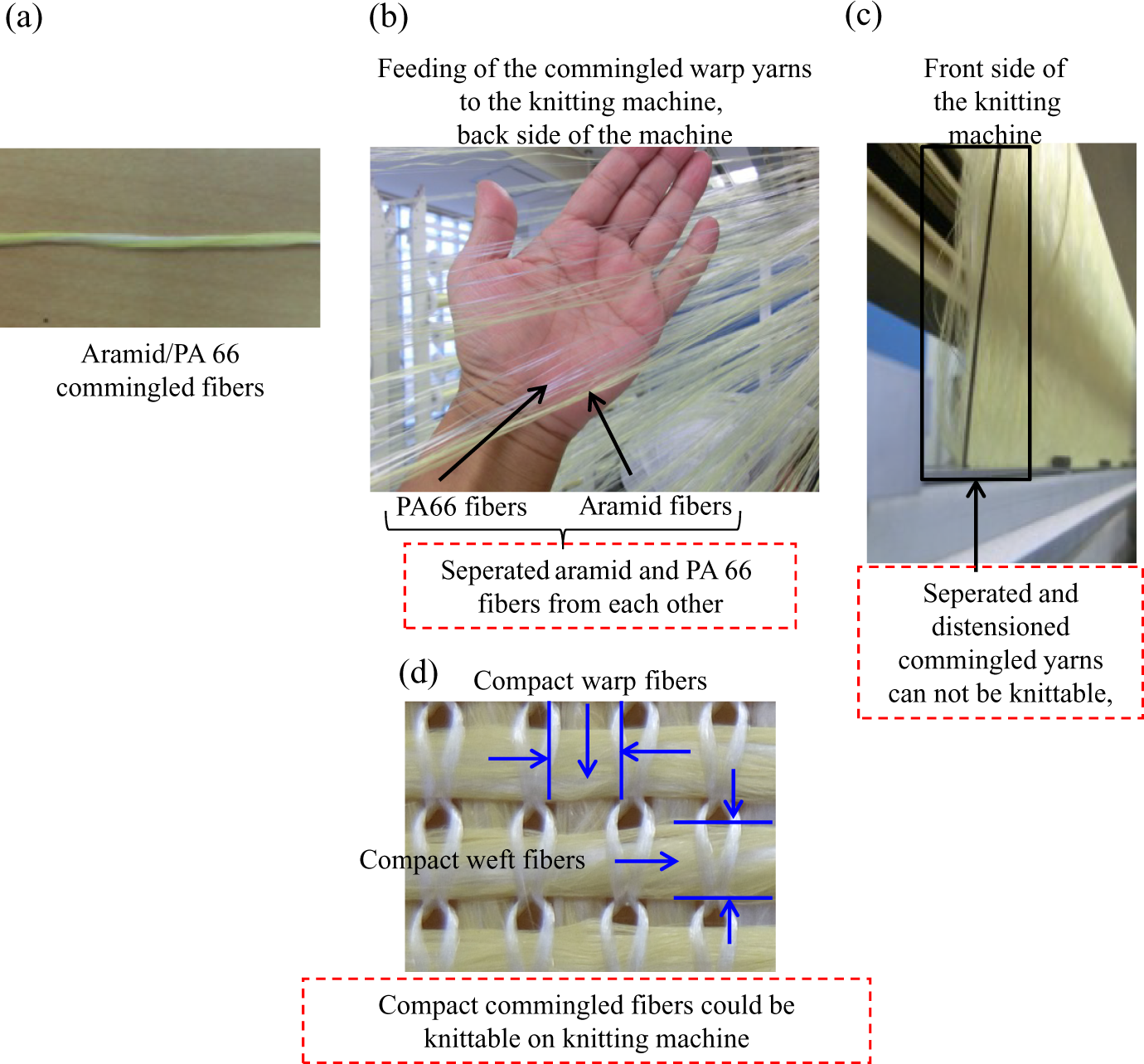
Photographs of background of the research (a) commingled fibers (AR/PA66), (b) the feeding of the commingled warp yarns to the knitting machine and the separated AR and PA66 commingled fibers, (c) the front side of the machine with the commingled warp yarns and separated and distensioned commingled yarns, and (d) the compact commingled fibers could be knittable on the knitting machine. AR: aramid; PA66: polyamide 66.
Intermediate fibers for UD composites.
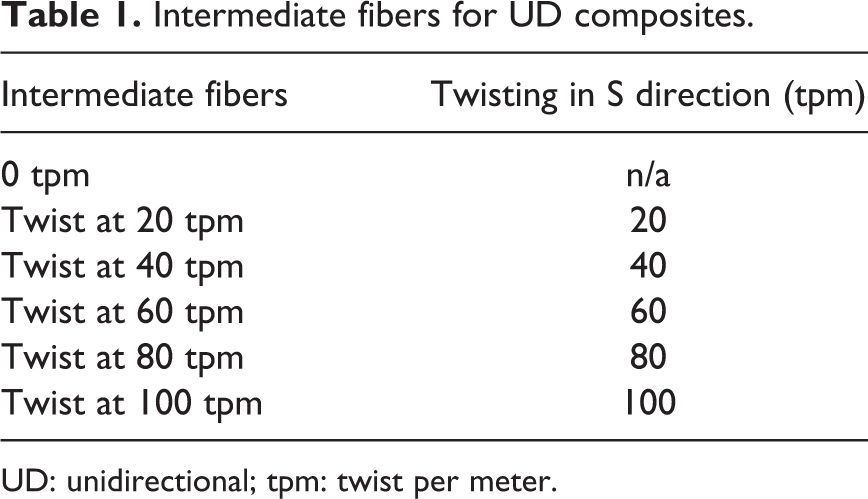
UD: unidirectional; tpm: twist per meter.
Experimental procedure of UD composites
AR UD thermoplastic composites with twisted (20, 40, 60, 80, and 100 twist per meter (tpm), in S direction) and nontwisted (0 tpm) commingled fibers (1670 dtex Kevlar/1364 dtex PA66) were fabricated on hot press compression machine (Figure 2). First, the fibers were wound 30 times on a metal frame and then they were stayed for 12 h in vacuum oven at 100°C in order to remove moisture from commingled fibers, and then, they were put on the mold and the hot press machine. The molding pressure, temperature, and time were 6 MPa, 300°C, and 2.5 min for tensile test, respectively, whereas 6 MPa, 300°C, and 5 min for three-point bending test. Later, mold was cooled under molding pressure until arriving the crystallizing temperature of 50°C. After that, tensile and impact properties of UD composites were studied in order to find the effect of twisting process. The average volume fraction (V
f) and thickness of the specimens were about 61% and 0.6 mm for tensile test, respectively, and 53.4% and 3.1 mm for three-point bending impact test. The V
f of the AR fibers in the UD composites was calculated using the following equation:
where A is the cross-sectional area of the AR fiber, h is the thickness of the laminate, and W is the width of the laminate.
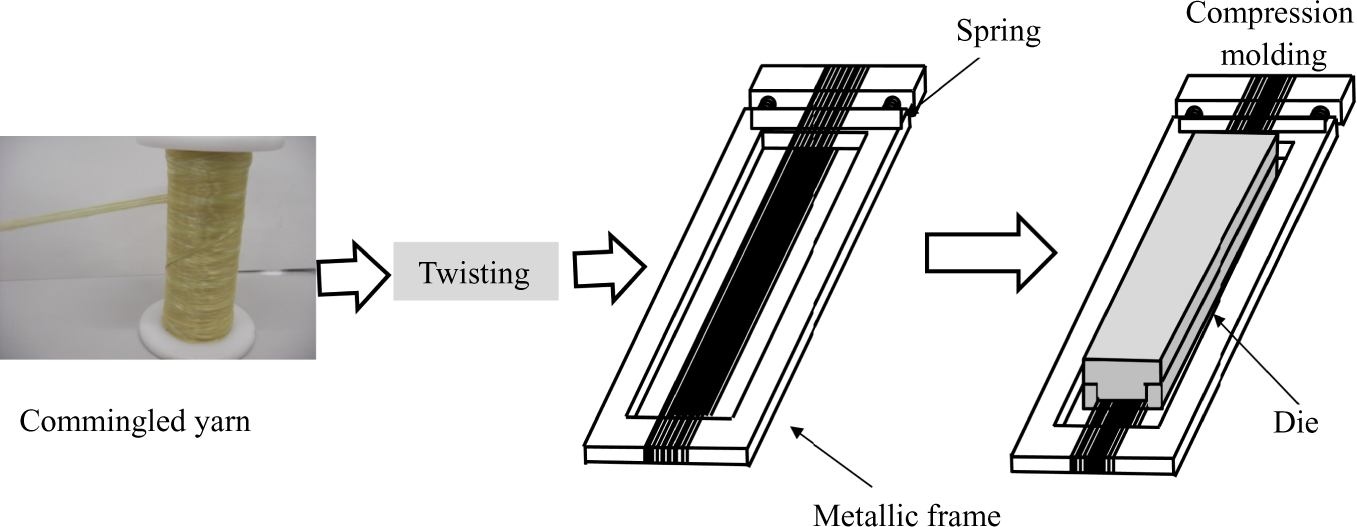
Fabrication process of AR UD composites with 1670 dtex Kevlar/1364 dtex PA66. AR: aramid; UD: unidirectional; PA66: polyamide 66.
The composite coupons had a nominal dimension of 200 × 20 × 0.6 mm3 for tensile test and 50 × 10 × 3.1 mm3 for three-point bending impact test. Tensile tests were conducted on the specimens according to ASTM-D303 standard using universal testing machine (type 55R4206; Instron, Japan)under displacement control with speed of 1 mm/min in 0° direction.
Tensile properties of commingled fibers (1670 dtex Kevlar/1364 dtex PA66) with the 0, 20, 40, 60, 80, and 100 tpm twisting were also studied using universal testing machine (type 55R4206; Instron) under displacement control with speed of 1 mm/min. The span lengths of the specimens were 150 mm.
The three-point bending impact tests were conducted on UD specimens according to JIS-K7084 standard in 0° direction. The three-point bending impact damages were inflicted on different specimens in a drop weight test using universal testing machine (type Dynatup 9250HV; Instron). The drop weight was used as an impactor for the tests. The weight of the impactor was 6490 g and the incident impact energy was 20 J for the three-point bending impact test. The span length for test was 35 mm.
Results of tensile properties of AR/PA66 commingled fibers and selection of intermediate fiber of UD composites
Tensile test results of the commingled fibers (1670 dtex Kevlar/1364 dtex PA66) with the 0, 20, 40, 60, 80, and 100 tpm twisting are shown in Figure 3(a). The AR/PA66 commingled fibers with the 40 tpm twisting showed the highest tensile strength compared to the other twisting levels. As the twisting number increases the tensile strength of the fibers also increases. By applying the 20 tpm twisting on the commingled fibers, the tensile strength (21.9 g per denier (gpd)) improved 10.6%; and by applying the 40 tpm twisting on the commingled fibers, the tensile strength (27.3 gpd) improved about 37.7% compared to the 0 tpm (19.8 gpd). When we further increase the twisting from 40 tpm to 100 tpm, the tensile strength was reduced; however, it (tensile strength at 100 tpm = 25 gpd) was still higher than the 0 and 20 tpm (19.8 gpd and 21.9 gpd).
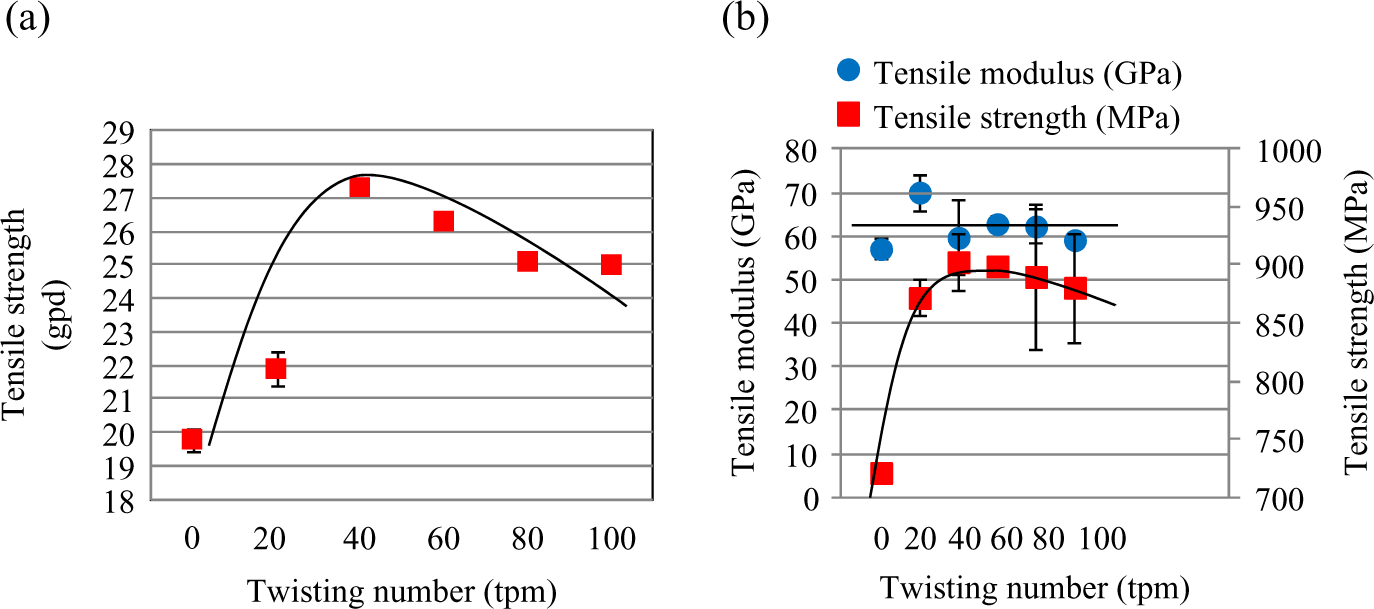
Tensile test results of (a) AR commingled fibers with 1670 dtex Kevlar/1364 dtex PA66 and (b) AR UD composites with 1670 dtex Kevlar/1364 dtex PA66. AR: aramid; PA66: polyamide 66; UD: unidirectional.
The experimental results show that the strength of the commingled yarns can be improved by a slight twist. Interlocking mechanism might be responsible to rise to the higher tenacity at small degrees of twist. The filaments are held together by radial forces and friction in the interlocking mechanism and followed this single fiber to fail more than once. On the other hand, a high degree of twist damages the fibers and reduces the tensile strength of the yarn.
Figure 3(b) shows the tensile test results of the AR UD composites (1670 dtex Kevlar/1364 dtex PA66) with the 0, 20, 40, 60, 80, and 100 tpm twisting. Tensile modulus was almost same with increasing the twisting from 0 tpm to 100 tpm. The UD composites with the AR/PA66 commingled fibers with the 40 tpm twisting showed the highest tensile strength (902.8 MPa) compared to the other specimens such as the tensile test results of the AR/PA66 commingled fibers. The tensile strength of the UD composites (872.1 MPa) with 20 tpm twisting increased about 20.9% compared to the nontwisted (0 tpm, 721.1 MPa) specimen. The tensile strength of the UD composites with 40 tpm twisting increased about 25.2% compared to the nontwisted (0 tpm) specimen. By increasing the twisting from 20 tpm to 40 tpm, the tensile strength improved about 3.5%. The tensile strength started to decrease from 40 tpm to 100 tpm.
The tensile strength of the composite specimens was mainly controlled by the reinforcement fibers. When the fiber strength increased by twisting, the composite strength also increased. On the other hand, the twisting hinders the penetration of the matrix between the filaments of the bundle with the consequence of lower outer bond. This might be the reason for the reduction in the tensile strength of the AR UD composites from 40 tpm to 100 tpm. The very good agreement between both tests (Figure 3(a) and (b)) has supported our experimental results.
By increasing the twisting from 0 tpm to 20 tpm, the tensile strength of the UD composites improved about 20.9%, whereas from 20 tpm to 40 tpm, the tensile strength decreased to 3.5%. The significant improvement in the tensile strength of the UD composites was achieved by increasing the twisting from 0 tpm to 20 tpm. Therefore, 20 tpm twisting level was selected to apply the twist on the commingled fibers (1670 dtex Kevlar/1364 dtex PA66). By applying the 20 tpm twisting on the commingled fibers (i) knit ability of BWK fabric on knitting machine and (ii) the higher tensile properties of the UD composites than that of the nontwisted (0 tpm) were achieved.
Results of impact properties of AR/PA66 commingled fibers
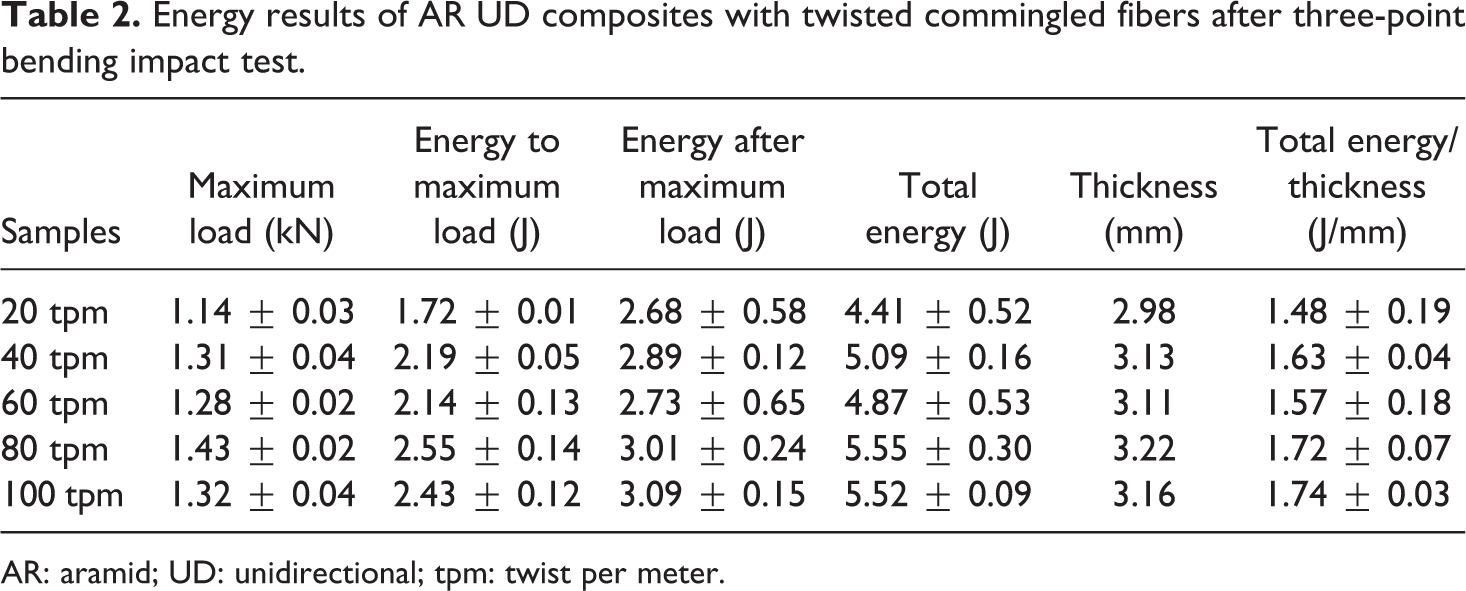
Table 2 shows energy results after the three-point bending impact test. The AR UD composites with 80 and 100 tpm absorbed the higher total energy (5.5 J) than the 20, 40, and 60 tpm composites (4.4, 5.1, and 4.9 J) in 0° direction. Furthermore, total energy results were recalculated with same thickness of specimens and found the UD composites with 80 and 100 tpm absorbed more total energy (1.7 J/mm) than 20 tpm composites (1.5 J/mm) in 0° direction. For all kinds of the composites, the energy absorption until maximum load was less than the energy absorption after maximum load. This shows that most of the damage occurred after maximum load.
Energy results of AR UD composites with twisted commingled fibers after three-point bending impact test.
AR: aramid; UD: unidirectional; tpm: twist per meter.
Figure 4 shows the relationship between twisting and total absorbed energy of AR UD composites from the three-point bending impact test. This graphic shows that the total absorbed energy from the three-point bending impact test increased with an increase in the twisting number of AR fibers from 20 tpm to 80 tpm, whereas from 80 tpm to 100 tpm, the total absorbed energy was almost the same.
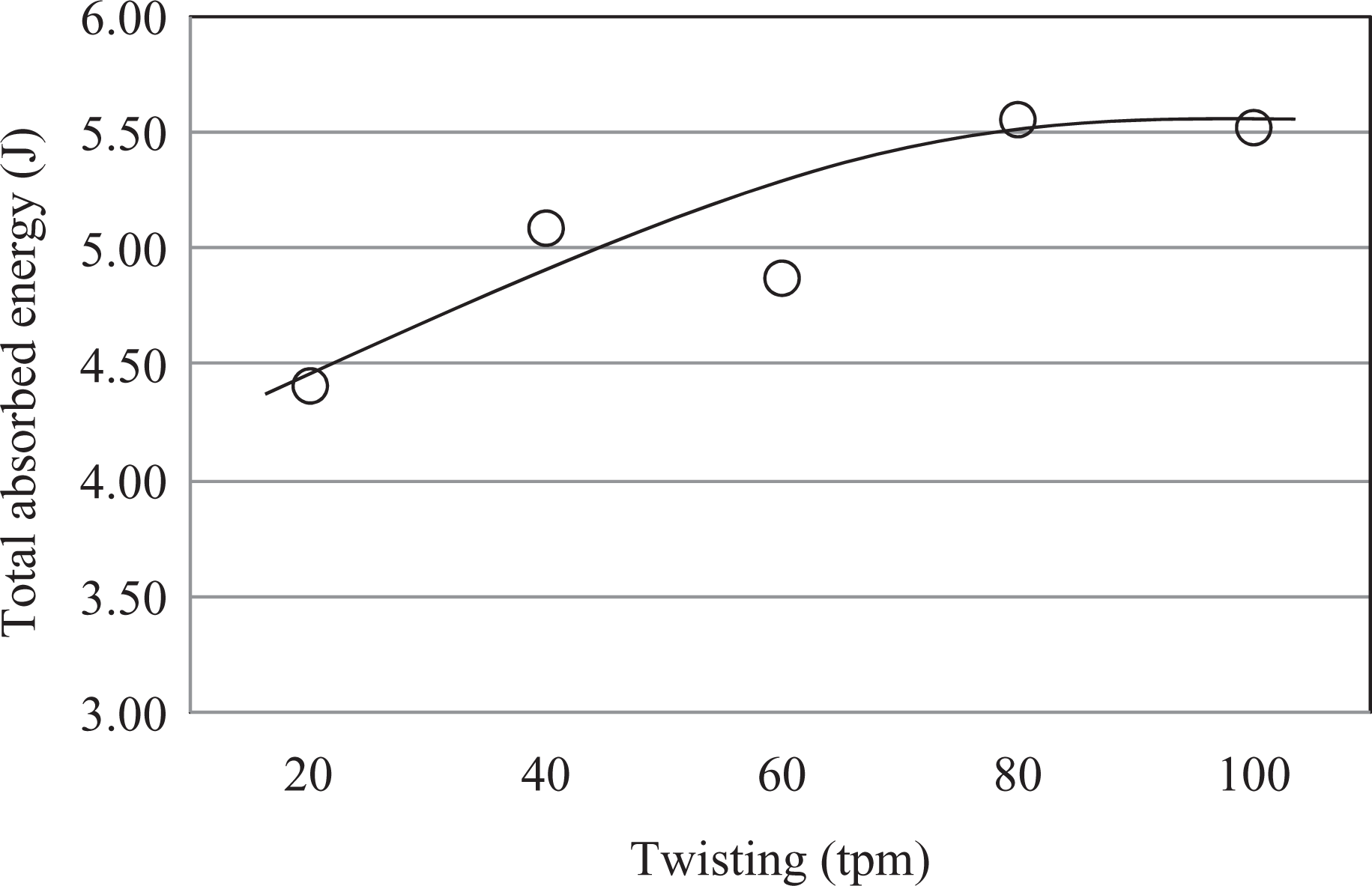
Relationship between twisting and total absorbed energy of AR UD composites from the three-point bending impact test. AR: aramid; UD: unidirectional.
The fibers became more close to each other by applying the twisting. Twisting decreases the average yarn diameter and makes a more compact and even structure. This would be the reason for the higher impact properties of the composites with the higher twisting numbers than that of the lower twisting numbers. Because of the compact and even structure of the fibers after twisting, it might be difficult to penetrate the impactor through the specimens, so these specimens (80 and 100 tpm) had higher impact properties than the specimens with the lower twisting numbers (20, 40, and 60 tpm). This result showed that the energy absorbance capacity of the composites could be improved by increasing the twisting numbers.
On the other hand, by choosing higher twisting numbers such as 80 and 100 tpm than 20 tpm, it becomes more difficult to produce BWK specimens on knitting machine. Therefore, 20 tpm twisting level was selected to apply the twist on the commingled fibers (1670 dtex Kevlar/1364 dtex PA66).
Experimental procedures of BWK and cross-ply composites
Materials
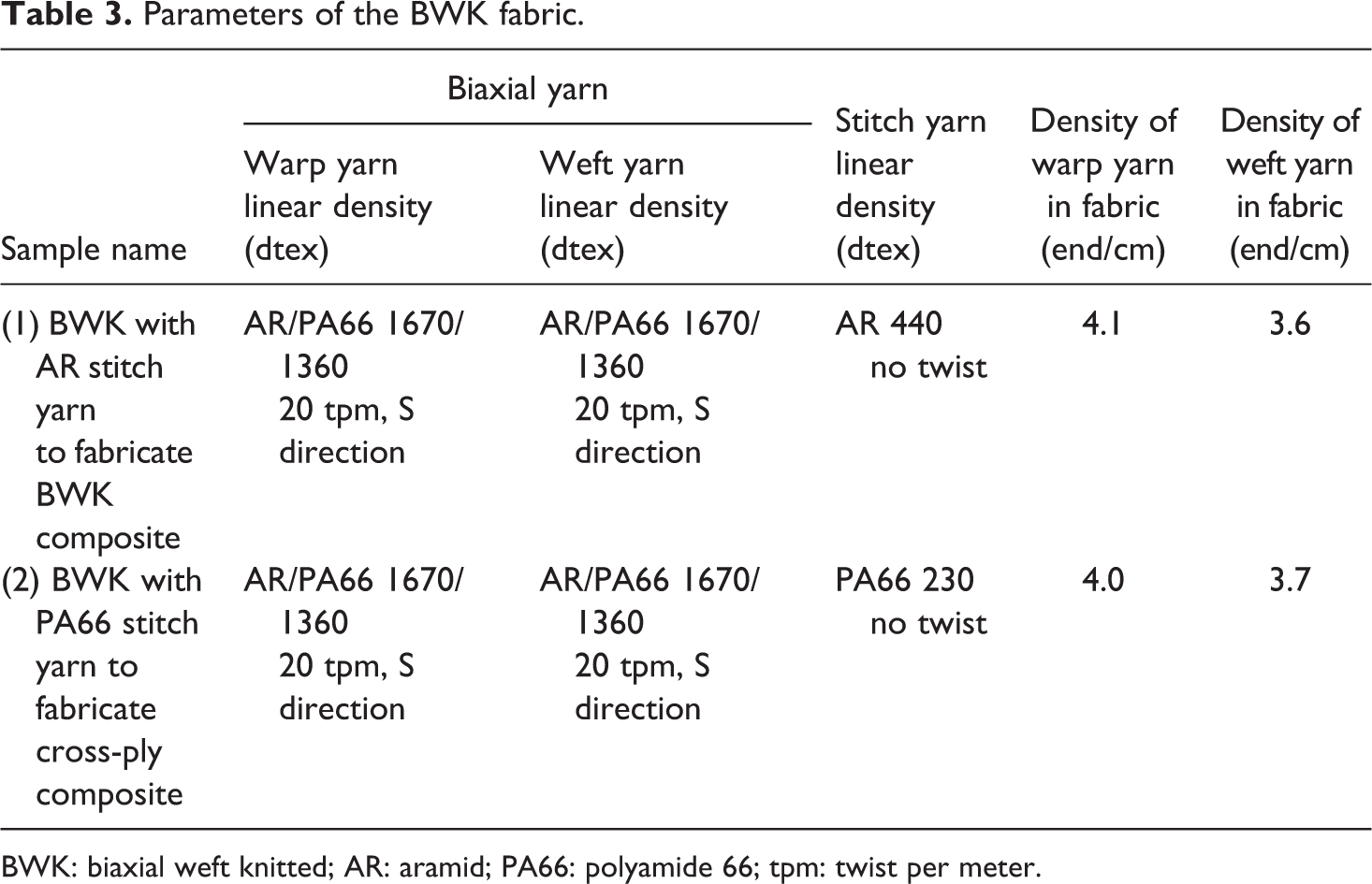
Above-mentioned commingled yarns (1670 dtex Kevlar/1364 dtex PA66) with 20 tpm twisting were used as biaxial materials (warp and weft yarn) in the BWK fabric. Both 440 dtex AR (Kevlar-29, Dupont-Toray Co. Ltd) and 235 dtex PA66 were used as stitch yarns. In all thermoplastic composite panels, the AR was used as reinforcement and the PA66 was used as resin yarn. Table 3 shows the parameters of the BWK fabric. Two types of BWK fabric (i) BWK fabric with the AR stitch yarn and (ii) BWK fabric with the PA66 stitch yarn were produced on a flat bed knitting machine (Shima Seiki Mfg. Ltd, Wakayama, Japan). The BWK fabric with the AR stitch yarn was used to fabricate the BWK composites with the AR stitch yarn. The BWK fabric with the PA66 stitch yarn was used to fabricate the cross-ply composites. Figure 5 shows the BWK fabric with warp, weft, and stitch yarns.
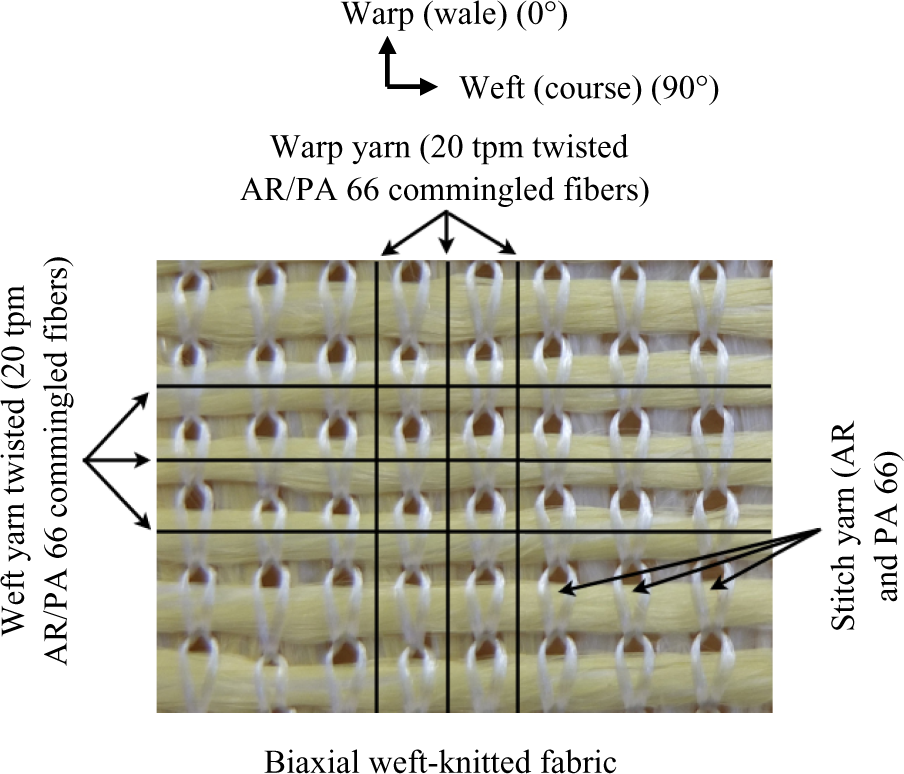
BWK fabric with warp, weft, and stitch yarns. BWK: biaxial weft knitted.
Parameters of the BWK fabric.
BWK: biaxial weft knitted; AR: aramid; PA66: polyamide 66; tpm: twist per meter.
Fabrication method
BWK with 2 and 10 layers and cross-ply composites were fabricated on hot press machine. The stacking sequence of 10 layers was written in a symmetric laminate code such as 0°/90°/0°/90°/0°/0°/90°/0°/90°/0°. Samples were cut in weft direction (course) attached in a metallic frame and put in the molding die. The same molding conditions of AR UD composites were used during fabrication of BWK composites. During fabricating of the cross-ply composites, the PA66 stitch fibers in the BWK fabric were melted and disappeared and became resin. Only the AR warp and weft fibers were stayed in the cross-ply composites. During fabricating of the BWK composites with the AR stitch fiber, the AR stitch fibers in the BWK fabric did not melt and the AR stitch fibers even after fabrication of composites stayed with the AR warp and weft fibers.
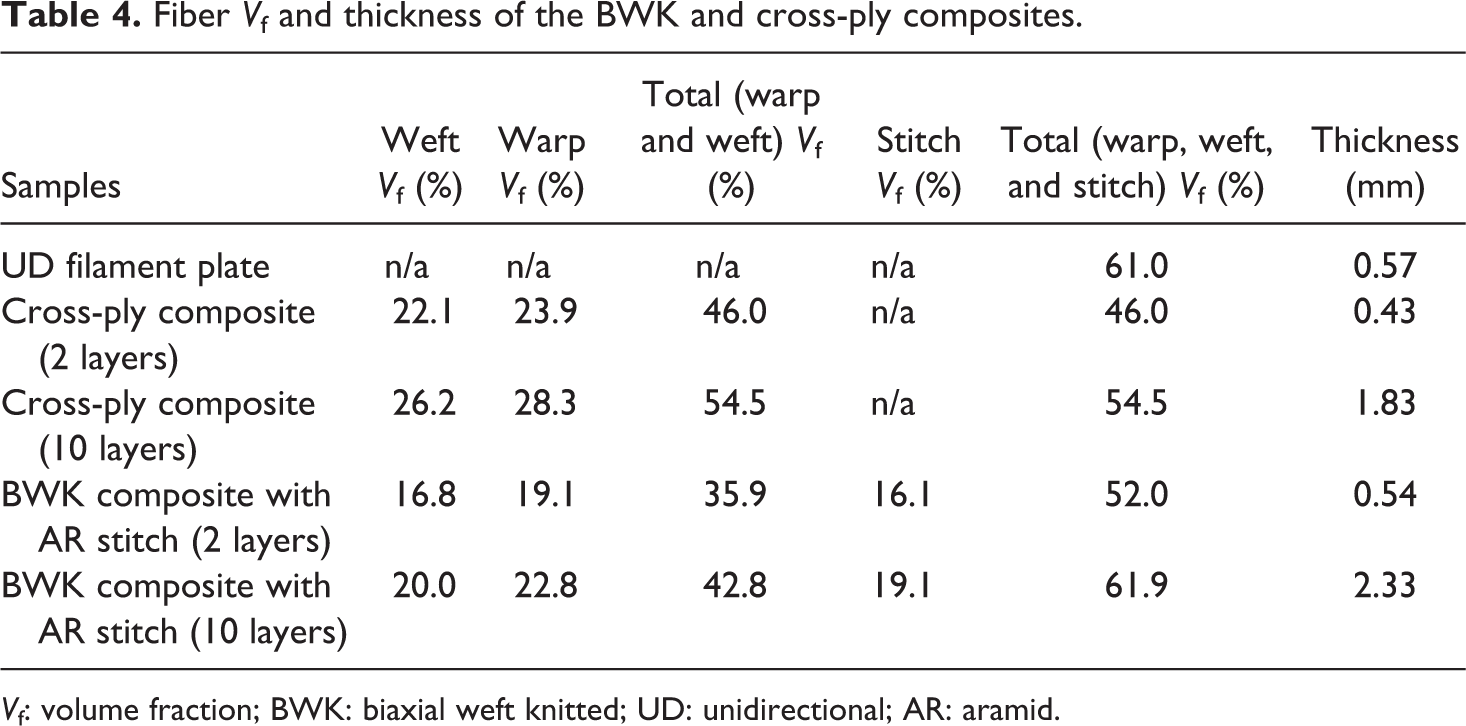
Table 4 shows the fiber V
f and thickness of composites. The V
f of the AR fibers in the BWK and cross-ply composites was calculated using the following equation:
where B is the weight of the AR reinforcement, ρ f is the density of AR fiber (1.44 g/cm3), A is the area of the laminate, and h is the thickness of the laminate.
Fiber V f and thickness of the BWK and cross-ply composites.
V f: volume fraction; BWK: biaxial weft knitted; UD: unidirectional; AR: aramid.
Total fiber V f of the 2- and 10-layer specimen with the AR stitch fiber (52% and 61.9%) was higher than that of the cross-ply (46% and 54.5%). On the other hand, when we compare the warp and weft yarn, V fs of the 2- and 10- layer specimen, the specimen with the cross-ply (22.1% and 23.9% two-layer weft and warp and 26.2% and 28.3% 10-layer weft and warp, respectively) had about 5% higher V f than that of the AR stitch fiber (16.8% and 19.1% 2-layer weft and warp and 20% and 22.8% 10-layer weft and warp, respectively).
Mechanical characterization
Tensile tests were conducted on two-layer BWK and cross-ply composites. Same testing conditions and geometry of the specimens such as AR UD composites were used for tensile test of two-layer composite specimens. Tensile tests were conducted on the specimens according to ASTM-D303 standard in course (weft yarn) and wale (warp) directions. The measurements of tests were performed using universal testing machine (type 55R4206, Instron) under displacement control with speed 1 mm/min. Figure 6(a) shows the geometry of the specimen from tensile test. In Figure 6(a), thicknesses of laminate and aluminum are shown as t c and t Al, respectively. The t Al tabs was 0.5 mm. The composite coupons had a nominal dimension of 200 × 20 × 0.4–0.5 mm3 for tensile test. Four specimens from each type of two layers composite panels were tested in the wale and course directions in tensile test.
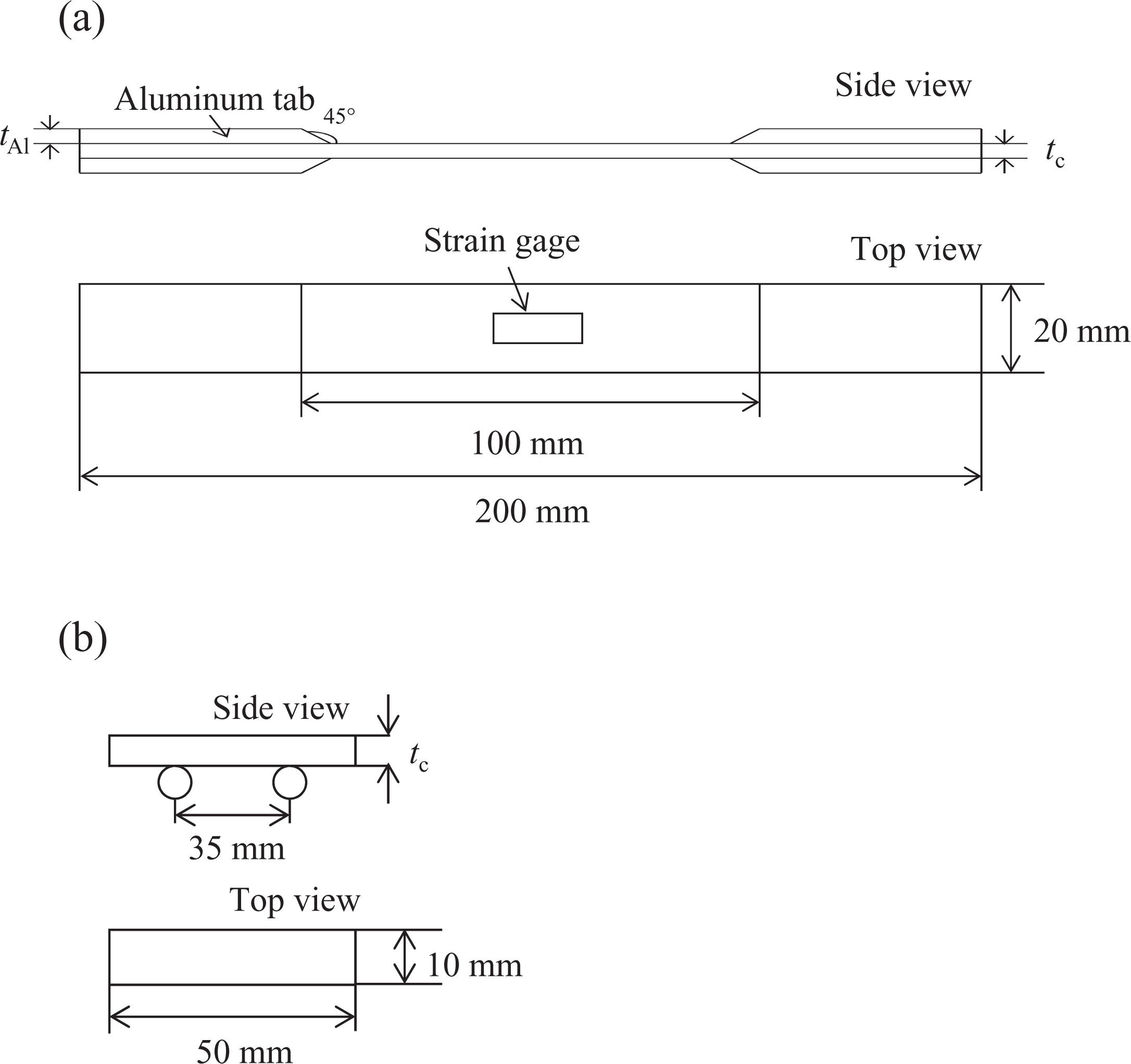
Geometry of the specimen (a) tensile test and (b) three-point bending test.
Figure 6(b) shows the test set up and geometry of the specimen from three-point bending test. Three-point bending tests were conducted on specimens according to ASTM-D790 standard. The measurements for tests were performed using universal testing machine (type 55R4206; Instron) under displacement control with speed 1 mm/min. The composite coupons have a nominal dimension of 50 × 10 × 1.8–2.3 mm3 for bending test. Test span length was 35 mm. From each type, 5 specimens of 10- layer composite panels were tested in the wale and course directions in three-point bending test.
Results and discussions
Tensile properties
The stress–strain curves of the BWK and cross-ply composites during tensile test are shown in Figure 7(a). From these curves, it can be seen that tensile stress with the cross-ply increases linearly with increase in the strain and was followed by a sudden drop in a stress value corresponding to the ultimate failure of the composite. On the other hand, tensile stress with the AR stitch yarn increases linearly with increase in the strain; and after maximum stress, it decreases and increases until the ultimate failure of the composite. The specimen with the cross-ply yarn showed higher tensile strength and lower tensile ultimate strain than that of the AR stitch yarn. The ultimate strain with the AR stitch fiber was about 3.6 and 4 times higher than that of the cross-ply fibers in the weft and warp directions.
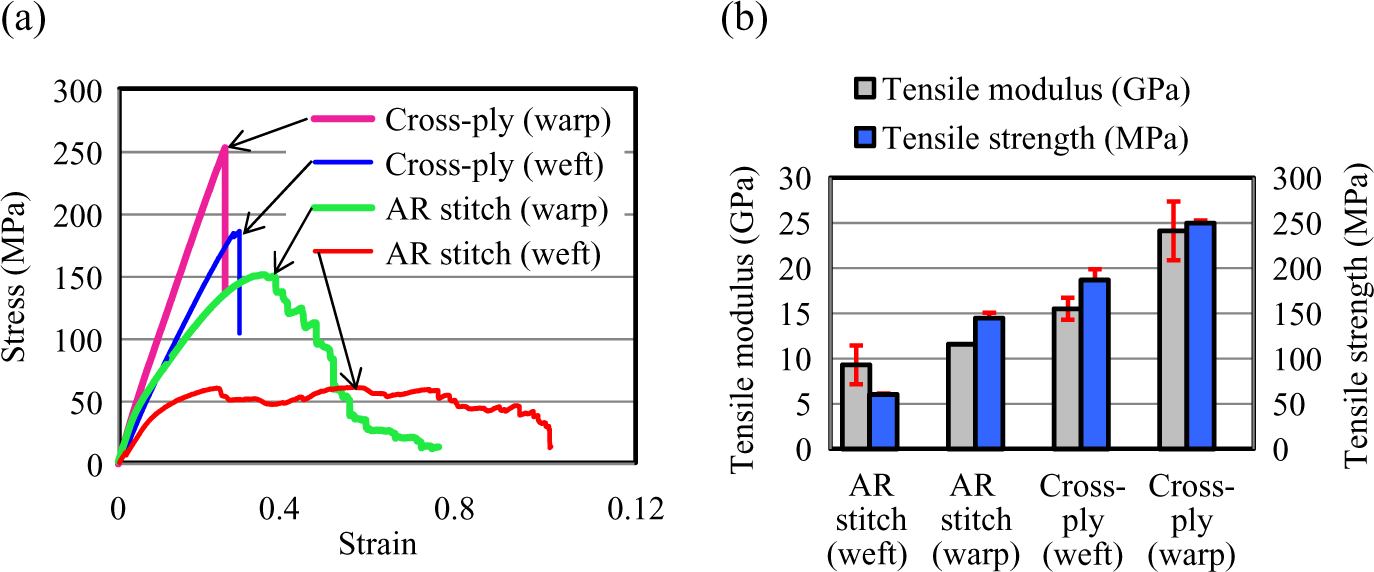
((a) and (b)) Tensile test results of BWK and cross-ply composites.
Figure 7(b) shows tensile modulus and strength results of the BWK and cross-ply composites. The highest tensile modulus and strength were obtained by the cross-ply composites in the warp direction (24.1 GPa and 249.6 MPa). The tensile modulus and strength of the cross-ply composites were 107.7% and 72.7% higher than the BWK composites with the AR stitch fiber (11.6 GPa and 144.5 MPa) in the warp direction. The tensile modulus and strength of the cross-ply composites (15.5 GPa and 186.7 MPa) were also 66.6% and 209.6% higher than the BWK composites with AR stitch fiber (9.3 GPa and 60.3 MPa) in the weft direction. The possible reason for obtaining higher tensile strength results with the cross-ply composites is the V fs (22.1% and 23.9%) of weft and warp fibers are higher than the BWK composites with the AR stitch fiber (16.8% and 19.1%).
Three-point bending properties
A measure of the resistance to deformation of the composite in bending is called flexural modulus. Flexural strength and stiffness are mainly controlled by the strength of reinforcement fibers. Three-point bending test results are demonstrated in Figure 8(a) and (b). The specimen with the cross-ply fiber in the weft direction showed the highest bending strength (241 MPa) compared to the other specimens (142–153 MPa). A relatively sharper drop in the gradient after the maximum value for the sample cross-ply in the weft was indicative of dominant fracture mechanism that was tensile fracture, whereas for all the other samples only compressive failure was dominant. During fabricating of the composites with the cross-ply fiber, the PA66 fibers were melted and became resin. Only the AR warp and weft fibers were stayed in the composites. That was with the AR stitch fibers not happened, and AR stitch fibers stayed even after fabrication of the composites with AR warp and weft fibers. Bending modulus of the composites with the cross-ply fibers was about 7 GPa and that was with the BWK fabric about 5 GPa in both directions. The possible reason of obtained higher bending modulus of the composites with the cross-ply fibers would be higher warp and weft fibers volume fractions (28.3% and 26.2%) than these were the BWK composites with the AR stitch fibers (22.8% and 20%) (Table 4).
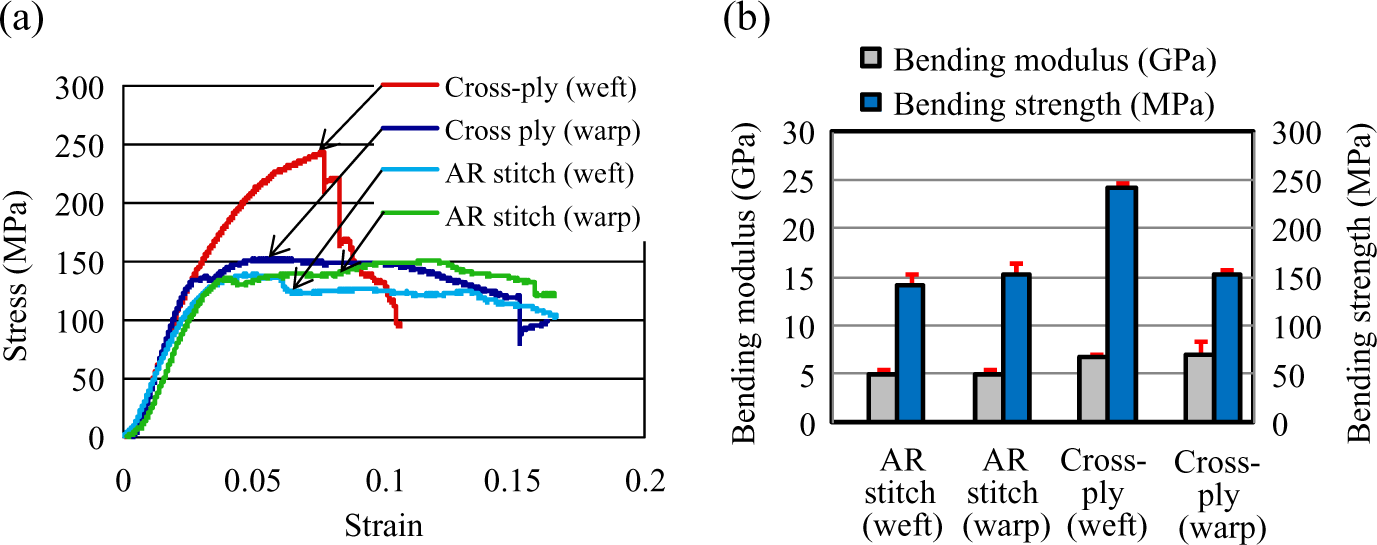
((a) and (b)) Three-point bending test results of BWK and cross-ply composites.
There was no big difference in the bending test results with the AR stitch in the warp and the weft directions. The PA66 stitch fibers in the cross-ply composites were melted during fabrication of the composites, and this was probably influenced by the flow of resin into the warp yarn direction. On the other hand, the test piece was put in the molding die in the weft direction by attaching in a metallic frame and this would make more tension in the cross-ply specimen in the weft direction than the warp. Therefore, specimen showed more impact on the flow of the resin in the warp direction than that in the weft. This would reduce the results in the warp direction with the cross-ply fiber compared to the weft direction.
Fracture aspects of the specimens after three-point bending test
Representative fracture damage aspects of bending tested specimens are shown in Figure 9(a) to (d). The dominant failure mechanisms were delaminations (Figure 9(a) to (c)), bucklings (Figure 9(c)), and fiber breakages (Figure 9(b) and (d)) in tension and compression sides of the cross-ply and AR stitch specimens. Usually the fiber breakages and delaminations occurred in the tension side of the specimens and the bucklings occurred in the compression side of the specimens.
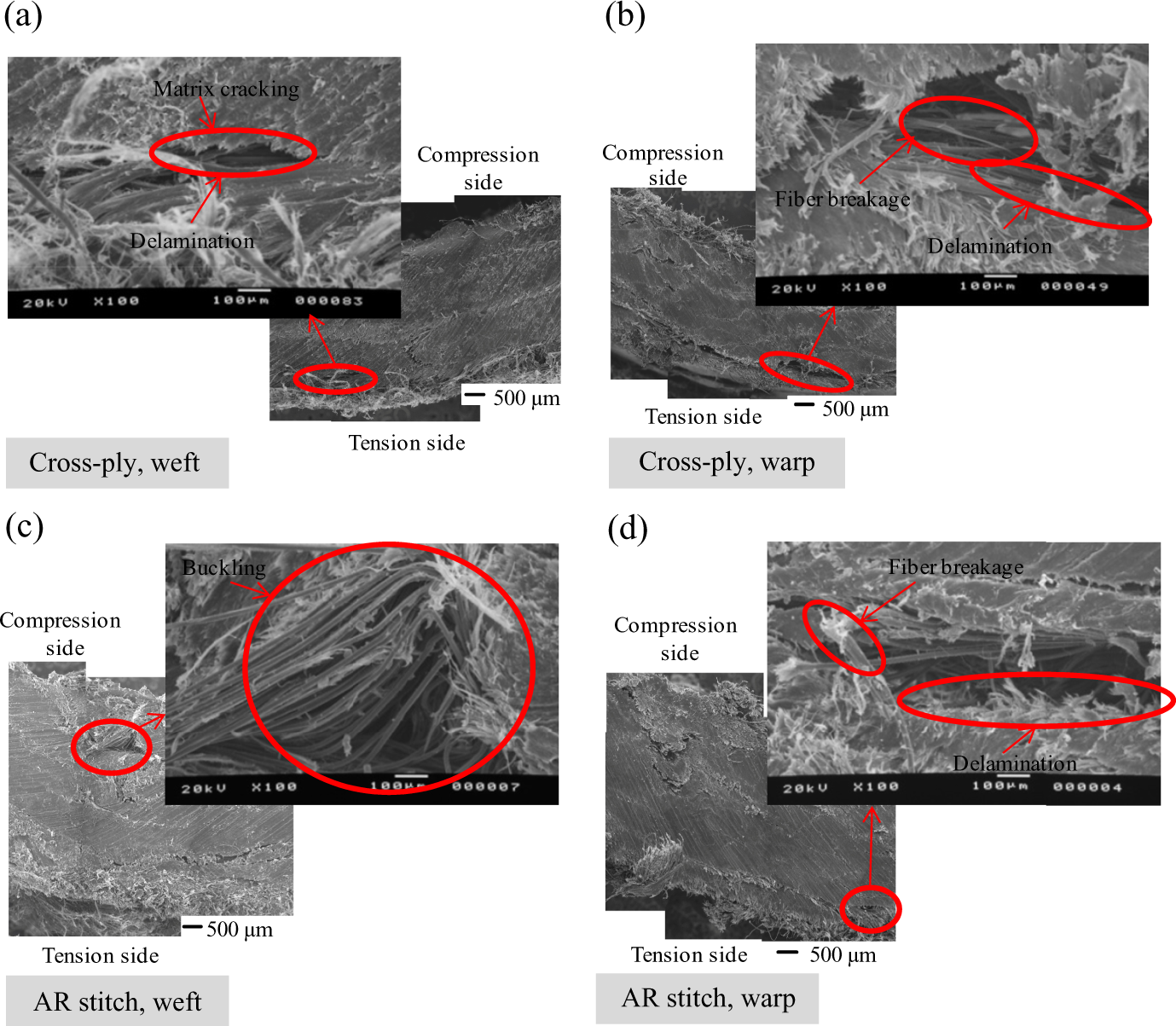
Representative fracture damage aspects of bending tested specimens.
Conclusion
Our study showed that the AR UD composites with 40 tpm twisting had the highest tensile properties compared to with 0, 20, 60, 80, and 100 tpm. The tensile properties of the AR commingled fibers and the UD composites agreed well. Three-point bending impact test results showed that the AR UD composites with 80 and 100 tpm absorbed a higher total energy than 20, 40, and 60 tpm composites in 0° direction.
Tensile test results of two-layer thermoplastic composites showed that the specimen with the cross-ply yarn had the higher tensile strength and the lower tensile ultimate strain than that was with the AR stitch yarn. Bending test results of 10-layer composites showed that the specimen with the cross-ply fiber in the weft direction had the highest bending strength compared to the other specimens. The dominant failure mechanisms were delaminations, bucklings, and fiber breakages in tension and compression sides of the specimens. In future study, we will try to produce three-dimensional BWK composites using Whole Garment® technology, which is available on weft knitting machines.
Footnotes
Acknowledgements
The authors especially thank Prof. Hiroyuki Hamada and Assoc. Prof. Mohamed S. Aly-Hassan, Kyoto Institute of Technology, Japan, for their help and support.
Funding
This research received no specific grant from any funding agency in the public, commercial, or not-for-profit sectors.