



Abstract
Hessian cloth-reinforced urethane acrylate-based thermoset composites were prepared by compression molding. The composition of the matrix solution was formulated with different concentrations of urethane acrylate ((F1: 55%, F2: 65%, F3: 75%, F4: 85%, and F5: 95%) in solvent methanol (44.5, 34.5, 24.5, 14.5, and 4.5%) along with thermal photoinitiator benzyl peroxide (0.5%). Mechanical properties of the composites were examined. It was found that F4 with 85% urethane acrylate-based composite showed the best results. The maximum value of tensile strength (TS), bending strength (BS), tensile modulus (TM), bending modulus (BM), and elongation at break (Eb%) were found to be 47 MPa, 61 MPa, 1250 MPa, 1550 MPa, and 9.38%, respectively, for F4-treated composites. Different intensities of γ radiation (100–500 krad) were applied on F4-soaked hessian cloth-reinforced composites. The mechanical properties of the irradiated composites were found to increase significantly compared with those of nonirradiated composites. The maximum TS, BS, TM, and BM for the treated composites were found to be 66 MPa, 84 MPa, 1882 MPa, and 2250 MPa, respectively, at 300 krad dose. Water uptake and soil degradation test of the composites were also performed.
Introduction
Natural fiber-reinforced composites have been into scientific interest due to its diversified applications since long. Various natural fibers such as jute, bamboo, coir, banana fiber, and so on are widely used as reinforcement. 1 –3 On the other hand, various thermosetting and thermoplastic resins such as urethane acrylate, polyester, polyethylene, polypropylene, and so on are used as matrix.
Jute is a complex lignocellulose-based polymeric fiber. It is not uniform in its chemical composition as shown by the multicellular structure of the fiber. Jute has three principle constituents, namely cellulose, hemicellulose, and lignin. 4 –6 Jute fiber plays an important role in developing high-performance biodegradable composites. For the use of jute composites, in comparison with synthetic composites, it is important to improve the physicomechanical properties of jute composites. Both physical and chemical treatments can be utilized to improve the fiber–matrix adhesion. Among them, physical treatment like ionizing radiation can introduce better surface cross-linking between natural fiber and matrix. 7,8 Jute-reinforced urethane acrylate composite will serve not only in diverse application of jute but also in the reduction of use of urethane acrylate. Low cost, low-melting point, high adhesiveness, and good thermosetting property are responsible for selecting urethane acrylate as the matrix. The ultimate goal of this research is to improve the mechanical properties of jute-reinforced urethane acrylate-based composite for interior design applications.
Experimental
Materials
Hessian cloth (bleached commercial grade) was collected from local market of Bangladesh. The oligomer urethane acrylate and solvent methanol were procured from Merck (Germany). Benzyl peroxide was used as the thermal initiator.
Methods
Preparation of five matrix (oligomer) formulations
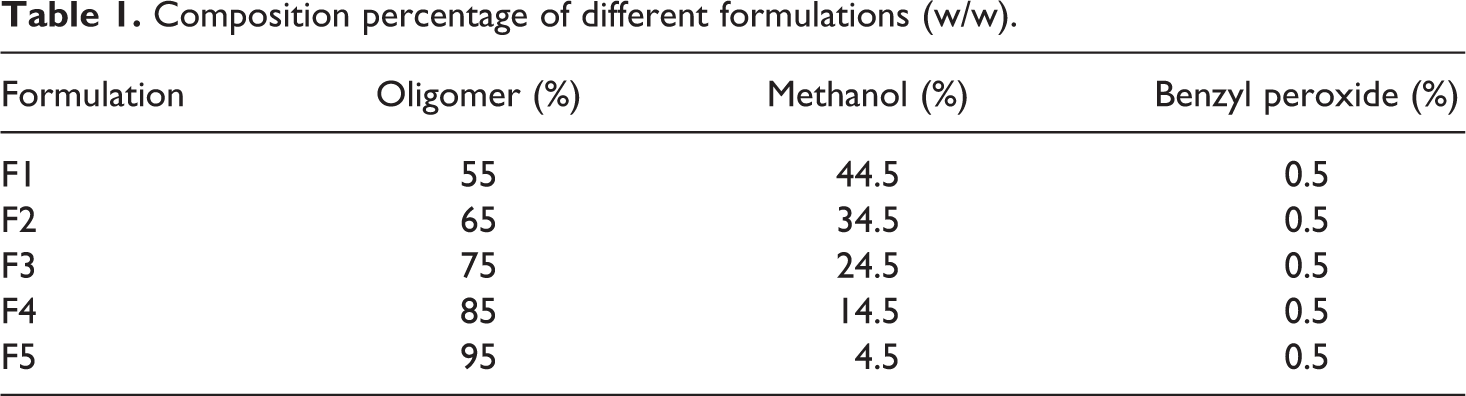
Five formulations were prepared at different concentrations of urethane acrylate (55–95%) and methanol (44.5–4.5%) along with thermal photoinitiator benzyl peroxide (0.5%) which is shown in Table 1. Each formulation was prepared by mixing each component in a beaker and heated at 100°C for 15 min.
Composition percentage of different formulations (w/w).
Treatment of hessian cloth with five formulations and composite fabrication
Hessian cloth was cut into a definite size (5 × 6 in. 2 ) and dried in an oven at 120°C for 6 h to remove moisture. Then, all the 5 layers of hessian cloth were soaked with formulation 1 (F1) by hand layup technique. Treatment of hessian cloth with different formulations is shown in Figure 1.
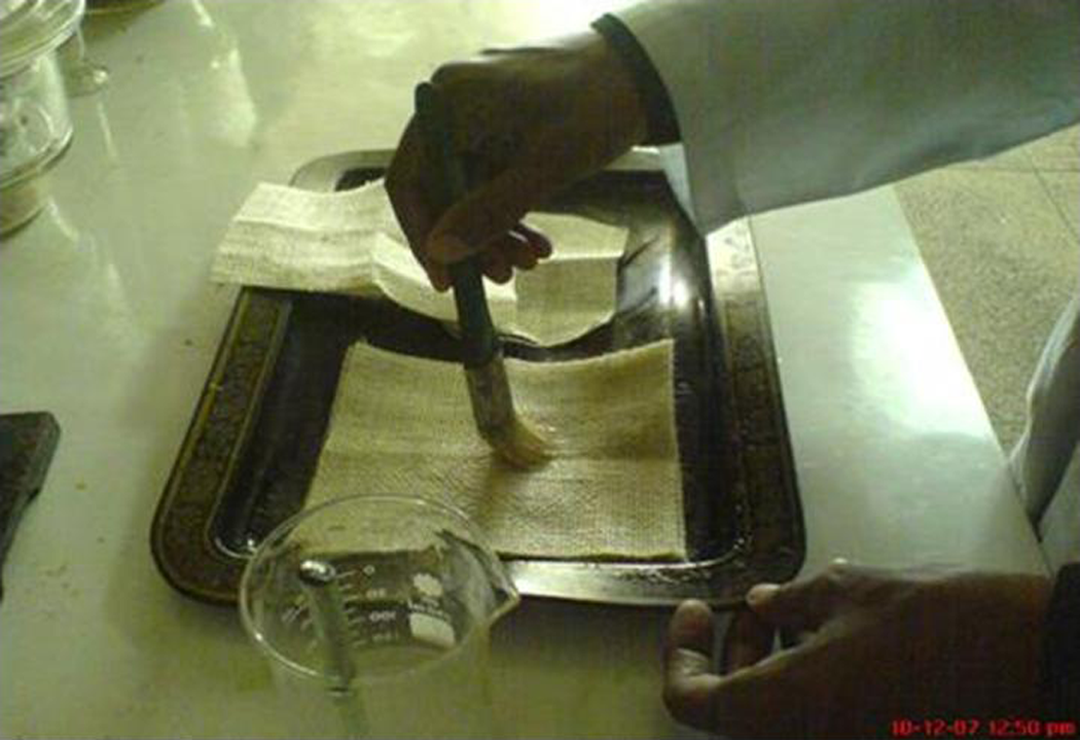
Treatment of hessian cloth with formulation by hand layup technique.
Soaked five layers of hessian cloth were used for composite fabrication using heat press operated at 140°C and 5 ton pressure for 10 min. Another press was used for cooling the composite. Similarly, hessian cloth soaked with F2, F3, F4, and F5 were also prepared and composites were fabricated respectively. The mass fraction of jute in the composites was about 50%.
γ Irradiation of soaked hessian cloth and composite fabrication
F4-treated composites were irradiated using a cobalt 60 γ source (25 kCi) at Bangladesh Atomic Energy Commission, Savar, Dhaka, for different doses (100–500 krad).
Mechanical tests
The mechanical properties such as tensile strength (TS), bending strength, (BS) and elongation at break (Eb%) for the composites were determined using a universal testing machine (model: PO1640-HD-20, Amstrad, UK) with a gauze length of 20 mm at a speed of 10 mm/min.
The load range was 500 N. All the results were taken at the average value of at least five samples.
Water uptake
The water absorption ability of untreated and γ-treated composites was performed by soaking the samples (each composite was about 3 cm length) in a glass beaker of water at 25°C for different time periods (up to 9 days). The mass gained by the immersed sample was used to determine the water uptake by the sample.
Soil burial test
The untreated and treated samples were weighed individually and buried in the soil for different periods of time (up to 8 weeks). After a certain period of time, samples were taken out carefully from the soil and washed with distilled water, dried in an oven, and reweighed.
Results and discussion
Optimization of formulation
The hessian cloths were soaked at different formulations (F1–F5) and composites were fabricated. The mechanical properties such as TS, BS, TM, and BM of the composites were plotted for five formulations (F1, F2, F3, F4, and F5). The graphical representations are shown in Figures 2 and 3. Eb% for five formulations are depicted in Figure 4. The highest TS, BS, TM, BM, and Eb% were found for F4-treated hessian cloth-reinforced composite. Thus, F4 was considered the optimum condition. The maximum value of TS, BS, TM, BM, and Eb% were found to be 47 MPa, 61 MPa, 1250 MPa, 1550 MPa, and 9.38%, respectively, for F4 (85% oligomer). From Table 1, it is evident that starting from F1, the percentage of oligomer (urethane acrylate) increases with formulations F2, F3, F4, and F5. On the other hand, the percentage of solvent (methanol) gradually decreases throughout the formulations. From Figures 2 to 4, it is clearly noticed that TS, BS, TM, BM, and Eb% were increased for F1, F2, F3, and F4 but decreased for F5 formulation. This means that mechanical properties of the composites were increased significantly with the increase of oligomer concentration up to a certain limit (85%) and then decreased above it. This could be illustrated as a fact that with the increase of matrix (oligomer) concentration, the more urethane acrylate free radical could be polymerized with cell-OCH3 and thereby providing better bonding and higher mechanical properties. 9 –11 The polymerization reactions are illustrated in Figures 5 and 6.
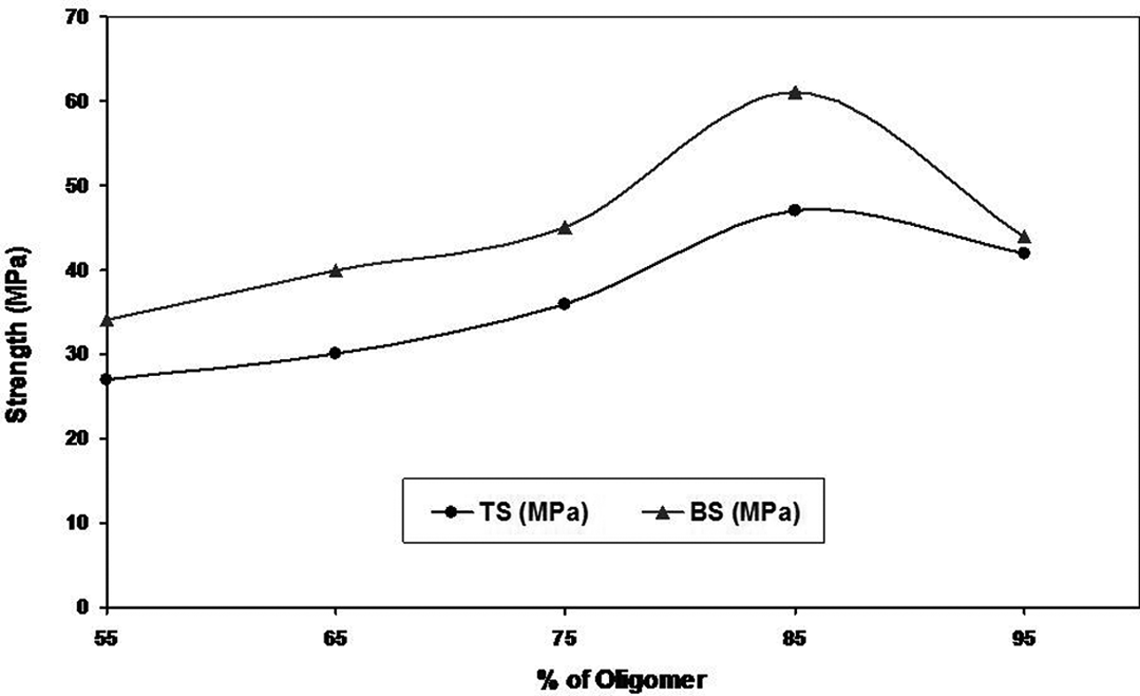
Tensile and bending strength of composites for different oligomer concentrations (F1–F5 formulation).
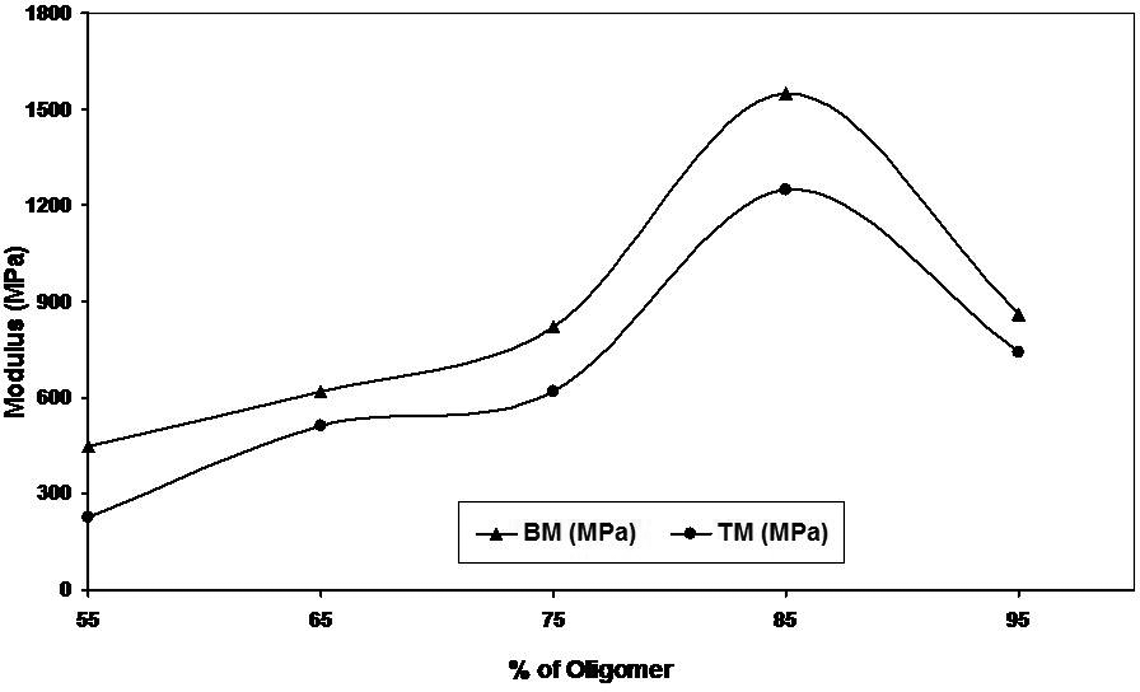
Tensile and bending modulus of composites for different oligomer concentrations (F1–F5 formulation).
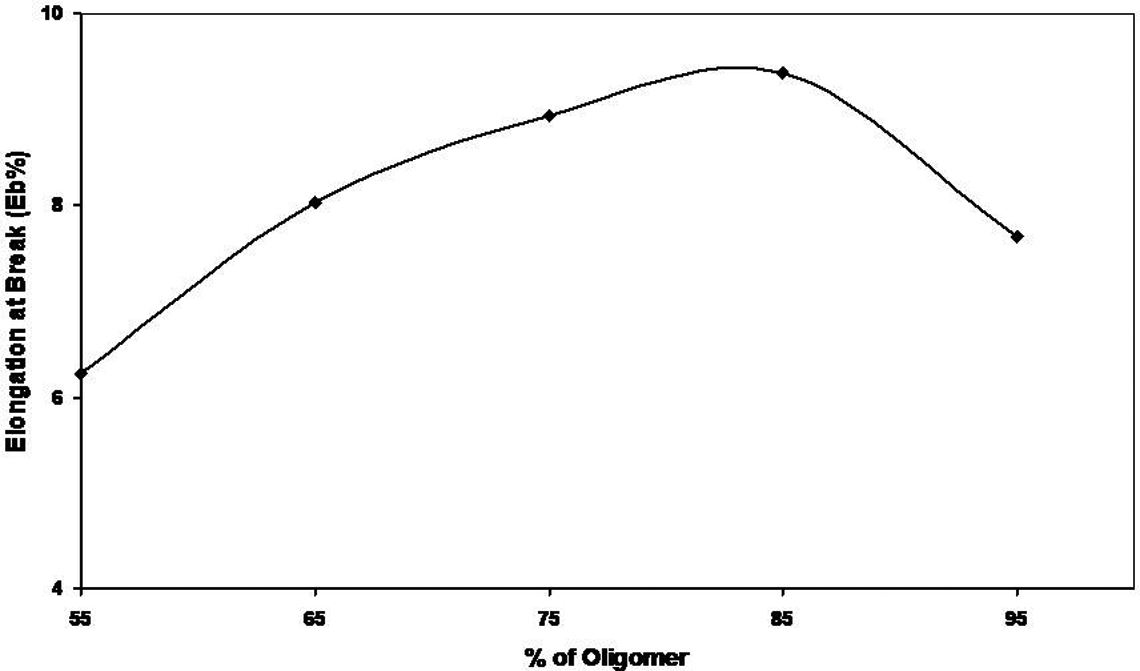
Elongation at break of composites for different oligomer concentration (F1–F5 formulation).
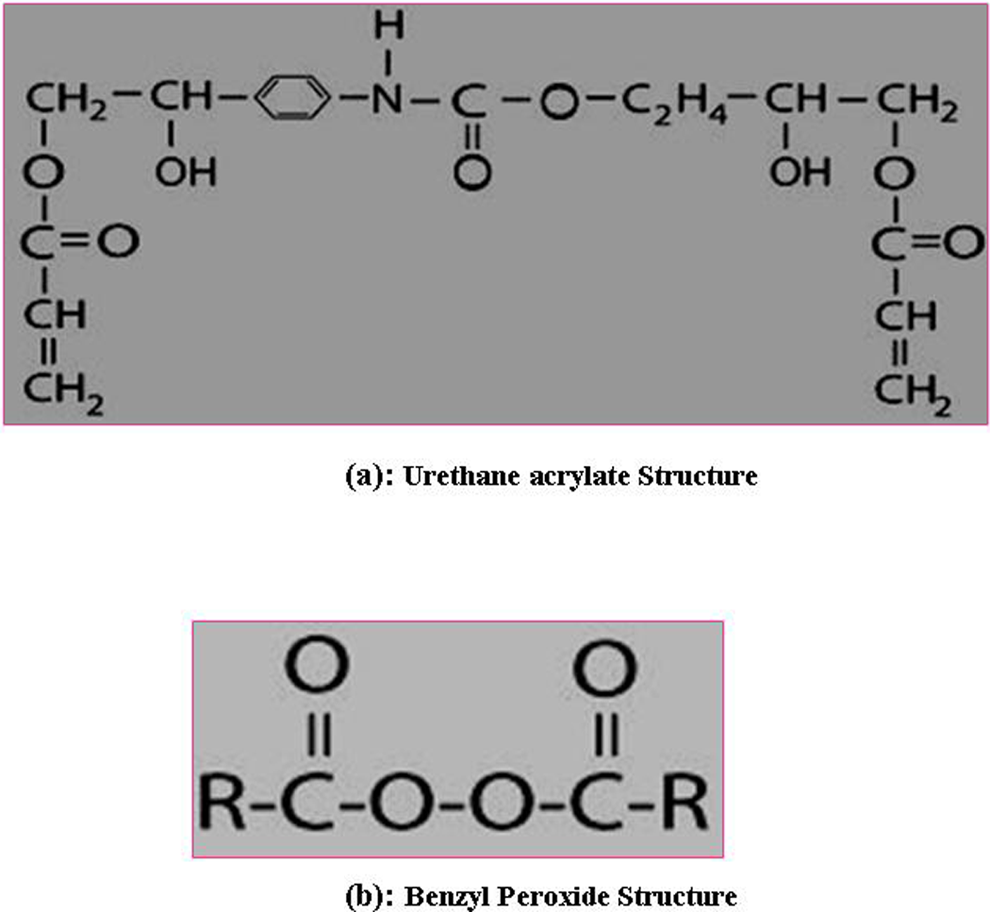
Chemical structure of urethane acrylate oligomer and thermal photoinitiator benzyl peroxide.
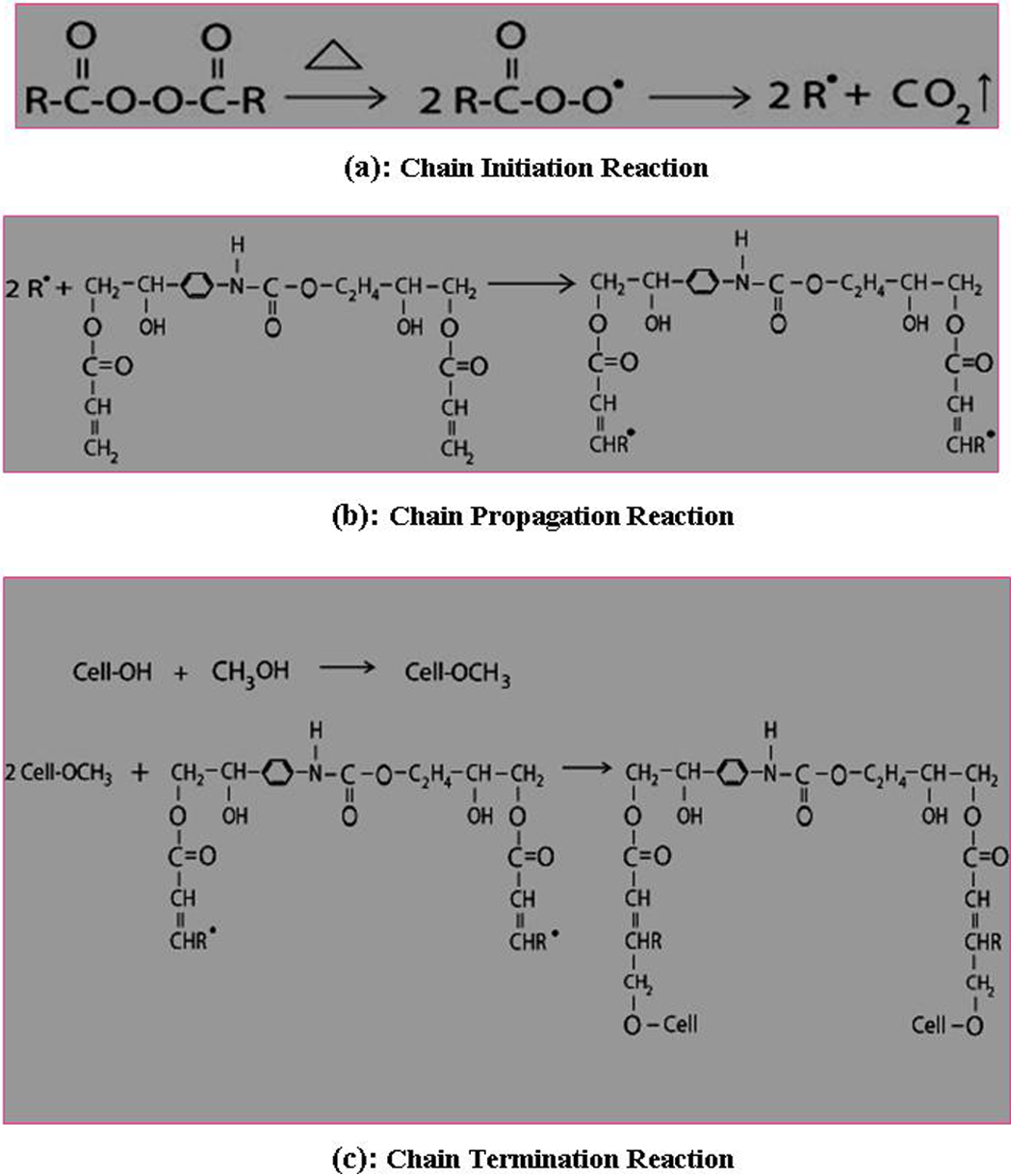
γ Radiation-induced polymerization reaction.
As expected, the load transferring capacity of the composites would be increased with the increase in matrix concentration resulting in better mechanical properties. However, higher concentration of oligomer (above 85%) increases the chance of homopolymerization among acrylate free radicals in the composite and thus brittleness increases the cracks easily during load transfer.
Optimization of radiation dose
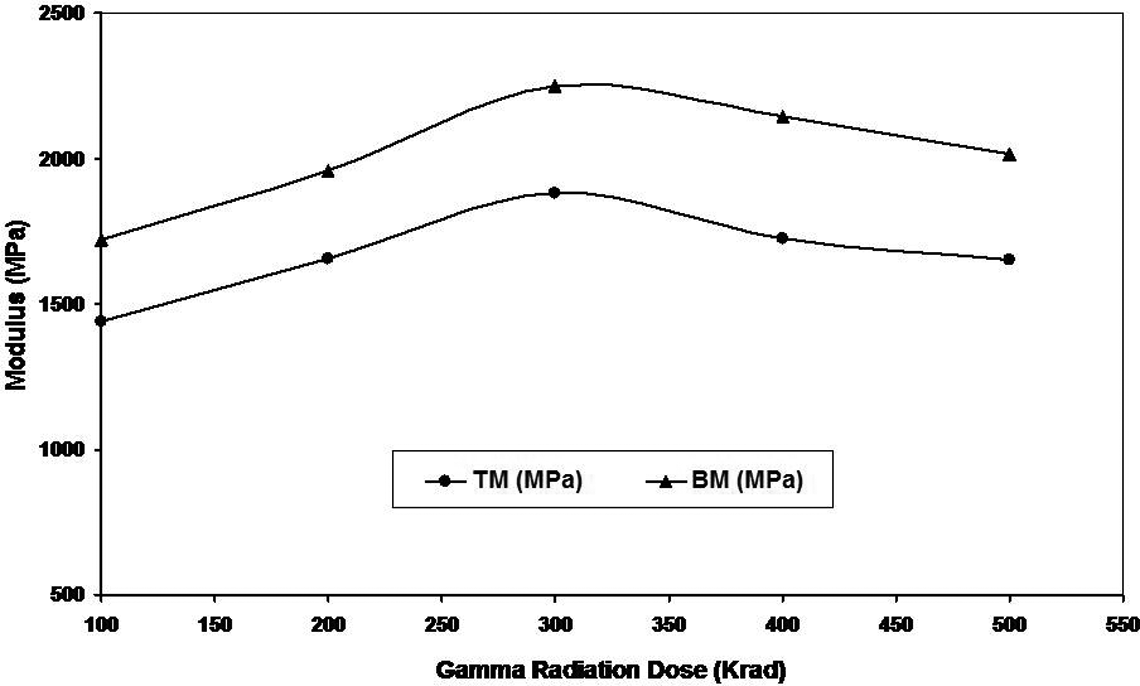
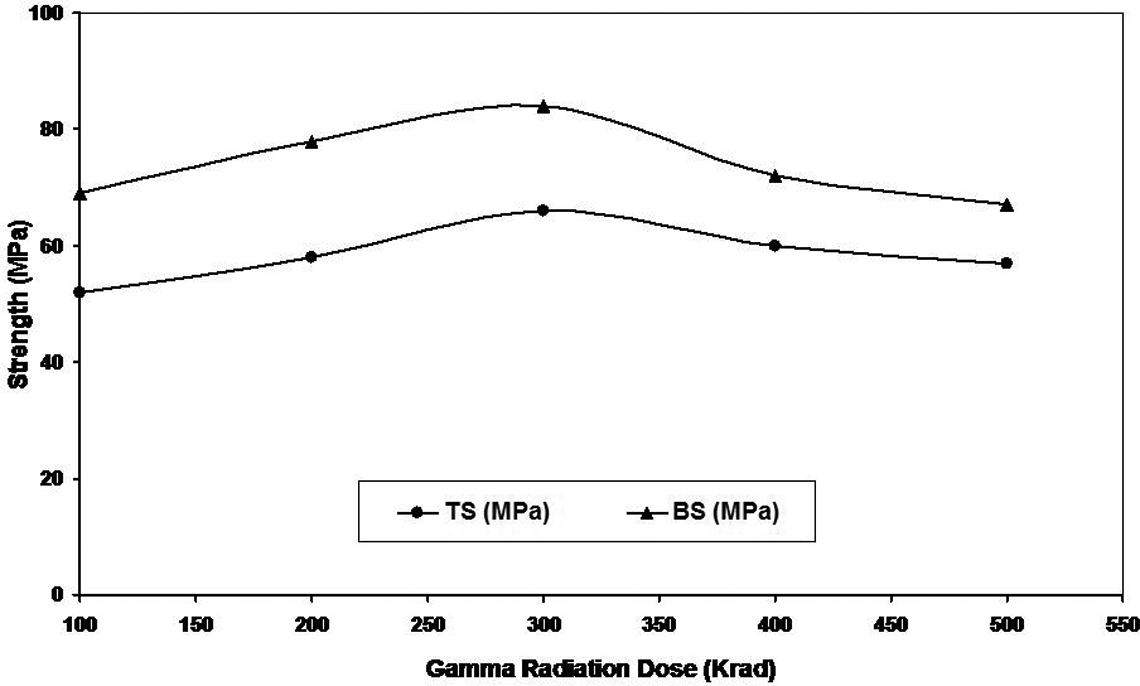
The effects of γ radiation on the performance of mechanical properties were investigated comparing the optimized F4-treated composites. The composites prepared with optimum formulation (F4) were irradiated under γ radiation for different doses (100, 200, 300, 400, and 500 krad). TS, BS, TM, and BM of untreated and treated composites against γ radiation doses were outlined at Figures 7 and 8. The maximum TS, BS, TM, and BM of treated composites were found at 300 krad dose. The maximum TS, BS, TM, and BM for the treated composites were found to be 66, 84, 1882, and 2250 MPa, respectively. From Figures 7 and 8, it is obvious that the increment of TS, BS, TM, and BM of the treated composites were found to be 40, 38, 51, and 45%, respectively, as compared to those of untreated composites (TS, BS, TM, and BM were found to be 47, 61, 1250, and 1550 MPa, respectively, for the untreated composites). TS, BS, TM, and BM of the treated composites were increased with the intensity of radiation dose up to a certain limit and then decreased. The increase in mechanical properties at lower doses is due to the photocross-linking of cellulose active sites and the decrease at higher radiation doses is regarded as the result of photodegradation of polymers as well as the breaking of cross-linking. 12,13 An intense radiation results in a loss of strength and modulus and a reduced degree of polymerization is observed.
Tensile and bending strength of optimized F4-soaked composites against different γ radiation doses (100–500 krad).
Tensile and bending modulus of optimized F4-soaked composites against different γ radiation doses (100–500 krad).
Water uptake behavior
Water uptake percentage profile of untreated (F4 formulation) and treated composites were plotted against soaking times and depicted in Figure 9. It is evident that both samples absorb water very fast for the first few hours. The untreated and treated samples absorbed 30.84 and 18.15% of water respectively, at 24 h (1 day). After 24 h, water absorption rate slows down and almost attains a plateau. The percentage of water uptake for the untreated sample was higher than that of the treated sample. For instance, the untreated sample absorbed 36.91% of water after 9 days, while as the treated sample took up water only 22.97% for the same time span. The treated sample absorbs less amount of water due to the cross-linking of oligomer with jute cellulose. Cross-linking of oligomer with cellulose reduces the vacant spaces inside the polymer structure and decreases the rate of water absorption. 14 –17 Moreover, graft copolymerization of cellulose polymer decreases the hydrophilic nature of it.
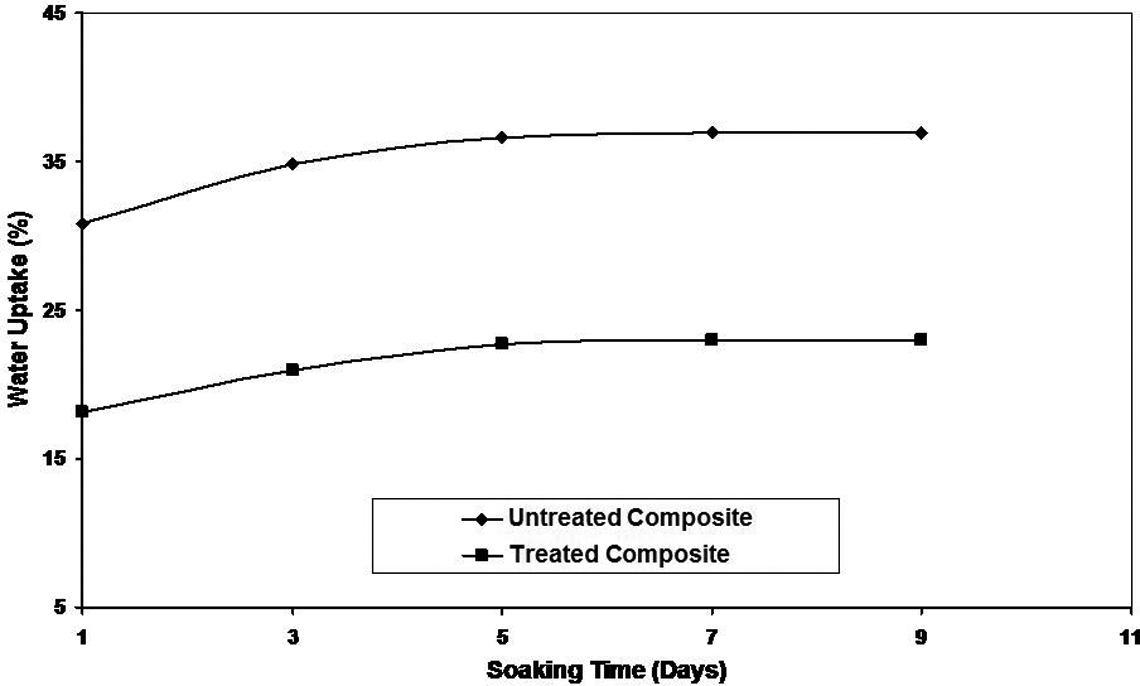
Water uptake percentage of optimized F4-soaked (untreated and γ treated) composites against soaking time.
Degradation properties of the composites
Soil degradation test was carried out for untreated and treated optimum composites (F4-treated composite and 300 krad-dosed F4-treated composite) up to 8 weeks. After drying, the samples were subjected to mechanical tests. TS and BS were plotted against degradation time and were shown in Figures 10 and 11. It is observed that both TS and BS decreased with time for both samples. For γ-treated composite, the TS and BS retained 77 and 75% of their original strength after 8 weeks of degradation, respectively, but untreated composites retained lower strengths (TS and BS retained 64 and 62%, respectively). γ Irradiation may affect the polymeric structure of cellulose and urethane acrylate, which may produce active sites that can contribute to better bonding between them. 12,13
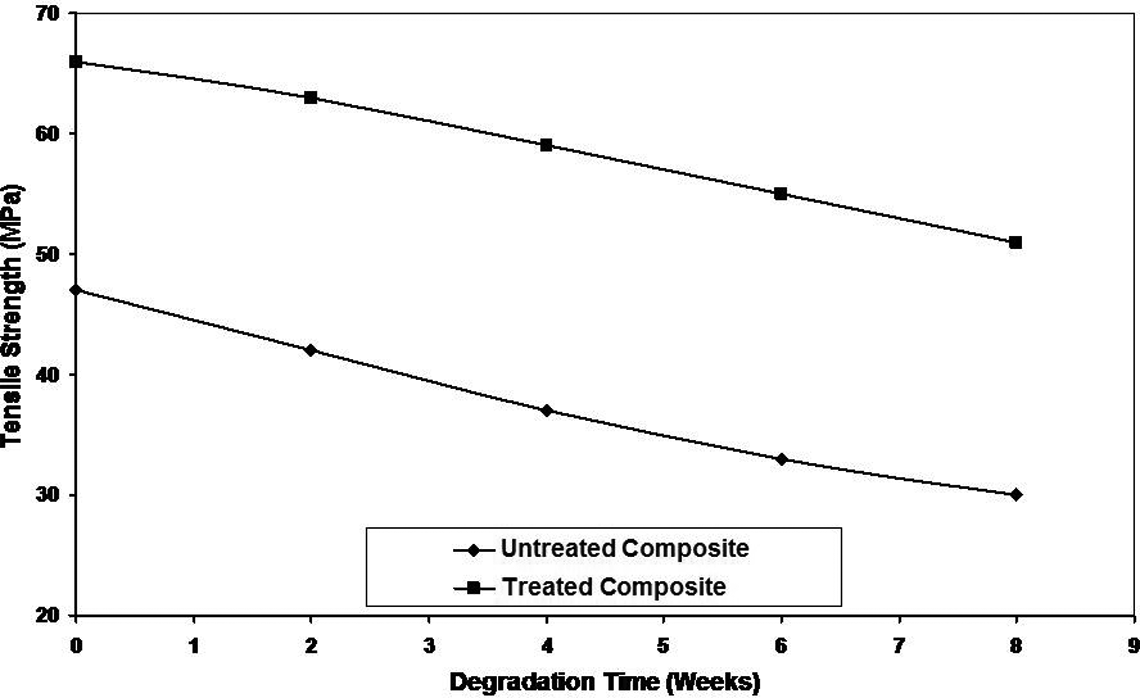
Tensile strength of optimized F4-soaked composites (untreated and γ treated) against soil degradation time (up to 8 weeks).
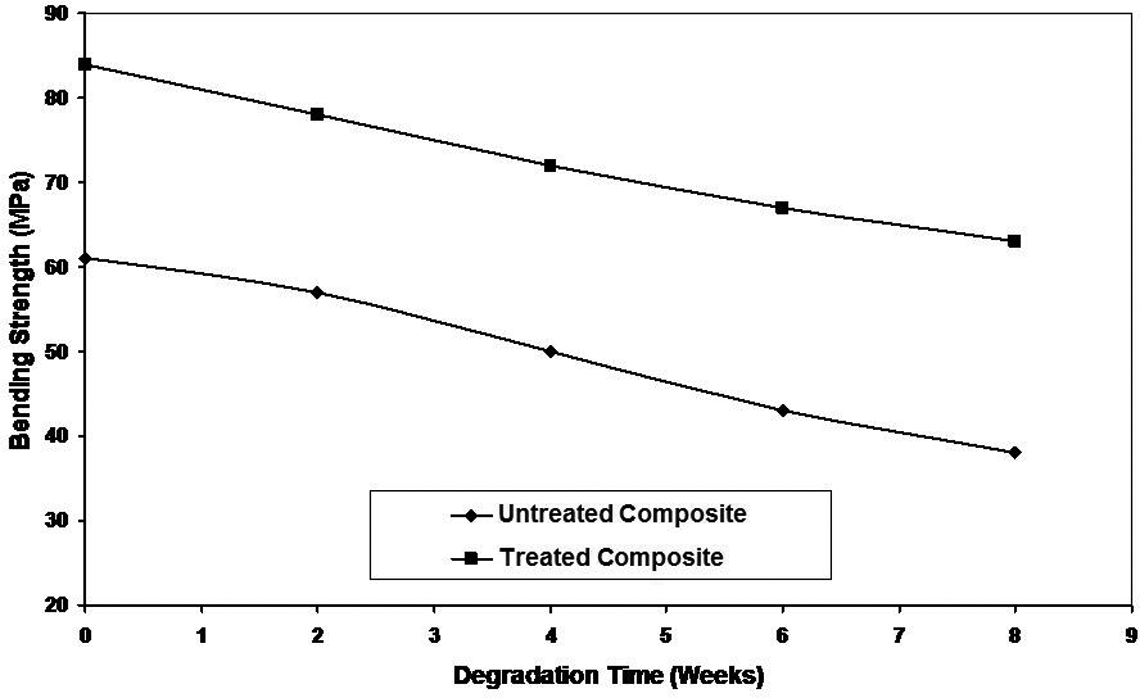
Bending strength of optimized F4 formulation soaked composites (untreated and gamma treated) against soil degradation time (up to 8 weeks).
Conclusion
Hessian cloth-reinforced urethane acrylate-based (F1–F5)-thermoset composites (50% fiber by weight) were prepared by compression molding. Mechanical properties such as TS, BS, TM, BM, and Eb% were measured for the five formulation-treated composites. It was found that F4-treated composites showed the best results (TS, BS, TM, BM, and Eb% were found to be 47 MPa, 61 MPa, 1250 MPa, 1550 MPa, and 9.38%, respectively). γ Radiation was applied on optimized F4-treated composites for different doses. It was found that the treated composites showed better mechanical properties compared with those of the untreated composites. The highest TS, BS, TM, and BM were found to be 66, 84, 1882, and 2250 MPa, respectively, at 300 krad dose. The γ radiation-treated composites retained higher mechanical strength compared with that of untreated composites during degradation tests. From this investigation, it can be concluded that composites prepared with F4 formulation and treated with γ irradiation at 300 krad performed higher mechanical properties than the untreated composites.
Footnotes
Declaration of Conflicting Interests
The author(s) declared no potential conflicts of interest with respect to the research, authorship, and/or publication of this article.
Funding
The author(s) received no financial support for the research, authorship, and/or publication of this article.