




Abstract
Thermoplastic elastomers (TPEs) based on high-density polyethylene (HDPE)/waste ground rubber tire (WGRT) powder composites were prepared by melt compounding, and the composites were compatibilized by styrene–butadiene–styrene block copolymer (SBS). The effects of the SBS compatibilizer on mechanical properties, morphological properties and the Mullins effect of the composites were investigated systemically. Experimental results indicated that SBS had a good compatibilization effect on the HDPE/WGRT composites. Compared with HDPE/WGRT composites, the tensile strength and the elongation at break went through maximum values at a compatibilizer resin content of 12 phr. Morphological study showed that the interface interaction of the HDPE/WGRT composites compatibilized by SBS was strong, which contributed to the significantly improved mechanical properties. The Mullins effect results showed that the softening appeared after the first loading of the HDPE/WGRT and HDPE/SBS/WGRT composites, the maximum stress decreased at the later cycles, and the residual deformations in uniaxial loading–unloading cycles of the HDPE/SBS/WGRT sample were lower than those of the HDPE/WGRT sample, indicating that the elasticity of the HDPE/SBS/WGRT TPE was improved.
Keywords
Introduction
Large quantities of waste ground rubber tire (WGRT) has brought about global environmental problems and public health concern with continuing accumulation.1,2 The consumption of rubber (natural and synthetic) in 2010 was 24,845 kt. 3 Most of this material is used in the tire industry, which sooner or later becomes waste. Therefore, there has been significant scientific and technological interest to provide with solutions to recycle it. But WGRT is a thermoset material, which has poor mechanical properties and cannot be reprocessed like thermoplastics. In recent years, many research works have been carried out on disposal of WGRT.4,5 Balasubramanian et al. used hybrid artificial neural network–genetic algorithm to predict and optimize the mechanical properties of polypropylene/waste tire powder blends; 6 Mujal-Rosas et al. mixed tire dust and high-density polyethylene (HDPE) in order to explore a new application for the WGRT. 7
Development of an effective recycling technology continues to be an interesting motive because earlier efforts to recycle rubber wastes, such as incineration, pyrolysis and land fill, had ecological and quality problems. 8 Powder utilization, which is environmentally friendly and easy to apply using simple equipment, is one of the most attractive techniques for the effective utilization of WGRT. Many researchers have attempted to use WGRT powder in various thermoplastic and rubber recipes, so as to produce “value added” polymeric materials that can be used in various applications. 9 Incorporation of WGRT powder into thermoplastics to obtain impact-modified thermoplastics 10 and thermoplastic elastomers (TPEs)11–15 is an effective alternative for the disposal of the WGRT. They can be used in a variety of markets, such as automotives, buildings, constructions, wires and cables. However, properties of WGRT-filled thermoplastic depend on the nature of WGRT and the plastic matrix, WGRT loading and the extent of interface interaction between WGRT and the thermoplastics, 16 and interfacial compatibility of the components is important to achieve the desired properties. 17 In order to overcome the problems, dynamic vulcanization, 18 dynamic reaction 19 and ultraviolet surface modification of WGRT 20 were made to produce TPE by adding WGRT to the corresponding recipes; moreover, compatibilizers that act as interphase bridges between hard thermoplastic matrix and soft WGRT phase are often required. 21
Rubber-like materials exhibit an appreciable change in their mechanical properties resulting from the first extension, which has been investigated intensively by Mullins and his coworkers and consequently is referred to as the “Mullins effect”. 22 The Mullins effect is a very important damage source that can exist in rubber-like materials and uniaxial cyclic tension tests were carried out to take a close look at the Mullins effect. Machado et al. illustrated stress softening in particle-reinforced silicone rubber for uniaxial, planar and equibiaxial tensile tests; 23 Drozdov studied the Mullins effect in semicrystalline polymers; 24 Cantournet et al. reported the Mullins effect and cyclic stress softening of filled elastomers. 25 But few articles have been published to address the Mullins effect of TPEs.
In this article, we reported the preparation of TPEs based on the composites of HDPE and WGRT powder via melt compounding with the modification of interface compatibility by the addition of styrene–butadiene–styrene block copolymer (SBS). The effect of compatibilizer on the mechanical properties, morphology and the Mullins effect of the HDPE/WGRT composites were investigated.
Experimental
Materials
WGRT powder with 120 meshes was commercially manufactured by Qingdao Lvye Co., Ltd (China). HDPE (Grade 5000S) was commercially obtained from Daqing Petrochemical Co., Ltd (China), with a melt flow index of 0.9 g/10 min (190°C/2.16 kg), and the weight-average molecular weight (M w) of 5000S was 12.0 × 10⁴. SBS (Grade YH-792) was obtained from Yueyang Petrochemical Co., Ltd (China). It was a linear SBS with a polystyrene block percentage of 40 wt%.
Preparation of HDPE/WGRT composites and HDPE/WGRT composites compatibilized by SBS
Commercially available HDPE, SBS and WGRT powder were used for the composites. HDPE/WGRT composites and HDPE/SBS/WGRT composites were produced via a mixing process using a Brabender PLE 331 plasticorder (Brabender Gmbh, Germany). The mixer temperature was kept at 165°C with a constant rotor (cam-type) speed of 80 r min−1. In detail, the requisite quantity of HDPE and SBS resin was charged into the mixer and allowed to melt compounding. After 3 min, the WGRT powder was added. The mixing was continued for another 5 min to allow well dispersion of WGRT powder in the thermoplastic matrix. Finally, the compound was removed from the mixer and then passed through a cold two-roll mill in the molted state to obtain a sheet. The sheet of about 2 mm thickness was compression molded under a pressure of 15 MPa at 165°C for 9 min followed by cold compression for 8 min. Test specimens were die-cut from the compression-molded sheet and used for testing after 24 h.
Measurement and characterization
For the measurement of tensile properties, dumbbell-shaped specimens were prepared according to ASTM D412. The tearing strength was tested according to ASTM D624 using unnotched 90° angle test pieces. Both tensile and tearing tests were performed on a universal testing machine (TCS-2000, Taiwan Gao Tie Technology, China) at a crosshead speed of 500 mm min−1. The shore A hardness was determined using a hand-held shore A durometer (LX-A, Shanghai Liu Ling instrument factory, Shanghai, China) according to ASTM D2240. All tests were carried out at 23 °C. The average value was calculated for five test specimens. Tensile set (100% elongation) was tested according to ASTM D 1566.
Morphological study was carried out using field emission scanning electron microscopy (FE-SEM, JEOL-6700F, Japan Electron Co. Ltd., Tokyo, Japan). The fracture surfaces of the specimens were sputtered with thin layers of gold and probed using FE-SEM.
In order to illustrate the material softening resulting from the Mullins effect, cyclic uniaxial tension tests were performed on a universal testing machine (TCS-2000, Taiwan Gao Tie Technology, China). Tests were run at a constant strain rate of 0.042s−1.
Results and discussion
Mechanical properties of HDPE/WGRT composites
Figure 1 shows the stress–strain behaviors of HDPE/WGRT composites with different HDPE/WGRT weight ratios. It is observed that the stress–strain curves of HDPE/WGRT in Figure 1 show the characteristics of relatively being soft and tough when the HDPE content was less than 30 phr. With an increase in the HDPE content, the stress–strain curves showed a quick increase in tensile stress and upon further deformation, the fracture occurred; moreover, the yield point could be observed when the HDPE content was more than 60 phr. It could also be seen that the yield strength of HDPE/WGRT composites increased obviously with an increase in HDPE loading. The stress–strain behavior of the composites tended to that of a toughened resin when the content of HDPE was more than 40 phr.
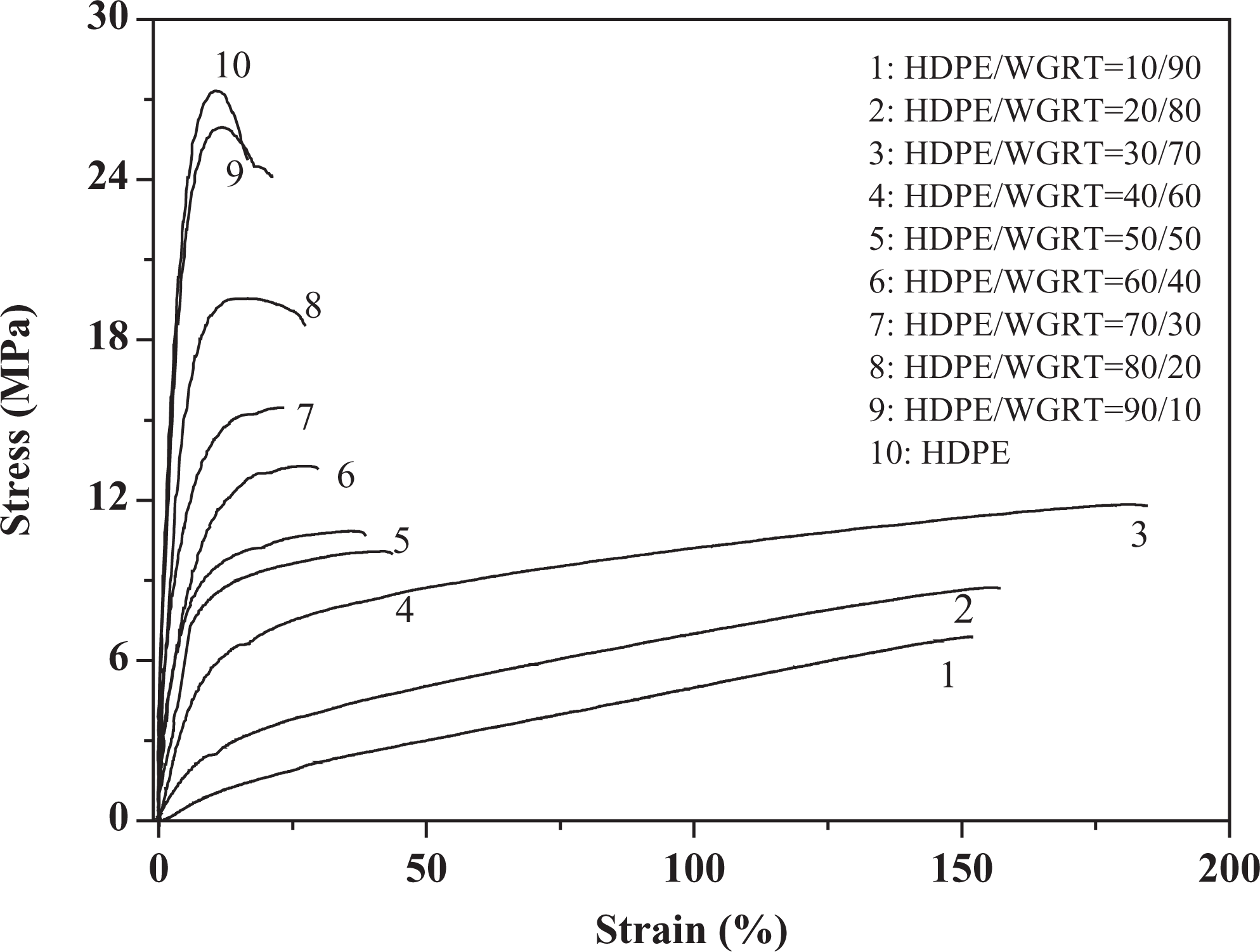
Stress–strain curves of HDPE/WGRT composites and pure HDPE. HDPE: high-density polyethylene; WGRT: waste ground rubber tire.
Mechanical properties of the HDPE/WGRT composites at various weight ratios and pure HDPE are presented in Table 1. Increase in the loading of HDPE in the composites led to the remarkable increase in tensile strength. The elongation at break and tensile set at break achieved a maximum value when the HDPE content was 30 phr and reached to 185.1% and 52.0%, respectively. The tearing strength and shore A hardness increased with an increase in the HDPE content, implying that the HDPE content is a major factor determining the mechanical properties of the HDPE/WGRT composites. In our experiment, HDPE in HDPE/WGRT composites is the continuous phase that greatly influences the mechanical properties. Furthermore, the large particle size of WGRT has a negative effect on the properties of HDPE/WGRT composites. When the HDPE content was less than 30 phr, the elongation at break was higher than 100% and the tensile set (100% elongation) values were much lower than 50%; according to ASTM D1566-09, the HDPE/WGRT composites can be described as elastomers when the content of HDPE was less than 30 phr.
Mechanical properties of HDPE/WGRT composites and pure HDPE.
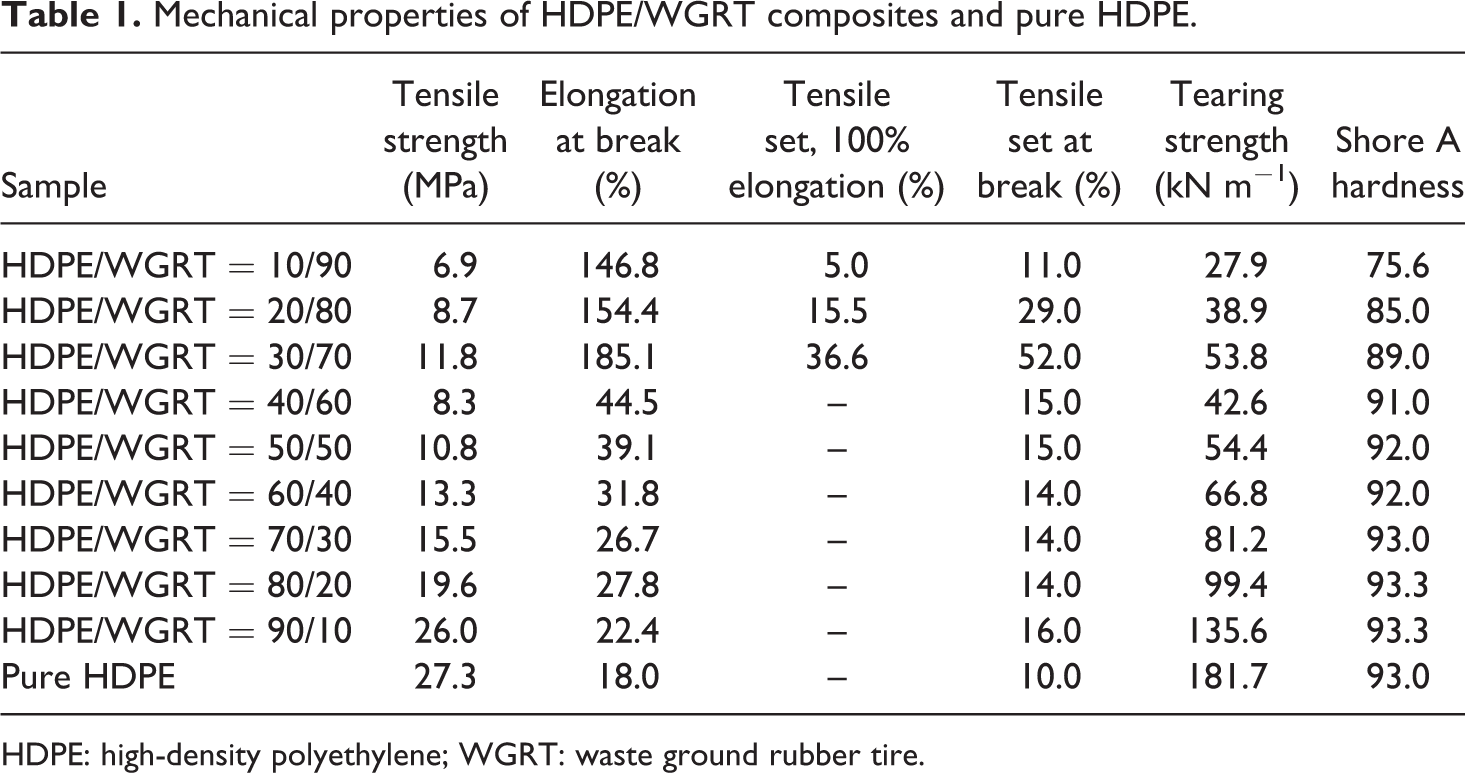
HDPE: high-density polyethylene; WGRT: waste ground rubber tire.
Influence of SBS on the mechanical properties of the HDPE/WGRT composites
Figure 2 illustrates the stress–strain behaviors of the HDPE/WGRT composites compatibilized by different SBS dosages. The stress–strain curves of a series of HDPE/SBS/WGRT composites are similar in shape. Initially, an increase in tensile stress could be observed. Upon further deformation, the slope of the curve decreased with the stress increasing almost linearly with strain until fracture occurred. All the stress–strain curves showed the representative elastomer character of being soft and tough. From Figure 2, it could also be seen that the tensile stress and the elongation at break of HDPE/WGRT composites were remarkably improved with the SBS loading.
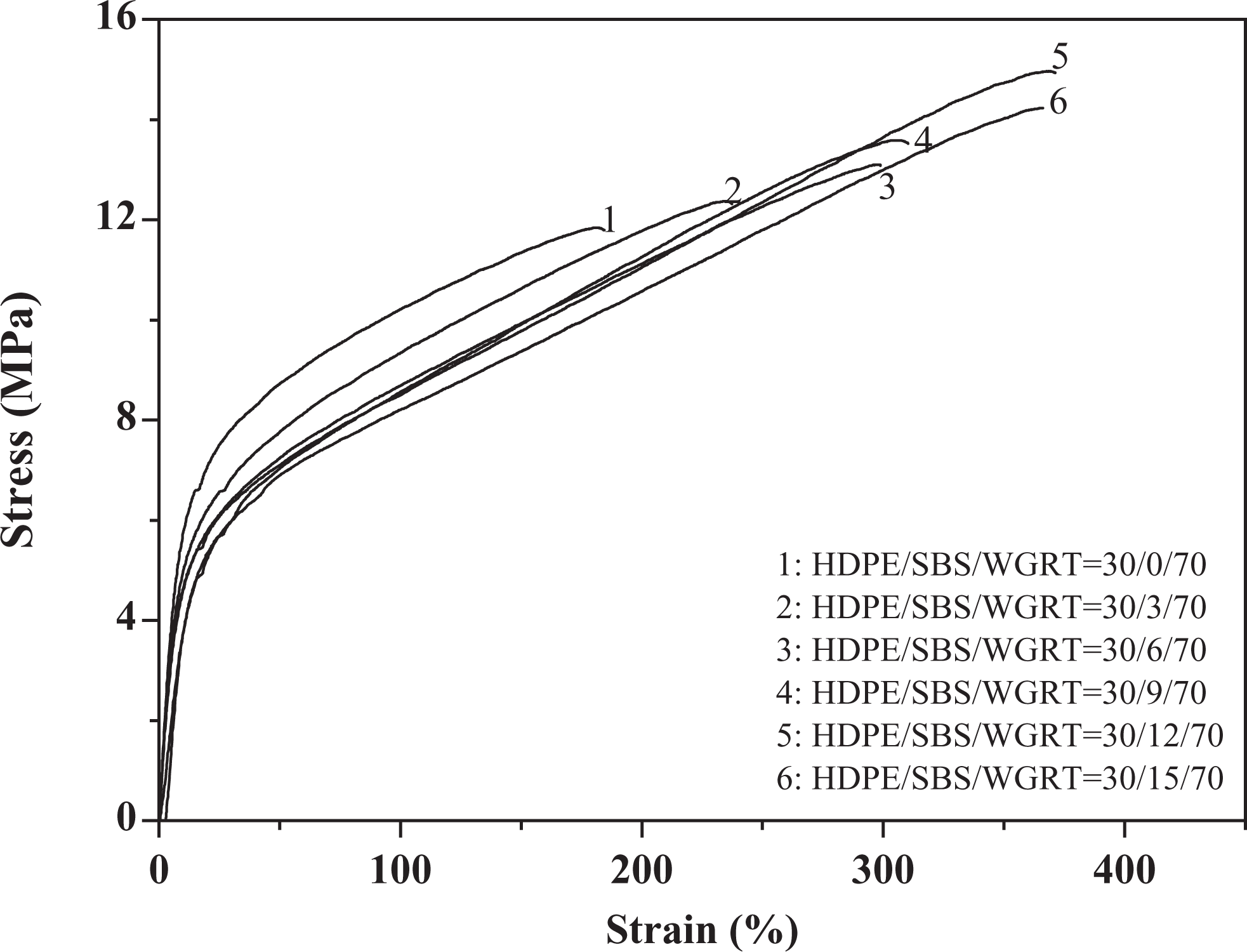
Stress–strain curves of HDPE/WGRT composites compatibilized by SBS. HDPE: high-density polyethylene; WGRT: waste ground rubber tire; SBS: styrene–butadiene–styrene block copolymer.
Tensile strength, shore A hardness, elongation at break, tensile set at break, tearing strength and tensile set (100% elongation) of HDPE/WGRT composites compatibilized with various amounts of SBS are shown in Figures 3 to 5. As shown in Figure 3, increase in the loading of SBS in HDPE/WGRT composites led to a significantly improved tensile strength, and the tensile strength reached a maximum value at 12 phr SBS loading, increasing from 11.8 MPa (at 0 phr SBS) to 15.0 MPa (at 12 phr SBS). However, the SBS loading had almost no influence on the shore A hardness of the HDPE/SBS/WGRT composites.
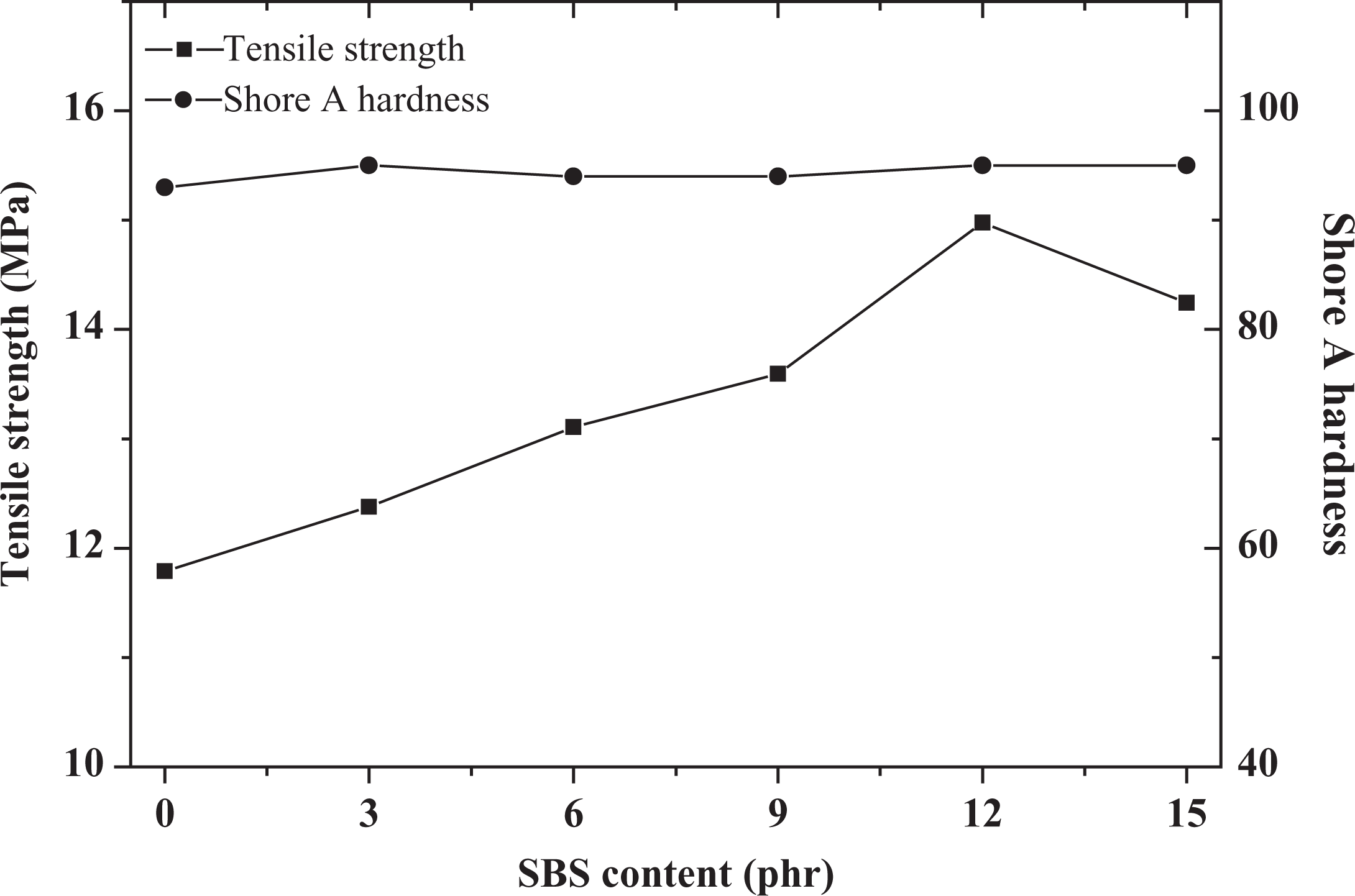
Effect of SBS content on tensile strength and shore A hardness of HDPE/WGRT composites. HDPE: high-density polyethylene; WGRT: waste ground rubber tire; SBS: styrene–butadiene–styrene block copolymer.
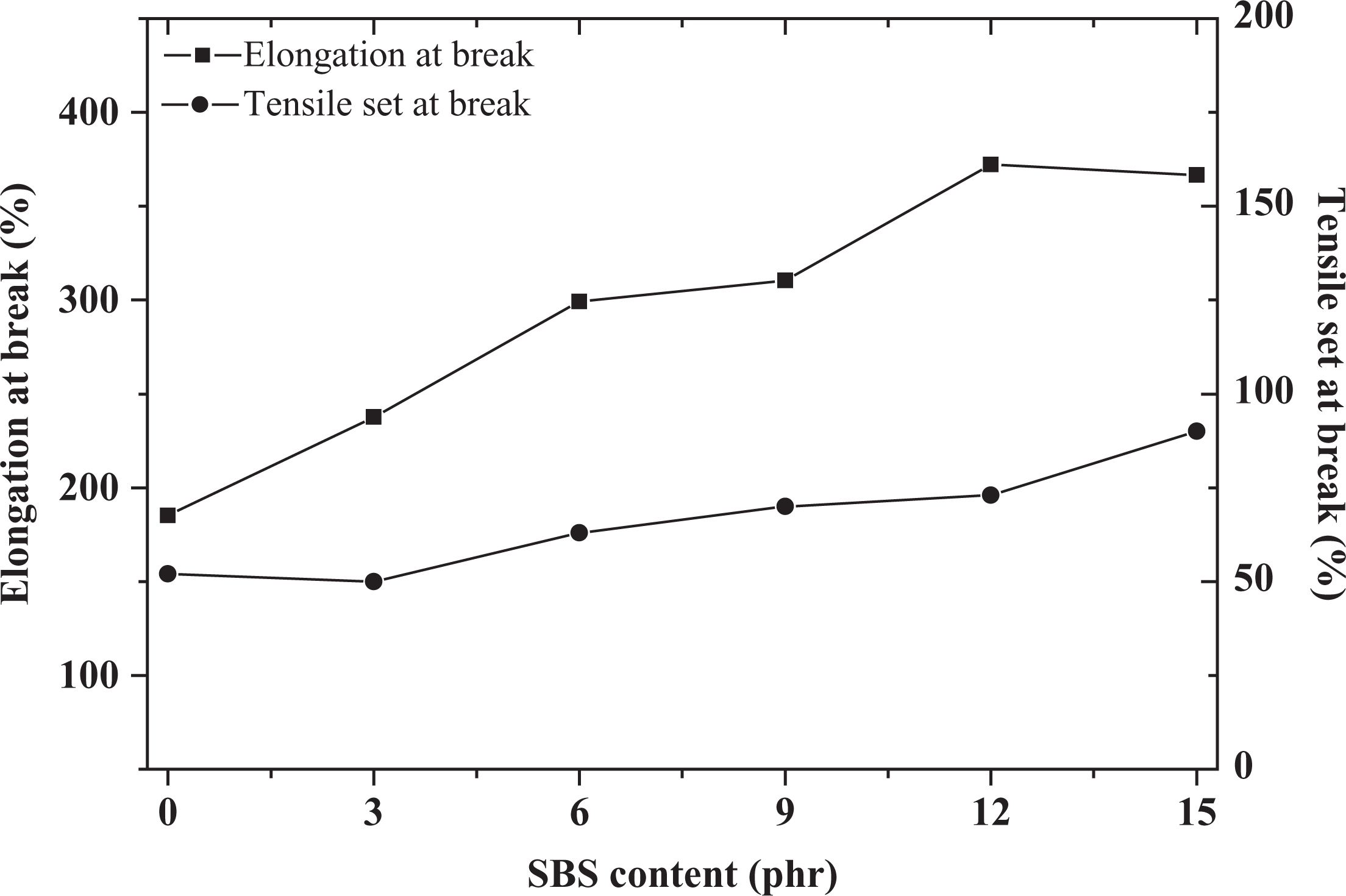
Effect of SBS content on elongation at break and tensile set at break of HDPE/WGRT composites. HDPE: high-density polyethylene; WGRT: waste ground rubber tire; SBS: styrene–butadiene–styrene block copolymer.
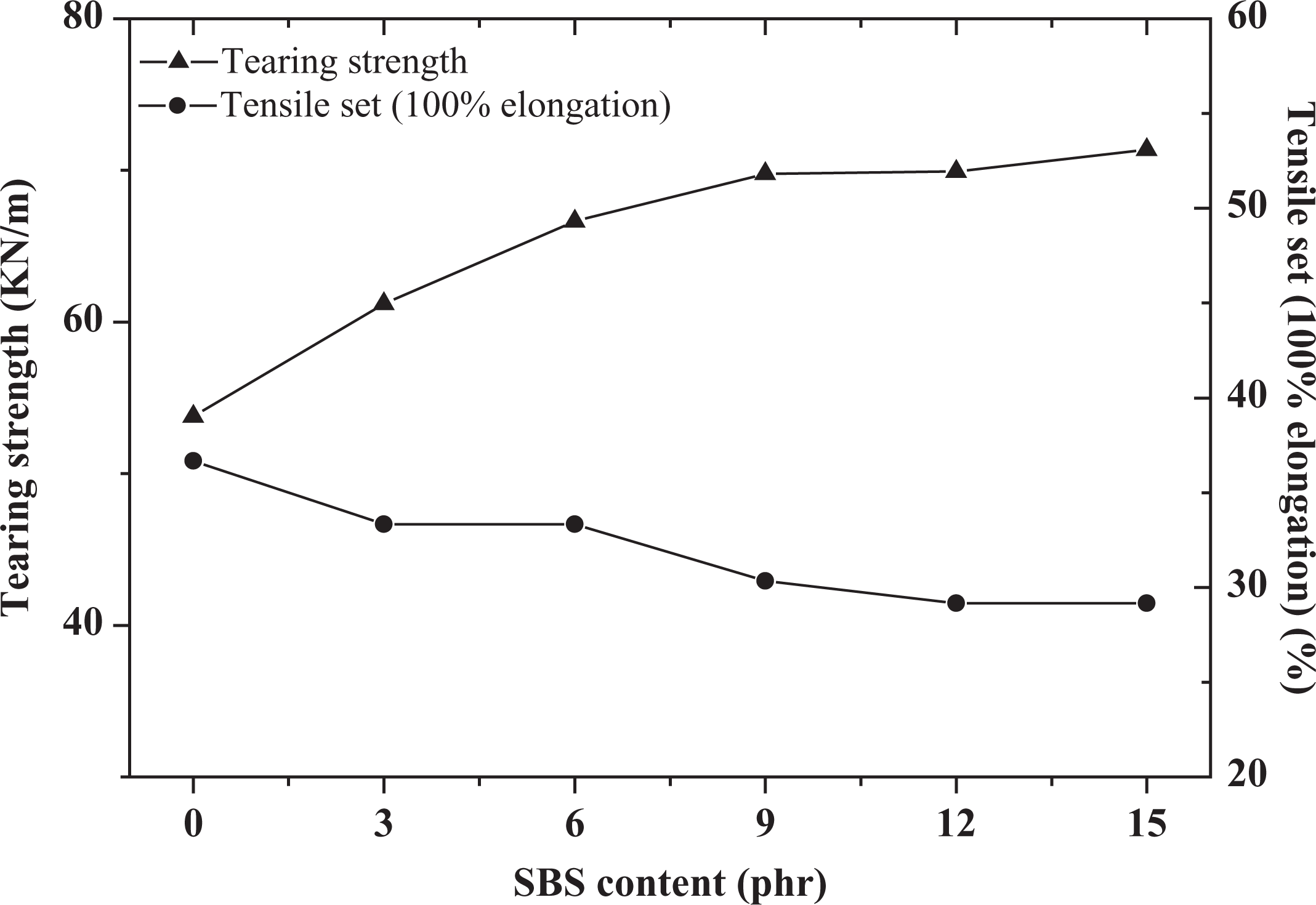
Effect of SBS content on tear strength and tensile set (100% elongation) of HDPE/WGRT composites. HDPE: high-density polyethylene; WGRT: waste ground rubber tire; SBS: styrene–butadiene–styrene block copolymer.
With an increase in the loading of SBS, the elongation at break (Figure 4) was greatly improved and reached a maximum at 12 phr SBS loading. The tensile set at break slightly increased with an increase in SBS loading. Generally, TPEs based on thermoplastic/rubber blends exhibit large reversibility and small residual strains. 26 The elastomeric cross-linked WGRT particles dispersed in the HDPE matrix, despite that WGRT was 70 phr, enabling the HDPE/SBS/WGRT composites to elastically recover from a highly deformed state.
The SBS loading also affected the tearing strength. As shown in Figure 5, compared with HDPE/WGRT composites, the tearing strength increased significantly with an increase in SBS loading; moreover, all the elongation at breaks in Figure 4 are higher than 100% and the tensile set (100% elongation) values in Figure 5 are much lower than 50%, and according to ASTM D1566-09, the HDPE/SBS/WGRT composites can be described as elastomers.
Fracture morphology and microstructure of HDPE/WGRT composites prepared by melt compounding
Field emission scanning electron micrographs of the tensile fracture surfaces of HDPE/WGRT and HDPE/SBS/WGRT composites are shown in Figure 6. Figures 6(a) and (b) showed the fracture surfaces of HDPE/WGRT composites at 30/70 weight ratio. Rough fracture surfaces indicate ductile fracture behavior of the HDPE matrix. The obvious tearing strips on the fracture surface show that the elastic recovery ability of the HDPE/WGRT composite is weak. It could also be found that the WGRT particles were still inserted in the HDPE matrix, indicating the strong interface interaction between HDPE matrix and WGRT particles.
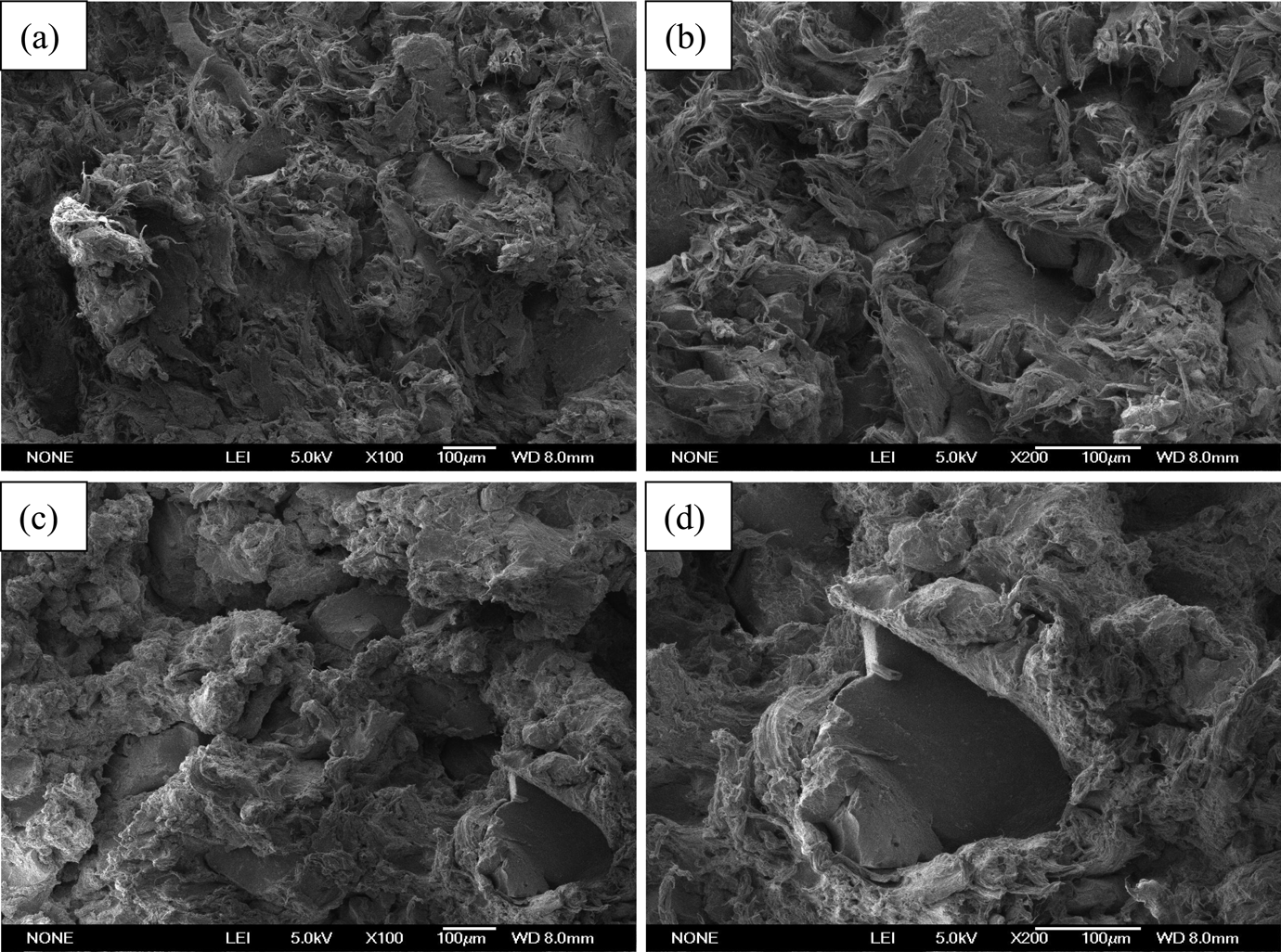
Fracture surfaces of HDPE/SBS/WGRT composites prepared by melt compounding. Blend compositions (weight ratio): (a) 30/0/70, at low magnification; (b) 30/0/70, at high magnification; (c) 30/12/70, at low magnification and (d) 30/12/70, at high magnification. HDPE: high-density polyethylene; WGRT: waste ground rubber tire; SBS: styrene–butadiene–styrene block copolymer.
Compared with the HDPE/WGRT composites, the HDPE/SBS/WGRT composites showed the different fracture morphology. Compared with Figures 6(a) and (b), the fracture surfaces in Figures 6(c) and (d) are relatively smooth; moreover, there was no notable tearing strip in Figures 6(c) and (d), indicating the enhanced elastic recovery ability of HDPE/SBS/WGRT composites, which is also consistent with the lower tensile set (100% elongation) of HDPE/SBS/WGRT composites in Figure 5. Furthermore, the WGRT particles in Figure 6(c) are inserted firmly in the HDPE matrix, indicating that the interface interaction is still strong even after the fracture of specimens. Upon elongation, the thermoplastic layers around the WGRT particles are subjected to plastic yielding; upon relaxation, they are drawn back by the WGRT elastic rubber domains effectively.27, 28 Therefore, the HDPE/SBS/WGRT composites showed strong elasticity and less permanent set during the tensile experiment, which is consistent with the fracture morphology in Figure 6(d).
Mullins effect of HDPE/WGRT composites
Figures 7 and 8 show the stress–stretch curves of HDPE/WGRT and HDPE/SBS/WGRT composites subjected to five uniaxial loading–unloading cycles with given stretch λ = 2 and λ = 3 (five cycles of loading–unloading from zero stress up to the maximum stretch down to zero stress). From Figures 7 and 8, during unloading and subsequent reloading, the results showed the accumulation of residual strain and stress softening, which was known as Mullins effect. The softening appeared obviously after the first loading, it appeared for stretches lower or equal to the maximum stretch ever applied. It can also be seen that the softening increased progressively with an increase in maximum stretch. But previous stretch had little influence on the stress–strain properties at greater stretch.
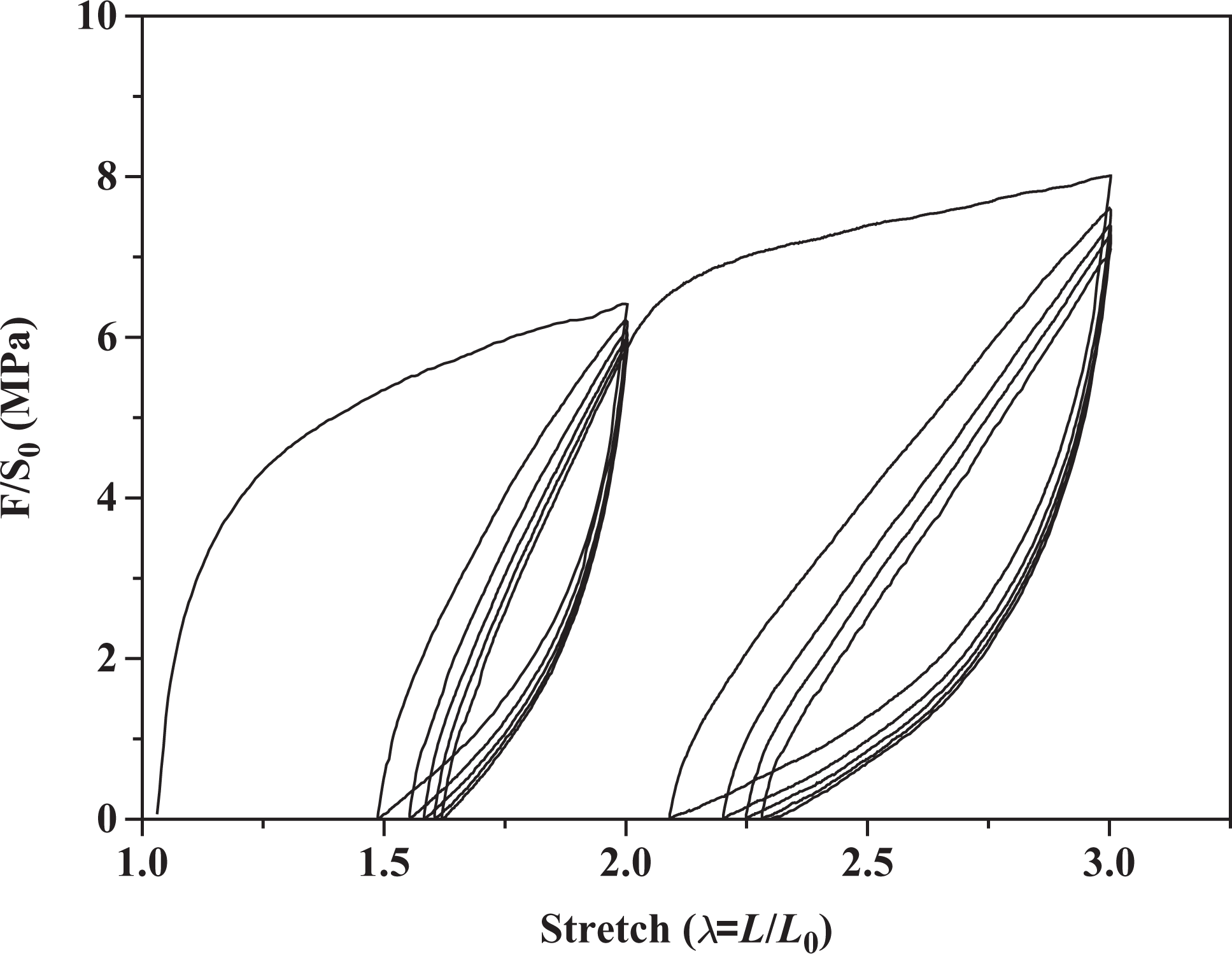
The stress–stretch curve of the HDPE/WGRT composite (30/70) subjected to five uniaxial loading–unloading cycles with given stretch λ = 2 and λ = 3. HDPE: high-density polyethylene; WGRT: waste ground rubber tire.
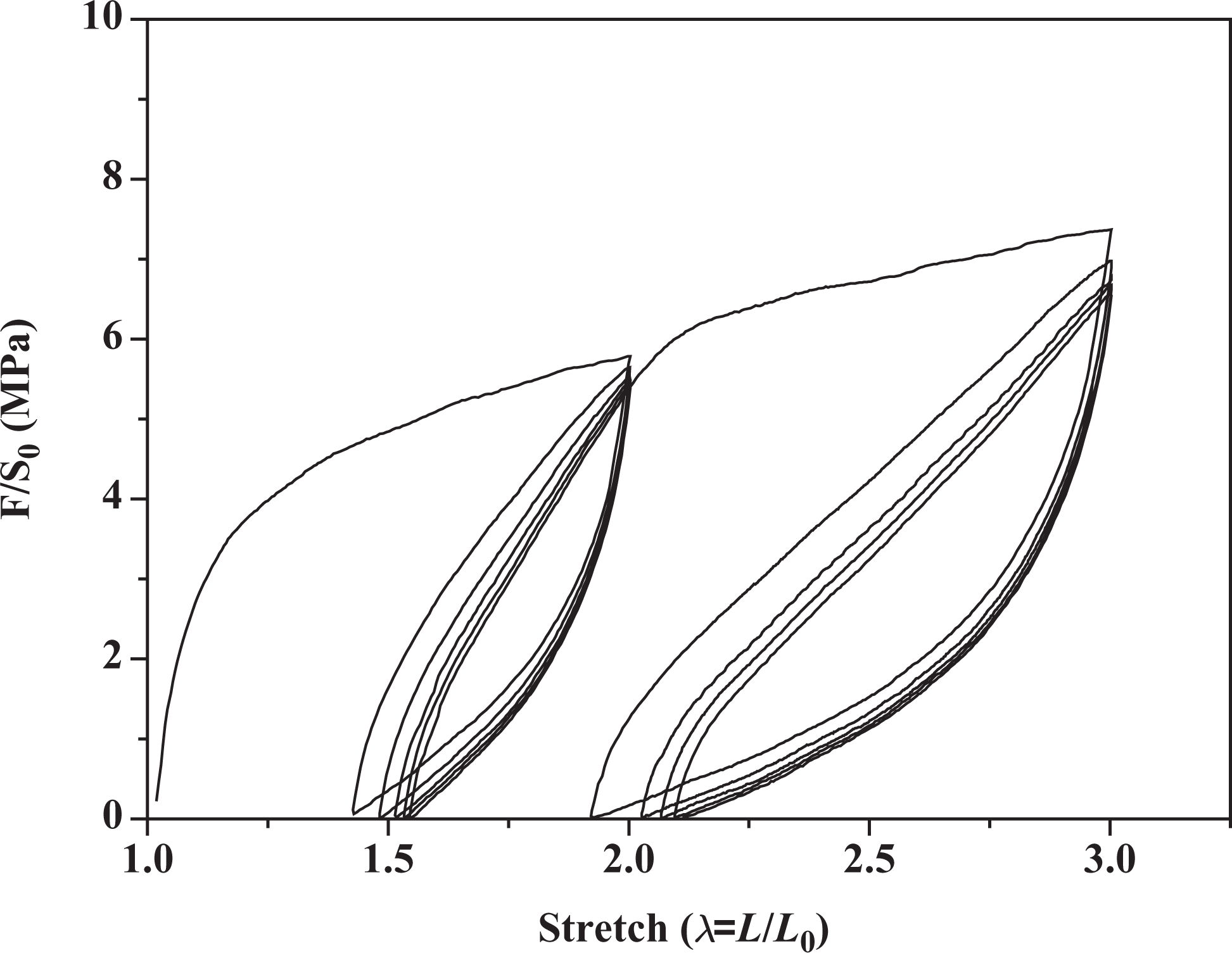
The stress–stretch curve of the HDPE/SBS/WGRT composite (30/12/70) subjected to five uniaxial loading–unloading cycles with given stretch, λ = 2 and λ = 3. HDPE: high-density polyethylene; WGRT: waste ground rubber tire; SBS: styrene–butadiene–styrene block copolymer.
In order to understand the softening phenomenon well, Figure 9 shows the maximum stress values of HDPE/WGRT and HDPE/SBS/WGRT composites as a function of the number of loading–unloading cycles (stretch λ = 2 and λ = 3). It can be seen that the maximum stress could be found at the first loading, and then it decreased obviously during the second loading–unloading cycle. In addition, after the second cycle, the maximum stress only decreased slightly at the later cycles. To characterize the uniaxial tensile behavior, Mullins and Tobin 29 proposed a microstructural model, the stress-softening virgin material consisted of an amorphous mixture containing a hard phase and a soft phase microstructure, most of the deformation occurs in the soft phase and the extent of the damage depends on the maximum previous stretch experienced by the material. In our experiment, the HDPE, as a hard phase, is the matrix of the composite; during the first loading, the plastic deformation and the tearing strips of HDPE matrix will generate and result in the large energy consumption. During loading, most of the deformation takes place in the soft regions, and the hard regions of the HDPE matrix make little contribution to the deformation, but they may be broken to form soft regions during first loading; after the previous cycle, the contribution of the hard region (matrix phase) in deformation is relatively small and the measured stress at a given strain is mainly exerted to the soft region; therefore, the maximum stress decreased slightly at the later cycles after the second loading.
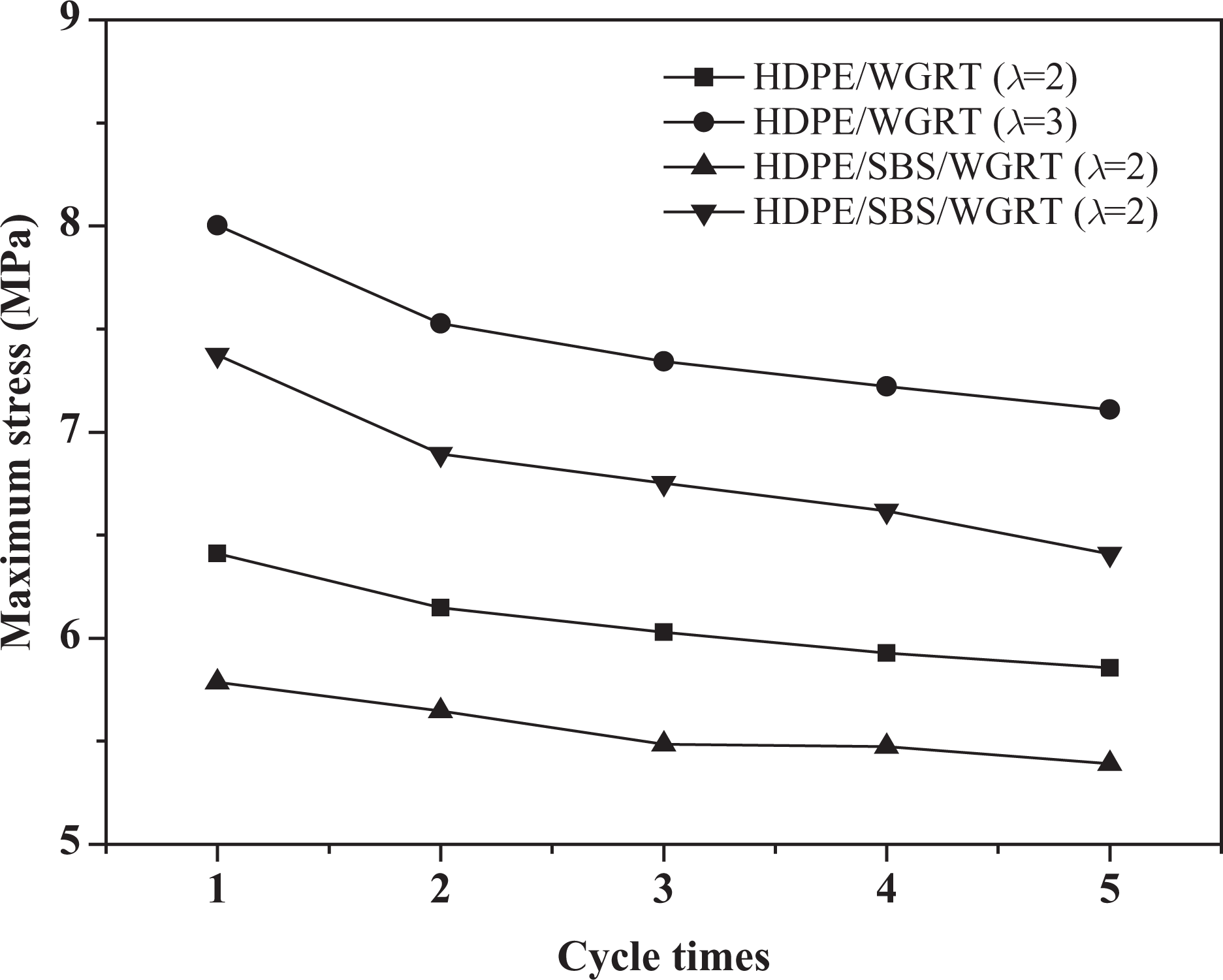
The maximum stress of HDPE/WGRT composites as a function of the number of loading–unloading cycles (stretch λ = 2 and λ = 3). HDPE: high-density polyethylene; WGRT: waste ground rubber tire.
However, the residual deformations of the TPEs in uniaxial loading–unloading cycles are shown in Figure 10, which were much higher than that of the Mullins effect of conventional filled and unfilled vulcanizates. Wang et al. 30 confirmed that the relatively high-permanent deformations of HDPE/ethylene propylene diene monomer thermoplastic vulcanizates were formed by the residual plastic deformation of HDPE lamellae crystals. In our experiment, the HDPE, which is a ductile thermoplastic resin, is the matrix of the HDPE/WGRT composite, resulting in much higher residual deformations. Moreover, the residual deformations were almost generated in the first loading. It should also be noted that the residual deformations in the Mullins effect of HDPE/SBS/WGRT TPE were lower than those of HDPE/WGRT composites, which is consistent with the high elongation at break as shown in Figure 4 and with the low tensile set (100% elongation) as shown in Figure 5. We can understand that when compared with that of HDPE/WGRT composites, the elasticity of the HDPE/SBS/WGRT TPE was improved.
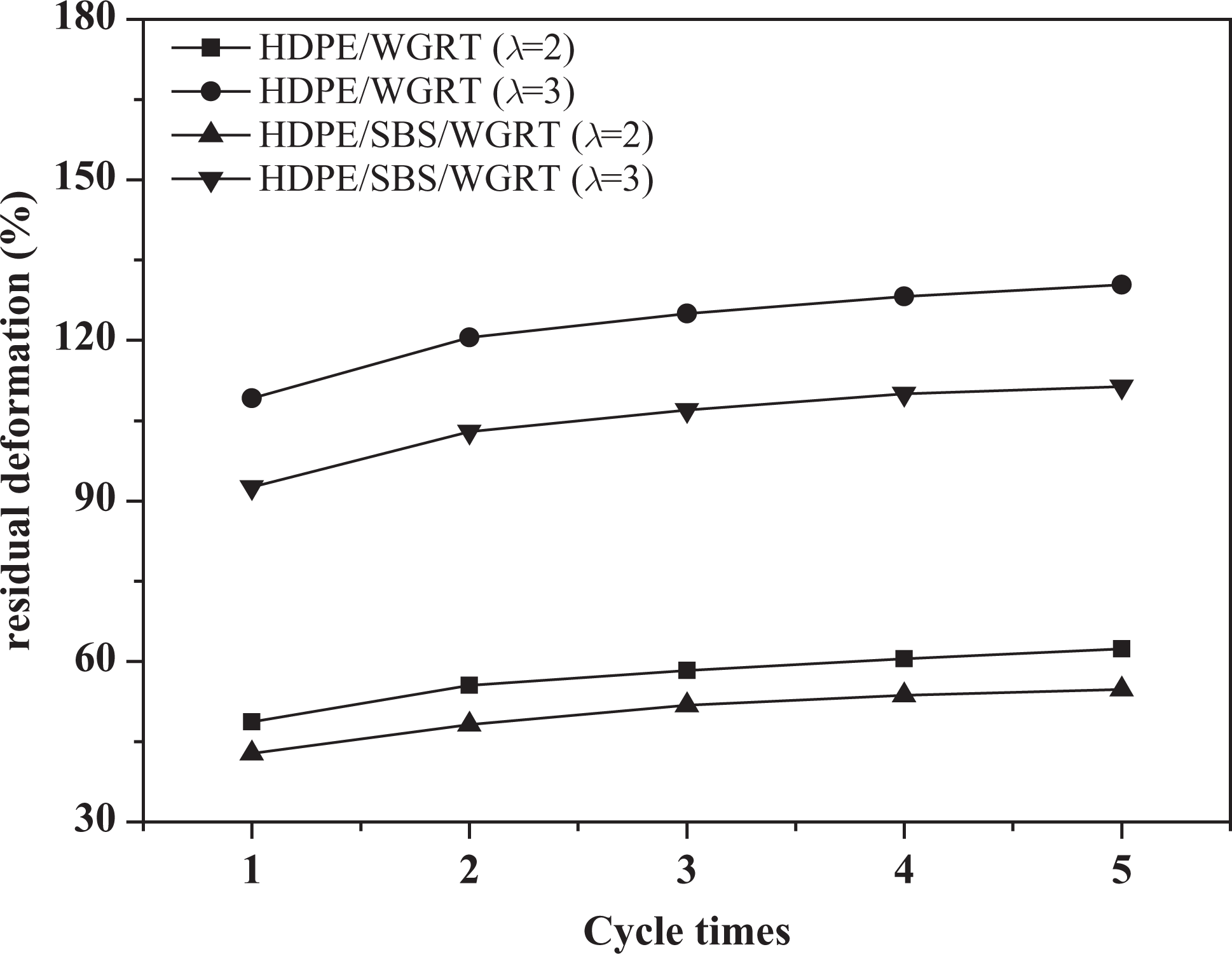
The residual deformation of HDPE/WGRT and HDPE/SBS/WGRT composites as a function of the number of loading–unloading cycles (stretch λ = 2 and λ = 3). HDPE: high-density polyethylene; WGRT: waste ground rubber tire; SBS: styrene–butadiene–styrene block copolymer.
Conclusions
TPEs based on HDPE/WGRT composites were prepared by melt compounding and SBS block copolymer was used as a compatibilizer of the composites. The SBS had a good compatibilization effect on the HDPE/WGRT composites and significant improvement in mechanical properties of HDPE/WGRT composites compatibilized by SBS was achieved. Compared with HDPE/WGRT composites, tensile strength, elongation at break and tearing strength of HDPE/WGRT blends with 12 phr SBS loading were improved significantly, respectively. HDPE/SBS/WGRT composites can be attributed to the TPE with relatively high elongation at break and the low tensile set (100% elongation). FE-SEM studies showed that no notable tearing strip was found on the fracture surface and the fracture surface was relatively smooth, indicating a higher elastic recovery ability than the HDPE/WGRT composites; the WGRT particles were inserted tightly into the HDPE matrix, indicating that the interface interaction was still strong even after the fracture, which contributed to the improved mechanical properties. The Mullins effect was observed in our experiment, the maximum stress could be found at the first loading, and it was decreased at the later cycles, and the residual deformations in uniaxial loading–unloading cycles of the HDPE/SBS/WGRT sample were lower than those of the HDPE/WGRT sample, indicating that the elasticity of the HDPE/SBS/WGRT TPE was improved.
Footnotes
Funding
This work was supported by a Project of Shandong Province Higher Educational Science and Technology Program (grant number J12LA15); the Science and Technology Development Project of Qingdao (grant number 12-1-4-3-(9)-jch); the Natural Science Foundation of Shandong Province (grant number ZR2012EMM002) and the National Natural Science Foundation of China (grant number 51272115), People’s Republic of China.