




Abstract
Super-hydrophobic and super-oleophilic surface based on high-density polyethylene/styrene–butadiene–styrene block copolymer/waste ground rubber tire powder thermoplastic elastomer (TPE) was successfully prepared while metallographic sandpaper was used as a template. Field emission scanning electron microscope study showed that the molded TPE surface with W7 grade sandpaper possessed the rough microstructure; moreover, the micrometer scale strips resulting from the plastic deformation of TPE matrix could be observed obviously, leading to the increasing surface roughness. Wettability tests showed that the molded TPE surfaces with series sandpapers exhibited the hydrophobic and super-oleophilic properties; moreover, the surface molded with W7 grade sandpaper showed the remarkable super-hydrophobic and super-oleophilic properties.
Keywords
Introduction
Wettability is an important characteristic of solid surface, which is governed by the chemical composition and the geometrical structure of material surface. 1,2 Currently, the creation of super-hydrophobic surfaces, with water contact angle larger than 150° and sliding angle less than 10°, has stimulated great interest due to the significance of the super-hydrophobic surfaces in fundamental research 3,4 and industrial applications, such as water repellency, 5 self-cleaning, 6 anti-icing properties, 7 anti-fouling surfaces 8 and insulations. 9 Recently, Liu et al. 10 have fabricated super-hydrophobic surfaces based on thermoplastic vulcanizate via molding process, and vulcanizates 11 –14 were also used to prepare super-hydrophobic surfaces; various super-hydrophobic surfaces based on thermoplastic elastomers (TPEs) have been reported; however, until now there is few report of TPEs involving both super-hydrophobic and super-oleophilic properties, which should be meaningful for the separating of oil/water mixture.
TPEs can exhibit the elasticity property similar to that of the rubber materials and the thermoplastic property similar to that of the thermoplastics. 15,16 The rubber phase in TPEs gives the elastic property, and the resin phase in TPEs gives the strength properties. Due to these unique characteristics, TPEs show great importance in applications such as automotive, electrical cable, and construction. 17 –21 Nowadays, the usage of waste ground rubber tire (WGRT) has attracted great attention because of increasing number of vehicles. 22,23 Van Beukering and Janssen 24 reported that about 800 million tires were discarded all over the world every year, which was estimated to increase by 2% annually; and Sienkiewicz et al. reported that approximately 1.4 billion unit tires were produced around the globe every year. 25 The best way to utilize WGRT is to recycle it 26 ; however, the recycling of WGRT needs special techniques because WGRT is a thermoset material and cannot be reprocessed easily. 27 Ramarad et al. 28 pointed out that even though it was still in its infancy, the TPE blends had shown the most promising properties balance that could be commercialized; moreover, it has great significant influence on the circular economy and environment protection.
In this research, we prepared a super-hydrophobic and super-oleophilic surface based on high-density polyethylene (HDPE)/WGRT blends where the styrene–butadiene–styrene (SBS) block copolymer was used as a compatibilizer and metallographic sandpaper was used as a template. The influence of metallographic sandpaper on the hydrophobic and super-oleophilic properties of HDPE/SBS/WGRT TPEs, the microstructure morphology, and the hydrophobic mechanism were investigated systematically.
Experiment
Materials
HDPE with 5000S was the product of Qilu Petrochemical Co., Ltd, China, with a melt flow index of 0.9 g/10 min (190°C/2.16 kg); the weight-average molecular weight (M w) of 5000S was 12.0 × 10⁴. SBS, grade YH-792, was commercially obtained from Yueyang Petrochemical Co., Ltd, China. It was linear SBS with polystyrene block percentage of 40 wt%. WGRT powder with 120 meshes was manufactured by Qingdao Lvye Co., Ltd, China. Metallographic sandpapers with different grades were supplied by Shanghai Grinding Wheel Co., Ltd, China. N-hexane (97.0%) and ethylene glycol were all purchased from Tianjin Bodi Chemical Co., Ltd, China.
Preparation
Commercially available HDPE, SBS, and WGRT powder were used for the preparation of TPEs. HDPE/SBS/WGRT TPE was prepared via melt-compounding process using a Brabender PLE 331 plasticorder (Brabender GmbH, Germany). The mixer kept at 165°C with a constant rotor (cam type) speed of 80 r/min. The requisite quantities of HDPE resin and SBS were charged into the mixer and allowed to melt. After 3 min, the WGRT powder was added and the mixing was continued for another 5 min. Finally, the compound was removed from the mixer and then passed through a cold two-roll mill (S (S) K-160, Shanghai Qun Yi Rubber Machinery Co., Ltd, Shanghai) in the molted state to obtain a sheet with 2 mm thick. The sheets were prepared at 165°C for 6 min in a plate vulcanizing machine (50T, Shanghai Qun Yi Rubber Machinery Co., Ltd), and then compression-molded under pressure of 15 MPa at 165°C for 8 min, followed by cold compression in another molding machine (25T, Shanghai Qun Yi Rubber Machinery Co., Ltd) at room temperature for 8 min. The specimens were die-cut from the compression molded sheet.
In this manuscript, the HDPE/SBS/WGRT TPE with a 30/12/70 weight ratio was chosen for the further research. The super-hydrophobic and super-oleophilic TPE surface was prepared as follows. First, the HDPE/SBS/WGRT TPE specimen, 2 mm thick, with 30/12/70 weight ratio was cut into slices with the size of 1 × 1 cm2, and the surface was cleaned carefully with ethanol. Second, the prepared TPE was placed on the metallographic sandpaper to preheat at 160°C for 8 min in the plate vulcanizing machine and then molded under a pressure of 2 MPa at 160°C for 3 min. Finally, the specimen was followed to cool for 5 min at room temperature, and then the sandpaper template was removed from the TPE surface.
Characterization
Contact angles were measured using a contact angle meter (JC2000A, Shanghai Jianduan Guangdian Technology Co., Ltd, China). The purified water (or n-hexane) droplet was 5 µL which was used in the test, and the contact angle values were the average of five measurements. The sliding angles of various specimens were measured using a tilt table (G100, Korea DPI Co., Ltd, Korea), and the purified water droplet was 20 µL which was used in test. The sliding angles were the averages of three measurements. The microstructure of WGRT powder, the surfaces of metallographic sandpapers and TPE were observed by field emission scanning electron microscope (FESEM, JEOL-6700F, Japan Electron Co., Ltd, Japan). The element distribution of the surfaces was characterized by an energy dispersive X-ray spectroscopy (Oxford Instrument Co., Ltd, UK). Surface energy was analyzed according to the Owens–Wendt and Kaelbe method by static contact angle measurements with two liquids: water and ethylene glycol.
Results and discussion
Mechanical properties of HDPE/WGRT blend and series HDPE/SBS/WGRT TPEs
Figure 1 showed the FESEM image of WGRT powder. From Figure 1, it could be seen that the dimensions of WGRT particles were not uniform. The dimension of the WGRT powder used in this research was 120 mesh (125 µm), which was in agreement with the result of Figure 1.
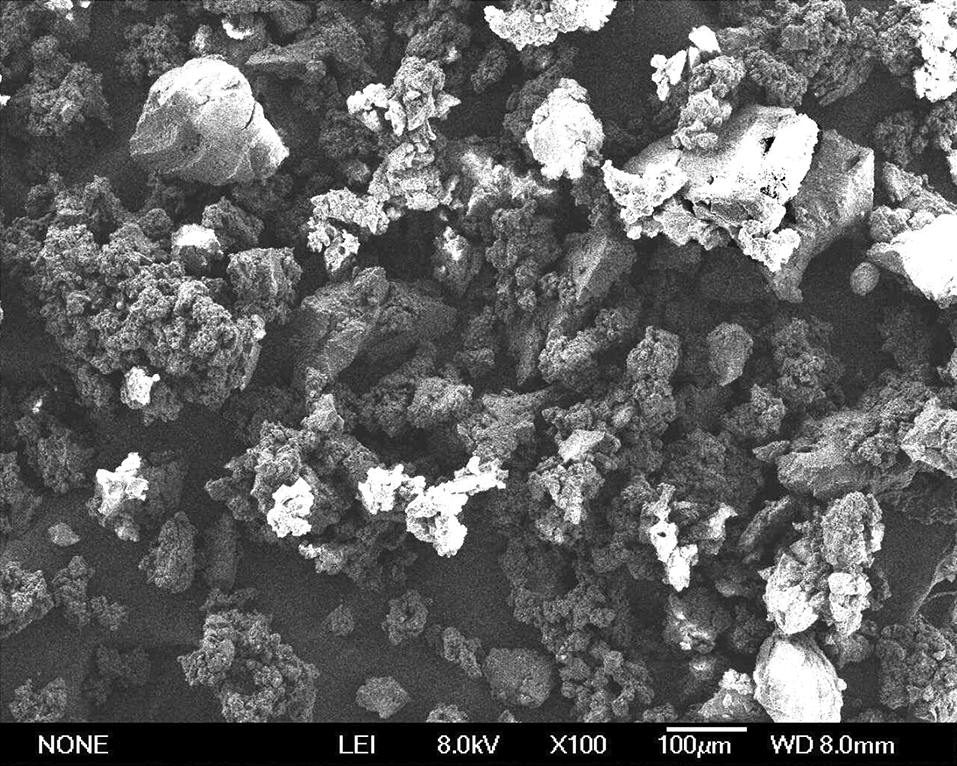
FESEM image of WGRT powder.
Figure 2 showed the stress–strain behaviors of HDPE/WGRT blend and series HDPE/SBS/WGRT TPEs. From Figure 2, it could be seen that all the stress–strain behavior showed the elastomer character of being soft and rough; moreover, the tensile stress and the elongation at break of HDPE/SBS/WGRT blends were improved obviously with increasing SBS dosage. It also could be found that the comprehensive mechanical properties of HDPE/SBS/WGRT TPE with 12-phr SBS dosage were the best. The main composition of WGRT powder in our research was SBR, and SBS had good compatibility with SBR because of similar units, styrene and butadiene; and the polybutadiene chain segments in SBS block copolymer were miscible with HDPE because of similar structure, so the SBS was chosen as a compatibilizer. Moreover, the HDPE/SBS/WGRT TPE with a 30/12/70 weight ratio was chosen for the further research.
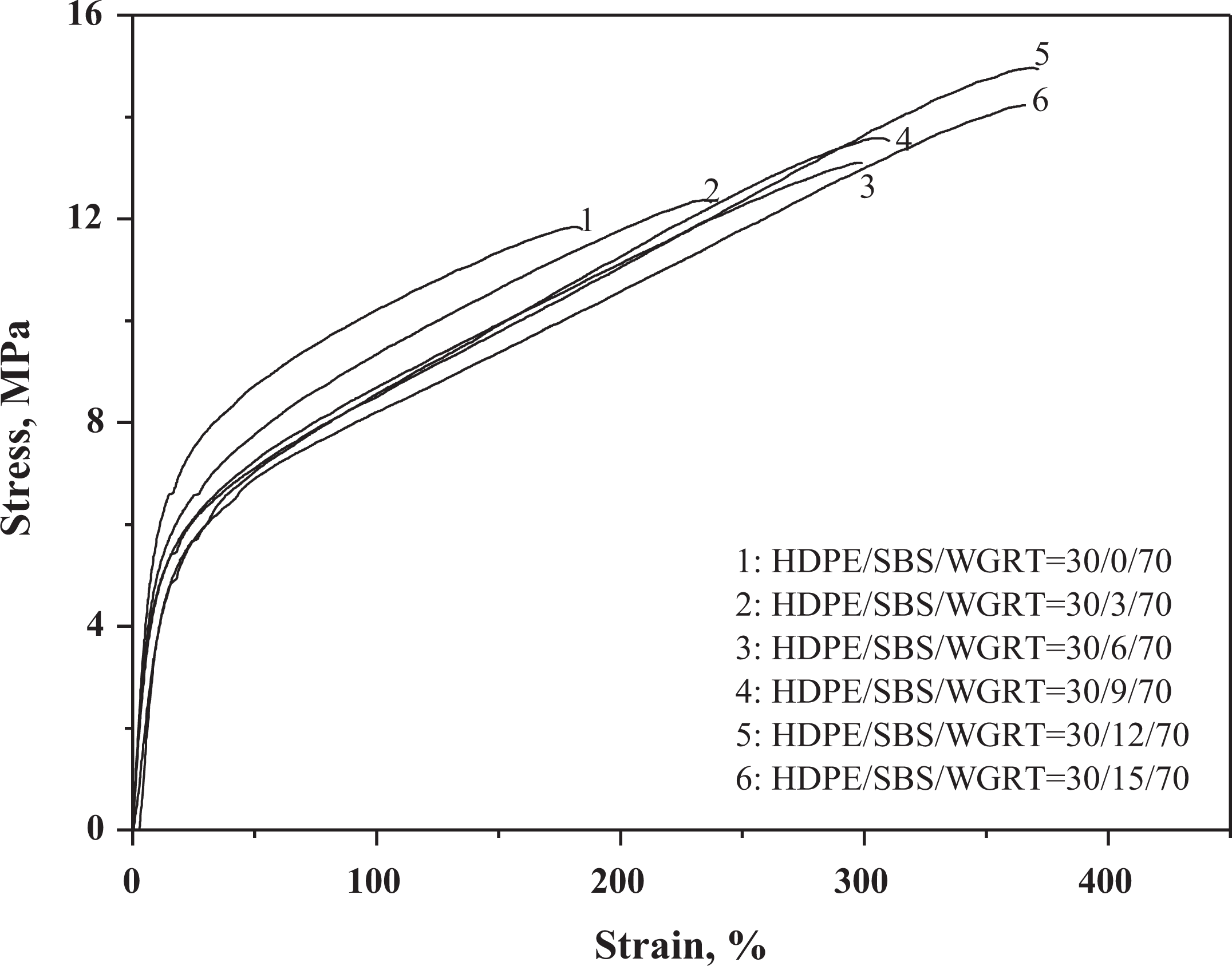
Stress–strain curves of HDPE/WGRT blend and series HDPE/SBS/WGRT TPEs.
Hydrophobic properties of HDPE/SBS/WGRT TPE surfaces
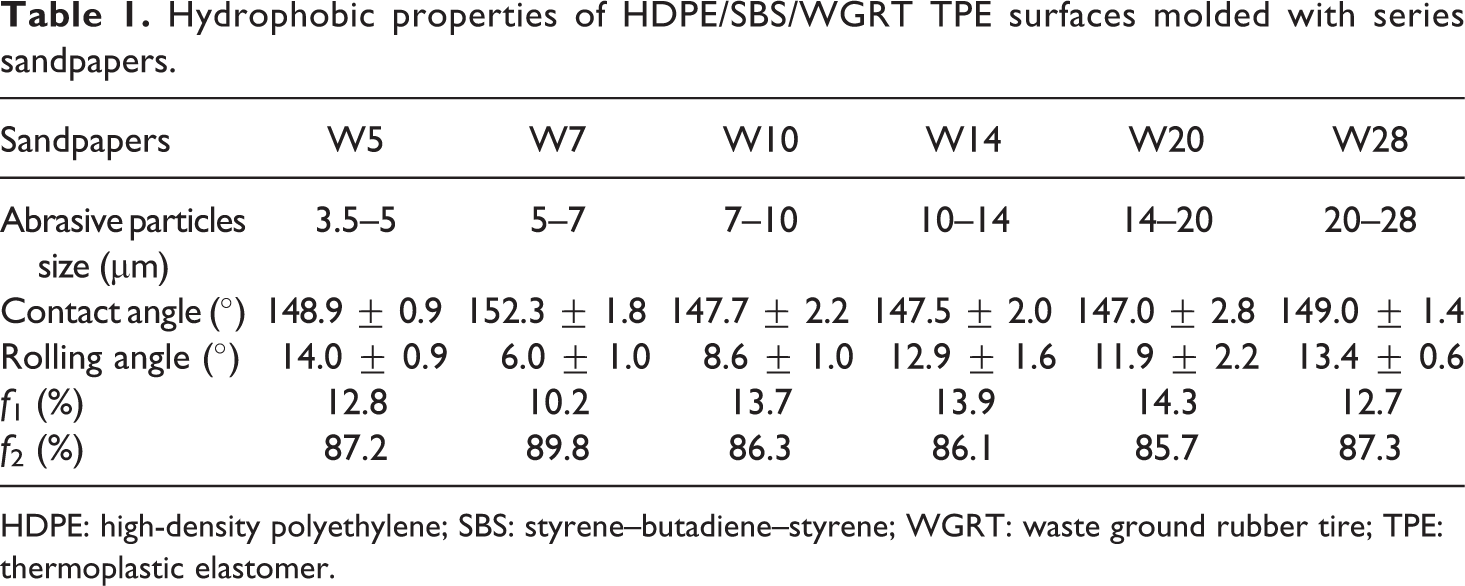
Table 1 showed the hydrophobic properties of series HDPE/SBS/WGRT TPE surfaces molded with sandpapers. As shown in Table 1, the water contact angle of the TPE surfaces molded with W5, W7, W10, W14, W20, and W28 grade sandpapers was around 150° and the water sliding angle was around 10°, indicating the well hydrophobic property of the HDPE/SBS/WGRT TPE surfaces molded with sandpapers. Moreover, the TPE surface molded with W7 grade sandpaper had the higher contact angle value and the lower sliding angle value, which were 152.3° and 6.0°, respectively, indicating the super-hydrophobic property.
Hydrophobic properties of HDPE/SBS/WGRT TPE surfaces molded with series sandpapers.
HDPE: high-density polyethylene; SBS: styrene–butadiene–styrene; WGRT: waste ground rubber tire; TPE: thermoplastic elastomer.
Microstructure morphology of hydrophobic TPE surfaces
The microstructure morphology of the series sandpapers and the HDPE/SBS/WGRT TPE surfaces molded with sandpapers were observed by FESEM, as shown in Figure 3. The water contact angle image of the molded TPE surface was embedded in the top-right corner of Figure 3. From Figure 3, it could be seen that lots of abrasive particles were distributed regularly on the surface of sandpapers and there were innumerable gaps among the abrasive particles. After molded with sandpaper, the rough TPE surface could be prepared successfully. It should be noted that the surface wettability was influenced by the roughness of the surface, which was influenced by the sandpapers grade remarkably. When the sandpaper template was removed from the TPE surface after the molding process, the micrometer strips could be found obviously in the molded surface, which were generated due to the plastic deformation of HDPE matrix in TPE. The increasing surface roughness would inevitably result in the improved hydrophobic property obviously; the strips in the surface could entrap the air and minimize the contact area between the solid surface and the droplet remarkably, leading to the improved hydrophobicity.
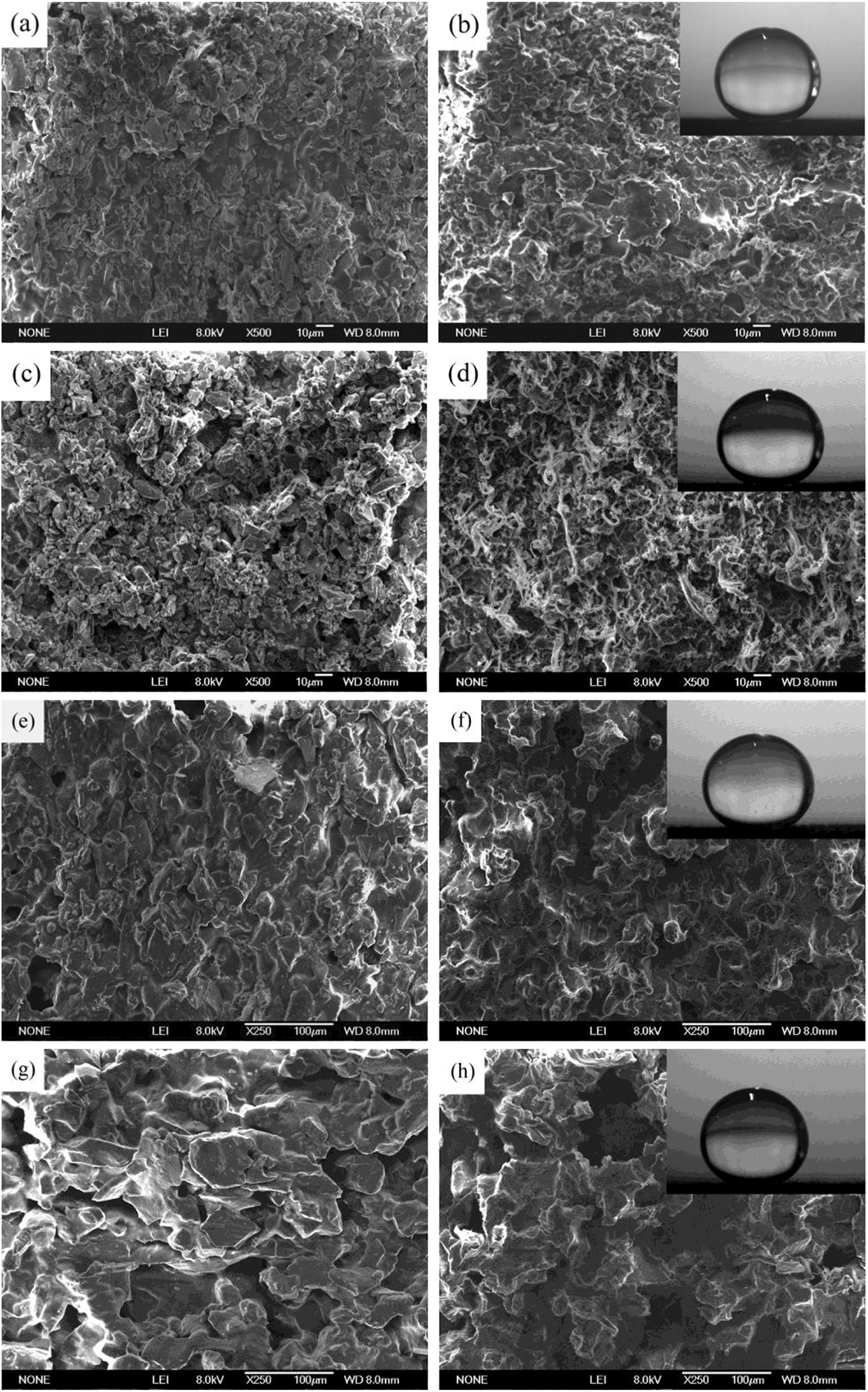
FESEM images of the sandpaper surfaces and TPE surfaces molded with sandpapers. Sandpaper surfaces: (a) W5, (c) W7, (e) W14, and (g) W28; TPE surfaces molded with metallographic sandpapers: (b) W5, (d) W7, (f) W14, and (h) W28.
Super-hydrophobic mechanism of HDPE/SBS/WGRT TPE surface
It is reported that the increasing surface roughness could enhance the hydrophobicity because the air trapped between the solid surface and the droplet could minimize the contact area greatly. 29 Lin et al. 30 have used sandpapers as a template to fabricate the super-hydrophobic surfaces while the atomic force microscopy data were used to estimate the average roughness; moreover, the super-hydrophobic mechanism of the prepared surfaces was proved to fit the Cassie model. In 1944, Cassie and Baxter 31 derived an equation to describe the wettability of heterogeneous surface, as shown below

where f 1 and f 2 are represented of the area fractions of TPE itself and the trapped air, respectively, and θ 1 and θ 2 are intrinsic contact angles of TPE and the air, respectively; usually, the value of θ 2 is 180°. It should be noted that f 1 + f 2 = 1, and equation (1) can be modified as follows

where θr and θ are the contact angles on rough TPE surface and flat surface. According to equation (2), the values of f 1 in the series TPE surface could be calculated, which were shown in Table 1. It could be found that the f 1 values were obviously decreased to less than 20%, which was useful to improve the super-hydrophobic behavior.
Figure 4 showed the FESEM images of the flat HDPE/SBS/WGRT TPE surface and the HDPE/SBS/WGRT TPE surface molded with W7 grade sandpaper while the water contact images were embedded in the top-right corner of Figure 4. As shown in Figure 4, the molded TPE surface possessed the rough microstructure; moreover, it is amazing that the water contact angle of the TPE surface molded with W7 grade sandpaper was increased from 82.6° to 152.3° dramatically, compared with that of the flat TPE surface.
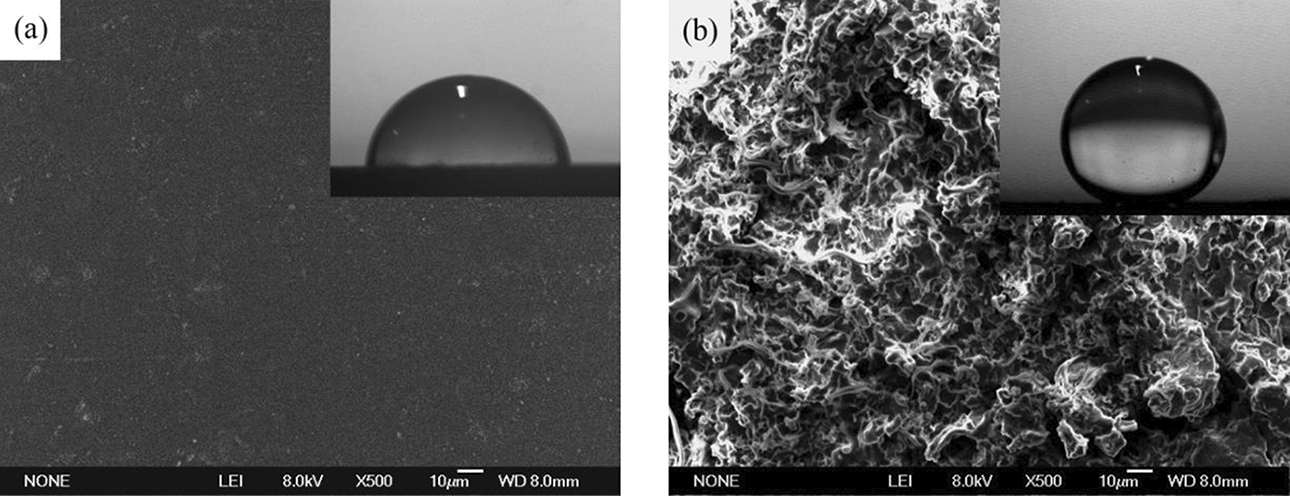
FESEM images of HDPE/SBS/WGRT TPE surfaces. (a) Flat TPE surface and (b) TPE surface molded with W7 grade sandpaper.
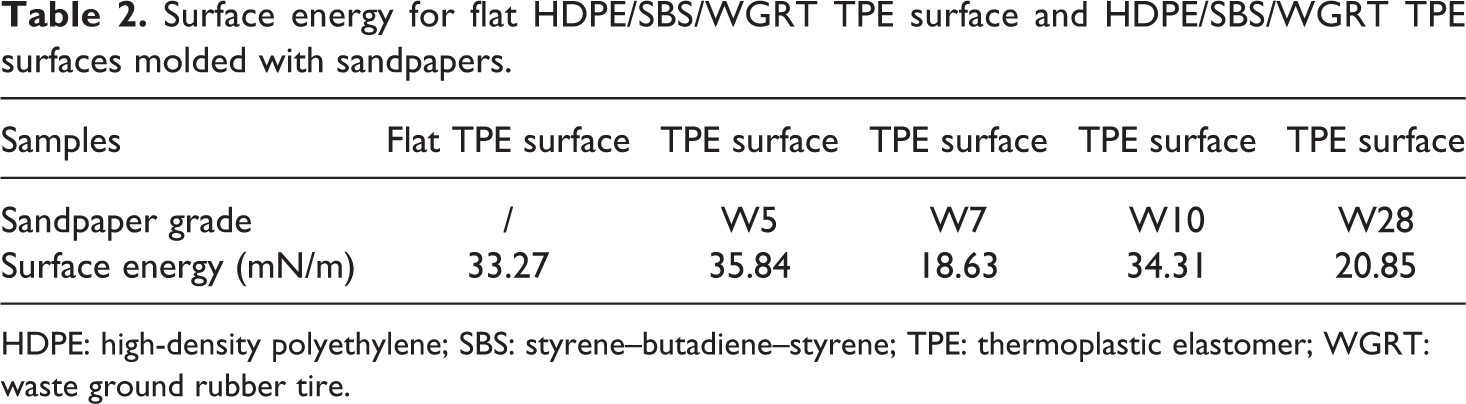
Usually, the hydrophobicity behavior of the surface was related to the surface energy. 32 The surface energy of the flat TPE surface and the TPE surfaces molded with sandpapers was listed in Table 2, which was calculated via the Owens–Wendt and Kaelble 33,34 method while the wetting angle parameters of water and ethylene glycol were used. From Table 2, we can find that the surface energy of the TPE surface molded with W7 grade sandpaper was decreased obviously, from 33.27 mN/m for the flat TPE surface to 18.63 mN/m for the rough TPE surface, respectively. Compared with the images in Figure 4, it is clear that the TPE surface molded with W7 grade sandpaper had the rough structure and the lower surface energy, which endowed it with the excellent super-hydrophobic behavior; moreover, the results were in agreement with the data in Table 1.
Surface energy for flat HDPE/SBS/WGRT TPE surface and HDPE/SBS/WGRT TPE surfaces molded with sandpapers.
HDPE: high-density polyethylene; SBS: styrene–butadiene–styrene; TPE: thermoplastic elastomer; WGRT: waste ground rubber tire.
A super-hydrophobic surface will be useful to achieve self-cleaning and super-hydrophobic properties. For the self-cleaning property which is termed as the “lotus effect,” the water droplet cannot stay on the super-hydrophobic surface stably and will roll off from the surface; and the super-hydrophobic surface shows the lows-adhesion property. Figure 5 showed the adhesion behavior of water droplet on the super-hydrophobic TPE surface. From Figure 5, it could be found that the water droplet departed from the TPE surface spontaneously with the needle leaving, even when the needle was vertically extruded on the TPE surface, indicating that the surface had low adhesion after molded with sandpaper.
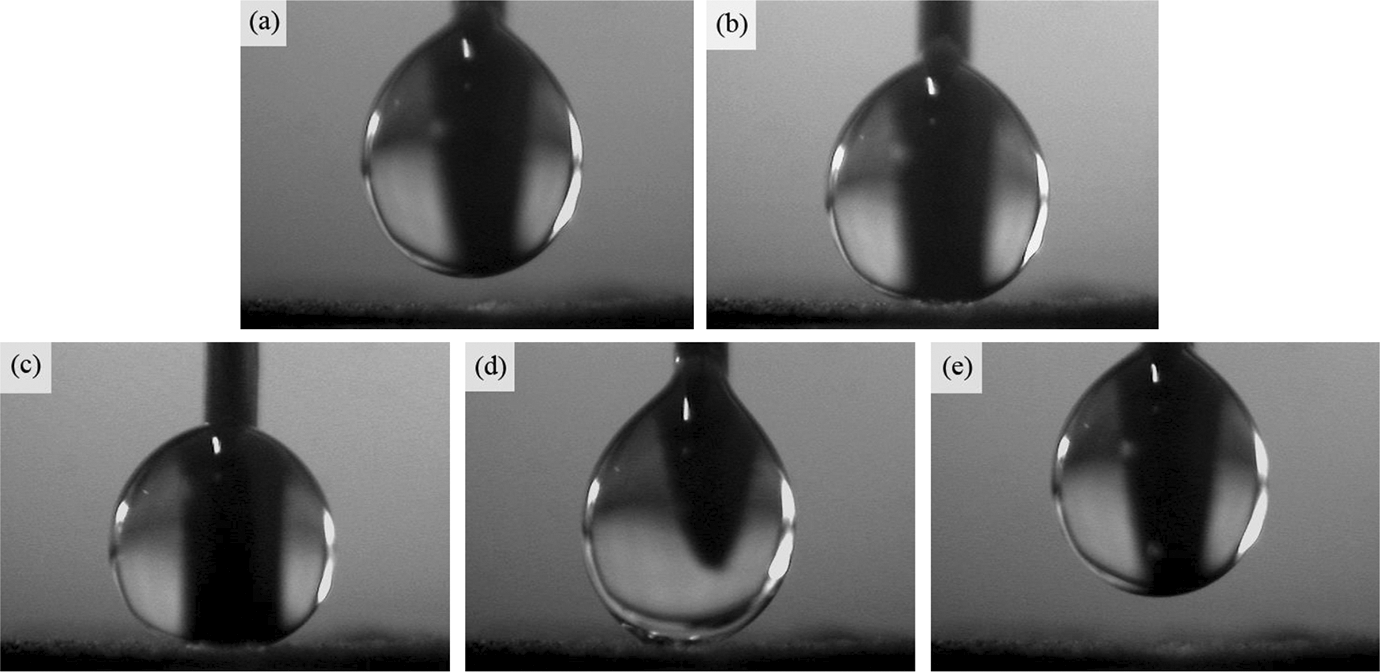
Adhesion behavior of water droplet on the super-hydrophobic TPE surface. (a) Squeezing out, (b) contacting, (c) under-draught, (d) raising, and (e) separating.
Figure 6 showed the FESEM images of the brittle fracture surface of the molded TPE with W7 grade sandpaper. From Figure 6(a), it could be found that the thickness of super-hydrophobic layer was about 60 µm and there were lots of flexible strips in the super-hydrophobic layer; moreover, the gaps between the strips will be useful to trap air and prevent the water droplet from spreading out on the surface. The model in Figure 6(b) was constructed by combing the FESEM image of the super-hydrophobic TPE surface and real water droplet image. As shown in Figure 6(b), the water droplet was supported by the air which was trapped by the gaps between strips, leading to the great super-hydrophobic property. And even after storage for 4 months under air environment at room temperature, the value of water contact angle of the super-hydrophobic TPE surface only varied slightly, indicating that the super-hydrophobic property of TPE surface was stable.
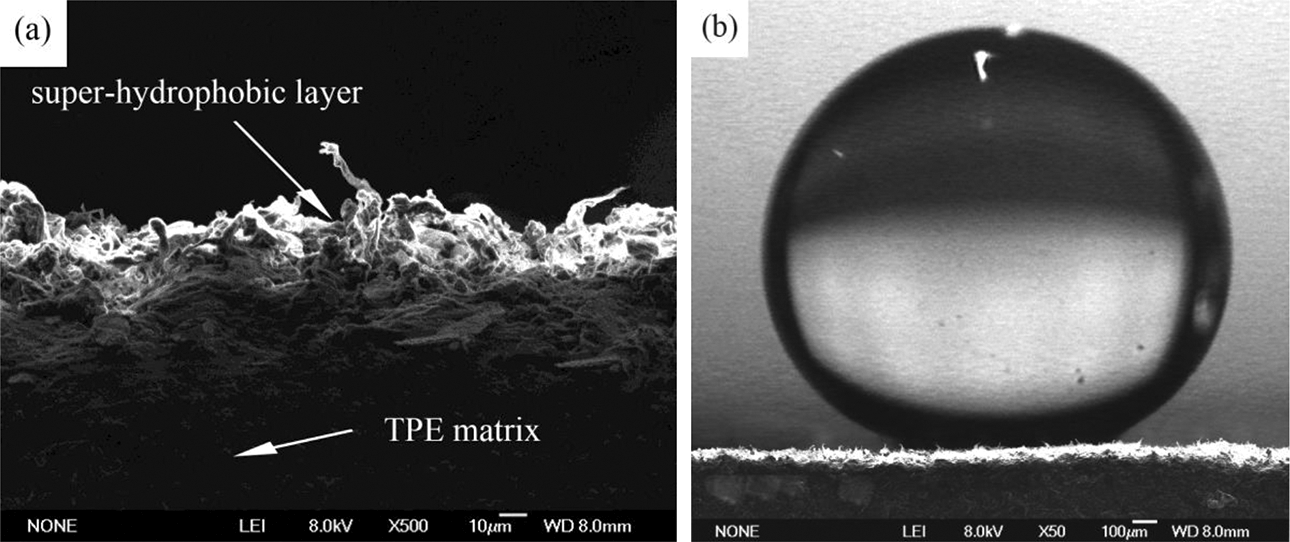
FESEM images of HDPE/SBS/WGRT TPE surfaces molded with W7 grade sandpaper. (a) Fracture surface and (b) contact model diagram.
Table 3 showed the elemental compositions of the sandpaper surface and the TPE surfaces molded with sandpapers, which were measured using energy dispersive X-ray spectroscopy and used to verify the stability of the sandpaper. In our research, the abrasive particles of the metallographic sandpaper were aluminum oxide, from Table 3, it could be found that no aluminum element was detected in the TPE surfaces molded with sandpapers, indicating that the abrasive particles were stuck firmly in the sandpaper surface, and no abrasive particles were adhered to the TPE surfaces after the molded process. It is easy to know that the sandpapers were stable and could be reused.
Element content in the surface of sandpaper and HDPE/SBS/WGRT TPE surfaces molded with sandpapers detected by EDX.
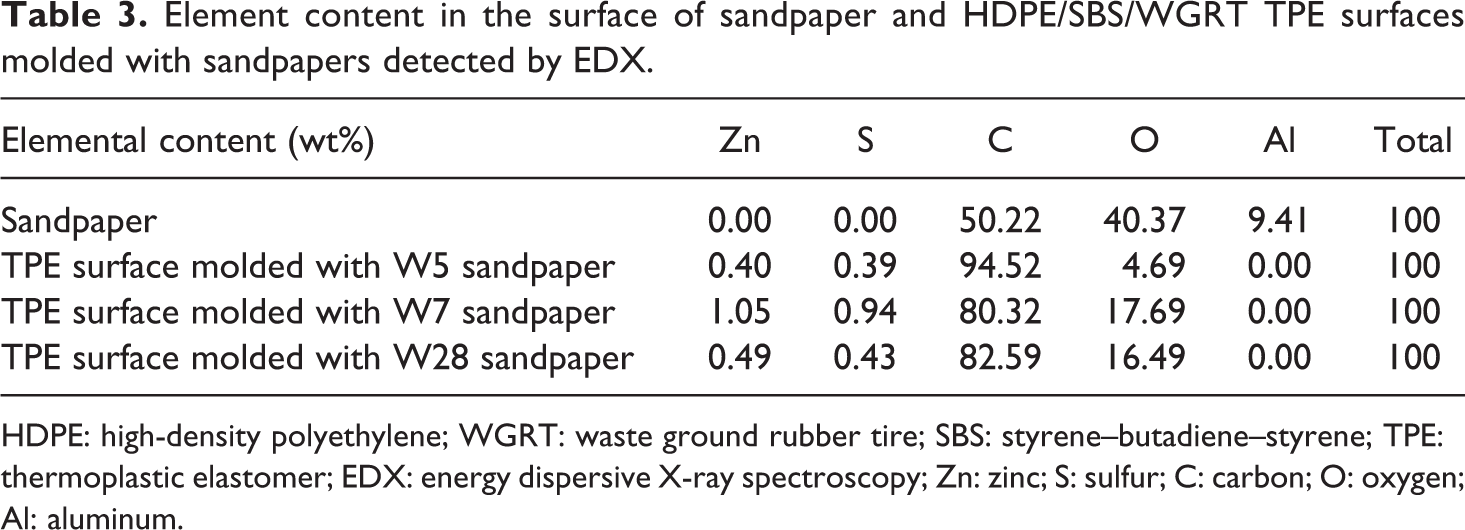
HDPE: high-density polyethylene; WGRT: waste ground rubber tire; SBS: styrene–butadiene–styrene; TPE: thermoplastic elastomer; EDX: energy dispersive X-ray spectroscopy; Zn: zinc; S: sulfur; C: carbon; O: oxygen; Al: aluminum.
Super-oleophilic property of HDPE/SBS/WGRT TPE surface
Feng et al. 35 believed that the low-energy surface with rough microstructure would contribute to the super-hydrophobic and super-oleophilic properties. Figure 7 showed the video captures of the spreading behavior of n-hexane droplets on the flat TPE surface and the TPE surface molded with sandpaper. From Figure 7, it could be seen that both the flat TPE surface and the TPE surface molded with W7 sandpaper showed the obvious oleophilic property. Usually, the surface tension of water and organic oil is 72 mN/m and 20–35 mN/m at room temperature, respectively; and the surface tension of n-hexane is 18.4 mN/m. Considering the surface energy values in Table 2, the oleophilic property follows the “wetting principle”, 31 that when the surface tension of liquid is lower than that of the solid surface energy, the liquid will spread out on the solid surface. Table 4 showed the diffusion distance of n-hexane droplet on the flat TPE surface and the TPE surfaces molded with sandpapers. From Table 4, it could be found that the n-hexane droplet spread out quickly on the TPE surfaces molded with sandpapers; moreover, considering Figure 7(a) and (b), the spread speed of the TPE surface molded with W7 grade sandpaper was twice as much as that of the flat TPE surface, indicating that the low surface energy and the rough microstructure improved the oleophilic behavior remarkably.
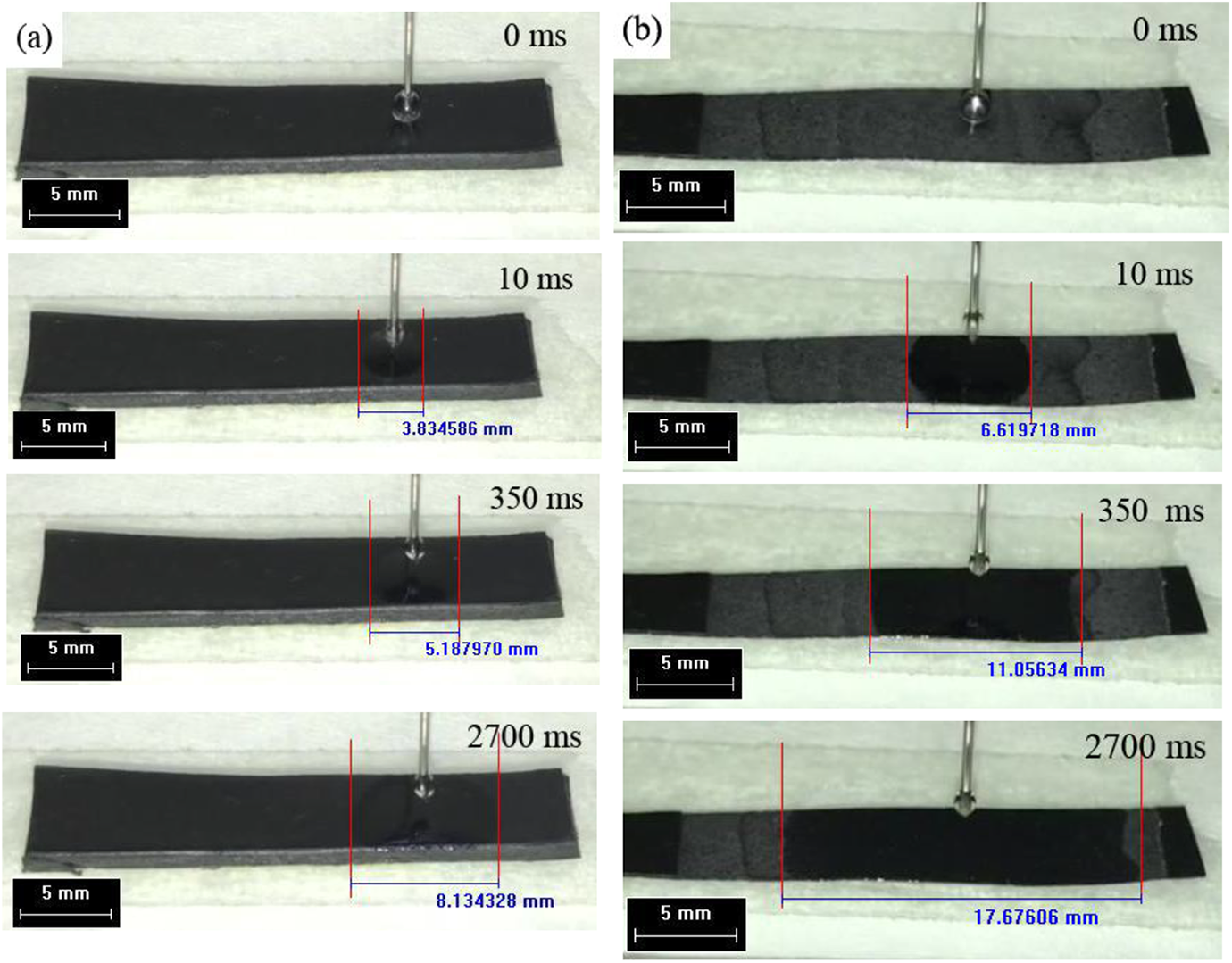
Spreading behavior of n-hexane droplets on (a) the flat HDPE/SBS/WGRT TPE surface and (b) the HDPE/SBS/WGRT TPE surface molded with W7 grade sandpaper.
The diffusion distance of n-hexane droplet on the flat TPE surface and the TPE surfaces molded with sandpapers.
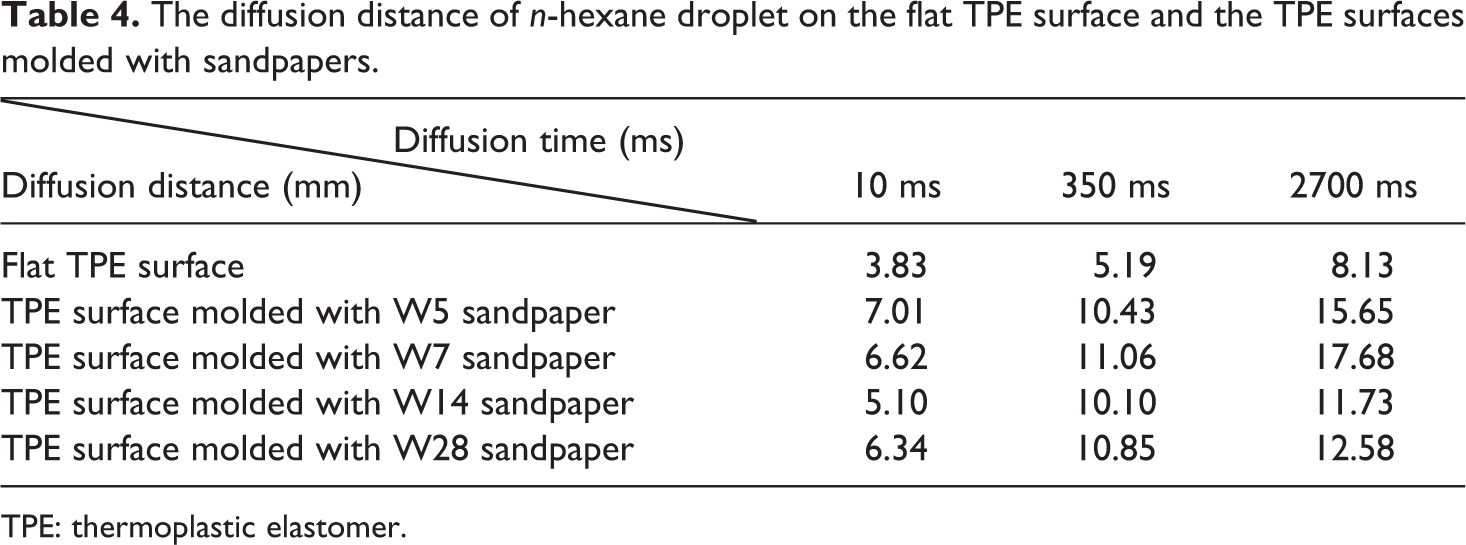
TPE: thermoplastic elastomer.
Conclusion
A super-hydrophobic and super-oleophilic surface based on the HDPE/SBS/WGRT TPE was successfully prepared while the sandpaper was used as a template and the SBS was used as a compatibilizer. FESEM images showed that the TPE surface molded with W7 grade sandpaper had the rough microstructure, and the strips formed by the plastic deformation of matrix could trap the air effectively; moreover, the area friction of the gas/liquid interface was calculated using Cassie’s equation and the results were all larger than 80%. The water contact angle and the sliding angle of the TPE surface molded with W7 grade sandpaper were 152.3° and 6.0°, respectively. Moreover, according to the “wetting principle,” the TPE surface showed the obvious oleophilic behavior. Compared with that of the flat TPE surface, the n-hexane droplet could spread out quickly on the TPE surfaces molded with sandpapers, indicating that the low-energy surface and the rough microstructure contributed to the super-hydrophobic and super-oleophilic behavior.
Footnotes
Authors’ note
This manuscript has not been published elsewhere and it has not been submitted simultaneously for publication elsewhere.
Funding
The author(s) disclosed receipt of the following financial support for the research, authorship, and/or publication of this article: This work was funded by a project of the Shandong Provincial Natural Science Foundation, China (ZR2017MEM021) and an Upgraded Project of Shandong Province for Guidance Ability of Graduate Tutors (SDYY17044).
