




Abstract
Thermoplastic vulcanizates (TPVs) based on high-density polyethylene (HDPE)/ethylene–propylene–diene terpolymer (EPDM) were prepared via dynamic vulcanization. The mechanical properties and strengthening effect of Mullins effect under compression mode were investigated systematically. Experimental results indicated that the compression strength of TPVs was enhanced greatly compared with that of EPDM vulcanizate. Mullins effect could be observed obviously in the compression stress–strain curves of the TPVs while it was hardly to obverse in that of EPDM vulcanizate during the uniaxial loading–unloading cycles. The maximum compression stress and internal friction loss at specific strain were decreased after the first loading–unloading while only decreased slightly at the later loading–unloading cycles; however, the residual deformation increased with the increasing of the cycle times of compression. Mullins effect could be significantly enhanced with increasing compression strain and HDPE content in TPV.
Keywords
Introduction
Rubber-like materials usually exhibit an appreciable change in their mechanical properties resulting from the first extension. When they are subjected to a cyclic uniaxial loading–unloading, the load required to produce a given stretch during the second loading cycle is smaller than that required to produce the same stretch during the primary loading cycle. This stress-softening phenomenon is widely known as Mullins effect 1 and is first observed by Bouasse and Carriere 2 in filled rubber-like materials. Mullins effect could not only be observed in uniaxial tension, but also in uniaxial compression, 3 hydrostatic tension, 4 simple shear, 5 and equi-biaxial tension, 6,7 and so on. Mullins effect is evident in filled rubber; however, Mullins effect can also be observed in semi-crystalline polymers, thermoplastic elastomer, 8 and various soft biological tissues. Drozdov and Christiansen 9 studied the Mullins effect in semi-crystalline polypropylene in 2011.
To provide a mechanical model of the complex behavior of industrial rubber-like materials, phenomenological and macromolecular models have been proposed including bond rupture, 10 molecules slipping, 11 disentanglement, 12 and double-layer model. 13 But until now, it remains a major challenge in order to provide good mechanical modeling of the complex behavior of industrial rubber-like materials. 14,15 However, most of those researches in this topic focused on the cyclic uniaxial tensile 16 behavior and fewer researches involved on the cyclic uniaxial compressive behavior and the strengthening effect of stress-softening phenomenon.
Thermoplastic vulcanizate (TPV), as a special class of thermoplastic elastomers (TPEs) produced via dynamic vulcanization in the presence of a vulcanizing system, 17,18 has attracted both scientific and industrial attention because of their unique characteristics. 19 TPVs play a very important role in the applications of automotive, buildings and constructions, wires and cables, and so on, in the last two decades. Although TPVs have been extensively used in industry, few papers have been published to address their Mullins effect. In order to control the properties of TPVs effectively, the research related to this unique behavior is thus an issue of major importance.
In this article, we reported the Mullins effect and strengthening Mullins effect of high-density polyethylene (HDPE)/ethylene–propylene–diene terpolymer (EPDM) TPVs under compression mode, and the influence of compression strain and HDPE content on the strengthening effect of Mullins effect was researched systematically.
Experimental
Materials
HDPE (5000S type) was commercially obtained from Qilu Petrochemical Co., Ltd, China, with a melt flow index (MFI) of 0.9 g 10 min−1 (190°C 2.16 kg−1) and the weight-average molecular weight (M w) of 5000S 12.0 × 10⁴. EPDM rubber (EP33 type, with a diene component 5-ephylidene-2-norbornene (ENB), diene content of 8.1 wt%, ethylene content of 52 wt%, and ML1+4 (100°C) = 45) was commercially manufactured by Japan Synthetic Rubber Co. Ltd, Japan. Sulfur was used as a vulcanization agent and obtained from Hengye Zhongyuan Chemical Co. Ltd, China. N-cyclohexyl-2-benzothiazole sulfonamide (CZ) and tetramethylthiuram disulfide (TMTD) were used as accelerators and manufactured by Northeast Auxiliary Chemical Industry Co., China. Zinc oxide (ZnO) was used as an activator and obtained from NewLe Qinshi Zinc Co., Ltd, China. Stearic acid was used as an activator and obtained from Wanyou Co., Ltd, China. Poly(1,2-dihydro-2,2,4-trimethyl-quinoline) (antioxidant RD) was used as an antioxidant and obtained from Shengao Chemical Co. Ltd, China.
Preparation of HDPE/EPDM TPVs
Commercially available HDPE and EPDM, as described above, were used for the TPV. The concentrations for cross-linking the EPDM system were expressed in parts per hundred EPDM by weight (phr). The sulfur-containing accelerating system recipe for cross-linking the EPDM consisted of the following ingredients: 100 phr EPDM, 1.0 phr sulfur, 2.0 phr CZ, 1.0 phr TMTD, 5.0 phr ZnO, 1.5 phr stearic acid, and 2.0 phr antioxidant RD.
The HDPE/EPDM TPVs were produced via a two-step mixing process. In the first step, the preblends containing EPDM and the cross-linking ingredients were compounded in a two-roll mill (X(S) K-160, Shanghai Qun Yi Rubber Machinery Co. Ltd, China) at room temperature. The roller speed ratio was 1:1.35, the line speed of the front roller was 11.91 m min−1, and the roller distance was 0.2 mm during mixing. The charging sequence was EPDM, CZ, ZnO, stearic acid, antioxidant RD, sulfur, and TMTD, respectively. After 3 min of mixing time, the preblends were removed from the mixer. In the second step, the TPV compounds were prepared by melt-mixing, the EPDM preblend with HDPE using a Brabender PLE 331 Plasticorder (Brabender Gmbh, Germany). The mixer temperature was kept at 165°C with a constant rotor (cam type) speed of 80 r min−1. The HDPE/EPDM blending ratio was within the limits from 0/100 to 60/40. The requisite quantities of HDPE resin were charged into the mixer and allowed to melt. After 3 min, the EPDM-based preblend was added. The mixing was continued for another 8 min to allow the dynamic vulcanization. Finally, the compound was removed from the mixer and passed through a cold two-roll mill (X(S) K-160, Shanghai, Qun Yi Rubber Machinery Co. Ltd, China) in the molten state to obtain a sheet. The sheet was compression-molded in a plate vulcanizing machine (50 T, Shanghai Qun Yi Rubber Machinery Co. Ltd, China) under a pressure of 15 MPa at 165°C for 10 min, followed by cold compression in another molding machine (25 T, Shanghai Qun Yi Rubber Machinery Co. Ltd) under a pressure of 15 MPa for 10 min at room temperature, and the final samples were cylinders with about 10 mm in diameter and 10 mm or so in height.
Characterization
For the simple uniaxial compression test, the cylinders samples were needed and the tests were run at a low constant strain rate of 0.0083 s−1 and the compression strain was 50%. The stress–strain curves during the loading period were measured.
Morphological study was carried out using field-emission scanning electron microscopy (FE-SEM; JEOL-6700F, Japan Electron Co., Ltd, Japan). For the etched specimens, the HDPE phase was extracted by immersing the TPV in xylene for 30 min at 130°C; then, the samples were dried in vacuum oven at 30°C for 24 h. After the solvent volatilized completely, the etched surfaces of the specimens were sputtered with thin layers of platinum and imaged using FE-SEM.
In order to illustrate the material softening resulting from the Mullins effect, the cyclic uniaxial compression tests of the series HDPE/EPDM TPVs were performed with a TCS-2000 universal tensile machine (GoTech Testing Machines Inc., China) operated in a local strain control mode. For a given sample, one sample was submitted to a simple uniaxial compression test, while another one was submitted to a cyclic uniaxial compression test with the maximum strain increasing every five cycles. For the cyclic uniaxial compression, cylinders samples were needed and the tests were run at a low constant strain rate of 0.0083 s−1.
Results and discussion
Influence of HDPE content on the mechanical properties of the HDPE/EPDM TPV
Figure 1 illustrates the compression stress–strain curves of the EPDM vulcanizate and a series of HDPE/EPDM TPVs under 50% compression strain. From Figure 1, it could be found that the EPDM vulcanizate had low compression strength and modulus, and the compression strength of HDPE/EPDM TPVs was increased obviously with increasing HDPE content; moreover, the slope of stress–strain curves was also increased with increasing HDPE content, indicating that the modulus was increased. It could also be found that the slope increased obviously when the compression strain was above 40%, revealing that compression strength of TPVs could be improved significantly compared with that of EPDM vulcanizate under large compression strain.
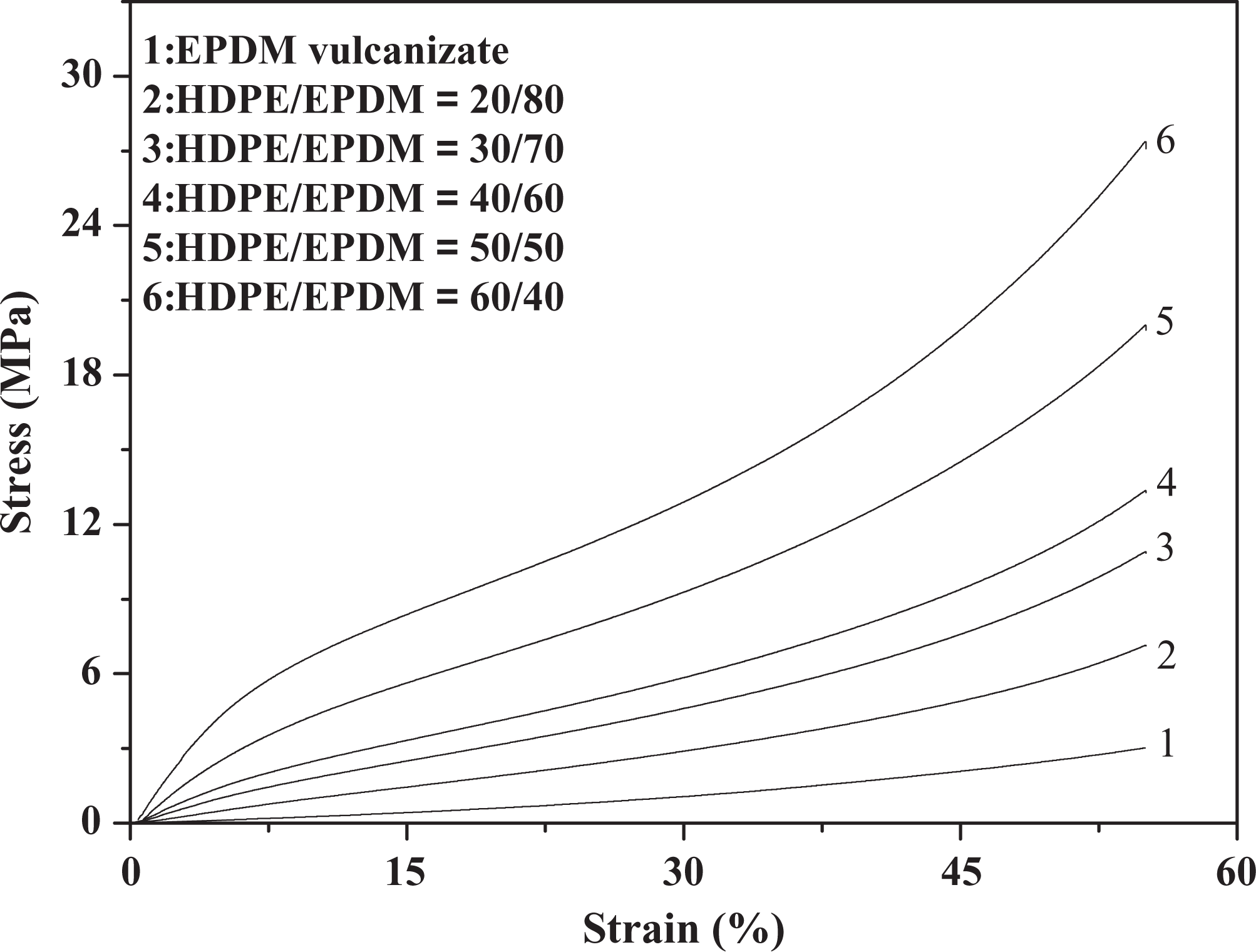
Compression stress–strain curves of EPDM vulcanizate and HDPE/EPDM TPVs under 50% compression strain. EPDM: ethylene–propylene–diene terpolymer; HDPE: high-density polyethylene; TPV: thermoplastic vulcanizate.
Morphology and microstructure of HDPE/EPDM TPV
The FE-SEM image of the etched surface of the HDPE/EPDM TPV with 40/60 weight ratio was shown in Figure 2. The matrix phase HDPE in the TPV surface was etched in order to provide a better insight into the phase morphology. During the dynamic vulcanization, the viscosity of the EPDM phase increased quickly as the initiation of the cross-linking reaction, and the EPDM phase was gradually broken down into dispersed particles under the shear force. From Figure 2, it could be seen that the vulcanized EPDM rubber domains remained undissolved and adhered to the surface with the diameter ranging from 2 μm to 6 μm or so. In addition, the vulcanized rubber particles with irregular shape were dispersed evenly in the etched surface of TPV.
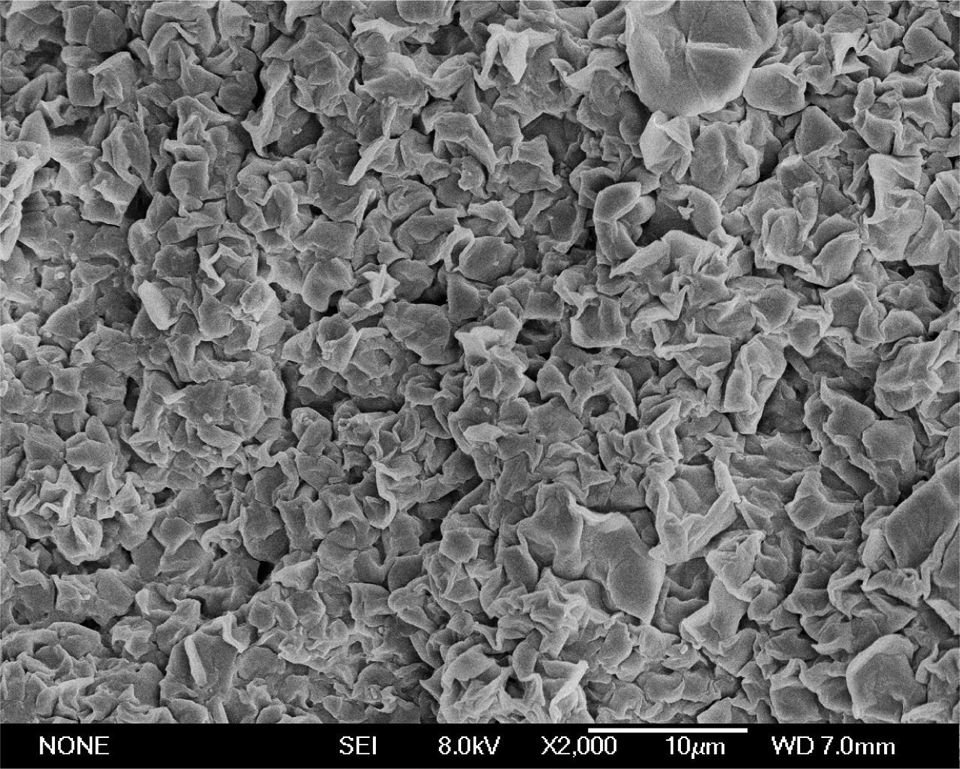
FE-SEM image of etched surface of the HDPE/EPDM TPV with 40/60 weight ratio. FE-SEM: field-emission scanning electron microscopy; EPDM: ethylene–propylene–diene terpolymer; HDPE: high-density polyethylene; TPV: thermoplastic vulcanizate.
Mullins effect of HDPE/EPDM TPVs
Figure 3 illustrates the stress–strain curves of EPDM vulcanizate and a series of HDPE/EPDM TPVs submitted to five uniaxial loading–unloading cycles with given strain ranging from ε = 10% to ε = 50% (five cycles of loading–unloading from zero stress up to the maximum strain down to zero stress). From Figure 3(a), it could be found that during the compression process, the loading–unloading curves of EPDM vulcanizate at specific compression strain were overlapping seriously, and the stress-softening phenomenon was hardly observed.
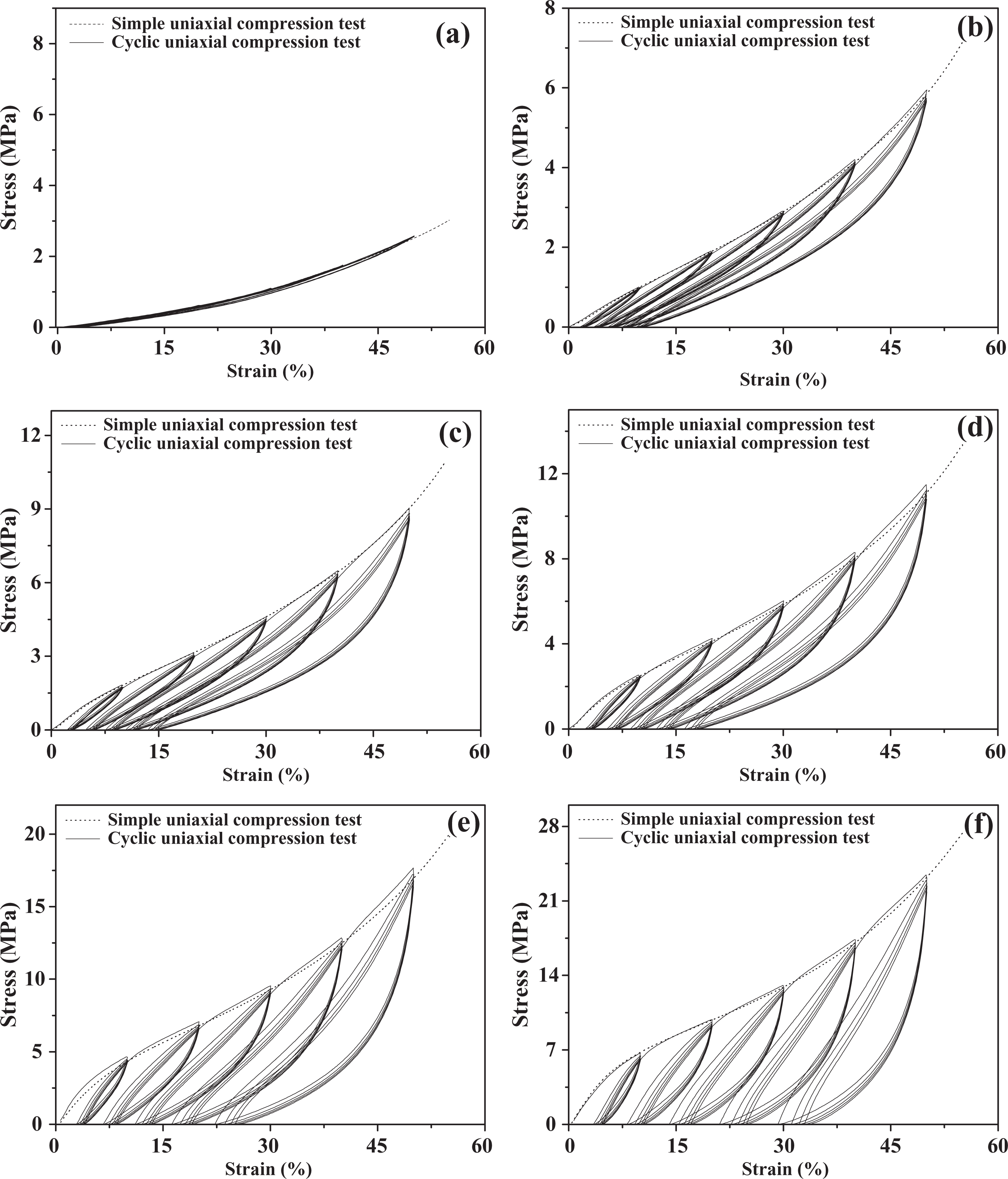
Simple and cyclic uniaxial compression stress–strain curves of EPDM vulcanizate and HDPE/EPDM TPVs. (a) EPDM vulcanizate, (b) HDPE/EPDM = 20/80, (c) HDPE/EPDM = 30/70, (d) HDPE/EPDM = 40/60, (e) HDPE/EPDM = 50/50, and (f) HDPE/EPDM = 60/40. EPDM: ethylene–propylene–diene terpolymer; HDPE: high-density polyethylene; TPV: thermoplastic vulcanizate.
As shown in Figure 3(b) to (f), for the HDPE/EPDM TPVs, it could be found that after the cyclic compression was proceeded five times at a specific strain and then the loading–unloading compression was conducted at larger compression strain, the stress–strain response rapidly returned to the similar path than the monotonous uniaxial compression stress–strain response after a transition, indicating that previous strain had little influence on the stress–strain behavior at a greater strain. Moreover, as the maximum compression stress was decreased continuously with the increasing of cycle times, a stress-softening phenomenon could be observed. That was specific to materials exhibiting the Mullins effect and the softening appeared obviously after the second loading–unloading cycle; moreover, the softening phenomenon was enhanced with increasing HDPE content in TPVs, which could be reflected obviously from the increasing deviation degree between loading and unloading curves.
Usually, Mullins effect was resulted from the heterogeneity of the materials and could be enhanced by the increase of heterogeneity. 16 In this research, TPVs was multiphase system and exhibited the heterogeneity character. Compared with that of EPDM vulcanizate without filler component, the Mullins effect of HDPE/EPDM TPVs was more obvious and could be enhanced with the increase of the HDPE content, indicating the amplifier effect resulting from the increasing heterogeneity of the TPVs.
Figure 4 shows the maximum stress as a function of the number of the loading–unloading cycles under different conditions. As shown in Figure 4(a), the compression strain was fixed at 50% and the HDPE/EPDM weight ratio of TPVs was ranging from 0/100 to 60/40. It could be seen that the maximum stress at specific strain was generated at the first loading and then decreased obviously after the first loading–unloading while only decreased slightly at the later loading–unloading cycles; moreover, the compression stress at specific compression strain (50%) was increased obviously with increasing HDPE content in TPVs, indicating the increasing softening phenomenon with increasing HDPE dosage in TPVs. As shown in Figure 4(b), the HDPE/EPDM weight ratio of TPV specimen was fixed at 40/60, it could be observed that the compression stress increased with increasing compression strain, and it should be noted that the softening phenomenon was more significant with increasing compression strain, indicating that increasing compression strain and HDPE dosage in TPVs had the similar influence on the strengthening effect of Mullins effect. From Figure 4(b), it could also be found that the stress-softening phenomenon under larger strain was more obvious than that under smaller strain.
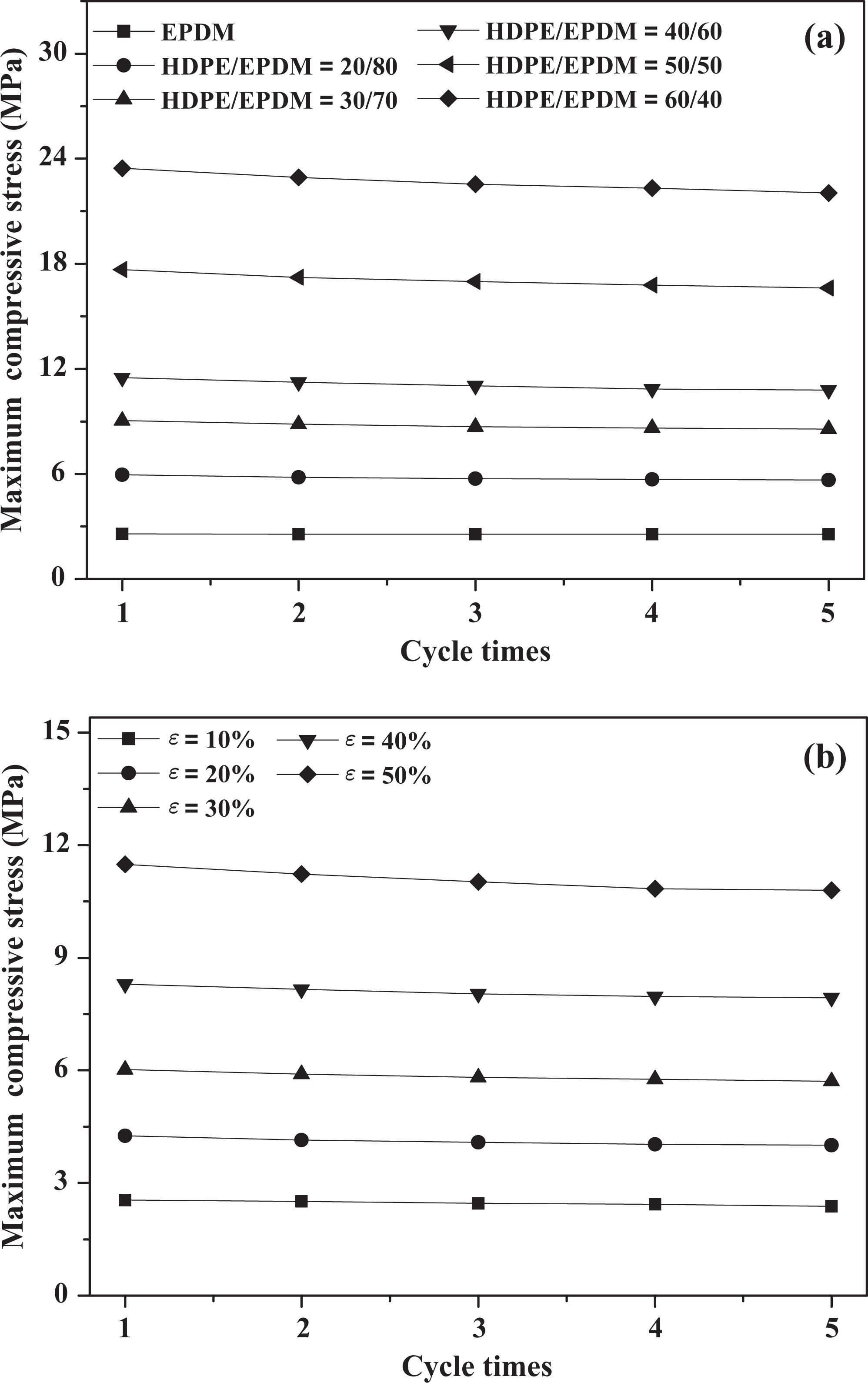
Maximum compression stress of HDPE/EPDM TPVs as a function of the number of loading–unloading cycles. (a) Maximum stress of TPVs under 50% compression strain and (b) maximum stress of TPV with 40/60 weight ratio under different compression strain. EPDM: ethylene–propylene–diene terpolymer; HDPE: high-density polyethylene; TPV: thermoplastic vulcanizate.
Figure 5 illustrates the residual deformation of HDPE/EPDM TPVs under 50% compression strain. In general, one of the important features of Mullins effect was the accumulation of residual deformation as the deformation could not recover entirely. It could be observed in Figure 5 that residual deformations were increased obviously with increasing HDPE content in TPVs and increasing loading–unloading cycles.
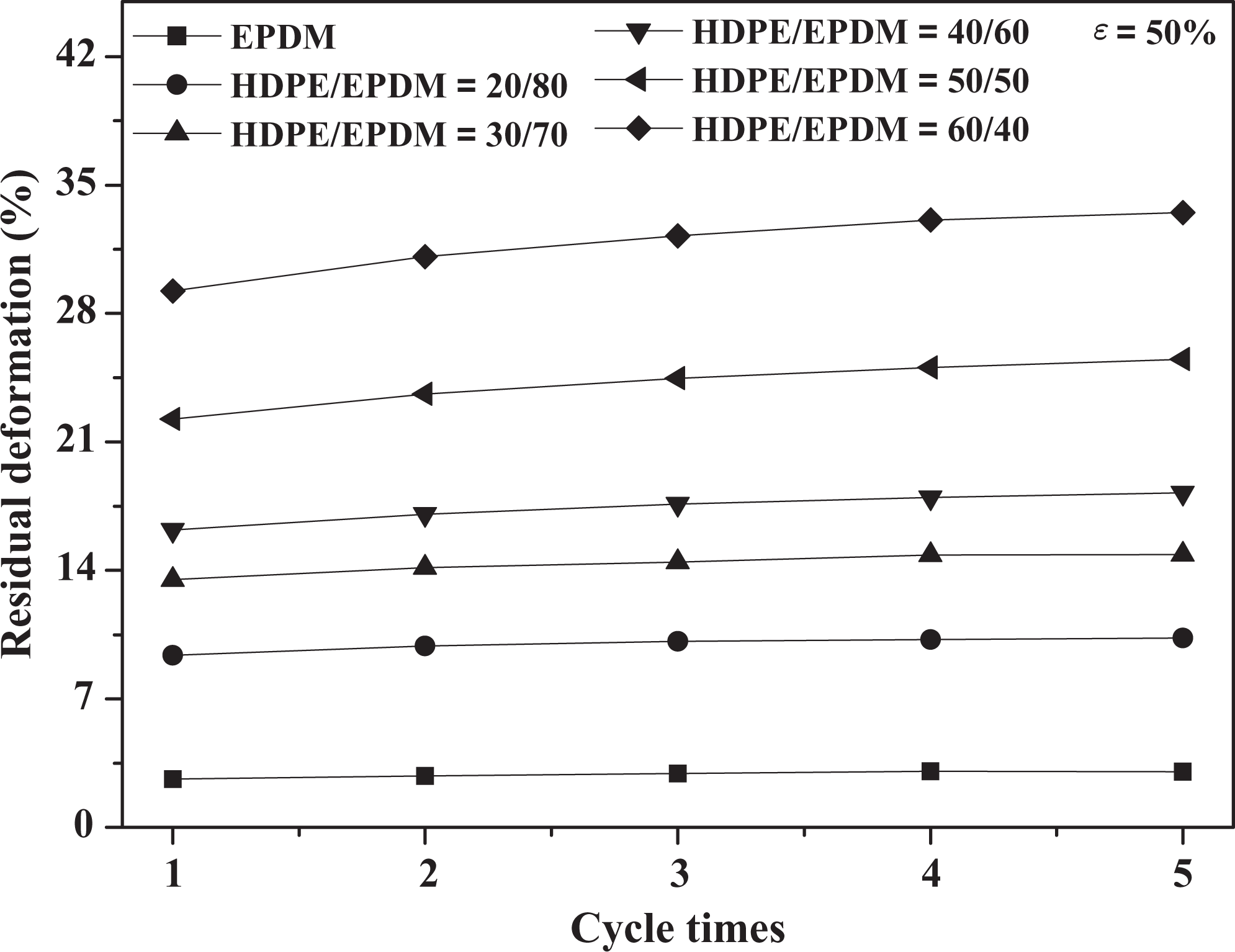
Residual deformation of HDPE/EPDM TPVs as a function of the number of loading–unloading cycles under 50% compression strain. EPDM: ethylene–propylene–diene terpolymer; HDPE: high-density polyethylene; TPV: thermoplastic vulcanizate.
Figure 6 shows the residual deformation of HDPE/EPDM TPV with 40/60 weight ratio under different compression strain. From Figure 6, it could be found that the deformation resulted from the loading–unloading cycles could not recover completely when the stress was decreased to zero. The residual deformations were increased obviously with increasing compression strain while only increased slightly with the number of loading–unloading cycles at specific strain. From Figures 5 and 6, we can know that increasing HDPE content in TPV and increasing compression strain had a similar strengthen effect on the Mullins effect of TPVs specimens.
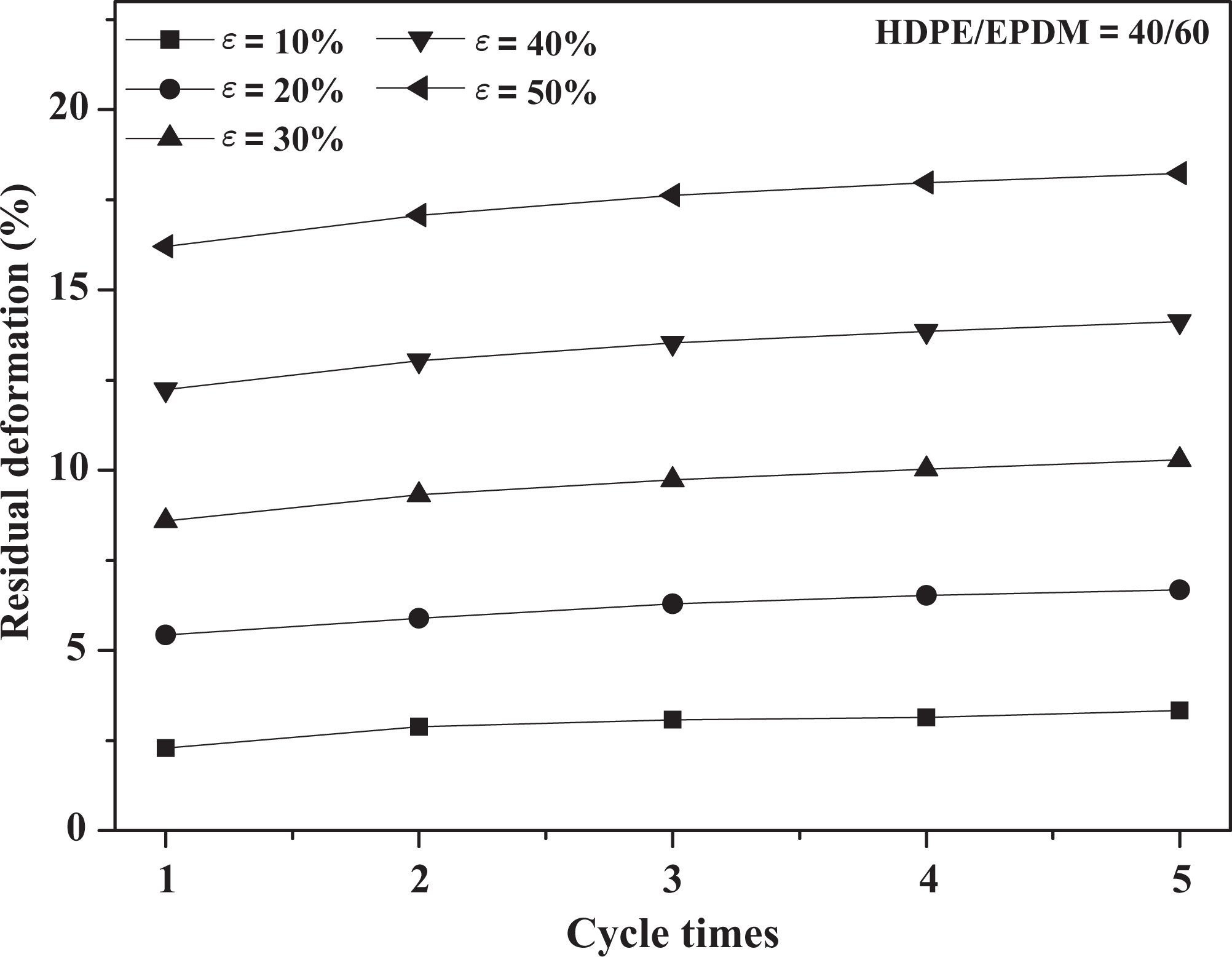
Residual deformation of HDPE/EPDM TPV with 40/60 weight ratio under different compression strain. EPDM: ethylene–propylene–diene terpolymer; HDPE: high-density polyethylene; TPV: thermoplastic vulcanizate.
Boyce 20 studied the micromechanisms of deformation and its recovery of TPVs according to a series of micromechanical models, and Oderkerk 21 studied the deformation and recovery behavior of TPVs according to infrared spectroscopy, indicating that most of deforming was taken place in the rubber phase during the deformation of TPVs. Mullins and Tobin proposed a physical model to explain the softening phenomenon when the filling rubber was subjected to uniaxial tensile test. 22 Qi and Boyce 23 believed that the inherent incompatibility of hard and soft phase of TPE leads to a microscopic two-phase structure and this structure could evolve with material deformation; moreover, the change in microstructure was considered to be the main reason, resulting in the hysteresis and cyclic stress-softening phenomenon. Namely, the stress-softening virgin material usually consisted of a hard phase and a soft phase, and most of the deformation occurs in the soft phase; moreover, the extent of the damage depended on the maximum previous strain experienced by the material. In our research, the HDPE, as the matrix of the TPV, was the hard phase. Considering the etched microstructure of HDPE/EPDM TPV as shown in Figure 1, the mechanism model of compressive Mullins effect could be constructed, as shown in Figure 7. The cross-linked EPDM rubber with high elasticity was inside of the particle and the outer layer was HDPE resin, as shown in Figure 7(a).
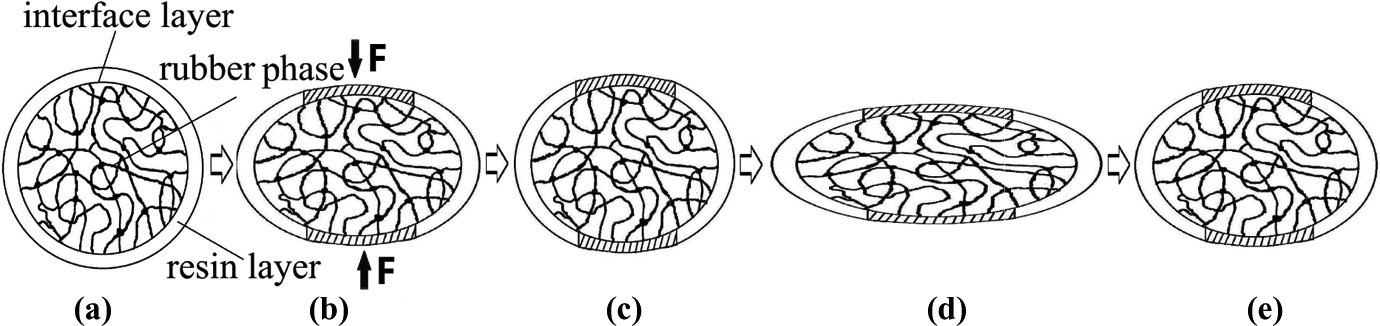
Mechanism model of compressive Mullins effect.
Normally, the mechanical strength of the TPVs was mainly determined by the matrix resin. 24 When TPV was subjected to a compressive stress for the first time, the plastic deformation of HDPE matrix would generate and result in the large energy consumption and relatively high residual deformation, as shown in Figure 7(b). When the external force was removed, the plastic deformation of TPV during the compression process could only partially recover and the residual deformation would be accumulated with increasing loading–unloading cycles. During the follow-up loading–unloading cycles at specific strain, most of the deformation was occurred in the soft regions and the contribution to the deformation resulted from the hard region was decreased. Therefore, the maximum stress and residual deformation changed slightly at the later cycles after the first loading–unloading cycle, as shown in Figures 4 to 6. However, the maximum stress and the residual deformation were increased obviously when increasing compression strain. It was easy to understand that large deformation needs large energy and would result in relatively high residual deformation due to the large plastic deformation of HDPE matrix.
In order to investigate the internal friction loss during the uniaxial loading–unloading cycles, the integral results of the hysteresis rings were calculated by Origin 8.0, as shown in Figure 8. In Figure 8(a), the compression strain was fixed at 50% and the internal friction loss was increased with increasing HDPE content in TPV and the maximum internal friction loss was generated in the first loading–unloading cycles at specific strain; moreover, the hysteresis loss in the second cycle was much lower than that of the first cycle and then only decreased slightly in the subsequent cycles. In addition, increasing compression strain had the similar influence on the internal friction loss for the same sample, as shown in Figure 8(b).
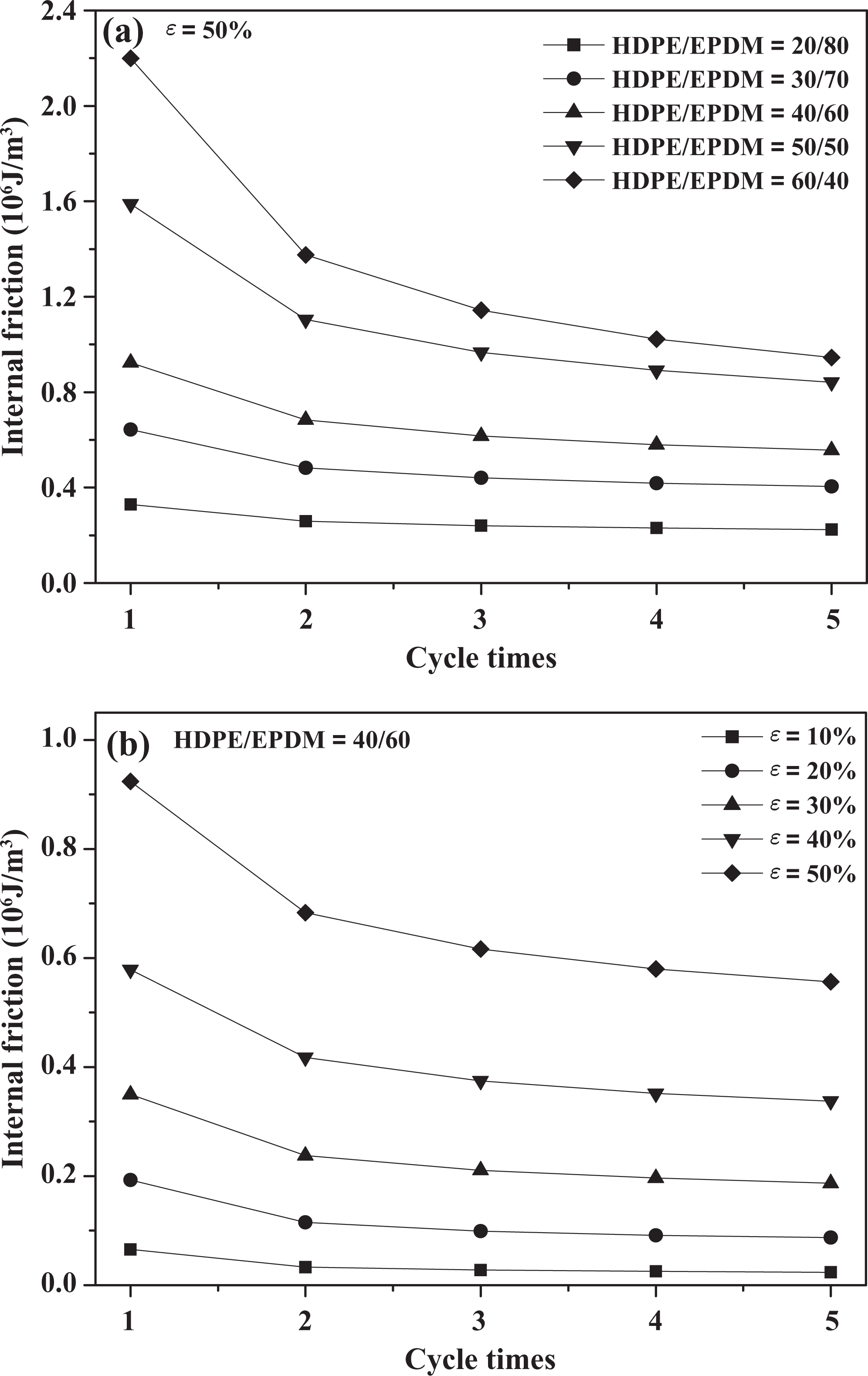
Internal friction loss of HDPE/EPDM TPVs as a function of the number of loading–unloading cycles. (a) Internal friction loss of TPVs under 50% compression strain and (b) internal friction loss of TPV with 40/60 weight ratio under different compression strain. EPDM: ethylene–propylene–diene terpolymer; HDPE: high-density polyethylene; TPV: thermoplastic vulcanizate.
Conclusions
The mechanical properties and Mullins effect of HDPE/EPDM TPV during the uniaxial compression were investigated. The experimental results showed that the compression strength of HDPE/EPDM TPVs was markedly improved compared with that of EPDM vulcanizate. Mullins effect could be observed in the compression stress–strain curves of the series of TPVs during the uniaxial loading–unloading cycles. The maximum stress and the internal friction loss appeared in the first loading–unloading cycles at specific strain, and they were decreased obviously at second loading–unloading cycle while decreased slightly at the later cycles. Compression stress and internal friction loss increased greatly with increasing compression strain. The residual deformation increased with the increase of compression strain while only increased slightly with the number of the loading–unloading cycles. Moreover, increasing the HDPE content in TPV had the similar influence on the maximum stress, residual deformation, and internal friction loss at specific strain. Increasing compression strain and increasing HDPE content in TPV could strengthen the Mullins effect.
Footnotes
Declaration of Conflicting Interests
The author(s) declared no potential conflict of interest with respect to the research, authorship, and/or publication of this article.
Funding
The author(s) disclosed the receipt of the following financial support for the research, authorship, and/or publication of this article: The work was funded by a Project of Shandong Provincial Natural Science Foundation, China (ZR2017MEM021).