




Abstract
Blends of thermoplastic low-density polyethylene (LDPE) with bromobutyl rubber (BIIR) with varying ratios have been prepared. Vulcanization of prepared blends has been induced by gamma ionizing radiation of varying doses of up to 250 kGy. Physical properties, namely gel fraction percentage, and mechanical properties, namely tensile strength, tensile modulus at 50% elongation, percentage elongation at break, hardness and permanent set have been followed up as a function of irradiation dose and blend compositions. Moreover, measurements of thermogravimetric analysis and heat shrinking properties have been carried out. The results indicated that blending with LDPE has improved the properties of BIIR rubber. Moreover, the presence of BIIR enhances the heat shrinking properties of the obtained blends.
Introduction
Blends based on thermoplastic and elastomeric materials would be expected to possess a wide range of properties depending not only on the properties of individual components but also on the additives as well as the ratio of mixing. Such blends would have rubbery properties and at the same time they can be processed as a plastic material. Thus, substantial economic advantage is gained with respect to the fabrication of such elastomer/plastic blends into its end-use products. 1 Thermoplastic/elastomer blends are usually vulcanized using conventional chemical methods to improve their mechanical and physical properties 2 ; however, high energy radiation like gamma radiation can be used as an alternative to these methods for inducing vulcanization. Its ability to produce crosslinked networks with a wide range of polymers, low operation cost, additive free technique and room temperature operations are among the advantages of radiation vulcanization. 3 –6 The modification of such blends in the presence of radiation is a potential method for the development of heat shrinkable materials. 7 Crosslinking during radiation vulcanization of thermoplastic/elastomer blends may be considered essential for producing products with optimum properties. 8 In addition, radiation vulcanization is a good way to disperse large amount of elastomers in the thermoplastic matrix leading to thermoplastic/elastomer blend with a low hardness and good properties. 9 Because of the saturated nature of bromobutyl rubber (BIIR), its safety and environmental attributes, these polymers find a broad range of applications from tires and automotive parts to pharmaceuticals and industrial products. 10 –12 Moreover, blending with BIIR elastomer would be expected to impart lower gas permeability and improved heat and weather resistance to the heat shrinkable behavior of crosslinked low-density polyethylene (LDPE).
The use of polyethylene in such blends is most useful from a technological point of view because of its nontoxicity. Crosslinking enables the polyethylene to exhibit a viscoelastic behavior, characteristic of an elastomer, at temperatures above the crystalline melting point of the thermoplastic. 13 This valuable property is widely exploited commercially in the preparation of heat shrinkable materials. Heat shrinkable components are widely used in the electric and cable industries for splicing, joining and termination applications.
Lendlein and Kelch 14 investigated the heat shrinkable behavior of crosslinked LDPE. They showed that the stretching temperature had a substantial effect on the shrinkage behavior. Patra and Das 15 studied the heat shrinkable behavior of polyolefin blends with elastomers, such as chlorosulfonated polyethylene; they indicated the importance of a crosslinked elastomeric phase to enhance the heat shrinkability of the blend system and at the same time to improve flame retardancy. Mishra et al. 16 studied the heat shrinkability behavior of polyolefin blends based on grafted LDPE and polyurethane elastomer. They suggested that the interchain crosslinking between grafted polyethylene and elastomer improved the shrinkability.
The aim of the present work is to investigate the effect of gamma irradiation dose as well as the content of blend components on the mechanical, physical, thermal and heat shrinkability of the blends of LDPE and BIIR.
Materials and methods
Materials
LDPE used was in the form of white powder from Dow Company (Spain); its density is 0.921 gm/cm3 and its melting temperature is 115–130°C. BIIR has a bromine content of 2 wt%; Mooney viscosity Mc(1+8) at 125°C 46 ± 5 from Exxon Chemical Co. (USA). The recipe of this study also contained other additives, namely, ZnO, stearic acid (from El-Nasr Phosphate Company, Egypt) and tetrene (tetraethylene pentamine; from Hochest Company, Germany). The first two additives act as accelerators as well as activators and their content was 5 and 1 wt%, respectively. Tetrene, on the other hand, acts as antioxidant and is present at 1 wt%. The solvent (toluene) and the other chemicals used were of commercial grade and were used as received.
Preparation of blends
The blend compositions in wt% are given in Table 1. The components LDPE and BIIR at different ratios were mixed in Plasti-Corder (made by Brabender Instruments, Hackensack, New Jersey, USA), at 130°C at a mixing speed of 30 r/min. After mixing, the blends were processed in two-roller mill to obtain sheets of the blends. The blends were compression molded into sheets of 1 mm thickness at 130°C under the pressure of 15 MPa for 5 min. Irradiation by gamma ray of Co-60 was carried out using a Gamma cell type 4000A (India), at a dose rate of 5.9 kGy/h at National Center of Radiation Research and Technology (NCRRT, Cairo, Egypt). The operator used a reference alanine dosimeter supplied by the National physical laboratory, UK.
Compositions of prepared LDPE, BIIR and its blends.
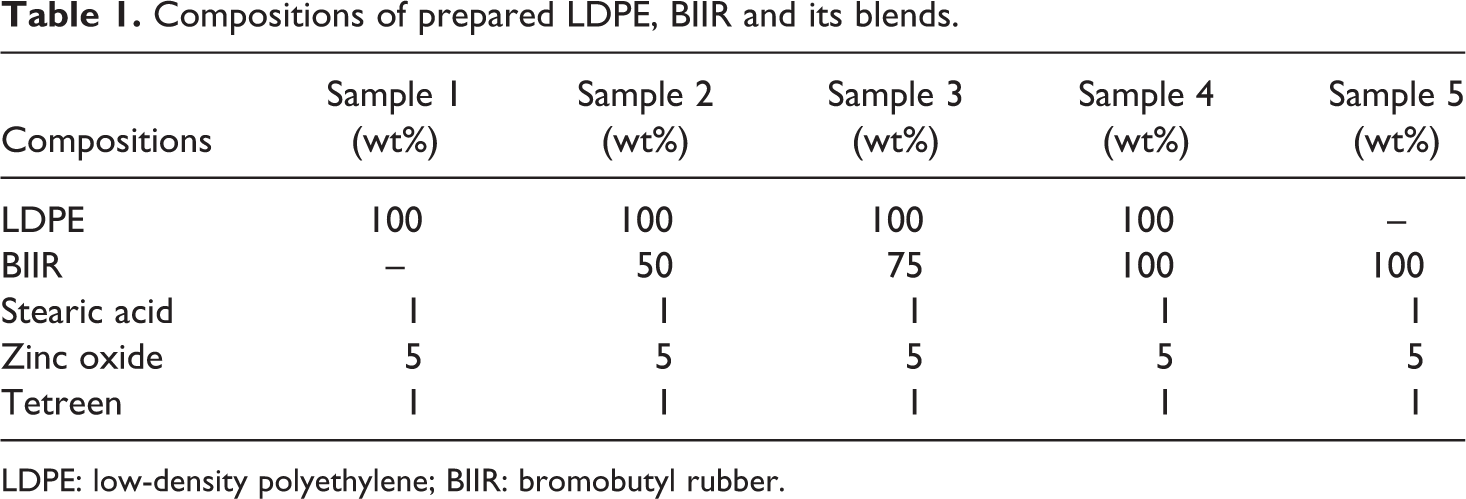
LDPE: low-density polyethylene; BIIR: bromobutyl rubber.
Mechanical measurements
Mechanical tests including tensile strength (TS) and percentage elongation at break (Eb%) were preformed at room temperature using an Instron Machine (model 1195) employing a crosshead speed of 50 mm/min. The recorded values for each mechanical parameter were the average of five measurements according to ASTM D-412 standards, in which the standard deviation was ±5%. The samples for tensile measurements were tested in dumbbell shape having a width of 4 mm and a length of 50 mm.
Permanent set
Permanent set (PS) is defined as the change in the distance between bench mark before and after the rupture.

where, L is distance between bench mark before rupture and L 1 is distance between bench mark after a fixed period of time (1 min) after rupture.
Hardness measurements
Samples of at least 1-mm-thickness with flat surface were cut for hardness test. The measurement was carried out according to ASTM D-2240 using a durometer of model 306 L type A durometer. The unit of hardness is expressed in Shore A.
Physical properties
Gel fraction
Gel fraction (GF) expressed as the fraction of insoluble weight was obtained by extracting soluble part in toluene using Soxhlet for 24 h and drying insoluble part completely in vacuum oven at 50°C. It is given by

Measurement of heat shrinking properties
Heat shrinking properties have been studied using a homemade extenze meter equipped with an electric heating oven as well as with a special arrangement used for flushing the heated samples with the stream of liquid air. Samples with initial length (L 0) were at first heated to a required temperature and simultaneously extended to specified extension percentage; heating was carried out for several minutes to ensure the attainment of fixed temperature. Quenching of heated samples was then carried with the stream of liquid air. Reheating was carried out using the heating oven and the samples were left to cool at room temperature to the final length (L). The percentage recovery (R%) has been determined according to the following equation


where L 0 is length before heating, that is, initial length and L is length after reheating, that is, final length.
Thermal stability
Analysis was carried out using thermogravimetric analysis (TGA) apparatus, whereby samples of 0.98–1.5 mg were encapsulated in aluminum pans and heated from 50 to 600°C at a heating rate of 10°C/min under nitrogen atmosphere.
Structure morphology by SEM
The scanning electron microscope (SEM) was employed to examine the structural morphology of the blends. The SEM micrographs were taken with JEOL-JSM-5400 (Japan).
Results and discussion
Mechanical measurements
Tensile strength
Figure 1 shows the variation in TS values as a function of irradiation dose for LDPE, BIIR and their blends at different compositions. It can be observed that the values of TS increase with increasing irradiation dose for all the samples to reach the maximum value at 150 kGy. At higher doses, that is, beyond 150 kGy, the values of TS decrease with increasing irradiation dose. Also, it can be observed that BIIR rubber has the lowest TS values and LDPE has the highest TS value, whereas the TS values of the blends displayed TS values between the two components. The substitution of bromine atom for hydrogen takes place mainly on the limited content of about 3% of isoprene molecule in BIIR. The radical formed on dissociation of the carbon–bromine bond on irradiation participates in crosslink formation, and this behavior accounts for the very limited increase in the TS of irradiated gum BIIR. On the other hand, LDPE is categorized mainly as crosslinking polymer as mentioned below and accordingly, it attained the higher values of TS. The increase in TS due to gamma irradiation indicates the occurrence of crosslinking, whereas the slight decrease beyond the dose 150 kGy indicate the occurrence of oxidative degradation. As already reported, LDPE is categorized as a crosslinking polymer. 17 Also, it is already known that for semicrystalline polymers, such as polyethylene, the crosslinking predominates at the interface between the amorphous and crystalline phases. 7,18 –21 As the crosslinking density becomes high, the reorientation process will be hindered, and so the ability of macromolecules to crystallize, or the order is retarded. Under these conditions, the strength property is expected to decrease. The magnitude of TS values attained by the blend, with respect to that of BIIR, indicates clearly the reinforcing role played by LDPE, as it increases with its content in the blend.
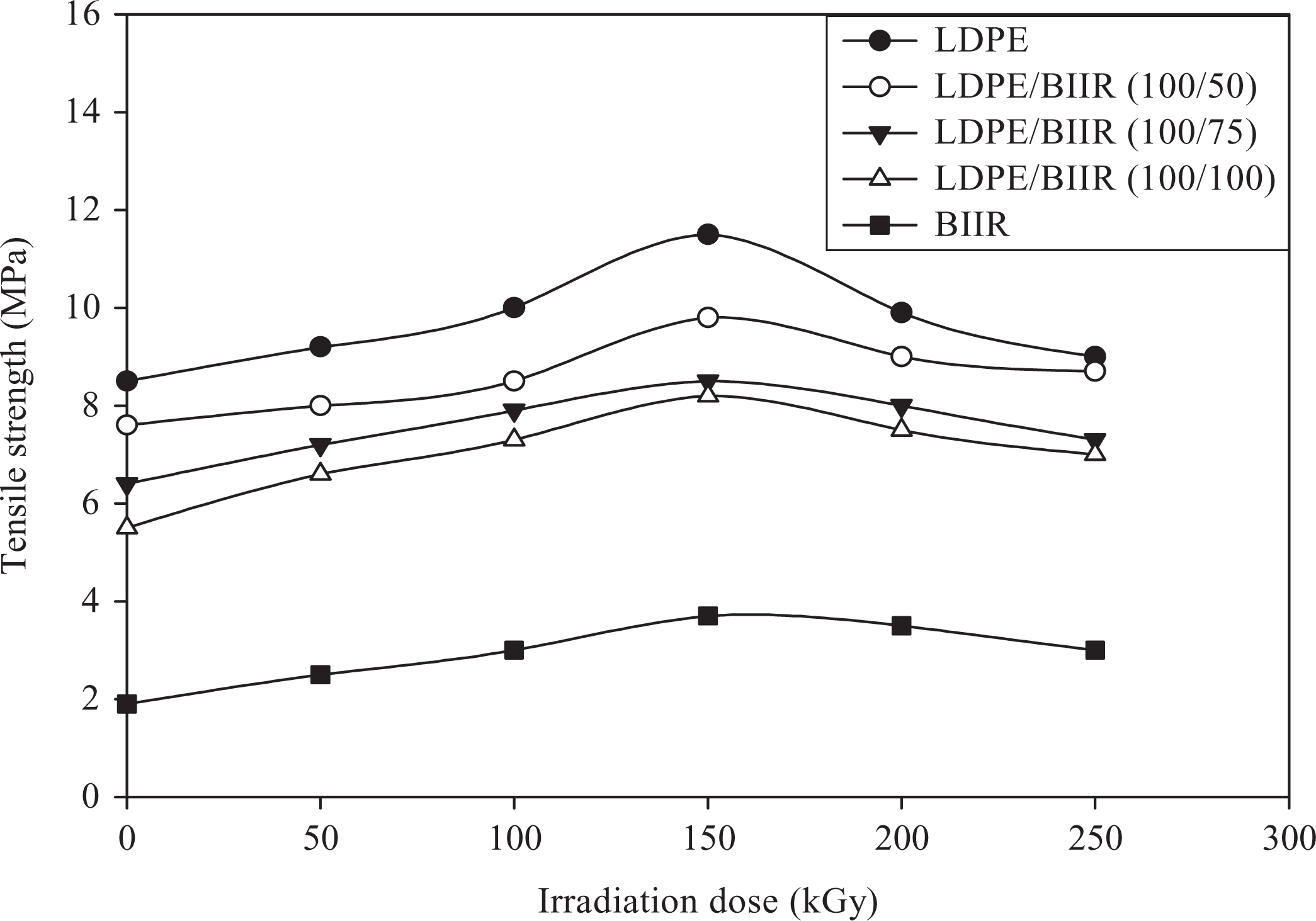
Effect of irradiation dose on the tensile strength of low-density polyethylene, bromobutyl rubber and their blends.
Tensile modulus at 50% elongation
Under practical conditions of applications, blends are not stretched until they undergo rupture. Therefore, the alternative property, which is a measure of resistance to a limited strain deformation of polymeric material under practical applications, is the tensile modulus as its value is proportional to its stiffness. In the present investigation, the modulus was determined at 50% elongation and is referred as tensile modulus at 50% elongation (M50). Figure 2 illustrates the variation in M50 as a function of irradiation dose for the LDPE, BIIR and their blends. It can be seen that M50 values increase with increasing the irradiation dose for all the samples. Also, they increase with increasing the content of LDPE in the blend for the same irradiation dose. The attained relatively low value of M50 for the BIIR rubber is attributed to its totally amorphous nature and hence offering no resistance to deformation, namely stretching at such low elongation. LDPE ought to have high modulus due to its crystallinity. 21
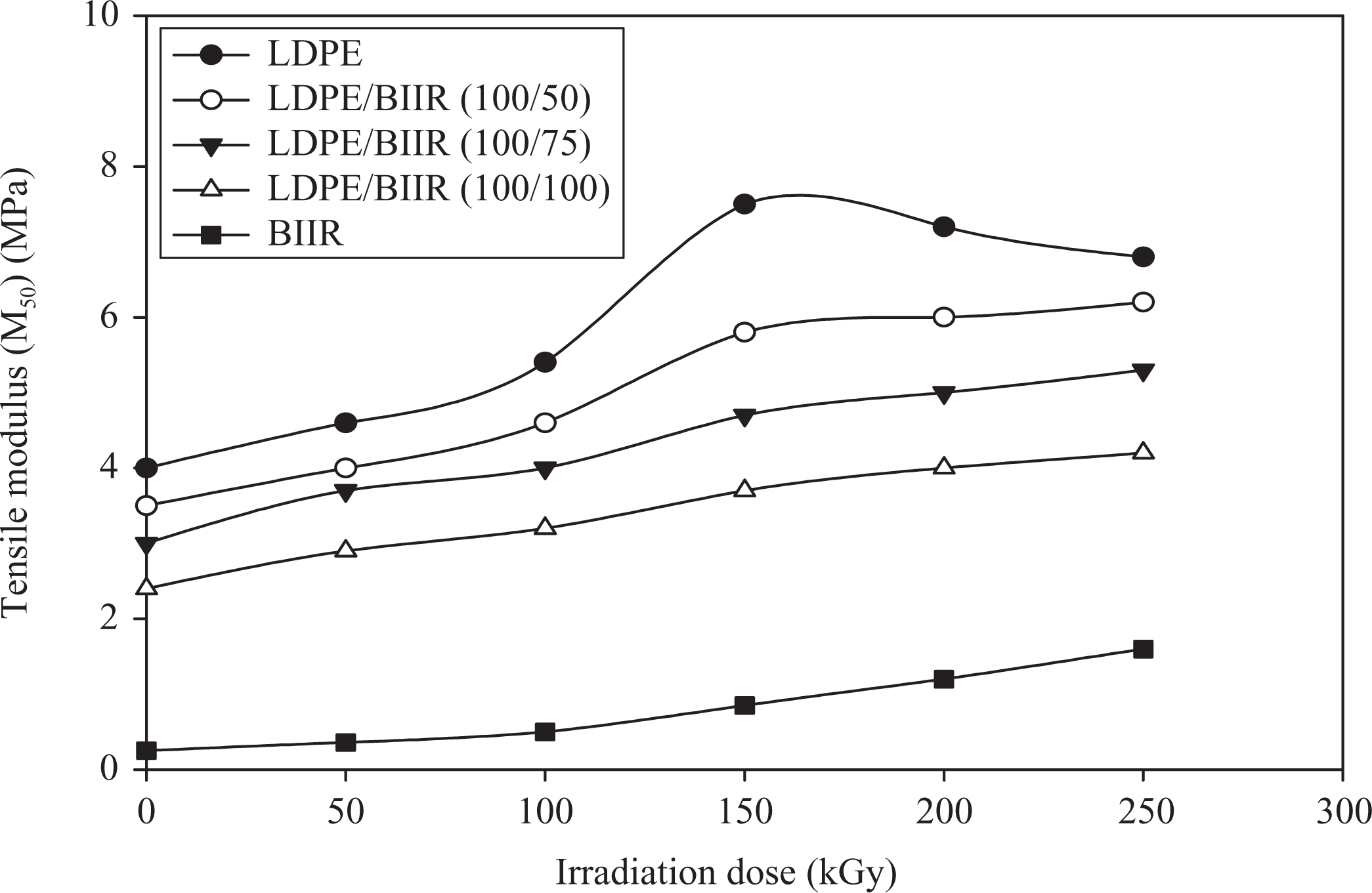
Effect of irradiation dose on the tensile modulus at 50% elongation (M50) of low-density polyethylene, bromobutyl rubber and their blends.
Percentage elongation at break
Figure 3 shows the effect of gamma irradiation on the Eb% of LDPE, BIIR and their blends at different compositions. It can be observed that increasing irradiation dose results in the reduction in Eb% for all samples. BIIR is a completely amorphous elastomer, and hence it is characterized by the existence of physical entanglements in large numbers. Hence, it can be assumed that the effect of limited crosslinking in preventing the flow of BIIR macromolecules will be encountered with the entanglements. This behavior may account for the larger values of Eb attained by the raw rubber with respect to all other compositions. The induced crosslinking in the amorphous phase and the interphase induced chemical linking between the amorphous and crystalline phase of LDPE, which would account for lowest values of Eb%. Values of Eb% attained by blends depend on its composition and lie systematically between the above two extremes.
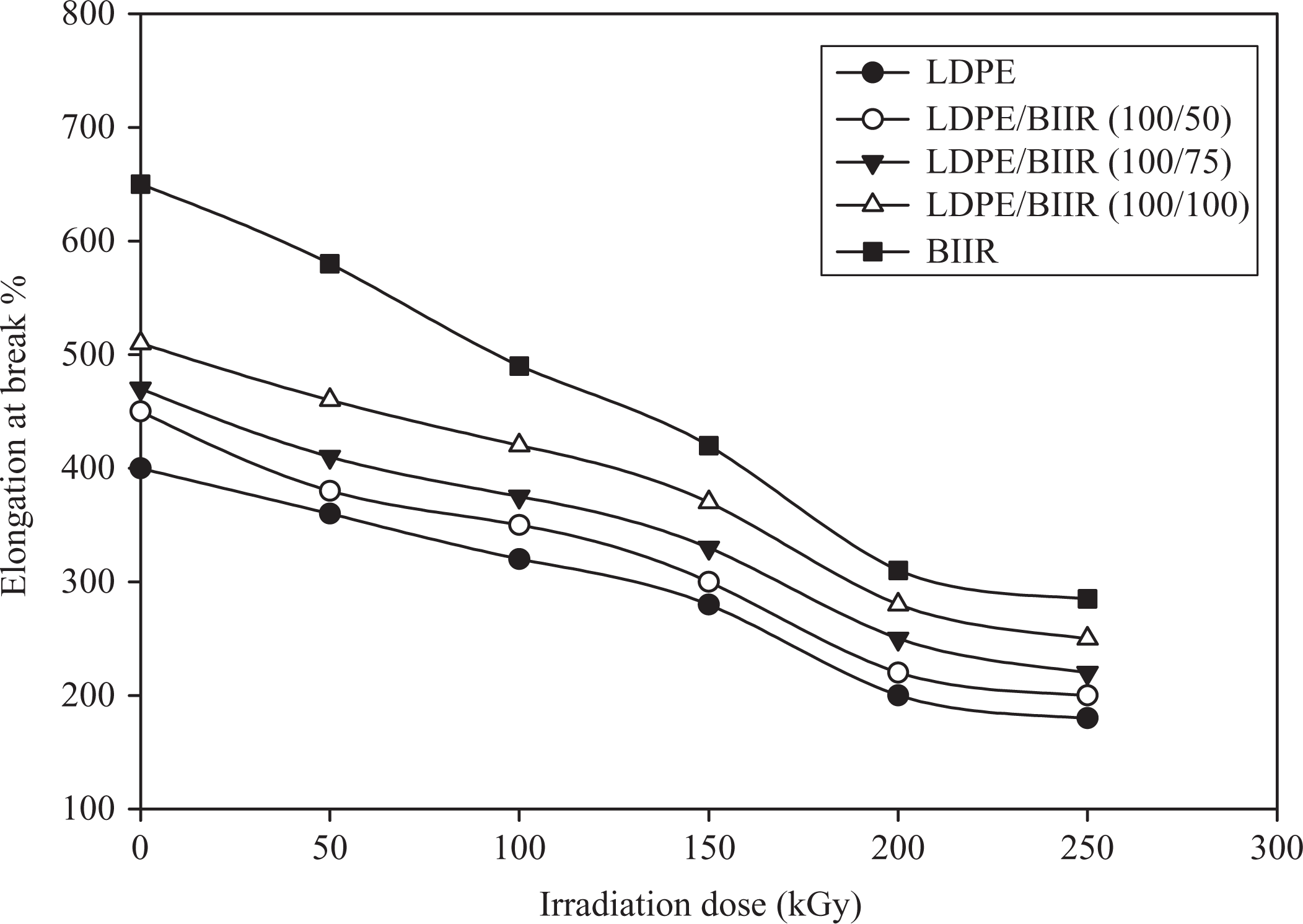
Effect of irradiation dose on percentage elongation at break of low-density polyethylene, bromobutyl rubber and their blends.
Permanent set
The variation in the PS as a function of irradiation dose is illustrated in Figure 4. It can be seen that PS values decrease with increasing the irradiation dose as well as BIIR content in the blend at all irradiation doses. The PS values of LDPE/BIIR blends lie between the highest values of PS of LDPE and the lowest values of PS of BIIR. This phenomenon may be attributed to the fact that the rupture of the blend sample always occurs after the yield point of LDPE, that is, in its plastic deformation region. The plastic deformation is always an irreversible process and, consequently, the PS value of the blend containing high content of LDPE is expected to be high. However, at higher irradiation doses, crosslinking of both BIIR and LDPE increases leading to a decrease in elongation and consequently decreases the PS values.
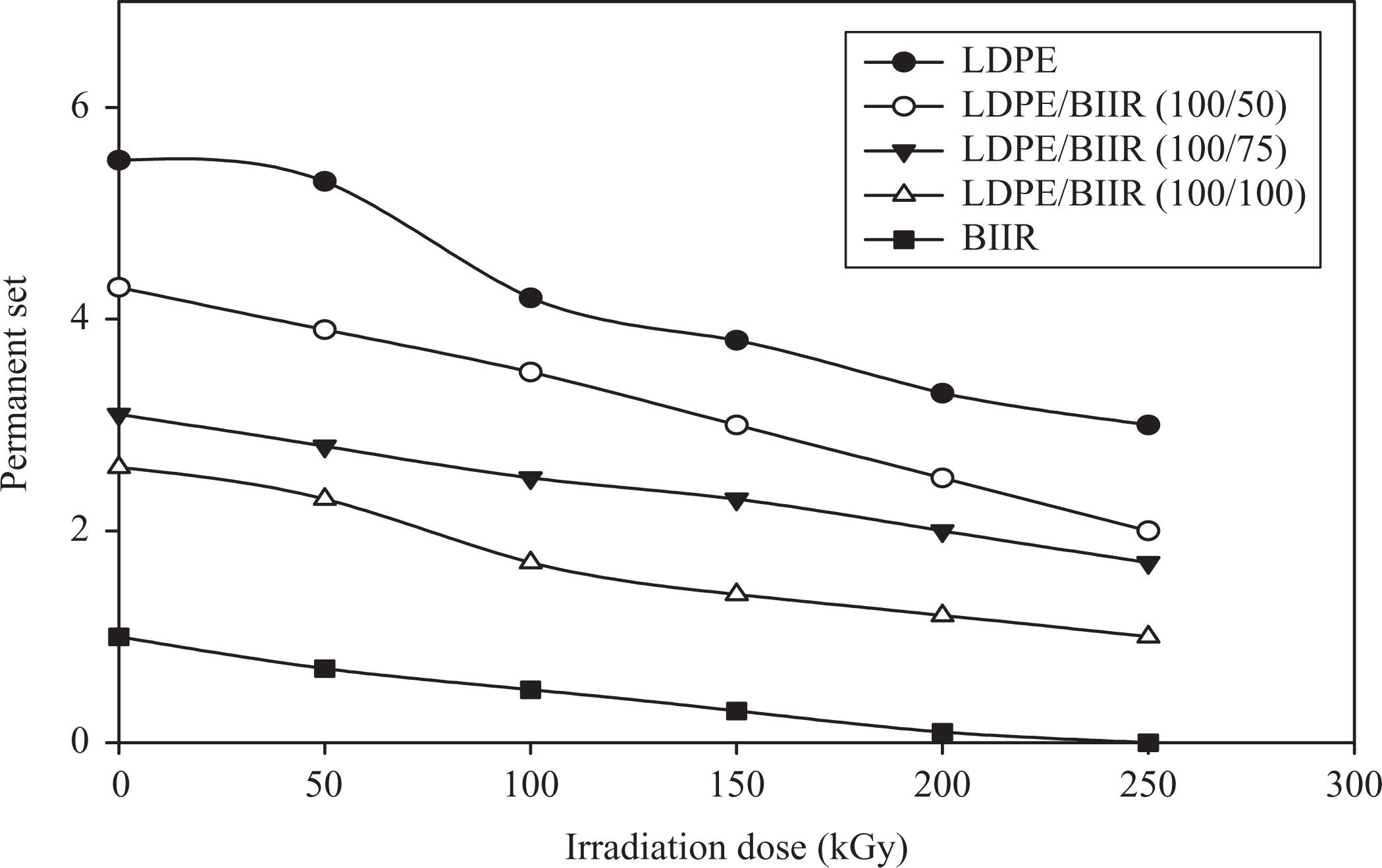
Effect of irradiation dose on permanent set of low-density polyethylene, bromobutyl rubber and their blends.
Hardness properties
Hardness property is related to the capacity of prepared compounds to resist mechanical penetration of a foreign body, namely, a loaded indenter. Therefore, the data are presented in terms of the hardness index (Shore A).
Figure 5 shows the effect of gamma irradiation dose on the hardness values for LDPE, BIIR and their blends at different compositions. It can be seen that the hardness values increases slightly with increasing irradiation dose up to 250 kGy for all the samples. The low hardness values attained by BIIR are due to its totally amorphous structure. On the other hand, LDPE has a high degree of crystallinity, and hardness is reported to be mainly a function of degree of crystallinity. 21
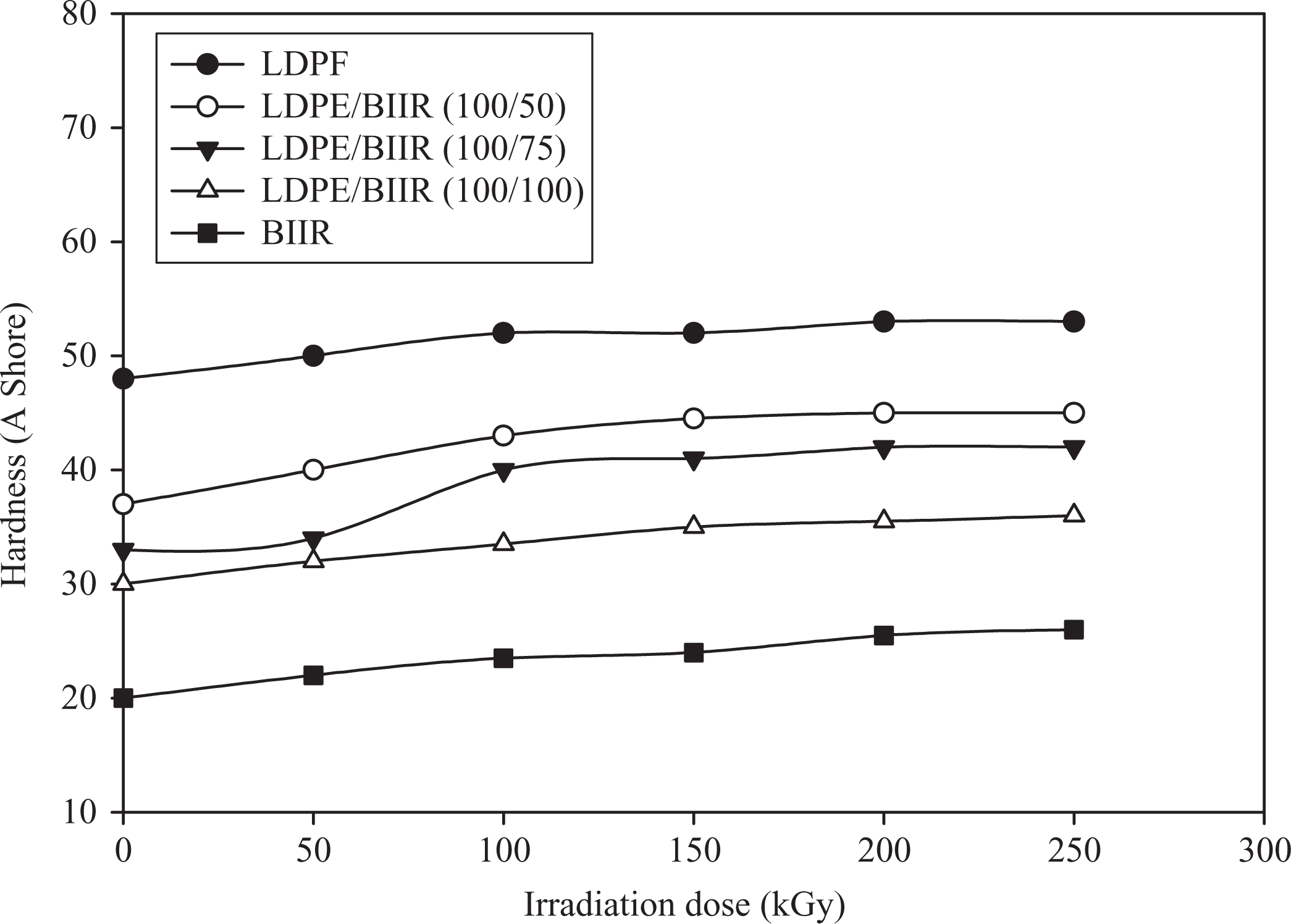
Effect of irradiation dose on the hardness of low-density polyethylene, bromobutyl rubber and their blends.
Physical measurements
Gel fraction percentage
The variation in gel fraction percentage (GF%) as a function of irradiation dose for the elastomer BIIR, LDPE thermoplastic as well as their blends is depicted in Figure 6. From this figure, it can be noticed that the GF% values of LDPE is the highest beginning from approximately 88 at 50 kGy and reaching to approximately 94 at 250 kGy, and GF% values of BIIR is the lowest beginning from approximately 77 at 50 kGy and reaching to approximately 89 at 250 kGy. Moreover, it can be observed that the GF% values of the blends lie between the highest values of LDPE and the lowest values of BIIR rubber. The apparent difference is GF% value of LDPE and BIIR, which is attributed to the predominant radiation-induced crosslinking of polyethylene with respect to BIIR. This increase in the GF% values at the same irradiation dose with the increase in LDPE content in the blend may be due to the possibility of interphase induced crosslinking between amorphous and crystalline phase of the thermoplastic.
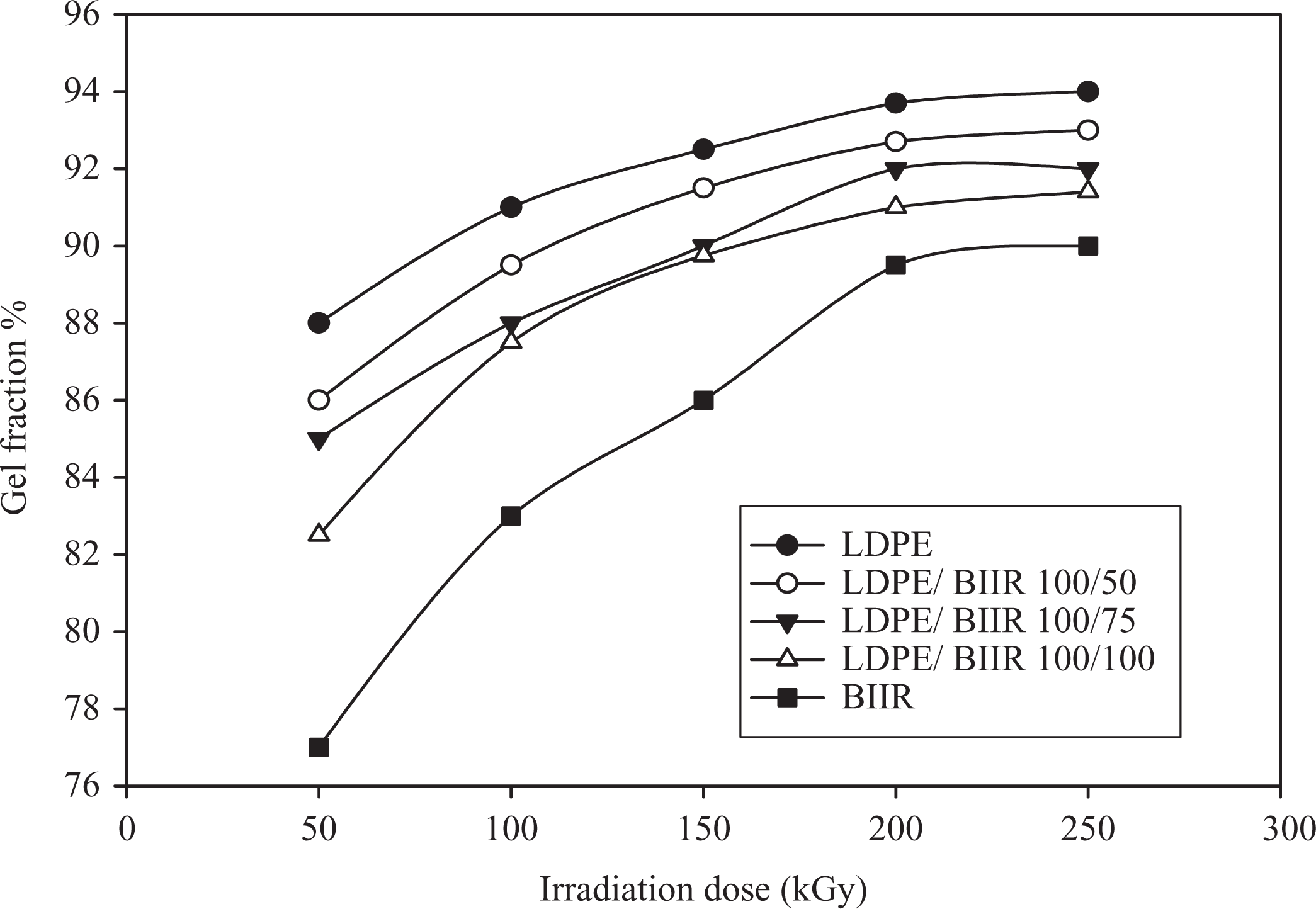
Effect of irradiation dose on gel fraction percentage of low-density polyethylene, bromobutyl rubber and their blends.
Shrinking properties
Measurements of R% have been carried out on samples, whether LDPE or its blends, that are at first subjected to a certain irradiation dose and are heated to approximately 110°C to melt the crystallites of LDPE and then stretched to a certain extent of 200% and cooled abruptly while under stress. These samples, which can remain for unlimited time in its temporary length, were then reheated so as to melt the crystallites of LDPE for several minutes to insure melting 7 and were then left to cool at room temperature. Because of exhibiting semicrystalline polyethylene of ‘memory effect,’ the samples tend to restore its original length and hence thereby attaining its permanent or final length, which is usually larger than the original one. R% was then calculated as mentioned before. Figure 7 shows the data obtained for the R% as a function of irradiation dose for LDPE and its blends with BIIR rubber. It may be observed that the value of R% increases with the irradiation dose in an almost semilinear manner over the whole range of irradiation. Moreover, for one and same irradiation dose, blends posses higher R% values with respect to the LDPE and that R% values increase with the elastomer content in the blend.
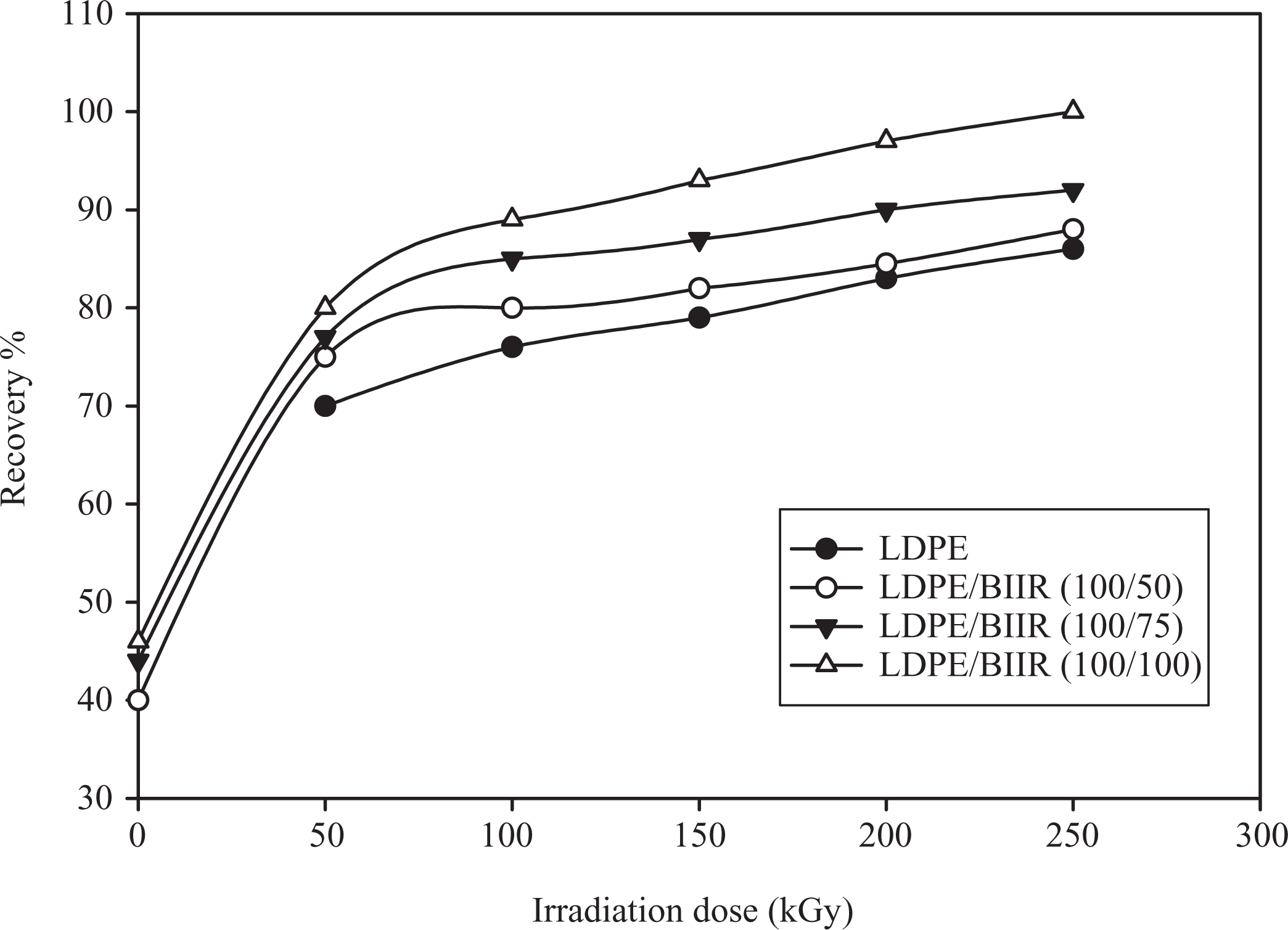
Effect of irradiation dose on the percentage recovery of LDPE and LDPE/BIIR blends elongated at 200%. LDPE: low-density polyethylene; BIIR: bromobutyl rubber.
The memory effect character of polyethylene is affiliated with its radiation crosslinking nature because the radiation-induced crosslinks tend to restore the initial shape after reheating. Hence, the higher the irradiation dose, the higher the extent of crosslinking, and hence the higher the value of R%. On blending, the amorphous and radiation crosslinkable BIIR with LDPE, the radiation-induced crosslinking density formed in the blend, would be expected to be higher in the blend due to the increase in its amorphous content with respect to that of LDPE alone. This character would account for the higher R% values of the blends, which is also a function of BIIR content and irradiation dose.
Figure 8 illustrates the data obtained for the variation in R% as a function of stretching percentage for blend LDPE/BIIR (1:1) irradiated to 50 and 150 kGy. It may be observed that the R% for the blend irradiated with 50 kGy increases with increasing the stretching percentage; this increase may be affiliated with the limited extent of crosslinking, which encounter high-restoring character on increasing the stretching percentage. On the other hand, the crosslinking density of blends irradiated at 150 kGy was sufficiently high enough such that almost no influence of stretching percentage on its higher R% values was obtained at the first stretching of 50%.
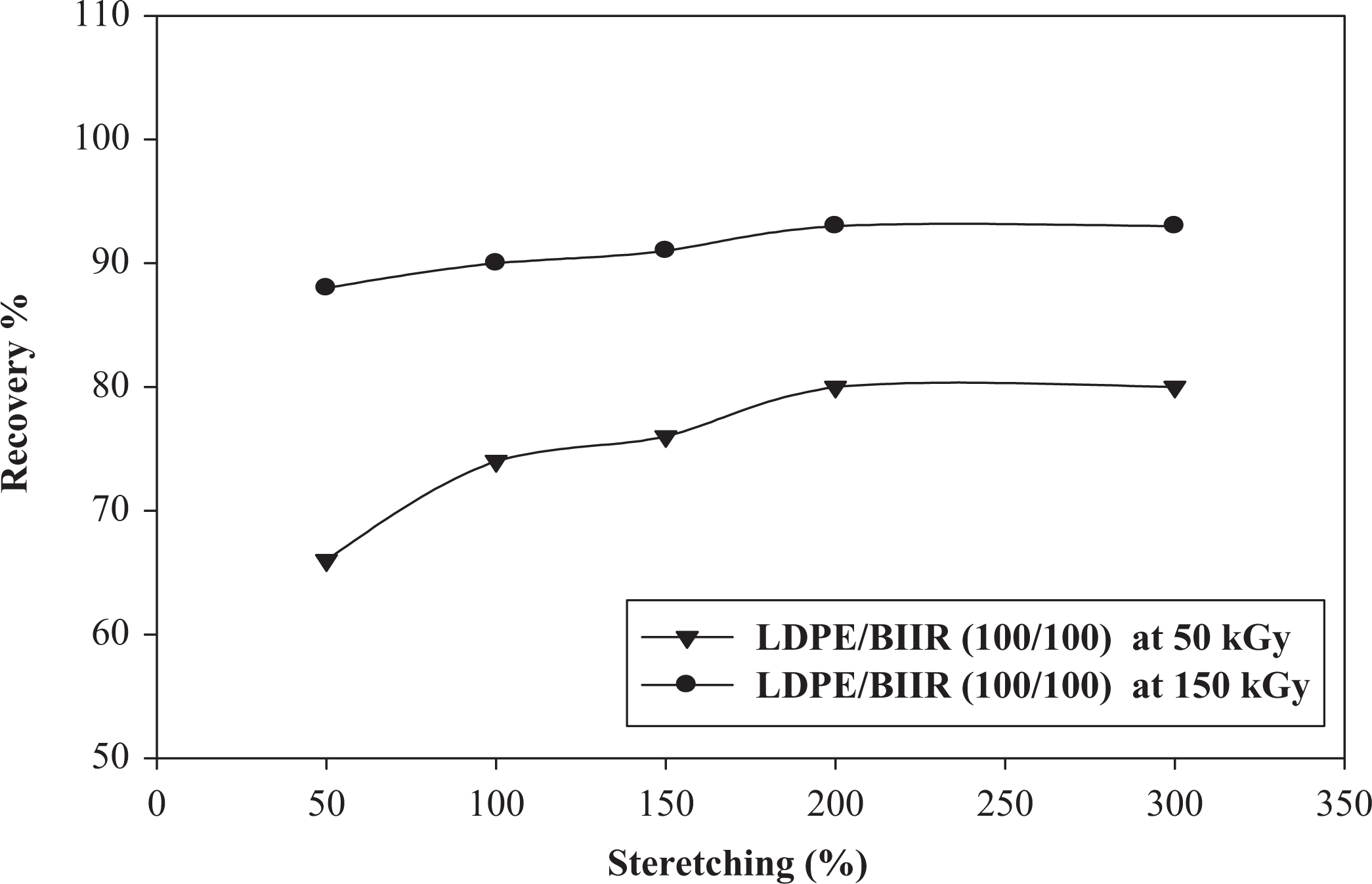
The relationship between the percentage recovery as a function of stretching percentage for low-density polyethylene/bromobutyl rubber (100/100) blend irradiated at 50 and 150 kGy.
Thermal properties
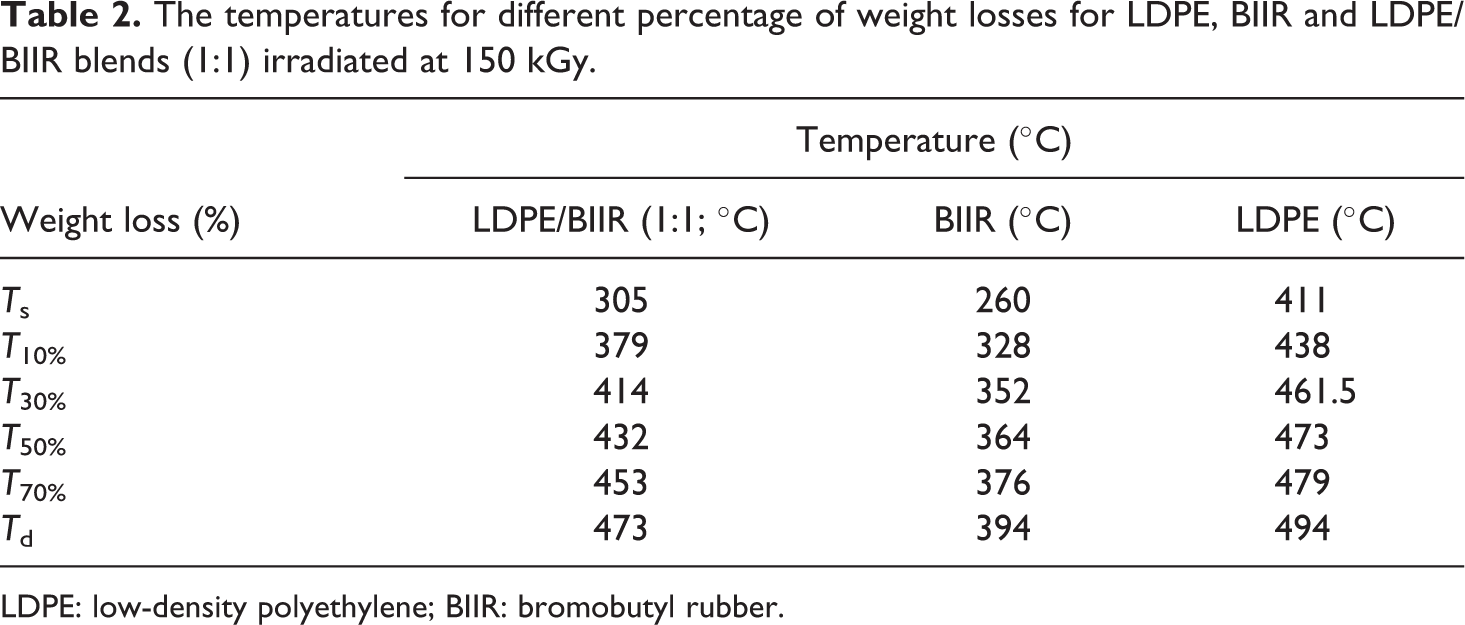
The thermal stability behavior of polymer blend is of a major importance as these materials are frequently subjected to elevated temperatures during their usage. TGA was used to investigate the thermal stability of LDPE/BIIR blend (1:1) and compared to that of LDPE and BIIR. The corresponding curves are shown in Figure 9. It can be seen that some shift to higher temperature is observed for blend than for BIIR rubber. From the same thermograms, the initial decomposition temperature, T s, which when taken at 10%, 30%, 50% and 70% weight loss, and the final decomposition temperature, T d, from TGA thermograms for LDPE, BIIR and LDPE/BIIR (1:1) blend, were listed in Table 2. As expected, the formation of irradiation-induced crosslinking has improved the thermal stability of the blend which is in agreement with the mechanical results.
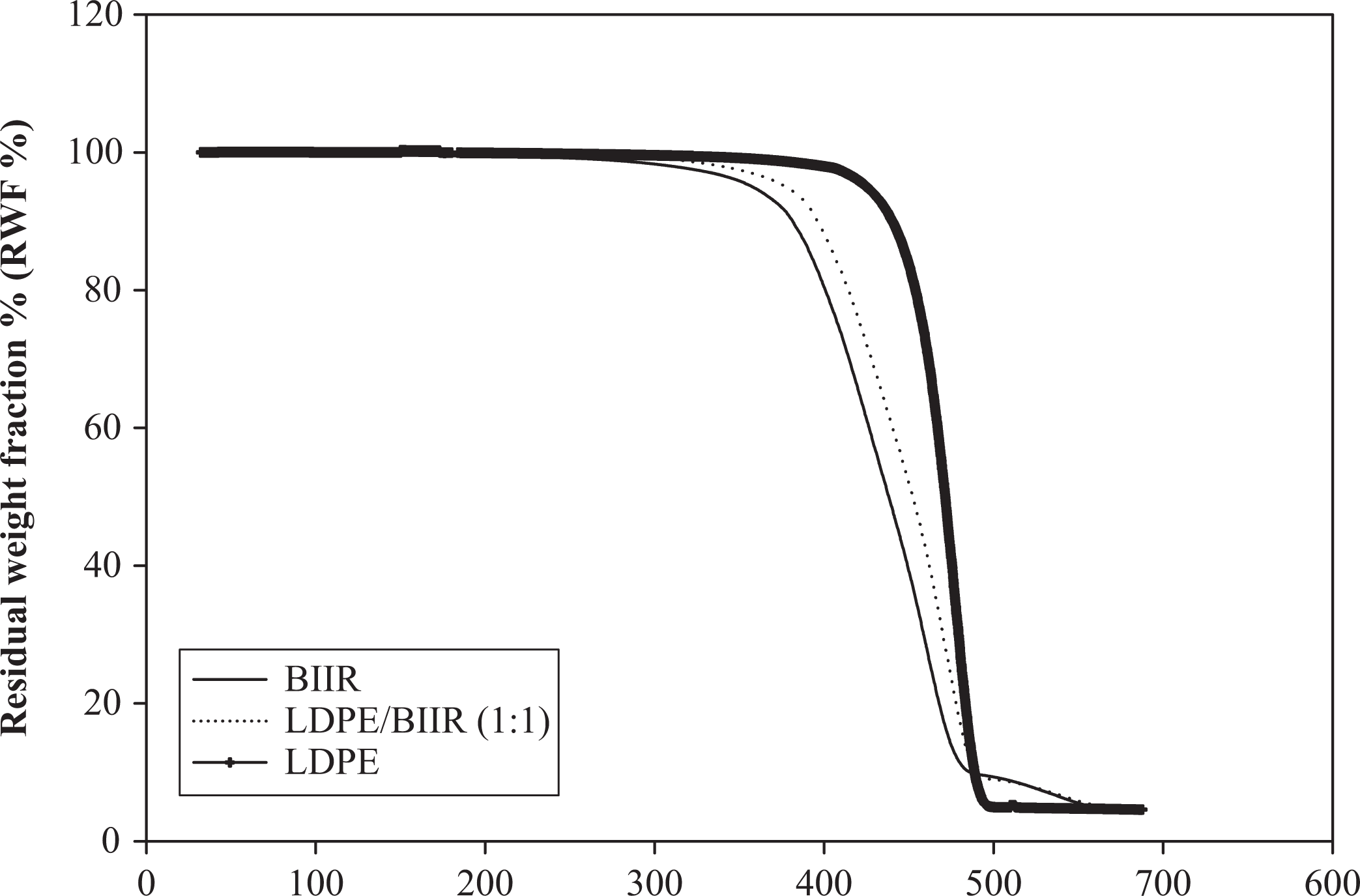
TGA thermograms of LDPE, BIIR and LDPE/BIIR (100/100) blend irradiated at 150 kGy. LDPE: low-density polyethylene; BIIR: bromobutyl rubber; TGA: thermogravimetric analysis.
The temperatures for different percentage of weight losses for LDPE, BIIR and LDPE/BIIR blends (1:1) irradiated at 150 kGy.
LDPE: low-density polyethylene; BIIR: bromobutyl rubber.
Blends morphology
The phase morphology of obtained LDPE/BIIR blends with different ratios and irradiated at 150 kGy using SEM is given in Figure 10. Figure 10(a) represents the fracture surface of LDPE/BIIR at a weight ratio of 100/50 that shows large and nonuniform holes due to phase separation. LDPE appears as a bright phase, whereas the BIIR is seen as a dark phase. In addition, the dark phase progressively increases with increasing BIIR content. Then, the relatively large connected particles of BIIR dispersed phase are formed in 100/75 (Figure 10(b)) and 100/100 (Figure 10(c)) LDPE/BIIR blends, indicating the occurrence of phase coalescence and the interface zone between LDPE and BIIR became concentrated.
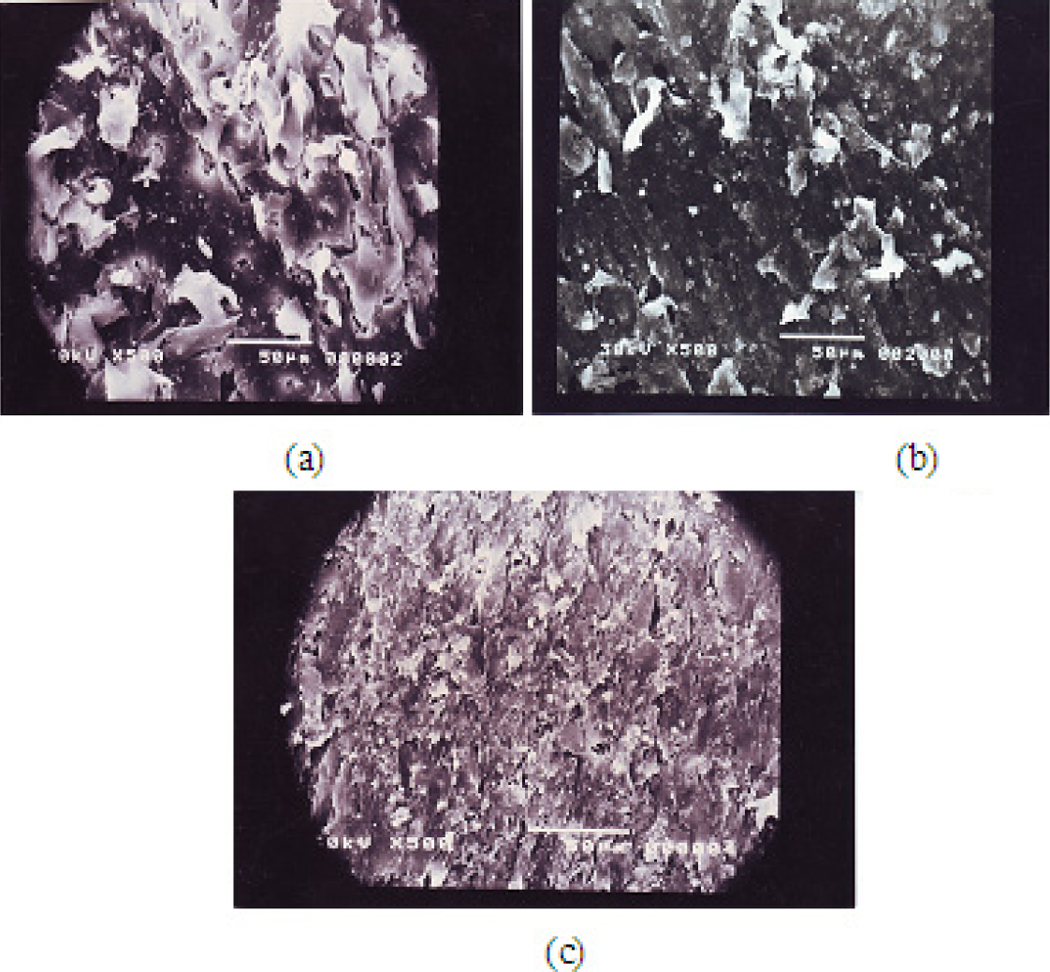
SEM of low-density polyethylene/bromobutyl rubber blends (a) 100/50, (b) 100/75 and (c) 100/100 blend irradiated at 150 kGy.
Conclusions
This study has lead to the following conclusions.
The GF results show that crosslinking is induced by gamma irradiation in all the samples and the GF increases with increasing irradiation dose and LDPE content of the blend.
The blending of LDPE with limited amounts of BIIR has proper mechanical properties than BIIR alone and LDPE content of the blends improved the mechanical properties for the same irradiation doses.
Heat shrinkable thermoplastic elastomer blend was successfully prepared from LDPE thermoplastic and BIIR elastomer. The heat shrinkability increased substantially when the blend was crosslinked by gamma irradiation.
Increase in the elastomer content in the blend enhances the heat shrinkable properties. A high performance material with enhanced mechanical properties and excellent heat shrinkability can be prepared by crosslinking blend of LDPE /BIIR (100/100) by gamma irradiation at a dose of 150 kGy.
The thermal stability of vulcanized LDPE/BIIR blend (100/100) was improved, which is in agreement with the mechanical results.
Footnotes
Funding
This research received no specific grant from any funding agency in the public, commercial, or not-for-profit sectors.