




Abstract
In an attempt to produce bio-composites that possess good physico-mechanical properties, polyamidoamine (PAMAM) was synthesized and characterized as a multi-nitrogen terminal biocompatible and nontoxic polymeric species. It was mixed at various ratios of 1.0, 2.0, and 3.0% with polypropylene (PP) via Brabender-like apparatus. The prepared bio-composites were exposed to 20 kGy of gamma-irradiation to investigate the influence of ionizing radiation on the fabricated specimens. Parameters of mechanical for instance tensile strength (TS), modulus of elasticity (EM), elongation at break (%), and hardness (Shore D), of bio-composites, were considered. Moreover, the stress-strain curves of the fabricated samples were investigated. Furthermore, FTIR and thermal analysis including TGA and DSC have been investigated. The crystallinity % of all investigated samples was calculated on the basis of DSC measurements. Overall migration of prepared samples has been performed as an applicable study of food packaging. FTIR results revealed the disappearance of the absorption peak at 1730 cm−l of the carbonyl group of polyamidoamine after the formation of PP/PAMAM bio-composites, indicating a successful combination of the PP matrix with polyamidoamine. The incorporation of PAMAM resulted in a steady improvement of the melting temperature (Tm) of the native PP. The thermal stability of PP/PAMAM composition increases with increasing PAMAM and after being exposed to 20 kGy irradiation. Mechanical data revealed that TS of PP increased with PAMAM content up to 3.0%. The development in TS increased from 20 MPa of native PP to 45 MPa of PP/2% PAMAM bio-composites suggesting the superior interaction between the synthetic PAMAM and PP texture. Furthermore, the prepared bio-composite films displayed highly acceptable migration limits.
Keywords
Introduction
One of materials science challenge in packaging polymeric materials industries is the durability against irradiation. 1 Packaging materials exposure to light with different wave lengths affects the mechanical properties as a result of chain scission degradation and the physical appearance of the packaging item’s surface.2,3 In addition, hard packaging boxes was used in sterilization irradiated units with low dose of kGy that can be affected on the safety of packing items. 4 For that, development of anti-irradiated additives is an essential research point to overcome this issue. Moreover, creation of nontoxic, biocompatible and effective additives is the second challenge than all types available in packaging materials processing market. 5
Marketable polyolefin, such as polypropylene (PP), are commonly used as third type of packaging materials as ergonomic handling and good thermal and mechanical characters. 6 Polypropylene is a largely used thermoplastic polymer in light of its great rigidity, high processability, and economical. Besides, it is widely employed as a thermoplastic resin because of its excellent properties, for instance, respectable virtuous moisture barrier, superb cost-to-performance, low density, easy processability, etc.7–10 The mixture of two or more materials achieves a new substantial class called composite materials, with advanced properties, that cannot be attained by the individual parts.11–15
Most conjugated polymers are designed as anti-ultraviolet additives and crosslinking agents in packaging materials industries. 16 In addition, polyamidoamine (PAMAM) are well-known as extremely branched dendrimers. 17 These polymers possess an ethylenediamine molecule as core with multi amine-terminated branches. 18 PAMAM presents numerous advantages such as their capability to blend with different polymer-based packaging materials and positively charged over nitrogen at terminal groups. According to the unique structure of PAMAM by extremely branched wings that get PAMAM an ideal applicant for various materials science and biological applications.19–23 With increasing the generation, an increased number of positive amine groups on the surface of PAMAM resulted increasing in degree of irradiation adsorption and crosslinking efficiency.
A biocomposite is a material composed of two or more distinct constituent materials, which are combined to yield a new material with improved performance over individual constituent materials. Bio-composite fibers were developed from wood pulp and PP. 2 24 In addition, waste hazelnut shells (HNS) were powdered and used as the filler for the fabrication of sustainable polymeric bio-composites. 25 Also, PP was blended (20–80 wt%) with LLDPE matrix in the 10% gelatin fiber based bio-foamed composites. 26 Moreover, the highest surface energy is obtained with hexamethyl-disiloxane and is used in plasma coating the wood flour to improve its bonding and dispersion with the PP as bio-composite material. 27
Irradiation processing of polymers has definitely increased consideration from many researchers because it can be practical as a method to amend the molecular structure of polymers as a substitute technique to the more customary chemical approaches. Treating polymer by ionizing radiation is globally and energetically safe by way of it does not need solvents or initiators at high temperatures and permits one to avoid side responses characteristic of polymer processing in the melt. In this context, several research articles have stated developing irradiation of polymeric constituents for application in different tools and applications.28–31 The influence of the ionizing radiation on the mechanical parameters and the Physico-chemical stability of PP have been considered using different investigations. PP irradiation encouraged noteworthy alterations in the Physico-chemical properties because of chain scission and degradation. Alternatively, PP irradiation at doses greater than 20 kGy altered its mechanical performance from ductile to brittle or semi-ductile.32,33
In this research, bio-composites based on PP mixed with different ratios of PAMAM which were synthesized and characterized as multi-nitrogen terminal biocompatible and nontoxic polymeric additives were attained. The prepared bio-composites subjected to appropriate dose of gamma-irradiation to investigate the impact of ionizing radiation on the fabricated samples. Physico-mechanical alterations of PP thermoplastic due to PAMAM interference and gamma-irradiation have been monitored. The overall migration from bio-composites have been performed as an applicable study of the food packaging.
Experimental
Materials
Ethylenediamine, methanol (HPLC grade) and methylacrylate were purchased from Sigma Aldrich and used after distillation (Figure 1). Polypropylene (PP) and the hyperbranched polyamidoamine (PAMAM) polymer.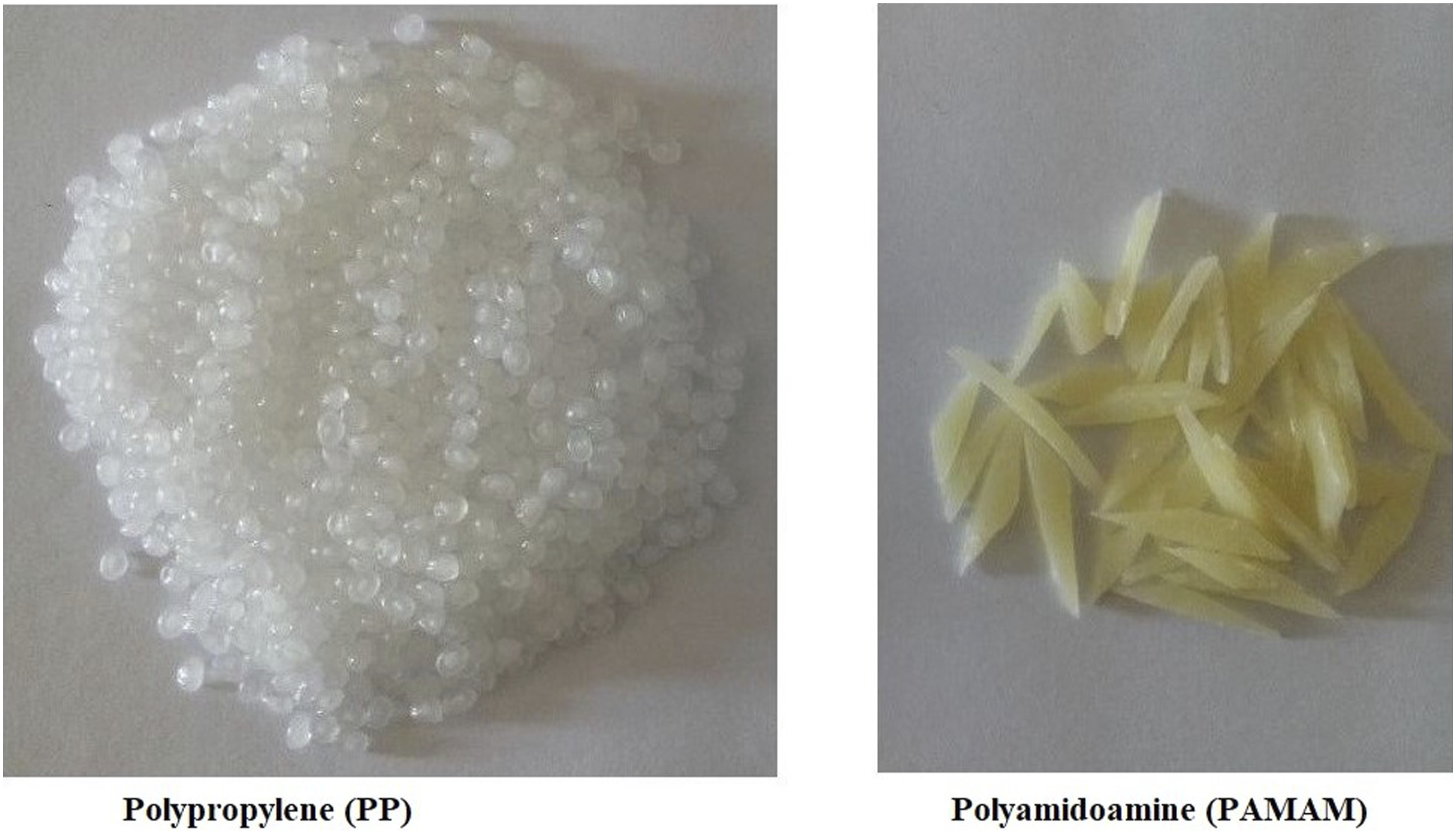
Synthesis of Polyamidoamine
The hyperbranched PAMAM was prepared as mentioned in our previous work34,35 with slight modification. Michael addition reaction combined with the amidation process led to producing dendrimers. Michael addition was applied in 250 mL round quick fit flask and charged with, 3.75 mL (0.06 mol) of ethylenediamine miscible in 50 mL methanol drops added to 21 mL (0.625 eq, 0.23 mol) of methyl acrylate in 12.5 mL methyl alcohol over 60 min at 0°C. The solution was mixed over a magnetic stirrer at room temperature for 2 days. The reaction medium was concentrated by a rotary evaporator until dryness. The reaction was followed by amidation that was performed by adding ethylene diamine in 25 mL methyl alcohol drop wisely at 0°C to 6.25 g (0.015 mol) of the methyl terminated molecules core in 25 mL methanol. The reaction mixture was heated up to room temperature and stirred for 12 h. The unreacted amine and methanol were removed under low pressure. After that, two subsequent of Michael addition reaction and amidation steps were carried out as defined previously. The required polyamidoamine with good yield was successfully obtained.
Prepared PAMAM was characterized by 1H NMR and 13C NMR which, is represented in Figure 2, and also the structure of polyamidoamine inside. 1H NMR and 13C NMR of the prepared polyamidoamine and its structure inside.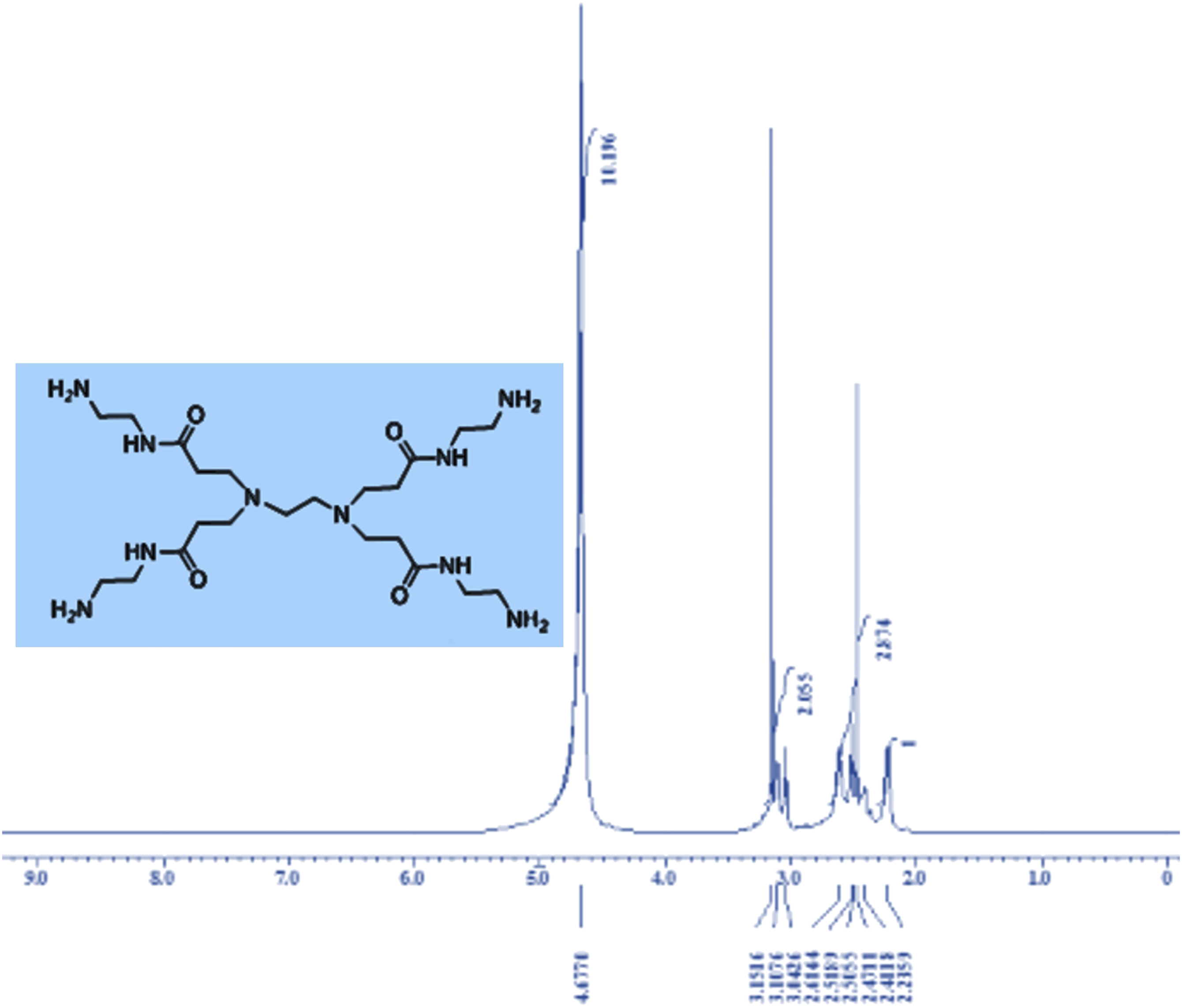
1H NMR (500.13 MHz, CD3OD at 25°C): δ (ppm) = 4.67 (NH), 3.39 (CH2-N), 2.64 (CH2-CO).
13C NMR (CD3OD at 25°C): δ (ppm) = 175.13, 52.05, 50.12, 48.15, 48.10, 49.02, 42.74, 41.77, 39.82, 39.78, 38.61, 38.30, 36.78, 32.82.
Fabrication of PP/PAMAM composites
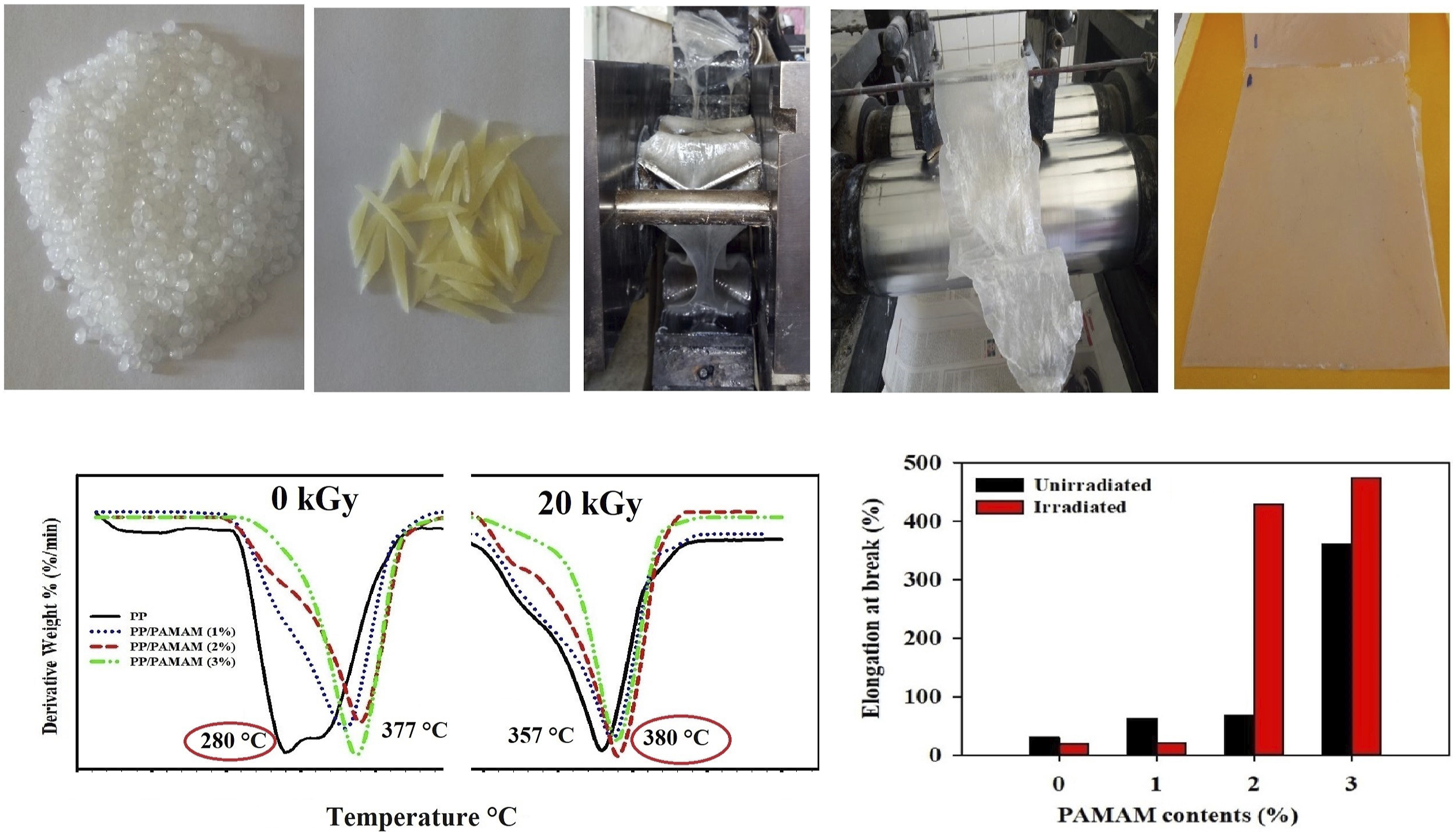
Brabender-like apparatus was used to prepare PP/PAMAM composites. Which, PP pellets were perfectly melted in the hot mixer for 5 min inside the range of temperature 175–180°C. After that, the various percentages of PAMAM synthetic additive at 1.0, 2.0, and 3.0% were introduced into the PP molten. The mixing procedure was continued for a further 5 min within a similar heat of 175–180°C. After completely homogeneous mixing of PAMAM particles and molten PP inside the mixer, the prepared composites were quickly removed from the twin screw of the hot mixer and then withdrawn between the open two-roll mills to obtain suitable sheets that were ready to investigate.
Gamma irradiation
Fabricated bio-composites were subjected to gamma-irradiation via a cobalt-60 gamma cell type 4000 A, India, fixed at the National Centre for Radiation Research and Technology (NCRRT), Egyptian Atomic Energy Authority (EAEA), Egypt. The prepared specimens were irradiated at ambient air, moisture, and room temperature at a radiation dose of 20 kGy and dose rate of 0.8 kGy/h.
Measurements and analysis
Infrared spectroscopy analysis
The composites were inspected using the Attenuated Total Reflectance Fourier Transform Infrared (ATR-FTIR) spectrometer (Vertex 70, Bruker Optik GmbH, Germany). Which is equipped with platinum diamond ATR crystal, at a resolution of 0.5 cm−l in the range of 4000–400 cm−l.
Differential scanning calorimetry
Differential scanning calorimetry DSC131 evo (SETARAM Inc., France) was used to perform the differential scanning calorimeter analysis. The test was programmed including the heating zone from 25°C to 400°C with a heating rate of 10°C/min.
Thermogravimetric analysis (TGA)
TGA was achieved with a Shimadzu TGA-50 (Kyoto, Japan) in the temperature range of 20–600°C at a heating rate of 10°C/min under a controlled nitrogen flow of 20 mL/min.
Mechanical measurements
Mechanical analysis was completed via dumbbell-shaped examination sections at a crosshead speed of 300 mm/min at 25 ± 2°C through a tensile testing machine Qchida computerized testing instrument, Dongguan Haida Equipment Co., Ltd. China. The ISO 527-2 norms and ASTM D 412a-98 were monitored. The average value of the mechanical factors was measured via at least three testers. The hardness test (Shore D) was assessed through a Zwick (Germany). Hardness Tester Machine (Model 3150) is equally designated via the ASTM D2240-2000.
The overall migration
The overall migration (OM) simulants and conditions as detailed in EU Regulation Nr. 10/2011 (The PIM), Simulant A: 10% v/v ethanol, Simulant B: 20% v/v ethanol, Simulant D2: rectified olive oil. As the single-sided cell method was used, the samples were picked up from one side contact and extracted, dried, and weighted until constant weight (EN 1186-5-single side contact in cell test). 36
Results and Discussion
Infrared spectroscopy analysis (FTIR)
Figure 3(a) showed characteristic absorption bands of hyperbranched polyamidoamine polymer corresponding to N–H stretch of primary amine at 3030, C–H stretching at 2900, amide C=O stretching at 1730, N–H bending at 1600, and C–O stretching at 1044 cm−l.
35
The absorption peak at 1730 cm−l allotted to the carbonyl group of polyamidoamine was dissociated upon the thermal treatments of the composite, respectively representing a successful combination of PP matrix with polyamidoamine. FTIR for hyperbranched polyamidoamine polymer, native PP, and PP/Polyamidoamine composite and its irradiated spectra.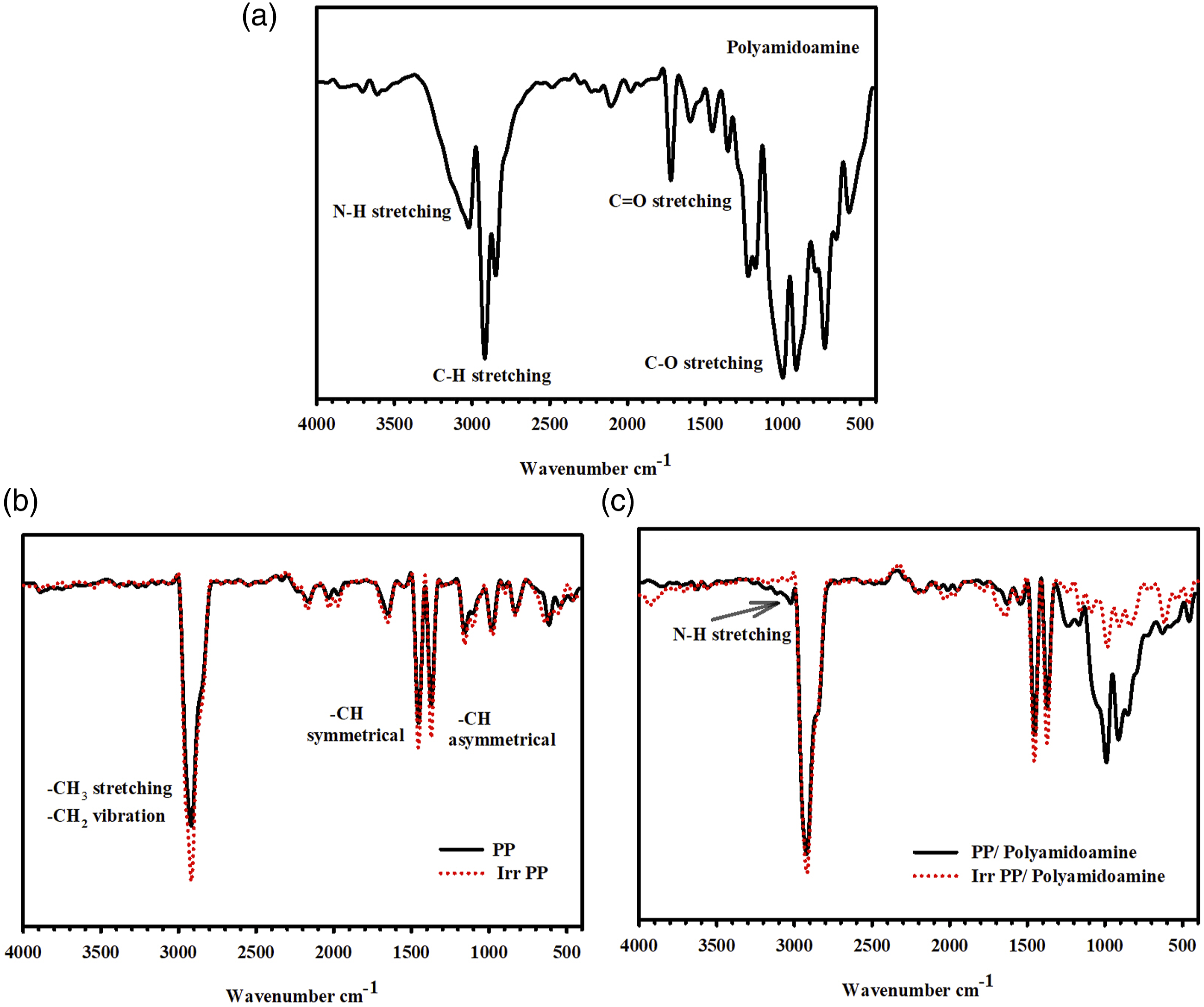
The FTIR spectra of native PP Figure 3(b) showed a similar peak at 2953 and 2915 cm−l that were ascribed to stretching vibration of -CH3 and -CH2 which appear as one peak in the figure. The absorption peaks of CH3 groups vibration -CH symmetrical and asymmetrical appeared at 1445 and 1370 cm−l.33,37 The structure of PP structure seems not affected by the irradiation dose. The intensity of the N–H stretch of the primary amine band of hyperbranched polyamidoamine appeared in the spectra of PP/Polyamidoamine Figure 3(c). 38 The disappearance of the absorption peak at 1730 cm−l of the carbonyl group of polyamidoamine indicates a successful combination of the PP matrix with polyamidoamine.
Differential scanning calorimetry (DSC)
The DSC examinations were used to estimate the influence of the different compositions of PAMAM and gamma-irradiation on the PP composites. For unirradiated curves presented in Figure 4(a)–(d) and Table 1 show the melting endotherms of PP mixed with PAMAM at various compositions up to 3wt%. From Figure 4(b)–(d) can see that the incorporation of PAMAM resulted in a steady increase in the melting temperature of PP. The growth in Tm suggests the role played by PAMAM which acts as a nucleation center during polymer crystallization. DSC of unirradiated PP/PAMAM composites and after exposure to 20 kGy irradiation. DSC parameters for of PP/PAMAM composites and after exposure to 20 kGy.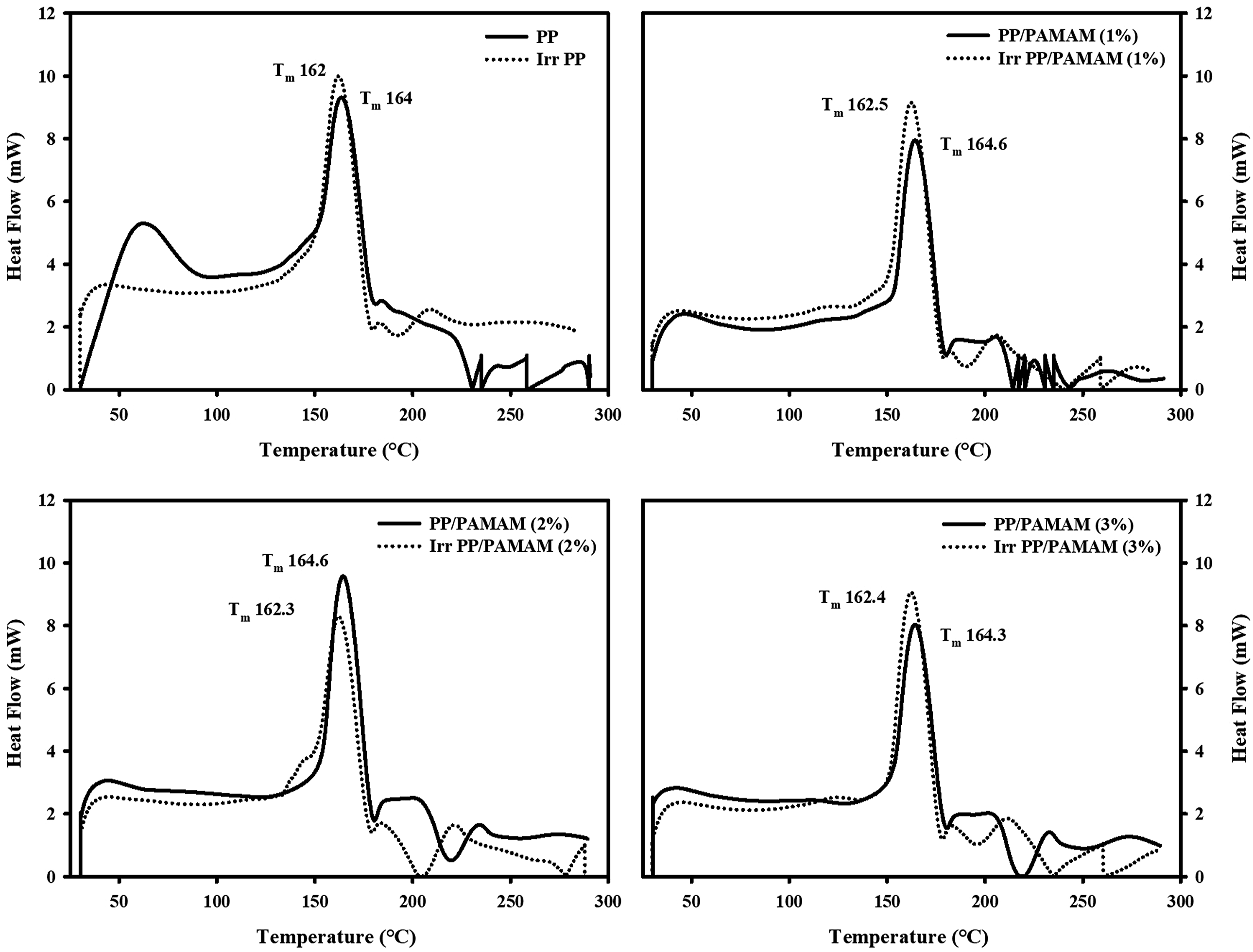
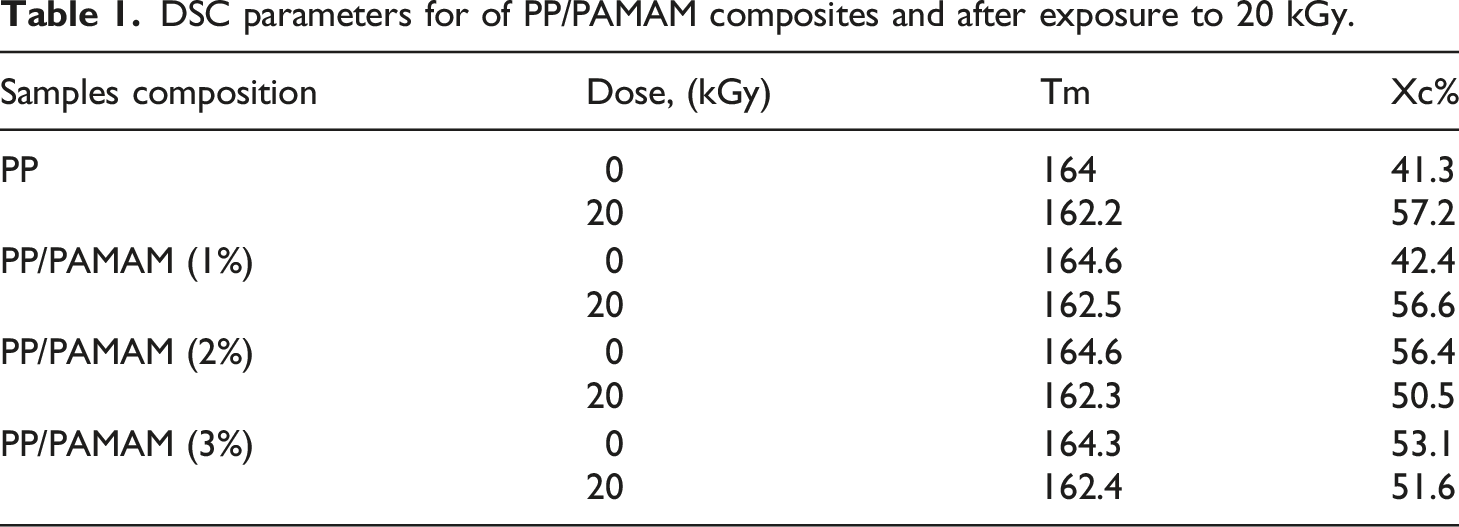
Irradiation yields alteration in the Tm of the composite. The irradiation and subsequent thermal process alter the studied materials’ thermal properties. Through DSC analysis, the heating and melting of a polymer can increase chain mobility, increasing the chance of free radical recombination reactions. This is due to the fact that irradiation of a polymer typically produces free radicals. Similarly, New free radicals might be produced as the temperature rises close to the melting point. The thermal properties of polymers change as a result of these actions.
For irradiated curves presented in Figure 4(a)–(d) and Table 1 demonstrate that when exposed to irradiation, the Tm peak of irradiated samples tends to shift toward lower temperatures. As a result, it is evident that irradiation causes the polymer to become more amorphous. This may result in structural reorganizations, smaller crystallites with more defects, possibly lower surface tension, and smaller crystals. 39 Therefore, DSC data reproduce the synergism common properties on the micro-structure of the composite.
The following equation was used to calculate the crystallinity of composites, and the results are shown in Table 1.
crystallinity percentage (X c%) = ΔH f/ΔH x 100
in which ΔH: Enthalpy of melting for 100% crystalline PP: 204 J/g. 40 ΔH f: sample’s melting enthalpy.
The crystallinity percentage of PP with various PAMAM compositions tends to increase with increasing MPMAM content, as shown in Table 1. This suggests that PAMAM can initiate the crystallization of the PP matrix by acting as a nucleating agent. As a result, this capacity for nucleation raises the rate of crystallization and may result in higher crystallization degrees. Crystallinity decreased for irradiated samples because the polymer became more amorphous during irradiation.
Thermogravimetric analysis (TGA)
The irreversible process of mass loss of material as a function of time or temperature because of thermal degradation was evaluated using the TGA technique. Starting from room temperature up to 600°C the TGA was achieved. The thermogram and the first derivative of the mass loss (DTG) data as in Figure 5(a)–(d) and Table 2 show the TGA of unirradiated PP/PAMAM composites and after exposure to 20 kGy irradiation with various concentrations of PAMAM. By increasing the temperature chain scission occurs, for this, all the PP/PAMAM composites display a single degradation step. The native PP has two steps, which is probably due to the loss of volatile liquid components such as plasticizers vaporize. It was noticed that after being exposed all PP/PAMAM composites to 20 kGy irradiation were thermal stable. TGA of unirradiated PP/PAMAM composites and after exposure to 20 kGy irradiation. DTG data of PP/PAMAM composites and after exposure to 20 kGy.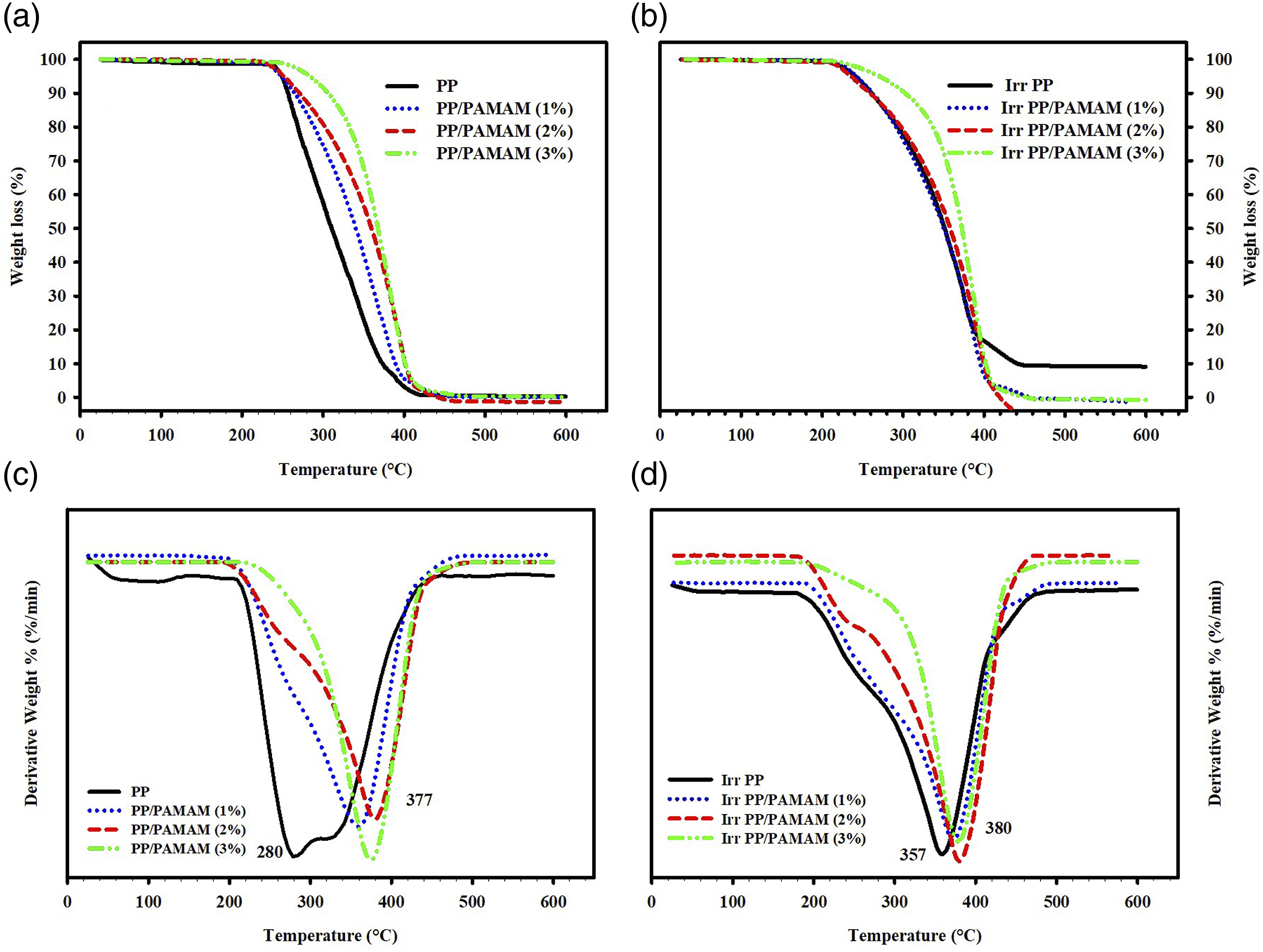
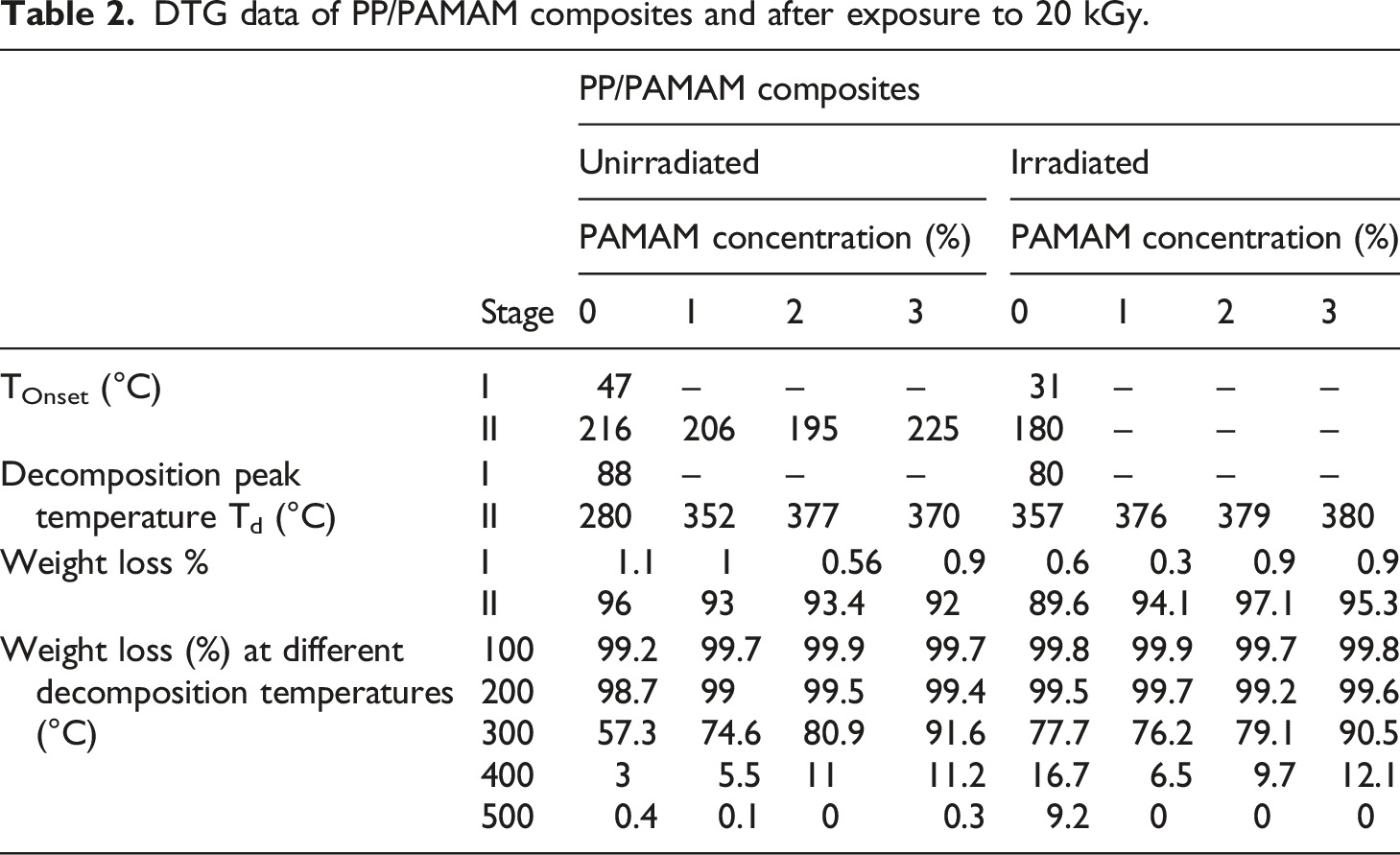
The thermal stability of PP/PAMAM composition rises with increasing PAMAM content in the composites. 41 The DTG data from Figure 5 and Table 2 show reveal that the overall thermal stability of the prepared composites is 100°C starting at decomposition peak temperature (Td) 280°C up to decomposition peak temperature 380°C. It can be assumed that the existence of PAMAM improves the thermal stability of the PP/PAMAM composites.42,43 Gamma irradiation plays its monotone role as a crosslinking agent for the prepared composites and PP itself. This is inveterate by the results represented in Table 2 of the residual mass of both PP and its composites when exposed to 20 kGy. Weight loss percent at different decomposition temperatures reveals that up to 400°C there is comparatively thermal stability for the composites after being exposed to 20 kGy leaving up to 17% residual weights. At 500°C all PP composites degraded wholly, leaving 0.4% remaining weights in some unirradiated PP/PAMAM composites. The weight loss affected by increases of the PAMAM concentrations in the composited. The excess PAMAM plays role as the crosslinking agent of PP/PAMAM composites. The TGA results are in agreement with the conclusions that the increases in PAMAM concentration led to increases in thermal stability. Furthermore, it is observed that the thermal degradation of unirradiated PP/PAMAM composites was superior than that of irradiated ones.
Mechanical studies of PP/PAMAM composites
The mechanical examination is an appropriate method to evaluate the structural changes of polymeric materials due to additives interference and radiation influence. The stress-strain curves and the different mechanical analyses of un-irradiated and irradiated PP and PP/PAMAM composites are presented in Figures 6 and 7 respectively. The additional figures inside the original one for both un-irradiated and irradiated PP were added to clarify the values of the mechanical parameters represented in stress-strain curves. It is clear from the stress-strain curves of PP and its composites with different ratios of PAMAM (Figure 6(a)) and TS values (Figure 7(a)) that the values of PP increased with PAMAM content up to 3.0%. Hence, the strength of the thermoplastic matrix has been enhanced with PAMAM loading. Obviously, the development in TS increased from 20 MPa of native PP to 45 MPa of PP/PAMAM composites suggesting the superior interaction and combination of the synthetic additive into PP texture. Furthermore, the TS values of virgin PP and its composites with PAMAM improved with radiation dose proposed crosslinking creation of polymeric chains at 20 kGy. Likewise, the elastic modulus (EM) of PP increased with PAMAM loading recommending better interference between PP and the particles of synthetic additive. Similar to TS behavior, the EM of irradiated PP/2.0 PAMAM has the maximum value. Where the EM value of PP was developed from nearly 7.0 MPa to 19.0 MPa of irradiated PP/2.0 PAMAM composites. Stress-Strain curves of unirradiated and irradiated PP and PP/PAMAM composites. Effect of PAMAM contents on the mechanical parameters of unirradiated and irradiated PP/PAMAM where: (a) Tensile strength (MPa), (b) Elastic modulus (MPa), (c) Elongation at break (%), (d) Hardness (shore D).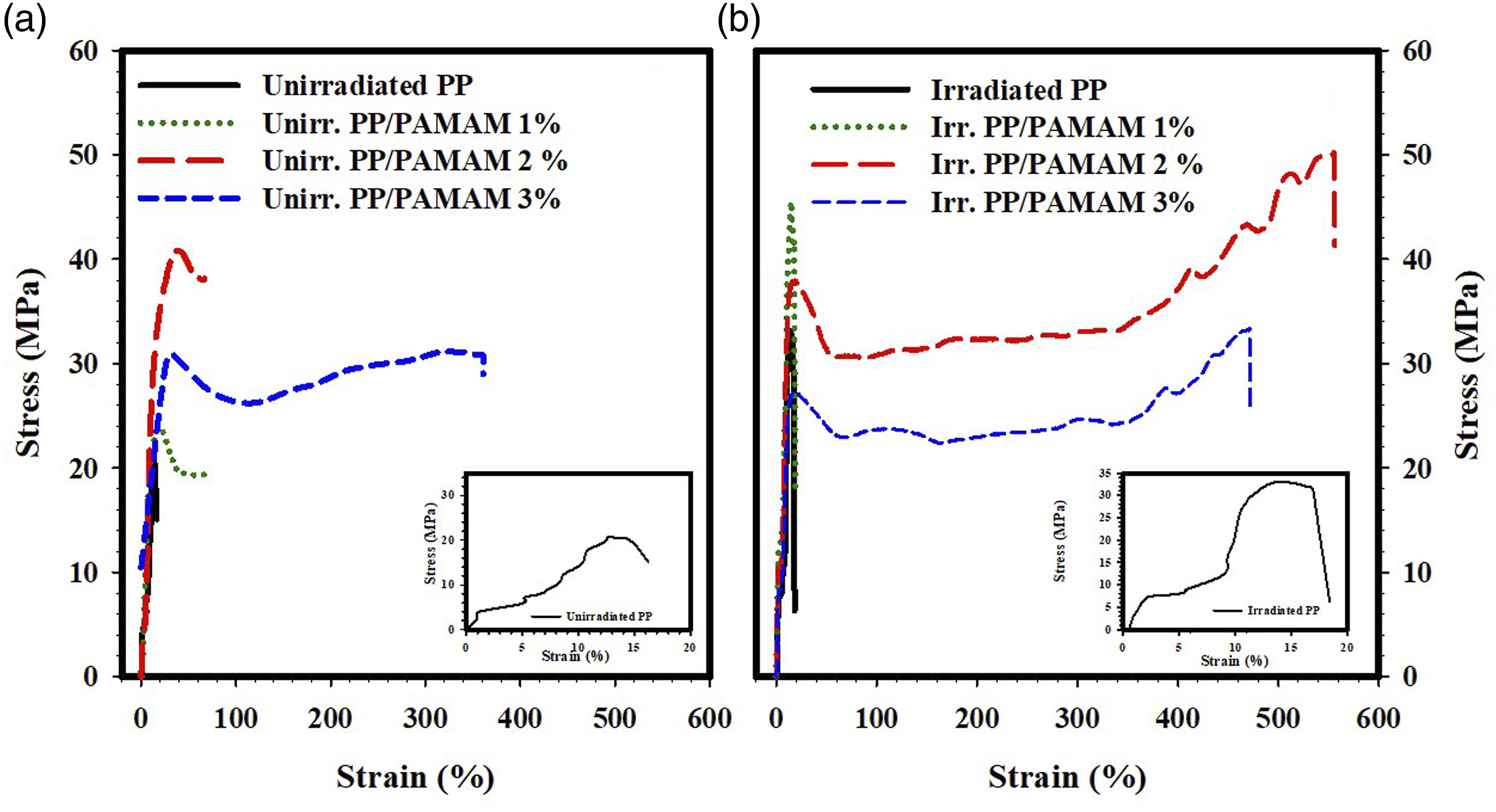
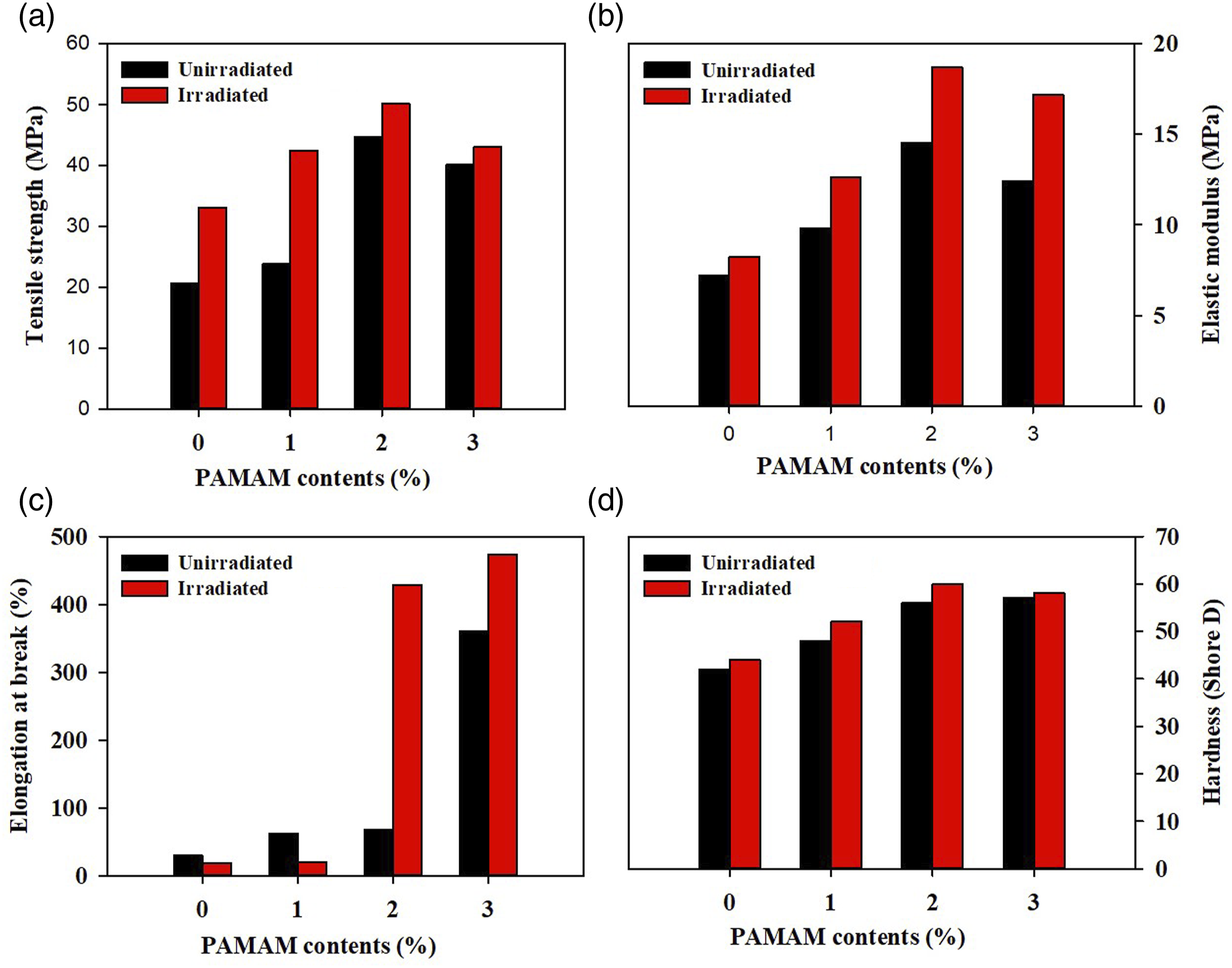
By documenting the strength at the upper yield point (MPa) delivered from the mechanical measurements of the different polymers, it was found to be for un-irradiated PP and their composites with PAMAM at 1.0, 2.0, and 3.0% as follows: 9.3, 9.6, 24.8, and 23.4 MPa respectively. Furthermore, irradiated PP and their composites with PAMAM at 1.0, 2.0, and 3.0% as follows: 15.6, 19.8, 37.3, and 27.2 MPa respectively. Confirmation of the previous mechanical results, the strength at the upper yield point of PP increased with PAMAM loading recommending better interference between PP and the particles of synthetic additive. Moreover, irradiated PP/2.0 PAMAM has the maximum yield point value.
On the other hand, from stress-strain curves (Figure 6(a)) and elongation at break (Figure 7(c)), elongation at break (%) of PP displayed anisotropic behavior when combined with PAMAM additive. Which, E % of PP slightly increased with PAMAM up to 2.0%, whereas PP/3.0% PAMAM composite possesses excessive enhancement of E %. Where E % of PP increased from 45% to nearly 360% of PP/3.0% PAMAM. Therefore, the combination of PAMAM synthetic additive with PP thermoplastic enhanced its elasticity and in turn improved E % values. Furthermore, from stress-strain curves (Figure 6(b)) and E % (Figure 7(c)), the irradiated PP/PAMAM of 2.0% and PP/PAMAM of 3.0% have great E % values recorded nearly 420% and 490% respectively. The development in E % values of PP/PAMAM of 2.0% and PP/PAMAM of 3.0% composites with applied dose is an interesting result that suggests that 20 kGy improved both interference and also the plasticity of the PP thermoplastic matrix. Hardness testing (Shore D) of PP and its composites showed similar behavior in both TS and EM analysis. Evidently from the Figure 7(d), the hardness % of PP and its composites with AMAM were increased with synthetic additive and applied radiation dose.
Morphological study
The cross-section morphology of unirradiated and irradiated PP and PP/2.0% PAMAM bio-composite are displayed by SEM in Figure 8. The rupture surface was attained for microstructure examination after applying the mechanical investigation. The SEM of native PP (Figure 8(a)) shows a uniform and regular texture of the PP. It is noted that the mixing of PAMAM % with PP (Figure 8(b)) had a distinct interface with a typical miscible phase. As it appears from picture (B), the PP polymer and PAMAM are wrapped together which signifying on the optimistic record of the mechanical study discussed earlier. SEM of (a) PP, (b) PP/2% PAMAM, (c) Irradiated PP, and (d) Irradiated PP/2% PAMAM.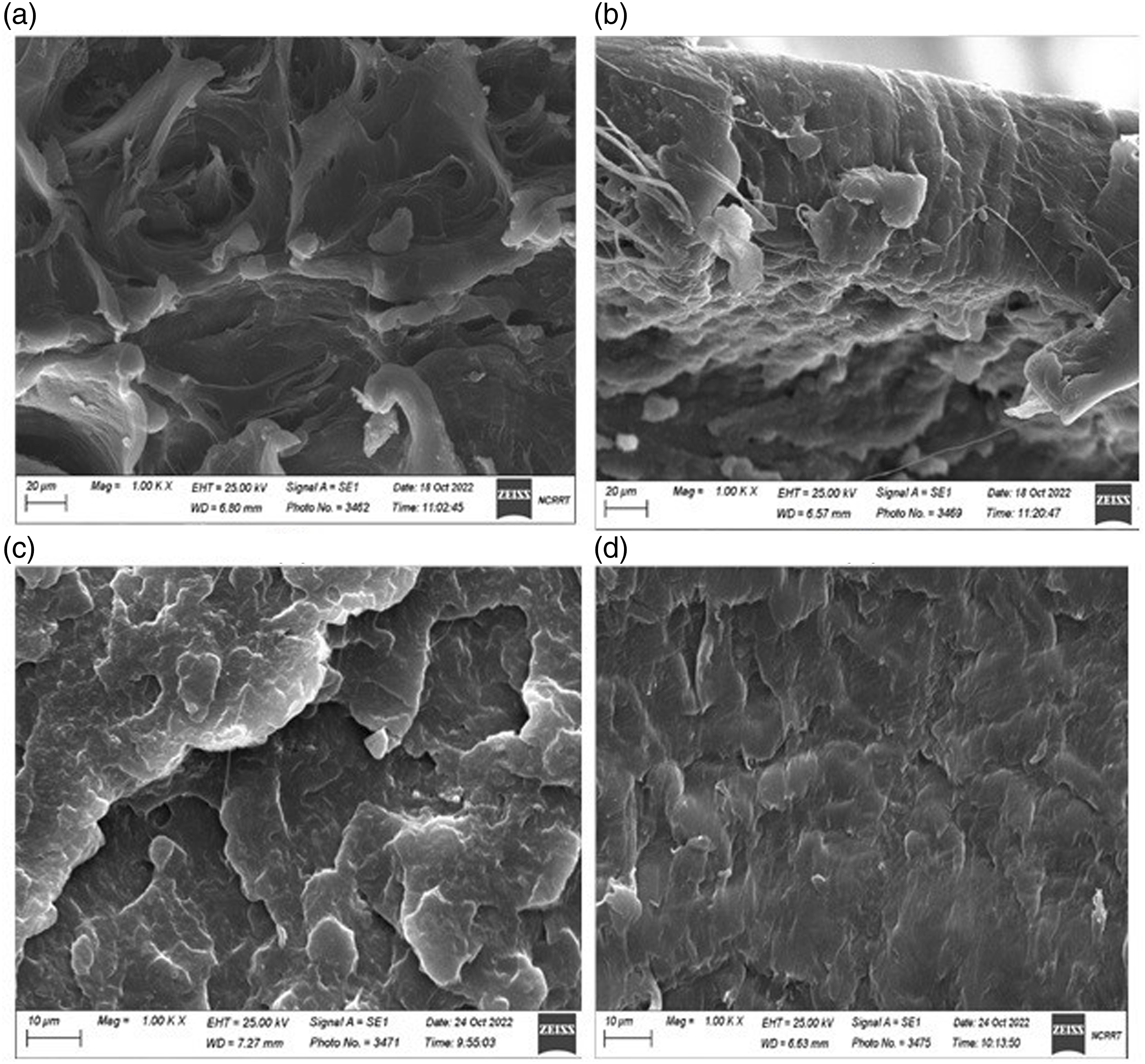
On the other hand, Figure 8(c) of irradiated PP creates a compact, smooth, and flat texture than that of the unirradiated specimen displayed in Figure 8(a). This is confirmation of the crosslinking formation caused by gamma irradiation. Apparently, irradiated PP/PAMAM bio-composites exhibited in Figure 8(d) have a regular, compact, smooth, uniform and flat section with a noticeable surface covering of PAMA with PP texture.
Overall migration from the PP films
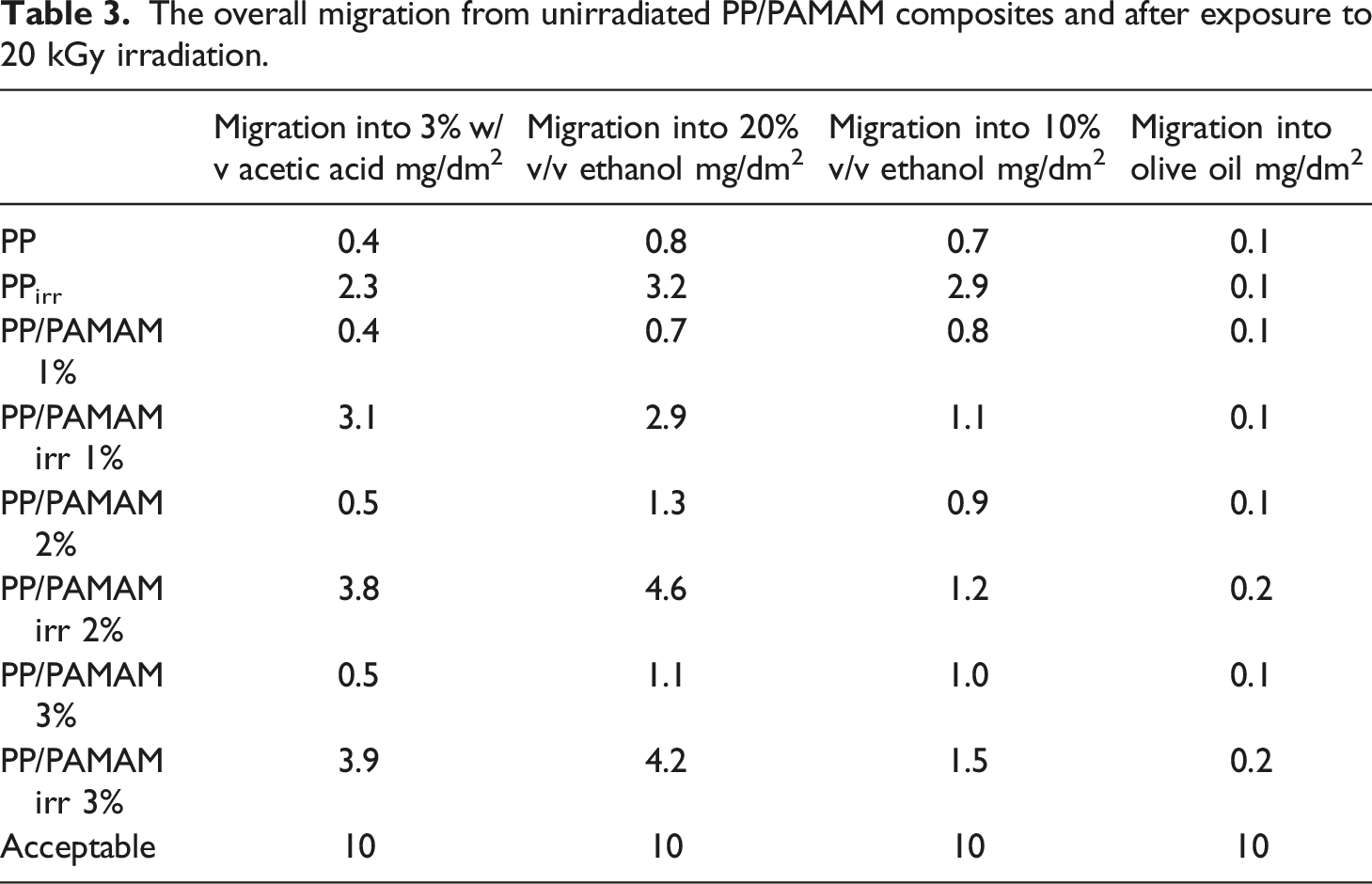
The overall migration from unirradiated PP/PAMAM composites and after exposure to 20 kGy irradiation.
Conclusion
This objective discussed the preparation of bio-composites based on PP thermoplastic mixed with different ratios of PAMAM and the impact of gamma-irradiation dose on a different characteristic of the prepared samples. Firstly, PAMAM was synthesized and characterized using 1H NMR and 13C NMR. FTIR showed the characteristic absorption bands of hyperbranched polyamidoamine polymer (PAMAM) at 3030 and 2900, 1730, 1600, and 1044 cm−l corresponding to N–H stretch of primary amine, C–H stretching, amide C=O stretching, N–H bending, and C–O stretching, respectively. After the formation of PP/PAMAM bio-composites, the disappearance of the absorption peak at 1730 cm−l of the carbonyl group of polyamidoamine indicated a successful combination of the PP matrix with polyamidoamine. The incorporation of PAMAM resulted in a steady increase in the Tm of PP texture. The TGA results are in agreement with the conclusions that the increases in PAMAM concentration led to increases in thermal stability. The thermal stability of the different PP/PAMAM composites improved after being exposed to 20 kGy irradiation.
Tensile strength (MPa) of PP/PAMAM bio-composites increased with PAMAM loading. The development in TS increased from 20 MPa of native PP to 45 MPa of PP/PAMAM composites, suggesting the synthetic additive’s superior interaction with PP texture. Furthermore, the TS values of virgin PP and its composites with PAMAM improved with radiation dose proposed crosslinking creation of polymeric chains at 20 kGy. Similar to TS behavior, the EM of irradiated PP/2.0 PAMAM has the maximum value. Where EM value of PP was developed from nearly 7.0 MPa to 19.0 MPa of irradiated PP/2.0 PAMAM composites. Elongation at break (E %) of PP slightly increased with PAMAM up to 2.0%, whereas PP/3.0% PAMAM composite possesses excessive enhancement of E %. Where E % of PP increased from 45% to nearly 360% of PP/3.0% PAMAM. The intrusion of PAMAM into PP thermoplastic enhanced its elasticity and in turn, clearly improved E % values. The prepared films of PP/PAMAM showed highly acceptable migration limits as applicable to food packaging.
Footnotes
Acknowledgements
Authors would like to thank National Center for Radiation Research and Technology (NCRRT), Egyptian Atomic Energy Authority (EAEA) for facilitating experiments of preparation, irradiation and apparatus used for characterization. The authors have a great and Deeping thankful for the nanomaterials investigation laboratory, Central laboratory network, National Research Center. The authors would like to introduce their thankfulness for the mechanical analysis Engineer Gad Nouh, for his kind support in mechanical section of composite preparation.
Declaration of conflicting interests
The author(s) declared no potential conflicts of interest with respect to the research, authorship, and/or publication of this article.
Funding
The author(s) received no financial support for the research, authorship, and/or publication of this article.
