



Abstract
Carbon fiber (CF) and nano-silica (nano-SiO2) particles were employed simultaneously to modify polyoxymethylene (POM). Our goal was to control the distribution and dispersion of CF and nano-SiO2 particles in POM matrix using an appropriate processing method and adjusting the dispersion of nano-SiO2 particles toward CF and POM, so as to achieve a simultaneous enhancement of toughness and modulus of POM. The results of tribological tests showed that the POM with 3 vol% nano-SiO2 presented better tribological properties. When the content of nano-SiO2 was not more than 3 vol%, the CF/POM/nano-SiO2 samples presented lower friction coefficients and smaller wear volumes. However, higher contents of nano-SiO2 than 3 vol% were very disadvantageous to the tribological performances.
Keywords
Introduction
The innovations in modern technology have been placing ever-increasing demands on advanced composite materials. Of the most commonly used composite materials in the modern engineering, the polymer–matrix composites have been finding increased applications owing to their much lower weight and better corrosion resistance and biocompatibility than the metal–matrix and ceramic–matrix ones. 1 –3 Friction clutches require high friction coefficients and constant friction torques. Therefore, the study of the mechanisms of friction and adhesion of polymers on the boundary between them and other materials (e.g. metals) is of special interest for tribological mechanics. Problems that might occur are stick-slip effect and oscillations in the friction behavior and the friction torques. 4
Polyoxymethylene (POM) is an engineering plastic with high mechanical strength, excellent abrasion resistance, fatigue resistance and moldability. It can replace some metals and nonmetals to be used in many areas, for example, in electrical and electronic applications, automotive applications and precision machine applications. 5,6 Nevertheless, until now, lot of efforts have been devoted to further improve the mechanical strength of POM by means of incorporation with fillers such as calcium carbonate, talc, diatomite, clay and glass fibers. 7 For example, POM has been successfully used as the polymerical layer in the three-layer (polymer/copper powder/steel) self-lubrication bearing materials. 8 However, the capability for friction reduction and wear resistance of POM is not very satisfactory, especially in extreme conditions involving high temperatures and high loads.
Binary mixtures of immiscible polymers, where one of the components is in excess, usually have a typical droplet-in-matrix phase morphology. The particle size of the dispersed phase in such blends depends on the blend composition, melt viscosity and elasticity of each phase as well as the mixing conditions. In the case where the finely dispersed component is capable of crystallization, the blend phase morphology has been demonstrated by several authors to have a crucial impact on the crystallization behavior of the dispersed phase due to a typical fractionated crystallization process. This phenomenon has been investigated only for a limited number of immiscible polymer blend systems. 9
In the work by Yu et al., 10 who studied the tribological behaviors of microscale copper particle- and nanoscale copper particle-filled POM composites, the wear of micro-Cu/-POM is characterized by scuffing and adhesion, while that of nano-Cu/-POM by plastic deformation and hence decreasing wear loss.
Carbon fibers have many outstanding properties, such as high tensile strength, high elastic modulus, excellent corrosion resistance, and so on, currently being used as the reinforced material of the composites. Due to the weak interfacial adhesion of untreated carbon fiber (CF)-reinforced composites, many researchers have developed a series of surface treatment methods for CFs to control and modify the interfacial performance of the composites. 11,12
This article reports the author’s recent studies on the mechanical and tribological behaviors of POM/CF/nano-silica (nano-SiO2) composites. The fracture and wear mechanisms involved are also discussed.
Experimental
Materials and specimens
The POM used in this work is a commercial grade powder without any additives and is supplied by Yuntianhua Co. Ltd (Yunnan, China). It is a copolymer with a melt flow index of 9.0 g/10 min.
POM composites were prepared through the solution evaporation method assisted by ultrasonic irradiation in phenylcarbinol, and then the product was compounded with stabilizers in a high-speed mixer and extruded by a twin-screw extruder. The extrudate was pelletized and dried and then moulded to specimens using injection moulding machine. The barrel temperature profile was 195°C and the mould temperature was maintained at 50°C. SiO2 was immersed in NaOH resolutions for 30 min. CF of 20 vol% was mechanically disturbed with POM.
Flexural tests
The CF/POM composite were cut into narrow-waisted dumbbell-shaped specimens in accordance with the Chinese standard GB/T1040-1992. The flexural test was carried out on a computer-controlled universal testing machine at room temperature. The load was applied centrally at 90° to the long axis of the specimen at a crosshead speed of 0.01 mm/min keeping the distance between the supports at 40 mm. This crosshead speed was chosen to allow the maximum amount of time for slow crack growth to take place within the specimen.
Friction and wear tests
The friction and wear tests were conducted on a friction and wear tester using a block-on-ring arrangement. The dimension of the block specimens was 30 × 7 × 6 mm3, and the working face was 30 × 7 mm. A plain carbon steel ring (HRC50–55) with the dimension of Ø40 × Ø16×10 mm3 was used as the counterpart, the surface roughness of which was 0.8 μm. The POM surfaces were then further finished by abrasion using SiC abrasive paper of grit number 4000, resulting in a surface roughness of about 0.2 mm Ra. The POM samples were then mechanically cleaned in an ultrasonic cleaner with acetone for 10 min and dried before machining. At sliding velocity of 4 m/s and at sliding distances of 500, 1000 and 1500 m, the composite samples were subjected to applied loads of 100 N. Five tests were conducted under each test condition and the average values of measured friction coefficient were obtained.
Results and discussion
Flexural properties
Figure 1 shows that the flexural properties of the fiber composites change with the contents of nano-SiO2 varying from 1 to 5 vol%. When the content of nano-SiO2 increased to 3 vol%, the flexural strength decreased abruptly. That is to say 3 vol% is the critical overall content of fillers, exceeding which the overall content of fillers begins to play negative role in the tensile strength. But below 3 vol%, the overall content of fillers has positive influence on the flexural strength of the composites.
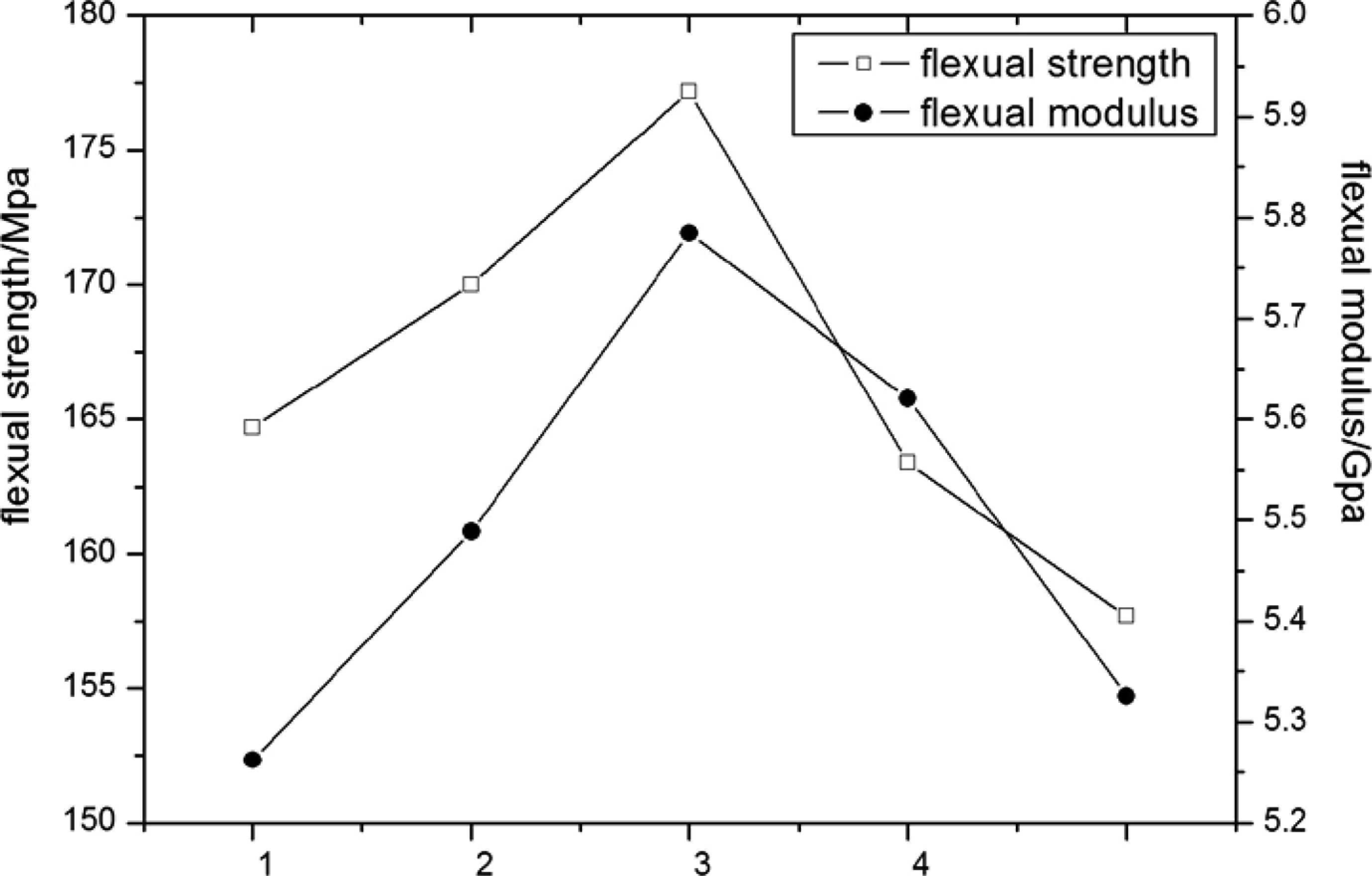
The flexural properties of CF/POM/nano-SiO2 composite. POM: polyoxymethylene; CF: carbon fiber.
Fracture morphology
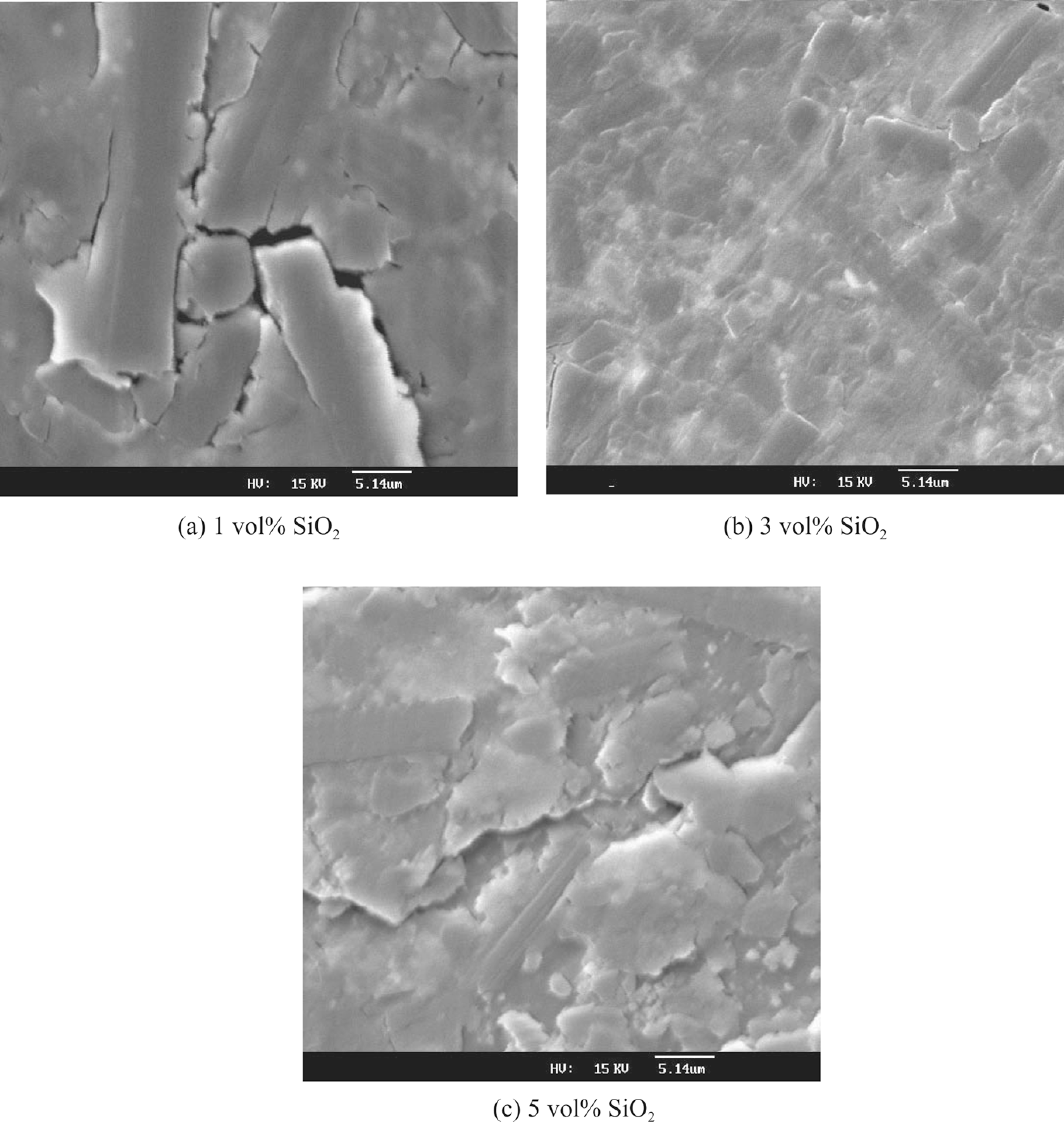
Figure 2 shows the scanning electron micrographs of the fractured sections of the CF/POM composites filled with nano-SiO2. The CF/POM composite shows obvious signs of phase separation, and the interfacial gap between the CF and the POM matrix on the fractured section is clear (Figure 2(a)). Those interfacial gaps are attributed to a poor interfacial combination between the CF as the reinforcing agent and the POM matrix. Contrary to the above, the fractured section of the composite filled with nano-SiO2 has a fuzzy morphology (Figure 2(b)), which is especially so when the volume fraction of the nano-SiO2 is 10%. This indicates that in this case the nano-SiO2 is well bonded to the POM matrix, which contributes to retard the rupture through the CF/POM interface and harmonize the plastic deformation of the CF reinforcing agent. Moreover, with the increase in the content of nano-SiO2, the interfacial gaps between the CF and the POM matrix on the fractured surface become clear (Figure 2(c)), which indicate that an excess of nano-SiO2 leads to damage to the interfacial bonding of the CF/POM composite.
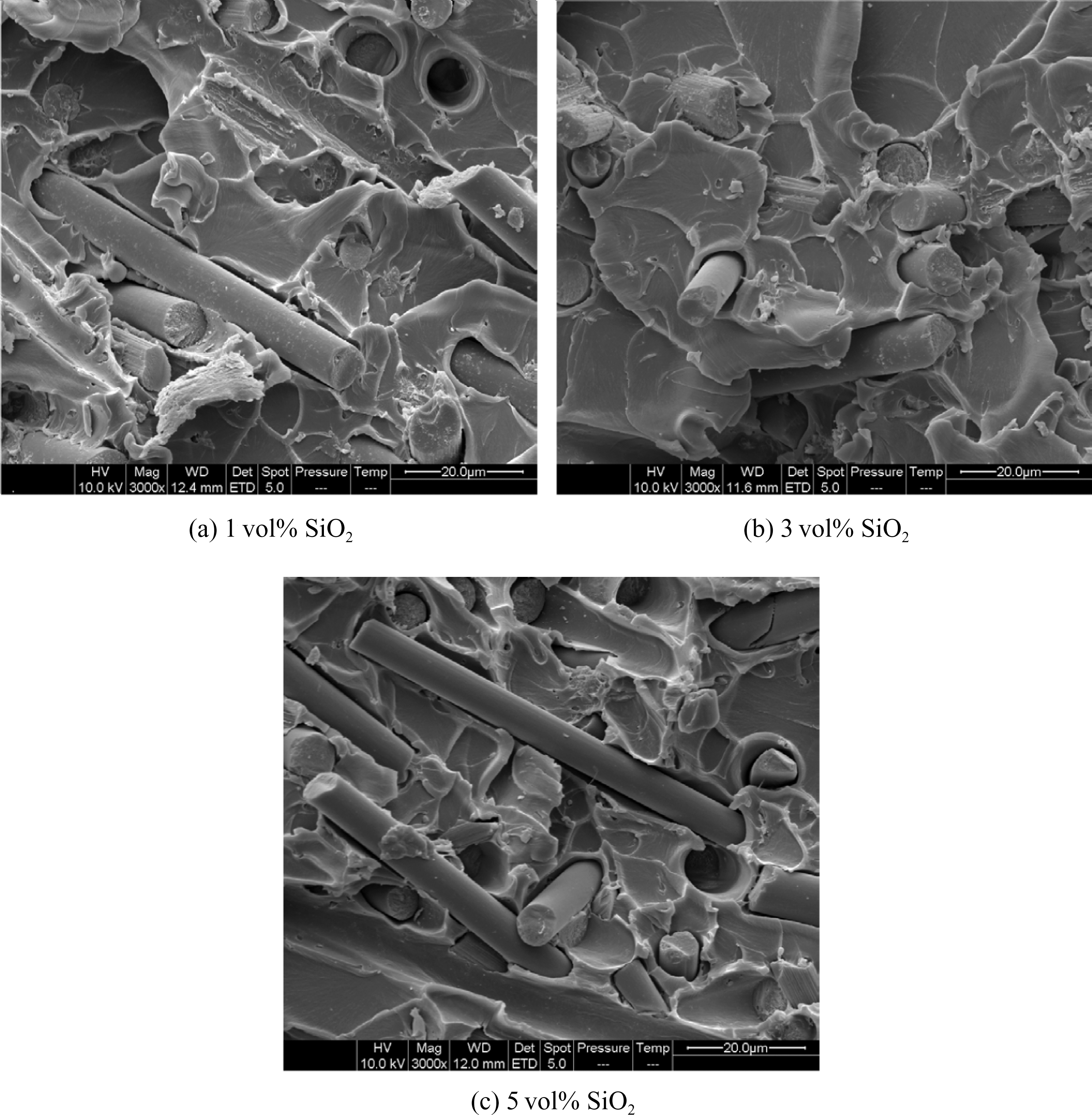
The surface morphology of composite fracture of (a) 1 vol% SiO2, (b) 3 vol% SiO2 and (c) 5 vol% SiO2.
Friction and wear tests
Figure 3 provides the variation in average friction coefficient with increasing nano-SiO2 content in POM rubbed at a 0.4-m/s rotating speed under a 100-N load. It was demonstrated that the POM with 3 vol% nano-SiO2 represented better properties in friction reduction. When the content of nano-SiO2 was not more than 3 vol%, the average frictional coefficient of the CF/POM/nano-SiO2 within 30 min of sliding decreased with increasing nano-SiO2 content. However, higher nano-SiO2 contents over 3 vol% led to an increase in the average friction coefficient. The results indicate that the proper contents of nano-SiO2 in POM should not be more than 3 vol% (Figure 4).
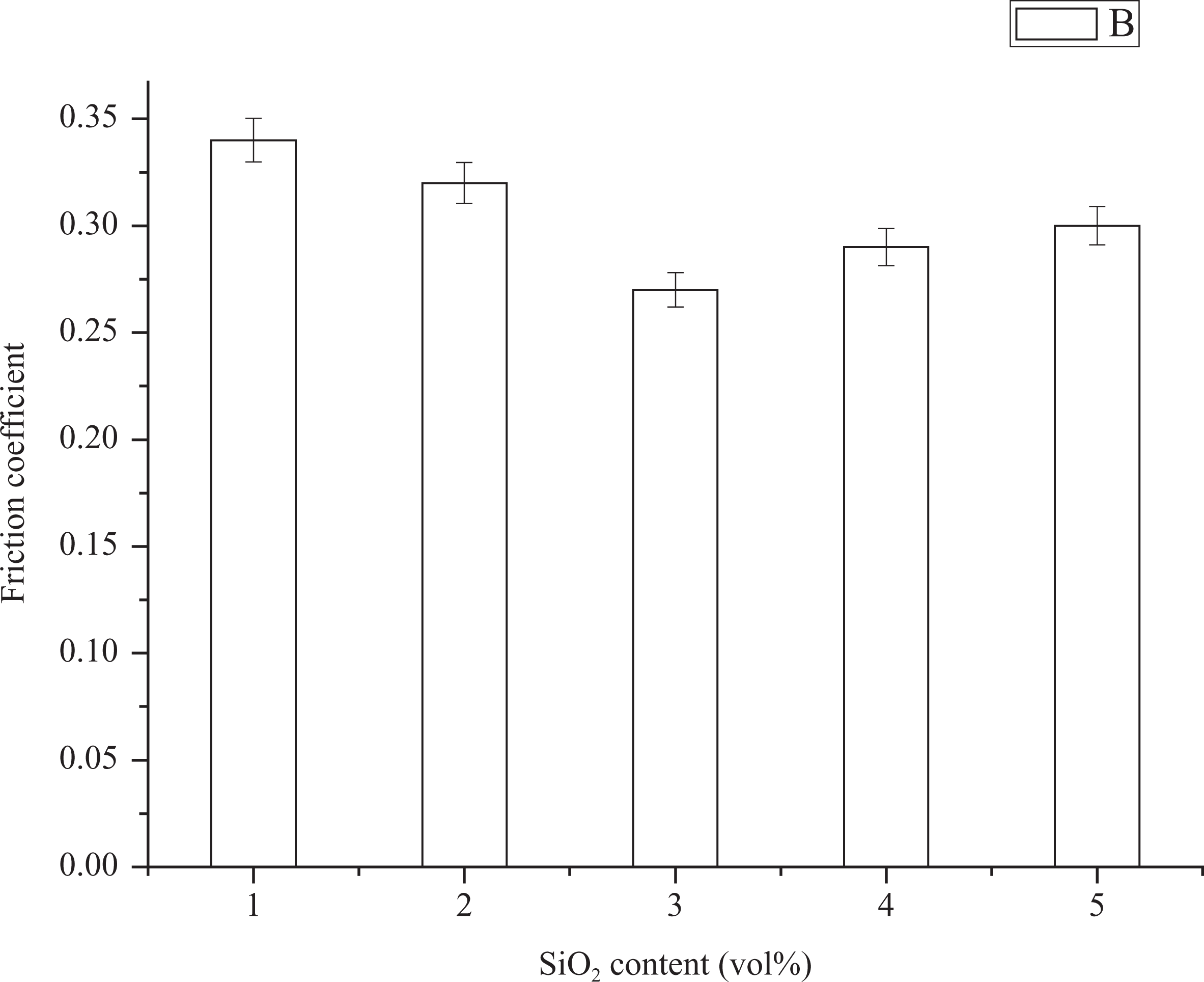
The variation in friction coefficient with nano-SiO2 content.
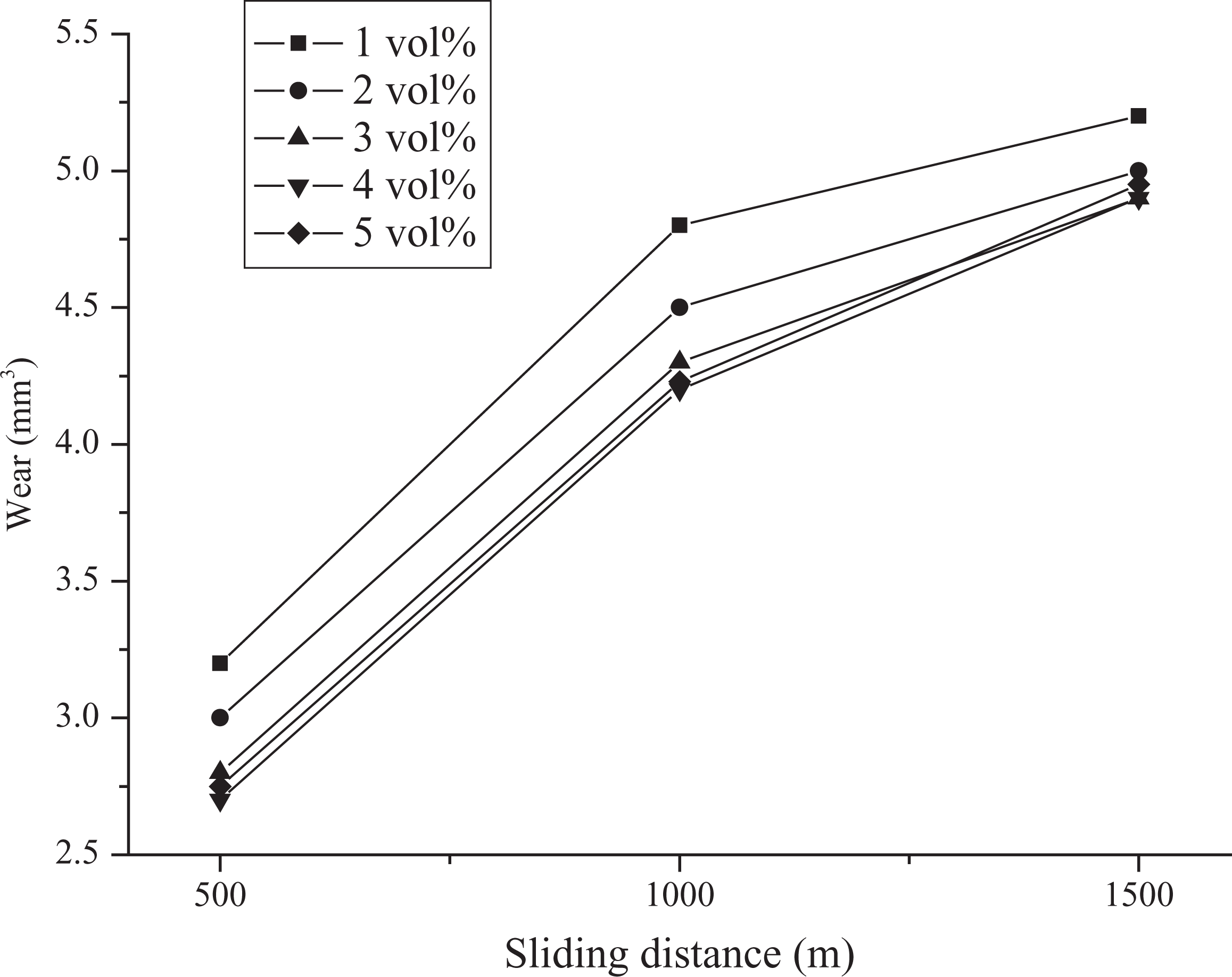
The wear of CF/POM composite with increasing nano-SiO2 content (sliding velocity of 4 m/s, applied loads: 100 N). POM: polyoxymethylene; CF: carbon fiber.
The wear volume is not linearly proportional to the sliding distance, regardless of the content of CF and nano-SiO2. The wear volume of 5 vol% nano-SiO2 composite is almost the same as that of 3 vol% nano-SiO2 composite at 1500 m sliding distance. This result suggests that the wear behavior of the composite is affected by nano-SiO2 content at short sliding distance. Further addition of nano-SiO2 will not change the wear obviously.
Figure 5 shows the worn surfaces of CF/POM composites with 1%, 3% and 5% nano-SiO2, from which we can see that 3 vol% nano-SiO2–filled composites has the smoothest worn surface, for which there are only some insignificant ploughing and microscopic fluctuation but no obvious scuffing on it (Figure 5(b)). So the wear volume loss in this case is the lowest of all the CF/POM composites. More scuffing and wear debris appear on the worn surfaces of CF/POM/nano-SiO2 composites.
The morphologies of the worn surfaces (sliding velocity of 4 m/s, applied loads: 100 N; CF: 20 vol%) of the POM nanocomposites. (a) 1 vol% SiO2, (b) 3 vol% SiO2 and (c) 5 vol% SiO2. POM: polyoxymethylene; CF: carbon fiber.
When the content of nanoparticles is below 3%, the nanoparticles between the friction surfaces are not under saturation, so the friction coefficient and wear volume loss keep decreasing with increasing content of nanoparticles. From Figure 5(a), it is obviously observed that some cracks exist in the worn surface, and the hybrid CF/POM/nano-SiO2 cannot compactly bond coherently, which corresponds to the poor tribological properties of composite.
But when the content of nanoparticles reaches above 3 vol%, the excessive agglomerated nanoparticles weaken the interaction between POM macromolecular chains, damage the transfer film and accelerate the abrasive wear, as shown in Figure 6. On the other hand, nanoparticles of an appropriate proportion that are homogeneously dispersed in POM can strengthen the interfacial interaction between POM and CF, which contributes to improve the wear resistance of the composite (Figure 5(b)). In other words, the interfacial interaction between POM and CF is weakened at an excessive content of nanoparticles (Figure 5(c)), which accounts for the decreased wear-resistance of the POM nanocomposites.
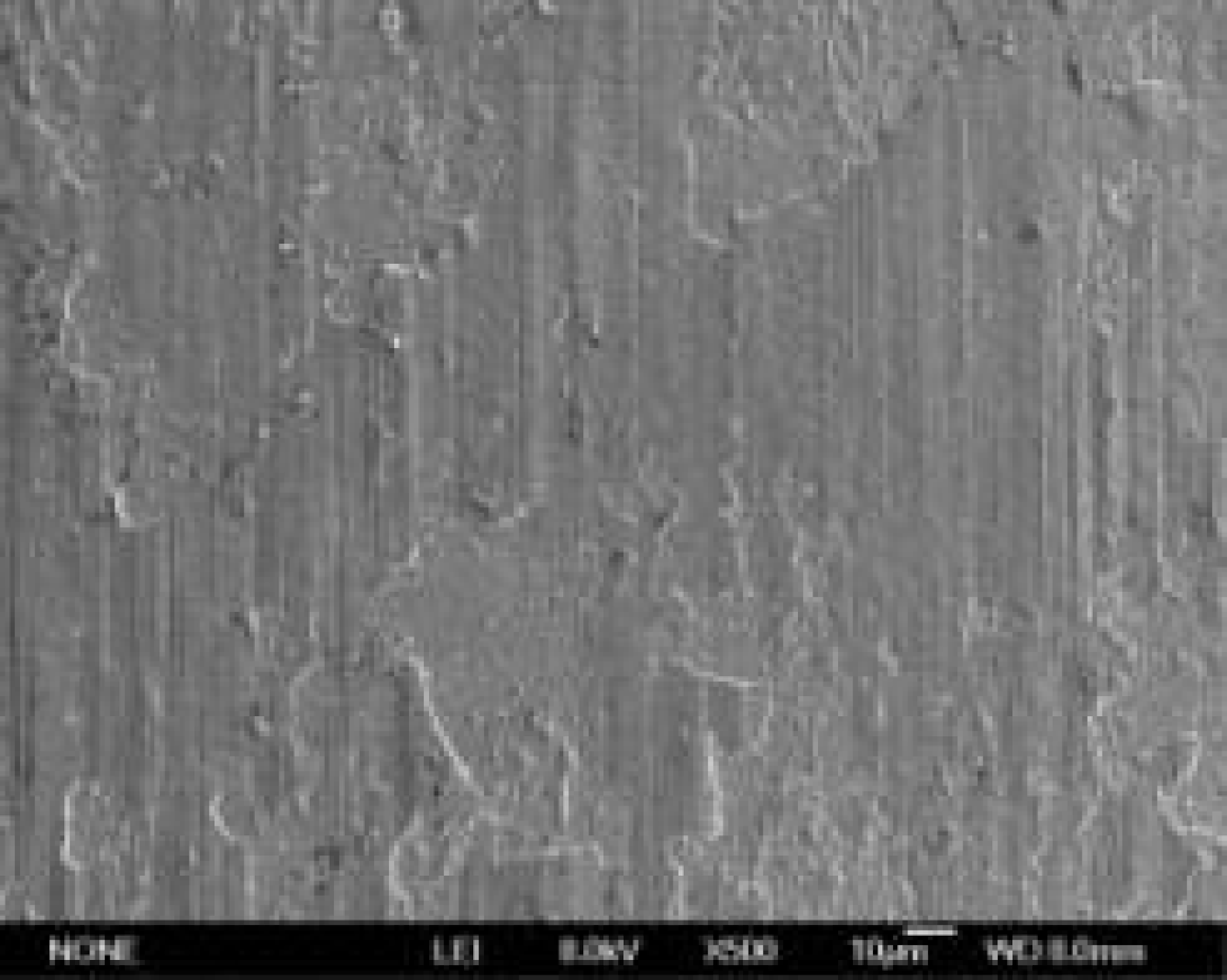
Morphology of worn steel ring surface using scanning electron microscopy.
Conclusions
The incorporation of CF and nano-SiO2 into POM can obviously increase the flexural and tribological properties of CF/POM composite. When the content of nano-SiO2 increased to 3 vol%, the flexural strength decreased abruptly. Higher nano-SiO2 contents over 3 vol% led to an increase in the average friction coefficient. The combination of 3 vol% nano-SiO2 and CFs, therefore, offers an optimized composite material with excellent mechanical and tribological properties.
Footnotes
Acknowledgement
The authors thank the help from the “Chen Guang” project.
Funding
“Chen Guang” project was supported by the Shanghai Municipal Education Commission and Shanghai Education Development Foundation (project no. 09CG65). This work was supported from the Leading Academic Discipline Project of Shanghai Municipal Education Commission, Project Number: J51802. Shanghai Municipal Natural Science Foundation: 11ZR1413600.