




Abstract
We investigated the effects of various fillers such as carbon nanotube (CNT), synthetic diamond (SND), boron nitride (BN), and copper (Cu) on the properties of polypropylene (PP) composites. The thermal conductivity and stability of PP were enhanced upon the addition of thermally conductive fillers. Young’s modulus increased with filler loading, while tensile strength increased at up to 2 vol.% then decreased with elongation in all filler types. The morphology of the composite samples showed agglomeration and void content in PP/Cu composites, leading to the deterioration of thermal and mechanical properties at high-volume loading. Findings indicate that PP/CNT has better thermal and mechanical properties compared with the other types of fillers.
Introduction
Conductive polymer composites (CPCs) are among the versatile materials that can be used in several applications such as self-regulated heating, electromagnetic shielding, vapor sensing, and bipolar plates in the fuel cell. 1 Reinforcement of polymers with conductive fillers such as carbon nanotube (CNT), silica, synthetic diamond (SND), silicon nitride, boron nitride (BN), copper (Cu), ferrite, bronze, and aluminum nitride can be adapted to satisfy the required characteristics of CPCs. 2 –5 Thus, CPCs are emerging as one of the most economical and effective ways to cope with thermal management issues. 6
In general, the effectiveness of reinforcing fillers in composites is inversely proportional to the size of the filler. Previous studies reported that the absorption energy of a smaller particle is higher than that of a larger particle due to its high surface energy. 7 Jung et al. 8 and Boudenne et al. 9 proved that the nano-sized conductive fillers in composites give better thermal conductive and stability characteristics, since smaller particles have better interaction and can more easily form the conductive path than the micron-sized particles.
Moreover, the geometry of the particle is an important factor in achieving the optimal properties of composites. A greater surface-to-volume ratio of filler results in greater effectiveness. Volume fraction is another factor that affects the effectiveness of the reinforcing filler; it should be as high as 20 by vol.% to afford satisfactory conductivity properties. However, filler loading at higher content is generally required to yield these positive effects of fillers. This would detrimentally affect some important properties of the polymers matrix, including processability, appearance, density, and ageing performance. 10
In this study, we investigated the effects of four types of conductive fillers, specifically CNT, SND, BN, and Cu, in polypropylene (PP) composites. The correlations between filler loading ranging from 0 to 4 vol.% and thermal and mechanical properties of these composites were investigated.
Experimental
Materials
Homopolymer PP (Titanpro 6431) is a commercial product from Titan Polymer (M) Sdn. Bhd, with a melt index of 7 g/10 min and a density of 0.9 g/cm3. CNT, SND, BN, and Cu were supplied by Shenzhen Nanotech Port Co., Ltd, Heyuan Zhong Lian Nanotechnology, TaijiRing Nano-products, and Sigma Aldrich, respectively. The properties of these fillers are presented in Table 1.
Typical properties of thermal conductive fillers used in the study.
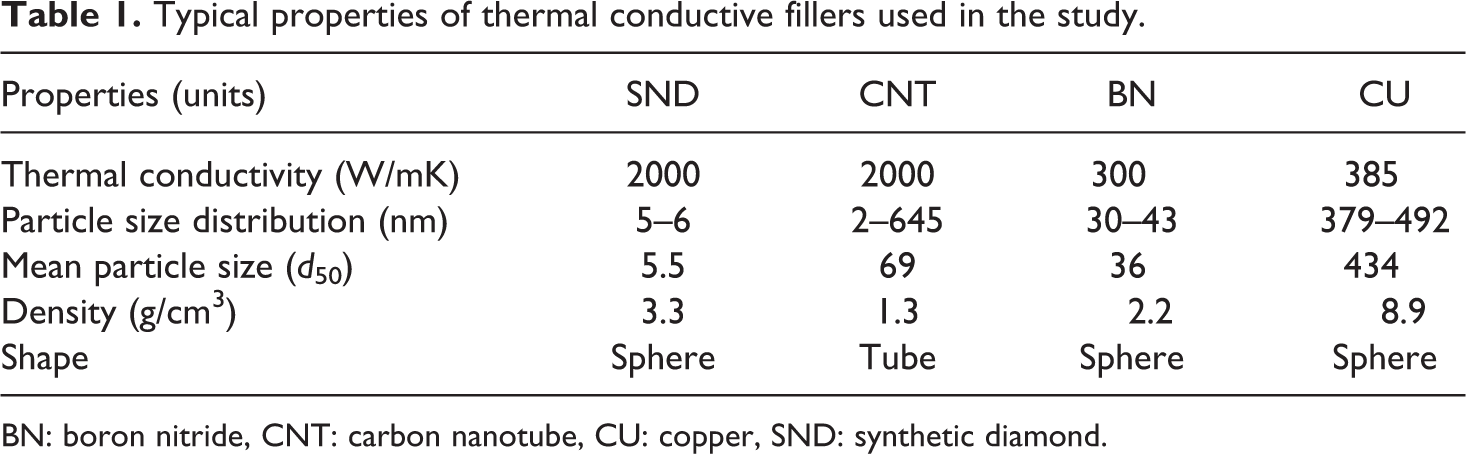
BN: boron nitride, CNT: carbon nanotube, CU: copper, SND: synthetic diamond.
Sample preparation
Conductive nanofillers were dried in oven at 100°C for 3 h to remove moisture before mixing with PP ranging at 1, 2, 3 and 4 vol.% of filler loading. Compounding between PP and fillers was performed in a two-roll mill heater at a constant temperature of 185°C and at 50 rpm for 20 min. Then, the composite sheet was compression molded in an electrically heated hydraulic press at 185°C and subsequently cooled at 1000 psi for 3 min.
Filler characterizations
Particle size of the fillers was measured by Nanophox particle size analysis, model NX0064. Data on particle size distribution were presented as cumulative distribution as a function of particle size. Thermal stability of the filler was determined by thermogravimetric analysis (TGA)/differential thermal analysis (DTA) using Linseis model L75/04. Fillers were heated from room temperature to 800°C at a heating rate of 10°C/min.
Composites characterizations
Flow behaviors of samples were determined using Dynisco Polymer Test model 4004 following the method described in American Society for Testing and Materials (ASTM) D 1238-90b with a load of 2.16 kg at 230°C and a melt time of 360 s. Cutting samples within an interval of 10 s were weighed and melt index values were calculated in g/10 s. Physical ashing test was performed according to ASTM D2584 to determine filler weight fraction (W f) in the composites after compounding. Void content was determined from a relationship between the theoretical density and the experimental density of the composites. Thermal conductivity was tested using a hot disc thermal constant analyzer model TPS 2500 according to ASTM D792-98. The heat source was placed between two 4 × 4 × 8 mm samples and connected to thermal conductivity detector. TGA was performed using model Perkin Elmer Pyris TGA-6. The sample was heated from room temperature to 600°C at 10°C/min in a nitrogen environment. Melting and crystallization behavior of the composites was studied, employing differential scanning calorimeter (DSC) using a Perkin-Elmer DSC-6 at a heating rate of 10°C/min. Melting temperature T m and crystallization temperature T c were derived from endothermic and exothermic peak temperatures. The degree of crystallinity X c was calculated from heat of fusion by taking 207 J/g as the enthalpy to crystallize 100% PP. 11 Tensile test was conducted by Instron 3366 with gauge length of 50 mm and speed of 50 mm/min according to ASTM D 638-98. The morphology of tensile fracture specimens was captured by ZEISS SUPRA 35 VP field emission scanning electron microscope (FESEM).
Results and discussion
Melt flow index
Figure 1 illustrates the decreasing trends of melt flow index (MFI) as the conductive filler loading was increased. These trends were expected because the incorporation of fillers hinders polymer flow and increases the viscosity of composites. PP/CNT exhibited the lowest MFI due to the high aspect ratio of CNT, leading to strong intermolecular interaction between the nanotubes. In contrast, the greater size of Cu (micron-sized) resulted in a higher MFI value, which slightly increased at high Cu loading (i.e. 3 and 4 vol.%). This trend can be attributed to the metallic properties of Cu, such that it is able to induce and catalyze the degradation of polymer composites. In addition, the heat energy absorbed by Cu will spread to the surrounding PP matrix. Thus, the polymer chains will be cut down, allowing MFI to increase. 12
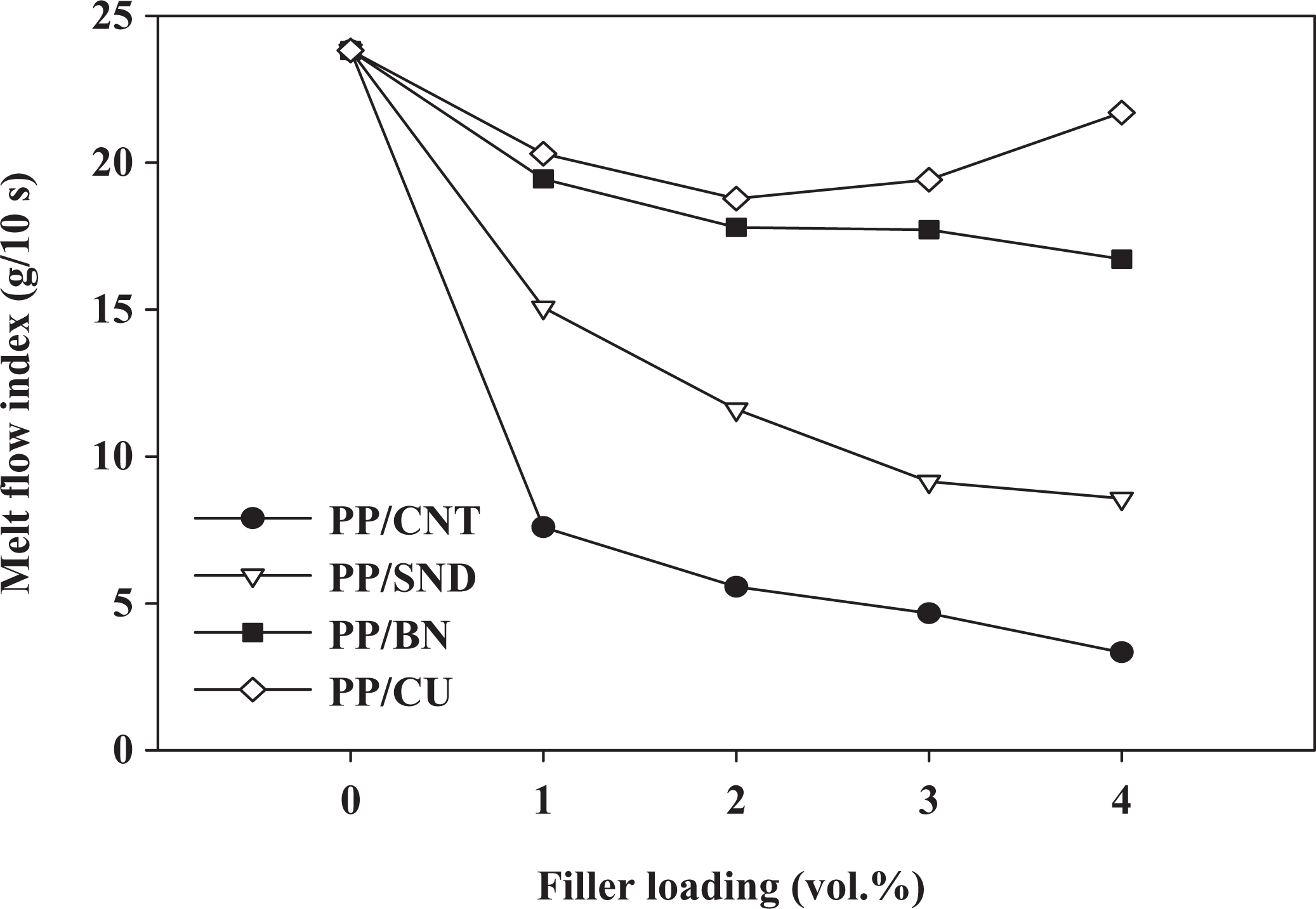
Melt flow index (MFI) curves of polypropylene (PP) and PP composites as a function of filler loading.
Tensile properties
The correlation between average tensile strength and void content of PP and PP composites is presented in Figure 2. SND and BN systems exhibited higher tensile strength compared with CNT and Cu systems. The maximum tensile strength was observed at 2 vol.%, after which a decreasing trend was observed. Tensile strength was reduced at higher nanofiller loading due to strong interactions between particle–particle rather than particle–matrix. This trend is supported by the increasing void content as filler content was increased. In the CNT- and Cu-filled PP systems, a decreasing trend in tensile strength compared with that of PP was observed. This may be related to the large particle size of Cu, which functions as a defect, and the high void content in the two-composite systems. Increasing void content could cause detrimental effects on mechanical properties that create stress concentration and inhibit stress transfer from the matrix to the filler.13 –16 The distribution of fillers in the PP matrix at 4 vol.% was revealed by sectional fractography of tensile test by SEM (Figure 3). PP surface (Figure 3a) was dramatically changed by the presence of thermal conductive particles. SND and BN in Figure 3(b) and (c) were well dispersed; the filler appears to be embedded in the PP matrix, suggesting that the tensile strength of these systems is high. The worst dispersion and distribution were observed in PP/Cu composites, as indicated by the presence of agglomerations and voids in Figure 3(d). CNT was poorly distributed but was well dispersed in PP matrix (Figure 3e). These properties of PP/Cu and PP/CNT are responsible for the increased stress behavior and the ineffective transfer of load applied in PP composites, leading to decreased tensile strength of CNT and Cu systems.
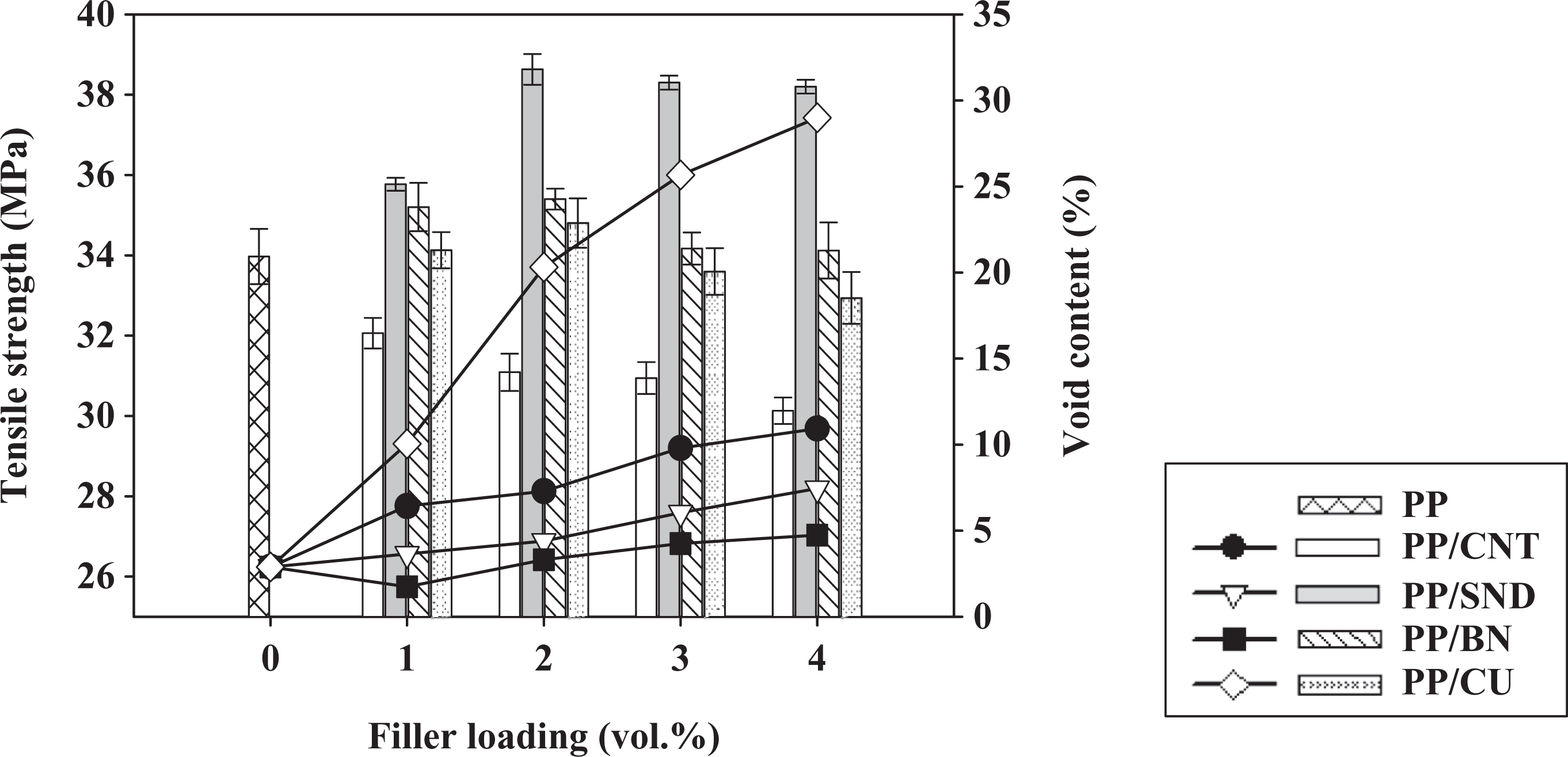
Tensile strength and void content of polypropylene (PP) and PP composites as a function of filler loading. Bar graph refers to the tensile strength and line plot refers to the void content, respectively.
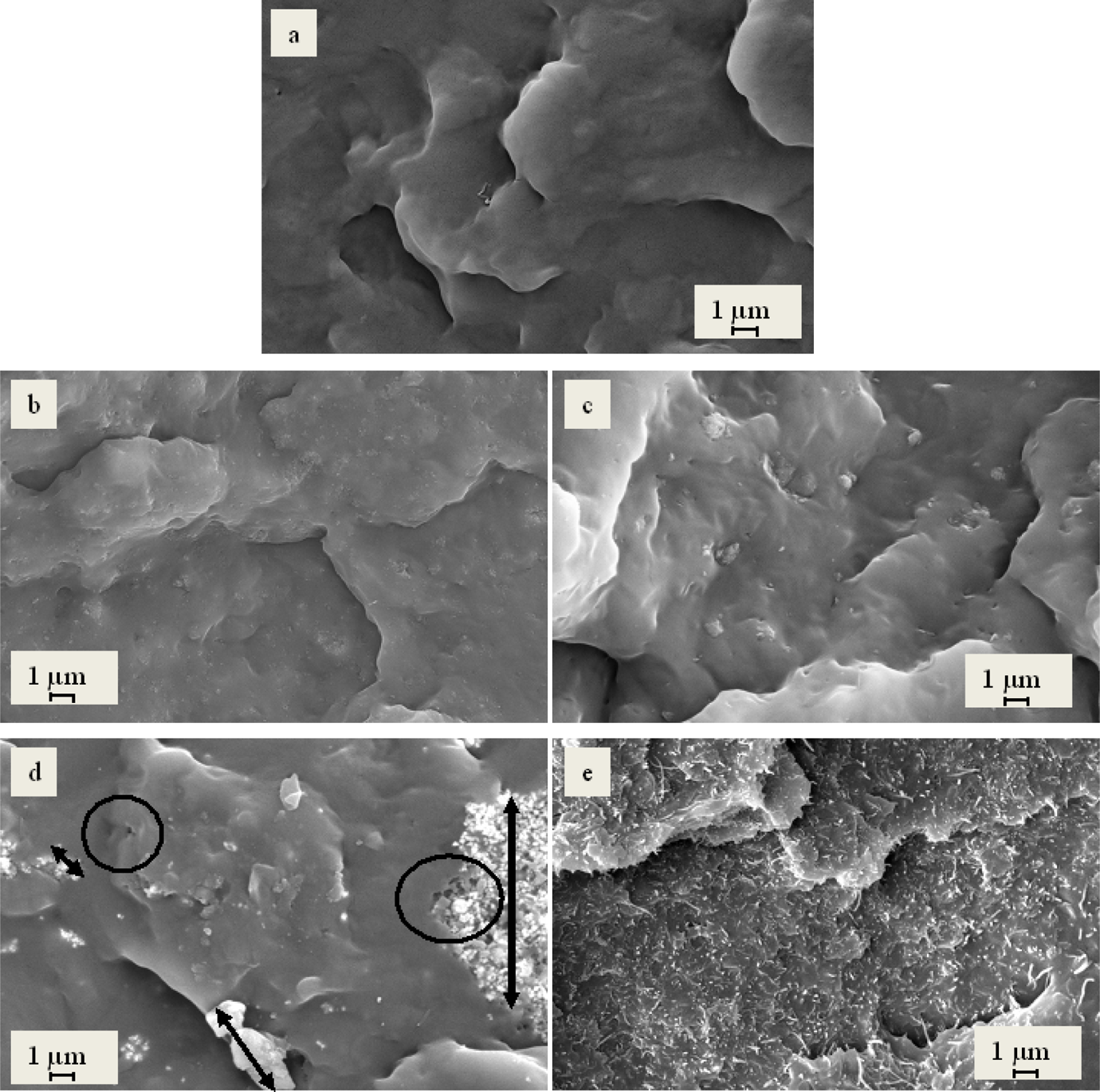
Scanning electron microscope (SEM) micrograph of the 4 vol.% filler loading at 5 K magnifications. (a) Polypropylene (PP), (b) PP/synthetic diamond (SND), (c) PP/boron nitride (BN), (d) PP/copper (CU), and (e) PP/carbon nanotube (CNT).
X c also influences the mechanical properties of composites. 17 ,18 Theoretically, the mechanical strength of a crystalline polymer is determined by its crystalline structure. Table 2 presents the X c, T m, and T c values for PP and PP composites in this study. At 4 vol.% filler loading, X c of SND and BN was higher than that of PP because the crystalline region acts as a physical crosslink that enhances the tensile strength of PP composites. In contrast, CNT and Cu systems exhibited low X c values since the superficial area interferes with crystal growth, thus leading to reduced tensile strength of the composites.19,20 T m values were not significantly changed by the addition of conductive fillers and an increase in filler loading. This may be attributed to the maintenance of the flexibility of the polymer chain even when fillers are dispersed in the polymer matrix. 8 T c values of composites were higher than that of PP and were within the range of 110–135°C, indicating that the conductive fillers can act as nucleating agents.
DSC and thermal interface resistance (R i) data for PP and PP composites filled at 4 vol.% of CNT, SND, BN, and CU.
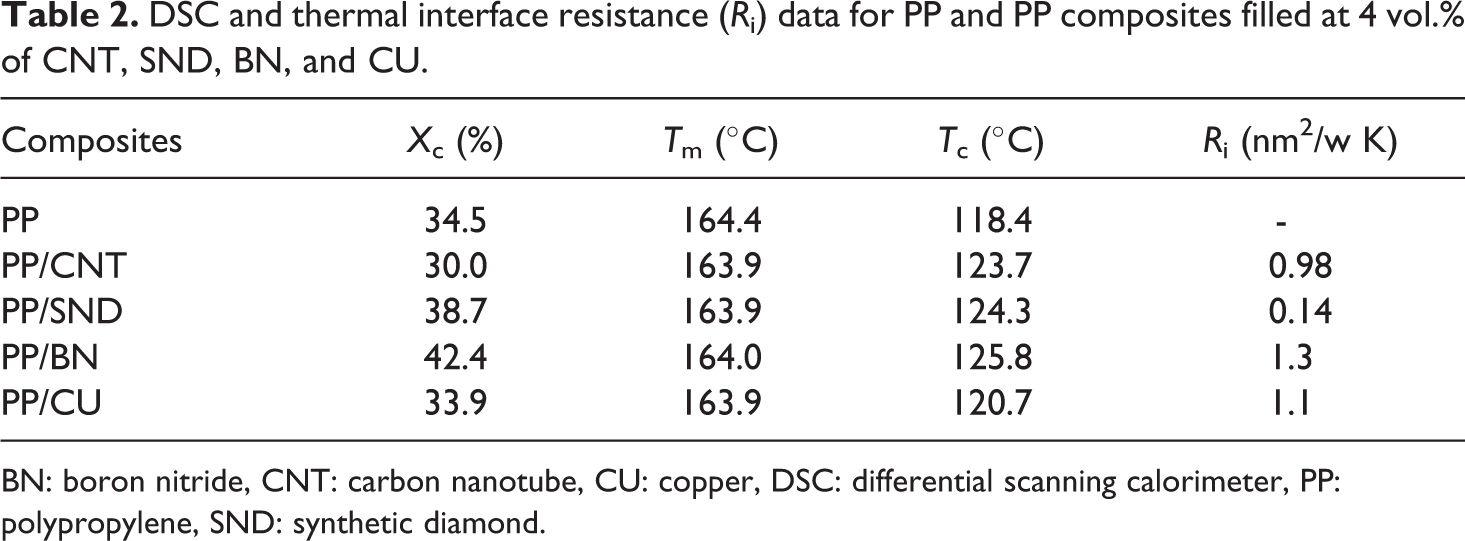
BN: boron nitride, CNT: carbon nanotube, CU: copper, DSC: differential scanning calorimeter, PP: polypropylene, SND: synthetic diamond.
Figure 4 illustrates the correlation of Young’s modulus and filler content (W f) of the PP and PP composites. In general, the trends markedly increased with respect to the W f. The highest Young’s modulus were found in CNT followed by BN, SND, and Cu fillers, with increases of up to 31%, 27%, 25%, and 9% from that of PP, respectively. Incorporation of rigid and stiff reinforcement into the polymer enhanced the stiffness of the polymer composites. Higher rigid filler content increased the Young’s modulus significantly. The PP/CNT system exhibited the highest maximum Young’s modulus due to the high aspect ratio of CN, which leads to greater stiffening compared with particulate composites. The lower interfacial area of the sphere shape of SND, BN, and Cu results in lower Young’s modulus compared with CNT system. The Cu system had the lowest Young’s modulus because of the large particle size of Cu, which results in less interaction between filler–filler and filler–matrix. Figure 5 illustrates the trends of descending elongation at break with addition of stiff reinforcement, which decreases the ductility of the matrix.
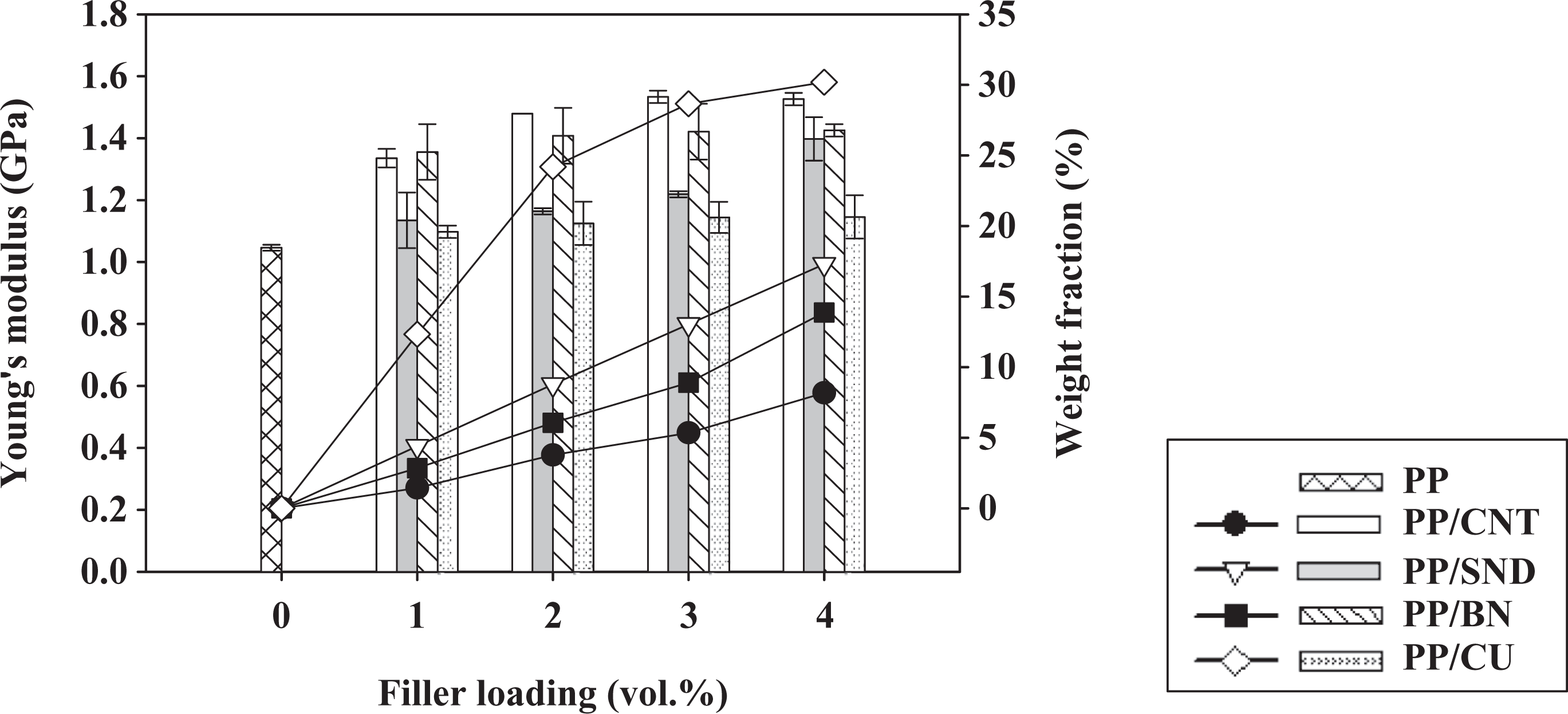
Young’s modulus and weight fraction of polypropylene (PP) and PP composites as a function of filler loading. Bar graph refers to the Young’s modulus and line plot refers to the weight fraction, respectively.
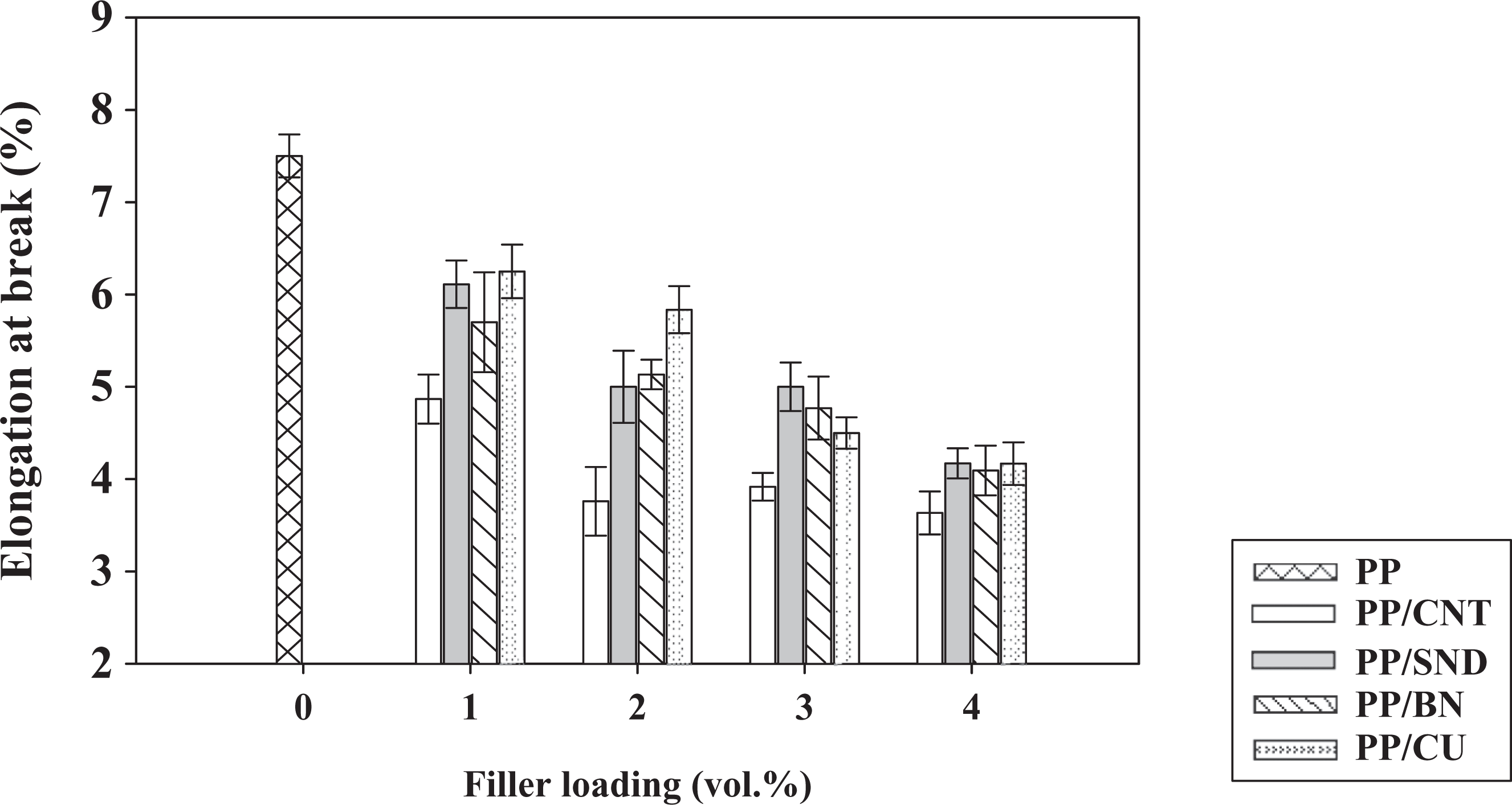
Elongation at break of polypropylene (PP) and PP composites as a function of filler loading.
Thermal conductivity
Figure 6 presents the thermal conductivity of PP composites at room temperature. We found that the thermal conductivity of composites increased monotonically from that of PP and increased directly with increased filler amount. This ascending trend may be attributed to the ease of heat transfer obtained by increasing contact in the composites. CNT was the most effective filler for enhancing thermal conductivity, followed by SND, Cu, and BN; this trend seems to follow the hierarchy of thermal conductivities of the filler (refer to Table 1). The correlation with thermal interface resistance would influence the effectiveness of the phonon to pass through in the composites systems. The thermal resistance at the interface between the matrix and the filler, known as Kapitza resistance (R i), was analyzed according to Eq. (1). 21
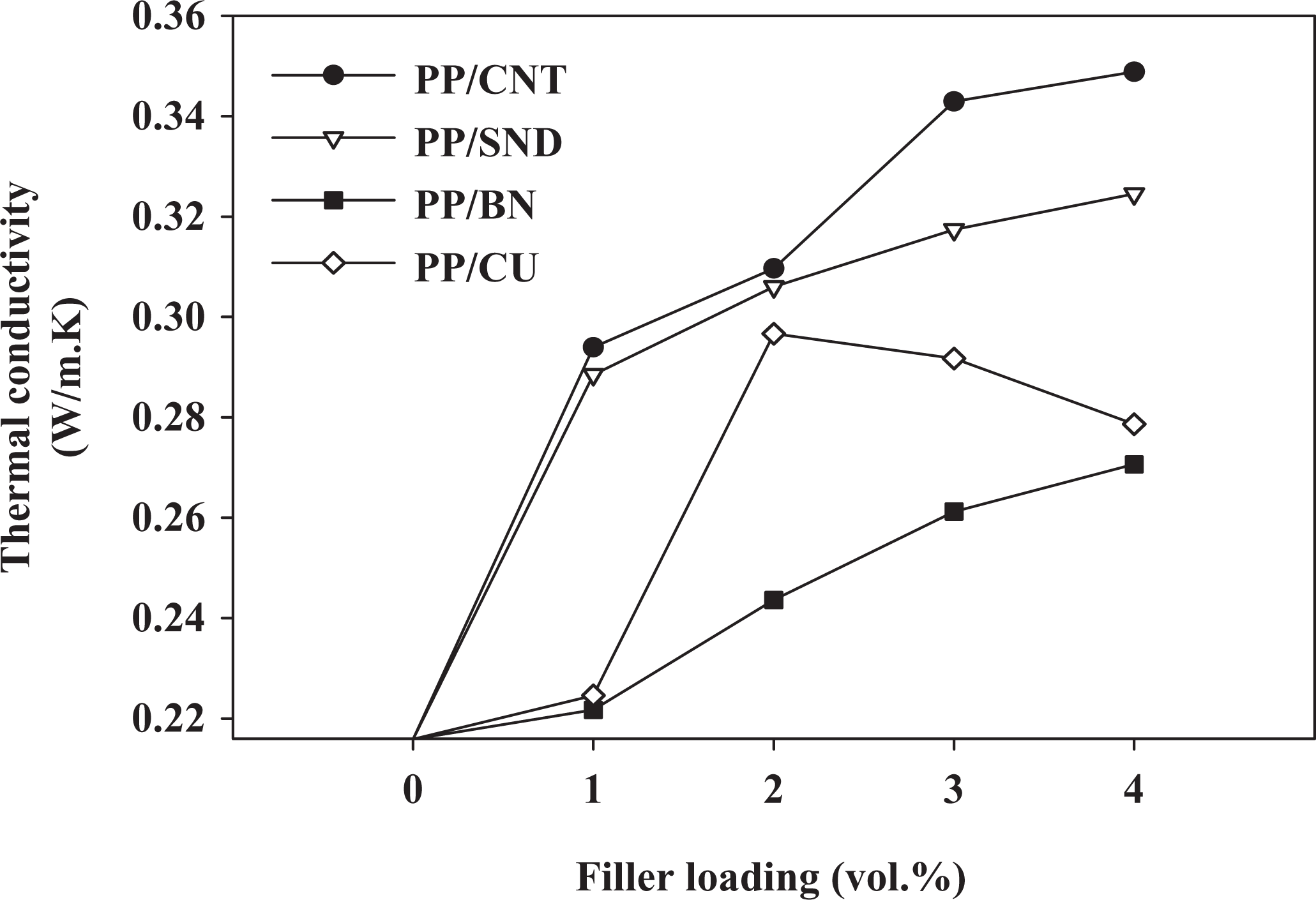
Thermal conductivity of the polypropylene (PP) composites as a function of filler loading.

where K c, K m, and K f are the thermal conductivity of the composite, matrix, and filler, respectively; R i is the interfacial thermal resistance; L is the length of filler assumed at diameter d 50; and v f is the volume fraction taken at 4 vol.% filler loading. The predicted values of R i are summarized in Table 2. Lower thermal resistance was exhibited by the SND and CNT systems due to their high thermal conductivity. However, the CNT filler can produce higher thermal conductivities at identically lower filler content due to its high aspect ratio, so that it is able to form a conductive network for easier phonon-dominated ballistic heat transport compared with the spherical SND. High R i was observed in the Cu and BN systems due to their low thermal conductivity. However, the PP/Cu system exhibited minimum thermal conductivity at 2 vol.% loading only, with decreasing values obtained with further addition of filler loadings. This is related to the poor adhesion and poor dispersion and distribution of Cu seen in SEM morphology (Figure 3d). Variations in agglomeration size, high void content, and the lack of contact between particles suggest that Cu particles were relatively nonhomogenously dispersed in the matrix. This subsequently resulted in low heat transfer in the Cu system, which led to low thermal conductivity of the composite. In contrast, the nearly uniform size of particles indicating good dispersion in the PP matrix (Figure 3b, c, and e) resulted in better thermal interaction in CNT-, SND-, and BN-filled PP composites.
Thermogravimetry analysis
The TGA curves for PP and PP composites at 4 vol.% filler loading are presented in Figure 7. The curve shows single-step degradation where it shifted to the right (i.e. higher temperature) with the addition of filler. This indicates that PP composites achieve a stabilization effect through the barrier effect of filler loading, which hinders volatilization of bulk samples into gas phase. 22 TGA curves reveal that composites are stable at up to 350°C, with weight reduction of around 0.5%. The TGA profile can be clearly depicted by the derivative weight % (DTG) curve in Figure 8. The points where degradation starts shifted to a higher temperature in composites compared with PP. TGA trends of the composite materials are supported by the TGA analysis of fillers (Figure 9), which revealed weight reduction in fillers as indicated by the minus (−) sign in the y axis as a function of temperature. CNT exhibited the highest curve, suggesting that CNT has better thermal stability compared with the other fillers. Weight reductions at different temperature (Table 3) follow the sequence of CNT, SND, Cu, and BN. As shown in Figure 7, increasing filler loading leads to increased thermal behavior of the composites due to the higher thermal stability of fillers compared with the matrix. In general, all composite systems exhibited slightly similar weight residue, which explains why fillers are retained without decomposition. Most of the fillers will decompose at very high temperatures, while PP will be completely degraded.
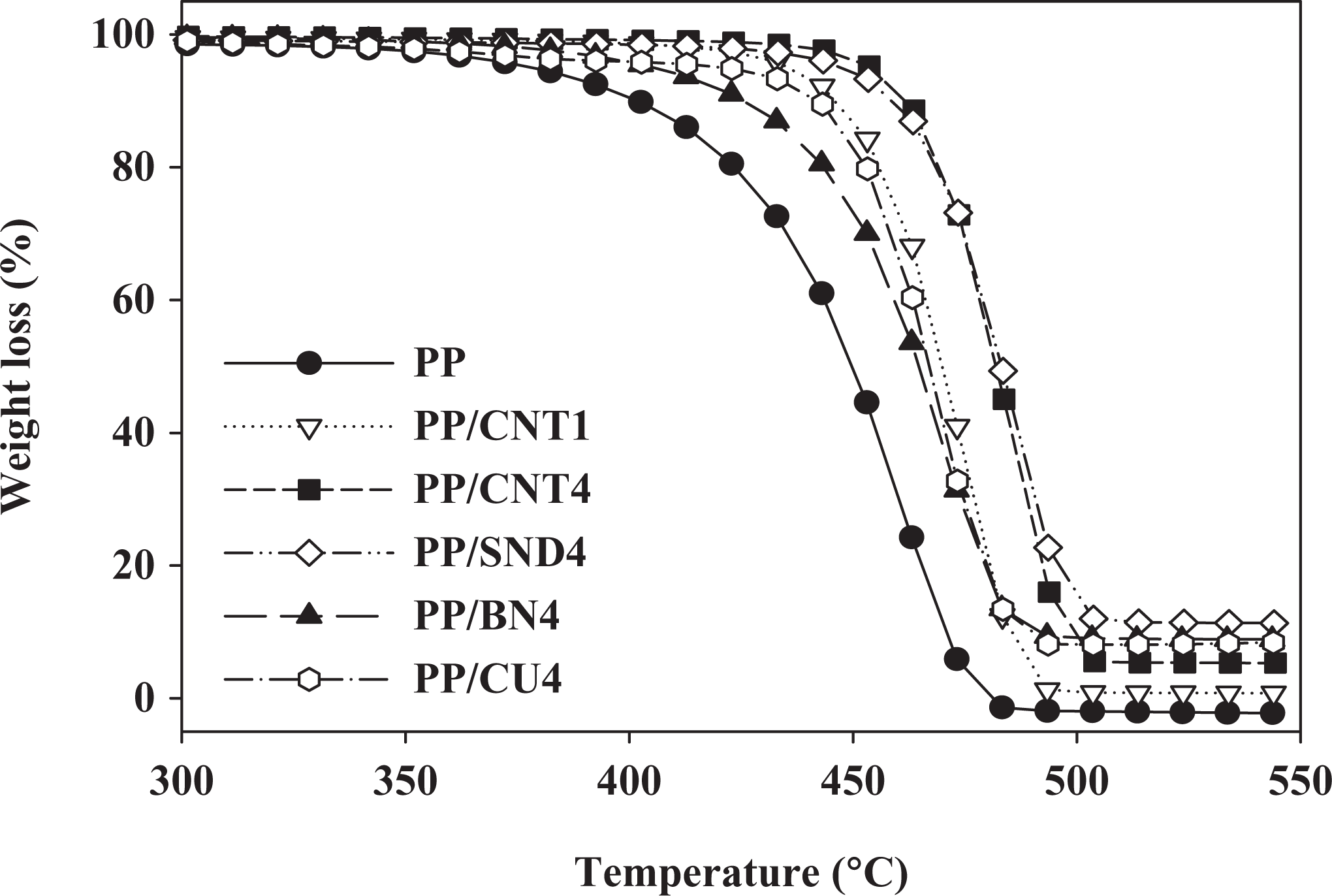
Thermogravimetric analysis (TGA) curve of polypropylene (PP) and PP composites as a function of temperature. The numbers 1 and 4 refer to 1 and 4 vol.% of filler loading, respectively.
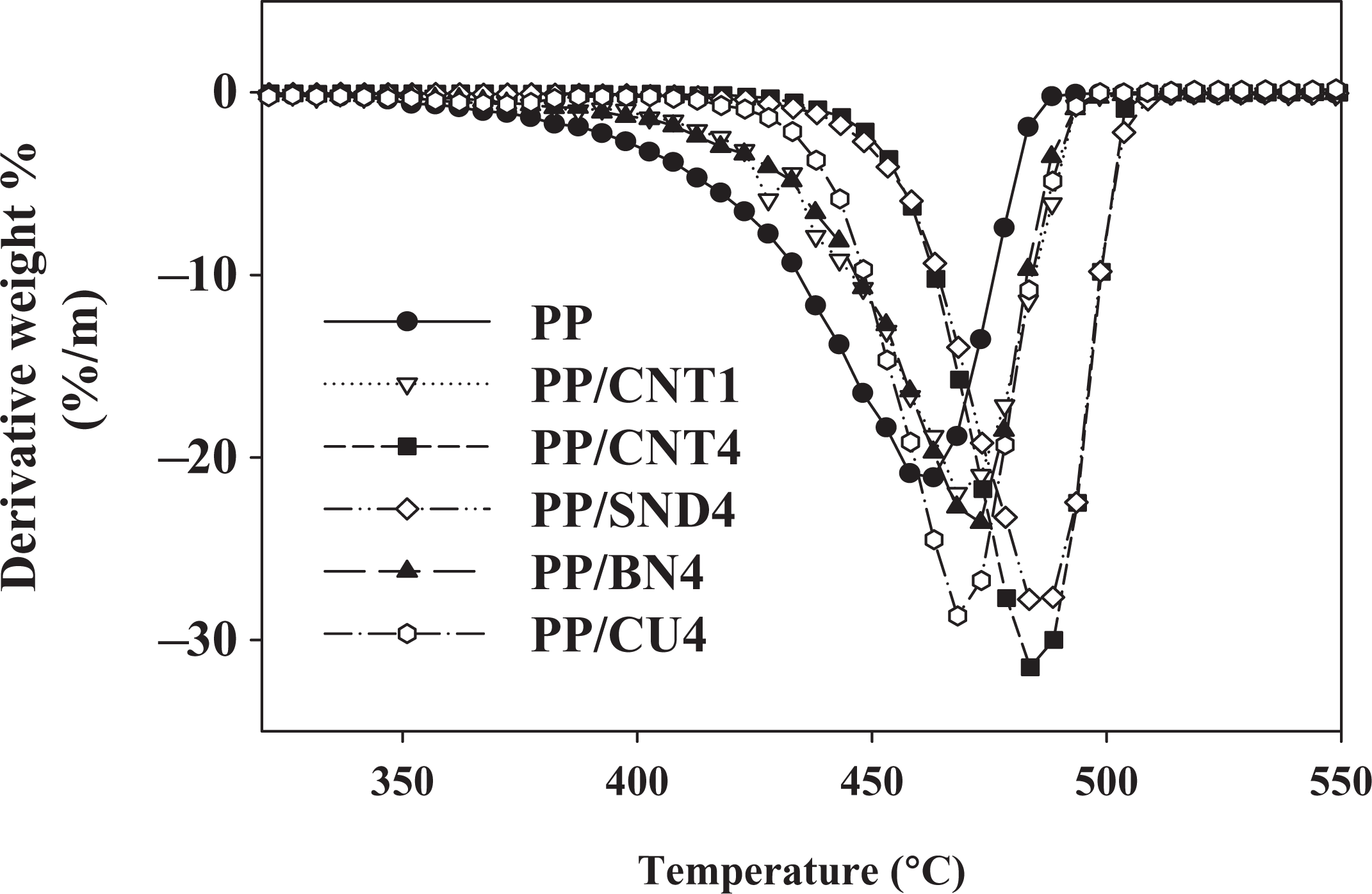
Derivative weight percentage (DTG) of polypropylene (PP) and PP composites as a function of temperature. The numbers 1 and 4 refer to 1 and 4 vol.% of filler loading.
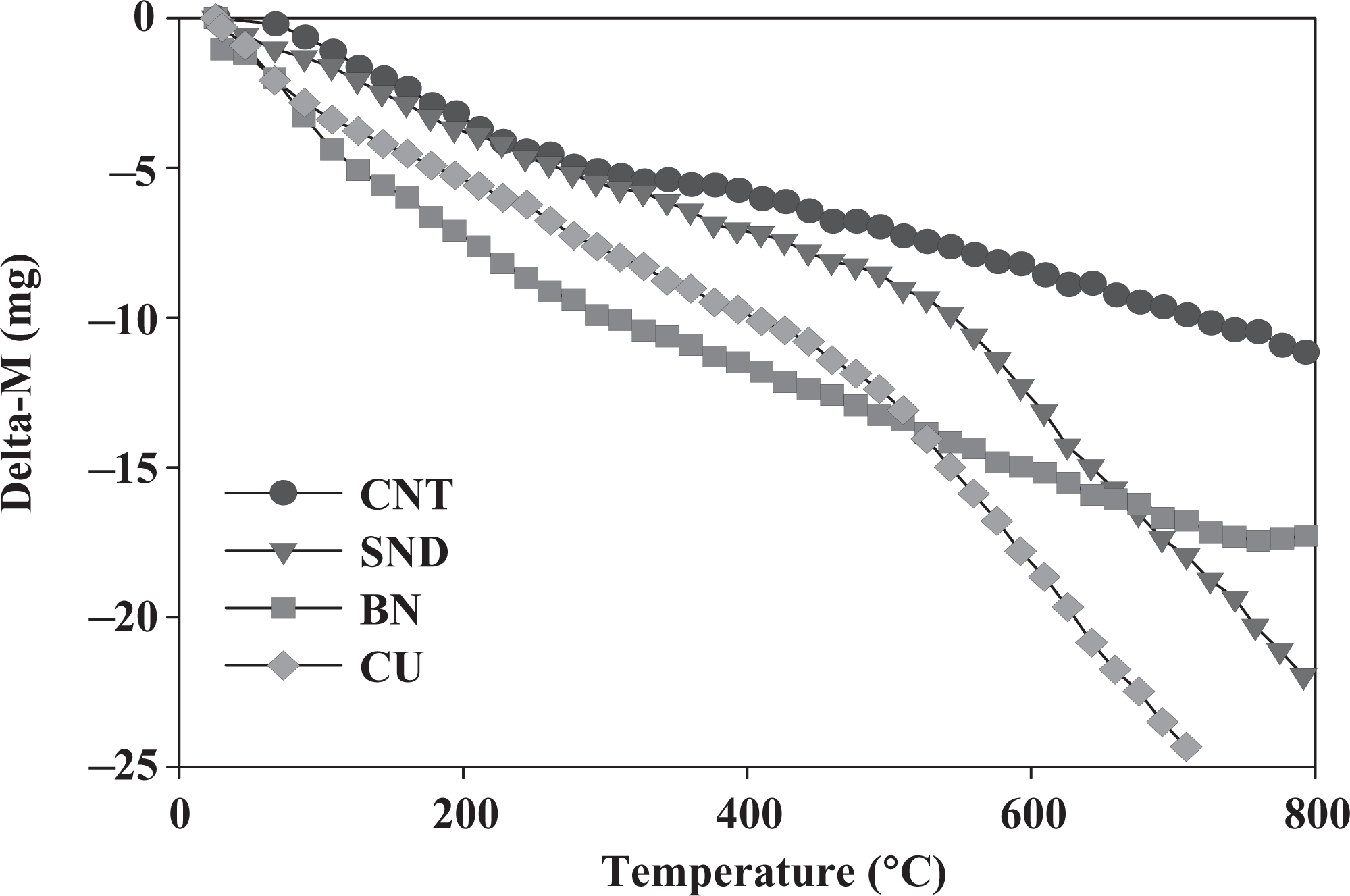
Thermogravimetric analysis (TGA) curve for conductive fillers used as a function of temperature.
Weight reduction (mg) in conductive fillers at 100 and 500°C.
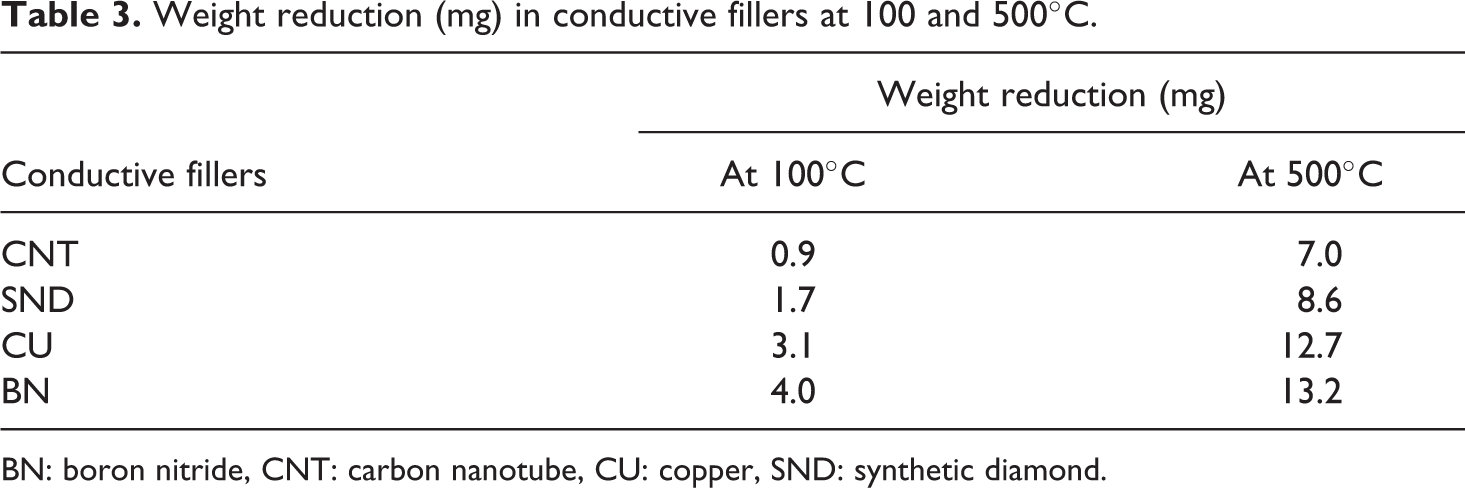
BN: boron nitride, CNT: carbon nanotube, CU: copper, SND: synthetic diamond.
Conclusions
In this study, we performed characterization of fillers and investigation of the effect of thermally conductive fillers on the mechanical, flow, and thermal properties of PP composites. Findings suggest that CNT has better thermal properties compared with other conductive fillers. Results demonstrate that CNT, SND, BN, and Cu particles variably affect the properties of PP composites. In general, the MFI of composites decreased with increased filler loading due to the ability of fillers to hinder plastic flow. PP/CNT exhibited the greatest thermal conductivity and thermal stability due to the high aspect ratio of CNT, which facilitates the formation of bridges for phonon transformation compared with the spherical fillers. However, entanglements of CNT lead to stress concentration, resulting in reduced tensile properties. In general, the overall thermal properties of composites improved with filler addition. For particulate fillers, lower d 50 results in higher tensile strength, Young’s modulus, higher R i, and lower thermal conductivity values. The thermal conductivity and R i of the composite materials generally seems to follow the hierarchy of thermal conductivities of the filler. Cu with the highest d 50 showed poor thermal and tensile properties due to the agglomeration and voids which existed in the system. PP/SND exhibited the greatest tensile strength possibly due to better distribution of filler in the PP matrix.
Footnotes
Funding
This study was supported by Universiti Sains Malaysia under Postgraduate Research Fund USM-RU-PGRS (Project no. 8033053) and Short Term Grant (Project no. 6035279).