




Abstract
How do life events affect life satisfaction? Previous studies focused on a single event or separate analyses of several events. However, life events are often grouped non-randomly over the lifespan, occur in close succession, and are causally linked, raising the question of how to best analyze them jointly. Here, we used representative German data (SOEP; N = 40,121 individuals; n = 41,402 event occurrences) to contrast three fixed-effects model specifications: First, individual event models in which other events were ignored, which are thus prone to undercontrol bias; second, combined event models which controlled for all events, including subsequent ones, which may induce overcontrol bias; and third, our favored combined models that only controlled for preceding events. In this preferred model, the events of new partner, cohabitation, marriage, and childbirth had positive effects on life satisfaction, while separation, unemployment, and death of partner or child had negative effects. Model specification made little difference for employment- and bereavement-related events. However, for events related to romantic relationships and childbearing, small but consistent differences arose between models. Thus, when estimating effects of new partners, separation, cohabitation, marriage, and childbirth, care should be taken to include appropriate controls (and omit inappropriate ones) to minimize bias.
Plain language summary
How do different life events (e.g., marriage and childbirth) affect life satisfaction? To answer this question, past studies focused on a single event or separate analyses of several events. In reality, however, life events are often grouped together as they happen over the lifespan, occur in close succession, and are linked through common causes. The current paper aims to analyze life events jointly using representative German data (SOEP; N = 40,121 individuals; n = 41,402 event occurrences). We compare three different models: First, models with each life event by itself (other events are ignored but might still bias results through undercontrol bias). Second, combined models which controlled for all other life events regardless of when they occurred (these may also introduce bias, namely, overcontrol bias). Third, the model we favored which only controlled for any preceding (but not succeeding) life events. In this preferred model, the events of new partner, cohabitation, marriage, and childbirth had positive effects on life satisfaction, while separation, unemployment, and death of partner or child had negative effects. The choice of model made little difference for employment- and bereavement-related events. However, for events related to romantic relationships and childbearing, small but consistent differences arose between models. Thus, when estimating effects of new partners, separation, cohabitation, marriage, and childbirth on life satisfaction, care should be taken to include appropriate controls (and omit inappropriate ones) to minimize bias that potentially occurs due to other life events.
Introduction
How do life events such as marriage or childbirth affect well-being? Extensive research addresses this question empirically by examining effects of events on subjective well-being. In particular, studies often focus on life satisfaction, which is a global, cognitive component of subjective well-being that some studies have shown to be more strongly affected than measures of affective well-being (Diener et al., 1999; Luhmann et al., 2012a; Luhmann et al., 2012b; Schimmack, 2008; cf. Asselmann & Specht, 2022, 2023 who have shown stronger effects for some facets of affect). Studies usually investigate life events in isolation and present results of separate analyses of various individual events (e.g., Anusic et al., 2014a; Clark et al., 2008; Clark & Georgellis, 2013; Denissen et al., 2019) or meta-analyses of such separate analyses (e.g., Luhmann et al., 2012b; Mangelsdorf et al., 2019). But life events are not randomly spread over the life span; they often emerge as part of a common sequence (Hutteman et al., 2014) and are causally connected: for example, cohabitation may lead to marriage which may lead to childbirth. Thus, there have been repeated calls to consider events jointly (Hentschel et al., 2017; Luhmann et al., 2014a). To date, only a few studies have heeded these calls.
In this study, we investigate the effects of various life events in combined models of life satisfaction. Control for other events can reduce confounding bias that may have affected previous results—for example, changes in life satisfaction that have been attributed to the birth of a child might in fact reflect the impact of preceding events such as cohabitation or marriage. But such control can also induce its own biases, and successful causal identification always rests on assumptions. Thus, we contrast different model specifications and compare the resulting conclusions regarding the effects of life events on life satisfaction.
Influence of life events on life satisfaction
Life events can be defined as “time-discrete transitions that mark the beginning or the end of a specific status” (Luhmann et al., 2012b, p. 594). Examples include relationship transitions (e.g., cohabitation, marriage, and divorce), childbirth, the death of a relative or loved one, and changes in employment. It has previously been assumed that for the moderately time-stable construct life satisfaction (Fujita & Diener, 2005; Gnambs & Buntins, 2017; Lucas & Donnellan, 2007), changes in response to such life events are temporary (Diener et al., 2006; Lykken & Tellegen, 1996). This belief is part of set-point theory, which suggests that people return to genetically determined baseline levels of well-being after the occurrence of changes in life circumstances. However, more recent studies show long-term changes after particularly disruptive events such as disability or unemployment (Lucas, 2007; Lucas et al., 2004; Luhmann et al., 2014b). In general (and perhaps unsurprisingly), studies report that positive life events (such as marriage) increase life satisfaction, whereas negative life events (such as loss of loved ones or livelihood) decrease life satisfaction, although the details (such as magnitude of change and its duration) vary (Luhmann & Intelisano, 2018; Luhmann et al., 2021b).
Previous research based on individual event models
In addition to the following brief summary of central research findings on the effects of individual life events, a more exhaustive overview of this vast body of literature can be found in Table S1.
Relationship transitions
Marriage is, on average, a positive event associated with increased life satisfaction in anticipation of the event and for a few years afterward (Clark & Georgellis, 2013; Lucas et al., 2003). However, a recent analysis of four nationally representative data sets found that cohabiting partners were similarly satisfied as married partners, especially when controlling for selection effects and relationship satisfaction (Perelli-Harris et al., 2019; see also Musick & Bumpass, 2012). Divorce, on the other hand, has been associated with life satisfaction decreases in the years leading up to the event and recovery starting in the year afterward (Denissen et al., 2019; van Scheppingen & Leopold, 2020).
Entering a new partnership without living together with the partner was associated with gains in life satisfaction compared to being single (Soons et al., 2009). Cohabitation is also associated with increased life satisfaction (Kamp Dush & Amato, 2005; Perelli-Harris et al., 2019). Thus, there is prior evidence for a “continuum of commitment” (Kamp Dush & Amato, 2005, p. 610) in that a higher level of commitment in a romantic relationship on average brings about higher life satisfaction. Other researchers, however, have found only temporary differences between cohabiting and married couples and have emphasized the importance of considering concurrent life events (Musick & Bumpass, 2012; Perelli-Harris et al., 2019; Zimmermann & Easterlin, 2006).
Childbirth
Childbirth has been found to be associated with increases to life satisfaction already starting before the event and continuing for several years afterward (Dyrdal & Lucas, 2013; Krämer & Rodgers, 2020). However, it is unclear whether the pre-event positive effects are mostly due to other life events preceding first childbirth (e.g., cohabitation and marriage) and whether adaptation occurs independent of events succeeding childbirth.
Bereavement
The death of one’s spouse or child is characterized by a sharp decrease in life satisfaction and slow adaptation afterward (Asselmann & Specht, 2022; Doré & Bolger, 2018; Infurna et al., 2017). To what extent complete adaptation occurs is debated (Anusic et al., 2014a; Moor & de Graaf, 2016).
Employment-related life events
Unemployment is followed by a decrease in life satisfaction (Clark & Georgellis, 2013; Lawes et al., 2022b; Lucas et al., 2004). Depending on re-employment (expectations), adaptation to pre-event levels might be slow or even incomplete (Lawes et al., 2022a; Lucas et al., 2004). For retirement, the picture is less clear with some research supporting short-time gains in life satisfaction (Hansson et al., 2020; Henning et al., 2022) and other research finding no effect (Henning et al., 2016; Sohier et al., 2021).
Previous research based on combined event models
In contrast to such studies focusing on single events, prospective studies of life satisfaction that model multiple events simultaneously are sparse. For example, childbirth has been studied in joint models with partnership and life stressors such as separation or illness (Dyrdal et al., 2019; Dyrdal & Lucas, 2013; Rudolf & Kang, 2015). These studies show that results can vary depending on whether or not related events are modeled. For example, postpartum life satisfaction trajectories differed depending on which concurrent life event parents experienced (Dyrdal et al., 2019). The effects of partnership formation and breakup have also been investigated jointly (Soons et al., 2009; Zimmermann & Easterlin, 2006). Results indicated that a new partnership, cohabitation, and union dissolution were more consequential for life satisfaction than mere status changes like marriage and divorce (Soons et al., 2009). Becoming a parent did not alter the effects of partnership transitions but only had beneficial effects on partnered parents.
To our knowledge, only one study on life satisfaction attempted to jointly model all events available in a dataset. Kettlewell et al. (2020) used Australian panel data to estimate effects of 22 life events on life satisfaction and affect comparing results from individual and combined event models. The trajectories of life satisfaction—controlling for the occurrence of other life events—differed slightly from those of the individual event models. In general, effects were closer to zero in the combined event models. The largest differences between the two types of models emerged for the events reconciliation with a partner (where the partly negative effect from the individual model shifted toward zero) and pregnancy (where the positive effect was partly reversed).
Methodological considerations
Causal inference
Control for other events may reduce bias if one event confounds the effect of another one. But controls are not always innocuous (Wysocki et al., 2022). From a causal inference perspective, we see two potential problems in the estimation of the effects of a single event conditional on all other events (i.e., including controls for events occurring after the focal event). Both concerns can be subsumed under the term overcontrol bias. First, controlling for subsequent events that are caused by the focal event will control away part of the causal effect of the event. For example, people who find a new partner may start to cohabit subsequently, and this cohabitation may have a direct positive effect on life satisfaction. This effect, which is mediated via cohabitation, is also part of the effect of finding a new partner, since this effect contrasts one’s potential life satisfaction given a new partner with one’s potential life satisfaction given no new partner—and without a new partner, there is nobody to cohabit with. Avoiding control for potential mediators helps to identify the total effect of an event, which acknowledges that experiencing an event may result in a chain of subsequent events.
Of course, researchers may only be interested in the direct effects of life events, which calls for an approach that removes any effects mediated via other events. Such a procedure leads to the second problem, however, because control for subsequent events can additionally introduce spurious associations via collider bias (Elwert & Winship, 2014; Rohrer, 2018; Wysocki et al., 2022). For example, Kettlewell et al. (2020) reported that “the unconditional positive effect of pregnancy on cognitive well-being was all but reversed once concurrent events (childbirth) were accounted for” (p. 5). One should be careful not to interpret this as evidence that pregnancy had a negative effect on life satisfaction. Pregnancy has a causal effect on subsequent childbirth, pregnancy → childbirth (see Figure S1 for an example causal graph). However, in the unfortunate event of a miscarriage, no childbirth occurs. In the causal chain, suffering a miscarriage (or not) is thus a second determinant of childbirth, miscarriage → childbirth; and it is likely associated on average with large negative effects on life satisfaction, miscarriage → life satisfaction. Future childbirth is a so-called collider between its two causes, pregnancy → childbirth ← miscarriage, and statistical control for it will induce a spurious association via collider bias. Thus, in a model that controls for future childbirth, the coefficient of pregnancy will be confounded by opening up a non-causal path via miscarriage (pregnancy ←→ miscarriage → life satisfaction) that was previously blocked. To put it another way, in purely statistical terms, conditional on no child being born, the pregnancy coefficient contrasts those who were not pregnant (pregnancy = = 0, childbirth = = 0) with those who lost a pregnancy (pregnancy = = 1, childbirth = = 0). Based on these assumptions, we describe how we addressed collider bias in the Analytical Strategy section below.
Prospective longitudinal data, non-linear trajectories, and control for age-related changes
In the study of life events, several recommendations have been put forward (Luhmann et al., 2014a). First, using prospective longitudinal designs is critical when examining selection and anticipation effects occurring before the event, as well as adaptation effects occurring afterward. Selection effects are present when the propensity to experience an event depends on someone’s person characteristics such as personality traits (Beck, 2019; Luhmann et al., 2013); such selection can induce common-cause confounding. Using a purely retrospective design would forestall the investigation of anticipation effects and, in addition, introduce biases of recall and post-hoc narrative interpretation. Second, it is important to allow for nonlinear and discontinuous change trajectories. Modeling change in a purely linear (or polynomial) fashion might mask the true form of the change trajectory. Third, event-related changes and normative or age-related changes should be disentangled, which can be achieved through comparison with a suitable control group that does not experience the event (Luhmann et al., 2014a). Without such a group, developmental trends over the life span might be wrongly attributed to life events happening around that age.
Current study
Life Event Occurrence in the Full Sample (After Exclusion Step 1) and Final Sample (After Exclusion Step 4).
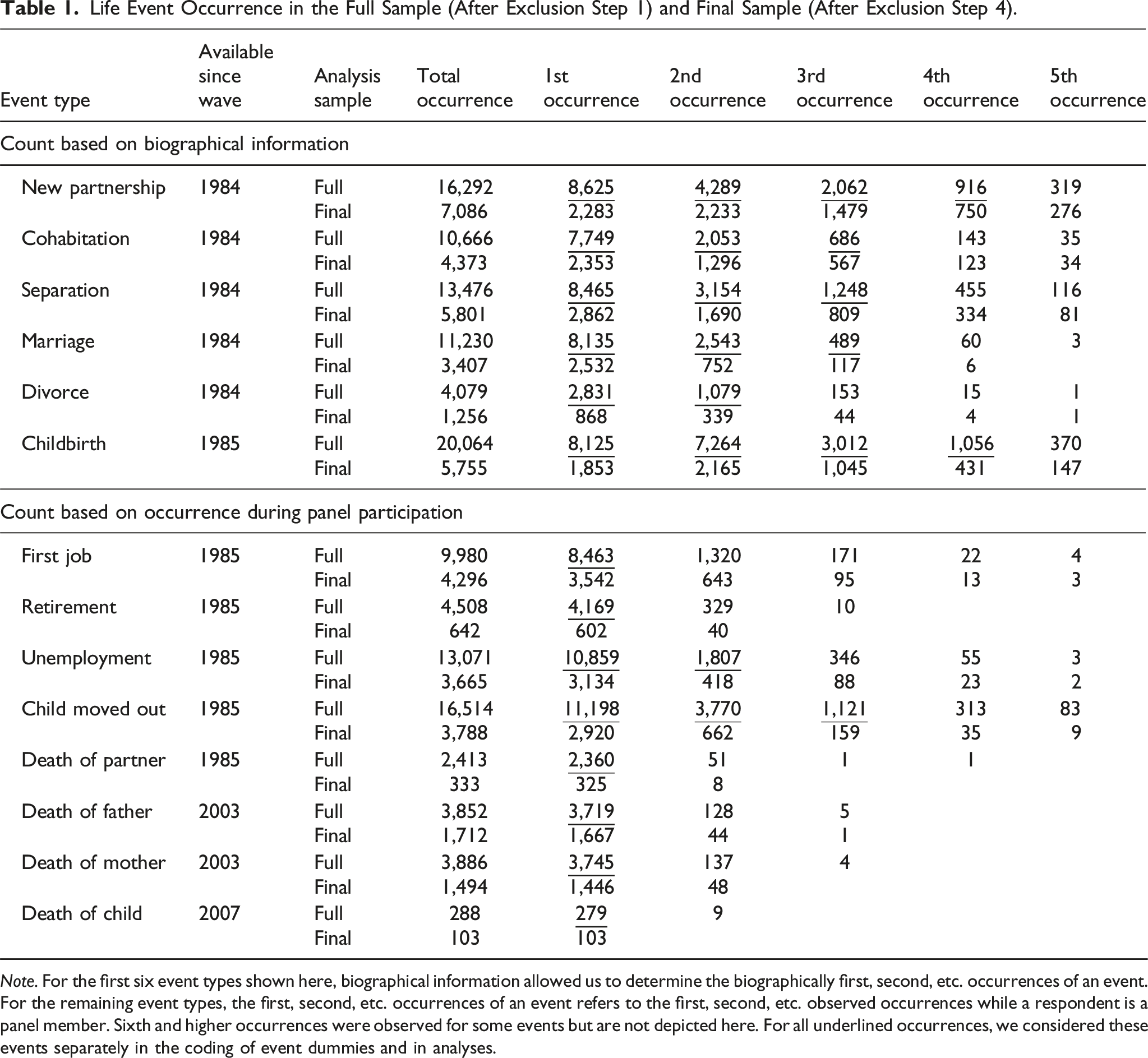
Note. For the first six event types shown here, biographical information allowed us to determine the biographically first, second, etc. occurrences of an event. For the remaining event types, the first, second, etc. occurrences of an event refers to the first, second, etc. observed occurrences while a respondent is a panel member. Sixth and higher occurrences were observed for some events but are not depicted here. For all underlined occurrences, we considered these events separately in the coding of event dummies and in analyses.
To gauge the extent to which the effects of life events confound each other, and whether overcontrol bias could cause issues depending on the model specification, we contrasted models in which each event is considered individually with models that control for either all other life events or only the preceding life events. In the first combined event model, we adopted a total control strategy and included other life events as control variables regardless of when they occurred (similar to Kettlewell et al., 2020). In the second combined event model, we adopted a control strategy that aimed to strike a balance between two types of confounding: First, to reduce undercontrol bias, we controlled for preceding life events, and second, to reduce the risk of overcontrol bias, we refrained from controlling for events occurring in the future (including their anticipation effects).
Method
Sample and procedure
We used data from the German Socio-Economic Panel (SOEP; Version 37 1 ). The SOEP is an ongoing household panel study initiated in 1984 which is representative of adults living in private households in Germany (Goebel et al., 2019). Members of selected households aged 16 years or older were asked to participate in annual interviews. Households were initially chosen using a multistage random sampling technique with regional clustering; later, some refreshment samples were added to increase the sample size and maintain representativeness. Ethical permission was granted by the Scientific Advisory Board of DIW Berlin.
Four levels of exclusion criteria defined the different analysis samples (see Figure 1): First, we excluded observations with missing data on life satisfaction (17,049 observations, 2113 of whom declined to answer), gender (13 observations), or birth year (3 observations), resulting in the samples underlying the individual event models with maximal sample size (models I1). Second, we excluded observations prior to wave 2007 because we wanted to model the impact of all life events jointly and the last event of interest to be added to the SOEP questionnaire (death of a child) was included in 2007. Thus, samples underlying the individual event models were limited to years 2007–2020 (models I2). Third, in order to model all events jointly, we excluded observations with missing data on any of the events. Together, application of these exclusion criteria yielded 40,121 respondents with 184,020 observations (53.84% women and 46.16% men,
2
Respondent Flowchart. Note. Resp. = respondent; obs. = person-year observation. Dotted arrows represent exclusion of observations.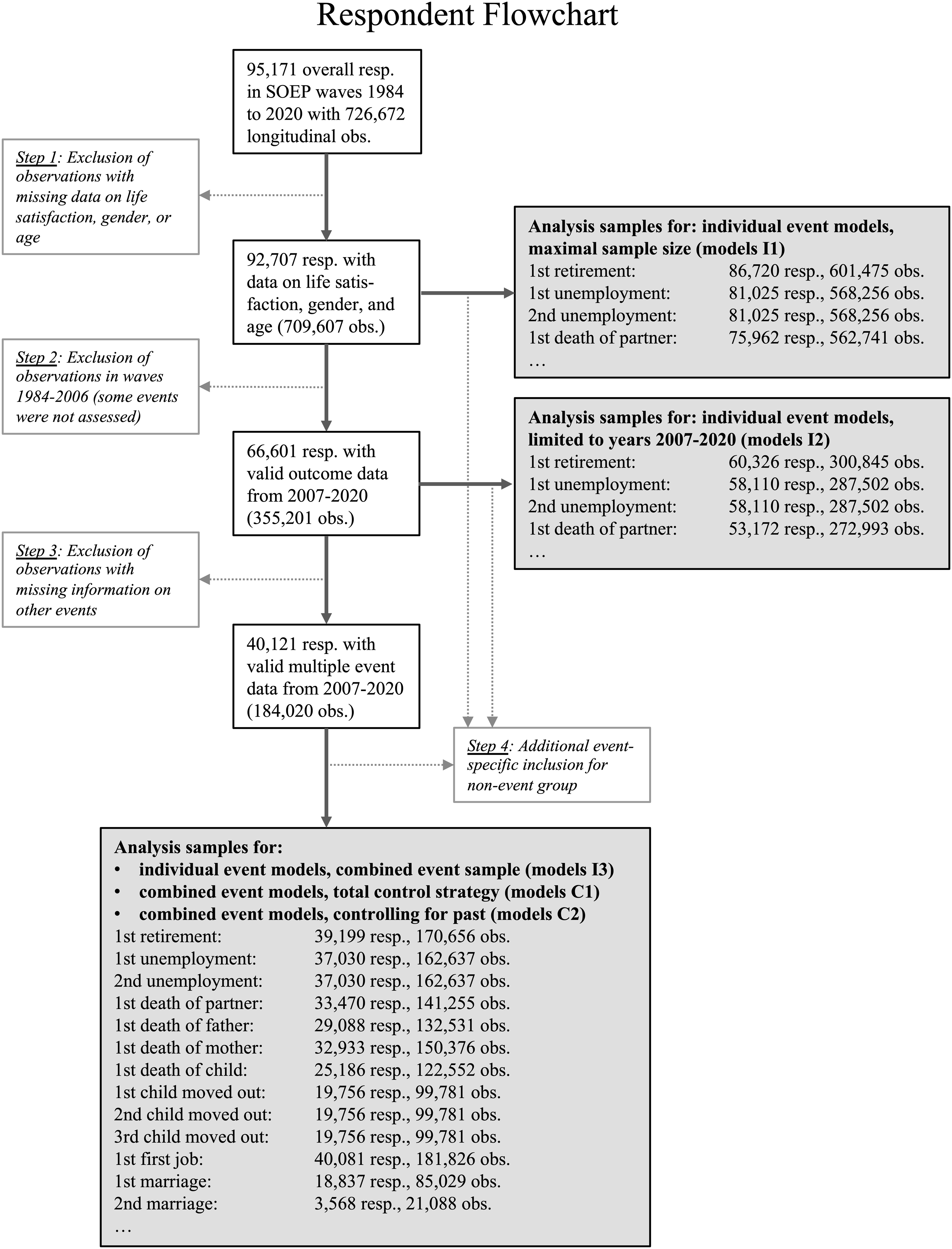
Additionally, for each life event we excluded observations from the non-event group (i.e., those who did not experience this event who served as a control group to account for normative age effects) if they were not eligible to experience the event in the first place. For example, for the event retirement, only individuals who were still part of the workforce (i.e., not yet retired) were included. The criteria for inclusion in the non-event group are outlined below (see the Analytical Strategy section).
Measures
Life satisfaction
Life satisfaction was measured with a single item using an 11-point Likert scale: “In conclusion, we would like to ask you about your satisfaction with your life in general. Please answer on a scale from 0 to 10, where 0 means completely dissatisfied and 10 means completely satisfied (see Figure S2 for the distribution of responses). How satisfied are you with your life, all things considered?”. Studies on the quality of such single-item measures indicate satisfactory retest reliability (Lucas & Donnellan, 2012) and high criterion validity (Cheung & Lucas, 2014) with longer scales such as the Satisfaction With Life Scale (Diener et al., 1985).
Life events
We generated 14 different types of life events as dummy-coded variables (0 = “Event did not occur”; 1 = “Event occurred”; see Table 1).
Death of father, mother, partner, or child
Several events were based on respondents’ annual report of family-related changes (e.g., in 2014 “Has your family situation changed since December 31, 2012? Please indicate if any of the following apply to you and if so, when this change occurred.”). Comparing monthly information from this item to the month of the interview, we coded death of father (“Father deceased”), death of mother (“Mother deceased”), death of partner (“My spouse/partner died”), and death of child (“Child deceased”).
Child moved out
The event child moved out was also drawn from this annual report of family-related changes (“My son or daughter left the household”).
First job
Information on respondents starting their first job was gathered from the response option “I have entered employment for the first time in my life” to the item “Now a few questions about your new position. What type of an employment change was that?”
Unemployment
We coded unemployment based on the item “Are you officially registered as unemployed at the Employment Office (‘Arbeitsamt’)?” However, in this case we only coded an affirmative response as an event occurrence if it was preceded by two waves of not being registered as unemployed.
Retirement
Retirement was coded based on the response option “Reaching retirement age/pension” to the question “How was this job terminated?”
Childbirth
Information on childbirth was obtained through a combination of yearly questionnaire data and retrospective biographical information to trace and update the birth biography of each respondent (“biobirth” dataset; Schmitt & SOEP Group, 2020). This provided the birth year and month for each child in order of the birth biography.
New partner, cohabitation, separation, marriage, and divorce
For these events, we also relied on biographical spell data, which denote time periods with a defined start and end (“biomarsy/m” and “biocouply/m” data sets; Hamjediers et al., 2022). For example, a marriage spell would be defined by its start date (year and if available month of marriage) and its end date (which is set to the most recent wave if the person is still married). We used these spell data to code the biographically first and later occurrences of the events new partner, cohabitation, separation, marriage, and divorce. Compared to the usually employed coding of marital and relationship status events based on the annual report of family-related changes (see above), this had the advantage that we were able to differentiate repeated events based on their biographical sequence.
Repeated life events
In the full sample, we examined multiple occurrences of the same event type. Table 1 shows how often each event occurred in total and repeatedly within respondents. Repeated occurrences of the same event type were coded as separate events (e.g., first divorce and second divorce) based on two considerations: First, to ensure sufficient sample sizes we included repeated occurrences only as a separate event if at least 500 respondents reported it. Second, for substantive reasons, we were only interested in the first occurrence of first job, retirement, death of mother, and death of father (where we assume that later occurrences are mostly the results of inaccurate reporting). Including repeated occurrences of the 14 event types in this way resulted in 30 life events in total (see Table 1).
Analytical strategy
Model features
Fixed effects to account for time-invariant confounding
To analyze the effects of life events on changes in life satisfaction, we used fixed-effects models (Allison, 2019; Hamaker & Muthén, 2020; for similar analytic approaches using SOEP data, see Richter et al., 2019; Seifert et al., 2023), which are one of the standard approaches in economics and sociology to account for nested data. In longitudinal settings, fixed-effects models exclusively analyze within-person variance which is achieved in ordinary least squares (OLS) regression by including a cluster affiliation dummy variable for each person. Variables that have no variation within persons are dropped. Conceptually, this is similar to person-mean centering of all Level-1 variables in multilevel models (Hoffman & Walters, 2022).
We see two main advantages of fixed-effects models for our analytical purposes (McNeish & Kelley, 2019): First, they are not susceptible to bias from omitted time-invariant confounders. This means they “automatically” control for any unobserved, time-invariant background characteristics such as prior education, intelligence, or stable personality traits. Second, through straightforward OLS estimation, fixed-effects models can deal with large amounts of time-varying predictors. Furthermore, fixed-effects models rely on fewer assumptions (McNeish & Kelley, 2019); for example, they do not assume that clusters are randomly sampled.
Discrete time dummy variables to allow for nonlinear pre- and post-event effects
Dummy Variable Coding Schemes, Exemplarily for the Focal Event First Divorce and Only First Marriage and Second Marriage Displayed Out of the Nonfocal Events.
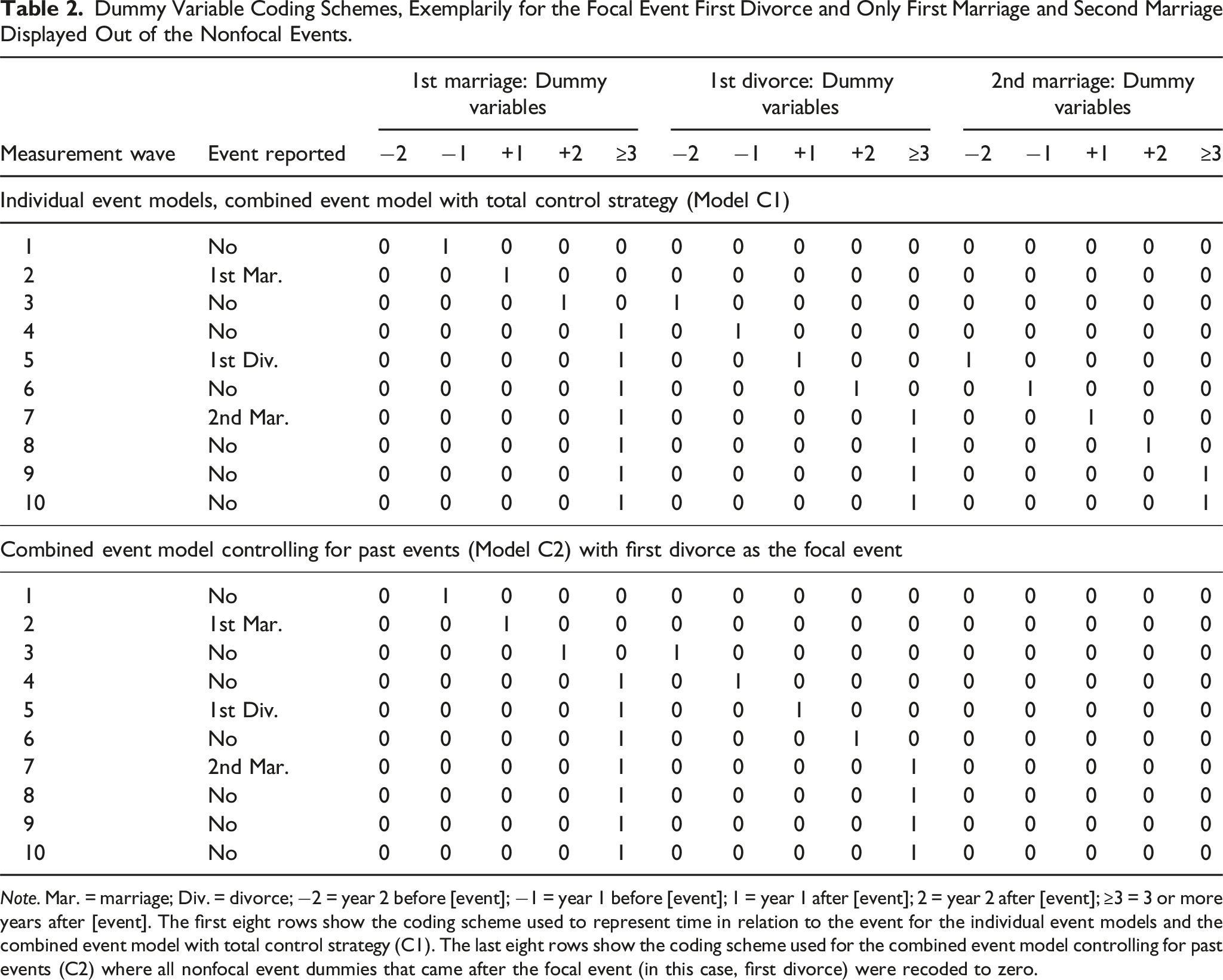
Note. Mar. = marriage; Div. = divorce; −2 = year 2 before [event]; −1 = year 1 before [event]; 1 = year 1 after [event]; 2 = year 2 after [event]; ≥3 = 3 or more years after [event]. The first eight rows show the coding scheme used to represent time in relation to the event for the individual event models and the combined event model with total control strategy (C1). The last eight rows show the coding scheme used for the combined event model controlling for past events (C2) where all nonfocal event dummies that came after the focal event (in this case, first divorce) were recoded to zero.
Non-event group to account for normative effects
We estimated separate models for each life event. These models included two groups of observations: (1) all person-year observations from respondents who ever experienced the event during panel participation and (2) the person-year observations from respondents who never experienced the specific event but were in principle eligible to experience it. Thus, the combined event models differed in the size of their analysis samples because different inclusion criteria of the respective non-event group applied for different focal events. This ensured that respondents in the non-event group offered a realistic counterfactual for the estimation of the effects of each life event as they could have experienced it. For example, for second separation, the non-event group only included those who have not reported the second separation before entering the survey or during panel participation (the first separation did not matter for inclusion). For death of child, we only include parents in the non-event group. The complete list of inclusion conditions based on eligibility to experience the event as well as some additional explanations can be found in Table S2. The non-event group was relevant for the intercept estimation and also had the purpose to control for normative age trends (Luhmann et al., 2014a), which is achieved by estimating slopes of age on the joint analysis sample of the event group and non-event group.
Resulting models
In total, we ran five models for each life event, three individual event models (referred to as I1, I2, and I3) and two combined event models (C1 and C2; see Figure 1 and description below).
Individual event models
The formula for models of an individual event predicting life satisfaction for a person 
Combined event models
We first estimated a combined model for each focal event (FE) that controls for the dummy variables of all other nonfocal events (NEs) regardless of when they occurred (C1, combined event model, total control strategy). Second, to address issues of overcontrol bias described above, we estimated models that only control for preceding and concurrent nonfocal events (relative to the occurrence of the focal event; C2, combined event model, controlling for past events). Control for preceding life events, even if they are confounders, may still introduce spurious associations via collider bias by opening up more complex confounding paths (Elwert & Winship, 2014). Depending on the precise underlying causal graph, control may both reduce and introduce bias (M-bias or butterfly bias; Thoemmes, 2015). Here, we nonetheless favor adjustment based on the assumption that the confounding influence that is removed exceeds the more subtle bias that may be introduced. This seems a plausible default assumption in the absence of a more precise understanding of the causal net linking life events (which may also vary between individuals).
The resulting model formula can be restated as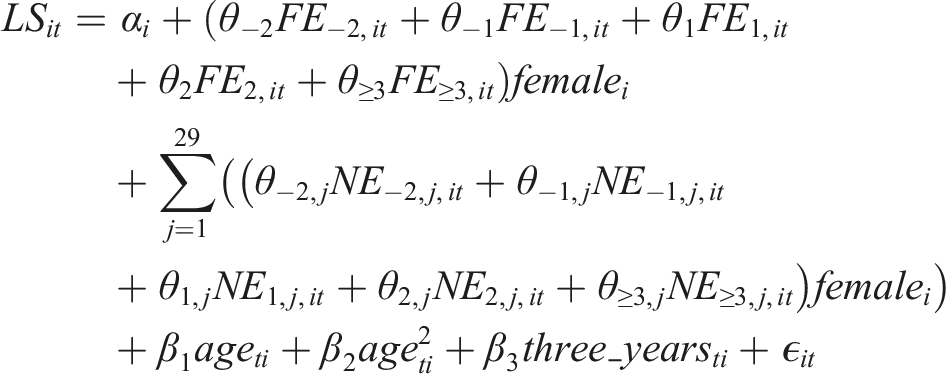
In the combined event models with total control strategy (C1), effects of the focal event were controlled for the confounding influence of all other, nonfocal events, whose time dummy variables were represented by the sum of the
However, as described above, a more sensible control strategy involves controlling for life events that precede the focal event (which could potentially confound the association between the focal event and well-being), but not for events occurring after the focal event (which could potentially be consequences of the focal event). Thus, for the combined event models controlling for past events (C2), we recoded all nonfocal event dummy variables such that they were zero for all nonfocal events following the focal event (i.e., events occurring in years after
Transparency and openness
Analyses were conducted using Stata (Version 15.1; StataCorp, 2017). Because of the clustered nature of the data, we used panel-robust standard errors throughout (Brüderl & Ludwig, 2015). Plots were created in R (Version 4.2.1; R Core Team, 2022) using ggplot2 (Version 3.3.6; Wickham et al., 2019). Analysis scripts can be found on the OSF (https://osf.io/qdtb5/). We used
Results
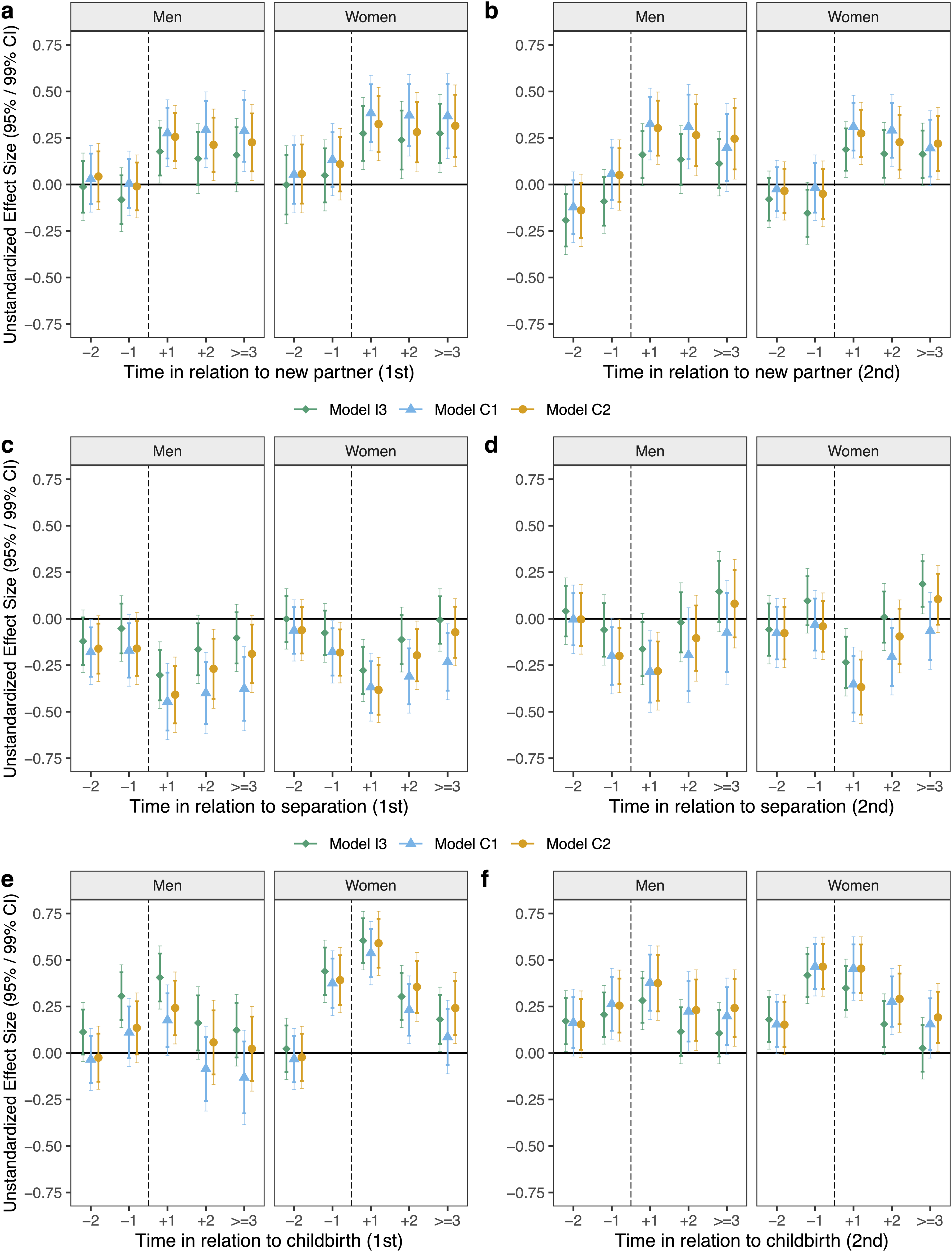
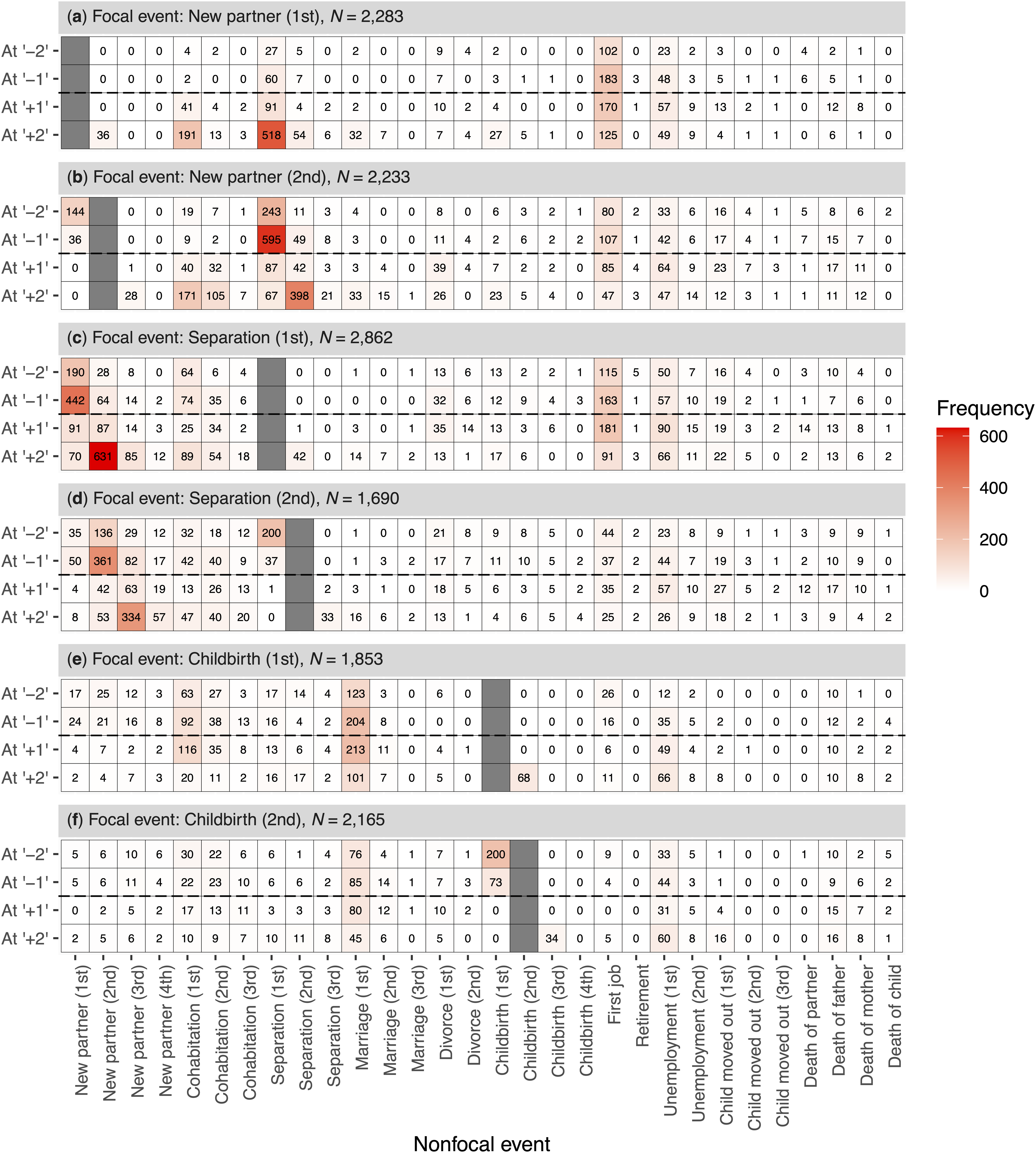
First, we present substantive results for all 30 life events of 14 event types based on our preferred model, referred to as the combined event model controlling for past events (model C2; see Figure 2). Second, we compare different models based on the same analysis samples to investigate undercontrol and overcontrol bias, along with life event co-occurrence (see Figures 3, 4, S6, S7, and S8). Differences between the individual event models relying on samples with varying inclusion criteria (models I1, I2, and I3) are reported in the Supplemental Materials (Section A; see also Figures S3, S4, and S5). Life Satisfaction Change Trajectories in the Combined Event Model Controlling for Past Events. Note. The dashed line represents the approximate time of event occurrence. The plot panel background color indicates the grouping by life event types. Effects should be interpreted on the 11-point scale used for life satisfaction (SD = 1.80). Confidence intervals (both 95% and 99%) reflect the precision of the estimated effects. Life Satisfaction Change Trajectories in the Individual (I3) and the Two Combined Event Models (C1 and C2). Note. The dashed line represents the approximate time of event occurrence. Effects should be interpreted on the 11-point scale used for life satisfaction (SD = 1.80). Model I3 = individual event model based on the combined event sample; Model C1 = combined event model with total control strategy; Model C2 = combined event model controlling for past events. See Figure S6 for all life events. Confidence intervals (both 95% and 99%) reflect the precision of the estimated effects. Co-occurrence of Six Focal Events with the 29 Nonfocal Events. Note. The dashed line represents the approximate time of event occurrence. The Y-axis represents time in relation to the focal event (i.e., frequency of occurrence of each nonfocal event up to two years before and after the focal event occurred). N = overall event occurrence of the focal event in the respective final analysis sample. See Figure S8 for all life events.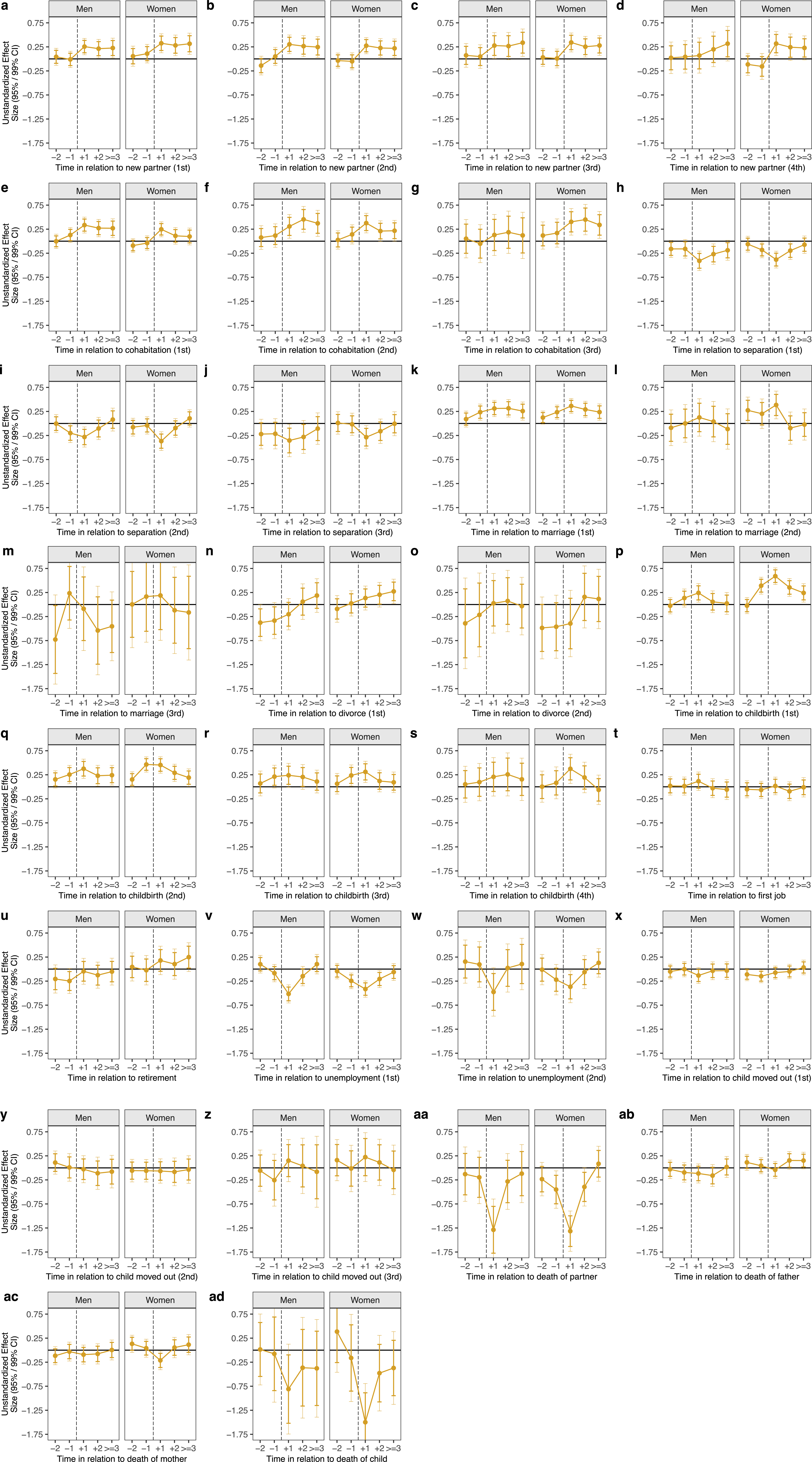
Substantive results for all life events
New partner
Finding a new romantic partner was associated with post-event increases in life satisfaction (see Figure 2(a)–(d)). These increases were long-lasting beyond three years for the first and second occurrences. For later occurrences of finding a new partner, life satisfaction still increased after the event but not consistently in a significant way.
Cohabitation
Entering cohabitation with a partner was associated with gains in life satisfaction in the year afterward (see Figure 2(e)–(g)). The positive effects persisted for men for the first and second occurrences and for women for the third occurrence, indicating long-lasting effects.
Separation
Separation from a partner was related to post-event decreases in life satisfaction for both men and women (see Figure 2(h)–(j)). In addition, women’s life satisfaction was already decreasing in the year before the event occurred for the first time. The post-event decreases were slightly more pronounced for the first event occurrence than for the second and third occurrences. For the second and third occurrences, this decrease in life satisfaction was only significant in the first year after separation.
Marriage
Experiencing marriage for the first time was associated with significant increases in life satisfaction already starting before marriage and peaking in the year directly afterward (see Figure 2(k)). Effects then declined in size but were still positive and significant at more than two years after the event suggesting a long-lasting influence. Effects were comparable in size for men and women. For second marriage, effects were smaller and only significant for women in the first year after the event (see Figure 2(l)). For third marriage, precision of the effect estimates was too low to reliably compare them to those of the first and second marriage (see Figure 2(m)).
Divorce
Going through a divorce for the first time was associated with lower life satisfaction in the two years before the event for men (see Figure 2(n)). Women’s life satisfaction was increased at three or more years afterward suggesting slight long-term benefits of divorce. Effects for second divorce were estimated quite imprecisely (see Figure 2(o)).
Childbirth
In general, childbirth was associated with increases in life satisfaction before and after the event (see Figure 2(p)–(s)). These effects were larger (1) in the year directly after the event was first reported, (2) for mothers compared to fathers, and (3) for first childbirth compared to later childbirths. Positive effects of childbirth were long-lasting beyond three years only for first childbirth for women and for second childbirth for men.
First job
There was no evidence that starting the first job was associated with changes in life satisfaction (see Figure 2(t)).
Retirement
Retirement was also not related to significant changes in life satisfaction (see Figure 2(u)).
Unemployment
Life satisfaction declined in the first year after experiencing unemployment for the first time (see Figure 2(v)). Women also experienced a significant decrease in the year before they became unemployed and in the second year afterward. For the second occurrence of unemployment (see Figure 2(w)), effects were similar in size but estimated with lower precision. Therefore, only women decreased significantly in the first year after becoming unemployed.
Child moved out
Experiencing a child move out of the household was mostly unrelated to life satisfaction (see Figure 2(x)–(z)). Only for the first occurrence, we found a significant negative effect for women in the year before the event that was small in size.
Death of partner
The death of a spouse or partner was related to a large decrease in life satisfaction in the year when the event was first reported (see Figure 2(aa)). Women also experienced a significant decrease in the year before their partner’s death.
Death of father
We found no significant average effect of death of one’s father on life satisfaction (see Figure 2(ab)).
Death of mother
For death of one’s mother, we only found a single significant average decrease, for women, in the year in which the event was reported (see Figure 2(ac)).
Death of child
Experiencing the death of a child was associated with a large decrease in life satisfaction in the year after the event which was more pronounced for women (see Figure 2(ad); only significant at p < .05 for men). Due the relative rarity of the event, error bars were wide.
Variation across combined event models: Potential undercontrol and overcontrol bias
To investigate potential undercontrol and overcontrol bias, we now compare effect estimates across the individual event models (I3) and the two combined event models (models C1, total control strategy, and C2, controlling for past events). Differences in effects between the individual event model and the combined event model controlling for past events (I3 vs. C2) indicate potential undercontrol bias. Differences between the combined event model with total control strategy and the combined event model controlling for past events (C1 vs. C2) indicate potential overcontrol bias.
All things considered, we mostly found evidence for robustness of the individual event estimates (see Figure S6). High similarity between effect estimates (and also their precision) was especially evident for events unrelated to romantic relationships and family life (aggregated, standardized effect size differences between models I3 and C2 indicating undercontrol bias: M = 0.33, Mdn = 0.31 [IQR 0.12–0.46], SD = 0.26; aggregated, standardized effect size differences between models C1 and C2 indicating overcontrol bias: M = 0.15, Mdn = 0.09 [IQR 0.03–0.20], SD = 0.17; see Figures S4 and S7). Some of these events, notably retirement and death of a partner, rarely co-occurred with other events, which may explain why confounding through other life events may not be a big concern here (see Figure S8). Unemployment co-occurred in a rather unsystematic way with many types of events, which again may explain why other life events did not introduce systematic confounding. First job mostly co-occurred with events typical in young adulthood such as first partnership and first separation; confounding effects may thus operate in different directions leaving no large bias on average.
In life events related to romantic relationships and fertility, however, confounding through other events played a substantially larger role (undercontrol bias: M = 0.87, Mdn = 0.73 [IQR 0.39–1.27], SD = 0.60; overcontrol bias: M = 0.36, Mdn = 0.16 [IQR 0.06–0.38], SD = 0.50; see Figure S7). To illustrate how under- and overcontrol bias may play out, we will now discuss differences in results across models for the events new partner, cohabitation, separation, marriage, and childbirth. These events may play out in any order, and our estimates average across the sequences that are in the actual data. However, these events often occur as a chain of normative transitions, which can explain certain biases in the estimated average effects.
New partner
Results showed that effects of finding a new partner on life satisfaction changed in size depending on the control strategy (see Figures 3(a) and (b) & Figures S6(c) and (d)). In general, individual event models indicated positive effects. These were estimated to be larger when controlling for preceding events than in the individual event models, in particular for men and for the second new partner (estimates in the year after finding a new partner, I3: b = 0.16, 99% CI [−0.01, 0.33]; C2: b = 0.30, 99% CI [0.11, 0.50]). Finding a new partner mostly co-occurred with other relationship events (see Figures 4(a) and (b) & Figures S8(c) and (d)). Within two years, this event was frequently preceded by separation events. If we fail to account for the negative effects of such preceding separations, the positive effects of the event new partner can be underestimated due to undercontrol bias.
New partners were not only frequently preceded by separations but also succeeded by separations, which leads to concerns about overcontrol bias in the post-event trajectory. Two years after the event, we found that life satisfaction increased to a larger extent in the combined event model with total control strategy (e.g., women, first new partner, b = 0.37, 99% CI [0.15, 0.59]) than in the combined event model controlling for past events (first new partner, b = 0.28, 99% CI [0.07, 0.50]). The differences in magnitude here were, however, smaller than those suggesting undercontrol bias (see Figures S7(a)-(d)). Thus, we may overestimate the positive effects of new partners if we “control away” the effects of subsequent separations and thus effectively condition on relationship success.
Cohabitation
We also found evidence for both undercontrol and overcontrol bias in the post-event effect estimates for cohabitation, but this pattern was different than the one for a new partner (see Figures S6(e)-(g)). Changes to life satisfaction were generally less positive if we controlled for other events, indicating that undercontrol leads to an overestimation. Estimates were also mostly smaller in the model with total control strategy than in the model controlling for past events, indicating that overcontrol may lead to underestimation. Considering the pattern of event co-occurrence (see Figures S8(e) and (f)), one explanation for this pattern is that without control for previous life events, some of the positive effects of finding a new partner are attributed to cohabitation; with control for future life events, some positive downstream effects due to marriage and childbirth are not attributed to cohabitation.
Separation
Another event where model comparisons suggested the presence of both undercontrol and overcontrol bias was separation (see Figures 3(c) and (d), Figures S6(j) and S5(h) and (i)). For women, we found that, controlling for past events, life satisfaction already significantly decreased in the year before first separation (b = −0.18, 99% CI [−0.35, −0.02]) and then further decreased and remained lowered in the years afterward (b = −0.38, 99% CI [−0.56, −0.21] and b = −0.20, 99% CI [−0.38, −0.01]). These negative effects were underestimated in individual event models without control for co-occurring events (b = −0.08, 99% CI [−0.23, 0.08]; −0.28, 99% CI [−0.45, −0.11]; b = −0.11, 99% CI [−0.29, 0.06]). Men’s estimates displayed a similar pattern but to a lesser extent. Considering the potential for overcontrol bias, models that also controlled for future events generally overestimated the negative long-term effects of separation. Thus, model comparisons indicated that the magnitude and significance evaluation of effects of separation depended on the model choice and indicated both undercontrol and overcontrol bias.
Looking at the overlap of nonfocal life events co-occurring with separation (see Figures 4(c) and (d) & Figure S8(j)), we found that it was most frequently preceded and succeeded by new partner events. Thus, the pattern of bias can be explained by the fact that some individuals who separate still have elevated levels of life satisfaction due to a newly started relationship; if we fail to account for this higher starting point, we underestimate the decline due to separation. Conversely, some individuals who separate subsequently find a new partner which renders the long-term consequences of separation less grave on average. If we erroneously control away the impact of future life events (which would not have occurred without the separation), the resulting image is too gloomy. Later occurrences (second and third separation) were frequently preceded by the previous separation two years before. Cohabitation also happened somewhat frequently around separation.
Because separation is part of a causal chain of related romantic relationship events, an appropriate control strategy is needed: The current results demonstrate that it is on the one hand necessary to control for preceding events. Otherwise, positive events in the past, mostly finding a new partner, produced upwardly biased change estimates. On the other hand, controlling for events following separation, often finding a new partner, introduced bias. In this case, estimates were downwardly biased because controlling for future events conditioned on those who remained single.
Marriage
We found evidence for both undercontrol and overcontrol bias through other events in estimates of marriage which was comparable in size to bias for the new partner events. However, the direction of average bias adjustment was flipped (see Figure S6(k)). For example, men’s increase in life satisfaction in the year after marriage was adjusted downward in the combined event models suggesting the presence of undercontrol bias through preceding positive events. Most frequently, first marriage was preceded by cohabitation (see Figure S8(k)) which also showed generally positive effects on life satisfaction. These lagged effects of an earlier cohabitation might be wrongly attributed to marriage in estimates of an individual event model. After marriage, women’s long-lasting positive changes in life satisfaction appeared smaller when controlling for future life events, which may be explained by downstream positive events such as experiencing childbirth within two years after marriage (see Figure S8(k)).
Childbirth
The magnitude of effects on life satisfaction when experiencing childbirth also depended on the control strategy (see Figures 3(e) and (f) & Figures S6(r) and (s)). Considering the birth of a first child in particular, failing to control for past life events mostly led to more positive effect estimates, whereas erroneously controlling for future life events led to less positive effect estimates. In contrast to later childbirths, first childbirth was frequently preceded and succeeded by positively valenced relationship events such as cohabitation and marriage (see Figures 4(e) and (f) & Figures S8(r) and (s)). Therefore, bias adjustment for first childbirth reduced the size of the effect estimates and increased it again somewhat when only adjusting for preceding events but not for succeeding ones (as we argue is the most appropriate control strategy).
Life events with no substantial patterns of bias
There were two events where bias was small and limited to either men or women: First, a small amount of undercontrol bias through the experience of other events was evident in men’s reaction to first divorce (see Figure S6(n)). Second, effect estimates of child moved out were overall very similar across models. Only women experiencing the second occurrence of a child moving out differed in their estimates of post-event change depending on the control strategy (see Figure S6(y)).
Even though first job and unemployment relatively frequently co-occurred with other life events (see Figure S8(t, v, w)), differences between the individual event model based on the combined event sample and the combined event models were small indicating no substantial bias through other life events (see Figure S6(t, v, w)). For the remaining types of life events—retirement and the deaths of a partner, child, father, or mother—we found neither substantial patterns of event co-occurrence nor of undercontrol or overcontrol bias.
Robustness check
Lastly, we also ran models for the combined event models that did not include the events death of father, mother, and child, which allowed us to use a larger sample including more waves of the SOEP (as these events were added to the questionnaire only in later waves). These events did not show substantial undercontrol or overcontrol bias in the main analyses, which should render their omission unproblematic. Results based on this larger sample largely supported our conclusions and can be found in the Supplemental Materials (see Figures S9 and S10).
Discussion
We analyzed the effects of life events on life satisfaction in a large German panel data set. In contrast to the vast majority of previous studies (cf. Kettlewell et al., 2020), we investigated multiple events simultaneously and evaluated the degree to which effect estimates for each event were biased by the influence of events that preceded, or by control for events that followed. Across all life events, we found more evidence for the robustness of individual event models than for substantial shifts in coefficients depending on the control strategy. However, for the interrelated life events in the romantic relationship and family formation domain, whether or not other events were considered did influence the magnitude of effects as well as their statistical significance.
Are effect estimates of life events on life satisfaction biased by other life events?
The main goal of our study was to estimate life satisfaction change trajectories for each life event, minimizing potentially confounding effects of other life events. We used three models with different control strategies to investigate the interdependence of life events which often occur in close succession over the life span (Bleidorn et al., 2018; Hutteman et al., 2014). This clustering of events is especially prominent in the “demographically dense” (Manning, 2020, p. 799) period of young adulthood (see also Bleidorn & Schwaba, 2017; Roberts & Davis, 2016). Recent methodological pieces have emphasized the importance of selecting appropriate sets of control variables, including the omission of inappropriate controls, such as collider variables (Rohrer, 2018; VanderWeele, 2019; Wysocki et al., 2022).
For many life events, we found little evidence of bias induced by other life events, adding credence to previous studies that investigated within-person changes in well-being surrounding events using individual event models (e.g., Clark & Georgellis, 2013; Denissen et al., 2019). We found robustness across models for first job, retirement, unemployment, children moving out of the household, and the deaths of partner, father, mother, and child. This is in line with Kettlewell et al. (2020) who found highly similar effects for the events unemployment, retirement, and death of partner in the individual event model and a combined event model with total control strategy.
Our systematic investigation of event interdependence corroborates that it is possible in these cases to estimate effects that are unbiased by the occurrence of other events. Whereas the deaths of father and mother did not, on average, affect life satisfaction in our sample, we found the largest overall changes for death of partner and death of child which were also the rarest events (Asselmann & Specht, 2022; Moor & de Graaf, 2016; Reitz et al., 2022). These events rarely co-occurred with other events.
For the much more frequent events first job and unemployment, it is less clear why no interdependence with other events was found despite frequent co-occurrence. Other research has shown severe declines in life satisfaction following unemployment that were in part moderated by contextual factors such as re-employment expectations but also by having children (Lawes et al., 2022a, 2022b; Lucas et al., 2004; Luhmann et al., 2014b).
A different perspective emerged for events related to romantic relationships and childbearing. Here, we found larger differences between individual and combined event models. This was the case for new partner, separation, cohabitation, marriage, and childbirth. These types of events are usually grouped non-randomly across the life span (i.e., clustered in early adulthood; Hutteman et al., 2014), and causal relationships exist between them (see Bleidorn et al., 2020). For example, both cohabitation and separation require finding a (new) partner beforehand. Therefore, it makes sense that, for these events, we found more pronounced bias through co-occurring events in predicting life satisfaction. The bias revealed by model comparisons was relatively small in terms of the outcome (i.e., not larger than 13% of a SD in life satisfaction) but sometimes quite substantial relative to the effects of interest (up to 68% of the effect of the life event). While bias was not as large as to flip the direction of any effect in this particular study, this could happen with other combinations of life events. Moreover, in multiple cases the choice of model also affected the significance evaluation of effects. Thus, bias through event interdependence can influence how research on the influence of life events on life satisfaction is conducted and interpreted. This bias also affects the evaluation of popular theories such as set-point theory regarding adaptation over time after experiencing a life event (Diener et al., 2006; Luhmann & Intelisano, 2018). If, for example, the long-term effects of first childbirth are biased downward in models that control for future life events (see Figure 3(e)), this affects the evaluation of set-point theory. Controlling for other life events regardless of when they occurred could, thus, lead to a systematic underestimation of the long-term effects. These patterns of bias also matter for “bad is stronger than good” regarding the stronger effects of negative compared to positive events (Baumeister et al., 2001). A valid estimation of the effects of positive and negative events is clearly a precondition for the evaluation of their relative impact.
Notably, patterns of bias varied between events. There was not, for example, a general trend that adjusting for other events produced lower estimates or estimates closer to zero. Following from that, we cannot assume that unadjusted, individual event models typically provide an upper or lower bound for effects. Instead, we propose that the types of nonfocal events that each combined event model typically controlled for and the nature of their effects on life satisfaction determined the average direction of bias. Our analysis of the frequency of event co-occurrence provided initial evidence for this. For example, for separation, we found evidence for both undercontrol and overcontrol bias in a pattern consistent between the first and second occurrences. Estimates right before and right after the event were biased upward by confounding through previous life events (for the most part positive events such as the beginning of the relationship or cohabitation). Longer-term effects, however, were biased downward when adjusting for future life events (mostly finding a new partner) indicating overcontrol bias when adopting a total control strategy. This is consistent with a recent analysis of effects of separation on well-being that showed more positive post-event trajectories if re-partnering occurred within a year (Brüning, 2022).
Taken together, these results emphasize the need to carefully consider the appropriate control strategy (Rohrer, 2018; Wysocki et al., 2022) when estimating effects of clustered events related to relationships and fertility. The examination of event co-occurrence revealed meaningful clusters and sequences of interrelated life events that often transpire in a normative chain of life events in certain developmental phases (Hutteman et al., 2014). This contrasts Kettlewell et al. (2020) who speculated that event co-occurrence was simply uncommon (without actually examining it). Thus, when attempting to estimate the causal effect of a single life event on well-being, we recommend controlling for other, preceding life events occurring in the previous two years or earlier.
How does the experience of life events affect life satisfaction?
Our study also provided substantive insights into the trajectories of life satisfaction around important life events including more life events than previous studies and focusing on recent decades in our main models (2007–2020). The life events we analyzed can be grouped into three groups according to their effects on life satisfaction—positive, negative, and neutral or unclear.
Positive events
We found that the events new partner, cohabitation, marriage, and childbirth affected life satisfaction positively (see Clark et al., 2008; Clark & Georgellis, 2013). Finding a new partner was followed by post-event increases in life satisfaction (Kamp Dush & Amato, 2005; Soons et al., 2009). For women compared to men, we found more significant positive effects beyond two years at later occurrences.
Cohabitation was similarly followed by increases in life satisfaction (Blekesaune, 2018; Kamp Dush & Amato, 2005; Soons & Kalmijn, 2009; cf. Perelli-Harris et al., 2019). These positive effects were stronger and longer lasting for men for the first two occurrences.
First marriage had positive effects on life satisfaction starting in the year before the event and persisting afterward (Clark & Georgellis, 2013; Qari, 2014; cf. Perelli-Harris et al., 2019). Effects for second marriage, however, were only positive for women in the year after the event was reported.
Childbirth had a positive effect on life satisfaction in the year before and the year after the event (Anusic et al., 2014a; Krämer & Rodgers, 2020). Effects were, however, more pronounced for women, especially for first childbirth (cf. Nelson-Coffey et al., 2019). Effects of later births were overall less pronounced (Kohler et al., 2005).
Negative events
Conversely, separation, unemployment, death of partner, and death of child affected life satisfaction negatively. In line with previous studies, we found a short-term negative effect of separation on life satisfaction in the year after the event that was relatively similar for men and women (Brüning, 2022; Rhoades et al., 2011; Soons et al., 2009). For first separation, there was also evidence for a decrease in the second year after the event.
Unemployment was also followed by a decrease in life satisfaction (Clark & Georgellis, 2013; Lawes et al., 2022b; Luhmann et al., 2014b). After one (men) or two years (women), adaptation set in, possibly due to reemployment (cf. Lucas et al., 2004). As described in the Supplemental Material (Section B), we found evidence for period effects (Bell & Jones, 2015). Models based on all years from 1984 onward indicated more severe effects than our final models based on more recent data collected during times of low unemployment rates in Germany.
The deaths of partner or child both indicated very large decreases in life satisfaction in the year after the event (Anusic et al., 2014b; Asselmann & Specht, 2022; Moor & de Graaf, 2016; Reitz et al., 2022). Women also already experienced a smaller decrease in the year before partner bereavement. Adaptation occurred within a year after the death of a partner was first reported (Asselmann & Specht, 2022).
Neutral or unclear events
For the remaining events, divorce, first job, retirement, child moved out, death of father, and death of mother, no consistent effects were found. In contrast to previous research on divorce (Clark & Georgellis, 2013; Denissen et al., 2019; van Scheppingen & Leopold, 2020), we found minimal effects, that is, only a small long-term increase in women’s life satisfaction. Two facts might explain this: First, unlike other studies we analyzed divorce as a distinct event from separation. Second, our model based on all available survey years showed the previously found negative anticipation effect of divorce, too (see Supplemental Material, Section A). Possibly, the normative meaning of divorce for evaluating one’s life has diminished in recent decades.
Repeated life events
Similar to Luhmann and Eid (2009), our results also demonstrate that the average effects of life events can differ depending on how often people experience them over the life span. Going beyond previous research, we included additional waves of data with more types of life events, incorporated retrospective biographical information where possible (see Table 1), and controlled for the occurrence of other events. Again, findings differ across event types: For childbirth, we see evidence for attenuated effects of later occurrences (especially in the full sample, see Figures S3(p)-(s)), whereas this was generally not the case for partnership, separation, and cohabitation. For other, luckily quite rare events such as bereavement or divorce, we can currently not make reliable comparisons between repeated occurrences due to low precision at later occurrences.
Limitations
Our study used nationally representative panel data and employed fixed-effects models (McNeish & Kelley, 2019) to exclusively analyze within-person variation addressing threats to both external and internal validity. Still, several limitations applied that future research might address.
First, the list of life events we analyzed is not set in stone. Our selection was based on both theoretical deliberations (i.e., discrete status-changing transitions) and availability in the data source. Other important life events that were not available in the SOEP might also matter for event interdependence. One example of a life event that is difficult to trace with panel data because of higher drop-out rates is residential mobility. Still, in the domain of romantic relationships and fertility where we found evidence for bias through other life events, the selection is more or less complete and also goes beyond previous research by clearly distinguishing repeated event occurrence based on biographical information.
Second, to interpret the effects of life events on life satisfaction as causal effects, we need to assume that, beyond the included life events, no other time-varying confounds exist. For example, if being promoted at work increases both the likelihood of entering a new relationship and life satisfaction, this could bias the estimated trajectories for the life event new partner. At the same time, fixed-effects models allowed us to rule out the confounding influence of time-invariant background characteristics (similar to a propensity score matching design but also with regard to unmeasured confounding; McNeish & Kelley, 2019) and to focus on within-person variance (similar to a person-mean centered variable in multilevel modeling; Hamaker & Muthén, 2020). We also controlled for aging (Luhmann et al., 2014a) and initial elevation bias (Shrout et al., 2018). The problem of time-varying confounding is not unique to our study but affects the literature on life events in general, at least within psychology. In contrast, studies from economics frequently leverage so-called exogenous variability to potentially achieve higher internal validity (Grosz et al., 2023). For example, policy reforms may introduce variability into retirement age which can in turn be used to identify the effects of retirement on well-being. Such approaches come with their own assumptions, require sources of exogenous variation for each life event to be investigated, and usually target narrower causal effects—thus, they do not necessarily replace the within-person approach favored in psychological well-being research, but they could be a valuable complement in future studies.
Third, we examined average trajectories of change, but the effects of life events of course vary between individuals—for example, not every new relationship increases life satisfaction equally. Other studies investigate such interindividual differences in change (Doré & Bolger, 2018), such as differences correlated with subjective event perception (Luhmann et al., 2021a). The subjective perception of major life events in terms of dimensions such as emotional significance or extraordinariness (Luhmann et al., 2021a), as well as changes therein (Haehner et al., 2023), has been shown to relate to variation in well-being during the experience of life events independent of other established covariates (e.g., personality). Such follow-up questions raise their own interesting inferential concerns (Rohrer & Arslan, 2021)—for example, a correlation between a third variable and differences in effects does not imply that the third variable causes those differences; scaling issues can introduce spurious effect heterogeneity, and life satisfaction scales tend to be skewed—which should be tackled in future studies.
Fourth, our findings only directly apply to the cultural and socio-economic context of Germany. Previous studies have found that there is cultural variation in the normative timing of life events related to personality maturation in young adulthood (Bleidorn et al., 2013). Still, we believe that the phenomenon of interdependent, co-occurring life events is relevant in all cultures with sequences of life events that occur clustered in the developmental phases of emerging and young adulthood. Thus, patterns of confounding (and the risk of introducing overcontrol bias) should be equally relevant.
Lastly, we relied on relatively normative life course narratives to interpret bias in the context of common sequences of life events. But some supposedly less normative sequences (e.g., marriage after childbirth, see Figures 2(e) and (f) were just as common in the data, and the estimated models considered event overlap regardless of normativeness. How much the societal and subjectively perceived normativeness of individual event sequences matters for well-being should be investigated in future research (e.g., extraordinariness vs. ordinariness dimension of the Event Characteristics Questionnaire; Luhmann et al., 2021a). Paying more attention to specific sequences may also help overcome some of the “artificiality” of our approach of isolating the effects of individual life events. For example, for an individual, the effects of childbirth may appear inseparable from the effects of a previous marriage. Considering sequences of events as treatment packages may allow to detect such effects, even if it poses its own inferential challenges.
Conclusion
We set out to comprehensively examine the effects of life events on life satisfaction while considering the potentially confounding influence of other preceding or succeeding life events. We did not find overwhelming evidence for such confounding in individual event models which is good news for the field of well-being research. Still, for life events in the domains of romantic relationships and fertility that are clustered and likely to follow a normative sequence, our model comparisons revealed meaningful patterns of bias shaped by event co-occurrence. Therefore, we believe that it is worth the effort for researchers interested in estimating effects of these life events on well-being to carefully consider their control strategy and pay attention to confounding bias through preceding nonfocal events.
Supplemental Material
Supplemental Material - Life events and life satisfaction: Estimating effects of multiple life events in combined models
Supplemental Material for Life events and life satisfaction: Estimating effects of multiple life events in combined models by Michael D. Krämer, Julia M. Rohrer, Richard E. Lucas and David Richter in European Journal of Personality.
Footnotes
Acknowledgements
We thank everyone at the German Institute for Economic Research (DIW) involved in making data from the Socio-Economic Panel (SOEP) available to the research community.
Author contributions
Michael D. Krämer: conceptualization, data curation, formal analysis, methodology, visualization, and writing—original draft preparation; Julia M. Rohrer: conceptualization, methodology, and writing—review and editing; Richard E. Lucas: conceptualization, methodology, and writing—review and editing; and David Richter: conceptualization, supervision, methodology, and writing—review and Editing.
Declaration of conflicting interests
The author(s) declared no potential conflicts of interest with respect to the research, authorship, and/or publication of this article.
Funding
The author(s) received no financial support for the research, authorship, and/or publication of this article.
Publications in conference proceedings
Krämer, M. D., Rohrer, J. M., Lucas, R. E., & Richter, D. (Feb 2023). Life events and life satisfaction: Estimating effects of multiple and repeated events in combined models. Poster presented at the SPSP 2023 Preconference Happiness and Well-Being, Atlanta, GA.
Open science statement
The study materials and analysis scripts used for this article can be accessed at https://osf.io/qdtb5/ and the preregistration at https://osf.io/kajrd. Data access is given to researchers at  .
.
Supplemental Material
Supplemental material for this article is available online.
Notes
References
Supplementary Material
Please find the following supplemental material available below.
For Open Access articles published under a Creative Commons License, all supplemental material carries the same license as the article it is associated with.
For non-Open Access articles published, all supplemental material carries a non-exclusive license, and permission requests for re-use of supplemental material or any part of supplemental material shall be sent directly to the copyright owner as specified in the copyright notice associated with the article.
