




Abstract
This study explores the efficacy of sensory clothing in providing compressive tactile stimulation to different upper body locations. Building upon Grandin's findings on the effectiveness of compressive tactile stimulation, we aim to evaluate the user experience on wearable compressive stimulation on various upper body locations through development of compression vest equipped with inflatable sections to ascertain which location best approximates the comforting compression. Through a randomized, dynamic evaluation involving ten female participants, employing a combination of the think-aloud protocol and post-use surveys, we analyzed the user experience of the vest prototypes providing compressive tactile stimulation on different upper body locations. Finally, virtual prototypes of the compression vests were created using the CLO 7.1 program, with particular attention given to stress distribution, strain patterns, and pressure points, underscoring the feasibility and potential of incorporating tactile stimulation into wearable technology for emotional well-being.
Introduction
The acceleration of societal differentiation and individualization has led to a weakening of interpersonal relationships and emotional bonds, resulting in increased instances of individual isolation. The emergence of the COVID-19 pandemic has further exacerbated this trend, with non-face-to-face interactions becoming more prevalent, leading to feelings of anxiety and loneliness among individuals. Scholars have highlighted the significance of physical touch and tactile stimulation in mitigating stress and promoting emotional well-being in both humans and animals (Dunbar, 2010; Grewen et al., 2003; Moyer et al., 2004; Sumioka et al., 2013). Particularly, the absence of affectionate physical contact during infancy can have severe consequences, including compromised health and social development, among children with sensory impairments (Cha et al., 2008).
Research by Grandin (1992) underscores the importance of tactile stimulation, particularly for individuals with autism, who often exhibit heightened sensitivity to touch and sound. Grandin's innovative squeeze machine, designed to deliver pressure evenly across the body, has demonstrated therapeutic benefits in reducing anxiety and promoting calmness, not only among individuals with autism and ADHD but also among general college students. This underscores the universality of the soothing effects of compressive stimulation across diverse populations.
Given the potential of tactile stimulation to promote emotional well-being, this study explores the efficacy of sensory clothing in providing compressive tactile stimulation to different upper body locations. While existing research has focused on developing products for individuals with developmental disabilities, such as ADHD and sensory processing disorder, there remains a paucity of research on products designed to replace physical contact for general populations seeking emotional comfort. Building upon Grandin's findings (1992) on the effectiveness of compressive tactile stimulation, we aim to evaluate the user experience on wearable compressive stimulation on various upper body locations through development of compression vest equipped with inflatable sections to ascertain which location best approximates the comforting compression. Through a randomized, dynamic evaluation involving ten female participants, employing a combination of the think-aloud protocol and post-use surveys, we analyzed the user experience of the vest prototypes providing compressive tactile stimulation on different upper body locations. Statistical analysis, including the Tukey Honestly Significant Difference (HSD) Test, is employed to compare survey results, complemented by qualitative evaluations through the think-aloud protocol. Finally, virtual prototypes of the compression vests were created using the CLO 7.1 program, with particular attention given to stress distribution, strain patterns, and pressure points, underscoring the feasibility and potential of incorporating tactile stimulation into wearable technology for emotional well-being.
Background
Physical Touch
Human interpersonal relationships are inherently tactile, involving various forms of physical contact, whether direct or indirect. Direct physical contact involves direct touching between individuals, whereas indirect physical contact occurs when touch is mediated through clothing or intermediary objects. Tactile interactions, including hugs, handshakes, pats on the back, and kisses, play crucial roles in emotional bonding and development between individuals (Cha et al., 2008). Among these, hugs stand out as particularly emotionally impactful (Tsetserukou, 2010).
Research indicates that physical contact significantly reduces feelings of loneliness, as even brief instances of touch yield observable effects, underscoring the substantial potential of tactile stimulation in alleviating emotional distress (Tejada et al., 2020). Tactile sensations and deep pressure associated with hugging serve as crucial channels of emotional communication between infants and caregivers. Studies show that infants experience greater increases in heart rate variability, an indicator of parasympathetic activity, during hugs compared to other forms of physical contact, with the pressure exerted during tight hugs being particularly significant (Yoshida & Funato, 2021).
Several research endeavors have explored indirect methods of implementing hugging through technological means. For instance, the “Hug me” haptic jacket employs actuators to simulate tactile sensations, enabling remote touch transmission between individuals (Cha et al., 2008). Similarly, the “Huggy Pajama” system facilitates virtual hugs through inflatable air pockets, heating elements, and visual cues (Teh et al., 2008), while “HaptiHug” offers a wearable tactile display mimicking hug-like pressure pattern (Tsetserukou, 2010). Furthermore, the “Hugging vest” utilizes shape memory alloy to replicate deep touch pressure effects remotely (Duvall et al., 2016). “HugShirt,” developed by Cute Circuit in 2002, features actuators embedded in the arms and torso to recreate the sensation of a hug. The accompanying app measures physiological parameters such as pressure, heart rate, and temperature, facilitating the transmission of hug data wirelessly (cutecircuit.com). “Hug Over a Distance” expands air pockets in response to touch signals, simulating the sensation of a hug remotely (Muller et al., 2005). These technological advancements underscore the ongoing efforts to integrate tactile experiences into remote interactions, offering innovative solutions to address emotional needs in contemporary society.
Existing studies (Duvall et al., 2016; Muller et al., 2005; Teh et al., 2008; Tsetserukou, 2010) do not consider how compression is perceived on different body areas and are confined to only small parts of the body. Consequently, further research is essential to explore which areas of the upper body should be targeted with compression to replicate the emotional impact of a hug effectively.
Compression Clothing
Compression denotes the application of pressure to condense an object into a smaller space or to exert pressure from various directions. Textiles act as secondary skin, providing protection and nurturing the body, which positions them as valuable tools for therapeutic tactile interventions (Goncu-Berk et al., 2020). Compression garments such as tight-fitting clothes, weighted vests, and blankets are used to alleviate symptoms of various medical conditions. For example, medical socks and leggings precisely regulate pressure on the legs to aid the return of blood to the heart and prevent stagnation (Bringard et al., 2006).
Grandin (1992) highlighted the effectiveness of deep touch pressure in reducing anxiety and arousal levels among children, improving their focus. This type of pressure, received through firm touch, holding, swaddling, or hugging, has shown to reduce anxiety across different groups, including those without sensory processing disorders and infants (Grandin, 1992). Applied correctly, this pressure stimulates the parasympathetic nerves, creating a sense of stability (Edelson et al., 1999). Weighted deep pressure garments are particularly useful in managing anxiety in individuals with cognitive, developmental, or psychological disorders (Chen et al., 2011). Such garments include weighted vests, blankets, and bags, which are increasingly used by occupational therapists in schools and clinics. Noteworthy products include Sensor Direct's weighted vest with adjustable pockets and Velcro for custom compression, Kozie Clothes’ denim vest designed for snug fit with pockets for weights. And Fun and Function's vest, developed in collaboration with therapy communities, offering various options for weight and pressure (sensorydirect.com; kozieclothes.com; funandfunction.com).
On the other hand, compression clothing that uses air injection works by inflating air pockets through tubes to exert pressure. For example, Sensoree's Inflata Corset is a medical biomedia garment with built-in heart rate sensors. It inflates automatically in response to the wearer's emotions to reduce nervous system arousal and enhance emotional stability. CalmWear features tactile actuating through a strategically located and textured air bladder that provides automated and dynamic compression in response to change in heart rate variability and respiration rate as indicators of anxiety (Goncu Berk et al., 2021). Similarly, Squease vest uses a pump to inflate air pockets, compressing the torso for therapeutic effects and includes adjustable Velcro straps for a custom fit. Another example is the HUGgy vest, which features inflatable sections and adjustable drawstrings to ensure a tailored fit, making it suitable for both the general population and individuals with developmental disabilities. The compression area of the Inflata Corset is focused on the front chest, near the heart. The Squease vest covers both the front and back of the upper torso, while the HUGgy targets the front chest and upper back, including the shoulders (squease.nl; huggy.co.kr; sensoree.com).
Previous research prototypes employing electronic devices such as Hug me, Huggy Pajama, HeptiHug, and Hugging Vest have been constrained by limited stimulation areas, primarily due to the spatial limitations imposed by the placement of electronic actuators, typically confined to flat regions of the human body. Similarly, compression clothing products incorporating Deep Touch Pressure from Sensory Direct, Kozie Clothing, and Fun and Function exhibit limitations in the placement of weight pockets, predominantly restricted to flat regions of the torso. In contrast, compression clothing products utilizing expansion pressure, such as Hug Over a Distance, Squease vest, and HUGgy, offer the potential to deliver hug-like effects over a broader area, including the contours of the human body. A comprehensive overview of compression positions in prior studies and corresponding compression clothing products is presented in Table 1.
Tactile Stimulation Position of Previous Researches and Products.
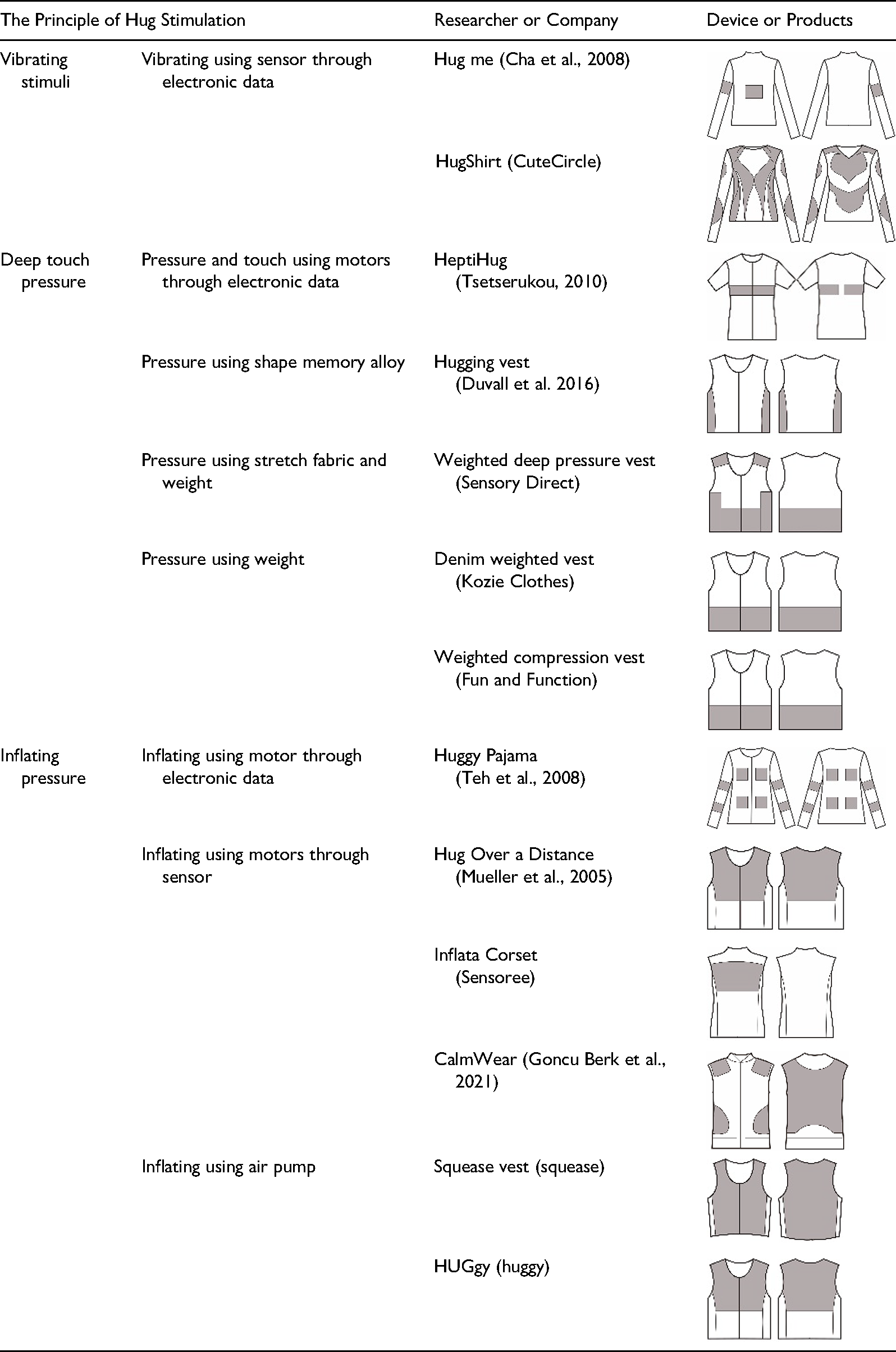
We identified problems and established concepts and strategies for research direction through prior research and a survey of current products. This study is significant in advancing the understanding of compressive tactile stimulation addressing key gaps in prior research. Unlike earlier studies focused on limited body areas or specific populations such as children or people disabilities, this research evaluates user experiences with wearable compressive stimulation across various upper body locations using compression vests equipped with inflatable sections. By identifying the locations that best replicate the comforting effects of a hug, the study provides valuable insights into optimizing wearable designs for emotional and therapeutic benefits. This approach addresses the growing emotional challenges of modern society, such as isolation and anxiety, and broadens the application of compression technology to benefit the general population. These findings pave the way for innovative solutions to enhance emotional well-being in an increasingly touch-deprived world.
Methods
Prototype Development
We designed and constructed four distinct vests with varying inflatable compression regions on the upper body to assess the effect of compressive tactile stimulation location on the user experience. Yoo and Lee (2005) recommended a vest as an effective clothing item for constant upper body pressure stimulation. Following the arguments of this prior study, we adopted the vest item as a prototype for this study.
Existing studies, as outlined in Table 1, primarily apply dynamic and static tactile stimulation through actuators such as vibration motors, shape memory alloys, and inflatable bladders. These methods are often limited to small, localized areas of the body. We found that pressure delivered via air injection more closely mimics the tactile sensation of hugging than pressure applied using weights or other actuators. This is due to the soft and elastic nature of human skin, which responds to pressure similarly to an inflated surface rather than a rigid or weighted one. Therefore, this study focuses on delivering tactile stimulation resembling hugging through air injection, leveraging inflatable bladders allowing for a more effective and broader application across larger areas of the body.
The inflatable compressive tactile stimulation areas within the vest encompassed four distinct zones: the shoulders and anterior torso (P1), the shoulders and posterior torso (P2), the anterior and posterior torso excluding the shoulders (P3), and the entire torso inclusive of the shoulders (P4). Selection of these body locations was informed by previous research. Notably, the shoulders, characterized by pronounced curvature and minimal adiposity, experience heightened pressure from clothing due to their weight-bearing function, as corroborated by previous research (Jeon et al., 2020; Jun & Jang, 2020; Liu et al., 2013). Moreover, the breasts, owing to their acute curvature and consequent fabric strain, are subjected to significant pressure, while the back, characterized by diminished adiposity and substantial curvature changes, similarly experiences elevated pressure levels.
Thus, based on these empirical insights, the locations for inflatable compressive tactile stimulation areas in the vest prototypes were strategically determined around the chest, back, and shoulders, as delineated in Figure 1.
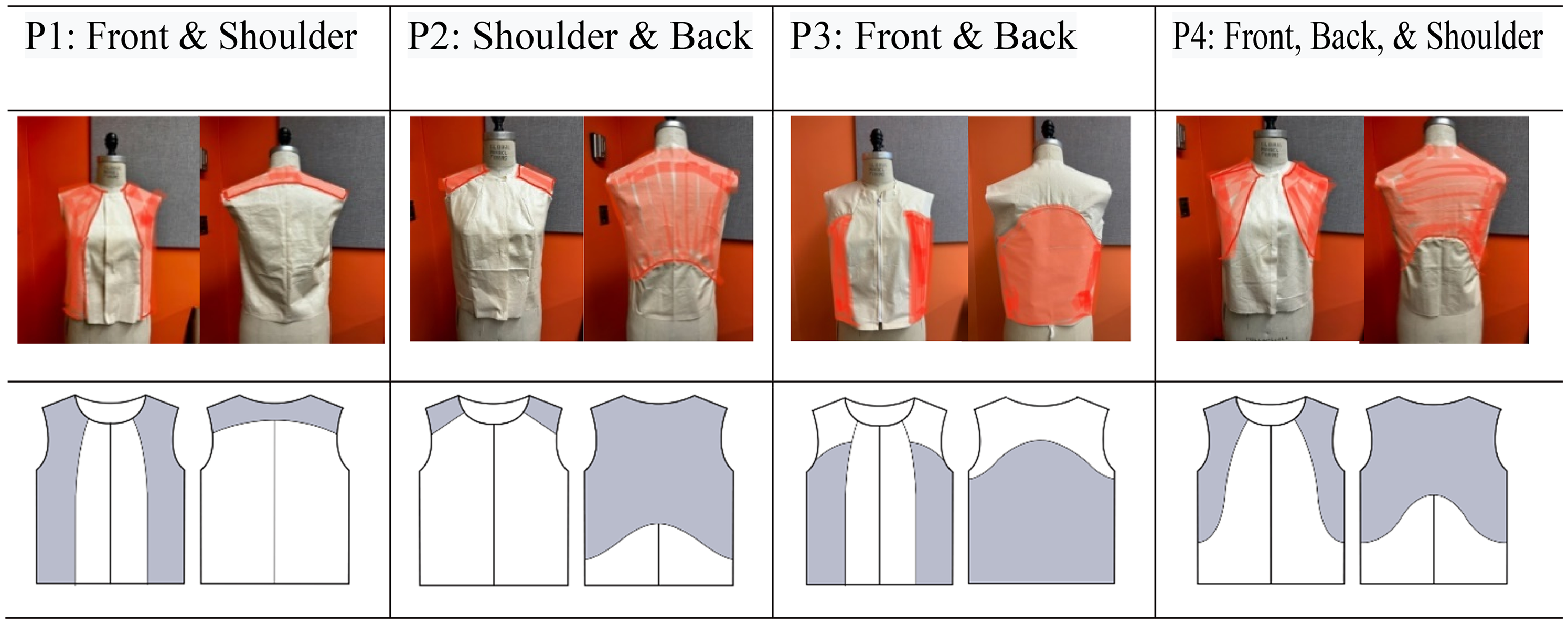
Vest Prototypes with Inflatable Zones Highlighted.
The vest prototype was draped using a women's size 10 dress form. Considering that the vest would be inflated by injecting air, the final size of the prototype vest was produced as shoulder width 15.5 inches, chest circumference 36.5 inches, and waist circumference 35.5 inches. To create the inflatable compressive segments within each vest, airtight bladders were fabricated by laminating textiles with a thermoplastic polyurethane film via a heat press. Each muslin vest prototype underwent lamination with an airtight thermoplastic polyurethane film. Parchment paper, trimmed 1/2 inch smaller than the pattern's seam allowance, was interposed between the laminated thermoplastic polyurethane films to facilitate the formation of air pockets capable of inflation upon air injection. During the sealing process of the thermoplastic polyurethane film, a conduit for air injection was integrated, and air infusion was accomplished using an electric air pump.
Experimental Procedure
We recruited 10 female participants using convenience sampling, approximately body size 6∼10, to study the user experiences associated with different locations of compressive tactile stimulation under dynamic conditions. Fit is a critical factor in ensuring the validity and reliability of user experience evaluations, especially when studying compressive tactile stimulation. Thus, efforts were made to minimize bias related to fit and size issues by recruiting 10 female participants who were size 6∼10. This standardization aimed to reduce variability introduced by differences in body size and shape, allowing for more consistent application and evaluation of compressive stimulation. To further refine the study's methodology, detailed body measurements, including shoulder width, bust circumference, waist circumference, weight, height, and age, were collected for each participant. Consent was obtained from the participants to collect their body measurements prior to the experiment. Participants had an average shoulder width of 15.4 inches, bust circumference of 34.5 inches, waist circumference of 28 inches, height of 5 feet, and weight of 121 pounds. Their average age was 34.5 years.
Initially, participants wore each vest in its uninflated state in a randomized sequence. The vest was then gradually inflated to the desired compression level for each individual. This approach was chosen to account for individual preferences and sensitivities, as comfort and tactile perception can vary significantly among individuals. Allowing participants to adjust the air pressure ensured that each subject experienced a level of compression they perceived as optimal, which is crucial for accurately assessing comfort and emotional effects.
To assess the fit of each vest when inflated, participants were photographed from the front, back, and side while standing still. Subsequently, participants were instructed to perform a series of movements including flexing, extending, and rotating their torso and shoulders while standing, walking, and sitting to simulate everyday activities. During the activities, the Think Aloud Protocol was implemented, allowing participants to verbally express their thoughts and feelings in real-time. The Think Aloud protocol was guided by previous research (Foo & Holschuh, 2018; Foo et al., 2019), which explored comfort or discomfort according to compression intensity and stimulus parameter preference. For each prototype, participants were prompted to share their perceptions on various aspects, such as the comfort of the compression position, the appropriateness of the compression amount, the ease of movement, the tactile feel of the garment seams, and their opinion on the visual style. These prompts were designed to capture detailed feedback on the user experience.
After testing each vest prototype, participants completed a survey, rating aspects such as the location and amount of compression, mobility, tactile comfort, and visual style (1 being most pleasant, 5 least pleasant). Figure 2 illustrates the process of wearing and evaluating the compression vest, and Figure 3 captures the participants engaged in the Think Aloud Protocol while wearing the prototypes.
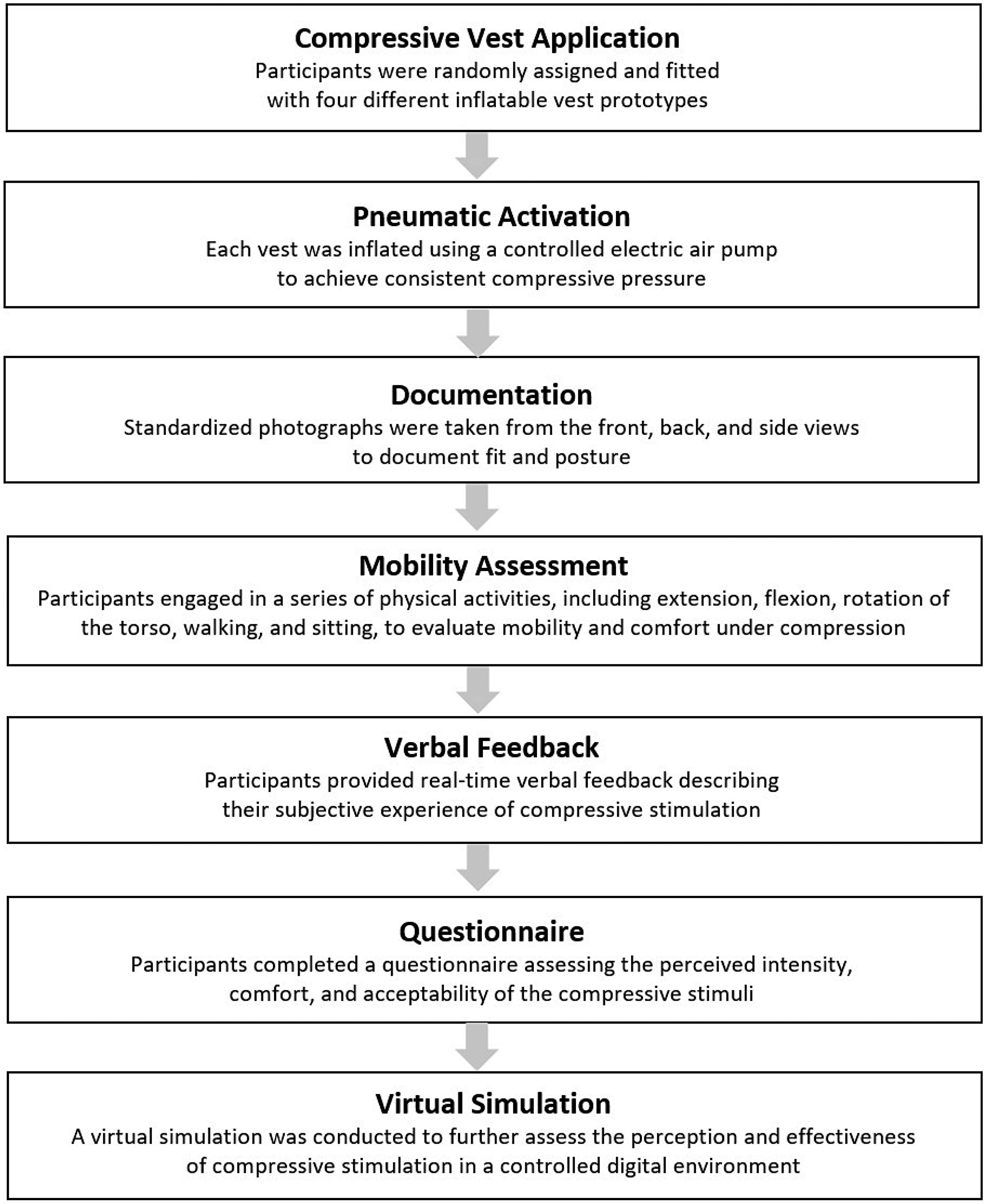
Compressive Vest Evaluation Protocol.
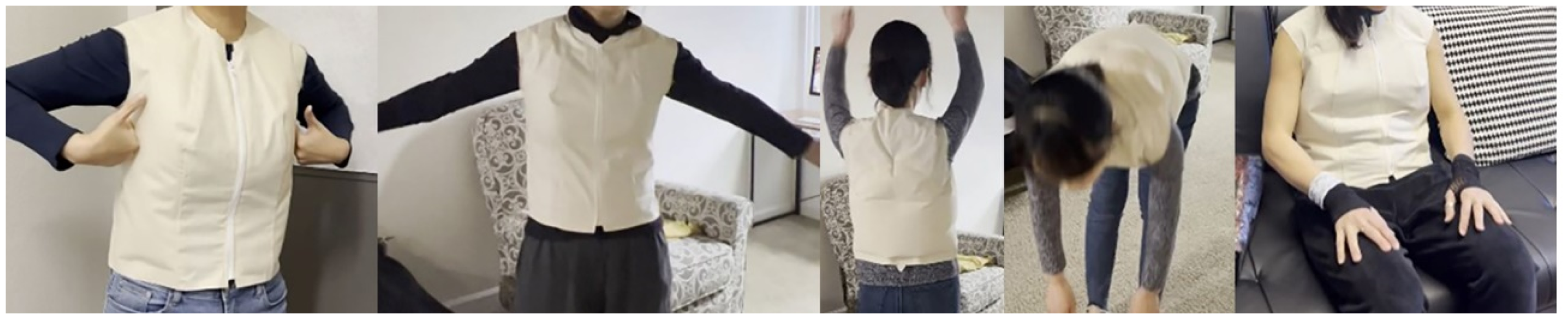
Dynamic Evaluation Poses.
Lastly, the evaluation process included a verification stage using the CLO 7.1 3D virtual simulation program. This helped us identify which parts of the body experienced discomfort or undue pressure as the fabric of the inflatable vest stretched and adjusted to the body's movements.
Results
Statistical Analysis
A one-way ANOVA with Tukey HSD test was performed to test significance across different compression location conditions on the body, supplemented by qualitative analysis of data obtained from the Think-aloud sessions. Additionally, the Cronbach's Alpha coefficient was calculated to verify the reliability of the data. The results of descriptive statistics and ANOVA on compressive tactile stimulation showed that only compression location exhibited statistical significance (p = 0.043), with tactile comfort marginally approaching significance (p = 0.070). However, no statistically significant differences were observed in other variables such as the pressure amount, body mobility, and visual appearance across the four prototype variations with differing pressure positions as illustrated in Table 2.
Descriptive Statistics and ANOVA Analysis Results.
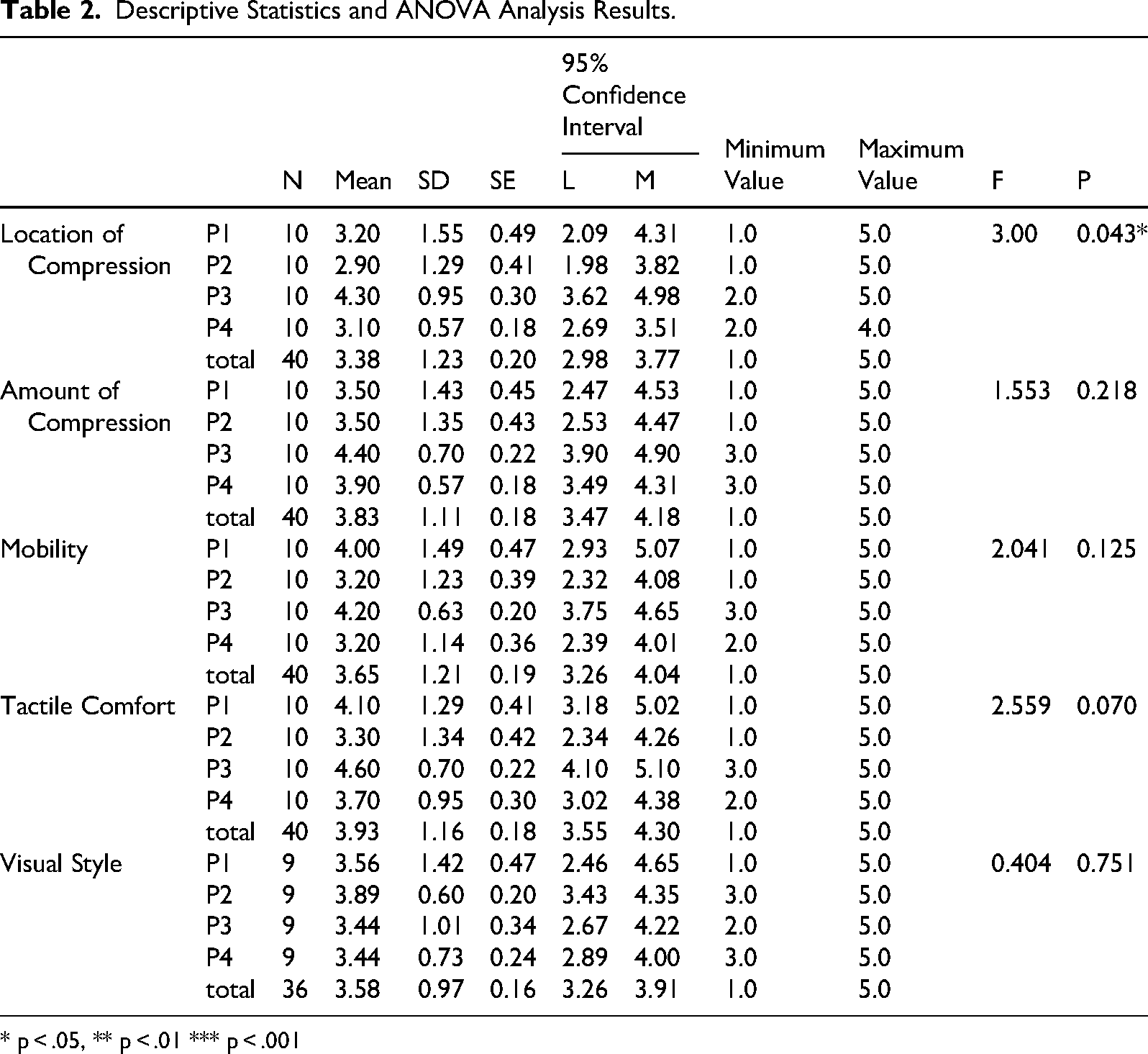
* p < .05, ** p < .01 *** p < .001
Qualitative Evaluations
The location of compression on the front and back of the torso (P3) received the most positive evaluation. According to Tukey's HSD test, which compares multiple groups, there were significant differences in the preferred compression locations among the four vest prototypes. Participants showed the highest preference for P3 (m = 4.30), followed by P1 (m = 3.20), P4 (m = 3.10), and P2 (m = 2.90). They found P3 to be the most comfortable, and were pleased with the lack of shoulder pressure. Comments from the Think Aloud protocol reinforced that shoulder compression was uncomfortable, with participants describing P3 as “comfortable rather than restrictive,” “feels like hug,” “gives sense of stability,” “feel cozy as it covers the entire body,” “The side of my body are being hugged,” “arm mobility is the best because shoulder there is no pressure on the shoulders.”
Participants’ feedback on prototype P4, which applied compression to the shoulders as well as the front and back of the torso, often emphasized a sense of discomfort, particularly in the shoulder area. The sensation was commonly described as “stuffy.” One participant stated, “It's like the safety bar of a roller coaster,” while another remarked, “I feel like I’m wearing a life vest.” A more detailed description noted, “I feel the pressure of someone going through his arm from behind into my armhole and grabbing my body tightly around my shoulder.” Some participants noted improved comfort when seated. One explained, “When I sit down, the air on my back comes forward and I feel rather comfortable than standing pose.” Another added, “When I was sitting I feel comfortable because the air pressure does not overlap the stomach.”
Vest prototypes P1 and P2, which also provide shoulder compression, led to different responses, suggesting that there is a difference in preference for the front and back compression postures. Participant comments on the front torso and shoulder compression (P1) included “I feel comfortable and warm” and “Uncomfortable due to feeling full.” Participants’ comments on the shoulders and back torso compression (P2) included “The most uncomfortable” and “Air coming from behind and pulling on my neck.”
In terms of the amount of compression, participants felt pressure from all prototypes, with the perceived levels ranked as P3 (m = 4.40) having the highest, followed by P4 (m = 3.90), and P1 and P2 both at (m = 3.50). The amount of compression was directly proportional to the area receiving air injection.
Mobility assessments from the Think Aloud protocol showed P3 as the most favorable, while P2 and P4 received the least positive evaluations. Mobility ratings were P3 (m = 4.20), P1 (m = 4.0), P2 and P4 both at (m = 3.20). Participants noted P3 as comfortable in various movements, with its design not restricting the neckline or armholes, which enhanced comfort during torso movements. P4, however, was negatively rated in standing positions as the inflatable sections restricted shoulder mobility. In contrast, sitting evaluations for P4 were positive, as the back support felt cushion-like. However,P3 and P1 were uncomfortable when bending in the seated position due to front and side compression.
For tactile comfort, P3 scored highest, while P2 was least favorable. The rankings were P3 (m = 4.60), P1 (m = 4.20), P4 (m = 3.70), and P2 (m = 3.30), with tactile comfort closely linked to participants’ postures during the experiments. P1 and P3 were noted as uncomfortable at the neckline and armholes when sitting, while P4 was described as constricting in the standing position but more comfortable in the seated position.
Regarding visual appearance, P2 scored highest (m = 3.89), suggesting a preference for compression at the sides and back over the front. P2, with its back-focused design, was considered more visually appealing than P1, which applies compression to the front torso.
Virtual Evaluation
For the virtual evaluation, we used version 7.1 of the CLO program. Muslin fabric provided by CLO3D was selected for the virtual simulations, as it closely resembles the fabric used in the actual prototype, particularly in terms of elasticity. The findings from the stress map, strain map, and pressure point analysis performed with this software are detailed in Figure 4 to enhance our understanding of the observations. The stress map in the CLO program illustrates how much the fabric stretches under external forces. Areas without external pressure are shown in green, while areas under stronger pressure shift towards red, with red representing the highest stress level (100 kPa) and blue indicating no distortion (0.00 kPa). In the analysis, P1 displayed the most green, indicating minimal stress. The stress map for P2 and P4 showed significant red areas, particularly on the shoulders. P3 also showed some red on the shoulders, but the stress was more evenly distributed across the front torso. The blue dots, which represent pressure points, indicate contact points between the 3D prototypes and the avatar. In P3's virtual avatar, the stress map showed minimal stress, with pressure points spread throughout the front torso and on the back shoulders. P4 exhibited extensive red areas on the back shoulders and front armholes but had the fewest blue pressure points.
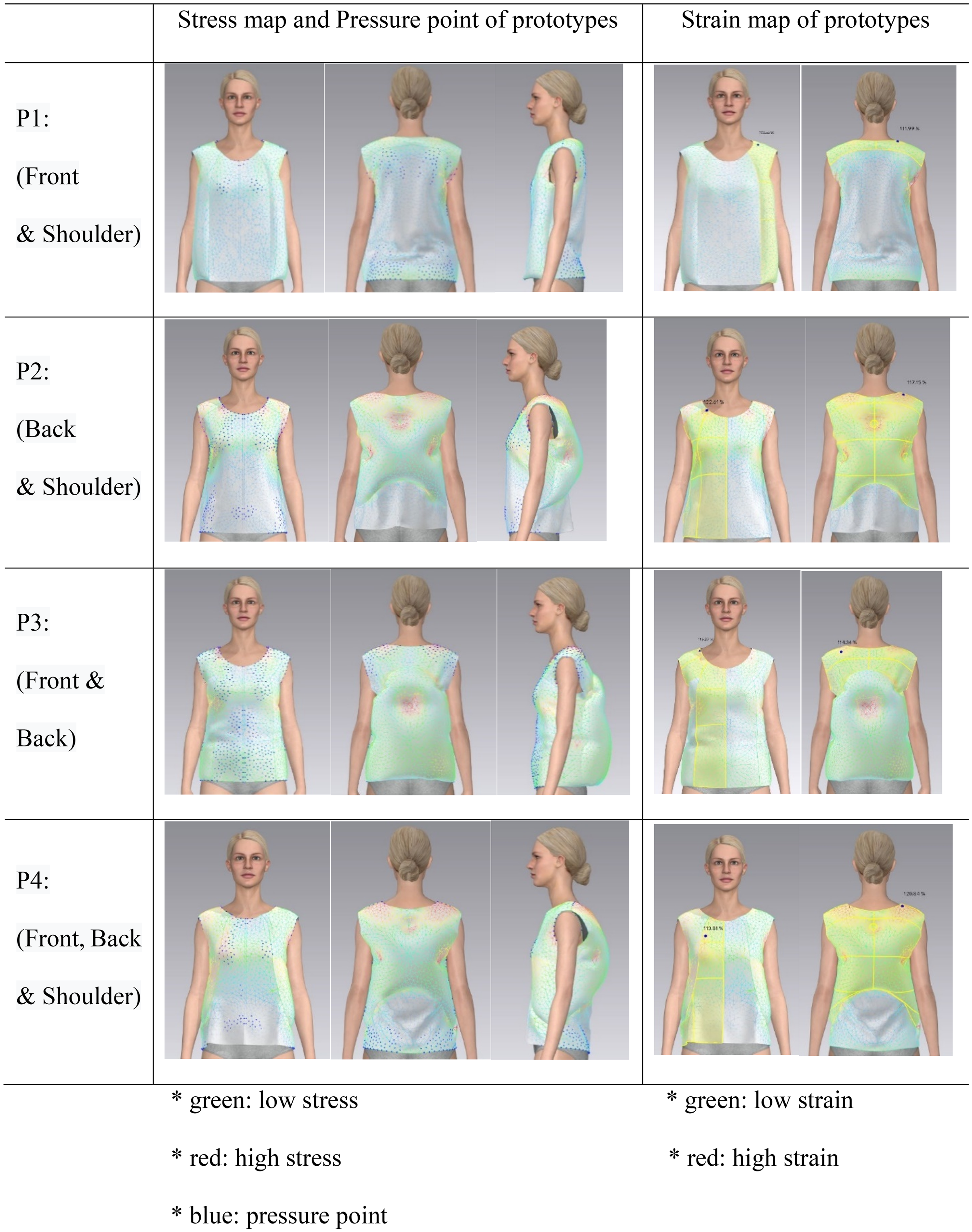
Stress Map, Strain Map and Pressure Point of 3D Prototypes.
The strain map reveals how the garment distorts due to external pressure. Areas with no stretch are green, but as the stretch increases, the color shifts towards red. Red indicates a distortion rate of 120%, while blue shows no distortion (100%). The strain map ranked the rear shoulder distortion of the 3D avatars as follows: P4 (120.84%) > P2 (117.15%) > P3 (114.34%) > P1 (111.99%). This analysis confirmed that the strain was highest in P4. Figure 4 shows examples of stress maps, pressure points of prototype, and strain maps for each vest.
Discussion
Based on our exploration of compression location and intensity, and its impact on comfort and pleasantness of the wearing experiences unveiled nuanced relationships. Firstly, it can be inferred that there exists a non-linear relationship between the intensity of compression and psychological comfort, where excessive force may lead to discomfort rather than enhanced satisfaction. Notably, discomfort was reported when compression targeted the shoulders, as observed in the case of P4 (front and back torso including shoulders). Participants described this sensation akin to the safety bars of a roller coaster, indicating a sense of confinement and discomfort. Conversely, P3 (front and back torso excluding shoulders) elicited greater satisfaction due to its unrestricted shoulder movement and sensation akin to a comforting embrace. Thus, satisfaction with tactile comfort varied significantly based on the compression location, suggesting that moderate compression surrounding the body is preferable to excessive pressure. These findings align with prior research by Yoshida and Funato (2021), demonstrating that the highest parasympathetic activity index (RRI) was observed during infant hugging rather than tight hugging or holding, and are consistent with Tsetserukou's (2010) observations on the body's unconscious efforts to protect vital organs during tight hugs.
Secondly, there exists a correlation between compression location and tactile comfort, with variations in satisfaction depending on the compression location and participant posture. Even when compression was applied at the same location, participants exhibited differential responses to tactile comfort based on their posture. For instance, P1 and P3 reported higher tactile comfort satisfaction while standing compared to sitting, whereas P4 demonstrated the opposite trend. This suggests that the positioning of compression impacts tactile comfort differently based on the body's orientation, likely due to variations in air displacement inside the compressive air bladders. Consequently, the results from P4 may inform the design of clothing for wheelchair users or individuals requiring prolonged sitting, while those from P3 may guide the production of garments tailored for activities necessitating frequent standing.
Thirdly, an intriguing finding is the postural effect of inflatable compression bladder in P2 (shoulders and back of torso), which seemed to improve back straightening and posture. Participants noted its potential in encouraging upright posture, particularly beneficial for individuals with rounded backs or teenagers seeking posture correction and relief from shoulder stiffness. Consequently, the compression position of P2 holds promise for the development of posture-correcting garments targeting back pain alleviation.
Fourth, virtual simulation allowed for a more objective verification through the use of stress maps, strain maps, and pressure points between the fabric and the human body. In the case of P3, there was virtually no change in the fabric from external forces in the areas where air was injected, suggesting even distribution. Additionally, the numerous contact points between the fabric and the human body likely contributes to a comfortable sensation, creating the feeling of being wrapped around the entire torso. Conversely, in P4, there was significant sagging and distortion in the fabric due to external forces in the shoulder area. The results of this virtual simulation using the CLO program align closely with those from the physical prototype experiments.
Conclusion
This study sheds light on user perceptions of compression locations on the upper body and provides design guidelines for enhancing compression apparel. We developed four vest prototypes with different compressive tactile stimulation positions to determine the optimal location for simulating physical contact, such as hugging, that promotes positive psychological impacts.
The findings reveal that compression positions mimicking hugs most effectively are located on the front and back of the torso, excluding the shoulders. Interestingly, the study found that pressure does not consistently equate to psychological comfort; excessive pressure on the shoulders caused discomfort. There was a notable relationship between compression location and tactile comfort; torso compression including the shoulders received negative feedback in a standing position but positive in a sitting position, while compression excluding the shoulders was positively rated in standing but negatively in sitting. Another observation suggests the potential of integrating compressive air bladders into the back of the shoulders and torso to potentially improve posture or increase focus. Thus, the study highlights the need for design adaptations that consider lifestyle factors to identify appropriate compression areas for different activities and purposes.
This research initiates a dialogue on addressing the needs of individuals who lack physical contact and experience loneliness in modern society. The anticipated growth in the market for smart compression clothing and wearable technology underlines the importance of these findings. Unlike previous studies that focused on narrow, linear compression areas, this study innovatively aligns compression areas with the body's curvature, improving effectiveness and opening up new aesthetic design possibilities. Although current compression garments typically feature weighted vest designs, this study demonstrates the potential to apply diverse compression designs across different items, advancing the principles of universal design.
However, the study's generalizability is limited by its small sample size and variations in body types, highlighting the need for future research to develop prototypes that address these limitations. In addition, participants’ subjective perceptions of comfort might be influenced by factors unrelated to pressure, such as pre-existing preferences or the novelty of the experience. To address these limitations, future work could incorporate quantitative methods, such as pressure measurement, Electroencephalography (
Footnotes
Declaration of Conflicting Interests
The authors declared no potential conflicts of interest with respect to the research, authorship, and/or publication of this article.
Funding
The authors received no financial support for the research, authorship, and/or publication of this article.
