




Abstract
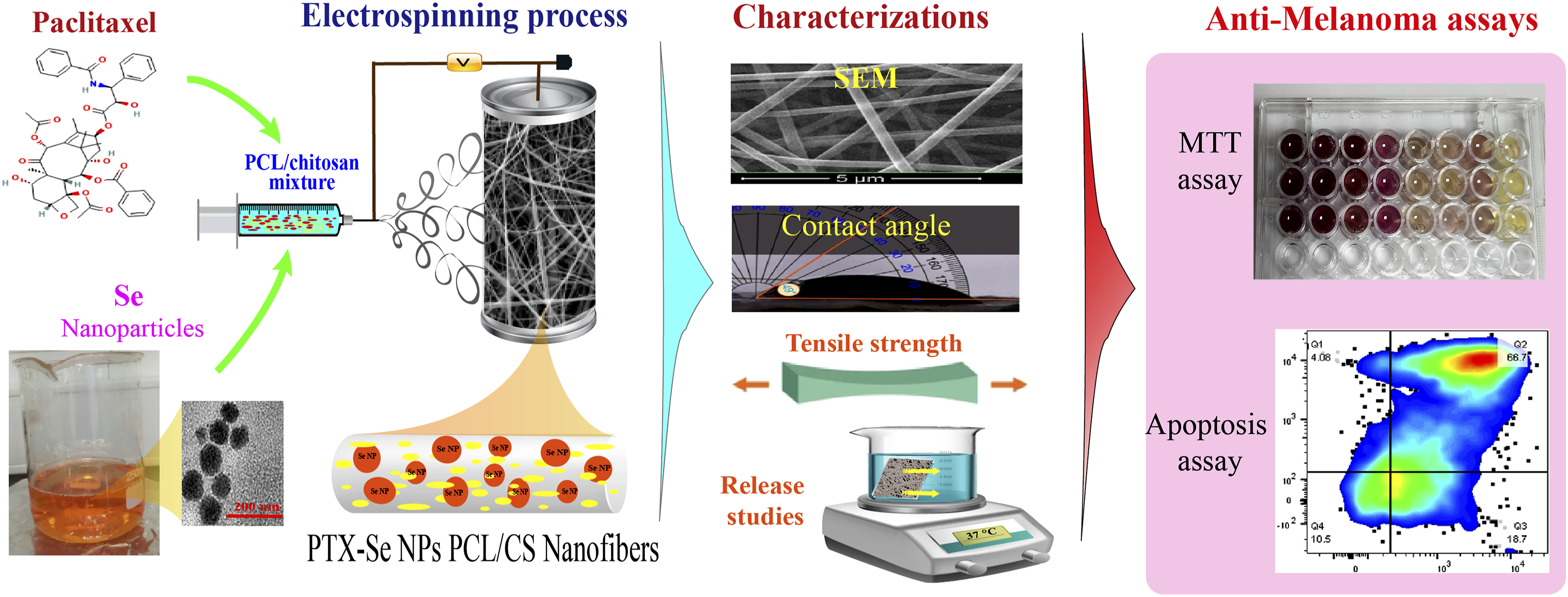
The incidence of skin cancer has increased significantly in recent decades, highlighting the need for more effective treatments due to the limitations of traditional approaches. This study focused on creating a poly (ε-caprolactone) and chitosan (PCL/CS) nanofibrous scaffold loaded with selenium nanoparticles (Se NPs) and paclitaxel (PTX) to inhibit melanoma cell growth. The synthesized Se NPs, characterized by their uniform spherical shape and nano-scale size (∼120 nm), were incorporated into the scaffold. Then, the Se NPs and PTX were concurrently loaded into PCL/CS nanofibers at 5 wt%, which resulted in fibers with an average diameter of 253 ± 35 nm, presenting a ribbon-like morphology and absence of droplets/beads. The results indicated a high fluid absorption capacity, a wettability and high tensile strength of the produced scaffold. Moreover, the controlled release of the loaded compounds was provided over several days. Remarkably, high toxicity (>90%) and higher levels of apoptosis (>85%) were observed in A375 melanoma cells treated with the PTX-Se NPs PCL/CS scaffold. Moreover, the assessment of fibroblast growth and hemolysis confirmed the scaffold’s high level of biocompatibility. The PTX-Se NPs PCL/CS nanofibers exhibit favorable properties and strong anti-tumor efficacy, making them a promising scaffold for localized and selective chemotherapy in anti-melanoma treatment.
Get full access to this article
View all access options for this article.