



Abstract
This is a visual representation of the abstract.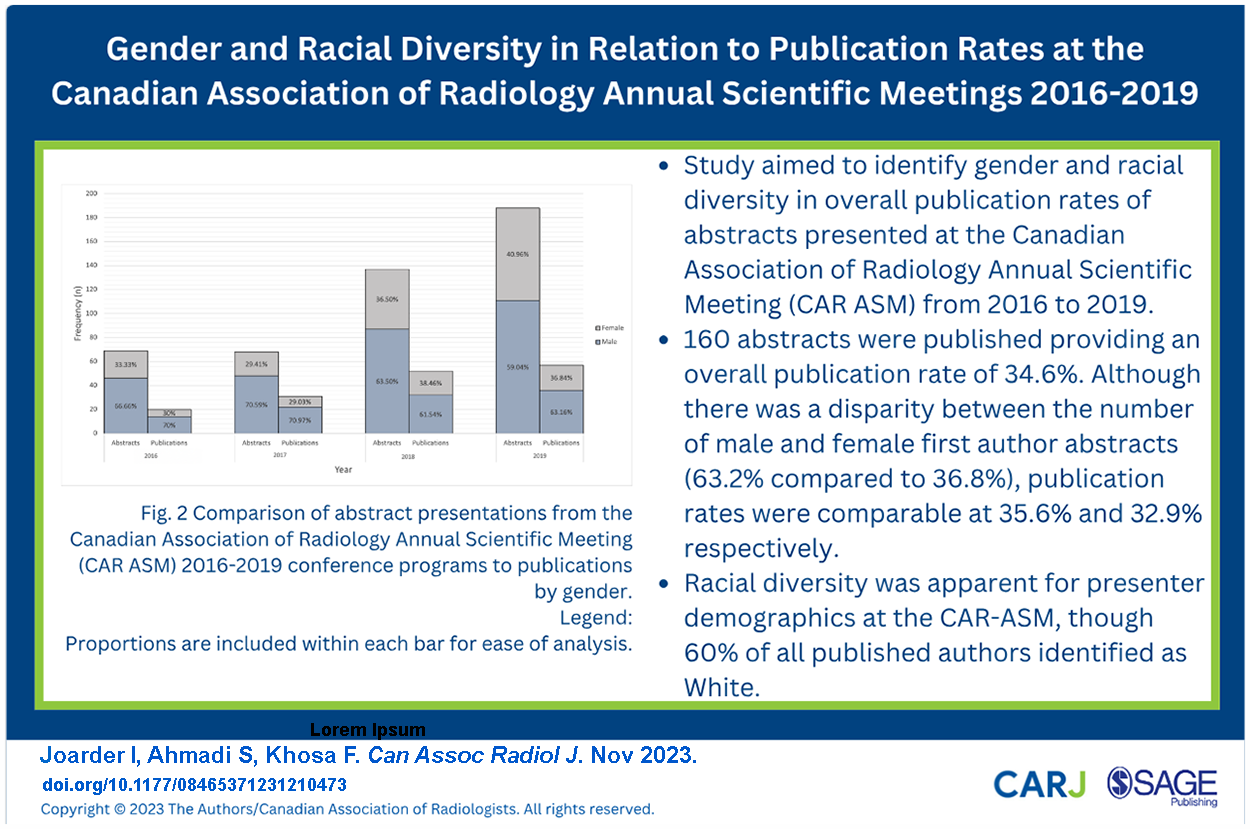
Introduction
Dissemination of the latest information in Radiology often begins at the level of professional society conferences, such as the Canadian Association of Radiology Annual Scientific Meeting (CAR ASM). The majority of abstracts presented however, have yet to be published in peer-reviewed journals and may only include preliminary data.1,2 A 2018 Cochrane review demonstrated that out of over 300 000 abstracts presented at conferences, only 37.3% are published. 3 In addition, abstracts presented at the CAR ASM from 2005 to 2011 had a conversion rate (proportion of presented abstracts published in peer-reviewed journals) of 28%. 4 Given the low conversion rates, published abstracts do not reflect the magnitude of research conducted and subsequently presented at conferences. Many reasons contribute to these abstracts not being published, with lack of time, resources, and inadequate mentorship being frequently cited.5-7
While studies in the past have investigated conversion rates of conferences across a range of specialties, there is limited information about conference attendee demographics, including gender and racial diversity of presenters at Radiology conferences. In order to make necessary systemic changes, further analysis is required to investigate the characteristics of abstracts and the corresponding authors that are being published. The purpose of this study was to determine the overall rate of publication of abstracts presented at the 2016 to 2019 CAR ASM, with an emphasis on gender and racial diversity. Secondary objectives included determining conversion rates by abstract category, imaging modality, subspecialty, and the affiliation of the first-author. Additionally, the journal of publication, its impact factor (IF), and the time to publication (TTP) were determined.
Materials and Methods
A retrospective review of CAR ASM conferences from 2016 to 2019 was performed using publicly available past programs. All abstracts for ePosters and oral presentations in the following categories were analyzed: clinical audit, radiologist-in-training, educational exhibits, scientific research projects, and value of radiology (established in 2018). All other components of the program were excluded.
An initial search across PubMed, EMBASE, and Google Scholar was completed using the abstract title to determine publication status. If the search yielded no results with an exact title, specific keywords and phrases from the abstract were used to find similar publications. Each author listed on the abstract was then searched individually on every database to find a corresponding publication. Once the author list and database searches were exhausted, the abstract was deemed unpublished. Before an abstract was deemed published, concordance between abstract, article content, and authors was established. This review was conducted over a 4-week period between May and June 2023.
For all abstracts presented at the conference, the following categories of data were extracted: publication status (yes/no), abstract format (oral/poster), abstract category, the name, gender, race, and affiliation of the first-author, and the subspecialty and imaging modality explored. The gender and race of the first-author was identified using the externally validated Namsor software which uses the US Census Taxonomy to classify race into 6 categories: White, Black/African American, Hispanic/Latino, Native Hawaiian/Other Pacific Islander, Indigenous, and Asian. Based on these categories, first-author race was determined according to results in the “US” race tab for US race ethnicity. Results for alternative US race ethnicity were not considered. If an abstract was deemed published, the following variables were also extracted: publication date, TTP, journal of publication, and 1-year IF of the journal. The IF was determined using Journal Citation Reports by Clarivate Analytics.
Results
A total of 462 abstracts presented at the CAR ASM conferences were analyzed between 2016 and 2019. One hundred and sixty (34.63%) were published in peer-reviewed journals. Of the total abstracts presented, 329 (71.21%) were poster and 133 (28.79%) were oral. Of these, 57 (42.86%) oral presentations and 103 (31.31%) poster presentations were published in peer-reviewed journals respectively. The median TTP of all published abstracts was 11 months with a range of 62 months prior to and 61 months post-conference. When abstracts published before the conference were removed, the median TTP was 14 months (Figure 1). The average IF of the publication journals was 5.26. The complete year-by-year breakdown is listed in Table 1.
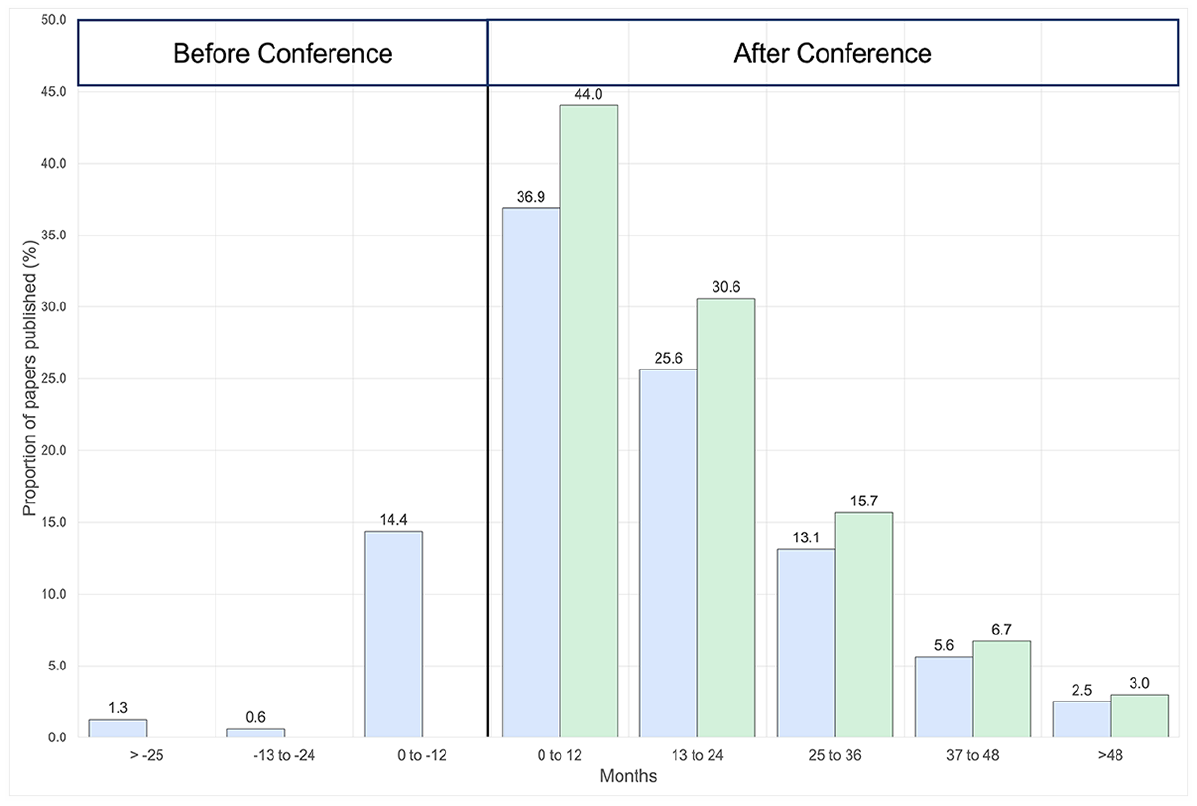
Time to publication for abstracts presented at the Canadian Association of Radiology Annual Scientific Meeting (CAR ASM) 2016 to 2019 conference programs.
Summary of Abstract Presentations and Publication Data From the Canadian Association of Radiology Annual Scientific Meeting (CAR ASM) 2016 to 2019 Conference Programs.
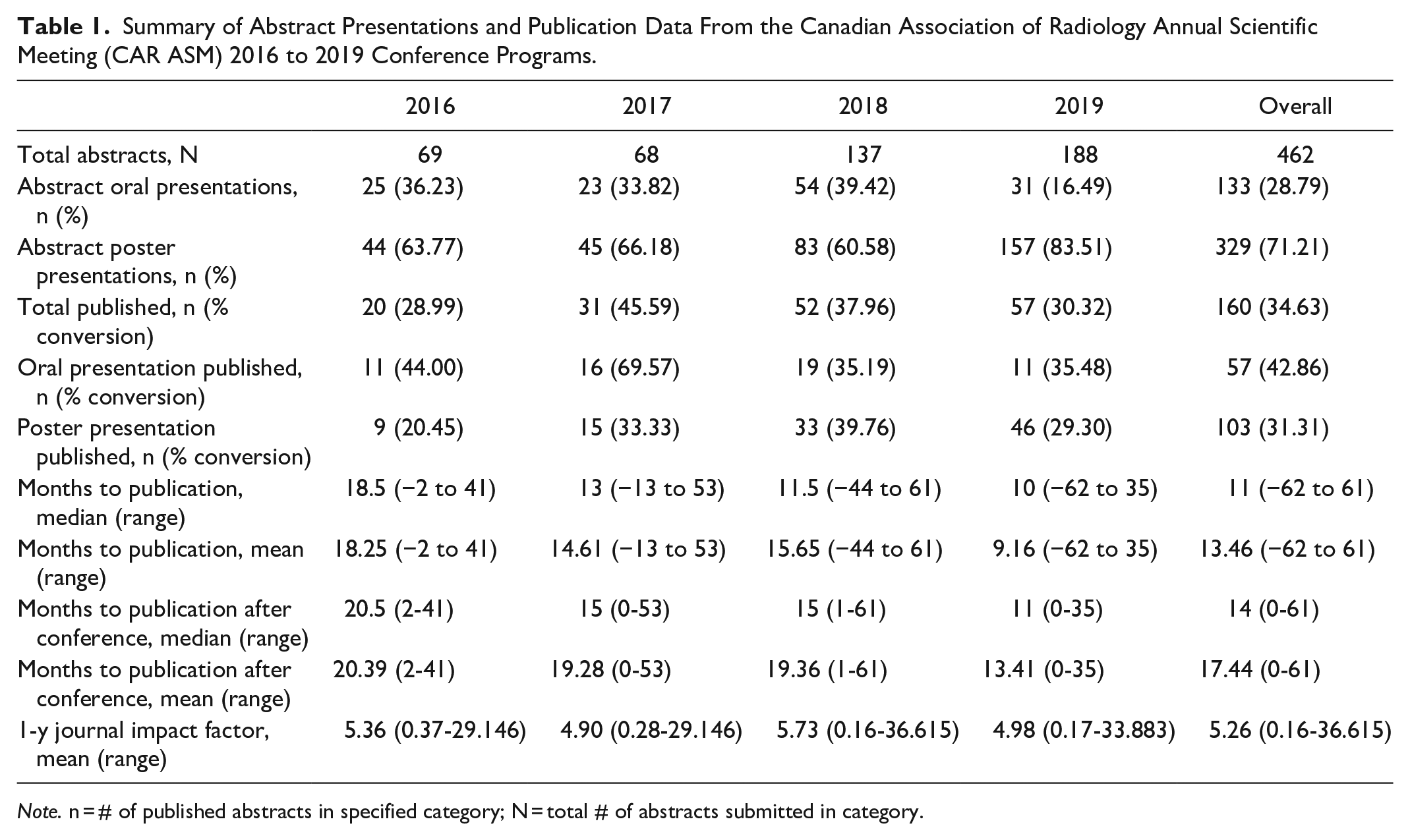
Note. n = # of published abstracts in specified category; N = total # of abstracts submitted in category.
The CAR ASM conferences had 5 different categories with the following overall conversion rates: radiologists-in-training 60.71% (34/56), scientific research projects 48.94% (69/141), value of radiology 31.25% (5/16), educational exhibits 22.01% (46/209), and clinical audits 15% (6/40). The complete year-by-year breakdown and overall conversion rates by abstract category, imaging modality, and subspecialty is listed in Table 2.
Conversion Rates by Abstract Category, Imaging Modality, and Subspecialty From the Canadian Association of Radiology Annual Scientific Meeting (CAR ASM) 2016 to 2019 Conference Programs.
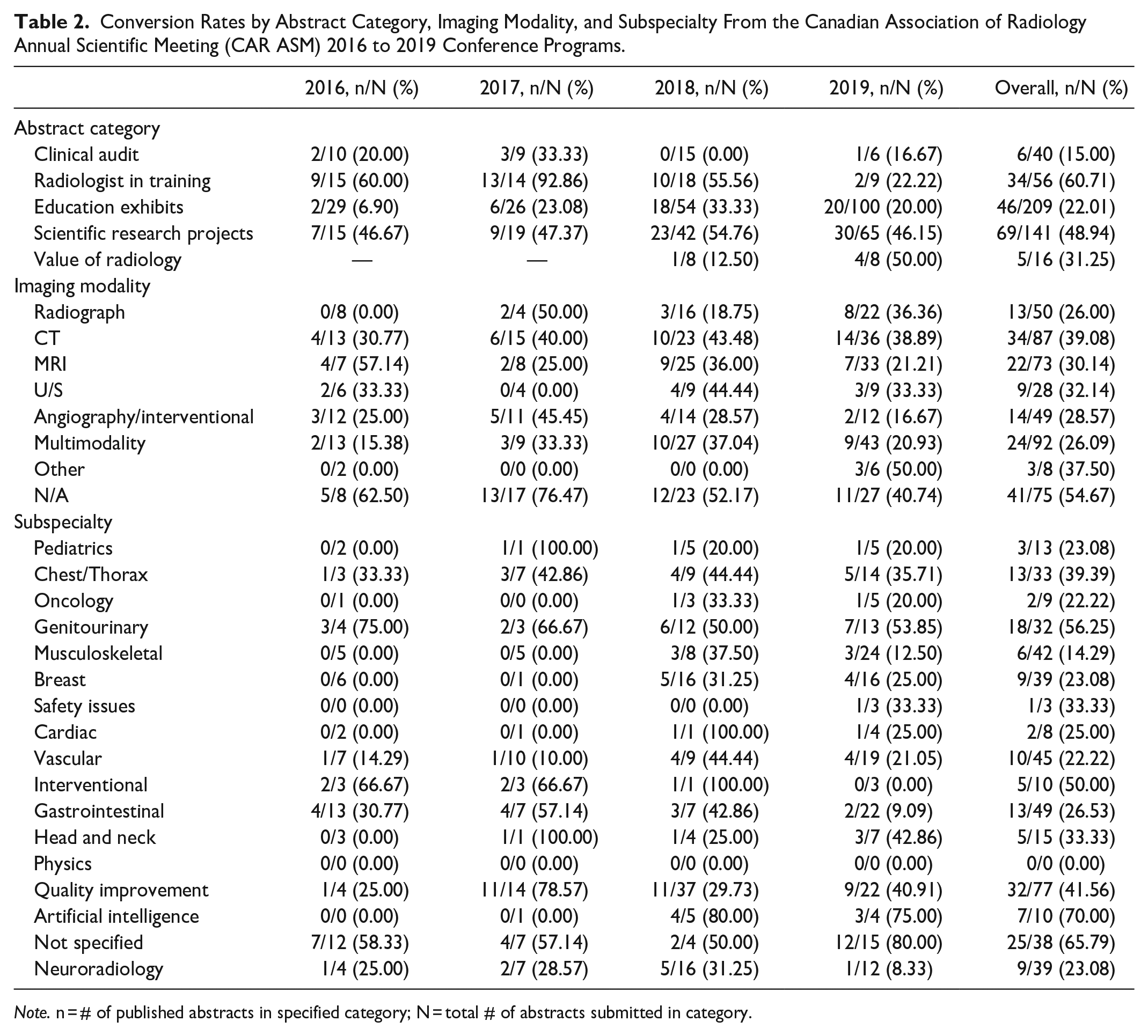
Note. n = # of published abstracts in specified category; N = total # of abstracts submitted in category.
Between 2016 and 2019, the 160 published abstracts spanned 76 peer-reviewed journals. Canadian Association of Radiology Journal (CARJ) had the most published abstracts at 34 (21.25%). This was followed by Academic Radiology, American Journal of Roentgenology, and European Radiology with 12 (7.5%), 8 (5%), and 8 (5%) published respectively. There were 55 journals with one publication each, comprising 34.38% of the published abstracts (Table 3).
Proportion of Presented Abstracts From the Canadian Association of Radiology Annual Scientific Meeting (CAR ASM) 2016 to 2019 Conference Programs Published in Peer-Reviewed Journals.
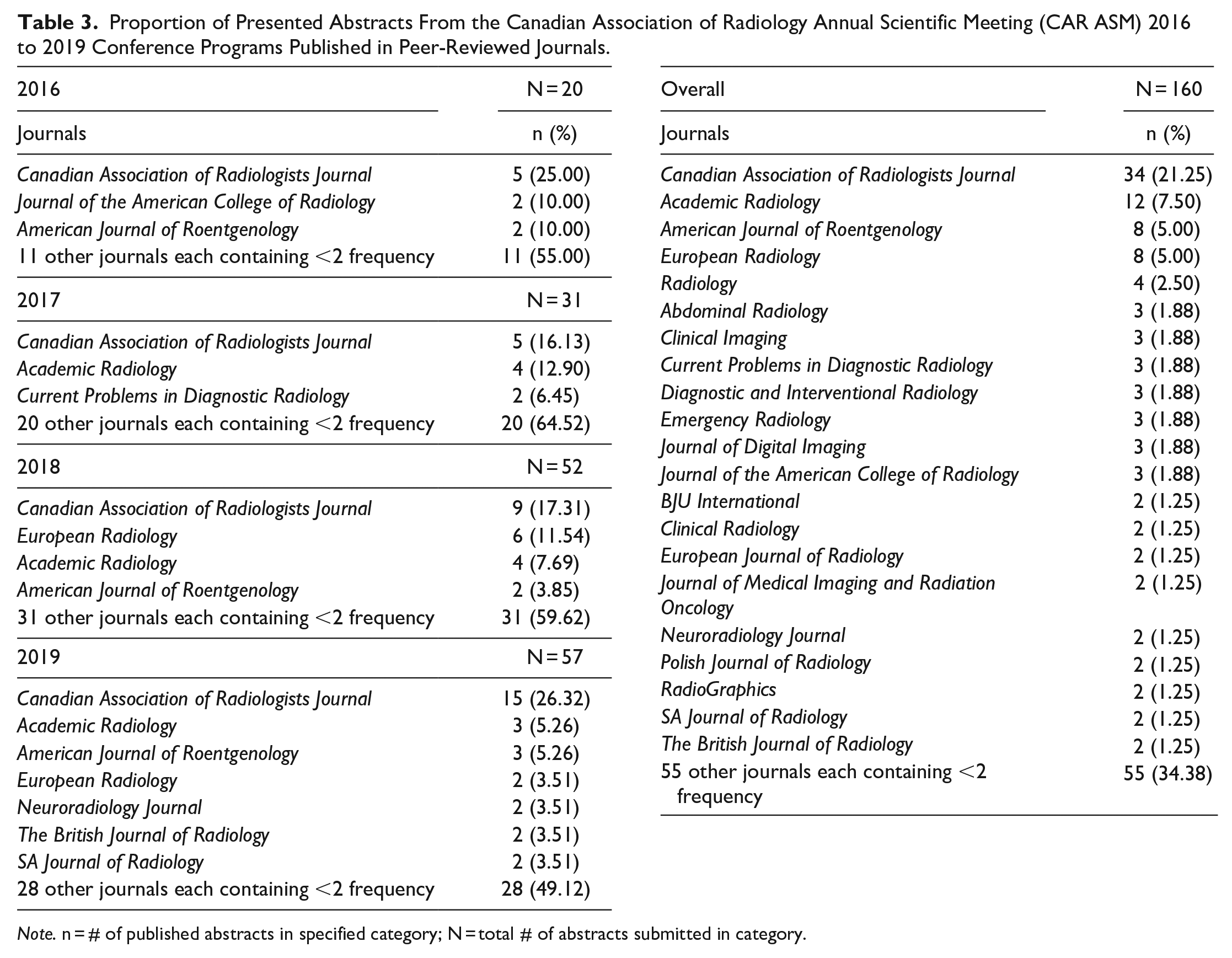
Note. n = # of published abstracts in specified category; N = total # of abstracts submitted in category.
Of the 462 abstracts presented at the CAR ASM conferences, 292 (63.2%) had a first-author identified as male and 170 (36.8%) as female. The number of abstracts with female first-authors in 2016 was 23 (33.33%) and 77 (40.96%) in 2019. Of the 292 presented abstracts with a male first-author, 104 (35.62%) were published. In comparison, of the 170 abstracts with a female first-author, 56 (32.94%) were published. Additionally, of the 160 published abstracts, 104 (65%) had a male first-author and 56 (35%) had a female. In 2016, the proportion of published abstracts from female first-authors was 30% (6/20) and in 2019 it was 36.84% (21/57) (Figure 2).
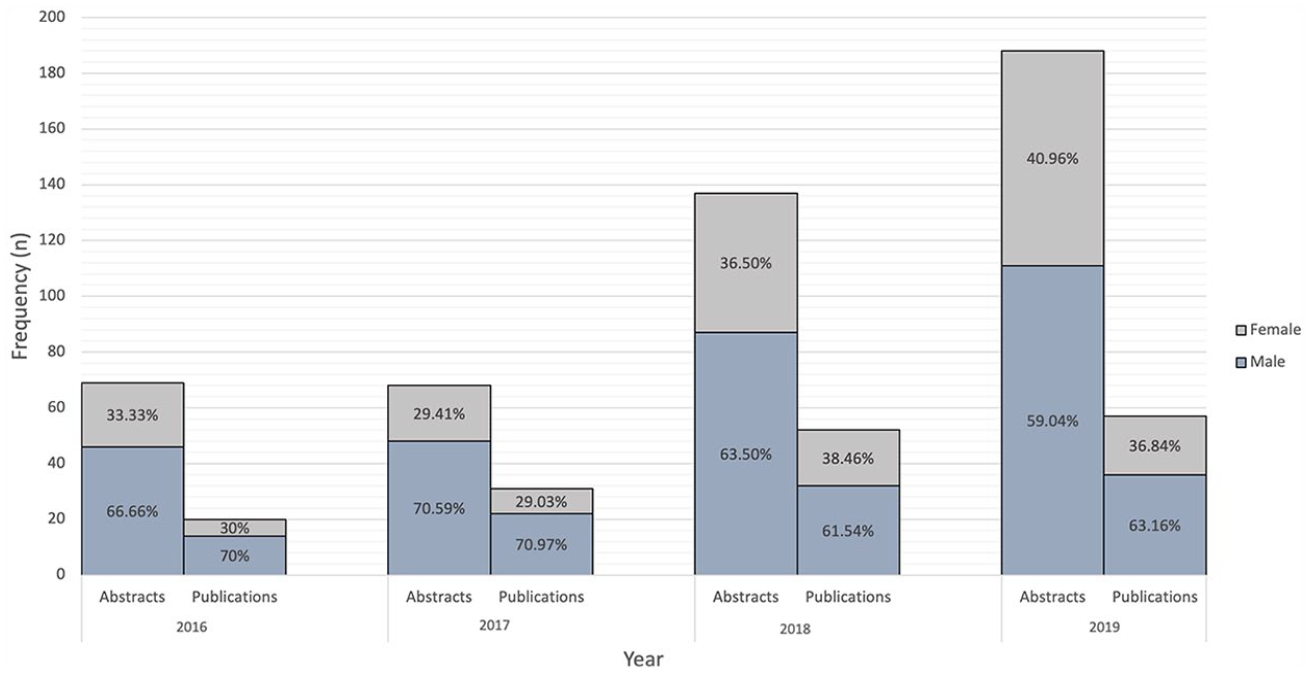
Comparison of abstract presentations from the Canadian Association of Radiology Annual Scientific Meeting (CAR ASM) 2016 to 2019 conference programs to publications by gender.
Between 2016 and 2019, of the 462 abstracts presented at the CAR ASM, 235 (50.87%) first-authors were identified as white, 177 (38.31%) asian, 28 (6.06%) black, 22 (4.76%) latino, 0 (0.00%) indigenous, and 0 (0.00%) native hawaiian/other pacific islander. The overall conversion rate of abstracts presented at CAR ASM conferences by first-author race include: 40.85% (96/235) white, 30.51% (54/177) asian, 25% (7/28) black, and 13.64% (3/22) latino. Of the 160 abstracts published in peer-reviewed journals, first-authors identified as white were the largest proportion at 60% (96/160), followed by asian 33.75% (54/160), black 4.38% (7/160), and latino 1.88% (3/160).
Presented abstracts originated from 19 Canadian and numerous international universities. From 2016 to 2019, UOttawa had the most abstracts submitted at 77, followed by UBC (63) and McMaster (58). There were 57 abstracts not affiliated with Canadian universities. UOttawa, UBC, and McMaster also had the highest proportion of total abstracts published in peer-reviewed journals at 20% (32/160), 16.25% (26/160), and 13.75% (22/160) respectively. However, the proportion of published abstracts to abstracts submitted by university was highest for University of Saskatchewan at 55.56% (10/18), University of Montreal at 52.94% (9/17), and McMaster at 44.83% (26/58). The year-by-year breakdown of first-author gender, race, and affiliation is listed in Table 4.
Proportion of Published Abstracts and Conversion Rates by First Author Gender, Race, and Affiliation From the Canadian Association of Radiology Annual Scientific Meeting (CAR ASM) 2016 to 2019 Conference Programs.
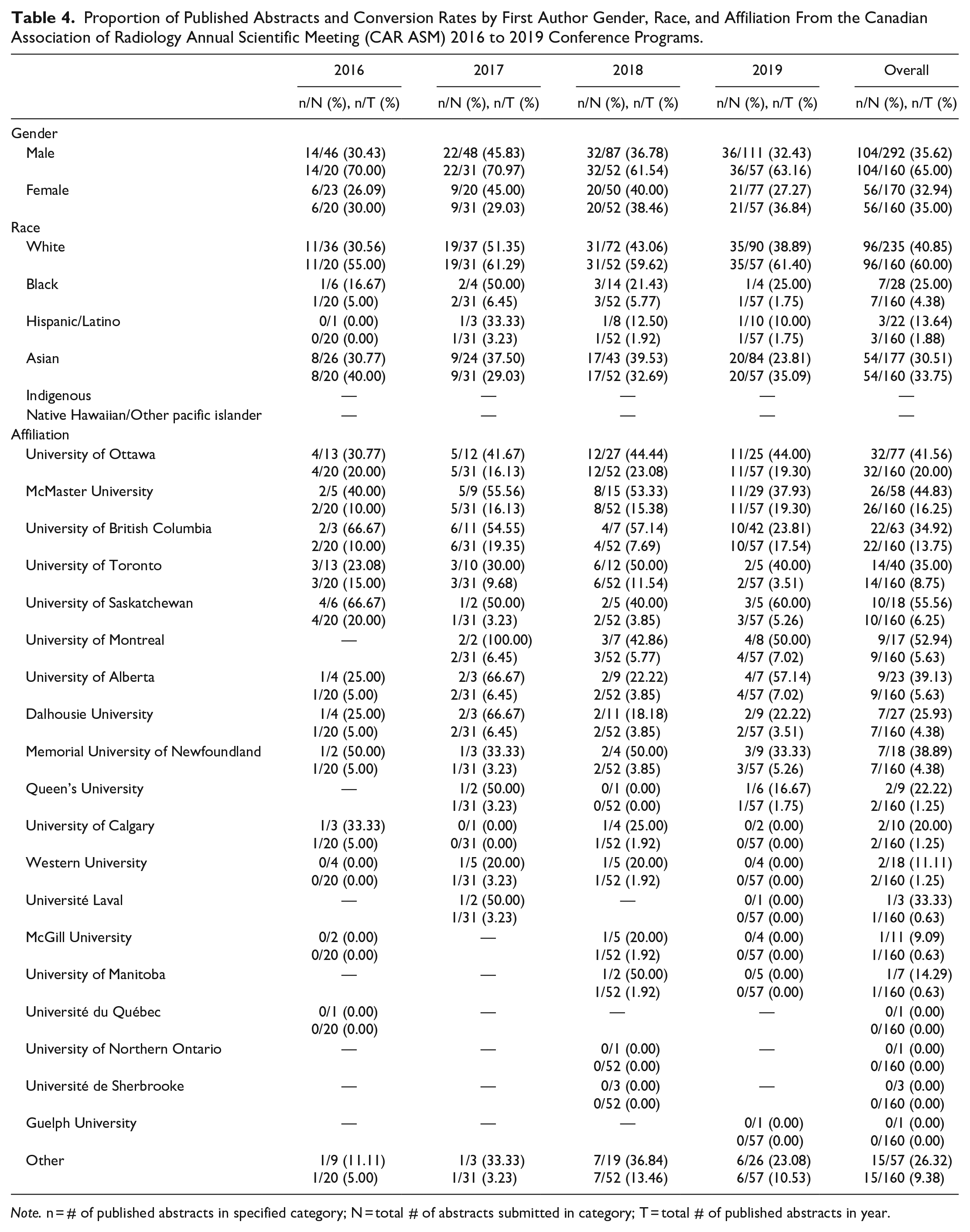
Note. n = # of published abstracts in specified category; N = total # of abstracts submitted in category; T = total # of published abstracts in year.
Discussion
Overall Conversion Rates
From 2016 to 2019, the CAR ASM had 160 abstracts published out of 462 presentations, giving an overall conversion rate of 34.63%. This is much improved from the overall conversion rate of 28% found in a previous review of abstracts presented at the 2005 to 2011 CAR ASM. 4 Additionally, these results are comparable to the overall conversion rate of 37.3% reported in a 2018 Cochrane review of over 300 000 abstracts across numerous specialities. 3 However, the overall conversion rate was lower than that reported for other radiology conferences such as the Skeletal Society of Radiology (SSR) Annual Meeting from 2010 to 2015 of 50.6%. 6 The 2018 Cochrane review also demonstrated a comparable oral presentation and slightly lower poster presentation conversion rate of 43.1% and 24.6% to 42.86% and 31.31% at the 2016 to 2019 CAR ASM respectively. 3 Reports analyzing only oral presentations at various international radiology conferences also showed comparable conversion rates of 46.8%, 44.1%, and 44%.8,9 While these results are comparable to other conference conversion rates and indicate overall improvements within the CAR ASM specifically, there is still room for improvement. With less than half of the abstracts submitted to conferences being published, the majority of data collected is not being disseminated to the larger scientific community. This has widespread negative consequences to the advancement of knowledge and increases the likelihood of redundancy within the field.
Race Analysis
Radiology is a medical specialty with the least gender, racial, and ethnic diversity in Canada. 10 According to the 2021 Canadian census, close to 70% of the total Canadian population identified as white. 11 A recent paper by Hillier et al 12 demonstrated that in 2021 out of a sample of 433 practicing radiologists and 113 radiology trainees, 71% and 55% identified as white respectively. When assessing racial diversity at the 2016 to 2019 CAR ASM, first-authors identified as white comprised 50.87% of total abstract presentations and 60% of published abstracts in peer-reviewed journals. While this is slightly lower than the practicing radiologist and Canadian census proportions, it is in line with the current Canadian radiology trainee proportions.
The 2021 Canadian census also demonstrated that approximately 19.3% of the population were asian, 5% indigenous, 4.3% black, and 1.6% latino. 11 In comparison to the Canadian population, the CAR ASM from 201 to 2019 showed an overrepresentation of asian-identified first-authors at 38.31%. Similarly, Hillier et al 12 showed that while practicing asian-identifying radiologists represented 20.9% of all radiologists in 2021 (which is proportionate to Canadian census data), 31.1% of radiology trainees identified as asian. Lebel et al 10 also demonstrated that asian, particularly south, southeast, and east asian, are well represented in Canadian medical schools. Black and latino first-author presenters were relatively proportionate to census population averages at 6.06% and 4.76% respectively. There were however no first-authors identified as indigenous which is well below census proportions. When comparing census data to results from the Hillier et al paper, black and indigenous radiologists (2.7% and 0.7%, respectively) and trainees (2.7% and 0.9%, respectively) continue to be underrepresented in Canadian Radiology. While data on indigenous-identifying individuals matches what was seen in our study, there is better representation of black-identifying individuals at the 2016 to 2019 CAR ASM conferences.
Recently, Canadian medical schools have introduced diversity-focused initiatives that support underrepresented individuals, particularly black and indigenous-identifying, and our data shows promising trends for the black population. Continued efforts are needed to ensure adequate representation of these traditionally underrepresented populations in the medical community, specifically indigenous representation in Radiology. It is important to note however, that despite having an under-representation of white, over-representation of asian, and proportionate representation of black and latino-identified presenters, a wide discrepancy is seen in conversion rates across the different races (40.85% white, 30.51% asian, 25% black, and 13.64% latino). Further investigations are warranted to determine the possible factors leading to this disparity.
Gender Analysis
In regards to gender, 63.2% of the abstracts presented at the 2016 to 2019 CAR ASM were identified as male first-authors. Additionally, of the 160 presentations that were published in peer-reviewed journals, 65% were male first-authors. This gender disparity has been observed in other radiology conferences in the past and showed similar proportions.13-16 Specifically, at the Radiological Society of North America (RSNA) 2018 annual meeting, 65% of the 2869 presentations listed in the program were male. 14 The gender disparity seen in radiology conferences is not surprising given that 75% of radiology residents and 69% of practicing radiologists in Canada between 2016 and 2017 were male. 7 In 2019, while females made up around 63% of all Canadian medical school graduates, only 31.6% of radiologists were female. 10 This was further explored by Lawley et al 17 comparing faculty and resident gender representation, demonstrating that between 2020 and 2022 these proportions remain steady at approximately one third female for both faculty and residents in Radiology across Canada. It is important to note that despite having fewer female first-author presenters, conversion rates are comparable to their male counterparts—35.62% male and 32.94% female. Additionally, promising trends are being seen at the CAR ASM conferences over a 4-year span with female first-author abstract presentation proportions increasing from 33.33% in 2016, to 40.96% in 2019.
Conversion Rates by Category
CAR ASM splits the conference into 4 to 5 categories each allowing participants to submit abstracts with specific content criteria (known topics or hypothesis-driven), presenter trainee status, and format (oral or poster). There is marked variation in conversion rates between categories given these differences. Compared to data from the 2005 to 2011 CAR ASM, improvements are seen in the radiologist-in-training category from 37% to 60.71% and scientific research projects from 34% to 48.94%. Both these categories only allow hypothesis-driven research projects with defined outcomes and included oral presentations. Given oral presentations at conferences are required to be of higher quality to be accepted, they consistently have higher conversion rates when compared to poster presentations across all specialties and conferences. 18 This improvement could also be due to a higher emphasis placed on trainee research in radiology residency programs more recently. 19 Educational exhibits, which only included poster presentations, remained comparable to past results at 22.01%. Additionally, the clinical audit and value of radiology categories both showed low conversion rates. This is not surprising given the aim of these 3 categories is to inform participants of known topics or areas of improvement and are not often intended for publication purposes.4,20
Time to Publication
Of the 160 CAR ASM abstract presentations that were published in peer-reviewed journals, our analysis demonstrated that 26 (16.25%) were published prior to the conference. When these were removed from the analysis, the median TTP of 14 months is comparable to the 13 months reported in the review of the 2010 to 2015 SSR Annual Meetings. 6 Additionally, of the abstract presentations that were published, 44.03% (59/134) were within 1 year of the conference date and 74.63% (100/134) within 2 years. Only 9.70% (13/134) of published presentations took over 3 years. In keeping with this, the analysis from the 2005 to 2011 CAR ASM also indicates that only 9% of presentations took over 3 years to publish in peer-reviewed journals, with the vast majority being published within 2 years. 4
Journal of Publication and Impact Factor
One hundred and sixty abstract presentations from the 2016 to 2019 CAR ASM were published across 76 peer-reviewed journals. In comparison, abstracts from the 2005 to 2011 CAR ASM were only published across 48 journals. This follows the general increase in volume of peer-reviewed journals expanding from 16 000 scientific journals available in 2001 21 to 80 000 in 2019. 22 While more journals being available allows for increased dissemination of knowledge, the quality of research being published is often questionable. 21 From the 2016 to 2019 CAR ASM, there were 55 journals (34.38%) that each published one abstract. Information distributed widely across many journals can make it difficult for physicians to keep up-to-date with the latest advancements in the field. 1 Despite this, for both the CAR 2005 to 2011 and 2016 to 2019 conferences, CARJ was the journal that had the largest proportion of articles published at 27% 4 and 21.25% respectively. It is unsurprising that CARJ would have the highest publication rates from this conference as the scope 23 of many of the articles published in this journal directly align with the abstracts presented at the conferences. Having a journal like this that collates the recent advancements in the field is highly beneficial and convenient for scholars seeking relevant information.
The mean 1-year IF of presented abstracts at CAR 2016 to 2019 that were published was 5.26, indicating that at least a proportion of abstracts being presented are of very high-quality. This is considerably higher than other radiology conferences such as the 2012 CIRSE and SIR annual meetings with a median IF of 2.075 and 2.093 respectively. 8
Race and Gender Data Collection
Namsor has been used in numerous peer-reviewed research papers to characterize gender and race.24-26 It has been shown to have a high accuracy of gender characterization, with low error rates reported.27,28 While race characterization and accuracy using Namsor has not been extensively studied, this tool has been validated and allows for an objective method to characterize race in this retrospective study.25,29
Limitations
Our study has its share of limitations that need to be addressed for this analysis. Firstly, databases used to find publications of presented abstracts may be limited and not have all published work. As well, all searches were conducted in English and excluded any research that may have been published in a different language. This is especially relevant for Canadian research published in French. Additionally, while more than 4 years have passed since 2019, the last year analyzed, the effects of world events such as COVID-19 may have confounded some of the data extracted. Lower conversion rates were seen for categories with historically high conversion rates. With the unprecedented conditions during COVID-19, lab shutdowns, and increasing uncertainties within the healthcare field shifting research focus, it is possible that this had an impact on resident research capabilities. Further analysis may be required to determine if this trend continues or if a recovery is seen for conversion rates in the years impacted by the pandemic over time. Finally, race and gender information was not self-identified by participants and was limited by the capabilities of the Namsor software which does not account for gender-nonconforming and mixed race individuals.
Conclusion
Less than half of abstracts being presented at the CAR ASM conferences from 2016 to 2019 are being published. Efforts need to be made to promote the publication of these presentations in peer-reviewed journals to allow for the dissemination and accessibility of information to the wider scientific community. As well, while improvements are being seen, radiological societies should continue to take initiative to advocate for more equal representation within radiology.
Footnotes
Author Contributions
All authors contributed to the study conception and design. Material preparation, data collection, and analysis were performed by Ishraq Joarder and Shukria Ahmadi. The first draft of the manuscript was written by Ishraq Joarder and Shukria Ahmadi and all authors commented on previous versions of the manuscript. All authors read and approved the final manuscript.
Data Access Statement
Data supporting this study are openly available from PubMed, EMBASE, and Google Scholar databases and the Canadian Association of Radiology past programs website.
Data Availability Statement
The datasets generated during and/or analyzed during the current study are not publicly available, but are available from the corresponding author on reasonable request.
Declaration of Conflicting Interests
The author(s) declared the following potential conflicts of interest with respect to the research, authorship, and/or publication of this article: Dr. Faisal Khosa is the recipient of the Michael Smith Health Research BC Award (2023-2028).
Funding
The author(s) received no financial support for the research, authorship, and/or publication of this article.
