



Abstract
Introduction
In 2021, the Canadian Human Rights Commission reported that a woman in Canada earned $0.88 for every dollar earned by a man. 1 This is termed the gender pay gap, representing the difference in salary between men and women for equal amounts of work. Although the Canadian government is actively calling for gender pay equity, 2 the medical profession continues to fall short of addressing this gap in pay. 3 In fact, current data shows that men earn more than women within every medical speciality. 4 To date, there has been limited reports on the gender pay gap amongst Canadian radiologists3,5 with a paucity of data on possible explanatory variables. Given that women make up only 32% of Canadian radiologists, 3 assessing whether a gender pay gap exists, and more importantly why, may lend insight into actionable strategies for equitable pay and gender representation within our speciality.
In Canada, more than 75% of radiologists are paid via fee-for-service (FFS) models and 70% are hospital-based. 5 Given the predominant FFS payment model, potential reasons for differences in salary that have been raised include differences in total days or hours worked. 6 On average, women work 5% fewer hours than men, based on the Canadian Medical Association 2019 National Physician Survey. 7 However, women earn an average of 30% less in family practice and 40% less in sub-specialities, 4 leaving much of the wage gap unaccounted for. A study from the United States (US) adjusted for both the number and composition, of work hours, and reported that 30% of the gender wage gap could not be explained by either factor. 8 Other studies have found that even after adjustment for speciality, institutional characteristics, academic productivity, rank, and total work hours, the gender wage gap remains and translates into women earning $1.3-2.5 million less than men over a 30-year career. 9
Although specific data is lacking in the field of radiology, it is evident that more nuanced explanatory variables beyond work hours must be explored to understand what factors may be driving gender pay discrepancies. Based on research from the broader medical field, alternative hypotheses have been suggested, including differences in the type or volume of procedures performed by women10,11 and gendered biases that impact career progression such as hiring and promotion. 12 The objective of our study was to examine differences in fee-for-service payments to men and women radiologists in Canada and evaluate potential contributors.
Methods
Data Collection
Analysis of deidentified and publicly available data does not constitute human subjects research and does not require REB approval. All provincial medical associations were contacted with a request to access radiology-specific billing data. However, FFS data was only available from British Columbia (BC), Ontario (ON), Prince-Edward Island (PEI), and Nova Scotia (NS). We analyzed publicly available radiology FFS billing data from BC, NS, ON, and PEI from 2017 to 2021 by self-reported gender. None of the physicians in our data set reported a gender identity other than man or woman. Individual fee codes in each province for 2019-2020 were assigned to specific sub-speciality areas (e.g. breast, cardiothoracic and neuroimaging) and were coded as either procedure based (e.g. image-guided biopsies) or non-procedure based (e.g. chest radiography). Given that only FFS billing data was publicly available, data on pay from radiologists who were salaried or from non-FFS payment models (including alternate payment plans) were not included in the analysis. Furthermore, we only had access to billing data and not the actual amount paid to individual radiologists practicing in groups that pool FFS billings.
Data was analyzed by gender on a per-province and national level. Variables evaluated included year, province, procedure billings, and days worked (BC and ON only). The gender pay gap was expressed as the difference in mean FFS billing payments between men and women divided by mean payments to men. We also expressed FFS billing payments to women radiologists as a percentage of payments to men.
Statistical Analysis
Categorical data are presented as counts (percentages) and continuous variables as means ± standard deviation or medians (interquartile ranges [IQRs]). All tests were 2-tailed, and P values less than .05 were considered statistically significant. Analysis was performed using STATA software v17 (StataCorp, College Station, Texas). Mean billings were calculated for each fiscal year from 2017 to 2021, weighted by the number of radiologists contributing to billing data in each province. T-tests were conducted to compare weighted FFS billing averages between men and women radiologists annually from 2017 to 2021, based on the number of men and women radiologists contributing to each province’s FFS data and a weighted standard deviation. Mean FFS billings for each group of subspeciality codes are reported per radiologist as weighted averages, with percent differences between men and women calculated with the same statistical method as for total FFS billings. The mean number of procedures performed and mean procedural billings per person were expressed as weighted averages and statistical differences between genders was assessed with t-tests. The number of hours worked annually was similarly analyzed with weighted means for each gender and a t-test to assess for statistical significance.
Results
Study Population and Total FFS Billing
Total Weighted FFS Billings from ON, BC, PEI, and NS Radiologists, by Year and Gender, from 2017 to 2021.
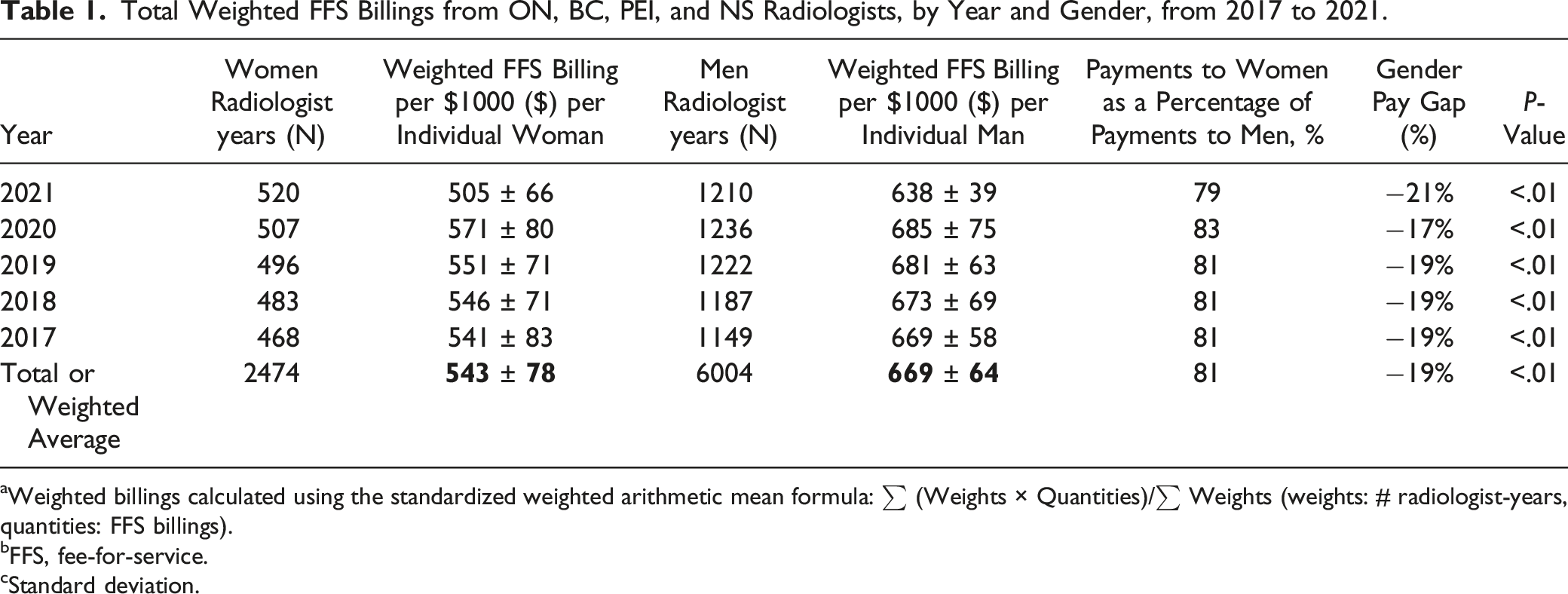
aWeighted billings calculated using the standardized weighted arithmetic mean formula: ∑ (Weights × Quantities)/∑ Weights (weights: # radiologist-years, quantities: FFS billings).
bFFS, fee-for-service.
cStandard deviation.
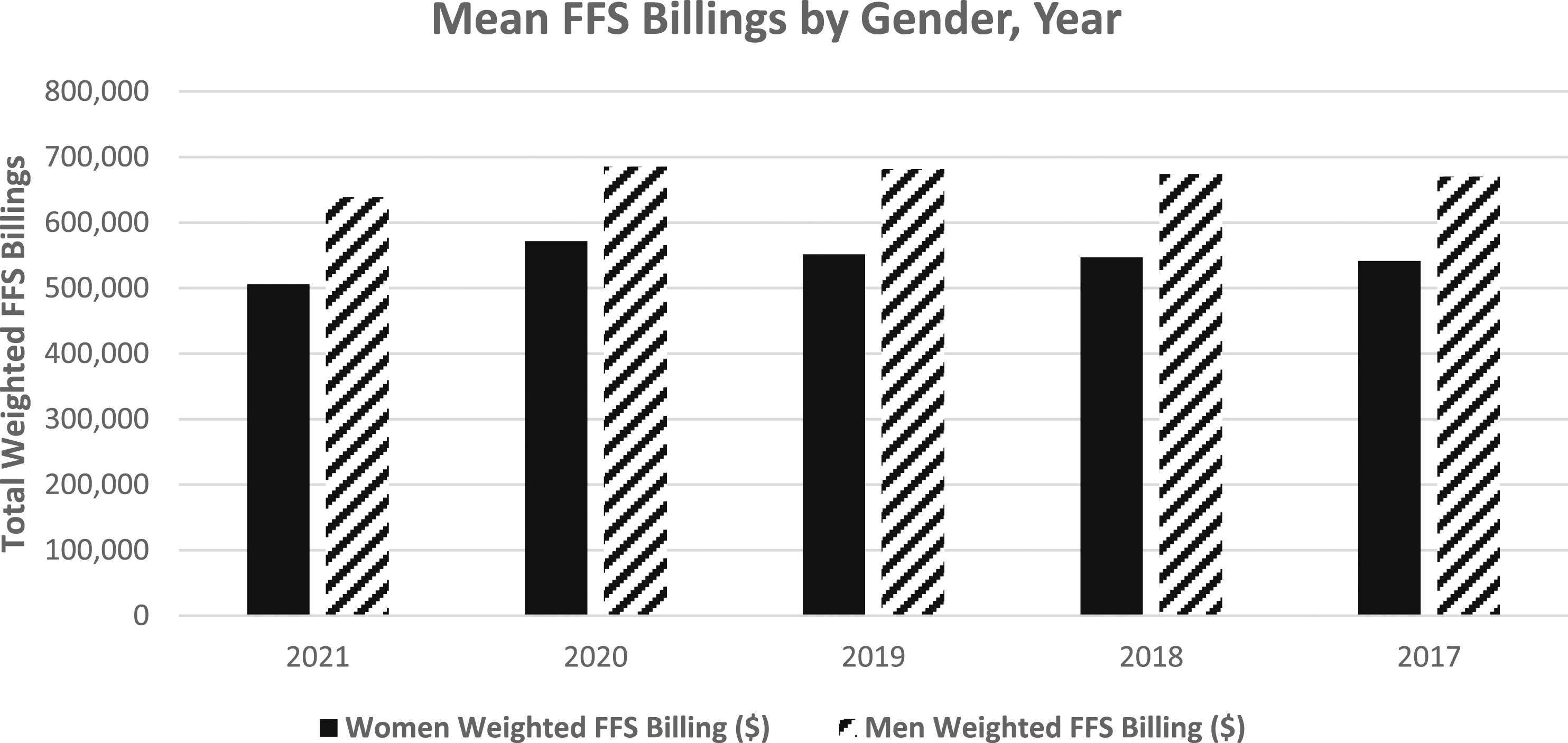
Total Weighted FFS Billings from ON, BC, PEI, and NS radiologists, by year and gender, from 2017 to 2021.
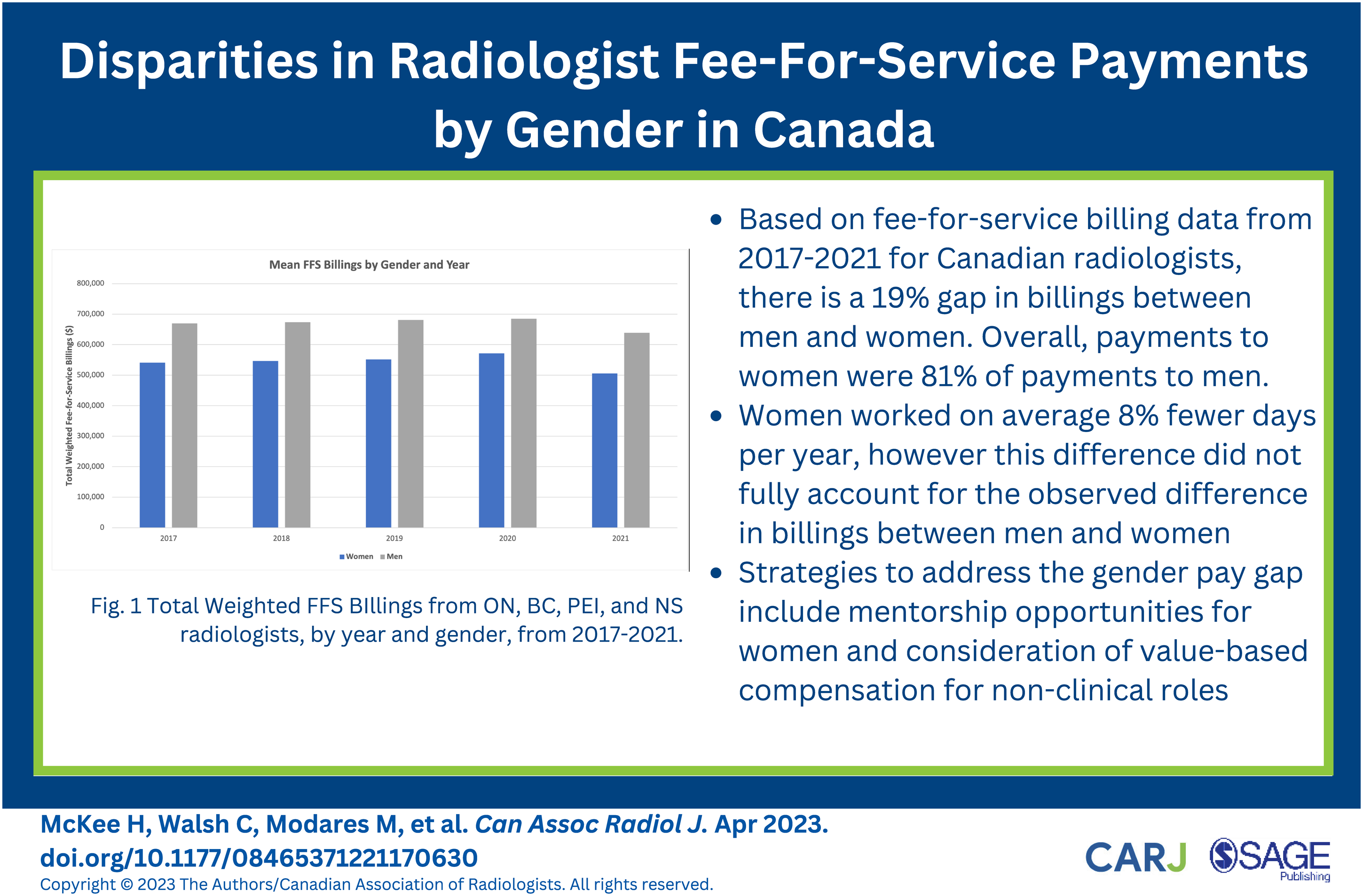
The average weighted billings of women and men radiologists from 2017 to 2021 were $543,090 ± $78,104 and $669,748 ± $64,513, respectively (overall unadjusted difference in FFS billings = $126,657). Overall, payments to women were 81% of payments to men with a 19% gender pay gap. When analyzed by individual year, men had significantly higher mean FFS billings compared to women for each year analyzed, with the gender pay gap ranging from 19 to 21% from 2017 to 2021 (P < .01) (Table 1 and Figure 1).
Provincial FFS Billing
Average FFS Billings from ON, BC, PEI, and NS Radiologists, by Province and Gender, from 2017 to 2021.
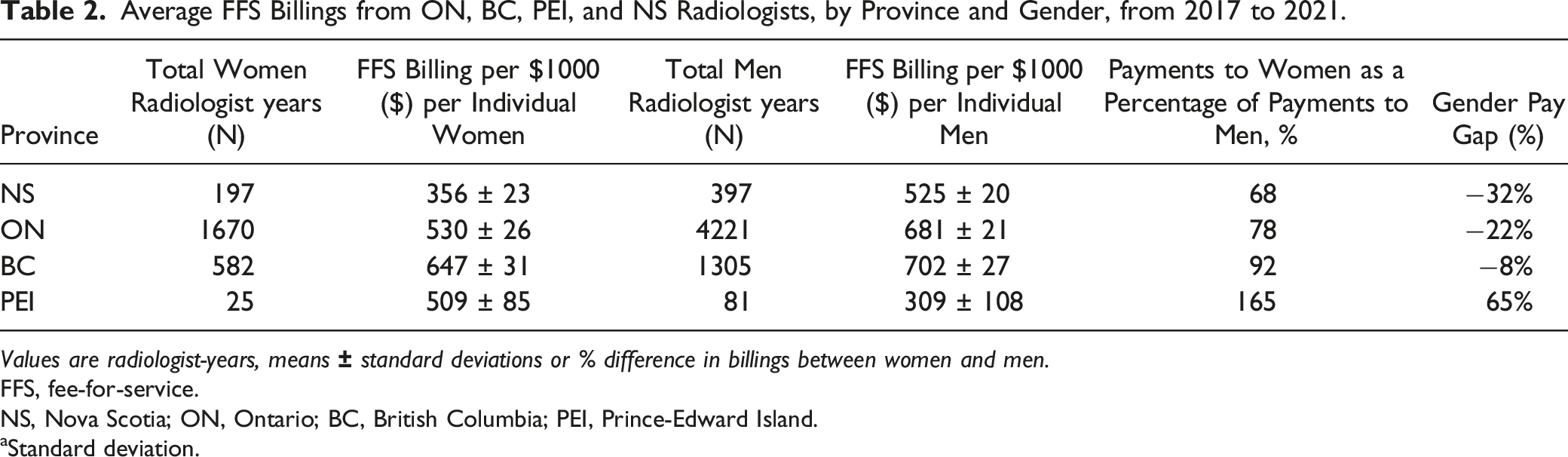
Values are radiologist-years, means
FFS, fee-for-service.
NS, Nova Scotia; ON, Ontario; BC, British Columbia; PEI, Prince-Edward Island.
aStandard deviation.
Subspeciality Billings
Average FFS Billings from ON, BC, PEI, and NS per Radiologist, by Subspeciality Billing Codes and by Gender, from 2019 to 2020.
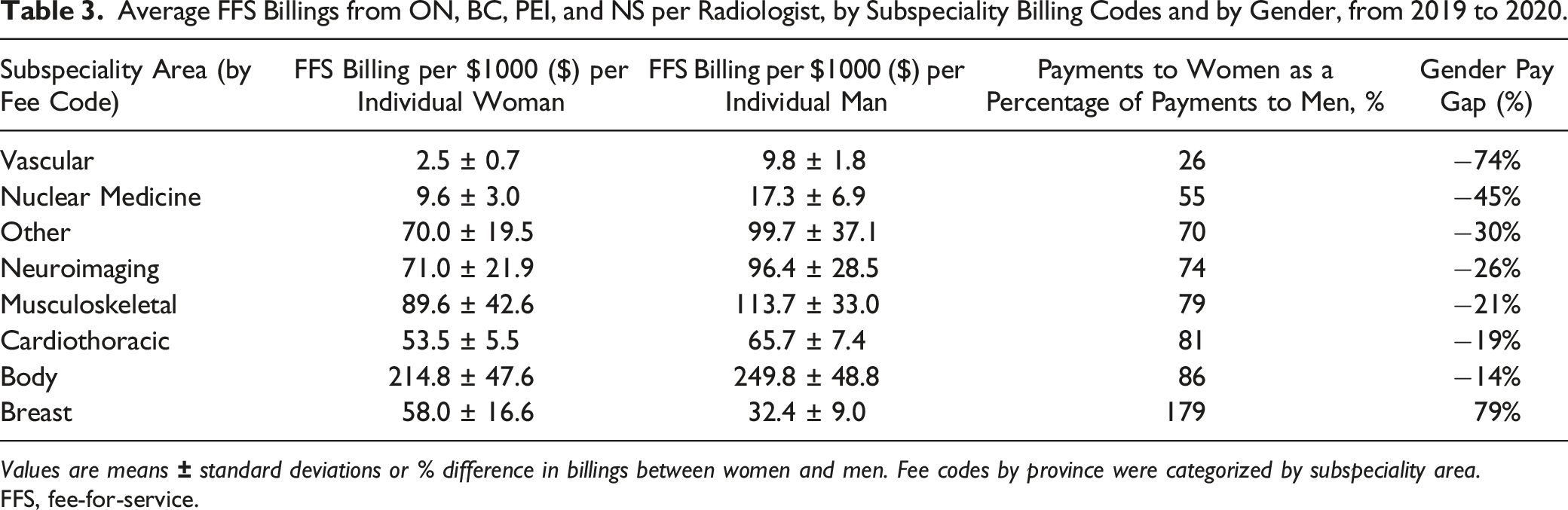
Values are means
FFS, fee-for-service.
Days Worked and Number of Procedures
Weighted Mean Number of Procedures Performed per Radiologist, Procedural Billings per Radiologist, and Days Worked Annually by Gender.
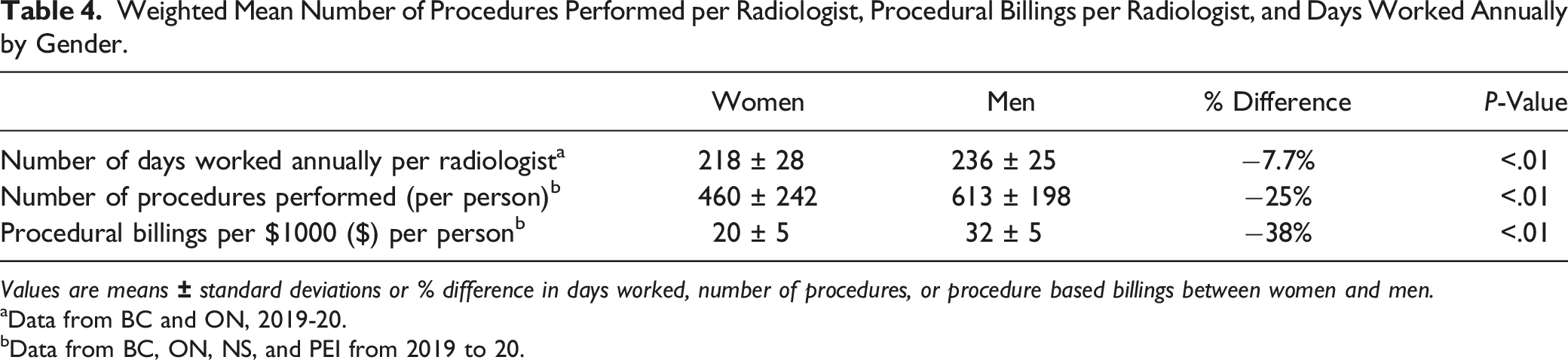
Values are means
aData from BC and ON, 2019-20.
bData from BC, ON, NS, and PEI from 2019 to 20.
On average, women radiologists had lower procedure-based volumes (460 ± 242 vs 613 ± 198 procedures/radiologist/year, P < .001, 25% difference) and procedure-based billings ($19,974 ± 5273 vs $32,255 ± 5496 billings/radiologist/year, P < .001, 38% difference). Procedure-based billings accounted for only 5% of annual radiologist billings overall (3.9% for women and 5.5% for men), respectively (Table 4).
Discussion
Given limited data to date on differences in billings and pay between men and women radiologists in Canada, we sought to examine differences in fee-for-service payments to men and women radiologists and evaluate potential contributors. Based on an analysis of fee-for-service payments to radiologists in 4 Canadian provinces between 2017 and 2021, payments to women were 81% of payments to men with a 19% gender pay gap. This average is not simply a measure of central tendency but was sustained consistently. Within each year evaluated, women billed less than men. Based on our findings, radiology faces similar pay gap disparities to other medical specialities.4,13 Women worked 8% fewer days annually compared to men and had lower procedure-based billings. However, these differences do not fully account for the disparity in billings by gender in Canada.
Our results contribute to the growing body of literature on the gender pay disparities across the broader Canadian medical field. 11 Our findings are similar to a recent study from the US which reported a 21% gender pay gap in radiology, ranking it in the top 4 specialities with the largest gender pay gaps. 14 Our results are also concordant with the results from an analysis of overall physician FFS billing claims from 2017 in Ontario, which reported an absolute difference in billings between men and women radiologists of $182,785 with 64% of payments to women as a percentage of payments to men. 15 The slightly lower difference in billings between men and women in our study is likely related to differences in years analyzed and inclusion of data from other provinces.
To date, research on the gender pay gap in medicine has tended to focus on the presence and magnitude of a pay gap. We have also investigated potential contributors to this gap. We found differences in procedural volumes and billings and annual days worked between men and women, however these variables did not fully explain the observed difference in billings between men and women. This aligns with multiple other studies which report that even after controlling for variables such as total work hours, academic productivity, institutional characteristics, and speciality, the gender pay gap persists.8,9 Other hypotheses for the gender pay gap have thus been proposed, such as differences in hiring and promotional practices, work settings, and role expectations.3,5,16
We found that overall, women radiologists worked slightly fewer days annually compared to men. However, this difference does not fully account for the observed difference in billings between men and women in our study. Our findings are concordant with studies that have found that differences in total days worked does not explain the gender pay gap for physicians overall.8,9 On average, women radiologists worked 18 fewer days annually, a difference of only 8%. It is important to emphasize that this difference may partially reflect transient changes due to disproportionate impacts of COVID-19 on women professionals, including childcare and homecare responsibilities. 17
Prior research has demonstrated that women radiologists are more likely to practice in academic settings compared to men,5,18 which often involves additional professional roles such as teaching, administration, and/or research which may be poorly remunerated. Women already face subtle and often unconscious biases in recruitment and hiring in academic settings, 19 and these are likely amplified in men-dominated specialities such as radiology. In fact, women obtain fewer leadership positions in radiology12,20–22 and although women Canadian radiologists at the professor level have more publications than men colleagues, research shows they hold fewer senior faculty positions. 23 Women in radiology may thus experience heightened pressure to not only be academically productive, but also dedicate additional time to internal services for the department such as mentorship, program recruitment, faculty governance, and external committees, 24 all to achieve equal professional opportunities. These additional expectations may contribute to role strain, burnout, and differences in daily workflow that impact billings.
In a setting with minimal gender diversity, women radiologists may likewise feel the need to invest time into strengthening the community of women in the field, whether it be through forming professional groups, recruiting women trainees, or pursuing additional advocacy work. 16 These non-clinical roles are often volunteer-based, unpaid, and non-contributory to academic promotional benchmarks. Placing promotional or compensatory value in internal services such as mentorship, task forces, and committees could offer more equitable advancement and pay for these added responsibilities taken on by women radiologists.16,25 Additionally, leadership roles have traditionally been highly dominated by men, with a 10:1 man to woman ratio reported amongst radiology Department Chairs in the US. 12 Increased diversity amongst those in senior leadership positions is another important step in addressing the gender pay gap and breaking down professional barriers to promotion faced by women radiologists. One of the most influential factors in speciality choice for women is mentorship and perceived gender diversity.26–28 The implementation of structured mentorship opportunities for aspiring women radiologists and those already in radiology may be valuable not only to improve gender representation overall, but also within individual subspeciality areas and in leadership positions.
Our study has several limitations. First, we only report on FFS billings from 4 Canadian provinces, which may not be representative of all radiologists in Canada. However, the provinces we were able to analyze data from were geographically diverse. Given the relatively small numbers of radiologists with FFS data in some provinces, we were not able to fully explore the impact of geography on differences in pay between men and women. Due to the nature of publicly available FFS averages, we did not have access to individual-level data to adjust for potential confounders on an individual level. Data on annual days worked were not available for all provinces, which limits generalizability of these findings. Data on billing code modifiers was not available to evaluate the impact of billings during regular hours compared to on-call billings which can be more lucrative. We did not have data on specific practice setting to explore the impact of academic and non-academic based practice locations on the gender pay gap. Finally, we did not have access to data regarding pooling of billings by individual practice groups or other sources of remuneration for academic work such as grants or other funding.
Conclusion
We evaluated fee-for-service payments to radiologists in 4 Canadian provinces between 2017 and 2021 and found that payments to women were 81% of payments to men with a 19% gender pay gap overall. Payments were lower to women across all years evaluated. Women worked 8% fewer days per year on average than men, which did not fully account for the difference in FFS billings. Our study was limited by our inability to control for potential confounders due to lack of individual level data and lack of data on pooled billings and alternative payment models. Future work should attempt to collect detailed information from individual radiologists including practice location and different sources of income to better understand and describe the causes of the gender pay gap. Despite this, our findings highlight the need for strategies to address differences in billings between men and women such as formal mentorship opportunities and consideration of value-based payment models that recognize non-clinical roles.
Footnotes
Declaration of Conflicting Interests
The author(s) declared no potential conflicts of interest with respect to the research, authorship, and/or publication of this article.
Funding
The author(s) disclosed receipt of the following financial support for the research, authorship, and/or publication of this article: This work was supported by the Canadian Association of Radiologists EDI Gender Pay Gap Committee.
