




Abstract
In December 2019, in Wuhan in China an outbreak of Coronavirus (COVID-19) was reported. In late February 2020, the first cases of the virus were recorded in Ireland. By 11th March, the World Health Organisation had declared the outbreak a pandemic and on 12th March, An Taoiseach, Leo Varadkar announced that all schools would close with effect from 6pm that day. The schools remained closed until September. This paper considers the impact of the closure of primary schools on both principals’ and teachers’ wellbeing. A mixed-methods, longitudinal research methodology was undertaken. There were two phases to the research. Phase one was undertaken in June and July 2020 when teachers and principals participated in a semi-structured interview and completed two questionnaires: the Emotional Regulation questionnaire and the Copenhagen Burnout Inventory. Phase 2 of data collection was completed in December/January 2021/2021 when the teachers participated in a further interview and completed the questionnaires again. The overall aim of the study was to provide an opportunity for principals and teachers to reflect on how the pandemic impacted on their wellbeing and by inference, the impact of the increased emotional labour of teaching during COVID.
The pandemic has been a great teacher
Introduction
Little did people realise when the first outbreak of the Coronavirus (COVID-19) was reported in Wuhan in China, what a life changing series of events would unfold. COVID-19 is the disease caused by SARS-CoV-2, which is the Coronavirus that emerged in December 2019, leading to a pandemic of respiratory illness. In the days that followed 29 February 2020, when the first case of the virus was confirmed in Ireland, companies such as Google requested that the majority of their 8000 staff would work from home and case numbers continued to increase (Rte.ie/news). Although there had been some reports in the Irish media that schools, crèches and colleges might close, the decision taken on 12th March 2020 to close with effect from 6pm was quite sudden and unexpected. In the case of schools, it was announced that they would remain closed until 29th March. This meant that all of the 3300 primary schools in Ireland closed their doors on 12th March and most schools sent pupils home with their books and a list of work to complete for the duration of the 17 day closure. As time elapsed, and shops, restaurants and other businesses remained closed, so too did schools and it was the new school year in September 2020 when they reopened. In this time the pandemic took its grip on the country and resulted in many losses of life, a change in the way people lived, socialised and worked and the impact was enormous. In essence, the initial 17-day school closure that was announced evolved into a timespan of school closures for three and a half months until schools commenced their Summer holidays in the last days of June. Baytiyeh (2017) outlines that maintaining education and communication, via whatever means is possible during a school closure, is vital. In the intervening time, while the school buildings remained lifeless, teaching and learning evolved to an online format, as did many staff meetings and engagements between staff members and the wider school community. Given that the communication to schools on the day the closures were announced had set an expectation for a return date of 29th March, many schools found themselves in a situation where they had to transition to an online space without any preparation or organisation for same. Teaching staff found themselves in the situation where they had to adopt to online teaching and learning while adapting to communicating with colleagues in an online space! Anecdotal evidence suggests that some schools adapted to the change promptly, while other schools found it extremely challenging (Burke and Dempsey, 2020a).
From a historical perspective, school closures are not new. For example, the influenza pandemic in 2009 saw some schools closing around the world, including in England (Jackson et al., 2014). Reports on the impact of school closures as a result of a pandemic have focused on whether the closures are effective and in what ways when it comes to disease control (Rauscher, 2020; Viner et al., 2020) and also the impact of school closures on pupils’ learning and wellbeing (Asbury et al., 2020; Colao et al., 2020). In contrast to this, little attention has been paid to the impact of school closures on teachers and specifically on teacher wellbeing. Schleicher et al. (2018) consider that this is an important gap, considering that teachers are part of an essential workforce in all societies. Furthermore, given the focus on the impact of the pandemic on pupil wellbeing, it is essential to consider the wellbeing of those who engage in both the education and the caring roles of pupils on a daily basis.
This paper explores the impact of the school closures and the pivot to ‘emergency remote teaching’ at primary school level on principal and teacher wellbeing in the Irish context. These findings may well echo what happened in other countries and be part of a transnational research focus. In advance of presenting findings of a mixed-methods study completed with both primary school principals and teachers, the concept of wellbeing is explored, with a particular focus on teacher and principal wellbeing and emotional regulation (ER).
So, what is wellbeing?
Wellbeing is a term that is used regularly, particularly in educational discourse, as is evident in both national and international policy developments in recent years (Department of Education and Skills, 2018). As policy is evolving in the area and there is growing concern relating to pupil wellbeing and to a lesser extent, teacher wellbeing, what do we understand by the term wellbeing? A review of literature highlights that while wellbeing is considered ‘an urgent matter to examine’ (Buchanan and Moyne, 2020: 1), it is an enigmatic concept that is interpreted in many different ways and is difficult to define (Miller et al., 2013). According to Soutter et al. (2014: 497), ‘despite significant attention to conceptualising and evaluating well-being in academic and in policy circles, well-being remains a narrowly defined, if not undefined, term in education, complicating efforts to plan for and monitor it effectively’. Work completed with schools on wellbeing highlights that the topic is open to multiple interpretations (Nohilly and Tynan, 2019).
Bache et al. (2016) contest that wellbeing is a ‘wicked’ problem; a problem that lacks definition and a definitive objective answer. There is no doubt that wellbeing is a contested space for a number of reasons, including its interpretation, its place within the education system and the projection that wellbeing is the solution to current concerns. The globalisation of educational reform is not without challenges, with wellbeing as an example. Shirley (2020) reflects on research conducted in the area of wellbeing in ten districts in Ontario, Canada. The research findings concluded that what it all ‘boiled down to’ with regards to wellbeing was that a particular way of wellbeing was being enacted in schools, one which was fitting with the pre-existing regimes in schools. This approach did not promote critical ways of thinking about the world or to impart moral lessons that could support socialisation and Shirley argues that now is the time for a focus on humanistic education that both values individuals in their quest for wellbeing and enables them to choose the purposes guiding their lives.
Wellbeing is defined in broad terms and encompasses multi-disciplinary concepts ‘of health, contentment and flourishing, [it] refers to personal and communal aspects and to having the psychological, social and physical resources needed to meet life challenges’ (Svane et al., 2019: 210). The Department of Education in their (2018) Wellbeing Policy Statement and Framework for Practice, present a definition of wellbeing as follows: Wellbeing is present when a person realises their potential, is resilient in dealing with the normal stresses of their life, takes care of their physical wellbeing and has a sense of purpose, connection and belonging to a wider community. It is a fluid way of being and needs nurturing throughout life (DES, 2018: 10).
Wilson-Strydom and Walker (2015) highlight that when defining wellbeing it is important to present this holistically so that it can be understood as human potentials or capabilities and achieved functionings. Naturally, given the large proportion of time that pupils spend in school, the pupil's overall experience of school is regarded as having an influential role in developing and enhancing young people's wellbeing. Teacher wellbeing is essential in the wellbeing debate which is why the research was undertaken.
Wellbeing policy developments in Irish education
Looking at policy developments in wellbeing in the Irish context, there is confusion for primary schools in terms of what wellbeing is, what spelling of wellbeing is correct to use and what sub-sets of wellbeing are particularly emphasised in the wellbeing debate. In 2015, following a similar publication for post-primary schools in 2013, the Well-being in Primary Schools: Guidelines for mental health promotion were published jointly and made available to schools by the Department of Health and Department of Education and Skills (DES). Considering that this was the first document to focus specifically on mental health, the title immediately presented wellbeing to schools as synonymous with mental health. In contrast, O’Brien and O'Shea (2017) consider that wellbeing encompasses emotional, physical, social, spiritual and cognitive wellbeing which suggests a more holistic construct. These particular guidelines also presented wellbeing along a ‘continuum of need’ model, from mild to severe and from transitory to enduring, with the continuum being a framework with which schools in Ireland were already familiar and which is mainly applied in the context of pupils with additional needs (Tynan and Nohilly, 2018).
In 2018, a further publication by the DES was made available to all schools and centres for education in relation to wellbeing. The Wellbeing Policy Statement and Framework for Practice was published and the title alone identified that the spelling of wellbeing was different to the 2015 document. Furthermore, while this document requires all schools to review their wellbeing practices through a process of school self-evaluation, the model of wellbeing recommended by which to review practices is no longer the continuum of need presented in 2015. Wellbeing has been conceptualised in this framework as encompassing four key areas, informed by the Health Promotion School process: culture and environment, curriculum, policy and planning, and relationships and partnerships (Nohilly and Tynan, 2022). This demonstrates just how complex and evolving the policy process in relation to wellbeing development is, which certainly does not support schools in developing their understanding of wellbeing.
Teacher and principal wellbeing
‘The wellbeing of teachers is important – especially as teacher wellbeing research identifies factors that can cause wellbeing to diminish or flourish and identifies teacher wellbeing as central to teacher fulfilment and school performance (O’Brien and Guiney, 2021: 346)’. Cann (2020) considers that teacher wellbeing is a state where teachers experience job satisfaction, feel positive emotions more frequently than negative emotions and function well both as a teacher and in the other roles they play in their lives (parent, spouse and so on). Functioning well also includes supportive professional relationships, professional growth and a feeling of self-efficacy. Cann concludes that teacher wellbeing has a significant impact on schools, teachers and students. Low teacher wellbeing can negatively affect students as stressed and burnt-out teachers have poorer relationships with students and the quality of their teaching decreases. It is therefore important for schools to prioritise teacher wellbeing and help to ensure that teachers can flourish as this promotes better classroom climates and enables high-quality teaching that leads to success for students. The wellbeing of the school leader requires particular mention. Mahfouz and Richardson (2021) summarise the demands of the principal role succinctly; ‘In an era characterized by educational reform, principals must be able to lead restructuring efforts, take on new roles and catalyze change as they implement school improvement initiatives, all while existing in intense, politically charged environments’ (p3.60). Weber et al. (2005) found that principals’ focus on the wellbeing of their teachers and attend to others needs, while sacrificing their own needs. This was exacerbated during the pandemic. Research conducted with Irish principals during the COVID-19 pandemic highlights that while many of the 993 respondents showed great mental agility and maintained moderate levels of wellbeing, not one of them saw themselves as thriving psychologically (Burke and Dempsey, 2020b). A group that is of particular concern is teaching principals, who reported lower levels of wellbeing when compared to administrative principals. Some principals mentioned that the focus for everyone was pupil and teacher wellbeing, forgetting that leaders need support too (Burke and Dempsey, 2020b). Indeed, if principal wellbeing was adversely affected by school closures, what impact did this have on their ability to support the wellbeing of their teachers? Taking into consideration that teacher wellbeing is also linked to student wellbeing (NCCA, 2017), addressing teacher wellbeing is a paramount first step to take. Teachers’ emotions and ER is important to consider in the debate surrounding teacher wellbeing.
COVID-19 necessitated many changes in education that were likely to be cognitively and emotionally taxing for teachers impacting on their wellbeing. Confusion and stress for teachers have been identified by UNESCO as one of 13 adverse consequences of school closures and is linked to the abruptness of the closures, uncertainty about how long these would last, and low familiarity with remote education (Kim and Asbury, 2020). O’Brien and Guiney (2021) argue that wellbeing is a concept that is at risk of remaining distant unless and until it is localised and personalised. In research conducted with teachers, O’Brien and Guiney discovered that teachers struggled to define wellbeing that was particular to them as teachers, as did the researchers also. Their research does suggest however that teacher experience and expression of wellbeing may be emotionally magnified by the particular psychosocial and political climate in which the teachers work. They concluded that the closer teachers get in their daily work to the meaning and purpose behind why they became a teacher, the more positive their wellbeing becomes and their job satisfaction increases. Day and Kington (2008) proposes that teacher identity is comprised of three aspects: professional (social and policy expectations and teacher education ideals); situated (school specific circumstances such as student behaviour, leadership and support); and personal (life outside of school including family and social roles). When there is imbalance in these three aspects of identity, then teachers were more likely to experience lower levels of wellbeing. COVID-19 potentially impacted on all of these aspects of teachers’ lives, thereby increasing the impact on teacher wellbeing.
Teachers’ emotions and emotional regulation
As Hargreaves (2005, 1998) revealed more than two decades ago, ‘emotions are at the heart of teaching’ (p. 278), leading to a plethora of research into teachers’ emotions, including more recent attention to these in the context of the present global pandemic (Liu et al., 2021). Teachers’ emotions are related to their teaching effectiveness and their wellbeing and health, which in turn is impacted by their emotional management (Taxer and Gross, 2018). In the normal course of events, teachers experience a wide range of positive (pleasant) and negative (unpleasant) emotions in their daily teaching, and use a range of conscious and unconscious strategies to manage their experiences and expression of their emotions as part of their professional role, in the best interests of their students and sometimes in order to just survive the teaching day (Sutton, 2004). This may be construed as the emotional labour of teaching (Hochschild, 2003). Emotional labour refers to the efforts made by employees, particularly in the caring professions including teaching, to manage their emotional displays and to publicly present their emotional responses in ways that are acceptable to employers, administrators, colleagues, students, parents and the like (Hargreaves, 1998; Hochschild, 2003). Hochschild identified two processes of surface acting or deep acting that tend to be employed. Deep acting involves putting effort into genuinely feeling the appropriate emotion and is more comfortable physiologically and less stressful, while surface acting is more artificial such as pretending to feel an emotion, which predicts more emotional exhaustion and burnout (Näring et al., 2006; Wang et al., 2019). Emotional labour theory has some synergies with ER theories, and both are often discussed together (Grandey, 2000; Wang et al., 2019). ER refers to ‘the processes by which individuals influence which emotions they have, when they have them, and how they experience and express these emotions’ (Gross, 1998: 275). ER may be undertaken before an event to prevent or create the emotional response, or responsively during or after an event. Of the two main responsive strategies, Gross (2015) has found that cognitive reappraisal, the re-evaluation of a situation to change how one feels about it, is more beneficial for a person's health. In contrast, expressive suppression, which involves a conscious holding down of the usual behavioural response of an emotion, is less beneficial for health. ER ability through cognitive reappraisal has been compared to the deep acting of emotional labour (Grandey, 2015), and has been shown to mitigate burnout in teachers (Brackett et al., 2010). Surface acting has been compared to expressive suppression both of which increase the likelihood of burnout (Taxer and Gross, 2018). Wang et al.'s (2019) recent review and meta-analysis of the emotional labour literature, found strong evidence for surface acting being negatively correlated with teachers’ wellbeing, including increased psychological stress, while deep acting tends to be associated with greater job satisfaction. These findings align with the ER findings cited above.
In a disaster context, the emotional labour of teaching can be exacerbated due to the increased pastoral demands in supporting students’ emotional and physical safety alongside coping with the personal impacts on themselves (O’Toole, 2017). In the COVID context, teachers worldwide were suddenly thrust from their typical teaching methods to online instruction, with more complex emotional labour demands. This experience has been likened to being ‘thrown into a “painful, natural experiment” with demanding workloads and limited resources, making their online teaching a complex emotional experience’ (Liu and Zhang, 2021: 2). As Liu has highlighted, ER was necessary to manage the emotional labour of expressing appropriate emotions and channelling positive emotions into online teaching, while also being continually mindful of the rules of emotional expression. Irish teachers have faced similar challenges in adapting to online teaching, acknowledging their need to not only upskill, but to have confidence in both their skills and the technical support, such factors increasing the emotional pressure to perform and support students (Winter et al., 2021). COVID-related research has found that ER has been significant in reducing stressful emotional psychopathology resulting from the pandemic in a large adult sample from Italy (Mariani et al., 2021), in nurses in Wuhan (Zhang et al., 2021), and in medical professionals in the Dominican Republic (García-Batista et al., 2021). However, as developments in wellbeing policy progress, there is limited focus on teacher and principal wellbeing.
Given the significance of burnout as a variable in wellbeing and in assessing how different groups fared during the lockdowns to date, burnout was chosen as a potentially measurable variable for the present study. Similarly, ER has been assessed in teachers pre-pandemic as studies cited above have confirmed, and has been shown to be effective in reducing emotional exhaustion and burnout in teachers (e.g. Brackett et al., 2010). Therefore for practical purposes it was decided that these two variables would be assessed in the present study, in conjunction with the qualitative methodology.
The study
Previous research discussed above suggests that teacher wellbeing is under-supported in the best of times, and may be further compromised in the context of a large-scale, global stressor such as the present pandemic. This paper reports the findings of phase one of a two phase mixed-methods study undertaken with primary school principals and teachers. The purpose of the study was to provide an opportunity for both principals and teachers to reflect on how the pandemic has impacted on their wellbeing and by inference, the impact of the increased emotional labour of teaching during COVID. The intention was that the findings of this study would contribute to the growing body of knowledge in relation to teacher wellbeing.
A mixed-methods longitudinal research methodology with a qualitative focus was undertaken to explore the impact of COVID-19 on teacher wellbeing. Ethical clearance to undertake the study was granted by the university in which the lead researcher was working. The ethics process took consideration of any required responses that might be needed following completion of the first quantitative phase of the study. There were two phases of research undertaken as part of the study: phase one was undertaken in June and July 2020, while phase two was undertaken in December 2020 and January 2021. In phase one, primary school principals and teachers from the Republic of Ireland were invited to participate in a semi-structured interview to reflect on their experiences of education and schooling since schools were closed on 12th March 2020. To begin, the researchers contacted principals and teachers who were known to them to participate in the study. Purposive sampling was employed thereafter so that principals and teachers from a variety of school types and with various years of experience would be included in the study. Thus, both convenience and purposive sampling was employed. The inclusion criteria for the study were principals and teachers with varying years of experience and working in various school types. The exclusion criteria was personal friends of the researchers being involved in the study. This study addressed the following research questions:
What was the impact of the Coronavirus pandemic on principal and teacher wellbeing through reflection on their experiences of engagement with teaching and learning and supporting pupils and colleagues since school buildings closed? What was the experience of leading the school community during the COVID pandemic? How did Irish teachers and principals retrospective accounts manage the move to teaching through the sudden lockdown resulting from the pandemic personally and professionally?
Participants and settings
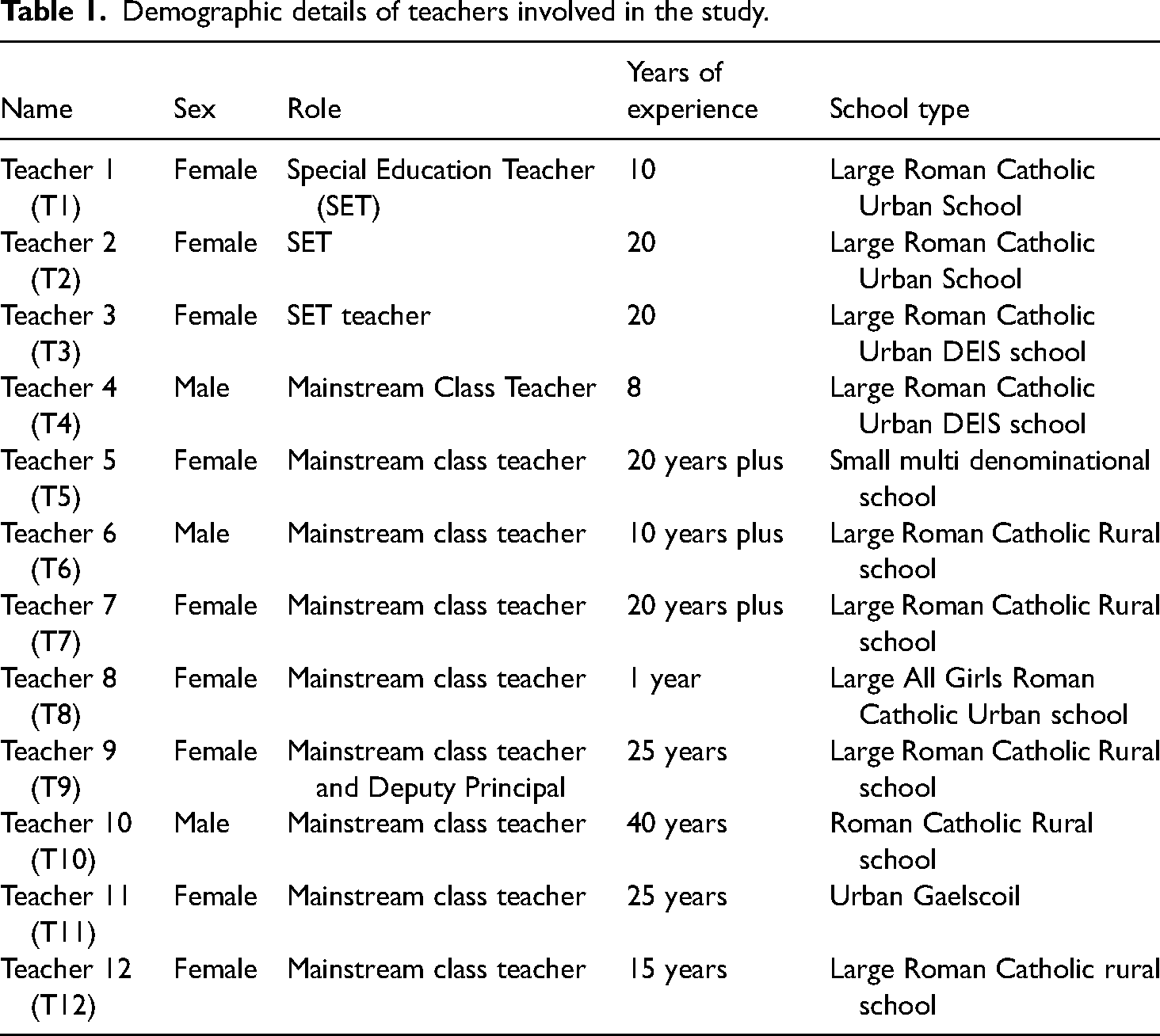
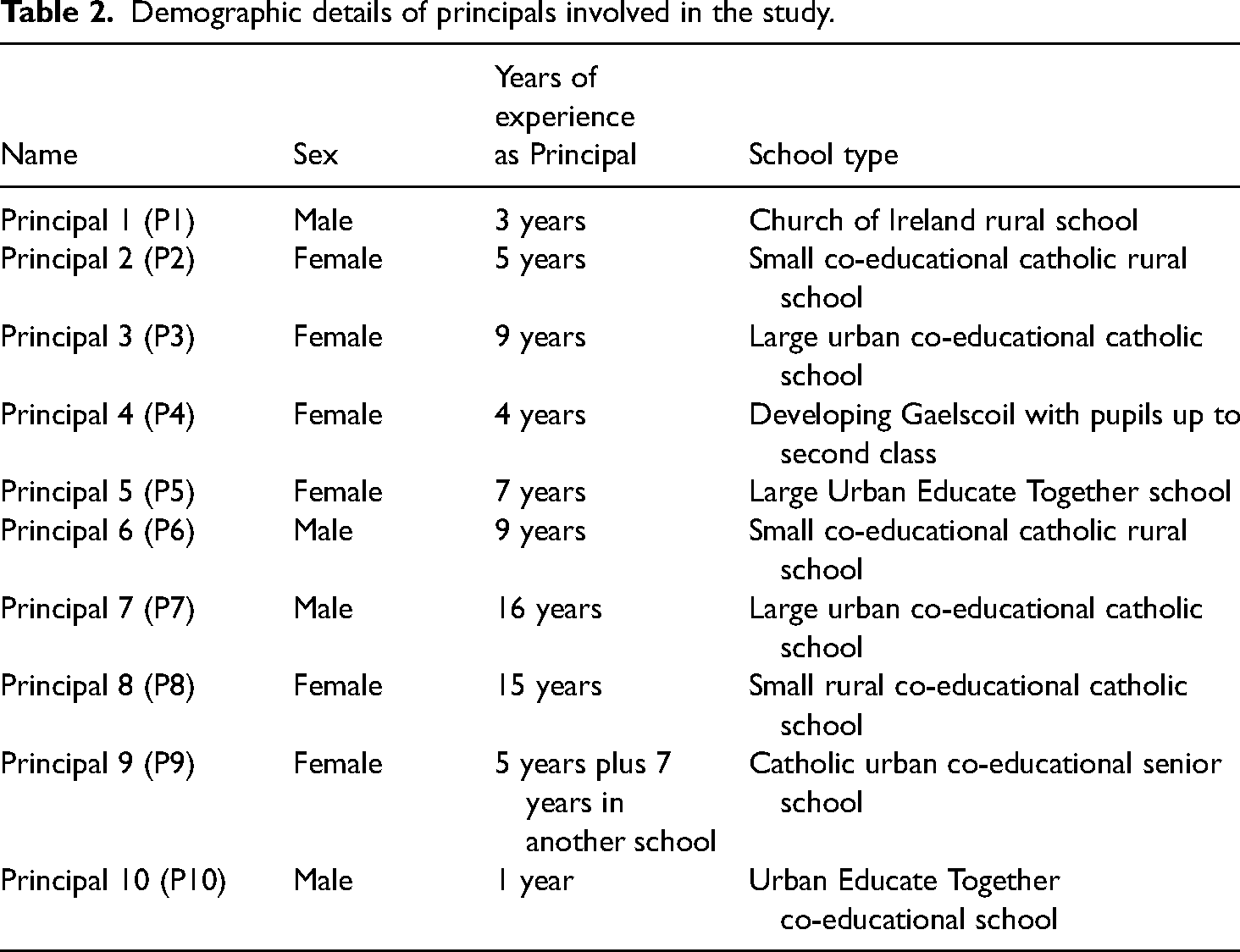
Ten principals and 12 teachers accepted the invitation to participate in this study (16 women and 6 men). Their ages ranged from 22 to 60 years (M = 42.45; SD 9.40). Invitations were issued to principals and teachers that were known to the researchers and fitted the criteria for the study. Teachers participating in the study also supported the recruitment of other teachers. Finally, an education centre director issued an invitation to participate to schools in a particular catchment area. Of the total 22 participants, four principals and two teachers were employed in rural schools including two multidenominational schools, while the remainder were employed in urban schools, including two that were non-denominational. The majority of the participants (18/22) were employed in Catholic schools (In the Republic of Ireland, almost 90% of primary schools are under the management of the Catholic Primary School Management Association). A range of both male and female teachers and principals, with varying years of experience and teaching and leading, in a variety of school types, engaged in the study. Tables 1 and 2 present demographic details of the teachers and principals involved in the study. There were no significant differences associated with any of these demographic variables.
Demographic details of teachers involved in the study.
Demographic details of principals involved in the study.
Procedure
Prior to their individual interview, participants were asked to complete two short questionnaires: The Emotional Regulation Questionnaire (ERQ) (Gross and John, 2003) and the Copenhagen Burnout Inventory (CBI) (Milfont et al., 2007). Both of these instruments have been widely used internationally and show strong reliability. Minor modifications were made to the questionnaire to take account of the circumstances of Coronavirus. These measures were intended to assess the impact of the pandemic on the teachers’ and principals’ perceptions of burnout and ER. The completed questionnaires were returned via e mail to the research team ahead of the interviews taking place. Participants were also sent a consent form and asked at the outset of one of the questionnaires to indicate that they had read the consent form and were willing to participate in the study. Given the guidelines in existence in relation to social distancing at the time of conducting the interviews, they were conducted using Zoom and recorded using this platform also. In the first round of interviews reported here, the time taken to complete interviews with both principals and teachers was approximately 45 min for each participant. One member of the research team interviewed the teachers for both Phases 1 and 2 of the research while a second member interviewed the principals on both occasions.
Quantitative measures
Emotional Regulation Questionnaire
The ERQ is a 10-item self-report measure of two aspects of ER, namely cognitive reappraisal and expressive suppression, based on Gross's (1998) process model of ER (Gross & John, 2003). Cognitive reappraisal refers to the strategy of changing one's thoughts to modify an emotional response, and is assessed through six items such as ‘When I want to feel more positive emotion (such as joy or amusement), I change what I’m thinking about’. Expressive suppression refers to strategies used to modify the expression of emotion, such as masking facial expression or holding back other emotion-related action tendencies (Brockman et al., 2017; Lazarus, 1991). Four items capture this strategy, such as, ‘When I am feeling negative emotions, I make sure not to express them’. Items are rated on a 7-point Likert scale, ranging from 1 (strongly disagree) to 7 (strongly agree). Respondents write the relevant number on a list against each item. Higher scores denote higher ER. The ERQ has been widely used, with consistent levels of internal reliability including Cronbach's α of 0.7 (Preece et al., 2021). In previous research, individual Cronbach's α of 0.89–0.90 for cognitive reappraisal and 0.76–0.80 for expressive suppression, were regarded as excellent levels of internal consistency reliability (Preece et al., 2019). For the present sample, Cronbach's α for reappraisal was 0.815 and for expressive suppression was 0.919.
Copenhagen Burnout Inventory: Adapted for teachers
The Copenhagen Burnout Inventory: Adapted for Teachers (Milfont et al., 2007) is a 19-item self-report measure, that measures three components of teachers’ burnout: (1) Personal, (six items, e.g. ‘how often are you emotionally exhausted?’); (2) Work-related (seven items, e.g. ‘Are you exhausted in the morning at the through of another day at school?’) and (3) Student-related (six items, e.g. ‘Do you find it hard to work with students?’). For the first 12 questions, participants select on a five-point Likert-type scale from 1 (never/almost never) to 5 (always). For the remaining seven questions the Likert-scale is 1 (to a very low degree) to 5 (to a very high degree). Milfont et al. adapted the original inventory from Kristensen et al. (2005), which is freely available for research use. This adapted inventory was then trialled with New Zealand secondary school teachers. Reliability measures of the three burnout components namely personal work-related and client-related burnout. Cronbach's α's as assessed by Milfont et al. were respectively reported as 0.87, 0.87 and 0.85 for personal, work-related and client-related components. Cronbach's α's for the Irish participants were respectively 0.901, 0.823 and 0.815.
Semi-structured interviews
The semi-structured interviews drew upon the personal and professional experiences of the Irish teachers and principals since engaging with remote learning in March 2020. The impact of this experience on personal wellbeing was a key feature of the interview. Principals and teachers reflected on their experiences within their respective roles and responsibilities. It was important to first understand the participants’ perceptions of wellbeing in order for them to consider how their personal wellbeing may have been impacted by the lockdowns, as also the wellbeing of their pupils and colleagues. Participants were asked a question as to their understanding of wellbeing. Questions included, ‘How did you respond to and engage with the school community (staff, pupils, parents) initially following the school closure?’ ‘Have you noticed any feelings or emotions in yourself while working with the school community and how have you managed these?’ ‘Have you developed strategies to address your wellbeing?’
Data analysis
This paper presents findings in relation to both the qualitative and quantitative data from Phase 1 only, in the context of related literature on teacher and principal wellbeing and teacher ER strategies. The overlap in content and findings between the quantitative and qualitative data, enabled comparison and contrasting between the two sources. Statistical analysis of the quantitative data and relationships established across the questionnaire and interview findings are presented. Interpretative phenomenological analysis (IPA) was used to analyse the qualitative interview data. This allowed the ‘lived experience’ of the participants to be the focus of the data gathered. The data collection, analysis and discussion of the quantitative and qualitative findings are presented individually and sequentially in the following sections below. We conclude with an overall discussion and implications for future research and practice.
Quantitative procedures Phase 1 (Time 1)
Twenty-two participants completed their questionnaires at the time of their interviews at Time 1.
Quantitative analysis and findings
Questionnaire data were entered into Excel, and imported into IBM SPSS Statistics 25, where the recommended reverse scoring for Item 10 on the CBI, and factor analyses for both measure were computed. To assess the relationships between the individual factors both within and across the two measures, Pearson correlations were calculated. There were no significant relationships between the measures or within the ERQ (Gross and John, 2003). However, consistent with CBI previous research (e.g. Milfont et al., 2007), significant correlations were found between personal and work burnout (r = 0.74; p = 0.01), between work and client burnout (r = 0.467; p = 0.01) and personal and client burnout (r = 0.47; p = 0.05).
Descriptive statistics
The total scores, means and standard deviations of both questionnaires are presented in Table 3.
Descriptive statistics full group total scores Time 1.
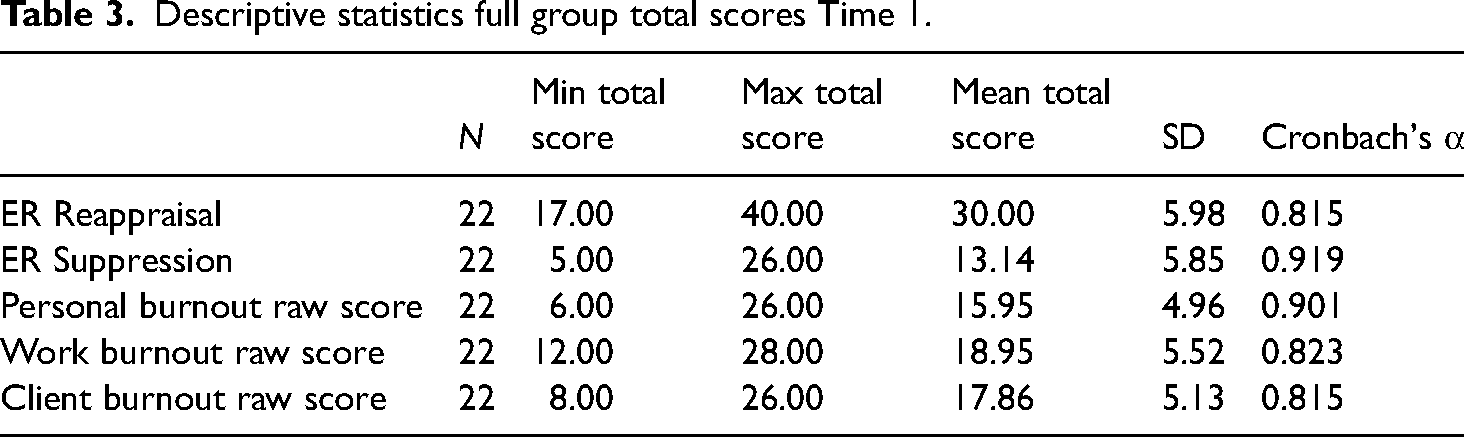
As shown in Table 2, all 22 participants completed both questionnaires. Reliability for all factors was acceptable to excellent, with Cronbach's α's of 0.815 and above. Higher total scores indicate more use of the specific ER strategies and more reported burnout in each category. For ER, the maximum possible raw scores for reappraisal and suppression are 42 and 28 respectively. Thus, we can see from the ranges and means shown, that some of the participants have reported frequent use of both strategies. For burnout, maximum raw scores possible are 30 each for personal and client/student related burnout, and 35 for work-related burnout. Work-related burnout showed the highest score, with personal burnout lowest of the three. Due to the small sample size, and the data for the separate groups (principals and teachers) not exhibiting a normal distribution of data, a Wilcoxon Signed Ranks test was conducted for any significant differences in these variables between the two groups, with none found.
To compare the participants’ burnout scores to those of the original sample of caring professionals assessed by the CBI designers (Kristensen et al., 2005), the Likert scale range of 5 (always) to 1 (never/almost never) was re-coded to 100 (always), 75, 50, 25, 0 (never/almost never), as was also applied by Milfont et al. (2007). The Irish participants’ re-coded total scores of 35.41, 35.87 and 38.07 for personal, work-related and client burnout categories respectively, were higher than senior doctors’ respective scores of 31.3, 29.2 and 25. (Kristensen et al., 2005: 201), and higher than those of the majority Kristensen et al.'s caring professionals overall. In contrast, the Irish participants’ re-coded scores were lower than those of their New Zealand teaching counterparts, at 43.00, 41.5 and 40.4 respectively (Milfont et al., 2007: 173). However, it is important to note that these original data were obtained 17 and 14 years ago. Fast-forward to Ireland in May 2020, during the same pandemic context, staff working within the Irish intellectual disability sectors across six different contexts (acute to non-client-facing roles), also completed the CBI (Kristensen et al., 2005), reporting relatively high personal and work-related burnout ranging from 50.42 to 57.92 (McMahon et al., 2020). These burnout scores were much higher than the re-coded 35.41 and 35.87 personal and work-related burnout reported by the present Irish teachers and principals. In contrast, the client-related burnout ranging from 27.36 to 35.47 reported by the Irish intellectual disability staff was closer to, yet lower than the re-coded client-related burnout of 38.07 reported by the Irish participants from the schooling sector. The Irish participants also reported lower burnout than other groups sampled using the CBI during the pandemic, such as nurses internationally (Clinton and Shehadeh, 2021; Montgomery et al., 2022), and German government employees (Meyer et al., 2021). Meyer et al. measured CBI personal burnout only, due to its high focus on personal exhaustion. They found higher combined effects of individual demands, job demands and pandemic related effects on women in particular, due to the home-based pressures such as childcare, which men did not report to the same extent (Meyer et al., 2021). Overall, it is of interest that the Irish teachers and principals have reported less burnout than these other Irish samples at this stage of the pandemic. Although not directly assessed, a possible variable that was different for teachers compared to these other groups, was the impending eight-week summer break that they may have consciously or unconsciously anticipated at the time of data collection.
When comparing individual item scores for the full CBI, the Irish participants’ mean score of 2.78, was almost identical to the mean individual item score of 2.86 reported by Christchurch (New Zealand) teachers, 18 months after the fatal Christchurch earthquake of February, 2011 (O’Toole, 2017: 525). Bearing in mind that Christchurch was in the midst of a prolonged intense aftershock sequence at the time of this CBI data collection, it appears that 10 months into the present Irish lockdown, the Irish teachers’ and principals’ burnout levels were very similar to those reported by a Christchurch cohort of teachers during a similarly-prolonged disaster.
With reference to the ER data in Table 3 again, we have noted above that ER Reappraisal was reported by the Irish teachers and principals more than twice as frequently as ER Suppression. This finding was not statistically significant however, but was in line with previous research (Sutton, 2004; Taxer and Gross, 2018). As previously found by Sutton (2004), and more recently by O'Toole (2017), teachers intuitively regulate their emotions through reappraisal and suppression on a daily basis. Reappraisal has been shown to mitigate burnout in teachers (e.g. Brackett et al., 2010; Taxer and Gross, 2018), and pandemic-related burnout in nurses, and other medical professionals (García-Batista et al., 2021; Zhang et al., 2021), whereas suppression tends to increase teacher stress and burnout (Taxer and Gross, 2018). Therefore, the higher rate of ER reappraisal over suppression in the present Irish participants (Table 3) may offer one possible explanation for their comparatively lower burnout rate reported, that is worth exploring further. To date there has been just one other study located, that has assessed the relationship between pandemic related burnout and ER in teachers. This was conducted by Daniel and Van Bergen (2023) who found teachers’ burnout to be significantly related to instructional self-efficacy but not to ER at all. They have recommended further research into cognitive reappraisal and burnout under highly stressful conditions. O'Toole and Friesen (2016) previously found that ER was a factor in teachers coping during and following a major earthquake that disrupted schooling. At this stage therefore it appears that more research is needed on the relationship between pandemic related burnout and ER.
To ascertain more information on the ‘lived experiences’ as reported by the Irish principals and teachers, semi-structured interviews were carried out, and are reported next.
All 22 participants were interviewed and all interviews were transcribed and coded for confidentiality. As a preliminary step, the interview data were imported into NVIVO-12, to identify commonalities in emotions reported. Preliminary findings are presented in Table 4.
There was some overlap, with some individual teachers reporting one or more of these emotional states.
Numbers of participants reporting salient emotions in their first interviews.
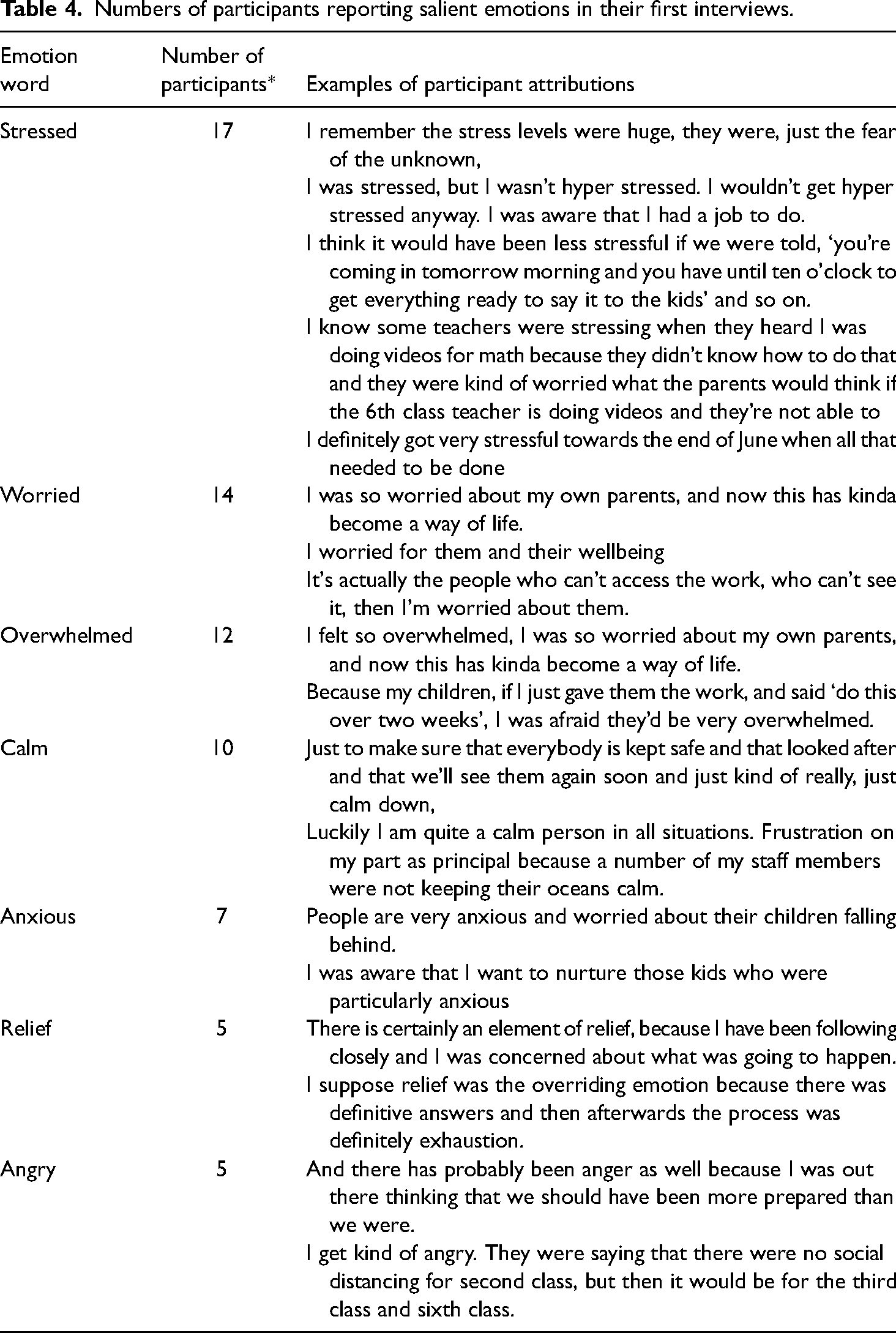
Stress and stress-related words were the most frequently-stated emotions that 17 of the 22 participants reported in response to the interview (Table 4). The situation itself tended to be described as stressful, while stressing and stressed indicated a response either in the self or other staff, with their attributed causes most commonly related to external pressures. There was some overlap with overwhelmed and worried, which more than half of the participants reported feeling. Calm was the most frequently reported positive state, followed by relief due to having some certainty about processes and procedures. Feeling anger or angry tended to be due to beliefs about what should have been done. IPA was then used to analyse the qualitative interview data, to further explore the contexts of and teachers’ attributions for these emotions towards understanding their lived experiences of the initiation of the lockdown and the four months preceding data collection.
Qualitative analyses and findings
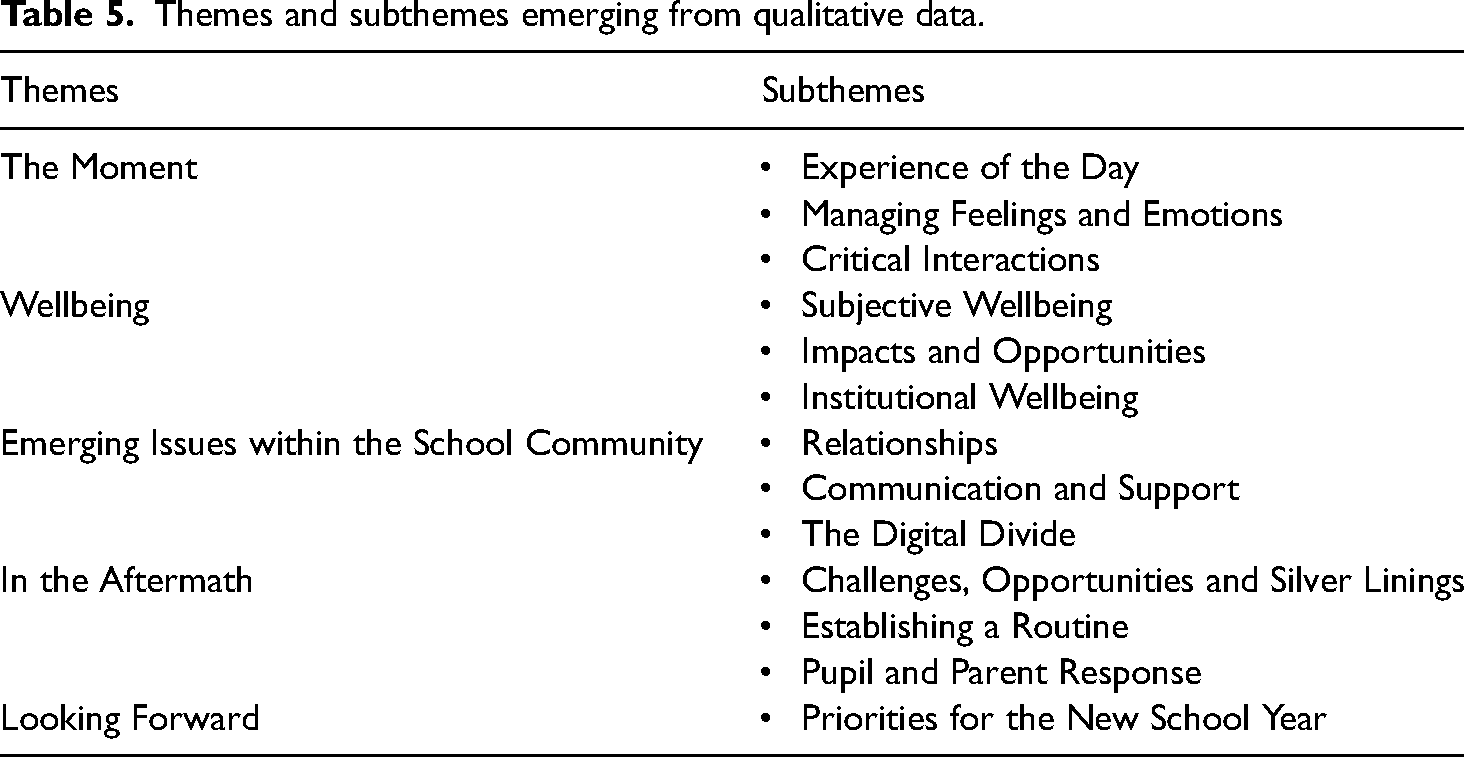
IPA focuses on the ‘lived experience’ of the participants, which is presented through a number of themes and sub-themes (Smith and Shinebourne, 2012). The interviews were analysed inductively through several readings through in a hermeneutic way, as appropriate for IPA, and were coded by multiple coders according to patterns identified within and across the interviews. Five themes were generated as presented in Table 3. For this paper, the themes of ‘The Moment’ and ‘Wellbeing’ are reported upon. These are the themes that reflect the responses that is the focus of this particular paper. Excerpts from the discussions are given to provide a true picture of the teachers’ personal responses to the events, including their perceptions of pupils’ and colleagues’ responses, and to present them contextually and as authentically as possible (Table 5).
Themes and subthemes emerging from qualitative data.
In the moment
The theme ‘The Moment’ with its associated sub-themes captures the experiences of the teachers and principals on 12th March following the sudden announcement that school buildings were to close from 6pm that evening. Both the teachers and principals interviewed recalled the particular experience of the day in school, how they managed their feelings and emotions and critical encounters on the day.
In recalling the experiences of the day, both the teachers and the principals reflected on the busyness of the hours between the announcement and when the children went home: How can you forget that day? It was absolute pandemonium. It was craziness to be honest. The lunch break came at about a quarter to one and we were like, what are we going to do? (Teacher [T]5).
Principals in particular reflected on the fact that they felt the need to appear calm for the sake of both the staff and students as reflected upon by (Principal [P]3) I was watching what was happening in China and then as it spread to Italy…there was a certain level of I suppose, nervous energy and anxiety about it…but the indefinite thing you know that caused anxiety. I have to pretend this is totally under control, this is fine, even though inside I am completely overwhelmed. I suppose it is really to keep everyone else calm is the big thing (P 3).
Principal 3 (P 3) has also noted having ‘to pretend this is under control’ as part of keeping everyone calm. Extending further on the emotions reported in Table 3, both the teachers and the principals said that they experienced a wide range of emotions on the day that schools shut, from relief to huge uncertainty and worry: I think there was serious apprehension, fear probably of what lay ahead. There is certainly an element of relief because I have been following closely and I was concerned about what was going to happen (T1). Yes. So I suppose because it was my first year and I’m inexperienced as a teacher as such, so my immediate reaction was to panic about my own health and my family's health. When I heard the announcement, first of all, and obviously I was living in rented accommodation in Dublin, so I didn’t know if I would be able to go home or if it was too late at that stage, if the virus had spread and that I want to protect my parents so there was a lot of worry and uncertainty at that point. And then, I suppose, I had to try to be as strong as I could for the children and I do remember telling the children about the school closures; my own legs were shaking and I was there to reassure them that everything was totally fine, but I wasn’t so sure myself at that point. So yeah, I was definitely feeling overwhelmed and worried and anxious I suppose, and uncertain (T8).
While many of the teachers echoed the sentiments of Teacher 8, in that despite their own feelings of fear and uncertainty, they remained calm for the children, the Principal interviews reflected how the responsibility of feeling calm for staff and the wider school community of teachers and parents felt like their responsibility: From the leaders, from the management point of view, I knew the announcement had a stressful impact on teachers. I suppose my role was really supporting them around that. There was you know that rush of adrenaline that you would get when you know you’re in a crisis. My immediate ideas were like, I need to communicate with parents, need to communicate with the work management. Next thing, the parents started pulling up outside and wanted to take their children home and you are there saying ‘Oh for heaven's sake!’ and I just said to the secretary ‘nobody in or out until we decide what we’re actually doing…and I suppose as well as that there are always teachers who will be dramatic. Obviously it's a difficult situation but there are some people who really thrive on the drama. So you’re trying to manage that (P10).
Indeed, the personal circumstances of some staff members also impacted on the feelings and emotions that the principals experienced on the day: Two staff members were really upset for different reasons. One lady was due to get married in two weeks, so that was such a huge impact there. And then another lady, her husband was critically ill and her concern was about being able to bring him to appointments …. . Obviously I had to deal with it myself just the shock and the sense of living in history and what was going to be the outcome, it's just so many emotions but then again they were channelled immediately towards the two staff members because of their own personal issues (P9).
In summary, just as the literature indicated that emotions are at the heart of teaching (Hargreaves, 2005, 1998), undoubtedly, both the teachers and the principals experienced a wide range of emotions on 12th March 2020, ranging from fear and uncertainty to relief at the moment of the announcement as recalled. However, while the children were at school, the teachers prioritised the needs of the students and endeavoured to send them home as happy and secure as was possible, and in doing so exhibited the emotional labour of teaching (Hochschild, 2003). For the school leaders, there was the additional consideration of the feelings of the whole school community, in particular those of their teachers adding extra pressure to them at that moment as recalled, similar to the reports of the Christchurch teachers 18 months post-earthquake (O’Toole and Friesen, 2016). The emotional labour of leading was exacerbated, given the increased pastoral demands that arose from dealing with staff and pupils, while being mindful of personal needs also. It appears that the personal circumstances of some teachers really impacted on the principal's emotions, which did have an adverse effect on the personal wellbeing of the principal.
Wellbeing
The theme of wellbeing explores the participants’ understanding of wellbeing, the perceived impacts of the school closures on both teacher and pupil wellbeing and the impact of the new working conditions on institutional wellbeing. There is a particular focus on the sub-theme of ‘Institutional Wellbeing’ in this paper. Participants reflected on their understanding of the term wellbeing and the strategies that supported them in managing their wellbeing during the school closures. In relation to the term wellbeing, as is reflected in the literature, it was interpreted in a multitude of ways by the participants: I suppose wellbeing is mental, physical health, wellness. It's an overall state you know. Content, per se, it's about how you function. It's hard to put into words (T12). Wellbeing, wow, there is a million and one words going around in my head. I suppose it's that sense of strength, that sense of trust in your own beliefs, your own skills. It's that sense of confidence, that sense of space inside you. It's about peace, being at peace with your own values and who you are. I’ve learned to accept myself as I am and it also helps me to accept others as they are (T2). I suppose it's your sense of togetherness and being able to deal with things and handle situations and if you’re feeling a certain way, how to manage that. And I suppose just being into your feelings and emotions and looking after yourself physically and mentally and emotionally would be my understanding of it (P2).
These three quotes alone confirm that wellbeing is defined in broad terms and encompasses multi-disciplinary concepts (Bache et al., 2016). It is clear that the use of the term wellbeing in educational discourse is not something that is new to the participants, however as the literature highlights it needs to be presented holistically so that it can be fully understood (Wilson-Strydom and Walker, 2015).
The school closures impacted on teacher and principal wellbeing in different ways. For some of the research participants, it provided opportunities to address personal wellbeing and have more time for exercise, family and personal time and space than would be possible during normal school functioning: We just made the best of it and I spent loads of time outdoors with the kids which was great. We’ll never get the chance to spend that much time with them again, so we just made the most out of it (T6). The silence was lovely. I loved the silence around that time. Nature and music were my mental health space and I didn’t listen to the news (T9). Teachers and principals do take their jobs very seriously, probably to the determinant of themselves. We’ll probably be at the end of the list in terms of who needs to be looked after because we’re constantly giving. So lockdown has allowed me to kind of look at myself and think of what I am doing for myself to feel a bit happier and better (P2). I went to my parents who were living a mile over the road and then we’d just be outdoors and spend a couple of hours there. I have been so caught up in the job, so to have those hours to spend over there and do bits of jobs, I’m really grateful for it. I realised maybe that I was missing that, missing wellness (P6).
In particular, the principals interviewed reflected that the pandemic made them realise just how much time and energy they give to the job, to the detriment of their own wellbeing and family commitments. The opportunity to reflect that the interview provided, clearly illustrates the emotional labour of teaching and leading. While some of the participants expressed the positive opportunities the pandemic afforded, for others the pandemic impacted on their wellbeing in a negative way: Yeah, I think that COVID in general has affected everybody. You’re gone from having an active and busy social life to being totally shut down. In terms of social interactions, I was never as frustrated and I think a lot of people felt the same (T1). I think there is kind of joy and worth in getting up and getting dressed and going out to do a job every day (T3). Yeah, I have discovered that working from home would not be the best job for me. Like my wife is doing it brilliantly and I am finding it crazy because I like to interact with people (T4). Yeah my own personal wellbeing. At stages during lockdown, my own wellbeing definitely suffered because my interactions with my wife were difficult at times and most certainly my extended family too. We have a very close extended family and I definitely wasn’t the nicest person to be around because I was always trying to tick off some professional obligation (P1).
For one of the participants, the impact of the school closures on wellbeing was both positive and at times overwhelming: See, it would depend. Say, you know if you’re in a good mood, it's very easy to rationalise things…but there were days then when everything would be on top of you and I found that very difficult (T7).
In addition to these personal impacts, both the teachers and the principals expressed concern about the impact of the pandemic on pupil wellbeing, and in particular the pupils in the school who were most vulnerable: Now there were four or five in the class that I didn’t hear anything from. I knew they were getting emails but I got nothing….one child, I eventually got correspondence from his mother and he was struggling academically and there were family issues as well. It will be the weaker children that I always worry about (T9). The ones who have the least worries were the ones who were doing the work and engaged on a daily basis, and the ones we were worried about in schools are the ones who had very little contact I would say (T6). And there were children who were absolutely and utterly highly stressed. …children who are in situations that we know are difficult situations…the children were crying at the school and that was very stressful on all of us. They were going home on an indefinite basis and we could see their stress and worry, and like on a human level that was very distressing (P3).
The level of concern expressed by the teachers for vulnerable children highlights the protective and safe environment that school provides for children who need such supports, and the role of staff in providing individualised pastoral care, particularly during a disaster (Kim and Asbury, 2020; O’Toole and Friesen, 2016).
In summary, schools are recognised as one of the most important settings for the promotion of a young person's mental health and wellbeing. Indeed, the presence of one supportive adult in a young person's life is critically important to their wellbeing and sense of connectedness and ability to cope with difficulties. For many children, that person is often a teacher, who can be a powerful protective force in a child's life (Department of Education and Skills and Department of Health, 2015).
Institutional wellbeing
The Coronavirus pandemic impacted on the institutional wellbeing or collective wellbeing of the staff in a number of ways. Given the abruptness of the closures and the decisions that had to be taken about remote learning without prior warning or preparation for same, many participants felt that the wellbeing of the collective staff suffered as a result: As a staff, I do think we have to do a little bit of work on our wellbeing when we go back. You know, because there has been a lot of frustration and tension and it's so hard to communicate that over zoom. I do think what we have is a lot of stressed teachers and hopefully that will be recognised next year (T1). I really don’t feel our wellbeing is being supported at this time. More so than any time in my job, I feel resentful about the amount of responsibility that has been put on principals. More so than ever I feel frustrated about that. It's a lonely job at the best of times, but it has been particularly lonely. (P4) And I think that maybe the general perception for teachers is that you’re almost on the summer holidays and obviously we’re not frontline healthcare workers but I do think that teachers are sociable people and they do like working with people and now I’d say the whole country needs some help mentally (T4). I don’t feel like it's been supported enough. No. I know, in our school like, it's encouraged that you get them all (work completed) back to each child by the end of that evening, anything that they uploaded that day, which is quite challenging with all the other activities going on, the Zooms and maybe replying to parents (T8).
However, some of the principals reflected upon supports from staff and parents that had enabled and enriched their wellbeing: My wellbeing at the moment, I would find, that it's really really lovely that I have the support of the senior management team. Have I not gotten those, I don’t know how my wellbeing would be. I don’t know how I would be. I am really really lucky that I have that and I feel very sorry for principals that don’t have that. I feel a little bit bombarded by the agencies ….. (P3). I’ll tell you now, every now and then, you get a text or you get a message or an email from a parent saying thank you for all that you’re doing. And the amount of good that that does is actually shocking, even though you’re thinking there's 700 kids there I might get two, they help you actually so so much, it feels that you’re not totally going in the dark, that you’re doing something and you’re helping them, at least it gives you a sense of continue what you’re doing. (P3). On the last day of the school year, the Friday we all broke up, and the board of management bought a bottle of wine for the staff members, we left a little note on their table in school, you know, see you Friday night at 9.30 we will have a Zoom wine night and every member staff turned up, it was testament of the support we gave each other as a staff body through the process (P1).
The DES Wellbeing Policy Statement highlights the importance of building the professional capacity of staff, which enhances the wellbeing and empowerment of teachers themselves (DES, 2018). While the wellbeing of teachers is not specifically addressed in the policy document there is some professional development available for teachers in the area of wellbeing through the Professional Development Services for Teachers (PDST) which is funded by the Teacher Education Section of the DES. The PDST website has a dedicated teacher wellbeing section with a range of resources available to support teacher wellbeing. Other organisations including the Irish Primary Principal's Network, the Irish National Teacher's Organisation and the Association of Teachers’/Education Centres in Ireland also made courses and resources available to principals and teachers. On reflection on the importance of teacher wellbeing, particularly in return to school following the closures, both the teachers and principals felt it would be hard to find the time post-pandemic to support personal wellbeing: I actually think I am going to be so worried about getting work done next year. And I think I am going to be so focused on that, and try to get everything done by the end of school, so that when I collect my kids at four o’clock, that's me done. And to be honest with you, see this now, for me, I don’t know where is going to be the time for teacher wellbeing (T7). What's September going to be like? That's when teacher wellbeing is going to be absolutely put to the bin, you know what I mean? I haven’t thought about my health going to class this September, if you want the whole truth, I want them back for my own children's sake, for their mental health because they need to be with their friends, they need it for socialisation, their emotional needs, education of course as well. September is going to be horrible and it's going to be compounded by an individual I work with as well to be honest. We just have to rise above it and as a staff we always do, we always do. Definitely, there is going to be more challenges (T9). I know as a principal I want to be sure I priorities staff wellbeing in the year to come, but how I am going to do that I am not exactly sure (P6).
Indeed not only was the principal (P6 above) unsure what approach to take to addressing teacher wellbeing, several teacher themselves were unsure what was the best way to address this in the new school year, but they did provide some suggestions, which included making information available to staff members, staff supporting one another and some teachers with a particular interest in wellbeing expressed how they would like to make staff aware of information and available supports: I am not sure exactly what supports can be given to schools, I don’t know what can be done, maybe creating our own support groups, maybe having workshops, I’m not quite sure, really. Definitely an open book on what we can do as well as teachers to look after ourselves (T5). You’re always going to have that enemies in a large group of staff, you’re always going to have an enemy that don’t want it. But I want to be there for the people who need it or who want it or who would like to engage (T12). So then it beholds me to be the voice hopefully of mindfulness in terms of making sure that the staff are looked after, that decisions are made within the context of emotional wellbeing (T2). I feel, I know where to go for the support. But I don’t think that everybody else knows where to go for the support. So I think that it's education and information…it's what's needed. I’m going to obviously have to talk this through with the principal or with the management team, I want to possibly be a wellness ambassador in my school (T12). But I think that it's a very big thing for staff in this whole thing and especially for teachers with underlying health conditions or teachers that are minding an elderly or a parent and thinking about them, and how are things going to be when schools reopen in September? Will it be safe? Will I be safe? Will I be bringing this home to somebody else and so on? And I think that that is a big thing and when you talk about wellbeing, that is a big thing because if you are not content and feeling safe going into your work, then how can you give your best? (T10)
These concerns expressed by both the teachers and principals clearly indicate that support is needed for both principal and teacher wellbeing, by whatever means this is possible.
Discussion
The findings from this mixed methods study provide useful insights into the lived experiences of this small sample of Irish teachers and principals as they recalled the events at the time of the lockdown announcement and beyond. Although the lockdown began in March, it was June and July when data was gathered and this is an important consideration in the discussion as in the intervening time, the participants learned to live with the restrictions imposed by the pandemic and respond accordingly. The suddenness of the lockdown announcement, although unconsciously anticipated, required these participants to call upon their inner resources to manage their personal responses so that they could facilitate this transition for their pupils and colleagues, as smoothly and calmly as possible. At a practical level, this involved transitioning to online learning, while also managing their personal emotions and those of their pupils and families, their colleague and their own families. Yet again we have seen how teachers utilised their existing skills and knowledge to manage such unexpected events and trauma in the best interests of their students (Kim and Asbury, 2020; O'Toole, 2017).
It was interesting that despite the qualitative reports of stress and other strong emotions experienced at the moment of the lockdown and the ongoing wellbeing impacts, the Irish participants’ pandemic-burnout measures were quantitatively lower than other groups’ pandemic measures in Ireland and internationally. This appears to be out of alignment with their individual qualitative reports of the stressful emotional impacts of these events and their responses. This apparent contradiction may be explained by the Irish participants’ ER ability, as has also been found in other teachers coping with similarly sudden disasters occurring on a school day while they are on duty and responsible for other peoples’ children (e.g. O’Toole and Friesen, 2016). Another possible explanation may be found when comparing the client-related burnout data. The Irish participants’ client data was higher than those of the Irish intellectual disability staff (McMahon et al., 2020). This may reflect differences in the context/s of the various client groups, including data collection occurring in the lead up to the summer break. McMahon et al.'s staff appear to have worked with their clients in their usual context/s through the pandemic, either in care or various settings ranging from small and larger groups in their usual living context. In contrast, the clients (pupils) of the present teachers and principals had been suddenly disrupted from their usual school context into the more challenging online schooling from home. Essentially the clients (pupils) of the present teachers and principals likely required more practical and pastoral support than those of McMahon et al.'s staff. Priority concern for their pupils was highly evident in the qualitative findings from the Irish teachers and principals. Unfortunately, teachers’ and principals’ inner wells of energy are not limitless and can run dry after prolonged use of ER strategies, no matter how effectively they are being utilised (Lantieri and Nambiar, 2012). This suggests that there is a limit to how long teachers and principals may be expected to ‘keep calm and carry on’ (Kuntz et al., 2013: 67) during this pandemic, without some time and attention to their own wellbeing.
Strengths, limitations and implications for research and practice
The core business of school is teaching and learning. The Coronavirus pandemic has interrupted the traditional teaching methods and while school buildings remained closed, teaching and learning evolved into an online learning space which brought many challenges but undoubtedly opportunities and new methods which will be retained into the future. However, the impact of the pandemic of teacher wellbeing is one of the less considered consequences of school closures. As the findings from this study has shown, teacher wellbeing has been impacted in a number of ways. From the quantitative and qualitative findings presented in this article, the teachers’ ability to reappraise and make the best of the situation has mitigated their burnout to some extent. Teachers are used to working within the structure of the school day and while the pandemic may have offered some welcome opportunities to address personal wellbeing, it has also taken its toll on teachers in a myriad of ways. It has affected their personal lives, their professional relationships and in many ways teachers, and particularly principals feel that while they have ‘demonstrated their commitment to caring for their pupils as their priority goal’ (O’Toole, 2017: 513), the wellbeing of teachers and principals is not prioritised within the Irish education system.
The results of this study need to be considered alongside the following limitations. These include the small sample size, especially as regards the statistical measures, which also rely on self-report, another acknowledged limitation, due to their subjectivity (Oatley and Duncan, 1992). However, triangulating these data with the interview findings, strengthens the findings overall and gives insight into possible processes that may have contributed to the participants’ coping and level of burnout (Csikszentmihalyi and Larson, 1987). Self-reported questionnaires and interviews may be susceptible to social desirability bias (Bergen and Labonté, 2020), especially with a convenience sample who may be known to the researchers. However, the sense of trust and rapport that is possible in these interviews strengthens the ability of the researcher to seek these insights. This study reports retrospective data which may be subject to inaccuracy of memory processing and the participants may be unaware of any reconstructions they have made in accessing their memories (Oatley and Duncan, 1992). However the resonance of these findings with other similar research samples offers some reassurance that the participants have engaged as authentically as possible. This is regarded as acceptable in research that seeks peoples’ perceptions and understandings (Lazarus, 1991). Finally this study has reported only Phase 1 data from this group of participants. A future paper is in planning to report Phase 2 data. Future research could also look at any correlations between burnout, emotion and health-related physiological impacts of COVID-19 itself. Given the potential for negative outcomes of teacher and principal burnout during prolonged stress, future research should consider a normalised intervention for wellbeing, such as Lantieri et al.'s (2016) Inner Resilience Program for both educators and students.
Implications for practice suggest that now is the time for policy development in relation to teacher and principal wellbeing in Ireland. Rather than reference to teacher wellbeing that exists in most educational policy guidelines in the context of pupil wellbeing (DES, 2018; NCCA, 2021), policy that is specific to teacher wellbeing needs to be developed by the DES and the Teaching Council in Ireland to show the commitment to supporting teachers. The efforts of organisations such as the PDST are recognised by teachers and some of the participants in this research have gone to great efforts to make information and resources available to their colleagues in an effort to enhance the collective wellbeing of staff. While the work of the National Council for Curriculum and Assessment (2021) and the Teaching Council (2016) consider that part of the work of developing wellbeing in school contexts involves creating opportunities for teachers and whole school staffs to consider their wellbeing, it is critical that as we continue to navigate our way through the Coronavirus pandemic that the wellbeing of teachers and principals is really taken seriously, with meaningful opportunities for individuals and schools to address this priority rather than the haphazard and tokenistic efforts which have been seen in the past. ‘Wellbeing in school starts with the staff. They are in the front line of the work and it is hard for them to be genuinely motivated to promote emotional and social wellbeing of others if they feel uncared for and burnt out themselves’ (Weare, 2015: 6).
Footnotes
Authors’ note
All authors certify that they have no affiliations with or involvement in any organisation or entity with any financial interest or non-financial interest in the subject matter or materials discussed in this manuscript.
Declaration of conflicting interests
The authors declared no potential conflicts of interest with respect to the research, authorship, and/or publication of this article.
Funding
The authors received no financial support for the research, authorship, and/or publication of this article.
Ethical approval
Ethical approval was sought and agreed for this project by the University in which the lead author is working. The project was clearly outlined to all participants and informed consent was given by each of the participants.
