




Abstract
Teacher resilience has become a prominent attribute for teachers in coping with hardships they face in their professional or personal lives. In a sense, resilience could be a significant protective mechanism that enables teachers to preserve their professional development. Depending on a social-ecological perspective and the relational nature of teacher resilience, the present exploratory qualitative case study aims to explore the resilience levels of EFL (English as a Foreign Language) teachers in the Turkish context. We adopted an episodic narrative interview approach implemented with critical incident analysis to do this. Our purpose in using these qualitative methods was to trace the developmental paths of teachers and significant events that enhance or hinder their resilience levels. This way, tracing the multidimensional aspects of teacher resilience was possible. The participants of the study were five EFL teachers, with varying experience levels, age, and educational backgrounds. The results indicate that teacher resilience is a highly volatile construct impacted by internal and external factors.
Keywords
Introduction
Generally viewed as the capacity to recover from adverse or unpleasant conditions and regain the previous level of functioning, the term teacher resilience (TR hereafter) has become an essential area of study over the last decades as a component of positive psychology (Greenier et al., 2021; Gu, 2018; Hiver, 2018; Mansfield et al., 2018; Vallés & Clarà, 2022). Resilient teachers are thought to recover rapidly in the face of difficulties (Gu, 2018; Hiver, 2018; Li et al., 2019). Moreover, to be successful in their profession, teachers are expected to be resilient (Kangas-Dick & O’Shaughnessy, 2020) given that teaching is a challenging profession (Capone & Petrillo, 2020; Chen & Cheng, 2021; Mercer, 2020). Moreover, teaching is a highly demanding and stressful profession (McIntyre et al., 2017; Mercer, 2020; Oldfield & Ainsworth, 2022; Wang, 2021). Teachers face a series of challenges that may stem from students, colleagues, or administrators, which, in turn, bring about accountability issues on the part of teachers as well as psychological and physical consequences. EFL teachers are likely to suffer from more burdens because they try to fight off linguistic difficulties, intercultural considerations, and decisions on teaching a language (King & Ng, 2018; Zhang, 2021).
The present study aims to explore Turkish EFL teachers’ TR from a social-ecological perspective to get an in-depth understanding of how personal and environmental factors co-occur to impact TR. To better expose the dynamic and context-dependent nature of TR, we allude to Julia Kristeva’s inspirational idea “Le sujet en procès,” generally translated as subject-in-process or the subject-on-trial. (McAfee, 2004, p. 38). Teaching English as a Foreign Language (EFL) in Türkiye presents unique challenges such as a lack of exposure to English outside the classroom, regional variations in students’ prior knowledge and proficiency levels, and limited access to authentic English-language resources and materials. Despite the traditional high regard for teachers, recent socio-economic difficulties have made many feels undervalued. Notably, many teachers experience burnout yet show low attrition rates, indicating a high level of resilience or psychological hardiness. Given the collectivist Turkish culture, understanding how EFL teachers maintain their resilience amid these challenges is crucial. We adopted an Episodic Narrative Interview (ENI) perspective to mine out experience-based aspects of TR. The deployment of episodes narrative inquiry is critical because experiences play a significant role in emotional lives including their resilience (Lindsay & Schwind, 2016).
Teacher Resilience (TR)
Psychologically speaking, resilience refers to the capacity to “bounce back” or recover after a distressing or traumatic event (Sammons et al., 2007, p. 44). The most recent conceptualizations of resilience view it as a dynamic, episodic, and multiple-dimensional construct (Chen & Chi-Kin Lee, 2022; Kostoulas & Lämmerer, 2018; Mansfield et al., 2012), which fluctuates over time owing to working conditions, economic conditions, or other person or context-related reasons. One definition of resilience that stresses the multidimensional aspect of resilience came from Van Breda (2018), who defined it as “the multilevel processes that systems engage in to obtain better-than-expected outcomes in the face or wake of adversity” (p. 4). Beltman (2015) offered a more detailed conceptualization and viewed TR in combination with capacity, process, and outcome. Capacity is the ability to deal with problems with existing resources. The process is about to what extent and how teachers’ personal traits function in tandem with other contextual variables. Finally, the concept of outcome refers to the result of the resilience-seeking practices of teachers. Resilient teachers have “a sense of agency, moral purpose, a strong support group, and a sense of accomplishment” (Howard & Johnson, 2004, p. 12). Considering all these definitions, it can be stated that resilience is “… functional adaptation to a situation of adversity.” (Vallés & Clarà, 2022, p. 1).
Resilient teachers suffer less from stress or burnout, tends to be more committed to their jobs, and enjoy more well-being, self-efficacy, and agency (Doney, 2013; Richards et al., 2016). Moreover, resilient teachers provide more student engagement, motivation, and L2 success (Li et al., 2019; Xie & Derakhshan, 2021) and enjoy more personal pleasure as well as job satisfaction (Polat & İskender, 2018).
In this study, we adopt the social-ecological system assuming that resilience is a dynamic construct highly influenced by a constellation of environmental and contextual factors (Hascher et al., 2021; Proietti Ergün & Dewaele, 2021). The social-ecological system divides the contextual factors into three categories: Micro, mezzo, and macro. The micro-system encompasses all the biological, social, and psychological factors while the mezzo system comprises the social groups teachers contact, including family and colleagues. Studies indicated that TR may be affected by such personal factors as reluctance to seek help, low self-efficacy, and ineffective interpersonal skills (Mansfield et al., 2014). On the other hand, a personal trait like passion (Gu & Day, 2007), optimism, perseverance, moral purpose (Gu, 2018), or leadership aspirations (Tricarico et al., 2015) may enable teachers to preserve their resilience. Regarding the mezzo level, factors that enable teachers to sustain their resilience could be collaborative networking (Ainsworth & Oldfield, 2019; Gu & Li, 2013; Mansfield et al., 2018), positive feedback from parents and pupils (Castro et al., 2010), or support from school administration (Gu & Li, 2013). Finally, the macro system encompasses the broader context of social, political, or economic conditions, including policies employed by education systems or the chances to access resources, which are highly likely to affect TR. The factors affecting the macro system are educational reforms or social and cultural traditions (Beltman et al., 2011; Gu, 2018; Johnson et al., 2015). In addition, several studies focused on EFL teacher burnout or stressors (e.g., Bozkurt, 2021; Demir, 2017; Erdag & Tavil, 2021) in the Turkish context. However, these studies do not specifically focus on resilience. They deal with issues related to burnout or stressors.
Overall, studies underscore personal and contextual factors as well as their interrelations (e.g., Kangas-Dick & O’Shaughnessy, 2020). Nevertheless, such research, albeit conclusive and insightful, is relatively context-bound and conducted in various places with different contextual characteristics, which could have an immense influence on the resilience levels of teachers. Therefore, a place-based approach, is highly warranted, as employed by Papatraianou et al. (2018). Similarly, Kangas-Dick and O’Shaughnessy (2020) proposed that working with the lens of a place-based approach could enable researchers to establish context-specific models. Based on the argumentation presented above, the present paper aims to answer the following research questions:
How do contextual factors and episodic experiences shape the dynamic nature of teacher resilience across different career stages?
What are the multidimensional aspects of EFL teacher resilience, and how do they dynamically interact across teachers’ career experiences?
How do micro, mezzo, and macro factors dynamically affect EFL teacher resilience?
How do specific teacher characteristics contribute to the multidimensional nature of EFL teacher resilience?
Methodology
Participants
The participants were five English Language Teaching (ELT) teachers with varying years of experience (with teaching experience ranging from 6 to 14 years (Table 1). The age range of the teachers is between 29 and 35. In order to choose the participants, we used convenience sampling, a well-established and pragmatic method in qualitative research (Etikan et al., 2016). This approach facilitated our ability to conveniently reach out to people who were readily accessible and eager to take part in the research. Due to the qualitative character of our study, our objective was to include a limited number of participants in order to provide a thorough examination on a case-by-case basis. Data saturation was a crucial factor in choosing the size of our sample. Data saturation is reached when the inclusion of more data ceases to provide any new insights or themes (Guest et al., 2006). By having five participants, we ensured that the resilience profiles of the teachers were diverse and detailed enough to capture the issue being studied comprehensively. The figures below demonstrate notable variations in the resilience characteristics of the individuals. After examining a wide range of resilience characteristics, we determined that five individuals would sufficiently reflect this diversity. The selection is justified by the concept that a varied sample may enrich the depth of the data and provide a more thorough comprehension of the study subject (Patton, 2002).
Characteristics of the Participants.

Three of the teachers had started their M.A. before the study was conducted. In brief, the participants were purposefully selected to ensure diversity in their professional backgrounds, teaching contexts, and educational qualifications so that rich data could be collected and more episodes could be analyzed. All the participants were based in Konya, Türkiye, and had taught English to learners from a range of language backgrounds. They also taught in various settings, such as public, private, and language schools. All the participants were given pseudonyms. We selected our participants from Konya, one of the major cities in the middle of Türkiye, assuming that Konya, as a big and populated city, has the potential to represent other major cities in Türkiye. The conditions in Türkiye may pose a considerable variation. For example, less developed parts may pose peculiar difficulties that are not found in central cities like Konya. Similarly, in some major cities in Türkiye, like Ankara or İstanbul, the economic conditions may be even harsher, which may pose different hardships for teachers working there. In that regard, we believe the two conditions should not be mixed. Our purpose in the present study was to understand the resilience level of an average teacher in an average city in Türkiye.
All participants provided informed consent before participating in the study. They were also given the option to withdraw from the study at any time without any negative consequences. The participants were interviewed individually, and their narratives were analyzed in-depth to explore the phenomenon being studied.
Episodic Narrative Interview (ENI)
We used ENI, proposed by Mueller (2019), as the primary data collection method, given that it allows researchers to analyze specific events concerning psychological constructs (see Appendix 1). As an essential component of narrative inquiry, ENI involves the participants recounting specific events that left traces on them. Hence, it is a purposeful extension of the narrative inquiry approach. To gain more in-depth data, we asked the participants to think of the most critical incidents that they went through in their careers that affected their resilience. After several days, the interviews took place. Each interview lasted around 40 to 60 min.
The ENIs were conducted from a social-ecological perspective, which recognizes that individual behavior and experiences are shaped by multiple levels of influence, including the individual, interpersonal, community, and societal levels. The interviews were conducted in a semi-structured format, allowing for a balance between consistency in the questions asked and the flexibility to explore participants’ experiences in depth.
We opted for the ENI for several reasons. First, it involves participants recounting their momentous, dramatic, or traumatic experiences and allows researchers to obtain as much personal data as possible. Second, the experience-based aspect of the ENI enables researchers to draw comparisons between and among the significant events in teachers’ professional lives. Third, it is possible to collect rich data through ENI (Mueller, 2019).
Data Analysis
The data analysis process involved a comprehensive approach to ensure a thorough and reliable examination of the interview data. Thematic analysis, as described by Braun and Clarke (2006), was the primary method used to analyze the interview transcripts. This method was chosen for its flexibility and suitability for exploratory analysis. The analysis followed Braun and Clarke’s six-phase approach, which included familiarization with the data, generating initial codes, searching for themes, reviewing themes, defining and naming themes, and producing the report.
The coding process focused on identifying the antecedents and outcomes of critical incidents already labeled by the teachers. Both inductive and deductive coding approaches were employed, allowing themes to emerge from the data and using pre-existing theoretical frameworks on teacher resilience to guide the analysis.
To ensure the reliability and validity of the qualitative data analysis, a Kappa analysis was conducted to test inter-coder reliability. Cohen’s Kappa coefficient, a robust statistical measure for chance agreement, assessed the consistency between two independent coders (Cohen, 1960; McHugh, 2012). As a result of the analysis, the Kappa value among the coders was calculated as .84. In the interpretation of the obtained findings, the ranges offered by Landis and Koch (1977; .01–.20 Slight; .21–.40 Fair; .41–.60 Moderate fit; .61–.80 Substantial; .81–1.00 Almost Perfect) were accepted as a reference. Accordingly, it was observed that there was an almost perfect level of inter-rater reliability.
To validate the interpretations and ensure they accurately represented the participants’ experiences, preliminary findings were shared with a subset of participants for their feedback and comments, a process known as member checking (Lincoln & Guba, 1985). Regular peer debriefing sessions were held with colleagues not involved in the study to discuss the analysis process, emerging findings, and potential biases, further enhancing the trustworthiness of the analysis (Creswell & Poth, 2018).
Where possible, data triangulation was employed by comparing interview data with other sources such as field notes and any available documentation. This provided a more comprehensive understanding of the phenomena under study. The combination of these analytical techniques aimed to ensure a rigorous, reliable, and valid interpretation of the interview data, capturing the complexity of Turkish EFL teachers’ experiences of resilience.
This comprehensive approach to data analysis allowed for a deep exploration of the themes and patterns emerging from the teachers’ narratives while maintaining a high standard of qualitative research rigor. The multifaceted analysis helped uncover rich insights into the factors contributing to teacher resilience in the Turkish EFL context, providing a solid foundation for addressing the research questions and contributing to the broader understanding of teacher resilience in diverse educational settings.
Findings
This section presents the results derived from the thematic analysis and coding procedure. The findings are illustrated through visual representations, including charts and figures, complemented by select verbatim quotations from study participants.
How Do Contextual Factors and Episodic Experiences Shape the Dynamic Nature of Teacher Resilience Across Different Career Stages?
In this part, we present the specific events that impacted the resilience levels of teachers case by case. The results are presented on charts for better understanding and interpretation. An overall analysis of the charts indicates that each teacher has ups and downs regarding their resilience levels. Among the major themes that lead to a lack of resilience are disappointment in unmotivated students, the pandemic, poor quality of distance learning, working too many hours a day, and disruptive behavior of the headmaster or school administration. Some major resilience strategies included getting in touch with my other friends to share feelings, changing the place of residence, or starting a new MA adventure. The resilience levels do not follow a linear fashion, indicating the complex dynamic nature of it.
Participant A
Participant A faced complex events during her teaching that adversely affected her effectiveness. Despite her attempts to resolve the issues, she received no support from the school administration, and there was a sense of indifference. Since this occurred during the early years of her teaching career, she was unable to adapt to the challenges. Moreover, undesired events with parents made her feel weak and excluded. In such cases, personal or professional factors can play a significant role. Unfortunately, Participant A was unable to utilize either of these factors effectively and exhibited weakness throughout the process. The episodic chart of Participant A is shown in Figure 1.

The episodic chart of Participant A.
The episodic chart of Participant A provides a clear depiction that the third and fourth cases were replicas of the first two cases, indicating a repetitive pattern. Although the participant managed to stabilize her life by starting a new job, things started to go downhill after she got to know her students better and encountered a group of unmotivated individuals. As illustrated in the chart, the start of a new secondary school triggered for rising action, but it quickly deteriorated as the participant faced a challenging classroom population, making teaching significantly harder. She stated the following in that regard:
“Yes, I experienced some of these weak moments. First, I first learned that my classes consist of 50- 55 students in Urfa. It was shocking for me because I could not imagine how my classroom management would be. I thought it was quite difficult because they are coming from a socio-economically low background, and they do not know how to behave; they do not know the importance of education or school environment.” (Participant A, at school/crowded classroom conditions)
Connected to this, Participant A also suffered from a language barrier in the early years of her career as she was appointed to the southeast part of Türkiye where most people are bilingual speaking Turkish and Kurdish. Teacher A stated the following:
“And there were times that my students couldn’t understand even my Turkish explanations because my students’ native language was not Turkish. That is why I had moments in my classes like what am I doing here with these 50 students as an English teacher.” (Participant A, at school/language barrier)
This quotation indicates the role of a language barrier in the resilience level of teachers. The teacher seems to have suffered from attrition intentions when she says, “I had moments like, what am I doing here?.” Another significant episode of Teacher A was when a boy hit a girl, and the girl fell. The girl was not injured. The next day, the family showed up at the school, blamed her, and even threatened her. In the face of that, she, again, questions what she is doing. This false accusation leads to feelings of attrition in her.
Case 5 played a more significant role in the participant’s episodic flow compared to other cases. The sharp decline in this case was due to the arrival of the COVID-19 pandemic, which deeply affected people’s lives. This was a challenging time for everyone, and the participant’s teaching experience was no exception. As a result, the participant underwent a rising action process by talking to and connecting with people around her. This upward trajectory continued with the return to face-to-face learning. The chart illustrates that new beginnings can function as either an introductory phase or a rising action. Factors that empower Teacher A are students’ respect and collegial solidarity. In interviews, she stated the following:
“When it comes to empowered moments, I am experiencing this most of the time because when students come to me and say, ‘Dear teacher, I do this because you said that.’ Some small things that make me feel I touch that student’s soul.” (Participant A, at school/touching students’ souls).
Teacher A feels happy with the social support she receives, stating that:
“In my social life, I cannot say that I feel weak as a teacher; on the contrary, I feel empowered because my teaching skills make me respectful according to my friends in my social life, they listen to me carefully or value my opinions as an educator.” (Participant A, in social life/respect by people/valuing thoughts by others).
As for colleagues, she stated that she had no problems and was happy to work with her like-minded colleagues. In conclusion, the episodic chart analysis highlights the challenges that Participant A encountered during her teaching journey. Despite several setbacks, Teacher A overcame them by connecting with people and seeking support. The chart also provides a clear visualization of how the COVID-19 pandemic significantly impacted the participant’s teaching experience, but she managed to rise above the challenges by adapting and taking the necessary steps to improve her situation.
Her suggestion for better resilience is as follows:
“…we need to make a connection to give a good education, and to form a good connection, we need to build a qualified relationship with our students, we need to know them, we need to know their needs and their characteristics, that’s how we can feel strong and resilient I believe.” (Participant A, strength/to know students from different perspectives)
Participant B
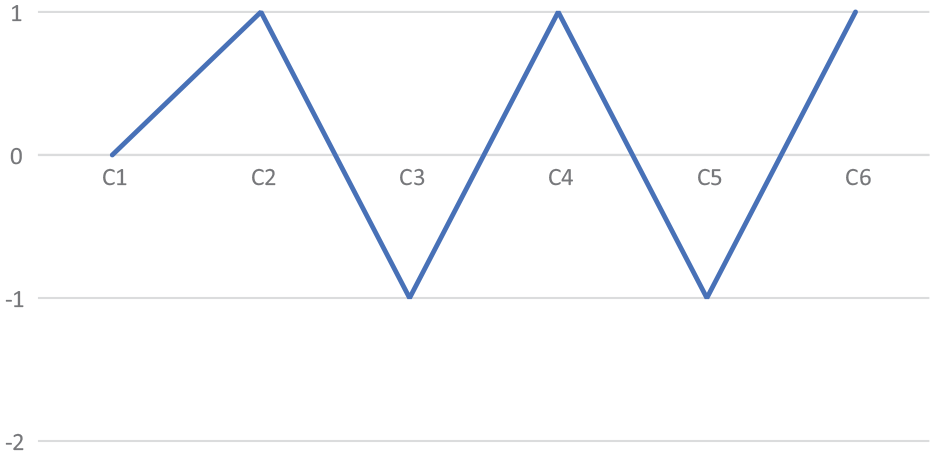
Upon examination of the statements from Participants B and F, no notable sources of resilience were identified. The episodic chart of Participant B is shown in Figure 2.
The episodic chart of Participant B.
The episodic chart of Participant B shows a clear distinction between the first three cases and the subsequent three cases. In the initial phase, Participant B started her teaching journey with no prior experience, which made her feel less confident and motivated. In the beginning, she had problems and could not find any solution. She stated that:
“Especially at the beginning of my teaching career, I also experienced some events that demotivated me. I tried to speak to administrators but then realized (they made me realize) that I had to deal with the problems myself.” (Participant B, at school/dealing with problems alone)
However, she managed to overcome these obstacles and gradually became more self-assured and enthusiastic. This pattern is typical among most participants and suggests that new beginnings can be challenging but eventually lead to positive outcomes. The second part of Participant B’s episodic chart shows similar trends to other participants’ charts. The rising actions in this phase were also related to new beginnings, whereas falling actions were related to negative experiences at school. Case C5 reveals the disruptive behavior of the headmaster and school administration, which significantly impacted the participant’s motivation and confidence. In addition to this, she also sustained a lack of resilience due to colleagues. She stated that:
“I had a colleague who tried to discourage me via innuendos…” (Participant B, with colleagues/engaging in a humorous exchange of insults with colleagues)
However, the chart also highlights the role of positive feedback and support. Case C6 shows that getting positive feedback from a teacher trainer was a significant turning point for Participant B. This feedback not only enhanced her confidence and motivation but also helped her deal with the negative experiences she had faced previously. The teacher trainer’s role is essential in providing feedback and support to teachers and can significantly impact their professional development. Overall, Participant B’s episodic chart demonstrates that teaching can be challenging, and teachers often experience positive and adverse events. However, support and feedback can be critical in helping teachers overcome challenges and continue to grow and develop in their careers. In addition, she believes that what empowers teachers is subject knowledge. She stated the following:
“A strong teacher is the one with a solid knowledge and confidence who knows what he knows and what not. The one who never stops learning….” (Participant B, strength/engaging a lifelong learning process-possessing solid knowledge and confidence)
Participant C
Participant C exhibited the third-highest level of resilience among the teachers, and unlike the first two participants, his resilience was primarily attributed to professional factors. The participant did not mention any personal factors that contributed to his resilience but instead emphasized the importance of seeking advice from more experienced colleagues and having a supportive school environment and administration. By leveraging these professional factors, Participant C was able to successfully cope with and resolve complex events. The episodic chart of Participant C is shown in Figure 3.

The episodic chart of Participant C.
The episodic chart of Participant C presents a comprehensive overview of their life experiences, consisting of a mix of favorable and unfavorable events. The chart can be categorized into two distinct segments, where the first five cases document the early years of Participant C, and the latter five cases provide details of the recent period. Upon analyzing the chart, it is evident that whenever the participant sought support from others, it positively impacted their life, indicating the crucial role that support played in their life. It is significant to note that the participant reached out for assistance on three separate occasions, specifically in cases C2, C6, and C10, highlighting the importance of seeking help when needed. Like many other participants’ charts, Participant C’s experiences in school were a significant source of their setbacks, particularly in their falling actions. Remarkably, their struggles were not with students but rather with either colleagues or parents of students, which is a noteworthy finding. Participant C stated the following in terms of the role of parents in her resilience:
“Students and parents make me feel disappointed. Parents are careless about their student’s future. Students dream about being farmers. They are interested in being in the field and driving tractors. I always have to convince them to be educated farmers but it is usually useless.” (Participant C, at school/uninvolved parents)
The following quotation also indicates the role of families and their indifferent approach:
“According to my observation, parents don’t care about their students’ education and future. They always say, “okuyup da ne olacak,” what he/she is going to be in the end. I think they didn’t get a good education. They don’t believe in their students.” (Participant C, with parents/lack of motivation and expectancy about their kids).
Additionally, upon closer examination of their other falling actions, it became apparent that they were due to various factors, including exam stress, life changes, personal issues, and the pandemic. As for the exams, she stated the following:
“The most important thing that makes me feel weak is continuously changing high school entrance exams like TEOG and LGS. The only thing I can do is to adapt to these changes, and it is not that easy for both teachers and students.” (Participant C, at school/constantly changing exam system)
It is evident from the chart that Participant C experienced considerable challenges, particularly when adapting to change, such as moving to a new location or starting a new job. However, despite these difficulties, they demonstrated resilience and a willingness to seek support from others. In particular, they actively engaged with experienced teachers, family members, and friends to improve themselves physically and mentally. She also received support from the school administration. She stated the following:
In the first 8 years of my education career, the school administration has always been helpful and solution-oriented. They always valued teachers’ ideas and suggestions. This is the most significant thing that makes the teacher productive. (Participant C, with school administration/encouraging them to be productive).
Furthermore, pursuing a master’s degree (C11) represents a significant step toward self-improvement and personal development. Overall, Participant C’s episodic chart provides valuable insight into life experiences, highlighting the importance of support, resilience, and perseverance in overcoming life’s challenges. In addition, she also believes that students’ progress makes her more resilient. Professionally speaking, she believes that:
“The most important thing that makes a teacher strong is to be well equipped. If a teacher is equipped, he or she is more resilient against the problems in his or her teaching career.” (Participant C, strength/being well-equipped)
Participant D
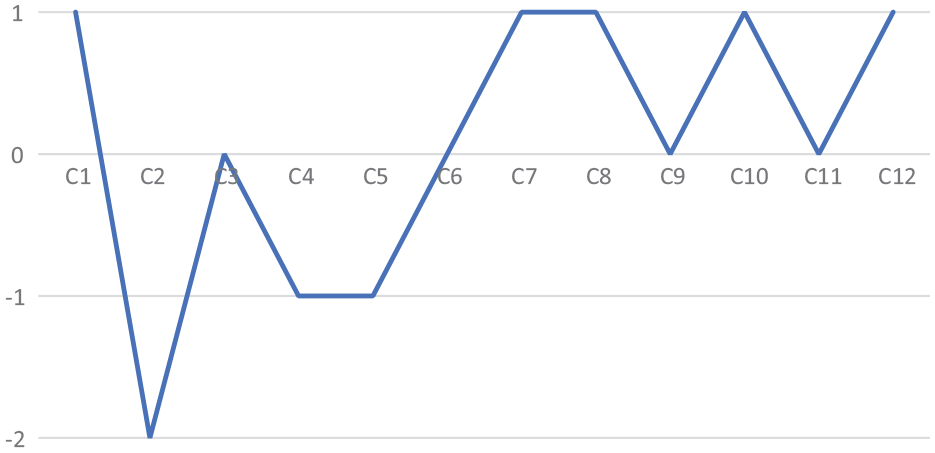
Participant D demonstrated the second-highest level of resilience among the teachers. Although she did not face as many challenges as Participant E, the challenges that did arise in her career highlighted her resilience. The participant was able to leverage both personal and professional factors to overcome adversity effectively. Specifically, her self-efficacy was a critical personal factor contributing to her resilience encountering undesirable situations with colleagues. Despite being subjected to mobbing from her colleagues, she navigated the situation successfully due to her self-efficacy and prior training. Furthermore, professional factors played a crucial role in her ability to be a resilient teacher. Personal factors alone may only sometimes be sufficient with the support of professional factors. In her case, the school administrator provided her with legal and emotional support, backing her against her colleagues. The episodic chart of Participant D is shown in Figure 4.
The episodic chart of Participant D.
The episodic chart of Participant D tells a story of many highs and lows in her life. At the onset of her career, she was excited and motivated as she began teaching at a high school. However, this enthusiasm was soon dampened when she encountered problems with the headmaster. Despite not working there for an extended period, the issues followed her as she moved to another school, where she encountered different problems. This time, the students were the issue as they lacked motivation, negatively impacting her teaching performance. Another point that undermined her resilience is a high level of expectations. She stated that:
“As an English teacher, everybody expects me to know everything in English like a native. In my opinion, this is impossible because I didn’t learn English there, and it is not my mother tongue. So, in such a case, I feel weak if I can’t know what is asked of me or empowered if I can know.” (Participant D, in social life/high expectancy of people about language)
A significant event took place in her early career. She explained it as follows:
“In the fourth year of my teaching, I was assigned to a new school. My colleagues thought of me as an inexperienced one and wanted to give me the unsuccessful classes. They wanted me to feel weak, but I didn’t accept this and talked to the headmaster.” (Participant D, with colleagues/mobbing)
After 4 years of teaching experience, she decided to change schools once again, hoping for a better experience. The new school proved to be a breath of fresh air initially, with the participant experiencing a rising action. However, the problems soon resurfaced, and new falling actions occurred, leading to negative experiences. Her training experiences also mirrored her teaching experiences, with struggles and setbacks accompanying her attempts to pursue a Master’s degree. Despite dropping out, her regret was short-lived, and she decided to start again. It is worth noting that Participant D experienced the sharpest falling actions during the first few years of her teaching career. This highlights the challenges and difficulties that new teachers may face and the importance of having support systems and resources in place to help them navigate these challenges. Despite the setbacks and challenges, Participant D persevered and continued to pursue her career and personal goals. Her episodic chart is a testament to her resilience and determination to overcome adversity. She links resilience to fairness and a sound knowledge of subject matter. She stated the following in that regard:
“A strong teacher means being determined but understanding when it is necessary. Moreover, being fair and consistent makes a teacher a strong one.” (Participant D, strength/demonstrating fairness and determination)
“To me, a weak teacher has insufficient knowledge in her/his field and has a problem in classroom management.” (Participant D, weakness/lacking expertise in their subject area)
Participant E
Figure 5 shows that Participant E exhibited the highest level of resilience among them. She effectively utilized personal and professional factors in her teaching, adapting her problem-solving skills when faced with difficulties and maintaining composure. Her low expectations of the work environment made it easy for her to adjust to the atmosphere. She relied on personal factors and leveraged her professional background to remain strong and resilient. Thanks to her previous training and experience, she reacted constructively to incidents compared to her peers. Additionally, she successfully sought professional support from her colleagues, seeking advice from teachers in other schools during times of trouble, which allowed her to approach problems from different angles. Despite encountering adverse incidents, including mobbing, with the school administration and colleagues at her current school, she still served as an exemplary model of resilience for teachers by using personal and professional factors outside of school.

The episodic chart of Participant E.
Upon analyzing the chart, it is observed that Participant E had the highest number of cases in her episodic chart. Interestingly, the first four cases occurred in one school, while the rest of the incidents happened in a different school. The problem she lived with the administration lowered her resilience remarkably. It was as follows:
“There were incidents about taking the day off with the school administration. Once in my early years, when I had taken the day off for my sickness, the administrators called during the day and told me to come to school because there were so many absent teachers. I rejected it because it was my right, and I was very sick. This was very ridiculous, yet the mobbing continued about this afterward.” (Participant E, with school administration/mobbing)
In contrast to other participants’ charts, the falling actions in this chart predominantly occurred in the school atmosphere due to unwanted events. However, the headmaster in the second school was a pioneering feature in the rising actions. In total, regarding the role of administration in her resilience, she concluded that:
“The headmaster and administrators are from teaching backgrounds so they help the teachers in every way they can but I know that this situation is special for my school for this reason maybe I can’t leave and I don’t want to leave and work somewhere else.” (Participant E, with school administration/enhancing cooperation/collaboration).
Teacher E also suffered a negative occurrence with her colleagues. It was as follows:
“I sincerely shared my thoughts with my colleagues, but someone among them owned by ideas as if they were his ideas. Also, once in my early years, we planned an international project and designed it on paper before my marriage vacation, when I returned my signatures, everything related to me was deleted from the project without an excuse.” (Participant E, with colleagues/plagiarizing the concepts)
In the social domain, she suffered the impact of the social atmosphere, which differed from the previous teachers. She stated the following in that regard:
In social life, too, we encounter disrespect and false sympathy and sometimes even worse with complaints and accusations. I feel sad more about these events set aside feeling empowered and weak. For example, people usually accuse me of taking so much time off as a teacher. (Participant E, in social life/Education-centered complaints/accusations in every setting)
As observed in other charts, talking and sharing with colleagues remained a strong indicator of rising action. The sharpest fall was attributed to the COVID-19 pandemic, which had a similar effect on other participants’ charts. While the experiences at school mainly were falling actions, and the participants were not satisfied with the cases, the incident right after the pandemic served as a rising action. It was about turning to face-to-face learning, in other words, returning to school. Therefore, it can be inferred that although the participant was not content with the situations in the pre-pandemic process, she experienced worse events/incidents during the pandemic and preferred the previous situation. In conclusion, the chart analysis showed that the participant had experienced various events throughout her schooling experience, and the impact of the headmaster and school administration on the rising actions was noteworthy. Additionally, the COVID-19 pandemic had a significant effect on the falling actions, causing an undesirable teaching/learning experience for the participants and other students. However, the incident that occurred after the pandemic was a turning point that signaled the return to face-to-face learning.
What Are the Multidimensional Aspects of EFL Teacher Resilience, and How Do They Dynamically Interact Across Teachers’ Career Experiences?
In this part, we present the multidimensional aspects of English as a Foreign Language (EFL) Teacher Resilience (TR) derived from the experiences of the participants. Drawing on their narratives, we aim to elucidate the various factors and dynamics that contribute to their resilience in the face of challenges.
Figure 6 portrays the events/incidents that caused teachers to feel weak in certain cases. Based on the analysis of five different scenarios, it was found that incidents that made teachers feel weak occurred mainly within the school setting. These incidents included factors such as a language barrier, a constantly changing exam system, uninvolved parents, and the necessity of dealing with problems alone, especially in crowded classroom environments. Such incidents often lead to a loss of self-confidence among teachers, causing them to feel disillusioned and demotivated. In the second case, their experiences in social life were discovered. The findings revealed that teachers often faced complaints and accusations related to education in various settings and were also subjected to high expectations from people regarding their language skills. This was especially problematic when individuals assumed that teachers knew everything about language and would often use them as a dictionary, which caused significant stress and anxiety for the teachers. In the third case, the teachers’ experiences with school administration were examined, and three key issues that contributed to teachers feeling weak were identified, including patronizing or differentiating behavior, mobbing, and a lack of cooperation and collaboration. Teachers often felt they were not given a voice in decision-making processes and were merely regarded as workers within the system. As expected, events/incidents causing teachers to feel weak were not created merely by outsiders, colleagues were also crucial to this problem. When the teachers’ answers were examined, it was discovered that teachers’ colleagues occasionally caused to feel weak either by mobbing, engaging in a humorous exchange of insults with colleagues, or plagiarizing the concepts on a specific issue. Whereas mobbing occurred between experienced and inexperienced teachers, playing the dozens and stealing ideas were not defining characteristics. Finally, parents, as essential shareholders of the teaching-learning process, also cause teachers to feel weak. In this case, several teachers noted that the parents could also make teachers feel weak, mainly when they made false accusations or threats without understanding the facts. Such incidents were more common among parents with low levels of education. Additionally, some parents needed more motivation and expectations for their children’s education, making teachers feel demotivated and questioning their role in the system. Sample quotations for each incident that cause teachers to feel weak in certain cases are as follows:
“I have been shaken by the education system in that region, Urfa because we never taught in the university that we will be dealing with 50 students in a class. Even my friends are shocked with that information because they have also never been experienced such things before, so it was kind a hard to deal with the situation.” (Participant C/at school)
“In social life too we encounter disrespect and false sympathy and sometimes even worse with complaints and accusations.” ( Participant D/in social life)
“Once in my early years, when I had taken the day off for my sickness, the administrators called during the day and told me to come to school because there were so many absent teachers. I rejected it because it was my right and I was very sick. This was very ridiculous yet the mobbing continued about this afterwards.” (Participant D/with school administration)
“I sincerely shared my thoughts with my colleagues but someone among them owned my ideas as if they were his own ideas.” (Participant D/with colleagues)
“They don’t believe in their students. Sometimes students say “my parents do not send me another city or town when I have a change to attend a good high school.” (Participant A/with parents)

Events/incidents that cause teachers to feel weak in certain cases.
In Figure 7, resilience-providing factors are displayed. Unlike the many distress-causing factors mentioned above, the number of resilience-providing factors is relatively small. When asked how they cope with weakness and turn negatives into positives, teachers stated that positively impacting students’ lives and witnessing their success mainly gave them the strength to deal with challenges in school. In social life, teachers reported feeling empowered when their profession was respected. Regarding school administration, some teachers noted that not all school administrators were hostile, and some promoted cooperation and collaboration and encouraged productivity. Surprisingly, none of the teachers noted any issues with parents that forced them to feel empowered. A few examples of teacher answers are:
“My colleagues thought me as an inexperienced one and wanted to give me the unsuccessful classes. They wanted me to feel weak but I didn’t accept this and talked to the headmaster. He backed me up and said them not to underestimate me as I was graduated from a well-known university. So, I can say that this situation made me feel empowered.” (Participant B/with school administration)
“Luckily, I had no bad experiences with my colleagues in most of the schools I work. They were all quite nice people except some of them. I even feel gratitude for having such like-minded people in my environment.” (Participant C/with colleagues)

Events/incidents that encourage teachers to feel empowered in certain cases.
How Do Micro, Mezzo, and Macro Factors Dynamically Affect EFL Teacher Resilience?
In this part, we analyze the factors influencing teacher resilience, categorizing them into three distinct levels: micro, mezzo, and macro. At the micro level, we delve into individual characteristics and personal resources that contribute to resilience, such as self-efficacy, coping strategies, and emotional regulation. At the mezzo level, we explore the influence of the immediate work environment, including relationships with colleagues, support from school administration, and the organizational climate. Finally, at the macro level, we examine broader systemic factors, such as educational policies, societal attitudes toward teachers, and the availability of professional development opportunities. By addressing these multiple levels, we aim to provide a holistic understanding of the complex interplay of factors that bolster or hinder teacher resilience.
Figure 8 indicates that teachers need certain fundamental aspects to handle difficult situations effectively. Based on the responses, it was found that they require a combination of micro, mezzo, and macro-level factors. Among the micro-level factors, teachers mentioned a sense of responsibility, optimism, and passion. This indicates that teachers need to take personal responsibility for managing complex situations, maintain a positive attitude, and commit to their work. At the mezzo level, trust and cooperation with colleagues were the most cited factors, followed by positive feedback from parents and students. Lastly, at the macro level, participating in in-service training programs was the most commonly cited factor, followed by trust in school administration and confidence in education reforms. This highlights the importance of ongoing professional development, as well as the need for supportive and effective leadership at the school and government levels. Overall, these findings emphasize the importance of a multifaceted approach supporting teachers in managing complex events.

Dealing with difficult events.
How Do Specific Teacher Characteristics Contribute to the Multidimensional Nature of EFL Teacher Resilience?
In this part, we present a comprehensive analysis of teacher profiles identified as crucial for sustaining resilience over time in the EFL teaching context. The profiles we discuss here are not meant to be exhaustive or mutually exclusive but rather represent archetypes that encapsulate vital attributes contributing to long-term resilience.
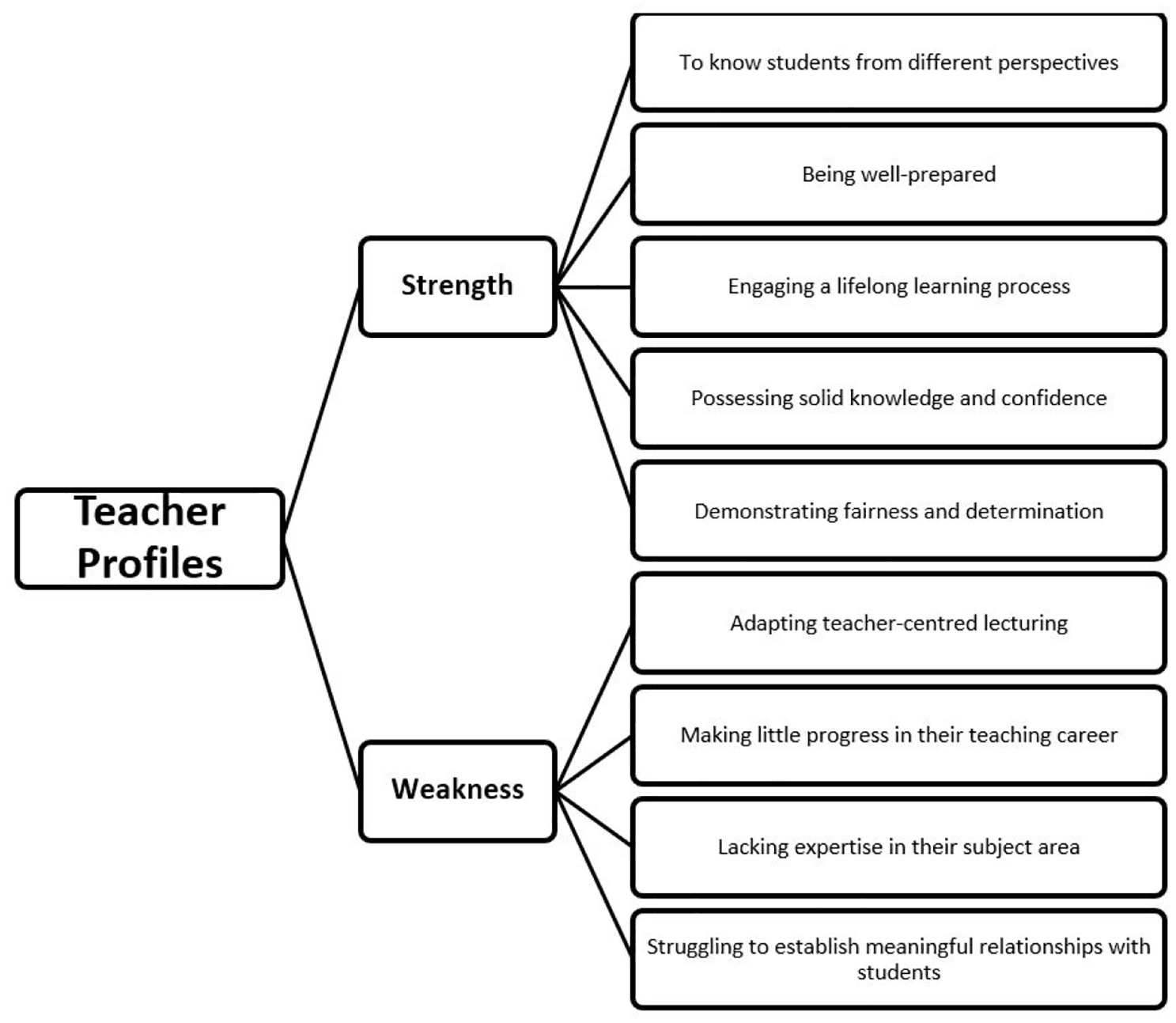
In Figure 9, teacher profiles derived from participant statements were categorized into strengths and weaknesses. The study participants identified five key teacher characteristics that contribute to strength and resilience in the classroom. The most frequently cited characteristic was the ability to understand students from various perspectives. This was followed by being well-prepared, engaging in lifelong learning, possessing solid knowledge and confidence, and demonstrating fairness and determination. Conversely, the participants identified four characteristics associated with weakness: relying too heavily on teacher-centered lectures, making little progress in their teaching career, needing more expertise in their subject area, and needing help to establish meaningful relationships with students. Notably, the characteristics of weakness opposed those associated with strength, as depicted in Figure 9.
Teacher profiles: Strengths and weakness.
Discussion
Taking a social-ecological perspective, the present study explored the dynamics of TR through ENI. The paper viewed TR as a socially constructed, multidimensional construct depending on the assumption that “the societal or cultural context largely determines the kinds of relationships that are likely to occur for anybody, and these determine one’s capacity to respond to stress” (Jordan, 2005, p. 80). The social-ecological perspective views resilience as composed of micro, mezzo, or macro levels. The study found evidence supporting all the aspects of the social-ecological perspective. Regarding the macro dimension, we found that the new legislation employed by the Ministry of Education had a significant impact on the resilience level of teachers. The participants stated that although the new system, which requires teachers to take an exam to be promoted to an upper level, had some financial gains, it also declined teachers’ resilience levels. One of the main reasons for this was that some participants believed that this three-layer system creates some imbalances and may make some teachers in the lower category feel devalued. Similar to this, one of the participants stated that such promotional attempts may also lead to teacher groups formed by teachers in the same category. These groupings may harm teachers’ solidarity or interaction and, hence, their resilience.
Factors at the institutional or policy level, which make up the macro system in the multidimensional structure of TR, could pose threats to it given that such policy or institutional changes are closely related to teachers’ perceptions of self-efficacy and autonomy (Greenberg et al., 2016 ). In this study, the participants were inquired whether the recent policy change ushered in a new promotional system called Teacher Career Steps, which requires teachers to take specific exams to be promoted to the upper step. Although this initiative was launched to increase teacher motivation and commitment, much criticism emerged. Most teachers criticized this initiative, suggesting that teachers should not be tested through exams. Instead, the promotion should be conducted based on seniority. Some participants stated that this initiative would create inequalities among teachers, form teacher groups based on the title, and hence lower TR or wellbeing. This is an essential finding of the present study.
Scholars converge on the point that resilience emerges and develops based on the interaction of the individual with the environment, including factors at the workplace and personal dispositions (Ainsworth & Oldfield, 2019; Day & Gu, 2014; Gu, 2018; Mansfield et al., 2016). The present study provided considerable support for this perspective. We observed that teachers’ resilience levels fluctuated over time. The study also indicated that different working conditions may have different effects on it. It was striking that when teachers reported their former experiences in some disadvantaged parts of Türkiye, they had hard times and even considered attrition. This finding underlines the dynamic nature of TR.
Our analysis indicated that TR is not a stable trait, with sharp declines or increases resulting from various factors, and is sensitive to contextual and social conditions. The common elements affecting the resilience levels of teachers include colleagues, the administration, and parents, factors that can be viewed as double-edged swords. This is so because colleagues can act as causes and facilitators of TR. Similarly, administration plays a significant role as well. The interviews showed that the administration can lower or increase teachers’ resilience. Specific episodes were identified thanks to the episodic narrative interview technique. Participant A’s story highlights the detrimental effects of adverse events and a lack of support for teacher wellbeing. This synchronizes with previous research emphasizing inexperienced teachers’ difficulties without adequate support (Sak & Gurbuz, 2023). The lack of support from school administration highlights the need to consider contextual factors to foster resilience among EFL teachers.
Moreover, some teachers had thoughts of attrition or feelings close to it at certain times. For example, when students had difficulty in understanding her, one of the teachers stated that she questioned what she was doing. Typically, teachers in Türkiye do not have attrition intentions because the teaching profession is considered viable, especially for women, although recently, conditions have changed tremendously. The difficulties encountered by EFL teachers, such as linguistic obstacles and contacts with parents and school administration, outline the above-mentioned situation. Likewise, Flores (2018) emphasizes the connection between internal elements, such as professional identity, and external influences, such as legislative changes, in shaping teacher resilience. This conforms with the intricate interaction of environmental and social contexts outlined in this section.
Our analysis found that the participants’ resilience found its way over time, adjusting existing conditions. The self-organization structure of teachers in the present study has followed a more inner pattern. None of the teachers, for example, stated that they had learned how to handle these hardships during their undergraduate education. Most of them have found their way reactively. Proactive action was also not commonly mentioned. It can be stated that teachers do not have a well-organized self-organization system at the very beginning. The results underscored the significance of taking into account obstacles and assets at many levels and complementing the complex interplay between environmental and human factors in cultivating teacher resilience, as articulated by Hascher et al. (2021), which corresponds to the idea that resilience develops gradually as teachers respond and adapt to their situations. Our findings further highlighted the importance of adaptation and relationship-building in teacher resilience, which aligns with the self-organizational process teachers undergo as they manage the intricacies of their work. This observation attests to the decline of resilience in the face of demotivated students. This is a reality, and teachers should be well-prepared for it as they start their careers. Moreover, the teachers rarely mentioned awareness of resilience-enhancing factors. Nor did they mention using the same strategy for all the hardships. This also reflects how dependent TR is on internal and external factors. Research showing the relationship between self-efficacy, outside help, and overcoming professional obstacles is consistent with Participant D’s narrative, which emphasizes the interaction between personal qualities and expert assistance in building resilience (Capone & Petrillo, 2020). As a reflection of the teachers’ self-organization process as they adjust to their jobs and circumstances, Participant D’s capacity to overcome obstacles via professional aid and personal resilience highlights the need for a holistic approach to creating resilience.
Furthermore, in line with studies showing the importance of motivational and social components in bolstering teacher resilience, Participant E’s proactive pursuit of outside assistance is a prime example of integrating personal and professional elements in resilience (Chen & Chi-Kin Lee, 2022).
Conclusion
The current study was mainly based on the social-ecological perspective of TR and provided support for a social-ecological and relational perspective of TR. For macro level, we identified new legislations and the newly implemented Teacher Professional Act pose challenges (Confidence in education reforms) while at mezzo level we positive feedback from parents and students as significant factors. Finally, at micro level sense of being a leader and responsibility, optimism, and a passion in teaching were identified as significant factors in TR. Our findings demonstrated that TR is a highly volatile construct, and it was almost impossible to label a teacher as resilient or un-resilient throughout the career. This supports the dynamic systems theory (Larsen-Freeman & Cameron, 2008).
All the effort notwithstanding, there are several limitations to the study. First, the participants of the study were selected from one region in Türkiye. However, this limitation can be overlooked, given that two of the participants had previous experiences in different parts of Türkiye, and they provided some insights. Second, the present study did not include experience as a variable since the main aim was to identify groundbreaking events in the professional lives of teachers. Future studies could include years of experience in the emergence of significant episodes. Future studies could also tackle TR from a more longitudinal perspective, especially employing teachers who had workplace changes, as workplace changes accounted for a significant part of TR in our study, mostly bringing about positive changes. Despite these limitations, our study contributed to the literature by underscoring the dynamic nature of TR, collaboration, and professional development activities in raising EFL teachers’ resilience. Another strength of the study was the ENI technique, which enabled us to identify specific occurrences related to TR. This way, the study contributes to the existing research on teacher psychology.
Footnotes
Appendix 1
Sample interview questions
Declaration of Conflicting Interests
The author(s) declared no potential conflicts of interest with respect to the research, authorship, and/or publication of this article.
Funding
The author(s) disclosed receipt of the following financial support for the research, authorship, and/or publication of this article: This work was not supported by any institutions.
Compliance With Ethical Standards
The participants had a consent for the engagement in the research. The data collection and handling were declared to correspond strictly with the usual norms of research ethics
Consent to Participate
The participants gave their informed consent to participate in this study.
Code Availability
The data that support the findings of this study are available from the corresponding author upon reasonable request.

Data Availability
The data is not available in a public repository at the moment.