




Abstract
High-grade gliomas, like glioblastoma multiforme (GBM), are the most common malignant brain tumors in adults and are treated with the chemotherapy drug temozolomide (TMZ). In humans, a retrospective analysis of patients’ overall survival suggests that morning dosing may confer a benefit over evening dosing. Circadian variation in O6-methylguanine-DNA methyltransferase (MGMT) gene expression and promoter methylation has been implicated in increased tumor cell sensitivity to TMZ in the morning. Although patient compliance with timed oral administration of TMZ was high in a prospective trial, it is not known whether differences in daily sleep patterns of patients impact the biological time of drug administration or overall survival. Using wrist actigraphy collected from 10 high-grade glioma patients, we quantified the moment of oral TMZ delivery in terms of wall clock time and internal biological time during the months after surgical tumor resection. We found that variation of daily rhythms within and between individuals caused dosing times to vary more in their internal biological time than wall clock time so that, for example, some doses taken by patients assigned for the evening (2000 h) were closer to the patient’s internal biological morning. We conclude that wrist actigraphy provides a reliable and non-invasive estimate of personal circadian time that could improve efficacy and precision of TMZ delivery. These findings may inform personalized circadian medicine and optimized times for TMZ delivery in the clinic.
This is a visual representation of the abstract.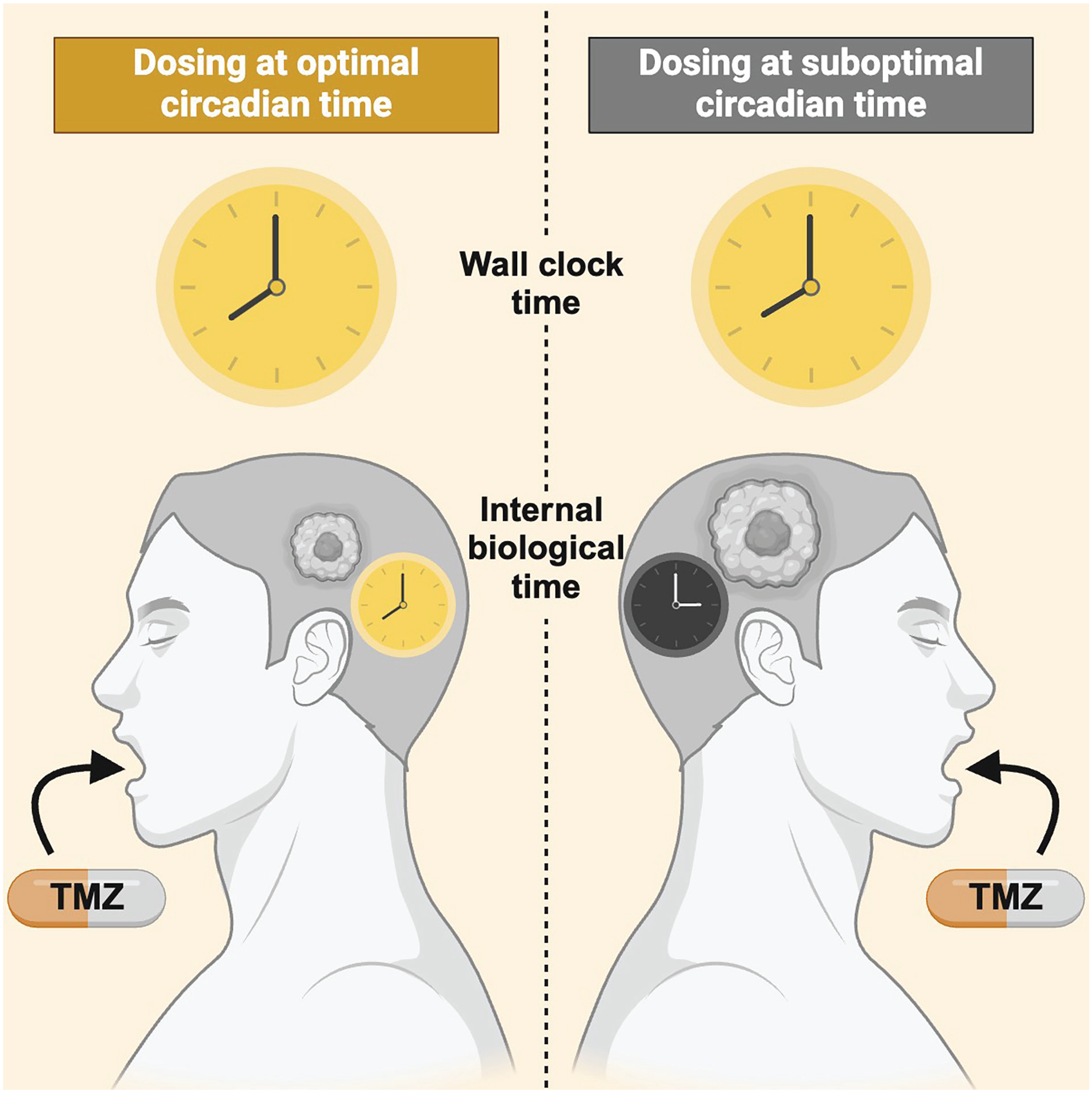
Keywords
Get full access to this article
View all access options for this article.
References
Supplementary Material
Please find the following supplemental material available below.
For Open Access articles published under a Creative Commons License, all supplemental material carries the same license as the article it is associated with.
For non-Open Access articles published, all supplemental material carries a non-exclusive license, and permission requests for re-use of supplemental material or any part of supplemental material shall be sent directly to the copyright owner as specified in the copyright notice associated with the article.
