




Abstract
The delayed circadian timing of adolescents creates a conflict with early school start times (SSTs). We used wrist actimetry to compare sleep parameters and routine nighttime activities in middle school students attending either a morning (0700 to 1200 h) or an afternoon (1230 to 1730 h) school shift. On school days, students from both shifts (n = 21 for morning shift, n = 20 for afternoon shift, ages 12-14 years) had a similar sleep onset, but morning-shift students had an earlier sleep offset and a 1 h 45 min shorter sleep duration than their afternoon peers, who slept the recommended 8 to 10 h of daily sleep. Only morning-shift students had afternoon naps, but this afternoon sleep was not sufficient to overcome sleep deprivation. On weekends, sleep onsets and offsets did not differ between shifts. Because only morning-shift students woke up later and slept longer (2 h 3 min) on weekends, they were also the only ones who experienced social jetlag. Daily surveys on their nighttime (from 1800 to 0600 h) activities indicated there was no difference between shifts in the time spent on leisure or using electronic media during school days, but students from both shifts spent more time in these activities during the weekend. Our study confirms that early SST in adolescents is associated with sleep deprivation and suggests that schedules that start much later than typically considered may be needed to eliminate sleep deprivation in adolescents.
During adolescence, teenagers undergo physiological and behavioral changes including shifts in social engagements, lifestyle, and the sleep/wake habits, which result in a preference for later sleep/wake patterns (Andrade et al., 1993; Crowley et al., 2018). The change into a later sleep timing, or chronotype, coincides with the arrival of puberty and typically reverts to an earlier chronotype as adolescents become young adults. This latter change occurs gradually over the course of ontogenesis, and its timing is more variable (Roenneberg et al., 2004). Although it is clear that social factors are an important trigger for the later sleep timing in adolescents, several studies suggest that biological changes associated with puberty contribute to the delayed timing.
First, the daily onset of melatonin release, which reliably indicates the phase of the circadian clock, is delayed in adolescents and associated with their preferred sleep timing (Crowley et al., 2006). Second, this change in phase could be related to a small lengthening of the circadian period in adolescents (Carskadon et al., 1999, 2004), although a recent study has failed to reveal such a difference (Crowley and Eastman, 2018). Third, the delayed chronotype manifests itself earlier in girls, who typically undergo puberty earlier, than in boys (Duarte et al., 2014; Fischer et al., 2017; Frey et al., 2009; Randler, 2011; Roenneberg et al., 2004; Tonetti et al., 2008), and in some animal models, sex differences in the timing of puberty are also reflected by differences in the delay of circadian timing (see review in Hagenauer et al., 2009). Fourth, a study by Crowley et al. (2015) showed that early pubertal adolescents are more sensitive than late pubertal adolescents to the inhibition of melatonin release by evening light, which is known to delay the circadian clock. This increased sensitivity could make early adolescents particularly sensitive to the delaying effects of light. Finally, at least 1 study has shown that the homeostatic process of sleep regulation, which increases sleep pressure during waking hours, is slower in older than younger adolescents, which could allow this age group to remain awake for longer periods of time before feeling fatigued (Jenni et al., 2005). Whereas these findings point to a tangible biological basis for a later chronotype in adolescents, it is clear that a biological predisposition for a late sleep timing is aggravated by psychosocial factors including bedtime autonomy, academic pressure, screen time, and social activities, all of which contribute to delayed bedtimes (LeBourgeois et al., 2017; Randler et al., 2009; Tashjian et al., 2019; Touitou et al., 2016). Together, these biological and societal pressures lead to a later sleep phase (Crowley et al., 2018; Dunster et al., 2019).
Together, these changes in adolescent sleep patterns conflict with SSTs, the most significant societal drive for early morning awakening for most adolescents. This system puts teens in the middle of 2 competing forces: the biological and psychosocial drive for later sleep onsets and the societal requirement for early sleep offsets. This conflict leads to a mismatch in the timing of sleep between weekends and school days known as social jetlag (Wittmann et al., 2006). As a result, the sleep/wake schedules of teenagers are irregular and fluctuate over the week, and most teens do not get the recommended sleep per night on school days (Crowley et al., 2018; Owens, 2014; Paruthi et al., 2016).
In fact, a global meta-analysis of more than 200 publications reported a steady decrease in teenage sleep over the past century, with teens sleeping more than an hour less per night than in 1905 (Matricciani et al., 2012). This epidemic of chronic sleep deprivation leads to significant negative health outcomes that include mental disorders such as attention-deficit hyperactivity disorder, anxiety, and depression as well as physical ailments including metabolic disease, obesity, and a higher propensity for sports injuries (for recent reviews, see Copenhaver and Diamond, 2017; Galvan, 2020; Jamieson et al., 2020; Marver and McGlinchey, 2019; Shochat et al., 2014; Sugaya et al., 2019; Tarokh et al., 2016; Wahlstrom and Owens, 2017; Wajszilber et al., 2018).
Several studies have assessed the effects of SSTs on adolescent sleep in countries throughout several continents, and they overwhelmingly agree with the association between later start times and longer sleep duration. These findings are interpreted as the consequence of a better alignment between the schedule of social demands for teenagers and the biological timing of their sleep (reviewed in Lo et al., 2018; Minges and Redeker, 2016; Morgenthaler et al., 2016; Wheaton et al., 2016; Ziporyn et al., 2017). In Latin American countries, it is common for schools to start in tiers, with a morning shift and an afternoon shift (Arrona-Palacios et al., 2015; Arrona-Palacios and Díaz-Morales, 2017; Estevan et al., 2018). In Brazilian middle and high schools, upper- and lower-grade students are respectively assigned to the morning and afternoon shifts (Brandalize et al., 2011). Although the academic quality of the shifts may be similar, the delayed sleep phase in teens may lead to fundamentally different sleep patterns (Andrade and Menna-Barreto, 1996).
The first goal of this study was to investigate differences in sleep patterns throughout the week using automated activity data loggers and activity diaries between morning- and afternoon-shift students in a 2-tier system in a Brazilian school district. The second goal was to compare how these students schedule their activities during the evening, when they are out of school. We hypothesized that sleep onset in teens on school days would be determined by the interaction between biological factors regulating sleep, whereas sleep offset would be determined by SST. Therefore, we predicted that although both groups would have a similar average sleep onset and social interactions at night (either in person or via social media), students attending school in the afternoon would have a later average sleep offset, longer average sleep duration, and reduced social jetlag. Because of the prominent social changes during puberty, an alternative hypothesis is that the anticipation of a possible later wakeup time by students in the afternoon schedule would increase social interactions during the evening and delay sleep onset. In this case, students attending school in the afternoon would be predicted to have, in addition to a later wakeup time, increased social interactions during the evening, a later average sleep onset, and thus similar average sleep duration and social jetlag.
Materials and Methods
Participants
The sample consisted of 51 students (26 females) at a public middle school (seventh, eighth, and ninth grades) in Campinas, São Paulo, in southeastern Brazil. The students were assigned to the morning or afternoon school shift by the school authorities, with those from the seventh and eighth grades being assigned to the afternoon shift (1230 to 1730 h) and those from the ninth grade to the morning shift (0700 to 1200 h). Twenty-five students (14 females) aged 13.52 ± 0.50 years attended school during the morning shift, and 26 students (12 females) aged 12.62 ± 0.56 years attended school during the afternoon shift. Informed written consent was obtained from the students’ parents and assent from the students before their enrollment in the study, and the procedures were conducted according to the ethical recommendations in research of the Faculdade de Ciências Médicas (FCM/UNICAMP) as by protocol No. 815/2011.
Actimetry and Activity Diary
The study was conducted throughout April and May for students attending both school shifts. Students were instructed to wear a wrist actimeter (ACTÍMETRO ACT10, v.1.10,Electronic Consulting Brazil, CE Brazil) on the nondominant hand beginning on the Friday at the start of the study and ending on the Monday 9 days later when the devices were retrieved. They were also instructed to fill out a daily activity diary and to press the actimeter’s event button before going to sleep and immediately after waking up, including the beginning and end of naps, and if they took off the actimeter and when they put it back on. Students were instructed to take the actimeter off only to perform activities in water and to note in the activity diary when the event button was pressed and why. Actimeter data were visually inspected for accuracy with the aid of the activity diaries, and 10 students (4 morning and 6 afternoon school shift) were removed for not using the device during all of the requested days. The final sample for actimeter data consisted of 41 students, distributed as indicated in Table 1.
HO diurnal preference, sex and age distribution of students included in the wrist actimeter analysis for each group.
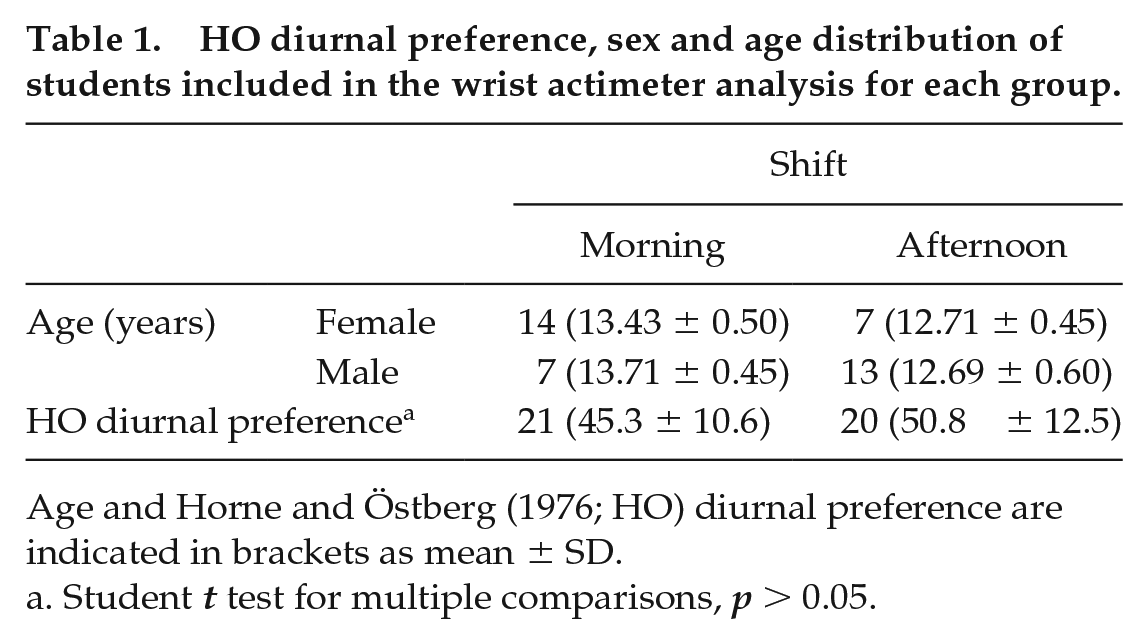
Age and Horne and Östberg (1976; HO) diurnal preference are indicated in brackets as mean ± SD.
Student t test for multiple comparisons, p > 0.05.
We used actimetry data to calculate social jetlag for each student using the formula:

where MSFSC is the mid-sleep phase during the free days (weekend in our case), after subtracting extra weekend sleep, and MSW is the mid-sleep phase during the workdays (school day in our case; Roenneberg et al., 2019).
We also used actimetry data to calculate specific sleep parameters. Sleep onset and sleep offset times were detected visually as transitions between activity and rest on actograms generated after downloading the wrist actimetry data. This sleep episode detection was done by an experienced investigator who was aided by each student’s sleep diary and/or the event button. Both the main sleep episodes and the naps (sleep episodes outside of the main sleep episode) were identified with this method.
The activity diary also included a description of the activities and a table divided into 15-min intervals composing 24 h (Knauth et al., 1983; Teixeira et al., 2004). Students were instructed to fill in their daily activity schedule, and we quantified the duration of the activities performed from 1800 to 0600 h, when students from both shifts were not in school. The activities were classified into 4 categories: media, leisure, homework, and others. The media category included watching TV, cell phone use, and playing computer and video games. Leisure included walks, parties, playing instruments, listening to music, drawing, dancing, reading, talking with friends or family, games, and sports. Homework included out-of-class tasks assigned to students and time spent reviewing subjects learned at school. Others included personal hygiene activities, meals, transportation, domestic chore, and medical and dental appointments.
The diary also contained five 10-cm graphic scales for self-assessment of sleep quality and restfulness (Monk, 1989): scale 1, sleep quality the previous night; scale 2, difficulty to fall asleep; scale 3, difficulty waking up; scale 4, level of tiredness in the beginning of the day; scale 5, level of tiredness in the end of the day. Scale values range from 0 (low quality, high difficulty, or high level of tiredness) to 10 (high quality, low difficulty, or low level or tiredness). Students had to choose a point on the scale (0-10) that would correspond to their personal perception of sleep quality and restfulness. Students were also instructed to indicate in the diary whether they used alarm clocks to wake up.
Data Analysis
The data were submitted to the Kolmogorov-Smirnov normality test, and the variables displayed normal distribution (p > 0.05), except for age, which was marginally close to normality (morning-shift, p = 0.03; afternoon shift, p = 0.04). The students’ chronotype was assessed by the Horne and Östberg (1976) diurnal preference questionnaire (hereafter, the HO diurnal preference), which was translated and applied to the Brazilian population by Benedito-Silva et al. (1990). Importantly, later chronotypes yielded lower HO diurnal preference scores. The mean HO diurnal preference was compared between shifts using the Student t test for independent samples and did not show a statistical difference, T(39) = 1.54, p > 0.05. Table 1 shows the age distribution of all 41 students by sex, as well as the mean HO diurnal preference per shift.
Sleep parameters (sleep onset, offset, and duration with or without naps) were analyzed with linear and circular statistics. The sleep onset values after midnight (zero hour) were transformed for linear statistics by adding 24 h. To assess the effect of HO diurnal preference and age on daily sleep, we used the Pearson correlation test between each of these 2 variables and sleep parameters in separate groups of students according to day of the week (school vs. weekend) and school shift (morning vs. afternoon). We also used the nonparametric Spearman correlation test for age and sleep parameters—age had a marginally normal distribution—but this did not change the correlation significance, and we report Pearson coefficients for all correlations. Because we found significant correlations between HO diurnal preference and sleep onset for all 4 groups analyzed, we used a factorial analysis of covariance (ANCOVA) considering sleep onset as the dependent variable, school shift and sex as factors, day of the week as an intraparticipant factor, and HO diurnal preference as a covariate.
For other sleep parameters, the factorial analysis of variance (split-plot ANOVA) was performed with sleep offset or sleep duration (with and without naps) as dependent variables and school shift, sex and day of week as factors. Partial eta-squared (η²p) was used as a measure of effect size; effect sizes between 0.01 and 0.05 were considered low, between 0.06 and 0.13 moderate, and those greater than 0.14, high (Cohen, 1992). The factors that showed significant interactions in either the ANOVA or ANCOVA were followed by post hoc comparisons using the t test for independent (morning or afternoon/female or male) and paired (weekends or school days) samples. Since there was a significant interaction only for days of the week and shift, we performed 4 t tests for simple effect analysis, and the significance p value was set to 0.0125.
Sleep onset and offset were also analyzed by circular statistics, which adequately display average phases as well as individual values. The Rayleigh test was used to calculate the average radial direction of the sleep onset and offset for each school shift (morning and afternoon) and day of week (weekends and school days). We used the Watson Williams circular test for 2 independent samples to compare student shifts (morning vs. afternoon), and the circular test of 2 related samples to compare between day of week (weekends vs. school days). Social jetlag values between shifts were compared using the Student t test for independent samples.
We quantified the average duration of each nighttime activity (media, leisure, homework, and others), the average score obtained for each of the 5 sleep and restfulness scales, and alarm clock use. We used split-plot ANOVA with school shift and day of week as factors. Because the number of recorded school days (5 days) was different from the number of recorded weekend days (4 days), we transformed the number of days the alarm clock was used on weekends to the 5-day equivalent. The variable homework did not have a corresponding school day and weekend for all subjects; therefore, we compared time spent on this activity between shifts using the Student t test. We analyzed whether the observed proportion of students dedicated to each nighttime activity (media, leisure, homework, and others) differed between shifts using χ2. For this analysis, we quantified only the students who carried out activities on both school days and the weekend. We used ANOVA for repeated measures, followed by Bonferroni post hoc tests, to compare the time spent by the students in each activity (media, leisure, others, and homework). In this case, we selected only the adolescents who performed all 4 activities, regardless of school shift or day of the week.
For all tests, the significance level used was p < 0.05 unless otherwise indicated. Data analyses were carried out using El Temps software (Universitat de Barcelona) and SPSS software (version 25).
Results
Sleep Duration Is Shorter in Morning-Shift Than in Afternoon-Shift Students
Table 2 summarizes the correlations between age or HO diurnal preference and the different sleep parameters (sleep onset, offset, and duration). None of the sleep parameters was significantly associated with age regardless of shift or day of the week (school vs. weekend). There was a significant negative correlation between HO diurnal preference and sleep onset for both morning- (weekend: r = −0.62, p < 0.01 and school day: r = −0.59, p < 0.01) and afternoon-shift students (weekend: r = −0.51, p < 0.05 and school day: r = −0.47; p < 0.05). This correlation shows that morning-type students had an earlier sleep onset than evening-type students regardless of school shift and day of the week. For morning-shift students, HO diurnal preference was correlated with sleep offset only on weekends (r = −0.70, p < 0.001) and with sleep duration only on school days (r = 0.57; p < 0.01), respectively. This correlation shows that for the morning shift, students who are morning types wake up earlier on weekends and sleep longer on school days than students who are evening types. None of the other sleep parameters for either the main sleep bout or naps was correlated with HO diurnal preference.
Pearson correlation tests between age or HO diurnal preference and sleep parameters (sleep onset, offset, and duration) during school days and weekends for each school shift.
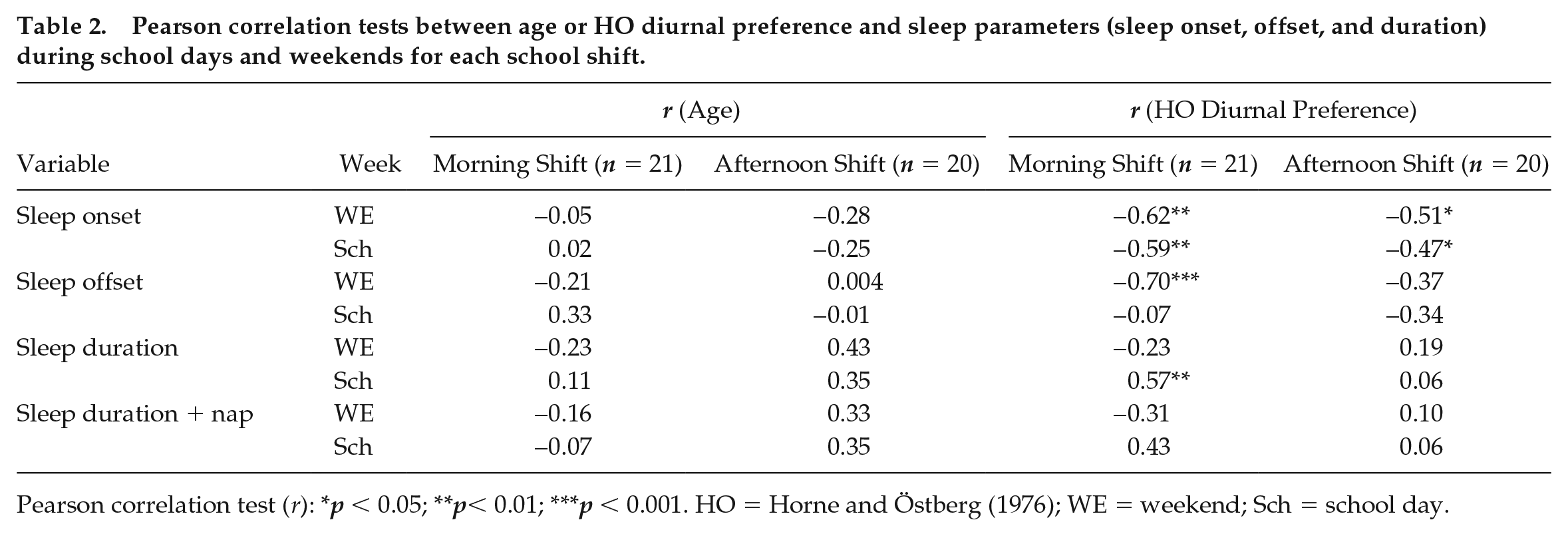
Pearson correlation test (r): *p < 0.05; **p< 0.01; ***p < 0.001. HO = Horne and Östberg (1976); WE = weekend; Sch = school day.
Table 3 shows the sleep onset, offset, and duration of students according to sex, school shift, and days of the week (weekend and school days). Because there was a significant correlation between HO diurnal preference and sleep onset in all conditions tested (Table 2), HO diurnal preference was added as a covariate in this analysis. After accounting for HO diurnal preference, there was no main effect of school shift (F1,36 = 1.92, p > 0.05, η²p = 0.05) or sex (F1,36 = 0.85, p > 0.05, η²p = 0.02) and a marginal effect of day of week (F1,36 = 3.21, p = 0.08, η²p = 0.08). This effect points to a trend in students from both shifts having later sleep onsets on weekends (23.79 ± 1.08) than on school days (23.03 ± 1.10; t(40) = 5.66, p < 0.001). None of the interactions between factors was significant.
Analysis of variance for sleep parameters (sleep onset, offset, and sleep duration) with school shift, sex, and day of the week as factors.
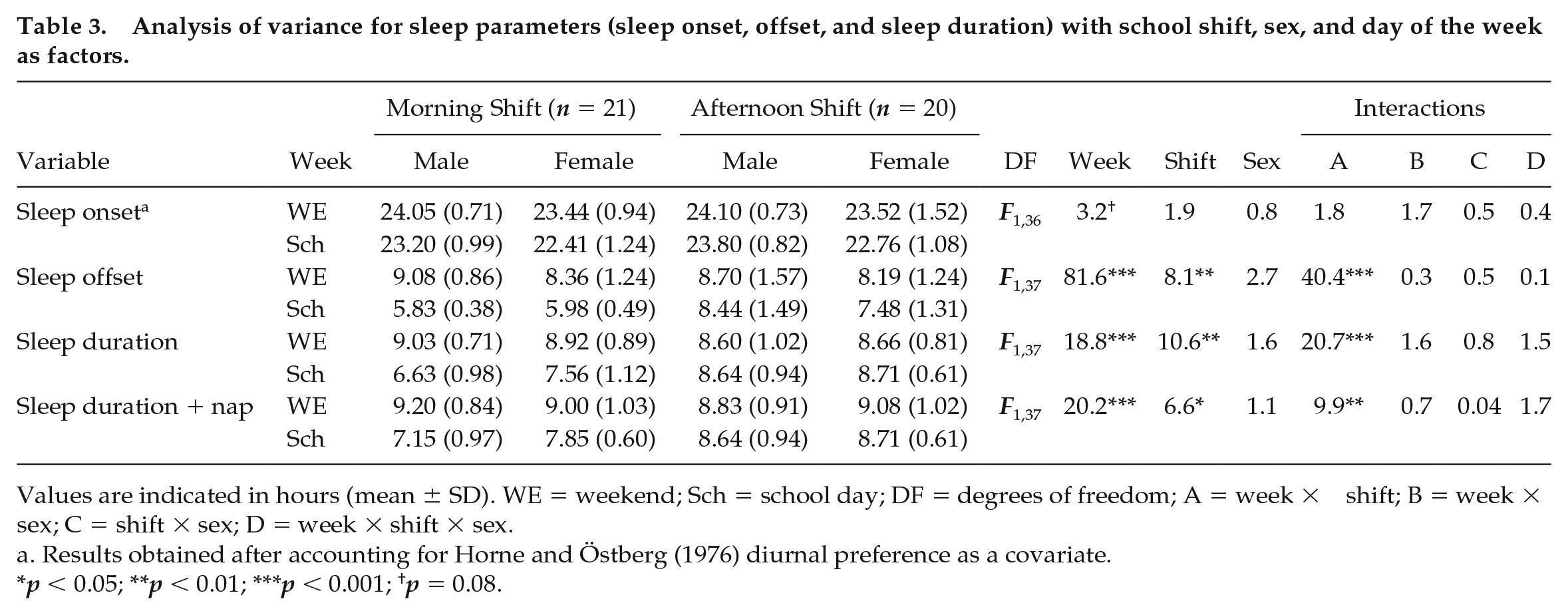
Values are indicated in hours (mean ± SD). WE = weekend; Sch = school day; DF = degrees of freedom; A = week × shift; B = week × sex; C = shift × sex; D = week × shift × sex.
Results obtained after accounting for Horne and Östberg (1976) diurnal preference as a covariate.
p < 0.05; **p < 0.01; ***p < 0.001; †p = 0.08.
This trend to later sleep onsets during weekends was statistically significant when analyzed by circular statistics. Figure 1 shows sleep onset polar plots for students in each shift for school days and weekends. Rayleigh tests revealed significant phase clustering in all 4 groups: morning shift on weekends (r = 0.98, p < 0.001), morning shift on school days (r = 0.96, p < 0.001), afternoon shift on weekends (r = 0.95, p < 0.001), and afternoon shift on school days (r = 0.96, p < 0.001). As indicated by our analysis of variance, circular plot comparisons show that sleep onset did not differ between shifts either within weekends (F = 0.20, p > 0.05) or school days (F = 0.31, p > 0.05). On the other hand, sleep onset occurred later on weekends than on school days for both shifts (F = 12.49, p < 0.01 for morning shift; F = 5.13, p <0.05 for afternoon shift).
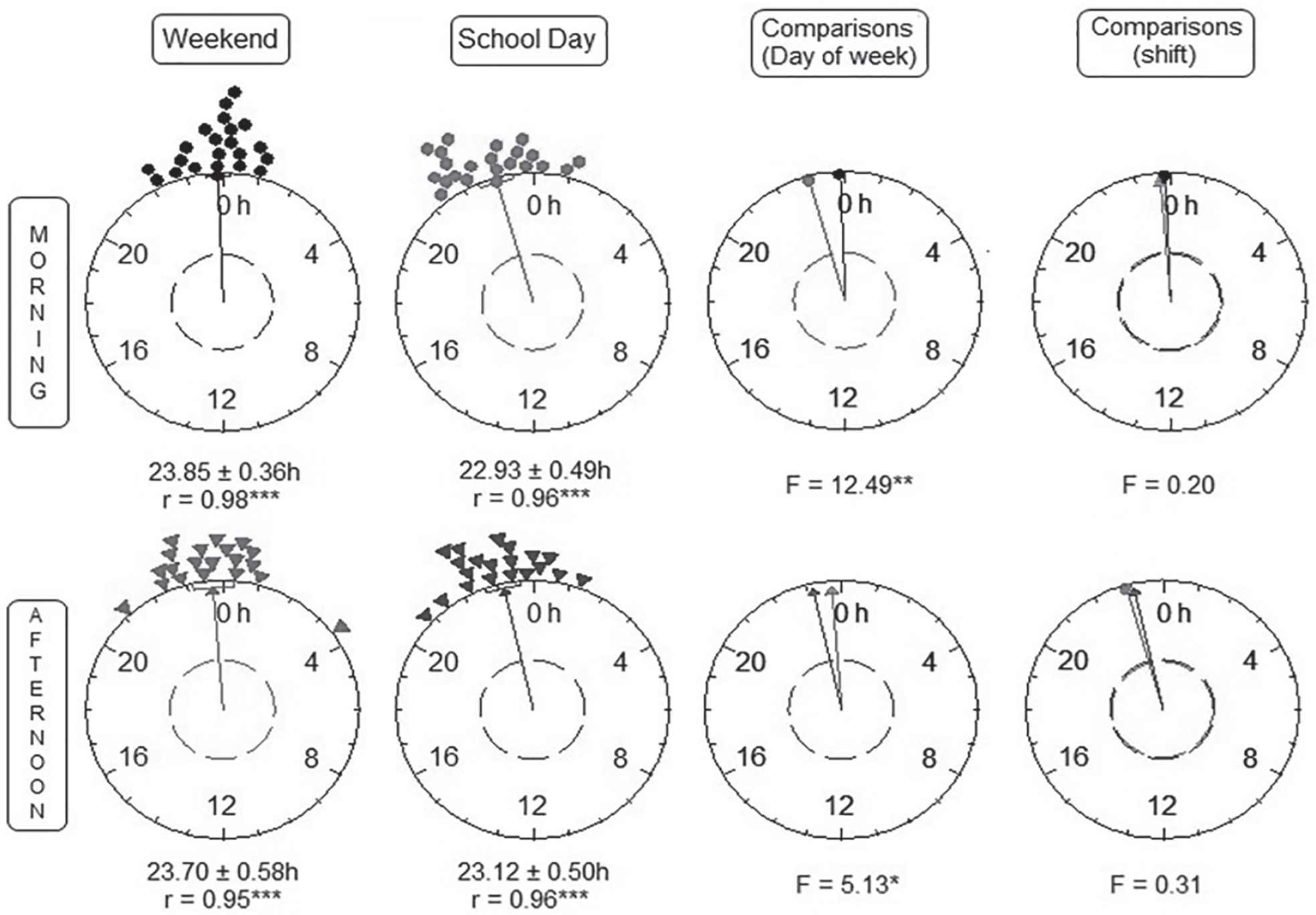
Sleep onsets in morning- and afternoon-shift students. (Left) Polar plots display individual sleep onset (circles and triangles) and average sleep onset ± confidence interval for all students (vectors). Rayleigh test showed significant clustering of sleep onset in all 4 groups. ***p < 0.001. (Right) Polar plots of differences between day of week (weekend vs. school day) for each shift, or between shift for each day of week. *p < 0.05, **p < 0.01, ***p <0.001. Morning shift: n = 21; afternoon shift: n = 20.
For sleep offset (Table 3), there was a significant main effect of school shift (F1,37 = 8.09, p < 0.01, η²p = 0.18) and day of the week (F1,37 = 81.58, p < 0.001, η²p = 0.69) but not of sex (F1,37 = 2.67, p > 0.05, η²p = 0.07). The only significant interaction was between day of the week and shift (F1,37 = 40.43, p < 0.001, η²p = 0.52). Post hoc Student t test comparisons showed that morning-shift students wake up earlier than afternoon-shift students on school days (t(39) = 6.00, p < 0.001) but not on weekends (t(39) = 1.27, p > 0.05). Furthermore, morning-shift (t(20) = 11.79, p < 0.001) but not afternoon-shift students (t(19) = 2.23, p = 0.04, α = 0.0125) wake up earlier during school days than weekends.
These differences in sleep offset relative to day of the week and shift were also identified by circular statistics. In Figure 2, we show polar plots of sleep offset for students in each shift for school days and weekends. Rayleigh tests revealed significant phase clustering in all 4 groups: morning shift on weekends (r = 0.96, p < 0.001), morning shift on school days (r = 0.99, p < 0.001), afternoon shift on weekends (r = 0.94, p < 0.001), and afternoon shift on school days (r = 0.94, p < 0.001). Circular plot comparisons showed that morning-shift students (F = 104.33, p < 0.001) but not afternoon-shift students (F = 2.32, p > 0.05) woke up later on weekends than on school days. Furthermore, morning-shift students woke up earlier than afternoon-shift students on school days (F = 36.28, p < 0.001) but not on weekends (F = 1.66, p > 0.05).
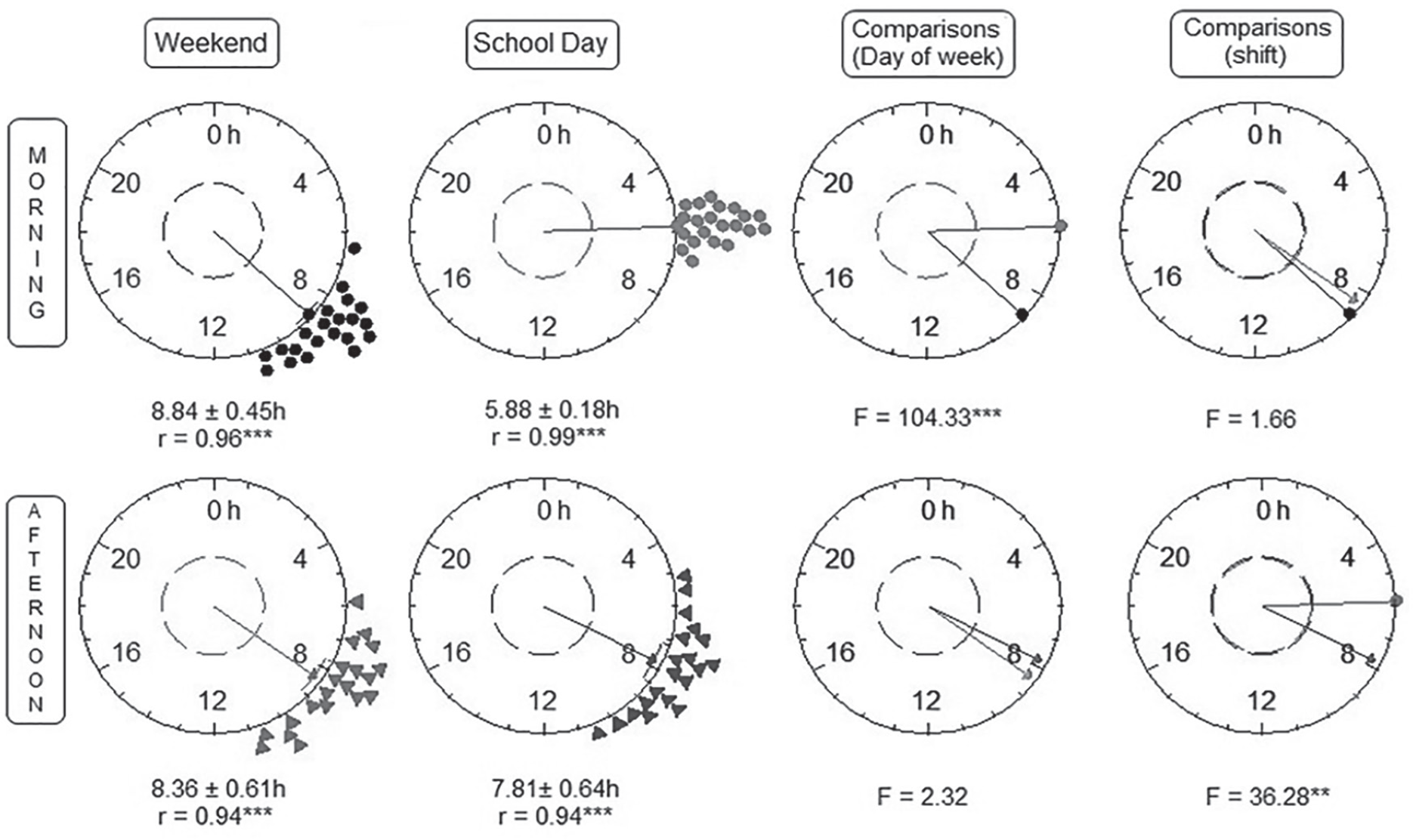
Sleep offsets in morning- and afternoon-shift students. (Left) Polar plots display individual sleep offset time (circles and triangles) and average sleep offset time ± confidence interval for all students (vectors). Rayleigh tests showed significant clustering of sleep offset in all 4 groups. ***p < 0.001. (Right) Polar plots of differences between day of the week (weekend vs. school day) for each shift or between shift for each day of the week. **p < 0.01, ***p < 0.001. Morning shift: n = 21; afternoon shift: n = 20.
For sleep duration (Table 3), there was a significant main effect of school shift (F1,37 = 10.56, p < 0.01, η²p = 0.22) and day of the week (F1,37 = 18.81, p < 0.001, η²p = 0.34) but not for sex (F1,37 = 1.60, p > 0.05, η²p = 0.04). The only significant interaction was between day of the week and shift (F1,37 = 20.70, p < 0.001, η²p = 0.36). Whereas afternoon-shift students did not take naps on school days, 13 students in the morning-shift took at least 1 afternoon nap during the recorded school days. When the total sleep duration over 24 h was considered (sleep at night + naps), the pattern remained the same: school shift (F1,37 = 6.55, p < 0.05, η²p = 0.15), day of the week (F1,37 = 20.25, p < 0.001, η²p = 0.35), and the same interaction (F1,37 = 9.92, p = 0.01, η²p = 0.21) were significant. Post hoc Student t test comparisons (Fig. 3) showed that morning-shift students had a shorter sleep duration than afternoon-shift students on school days (t(39) = 6.00, p < 0.001) but not on weekends (t(39) = 1.41, p > 0.05). While morning-shift students slept more during weekends than during school days (t(20) = 5.93, p < 0.001), there was no difference in sleep duration between school days and weekends in afternoon-shift students (t(19) = 0.23, p > 0.05). These differences did not change with the inclusion of naps.
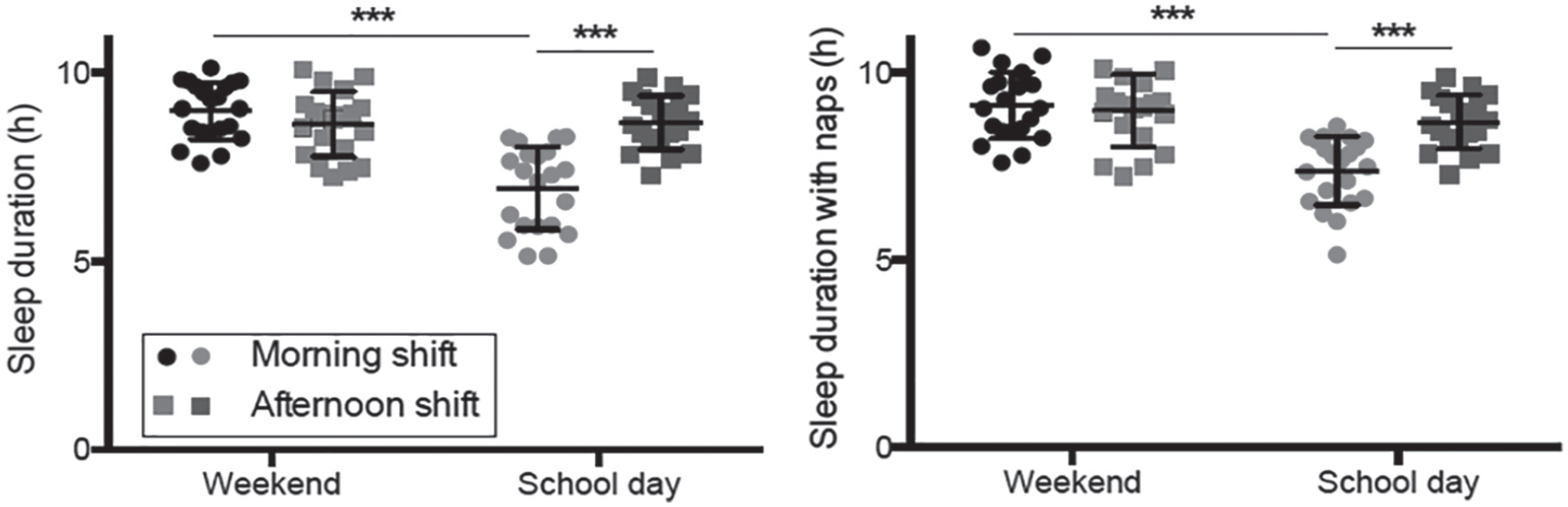
Sleep duration in morning- and afternoon-shift students. Mean (±SD) sleep duration during weekends and school days is shown for students in each shift. (Left) Duration of main (nighttime) sleep episode. (Right) Duration of sleep after total naps are added to the main sleep episode duration. Afternoon-shift students did not take naps during school days. ***p < 0.001. Student t test with correction for multiple comparisons. Morning shift: n = 21; afternoon shift: n = 20.
Only Morning-Shift Students Experience Social Jetlag
While morning-shift students showed social jetlag (average ± CI; 1.03 ± 0.34), this was not the case for afternoon-shift students (–0.02 ± 0.20). A Student t test revealed a statistically significant difference in social jetlag between the 2 shifts (t(39) = 5.1, p < 0.001; Fig. 4).
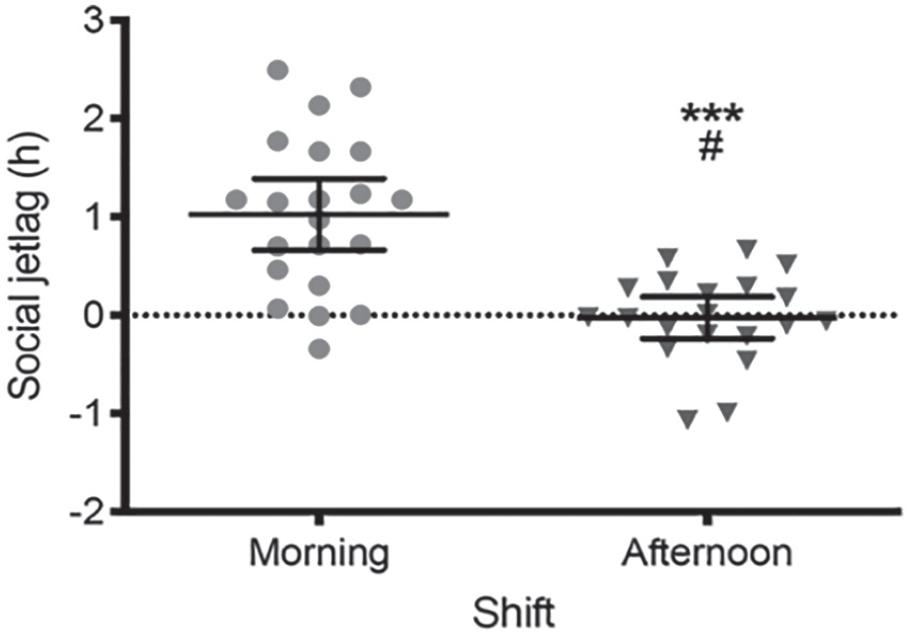
Social jetlag in morning- and afternoon-shift students. Red circles and blue triangles represent each student’s social jetlag. Lines represent mean ± confidence interval. ***p < 0.001, Student t test. #Not significantly different from zero.
Self-Reported Nighttime Activities, Sleep Quality, and Restfulness
The difficulty in waking up (scale 3: F1,49 = 12.84, p < 0.01, η²p = 0.21), level of tiredness at the beginning of the day (scale 4: F1,49 = 15.15, p <0.001, η²p = 0.24), and sleep quality the previous night (scale 1: F1,49 = 4.08, p = 0.05, η²p = 0.08, marginal difference) were worse during the school days (indicating a perception of low sleep quality) than during weekends, regardless of the school shift. The time spent with electronic media (F1,49 = 8.24, p < 0.01, η²p = 0.14) and leisure (F1,21 = 6.82, p <0.05, η²p = 0.24) was lower during school days than on weekends, also regardless of the school shift. No significant interaction between shift and days of the week was observed in any of the ANOVAs. We observed that the proportion of adolescents in the afternoon shift who reported doing homework at night (26 students) was higher than in the morning shift (only 10 adolescents, χ2 = 6.08, p < 0.05). However, the time spent on homework was higher among students in the morning than in the afternoon shift (t(34) = 4.18; p < 0.001; Table 4).
Analysis of self-reported sleep quality scores and duration of nighttime activities. a
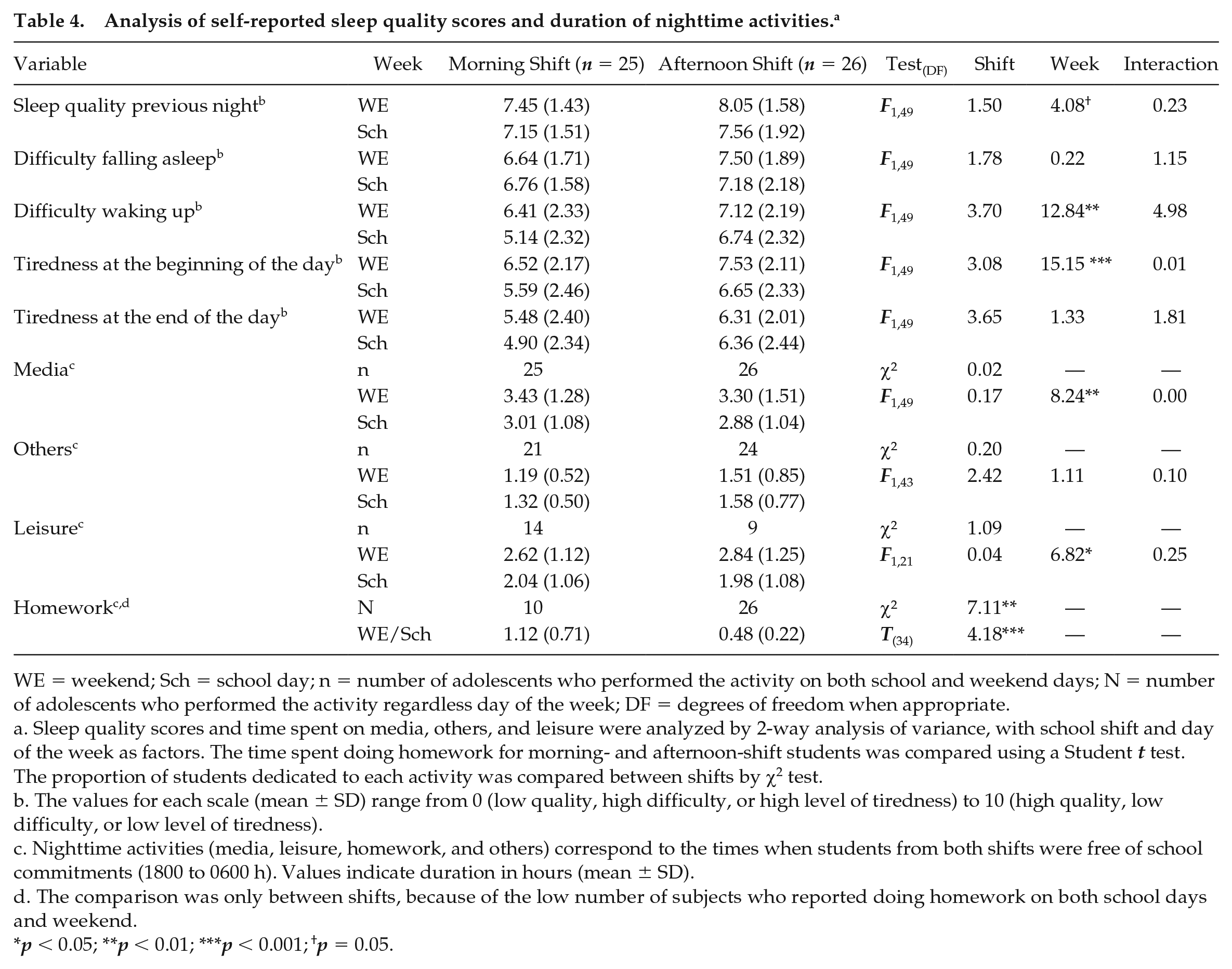
WE = weekend; Sch = school day; n = number of adolescents who performed the activity on both school and weekend days; N = number of adolescents who performed the activity regardless day of the week; DF = degrees of freedom when appropriate.
Sleep quality scores and time spent on media, others, and leisure were analyzed by 2-way analysis of variance, with school shift and day of the week as factors. The time spent doing homework for morning- and afternoon-shift students was compared using a Student t test. The proportion of students dedicated to each activity was compared between shifts by χ2 test.
The values for each scale (mean ± SD) range from 0 (low quality, high difficulty, or high level of tiredness) to 10 (high quality, low difficulty, or low level of tiredness).
Nighttime activities (media, leisure, homework, and others) correspond to the times when students from both shifts were free of school commitments (1800 to 0600 h). Values indicate duration in hours (mean ± SD).
The comparison was only between shifts, because of the low number of subjects who reported doing homework on both school days and weekend.
p < 0.05; **p < 0.01; ***p < 0.001; †p = 0.05.
Of all the students who filled out the activity diary, 30 reported that they performed all 4 activities, and the time spent in each nighttime activity for both shifts and days of the week taken together was different between media, leisure, others, and homework (F2,66 = 35.72, p < 0.001, η²p = 0.55). Post hoc tests showed that students spent more time with media, which was different from others (p < 0.001) and homework (p < 0.001). Leisure had a longer duration compared with others (p < 0.001) and homework (p < 0.001). Finally, others had a longer duration than homework (p < 0.001), which was the activity in which students spent less time (Fig. 5A).
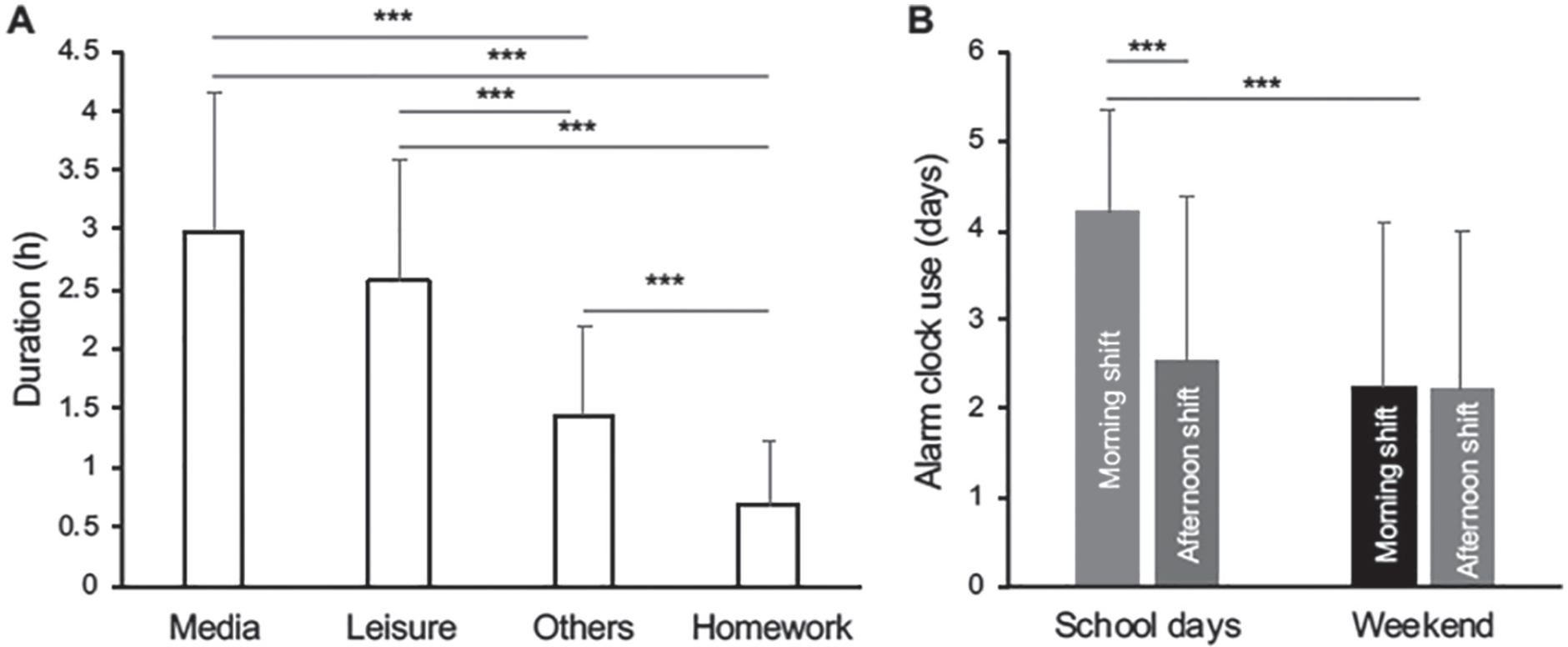
(A) Average duration (±SD) of nighttime activities (from 1800 to 0600 h) in morning- and afternoon-shift students. Asterisks represent repeated-measure analysis of variance followed by Bonferroni test. ***p < 0.001; **p<0.01. (B) Average (±SD) days of alarm clock use on weekends and school days (normalized to a 5 days maximum) is shown for students in each shift. Asterisks represent Student t test corrected for multiple comparisons. All data are self-reported.
We found a significant main effect of school shift (F1,49 = 4.40, p < 0.05, η²p = 0.08), day of the week (F1,49 = 22.53, p < 0.001, η²p = 0.32), and the interaction (F1,49 = 11.45, p < 0.01, η²p = 0.19) on the proportion of days in which students used an alarm clock to wake up. Student t test demonstrated that morning-shift students had higher alarm clock use than afternoon-shift students during school days (t(49) = 3.85, p < 0.001) but not during weekends (t(49) = 0.08, p > 0.05). Although morning-shift students had higher alarm clock use during school days than weekends (t(24) = 5.08, p < 0.001), there was no difference in alarm clock use between school days and weekends in afternoon-shift students (t(25) = 1.12, p > 0.05; Fig. 5B).
Discussion
We show that compared with adolescents starting school early in the morning (0700 h), adolescents starting school in the afternoon (1230 h) slept 1 h 45 min more on school days. This remarkable increase in sleep duration was the consequence of a later wakeup time in afternoon-shift than morning-shift students, while the sleep offset remained similar between groups. These results support the notion that the later sleep onset observed in adolescents is the result of biological mechanisms and external factors dictating the timing of sleep that are independent of any anticipated wakeup time. Neither sleep onset nor offset differed between morning- and afternoon-shift students during weekends, and the social jetlag that characterizes adolescents was evident in morning- but not afternoon-shift students. Furthermore, whereas students in both shifts had later sleep onsets during weekends than during school days, weekend sleep duration was longer than school-day sleep duration in morning- but not in afternoon-shift students, who did not experience social jetlag. To the extent of our knowledge, this is the first report of the absence of social jetlag in adolescents living in contemporary urban environments.
The National Sleep Foundation recommends that adolescents (14-17 years old) sleep 8 to 10 h per day, yet most teens do not achieve this goal (Hirshkowitz et al., 2015). The fact that afternoon-shift students in the present study sleep the recommended 8 to 10 h of sleep during school days points to the afternoon schedule as an effective way to get adolescents to sleep the amount they need. Importantly, afternoon-shift students did not oversleep, suggesting that when adolescents are free of school commitment in the morning, their daily sleep duration reaches the levels dictated by their physiological demand for sleep.
In contrast to afternoon-shift students, some morning-shift students took naps on school days, which in itself may reflect an attempt to compensate for daily sleep loss. However, these afternoon naps failed to overcome the sleep deficit that morning-shift students showed during school days. This sleep deficit was also evident in the fact that even after adding the contribution of naps to daily sleep, the duration of sleep during weekends was still longer than during school days. The American Academy of Pediatrics has recommended that middle and high schools should not start before 0830 h in the morning, (Adolescent Sleep Working Group, Committee on Adolescence, and Council on School Health, 2014) and studies in which SSTs were delayed showed the effectiveness of this measure in achieving longer daily sleep duration in students (Dunster et al., 2018; Gariépy et al., 2017; Lo et al., 2018; Nahmod et al., 2017; Nahmod et al., 2019, and see reviews in Minges and Redeker, 2016; Morgenthaler et al., 2016; Wheaton et al., 2016; Ziporyn et al., 2017). Our study with Brazilian morning-shift students clearly indicates that 0700 h is an extremely early SST that leads to severe sleep deprivation, with sleep durations that are well below the recommended levels and below what has been reported in other countries for the same age group (Hirshkowitz et al., 2015; Gradisar et al., 2011). The chronic sleep deprivation that students in the morning shift are exposed to is also evident in their use of alarm clocks during the school day, which was more prevalent than in afternoon-shift students. Furthermore, the use of alarm clocks decreased during the weekend in morning-shift students, suggesting that it is only during the weekends when they can reach a physiologically demanded sleep duration.
Other authors have addressed the difference in sleep patterns between morning and afternoon school shift and have found that, typically, morning-shift students have a shorter sleep duration and increased social jetlag and that these effects are more severe for evening chronotypes (Arrona-Palacios et al., 2015; Arrona-Palacios and Díaz-Morales, 2017; Brandalize et al., 2011; Estevan et al., 2018; Košćec et al., 2014; Lazaratou et al., 2005). One of these studies, performed with adolescents (11-17 years old) in a southern Brazilian city, showed that self-reported sleep duration was longer in afternoon- than in morning-shift students but was also longer than what we report in the current study, suggesting that although overall sleep duration may change between geographic regions, early morning SSTs still have a negative impact on sleep duration (Brandalize et al., 2011). Importantly, these studies relied on self-reported sleep onsets and offsets, which are a valid tool to measure sleep timing but have limitations (Ziporyn et al., 2017). Specifically, for this age group, Dunster et al. (2018) showed that the error of actimetry-based estimations of sleep onset and offset—after inspecting the actograms visually—was lower than 5%, whereas the error of estimating the same onsets and offsets with sleep diaries was 19.5%. Thus, sleep diaries provide a coarser estimation of sleep timing and should be used mainly to aid the estimation of actimetry-based sleep timing (Sadeh, 2011). In a recent study using wrist actimetry and comparing morning and afternoon school shift students in Canada, the authors reported later wakeup times and longer sleep durations in afternoon-shift students. In contrast to our study, the authors also reported a later sleep onset in afternoon- than in morning-shift students during school days (Martin et al., 2016). These results suggest that the anticipated later wakeup time may lead adolescents to stay up later either to work for school assignments or to socialize. Importantly, the companion article by Estevan et al. (2018) shows that late-evening social activities such as a late family dinner result in shorter sleep duration in Uruguayan students, and although the afternoon shift helps to overcome the effect of social activity, it does not result in the recommended amount of daily sleep.
We did not observe differences between shifts in sleep quality or any of the other self-assessed sleep and tiredness variables (Table 4). However, students in both shifts felt that they had more difficulty waking up and were more tired during school days than during weekends. They also showed a trend (p = 0.05) to perceive their sleep quality as lower during school days. These findings suggest that there is a self-perception of poor-quality sleep and increased tiredness that is inherently related to the school days even when sleep needs are met, as is the case in afternoon-shift students.
Importantly, there was no difference in the evening time spent on media use, leisure, homework, or other activities between shifts. This result, together with the lack of differences in sleep onset between shifts, clearly indicates that the anticipation of a later wakeup time the next day in afternoon-shift students does not predispose them to either change their social life and leisure activities or to go to bed later. This is a relevant outcome because attempts to delay SSTs are typically met with the argument that students will modify their evening habits and bedtime by their awareness that they can wake up later the next day. Given the adverse effect of evening screen time and blue light exposure on adolescent sleep and performance (Arora et al., 2014; Arrona-Palacios, 2017; Figueiro and Overington, 2015; Nuutinen et al., 2013; Sharif et al., 2010; Tashjian et al., 2019; Touitou et al., 2016) it is notable that although all students used more media on weekends than on school days, we found no differences between shifts in the use of media. In contrast, a study in Mexico observed that the number of adolescents reporting high use of electronic media (>2 h) was higher among afternoon-shift students (Arrona-Palacios, 2017).
Of note, the use of media (TV, cell phone, and playing computer and video games) was the preferred activity among students during the night. Given the effects that the use of screens at night has on circadian timing, sleep, and perceived alertness (Chang et al., 2015; Chinoy et al., 2018), it is conceivable that the self-perception of poor sleep and increased tiredness during school days in students of both shifts is a consequence of the use of screens at night. These results underscore the importance of pairing SST changes with education programs that warn of the adverse consequences that the use of electronic media at night has on sleep (Gruber, 2017). In this sense, didactic transposition of chronobiology- and sleep-related issues to education professionals is urgent (Achiam, 2014; Chevallard, 1989). This training would allow teachers to educate and advise students and their parents on the most appropriate schedules and on the adverse effects of inadequate SST.
We recognize some limitations of the study. First, although our effect sizes are large and are based on objective measures of sleep, they emerge from a relatively small number of students in each shift and from only 9 days of recording. Second, each shift is represented by a different age group. We do not believe this limitation biased our results because age was not significant as a factor influencing sleep timing. Furthermore, we observed no differences in sleep timing between the 2 shifts during the weekend, suggesting similar biological timing of sleep for both groups. Third, our report of nighttime activities is based on self-reported measures, which, as indicated above, do not represent the most accurate estimate in this age group. Fourth, the study also did not include other individual differences such as socioeconomic background that could affect the results. Finally, future studies should assess whether the differences in sleep timing between shifts we report have an effect on cognitive and school performance.
In conclusion, our results show that compared with the morning school schedule, the afternoon school schedule promotes healthy daily sleep duration in adolescents. Students in the afternoon shift sleep the recommended 8 to 10 h and experience no social jetlag, indicating that this schedule allows for a full alignment between their socially imposed schedule and their biological timing of sleep. Whereas the beneficial effects of later SSTs on adolescent sleep have been widely supported by previous studies, our study shows that radically late—afternoon—SSTs may be needed to accomplish healthy amounts of sleep in teenagers.
Footnotes
Acknowledgements
Special thanks are given in memoriam to Dr. Elenice Ap. Moraes Ferrari, who was a source of inspiration. This work was supported by Conselho Nacional de Desenvolvimento Científico e Tecnológico (CNPq) grant No. 159827/2014-0, by Fundação de Amparo à Pesquisa do Estado de São Paulo (FAPESP) grant No. 2011/05620-1, and NSF award 1743364. G.P.D. was supported by the Riddiford-Truman Award. All data used for analysis are available at 
Conflict of Interest Statement
The authors have no potential conflicts of interest with respect to the research, authorship, and/or publication of this article.