



Abstract
The transition out of high school brings a myriad of changes, including shifts in contexts that impact social and community participation. Previous research indicates that this transition results in disparate social and communication outcomes for autistic young adults compared to their peers. This study includes 170 young adults with autism who participated in follow-up data collection after graduating from U.S. high schools that had participated in a large intervention study. We gathered data from autistic young adults and their parents on social and leisure activity participation, satisfaction, and barriers. We examined data descriptively and looked at differences between sub-groups and changes over time. Results suggest that most autistic young adults are engaged in social activities. There are some differences based on high school programming but no significant differences across gender sub-groups. Research and practice implications are discussed.
The period of transition from high school is a tumultuous time for most individuals. The routines, social networks, and familiar surroundings that defined life as a high school student are replaced by substantially different and potentially new life contexts, such as post-secondary school, work, or remaining at home. In fact, developmental psychologists have characterized leaving high school as one of the major life course transitions (e.g., Elder, 1998). For many autistic individuals, transitions in general are challenging (Lord et al., 2022), thus post-school transitions may be of particular concern (Roux et al., 2023). Social participation (e.g., social gatherings, technology-based interactions, friendships) and engagement in leisure activities are important outcomes that reflect the nature of life after high school for autistic young adults. The purpose of this study was to describe autistic young adults’ social participation and the types of activities in which they engage during the early years after they transition out of high school.
Social Participation
The research on the social participation of autistic young adults after leaving high school is mixed. In a cross-sectional study, Seltzer et al. (2003) noted impairments in social interactions for autistic adolescents and young adults, with the adolescents expressing a significantly greater level of impairment. Drawing from the same sample, Orsmond et al. (2004) found that only 8% of autistic young adults had a friend, 20% socialized with a friend once a week, and 13% socialized at school or work. Notably, these data came from parents’ report of the Autism Diagnostic Interview–Revised (ADI-R), which has strict criteria for these classifications. In a further analysis of this and an additional sample, DaWalt et al. (2019) reported that 23% of autistic young adults spent time in social activities.
Drawing information from the National Longitudinal Transition Study-2 (NLTS-2), Orsmond et al. (2013) reported that autistic young adults were significantly more likely than other groups to never see a friend, never be invited to a social activity, and to be socially isolated. Liptak et al. (2011) found that 56% of autistic young adults had not spent time with friends in the previous year. Also using the NLTS-2 data, Myers et al. (2015) stated that 80% of autistic young adults had participated in a social activity in the previous year, as compared to 74% when the same participants were adolescents. Based on data from a different longitudinal study examining data on participation in structured and unstructured social activities and friendships of 36 autistic participants, Lounds Taylor et al. (2017) found that for high school and post–high school time points, 36% and 44% of participants, respectively, participated socially with friends or neighbors, and 8.3% and 16% participated socially one time per week or more.
It is important to note that these studies largely included autistic participants from more than a decade ago and paint a relatively bleak picture of social participation. In the last decade the spectrum has broadened to include more individuals without intellectual disability, greater social communication, more girls and women, and more racial and ethnic diversity (Harrop et al., 2024; Maenner et al., 2023; Russell et al., 2022; Waizbard-Bartov & Miller, 2023). In addition, the increased visibility of the neurodiversity movement has prompted researchers, practitioners, and community members to take more strengths-based perspectives and include more autistic voices in their research (e.g., Botha, 2021). This changing landscape suggests that more contemporary research is critical for examining social participation. Evidence from a recent qualitative study suggests that there may be a shift in conceptualization of social relationships during the transition from high school to their young adult years, with autistic adults noting more satisfaction and fewer challenges in friendships during their early adult years (Lee et al., 2023). In a qualitative study of the social participation of autistic adults, participants reported frequent social participation in a variety of contexts (Chen et al., 2023). While these more recent studies offer qualitative data about social experiences of a more contemporary group of autistic adults, there are limited data on larger cohorts.
Sex Differences in Social Participation
Perhaps because the majority of autistic individuals are male, autistic young men have made up the larger proportion of study samples, and as in other areas of autism research, sex differences and the study of young autistic women has been under-represented. There have, however, been several studies, which examined sex or gender differences. In their mail survey of adolescents with autism, Kuo et al. (2013) found that almost all autistic respondents reported having friends, and there were no significant differences between autistic male and female participants. For young men, the activity in which friendship interactions occurred was video games, whereas for young women, the highest percentage occurred in conversation and physical activities. In their mixed-method studies of autistic adolescents, Sedgewick et al. (2016) found that autistic female participants expressed greater interest in and social motivation for friendships than males, as well as greater expressions of empathy as key features of friendships (Sedgewick et al., 2019). This latter finding was also reported by Płatos and Pisula (2021) in their study of autistic adolescents in addition to the finding that males have less-complex definitions of friendship compared to females. Thus, it seems important to examine differences and similarities in the social participation of autistic young men and women.
Social and Leisure Activities
Beyond measures of social participation, examining participation in specific social and leisure activities can further the understanding of social and community participation. To examine participation in social and leisure activities of neurotypical adolescents, Berg et al. (2015) developed an assessment in which respondents sorted photographs of social participation and activities to indicate whether they themselves had engaged in the activities (or not), and whether they would like to participate in the pictured activities if they answered no. They also identified barriers to participation. McCollum et al. (2016) conducted the card sort with 24 autistic young adults. The community activities in which they engaged the most often were eating out, while other nonsocial activities engaged in by all participants were watching TV and listening to radio. Going to a place of worship was reported as a mid-range (i.e., ~50%) activity. Dating and engaging in long-term relationships were rarely or never reported, although these were the two activities the participants reported wanting to engage in. When asked about barriers, they reported being scared, not having transportation, and having no one to do it with.
In Neary et al.’s study (2015), parents reported their autistic young adult children engaging in a significant portion of time in solitary, technology-based games, and little employment or socialization with peers. A study using experience sampling methodology to examine interest across a range of activities in 32 autistic adolescents and adults in Australia and Taiwan had partially contradictory findings, indicating that individuals had high levels of involvement and interest in solitary leisure activities and social activities when compared to other activities (e.g., productivity, self-care; Lee et al., 2023). Notably, these studies all involve relatively small numbers of participants. In a large sample of autistic adults across a range of ages (n = 801) completed the Temple University Community Participation which included 22 different activities, they found that autistic adult respondents were less engaged in and less satisfied with their participation in community activities than neurotypical adults (Song et al., 2021).
Current Study
This study builds on important initial work (e.g., Lounds Taylor et al., 2017; McCollum et al., 2016; Myers et al. (2015) by examining social participation (e.g., social get-togethers, technology-based interactions, friendships) and engagement in and barriers to social and leisure activities of a larger and more ethnically, gender, and geographically diverse sample of autistic young adults shortly after their transition from high school. The research questions we addressed in this study were (1) What is the social participation of autistic young adults like after high school and how does it relate to participation during high school? (2) How does social participation vary by high school experiences and gender? (3) What types of social and leisure activities do autistic young adults engage in and/or desire to engage? (4) What types of barriers do autistic young adults experience related to social and leisure activity participation?
Method
This study was part of a large study conducted by the Center on Secondary Education for Students with Autism (CSESA). The original CSESA study included 547 autistic high school students in 60 high schools across three different U.S. states (Hume et al., 2022). Our research team collected data for the CSESA follow-up study approximately 2–3 years after schools completed participation in the original CSESA study. We attempted to contact all original participants, and ultimately gathered data from 211 autistic young adults and their parents/caregivers (referred to as parents throughout the remaining part of the paper) from the original sample.
The research team reached out to parents of all original CSESA participants via email and/or phone to share about the follow-up study. We consented parents and young adults through a combination of methods including in-person, video chat, and online means (via a secure online data collection system, Research Electronic Data Capture (REDCap) depending on participant preference. Once parents and young adults consented to participate, we gathered the data from both participant groups. Parents completed questionnaires on REDCap and engaged in follow-up interviews in-person, or by phone or video conferencing. REDCap was used for questionnaires that were designed for parent report to align with data collection methods in the original CSESA study (forms were previously completed directly by parents, though collected via paper copies) and to support efficient data collection. Young adults completed questionnaires with a research team member either in-person or by video conferencing depending on young adult preference and logistical considerations (e.g., young adults who had moved post–high school). These data collection methods were selected because research team members used visual supports (e.g., line drawings for concepts, visual depictions of scales, photos of activities) to help young adults in understanding and answering items across the measures. Although the visual supports were embedded in the measures for all participants, additional supports and accommodations (e.g., pacing, repetition, breaks) were provided in line with the clinical judgment of our assessors, all of whom has extensive experience interacting with autistic individuals. We assumed competence and accuracy for young adults across all measures. Data collection occurred from April 2019 to January 2021 and was largely complete prior to COVID-related shutdowns (88% of sample for parents who contributed responses and 77% of young adults who contributed responses).
Participants
Of the 211 participants, 170 participants were out of high school and 41 participants remained in school. This study focused on the participants who were out of high school, with ages ranging between 18 and 25 with a mean age of 20.4 years old. This included 143 participants who identified as male (84.1%), 26 participants who identified as female (15.3%), and 1 participant who identified as non-binary (0.6%). The young adults in this study were racially and ethnically diverse, identifying as American Indian/Alaskan Native (n = 3, 1.8%), Asian (n = 5, 2.9%), Black (n = 20, 11.8%), Hispanic/Latino (n = 26, 15.3%), Multiracial (n = 10, 5.8%), and White (n = 114, 67.1%). There were 97 participants who identified as White, non-Hispanic/Latino (57.0%). The mean socio-economic status (SES) index (calculated using family income and caregiver education data) for this sample was 62.0, with a range of 32.6–85.3, indicating our sample is above the mean SES index (50.0) for the United States. The follow-up sample was fairly similar to the original sample, with slightly less racial and ethnic diversity and slightly higher family incomes in the follow-up sample. There were also small differences in the educational experiences with fewer participants who were on a modified diploma pathway, though more students who spent less than 40% time with their general education peers in the follow-up sample (see Supplemental Table S1).
Research staff administered the Leiter International Performance Scale–Third Edition (Roid et al., 2013) with 158 of the 170 participants at the beginning of the original study (i.e., when participants were in high school) to examine non-verbal intelligence (NVIQ). During high school, the NVIQs of the participants ranged from 30 to 141, with a mean of 100.0. During the follow-up study, parents completed the Scales of Independent Behavior–Revised (SIB-R; Bruininks et al., 1996) which examines performance across 14 subscales of developmental (e.g., gross and fine motor, language, social interactions) and adaptive skills (self-care, domestic skills). On the SIB-R, the mean is 100 with a standard deviation of 15. The mean Broad Independence standard score was 66.1, with a standard deviation of 28.9 (n = 96). The mean Social Communication standard score was 74.2, with a standard deviation of 24.2 (n = 112). Parents also completed the Social Responsiveness Scale–Second Edition (SRS-2; Constantino & Gruber, 2012) which assesses autism symptomatology. There was a mean T-score of 65.1 with a range of 39–90 (n = 128). For the SRS-2, scores between 60 and 75 are designated as mild to moderate autism severity, and scores above 75 are indicative of severe autism severity. Notably, 38 (or 29.7%) of the young adults scored within the “normal” range on the SRS-2.
Measures
The measures included questionnaires, interviews, and standardized assessments. This study used a subset of data about the social and community engagement of autistic young adults as reported by the young adults and their parents.
Young Adult Questionnaire and Interview
The young adult questionnaire and interview (YA-QI) had yes/no questions, rating items, and open-ended questions. It covered a range of topics (education, work, and social activities), and addressed participation and satisfaction. Research team members typically read the questions aloud to young adults and used visual cues to facilitate completion. The YA-QI was completed in-person, when possible, but at times over video calls. For this study, we used 10 questions that covered five topics. For each topic, there was a yes/no question about social engagement or community participation (e.g., I have friends) followed by a satisfaction question (e.g., I like my friends) on a 3-point scale (no, in the middle, yes). Several items were primarily drawn from the parent questionnaire (see description below) which was adapted from the NLTS-2 study as part of the original CSESA study. Since our sample spanned a very wide range of intellectual abilities, it was necessary to simplify these previously validated questions to support understanding and participation across our full sample. See Supplemental Figure S2 for the YA-QI items.
Parent Questionnaire and Interview
The parent questionnaire and interview (P-QI) included yes/no questions, multiple-choice questions, rating questions, and short and long open-ended questions. It covered many topics (education, work, social activities, daily living activities, service access and use, health), and gathered a range of data on each topic. The tool was designed in two parts—a questionnaire portion to be completed online or on paper, and an interview portion to be completed via phone, video chat, or in person. For this study, we used four questions pertaining to social engagement in the past month. The questions were adapted from questions from Social and Extracurricular section of the NLTS-2 youth and caregiver surveys which were gathered across Waves 2–5 (e.g., SRI International, 2003). These items have been widely used in previous studies, including some studies related to autistic youth (e.g., Orsmond et al., 2013). The questions were adapted as part of the original CSESA study to address a shorter time frame for the purposes of an intervention study (1 month versus 12 months) and to reflect teens’ contemporary use of technology (e.g., including texting with calling), though wording was largely the same aside from these minor changes. All questions were on a 5-point frequency scale (never to several days per week) and included getting together with peers as part of an organized group/activity, getting together with peers outside of an organized groups/activity, calling or texting peers, and interacting with others using the internet (see Supplemental Figure S3 for the P-QI items). Total scores included sums across four items.
Activities Card Sort
Young adults and parents completed the Adolescent and Young Adult Activities Card Sort (or card sort, Berg et al., 2015). Research team members shared cards with photos of activities across six areas and named each activity verbally. Young adult participants sorted cards into piles indicating whether they had done the activity in the past 6 months, and then if not, whether they were interested or not interested in the activity. If they were interested but had not engaged in the activity within the past 6 months, they indicated any barriers across six categories (not able to, makes me uneasy, health problems, it’s too hard, need support from others, and never thought about it). Parents followed the same procedures but answered based on their perceptions of their child’s participation, desires, and barriers. If the young adult or parent could not complete the card sort in person, research team members adapted the procedures for online completion, providing visual supports as needed. This study focused on the leisure and social activities, which included 24 items across the two areas (10 social, 14 leisure). In a previous study of young adults, the leisure activities subtest had moderate test–retest reliability (κ = .48) and the social activities subtest had strong test–retest reliability (κ = .72; Berg et al., 2015).
Analysis
We descriptively analyzed data for each of the research questions, examining mean, standard deviation, and range for numerical variables and number and percentiles of responses for categorical variables. To examine differences between participant groups (e.g., diploma status in high school, gender), we used chi-square and t-tests as appropriate based on the type of data (e.g., categorical versus continuous). To examine changes from high school to post–high school, we used paired sample t-tests.
Results
Social Participation and Satisfaction
Overall, the autistic young adults reported high levels of social participation, with 92.4% reporting they had met new people, 87.5% reporting they had friends, and 74.8% reporting they had called or texted friends. Of those who reported participation, many indicated satisfaction with the participation, with between 75% and 85% saying “yes” when asked if they liked the social activity (see Table 1). Notably, the young adults were less satisfied with how high school prepared them to do activities with other people, with only 54% endorsing “yes.” Although the participation and satisfaction looked high overall, over 75% of autistic young adults noted they would like their social life to look different in the future. Supplemental Table S4 includes data for the post-COVID samples.
Descriptive Statistics for Social Participation and Satisfaction.
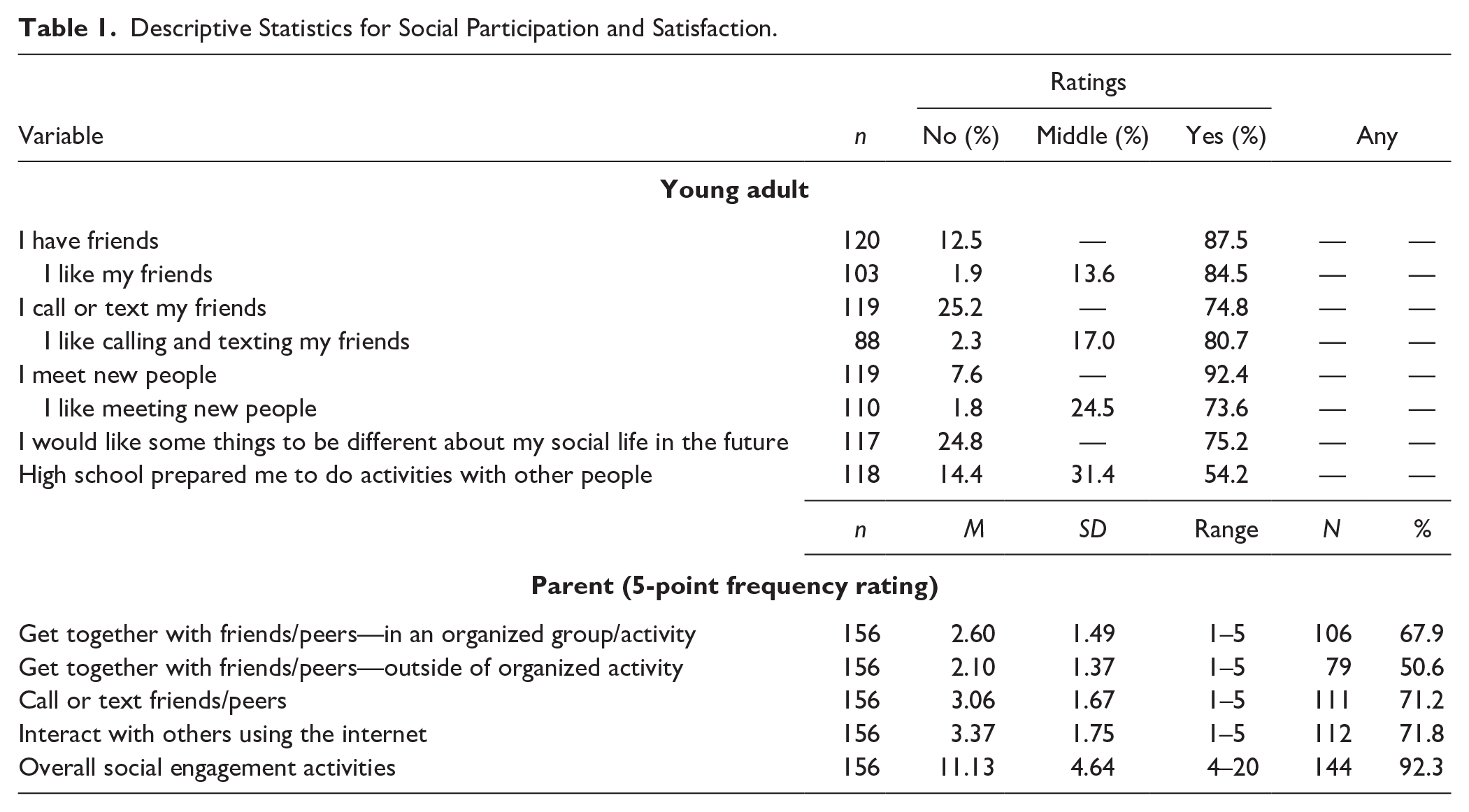
Parents reported a wide range of participation in social activities for their young adults during the past month (see Table 1) with the mean range of in-person get togethers falling between a rating of 2 (1–2 times per month) and 3 (a few times per month), and mean ratings for technology-related interactions falling between a rating of 3 and 4 (about once a week). More than 90% of parents reported their young adults had at least one monthly contact with peers in some context, although approximately 27% of parents reported that their young adults had no in-person gatherings with peers in the past month. Supplemental Table S5 includes data for the post-COVID samples.
Since parent report on the social ratings was also collected during high school at the beginning (pretest) and end (posttest) of the CSESA study, we examined change in social participation ratings from parents between timepoints during and after high school (pretest and follow-up, and posttest and follow-up). For the total social participation, there was significant, positive change from pretest to follow-up (t = 3.21, p = .002) and from posttest to follow-up (t = 2.56, p = .012). When examining the sub-parts of the total score, in-person social participation did not change between pretest and follow-up (t = −0.69, p = .49) or posttest and follow-up (t = −1.13, p = .26); whereas technology-based social participation was significantly more frequent from pretest to follow-up (t = 5.77, p < .0001) and posttest to follow-up (t = 2.82, p = .006).
Differences in Social Participation and Satisfaction
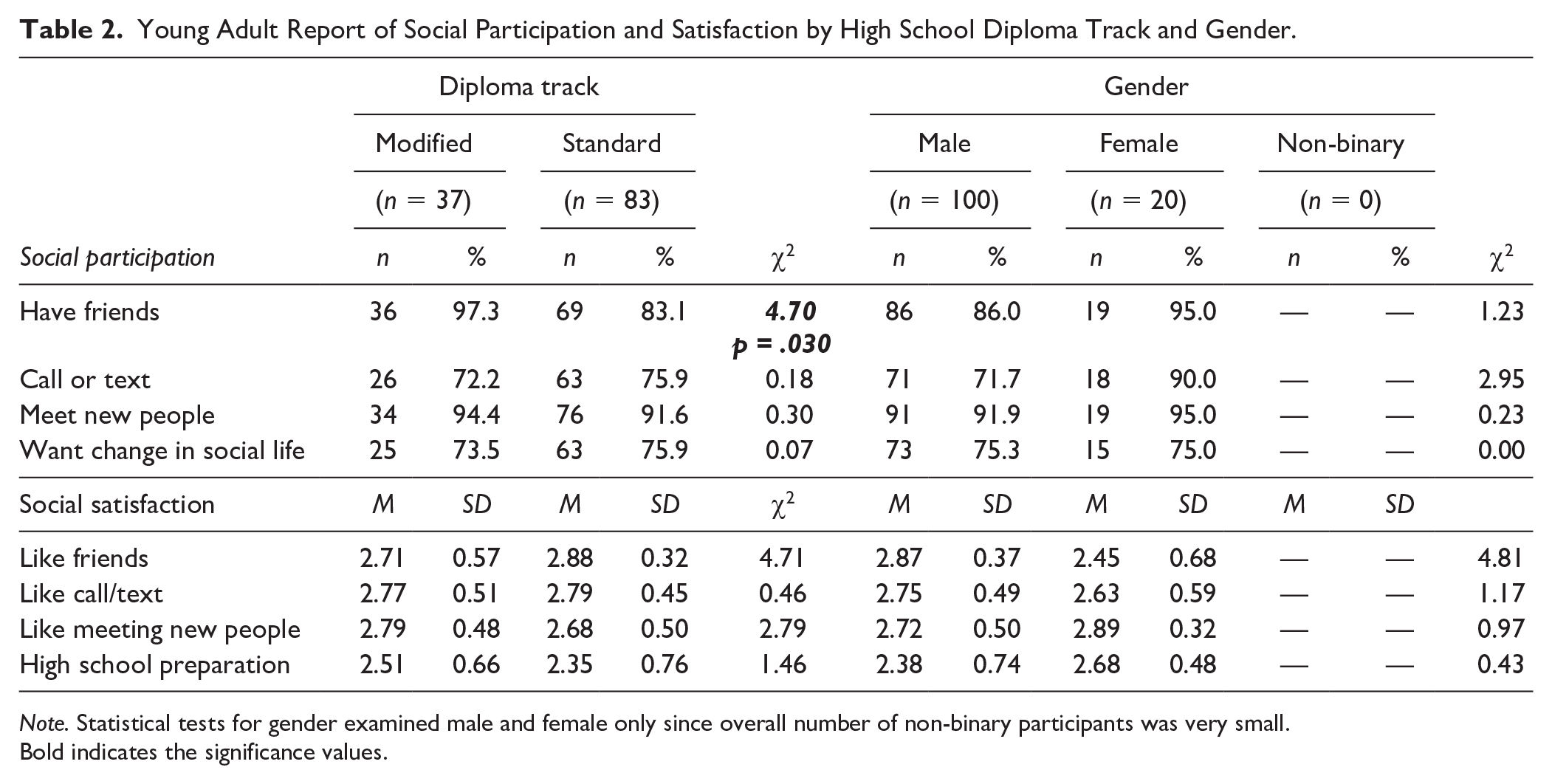
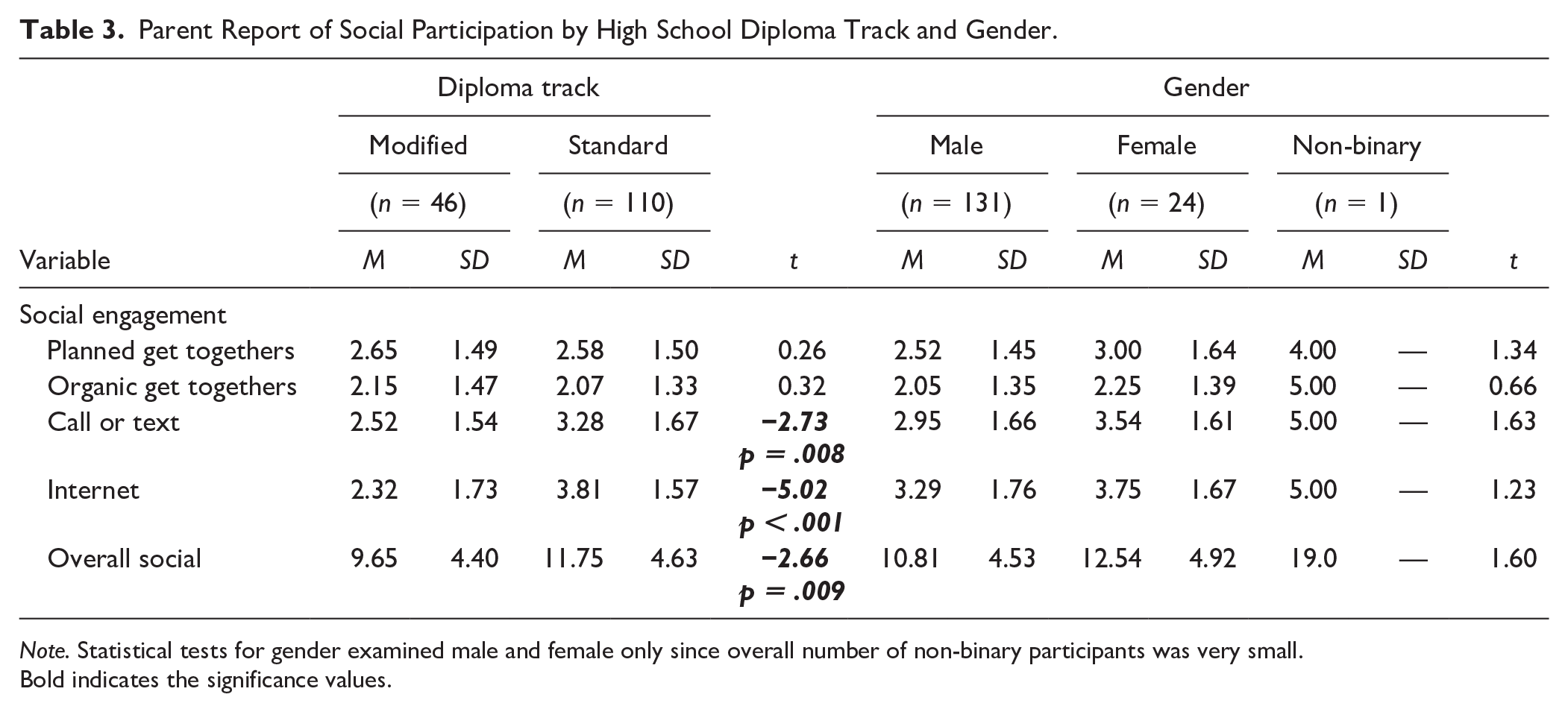
There were no significant differences in social participation or social satisfaction by gender for data reported by young adults (see Table 2) or parents (see Table 3). Notably, since only one participant identified as non-binary, we only included males and females in the statistical analyses. Based on diploma track, there were significant differences in the percentage of young adults reporting having friends with young adults who received a modified diploma reporting having friends at higher rates than their peers who received a standard diploma (see Table 2). Also, there were significant differences in parent-reported technology-based social participation (calling/texting, interacting over the internet) and overall social participation (combining all four items), with young adults in the standard diploma group receiving significantly higher ratings (see Table 3).
Young Adult Report of Social Participation and Satisfaction by High School Diploma Track and Gender.
Note. Statistical tests for gender examined male and female only since overall number of non-binary participants was very small.
Bold indicates the significance values.
Parent Report of Social Participation by High School Diploma Track and Gender.
Note. Statistical tests for gender examined male and female only since overall number of non-binary participants was very small.
Bold indicates the significance values.
Social and Community Activities
Out of the 10 social activities on the card sort, autistic young adults reported participating in a mean of 6.8 activities, with an interquartile range of 6 to 8 activities (i.e., 50% of participants endorsed 6-8 social activities). The most common social activity was going out to a restaurant, followed by calling/texting/social media, meeting new people, playing games, and attending family gatherings, with over 90% of the sample participating in those activities (see Table 4). The young adults reported wanting to do a mean of 1.9 more social activities that they did not already participate in. The two activities that young adults most wanted to do were going on a date and being in a long-term relationship, with around half of young adults endorsing each.
Young Adult (YA) and Parent Card Sort Data for Social and Leisure Activities.
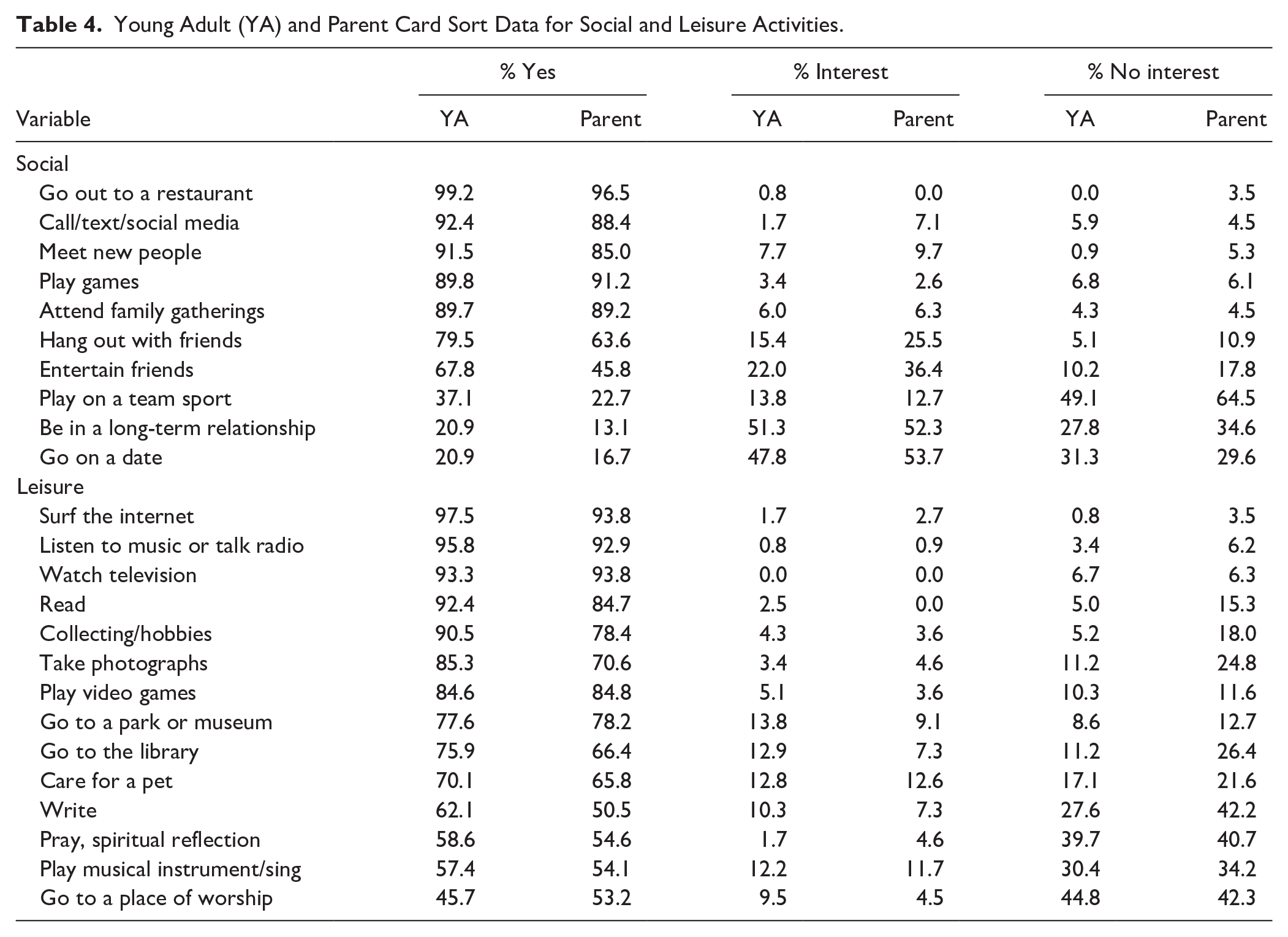
The numbers for parent-report of social activities were similar, with a mean of 6.0 activities and an interquartile range between five and seven activities. The most common social activities reported by parents were going to a restaurant, playing games, attending family gatherings, calling/texting/social media, and meeting new people, all noted by over 85% of parents (see Table 4). The parents reported that their young adults wanted to participate in an additional 2.2 social activities on average, and similarly endorsed going on a date and being in a long-term relationship as the most commonly desired social activities by their young adults.
Out of 14 leisure activities on the card sort, autistic young adults reported participating in a mean of 10.6 activities with an interquartile range of 9 to 12 activities. The most common leisure activities were surfing the internet, listening to music/talk radio, watching television, and collecting/hobbies with more than 90% of young adults noting participating in those activities (see Table 4). On average, the young adults reported wanting to do one additional leisure activity in which they were not already participating. The most desired leisure activities were going to a park or museum, going to the library, caring for a pet, playing a musical instrument/singing, and writing, which were endorsed by between 10% and 14% of young adults (see Table 4).
Parents also reported similar numbers of leisure activities with 9.9 activities on average, and an interquartile range of 8 to 12 activities. The most common leisure activities reported by parents were surfing the internet, watching television, and listening to music or talk radio, all noted by over 90% of the sample. Parents reported that their young adults wanted to participate in a mean of less than one leisure activity in which they were not already participating. Caring for a pet and playing a musical instrument/singing were the only two social activities endorsed as a desire for the young adult by more than 10% of parents. Overall, the patterns in rankings were similar between parents and young adults. However, parents reported lower percentages of participation in social activities compared to the young adults on 23 of the 24 activities.
Barriers to Participation
For the social activities, the most endorsed barrier to participation in activities by young adults was “not able to” (endorsed a mean of 58% of the time). Four other barriers made up around 10% of the endorsements each: “makes me uneasy” (11.5%), “never thought of it” (9.9%), “need support from others” (9.8%), and “it’s too hard” (9.5%). Health problems were rarely noted as a barrier to participating in social activities (1.4%). For parents, commonly noted barriers were “not able to” (34.1%), “needs support from others” (24.2%), “it’s too hard” (18.8%), and “makes young adult uneasy” (18.3%). The two remaining barriers were less commonly endorsed: “never thought of it” (3.6%) and “health problems” (<1%)
For the leisure activities, the most-endorsed barriers to participation by young adults were “not able to” (59.1%) and “never thought of it” (21.7%). The other barriers were less frequently endorsed: “need support from others” (9.6%), “it’s too hard” (8.8%), and “makes me uneasy” (<1%). Health problems were never endorsed as a barrier to participating in leisure activities. Parents most frequently noted the barrier of “not able to” (44.5%) for activities. Other commonly selected barriers included “never thought of it” (18.7%), “it’s too hard” (17.3%) and “needs support from others” (15.0%). Parents rarely noted “makes young adult uneasy” as a barrier (4.5%) and never noted “health problems” as a barrier.
Discussion
The original CSESA study was a large, multi-site study that recruited from schools and included a racially, ethnically, and socio-economically diverse sample. The follow-up sample remained relatively diverse, and thus offers a unique sample to compare to existing literature on the social and community participation of autistic young adults.
Social Participation and Satisfaction
Overall, the young adult- and parent-reported social participation of autistic young adults was markedly higher than much of the previous literature, which reported lower percentages of autistic young adults with friendships (e.g., 8% in Orsmond et al., 2004) and less social involvement (23% engaged in activities with peers in DaWalt et al.’s study, 2019; 44% spent time with friends in the previous year in Liptak et al.’s study, 2011). Even if we considered in-person activities only, 68% of the sample participated in get-togethers with friends/peers as part of an organized group/activity and 51% outside of an organized group/activity in the past month, which is higher than many other studies. Notably, Myers et al. (2015) reported similarly high levels of participation with approximately 80% of autistic young adults engaging in social activities in the past year and noted an increase in social participation between high school and post–high school, which mirrors the results from this study. These results are encouraging, and hopefully reflect increases in social participation for autistic young adults compared to previous cohorts.
There are many potential reasons for more positive outcomes as compared to previous studies. For example, it is possible that the more contemporary sample in this study includes young adults who have taken advantage of improved support, either in high school or after high school, which has increased social engagement. Also, it could be that increases in online social engagement societally have resulted in more opportunities for autistic young adults to engage and connect with peers (Hassrick et al., 2021) and perhaps find more people with common interests (Black et al., 2022). One important consideration when examining trends across the studies is the differences in measurement of friendships and social interaction, as well as who is reporting on the friendships and social interactions. For example, some studies have used more stringent criteria for the definition of friendship (e.g., ADI-R cited by Orsmond et al., 2004) which may or may not reflect autistic young adults’ own perception of friendships.
Autistic young adults who reported participating in these activities also reported high levels of satisfaction overall; however, just over half of young adults felt that their high school prepared them for social activities. This finding suggests that we should continue to consider how high school programs can support youth in being ready for the social environment after high school (see Carter et al., 2013). In their scoping review of qualitative studies in which young adults with autism voiced their perceptions of friendships, Black et al. (2022) noted the presence of friendships among autistic participants across groups, the similarities to neurotypical young adults in the nature of friendships (e.g., companionship, similar interest), and also differences that were distinctive for autistic young adults (e.g., social disorientation, social readability). Thus, it seems critical to continue to explore the different aspects of social participation that are more and less important to autistic young adults in future research.
Despite the high satisfaction with social activities, three-quarters of the participants noted they would like some aspects of their social life to look different in the future. This is perhaps not surprising (or even necessarily negative) given that emerging adulthood is generally a time of transition and growth when emerging adults are hoping for change. However, in a study of autistic and neurotypical adults in Australia, autistic adults were generally less satisfied with their leisure activities (Stacey et al., 2019), which could indicate some differences in desires for change. Continuing to explore specific desires remains an important topic for future research as we seek to understand and support autistic adults in meeting their individual social aspirations.
Differences in Social Participation and Satisfaction
There are some differences in autistic young adults’ social participation based on high school diploma track, which is often reflective of different types of educational programming, as well as different student characteristics. Autistic young adults who were on a modified diploma track in high school were more likely to report having friends after high school compared to peers who were on the standard diploma track. There could be several explanations for this finding. One potential reason is that young adults with more significant needs (likely aligned with modified diploma), may have more access to services that may directly provide opportunities to interact with peers (e.g., group-based services) or could support participation in community-based activities in which they are likely to interact with peers (e.g., Anderson & Butt, 2018). It is also possible that young adults who received a standard diploma may have a more stringent definition for considering someone a friend as definitions and experiences of friendship change with cognitive development (Bowker & Weingarten, 2022).
Parents of autistic young adults on the modified diploma track reported lower frequency of overall social participation, though the differences were driven by lower frequency of social participation via technology such as calling and texting, with no significant differences for in-person social participation. These data mirrored the data collected of CSESA participants during high school (Steinbrenner et al., in revision). Although we did not have a comparison group, studies have noted that autistic young adults engaged in more online and technology-based activities than their neurotypical peers (e.g., Neary et al., 2015; Sundberg, 2018). Given the ubiquitousness of technology-based social engagement in society and rapid technological changes, it is critical for researchers to seek a deeper understanding of how these online interactions may support and/or diminish autistic young adults’ experiences related to social participation and friendships.
Notably, there were no significant differences by gender in social participation or satisfaction as reported by parents or young adults. Based on reported differences in the presentation of social behaviors in autistic males and females (e.g., Hull et al., 2017), we anticipated that there may be differences in social participation. However, our results are similar to some other studies that have found no differences between autistic males and females in reported friendships (Kuo et al., 2013; Sedgewick et al., 2019). Importantly, the findings in one qualitative study demonstrated that males have less complex definitions of friendship (Płatos & Pisula, 2021) and a survey study noted differences by sex related to the activities within which social interactions occur (Kuo et al., 2013). Future research should continue to explore gender differences including quantitative and qualitative aspects of friendship and social interaction.
Social and Community Activities and Barriers to Participation
The card sort data offered additional information related to participation in social and leisure activities. Overall, the data suggested relatively high participation in social and leisure activities. At least two-thirds of young adults indicated they had participated in seven of the 10 listed social activities and 10 of 14 leisure activities. Notably, being in a long-term relationship and going on a date had lower percentages for both young adult and parent report, with high percentages reporting an interest in those activities, matching findings from earlier studies (e.g., Marks et al., 2000; Zukauskas et al., 2009). Entertaining friends was the next highest percentage for interest. Related to the leisure activities, all activities had ranges of 14% or lower for reported interest, indicating that most young adults were either already doing the activity or not interested in doing the activity. These results are remarkably similar to a smaller study with 24 autistic young adults using the card sort (McCollum et al., 2016).
For barriers, “not able to” was most endorsed by young adults and parents for both social and leisure activities. The “not able to” is a broad category, and thus it is hard to determine if it is related to access, available time, cost, or other issues. A recent systematic review of barriers to community participation identified environmental factors such as lack of opportunities and resources (Cameron et al., 2022). The barriers of “need support,” “it’s too hard,” and “it makes me uneasy” could each indicate that more services and/or support may be necessary to increase participation in activities of interest to young adults. Indeed, limited utilization of services was related to social involvement of autistic young adults in one study (Myers et al., 2015).
Implications
The findings related to social and community participation are quite positive overall, indicating that most young adults appear to be engaged in a variety of social and leisure activities, and express satisfaction related to their social participation. However, a large majority of young adults in this study indicated a desire for change in their social life. While this is not necessarily alarming (i.e., emerging adults are likely interested in their social lives continuing to evolve), it is critical to continue to hear and learn from autistic young adults about their social experiences, desires, and needs. Although there have been many qualitative studies on friendship (see Depape & Lindsay, 2016 for qualitative meta-analysis), future research should continue to gather quantitative and qualitative information from new autistic cohorts who are entering adulthood in an ever-shifting social context.
Changes in technology and social media, new social patterns and practices after the COVID pandemic, or other societal changes may impact the social experiences, desires, and needs of autistic young adults. Related to these changes, continuing to study the intersection of social participation and technology seems critical across both neurotypical and autistic populations. Hassrick and colleagues (2021) summarized advantages and disadvantages of information and community technology for autistic people across a large body of literature. Among the benefits was the use of technology to establish social connections with others. Moderate use of technology was associated with reports of happiness. Drawbacks included overuse or nonsocial internet use leading to loneliness, online social connections as less valued than in-person connections (while at the same time reported as somewhat less stressful), and potential for cyber-bulling. Future research should focus on determining ways to benefit from the advantages offered by technology while also minimizing potential harm for the autistic community as technology continues to advance rapidly.
The data from this study support the need for changes in high school programming that may better prepare students for social life after high school, as well as changes in supports provided after high school that support autistic young adults in social participation and building and maintaining friendships. One clear area of interest was in dating and long-term relationships. A recent systematic review concluded that the research on supporting dating and romantic relationships for autistic adults was minimal and relatively low quality (Exell et al., 2022), thus this may be a future avenue for research. It may be particularly important to develop programs and/or consider how existing supports/services can help autistic young adults meet their goals for dating and relationships and to consider the need for education related to sexual health and safety (e.g., Cheak-Zamora et al., 2020).
Although we should certainly consider changes and enhancements to programs and services supporting social participation, it is critical to also consider changes made to everyday contexts. The neurodiversity movement emphasizes the importance of accepting and embracing differences, and focuses on considering the context (e.g., Dwyer, 2022; Kapp et al., 2013). Reducing barriers to participation could involve educating neurotypical peers and colleagues, environmental changes, and rethinking of “norms” that may not reflect a neurodiverse community. Critical to this work is the inclusion of autistic voices across all aspects of research and practice to ensure that work is reflective of the experiences and desires of the autistic community (Botha, 2021; “For whose benefit?,” n.d.).
Limitations
This study had several limitations. First, although the sample was drawn from a larger study, there was a lower response rate for the follow-up portion of the study, which may impact generalizability. Notably, the current sample does not reflect the gender diversity generally seen among autistic individuals. In addition, our sample included young adults whose families have relatively higher SES compared to the United States. These demographic differences could have impacted the results. Second, the data related to social and community participation was drawn primarily from several yes/no (for young adults) and rating items (for parents), which have more limited data on validity and reliability. The measures were chosen for several reasons including having questions that worked well for autistic young adults with a variety of intellectual abilities, maintaining consistency from the original study, and ensuring a succinct data collection protocol. Another limitation was the absence of an age-matched neurotypical reference group. It may well be that autistic and neurotypical young adults engage in similar patterns of social and community engagement and experience barriers as well. This would be a useful feature of future research. Finally, although not exactly a limitation, this study was conducted just before and during the early stages of the COVID pandemic. It is difficult to tell how COVID impacted the results, as it is confounded with the fact that the participants contacted after COVID had not responded to several rounds of previous data collection efforts (i.e., were more difficult to reach). The pandemic, however, changed the world in many different ways. Future research that examines research questions from this study in post-pandemic contexts would be beneficial.
Conclusions
Overall, both autistic young adults and their parents report high levels of social participation. Yet, there are still potential areas in which young adults and parents identify barriers to participation and needs for support and change. It will be critical to continue to explore the social experiences, desires, and needs of this population, especially with changing social contexts, and to find ways to focus on strengths, modify the environment to support autistic young adults, and provide other supports as needed.
Supplemental Material
sj-docx-1-rse-10.1177_07419325241277094 – Supplemental material for Participation in Social and Leisure Activities After High School for Autistic Young Adults
Supplemental material, sj-docx-1-rse-10.1177_07419325241277094 for Participation in Social and Leisure Activities After High School for Autistic Young Adults by Jessica R. Steinbrenner, Samuel L. Odom, Laura J. Hall and Bonnie Kraemer in Remedial and Special Education
Supplemental Material
sj-docx-2-rse-10.1177_07419325241277094 – Supplemental material for Participation in Social and Leisure Activities After High School for Autistic Young Adults
Supplemental material, sj-docx-2-rse-10.1177_07419325241277094 for Participation in Social and Leisure Activities After High School for Autistic Young Adults by Jessica R. Steinbrenner, Samuel L. Odom, Laura J. Hall and Bonnie Kraemer in Remedial and Special Education
Supplemental Material
sj-docx-3-rse-10.1177_07419325241277094 – Supplemental material for Participation in Social and Leisure Activities After High School for Autistic Young Adults
Supplemental material, sj-docx-3-rse-10.1177_07419325241277094 for Participation in Social and Leisure Activities After High School for Autistic Young Adults by Jessica R. Steinbrenner, Samuel L. Odom, Laura J. Hall and Bonnie Kraemer in Remedial and Special Education
Supplemental Material
sj-docx-4-rse-10.1177_07419325241277094 – Supplemental material for Participation in Social and Leisure Activities After High School for Autistic Young Adults
Supplemental material, sj-docx-4-rse-10.1177_07419325241277094 for Participation in Social and Leisure Activities After High School for Autistic Young Adults by Jessica R. Steinbrenner, Samuel L. Odom, Laura J. Hall and Bonnie Kraemer in Remedial and Special Education
Supplemental Material
sj-docx-5-rse-10.1177_07419325241277094 – Supplemental material for Participation in Social and Leisure Activities After High School for Autistic Young Adults
Supplemental material, sj-docx-5-rse-10.1177_07419325241277094 for Participation in Social and Leisure Activities After High School for Autistic Young Adults by Jessica R. Steinbrenner, Samuel L. Odom, Laura J. Hall and Bonnie Kraemer in Remedial and Special Education
Footnotes
Acknowledgements
Thank you to the many autistic young adults and their families who participated in this study, as well as the schools and who were part of the original study. Thanks also to the CSESA research team, and especially the core team for the CSESA follow-up study which includes in addition to the authors, Kara Hume, Nancy McIntyre, Brianne Tomaszewski, Leann DaWalt, Kate Szidon, and Chris Brum.
Declaration of Conflicting Interests
The author(s) declared no potential conflicts of interest with respect to the research, authorship, and/or publication of this article.
Funding
The work reported here was supported by the Institute of Education Sciences, U.S. Department of Education (grants nos. R324C120006, R324A180091, and R324B160038) awarded to the University of North Carolina at Chapel Hill. The opinions expressed represent those of the authors and do not represent views of the Institute or the U.S. Department of Education. Data collection via REDCap was supported by UL1TR002489 from the Clinical and Translational Science Award program of the National Center for Advancing Translational Sciences, National Institutes of Health.

References
Supplementary Material
Please find the following supplemental material available below.
For Open Access articles published under a Creative Commons License, all supplemental material carries the same license as the article it is associated with.
For non-Open Access articles published, all supplemental material carries a non-exclusive license, and permission requests for re-use of supplemental material or any part of supplemental material shall be sent directly to the copyright owner as specified in the copyright notice associated with the article.
