




Abstract
The postsecondary landscape for autistic youth is changing, with increased opportunities in education and employment. However, autistic youth still face higher disengagement rates than other disability groups. The Center on Secondary Education for Students with Autism (CSESA) was a multisite study examining high school programming in 60 schools across three U.S. states, and the CSESA Follow-Up study examined their post high school experiences. This special issue provides a contemporary snapshot of postsecondary life for 200 autistic young adults from the CSESA study, and features five articles, each focusing on various aspects of their lives post high school. The young adults and their caregivers reported on their engagement in education, employment, community involvement, and health, and completed standardized measures related to self-determination and adaptive behavior. This article summarizes the state of the field and CSESA findings, introduces the follow-up study sample and procedures, provides global findings, and introduces each article in the series.
Postsecondary Landscape for Autistic Young Adults
It is likely that over one million autistic youth will transition out of public schools in the next decade, resulting in increased demand for community services for autistic young adults, as well as a more in-depth understanding of autism by employers, institutes of higher education, and community agencies (Shattuck et al., 2020). Autism research, however, has been disproportionately focused on autism etiology and biology. Only 8% of funding focus on lifespan issues, which includes the transition to adulthood and postsecondary outcomes for autistic youth and young adults (Interagency Autism Coordinating Committee, 2023). When it has occurred, autism intervention research has focused disproportionately on preschool- and elementary school-age children (J. R. Steinbrenner et al., 2020). Thus, less is known about the contemporary generation of autistic young adults who are transitioning out of school and into employment, postsecondary education, and community-based activities at a time when their numbers are increasing. The purpose of this article, and the other articles in this special issue, is to describe the current status of a national sample of autistic young adults recently after they finished school and transitioned into postsecondary education, employment, and community.
Despite the restricted funding in this area, there have been several research initiatives that have provided some insight into postsecondary life for the autistic population across the past several decades. The most used source of information about young adults transitioning into the community, the National Longitudinal Transition Study (NLTS2), was funded by the U.S. Department of Education. The NLTS2 tracked around 11,000 students receiving special education services while in high school and up to 8 years postgraduation (to age 25, birth years of 1984–1987; https://ies.ed.gov/ncser/projects/nlts2/). This project, with the last wave of data collected in 2009, provided data from autistic young adults related to postsecondary education and employment. About 44% of respondents had enrolled in some form of postsecondary education since high school graduation, and 63% had been employed at any time since high school completion—the lowest of any disability category (Newman et al., 2011). During this same time frame, the overall postsecondary education enrollment rate was 69%, and the employment rate for people in the 24- to 35-year-old age range with a high school diploma was 74%, indicating clear differences for the autistic population (U.S. Department of Commerce, 2015; U.S. Department of Labor, 2016). Autistic young adults also had the highest rate of disengagement from education and/or employment activities (29%), the lowest satisfaction rates related to their independent living status (45%), and the lowest rate of social engagement (48% seeing friends weekly).
These findings are similar to those of the National Autism Indicators Report (NAIR), which reported on data gathered 5 years later from approximately 3,500 adults ages 18 to 64. These data indicated that 27% of autistic adults were not engaged in employment or daily activities (Roux et al., 2015). More recently, Lord and colleagues (2020) published longitudinal data from 123 autistic adults and reported that between 10% and 20% of the sample were home with no planned daily activities or work, and 0% to 40% of the sample had contact with friends regularly. Across these and other studies (e.g., Mason et al., 2021; Taylor & DaWalt, 2017), the data are consistent that while many autistic young adults are successfully engaged in postsecondary education and employment activities, these outcomes are not yet accessible to all.
There are several limitations to the previous research, and questions remain about the postsecondary experiences for this population. The NLTS2 and NAIR services and outcomes in adulthood data were collected one to two decades ago. This was an early generation of autistic students, and we know little about the contemporary experience of autistic young adults. This is pertinent for several reasons. First, in previous studies, participants may not have had access to all of the current components of the transition plan, including transition objectives, transition services, and a focus on both academic and functional achievements, which were not federally mandated until the 2004 reauthorization of the Individuals with Disabilities Education Act. Second, in previous waves of data collection, the implications of the Olmstead decision may not have yet been fully implemented. This Supreme Court decision clarified that the Americans with Disabilities Act integration mandate should apply to community settings—pushing back on the unjustified segregation of individuals with disabilities (e.g., sheltered workshops, institutionalized living). Also, the Workforce Innovation and Opportunity Act of 2014, which expanded postsecondary supports, was early in its implementation. Last, the mean age of autism diagnosis decreased from 5.23 in the 1990 to 1996 birth cohort to 4.4 in 2002 (Hertz-Picciotto & Delwiche, 2000) indicating a greater likelihood of early intervention and longer term supports for a more current cohort.
In addition, the previous samples include several demographic limitations that impact interpretation and generalization. For example, the NLTS2 data had limited ethnic diversity for the autistic sample (e.g., ~8% Hispanic in NLTS2 vs. 21% Hispanic in U.S. population in this age range in 2015). Similarly, Lord et al.’s (2020) sample includes only 16% ethnic and racial minorities in a follow-up study from 2020. In addition, several data sets include autistic individuals from a broad age range (e.g., ages 18–64 in the NAIR) which makes it more difficult to determine the experiences of young adults who have most recently entered postsecondary life.
The Center on Secondary Education for Students With Autism
Thus, there remains a pressing need to examine postsecondary outcomes for a more contemporary and representative group of autistic youth to better understand how programs, services, and systems are responding to the needs of this population and to identify areas of continued focus by the field. The Center on Secondary Education for Students with Autism (CSESA) was a large-scale randomized control trial (RCT) examining the efficacy of a comprehensive high school-based intervention for autistic students (Hume et al., 2022). The trial included 60 schools and 527 autistic youth ages 14–20 in 2014–2017 (born in 1996–2000), with schools distributed equally across locations in North Carolina, Wisconsin, and Southern California. An analysis of the demographic characteristics of the sites indicated that the study locations were representative of the broader national diversity of schools in the United States. The demographic data of the full sample can be found in the study by Hume et al. (2022).
The CSESA program components included an emphasis on four domains—academics, independence, peer and social competence, and transition. Related interventions were implemented by a school-based team across 2 years with ongoing training and coaching provided by the CSESA research team. Schools implementing the CSESA intervention model had higher program quality as measured by the Autism Program Environment Rating Scale total score, as well as many of the individual domains such as communication, instruction, social, teaming, and the transition composite score. Students receiving CSESA-related interventions had higher rates of Individualized Education Program goal attainment as measured by the Goal Attainment Scale when combining goals across the four CSESA-focused domains, as well the individual social, independence, and academic domains (Hume et al., 2022). There were no significant differences on standardized outcome measures across various domains, for families (i.e., empowerment, burden) or students (i.e., self-determination, social skills, support intensity) across the CSESA and services as usual (SAU) groups.
CSESA Follow-Up Study
The purpose of the CSESA Follow-Up study was to follow up with the students involved in the original efficacy study of CSESA to determine the longer term intervention effects (both in-school and postschool outcomes). However, initial analyses of postsecondary outcomes between the CSESA and SAU groups indicated no differences across the groups in enrollment in postsecondary education, engagement in employment, and social interactions at the follow-up data collection point (Hume & Steinbrenner, 2023; J. Steinbrenner, 2023). And thus, this article and others in this special issue collapsed the groups to examine the postsecondary landscape for the full sample of young adults.
Method
In this special issue, the sample of autistic youth is drawn from the CSESA Follow-Up study. The follow-up study supported contact with CSESA study participants at one time point between 1 and 5 years after their original participation in the study, with some participants in their last year of high school at age 22 and others 4 and 5 years after graduation.
Participants
The special issue articles report data when the autistic young adults ranged in age from 17 to 25 years (M = 20.2), but we are including data in this introduction from the full sample in the CSESA RCT to compare participant demographics and characteristics across the two studies. It is important to note that these follow-up data were collected before the COVID pandemic, which significantly reduced education, employment, and social opportunities. A total of 211 of the original 547 autistic young adults and their caregivers from the CSESA study participated in the follow-up (39%). With this relatively low response rate, it was important to document the similarity of this sample with the participants in the original study. On most demographic variables, the two groups were similar, with some exceptions (see Table 1). A set of seven chi-square analyses assessed the similarities and differences in demographic variables of participants in the original CSESA study and the current follow-up participants. Because of multiple analyses and experiment-wise error, a simple Bonferroni adjustment (p < .05 / 7 = .007) was employed. Using this adjusted p value, no significant differences were found for gender, race, ethnicity, or time in general education in high school. There were significant differences in caregiver education, with more participants in the current sample having a higher level of education than in the original sample. In addition, proportionally more autistic students in the current study sample were on the standard diploma track in high school than in the full CSESA sample of the previous study
Participant Demographics for CSESA Original and CSESA Follow-Up Studies.
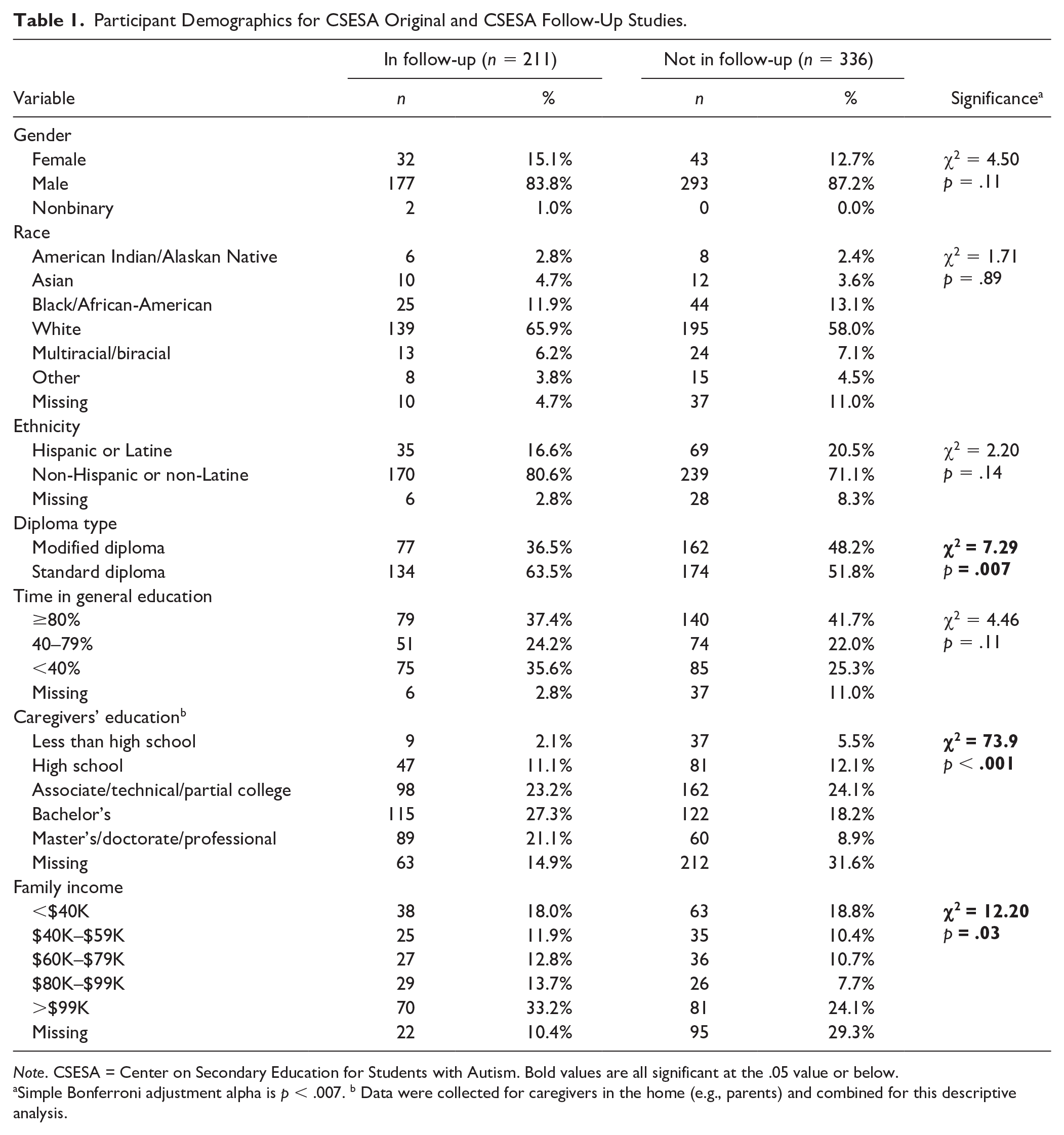
Note. CSESA = Center on Secondary Education for Students with Autism. Bold values are all significant at the .05 value or below.
Simple Bonferroni adjustment alpha is p < .007. b Data were collected for caregivers in the home (e.g., parents) and combined for this descriptive analysis.
The majority of the young adults had completed high school at the time of the follow-up study (n = 170), but there were some participants who remained enrolled in secondary school programming (n = 41). The participants were 84% male, 15% female, and 1% nonbinary. The autism young adult participants were relatively diverse in terms of race and ethnicity, with 41% of the autistic young adult participants from minoritized groups (Black, White Hispanic, and American Indian) and 59% from nonminoritized groups (White non-Hispanic and Asian; Wingrove-Haugland & McLeod, 2021).
Procedures
While each article in this special issue will provide details on specific procedures and measures, we wanted to provide a broad study overview. Because this was a follow-up study, CSESA team members rerecruited young adults and their caregivers (most often parents) from the original sample of participants based on contact information that was obtained as part of the original study. Contacts were made first through the REDCap survey system via email, where caregivers were asked to provide permission for their young adult child and to consent to participating in the follow-up study. Importantly, we included caregiver permission for all participants for two reasons: (a) all participants had a known autism diagnosis and are therefore considered a vulnerable population based on the Institutional Review Board and (b) we were unaware of current status related to guardianship and thus used caregiver permission as a more conservative approach to recruitment. Once caregivers provided permission, we scheduled in-person or online meetings with the young adults to review the young adult consent form. Once consent was obtained, the research team collected data from the caregivers and young adults. There were no reportable adverse events during data collection. Caregiver and young adult participants were compensated for completing measures as part of the study.
Data collection was completed via online questionnaires, paper questionnaires, and interviews. The CSESA team aimed to collect caregiver questionnaires online via REDCap and complete caregiver interviews either in-person or on the phone or video chat. The measures included a demographic form, three standardized assessments about young adult characteristics (American Institutes for Research Self-Determination Scale, Wolman et al., 1994; Scales of Independence and Behavior—Revised, Bruininks et al., 1996; Social Responsiveness Scale—2nd edition; Constantino & Gruber, 2012), two standardized measures about caregiver experiences (Family Empowerment Scale, Koren et al., 1992; Zarit Burden Interview, Zarit et al., 1985), and three measures that gathered information about young adults’ experiences and participation (Adolescent and Young Adult Activities Card Sort, Berg et al., 2015; CSESA Questionnaire, CSESA Interview). These CSESA project-made measures gathered information about living situation, guardianship, social activities, daily living activities, access of high school and adult services, and health and wellness through a combination of multiple choice, yes/no, and short answer questions.
The research team also collected young adult questionnaires and interviews either in person or over a video chat as all the measures collected with young adults included visual supports based on young adult preferences and needs. The young adult measures included one standardized measure and two measures about young adults’ experiences and participation (American Institutes for Research Self-Determination Scale, Adolescent and Young Adult Activities Card Sort, CSESA Check-In). The CSESA project-made measure included a combination of yes/no, rating, and open-ended questions about education, employment, social activities, and satisfaction with high school with items that were adapted from studies on similar populations. Each special issue article includes the relevant measures including details about the scoring and administration for the CSESA Follow-Up study (see Steinbrenner et al.; McIntyre et al.; Hall et al., Kraemer et al., and Tomaszewski et al., 2025).
Results
Each article also explores in-depth various aspects of postsecondary life (e.g., employment, education, social engagement, health). There is benefit, however, to summarizing findings across several domains in an accessible manner, serving as a benchmark to the field, akin to the key findings section of the NAIR on Transition into Young Adulthood published in 2015 (Roux et al., 2015). Thus, we are including a summary of key findings from the CSESA Check-In completed by young adults and the CSESA Questionnaire completed by caregivers which report on several of the key metrics that align with the NAIR (i.e., postsecondary education, employment, living arrangements). Excerpts from these measures can be found in Figures 1 and 2 and they are described in more detail in subsequent articles.
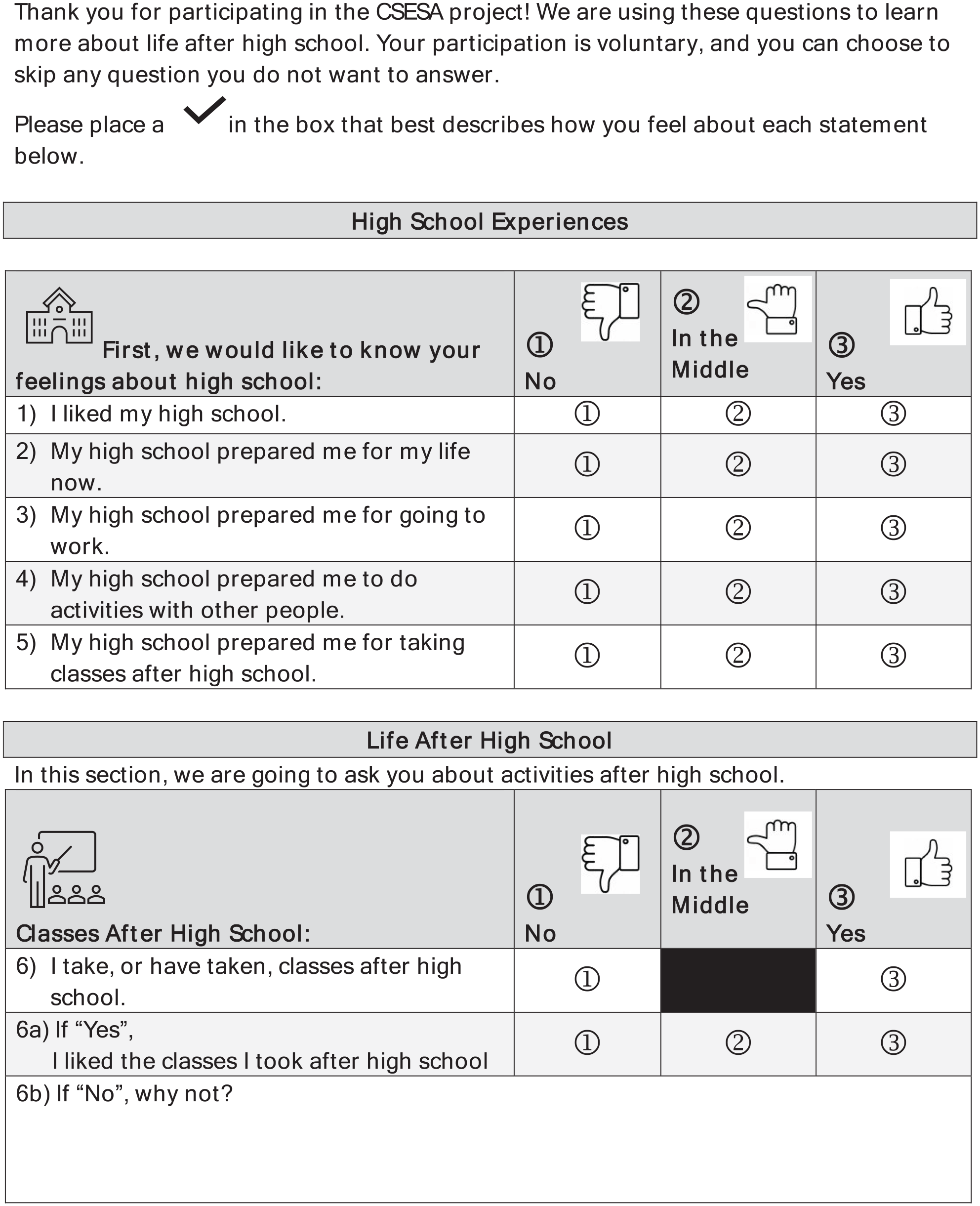
Excerpt From the Young Adult Check-In.
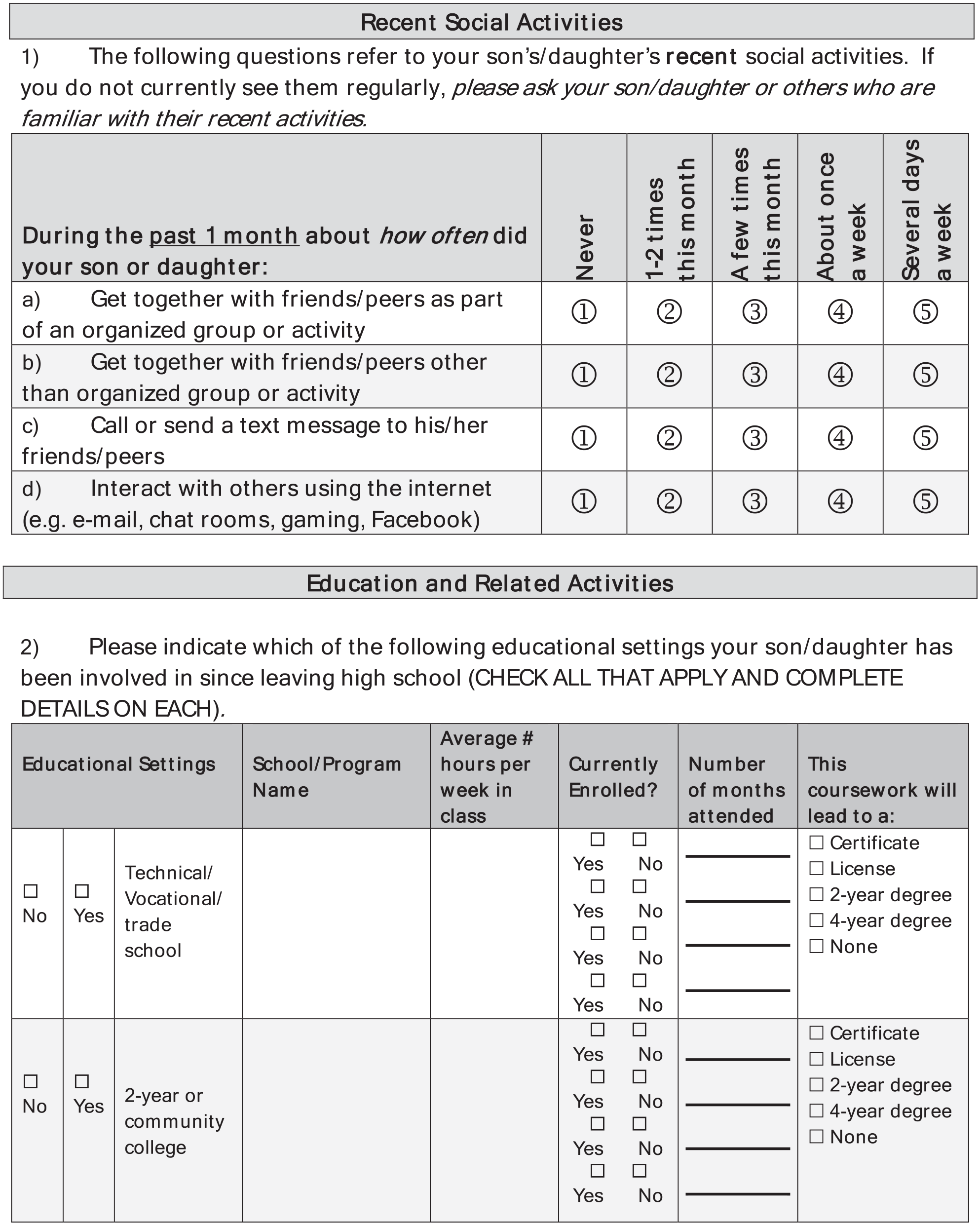
Excerpt From the Parent/Caregiver Check-In.
Approximately, 66% of young adults reported being involved with each employment and education activities after high school (see Table 2). About 11% of young adults reported no involvement with either employment or educational activities. Young adult report of social engagement was higher, with over 85% of young adults reporting having friends and meeting new people and nearly 75% of young adults reporting calling or texting friends. Only 3% of young adults reported no engagement in social activities.
Descriptive Statistics for Young Adult Report of Postsecondary Outcomes.
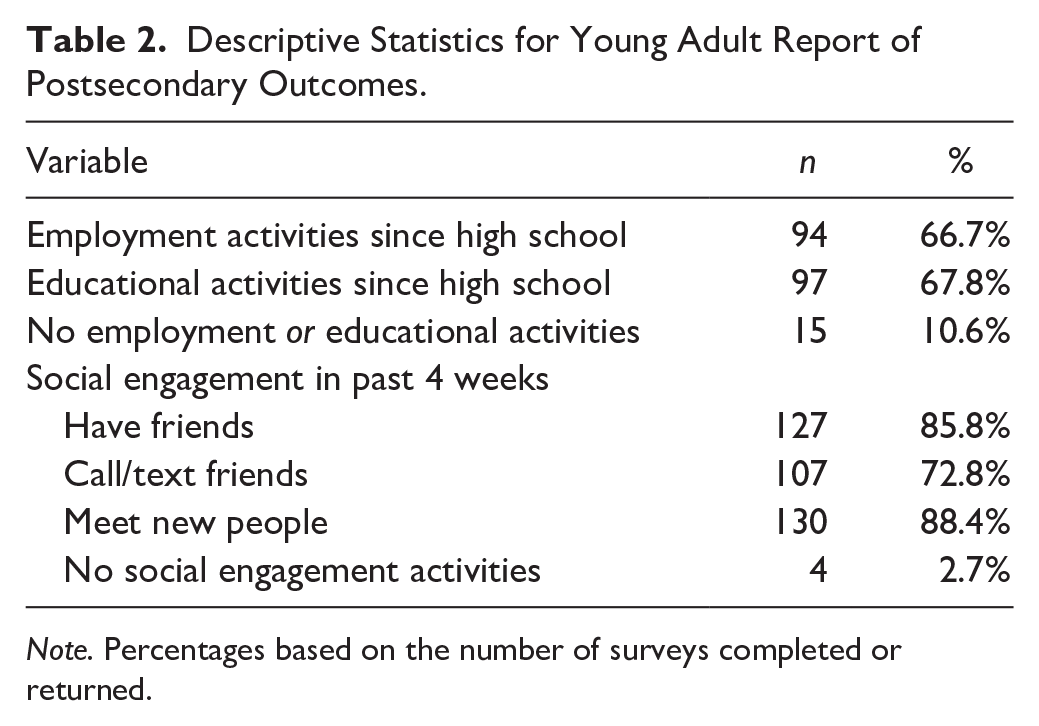
Note. Percentages based on the number of surveys completed or returned.
Nearly, 85% of caregivers reported that the autistic young adults were engaging in some type of vocational activity, with about 60% having some type of paid employment (independent or supported). A little over 70% of young adults were engaged in educational activities based on caregiver report, with 57% enrolled in higher education (which could include 2- or 4-year colleges, technical/vocational/trade schools, or a postsecondary program specifically for young adults with disabilities). Only 8% of young adults were not engaged in any vocational or educational activities. For social engagement, nearly three-quarters of caregivers reported that their young adult had in-person social engagement and just over three-quarters reported technology-based social engagement. About 10% of caregivers reported no social engagement for their young adult in the past 4 weeks. See Table 3 for detailed data about employment, education, and social activities.
Descriptive Statistics for Caregiver Report of Postsecondary Outcomes.
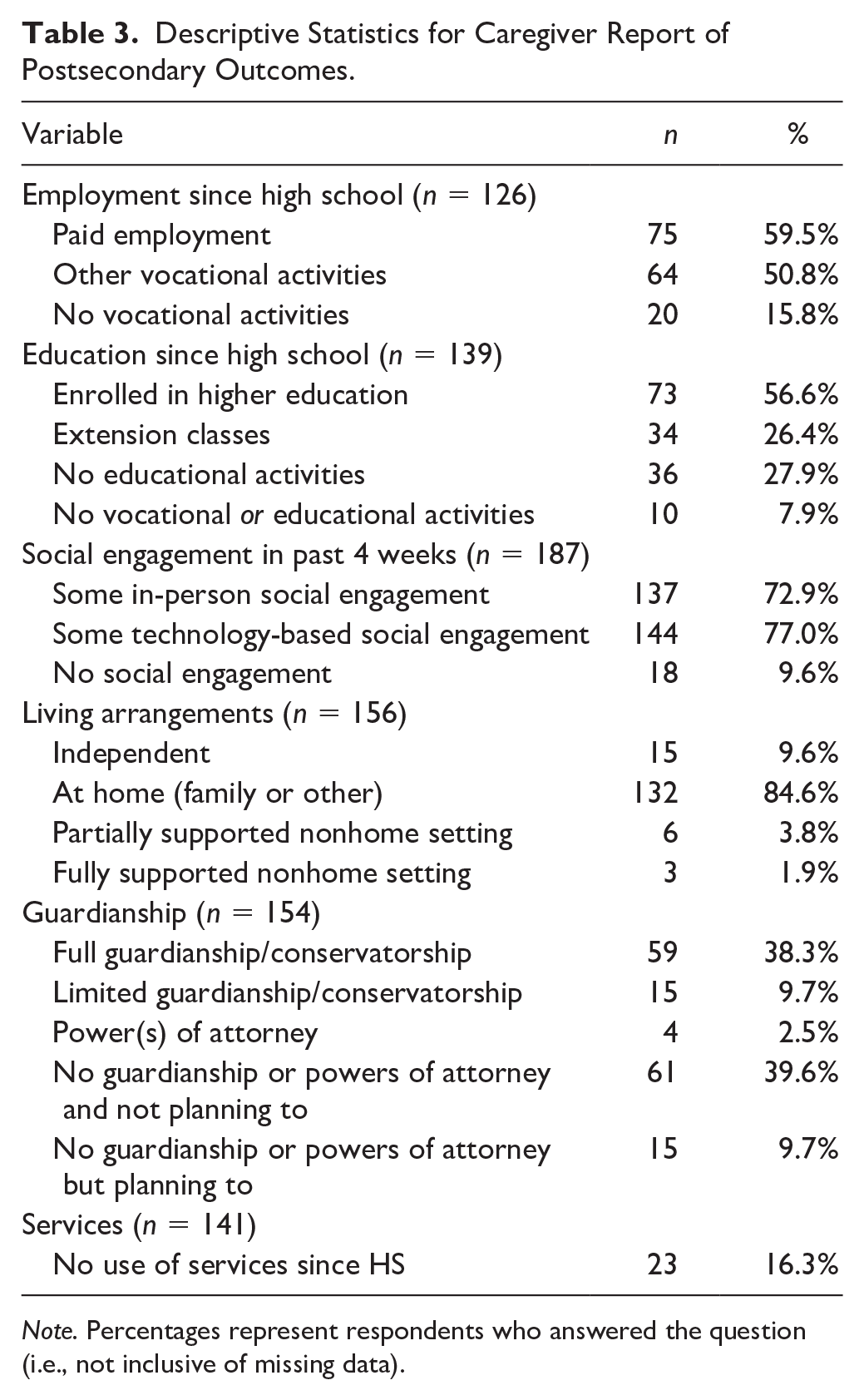
Note. Percentages represent respondents who answered the question (i.e., not inclusive of missing data).
Caregivers also reported on living arrangements, guardianship, and service use. Most young adults lived at home (85%) with 10% of young adults living independently. Almost 40% of the caregivers had full guardianship/conservatorship and 40% had no guardianship or powers of attorney. Approximately, 84% of the caregivers reported at least some use of services since high school. See Table 3 for additional data on living arrangements and guardianship.
Discussion
A substantial percentage of autistic young adults (60–66%, depending on self or caregiver informant) appear to have had some employment experiences after high school. These figures are higher than reported by the NAIR and other studies cited earlier. In this special section of the journal, Kraemer et al. (2025) provide an in-depth analysis of the employment outcome findings and their linkage to the broader literature. Similarly, around 60% of the autistic young adults and their caregivers in the study reported engagement in postsecondary educational experiences, which again is a higher percentage than the previously cited studies in the introduction. In their article, McIntyre et al. (2025) provide a more thorough description and analysis of this finding.
A report from the Pew Foundation indicated that for the general population, around 47% of young adults lived at home (Fry et al., 2020) during the pre-COVID years, which is when the current study took place. Also, a consistent finding from the previous literature (Anderson et al., 2014; NAIR; Roux et al., 2015) was that a high proportion of autistic young adults were living at home and the current study replicated that finding. However, this did not mean that young adults were socially isolated. Both caregivers and the young adults themselves reported that they were socially engaged with others outside the home during the weeks before the data were collected. Also, they reported engaging in a variety of social and community activities. In their article, Steinbrenner et al. (2025) analyze the types of social and community engagement. Taking this analysis further, Hall et al. (2025) combine the young autistic individuals’ reports of the variety of current and desired activity with the personal voices of the individuals about their lived experiences.
This introductory article and subsequent articles in this issue provide a snapshot in time. The autistic young adult participants in the CSESA study differed from previous generations of autistic young adults in that they were more likely to have been diagnosed earlier, participated in early intervention, experienced evidence-based practices, had a formal transition plan, and to some degree were prepared for transition out of school. Also, they entered a postschool world that differed in terms of a growing awareness of autism as a form of human neurodiversity, the ubiquitous presence and changing form of technology, and an intent, if not quite there yet, of supporting employment in the community rather than in specialized settings. The general finding from this study is that autistic young adults have more employment experiences than generally reported, have more social engagement than often reported in the past, and are participating in a variety of community activities. But as a society, we still have far to go in terms of implementing policies, services, and supports to ensure autistic young adults can access both an independent and interdependent life in the community.
Introduction to the Articles in the Special Issue
Each article in the special issue focuses on participants from the CSESA Follow-Up study, includes data that highlight the unique complexities of life after school, and features various measures, respondents, and analyses.
Postsecondary Educational Experiences of Autistic Young Adults: A Longitudinal Follow-Up to a School-Based Study
McIntyre et al. (2025) followed up with 129 autistic young adults and their caregivers to investigate postsecondary education experiences, which included degree bearing and nondegreed programs, as well as variables that predicted participation in postsecondary education. They also explored how these experiences aligned with the interests of the young adults and the support they accessed in these settings. Findings indicated that most young adults (~70%) had engaged in some postsecondary education, and that there were several key predictors of this engagement, including more time in general education in high school settings and effective classroom engagement skills. These promising findings shed light both on the current experiences of autistic young adults and their satisfaction and on the malleable factors related to high school programming and ongoing educational supports that may increase the likelihood of initial and sustained enrollment in postsecondary education.
Participation in Social and Leisure Activities After High School for Autistic Young Adults
In the study by J. R. Steinbrenner et al. (2025), the authors focused on exploring the social and community participation of 170 autistic young adults post high school, as well as their satisfaction with their participation and barriers that impacted participation. They also explored potential similarities and differences across participation by gender and high school programming. The young adults reported high levels of social interaction, high levels of satisfaction with the activities in which they participated (e.g., texting, calling friends). However, the majority also noted that they would like things to be different in their social life. Findings also indicated that there were differences in participation based on the programming students received in high school, with students on a modified diploma track reporting more friendships than those on a standard diploma track. The young adults also noted high levels of participation in social and community activities, such as playing games with friends and going to museums and parks, with long-term relationships and dating as the lowest endorsed items. Several barriers were noted by the young adults and their caregivers to participation and implications for practice, both supports and systems and changing beliefs of the nonautistic community, are highlighted.
Life After High School: The Employment Experiences of Autistic Young Adults
Kraemer et al. (2025) examine the employment landscape for 129 autistic young adults, providing details about employment rates, job fit, and job satisfaction. The authors also explore predictors of post high school employment, including participation in work-based learning experiences while in high school and time spent in general education courses. More than two-thirds (84%) of the sample were involved in some type of employment activity post high school, averaging 21 hours per week of work. A variety of employment fields and interests were represented, as well as several supports that were provided to increase employment likelihood and success. The article also highlights the experiences that can be provided in high school, such as job exploration, school-based work experiences, unpaid work experiences, and paid work experiences that increase the likelihood of paid employment after high school completion.
Adaptive Behavior, Self-Determination, and Health in Autistic Young Adults
Several other important transition-related domains are addressed in Tomaszewski et al.’s (2025) article—adaptive behavior, self-determination, and physical and mental health. The authors first describe the health status of the 200 young adult participants, noting that half the sample were described “in good health” by caregivers, though 60% had at least one physical or mental health condition. A variety of health behaviors were examined, including aspects of nutrition and physical activity, as well as an adaptive behavior profile highlighting several skills as strengths. The association between the three dimensions—adaptive behavior, self-determination, and health—was also explored and future directions in our understanding of these critical aspects of young adult life are discussed.
Interests, Plans, and Hopes for Life After High School From Autistic Young Adults’ Perspectives
Finally, Hall et al. (2025) use a mixed methods approach to explore current interests, future plans, and perceived barriers to fulfilling those future plans across various aspects of postsecondary life, centering the perspectives of the autistic young adults. The young adults (n = 150) shared in more depth their hopes for the future, many related to employment, independence, love, and family. While the majority noted that they were currently engaged in a variety of activities, most (~75%) also noted that they would like things to be different moving forward related to employment, education, and social connections. A number of barriers were identified by the young adults in accessing their desired future plans, which the authors summarize in a call to action for service providers, caregivers, policy makers, and the broader community.
Footnotes
Acknowledgements
Special thanks to the young adults and caregivers that contributed their voices to the CSESA project, and to the research team which includes the additional CSESA Key Investigators: Laura Hall, Bonnie Kraemer, Leann Smith Dawalt, and Kate Szidon.
Declaration of Conflicting Interests
The author(s) declared no potential conflicts of interest with respect to the research, authorship, and/or publication of this article.
Funding
The work reported here was supported by the Institute of Education Sciences, U.S. Department of Education through Grants R324A180091 and R324B160038 awarded to UNC-Chapel Hill. The opinions expressed represent those of the authors and do not represent views of the Institute or the U.S. Department of Education.
