




Abstract
This study explored teacher experience in leading Emergency Remote Teaching (ERT) in K-12 and conducting blended synchronous and asynchronous instruction during the COVID-19 pandemic. The study’s purpose was to understand the pedagogical, technological, and organizational challenges and benefits of computing-enhanced digital learning environments, and to explore teachers' pedagogical strategies. This study employed a qualitative research paradigm using nation-wide, online samples, which included 133 elementary and secondary school teachers from Hebrew-speaking and Arabic-speaking schools in Israel. Participants were asked to share their perspectives and experiences of ERT through open-ended questions in an online questionnaire. The bottom-up analysis of the data, based on the Grounded Theory approach, yielded 1,822 statements reflecting teachers' perceptions of pedagogical, technological, and organizational challenges (N = 580) and benefits of ERT (N = 827). The analysis also revealed a variety of pedagogical distance learning strategies used by teachers (N = 415). The study raises the need to turn a curse into a blessing by incorporating the experience of remote technology-enhanced learning and online activities into the school agenda on a regular basis. Thus, teachers and students would develop important digital competencies and be prepared for the next emergency event. The implications of our findings for educational theory and practice of educational computing are discussed.
Keywords
Introduction
Maintaining learning in a time of global disruption in order to support students' well-being has become a major challenge for the entire global education community (Huang et al., 2020). Due to emergencies and traumatic events, such as the COVID-19 pandemic, schools are unable to carry out their activities normally. At such times, education systems should provide Emergency Remote Teaching (ERT) as an alternative way of preserving the teaching-learning processes (Hodges et al., 2020; Laprairie & Hinson, 2006). ERT is conducted in synchronous or asynchronous environments using various devices with internet access.
Distance Learning (DL), which is the base of ERT, can enable education anywhere and anytime, and during an emergency event it can create a structured daily routine with meaningful and creative activities for students (Burde et al., 2017). As a result of the COVID-19 pandemic, Ministries of Education (MoE) around the world have been forced to conduct schooling for students in their homes. Online learning has ensured that, despite the lockdown and inability to attend schools (Kong, 2020), education can continue with a minimum disruption of the routine learning process until it is safe again to return to face-to-face learning (Xie & Yang, 2020).
However, effective online learning during emergency events is based on the relevant skills that teachers and students have developed during regular learning. Unfortunately, evidence provided by the OECD’s Programmed in International Student Assessment (PISA) shows that most of the education systems that participated in PISA in 2018 did not offer opportunities to teach online (Sälzer & Roczen, 2018). One of the basic barriers was a lack of adequate infrastructure, since online learning requires a computer with internet connection in order to complete learning assignments at home. Other parts of PISA explored how well education institutions were equipped with appropriate technology and to what extent teachers were prepared to engage their students in online learning (Sälzer & Roczen, 2018). Thus, not surprisingly, the COVID-19 pandemic has raised a variety of challenges for which the education systems were not prepared (Kong, 2020). The change to ERT was especially challenging because of traditional pedagogy based on teachers transferring information and students absorbing this content (Cheng, 2020).
Although distance learning has been studied in depth, research of distance learning in the K-12 setting is still very limited. (Harris-Packer & Ségol, 2015; Schwartz et al., 2020). The purpose of this study was to explore the challenges that teachers face in implementing online distance learning processes in times of crisis. This was in order to understand the solutions they have adopted, and the added value, if any, of such learning activities in order to suggest appropriate pedagogy for future emergencies and restricted mobility events.
Literature Review
As the COVID-19 pandemic has spread throughout the world, the question of how to continue schooling has become a major challenge in most global education systems (Kong, 2020). Moving instruction to Emergency Remote Teaching (ERT) is based on the assumption that distance learning can be an effective, supportive routine during the time of disruption. ERT is expected to occur immediately and to enable flexibility in teaching and learning anywhere and anytime (Cheng, 2020; Hodges et al., 2020). It therefore provides students with increased choices about where, when, and how learning will occur (Cheng, 2020). Accordingly, distance learning (DL) focuses on web-based teaching, learning, and instructional design in synchronous and asynchronous environments and raises a variety of new requirements related to technology operation, teaching skills, and management (Zhang, 2020).
DL can be described by four characteristics (Simonson et al., 2011). First, DL is not self-paced study and is obtained from the agencies that conduct traditional face-to-face education. Second, geographic separation is inherent in DL, and time might also separate students and teachers. Third, interactive communication connects the learning groups with each other and with the teacher. The connection of learners, teachers, and instructional resources becomes less dependent on physical proximity as digital platforms and communication tools become available, and this contributes to the rapid expansion of DL. Finally, DL, like any education process, establishes a learning triangle composed of students, a teacher, and instructional resources.
Opportunities and Challenges of Distance Learning in K-12
Education leaders in K-12 embrace online distance
However, the need to move rapidly to an online mode raises various
Based on COVID-19 experience in China, Huang et al. (2020) presented suggestions of organizing ERT to
Consistent with Chinese experience, in order to assist school organization during the COVID-19 pandemic, the Israeli Ministry of Education (MoE, 2020) published a set of instructions for all schools and for all age groups. On the national level, ERT was promoted by recording and broadcasting training sessions for teachers and lessons for students. Further, high-quality learning activities in various learning topics were uploaded to a national pool of activities for the benefit of teachers across the country. At the teacher level, teachers were required to conduct ERT from their homes, prepare learning activities, and send assignments to their students through a Content Learning Management System platform (CLMS). In addition, school staff were guided to provide real-time communication in the form of whole class Zoom (https://zoom.us/) sessions, to maintain continuous contact and social interactions, and to provide emotional support. At the student level, ERT was conducted synchronously and asynchronously at home. In most cases, it was recommended that students be assisted by parents or other family members in technical issues and to complete learning tasks. Figure 1 describes the set of instructions for organization regarding ERT, as planned and published by the MoE.
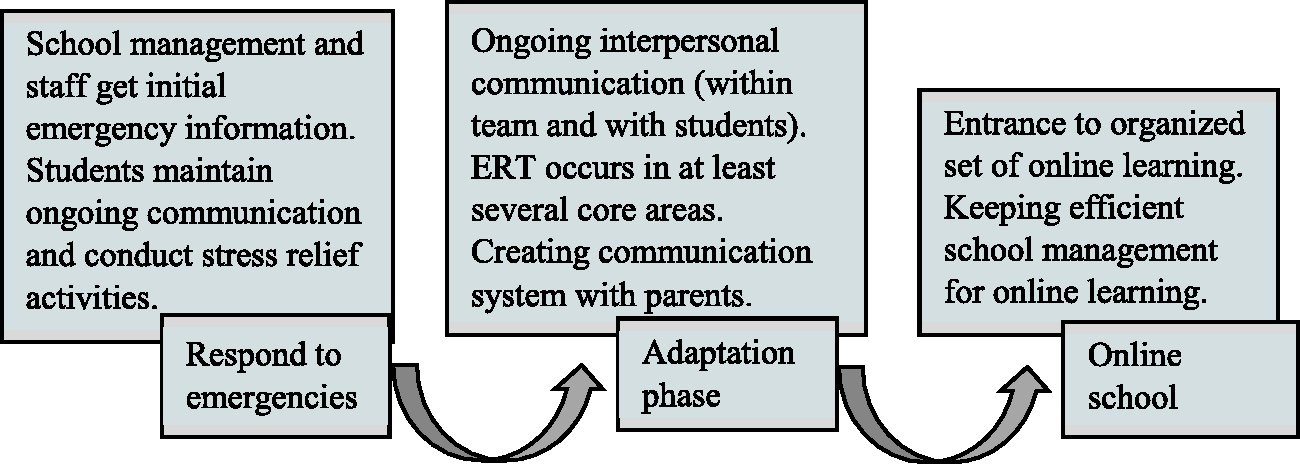
Instructions to Assist Organizing Online Learning During Emergency Time.
Synchronous, Asynchronous, and Blended Distance Learning
According to this model, the guidelines (Israeli MoE, 2020) suggest applying DL that combines synchronous and asynchronous modes.
The combination of synchronous and asynchronous online learning -
Research Goals and Questions
This study explored the different aspects of challenges and benefits in conducting online distance learning processes in times of crisis, and the pedagogical strategies teachers used during ERT. Accordingly, the research questions were:
What are the main challenges and benefits of emergency remote teaching during COVID-19 in pedagogical, technological, and organizational aspects? What are the pedagogical strategies teachers employ for ERT?
Method
To address the research questions, we employed qualitative research methods that enabled us to understand teachers' perspectives and their actual pedagogical strategies in ERT during the COVID-19 pandemic.
Participants
The online sample consisted of 133 educators from all the districts of the Israeli MoE. The educators were 54 (40.5%) homeroom teachers, 44 (33.1%) subject-matter teachers, 22 (16.5%) school or regional ICT coordinators, and the rest were school principals or vice principals. Among the participants, 69 (51.9%) worked in elementary schools (grades 1–6) and the rest in secondary schools (grades 7–12). The vast majority of the participants were from Hebrew-speaking schools, while 8.3% were from Arabic-speaking schools. Most of the sample (98, 73.7%) consisted of educators with seniority of more than 10 years, while 20 (15%) had seniority of 6–10 years and 15 (11.3%) up to 5 years. Out of the participants, 44 (43.2%) also had experience in teacher training in addition to teaching.
Instruments and Procedure
The data was collected in May 2020 after the first few months of the COVID-19 pandemic and following ERT experience in the entire education system. The study received approval from the Institutional Ethics Committee. Teachers were asked to share their perspectives and pedagogical practices of ERT through an online questionnaire distributed through teacher groups on the Facebook social network. The questionnaire included a multiple-choice question in which participants were asked to report whether their ERT was performed mainly in a synchronous, asynchronous, or a blended mode combining both. Other questions were open-ended in order to gain an in depth understanding of the teachers' perspectives and practices regarding this experience. Examples of the questions were as follows: Please describe your online teaching experience during COVID-19. How was the school organized to assist in conducting online distance learning? Whether and in what way was the school prepared in advance for such instruction? What immediate staff training was offered, if any? What were the key challenges you faced, and how did you deal with them? Please describe in detail two learning activities that you conducted with your students during COVID-19. Describe which students performed these activities and what feedback, if any, you received from their parents about your teaching and/or the students' learning experience. What has changed, if so, in your attitude towards technological and/or pedagogical aspects of online distance learning as a result of ERT during COVID-19?
A thematic analysis of the participants' answers was conducted on the open-ended questions. The coding was not exclusive; namely, each statement could be attributed to several categories. To ensure inter-rater reliability, 25% of the statements were analyzed by a second rater and the agreement level was high, Cohen's kappa = .86.
This analysis employed a qualitative methodology in accordance with the principles of the Grounded Theory approach (Corbin & Strauss, 2014), which extracted data from the participants' narratives. This methodology drew on the participants' descriptions of their experiences and their interpretation of these experiences, which could enable researchers to understand phenomena in the context in which they occurred. In grounded theory analysis coding is performed on three levels (Berthelsen et al., 2018; Corbin & Strauss, 2014): 1) Initial and open coding in the inductive phase. The bottom-up analysis of the answers yielded 1,822 statements which were categorized using a thematic analysis technique. These statements were coded and grouped into three major categories: teachers' challenges (N = 580), teachers' benefits (N = 827), and ERT strategies used by teachers (N = 415). 2) The more focused and selective coding according to concurrent concepts and categories in the deductive phase. This analysis, among others, grouped several types of teachers' professional challenges – pedagogical, technological, and organizational, as well as teachers' personal challenges as a result of ERT. 3) Theoretical coding to structure the theory to a progressive level of abstraction. This analysis enabled us to structure pedagogical strategies found in this study into a visual representation of teaching strategies and characteristics of ERT (Figure 2).
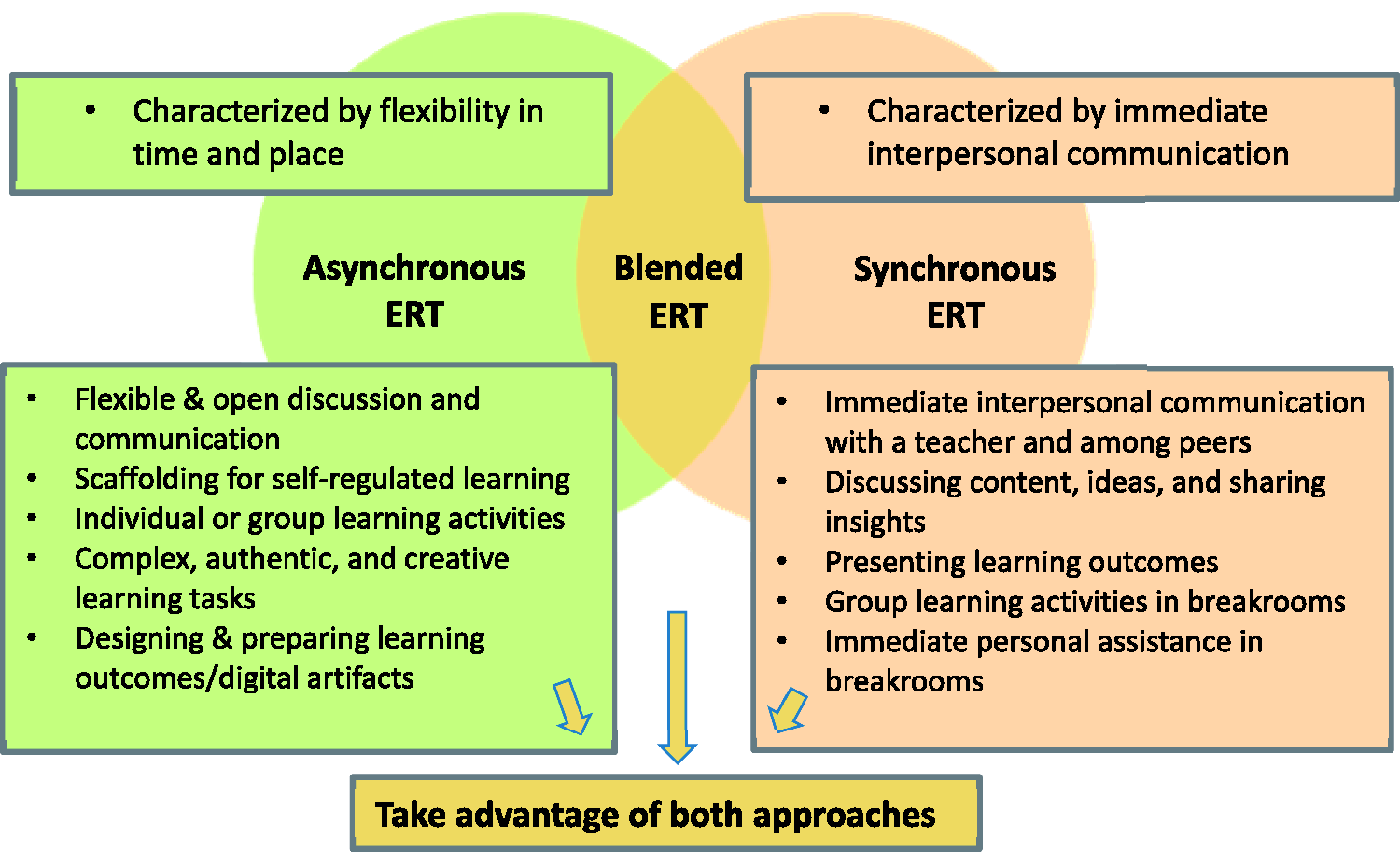
Teaching Strategies and Characteristics of Emergency Remote Teaching.
Results
Challenges and Benefits of ERT
Tables 1 and 2 describe the challenges and benefits of teachers and students in the context of distance learning during the COVID-19 event. Note that the challenges of students in Table 1 present statements based on teachers' perspectives.
Challenges Teachers and Students Faced During ERT (N = 580).
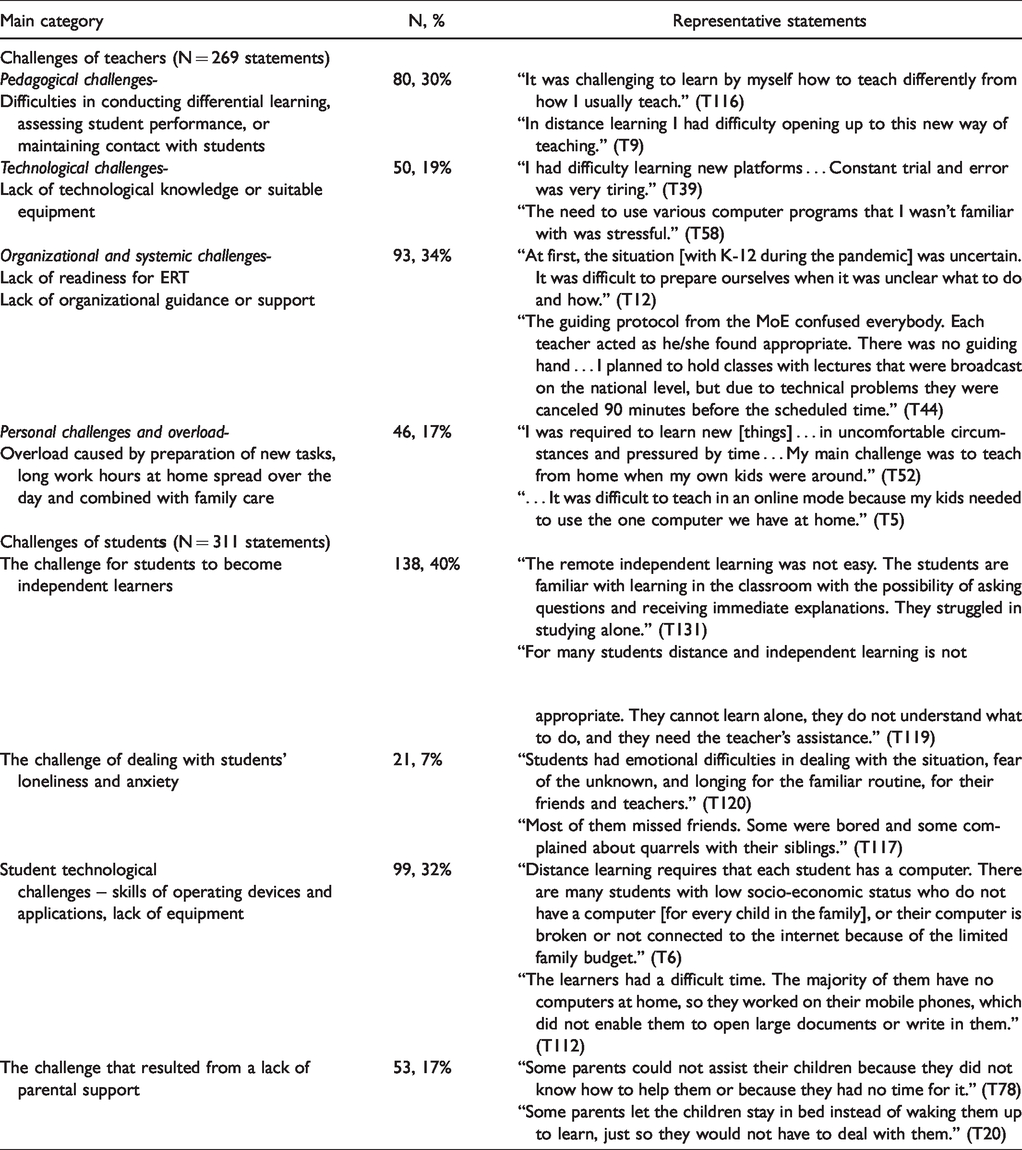
Benefits of Teachers During Emergency Remote Teaching (N = 827).
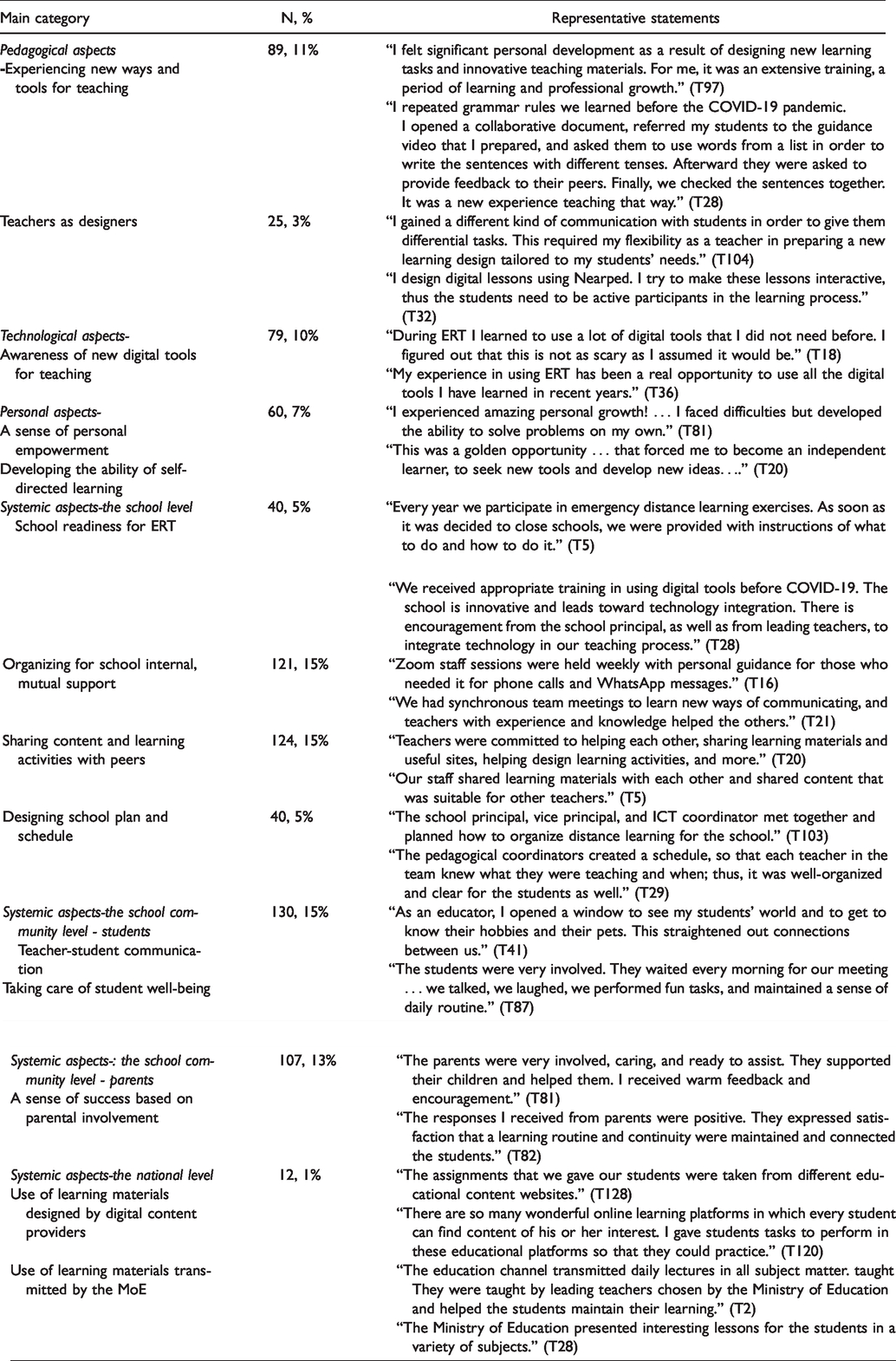
As described in the table 1, participants presented various types of challenges which hampered distance learning. The pedagogical challenges reported by teachers were based on the need to adapt familiar teaching methods to the new medium, to the level of different students, and to the lack of face-to-face contact with them. In addition, teachers reported difficulties with the organizational aspect of establishing distance learning. These included a negative attitude and lack of support from the MoE, and/or difficulties with the school's internal organization, which needed to react quickly and differently from usual school functioning. Each year there is a national exercise which aims to prepare schools for functioning in an emergency situation. However, not all schools were ready for such an immediate change and therefore found it difficult to adjust to ERT.
There were also technological challenges that emerged from the need to start using ERT immediately and not always with sufficient training or various types of digital tools. Interestingly, the personal challenges that resulted from the necessity of teaching from home, rather than in school, were the lowest. Other challenges related to teachers’ emphasis on the difficulties of students to perform as independent learners, to develop self-regulated skills, as well as to collaborate and develop a study routine. They described difficulty in keeping constant contact with students who woke up late, did not join the class Zoom meetings, or disappeared from the screen. Therefore, interpersonal communication with them was lacking. Likewise, the teachers addressed challenges related to lack of support and assistance from parents. Interestingly, students' emotional distress was mentioned less as a relevant challenge to this period.
This table shows that, despite the challenges, most teachers held positive perceptions about their experience in distance learning and teaching during the COVID-19 emergency. Teachers perceived the experience as an opportunity for personal and professional empowerment that was forced upon them by the circumstances. Many of them reported a sense of success in dealing with this task. The participants reported that they acquired new teaching methods and were introduced to a range of innovative technological tools. They also experienced a sense of motivation, cooperation with students, and appreciation and support from the parents. According to the findings, most schools succeeded in getting organized quickly and moved immediately to ERT. An important benefit at the school level occurred when teaching staff were required to support each other, design and share learning materials and tasks, and divide responsibilities within their teams. Moreover, they were able to provide mutual support and create a suitable schedule for the ERT curriculum.
Pedagogical Strategies for ERT
Experience in ERT required teachers to implement different, creative, and diverse teaching strategies. The findings revealed a variety of teaching, learning, and assessment strategies used by teachers (N = 335). Most of the teachers claimed that they preferred to use asynchronous channels (48, 36%) or blended learning (46, 35%), while fewer teachers reported that they employed mainly synchronous ERT (39, 29%). Table 3 introduces the range of strategies used by participants during their distance learning experience.
Mapping Teaching Strategies Through Emergency Remote Teaching.
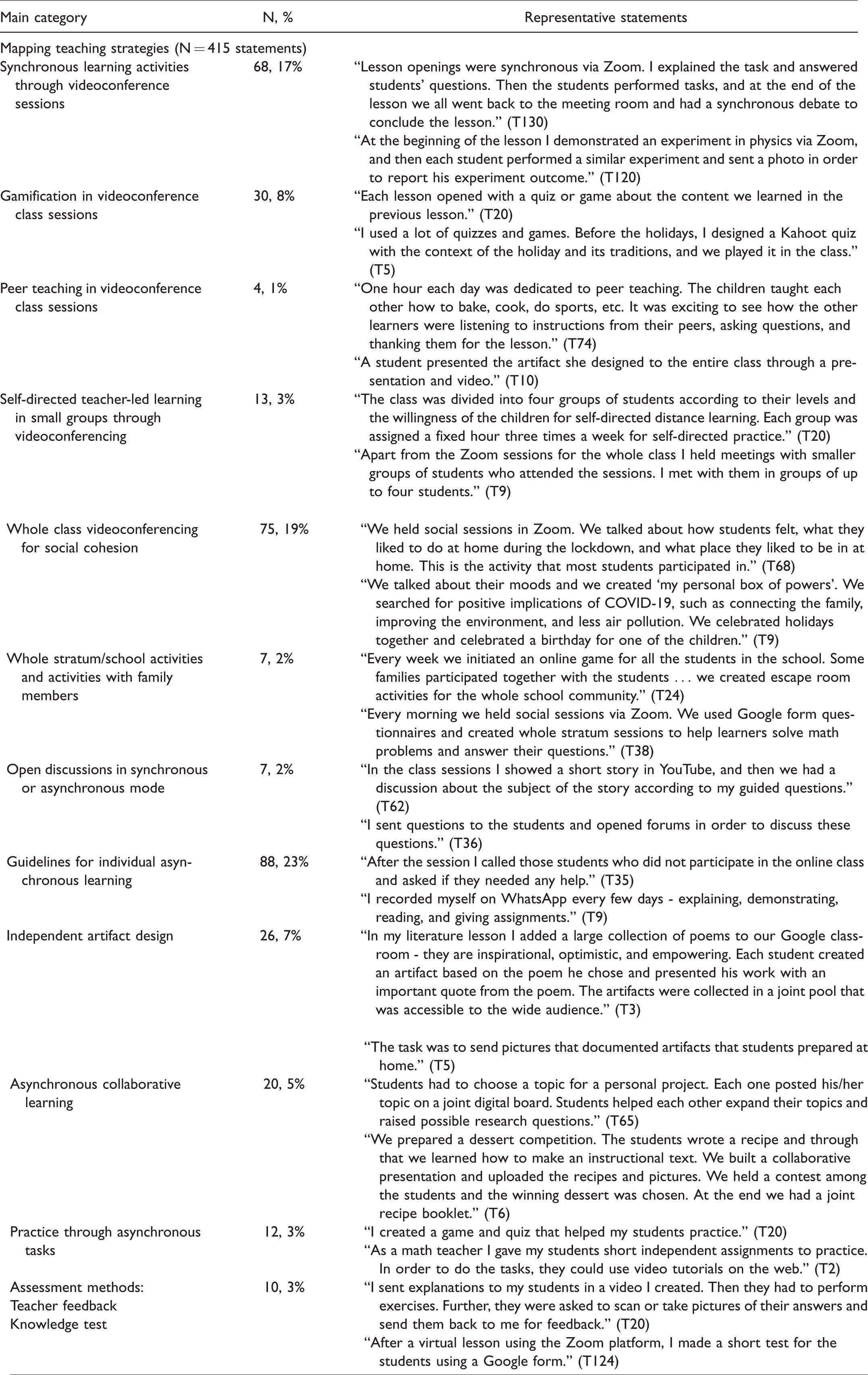
The table above shows that teachers integrated synchronous, asynchronous, and blended learning. This combination led to the implementation of a wide range of teaching and learning strategies. For example, many teachers used whole class teaching in their distance learning sessions. Some of these sessions were used to teach the usual subject matter, but many of the sessions aimed to maintain personal and social connections with the teacher and among peers, as well as to reduce the anxiety and stress of students. It was surprising and promising to find that teachers conducted individual and small group learning sessions in order to maintain teacher-student relationships and to assist students as needed. Joint school activities were also reported, some of which included family members. Other teachers chose an asynchronous approach and gave their students' guidelines for self-assignment tasks . Such tasks required students to function as independent learners and to manage their learning differently from what they were accustomed. Moreover, teaching strategies, as shown in Table 3, showed wide use of collaborative learning practices by students at home as well as during online sessions. In addition, part of the statements referred to how teachers monitored and assessed student performance on assigned tasks. Finally, we were surprised to find that very few teachers perceived the content broadcasted by the MoE as a useful resource in their online teaching.
Discussion
As the COVID-19 pandemic has spread, online distance learning has become the main teaching method used worldwide (Huang et al., 2020; Kong, 2020; Schwartz et al., 2020). First, this section discusses the main pedagogical, technological, and organizational challenges and benefits of emergency remote teaching during COVID-19. Following that, we address pedagogical strategies that teachers employed for ERT.
Challenges of Teachers and Students in Emergency Remote Teaching
The
Interestingly, students' emotional distress was rarely mentioned as a challenge during this period. It is possible that a variety of social activities conducted by the teachers helped reduce anxiety, and therefore a feeling of distress was not prevalent in the data. In a similar vein, previous studies on education in times of crisis (Burde et al., 2017) showed that social activities contributed to students' sense of security. Providing children in ERT situations with structured, meaningful, and creative activities in a school setting or in informal learning spaces, improves their emotional well-being and has positive implications on their behavior.
At the school level, teachers presented challenges that needed to be resolved, such as adapting a school schedule for online learning sessions. A lack of planning created overlapping synchronous lessons targeted for the same students and an overload of assignments. Accordingly, schools had to organize a systemic solution, for example, through micro-learning matrix (see: Shamir-Inbal & Blau, 2020), in order to enable students of all age levels to learn different subjects at diverse hours throughout the day and to conduct various synchronous and asynchronous activities.
Benefits of Teachers and Students in Emergency Remote Teaching
Although distance learning was perceived as a challenging task for teachers and students, most of the teachers who participated in this study embraced ERT as an empowering event and an opportunity for personal and professional growth. Moreover, for many educational practitioners and researchers, the COVID-19 crisis has been considered a unique opportunity that can support both students and teachers in bridging the gap left by conventional (face-to-face) education and promote adoption of more appropriate pedagogical methods (Vlachopoulos, 2020).
This experience of pedagogical design contributed to teachers'
As the teachers adapted their role to ERT, they assisted
An additional factor on the systemic level is
Pedagogical Strategies for Emergency Remote Teaching
Effective use of technology requires adapting pedagogical methods to innovative opportunities (Xie & Yang, 2020; Yen, 2020). The findings revealed a variety of teaching strategies used during ERT. These strategies were used in synchronous sessions, asynchronous tasks, and in blended learning which combined these two teaching-learning modes.
During
Despite its benefits, synchronous learning is not sufficient to create active learning and learner involvement over time (Blau & Shamir-Inbal, 2017b; Ouyang et al., 2020; Weiser et al., 2018). The advantage of
It is important to note that 46% of the teachers participating in this study reported that they conducted blended learning, combining synchronous and asynchronous communication with their students. This combination profits from advantages of each learning mode (Blau & Shamir-Inbal, 2017b), can empower instruction, and is an important current challenge that educational systems need to face (Romero-Hall & Vicentini, 2017). In order to promote effective blended ERT, suitable professional development (TPD) courses which combine synchronous and asynchronous activities are needed. Such courses enable in-service teachers to experience blended learning as trainees and afterwards to integrate it in their teaching (Desjardins & Bullock, 2019; Hadad, Shamir-Inbal, & Blau, 2020; Ndongfack, 2015; Shamir-Inbal & Blau, 2020). Figure 2 summarizes synchronous and asynchronous characteristics and pedagogical strategies found in this study.
As Figure 2 shows
Unfortunately, this study shows that only a small number of teachers addressed
Conclusions, Implications, and Future Directions
This study describes teacher experience in leading ERT in K-12 using synchronous, asynchronous, and blended instruction. Although this study was conducted in a specific Israeli context, the exploration of benefits and challenges of ERT and pedagogical strategies during times of crisis such as the COVID-19 pandemic are relevant to the global research and education communities. The research presented valuable data for instructors engaged in ERT and can assist in designing suitable blended learning. Based on the study findings regarding pedagogical strategies summarized in Figure 2, we recommend combining both synchronous and asynchronous learning in ERT. Synchronous learning is characterized by immediate assistance and interpersonal communication with a teacher and peers (Weiser et al., 2018). Asynchronous learning is characterized by flexibility in time and space that enables preparing complex, authentic, and creative learning outcomes (Shamir-Inbal & Blau, 2021).
Further, this study raises the need to continue experiencing distance learning on a regular basis as part of the school agenda. Incorporating blended learning in school practices on a regular basis may strengthen both pedagogical strategies of digital learning and the self-regulated learning and teamwork skills of students (Blau & Shamir-Inbal, 2018; Kong, 2020). These skills were found to need improvement in the current study. In this way we will be able to convert a lemon into lemonade, so that ERT becomes an opportunity to be a blessing rather than a curse.
The main limitation of this study is its self-report methodology. Future research should include observations of teacher behavior in ERT and an analysis of online activities conducted during this period. In addition, this study was conducted after a two-month period of ERT. Future directions need to include longitudinal studies that explore the development of pedagogical strategies during ERT. Moreover, it is important to understand the implication of ERT experience on post-COVID-19 technology-enhanced, face-to-face, and blended teaching and learning combining online and offline interactions. Finally, future research needs to search for effective assessment techniques for online learning.
Footnotes
Declaration of Conflicting Interests
The authors declared no potential conflicts of interest with respect to the research, authorship, and/or publication of this article.
Funding
The authors disclosed receipt of the following financial support for the research, authorship, and/or publication of this article: This study was supported by the Research Authority Foundation, The Open University of Israel.
