



Abstract
Schools transitioned them from face-to-face to distance education to contain the COVID-19 pandemic. Principals faced extraordinary crises. Transitional management processes to distance education and outcomes are viewed from the perspective of 15 school principals of K-12 schools, selected through convenience sampling, within a qualitative research and single study design. Content analysis was used to analyze principals’ responses. The themes and patterns that emerged were matched to the research aims, and a data-driven approach was used to interpret the results. The researchers generated and coded themes, which revealed that K-12 school principals managed the transition process through the effective use of technology, but experienced stress under intense pressure. These findings suggest significant changes in management processes by principals during the pandemic, despite additional stress from parent indifference, teachers’ limited technological knowledge, unpreparedness to manage the process at schools. Infrastructure and practice were key variables for effective transition.
Plain language summary
The COVID-19 pandemic has had widespread impacts on various aspects of life worldwide, including education, health, and the economy. Schools have been significantly affected, with many countries closing their doors and transitioning from face to face to distance learning to prevent the spread of the virus. Among those greatly affected by these changes are school principals. This study explores the experiences of school principals in managing this transition. The perspectives of 15 principals from K-12 schools were sought to understand their challenges and strategies during this time. The study reveals that while principals direct this new landscape through effective technology use and planning, they also cope with stress and pressure. The findings highlight significant shifts and adaptations in the management practices of K-12 school principals during the pandemic. Moreover, principals have encountered various challenges in school management (parental disengagement, teachers’ limited technology proficiency, and feelings of unpreparedness to manage these changes).
Introduction
Background
Coronavirus disease (COVID-19) was first detected in late 2019 and has since become a global issue (Bradbury-Jones & Isham, 2020). As of March 7th, 2022, the World Health Organization (2020) reported extremely high levels of confirmed cases and deaths. The disease has been linked to SARS-CoV-2, which was initially detected in Wuhan (Cucinotta & Vanelli, 2020; Xia et al., 2020). This has affected more than 90% of students worldwide. In total, 192 countries announced school closures to combat the pandemic (UNESCO, 2020). This transformed the COVID-19 pandemic into a major educational crisis (UNESCO, 2020) in which many countries, such as China, the USA, Italy, Spain, France, Korea, Germany, and Turkey, had to suspend face-to-face education. Therefore, the uninterrupted continuation of education became one of the highest priorities for all countries during the pandemic, forcing countries to innovate and produce solutions to keep their educational systems afloat and provide uninterrupted education (Gilani, 2020). This involved measures such as closing schools nationwide and utilizing online applications (Yamamoto, 2020). Although the UK government initially adopted the concept of social immunity at the beginning of the pandemic, it later shifted to distance education as the pandemic spread across the country. Several universities in the US, including Ohio State, Harvard, Duke, Columbia, and Tufts, suspended face-to-face lectures (Yamamoto, 2020). In response to COVID-19, the Ministry of National Education (MoNE) and the Council of Higher Education (YÖK) in Turkey quickly implemented measures to mitigate the pandemic’s impact on the teaching and learning. On March 16, 2020, MoNE announced the suspension of face-to-face education in primary and secondary education institutions.
Subsequently, schools in Turkey were closed, and open and distance education were started at the primary and secondary education levels. The Turkish Radio and Television Corporation (TRT) provided lessons through three TV Channels and Educational Information Network (EBA; MoNE, 2020). As the pandemic progressed, it was decided on April 29, 2020 to extend the holiday period for schools until May 31, 2020 (Anadolu Agency, 2020). Thus, the education of approximately 18 million students at different levels from primary to secondary education continued at home (Özer, 2020). The Ministry of National Education (MoNE) announced that it would use distance education methods to meet students’ educational needs during the pandemic.
The COVID-19 pandemic compelled the Turkish education system to swiftly shift from a traditional face-to-face education model to a digital environment. This abrupt structural change required school principals to undertake new duties and responsibilities. These tasks encompassed areas such as digital literacy, Web 2.0, virtual learning, and online learning. School principals made efforts to identify and address students’ needs. In addition, they serve as essential workers, maintaining constant communication with parents and had to raise student morale (Stone-Johnson & Weiner, 2020).
The pandemic undoubtedly prompted reflection on the authentic role of school principals and the optimal utilization of their expertise and autonomy in future educational landscapes. In unpredictable crisis situations, such as the COVID-19 pandemic, it is evident that principals require effective management skills, including decision-making, planning, organizing, communicating, influencing, coordinating, and evaluating. These skills become more critical and indispensable than ever before. As a result, school principals had to quickly adapt to this new era to change organizational processes to adapt to the conditions brought about by the pandemic and to become automated and digitalized. Therefore, school principals must adeptly navigate this paradigm shift. This study attempts to make a comparative analysis between the pre-pandemic period of face-to-face education led by K-12 school principals and the subsequent transition to distance education necessitated by COVID-19, focusing on their management processes (decision-making, planning, organization, communication, influencing, coordination, and evaluation). To this end, we addressed the following questions: According to K-12 school principals,
What happened during the transition from face-to-face education to distance education due to the COVID-19 pandemic?
How were the management processes (decision-making, planning, organizing, communication, influencing, coordination, and evaluation) carried out during the face-to-face and distance education periods of the COVID-19 pandemic?
What challenges did the school management face in the distance education period during the COVID-19 pandemic?
What measures should be taken to make the COVID-19 pandemic distance education process functional?
Management Process
Management applies in organizational, social, and political settings. While the term refers to people in charge, it also refers to the practice of managing in a functional sense.
Management involves the strategic use of human, financial, physical, and informational resources to fulfill the mission, strategies, goals, and objectives of an organization (Schermerhorn & Bachrach, 2023). Managers have the responsibility of efficiently structuring and coordinating these resources to effectively achieve the organization’s objectives (Daft & Armstrong, 2022). Government agencies, nonprofit organizations, and businesses are responsible for managing several processes. An organization can outperform others by offering similar services if it has better processes and executes them more effectively. This may be possible through the different strategies managers use to achieve their corporate organizational goals. Therefore, all administrators are required to specify their management processes, regardless of the type and hierarchical structure of the institution (Ugwulashi, 2012).
Scholars have offered different classifications and descriptions of management processes. Gulick (1937) used the term POSDCORB (planning, organizing, staffing, directing, coordinating, reporting, and budgeting) to describe the basic principles of public administration. This classification has evolved over time to represent a snapshot of the practical applications and principles of public administration (Chalekian, 2013). Gregg (1957) classified the processes as decision-making, planning, organizing, communication, coordination, influencing, and evaluation. This classification implies that management processes are complementary, intertwined, and interdependent functions (Hicks, 1977). This study examines management processes based on Gregg’s classification, which emphasizes the significance and interrelationships of management processes.
Decision-making, often regarded as the core of management (Simon, 1965), entails a cognitive process wherein various options are generated and an appropriate action plan is formulated by selecting one among these options. These processes may exhibit rational or less rational characteristics and can be affected by explicit knowledge, tacit knowledge, or personal belief systems (Hallo et al., 2020). These decisions can be classified as individual or group decisions. Individual decisions refer to those made by a single manager or decision-maker based on their own knowledge, experience, and evaluation. Individual decisions may be quick and based on expertise (Robbins & Decenzo, 2005). On the contrary, group decisions aim to reach a collective solution by incorporating the preferences or opinions of multiple decision-makers (Zhang et al., 2020). In group decision-making, a group of people come together to reach a common decision by sharing different perspectives, experiences, and knowledge. While making group decisions, leaders need to manage the decision-making process effectively, taking into account factors such as the prolongation of the decision process, the harmonization of different views, group dynamics and leadership (Lunenburg & Ornstein, 2013). Accurate information, analytical thinking, evaluation, and communication skills are paramount in the decision-making process.
Planning refers to setting performance objectives and determining the necessary steps to accomplish them. In this process, managers define desired outcomes and formulate action plans needed to achieve them (Schermerhorn & Bachrach, 2023). Organizing is designing and grouping tasks into manageable units and establishing authority structures among work teams (Griffin et al., 2020). Essentially, it is the process of assigning tasks, allocating resources, and coordinating the activities of individuals and groups to fulfill plans. This process occurs when managers define jobs and roles, assigning them to people, and providing support such as technology, time, and other resources (Schermerhorn & Bachrach, 2023).
Organizations generally explain their attitudes through communication. This occurs within a community of people who both can and seek to engage in dialogue with one another. Various elements, such as plans, changes in programs, and strategies, encompass the information that needs dissemination (Clegg et al., 2016). The aim of the communication process is to ensure that the strategy, desired future state, vision, and scope of the change are transferred to all pertinent stakeholders. Effective communication commences with the analysis of the communication needs of all stakeholders and progresses with the development of the communication strategy and detailed plan (Errida & Lotfi, 2021). Communication within the organization underpins the continuity of operation by facilitating the exchange of views, ideas, and information among all members to accomplish business goals (Nurhayati, 2020). Thus, communication increases stakeholders’ awareness and satisfaction regarding leaders’ actions and decisions, thereby potentially reducing tension and enhancing interpersonal relationships (Men & Yue, 2019).
Coordination means that activities within and across departments work in concert with each other to advance organizational objectives (Tompkins, 2023). In this regard, one of the main duties of managers in helping the organization achieve its goals is coordinating the activities of the organization’s employees, which involves consciously and systematically aligning or adjusting actions to accomplish common objectives. Control consists of actions taken to assess job performance, compare achieved results with predetermined goals, and correct performance as needed (Schermerhorn & Bachrach, 2023). This process involves monitoring the actions of the organization and its employees and correcting them when necessary and directing them toward their goals (Griffin et al., 2020). One of the management processes, influencing, plays a critical role in enhancing the effectiveness and efficiency of organizations, hence serving as an essential factor in their success (Koçak & Memişoğlu, 2023). Managers employ various strategies to influence their subordinates toward achieving the determined goals of the organizations (Katlav, 2016). Conversely, evaluation is an independent and systematic examination of the extent, manner, and reasons for achieving goals or objectives (Twersky & Lindblom, 2012). This process enables evaluating all possible alternatives in terms of predetermined decision criteria, describing the expected benefits of each alternative, evaluating its expected costs, and estimating the uncertainties and risks associated with the alternatives. In most cases, the decision maker may encounter uncertainty during the evaluation process as they do not have complete information about the consequences of all alternatives (Griffin et al., 2024).
School Principals During the COVID-19 Pandemic
School principals serve as appointed administrative representatives responsible for managing and coordinating organizations, institutions, or educational units with a specific mission (Bredeson, 2000; Skaalvik, 2020). They hold various responsibilities and require various skills, such as the following: creating mechanisms to reveal the potential of effective teaching and learning (Ibara, 2014; Smith et al., 2013); initiating the education process, inspiring students, taking initiative, and providing direction to build a bridge between society and schools (Levin & Datnow, 2012); providing support to students and teachers through guidance and counseling (Barnett & O’Mahony, 2012); ensuring quality education throughout and within the school, prioritizing student success and promoting effective teaching practices (Stronge & Xu, 2021); interacting effectively with teachers; cultivating a productive school climate; facilitating collaboration and professional learning communities; and possessing management skills and expertise to strategically oversee staff and resources (Grissom et al., 2021). These skills become even more significant owing to the rapid changes in education during the COVID-19 pandemic.
The COVID-19 pandemic accelerated the transition from traditional face-to-face education to online platforms (Taun et al., 2022). This transformation has changed the role of school principals (Constantia et al., 2023; Demir & Koçak, 2021; Murphy & Devine, 2023) and has required them to re-evaluate their management approach and strategies. In this process, many school principals strived to develop skills such as rapid decision-making, and adaptability to ever-changing circumstances and the increasing complexity of communities (Netolicky, 2020). However, communication challenges emerged between school principals and teachers during this period (Constantia et al., 2023; Demir & Koçak, 2021) and the interaction process between school principals and teachers became limited (Harris & Jones, 2020). Moreover, school principals were identified to encounter difficulties in coordinating distance education between teachers and students (Uy et al., 2023). Studies reveal that school principals were under psychological pressure and faced administrative difficulties in managing the process during the COVID-19 pandemic period (Harris & Jones, 2020; Murphy & Devine, 2023; Thornton, 2021). Consequently, the pandemic led to unique challenges to school principals. It is evident that they need to use decision making, planning, organizing, communicating, influencing, coordinating, and evaluating more effectively to address these challenges. This study aims to elucidate the radical changes caused by the COVID-19 pandemic in the field of education, the new managerial challenges school principals face, and thus identify management challenges and contribute to developing more effective strategies in educational management.
Materials and Methods
This study employed a qualitative case study design to investigate and reveal K-12 school principals’ perspectives on management processes during the COVID-19 pandemic distance education process. The results were observed in a real context, which is the determinant of cause and effect. Context determines the interactions between situations, human relations, and other factors (Cohen et al., 2018).
Using a qualitative research design, this study deployed a holistic single-case pattern to reveal the perceptions of K-12 school principals regarding the period of face-to-face education and the COVID-19 pandemic in terms of their management processes. A holistic single-case study explores causal relationships and presents data to explain how events occurred or how they were experienced by the participants (Yin, 2014). Thus, it may allow us to identify the competencies of school principals in management processes and explore the criteria they use in decision-making processes.
Participants
The participants consisted of 15 K-12 school principals chosen using convenience sampling, a purposeful sampling method. Table 1 presents the demographic information of the participants. Due to the limitations imposed by the Covid-19 pandemic, face-to-face interviews were not feasible with the participants. Therefore, the study was conducted with volunteers. The predominance of male participants does not result from a deliberate selection bias and does not indicate any specific gender-related stance or bias.
Demographic Information of the Participants.
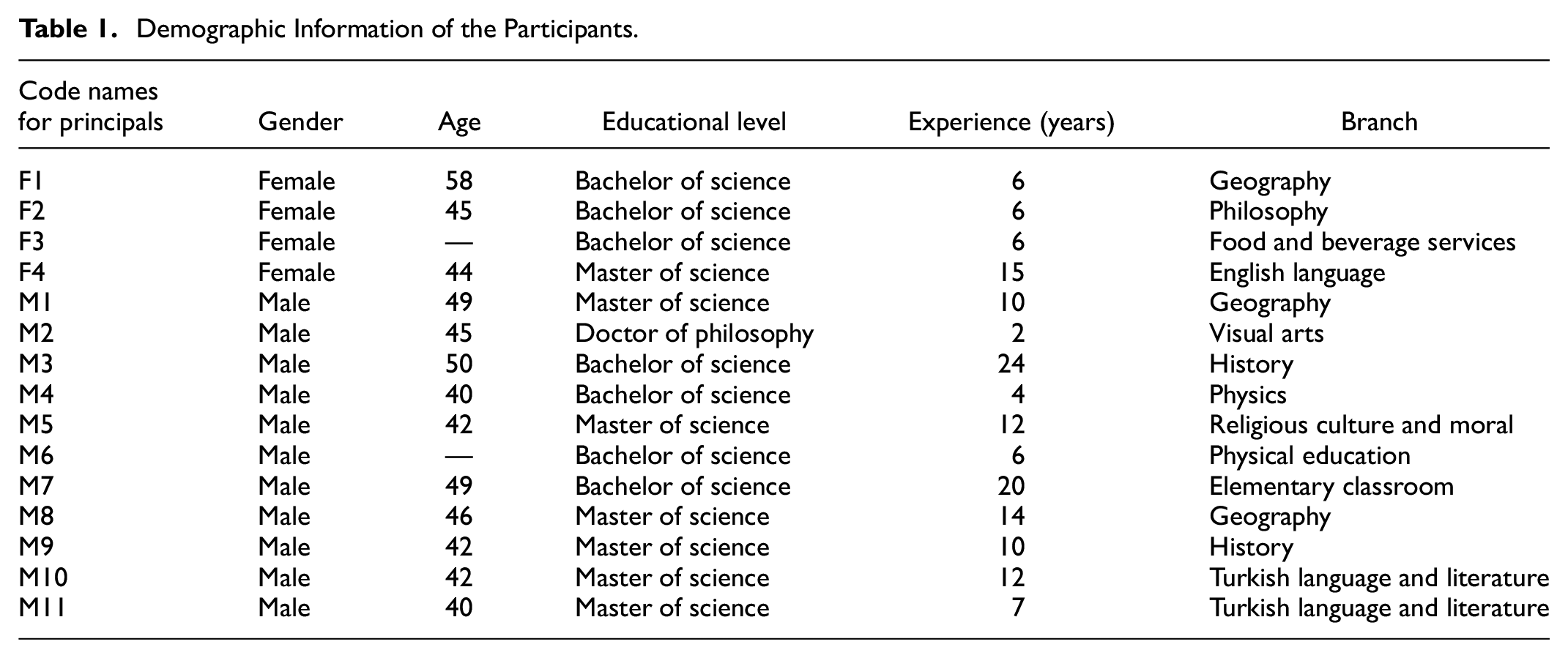
Table 1 shows that 11 participants are males and four females. The mean age of the participants is 46 years, with an average of approximately 10 years of management experience; seven of the participants hold undergraduate degrees, seven possess master’s degrees, and one holds a doctoral degree.
Measures
Semi-structured interviews were employed during data collection. The interview questions were prepared in accordance with the research objectives and questions. Four experts reviewed the open-ended questions and a pilot interview was conducted with a principal not included in the main study. Thus, the internal validity of the questions was ensured. Data were collected using interview questionnaires. This form was sent to school principals via e-mail with their consent obtained prior to participation. The researcher attempted to create relationships built on trust and empathy, and the participants were expected to provide honest responses.
Validity and Reliability
The study followed the criteria of internal validity (plausibility) and external validity (transferability) for validity, and internal reliability (consistency) and external reliability (confirmability) for reliability in qualitative research (Cohen et al., 2018). The interview form reviewed by expert opinions was utilized to ensure internal validity. The final version of the form was created based on feedback from the experts. Additionally, participant opinions were directly quoted when presenting the findings, which enhances the research’s credibility (Cohen et al., 2018). To enhance the research’s transferability, we provided a detailed description of the research process stages. Specifically, we clearly defined themes and categories to ensure readers’ comprehension. To achieve this, a detailed account of the research model was provided, study group, and data collection tool under the method title. In the reliability study, the findings were presented objectively without interpretation or generalization to increase internal reliability. The research data were evaluated and coded separately, and a general consensus was reached between all codings. The method section provides a detailed description of each stage of the research to enhance reliability. To ensure external reliability of the research, the interviews obtained from participants are available for interested parties to examine. Data from each stage of the research is recorded in questionnaires and computerized data records.
Ethical Approval
Ethics approval was obtained from the Social and Human Sciences Scientific Research and Publication Ethics Committee to collect data. The personal information of the participants was kept confidential throughout the study. Prior to their involvement, participants provided consent, ensuring their voluntary participation. Besides, participants were informed on the study’s purpose, data handling procedures, and the use of anonymized codes instead of their names
Data Analysis
Content analysis was used for data analysis following the steps suggested by Saldaña (2016).
Coding of the data: The collected texts were reviewed twice by the researcher/s before data coding. The data were then analyzed using open coding, a process that categorizes data into meaningful categories based on words and their meanings (Saldaña, 2016).
Finding theme: The researcher/s conducted a third examination of the texts to determine the revised version of the codes obtained during the open coding process. At this stage, the focused coding was applied, a method used to reorganize or conduct a more in-depth analysis of research data (Saldaña, 2016).
Arrangement of the data in relation to the codes and themes: The themes and codes were arranged and presented in a systematic and comprehensible fashion for readers.
Interpretation of findings: At this stage, the codes, and themes, which were arranged systematically, were discussed and commented upon to reach conclusions.
During the analyses, female school principals were coded as F1, F2, F3, and F4, and male school principals as M1, M2, …, M11, and presented accordingly.
Results
This part presents findings obtained after testing the research questions.
Transition from Face-to-Face to Distance Education During the Pandemic
The views of K-12 school principals on the transition to distance education are depicted under the theme of “transition to distance education” (Figure 1).

The process of transition to distance education.
The first theme was determined to be the transition to distance education, which includes two subthemes: technological and psychological. The findings revealed that K-12 school principals experienced technological and psychological difficulties during the transition from face-to-face to distance education due to the COVID-19 pandemic. They managed their technological challenges by making plans and gaining knowledge. To address technological challenges, several measures were undertaken, including infrastructure upgrades, the organization of training seminars, and dissemination of information to both students and teachers. Participants reported actively adapting to the transition, noting, “Initially, we encountered technical difficulties, prompting us to enhance the technological infrastructure of our school.” (M11) They further explained, “We facilitated communication with our teachers through meetings and conducted seminars on delivering effective virtual lessons.” (M3) Those who were negatively affected had a high level of anxiety, experienced stress, and tried to adapt to the process during the transition to distance education. Table 2 presents the results of the first research question.
Main Themes, Sub-Themes and Examples of Quotations Obtained from Interviews.

K-12 school principals reported an adaptation problem at the beginning of distance education under COVID-19, as well as technical and psychological difficulties. The infrastructure was updated, training seminars were organized, students and teachers were informed, and efforts were made to adapt to the process to eliminate technical problems. The K-12 school principals mentioned that the adaptation process took time, and various steps were taken to overcome problems. They also stressed that they were worried about the students’ loss of education and that adaptation was painful. One participant voiced concerns about process, stating, “We were caught off guard by the situation. Adapting proved extremely challenging, as we couldn’t anticipate what lay ahead.” “We had uncertainties about the nature of the disease and the logistics of the process.” (M5) Another participant highlighted the situation, expressing, “We endeavored to adapt ourselves to the emotional demands of the task.” (M1) These statements highlight that K-12 school principals play an active role in the distance education process and try to develop various strategies. It is likely that the COVID-19 pandemic distance education process points to a period that requires a different understanding and approach from traditional education.
Comparison of Practices in Management Processes
Table 3 presents the comparison the practices during face-to-face education and the COVID-19 pandemic distance education process in terms of management processes (decision-making, planning, organization, communication, influence, coordination, and evaluation). The analysis scheme is illustrated in Figure 2.
Main Themes, Sub-Themes and Examples of Quotations Obtained from interviews to Management Process.

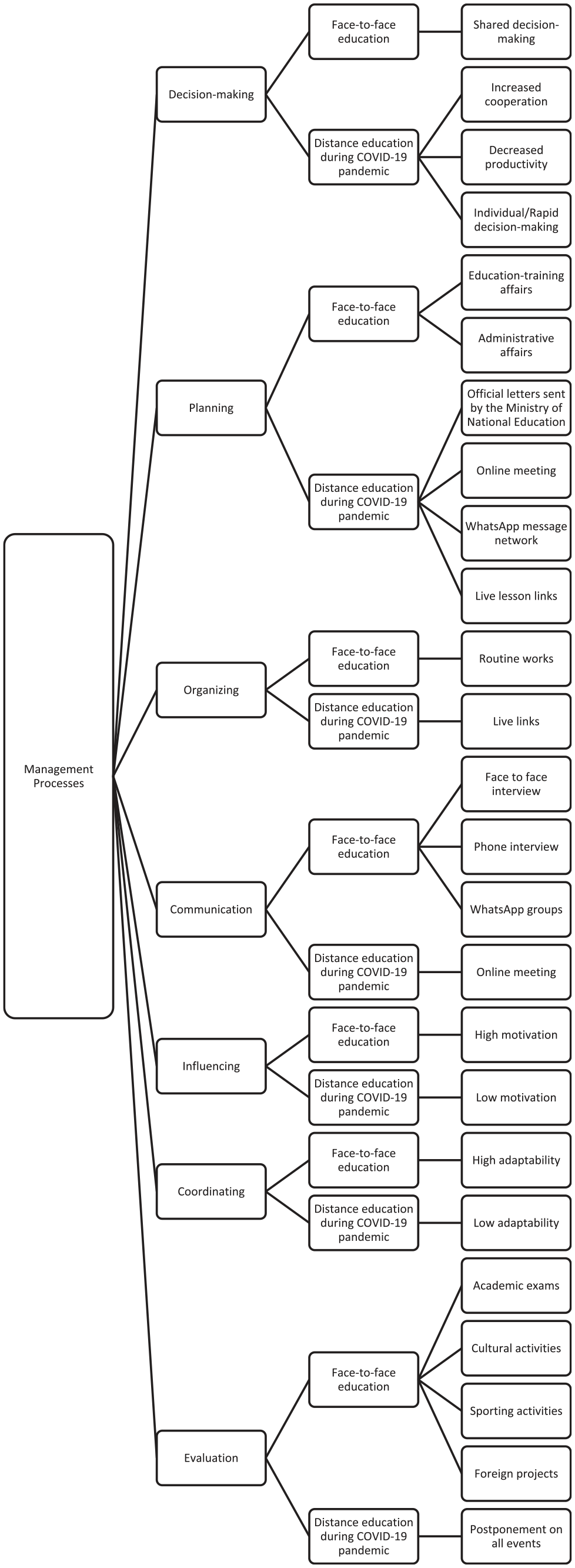
Main themes and sub-themes in the comparison of face-to-face education and COVID-19 pandemic distance education in terms of management processes.
The decision-making processes differed significantly between face-to-face and distance education. Situations requiring urgent decisions frequently emerged during the pandemic. Therefore, decision-making processes were fast and variable, and decisions were not usually as shared decisions. One participant conveyed his experience as follows: “Given the swift and unpredictable nature of our decision-making process, decisions often seemed more spontaneous than collaborative.” (M7) As there were no face-to-face interactions during the pandemic, the efficiency of the decision-making process decreased. However, more cooperation was observed during this period, and decisions were made with the teachers regarding which online tools to use on behalf of students. One participant remarked, “Business transactions were conducted through remote Zoom meetings. However, the discussions in these remote meetings lacked the effectiveness of face-to-face interactions.” (F3)
While planning for education is normally determined at meetings of the Teachers’ Board at the beginning of the year, planning during the epidemic process was constantly updated in line with the explanations and directions of the Ministry. Describing the transition, one participant explained the shift in the process as follows: Throughout this period, we found ourselves needing to formulate numerous short-term plans. This necessity manifested in various aspects, including changes in the curriculum, adjustments in teaching methodologies, modifications to the scheduling and format of both in-person and remote meetings, as well as adaptations to the timing and structure of examinations, even extending to the duration of tests. While we made some progress in executing our plans, there were frequent occasions where we had to revise them owing to evolving circumstances. (M12)
The school administration took an active role in conducting distance education on the online platform and acted with an awareness of the significance of process management. K-12 school principals organized meetings and planned online course schedules, documents to be used on the platform, guidance services, and parent information systems. In addition, the assistant principal in charge of education had additional duties such as distance education and live lesson planning. A participant shared his perspective on the matter: Undoubtedly, planning changed amidst the transition to distance education. Each teacher tailored their teaching schedule to fit appropriate days and hours for remote learning. Parents were informed by teachers. Lessons proceeded according to the established course schedule. In instances where some teachers encountered difficulties accessing EBA, they resorted to alternative platforms like Zoom to continue conducting lessons. Furthermore, certain teachers went above and beyond, offering supplementary lessons at different times to enhance our students’ academic achievement. To support students lacking internet access or electronic devices, we established EBA support centers within our school. In addition, our teachers regularly convened with parents via Zoom every two weeks, jointly managing the educational process. (M7)
Regarding organizational aspects, one participant indicated, “Throughout the distance education period during the Covid-19 pandemic, we embraced a collaborative approach, distributing tasks and working together remotely through live connections.” (M3) Division of labor, which is normally decided by boards and commissions, was carried out through online communication platforms, thus ensuring planning and coordination. The school administration comes together during the summer term to discuss the tasks for the next year, make changes, and determine job descriptions. A participant stated that the functionality of face-to-face meetings could not be fully achieved in remote meetings and interpreted it as follows: “An understanding of governance rather than ‘management’ has become mandatory as each staff member has to do the work of other staff at a minimum level as well as being concerned only with their own work.” (M8) In this case, some challenges may have been encountered during the organization process. The level of interaction and collaboration may not be as effective as in face-to-face meetings because of the limitations of online communication. One participant said, “We had difficulties in the distance education process due to the necessity of making communication online.” (M2) Thus, the organizing process was conducted remotely through live connections during the COVID-19 pandemic process. The discussions in online meetings could not fully provide the functionality of face-to-face meetings.
A paradigm shift in communication methods occurred during the pandemic. K-12 School principals clarified that communication normally provided by face-to-face meetings and WhatsApp groups shifted to online platforms and written/online video communication channels because of the pandemic. Participants described the process they experienced as follows: We made an effort to maintain continuous engagement with the student, teacher, and parent groups by employing virtual messaging tools, which were not extensively used in our regular communication practices. (M11) […] I prioritized hosting online information sessions involving all education stakeholders. Daily and weekly updates were provided to parents. Our students’ daily attendance and weekly academic progress were recorded and shared through our messaging platform at the end of each week. Furthermore, announcements were made both via our messaging system and our website throughout the process. (M10)
Another participant said that the pandemic period provided them with the chance to engage in more frequent communication with parents, and said “During this time, we significantly increased our communication with parents, which allowed us to develop a better understanding of their situations and resources. Moreover, classroom counselors also had the opportunity to have closer connections with their students.” (M6) K-12 school principals emphasized that the regulations made during this period played a significant role in adapting to the pandemic conditions.
The K-12 school principals affirmed that they could motivate students more effectively in face-to-face education using influence, which is a management process. Face-to-face interactions encouraged the active participation of students and enabled them to show greater interest (M1, M2). One participant noted challenges in maintaining motivation among students, teachers, and parents during the distance education period, stating, “We were able to sustain motivation effectively only within the school administrative staff. However, we encountered difficulties in motivating students, teachers, and parents.” (M2) In a similar vein, another participant shared his experience of struggling to influence teachers, students, and parents during the Covid-19 pandemic as following: We shared our struggles and joys through online meetings, which had been a platform for various motivational activities with students and parents in normal circumstances. We tried to increase the sense of school belonging and motivation among students and parents through online meetings, career days, discussions with psychological counselors, and similar initiatives. (M5)
Shared work and meetings between the school administration and stakeholders facilitate coordination in face-to-face education. However, the interaction between school management and stakeholders has decreased under COVID-19 and adaptation problems have emerged. One participant said, “However, we generally experienced coordination difficulties among students due to the general psychology of the society being affected by COVID-19 during the distance education process.” (M2) Another participant reported, “It was through remote communication tools. This process required much more time, which was tiring.” (F3) In this regard, the study confirmed that the level of compliance between stakeholders was high in face-to-face education, yet the level decreased during the pandemic.
The evaluation process was significantly impacted. One participant observed that many planned activities aimed at achieving the school’s objectives were hindered. The participant remarked, “The process of achieving our goals has been prolonged due to increased workload during the pandemic period, necessitating the execution of tasks in a virtual environment to reach the school’s objectives.” (M1) Similarly, another participant expressed frustration with the evaluation phase by explaining, “The evaluation phase poses considerable challenges; in particular, it has become nearly impossible for us to achieve the academic goals we had set.” (F2)
School management could not carry out the collective practice exams and events organized to improve corporate culture, meaning that the assessment methods that provide the multifaceted development of the students are limited. Restrictions on the evaluation process caused schools to experience difficulties in achieving their goals.
The COVID-19 pandemic brought about significant changes and challenges in educational management processes. The K-12 school principals implied that decision-making processes were fast and variable during the pandemic. Updating communication methods and planning gained great importance in the distance education process; however, the level of face-to-face interaction and coordination has decreased. Difficulties were experienced in the evaluation process and in achieving goals, whereas motivation management and influencing strategies became crucial. K-12 school principals endeavored to continue the educational process by transitioning to online platforms and communication channels. The difficulties experienced during the pandemic reveal points to be considered in the field of education management. Figure 2 depicts a visual comparison of the K-12 school principals’ views on management processes in terms of themes and subthemes.
Challenges in School Management During COVID-19 Distance Education
Table 4 shows the challenges in school management during COVID-19 distance education and the K-12 school principals’ views on the themes.
Challenges in School Management During COVID-19 Distance Education.

The K-12 school principals shared the challenges they faced pandemic, notably citing parental indifference (M5) as a significant hurdle. The lack of technological infrastructure emerged as a major problem in student participation in online courses (M5). Furthermore, the participants reported the following difficulties, including teachers’ unfamiliarity with Zoom-style applications and their utilization, frequent connectivity issues faced by students within school premises. Principals noted staff complaints regarding working hours, and students’ struggles to attend live classes due to financial constraints.
Measures to Implement Distance Education Under COVID-19
Recommendations for implementing COVID-19 distance education are presented under two themes (recommendations for infrastructure and practice; Figure 3).

Recommendations.
The infrastructure main theme included sub-themes of providing Internet access and strengthening the technical infrastructure, while the suggestions for practice involved sub-themes of organizing seminars or courses, legal regulations for education, introducing a reward system, the support of municipalities, and comments of the Ministry of National Education. Table 5 presents the views of K-12 school principals.
Main Themes, Sub-Themes, and Example Quotations from Interviews.

A participant who suggested strengthening the infrastructure to ensure equality among schools advocated, “The infrastructure in all schools should be made appropriate for equal opportunities in educational settings.” (M11) Participants shared their views on providing internet access as follows: Carrying out efforts for all students to have internet access, opening schools to internet access for students facing connectivity problems, and encouraging municipalities to provide free internet access, the state provides free access for those who have real access problems. (M7) This opportunity for internet access should have been extended to students lacking it and equality of educational opportunity should have been ensured, yet this has still not been fully achieved. Urgent action is needed to provide internet access to all students without it. (M3)
One participant recommended that “A few weeks of serious and regular training regarding distance education should have been given urgently.” (M5) Another participant proposed the implementation of legal regulations in education and training, suggesting, “The ministry could conduct online subject exams regularly, perhaps biweekly if not weekly, to ensure academic standards.” (M8) Moreover, a participant proposed recommendations regarding student and parent dimensions with words such as “Students and parents should have been provided with regular, systematic training through school counselors in areas such as hygiene, psychology, and communication.” (M5)
Discussion
Based on the views of principals of K-12 schools, this study attempted to compare the transition to COVID-19 pandemic processes, the management processes (decision-making, planning, organization, communication, influencing, coordination, and evaluation) of face-to-face and distance education, the challenges in school management during the pandemic, and the points to be considered. The study is grounded only on K-12 school principals’ views and does not aim to generalize the findings. The findings are discussed under the headings of transition to distance education, comparison of management processes, challenges experienced, and solutions.
Transition to Distance Education
The COVID-19 pandemic has significantly impacted school management and working processes. These findings suggested that school principals overcame the resulting problems based on the effective use of technology in distance education and managed the process by planning in line with their knowledge of technology. This result is congruent with those of similar studies (Durnalı, 2019; Hsiang & Yang, 2014; Yahşi, 2020) reporting that school principals were highly conscious of and effective in the use of technology, and exhibited technology leadership. Moreover, various projects have been implemented since the 1980s to expand the areas of educational technology use in Turkey (Basic Education Project, Movement to Enhance Opportunities and Improve Technology-FATİH, Computer Education Specialization Commission in Secondary Education) that continue to this day (Gölçek & Korumaz, 2021). Hence, the efforts to adapt to technology in education from the past to the present in the Turkish Education System were effective in enabling K-12 school principals to manage the process during the pandemic. The findings also revealed that the K-12 school principals were psychologically worn out during this process. Likewise, Uçar (2021) found that school principals had negative feelings such as difficulty in anger control and establishing healthy communication and reported the desire to be alone, being disturbed by voices, being worried, being overly meticulous, hurtful, and aggressive, mood changes, stress, distraction, mental depression, unbalanced behaviors, fear, skepticism, insecurity, insensitivity, and excitement. Uçar (2021) also signified that the negative psychological effects on school principals during the COVID-19 pandemic period might be due to their unpreparedness for distance education and obligatory adaptation to this period. This sudden and radical change led to new expectations and role requirements for school principals. Changes in these role requirements and expectations may cause a perceived imbalance between job demands and resources for school principals (Lien et al., 2022). Moreover, Fotheringham et al. (2021) noted that receiving and interpreting communication from school principals’ governors creates an overload, which causes ineffectiveness. Another factor with negative psychological effects on school principals was the technological equipment conditions within schools. Similarly, Kuday and Akpınar (2021) stated that problems such as power cuts, physical infrastructure, Internet infrastructure, and hardware could be sources of stress for school principals. The findings highlighted the challenges and psychological effects faced by K-12 school principals during the COVID-19 pandemic distance education process. School principals experienced stress due to several factors such as unpreparedness, communication load, and technological infrastructure problems.
Comparison of Management Processes
The evaluations of management processes during the COVID-19 pandemic distance education process suggested that decision-making was carried out by taking the initiative; communication, planning, and organization processes transitioned to the virtual environment facilitated by tools like live connections, WhatsApp message networks, and online meetings. T
There was a noted decrease in motivation impacting influence, a decline in adaptability levels within the coordination process, and activities were hindered in achieving desired quality due to postponed evaluation processes.
The findings showed that K-12 school principals had to make quick decisions due to sudden events during pandemic distance education and had difficulty following a participatory decision-making policy. Likewise, Kara and Bozkurt (2021) and R. Taş et al. (2023) demonstrated that the central government and the MoNE adhered to sudden and frequent decision changes along with unclear or sometimes delayed decisions. In addition, K-12 school principals were affected by bureaucracy, vague decisions of governors, time pressure, risk factors, and decision-making experiences during the pandemic (Sarıhan, 2022). Even though the management of schools in the Turkish education system is centralized, other studies (Beytekin & Kılıç, 2021; Cansoy et al., 2020; Üzüm & Kurt, 2019) have reported that school principals do not take decisions alone but act together with the employees of the organization in decision processes through democratic management processes. K-12 school principals were determined to abandon the participatory management approach and acted under the authority given to them by the current legal regulations in pandemic distance education.
Previous studies (Sezer & Deryakulu, 2012; Uçar, 2021) revealed that school principals may effectively manage the planning, evaluation, and communication processes. However, the rapid transition from physical to digital education during the COVID-19 pandemic period has greatly transformed school organizations and management processes (Lien et al., 2022). For instance, one study revealed that school principals lost their face-to-face communication skills and began to engage in virtual communication during the pandemic. Another study concluded that school principals could not communicate effectively with students or motivate them (Uçar, 2021). Similar findings emerged in the studies conducted by R. Taş et al. (2023), Çakın and Külekçi-Akyavuz (2020), and H. Taş (2021), whose results demonstrated that most school principals had problems because of a lack of communication with teachers, students, and parents. H. Taş (2021) adduced the following possible reasons: the loss of opportunities for learning by doing, decreases in teacher-student-parent communication, interaction, and cooperation, the deterioration of students’ socialization, and increased risk of technology addiction. The present study confirmed that K-12 school principals switched to alternative communication channels such as online meetings and WhatsApp message networks. In this regard, K-12 school principals experienced significant changes in their communication skills and management processes during the pandemic.
The findings also revealed that although K-12 school principals had to implement large-scale changes without preparation time during the pandemic, they were able to manage the process because their digital competencies were high in planning, communication, organizing, influencing, and coordination. R. Taş et al. (2023) and Çakın and Külekçi-Akyavuz (2020), affirmed that educational organizations experienced problems in strong planning during the pandemic. Researchers posited that these problems emerged because the current curriculum is not adapted to distance education, there is no action plan for distance education, and disadvantaged students are ignored in planning. Another significant finding of this study was related to the K-12 school principals’ views of their low motivation and adaptation levels, as they had new and unfamiliar experiences regarding the use of digital work environments. R. Taş et al. (2023) and Kavrayıcı and Kesim (2021) also found that teachers and staff had similar feelings. This may be due to the negative impact of perceived role stress on job performance Örtqvist and Wincent (2006), the passive avoidant coping strategy used by staff, or a response to cognitive overload and high levels of distress (Lien et al., 2022). Another reason may be that K-12 school principals limited their supportive interpersonal leadership behaviors because of their dispersed geographical location and lack of physical proximity (Bell & Kozlowski, 2002). Another significant finding was that K-12 school principals successfully led a radical restructuring of the education system just a few days after the beginning of the pandemic.
Challenges in School Management During Pandemic Distance Education
Recent studies of the challenges encountered in K-12 school management during distance education have revealed numerous challenges such as unequal access to technological resources (Liu, 2021), teachers’ limited technological knowledge (Hubbard et al., 2020; Shamir-Inbal & Blau, 2021), students’ inability to access effective online teaching (Kavrayıcı & Kesim, 2021), teachers’ lack of preparedness for online teaching (Pekel et al., 2020), coping with negative situations with parents and staff (Lien et al., 2022; Varela & Fedynich, 2020), economic problems (R. Taş et al., 2023). Similar findings emerged in this study. Kavrayıcı and Kesim (2021) emphasized that not every student had equal opportunities during the pandemic, and that students’ economic weakness hindered their access to computers, the Internet, and even television, negatively affecting their education. Varela and Fedynich (2020) affirmed that limited resources and the increasing demand for high-quality distance learning pose significant challenges. Saran (2020) indicated that the inequality of opportunities in accessing online education is a problem in developing countries (e.g., the Republic of Turkey). Another challenge noted by the K-12 school principals was the inability of school personnel to adapt to working hours. Similarly, Lien et al. (2022) reported that school staff had difficulties arranging their working hours during the lockdown.
Necessary School Management Measures During Pandemic Distance Education
The findings suggested that Internet access, increasing teachers’ distance education skills, strengthening the technical infrastructure in schools, and establishing collaborations with local institutions and businesses are necessary measures in pandemic distance education. Research advocates for comprehensive training programs for school leaders encompassing crisis management, trauma awareness, online learning applications, and evaluation to effectively navigate crises like pandemics (Hubbard et al., 2020; Kaul et al., 2020). It is of utmost importance to develop the ability to use technology to manage hybrid teaching models, enable digital equity practices, implement digital curricula, support remote workers, and stay current with emerging trends (Babbar & Gupta, 2021; Shamir-Inbal & Blau, 2021). Furthermore, reducing leadership hierarchy may be a step toward democratizing staff participation.
Conclusion
This study explored the management processes of K-12 school principals during the COVID-19 pandemic, particularly focusing on the transition from face-to-face to distance education, the challenges encountered, and the requisite measures. The study found significant shifts in management processes such as technological infrastructure, communication, planning, organization, and coordination. School principals swiftly adapted their management strategies to address these challenges, leveraging their rapid decision-making abilities and digital competencies effectively during the pandemic. The findings also suggested that K-12 school principals had difficulties in decision-making processes during the pandemic and acted using the authority given to them by the current regulations. Moreover, school principals experienced psychological stress, possibly attributable to unpreparedness, communication burdens, technological infrastructure inadequacies, and a dearth of supportive leadership. They also encountered difficulties such as unequal technological access, teachers’ limited technological knowledge, and students’ inability to access online teaching during the pandemic. In addition, negative situations with parents and staff, and economic and personnel problems were among the difficulties faced by K-12 school principals. This may be due to rapid digital transition and reduced face-to-face communication. These challenges require K-12 school principals to focus on strengthening technological infrastructure, using communication channels effectively, and developing supportive leadership skills. Strengthening crisis management and digital transformation skills in training programs, equal distribution of resources, and developing cooperation methods are expected to be significant steps toward overcoming these challenges. The COVID-19 pandemic has affected the management processes of K-12 school principals and has led them to face several difficulties. Therefore, K-12 school principals took measures to fortify technological infrastructure, develop teachers’ skills, improve communication, and encourage local collaboration to cope with these challenges. However, more efforts are needed to ensure better preparedness, improved crisis management skills, and greater digital equality. It is also essential for K-12 school principals to receive psychological support and reinforce their leadership skills. This study offers valuable tips and strategies for school management during pandemics. Further studies are recommended to examine methods of coping with these challenges in more detail and to formulate supportive policies. Further studies are required to assess the effectiveness and equity of the distance education processes. Future studies on school and crisis management may help school principals prepare for crises.
Recommendations for Further Research
The findings of this study provide valuable insights that extend beyond the study’s limitations, providing diverse stakeholders with informed guidance for decision-making and action in relevant areas. Therefore, future researchers are encouraged to carry out more comprehensive studies aimed at enhancing crisis management skills among K-12 school principals and ensuring digital equity. Such studies have the potential to empower K-12 school principals to navigate unexpected events more effectively and systematically by improving their crisis management abilities. Moreover, efforts to ensure digital equity may promote educational justice and fairness by affording students more equitable access to educational resources and opportunities. Various studies can be conducted to enhance K-12 school principals’ leadership skills to effectively manage periods of crisis, such as the Covid-19 pandemic, and other extraordinary situations. Thus, such training and development activities may strengthen school principals’ important competencies such as crisis management, communication, and decision-making, thus contributing to their effective management of the school community. Since the sample size was limited, it is unlikely to make generalizations. Thus, it would be advisable to use a more comprehensive sample in further studies.
Footnotes
Data Availability Statement included at the end of the article
Declaration of Conflicting Interests
The author(s) declared the following potential conflicts of interest with respect to the research, authorship, and/or publication of this article: We declare that all the authors (Çiğdem Apaydın and Oxana Manolova Yalçın) of this manuscript agreed to submit the manuscript to the Journal. We also agree to transfer copyright from the authors to the journal.
Funding
The author(s) disclosed receipt of the following financial support for the research, authorship, and/or publication of this article:
Ethical Approval
The study was reviewed and approved by Provincial Directorate of National Education (29/03/2021 date E-98057890-605.01-23202096) and Akdeniz University Social and Human Sciences Publication Ethics Committee (01.03.2021 date/70 number). Approval to analyse was also obtained from the Provincial Directorate of National Education.

Data Availability Statement
Data available on request from the authors.