




Abstract
Job advertisements are a crucial first step in the recruitment process. Public sector organizations overwhelmingly rely on passive recruitment tactics such as written notices, listing formal rules and legal processes, and excessive application procedures. Little is known about the signals these formal rules and procedures send to potential applicants. This research uses a survey experiment to examine the effects of formalization and administrative burden in public sector job advertisements on individuals’ intention to apply for a job and the moderating role of public service motivation, person–organization fit, and person–job fit. The results indicate that formalization leads to lower application intentions. Administrative burdens such as compliance costs do not have a significant effect. These findings emphasize the negative signal of formalization in public sector job advertisements, which has the effect of making these jobs less desirable to potential applicants.
Keywords
Introduction
Public organizations often face difficulties in attracting and recruiting competent personnel. They receive fewer applicants despite increasing vacancies (Fowler & Birdsall, 2019; Rose, 2013). This reduced interest in public sector employment is due to working conditions, salary (Bright & Graham, 2015), and the retirement of the baby boomer generation (Pollitt, 2016). Reputational pressures, including anti-government rhetoric, aggravate the recruiting difficulties (Bankins & Waterhouse, 2019). These challenging circumstances are especially problematic in countries where the public workforce faces a large number of retirements (Lewis & Pitts, 2018). A key element in the resulting “war for talent” is the government’s ability to improve recruitment practices (Waldner, 2012). Successful recruitment practices involve emphasizing the positive aspects of public sector work, such as job security, the prosocial nature of the job (Asseburg & Homberg, 2020; Linos, 2018), public values (Asseburg et al., 2018; Weske et al., 2019), and targeted skills (Zwicky & Kübler, 2019). While previous research has looked at distinct features of public organizations that make recruitment more successful, this article focuses on an aspect that potentially harms recruitment: the bureaucratic nature of the recruitment process and the signaling effect resulting from such practices.
Recruitment processes in public organizations are often overly complicated due to lower levels of flexibility, procedural constraints in public personnel systems (Coursey & Rainey, 1990; Stritch & Villadsen, 2018), the political and bureaucratic environment (Gravier & Roth, 2020; Rainey, 1989), and excessive formalization (Chen & Rainey, 2014). Different aspects of personnel management are characterized by strictly defined, rule-based organizational structures (Borry et al., 2018), legislative complexity aimed at multiple goals (Gravier & Roth, 2020), and functions and processes that result in administrative burden for applicants. A key characteristic of these systems is formalization, defined as “the extent to which rules, procedures, instructions and communications are written” (Pugh et al., 1968, p. 75). Rules and procedures are formalized as a mechanism to “increase predictability in organizational behavior by decreasing the variance in human behavior” (Bozeman & Scott, 1996, p. 5). Hence, recruiting features formally defined work settings, intended to serve impartiality (Chen & Rainey, 2014). However, in communicative endeavors through job advertisements, formalization may cause unintended consequences.
Public job advertisements are typically highly formalized, listing requirements and using standardized content to specify the rights of applicants and ensure fairness in recruitment. This formalized language is often the result of complex legislation (Gravier & Roth, 2020) and efforts to enhance recruitment of targeted groups (Linos, 2018). Furthermore, recruitment processes often contain procedural hurdles (Linos & Riesch, 2020), including requirements for submitting extensive and costly documents. These circumstances create administrative burdens, defined as “the costs that individuals experience in their interactions with the state” (Moynihan et al., 2015, p. 45). Formalization and administrative burdens are reflected in public organizations’ job advertisements and could undermine recruitment strategies.
While representations of formalization and administrative burden may have negative effects on the intention to apply, such signals may not be interpreted uniformly by potential applicants. Treatment heterogeneity, or different interpretations of stimuli, requires an understanding of contextual factors (Angrist, 2004; Feller & Holmes, 2009) that shape how individuals interpret signals in recruitment processes (Jones et al., 2014). Previous research suggests the interpretation of and reactions to administrative delay may depend on affective states (Hattke et al., 2020), which likely are contingent on citizens’ characteristics. Following previous research, we argue that motivation (Bankins & Waterhouse, 2019) and evaluation of fit (Pham & Paillé, 2019) account for potential treatment heterogeneity in signal interpretation. Research on recruitment processes suggests that person–environment fit (Carless, 2005) may buffer procedural hurdles, and public service motivation (PSM) motivates individuals seeking employment in the public sector (Ritz et al., 2016). Perceiving a fit between oneself and the job or organization, as well as having a desire to contribute to the public interest, might lead potential applicants to discount potentially negative signals in the form of formalization and administrative burden.
Recruitment practices are meaningful because public employers act as role models in creating an equity-based workforce (Riccucci & Van Ryzin, 2017). As public organizations are encouraged to develop “target-group specific human resource marketing” (Ritz & Waldner, 2011, p. 308), the assessment of potential constraints becomes essential for informing recruitment practices. This research examines the role of formalization and administrative burden in government job advertisements and person–organization fit (PO fit), person–job fit (PJ fit), and PSM on intentions to apply. We ask:
Does formalization and administrative burden signaled in public sector job advertisements affect potential applicants’ intention to apply?
Is the impact of signaled formalization and administrative burden moderated by person-organization fit, person-job fit, and public service motivation?
Public Sector Recruitment
Recruitment encompasses “all organizational practices and decisions that affect either the number, or types, of individuals that are willing to apply for, or to accept, a given vacancy” (Rynes et al., 1991, p. 429). It is one of six human resource management (HRM) functions besides selection, induction, training and development, performance management, and remuneration (Boxall et al., 2009). Recruitment processes are essential because administrative processes and public service delivery depend on the available personnel, their skills, and motivation (Gould-Williams, 2003). Moreover, recruitment is where organizations are most likely to increase the pool of diverse talent for achieving public outcomes. The success and performance of public organizations relies on recruiting qualified personnel.
Recruitment is a multi-stage process with at least three components: generating applicants, maintaining applicant status, and influencing job choice (Barber, 1998). As a first stage to recruiting skilled personnel, public organizations aim to motivate as many suitable applicants as possible. Subsequent stages of the recruitment process are dependent on this first step. Human resources research assumes that more applicants are preferable (Orlitzky, 2009) because it enables organizations to select candidates that not only fulfill the required qualifications but bring other valuable assets to the organization. Empirical research shows that a bigger applicant pool increases organizational performance (e.g., Becker & Huselid, 1998; Collins & Han, 2004). To increase the applicant pool, recruiters apply a variety of approaches (Llorens & Kellough, 2007), including targeted searches and direct appeals to potential candidates (Tufts et al., 2015). Yet, most public organizations rely on traditional forms of passive recruitment, for example, conventionally announcing vacancies through advertisements. For instance, advertisements in newspapers or magazines and online vacancy notes are commonly used for public sector recruitment (Jørgensen & Rutgers, 2014; Waldner, 2012). Passive recruitment relies on formal processes instead of social and professional networks (Kravariti & Johnston, 2020; Rynes & Barber, 1990) as a means for ensuring impartial recruitment. Passive recruitment results from structures requiring comparable and comprehensible processes in order to remain impartial, fair, and equitable in hiring (Van der Wal et al., 2008) and reduce patronage, nepotism, and corruption (Miller, 2000).
Job advertisements represent a crucial source of information for individuals in the job market and influence attraction and decisions to apply (Waldner, 2012). Previous research indicates that information regarding job characteristics and organizational characteristics is critical in attracting potential applicants. Inspirational messages (Asseburg et al., 2018), a focus on personal benefits (Linos, 2018), specification of skills such as foreign language proficiency (Zwicky & Kübler, 2019), intrinsic and extrinsic job attributes (Asseburg et al., 2020), and public values (Weske et al., 2019) can positively influence the intention to apply. Given the importance of generating a large applicant pool, we investigate the relationships between the content of public sector job advertisements—specifically signals of formalization and administrative burden—and intent to apply.
Formalization and Administrative Burden in Job Advertisements
Public organizations are often associated with bureaucratic structures. We consider two related but distinct concepts of bureaucratic structures in the public sector: formalization and administrative burden. Formalization refers to written rules that constitute the general organizational structure (Pugh et al., 1968). High levels of formalization in job advertisements, especially rules that intentionally regulate individual behavior by decreasing discretion and behavioral variance (Borry et al., 2018), might signal to potential applicants that the organization is highly bureaucratic and rule-bound. In general, public organizations are influenced by structural circumstances such as standardized tenure and position-based payment structures that constitute formalized recruitment processes (Stritch & Villadsen, 2018). Details about labor agreements, pay brackets, and hiring legislation (Gravier & Roth, 2020; Zwicky & Kübler, 2019) illustrate the formalized nature of public sector recruitment advertisements (Harel & Tzafrir, 2001).
One result of formalization in recruitment processes is administrative burden, defined as “an individual’s experience of policy implementation as onerous” (Burden et al., 2012, p. 742) due to learning, psychological, and compliance costs (Moynihan et al., 2015). Administrative burden refers to bureaucratic encounters and how rules and processes create hurdles for individuals outside of the organization (Heinrich, 2016). Administrative burdens are process-related consequences of bureaucracy (van Loon et al., 2016). In this case, the burden is complying with rules and procedures to apply for a job.
Formalization and administrative burden can be identified in the content of public sector job advertisements. Both are the result of efforts to increase transparency, ensure procedural justice, enhance hiring equality and equity, and remove bias in hiring. Unfortunately, they often produce negative impressions, signaling excessive organizational formalization, and increasing burdens for applicants. These aspects appear in the majority of advertisements as predefined phrasing apparent in the sell- and selection-oriented information (Waldner, 2012). Sell-oriented information represents the position, including salary, perks, and benefits, with the primary goal of attracting potential applicants (de Cooman & Pepermans, 2012). In public organizations, the sell-oriented content results from standardized labor agreements or legal regulations. Consequently, jargon, formalized phrases, inapprehensible legal information, double wording, and excessive length characterize most public sector job advertisements. Selection-oriented information specifies the desired applicant profile, such as level of knowledge, skills, education, and abilities (Newman & Lyon, 2009), thus reducing the pool of applicants (Waldner, 2012). Selection-oriented information is commonly the result of job descriptions that are constrained by salary brackets, certification, and civil service class systems (Klingner et al., 2015). Both sell and selection-oriented content signal formalization in the hiring organization.
Job advertisements create burden through procedural steps in the application process (Linos & Riesch, 2020). Formal requirements, such as legal documentation, background checks, and oaths, often constitute burden for applicants. For instance, demanding authenticated rather than regular copies of certificates and qualifications raises compliance costs (Moynihan et al., 2015). Furthermore, when providing standard formalized information, public sector employers often rely on reference laws and regulations, which leave little space for relevant job-specific information. For example, a job advertisement may note a salary group or legal requirements against discrimination without specifying future gross income and employee benefits—critical information in applicant motivation. Over-reliance on legal language instead of details about the job increases the effort required for potential applicants to determine a position’s suitability. Administrative burdens can negatively influence an applicant’s propensity to apply for a position.
Influences on Potential Applicants
Effects of Formalization and Administrative Burden
Initial exposure to employment advertising and job descriptions contributes to the formation of attitudes about the job and organization (Schmidt et al., 2015). This understanding is brought forward by a long research tradition on signaling theory (Uggerslev et al., 2012), which helps to explain how applicants perceive potential employers (Turban, 2001). Signaling theory argues potential applicants abstract information about an organization and job from the content in job advertisements (de Cooman & Pepermans, 2012; Spence, 1978). Job seekers interpret information cues about what it might be like to work in a given organization (Turban, 2001). Drawing from cues is necessary because job seekers have incomplete information about the potential employer and the job (Carpentier et al., 2019; Rynes et al., 1991). Job seekers are reliant on environmental cues to obtain information and interpret signals about the employer (Carpentier et al., 2019). Thus, processing salient information related to the organization can explain individual perceptions of the potential employer and organizational attraction (Connelly et al., 2011; Ehrhart & Ziegert, 2005). Given the uncertainty and incomplete information in recruitment processes, job seekers interpret advertisement content for physical information and signals about organizational attributes (Walker & Hinojosa, 2013). Job seekers consider various signals relating to the organizational characteristics and develop perceptions regardless of whether these were the intended signal or not.
Individuals draw instrumental and symbolic inferences about an organization by analyzing job advertisements (Van Hoye & Saks, 2011). Instrumental inferences are tangible information. Symbolic inferences refer to intangible meanings associated with the organization (Van Hoye et al., 2013). Job seekers may use overly formalized job advertisements to make symbolic inferences about how the workplace might be. Formalized advertisements signal that bureaucracy overshadows the organization’s culture and working conditions. This attribution stems from how potential applicants draw on organizational stereotypes to differentiate the potential employer from others (Peiffer et al., 2018). Signals indicating formalization are likely to create a negative stigma about the attractiveness of the employer (Agarwal, 1999; Kaufmann et al., 2019). Such inferences help form impressions of the anticipated workplace reality, which directly translates into judgments of employer attractiveness (Carpentier et al., 2019). We argue that formalization signals decrease the attractiveness of the job and the organization and, thus, negatively affect application intentions. Hence, individuals will be less likely to apply for positions where the job advertisement contains extensive formalization.
H1: Formalization in public sector job advertisements decreases potential applicants’ intention to apply.
Administrative burden might affect intentions to apply because it increases the costs and resources required by potential applicants (Burden et al., 2012). Many candidates in the recruitment process voluntarily drop out when facing hurdles such as lengthy applications or complex documentation. Such procedural hurdles resemble different aspects of administrative burden, as argued by Linos and Riesch (2020). Examples of administrative burden in public sector job advertisements include compliance costs related to rigid application processes, requirements for original legal documents and identification, and test certificates. Learning costs increase when advertisements include ambiguous phrases or lack detailed, necessary information that place burdens on potential applicants (Moynihan et al., 2015). Procedural hurdles are likely to cause self-selection in the form of withdrawal behavior (Ryan et al., 2000). This argument also builds on signaling theory. The information displayed about the application process signals organizational characteristics (Celani & Singh, 2011; Rynes, 1991). Similarly, negative perceptions or signals of delays and hurdles in the recruitment processes will affect the intention to apply because applicants anticipate the likelihood of withdrawal later in the selection process (Ryan et al., 2000). Previous research indicates that applicants who experience adverse procedural aspects tend to withdraw early in recruitment processes (Hardy et al., 2017). We argue that when potential applicants view advertisements, they anticipate the impact of procedural hurdles (Griepentrog et al., 2012). Thus, signals of administrative burden lead to the expectation of increased burden, which in turn prevents the individual from entering the application process.
H2: Administrative burden in public sector job advertisements decreases potential applicants’ intention to apply.
Public Service Motivation
High levels of public service motivation (PSM) indicate attraction to seeking employment in the public sector (Kjeldsen & Jacobsen, 2013). PSM influences public employees’ perception of their work environment (Ritz et al., 2016), including a willingness to cope with red tape, formalization, and bureaucratic processes that align with their work ethos (Ritz, 2011). Indeed, individuals with high levels of PSM self-select into public organizations anticipating bureaucratic procedures (Hattke et al., 2018) and are less affected by this aspect of the work environment (Bright, 2011; Scott & Pandey, 2005). Given previous research, we expect increased PSM to moderate the negative effect of formalization in job advertisements on the intention to apply for a job in public service. Applicants with higher public service motivation are driven to serve the public good and help others. These individuals may disregard constraints such as formalization and maintain positive attitudes (Jin & Rainey, 2020). Hence, individuals with high levels of PSM will not be discouraged by a job advertisement with high formalization that signals a bureaucratic work environment.
Further, we expect PSM to moderate the negative effect of administrative burden on intentions to apply because individuals with higher levels of PSM are generally more interested in working for public organizations (Kjeldsen & Jacobsen, 2013) and, therefore, are more willing to bear anticipated costs in order to have the opportunity to advance the public interest. In sum, we expect individuals with higher levels of PSM to ignore or be more tolerant of the costs related to the public sector application process.
H3: Increased public service motivation among potential applicants reduces the negative effects of formalization and administrative burden on their intention to apply.
Person–Environment Fit
Applicants determine an employer’s suitability by analyzing the information provided in job advertisements (Chapman et al., 2005). Because applying for a job requires considerable effort, they assess anticipated environmental fit and the likelihood of success (Yen, 2017). Previous research has suggested that two types of fit play a role in the potential applicants’ assessment: person–organization fit (PO fit) and person–job fit (PJ fit; Carless, 2005).
Seeing a strong fit between oneself and the organization can increase the perceived likelihood of securing the job (Swider et al., 2015) and reduce the adverse effects of formalization or administrative burden on an intention to apply. If a potential applicant perceives a fit with the organization in the advertisement, they would believe an offer for the position will be more likely (Celani & Singh, 2011). The increased likelihood to get the job would counter the negative signal caused by a highly formalized advertisement, thus increasing the willingness to bear the costs produced by administrative burden.
A similar mechanism is plausible for PJ fit. If potential applicants see a high fit between themselves and the job, they will have a stronger desire to secure the job (e.g., Nolan & Harold, 2010) and be more willing to overlook the negative signaling of formalization and administrative burden. Hence, the effects of formalization and administrative burden should be less detrimental if a job seeker perceives higher levels of PO and PJ fit:
H4a: Increases in potential applicants’ perceived person–organization fit reduces the negative effects of formalization and administrative burden on their intention to apply.
H4b: Increases in potential applicants’ perceived person–job fit reduces the negative effects of formalization and administrative burden on their intention to apply.
Data and Methods
Experiment Design
We conducted a survey-based experiment with a two-by-two factorial design and preregistered the design, hypotheses, and analysis plan at the Open Science Framework (https://doi.org/10.17605/OSF.IO/D9BR6). 1 Following a short explanation, the online survey software randomly assigned subjects to one of four treatment groups, each of which was subsequently provided a different job advertisement for a position: this comprised a vacancy note for a traineeship in a major German city’s administration. We displayed realistic job characteristics and requirements, utilizing existing phrasing from vacancy notes of various public sector organizations, reviewed prior to the study to ensure authenticity. The four advertisements with varying levels of formalization and administrative burden are outlined in Table 1.
2 × 2 Design Survey Experiment.
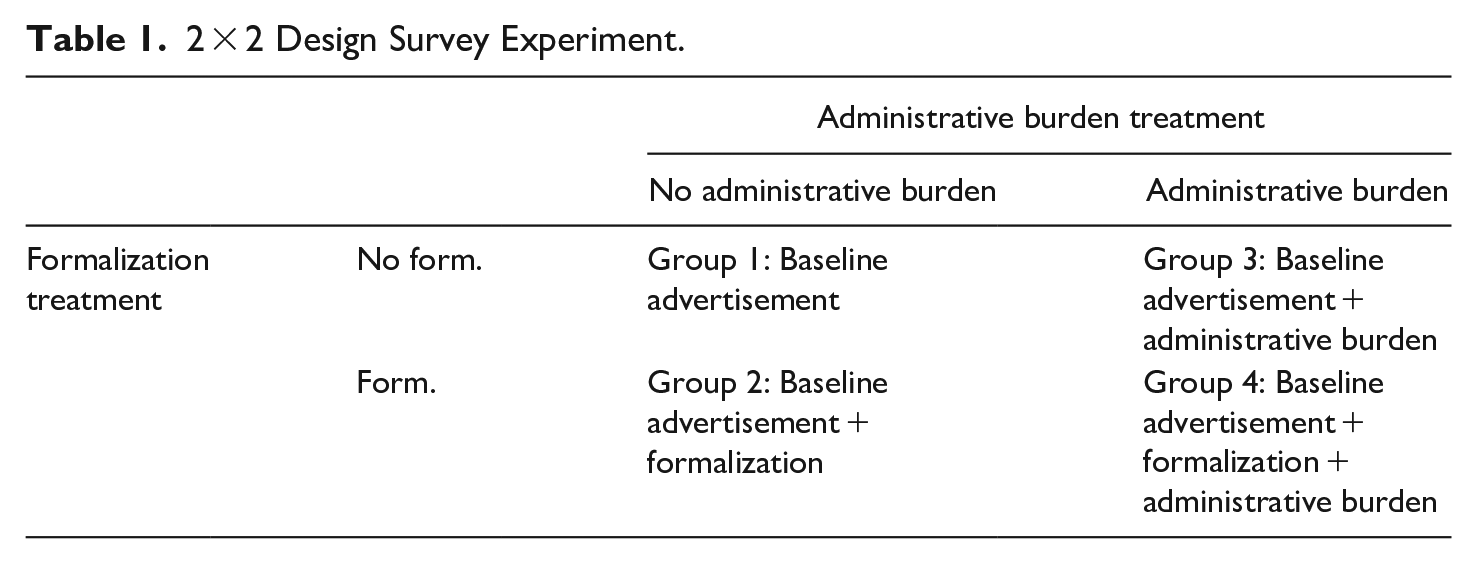
We applied one treatment without (control group) and three treatments with high formalization and/or administrative burden (experimental groups). Formalization was added as extensive formal descriptions of sell- and selection-oriented paragraphs. The overall length of the job advertisement increased in this treatment condition. The information provided is the same across groups. The additional phrases and text passages do not contain new information and, thus, should not alter perceptions based on the job characteristics in the advertisement. Administrative burden was represented through requirements, such as the necessity for postal applications and additional required documents (Moynihan et al., 2015). The comprehensiveness of available payment information also varied. Advertisements with high administrative burden entail learning and compliance costs. The complete vignettes are in Appendix A. Figure 1 summarizes the experimental design.
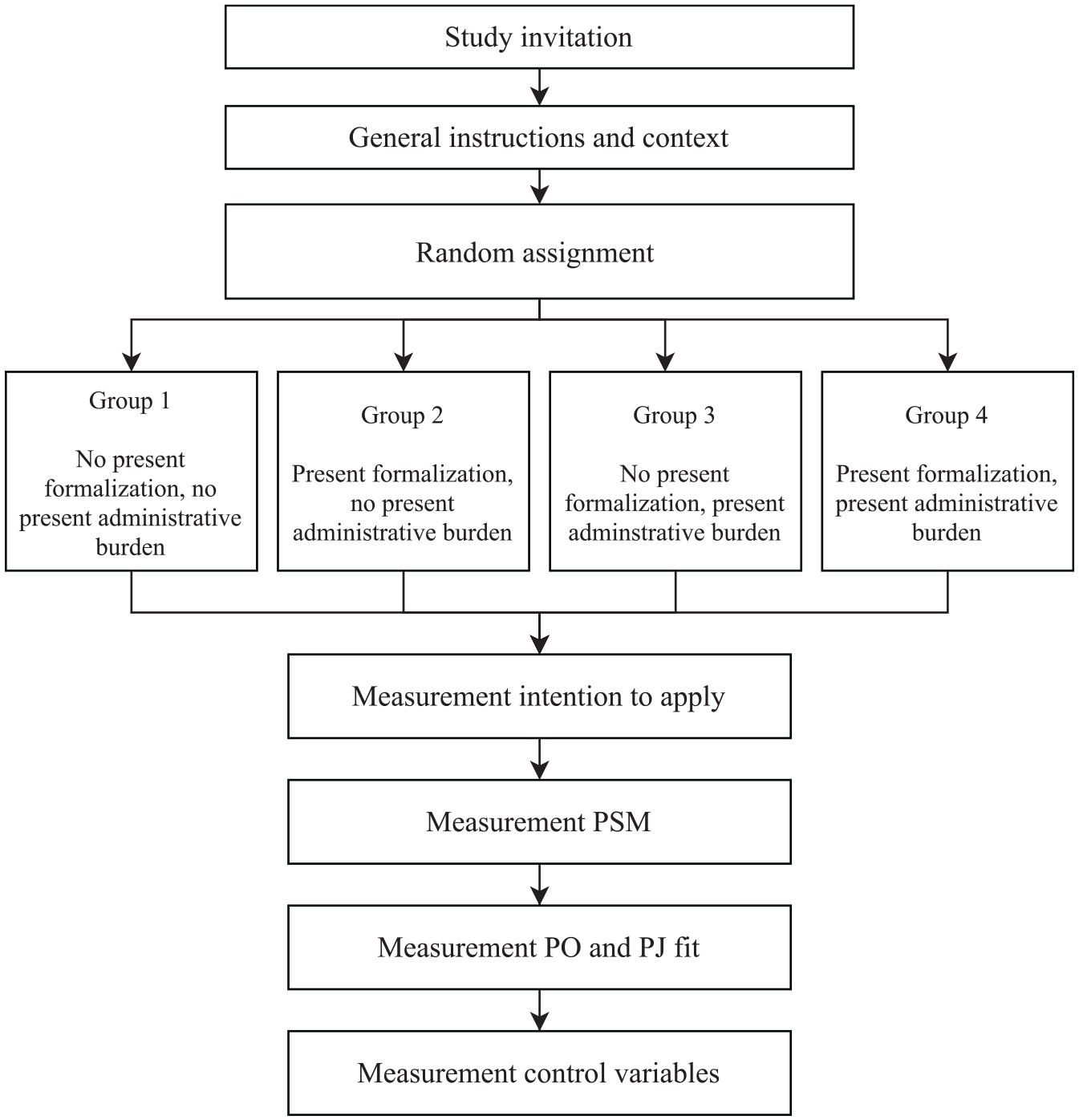
Experimental design.
Next, all participants were asked about their intention to apply for the job described in the vignettes and their intention to apply for a job in the public sector. A manipulation check was used to assess whether the treatments worked as intended. Participants were asked a simple question about the advertisement to assess their attention level and rigor, followed by item sets for PSM, PO, and PJ fit. The questionnaire ended with demographic questions.
Sample
The experimental study was administered to a student pool from the research laboratory at the University of Hamburg in February 2018. The invitation to participate was sent to all participants in the pool enrolled in social, economics, or business programs (N = 2,225). This is a reasonable recruitment pool that represents a realistic target for public sector recruitment. The students are eligible for the trainee program offered in the experiment as well as comparable positions in real life. Thus, the student sample did not jeopardize the study’s internal and external validity (Druckman & Kam, 2011).
We sent invitations to the pool through the laboratory software “hroot” (Bock et al., 2014). After 4 days, a reminder was sent to maximize the number of responses. Following the preregistration, we stopped the data collection after 2 weeks, with 267 complete responses, who have participated in a lottery for Amazon vouchers. Participants were asked about the vacancy’s time limitation, outlined in the position description in the vacancy note. About 27 participants who were unable to state the correct answer were excluded from the analysis. Robustness tests indicate that the results of the analyses would not have changed if we included all participants. We asked a single question to check whether the experimental manipulation functioned as intended. Participants indicated the perceived level of bureaucratic content after being presented with a short definition.
The average age of participants was 26.8, with 51.3% women and 32.8% reporting at least one parent working in the public sector. The participants’ age is higher compared to other student populations in Germany because this university emphasizes admissions with prior work experience. We assume that many participants had experience in the labor market and therefore were familiar with job advertisements. Table 2 offers an overview of the sample and treatment group characteristics.
Means, Standard Deviations, and Test Statistics of Sample Characteristics for the Full Sample and Per Treatment Group.
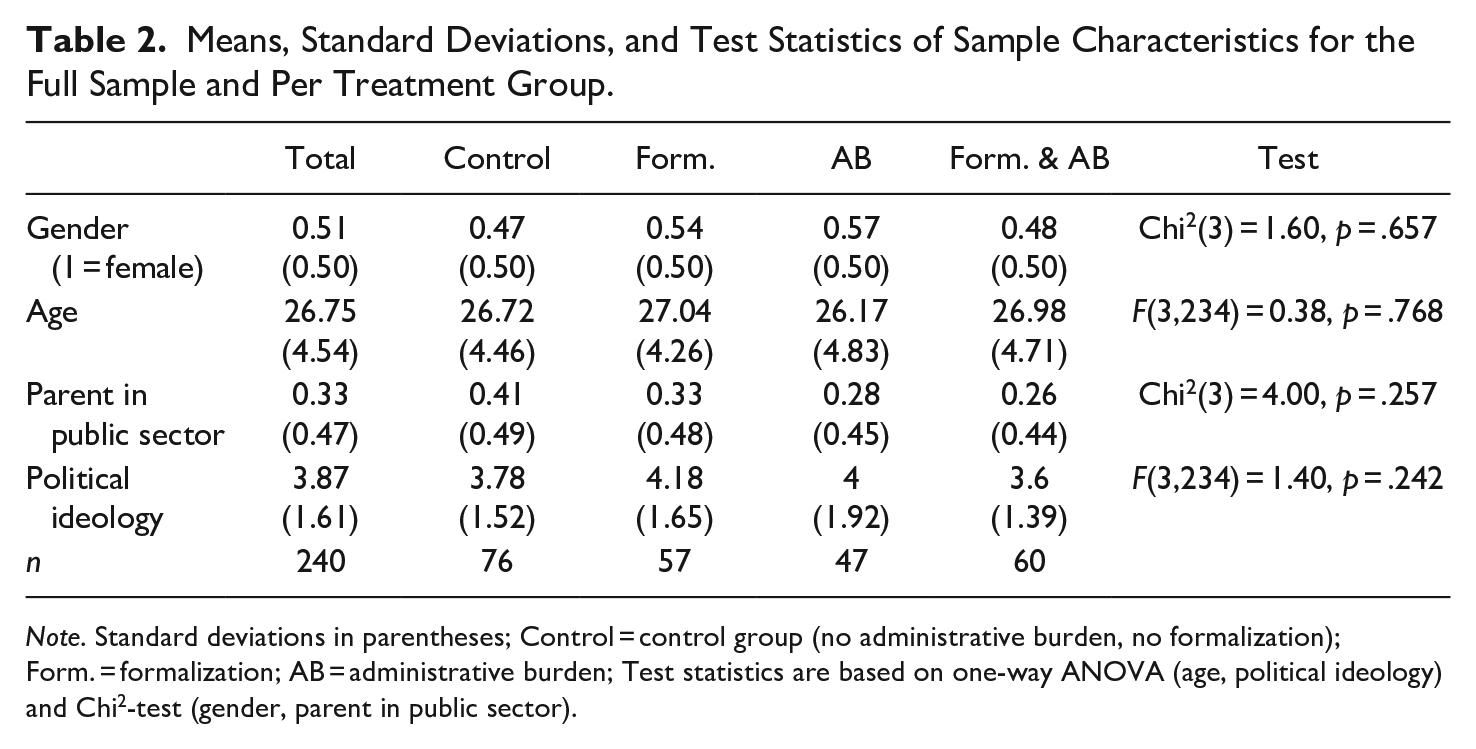
Note. Standard deviations in parentheses; Control = control group (no administrative burden, no formalization); Form. = formalization; AB = administrative burden; Test statistics are based on one-way ANOVA (age, political ideology) and Chi2-test (gender, parent in public sector).
Measures
Four items were used to capture two dependent variables: (1) intention to apply for the job in the vignette and (2) intention to apply for a public sector job. Two survey items capture the likelihood participants would apply for the advertised job (Gomes & Neves, 2011, p. 689)—“if I were searching for a job, there would be a strong probability of applying to this offer” and “if I were searching for a job, I would apply to this organization” (α = .92). Two questionnaire items derived from Ritz and Waldner (2011) capture intention to apply for a public sector job (α = .92)—“I think it is probable that I will apply for a position in public service” and “in my job search, I will intentionally seek positions in public service.”
The measures of PO and PJ fit are derived from Saks and Ashforth (2002). PO fit is measured with four items about the organization’s perceived suitability (Cronbach’s α = .90). PJ fit is four items asking about a person’s perception of fit with the vacant position (Cronbach’s α = .88). To measure PSM, we employed the global measure proposed by Vandenabeele and Penning de Vries (2016; Cronbach’s α = .91). We applied this scale to keep the questionnaire comprehensive. Extensive research on PSM indicates that the construct is robust, and global PSM scales adequately capture it (Ritz et al., 2016).
In addition to the moderating variables, we included the following control variables: gender, age, if a parent is a public employee, and a measure of self-indicated political classification on an 11-point scale (Kroh, 2007).
We conducted the experiment in German. The questionnaire includes an available German translation of the PSM scale. The authors translated all other constructs, resolving differences in discussion. Appendix B lists the complete wording for all variables.
Statistical Analysis
The statistical analysis was conducted with “R” version 3.5.3 (R Core Team, 2019); the data were analyzed through multiple linear regression models with ordinary least squares (OLS). Four models with the moderators and control variables were analyzed to ensure an adequate interpretation of results. The data and analysis code are available at https://doi.org/10.17605/OSF.IO/3B59H.
Results
First, we investigated the effectiveness of the manipulation. Does the perception of formalization and administrative burden in the job advertisement differ between experimental groups? Figure 2 indicates that the experimental groups’ perception of formalization and administrative burden differed significantly (F(3,236) = 10.48, p < .001). The control group demonstrated the lowest perception of formalization and administrative burden (M = 29.96, SD = 21.69), followed by the group with a high level of administrative burden (M = 45.68, SD = 25.10), and the group with high formalization (M = 46.18, SD = 25.12). The group shown an advertisement with high levels of formalization and administrative burden reported the strongest perception of bureaucratic content (M = 52.30, SD = 26.37). These differences indicate the effectiveness of the manipulation. A post hoc test with Bonferroni adjusted p values shows that the differences between the control group and the treatment groups are significant (p < .01). The differences across the treatment groups are not significant.
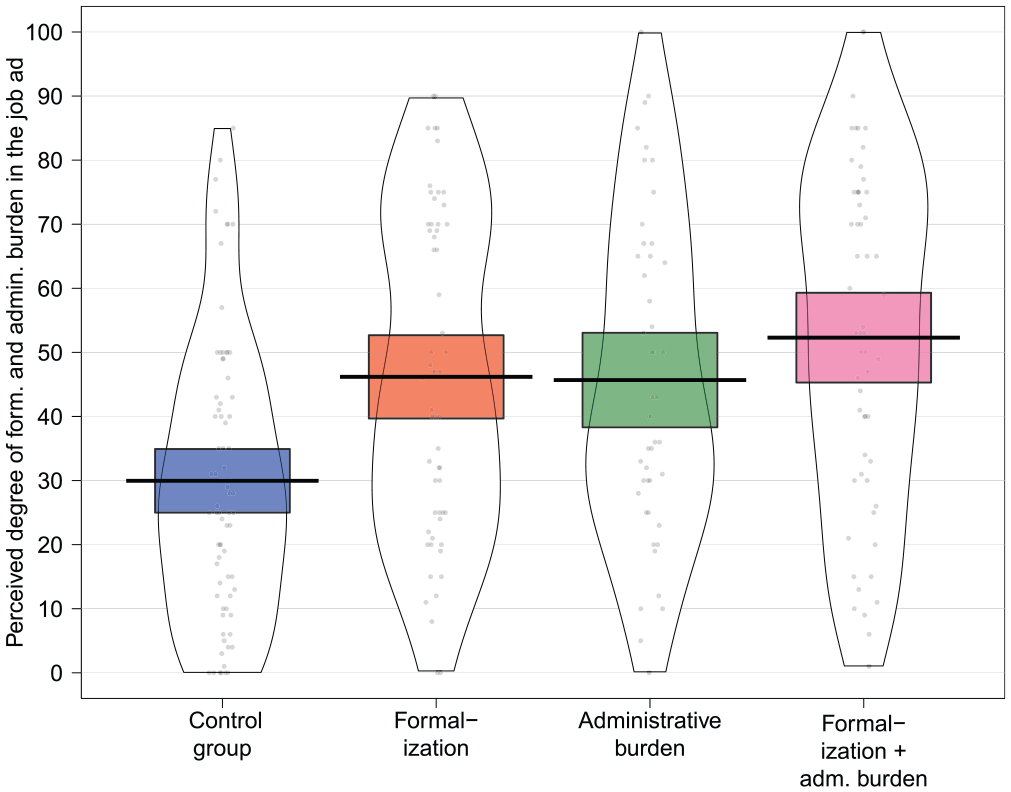
Manipulation check. Participants indicated perceived degree of formalization and administrative burden in the job advertisement.
Table 3 offers a descriptive overview of the primary variables separated by treatment. The intention to apply for the offered job, apply for a job in the public sector, PO fit, PJ fit, and PSM did not differ significantly by group. Participants’ responses to the dependent variables might be interpreted as percentage points of the likelihood to apply. Someone below the average of 50 sees less than a 50–50 chance that they will apply. We assign verbal probabilities to the scores (Wintle et al., 2019). People, on average, interpret values around 17 as very unlikely, around 23 as unlikely, around 75 as likely and around 85 as very likely.
Means, Standard Deviations, and ANOVA Test Statistics for All Four Experimental Groups.
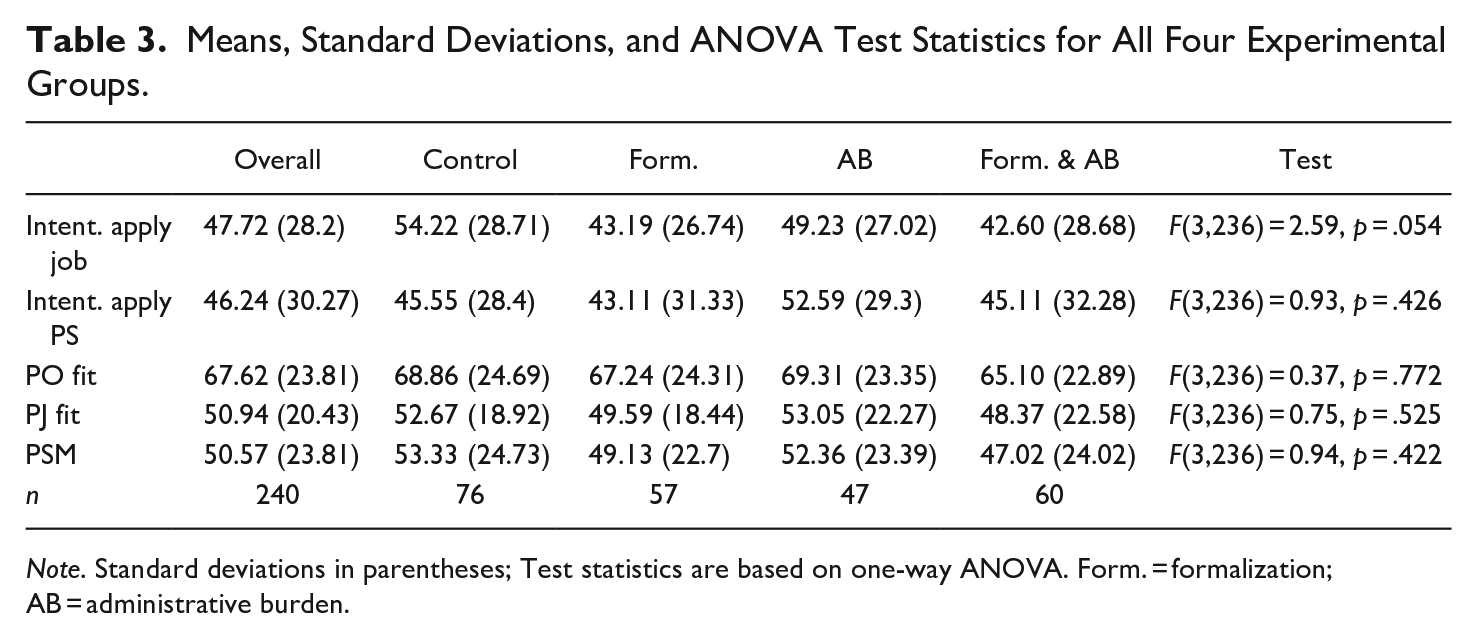
Note. Standard deviations in parentheses; Test statistics are based on one-way ANOVA. Form. = formalization; AB = administrative burden.
Intent to Apply
Figure 3 presents the effects of formalization and administration burden on the intention to apply for the specific job in the vignette. 2 We find support for hypothesis 1. The group with high formalization and no administrative burden reported significantly lower intention to apply for the job (b = −11.62, SE = 4.82, p = .017).
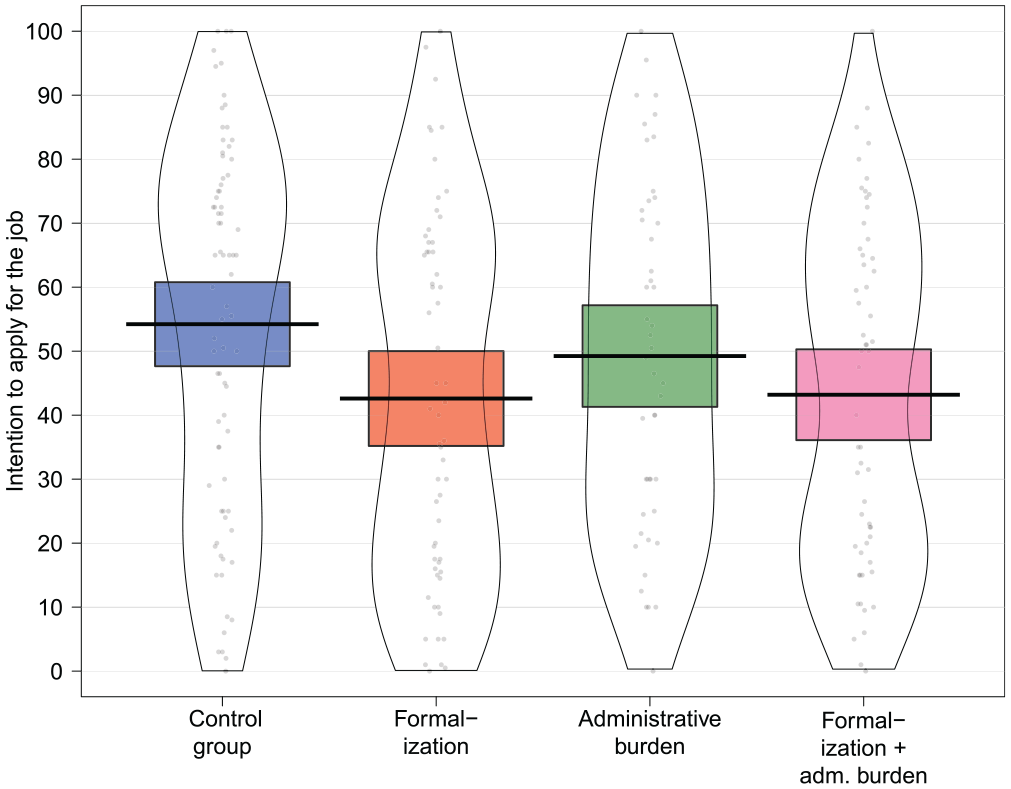
Intention to apply for the job by treatment groups.
We do not find support for hypothesis 2. The group with high administrative burden but no formalization did not differ significantly from the control group (b = −4.98, SE = 5.18, p = .34). The group with high formalization, as well as high administrative burden, exhibits significantly lower intention to apply for the job than the control group (b = −11.02, SE = 4.89, p = .025). A post hoc test does not show significant differences between the three treatment groups (see Figure 3). The effect sizes were Cohen’s d = 0.40, 95% CI [0.060, 0.750] for the group with high formalization but no administrative burden, d = 0.18, 95% CI [−0.19, 0.55] for the group with high administrative burden but without formalization, and d = 0.40, 95% CI [0.045, 0.745] for high formalization and high administrative burden. Assuming that participants with an intention to apply >50 (on a scale from 0 to 100) would actually apply, an advertisement with high formalization results in 25.15% fewer applications than the control group. A vignette with high formalization and high administrative burden reduces the number of applications by 21.21% compared to the control group.
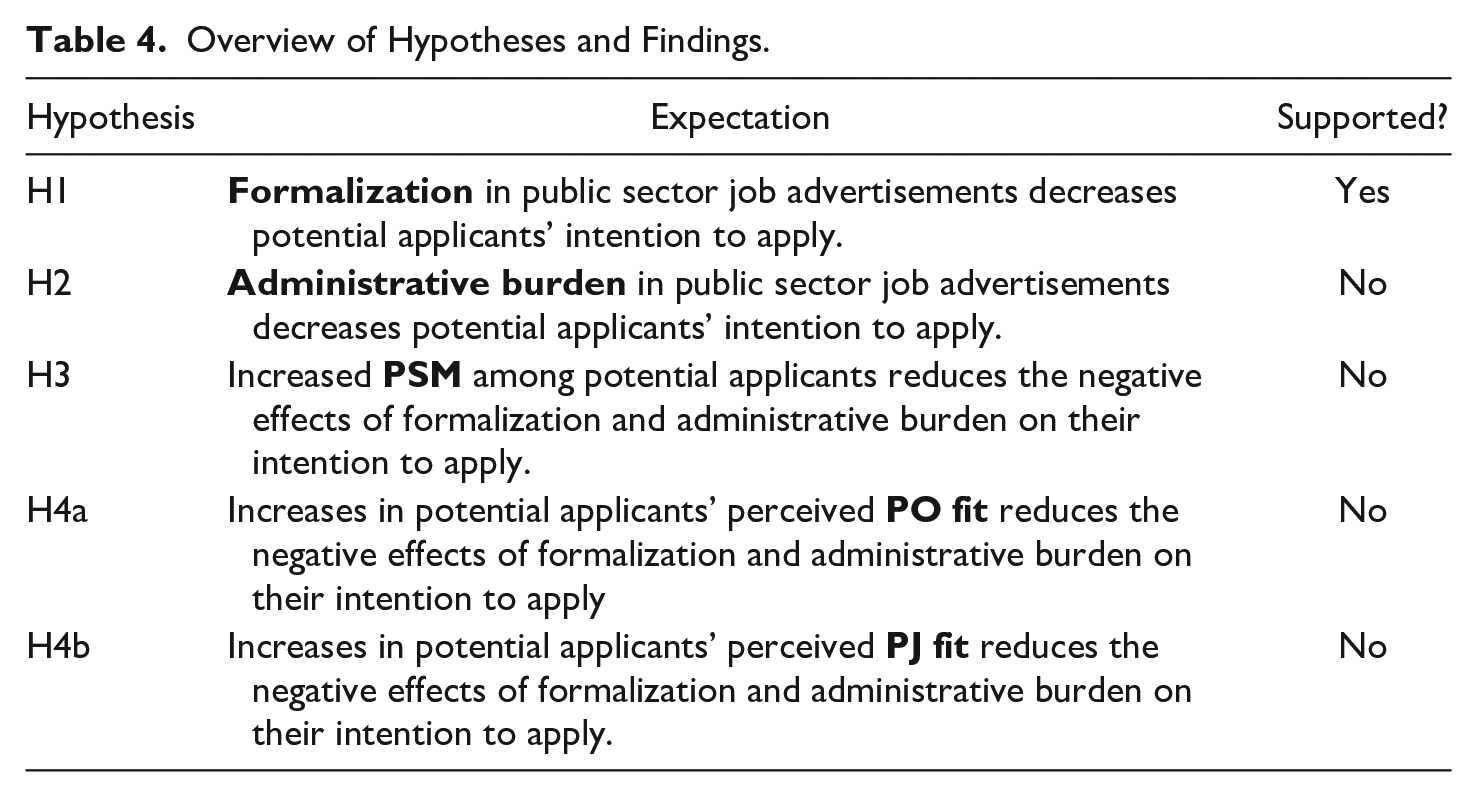
We find no support for hypotheses 3, 4a, and 4b. Models 2–4 available in the online appendix (Online Table 1) show the results of the moderating effects of PSM, PO fit, and PJ fit. We find no evidence that the effect of formalization or administrative burden on intention to apply for the job was dependent on the motivational basis or perceived fit with the organization or job. In the overall assessment with all interaction effects and control variables (model 6), we find a significant effect of PJ fit on a respondent’s intention to apply (b = 0.64, SE = 0.14, p < .001). The greater the fit perceived by the respondent, the more willing they are to apply for the job.
Intent to Apply for a Public Sector Job
Figure 4 reports how the treatments affected the intention to apply for a job in the public sector. 3 The results for intention to apply to a public sector job differ from their intention to apply for the advertised job. There are no significant differences between the treatment groups and the control group with regard to intention to apply to public organizations. The degree of formalization and administrative burden did not affect participants’ intention to apply to the public sector. Furthermore, there are no significant interaction effects between the treatments and PSM, PO fit, and PJ fit. We observe significant direct positive effects of PSM (b = 0.30, SE = 0.11, p = .008) and PO fit (b = 0.64, SE = 0.21, p = .003) on the intention to apply for a public sector job. The greater a participant’s motivation toward public service, the more likely they intend to apply for a public sector job. Additionally, the greater the participant has perceived the fit with the organization, the greater their intention to apply for a public sector job. Table 4 reports the results for all tested hypotheses.
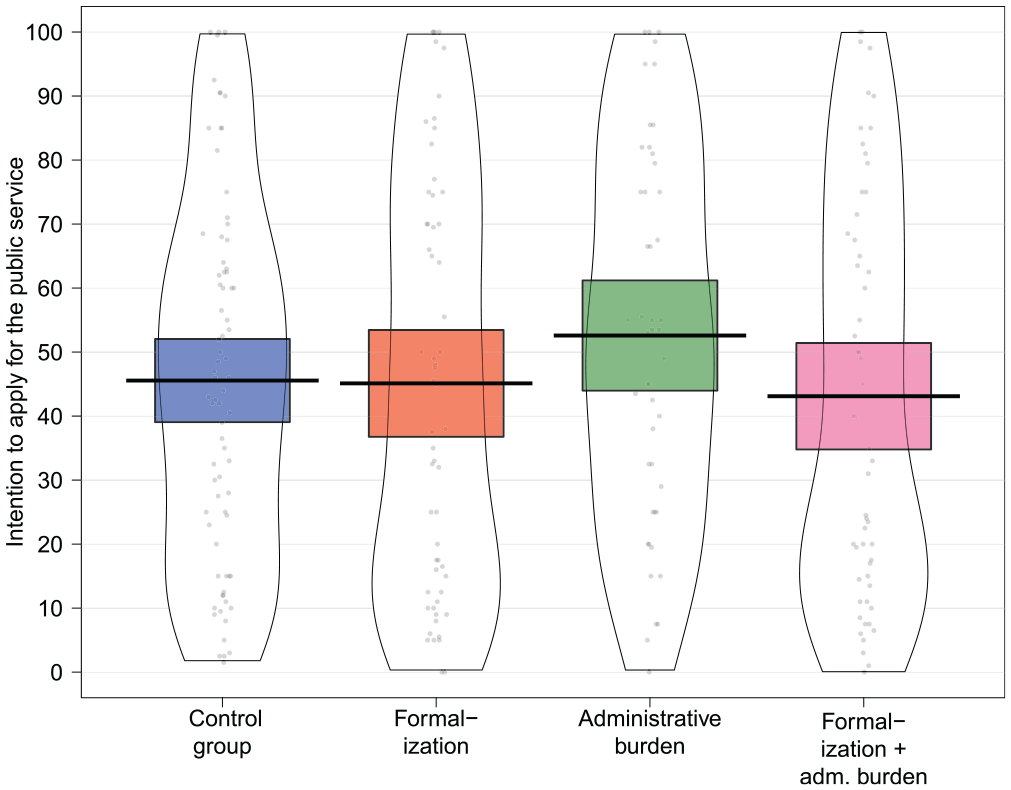
Intention to apply for a job in the public sector.
Overview of Hypotheses and Findings.
Discussion
We expected that formalization would adversely affect the intention to apply for a specific job as advertisements shape a potential applicant’s first impression of a job and an organization (Schmidt et al., 2015). A high degree of formalization in an advertisement can signal that bureaucracy will overshadow the job. Second, we expected that administrative burden signaled through costly application processes would reduce the intention to apply for an advertised job.
We found mixed evidence for the hypotheses. We found differing effects of formalization and administrative burden on the intention to apply for an advertised job. While administrative burden does not reduce the intention to apply, formalized content does. Since the effects were the same when participants saw an advertisement with formalization as well as administrative burden, we conclude that formalization rather than administrative burden significantly decreases application intention. Potential job applicants perceive formalized content in job advertisements as a negative signal. We expect that potential applicants make inferences about the position from the formalization in the advertisement (Carpentier et al., 2019). Since high degrees of formalization are perceived as tiresome, it reduces participants’ willingness to apply. Consequently, public organizations unintentionally limit the pool of applicants from which they can hire and potentially lose high-quality candidates.
In general, none of the hypotheses regarding intention to apply for a public sector job were confirmed. While high formalization reduces potential applicants’ intention to apply for an advertised job, it does not repel them from the public sector in general. Overall, this is a positive result for public organizations. Poorly designed advertisements by one organization seem not to spill over to other public organizations. An organization eager to design attractive advertisements should remain unaffected by lower quality advertisements from other organizations. These insights are reasonable because job descriptions may not have short-term implications for the participant’s general interest in the public sector. Further research could investigate if this pattern changes when potential applicants are repeatedly confronted with highly formalized job advertisements and potentially begin to generalize such experiences to the whole sector.
We did not observe an accumulating effect of formalization combined with administrative burden. This finding is surprising given that administrative burden, in contrast to formalization, creates real costs for the applicants. In our example, applicants must invest additional time to collect information (e.g., on the salary) and prepare the application (e.g., to prepare additional documents and organize certified copies) and higher monetary costs (e.g., for sending the application by mail). One explanation is that potential applicants compare the costs of applying for the job with the potential benefit of securing the job (Paserman, 2008). As the job offered in the experiment was comparatively diverse and offers a salary comparable to a starter position in the private sector, a cost-benefit analysis might lead participants to favor the chance to get the job over the application’s cost. The participants in our sample are career entrants. Their job choice intentions may be less affected by administrative burden because they are interpreted as a necessary evil. Early career job seekers may be more accepting of hurdles given their comparatively weak position in labor markets. Alternatively, for some applicants, administrative burden may signal exclusiveness of a given position or organization. While we argued that costs would discourage job seekers to pursue an application, some may perceive administrative burdens as signaling a commitment to fair hiring practices, thus making the job more attractive and worthier of consideration. It would be interesting to investigate whether job seekers interpret costly procedures as an indicator of exclusiveness. Additional research should study if results differ for more experienced job seekers. It would also be important to know if there is a threshold of administrative burden that is accepted by early career job seekers.
The results for the formalization condition support hypothesis 1—formalized content significantly reduces potential applicants’ intention to apply for a job. Similar to other forms of poor job advertising, such as a confusing design (Braddy et al., 2003) and unspecific job description (Feldman et al., 2006), formalization is an indicator of the working conditions and culture of the offering organization. The content signals that inflexible and rule-oriented processes will characterize the position. Reducing formalization within job advertisements should have a positive influence on attracting applicants.
We did not find evidence of a moderating effect of PSM, PO fit, or PJ fit among potential job applicants. This contradicts previous research regarding the perception of formalization and the role of environmental fit in application decisions. While employees with higher PSM attribute reasons for formalization as legitimate (Scott & Pandey, 2005), we do not find this mechanism among potential job applicants. This could be a result of a lack of experience in the public sector. The participants did not have previous work experience enabling their PSM to exert its moderating effect. Employees often have considerable experience with formalized work environments, where PSM helps to maintain positive attitudes despite the environmental constraints (Jin & Rainey, 2020). As job seekers are not embedded in the formalized job environment, their PSM does not affect signal interpretation. This is likely because employee PSM may foster active reflection and coping with constraints (Vogel et al., 2016). Similarly, fit perceptions were related to application intentions but did not buffer the negative effect of formalization. This may be the result of participants’ early career status. Before entering public service, job seekers may not accurately incorporate formalization as an organizational characteristic into their fit perceptions because they are less experienced and socialized to public organizations (Moyson et al., 2017). Those already working in public organizations have experienced formalization, their reasons, and consequences, which could affect fit. Fit perceptions unfold in temporal mechanisms and are context-dependent (Shipp & Jansen, 2011) and thus require additional research as related to public sector job advertisements.
Limitations of this study should be considered. First, although we tried to maximize external validity by recruiting students who will soon look for a job, only a proportion was currently searching for a job. Second, these students are at the beginning of their professional careers and thus do not possess extensive experience with job advertisements. Career entrants may react differently to formalization and administrative burden compared to advanced professionals. Third, the experiment utilized a fictitious job advertisement, and participants might have been aware of this fact. We attempted to minimize the impact of the fictitious situation by designing an advertisement that was similar to public sector advertisements for an early-career position. Moreover, the vignettes employed might suffer from participants’ heuristic assessment as the formalization condition contained a longer text. This might have a signaling effect that differs from apparent formalization proxies and might inflate the observed effect. Fourth, the costs imposed through the administrative burden condition in the job advertisement were not real. Therefore, we must consider the possibility that they did not factor into participant deliberations. Finally, we did not reach the initially planned sample size, which leads us to be more cautious about the results. We preregistered the study with high power of 90%, which is above the usual pursued power of 80%. The effects found in our study are substantially larger than the ones we assumed a priori, which can indicate a larger true effect and would result in more power of our test. This study provides valuable insights into the detrimental effects of formalization for public administrations’ recruitment efforts. This research can be advanced by future research using alternative designs with different tradeoffs between internal and external validity.
Conclusion
Job advertisements are a crucial first step in the recruitment process. Public organizations are struggling to recruit talent, possibly because of excessive formalization and administrative burden. We contribute to the ongoing debate on recruitment practices by addressing the signaling effects of job advertisements. We show that signals in the content of job advertisements, a cornerstone in public sector recruitment, have adverse effects on expanding an applicant pool. This study investigates formalization and administrative burden—two potentially harmful signals—in the context of recruitment processes. Within the entire recruitment process from advertisements to selection, induction, training, performance management, and remuneration, adjusting advertisements is a low-cost mechanism for improving recruitment. Reducing formalization in advertisements increases the intention to apply, potentially expanding the pool from which public organizations can hire.
Given the limitations of our study, next steps include research designs such as field experiments that avoid the abstract and artificial nature of survey experiments. Importantly, administrative burden needs further attention to ensure that compliance and learning costs are realistic. Our research concentrates on the attraction phase in public recruitment. Future research should assess formalization and administrative burden at later stages in the recruitment process to identify which hurdles require reduction and which steps could be simplified to reduce attrition (Linos & Riesch, 2020).
This research has specific advice for public human resource management practice at a time when it has become increasingly challenging to attract personnel: reduce formalized content in job advertisements. Written job advertisements published in newspapers, websites, social media platforms, and specialized employment websites are the primary instrument public organizations employ to attract applicants. Public organizations should carefully review their advertisements to avoid the impression of formalization or develop ways to downplay legal language in favor of text about opportunities in the position. Because potential applicants form judgments based on what they see in job advertisements, it will help to reduce negative signals. Public organizations should aim to reduce predefined and standardized content in their advertisements or move that language to hyperlinks to remain in compliance with legal requirements. Coping with modern labor markets requires flexible recruitment tools and the provision of tailored advertisements. Well-designed job advertisements free from formalization can enhance positive signaling to potential public sector applicants.
Supplemental Material
200515_Online-Appendix – Supplemental material for Formalization and Administrative Burden as Obstacles to Employee Recruitment: Consequences for the Public Sector
Supplemental material, 200515_Online-Appendix for Formalization and Administrative Burden as Obstacles to Employee Recruitment: Consequences for the Public Sector by Martin Sievert, Dominik Vogel and Mary K. Feeney in Review of Public Personnel Administration
Footnotes
Appendix
Declaration of Conflicting Interests
The author(s) declared no potential conflicts of interest with respect to the research, authorship, and/or publication of this article.
Funding
The author(s) received no financial support for the research, authorship, and/or publication of this article.

Supplemental Material
Notes
Author Biographies
References
Supplementary Material
Please find the following supplemental material available below.
For Open Access articles published under a Creative Commons License, all supplemental material carries the same license as the article it is associated with.
For non-Open Access articles published, all supplemental material carries a non-exclusive license, and permission requests for re-use of supplemental material or any part of supplemental material shall be sent directly to the copyright owner as specified in the copyright notice associated with the article.
