



Abstract
This article connects symbolic representation research to public sector recruiting. We theorize how gender diversity signals in hiring may affect job seekers’ intentions to apply and perceived organizational attractiveness. We contribute to representative bureaucracy by offering an extended reasoning about distinctive cognitive mechanisms, separating descriptive from prescriptive symbolic representation. The former reflects current representation related to identity-fit considerations, while the latter constitutes stated organizational goals for gender diversity, which evoke value congruence assessments. We investigate whether these signals impact organizational attractiveness and application intentions using a survey experiment (n = 1,469 adults). The statistical analysis unveils mostly null findings when accounting for participants’ gender. Results indicate that public organizations cannot easily harness the benefits of symbolic representation signals, at least not in their initial recruiting efforts. Future research should further examine whether (symbolic) representation has positive effects in later stages of the recruitment process, such as interviews or selection procedures.
Introduction
Public administration research suggests that representative bureaucracy can positively affect public service delivery and effectiveness (Ding et al., 2021; Meier et al., 1999; Meier & Bohte, 2001; Selden, 1997). Contemporary scholarship focuses on several aspects relevant in this literature: active, passive, and symbolic representation (Bishu & Kennedy, 2020; Riccucci & Van Ryzin, 2017). The latter suggests that increasing demographic representation in public organizations may influence how citizens perceive and evaluate the actions of these organizations (Ding, 2025; Riccucci & Van Ryzin, 2017; Wang, 2025). As such, this concept refers to the visibility and saliency of social categories, for instance, in terms of gender representation (Riccucci & Van Ryzin, 2017). We extend this reasoning to research on public sector recruiting (e.g., Jakobsen et al., 2023; Keppeler & Papenfuß, 2023; Sievert et al., 2022), arguing that signaling current and intended gender representation can positively affect how job seekers view a public organization and advertised jobs. Even though diversity efforts in recruitment have often been connected to public sector organizations signaling to be a role model (Groeneveld & Verbeek, 2012; Hur & Abner, 2024), highlighting these efforts on the labor market can also help organizations attract a broader set of job seekers (Bradley et al., 2024; Klysing et al., 2022).
Previous theorizing suggests that symbolic representation may enhance the effectiveness of recruitment efforts (e.g., Korac et al., 2019; Sievert et al., 2025), linking organizational gender representativeness to the proportion of female applicants. Symbolic gender representation, informed by signaling theory (Johnston et al., 2024), should convey to female job seekers that public organizations prioritize gender equality. Such an impression can improve their attractiveness to those job seekers. The core argument centers on job seekers’ need to reduce information asymmetries, a pervasive phenomenon in labor markets (Connelly et al., 2011). Typically, job seekers lack extensive knowledge of the organization and the job for which they are applying, which limits the inferences they can make (Sievert et al., 2022). Symbolic representation is theorized to offer signals that individuals can interpret to expand their available information and, thus, reduce information asymmetry (Sievert, 2023). Despite these promising considerations, the representative bureaucracy literature is characterized by inconsistent empirical findings regarding whether symbolic representation effects materialize, and thus, calls for theory development and additional research persist (e.g., Ding et al., 2021; Headley et al., 2021; Sievert, 2023). For instance, organizations use diversity signaling in their employer branding activities (Baum et al., 2016; Keppeler & Papenfuß, 2021; Leibbrandt & List, 2025), but it remains unclear if this effectively attracts more applicants (e.g., Johnston et al., 2024). Thus, we examine whether signaling symbolic representation affects the attraction of potential applicants to the organization and their intentions to apply (Asseburg & Homberg, 2020).
We argue that symbolic representation can take two different forms, each eliciting a distinct cognitive process in job seekers. First, when organizations disclose a given gender distribution (e.g., for a job type or organizational unit), thereby depicting the status quo, we recognize descriptive symbolic representation. Such a representation signal leads to identity-fit considerations because job seekers can directly infer whether they are likely to feel a sense of belonging. Since it refers to the face value of representation at a given time (status-quo-based symbolism), recruiters can only decide whether to communicate it. Job seekers, in turn, might consider this information a good signal to infer the organization’s gender equality (identity-fit). Second, we argue that the conceptualization of symbolic representation extends to organizational pledges and promises (Kroeper et al., 2022), disclosing which gender distribution organizations strive for in the future. We conceptualize this as prescriptive symbolic representation and argue it constitutes a cornerstone of employer branding, both in public and private organizations (Dauth et al., 2023; Kele & Cassell, 2023). This is a more flexible tool for recruiters, intertwined with their strategic decisions (promise-based symbolism). Job seekers might view such pledges as a signal of the organization’s more active stance to ensure fairness in its processes, rather than just a matter of fact (value congruence). Both concepts broaden the focus to explicit details of signaling theory and employer branding (Keppeler & Papenfuß, 2021). We expect the two to be managed differently at the recruiter’s level, while also being perceived differently by the candidates. This conceptual refinement and the theoretical distinctiveness require an empirical test on whether the two dimensions of symbolic representation influence potential applicants and, eventually, how these influences differ. We expect that descriptive and prescriptive symbolic representation presented in a job advertisement can positively impact organizational attractiveness and intention to apply. We measure both concepts separately, arguing that they reflect different aspects of job seekers’ perceptions (Gomes & Neves, 2011; Sievert et al., 2022).
In a factorial survey experiment (n = 1,469 German adults), we manipulated descriptive and prescriptive gender representation in a realistic job advertisement. Participants were presented with different manipulations featuring the organization’s current and intended representation in the advertised job category, namely a traineeship. The empirical findings indicate that neither descriptive nor prescriptive representation exhibits statistically significant effects on organizational attractiveness and participants’ intention to apply. We discuss these findings and suspect that recruitment and selection would not benefit considerably from signaling symbolic representation alone, at least when considering the ability to attract a bigger or more gender-balanced applicant pool. Our research extends the literature by highlighting the limits of prescriptive representation, countering previous arguments focused on employer branding (Cordes & Vogel, 2023; Johnston et al., 2024). Specifically, prescriptive representation at the beginning of the recruitment process seems unlikely to affect the ample set of job seekers. In our discussion, we hint at potential explanations for these results.
Theoretical Background
Symbolic Representation Theory
We build on the prominent research stream on representative bureaucracy (Kennedy & Bishu, 2022; Kingsley, 1944; Mosher, 1968; Riccucci & Van Ryzin, 2017), covering three different perspectives. While passive representation represents a descriptive reflection of the degree to which a public organization reflects society (Gade & Wilkins, 2013; Kennedy, 2014), active representation implies that (minority) bureaucrats can actively work in the interest of minority groups (Mosher, 1968; Sowa & Selden, 2003; Van Ryzin, 2021). More recently, the literature has also focused on symbolic representation (Wang, 2025).
Symbolic representation research explicitly focuses on the interplay between citizens and the state and outlines how (salient) representation can affect public encounters (Gade & Wilkins, 2013; Theobald & Haider-Markel, 2009). Several scholars theorized the relevance of present (i.e., represented) minority groups because they “can change the behavior of the clients and their perceptions about the legitimacy of government” (Gade & Wilkins, 2013, p. 270). Therefore, public organizations could expect benefits for public service delivery by just putting the “right” employee in certain positions, notwithstanding their concrete actions. Recently, Wang (2025) identified two perspectives present in the literature on symbolic representation: “the “mirror image” perspective and the “institutional symbol of democracy” perspective” (Wang, 2025, p. 4).
The former suggests that citizens benefit primarily from the congruence arising from a shared experience when encountering a public employee (e.g., Gade & Wilkins, 2013; Roch et al., 2018), within settings such as education (e.g., Doornkamp et al., 2019). From this perspective, symbolic representation contributes to the quality of public encounters by fostering more meaningful interactions. Therefore, this mechanism necessitates an actual encounter with street-level bureaucrats. The second indicates that symbolic representation is a broader signal (Sievert, 2023), not necessarily tied to individual public encounters. Displaying passive representation per se signals specific values relevant to and within public organizations. In this perspective, scholars argue that the public is concerned about the representativeness of public organizations (Johnston et al., 2024; Riccucci & Van Ryzin, 2017). Exhibiting, for instance, equal gender representation might showcase that a public organization cares about inclusiveness and equity (Riccucci et al., 2016; Sievert, 2021). Scholars suggest that this signal can influence citizens’ attitudes toward public organizations, such as their perceptions of legitimacy (Riccucci et al., 2014).
Symbolic Effects of Gender Representation on Job Seekers
Building on the symbolic representation literature (Wang, 2025), we argue that signaling effects of representation can contribute to employer branding efforts (Cordes & Vogel, 2023; Somers & Desmidt, 2024) by affecting how job seekers evaluate public organizations and their vacancies. Their initial impressions (when encountering job advertisements) become crucial priors in this interaction because they can influence the decision of whether to apply. We propose that communication about gender representation serves as a signal (Sievert, 2023) that public organizations intentionally convey. Prospective applicants are likely to care about them, especially in times when diversity, equity, and inclusion gained traction (Chen et al., 2023; Choi et al., 2023).
This proposition aligns with the core pillar of signaling theory: job seekers can structurally access limited information on the labor market, organizations, and offered jobs. The theory posits that to minimize these information asymmetries, one party (the sender) may attempt to influence the beliefs or behavior of another party (the receiver) by conveying signals that reveal relevant but otherwise unobservable characteristics (Connelly et al., 2011; Spence, 1973). Signaling theory has been applied to labor market settings, both from the employer and job seeker perspectives (Connelly et al., 2025; Dineen et al., 2023; Spence, 1973). Job seekers thus search for relevant signals to minimize the information asymmetry (Celani & Singh, 2011; De Cooman & Pepermans, 2012). Their reactions to vacancies generally depend on “what that person knows, or thinks that she knows, about the organization” (Cable & Turban, 2001, p. 117). As they often lack insights into the inner workings of organizations, job seekers are somewhat dependent on available material about prospective employers and jobs (Lievens & Slaughter, 2016). Organizations are generally aware of this and, thus, send deliberate signals by including specific information in communication targeting the job market (Dineen & Allen, 2016), especially in job advertisements (Satzger & Vogel, 2023; Sievert et al., 2022; Vogel et al., 2024). Such information provides job seekers with a baseline level of information, enough to make at least some inferences (De Cooman & Pepermans, 2012; Walker et al., 2013; Walker & Hinojosa, 2013). Scholars typically distinguish between three categories of information that seekers consider: “(a) employer information, (b) job information, and (c) people information” (Engel et al., 2023, p. 1473). While the first two relate to fairly established types of signals (e.g., industry and job title), the latter constitutes information about “the individuals that currently reside in an organization” (Cable & Turban, 2001, p. 126). This category is particularly relevant when job seekers attempt to infer more intangible aspects of an organization, such as its culture, values, or inclusiveness (Ritz & Waldner, 2011).
Complementing this perspective, we suggest that job seekers—particularly women—are attentive to diversity-related values, such as gender equality (Castilla & Rho, 2023; Engel et al., 2023; Sievert et al., 2025). Prior theorizing and empirical tests support this argument: women tend to weigh diversity aspects comparatively highly in their judgments of organizational attractiveness (Engel et al., 2023; Thomas & Wise, 1999). To infer such hard-to-grasp constructs, job seekers can turn to the aforementioned “people information,” specifically signals reflecting the representativeness of an organization (i.e., passive gender representation), which in turn should affect organizational attractiveness and application intentions (i.e., symbolic representation). We deliberately distinguish these two concepts because previous research typically argues for separating the more abstract perceived attractiveness of organizations (Highhouse et al., 2003; Jones et al., 2014) from the more specific intention to apply (Highhouse et al., 1998; Ritz & Waldner, 2011). While the former is typically seen as a general attitude and a proximal antecedent of behavior on the labor market, the latter reflects a behavior-oriented measurement of job pursuit intentions themselves. Thus, while connected, they are typically studied separately (e.g., Gomes & Neves, 2011; Sievert et al., 2022)
In this study, we distinguish between two mechanisms through which “people information” can affect organizational attraction and job seekers’ application intentions: descriptive symbolic representation (or status-quo-based symbolism) and prescriptive symbolic representation (or promise-based symbolism). While both descriptive and prescriptive symbolic representation function as signals and may enhance organizational attractiveness and application intentions, we argue that they do so through distinct psychological mechanisms.
First, descriptive representation refers to signals about the current state of diversity within an organization (e.g., the percentage of women in leadership). This aspect aligns closely with the majority of research on symbolic representation (Wang, 2025). Public organizations use this information to signal that they are, in fact, already an inclusive employer (Satzger & Vogel, 2023). This signal primarily serves to reduce uncertainty about identity fit (Cable & Turban, 2001; Turban & Dougherty, 1992) while also shaping expectations about psychological safety through environmental cues associated with identity threat (Steele, 1997). This signal helps answer the following core question: “Can I see myself working here now?” Seeing people “like oneself” already working in an organization sends powerful signals to job seekers about what it might be like to work there and how well they would fit in (Abraham & Burbano, 2022; Engel et al., 2023). For women, gender representation within the organization can signal identity fit, as people tend to feel more comfortable with those they perceive as similar to themselves (Byrne, 1969). Moreover, such representation may also indicate the presence of support structures and inclusive norms that reduce identity threat (Avery et al., 2013; Steele, 1997) and thus promote psychological safety. In this sense, descriptive representation serves as an informational shortcut, suggesting that women are already welcome in the organization. Hence, we argue that when female job seekers observe women in the prospective work environment, they will expect that female traits are considered in the organization and job (Ellemers, 2018; Engel et al., 2023; Heilman, 2012), which may be particularly powerful for job seekers who care about establishing whether they fit an organization or job (Chapman et al., 2005; Sievert et al., 2022). Signaling gender equality in this way is relatively straightforward and follows directly from arguments presented in the symbolic representation literature (Johnston et al., 2024; Sievert et al., 2025).
A more equal gender representation should therefore increase organizational attractiveness and women’s willingness to apply for a job. We, thus, hypothesize:
H1a: Descriptive gender representation increases women’s attraction to the organization.
H1b: Descriptive gender representation increases women’s intention to apply to the job advertisement.
Second, prescriptive symbolic representation refers to signals reflecting an organization’s commitment to increasing diversity in the future (Engel et al., 2023). Previous research indicates that organizations indeed frequently publish statements pledging to increase diversity (Apfelbaum & Suh, 2024; Leslie et al., 2017) and implement programs aimed at increasing inclusiveness and advancing women in the workplace (Groeneveld & Verbeek, 2012; Leslie, 2019; Olsen et al., 2016). These voluntary efforts are intentionally designed to send a prescriptive representation signal to the labor market (De Meulenaere & De Boom, 2024). This signal helps answer the following core question: “Do I endorse where this organization intends to go?” In essence, prescriptive signals convey a sense of organizational reflection and sincerity (Kroeper et al., 2022), thereby functioning as value congruence cues (Kristof, 1996; Yu, 2014; Yu & Verma, 2019). The presence of value congruence cues enables job seekers to assess whether an organization’s commitment to equity aligns with their own values or long-term career objectives.
Together, these insights suggest that not only does it matter who is currently represented, but job seekers also care about who the organization seeks to include in the future. Hence, we argue that prescriptive representation signals should positively affect organizational attractiveness and willingness to apply among women. We therefore hypothesize:
H2a: Prescriptive gender representation increases women’s attraction to the organization.
H2b: Prescriptive gender representation increases women’s intention to apply to the job advertisement.
While both signals may lead to similar responses (i.e., whether someone is willing to apply), the underlying cognitive mechanisms differ: descriptive representation evokes recognition and safety, while prescriptive representation inspires value congruence. In addition, we argue that the mechanisms differ because they are not equally susceptible to skepticism. This argument is grounded in well-established theorizing on organizational trust (e.g., Schoorman et al., 2007), which suggests that individuals distinguish between ability (competence to deliver) and integrity (adherence to principles) when judging organizations. This extends to recruitment processes because trust (and, thus, perceived ability and integrity) matters significantly in job seekers’ decision-making (Klotz et al., 2013). Descriptive representation signals are relatively straightforward here, as they solely pass an ability “filter,” since the organization has already signaled that representation is feasible, making skepticism about diversity commitment less likely to emerge (descriptive representation signals are highly trustworthy signals). However, prescriptive representation signals must pass both the ability and integrity “filters.” A pledge for increasing gender representation in the future cannot evoke the same cognitive processing because it exhibits much higher uncertainty and also temporal distance (prescriptive representation signals are low-trustworthy signals). As such, job seekers are more likely to vary considerably in their perception of the trustworthiness of this type of signal. We examine the effects of both types of symbolic representation on job seekers’ organizational attraction and intention to apply. While we expect similar outcomes, our theorizing highlights that both signals are tied to different cognitive mechanisms.
Research Design
We conducted a survey-based experiment with a 6 × 2 factorial design (Aguinis & Bradley, 2014). The experiment, implemented with “Sosci survey, 1 ” features a job advertisement for a traineeship position in the German public sector. Our sampling approach was designed to yield a large-scale sample, enabling subgroup analysis of specific age groups. We ensured that the job advertisements were realistic by applying a two-stage approach. First, we consulted previous research in public administration that utilized vignettes featuring job advertisements (Johnston et al., 2024; Sievert et al., 2022) and those that manipulated symbolic representation (Riccucci et al., 2014, 2016). We combined the vignette approaches and manipulations from the two sets of studies, creating job advertisements that featured signals for both descriptive and prescriptive symbolic representation. Second, to enhance ecological validity, we adapted the job advertisements following a thorough review of recent German job postings. These were sampled from previous research conducted by Vogel et al. (2024) in Germany. Despite focusing on the ecological validity of the vignettes, the survey experiment remains limited in terms of external validity and realism more broadly (e.g., James et al., 2017). Thus, our design cannot replicate the full complexity of real-world labor-market decisions.
Choice of Empirical Setting
We conducted the survey experiment with an adult sample from a limited geographical area (the federated state of Lower Saxony (LS)) to increase the realism of the study. This choice is based on several reasons. First, civil-service employment in Germany is governed at the state level; using a single state then holds constant collective-agreement rules, entry pay, and quota legislation, thereby limiting contextual noise. Second, Lower Saxony closely approximates the national average in terms of the gender composition of the labor force (LS: 46.4% female, Germany: 47.1%), the share of public-sector employment (LS: 11.6%, Germany: 11.2%), and GDP per capita (LS: €44.6k, Germany: €46.9k), suggesting that the results are unlikely to be artifacts of a peculiar labor-market environment. Concentrating on one state, therefore, balances ecological validity with external validity. Finally, this choice also enabled the panel provider to deliver a large representative sample, which fulfilled our sampling requirements. 2 Thus, the job advertisements refer to a public sector traineeship in Lower Saxony, which is more realistic for participants in the area. To harness this choice, we ensured high authenticity when constructing the vignettes. The vignettes were reviewed and trialed with experts and scholars (n = 10).
Experiment Procedure and Materials
Initially, participants viewed a brief description of the study’s aims and provided informed consent. Subsequently, we asked about the participants’ gender identity, age, and place of residence. This approach was necessary to ensure a representative sample of age and gender distribution. Since we sampled German adults (n = 1,469) in one specific federated state (Lower Saxony), we immediately excluded participants from other federated states using the screening question. Afterward, participants were randomly assigned to one of 12 experimental groups. Subsequently, they viewed a realistic job advertisement for the traineeship position. The job advertisements display traineeship details, including job and organizational descriptions, as well as selection-oriented information. Given the lack of findings on the contact person’s gender in other studies (e.g., Sievert et al., 2025), we decided not to include an additional manipulation and held the contact person constant. Appendix A displays both the original job posting and its translation.
The vignettes include two manipulations: for descriptive representation (six conditions) and for prescriptive gender representation (two conditions). For descriptive representation, our approach aligns with previous studies on symbolic representation, which present percentage-based treatments (Johnston et al., 2024; Riccucci et al., 2014). As such, we manipulate fine-grained differences. One group did not receive information about the current gender distribution. Five groups received specific information about the actual share of women in the traineeship program (40%, 45%, 50%, 55%, 60%). These numbers were chosen because they constitute a realistic set of values based on actual numbers in the German public sector, which, on average, employs 58% women (with relatively large variations across different employment levels, see, e.g., Schilling, 2015). Our approach is beneficial from a methodological perspective because it allows addressing differences between the groups without the risk of inflated effects resulting from unrealistic values (Sievert, 2023). The prescriptive representation manipulation featured only two conditions: the absence or presence of a pledge to hire at least 50% of women through the specific call. This approach builds on previous research in social psychology (Kroeper et al., 2022). While hiring in German public organizations is typically strictly merit-based (Jankowski et al., 2020), legislative measures now allow for the implementation of quotas and the preferred hiring of women in cases of equivalent qualifications. Therefore, public organizations can set such targets and communicate them to prospective applicants. The combination of both manipulations allows a nuanced analysis of representation signals. Following the job advertisements, participants indicated perceived organizational attractiveness and application intentions. Figure 1 summarizes the experimental design.
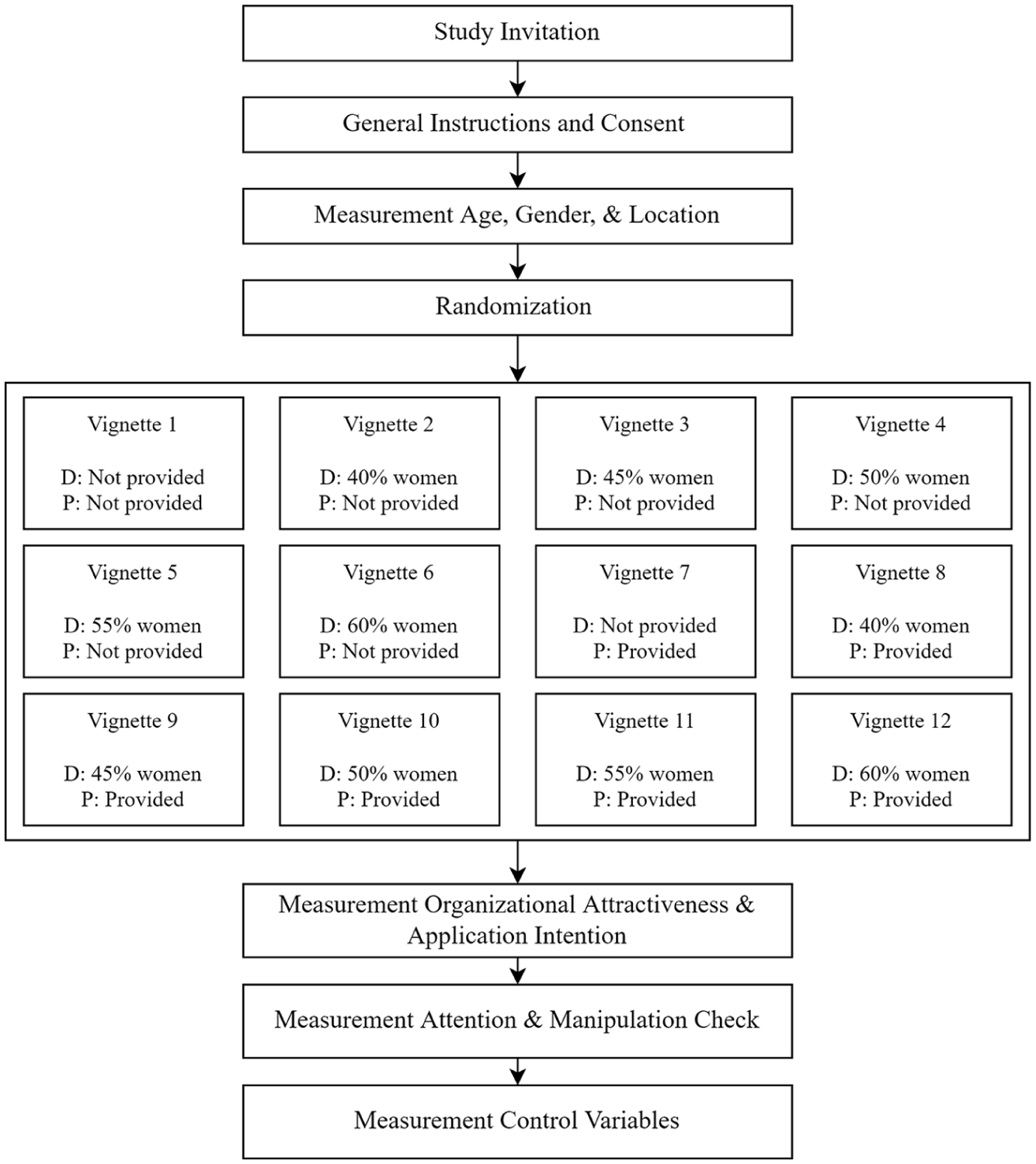
Experimental design.
Measurement
Appendix B lists the complete wording for all variables. For scales with multiple items, we constructed the composite measures by averaging across all items.
To assess organizational attractiveness, we applied the German version by Cordes and Vogel (2023) of the validated scale presented by Highhouse et al. (2003). It measures organizational attractiveness on three different dimensions. Given the focus of our study, we included two: general attractiveness and intention to pursue. Exemplary items include “To me, this organization would be a good place to work” (general attractiveness) and “I would accept a job offer from this organization” (Intention to Pursue). The scale applied 10 items, used 5-point Likert scales, and performed well (α = .93).
We measure intention to apply using two items that have been used in previous studies on recruitment (e.g., Gomes & Neves, 2011; Sievert et al., 2022). As such, two items assess whether and to what extent participants were willing to apply (Gomes & Neves, 2011, p. 689): “If I were searching for a job, there would be a strong probability of applying to this offer” and “If I were searching for a job, I would apply to this organization” (α = .94).
Quality Checks: To ensure that participants were attentive when reading the vignettes, we implemented two manipulation checks. First, we asked participants about the share of women displayed in the job advertisements. Second, we asked whether they agreed with the following statement: “The job advertisement displays a clear goal for the gender ratio of the traineeship,” using a 5-point Likert scale. An additional attention check was implemented, asking about the duration of the traineeship program presented.
Finally, the questionnaire asked for sociodemographic information. Participants indicated their age, gender, and whether they were living in the federated state (Lower Saxony) at the beginning of the questionnaire. After the vignettes, dependent variables, and quality checks, they also indicated educational level, employment sector, political orientation, and public service motivation (α = .88: Vandenabeele & Penning de Vries, 2016).
Sample
We conducted our survey experiment with a sample of German citizens aged 18 to 69 years old. The sample was provided by a panel provider (Bilendi) and implemented in early July 2022. Data collection lasted 2 weeks. The panel provider invited participants from its longstanding and actively managed database, who received invitations through the respective platform. The panel provider recruited citizens solely from one German federal state (Lower Saxony). This approach was chosen to increase the ecological validity of the vignettes because it reduces concerns that individuals might evaluate the offer differently based on their geographical proximity to the organization or be prompted to make assumptions about where the vacancy was located, in case this information was not reported. The final sample comprises 1,469 participants, ensuring a high statistical power even for small effect sizes. Appendix C presents the sample structure. The sample matched the age and gender distribution of the general population. About 50.8% were women, and participants were reasonably distributed across age groups. To assess whether we successfully randomized participants across the 12 groups, we implemented randomization checks using age, gender, education, work, and political orientation. The χ2 test and ANOVA findings (Appendix D) indicate no statistically significant differences between the groups, indicating successful randomization.
Results
Initially, we assessed how our manipulations affected the variables used as manipulation checks. We ran two regressions with “perceived female ratio” and “gender ratio statement” as the dependent variables. The ordinary least squares (OLS) regression models in Appendix E use the treatment conditions for both descriptive and prescriptive symbolic representation as independent variables. They exhibit statistically significant effects compared to the control group (“no information”). As expected, being presented with information about descriptive representation altered participants’ perceptions of the share of women present in the given job category. In addition, participants also exhibit a higher agreement about the gender ratio pledge when confronted with this manipulation (model 2: b = 0.76; SE = 0.05, p < .001). Thus, we conclude that the manipulations were successful.
We present the results for the entire sample in Table 1. To ensure a fine-grained analysis, we tested the effects in the same regression model. This also aligns with the factorial design and the simultaneous manipulation of descriptive and prescriptive symbolic representation. Since the manipulation for descriptive symbolic representation included more than one information treatment, we present their effect separately using the “no information” treatment as the baseline comparison. We show both direct effects and the interaction terms with the gender variable. This second step is relevant to test out hypotheses adequately. In models 1 and 3, the statistical findings for descriptive symbolic representation are not statistically significant, indicating that none of the treatments had a positive effect on participants’ intention to apply (H1a) or organizational attractiveness (H1b). Additionally, we were unable to isolate an effect of the prescriptive representation treatment. Therefore, participants’ intention to apply (H2a) and organizational attractiveness (H2b) remained unchanged. Still, these findings are not indicative of symbolic representation effects, given that the analysis does not differentiate between men and women. Hence, models 2 and 4 include gender as an additional predictor, along with interaction effects with the treatment factors.
OLS Regressions Testing Hypotheses (Full Sample).
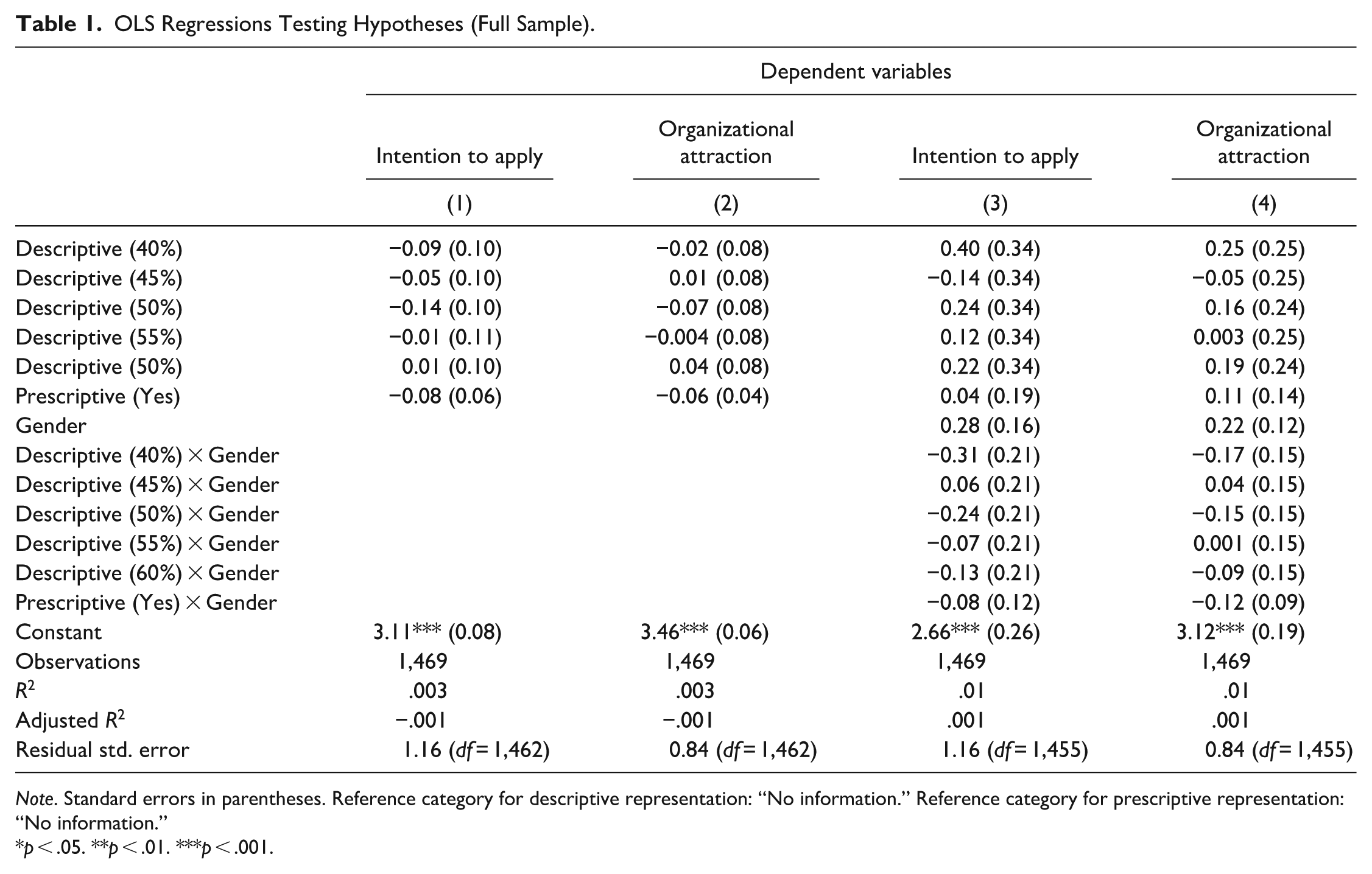
Note. Standard errors in parentheses. Reference category for descriptive representation: “No information.” Reference category for prescriptive representation: “No information.”
p < .05. **p < .01. ***p < .001.
Contrary to our theorizing, the interaction effects were also statistically insignificant. In addition, the effects were comparatively small overall. As such, we must reject H1a, H1b, H2a, and H2b. Neither descriptive nor prescriptive symbolic representation affected men and women differently.
To further validate these findings, we conducted additional regression models with gender subgroups. Table 2 presents four additional OLS regression models. In addition, we visualize the treatment-induced differences for the gender subgroups in Figure 2. Also, these analyses show no significant effects in the female and male subgroups. The absence of statistically significant treatment effects holds for organizational attractiveness (H1a) and intention to apply (H1b). For prescriptive representation, we only find a small effect at the lower level of statistical significance on the organizational attractiveness of women (H2a, model 2: b = −0.12; SE = 0.06, p < .05) but none on the intention to apply (H2b). Overall, we cannot support the research hypotheses because neither of the treatment factors exhibits substantial and stable effects on intention to apply and organizational attractiveness among women. Among the covariates presented in Appendix G, only public service motivation exhibits a statistically significant correlation with intention to apply and organizational attractiveness (Figure 3).
OLS Regressions Testing Hypotheses (Sub-Samples).
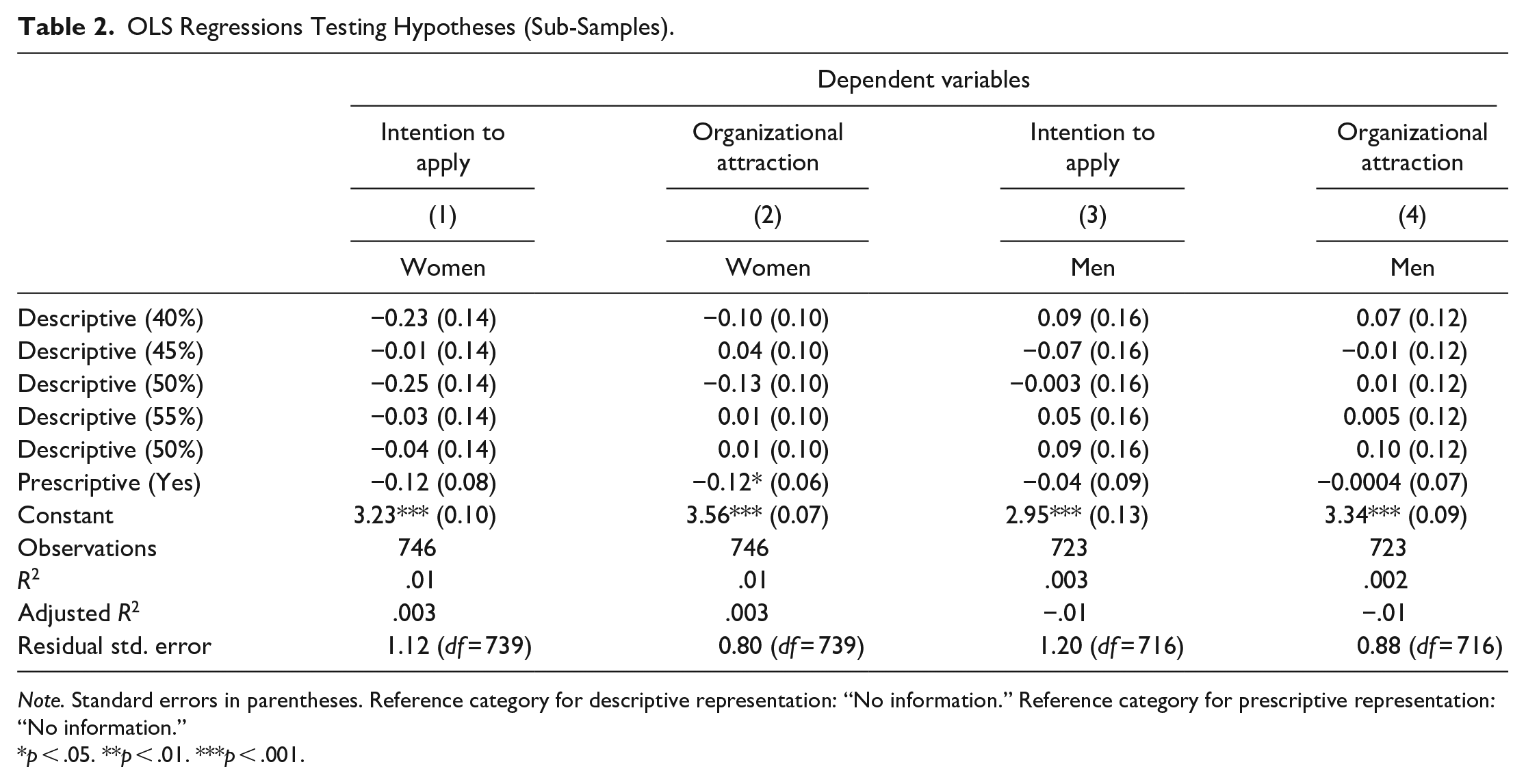
Note. Standard errors in parentheses. Reference category for descriptive representation: “No information.” Reference category for prescriptive representation: “No information.”
< .05. **p < .01. ***p < .001.
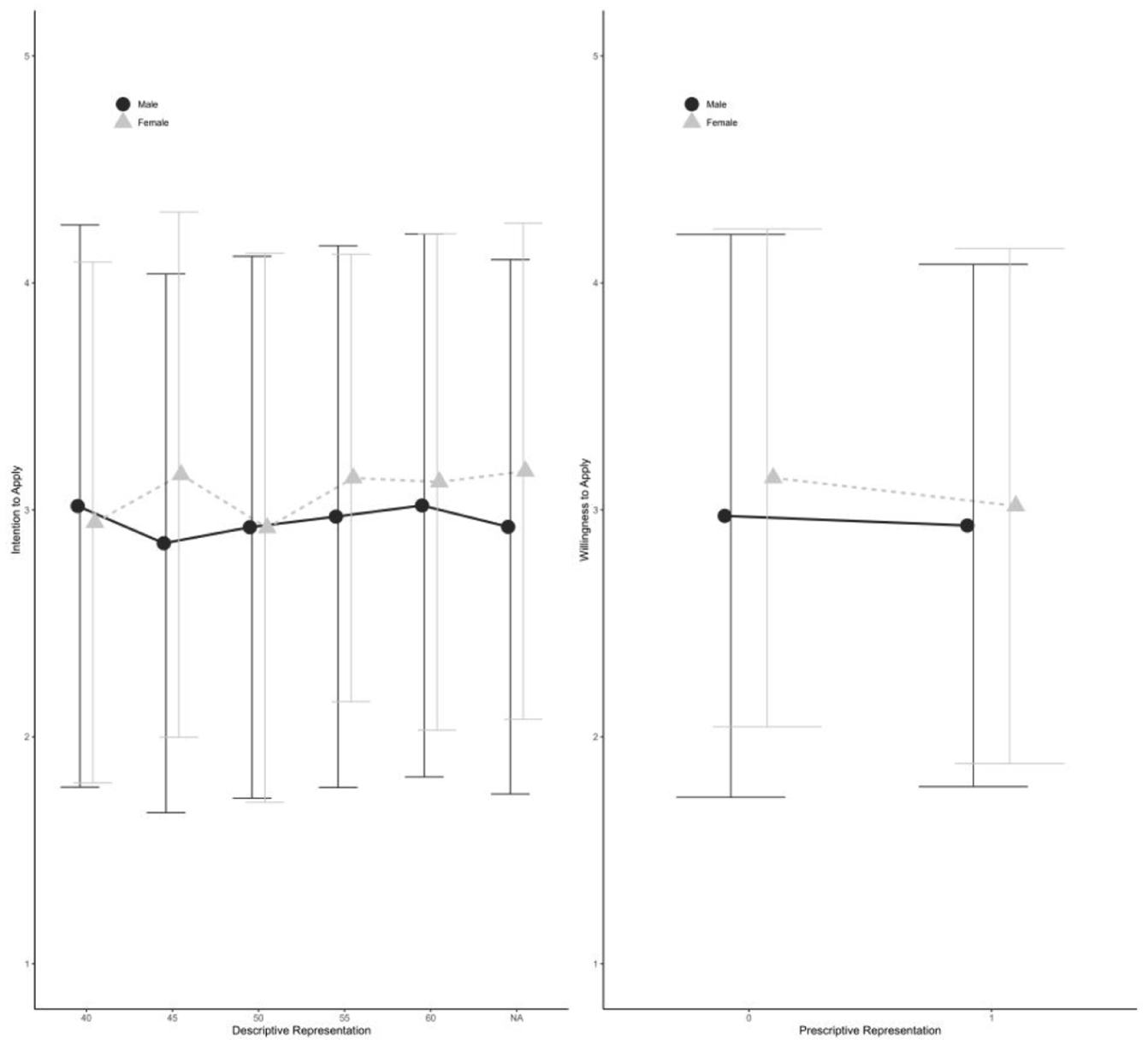
Visualization of the experimental results (intention to apply).
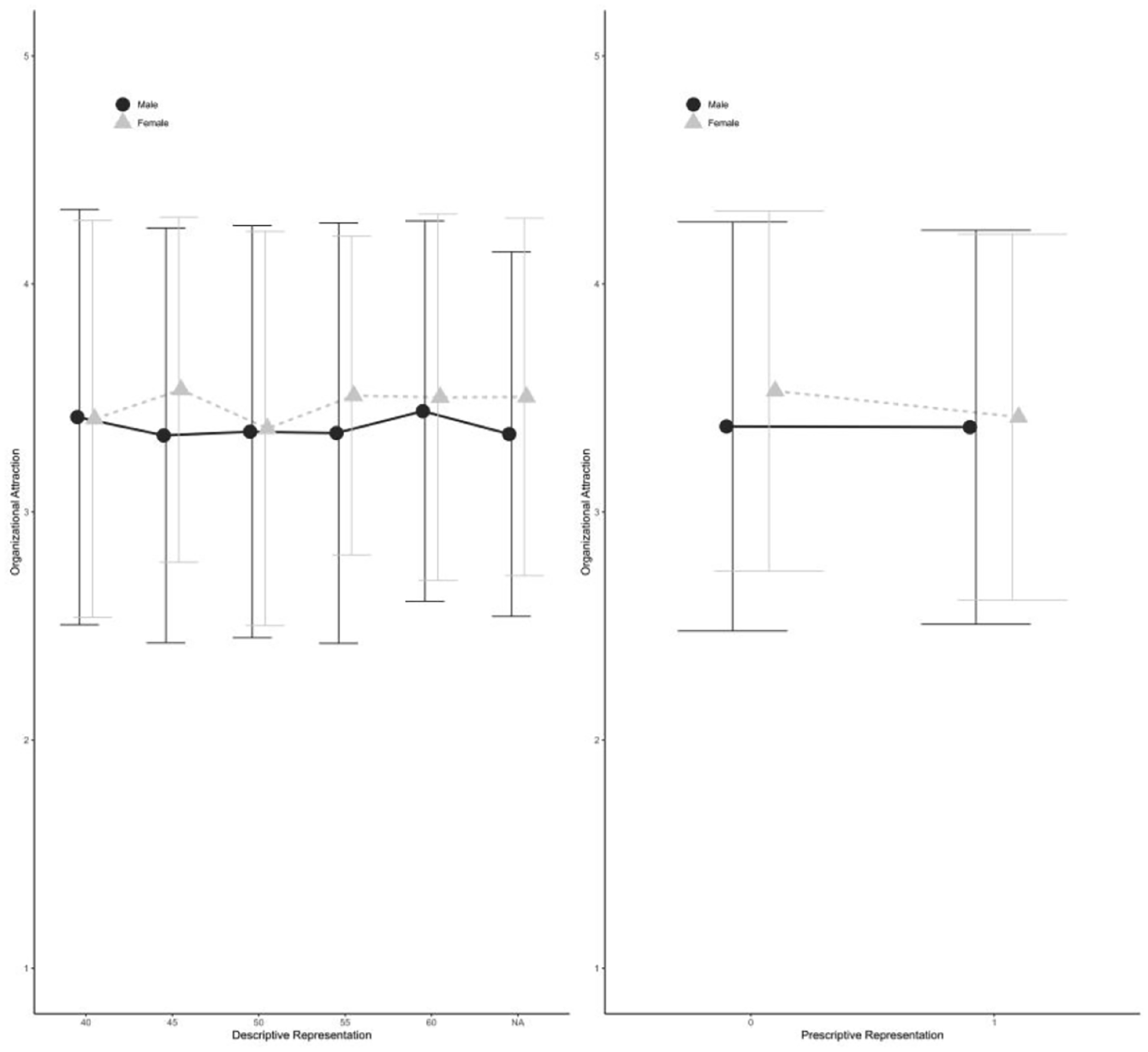
Visualization of the experimental results (organizational attraction).
Given that our sample constitutes a representative sample of adults, we repeated the regression analysis with an exploratory age-based subgroup. This exploratory analysis is warranted because not every demographic age group is equally likely to search for the type of job featured in the survey vignettes. Since we used a traineeship, we expect that younger individuals are more likely to perceive this job as a realistic option. Hence, we divided the sample and retained a sub-sample of young participants. Given that 35 constitutes a typical threshold for entrance into the civil service in Germany, we included everyone until this age threshold (n = 429). Table 3 presents the analysis corresponding to Table 1, including the main effects and interaction terms with participants’ gender. The absence of statistically significant treatment effects holds for organizational attractiveness (H1a & H2a) and intention to apply (H1b & H2b) despite focusing solely on those participants most likely to seek employment (and specifically a traineeship).
OLS Regressions Testing Hypotheses (Young Sub-Sample).
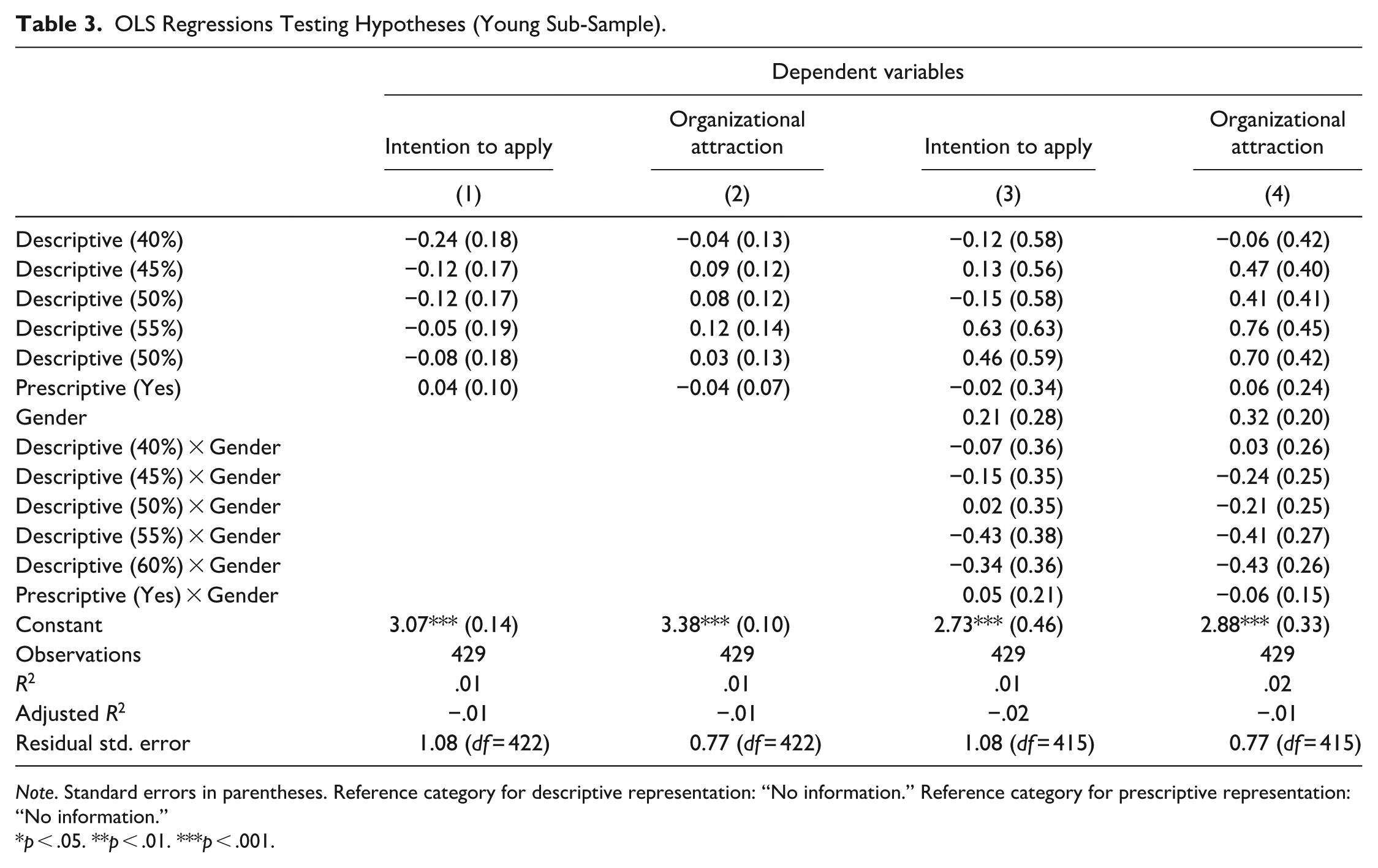
Note. Standard errors in parentheses. Reference category for descriptive representation: “No information.” Reference category for prescriptive representation: “No information.”
p < .05. **p < .01. ***p < .001.
Discussion
This article connects the symbolic representation literature (Ding, 2025; Riccucci & Van Ryzin, 2017; Wang, 2025) to critical research on public sector recruiting (Jakobsen et al., 2023; Sievert et al., 2022). Integrating arguments from representative bureaucracy brings critical new insights to contemporary recruitment research, relevant because public organizations operate in increasingly competitive labor markets. First, human resource management and recruitment research often promotes diversity and inclusion (Castilla & Rho, 2023; Groeneveld, 2011; Kravariti & Johnston, 2020), but it usually overlooks whether these efforts influence job seekers’ choices. Second, assessing whether representation signals benefit public sector recruiting is relevant because if successful, these offer inexpensive and easy-to-implement tools for recruiters (Keppeler & Papenfuß, 2021). However, null findings, like in our case, suggest the need to be realistic about expectations when implementing such approaches since potentially salient signals (from the perspective of recruiters) might not be consequential for potential applicants. We show that while it is not harmful to highlight both descriptive and prescriptive representation, neither signal was effective in changing how job seekers saw the organization and job in this early stage of recruitment processes.
Our theorizing contributes to both human resource management and recruitment research, as well as research on representative bureaucracy (Bishu & Kennedy, 2020). First, we further the theoretical understanding of symbolic representation and its conceptualization (Headley et al., 2021; Riccucci & Van Ryzin, 2017; Wang, 2025). While we suggested that symbolic representation may increase the effectiveness of recruiting efforts (i.e., help to attract more women), we present a novel distinction of signals, grounded in different cognitive mechanisms: descriptive and prescriptive symbolic representation. First, descriptive symbolic representation refers to the status quo, where organizations disclose a given gender distribution. Second, prescriptive symbolic representation reflects situations where organizations disclose which gender distribution they strive for in the future. While descriptive symbolic representation very much reflects the original notion of symbolic representation (Riccucci et al., 2018; Riccucci & Van Ryzin, 2017; Sievert, 2023), we specifically introduce in the representative bureaucracy literature a novel focus on the diversity pledges and promises organizations make for the future (Kroeper et al., 2022; Leibbrandt & List, 2025). While this aspect is relevant for employer branding (Bradley et al., 2024; Golubovich & Ryan, 2022), this argument also extends to other pertinent areas in the representative bureaucracy literature. For example, building on previous studies about racial representation in policing contexts (Riccucci et al., 2014, 2018), focusing on prescriptive representation may offer a complementary angle. Suppose police departments signal their commitment to increasing diversity. In that case, this might affect recruitment efforts (Linos, 2018) and enhance citizens’ legitimacy perceptions. Similarly, in commonly studied coproduction settings (Riccucci et al., 2016; Sievert, 2021), prescriptive representation may offer further opportunities to extend research. Especially when assessing coproduction intentions, previous research has solely focused on descriptive representation; however, it would be valuable to examine public organizations’ commitment to increasing gender representation among those engaged in coproduction (Sievert, 2023). Overall, introducing prescriptive representation as an additional dimension allows a novel perspective within representative bureaucracy.
Second, we contribute to recruitment research in public administration (Asseburg & Homberg, 2020; Jakobsen et al., 2023; Jakobsen & Homberg, 2025) by integrating the arguments about descriptive and prescriptive symbolic representation. We argue that some job seekers in the labor market may be influenced by representation signals sent by public organizations. While some recent studies offer initial insights into this combination (Johnston et al., 2024), the question of whether and how public organizations can effectively leverage symbolic representation in recruitment processes remains unclear. We address this research gap by theorizing that descriptive and prescriptive theorizing have distinct effects on job seekers’ intention to apply and their perceptions of organizational attractiveness. This assessment is relevant because some organizations already incorporate such signals into their employer branding efforts (Baum et al., 2016; Keppeler & Papenfuß, 2021, 2023; Ritz et al., 2023). However, our empirical findings suggest that neither type of representation signal enhances public organizations’ success in attracting applicants, as neither descriptive nor prescriptive representation had statistically significant and robust effects on either of the dependent variables. Based on these findings, we argue that recruitment and selection for diversity would not benefit considerably from signaling symbolic representation, regardless of whether the signal features the current or the intended gender distribution, at least to the extent of organizational attractiveness and intention to apply. Overall, we extend the literature by revealing the limits of prescriptive representation, challenging previous arguments focused on employer branding (Cordes & Vogel, 2023; Keppeler & Papenfuß, 2021).
Practical Implications
Our research has implications for public sector practice: simply disclosing either the current gender mix (descriptive representation) or a future pledge (prescriptive representation) in job advertisements is unlikely to enhance organizational attractiveness. Some considerations about the nature of these recruitment signals arise. Given that such disclosures are virtually cost-free, keeping them in job advertisements does no harm. However, public organizations should not expect any concrete improvements to arise from them. Given extensive insights into the complexities of recruitment processes that extend beyond the mere publication of job advertisements (Jakobsen et al., 2023; Linos & Riesch, 2020), we expect that resources devoted to achieving more equal gender representation may be invested more effectively throughout recruitment processes. Practitioners implementing diversity management programs and tasked with improving recruitment practices should thus perhaps prioritize other stages of the recruitment process, such as selection procedures and interviews, which are likely to play a more pronounced role in job seekers’ decision-making (Korac et al., 2019). Practitioners could, for example, ensure mixed-gender selection panels, offer mentoring to shortlisted candidates, or publish transparent data on career progression (Campion & Campion, 2025; Lane et al., 2024; Sarabi & Lehmann, 2024). More generally, organizations should allocate resources to recruiters (e.g., training) and information throughout the recruitment process, as these have been shown to have a critical impact on recruitment outcomes (Uggerslev et al., 2012). Suppose public organizations aim to continue signaling their current gender mix and commitment to increasing representation. In that case, they should treat the message as a tool for transparency and equity rather than a marketing device: publish current diversity metrics, set time-bound targets, and track the gender mixes of applicant pools. Doing so helps prevent over-reliance on mere cues that, at least at the pre-entry stage, might appear as “window-dressing” (Levi & Fried, 2025). These practices could also more broadly set a standard or signal norms to the broader labor market about equity-enhancing practices, with public organizations acting as role models (Groeneveld & Verbeek, 2012; Hur & Abner, 2024).
Limitations and Research Agenda
Our research design exhibits several limitations that also offer guidance for future research. First, survey experiments maximize internal validity while introducing limits to the external validity of the study. Although we did our utmost best to increase ecological validity compared with typical vignette studies (e.g., by using authentic job advertisement texts or a local employer context), and considering the needs for experimental studies at the individual level (Jakobsen et al., 2023), our design still cannot replicate the nuanced, high-stakes choices real applicants face. Thus, we acknowledge that survey experiments featuring job advertisements are to some extent arbitrary (Vogel et al., 2024). As such, the inferences are limited to a general tendency but cannot adequately reflect individual decision-making. In this regard, the vignettes used in this study represent a compromise. For example, our study cannot capture the nuances of contextual factors across different sub-sectors and professions that likely influence how job seekers interpret representation signals. We still believe that the results have merit, primarily because null findings suggest that, for example, field experiments would likely not be more “successful.” Nonetheless, we invite future research to implement more elaborate research designs. For example, studies that utilize multiple data sources or those that allow for a more realistic assessment of job seekers’ behavior in complex labor markets, across multiple recruitment stages, would be beneficial. Second, the dependent variables rely on self-reported intentions. While common-method variance between predictors and outcomes is minimal (the descriptive and prescriptive representation signals were experimentally manipulated rather than self-reported), future studies should still complement the self-reported measures with behavioral or administrative data (e.g., George & Pandey, 2017; Jakobsen & Jensen, 2015). Third, our research design is limited to the initial stage of the recruitment process. As such, we do not examine whether symbolic representation signals may be relevant in later stages (e.g., selection or hiring). For example, a representative hiring committee may affect the probability of female candidates remaining in the selection process (Kazmi et al., 2022; Taylor & Bergmann, 1987). Examining the entirety of recruitment processes offers significant potential for successful recruitment (e.g., Vogel et al., 2024). Yet, multi-stage recruitment research is rare (Saks, 2024).
Fourth, our study focuses exclusively on potential applicants’ interpretation of representation signals. While their perceptions constitute a critical element in explaining their decisions throughout the recruitment process, our analysis does not focus on recruiters (i.e., those crafting job advertisements in this case). Their perceptions of and attitudes toward representation signals likely matter. For instance, they might be formally or informally bound to introduce these statements into recruitment calls. Still, they may have discretion about how such statements appear in practice. Alternatively, they may lack discretion and control over whether such changes are feasible within their organization. Future studies could complement these two perspectives by investigating whether recruiters’ attitudes influence how diversity statements with representation signals are crafted, and whether this, in turn, affects job seekers’ perceptions and behavior.
Fifth, the survey experiment was conducted in Germany. While previous research (Sievert, 2021) indicates that attitudes toward gender representation and diversity are comparable to those of countries like the US, the findings may still not be generalizable. For example, Germany has a considerable number of women in the public sector overall. Consequently, representation signals may be less meaningful compared to those in countries with lower levels of representation (Vogel et al., 2024). Alternatively, job seekers might not consider the signal relevant due to the overabundance of diversity pledges in the public and private sectors (Levi & Fried, 2025), resulting in high signal saturation and low signal significance, which makes the signal uninformative. Finally, the rules concerning recruitment practices and public employment vary broadly across countries (Bach et al., 2022). Therefore, the specific treatment conditions implemented in our design may not be lawful in certain jurisdictions, where a stronger legal emphasis is placed on merit-based recruitment and limits are in place on positive discrimination actions.
Sixth, using a survey experiment leads to a natural limitation regarding the dependent variables. We used intention to apply and organizational attractiveness because both are commonly used in previous research (Gomes & Neves, 2011; Korac et al., 2019; Sievert et al., 2022). While using such constructs aligns with the necessary simplification of a survey experiment, they do not reflect actual decision-making and behavior. As such, the experimental design exhibits limited ecological validity. Future research should expand the methodological focus to other research designs, thereby allowing for a more in-depth understanding of job seekers’ intentions and behaviors. While qualitative approaches might be suitable and novel, event-based methods and diary studies offer a well-established approach to following job seekers over extended periods. This argument extends to the sample used in this study. While we examined whether younger participants exhibited different response patterns, our study did not focus exclusively on actual job seekers. Future research could improve on this aspect by sampling individuals who are actively searching for a job.
Conclusion
We present a novel perspective on symbolic representation, distinguishing descriptive and prescriptive symbolic representation. While our theorizing suggested that both may affect job seekers’ attraction and intention to apply, our study yielded null findings. Neither presenting the current gender distribution nor a pledge to future representativeness affected the participants’ attraction to the organization and intention to apply. Job seekers appear to be unaffected by representation signals at the pre-entry stage. We conclude that the promise of symbolic representation effects does not translate to public sector recruitment, at least not at the initial step. Practitioners should focus on representation at later stages of recruitment, for example, selection and interview procedures. These are characterized by direct contact between recruiter and job seeker and, thus, may be prone to different mechanisms captured in the literature on representative bureaucracy.
Footnotes
Appendices
Declaration of Conflicting Interests
The authors declared no potential conflicts of interest with respect to the research, authorship, and/or publication of this article.
Funding
The authors disclosed receipt of the following financial support for the research, authorship, and/or publication of this article: This project has received funding from the Joachim Herz Foundation through the “Add-on fellowship for interdisciplinary economics and interdisciplinary business administration.”
