




Abstract
Pierre Bourdieu’s influence on the study of lifestyles in the United States has been profound, yet the vast majority of relevant research operates with methods and assumptions at odds with Bourdieu’s own. His specifically relational or geometric understanding of social structures, and lifestyles, has been overlooked, meaning that no one has yet done for the contemporary United States what Bourdieu did for France, that is, construct a model of the “space of lifestyles” and its homologies. This paper does precisely that, deploying Bourdieu’s own favored technique of multiple correspondence analysis on survey data from 2017 to 2018. It finds a remarkable continuity between 1970s France and the contemporary United States, specifically in the existence of axes relating to economic and cultural capital. The paper also explores the correspondence of sociodemographic factors with the space, and importantly, it unveils associated patterns of symbolic domination.
Introduction
Pierre Bourdieu’s (1984) thesis in Distinction that there is a close relationship, or “homology,” between class position and lifestyle is among the most widely known, cited, and tested in contemporary sociology. Numerous researchers have sought to adjudicate whether it still stands decades after it was first formulated and whether it applies to nations beyond its French crucible, including the United States. Many have doubted its transnational generalizability, suggesting it was a peculiarly Gallic and peculiarly 1970s invention, and indeed it seemed destined for obsolescence once a new archetype stepped forward, first in the United States and then in countries around the world: the “cultural omnivore.” Wide citation and assessment of Bourdieu’s thesis have not, however, gone hand in hand with thorough appreciation of the specific conception of the social world it entails and, importantly, the specific methodological tools and operations it harmonizes with. Above all else, the specifically topological or geometric view of class and culture seems to have been either ignored or downplayed by many, and the statistical technique with which it readily pairs, that is, multiple correspondence analysis (MCA), has been almost completely overlooked in the U.S. context. In addition, however, there is a sense in which the major point of Bourdieu’s research has been lost: The motive was not simply to map out the play of differences but to lay bare the underpinning structure of symbolic struggle and domination, that is, the principles of cultural denigration according to which some ways of life are widely misrecognized as superior and others as inferior. Many are interested in examining the relationship between class and lifestyles, for sure, but the image of the cultural omnivore tends to carry with it a message of tolerance and equality in matters of taste and, sometimes, assumptions that other factors—like morality or economic success—are the benchmarks for judging people’s worth or value in the U.S. context instead.
This paper provides a countervailing force. It re-emphasizes Bourdieu’s spatialized vision of culture and highlights why ignoring it has led many studies of the social structuring of tastes and lifestyles in the United States, including those supporting the omnivore thesis, to debatable conclusions. It also makes the case for the geometric tradition of data analysis allied to Bourdieu’s spatialized view of social structure, and MCA in particular, as these have been curiously absent from U.S. sociology despite their established place in European social science. Moving beyond programmatic statements, however, the paper demonstrates its arguments by using MCA to construct a model of the contemporary space of lifestyles in the United States, to assess its homology with class and other factors, and to examine the relationship with symbolic domination. It does so by drawing on a specially designed survey delivered in the United States in 2017–2018.
Bourdieu and after
When Bourdieu (1984) proposed there was a relationship between social class and lifestyles, he was positing a homology between two multidimensional spaces (see also Bourdieu 1987, 1991, 1998). The first of these was culture itself, which was organized around two cross-cutting oppositions: a polarization defined by form/style/exclusivity versus functionality/substance/accessibility, with a middlebrow culture marked by self-consciousness and a deferential “cultural goodwill” to those above in between; and a polarization according to the way in which form/style/exclusivity—and middlebrow deference—was defined. Function and substance as organizing principles of consumption may have yielded a certain homogeneity, manifest in tastes for cheap and cheerful eateries, popular sports or activities focused on competition and strength, practical and comfortable clothes and homes, and so on. Form, style, and exclusivity, on the contrary, were differentiated according to whether they were so because of financial inaccessibility (e.g., expensive cars, luxury items, hunting) or cultural inaccessibility (i.e., “highbrow” culture), while middlebrow culture was also modulated by an opposition between the new and the traditional.
The second space defining the homology was the “social space,” or the space of social positions defined by possession of economic capital (income and wealth) and cultural capital (education level, parental education). The prime opposition here, corresponding with the form/function polarity of the lifestyle space, was high/low capital in all its forms. A second axis, corresponding with the luxury/highbrow and old/new opposition, distinguished individuals according to the composition of their capital—that is, whether it was weighted toward economic or cultural capital—but was also entwined with age thanks to the effects of educational expansion.
The homology between the spaces matters because it serves as a vehicle for symbolic domination, or what Bourdieu called “symbolic violence.” Lifestyles are not seen as equal: The rare and exclusive are cast as distinctive and valuable, while those associated with the popular and accessible—and also the middlebrow—are considered “common” and “vulgar.” The association with capital means exclusive practices are perceived as symbols of “cleverness” or “success,” but they are also misperceived, or misrecognized, as symbols of innate worth and “good taste” insofar as the core capitals of contemporary capitalist social orders—cultural capital and economic capital—are misrecognized as inherently worthy and the product of nature or talent. Although there may be some proud resistance, the overall result is that those with less capital are more likely to feel themselves deficient or looked down upon.
It did not take long for sociologists to wonder whether Bourdieu’s thesis could be applied to their own countries, and the United States was no exception. Many have been skeptical, often because of an observed tendency for those in the higher reaches of the U.S. class structure, however that is conceived, to pay scant attention to the traditional symbols of European highbrow culture, that is, opera, classical music, avantgarde art, and so on. Some people may like those things, for sure, but they form a small minority even within their class (see, for example, Halle 1993; Kingston 2000; Lamont 1992). More common, claimed some, was a tendency for those with more resources to emphasize cultural variety. Rather than denigrate popular culture by reference to rarefied forms of music or art, the highly educated and highly paid prefer to range across different genres of music, films, television, and so on, both traditionally highbrow and supposedly lowbrow, while those with fewer resources stick to fewer, lowbrow genres (Bryson 1996, 1997; Peterson 1992, 1997, 2005; Peterson and Kern 1996; Peterson and Simkus 1992) There is an opposition, in short, between “omnivores” and “univores.” Further analyses in numerous countries have since complexified the typology (e.g., van Eijck and Lievens 2008) or blended it with measures of “voraciousness” of consumption (Sullivan and Katz-Gerro 2007), while omnivorous taste itself has been linked to a desire to maximize connections (Erickson 1997), to a heightened “information processing capacity” (Chan 2010), to a cosmopolitan disposition (Peterson 1997), to social mobility (Lahire 2004; van Eijck 2001), and so on.
Some consider the discovery of the omnivore to be a clear refutation of Bourdieu’s thesis (e.g., Chan 2010; Peterson 2005; van Eijck 2001), while others suggest that it merely demonstrates the evolution of cultural domination within the general logic of Bourdieu’s framework (Bennett et al. 2009; Coulangeon and Duval 2015; Holt 1997; Lena 2019; Lizardo and Skiles 2016; Warde 2005). The trouble is, however, that most of this research—where there even is research underpinning the arguments—uses measures and techniques so different from Bourdieu’s own that they cannot easily be considered effective assessments of his thesis. First, there are the measures of culture and class. Cultural consumption is often reduced to preference for specific genres of music, television, and so on or frequency of engagement with specific, usually highbrow, cultural activities. This approach has now been extensively criticized (see Brisson 2019; Hazir and Warde 2018; Holt 1997; Atkinson, 2011, 2017; Lizardo and Skiles 2018). Its distinct lack of subtlety—sometimes genre categories are exceptionally broad and vague (e.g., “pop/rock”)—is one thing, but perhaps its major flaw is its tendency to operate with an overly restricted view of culture. Uses of the body (e.g., sports/exercises undertaken, body modification practices) are typically overlooked, for example. Much more significantly, always missing from view are indicators of material consumption and taste—for example, possession of cars or luxury goods (including tailored suits and expensive jewelry), clothing style, and home décor—which are, at the same time, indicators of some of the most visible, routine, and value-laden symbols of one’s position. Two people may attend the same types of events or listen to the same types of music, and may intuit some similarity if they happen to see each other at an event or come into conversation about music, but the way they dress or strive to decorate their home, the car(s) parked on their drives, or the watch/bracelet on their wrist—perhaps seen simply in the street, at the office, or at an event—may generate a profound sense of difference and invite starkly contrasting evaluations. Characterizing them both as “omnivores,” therefore, captures only a very narrow slice of their taste profile, symbolic presentation, and perceived worth.
Class and stratification, meanwhile, are typically conceived as a set of discrete unidimensional factors—a hierarchy of occupations, a socio-economic scale, education level, and so on. These are, at best, rudimentary proxies for position in the social space, which is as defined by inherited cultural capital and wealth as much as income, education, and occupational effects. The last of these, moreover, cannot be reduced to levels of economic reward or career prospects, as with the widely used Erikson-Goldthorpe-Portacarero scheme, but vary according to sector or “field,” to use Bourdieu’s terminology. Crucial in this regard is the internal structure of what Bourdieu called the “field of power” (Bourdieu and Wacquant 1993) or the space of contention between dominant agents within a social order, with intellectuals (including cultural producers and academics) and captains of industry (employers and managers) serving as two poles of a ubiquitous struggle between powers spiritual and powers temporal, although the opposition also finds expression at lower levels of the class structure (e.g., socio-medical service workers vs. small business owners).
Second, there is a stark methodological divergence from Bourdieu’s research in Distinction. Much of the quantitative research in the United States, including that confirming the existence of the omnivore, is based on one form or another of regression analysis, with various indicators of lifestyle acting as the “dependent” variable and measures of social position acting as “independent” variables. Bourdieu, on the contrary, used a very different technique: MCA. Like factor analysis, MCA looks for latent structures organizing a set of variables by decomposing the total variance (or inertia) into multiple dimensions or axes of descending magnitude (denoted by eigenvalues). Unlike factor analysis, however, it operates to distinguish oppositions between categories of variables rather than variables as wholes. More importantly, Bourdieu’s use of MCA was embedded in a French tradition of statistics pioneered by Jean-Paul Benzécri and generally referred to as Geometric Data Analysis (GDA) (for overviews and introductions, see Benzecri 1992; Greenacre and Blasius 2006; Hjellbrekke 2019; Lebaron and Le Roux 2018; Le Roux and Rouanet 2004). Unlike standard uses of factor analysis (e.g., Katz-Gerro 1999, 2002) or even MCA (e.g., Lopez-Sintas and Katz-Gerro 2005), the goal in GDA is not to treat the resultant axes as scales for subsequent regression analysis but to examine the properties of the multi-axis space as a whole—that is, the distances and directions between points. This does not mean, however, that hypotheses regarding relationships between lifestyles and sociodemographic factors cannot be explored. This is done by the analysis of “supplementary points,” that is, categories which do not contribute to the construction of the space but which nonetheless have factor coordinates on each axis. Bourdieu’s method in Distinction, then, was to use a series of active categorical variables related to lifestyles (knowledge of composers, preferred cultural works, etc.) to construct the space of lifestyles and then examine the position of various sociodemographic indicators—occupation group, income, education, age, and so on—within it. More accurately, he did this for the two “classes”—the dominant and intermediate classes—for which he felt he had sufficient data.
MCA and the broader GDA tradition have now begun to infiltrate Anglophone sociology. More specifically, there has emerged a body of research, largely European in provenance, deploying MCA to construct models of the space of lifestyles and their homologies for various countries to assess the degree to which they resemble or depart from Bourdieu’s model for 1970s France. Nations or regions studied include Finland, Sweden, Switzerland, Norway, Flanders, Australia, contemporary France, Portugal, Mexico, and the United Kingdom (see Bennett et al. 2009, 2021; Börjesson 2015; Kahma and Toikka 2012; Lebaron and Bonnet 2014; Robette and Roueff 2019; Savage et al. 2013; Weingarter and Rössel 2019; and contributions to Coulangeon and Duval 2015; Hanquinet and Savage 2018). A continued dependence on genre categories or indicators of frequency of cultural engagement often means that the models tend to distinguish the “engaged” and the “disengaged,” and traditional culture and youth culture, rather than oppositions of form/function and asceticism/luxury. There have been occasions, however, where a broader or carefully constructed set of indicators—indicators focusing not just on engagement with the “arts” but also on material consumption and associated tastes—has been used to construct a model of the space of lifestyles and assess its homologies (Blasius and Friedrichs 2008, 2020; Blasius and Muchlichen 2010; Flemmen, Jarness, and Rosenlund 2019; Atkinson, 2017, 2018, 2021; Schmitz 2016). In these instances, spaces are structured by oppositions of not just form/function, style/substance, and exclusive/affordable, corresponding with capital volume, but also oppositions of luxury/asceticism or expensive/exotic associated with capital composition. Bourdieu’s model is confirmed, in other words, while the omnivore is no longer so prominent.
Even the more careful “gold-standard” studies using MCA, however, have tended to restrict their focus to mapping the homology between lifestyles and social position. Left unexplored has been the relationship with symbolic domination. This has traditionally been left to qualitative studies concerned with perceptions of difference and/or feelings of shame (e.g., Lamont 1992; Sayer 2005; Skeggs 1997), although some have endeavored to locate interviewed individuals rigorously using MCA (Jarness 2018). Such studies reveal powerful testimonies, even though they sometimes—as in Lamont’s (1992) research—contest Bourdieu’s thesis, but they give little indication of the broader prevalence and patterns of symbolic domination.
Given the divergence of American and European research, the dependence of results on the types of questions analyzed, and the omissions of even the most rigorous analyses so far, the questions to be answered are as follows. First, would Bourdieu’s model of lifestyle differences hold in the contemporary U.S. case if constructed using his own method and a range of indicators covering highbrow, accessible, and material consumption, and would the cultural omnivore still be detectable? Second, what would be the form and extent of the homology with the social space if the latter were approximated by a wider array of indicators of capital and field effects than usual, such as wealth, inherited cultural capital, and sector of employment? Third, and finally, to what extent and in what way is symbolic difference bound up with symbolic domination?
Data and Method
This paper tackles all of the above questions. It does so by mobilizing MCA to construct a model of the contemporary lifestyle space in the United States using data from a commissioned national survey fielded in 2017–2018 by the global market research firm GfK (n = 2,491). Respondents were recruited for telephone interview via random digit dialing. The response rate was not retained by GfK for data protection reasons but can be expected—in line with industry figures for this mode of research—to be as low as 5 percent (Brick and Williams 2012; Kennedy and Hartig 2019; National Research Council 2013). The main problem of such a low response rate is nonresponse bias, and indeed a first phase of fieldwork produced data heavily skewed toward older and higher educated individuals. To counteract this, a second wave of fieldwork was undertaken with screener questions for age and education level to bring the final sample in line with figures from the 2016 Current Population Survey (CPS). A poststratification weight was then constructed for gender, age, and region using the CPS as a benchmark. Distributions of responses on several key variables (frequency of reading, frequency of watching television, favorite sport to watch) were then checked against comparable variables from the U.S. sample of the 2007 Leisure Time and Sports module of the International Social Survey Programme to confirm external validity.
The survey included a comprehensive range of questions related to taste, consumption, cultural participation, and social position. These were designed specifically with the intention of testing the transposability of Bourdieu’s model from 1970s France to 21st-century America. This is not a straightforward task, as debates within cultural analysis (Peterson 2005; Katz-Gerro 2011; Otte, Nagel, and Lemel 2019) and comparative social science generally (Przeworski and Teune 1970; Ragin 2014) have established, but a case of balancing sensitivity to cultural specificity with interest in potential principles of overarching similarity. In this case, technological and cultural change since Distinction and divergent national histories ruled out direct replication—meaningful symbols in postwar France will be meaningless or have very different meanings in the contemporary United States—and instead, survey construction oriented around hypotheses regarding likely or possible equivalent symbols of the underlying structures governing differentiation in 1970s France. However, given the indelible imprint of European (and more specifically French) courtly culture on historical perceptions of “good taste” in the United States and the fact that both 1970s France and the United States today were/are consumer-capitalist social orders esteeming economic success and its symbolization via luxury (Atkinson 2022), many symbols of cultivated/hedonistic/necessitarian lifestyles—classical arts, expensive possessions, affordable practices—were also conjectured to be effectively the same across contexts and thus incorporated into the questionnaire.
Nine variables have been selected to act as active constituents of the space: frequency of listening to classical music, favorite type of restaurant, ideal home décor, preferred clothing style, hours of weekday television watched, number of cars owned, number of artists known, 1 favorite activity from a specified list, and an index of possession of luxury items. The last of these covers ownership of boats, second homes, tailored suits/clothes, jewelry (including watches) worth $500 or more, and personalized license plates. Relative frequencies of active variables are provided in Table 1. Some categories with small relative frequencies (<5 percent) or destabilizing effects (as summarized by Hjellbrekke 2019) have been either combined or set as passive, the second option meaning they do not contribute to the construction of the space. 2 The selection of active variables was premised on several considerations: (1) balancing efficient indicators of different aesthetics—highbrow, luxury, necessity—so as not to overprioritize one over others; (2) maintaining relative parity of category numbers between variables, as wide disparities can have destabilizing effects on a model (Le Roux and Rouanet 2004); and (3) balancing necessary variables of an ordinal type (e.g., cars owned, artists known, television hours) with multiple nominal variables (i.e., favorite restaurant/activity, ideal home, preferred clothes), for which MCA is best suited. In many respects, these considerations mirror the advice given by Rosenlund (2015) for constructing robust MCA models of social spaces. Within these parameters, however, the final active variable set was determined through iterative experimentation with alternative combinations to ascertain the most stable model (i.e., bearing no overpowered variables or modalities).
Relative Frequencies of Active Variables.
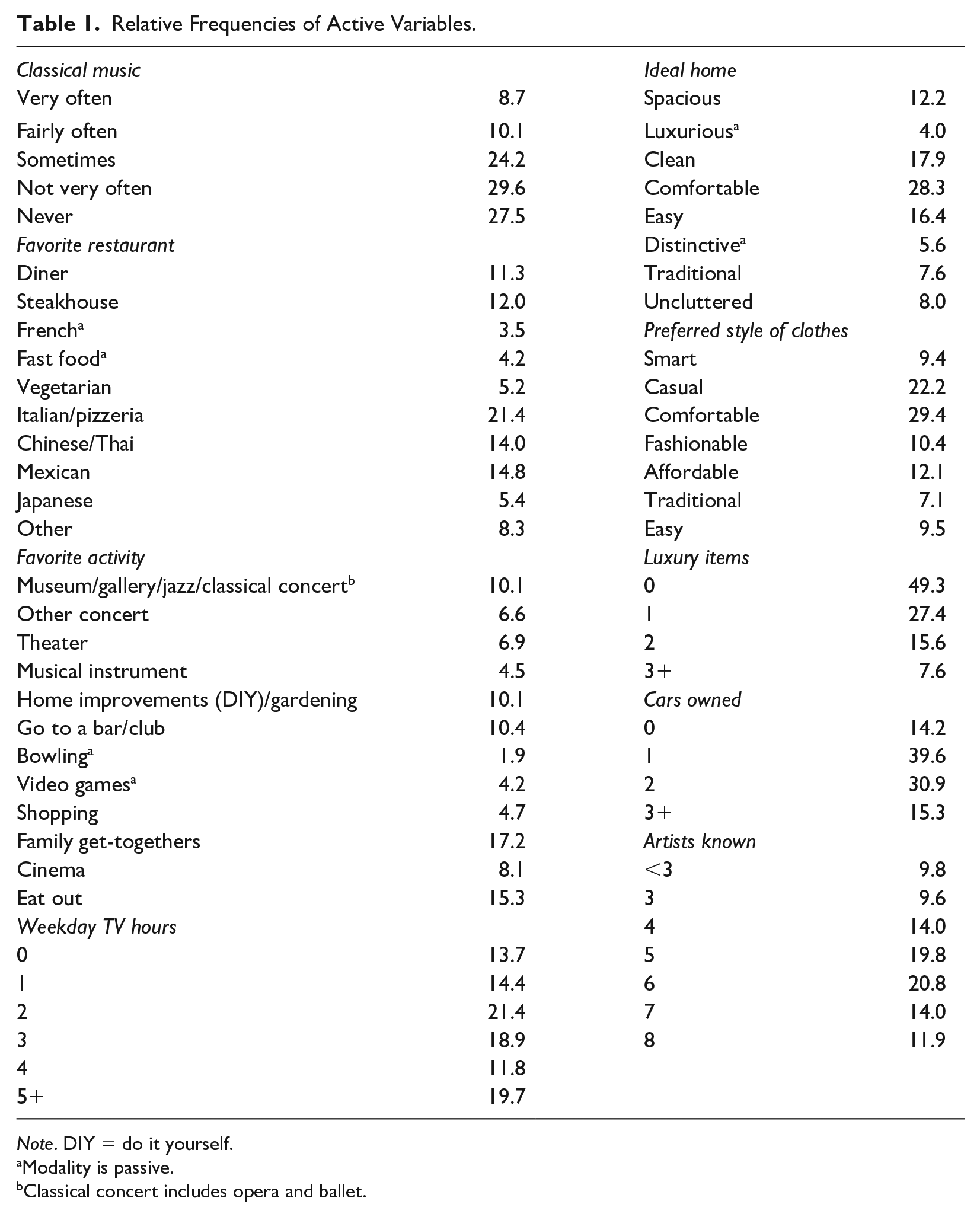
Note. DIY = do it yourself.
Modality is passive.
Classical concert includes opera and ballet.
Supplementary variables are of three types. The first covers additional elements of lifestyle, namely, body modification practices (tattoos, cosmetic surgery, sunbed use, etc.), possession of individual luxury items, and sports watched and played. These are not included as active variables in the model because they contain either just two categories (i.e., yes/no) or many categories that cannot be sensibly combined, thus violating the principle of category parity. The second covers frequency of engagement in the cultural activities listed as possible favorites: weekly, monthly, a few times per annum, yearly, less than yearly, or never. Categories with small relative frequencies have been combined with contiguous ones. These are set as supplementary in part because their inclusion puts disproportionate weight on highbrow culture in the model, but also to test the relationship between taste and practice.
The third set of variables targets social position and is used to assess the homology between lifestyles and the social space. To approximate capital composition as well as capital volume, information was gathered not just on household income and education levels but also on wealth (savings, shares, and home value), subject of study at the tertiary level, what Bourdieu referred to as “inherited” cultural capital (parental education and books in the parental home when the respondent was 14 years old), and occupation. These are complemented by variables for age, gender, race, employment status, urban/rural residence, and type of higher education institution attended.
Finally, respondents were asked to rate their level of agreement on a 5-point scale with the following statement: “my tastes and interests are likely to be looked down upon by others.” This is directly targeted at the “sense of place” and relative worth attached to different tastes and lifestyles, that is, symbolic domination or violence. The statement is provocative, especially in the context of a telephone interview with a stranger, and only a relatively small proportion of respondents were willing to agree with it (18 percent). A larger proportion, in fact, are unwilling to say either way (25 percent), whether out of uncertainty, defensiveness, refusal of cultural hierarchy, or something else.
The positions of and distances between supplementary points are examined using tools of “structured data analysis” (Hjellbrekke 2019; Lebart, Piron, and Morineau 2006; Le Roux, Bienaise, and Durand 2020; Le Roux and Rouanet 2004, 2010). Those schooled in traditional linear techniques of quantitative analysis may be skeptical of GDA on the grounds that it relies on simply “eyeballing” the space to determine which associations and distances are significant and which are not. This is not the case, however. A series of robust statistical tests have been developed to guide interpretation of correspondences. Chief among these is the “typicality test” to assess coordinate significance on an axis, and there are also guidelines for assessing distances (standard deviations [SDs]) between points—with anything over 0.4 being considered “notable”—and possibilities for applying univariate analysis of variance to the space. Concentration ellipses, moreover, can be used to gauge the extent and direction of dispersion of individuals within categories by giving graphical form to ±2 SDs from the mean location on the axes.
The analysis proceeds in several steps. First, it presents the model of the space of lifestyles in the United States, focusing on the axes accounting for the lion’s share of the inertia in the model and paying particular attention to what are deemed “explicative” categories—that is, categories that bear a relative contribution to the inertia of each axis above the average. Supplementary indicators of consumption with a significant typicality test value (p < .05) on one or both axes are also interpreted. Second, the indicators of social position are examined to assess the degree and form of homology between the lifestyle space and the social space, as well as gender, age, and race. Finally, the relationship between lifestyles and symbolic domination will be scrutinized by projecting the associated categories into the space and exploring their distribution.
Lifestyles in Two Dimensions
The MCA reveals a space structured in two core dimensions. The first of these accounts for 52 percent of the model inertia, and the most important variables on it, contributing the majority of its inertia, are frequency of listening to classical music, knowledge of artists, possession of luxury items and possession of cars, as well as favorite activity (Tables 2 and 3). Within the last of these variables, going to a bar and visiting sites/events of highbrow culture are the most substantial contributors, although shopping and theater are also explicative, and among others, it is extremity categories that bear the most structuring force. Frequency of watching television and tastes in clothing and home décor have little bearing on the axis, although opting for a diner when it comes to eating out is explicative among restaurant tastes.
Eigenvalues and Inertia on the First Three Axes.
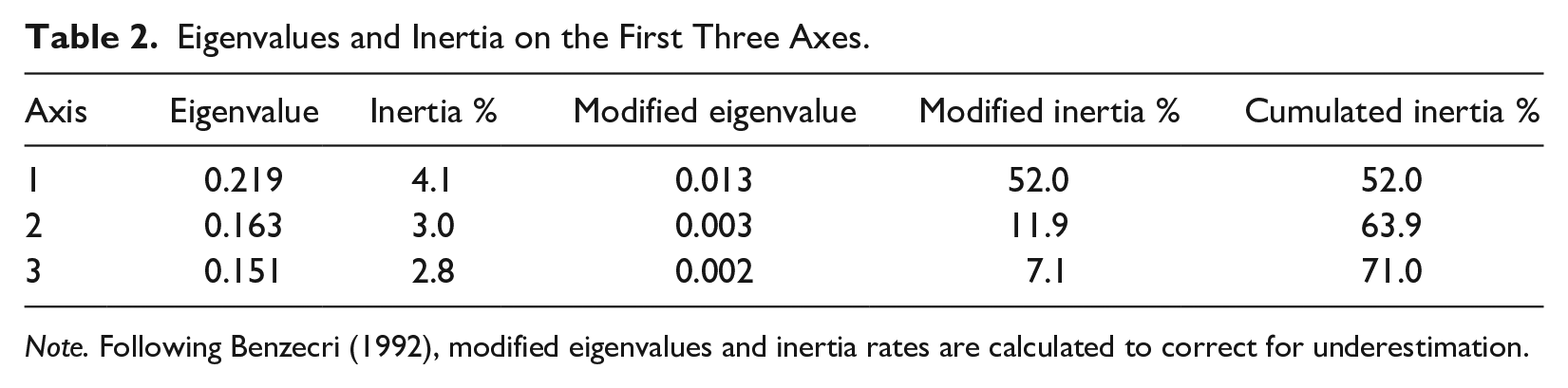
Note. Following Benzecri (1992), modified eigenvalues and inertia rates are calculated to correct for underestimation.
Contributions of Active Variables and Modalities on Axes 1 and 2 (%).
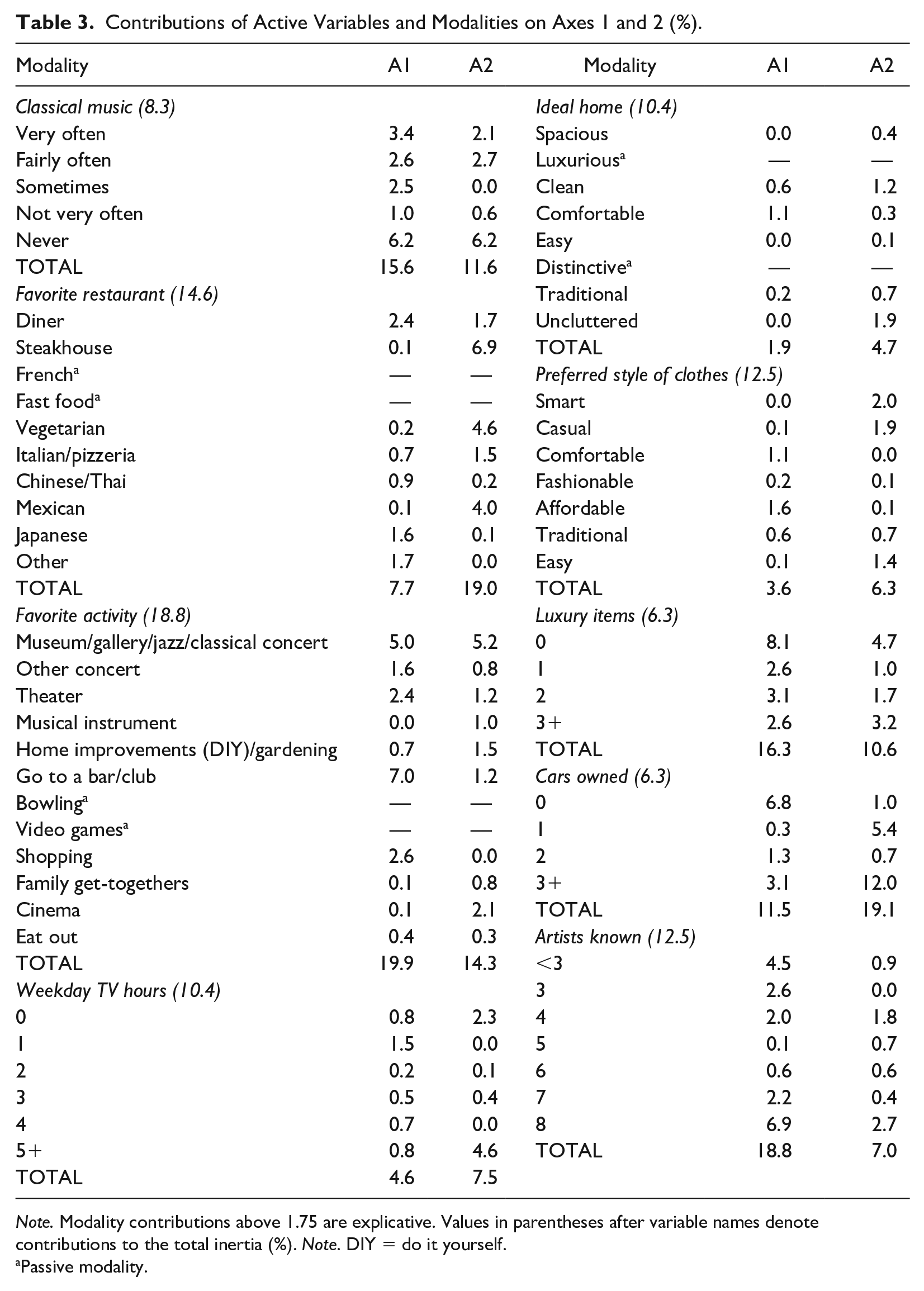
Note. Modality contributions above 1.75 are explicative. Values in parentheses after variable names denote contributions to the total inertia (%). Note. DIY = do it yourself.
Passive modality.
The arrangement of modalities clearly reveals a high/low opposition, that is to say, an opposition between those, on the one hand, who frequently listen to classical music, recognize the most artists, and possess several luxury goods and multiple vehicles and those, on the other, who do not (Figure 1; for the space of individuals, see the appendix). This goes hand-in-glove with a polarization of cultural activities: A taste for museums, galleries, and jazz/classical concerts, as well as for theater, co-defines the positive or “high” end of the pole, while the predilection for shopping, going to bars and clubs, and preferring diners is explicative at the negative pole of the axis (as is a predilection for diners when it comes to eating out). Among the explained, passive, or supplementary modalities, moreover, we see toward the top of the axis a preference for Japanese and French restaurants (and to a lesser degree Chinese/Thai and other restaurants) and a liking for other types of concert and, a little lower down the space, gardening and do it yourself (DIY) (both of which presuppose ownership of and investment in property). Fast food, bowling, preference for traditional and affordable dress, and an idealization of clean and luxurious homes, on the other hand, correspond with the lower portion of the axis. Even if not explicative on the axis, the positions of these categories are nonetheless significant according to test values.
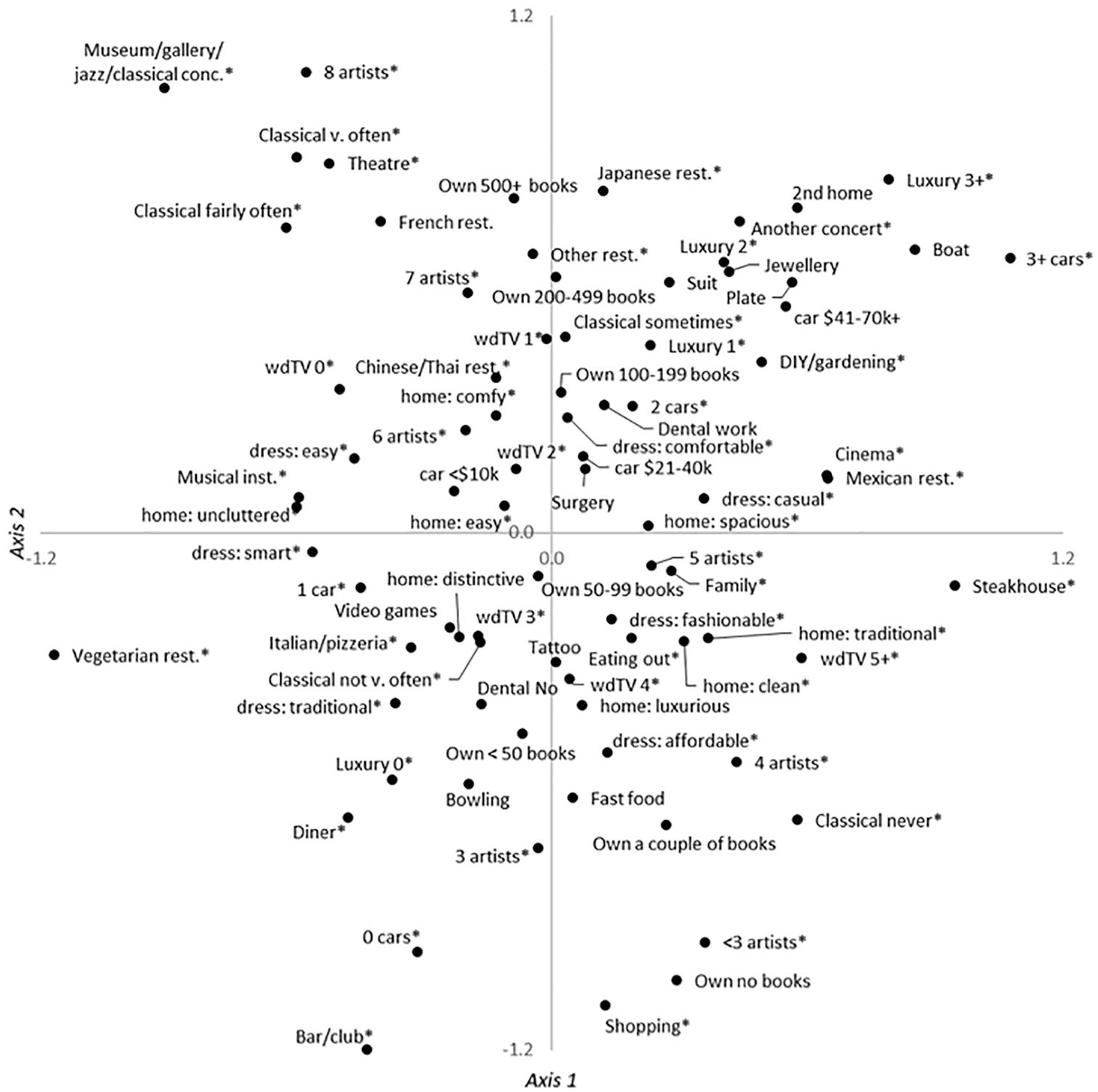
The space of lifestyles in the United States.
Everything so far leads us to suggest that this primary axis represents oppositions of the exclusive and the common, the inaccessible and the accessible, the “difficult” (to appreciate/buy) and the “easy,” and so on. There are also, however, several modalities that gather more toward the middle of the space, including not just middling categories—knowing five or six artists—but distinctive preferences and practices, such as a taste for Mexican restaurants and steakhouses; a premium on family events; valuing playing a musical instrument (without specifying what that instrument is, of course); favoring cinema above all else; a tendency toward easy, casual, or smart dress; and a desire for easy, uncluttered, and spacious homes. Whether or not these could be considered elements of “middlebrow” culture, however, rather than simply widely popular from top to bottom of the axis, depends on their internal dispersion as mapped by concentration ellipses. Figure 2 makes plain that this varies substantially. Preferring smart clothes, for example, is widely distributed along the vertical axis, making it “common” rather than middlebrow per se, while a preference for the cinema is more defensibly describable as middlebrow given its more compact distribution within the middle region of the space. Other categories, such as the taste for Mexican restaurants or playing musical instruments, sit between these extremes.
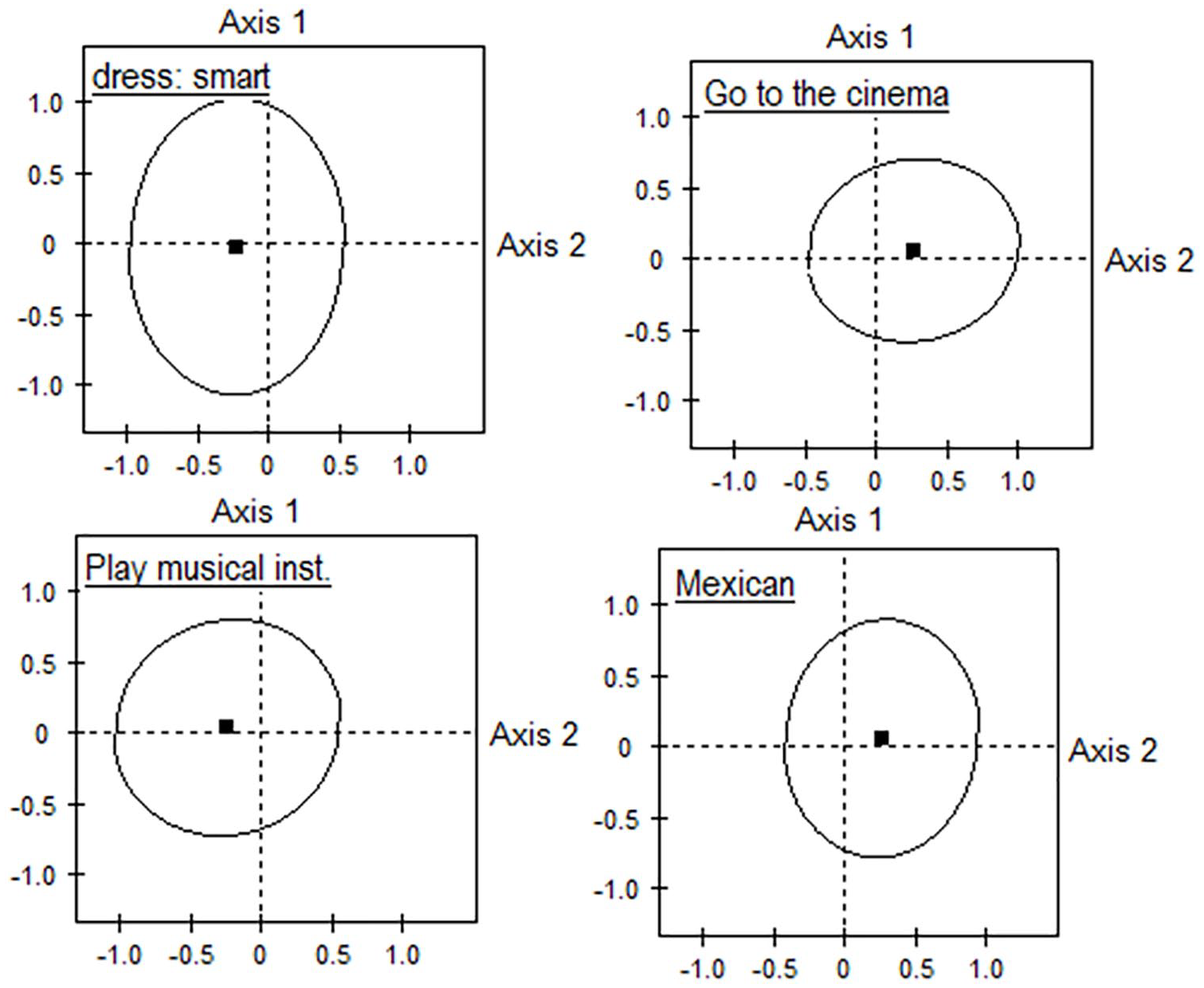
Concentration ellipses for selected activities.
The second axis bears an inertia rate of 12 percent. Extremity indicators of artistic knowledge, interest in classical music, and possession of cars and luxury goods are, once again, explicative on the axis, though to a lesser degree, and are joined now by extremity categories for watching television. A taste for “highbrow” events/sites is also a substantial contributor again, this time counterposed to cinema, but now we see several categories from other variables play a defining role on the axis, including preferences for steakhouses, vegetarian or Mexican restaurants, smart or casual clothes, and uncluttered homes. Overall, though, home décor and sartorial inclinations still play only a minor role in differentiating tastes.
The distribution of modalities in the space discloses an opposition between “highbrow” culture and material consumption. More specifically, it becomes clear that cultural knowledge and “highbrow” taste—as well as an interest in museums, galleries, and so on, as well as theater—define the top left (or northwest) of the space, while possession of multiple cars and luxury goods, especially boats, structures the top right (or northeast) of the space. At the bottom of the space, the southwest region is characterized by the lack of cars and luxury goods, and a little engagement with high culture, while the southeast area is distinguished by lack of both artistic knowledge and interest in classical music. This is not all, however. Other modalities in the model, whether explicative or explained (yet still statistically significant), overlay this core opposition or introduce additional oppositions at all heights of the space. It emerges, for example, that the tastes for highbrow events/sites and for other (popular) musical concerts are directly opposed on the second axis—the former being associated with “high culture” and the latter, perhaps indicative of ticket prices as well as lesser interest in high culture, being associated with material consumption or luxury instead. A taste for DIY/gardening, moreover, is associated with the luxury pole of the axis, again alluding to the property possession they presuppose, and a series of polarizations now appears in the middle belt of the space: a preference for steakhouses, Mexican restaurants, cinema, and traditional homes and tendency to watch over five hours of television per day fall toward the materialist extremity of the axis, while an aversion to television and a taste for playing musical instruments, for vegetarian or Italian restaurants, and for easy or smart clothes are pulled toward the cultural pole. Even the lowest portion of the space, as defined by the first axis, contains internal differences along the second axis additional to those defined by knowledge, classical music, and luxury goods, namely, the association of the taste for bars/clubs and diners with the cultural pole (or more accurately at this level of the space, the “non-luxury” pole), as opposed to shopping, which sits more centrally on the axis (the distance is >0.4 SDs). 3
Tastes for specific sports and physical activities—whether as participants or as spectators—are also related systematically to both axes of the space (Figure 3). Watching and (especially) playing golf, for example, are positioned in the top right quadrant of the space, associated with symbols of luxury no doubt because the equipment and club membership required to take part are financially exclusive. Skiing, yoga/pilates, swimming, and watching tennis, on the other hand, are associated with the top left quadrant, containing those disposed toward highbrow culture but not so much material consumption, while watching soccer and gymnastics, playing tennis, and enjoying walking or hiking are positioned toward the higher end of the first axis but in the middle of the material consumption axis. The most popular American sports, and not doing any sports, are mostly located in the bottom right quadrant, as is playing soccer, and watching boxing/martial arts corresponds strongly with the luxury pole of the middlebrow region of the space. Forms of activity specifically oriented toward physical health (keep fit, jogging/running), as well as cycling and watching wrestling, correspond with the bottom left quadrant of the space. Not watching sport and practicing gymnastics also nudge into the zone, but would be more accurately described as tending toward the ascetic pole of the middlebrow region, in opposition to martial arts and American sports, recalling Bourdieu’s characterization of gymnastics (among other activities) as a form of bodily liberation practiced by the cultural intermediaries as a means of expressing their social location.
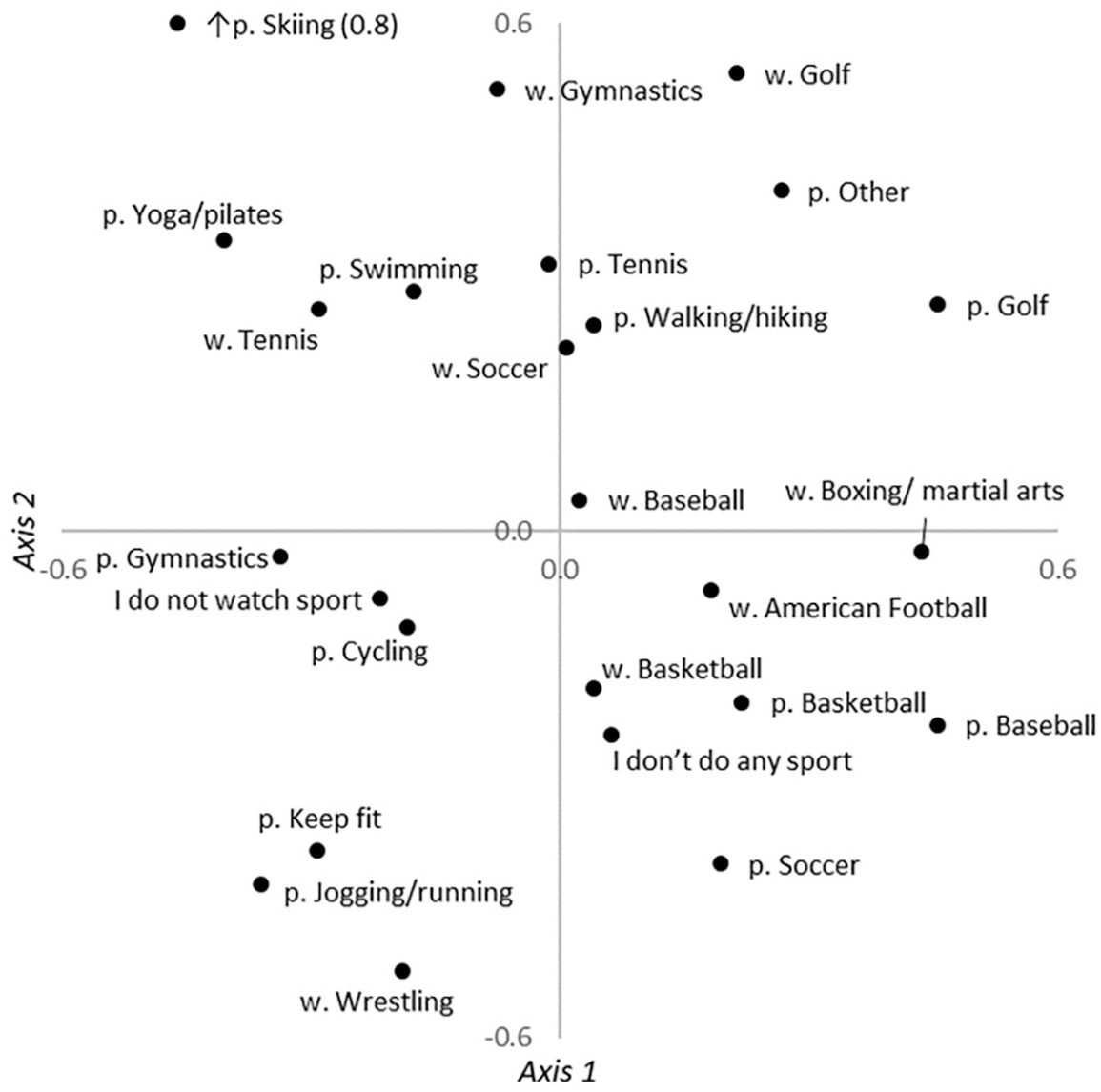
Sports preferences in the space of lifestyles.
Taste and Practice
Further specification can also be added to the space by plotting the categories for frequency of participation in the named cultural activities (Figure 4). Citing one’s favorite activity, after all, may disclose something of one’s tastes but is less directly indicative of practice and, therefore, what one is commonly perceived by others as doing. For sure, the distribution of modalities generally confirms the patterning of favorite activities. Those who visit museums and galleries or attend classical and jazz concerts most frequently gather in the top left of the space, while those who go to clubs and bars or who go bowling most often sit toward the bottom of the space. Conversely, those who never visit or experience the sites and events of highbrow culture are positioned in the bottom right of the space, while those who never visit bars, bowling alleys, and clubs, or do so infrequently, are positioned higher up the first axis. Those who undertake home improvements or gardening on a weekly basis, moreover, are associated with the upper right zone of the space, while those who never engage in them correspond with the lower portion of the space.
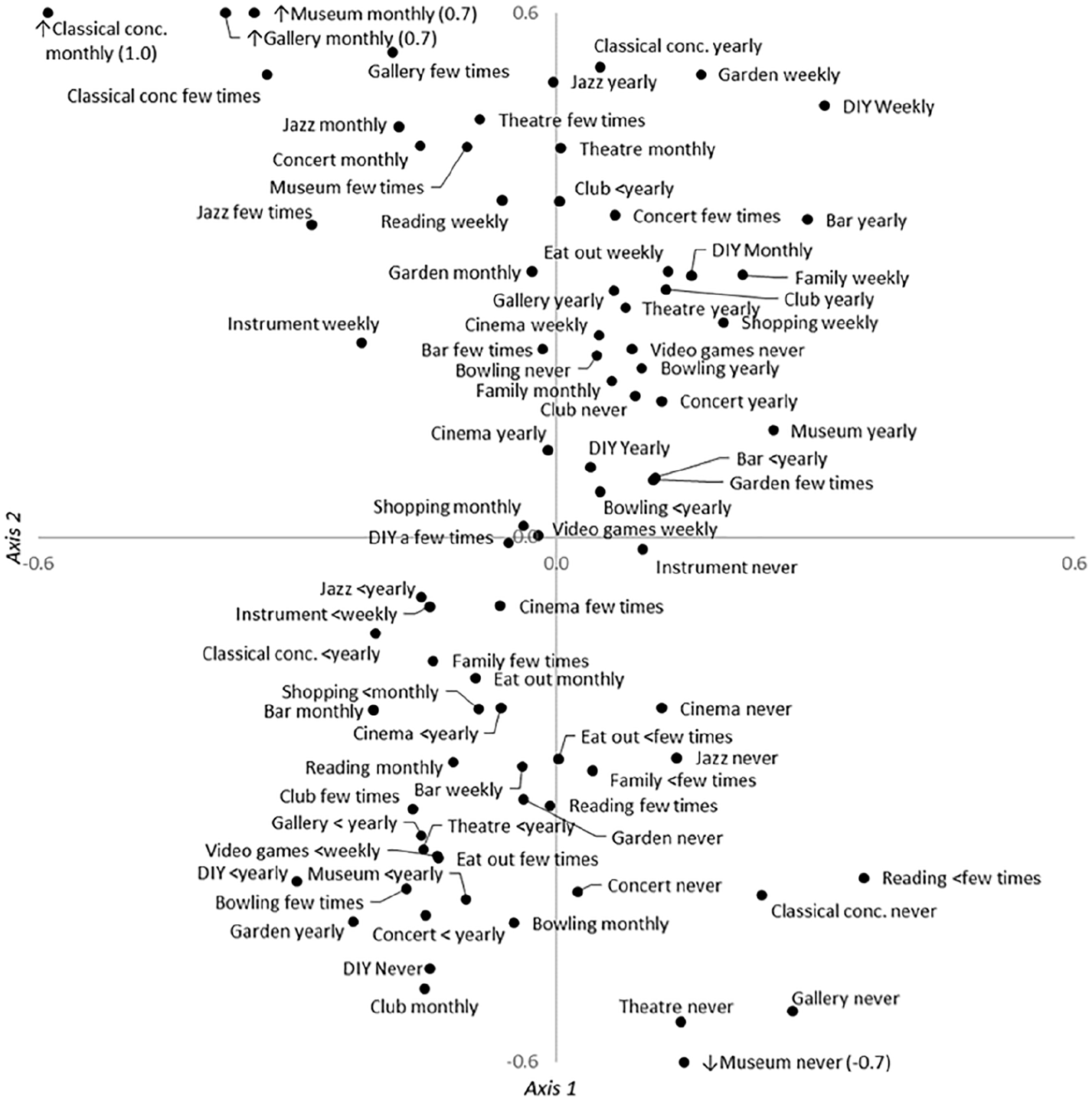
Frequency of cultural activity in the space of lifestyles.
There are, however, several nuances or discrepancies that emerge when inspecting the frequency of participation. There is, for one thing, the tendency toward infrequent engagement with elements of high culture among those on the bottom left of the space, which we will return to later. More revealing, however, are the modalities for shopping and eating out. Considering either of these practices as one’s “favorite” from the list offered was associated with the lower portion of the space, yet it is those in the upper regions of the space—and particularly the upper right—who are associated with doing them most frequently. In other words, shopping for leisure and eating out for those in the lower region of the space might be considered a special treat, while those in the upper region of the space, particularly those associated with a lifestyle oriented toward luxury and material consumption, perceive them as routine and banal occurrences. The same is also true of family events or parties. There is, moreover, an interesting dichotomy between those attending other musical concerts monthly and those doing so a few times a year: the latter are associated with the upper right quadrant of the space, where those who consider concerts their favorite pastime tend to be situated, while the former are more closely associated with the northwest quadrant. Could it be that this represents an opposition between infrequent largescale pop concerts with expensive ticket prices, which are considered a special event, and cheaper yet more regular “gigs” in local venues by lesser-known performers appealing to music “aficionados”? More broadly, those in the top-right quadrant, as well as being typically most active in home maintenance, gardening, shopping, eating out, concert-going and family events, are likely to mix these proclivities with annual engagement with not only traditional “highbrow” activities (theater, museums, galleries, classical concerts) but also activities associated with the bottom of the space (especially bars and clubs). If measured purely in terms of cultural participation, therefore, those seemingly more “omnivorous” in their tastes are not only very specifically located within the space but also associated with a constellation of practices and preferences that suggest the “omnivore” label is only—at best—partially adequate.
Homologies and Structuring Factors
Everything so far confirms that lifestyles in the contemporary United States form a multidimensional space. The primary axis of that space opposes the exclusive and the accessible, while a cross-cutting principle differentiates material consumption, or luxury, from participation in highbrow culture or, at least, a low degree of material consumption. The question now, then, is the degree to which this space is homologous with the social space defined by economic and cultural capital and if and how that homology is specified by additional structural features.
Figure 5 presents the coordinates of supplementary modalities indicating social position on both axes, with only those significant at the 5 percent level being retained. Perhaps the immediately apparent pattern is the strong relationship between the primary axis and capital possession in all its forms. Lower holdings of economic and cultural capital are associated with a lower position on the axis, higher holdings with a higher position, and categories in between with middle-ground locations. In terms of inherited cultural capital, having parents with postgraduate qualifications, rather than undergraduate qualifications, and having had plenty of books in the parental home when a child seem to be particularly strongly associated with the axis. The polarization of capital translates into a polarization of socio-professional categories: Manual, skilled, and personal service work—and above all unemployment—correspond with the lower portion of the axis, and professionals, managers, and employers gather in the upper portion. Sociomedical workers, technicians, and clerks occupy middling positions.
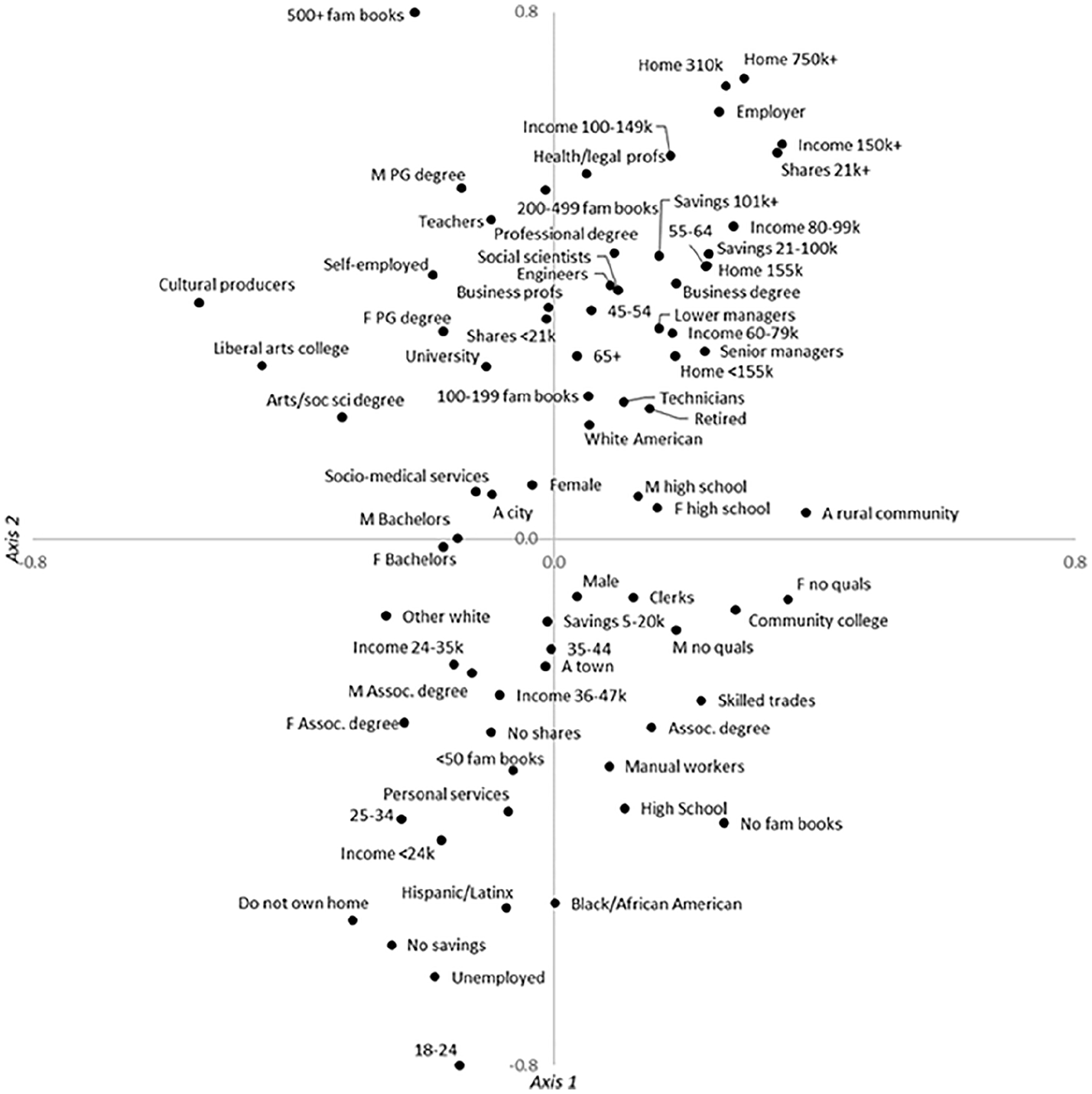
Indicators of social position in the space of lifestyles.
The dispersion of capital indicators on the second axis is more modest, though still significant. The opposition is one of high economic capital/low cultural capital and high cultural capital/low economic capital. Taking the plane as a whole, this means the upper right quadrant is characterized above all by high economic capital, although those with business degrees and professional degrees also tend to be associated with the region. Managers and employers—the agents of the economic field—are typically located here. Health/legal professionals, social scientists, and engineers nudge into the area too, but their coordinates are not significant on the second axis, indicating that they occupy more of a middling position. The lower right quadrant holds those with lower holdings of acquired and inherited cultural capital: high school diplomas or associate’s degrees, no books in the childhood home, parents with no qualifications, and so on. Manual and skilled workers are its core constituents. The upper left quadrant, by contrast, contains the indicators of high inherited cultural capital. When it comes to acquired cultural capital, there is a specification by discipline and institution. It is those with arts and social sciences degrees, and those who attended liberal arts colleges (and only secondarily universities) who are most closely associated with the cultural pole of the second axis—and cultural producers above all. The lower left quadrant, finally, is populated by those with low economic capital—no home ownership, low incomes, no savings—as well as low-to-middling indicators of capital composition. In short, if the primary dimension of difference, opposing the exclusive and the accessible, corresponds with capital volume, then the second dimension of difference, polarizing material consumption and high culture, corresponds with capital composition, thus intimating a fairly neat homology between the lifestyle space and the social space, although the structure of the field of power is also implicated in polarizing tastes in the upper portion of the space.
A range of additional factors are associated with contrasting areas of the space. Women, for example, are typically positioned higher on the first axis than men, while living in a town is lower on the axis than city life and residing in a rural community is associated with the material consumption pole of the second axis. Hispanic/Latinx individuals and black or African Americans are closely associated with the accessible pole of the primary dimension of difference, while white Americans are typically situated higher up the axis. Perhaps most conspicuous, though, is the relationship between the first axis and age. Youth (18–24 years old) is very closely associated with accessible culture, with subsequent age categories occupying increasingly elevated positions, moving slightly rightward in the space as well, up to the ceiling of 55 to 64 years old, after which there is a slight left-sloping decent in the space.
These additional factors are not entirely independent of capital possession. Men in the sample, for instance, are less likely to live in homes they own themselves (52 percent) than women (62 percent) and a little less likely to have had parents with 100 books or more when they were teenagers (36 percent against 41 percent). Similarly, those living in cities are less likely to be homeowners (57 percent) than those in rural communities (76 percent) but much more likely to have attained at least a bachelor’s degree (63 percent against 44 percent). Even more pronounced are the differences by race and age. White Americans are much more likely to own their own home (67 percent) than black Americans (34 percent) or Hispanic men and women (28 percent), and much less likely to have had fewer than 100 books in the childhood home (57 percent against 74 percent and 82 percent, respectively). Those in the youngest age bracket, moreover, are highly unlikely to be homeowners (18 percent) compared to those aged between 55 and 64 years (83 percent), and most (72 percent) have not—yet—acquired post-school credentials. There is also a difference in family book ownership: 74 percent of those aged between 18 and 24 years in the sample had fewer than 100 books in their childhood home compared to just 52 of those aged 55 to 64 years. Systemic factors doubtless underlie many of these interrelations between capital, gender, race, residence, and age, including the concentration of graduate employment in cities, the legacy of racial discrimination, and, in the case of age, life course effects (i.e., the accumulation of economic capital over one’s lifetime).
Symbolic Violence
There is one last facet to explore. For all that we have said about the exclusive and the accessible, the luxurious and the cultivated, and their correspondences with social position, we are yet to determine if and in what way these oppositions and correspondences are bound up with symbolic domination. Figure 6 displays the modalities related to the statement on one’s tastes and interests being looked down upon by others. Mild disagreement, the modal response, sits in the middle of the space. Strong disagreement, however, corresponds with a higher position in the space, that is, consumption of exclusive culture, as if to suggest that those with higher capital—both economic and cultural capital—and the lifestyles it generates are the most confident in their tastes. Those who mildly agree with the proposition, on the other hand, are associated with the popular/accessible pole of the first axis. So too are those who refuse to say either way, indicating that popular tastes, lower capital, and youth may generate a sense of uncertainty, evasiveness, or rejection of hierarchization. The fact that it is also associated with the second axis suggests that this response, rather than agreement, may be facilitated by possession of a modicum of cultural capital. The most striking correspondence, however, is that of those strongly agreeing with the statement with the right-hand pole of the second axis and the middle of the first axis, that is, the zone of the space defined by middlebrow materialist consumption and, by association, lower inherited cultural capital and middling economic capital. Perhaps this captures the hyper-sensitivity discovered by Bourdieu (1984) among a section of the petite bourgeoisie, who may feel judgment more keenly precisely because they are socially and interactionally closer to the dominant class than those with fewer resources.
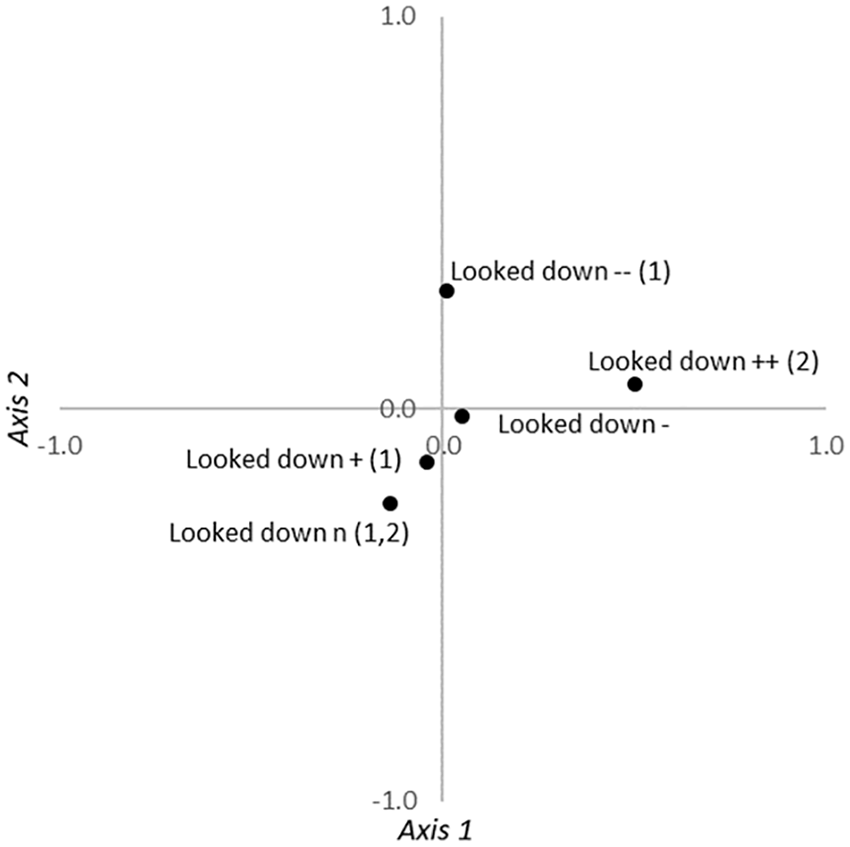
Symbolic violence in the lifestyle space.
The dispersion of the modalities may not seem great, even if most of them are significant on one or both axes. It is worth bearing in mind, however, that the distances between extremity modalities on both axes meet the standard threshold for notability (>0.4 SDs) and that an analysis of variance is highly significant on both axes (p < .001). 4 Moreover, although mild or strong disagreement with the statement is certainly the majority response in the sample, it should be pointed out that while 64 percent of those in the top half of the space disagree with it (31 percent strongly), only around half of those in the bottom portion of the space are inclined to do so (and only 16 percent strongly).
Conclusion
Everything would appear to suggest that the space of lifestyles in the United States today is not exceptional but structured according to principles remarkably like those discovered in 1970s France by Bourdieu and detected by others using similar types and combinations of indicators across Europe today (e.g., Blasius and Muchlichen 2010; Flemmen et al. 2019; Atkinson, 2017, 2018, 2021). The specific practices and symbols may be different—basketball and baseball rather than pétanque, for example—but the core organizing principles are very similar. One axis distinguishes the accessible and the inaccessible, the popular and the rare, the “easy” and the “difficult”; a second distinguishes practices based on symbolic mastery (i.e., “highbrow” practices) and practices and symbols indicating luxury. The correspondence of classical/jazz concerts and “other” concerts with the inaccessible/difficult pole may indicate, to some, omnivorousness. Yet the horizontal patterning of preferences and frequencies revealed an opposition qualifying if not questioning the utility of that label: that between, on the one hand, those enjoying nonclassical concerts a few times a year and only dabbling in highbrow culture, which seems to be associated with money, and, on the other hand, those who attend probably small-scale gigs regularly but are the most likely to prefer highbrow cultural activities, which is associated with cultural capital and orientation toward the arts sector.
This brings us to the relationship between lifestyles and class in the sense that Bourdieu gave it, that is, as a multidimensional space defined by volume and composition of capital, the indicators of which are irreducible to education level and income alone. With a broad range of measures, it was possible to deduce that the first axis of the space corresponds quite clearly with the overall volume of capital, while the second axis is associated with capital composition and the culture/economy, or spiritual/temporal, structure of the field of power. Differences by gender, age, and race largely map onto the first axis and are deeply imbricated with possession of capital.
The final conclusion bears on the relationship between class, lifestyles, and symbolic domination. True, relatively few people are willing to admit in a survey interview that their tastes and interests would be looked down upon by others, although the rates may have been higher if different methods were used, but there is no escaping the fact that those who do are either typically associated with popular/accessible culture, and lower capital, or middlebrow materialist culture, and lower cultural capital. On the other hand, those associated with exclusive and inaccessible culture—by dint of money and knowledge—are the most likely to reject the idea vehemently. They are, in other words, the most confident in their lifestyles, which may say something about the continued linkage of cultural worth to not only traditional forms of highbrow culture, but also symbols of monetary success in line with the materialist ethos of capitalist societies.
Footnotes
Appendix
Declaration of Conflicting Interests
The author(s) declared no potential conflicts of interest with respect to the research, authorship, and/or publication of this article.
Funding
The author(s) disclosed receipt of the following financial support for the research, authorship, and/or publication of this article: The research on which this article is based was funded by the European Research Council under its Horizon 2020 research and innovation program (grant agreement no. 677055).
